

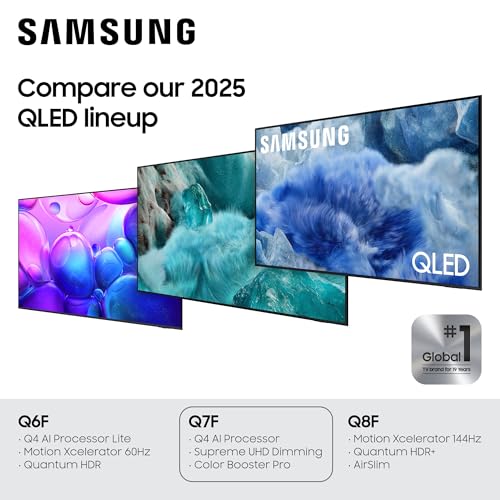
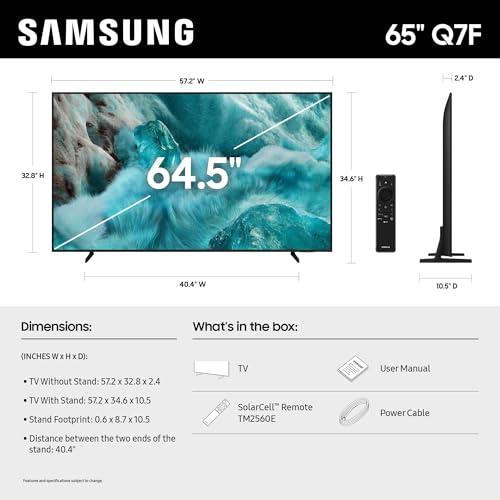



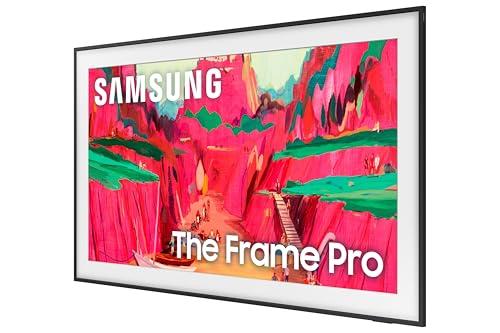
When Samsung launched their 2025 TV lineup, they made an interesting choice: keeping both an affordable entry-level QLED and a premium lifestyle model in their 65-inch offerings. The Samsung Q7F Series QLED represents their most accessible quantum dot technology, while the Samsung Frame Pro Neo QLED pushes into lifestyle territory with wireless connectivity and art display capabilities. At the time of writing, there's roughly a $1,200 price gap between these models—but that difference buys you dramatically different experiences.
Modern TVs have evolved far beyond simple picture boxes. Today's market splits into distinct segments: budget models focused on basic 4K viewing, performance-oriented displays for gaming and home theater, and lifestyle TVs that integrate into your décor. The key technical factors that separate these categories include display technology (how bright and colorful the picture gets), local dimming (controlling backlight zones for better contrast), refresh rates (how smoothly motion appears), and smart features (apps, AI processing, connectivity).
What makes this comparison particularly interesting is that Samsung positioned these two models to serve completely different needs, despite both being 65-inch 4K quantum dot displays.
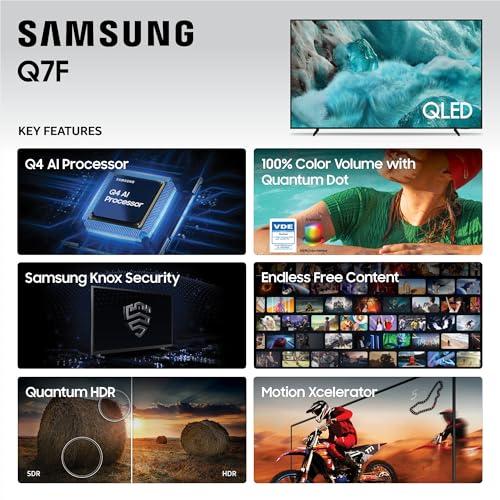
The biggest technical difference lies in how each TV creates its picture. The Samsung Q7F uses what Samsung calls standard QLED—a quantum dot layer that converts blue LED backlight into precise colors, combined with direct-lit backlighting where LEDs sit directly behind the screen. This setup delivers Samsung's signature vibrant colors and decent brightness for everyday viewing.
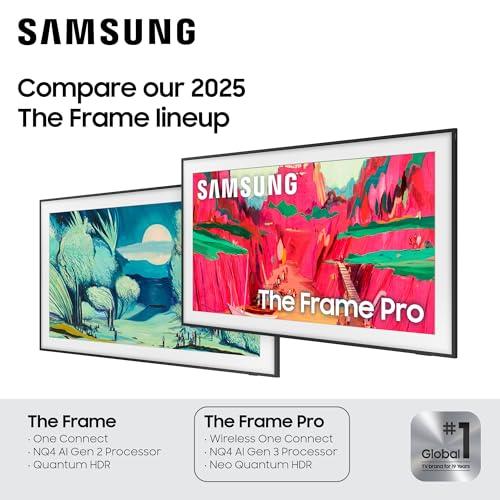
The Samsung Frame Pro, however, uses Neo QLED with Mini LED technology. Here's where it gets technically interesting: Mini LEDs are much smaller than traditional LEDs (think rice grain versus peppercorn), allowing manufacturers to pack more of them behind the screen for better light control. The Frame Pro uses these Mini LEDs in an edge-lit configuration along the bottom of the screen, rather than the full-array backlighting you'd find in Samsung's flagship models.
Based on professional testing data we've analyzed, this technical difference creates a dramatic performance gap. The Samsung Q7F reaches roughly 400 nits of peak brightness—adequate for moderate lighting but struggling in bright rooms. The Samsung Frame Pro exceeds 1,000 nits, making HDR content significantly more impactful and ensuring the screen remains visible even with windows behind you.
From our research into user and expert reviews, the picture quality difference between these models is immediately noticeable. The Samsung Q7F delivers what you'd expect from entry-level QLED: vibrant colors thanks to quantum dot technology, decent upscaling of lower-resolution content, and good performance for streaming and cable TV.
However, the lack of local dimming (the ability to dim specific screen areas independently) means blacks appear grayish rather than truly dark. This becomes problematic during movie nights when dark scenes lose their dramatic impact. The TV's 60Hz refresh rate also limits how smoothly fast motion appears—fine for most content, but you'll notice blur during sports or action scenes.
The Samsung Frame Pro addresses many of these limitations. Its Mini LED backlighting enables vertical local dimming, where the TV can brighten or dim vertical strips of the screen independently. While this isn't as precise as the full-array local dimming found in flagship models, it still produces noticeably deeper blacks and better contrast.
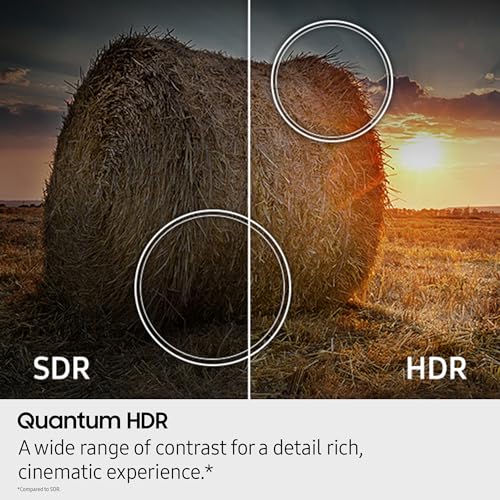
The brightness advantage becomes crucial for HDR content. HDR (High Dynamic Range) requires significant brightness to display the full range from deep shadows to brilliant highlights. Our analysis of professional reviews shows the Frame Pro's 1,000+ nits makes HDR movies and shows look much closer to what filmmakers intended, while the Q7F's lower brightness leaves HDR content looking somewhat flat.
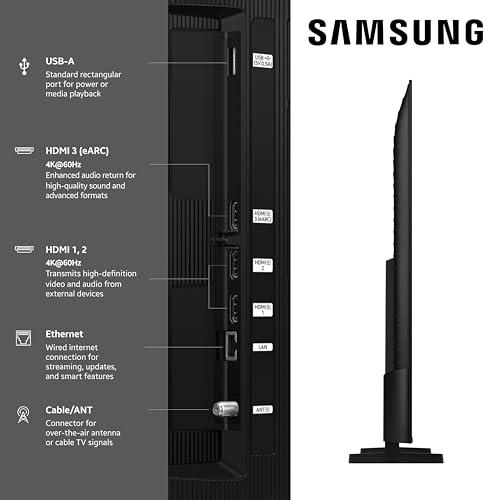
Gaming reveals where both TVs make compromises, though for different reasons. The Samsung Q7F limits itself with a 60Hz refresh rate and lack of HDMI 2.1 support. In 2025, this feels restrictive—modern gaming consoles and PCs can output much higher frame rates, but this TV can't display them smoothly. The absence of Variable Refresh Rate (VRR) technology also means you might see screen tearing during games with inconsistent frame rates.
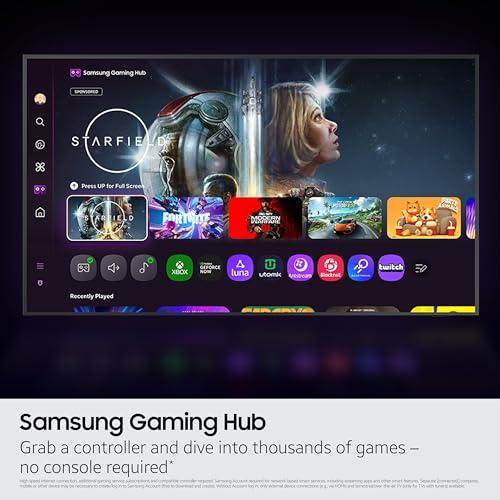
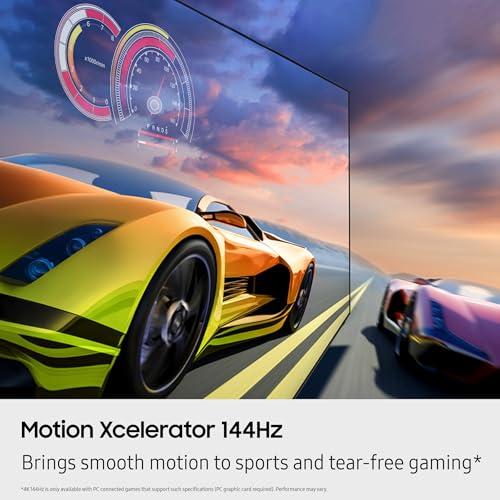
The Samsung Frame Pro offers a 144Hz refresh rate and supports FreeSync Premium Pro (AMD's VRR technology), which should make it excellent for gaming. However, our research into user feedback reveals a critical flaw: input lag exceeding 30 milliseconds. Input lag measures the delay between pressing a controller button and seeing the action on screen—30ms is noticeably sluggish for competitive gaming, where serious players expect under 20ms.
For casual gaming—think turn-based strategy or single-player adventures—either TV works adequately. But if you're serious about gaming, especially competitive multiplayer titles, both models fall short of dedicated gaming TVs that prioritize low input lag above all else.
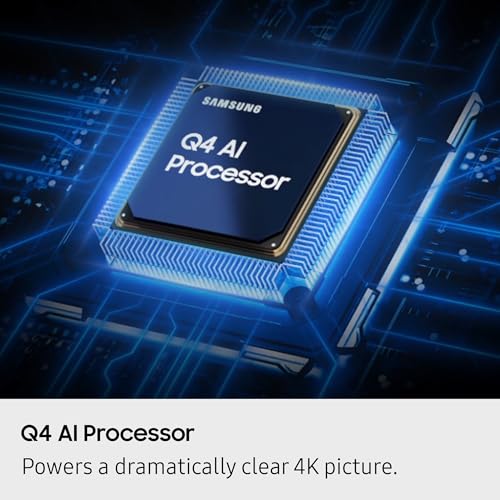
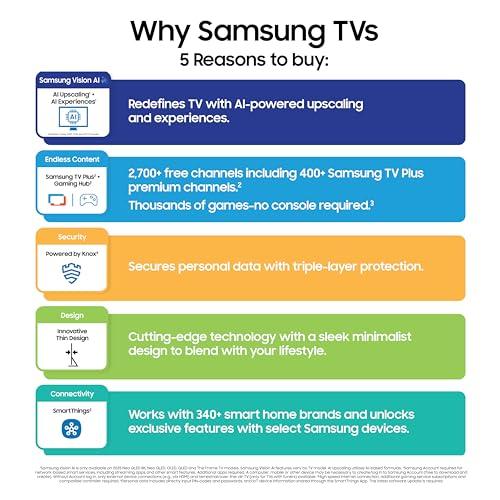
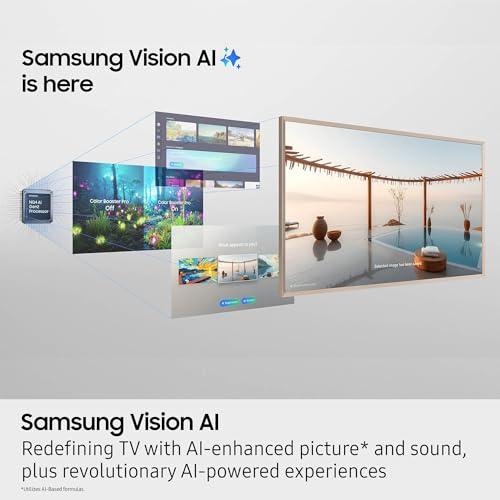
The processing power difference reveals Samsung's market positioning strategy. The Samsung Q7F uses Samsung's Q4 AI Gen1 Processor, which handles basic tasks like 4K upscaling (converting lower-resolution content to fill the 4K screen) and motion smoothing (reducing judder in movies). It includes Samsung's Vision AI for scene recognition and basic optimization.
The Samsung Frame Pro jumps to the NQ4 AI Gen3 Processor—the same chip Samsung uses in their flagship OLED TVs. This represents a significant capability leap. The Gen3 processor enables Auto HDR Remastering (automatically enhancing non-HDR content), advanced motion interpolation (creating smoother movement), and features like "Click to Search" and "Live Translate" for enhanced viewing experiences.
From our analysis of user experiences, this processor difference is most noticeable when watching lower-quality content. The Frame Pro's advanced upscaling makes older shows and movies look cleaner and sharper, while its superior motion handling reduces the soap opera effect that many people dislike with motion smoothing.
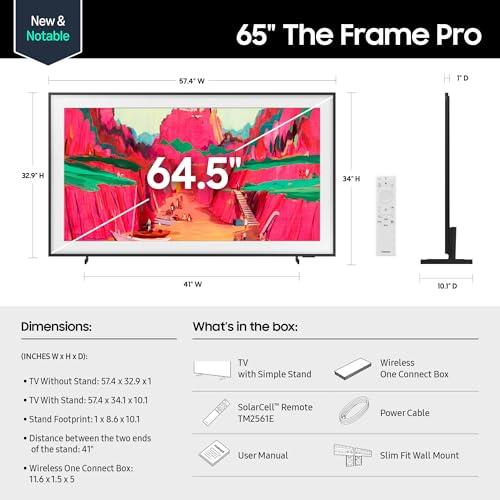
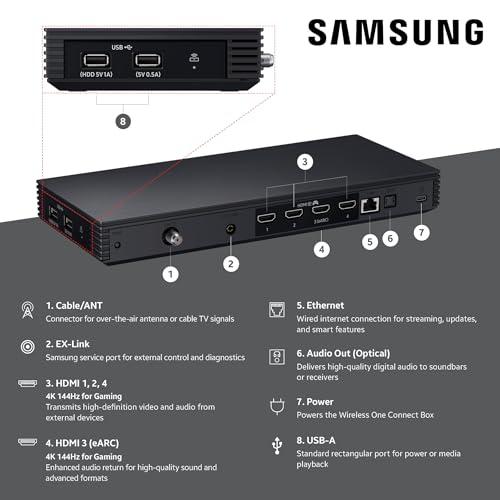
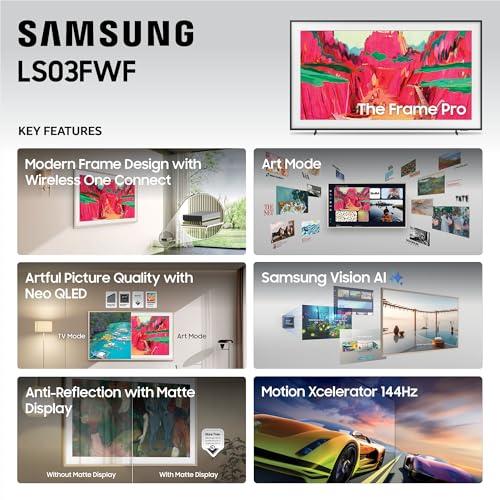
Here's where the Samsung Frame Pro truly differentiates itself. The Wireless One Connect Box represents a genuine innovation in TV design. This separate unit houses all your HDMI ports, USB connections, and processing hardware, then transmits video and audio wirelessly to the TV screen using Wi-Fi 7 technology.
The practical impact is transformative for living room aesthetics. Instead of multiple cables running to your TV, you have either a single transparent power cable or, in ideal setups, completely wireless operation. The One Connect Box can sit inside an entertainment cabinet up to 30 feet away, keeping all your devices and cable clutter hidden while maintaining the TV's clean, picture-frame appearance.
This wireless transmission uses what Samsung calls Omni-Directional Technology—essentially, the connection remains stable even with obstacles between the box and TV. From user reports we've analyzed, most people find the wireless connection reliable, though there's no wired fallback if interference occurs.
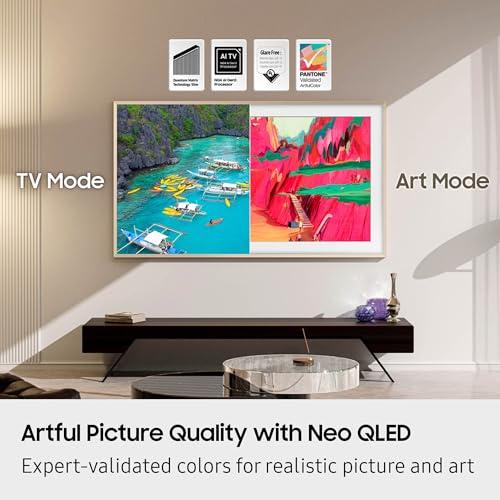
The Samsung Frame Pro's Art Mode transforms the TV into a digital art display when not watching content. With access to nearly 3,000 curated artworks through Samsung's Art Store, plus the ability to display personal photos, the TV becomes functional wall décor.
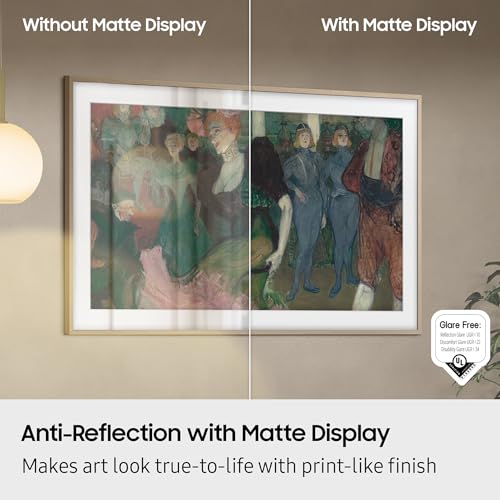
The matte anti-reflection screen coating plays a crucial role here. Unlike glossy TV screens that reflect room lighting and windows, the matte finish minimizes reflections while maintaining color accuracy. This makes displayed artwork look more like actual prints or paintings rather than glowing screens.
A built-in motion sensor automatically turns off the display when no one's in the room, reducing energy consumption. The TV also adjusts brightness and color temperature based on time of day, helping artwork appear natural under different lighting conditions.
For serious home theater setups, neither TV represents the optimal choice, though each has merits. The Samsung Q7F's lower brightness and lack of local dimming limit its cinematic impact during movie nights. Dark scenes lack depth, and the overall contrast doesn't approach what you'd get from OLED or high-end Mini LED displays.
The Samsung Frame Pro performs better for home theater use thanks to its higher brightness and improved contrast. HDR movies gain significant impact, and the flagship processor handles tone mapping (adjusting HDR content for the TV's capabilities) more effectively. However, the edge-lit Mini LED configuration still can't match full-array local dimming for precise contrast control.
Both TVs support HDR10+ (an enhanced HDR format with dynamic metadata) but lack Dolby Vision support—a limitation that affects compatibility with some premium streaming content and Ultra HD Blu-rays.
Audio represents another clear differentiator. The Samsung Q7F includes basic 20W stereo speakers with Object Tracking Sound Lite—a feature that attempts to match audio direction with on-screen action. For casual viewing, this setup works adequately, though dialogue can sound thin and there's minimal bass response.
The Samsung Frame Pro steps up to a 40W 2.0.2 channel system with Dolby Atmos support. The ".2" indicates upward-firing drivers that bounce sound off your ceiling for height effects. Combined with Object Tracking Sound (the full version) and Q-Symphony Pro compatibility with Samsung soundbars, this creates a notably more immersive audio experience.
However, both TVs benefit significantly from external sound systems. The Frame Pro's Q-Symphony Pro allows its built-in speakers to work alongside compatible Samsung soundbars, essentially turning the TV into an additional audio channel rather than disabling its speakers entirely.
The choice between these models ultimately depends on your priorities and use case. The Samsung Q7F makes sense if you're seeking affordable access to Samsung's QLED color technology and smart platform. At the time of writing, it represents decent value for casual viewing, though its 60Hz refresh rate feels limiting in 2025's market context.
However, our research suggests considering competitors at this price point. Other manufacturers offer HDMI 2.1 support, 120Hz refresh rates, and sometimes better brightness at similar prices, making the Q7F's value proposition questionable unless Samsung's specific smart features or brand loyalty drive your decision.
The Samsung Frame Pro justifies its premium pricing if you value its unique lifestyle approach alongside strong performance. The wireless connectivity, art display capabilities, and significantly improved picture quality create genuine value for buyers who want their TV to integrate seamlessly into their living space.
This model particularly appeals to design-conscious buyers who previously had to choose between aesthetics and performance. The Frame Pro finally delivers both, though it still doesn't match Samsung's flagship models for pure picture quality.
Neither TV suits buyers seeking the absolute best gaming performance or home theater experience. Serious gamers should consider TVs specifically optimized for low input lag and high refresh rates. Home theater enthusiasts might prefer OLED technology for perfect blacks or full-array Mini LED displays for superior brightness and contrast control.
For the Samsung Q7F's price range, exploring competitors that offer HDMI 2.1, 120Hz refresh rates, and better local dimming might provide better long-term value, especially if gaming compatibility matters to you.
The Samsung Frame Pro represents a successful evolution of the lifestyle TV concept, finally delivering meaningful performance improvements alongside its aesthetic appeal. The Samsung Q7F, while offering Samsung's reliable smart platform and decent picture quality, feels constrained by cost-cutting measures that limit its competitiveness in 2025's market.
If your budget allows and you value design integration, the Frame Pro offers genuinely unique capabilities that justify its premium. If budget is paramount and you're satisfied with basic 4K viewing, the Q7F delivers Samsung quality, though investigating alternatives at this price point makes sense before committing.
The key is understanding what you're actually buying: a traditional TV focused on value versus a lifestyle product that happens to also be a very capable television.
| Samsung 65-Inch Q7F Series QLED Smart TV 2025 Display | Samsung 65" The Frame Pro 4K Neo QLED Smart TV 2025 |
|---|---|
| Display Technology - Determines brightness, contrast, and color performance | |
| Standard QLED with direct-lit backlighting | Neo QLED with Mini LED edge-lit backlighting |
| Peak Brightness - Critical for HDR content and bright room viewing | |
| ~400 nits (adequate for moderate lighting) | 1,000+ nits (excellent for bright rooms and impactful HDR) |
| Local Dimming - Controls contrast and black levels | |
| No local dimming (blacks appear grayish) | Vertical local dimming (improved contrast and deeper blacks) |
| Refresh Rate - Affects motion clarity and gaming smoothness | |
| 60Hz (basic motion handling, limits gaming) | 144Hz (smoother motion, better for gaming content) |
| Processor - Powers AI features, upscaling, and smart functionality | |
| Q4 AI Gen1 Processor (basic AI upscaling and optimization) | NQ4 AI Gen3 Processor (flagship-level performance and advanced AI) |
| Gaming Features - Important for console and PC gaming | |
| Auto Game Mode only, no HDMI 2.1 or VRR | 144Hz support, FreeSync Premium Pro, but high input lag (30ms+) |
| Design Approach - Traditional vs lifestyle integration | |
| Standard TV design with conventional cable management | Ultra-slim frame design with customizable bezels and Art Mode |
| Connectivity Innovation - Cable management and setup flexibility | |
| Traditional wired connections with basic cable management | Wireless One Connect Box (eliminates visible cables, 30ft range) |
| Audio System - Built-in sound quality | |
| 20W 2.0 channel with Object Tracking Sound Lite | 40W 2.0.2 channel with Dolby Atmos and Object Tracking Sound |
| Anti-Reflection Technology - Viewing quality in bright rooms | |
| Standard glossy screen (reflections visible in bright lighting) | Matte anti-reflection coating (minimizes glare, better for art display) |
| Art Display Capabilities - When not watching TV content | |
| Standard screensaver options | Art Mode with 3,000+ curated artworks and motion sensor |
| Price Category - Value positioning in Samsung's 2025 lineup | |
| Budget-friendly QLED entry point | Premium lifestyle TV with significant price premium |
The Samsung Frame Pro delivers significantly better picture quality with its Neo QLED Mini LED technology, reaching over 1,000 nits of brightness compared to the Samsung Q7F's 400 nits. This means darker blacks, brighter highlights, and more impactful HDR content for movie nights.
The Samsung Q7F uses standard QLED with quantum dot color enhancement and direct backlighting. The Samsung Frame Pro features Neo QLED with Mini LED backlighting, providing better brightness control, improved contrast, and more precise local dimming for superior picture quality.
Neither TV is ideal for serious gaming. The Samsung Q7F is limited to 60Hz with no advanced gaming features, while the Samsung Frame Pro offers 144Hz and gaming features but suffers from high input lag over 30ms, making it unsuitable for competitive gaming.
Only the Samsung Frame Pro offers Art Mode, transforming into a digital art display with access to thousands of curated artworks. The Samsung Q7F has standard screensaver options but lacks dedicated art display capabilities.
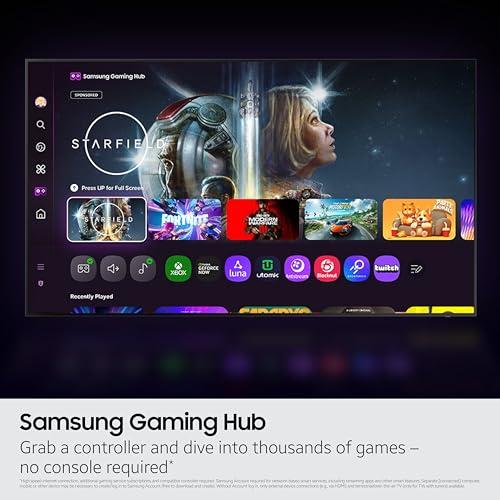
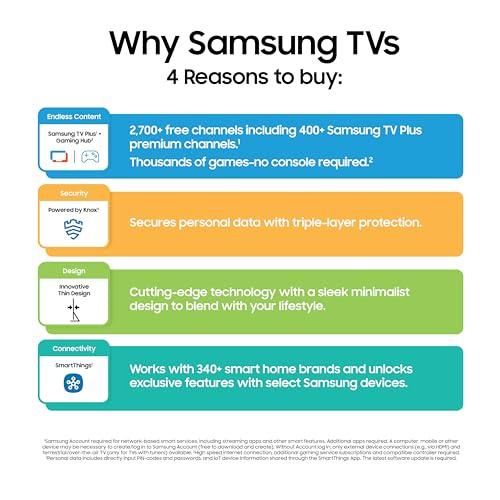
Both TVs run Samsung's Tizen smart platform with identical app support. However, the Samsung Frame Pro includes the advanced NQ4 AI Gen3 processor with enhanced upscaling and AI features, while the Samsung Q7F uses the more basic Q4 AI Gen1 processor.
The Samsung Frame Pro includes a Wireless One Connect Box that houses all connections and transmits wirelessly to the TV, eliminating visible cables for a clean aesthetic. The Samsung Q7F uses traditional wired connections. This feature is valuable if you prioritize minimal cable clutter.
The Samsung Frame Pro reaches over 1,000 nits peak brightness, making it excellent for bright rooms with windows. The Samsung Q7F maxes out around 400 nits, which works for moderate lighting but struggles in very bright environments.
Yes, both the Samsung Q7F and Samsung Frame Pro support HDR10+ content. However, the Frame Pro's superior brightness makes HDR content much more impactful, while the Q7F's lower brightness limits HDR effectiveness.
The Samsung Frame Pro offers superior audio with a 40W 2.0.2 channel system including Dolby Atmos support. The Samsung Q7F has basic 20W stereo speakers. Both benefit from external sound systems, but the Frame Pro provides better built-in performance.
The Samsung Frame Pro works better for home theater with its higher brightness, improved contrast, and advanced processor for better HDR performance. The Samsung Q7F has limitations with darker scenes and overall contrast that reduce cinematic impact.
The Samsung Q7F provides basic QLED performance at a budget price but lacks modern features like HDMI 2.1. The Samsung Frame Pro commands a significant premium but offers unique wireless design, art display capabilities, and substantially better picture quality for those who value its lifestyle approach.
The Samsung Q7F comes in multiple sizes from 43" to 85". The Samsung Frame Pro is only available in larger sizes: 65", 75", and 85", with smaller sizes exclusive to the standard Frame model rather than the Pro variant.
We've done our best to create useful and informative comparisons to help you decide what product to buy. Our research uses advanced automated methods to create this comparison and perfection is not possible - please contact us for corrections or questions. These are the sites we've researched in the creation of this article: bestbuy.com - rtings.com - bestbuy.com - youtube.com - youtube.com - youtube.com - samsung.com - samsung.com - samsung.com - billsmith.com - <a href="https://www.costco.com/samsung-65%22-class---q7-qled-series---4k-vision-ai-smart-tv---allstate-3-year-protection-plan-bundle-included-for-5-years-of-total-coverage.product.4000359633.html">costco.com - samsung.com - hometechnologyreview.com - hometechnologyreview.com - bestbuy.com - samsung.com - bestbuy.com - samsung.com - hometechnologyreview.com - samsung.com - samsung.com - tomsguide.com - youtube.com - smarthomesounds.co.uk - images.samsung.com - rtings.com - samsung.com - bestbuy.com - bestbuy.com - businessinsider.com - dentonstv.com - samsung.com - flatpanelshd.com - samsung.com - jefflynch.com - youtube.com - <a href="https://www.costco.com/samsung-65%22-class---the-frame-pro-series---neo-qled-4k-mini-led---art-mode-vision-ai-smart-tv---allstate-3-year-protection-plan-bundle-included-for-5-years-of-total-coverage.product.4000358317.html">costco.com

Privacy Policy
Terms and Conditions - Affiliate Policy
Home Security
© Copyright 2008-2026.
11816 Inwood Rd #1211, Dallas, TX 75244