

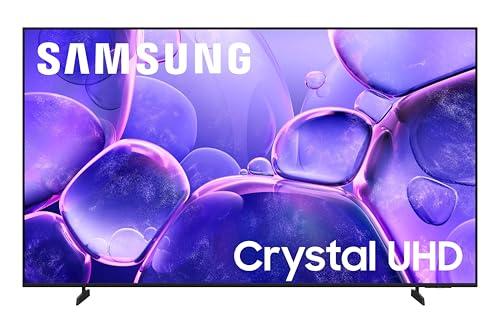
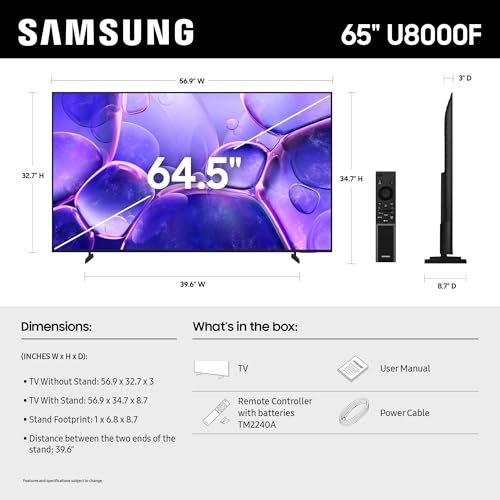
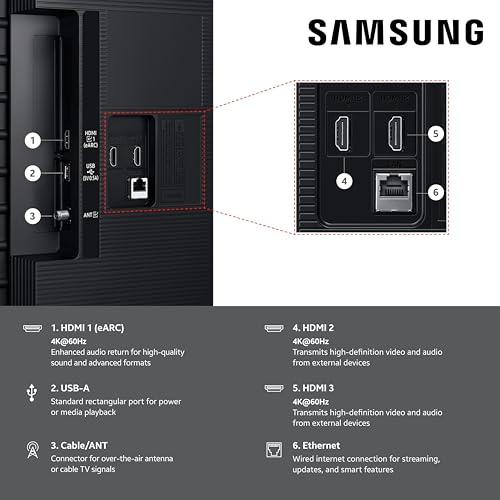
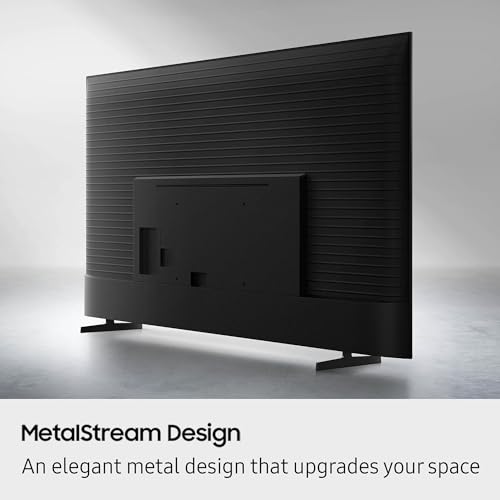
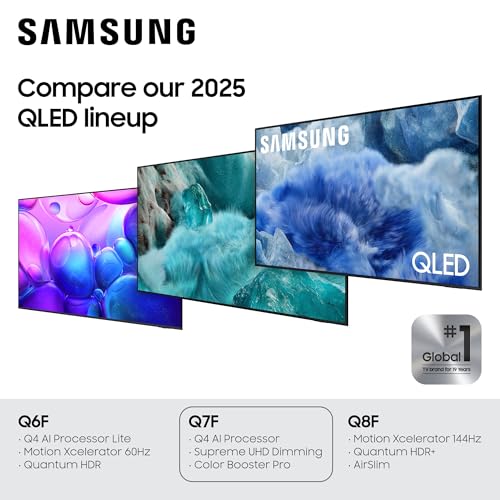
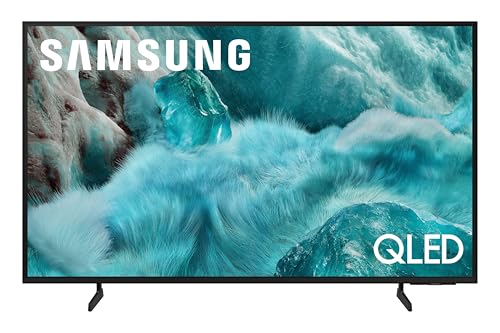
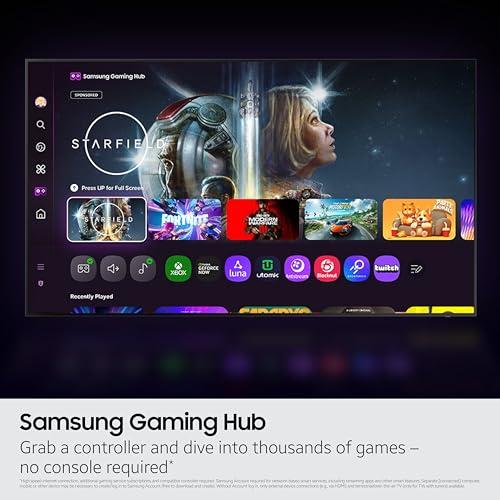
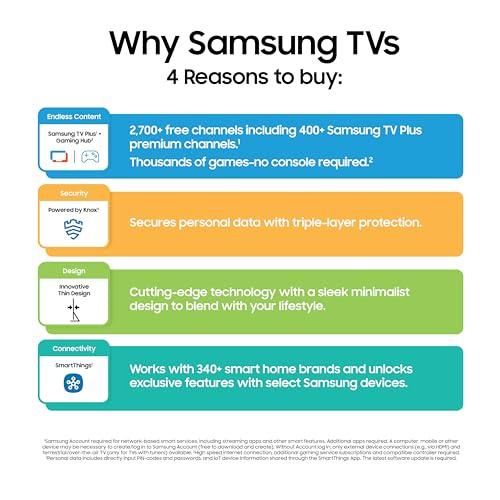
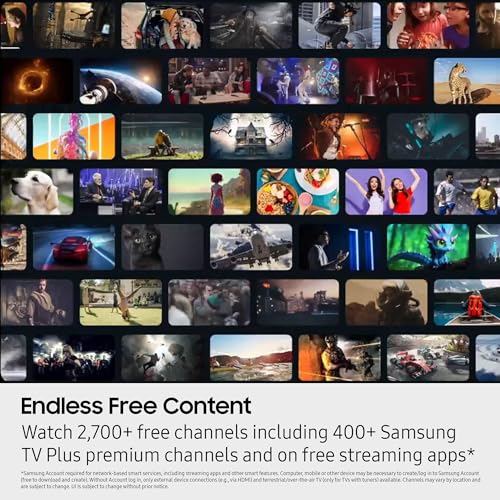
When Samsung released their 2025 TV lineup, they positioned two models squarely at budget-conscious shoppers: the Crystal UHD U8000F and the Q7F Series QLED. Both promise 4K picture quality and smart features without the premium price tag, but understanding which one delivers better value requires digging into what makes these TVs tick.
After researching extensive user feedback and professional reviews, one thing becomes clear: these aren't just two TVs with different names. They represent fundamentally different approaches to delivering budget-friendly entertainment, and choosing the wrong one could leave you disappointed with your viewing experience for years to come.
The budget 4K TV market has evolved dramatically since these display technologies first emerged. What once required spending thousands of dollars is now accessible for under a thousand, but this accessibility comes with trade-offs. Budget TVs typically sacrifice advanced features like local dimming (which creates deeper blacks by controlling LED zones independently), high refresh rates for smooth gaming, and peak brightness levels that make HDR content truly pop.
When evaluating any budget 4K TV, the most critical performance metrics are color accuracy (how true-to-life colors appear), peak brightness (crucial for HDR and bright room viewing), contrast ratio (the difference between the darkest blacks and brightest whites), and motion handling (how well the TV displays fast-moving content without blur). These fundamentals determine whether you'll enjoy your TV or constantly notice its limitations.
The Samsung U8000F and Q7F attack these challenges differently, and understanding their approaches helps explain why one consistently outperforms the other across most scenarios.
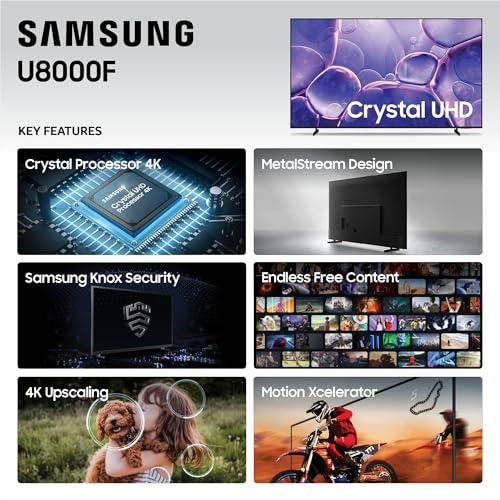
The biggest distinction between these models lies in their display technology. The U8000F uses Samsung's Crystal UHD system, which is essentially a standard LED panel with some software enhancements. Think of it as a traditional TV with a few modern upgrades—it'll display a picture, but don't expect it to wow you.
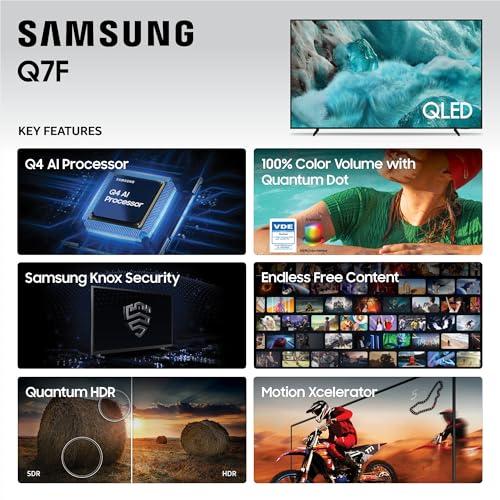
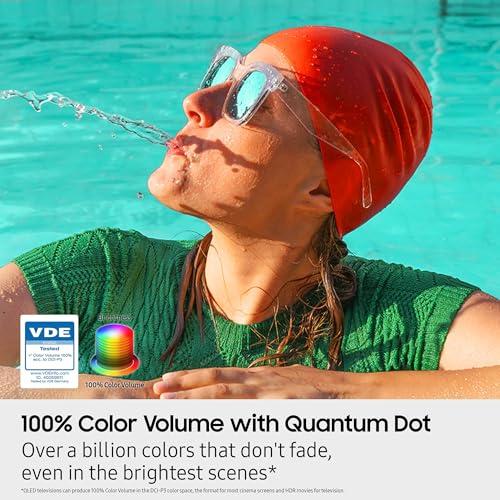
The Q7F, however, uses QLED technology with Quantum Dots. Here's why this matters: Quantum Dots are microscopic particles that emit specific colors when hit with light. This creates what Samsung calls "100% Color Volume," meaning the TV can produce over a billion distinct colors that remain accurate even at different brightness levels. The technology is Pantone-validated, which means it meets industry standards for color accuracy—the same standards used by professional designers and photographers.
In practical terms, this translates to the Q7F displaying more vibrant sunsets, more natural skin tones, and colors that look closer to what directors intended. The U8000F often shows a noticeable green tint in certain content, and colors can appear washed out or artificial, especially in HDR mode.
Based on our research of professional testing and user experiences, the picture quality gap between these TVs is more significant than their similar pricing might suggest. The Q7F consistently delivers superior image quality across multiple metrics.
Color Performance represents the most dramatic difference. The Q7F's Quantum Dot technology produces noticeably more vibrant and accurate colors. Users frequently mention how natural skin tones appear and how vibrant landscapes look without being oversaturated. The U8000F, by contrast, tends to produce muted colors in HDR content and shows that problematic green tint that can make viewing less enjoyable over time.
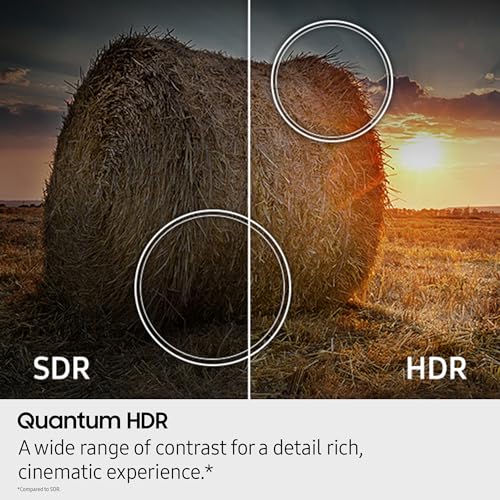
Brightness and HDR performance favors the Q7F, though neither TV excels in bright rooms. Both TVs struggle to overcome glare from windows or bright lights, but the Q7F achieves modestly higher peak brightness. This difference becomes more apparent with HDR content, where the Q7F can display more impactful highlights and better shadow detail. The U8000F's HDR performance is particularly disappointing—HDR content often looks dim and lacks the dynamic range that makes the format worthwhile.
Contrast shows another advantage for the Q7F. While neither TV includes local dimming (a feature that independently controls different screen zones for better blacks), the Q7F achieves better contrast ratios through its processing. Dark scenes appear less washed out, though both TVs suffer from the grayish blacks typical of budget models without local dimming.
The practical impact of these differences becomes obvious during actual viewing. Movie nights with the Q7F feel more immersive thanks to its superior color reproduction and contrast. The U8000F, while adequate for basic TV watching, often reminds you that you're watching a budget display.
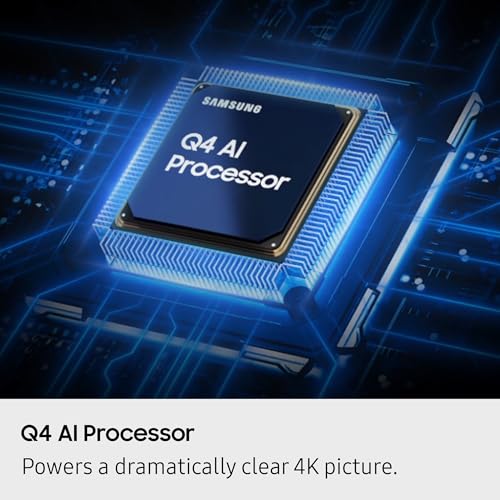
This is where the Q7F pulls significantly ahead. Both TVs run Samsung's Tizen operating system, but the Q7F includes the Q4 AI Processor with Samsung Vision AI—a suite of artificial intelligence features that genuinely improve the viewing experience.
Vision AI analyzes content in real-time to optimize picture and sound settings. It recognizes whether you're watching a dark movie scene, a bright sports broadcast, or animated content, then adjusts processing accordingly. The system also provides personalized content recommendations based on your viewing habits and can even generate custom wallpaper artwork using AI.
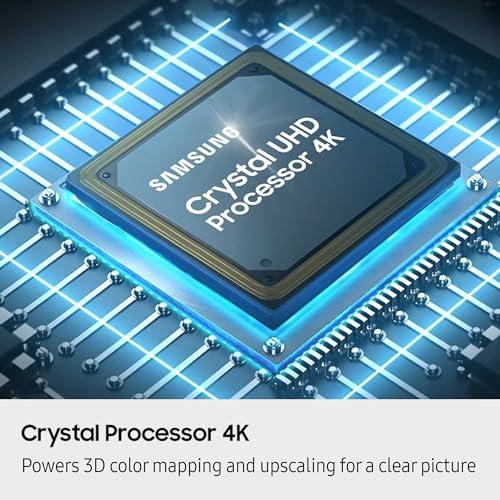
The U8000F uses the more basic Crystal Processor 4K, which handles standard upscaling (improving lower-resolution content to near-4K quality) but lacks the intelligent optimization features. While both TVs offer smooth navigation and access to all major streaming apps, the Q7F's AI capabilities create a more refined, personalized experience that adapts to your preferences over time.
For users who appreciate technology that learns and improves, the Q7F's smart features justify its higher price. The AI recommendations alone can help discover new content, while the automatic picture optimization means less time tweaking settings manually.
Gaming performance reveals an interesting contradiction. The U8000F includes Variable Refresh Rate (VRR) support, while the Q7F surprisingly does not. VRR synchronizes the TV's refresh rate with your gaming console's output, reducing screen tearing and creating smoother gameplay.
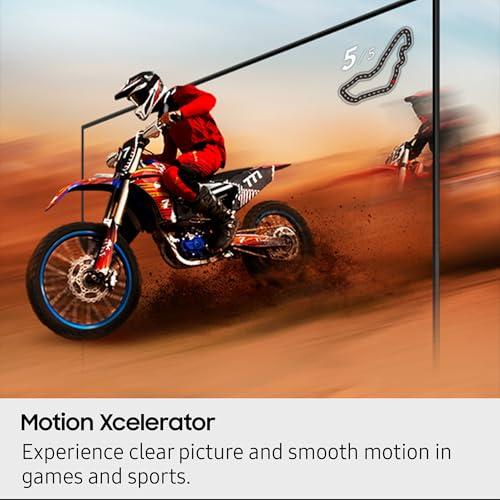
However, this advantage proves largely theoretical. Both TVs are limited to 60Hz refresh rates, which means VRR only functions within a very narrow range. Modern gaming consoles like the PlayStation 5 and Xbox Series X can output games at 120Hz, but neither TV can display these higher frame rates. The practical benefit of the U8000F's VRR support is minimal for most gaming scenarios.
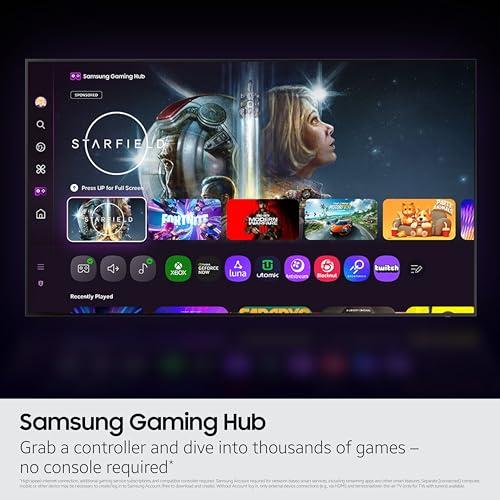
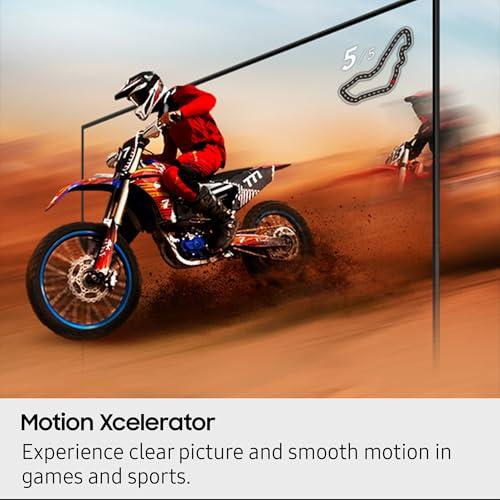
Both TVs offer low input lag (around 10 milliseconds), making them responsive enough for casual gaming. They include Auto Game Mode, which automatically optimizes settings when it detects gaming input. For serious competitive gaming, though, neither TV is ideal due to their 60Hz limitation and lack of HDMI 2.1 ports.
If gaming is a priority, consider that both models represent compromises. The U8000F's VRR support provides a slight edge for console gaming, but the Q7F's superior picture quality enhances the visual gaming experience more meaningfully.
Both TVs feature modest 20-watt, 2-channel speaker systems—adequate for basic viewing but requiring a soundbar upgrade for truly immersive audio. However, the Q7F includes several audio enhancements that improve the built-in speaker experience.
Object Tracking Sound Lite creates a more three-dimensional audio experience by simulating sound movement that matches on-screen action. Adaptive Sound analyzes content in real-time to optimize audio output—dialogue gets boosted during conversations, while action scenes receive enhanced dynamic range.
The U8000F provides clear audio but lacks these intelligent processing features. For users who plan to rely on built-in speakers initially, the Q7F's audio enhancements provide noticeable improvements in clarity and immersion.
Both TVs support Q-Symphony, which allows them to work alongside compatible Samsung soundbars for enhanced audio. This feature ensures that upgrading your audio system later won't waste the TV's built-in speakers—they'll work together for richer sound.
The U8000F received a design update for 2025, replacing the all-plastic back panel of its predecessor with a metal construction. This improves both durability and aesthetics, making the TV feel more premium during handling and installation.
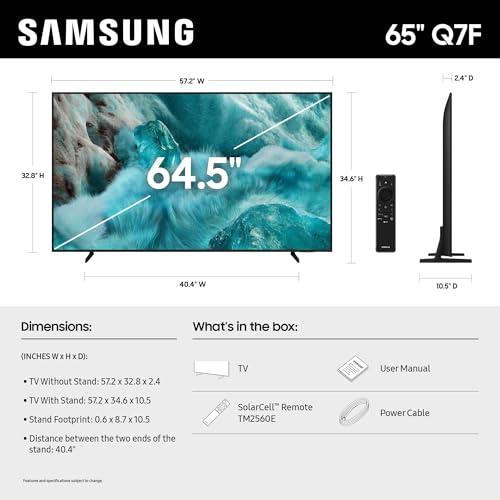
The Q7F features a "3-bezel-less" design that minimizes the borders around the screen for a more immersive viewing experience. Its adjustable stand can be configured for different furniture setups, offering either wide or narrow leg spacing to accommodate various entertainment centers.
Both TVs are lightweight (around 35-40 pounds for the 65-inch models) and wall-mount friendly. The build quality feels solid for the price range, though neither offers the premium materials found in higher-end models.
These design differences are subtle but contribute to long-term satisfaction. The Q7F's more immersive design and flexible stand options provide practical benefits, while the U8000F's metal back construction suggests better durability.
At the time of writing, the Q7F typically commands a modest premium over the U8000F, but this price difference is smaller than the performance gap would suggest. When considering long-term value, the Q7F delivers significantly more capability for only incrementally more cost.
The Q7F's Quantum Dot technology, AI processing, and enhanced audio features create a viewing experience that feels more premium and engaging. Users report higher satisfaction rates with the Q7F, particularly regarding color accuracy and smart features.
However, both TVs face stiff competition from other budget brands. Professional reviewers consistently note that models from TCL and Hisense often deliver better performance at similar or lower prices. The value proposition for both Samsung models depends heavily on your preference for Samsung's Tizen smart platform and brand ecosystem integration.
For dedicated home theater setups, both TVs represent significant compromises. The lack of local dimming means neither can deliver the deep blacks essential for cinematic viewing. Peak brightness limitations reduce HDR impact, and the 60Hz refresh rate eliminates the smooth motion crucial for sports and action content.
However, if you're building a casual home theater or upgrading from an older TV, the Q7F provides the better foundation. Its superior color accuracy and contrast create more engaging movie nights, while the AI processing helps optimize content automatically.
Plan on adding a soundbar regardless of which TV you choose—the 20-watt built-in speakers simply can't fill a dedicated viewing room effectively. The Q7F's Q-Symphony support ensures your eventual audio upgrade will integrate seamlessly.
Choose the Samsung Q7F if:
Choose the Samsung U8000F if:
Consider alternatives if:
After extensive research into user experiences and professional evaluations, the Samsung Q7F emerges as the clear winner between these two models. While the U8000F costs less upfront, the Q7F's superior picture quality, intelligent features, and better long-term value make it worth the modest premium for most buyers.
However, it's worth noting that professional reviewers often describe both TVs as "disappointing" when compared to competing budget options from other brands. Samsung's brand recognition and Tizen smart platform are strong selling points, but purely from a performance-per-dollar perspective, alternatives exist that deliver better picture quality and features.
The choice between these Samsung models ultimately depends on whether you prioritize saving every possible dollar (U8000F) or getting meaningfully better performance for a modest increase (Q7F). For most viewers, the Q7F provides enough improvement in daily viewing experience to justify its higher cost, making it the smarter long-term investment.
Just remember that both TVs work best in moderately lit rooms with realistic expectations. They're solid budget options that will serve casual viewers well, but they won't match the performance of premium displays or even some competing budget models from other manufacturers.
| Samsung 65-Inch Crystal UHD U8000F | Samsung 65-Inch Q7F Series QLED |
|---|---|
| Display Technology - Determines color accuracy and vibrancy | |
| Crystal UHD with standard LED backlighting | QLED with Quantum Dot technology |
| Color Performance - Most noticeable difference in daily viewing | |
| Standard color gamut, prone to green tinting | 100% Color Volume with Pantone validation, billions of accurate colors |
| Processor - Affects smart features and picture optimization | |
| Crystal Processor 4K (basic processing) | Q4 AI Processor with Samsung Vision AI |
| HDR Support - Important for streaming and movie quality | |
| Basic HDR support with poor brightness | Quantum HDR with HDR10+ and better dynamic range |
| Smart AI Features - Enhances user experience and content discovery | |
| None (standard Tizen OS only) | Vision AI with scene recognition, adaptive optimization, personalized recommendations |
| Variable Refresh Rate (VRR) - Reduces gaming screen tearing | |
| Yes (though limited effectiveness at 60Hz) | No |
| Audio Technology - Affects built-in speaker quality | |
| Standard 20W 2.0 speakers | 20W 2.0 with Object Tracking Sound Lite and Adaptive Sound |
| Peak Brightness - Critical for HDR and bright room viewing | |
| Low brightness, struggles with HDR content | Modestly higher brightness, still limited for bright rooms |
| Local Dimming - Controls blacks and contrast | |
| None (poor black levels) | Supreme UHD Dimming (processing-based, not true local dimming) |
| Design Features - Affects aesthetics and setup flexibility | |
| Metal back construction, standard bezels | 3-bezel-less design, adjustable stand positions |
| Refresh Rate - Impacts motion clarity and gaming | |
| 60Hz native (120Hz motion processing) | 60Hz native (120Hz motion processing) |
| HDMI Connectivity - Determines future gaming compatibility | |
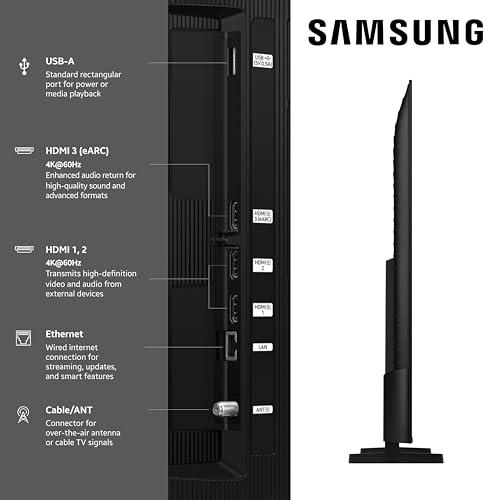
| 3 HDMI 2.0 ports (no HDMI 2.1) | 3 HDMI 2.0 ports (no HDMI 2.1) |
The Samsung Q7F QLED delivers significantly better picture quality than the Samsung U8000F. The Q7F uses Quantum Dot technology to produce 100% color volume with over a billion accurate colors, while the U8000F relies on basic Crystal UHD technology. Users consistently report more vibrant colors, better contrast, and less color distortion with the Q7F, making it the clear winner for picture quality.
Crystal UHD in the Samsung U8000F is Samsung's entry-level display technology using standard LED backlighting with software enhancements. QLED in the Samsung Q7F incorporates Quantum Dot particles that emit precise colors when hit with light, creating more accurate and vibrant colors. The Q7F's QLED technology is Pantone-validated for professional color accuracy, while the U8000F often shows color distortions and green tinting.
For gaming, it's a mixed comparison. The Samsung U8000F supports Variable Refresh Rate (VRR) while the Samsung Q7F does not, which theoretically reduces screen tearing. However, both TVs are limited to 60Hz refresh rates, making the VRR advantage minimal. Both offer low input lag around 10ms and Auto Game Mode. The Q7F provides better visual quality for gaming, while the U8000F has slight technical gaming advantages that aren't very impactful in practice.
No, the smart features differ significantly. Both run Samsung's Tizen OS, but the Samsung Q7F includes the Q4 AI Processor with Vision AI capabilities that provide personalized recommendations, real-time scene optimization, and adaptive picture/sound adjustments. The Samsung U8000F uses the basic Crystal Processor 4K without AI features. The Q7F offers a more intelligent, personalized smart TV experience compared to the standard interface on the U8000F.
Neither TV excels in bright rooms, but the Samsung Q7F performs slightly better than the Samsung U8000F. Both struggle with glare and have limited peak brightness for overcoming ambient light. The Q7F achieves modestly higher brightness levels and better contrast, making it more watchable in moderately lit rooms. For very bright rooms with lots of windows, both TVs will disappoint, and you should consider higher-brightness alternatives.
Both the Samsung U8000F and Samsung Q7F have 20W 2-channel speakers that are adequate for basic viewing but will benefit from soundbar upgrades. The Q7F includes Object Tracking Sound Lite and Adaptive Sound processing for better audio quality from the built-in speakers. Both support Q-Symphony to work alongside Samsung soundbars. For home theater use, plan on adding external audio regardless of which TV you choose.
The Samsung Q7F offers better overall value despite its higher cost. While the Samsung U8000F costs less upfront, the Q7F provides significantly better picture quality, AI smart features, and enhanced audio processing for only a modest premium. The performance improvements in the Q7F justify the price difference for most buyers, making it the better long-term investment.
HDR performance strongly favors the Samsung Q7F. It supports Quantum HDR with HDR10+ and achieves better brightness and contrast for more impactful HDR viewing. The Samsung U8000F has basic HDR support but performs poorly due to low peak brightness, making HDR content appear dim and lacking in dynamic range. Neither TV supports Dolby Vision, but the Q7F delivers a much more satisfying HDR experience.
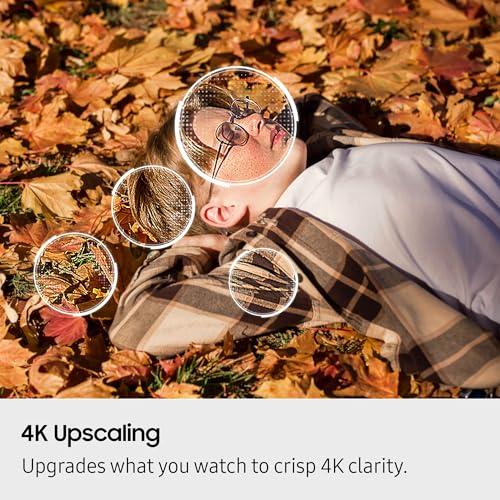
Yes, both the Samsung U8000F and Samsung Q7F display 4K content from Netflix, Prime Video, Disney+, and other streaming services. Both include 4K upscaling to improve lower-resolution content. However, the Q7F provides better color accuracy and processing for 4K content, while the U8000F may show color distortions. Both TVs handle 4K streaming well, but the Q7F delivers superior image quality.
For movies and TV shows, the Samsung Q7F is clearly superior to the Samsung U8000F. The Q7F's Quantum Dot technology produces more accurate colors and better contrast, making movies more immersive. Its AI processing automatically optimizes settings for different content types. The U8000F works for basic viewing but often shows color distortions and lacks the visual impact that makes movie watching truly enjoyable.
Both TVs have limitations for dedicated home theater use, but the Samsung Q7F is the better choice. Neither has local dimming for deep blacks, and both have modest peak brightness. However, the Q7F's superior color accuracy, better contrast, and AI optimization create a more cinematic experience. For serious home theater use, consider that both TVs lack advanced features like 120Hz refresh rates and true local dimming found in higher-end models.
Choose the Samsung Q7F if you want the best Samsung budget TV experience. While the Samsung U8000F costs less, the Q7F delivers meaningfully better picture quality, smart AI features, and enhanced audio for only a modest price increase. The Q7F provides better long-term satisfaction and represents the sweet spot in Samsung's budget lineup, making it worth the extra investment for most buyers.
We've done our best to create useful and informative comparisons to help you decide what product to buy. Our research uses advanced automated methods to create this comparison and perfection is not possible - please contact us for corrections or questions. These are the sites we've researched in the creation of this article: bestbuy.com - youtube.com - youtube.com - rtings.com - youtube.com - samsung.com - hometechnologyreview.com - rtings.com - samsung.com - displayspecifications.com - samsung.com - displayspecifications.com - walmart.com - billsmith.com - dentonstv.com - samsung.com - samsung.com - samsung.com - youtube.com - bestbuy.com - bestbuy.com - youtube.com - samsung.com - donstv.com - bestbuy.com - rtings.com - bestbuy.com - youtube.com - youtube.com - youtube.com - samsung.com - samsung.com - samsung.com - billsmith.com - costco.com - samsung.com - hometechnologyreview.com - hometechnologyreview.com - bestbuy.com - samsung.com - bestbuy.com - samsung.com - hometechnologyreview.com - samsung.com - samsung.com

Privacy Policy
Terms and Conditions - Affiliate Policy
Home Security
© Copyright 2008-2026.
11816 Inwood Rd #1211, Dallas, TX 75244