

When you're shopping for a new TV, the world of QLED displays can feel overwhelming. These Quantum Dot LED televisions promise vibrant colors and impressive brightness, but with so many options at different price points, how do you know which one actually delivers? Today, we're diving deep into two compelling options that represent very different approaches to the QLED market: the budget-friendly Toshiba 65" M550 Series QLED Fire TV and Samsung's larger 75" Q6F Series 2025 Smart TV.
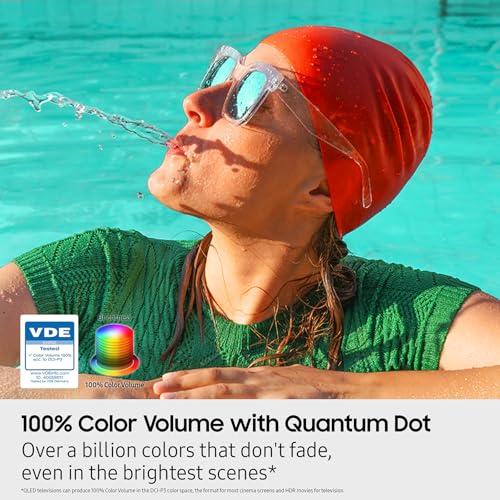
Before we compare these specific models, let's talk about what QLED technology actually does for your viewing experience. QLED stands for Quantum Dot LED, and it's essentially a layer of microscopic particles placed between the LED backlight and the LCD panel. These quantum dots emit very pure colors when hit with light, allowing the TV to display a much wider range of colors than traditional LED displays.
Think of it like having a more sophisticated paint palette – instead of mixing basic colors to approximate what you want, you have access to much more precise and vivid shades. This technology particularly shines when displaying bright, colorful content like nature documentaries, animated movies, or HDR (High Dynamic Range) content that's designed to show off these enhanced colors.
The key things to understand about any QLED TV are color volume (how many colors it can display at different brightness levels), peak brightness (how bright it can get for highlights), and contrast ratio (the difference between the darkest blacks and brightest whites). These factors work together to create what we perceive as picture quality.
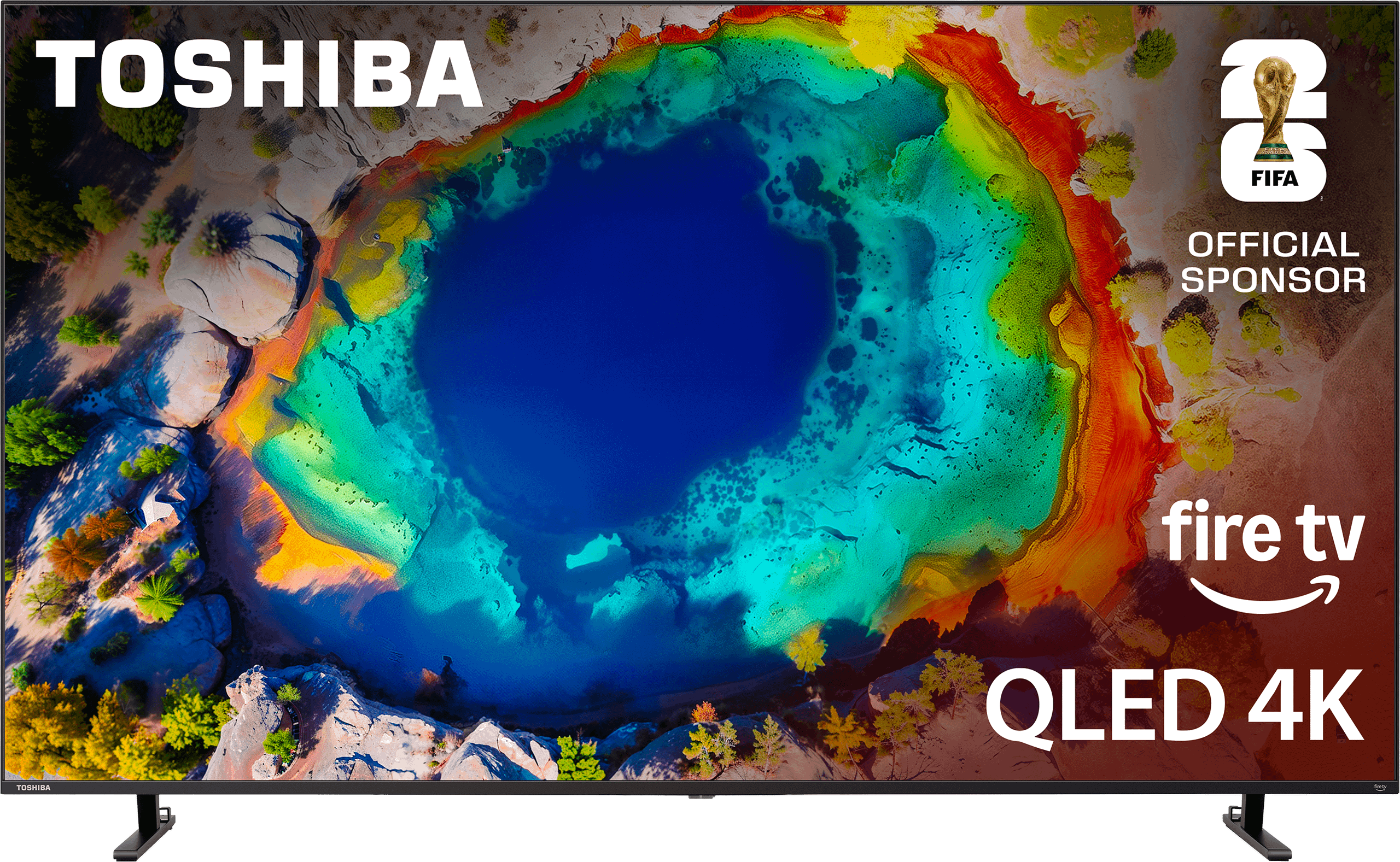
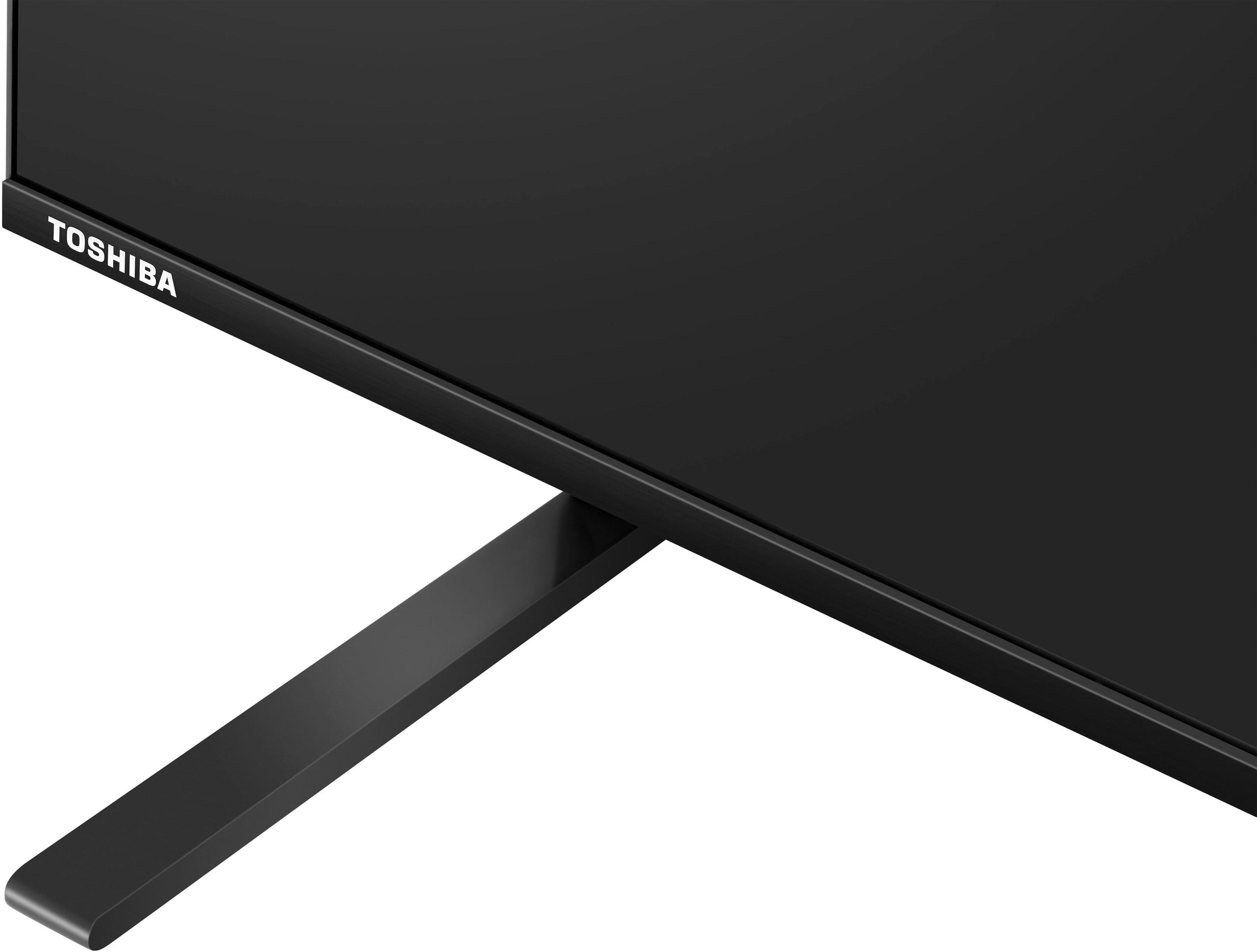
The Toshiba M550 Series, released in 2024, represents something of a minor miracle in the TV world. At the time of writing, it offers features typically found in TVs costing significantly more, packaged in a 65-inch display that competes aggressively on price. Toshiba achieved this by focusing their engineering budget on the display technology itself rather than premium build materials or extensive marketing.
What makes the M550 particularly interesting is its full-array local dimming system with 48 individual zones. Local dimming is a backlight technology that allows different areas of the screen to brighten or dim independently. Imagine trying to light a painting with a single flashlight versus having 48 smaller lights you can control individually – that's essentially what full-array local dimming does for your TV picture.
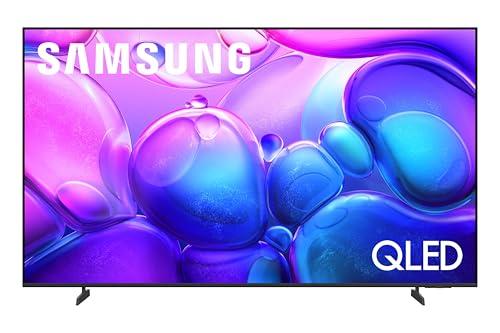
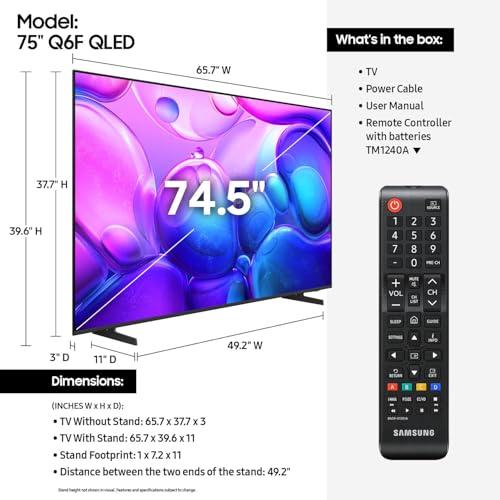
Samsung's 75" Q6F Series, launched in 2025, takes a different approach. As Samsung's entry-level QLED for 2025, it prioritizes screen size and platform stability over cutting-edge display technology. Samsung has been refining their quantum dot implementation for years, and while the Q6F doesn't represent their most advanced work, it benefits from that accumulated expertise.
The Q6F's most obvious advantage is sheer size – 75 inches versus 65 inches creates a noticeably more immersive experience. But Samsung also brings their mature Tizen smart TV platform and broader ecosystem integration, which can be valuable if you're already invested in Samsung devices.
Here's where our research into professional reviews and user feedback reveals a clear technical winner. The Toshiba M550's full-array local dimming with 48 zones provides superior contrast control compared to the Samsung Q6F's basic UHD dimming. In practical terms, this means the Toshiba can display deeper blacks in dark movie scenes and prevent bright objects from creating a "glow" around them on the screen.
Professional reviewers consistently noted that while both TVs deliver the vibrant colors expected from QLED technology, the Toshiba's contrast performance feels more premium. Dark scenes in movies like those in the Marvel Cinematic Universe or horror films benefit significantly from this local dimming capability.
The M550 also takes the lead in HDR support, offering Dolby Vision, HDR10+, and HLG formats, while the Q6F is limited to HDR10+ only. Dolby Vision is particularly important because it includes dynamic metadata – essentially, frame-by-frame instructions for how the TV should display each scene for optimal impact.
The Toshiba's REGZA Engine ZR processor deserves special mention. This chip analyzes incoming content and applies AI-based upscaling to improve lower-resolution sources. When you're watching older movies or TV shows that weren't originally filmed in 4K, this processing can make a meaningful difference in perceived sharpness and detail.
However, the Samsung Q6F counters with superior peak brightness capabilities. In very bright rooms with lots of windows, the Samsung's ability to get brighter can help maintain color vibrancy and contrast. The quantum dot implementation also delivers Samsung's signature punchy, saturated look that many viewers prefer for sports and colorful content.
The 10-inch size difference between these TVs fundamentally changes the viewing experience. A 75-inch screen has about 36% more surface area than a 65-inch screen, which creates more immersive viewing but also makes picture quality flaws more noticeable. The Samsung's larger display means you'll sit further away, which can help mask some of the limitations of its simpler dimming system.
For home theater setups where you want that cinematic feel, the larger Samsung screen provides better scale for movie watching. However, if you're sitting closer than about 9 feet from the TV, the Toshiba's superior contrast technology might actually deliver a better overall picture despite the smaller size.
Gaming performance reveals the biggest technical gap between these TVs. The Toshiba M550 features a native 120Hz panel – meaning it can actually display 120 unique frames per second – while the Samsung Q6F is limited to 60Hz refresh rates.
For context, next-generation gaming consoles like the PlayStation 5 and Xbox Series X can output games at 120fps when playing at 1440p or 1080p resolution. The Toshiba can display these high frame rate games smoothly, while the Samsung cannot. This isn't just a technical specification – it's a meaningful difference in gaming responsiveness and visual smoothness.
The M550 also supports Variable Refresh Rate (VRR), which synchronizes the TV's refresh rate with the console's output to eliminate screen tearing and stuttering. Combined with Auto Low Latency Mode (ALLM), which automatically switches the TV to its fastest response mode when it detects gaming input, the Toshiba offers a genuinely premium gaming experience.
Professional gaming reviews consistently highlight that the Samsung Q6F feels outdated for serious gaming, especially given its 2025 release date. While it includes basic gaming features like ALLM, the 60Hz limitation makes it unsuitable for competitive gaming or taking full advantage of current console capabilities.
The smart TV experience represents perhaps the most complex comparison between these models. The Toshiba M550 runs Amazon's Fire TV platform with built-in Alexa voice control, while the Samsung Q6F uses Samsung's proprietary Tizen operating system.
Based on user reviews and professional assessments, the Fire TV platform on the Toshiba suffers from performance issues that become apparent during daily use. Multiple reviewers reported slow app loading times, occasional freezing, and a processor that seems underpowered for the operating system it's running. The TV sometimes takes 30 seconds to a minute to load streaming apps, and users report having to restart the TV when it becomes unresponsive.
These aren't minor inconveniences – they're daily frustrations that can make the TV feel cheap despite its impressive display technology. The Fire TV platform also boots directly to advertisements rather than your last-watched content, which many users find intrusive.
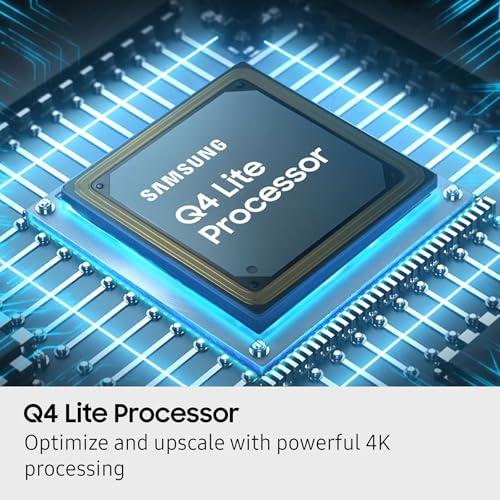
The Samsung Q6F's Tizen platform, in contrast, receives praise for stability and responsiveness. Samsung has been developing Tizen for years, and their Q4 Lite processor appears better matched to the software demands. Users report smoother navigation, faster app launching, and fewer system crashes.
Samsung also offers broader voice assistant support, including Bixby, Alexa, and Google Assistant, compared to the Toshiba's Alexa-only implementation. The SmartThings Hub integration allows the Samsung TV to control other smart home devices, which can be valuable for users building a connected home ecosystem.
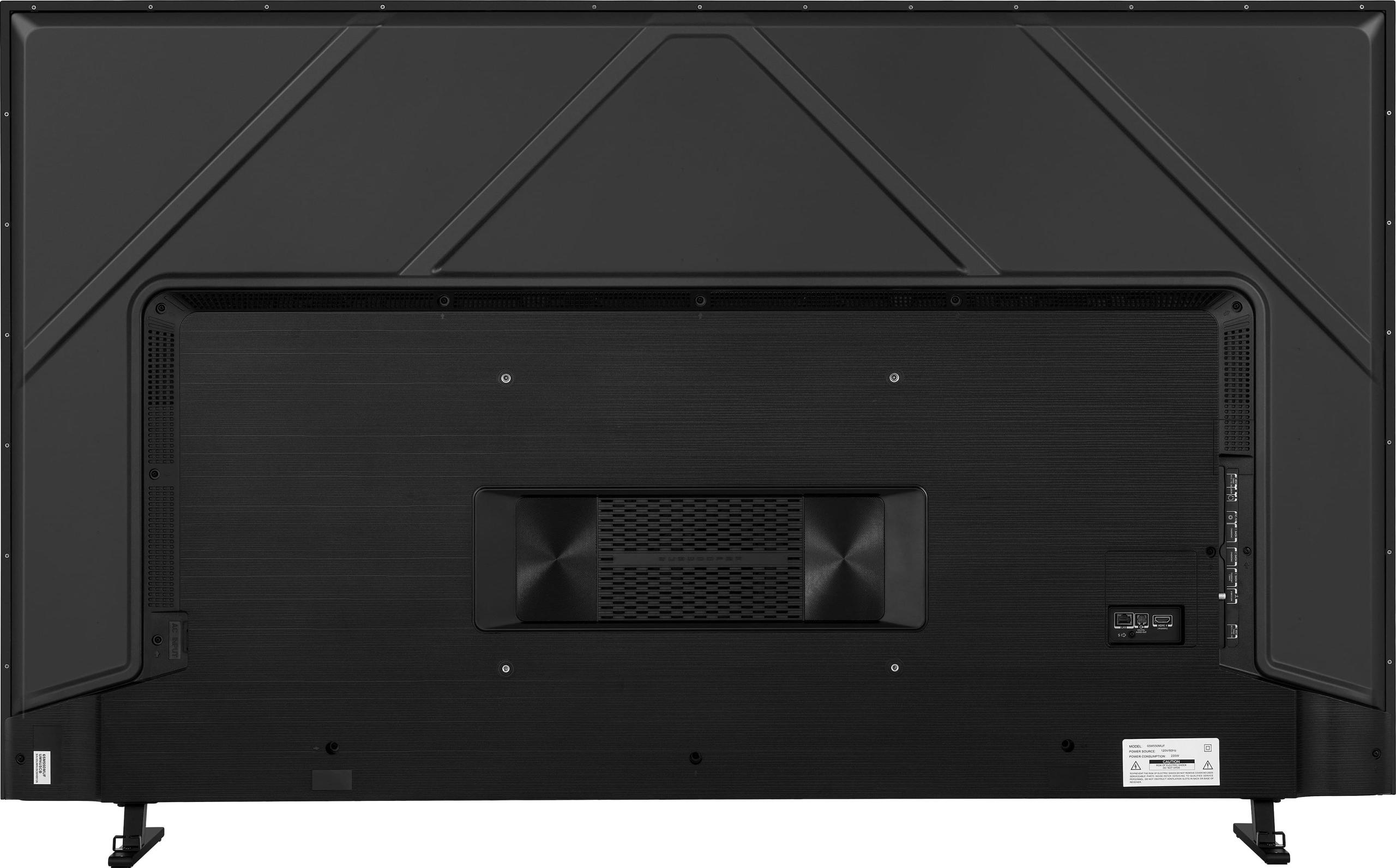
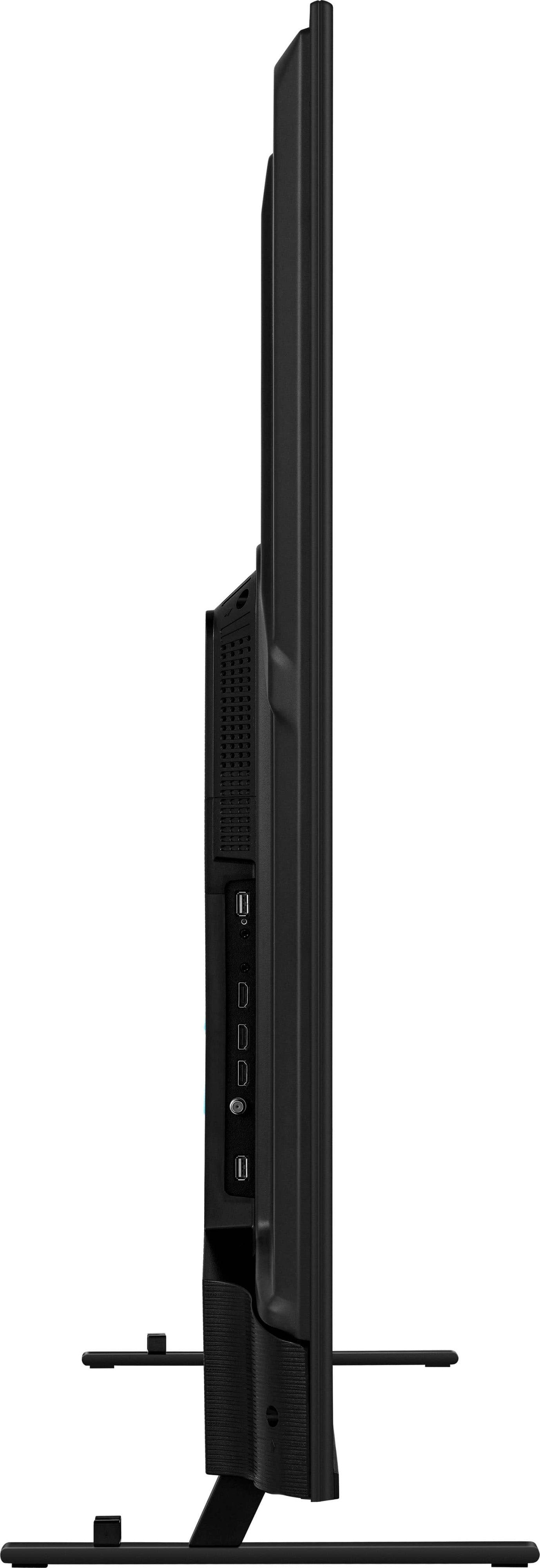
Audio represents an interesting technical comparison. The Toshiba M550 delivers significantly more power with 40-49 watts of output and includes a dedicated subwoofer for bass response. The TV also supports both Dolby Atmos and DTS audio formats, providing broader compatibility with different content sources.
However, user reviews reveal mixed experiences with the Toshiba's audio. While some users appreciate not needing an additional soundbar, others found the audio quality underwhelming despite the higher power rating. The built-in speakers, regardless of their specifications, still can't match the clarity and separation of a dedicated sound system.
The Samsung Q6F takes a more modest approach with 20 watts of 2-channel audio, but includes Object Tracking Sound Lite, which attempts to make audio follow on-screen action. More importantly, Samsung's Q-Symphony technology allows the TV's speakers to work in coordination with Samsung soundbars rather than being disabled when external audio is connected.
For home theater enthusiasts who plan to add a soundbar eventually, Samsung's approach might prove more valuable long-term. However, users who want the best possible built-in audio will find the Toshiba's higher-powered system more immediately satisfying.
At the time of writing, these TVs occupy different value propositions that reflect their manufacturers' strategies. The Toshiba M550 offers premium display technology at an aggressive price point, making features like 120Hz gaming and full-array local dimming accessible to budget-conscious buyers.
The Samsung Q6F commands a price premium that reflects both the larger screen size and Samsung's brand positioning. However, when calculated on a price-per-square-inch basis, the Samsung becomes more competitive, especially considering the platform stability advantages.
For buyers prioritizing immediate value, the Toshiba delivers more advanced display technology for less money. But the Samsung might represent better long-term value for users who prioritize system stability and ecosystem integration over cutting-edge specs.
The total cost of ownership also differs between these models. The Toshiba's platform issues might frustrate users enough to seek replacement sooner, while the Samsung's stability could provide years of reliable service. Additionally, Samsung's established support network and longer history of software updates might prove valuable over a TV's typical 7-10 year lifespan.
For dedicated home theater setups, both TVs present compromises that serious enthusiasts should consider carefully. The Toshiba M550's superior contrast technology and HDR support make it better suited for dark room movie watching, where its local dimming system can deliver more cinematic black levels.
However, the Samsung Q6F's larger size creates a more immersive experience that many home theater fans prefer. The 75-inch screen better fills your field of vision when seated at typical home theater distances (10-12 feet), creating that cinema-like experience many users seek.
Both TVs lack some features that serious home theater enthusiasts expect, such as extensive color calibration controls or professional-grade motion processing. Neither supports Dolby Vision gaming, which is becoming more common on streaming platforms and next-gen consoles.
For casual movie watching and family entertainment, both TVs perform well above their price points. But users building dedicated home theaters might want to consider saving for higher-end models with more comprehensive feature sets.
The choice between these TVs ultimately depends on your priorities and use cases. Choose the Toshiba 65" M550 Series if gaming performance matters to you, if you want the best possible picture quality technology for your budget, or if you can tolerate platform limitations in exchange for superior display capabilities.
The Samsung 75" Q6F Series makes sense if you prioritize screen size above all else, if you value platform stability and ecosystem integration, or if you're primarily watching content in bright rooms where the Samsung's higher peak brightness provides advantages.
For most users, I lean toward recommending the Toshiba despite its platform issues, simply because the display technology advantages are significant and permanent, while software problems might be addressed through updates. However, users who prioritize daily usability and don't game seriously will find the Samsung provides a more polished overall experience.
Neither TV represents perfection, but both offer compelling value in different ways. The key is matching their strengths to your specific needs and being aware of their limitations before making your investment.
| Toshiba 65" M550 Series QLED Fire TV | Samsung 75-Inch QLED Q6F Series 2025 Smart TV |
|---|---|
| Screen Size - Bigger is more immersive but requires more space | |
| 65 inches (ideal for 7-9 feet viewing distance) | 75 inches (needs 9-12 feet for comfortable viewing) |
| Refresh Rate - Critical for gaming and sports smoothness | |
| Native 120Hz (supports PS5/Xbox Series X at 120fps) | 60Hz only (limited for next-gen gaming) |
| Local Dimming - Essential for deep blacks and contrast | |
| Full-array with 48 zones (premium contrast control) | Basic UHD dimming (entry-level contrast) |
| HDR Support - Determines color and brightness range | |
| Dolby Vision, HDR10+, HLG (comprehensive support) | HDR10+ only (missing Dolby Vision premium format) |
| Gaming Features - Matters for console owners | |
| VRR up to 120Hz, ALLM, dedicated Game Mode | VRR limited to 60Hz, basic ALLM |
| Smart Platform - Affects daily usability | |
| Amazon Fire TV with Alexa (feature-rich but laggy) | Samsung Tizen OS (stable and responsive) |
| Audio Power - Built-in sound quality | |
| 40-49W with subwoofer, Dolby Atmos/DTS | 20W 2-channel, Object Tracking Sound Lite |
| HDMI Ports - Connectivity options | |
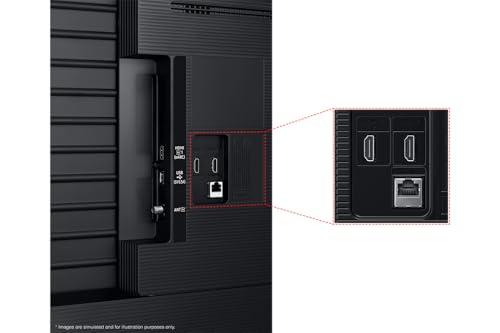
| 4 ports (1 with eARC, 4K 60Hz support) | 3 ports (eARC support, 4K 60Hz) |
| Voice Control - Smart home integration | |
| Built-in Alexa with far-field microphones | Bixby, Alexa, Google Assistant support |
| Ecosystem Integration - Works with other devices | |
| Amazon Echo and Fire devices | SmartThings Hub, Samsung soundbar Q-Symphony |
| Release Year - Indicates feature currency | |
| 2024 (recent but established) | 2025 (latest Samsung entry-level QLED) |
| Best For - Target user | |
| Gamers and value seekers wanting premium display tech | Size-focused buyers prioritizing platform stability |
The Toshiba 65" M550 Series QLED Fire TV delivers superior picture quality for movies thanks to its full-array local dimming with 48 zones, which creates deeper blacks and better contrast in dark scenes. It also supports Dolby Vision HDR, providing more accurate colors and brightness. While the Samsung 75-Inch QLED Q6F Series 2025 Smart TV offers a larger screen for more immersive viewing, its basic UHD dimming can't match the Toshiba's contrast performance in dark movie scenes.
The Toshiba 65" M550 Series QLED Fire TV is significantly better for gaming, featuring a native 120Hz refresh rate that can display games at 120fps when playing at 1440p or 1080p resolution. It supports Variable Refresh Rate (VRR) up to 120Hz and Auto Low Latency Mode (ALLM) for responsive gaming. The Samsung 75-Inch QLED Q6F Series 2025 Smart TV is limited to 60Hz, making it unsuitable for taking full advantage of next-generation console capabilities.
The Samsung 75-Inch QLED Q6F Series 2025 Smart TV is 10 inches larger diagonally than the Toshiba 65" M550 Series QLED Fire TV, providing about 36% more screen area. The Samsung requires 9-12 feet viewing distance for comfortable watching, while the Toshiba works well at 7-9 feet. The larger Samsung screen creates a more immersive experience but also makes picture quality flaws more noticeable up close.
The Samsung 75-Inch QLED Q6F Series 2025 Smart TV runs Samsung's Tizen operating system, which receives praise for stability and responsiveness from users and reviewers. The Toshiba 65" M550 Series QLED Fire TV uses Amazon Fire TV, which offers extensive streaming options but suffers from performance issues including slow app loading, occasional freezing, and lag that can be frustrating for daily use.
The Toshiba 65" M550 Series QLED Fire TV offers exceptional value by providing premium display features like 120Hz refresh rate, full-array local dimming, and Dolby Vision support typically found in much more expensive TVs. The Samsung 75-Inch QLED Q6F Series 2025 Smart TV commands a higher price but provides 10 additional inches of screen size and superior platform stability, making the value comparison depend on your priorities.
The Toshiba 65" M550 Series QLED Fire TV delivers more powerful built-in audio with 40-49 watts of output and includes a dedicated subwoofer, plus support for Dolby Atmos and DTS formats. The Samsung 75-Inch QLED Q6F Series 2025 Smart TV has a more modest 20-watt 2-channel system but features Object Tracking Sound Lite and Q-Symphony technology that works with Samsung soundbars for enhanced audio when you upgrade.
The Samsung 75-Inch QLED Q6F Series 2025 Smart TV performs better in bright rooms due to its higher peak brightness capabilities, which help maintain color vibrancy and contrast when competing with daylight or lamp glare. While the Toshiba 65" M550 Series QLED Fire TV has superior contrast technology, the Samsung's brightness advantage makes it more suitable for living rooms with lots of windows.
The Toshiba 65" M550 Series QLED Fire TV offers comprehensive HDR support including Dolby Vision, HDR10+, and HLG formats, providing the widest compatibility with streaming content and physical media. The Samsung 75-Inch QLED Q6F Series 2025 Smart TV supports HDR10+ but lacks Dolby Vision, which is used by Netflix, Disney+, and many 4K Blu-ray discs for enhanced color and contrast.
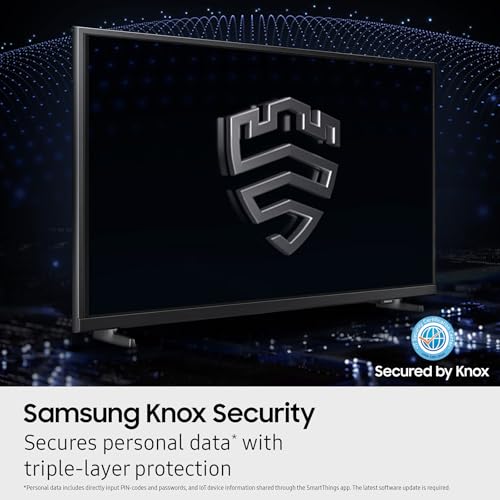
The Samsung 75-Inch QLED Q6F Series 2025 Smart TV offers broader smart home integration with its built-in SmartThings Hub, Knox security platform, and support for Bixby, Alexa, and Google Assistant. The Toshiba 65" M550 Series QLED Fire TV focuses on Amazon's ecosystem with built-in Alexa and far-field microphones but is more limited for users with non-Amazon smart devices.
The Toshiba 65" M550 Series QLED Fire TV provides 4 HDMI ports with one supporting eARC for soundbar connections, offering more connectivity options for multiple gaming consoles, streaming devices, and other equipment. The Samsung 75-Inch QLED Q6F Series 2025 Smart TV has 3 HDMI ports with eARC support, which may require users to choose between connected devices or use an HDMI switcher.
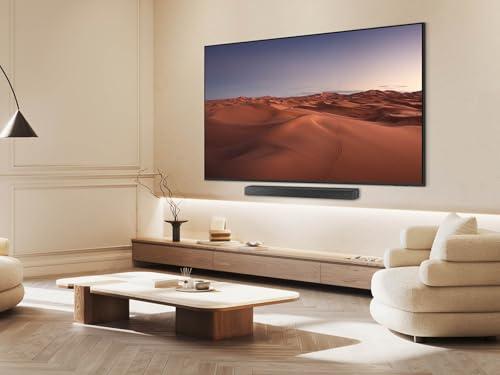
For dedicated home theaters, the Toshiba 65" M550 Series QLED Fire TV excels in dark room movie watching due to its full-array local dimming and Dolby Vision support, which deliver more cinematic black levels and accurate colors. However, the Samsung 75-Inch QLED Q6F Series 2025 Smart TV provides a more immersive experience with its larger 75-inch screen that better fills your field of vision at typical home theater seating distances.
Choose the Toshiba 65" M550 Series QLED Fire TV if you prioritize gaming performance, want premium display technology at a budget-friendly price, or can tolerate smart platform limitations. Select the Samsung 75-Inch QLED Q6F Series 2025 Smart TV if you want the largest possible screen, prefer platform stability over cutting-edge features, or need a TV that performs well in bright rooms with lots of ambient light.
We've done our best to create useful and informative comparisons to help you decide what product to buy. Our research uses advanced automated methods to create this comparison and perfection is not possible - please contact us for corrections or questions. These are the sites we've researched in the creation of this article: bestbuy.com - bestbuy.com - consumerreports.org - youtube.com - pcvarge.com - tomsguide.com - youtube.com - bestbuy.com - toshibatv-usa.com - marketplace-staging.paytomorrow.com - toshibatv-usa.com - productabout.com - leaseville.com - youtube.com - toshibatv-usa.com - youtube.com - rtings.com - cnet.com - youtube.com - rtings.com - samsung.com - bestbuy.com - samsung.com - samsung.com - bestbuy.com - manuals.plus - arrowassociatedstores.com - samsung.com - samsung.com - samsung.com - flatpanelshd.com - device.report

Privacy Policy
Terms and Conditions - Affiliate Policy
Home Security
© Copyright 2008-2026.
11816 Inwood Rd #1211, Dallas, TX 75244