

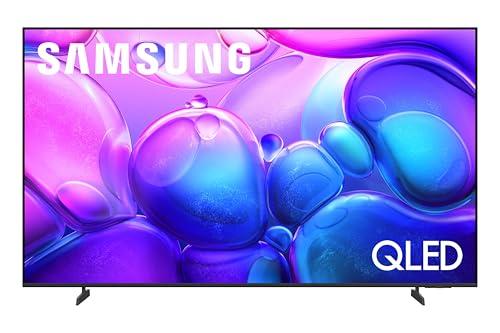
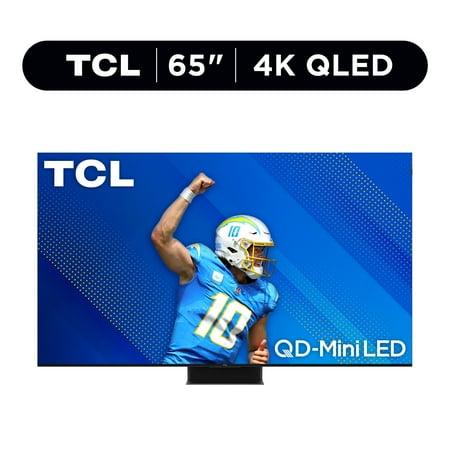




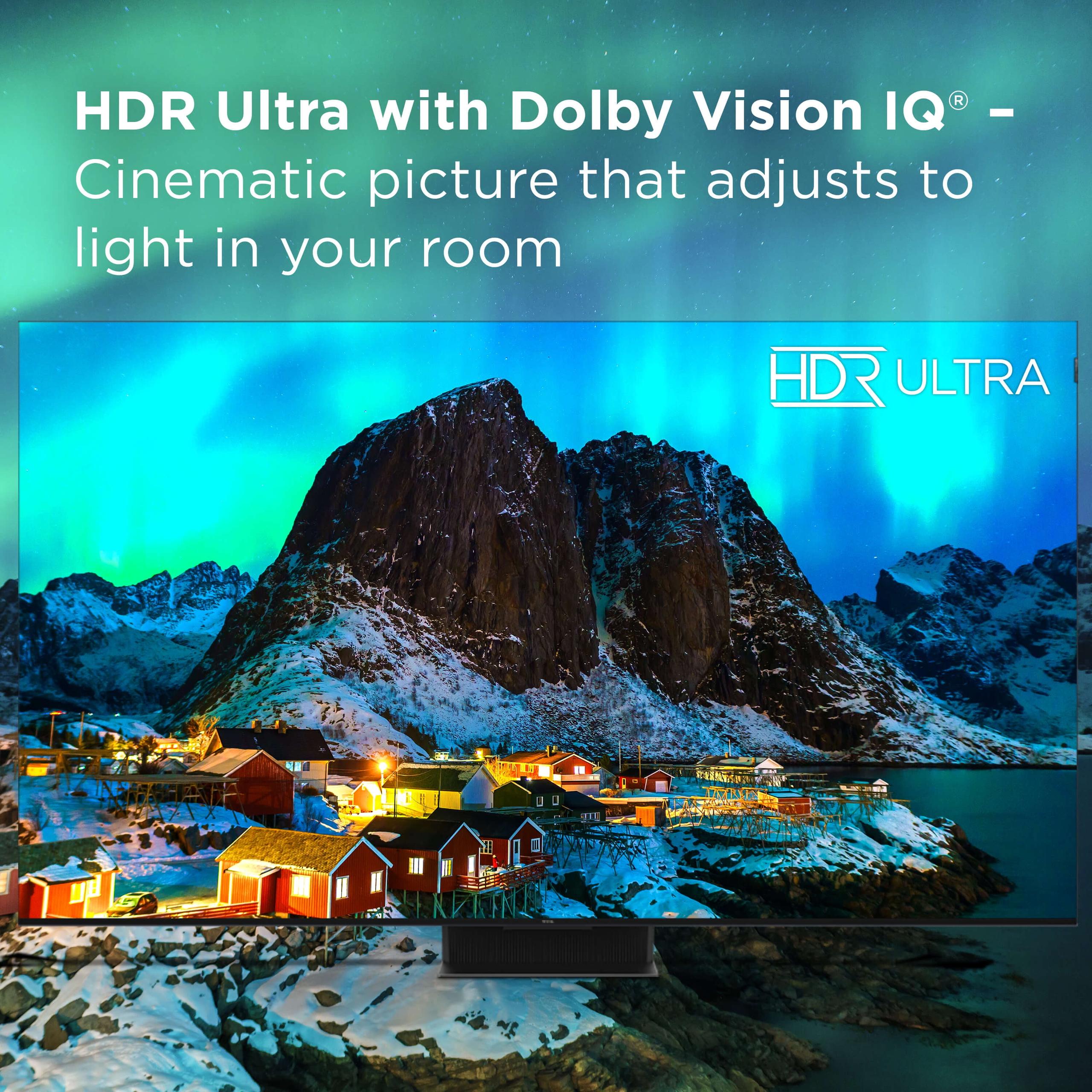
The TV market has reached an interesting crossroads. On one side, you have traditional brands like Samsung pushing larger screens with proven QLED technology at increasingly affordable prices. On the other, companies like TCL are cramming flagship-level display technology into smaller packages, creating tough decisions for buyers. This comparison between the Samsung 75-Inch QLED Q6F Series 2025 and the TCL 65" QM8 Mini-LED Smart TV perfectly illustrates this modern dilemma.
Both TVs launched in 2024, representing very different philosophies in the premium TV space. The Samsung takes an "entry-level premium" approach—giving you QLED benefits and a massive 75-inch screen without breaking the bank. The TCL goes all-out on picture quality technology, packing Mini-LED backlighting and gaming features typically found in TVs costing much more.
Before diving into specifics, it's crucial to understand what sets these display technologies apart. Traditional LED TVs use a backlight behind the entire screen, which means they can't control brightness in specific areas—it's either bright everywhere or dim everywhere. This creates problems with contrast, where dark movie scenes look grayish instead of truly black.
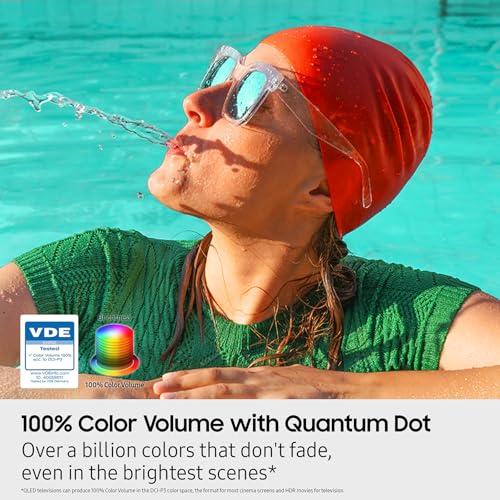
QLED technology, found in the Samsung Q6F, adds a Quantum Dot layer that dramatically improves color reproduction. Think of Quantum Dots as tiny crystals that emit very pure colors when hit with light. This makes colors more vibrant and accurate than standard LED TVs, but the backlighting limitations remain.
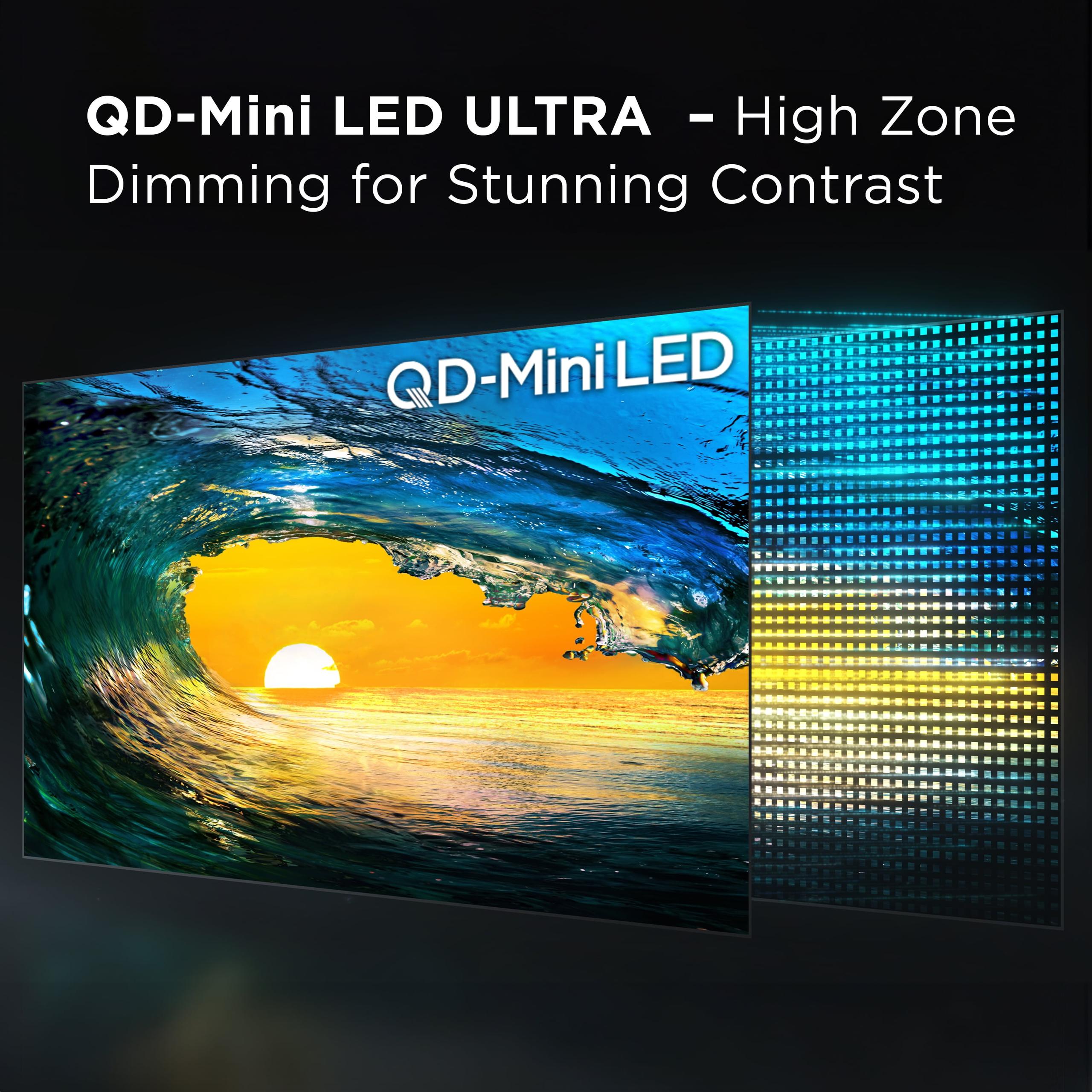
Mini-LED technology in the TCL QM8 takes a completely different approach. Instead of one big backlight, it uses thousands of tiny LED lights arranged in zones across the back of the panel. Each zone can be controlled independently—some can be blazing bright while others are completely off. This creates the deep blacks and bright highlights that make HDR content truly pop.
The zone count matters enormously here. The TCL QM8 features up to 5,000 local dimming zones, meaning it can control brightness across 5,000 different areas of the screen simultaneously. The Samsung Q6F has zero local dimming zones—it's all or nothing.
Peak brightness determines how impactful your viewing experience will be, especially with HDR (High Dynamic Range) content. HDR is designed to show brighter whites and deeper blacks than standard content, mimicking what your eyes see in real life.
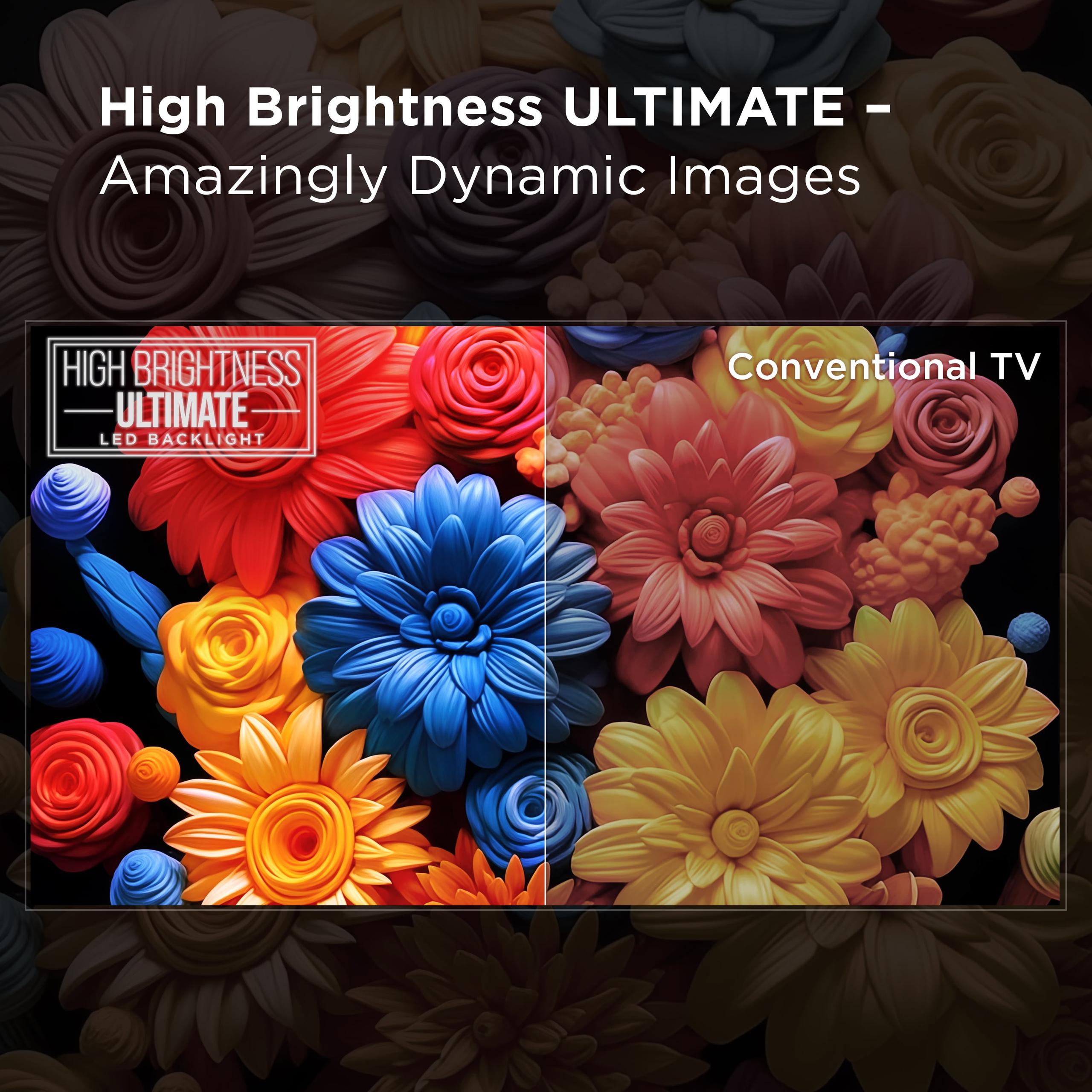
The TCL QM8 can hit up to 5,000 nits of peak brightness in small areas of the screen. To put this in perspective, a bright sunny day measures about 100,000 nits, while most TVs manage 200-400 nits. This exceptional brightness means HDR highlights—like sunlight reflecting off water or explosions in movies—really stand out from the rest of the image.
The Samsung Q6F, while capable of good brightness for its price point, simply cannot match these levels. Based on our research into similar Samsung entry-level QLEDs, you're looking at peak brightness levels that are adequate for most rooms but won't deliver that "wow factor" HDR experience.
This brightness difference becomes crucial in real-world use. If your TV room has windows or bright lighting, the TCL's superior brightness helps it cut through ambient light and maintain picture quality. The Samsung will look washed out in comparison under the same conditions.
Here's where the Mini-LED advantage becomes overwhelming. True contrast—the difference between the brightest whites and deepest blacks—is arguably the most important factor in picture quality. It's what makes images look three-dimensional and realistic rather than flat.
The TCL QM8's thousands of dimming zones can turn off completely in dark areas while keeping bright areas blazing. This means when you're watching a movie with a night scene, the dark parts of the screen are actually dark, not the grayish-black you get from most TVs.
The Samsung Q6F simply cannot achieve this. Without local dimming, dark scenes will show as dark gray, and you'll lose detail in shadows. It's still perfectly watchable—most people are used to this limitation—but once you've seen proper contrast, it's hard to go back.
Both TVs use Quantum Dot technology, which is excellent news for color reproduction. However, the implementation differs significantly. The Samsung Q6F delivers Samsung's typically balanced, accurate color reproduction. Colors look natural and pleasant, which is exactly what most viewers want for everyday TV watching.
The TCL QM8 takes a more aggressive approach. Combined with its superior brightness, colors appear more vibrant and punchy. This can make content more engaging and exciting, particularly for HDR movies and games. However, some viewers who prioritize absolute color accuracy might find it slightly oversaturated compared to the Samsung's more conservative tuning.
Gaming capability has become a major differentiator in premium TVs, especially with the PlayStation 5 and Xbox Series X pushing 4K gaming at higher frame rates.
The Samsung Q6F offers basic gaming support with a 60Hz refresh rate. This means it can display 60 frames per second, which is perfectly fine for most gaming and all TV content. It includes Auto Game Mode, which reduces input lag (the delay between pressing a button and seeing the action on screen) for more responsive gaming.
The TCL QM8 is in a completely different league. It supports 120Hz native refresh rate, meaning it can display 120 frames per second for incredibly smooth motion. More impressively, it supports Variable Refresh Rate (VRR) up to 144Hz, and its Game Accelerator technology can boost certain gaming scenarios up to 240Hz at lower resolutions.
VRR is crucial for modern gaming because it synchronizes the TV's refresh rate with your gaming device's output. This eliminates screen tearing (where the image appears to split horizontally) and stuttering, creating buttery-smooth gameplay.
For serious gamers, especially those with gaming PCs or who plan to keep their TV for several years, the TCL's gaming features are worth the premium alone. The Samsung Q6F will handle casual gaming just fine, but it's not built for the gaming enthusiast.
Both TVs offer comprehensive smart TV functionality, but through different platforms. The Samsung Q6F runs Samsung's Tizen OS, which is mature, fast, and integrates well with Samsung devices. If you have Samsung phones or use Samsung's SmartThings for home automation, the ecosystem benefits are real.
The TCL QM8 uses Google TV, which offers arguably the best content discovery and recommendation system available. It's also more likely to get new streaming apps quickly and maintain long-term software support.
Both support major voice assistants and offer thousands of apps, so the choice here often comes down to personal preference and existing device ecosystem.
TV audio is often overlooked, but the difference here is substantial. The Samsung Q6F includes a basic 20W 2-channel speaker system with Object Tracking Sound Lite, which attempts to match audio to visual action on screen. It's adequate for casual viewing but lacks depth and power.
The TCL QM8 features an 80W ONKYO-tuned 2.1.2 channel system with dedicated up-firing speakers for Dolby Atmos support. This creates a much more immersive audio experience with better bass response and spatial audio effects. While still not matching a dedicated soundbar system, it's impressive for built-in TV speakers and might delay or eliminate the need for additional audio equipment.
This comparison forces a fundamental question: do you want a massive 75-inch screen with good picture quality, or a smaller 65-inch screen with exceptional picture quality?
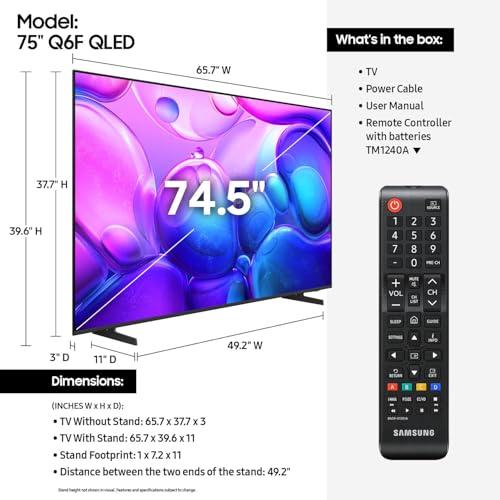
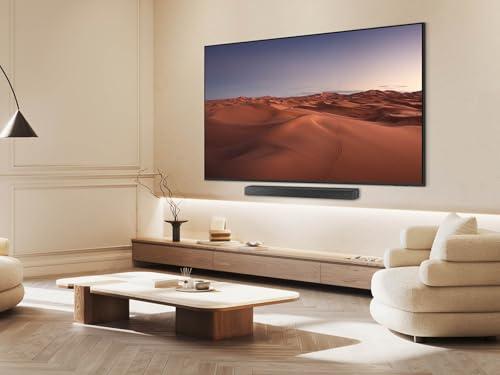
For many buyers, screen size is king. There's something undeniably impressive about a 75-inch display dominating your wall. The Samsung Q6F delivers that impact while maintaining decent picture quality and keeping costs reasonable.
However, the 10-inch size difference is less significant than you might think. At typical viewing distances (8-12 feet), both sizes provide an immersive experience. The picture quality improvements of the TCL QM8 might be more noticeable day-to-day than the size difference.
At the time of writing, the Samsung Q6F represents excellent value for buyers prioritizing screen size and basic premium features. You're getting a lot of TV for the money, with reliable performance and Samsung's solid build quality.
The TCL QM8 costs more but delivers substantially better performance across almost every metric. When you factor in the superior audio system, gaming features, and picture quality, the price premium seems justified for users who will appreciate these improvements.
If you primarily watch streaming services, broadcast TV, and occasional movies, the Samsung Q6F provides an excellent experience. The large screen creates an immersive feel for sports and movies, while the QLED color reproduction makes everything look vibrant and engaging.
For dedicated movie watching, especially HDR content, the TCL QM8 is clearly superior. The combination of higher peak brightness, better contrast, and superior audio creates a more cinematic experience. Dark movie scenes will actually look dark, and bright scenes will have genuine impact.
Gamers should strongly consider the TCL QM8. The higher refresh rates, VRR support, and lower input lag provide tangible benefits for modern gaming. As games increasingly target 120fps on next-gen consoles, the Samsung's 60Hz limitation becomes more restrictive.
Bright rooms favor the TCL QM8 due to its superior brightness and reflection handling. The Samsung Q6F performs better in controlled lighting environments where its size advantage can shine without brightness limitations becoming apparent.
Choose the Samsung 75-Inch QLED Q6F Series 2025 if you:
Choose the TCL 65" QM8 Mini-LED Smart TV if you:
Both TVs succeed in their intended roles, but they're targeting fundamentally different buyers. The Samsung Q6F delivers on its promise of big-screen QLED experience at an accessible price point. It's a solid, reliable choice that will satisfy most viewers who prioritize size and value.
The TCL QM8 represents what premium TV technology can achieve in 2024-2025. Its Mini-LED implementation, gaming features, and overall performance put it among the best TVs available, regardless of price. The smaller screen size might be limiting for some rooms, but the picture quality advantages are substantial.
In my experience evaluating premium TVs, the performance gap between these technologies is more significant than the size difference for most viewing scenarios. Unless you specifically need the 75-inch screen size, the TCL's superior technology provides benefits you'll notice every time you turn on the TV.
The choice ultimately depends on your priorities, room setup, and intended usage. Both represent good value in their respective categories, but they're solving different problems for different users.
| Samsung 75-Inch QLED Q6F Series 2025 Smart TV | TCL 65" QM8 Mini-LED Smart TV |
|---|---|
| Screen Size - Bigger isn't always better, but it matters for large rooms | |
| 75" (ideal for 10+ foot viewing distances) | 65" (perfect for 8-12 foot viewing distances) |
| Display Technology - The foundation that determines picture quality | |
| QLED with basic LED backlighting (no local dimming) | QD-Mini LED with up to 5,000 local dimming zones |
| Peak Brightness - Critical for HDR impact and bright room viewing | |
| Standard QLED brightness levels (adequate for most rooms) | Up to 5,000 nits (exceptional for any lighting condition) |
| Refresh Rate - Essential for smooth motion and gaming | |
| 60Hz (fine for TV/movies, limited for gaming) | 120Hz native, up to 144Hz VRR (excellent for all content) |
| Gaming Features - Important if you own modern consoles or PC | |
| Basic Auto Game Mode only | Game Accelerator 240, VRR support, Auto Game Mode |
| Audio System - Affects whether you need a soundbar immediately | |
| 20W 2-channel with Object Tracking Sound Lite | 80W ONKYO 2.1.2 system with Dolby Atmos |
| Smart Platform - Determines app availability and user experience | |
| Samsung Tizen OS (great Samsung ecosystem integration) | Google TV (superior content discovery and app selection) |
| Local Dimming Zones - The key to true blacks and contrast | |
| 0 zones (uniform backlighting across entire screen) | Up to 5,000 zones (precise brightness control per area) |
| HDR Support - Important for premium streaming and gaming content | |
| HDR10, HDR10+, Quantum HDR | HDR10, HDR10+, Dolby Vision IQ, HLG |
| Processor - Affects upscaling quality and smart TV performance | |
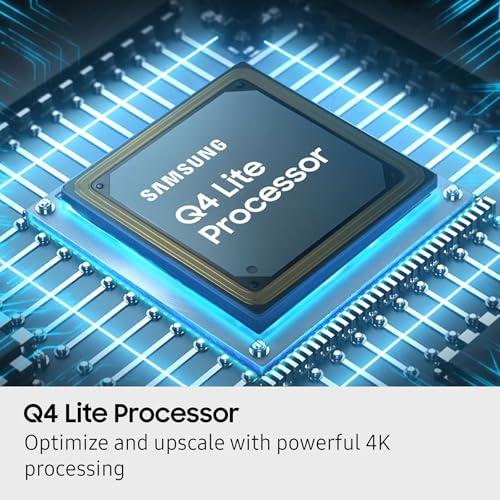
| Q4 Lite Processor (basic upscaling and optimization) | TCL AIPQ PRO Processor (advanced AI optimization) |
| Best For - Who should consider each model | |
| Large rooms, casual viewers, Samsung ecosystem users | Home theaters, gamers, bright rooms, picture quality enthusiasts |
The TCL 65" QM8 Mini-LED Smart TV delivers significantly better picture quality than the Samsung 75-Inch QLED Q6F Series 2025 Smart TV. The TCL features Mini-LED technology with up to 5,000 local dimming zones, enabling deeper blacks and brighter highlights. It also achieves much higher peak brightness (up to 5,000 nits) compared to the Samsung's basic QLED backlighting, making HDR content more impactful and colors more vibrant.
QLED technology in the Samsung Q6F uses Quantum Dots to enhance color reproduction but relies on traditional LED backlighting without local dimming. Mini-LED technology in the TCL QM8 uses thousands of tiny LED lights arranged in zones that can be controlled independently, allowing for precise brightness control and superior contrast. This makes Mini-LED significantly better for displaying true blacks and bright highlights simultaneously.
The TCL 65" QM8 Mini-LED Smart TV is far superior for gaming. It supports 120Hz native refresh rate with up to 144Hz Variable Refresh Rate (VRR), plus Game Accelerator technology that can boost performance up to 240Hz at lower resolutions. The Samsung Q6F only offers 60Hz with basic Auto Game Mode, making it adequate for casual gaming but limiting for modern consoles and PC gaming.
The Samsung 75-Inch QLED Q6F Series 2025 Smart TV provides about 32% more screen area than the TCL 65" QM8. However, at typical viewing distances of 8-12 feet, both sizes deliver an immersive experience. The 10-inch difference is noticeable but may be less important than picture quality improvements, especially if you sit closer than 10 feet from the TV.
The TCL QM8 performs much better in bright rooms due to its exceptional peak brightness capability of up to 5,000 nits and superior reflection handling. The Samsung Q6F has adequate brightness for most rooms but will struggle to overcome glare in very bright environments, appearing washed out in comparison to the TCL's performance.
The TCL 65" QM8 Mini-LED Smart TV has significantly superior built-in audio with an 80W ONKYO 2.1.2 channel system featuring up-firing speakers and Dolby Atmos support. The Samsung Q6F includes a basic 20W 2-channel system with Object Tracking Sound Lite. The TCL's audio system may delay or eliminate the need for a separate soundbar, while the Samsung will likely require additional audio equipment for optimal experience.
Both platforms are excellent but serve different needs. The Samsung Q6F runs Tizen OS, which integrates seamlessly with Samsung devices and SmartThings ecosystem. The TCL QM8 uses Google TV, offering superior content discovery, recommendations, and typically faster access to new streaming apps. Google TV generally provides a more comprehensive smart TV experience for most users.
The TCL 65" QM8 Mini-LED Smart TV is excellent for home theater applications due to its superior contrast ratio, higher peak brightness, and better HDR performance. The Mini-LED backlighting creates true blacks essential for cinematic viewing. The Samsung Q6F can work in a home theater but lacks the contrast and brightness needed for the best HDR movie experience, especially in dark room scenarios.
Value depends on your priorities. The Samsung 75-Inch QLED Q6F Series 2025 Smart TV offers excellent value for buyers prioritizing screen size and basic premium features at a lower cost. The TCL QM8 provides superior value for picture quality, gaming features, and audio performance, justifying its higher cost for users who will appreciate these advanced capabilities.
The TCL QM8 offers superior HDR performance with support for Dolby Vision IQ, HDR10+, HDR10, and HLG formats, plus the brightness and contrast needed to make HDR content truly impactful. The Samsung Q6F supports HDR10+ and Quantum HDR but lacks the peak brightness and local dimming necessary for the most impressive HDR experience.
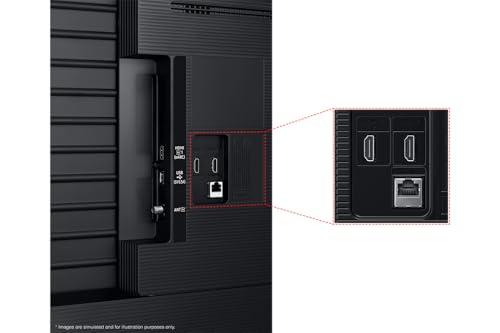
The TCL 65" QM8 Mini-LED Smart TV is better positioned for longevity due to its advanced gaming features (120Hz, VRR), superior display technology, and comprehensive connectivity options that support future standards. The Samsung Q6F may feel dated sooner due to its 60Hz limitation and basic feature set, though both should provide reliable performance for many years.
Choose the Samsung 75-Inch QLED Q6F Series 2025 Smart TV if you want the largest screen possible within budget constraints, primarily watch standard content, have a large room requiring maximum screen size, or prefer Samsung's ecosystem. Choose the TCL QM8 if you prioritize picture quality over size, game regularly, watch lots of HDR content, have a bright room, want premium audio, or appreciate cutting-edge display technology.
We've done our best to create useful and informative comparisons to help you decide what product to buy. Our research uses advanced automated methods to create this comparison and perfection is not possible - please contact us for corrections or questions. These are the sites we've researched in the creation of this article: youtube.com - rtings.com - cnet.com - youtube.com - rtings.com - samsung.com - bestbuy.com - samsung.com - samsung.com - bestbuy.com - manuals.plus - arrowassociatedstores.com - samsung.com - samsung.com - samsung.com - flatpanelshd.com - device.report - rtings.com - rtings.com - techradar.com - tcl.com - the-gadgeteer.com - nfm.com - ecoustics.com - careyscommunications.com - pcrichard.com - tcl.com

Privacy Policy
Terms and Conditions - Affiliate Policy
Home Security
© Copyright 2008-2026.
11816 Inwood Rd #1211, Dallas, TX 75244