

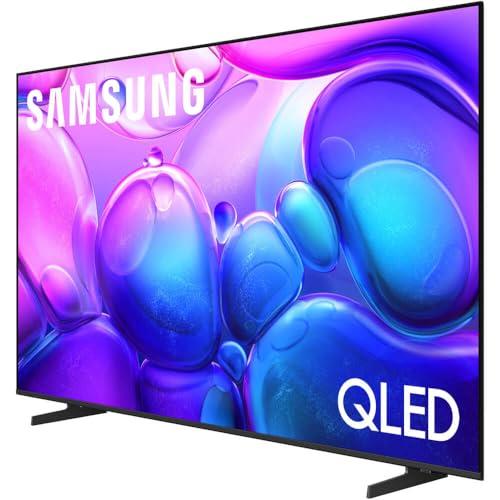
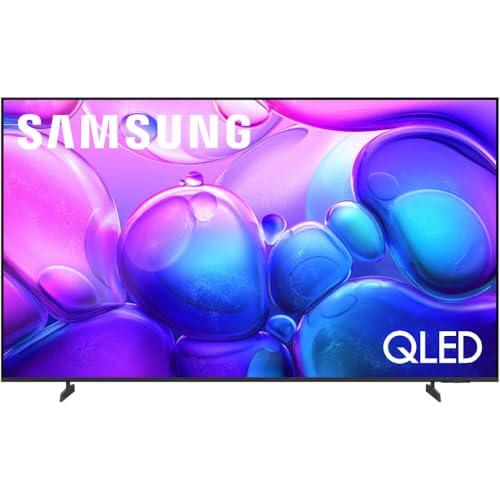
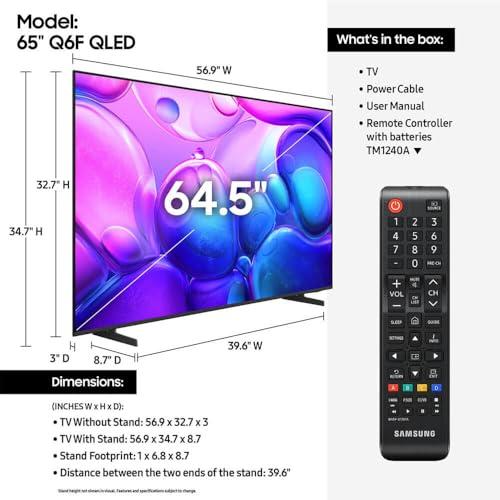

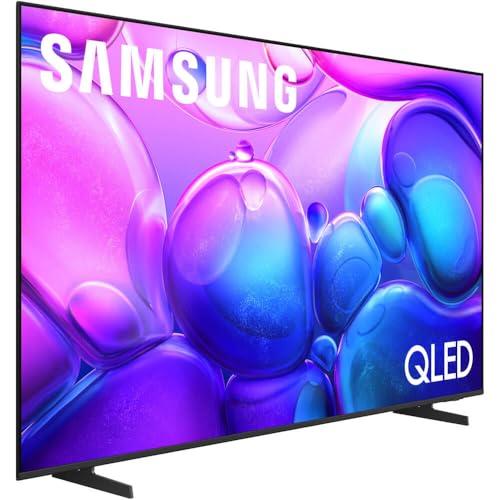


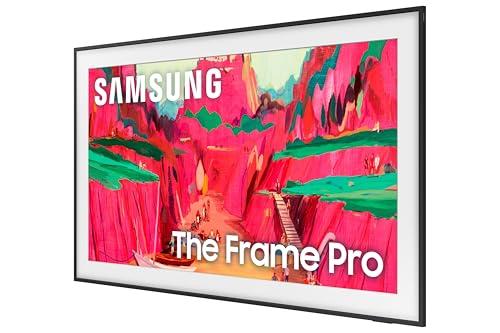
Samsung's 2025 TV lineup presents two dramatically different approaches to 4K entertainment, and choosing between the Samsung 65" QLED Q6F and Samsung 65" Frame Pro Neo QLED depends entirely on what you value most in a television. After diving deep into user reviews, expert analysis, and technical specifications, these TVs serve completely different audiences despite sharing the Samsung badge.
Before we go further, there's an important caveat: our research suggests the Q6F may only be available in 75" and 85" sizes for 2025, making the 65" comparison somewhat theoretical. However, understanding the performance differences between Samsung's entry-level QLED technology and their premium lifestyle offerings remains valuable for anyone shopping in this category.
The TV landscape in 2025 revolves around several key technologies that directly impact your viewing experience. QLED (Quantum Dot Light Emitting Diode) uses tiny particles called quantum dots to enhance color accuracy and brightness compared to standard LED TVs. Think of quantum dots as microscopic color filters that make reds redder and blues bluer while maintaining brightness levels.
Neo QLED takes this further by using Mini-LED backlighting—thousands of tiny LEDs that can dim individually to create better contrast between bright and dark areas on screen. This is called local dimming, and it's crucial for making dark movie scenes look realistic instead of washed out.
The refresh rate, measured in Hertz (Hz), determines how many times per second your screen updates the image. Higher refresh rates mean smoother motion, especially important for sports and gaming. HDR (High Dynamic Range) expands the range between the darkest blacks and brightest whites, making images more lifelike.
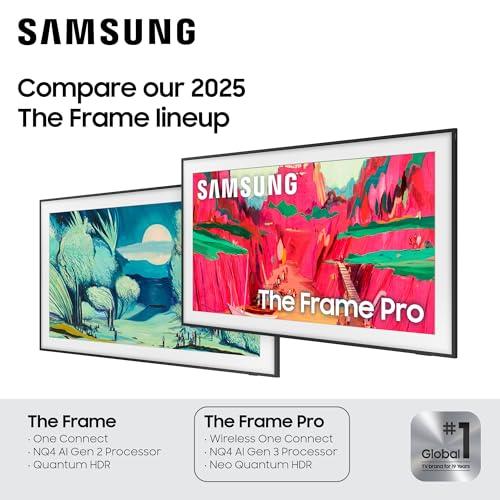
Both TVs launched in early 2025, representing Samsung's latest thinking on different market segments. The Frame Pro builds on nearly a decade of Frame TV evolution, adding Neo QLED technology for the first time to address the biggest complaint about previous Frame models: insufficient brightness for well-lit rooms.
The Q6F, meanwhile, represents Samsung's effort to bring QLED technology to more budget-conscious buyers without the premium features that drive up costs. Samsung has consistently improved their entry-level processors and color reproduction over the past few years, making even their basic models significantly better than comparable TVs from just three years ago.
The fundamental difference between these TVs lies in their display technology, and this impacts everything from where you can place them to how good they look in different lighting conditions.
The Frame Pro uses Neo QLED with Mini-LED backlighting, featuring hundreds of individual dimming zones compared to the Q6F's basic edge-lit system. This translates to dramatically different brightness capabilities—the Frame Pro achieves roughly 1,000 nits of peak brightness while the Q6F manages around 400 nits.
To put this in perspective, a typical living room on a sunny day might have 500-800 nits of ambient light reflecting off your screen. The Q6F would struggle in these conditions, with washed-out colors and poor visibility. The Frame Pro, however, punches through ambient light effectively, maintaining vibrant colors even with windows directly behind viewers.
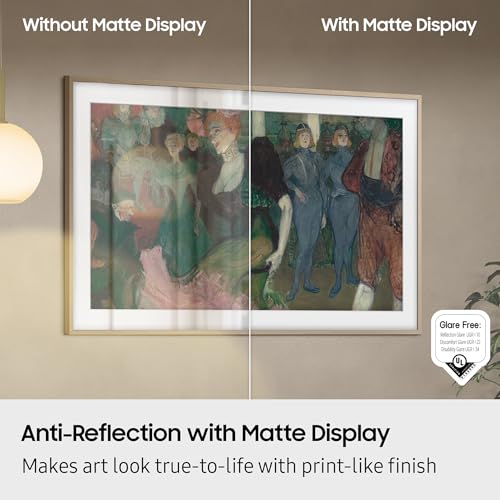
The Frame Pro also features a matte anti-reflective coating—essentially a surface treatment that scatters reflected light instead of creating mirror-like reflections. Combined with its high brightness, this makes it genuinely usable in challenging lighting conditions where most TVs fail.
Here's where things get complicated. Despite its Mini-LED technology, the Frame Pro suffers from disappointing contrast performance. Local dimming should theoretically create deep blacks by turning off LEDs behind dark parts of the image, but reviews consistently describe the Frame Pro's implementation as ineffective.
This means dark movie scenes—think horror films or space movies—don't look as dramatic as they should. Blacks appear gray rather than truly black, and you'll notice haloing (bright outlines around objects) in high-contrast scenes. For a TV at this price point, this is genuinely disappointing.
The Q6F doesn't pretend to excel in contrast either. Its edge-lit design inherently limits black level performance, but at least expectations align with its positioning as an entry-level model.
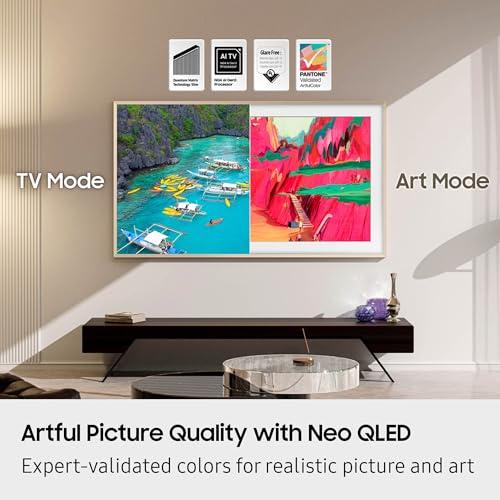
The Frame Pro receives Pantone color validation, meaning professional color experts have certified its accuracy for displaying artwork and photographs. This matters enormously for its art display function—colors in paintings and photos should look as the creator intended.
The Q6F focuses on Color Volume, Samsung's term for maintaining color saturation even at high brightness levels. While less precise than professional validation, this creates a more vibrant, consumer-friendly image that many people prefer for TV watching.
The performance gap in processing power between these TVs is substantial and affects everything you watch.
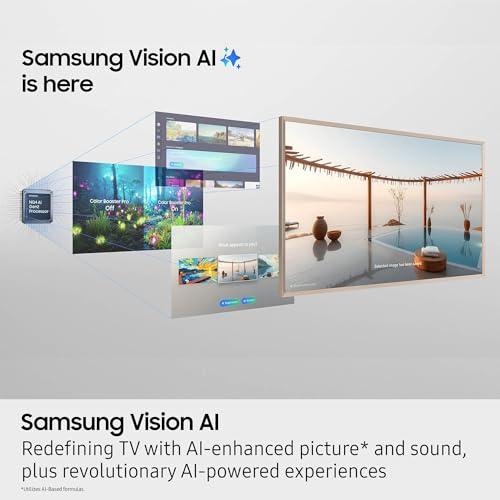
The Frame Pro uses Samsung's NQ4 AI Gen3 processor—the same chip found in their flagship OLED TVs. This delivers noticeably better 4K upscaling (converting lower-resolution content to look good on a 4K screen) and smarter HDR tone mapping (adjusting brightness and contrast in real-time).
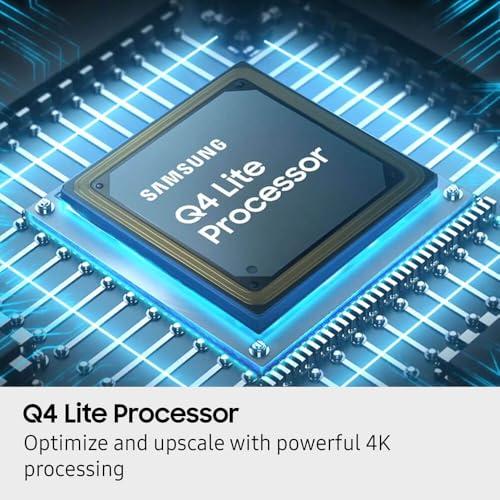
When watching 1080p Netflix shows or older content, the difference is immediately apparent. The Frame Pro produces sharper, more detailed images with better motion handling. The Q6F's Q4 Lite processor handles basic upscaling adequately but lacks the sophistication for optimal performance with varied content sources.
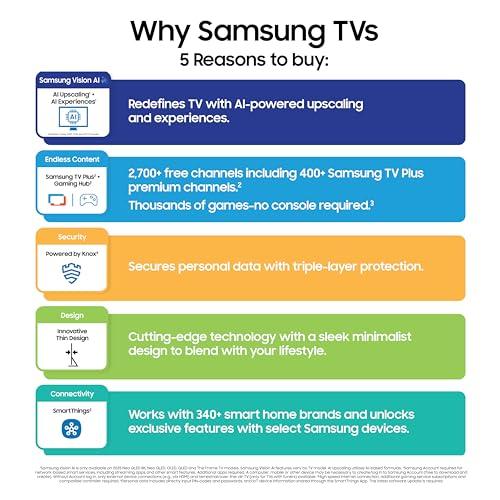
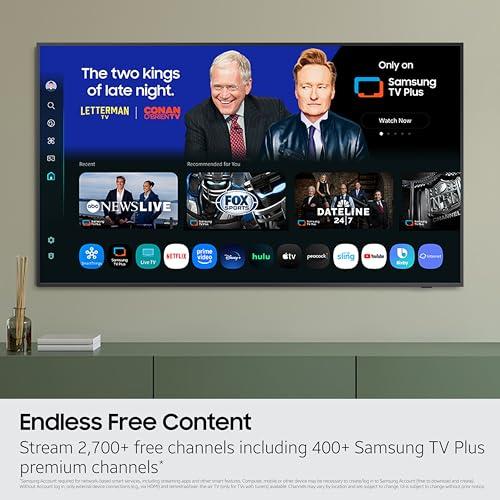
Both TVs run Samsung's Tizen smart platform, offering identical access to streaming apps, voice assistants, and Samsung's free TV Plus service. The user interface performs smoothly on both, though the Frame Pro's superior processor handles multitasking better.
Gaming capabilities reveal each TV's priorities and limitations clearly.
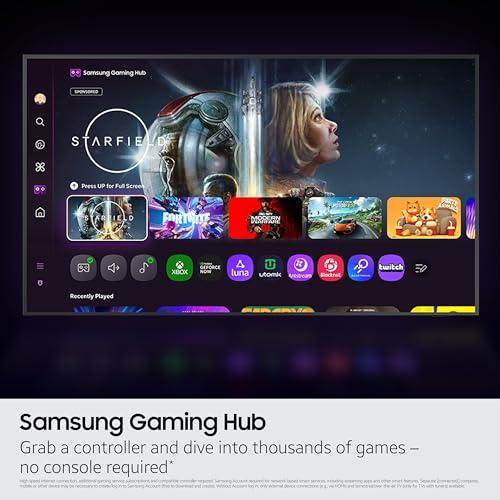
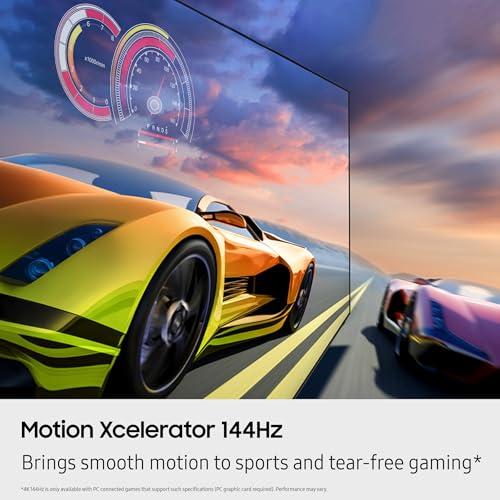
The Frame Pro supports impressive gaming specifications: 144Hz refresh rate, Variable Refresh Rate (VRR) to eliminate screen tearing, and Auto Low Latency Mode (ALLM) for responsive controls. However, these specs are undermined by a significant flaw.
The TV's Wireless One Connect Box—while innovative for cable management—introduces over 30 milliseconds of input lag (delay between controller input and on-screen response). For context, serious gamers expect under 20ms, with competitive players preferring under 10ms.
Samsung includes a micro HDMI port directly on the TV for wired gaming connections, but this feels like acknowledging a fundamental design compromise rather than solving it elegantly.
The Q6F offers basic gaming features with 60Hz refresh rate and standard input lag performance. While less impressive on paper, it likely provides more consistent gaming experiences without the wireless connectivity variables.
Neither TV excels for serious gaming. If gaming is important, Samsung's QN90F or QN85F series offer better performance at competitive prices. Casual gamers who prioritize other features can work with either model, but the Frame Pro's wireless limitations are frustrating for the price.
Television audio has improved dramatically in recent years, and these models reflect different approaches to built-in sound.
The Frame Pro features a 40W, 2.0.2-channel speaker system with Dolby Atmos support. Dolby Atmos creates the illusion of sound coming from above and around you, not just from the TV's location. Combined with Object Tracking Sound (OTS), which moves audio to match on-screen action, this creates genuinely immersive experiences for movies and shows.
Q-Symphony Pro allows the TV speakers to work simultaneously with compatible Samsung soundbars rather than being disabled, creating fuller, room-filling sound.
The Q6F's 20W, 2-channel system provides basic Object Tracking Sound Lite but lacks the power and sophistication for truly engaging audio experiences.
For home theater enthusiasts, the Frame Pro's audio capabilities are respectable for a TV, though dedicated speakers or soundbars still provide superior performance.
This is where these TVs diverge most dramatically in their intended use cases.
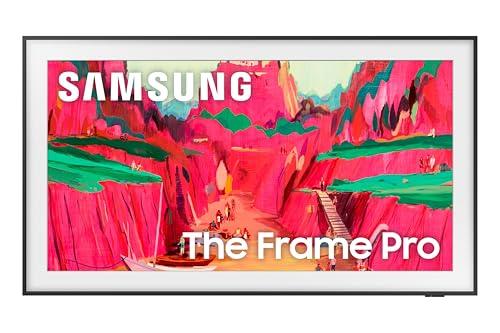
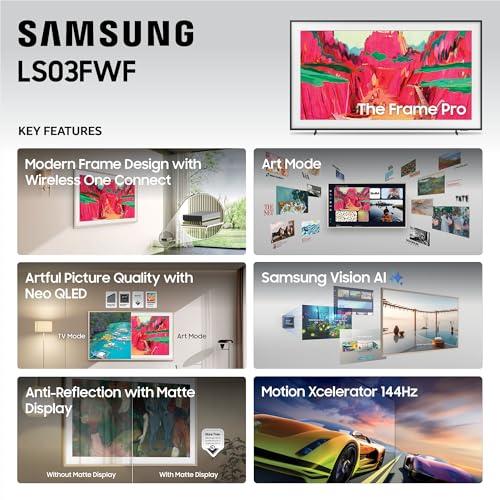
The Frame Pro represents Samsung's boldest design thinking. When turned off, it displays artwork from Samsung's Art Store or your personal photos, appearing like a framed painting or photograph mounted on your wall.
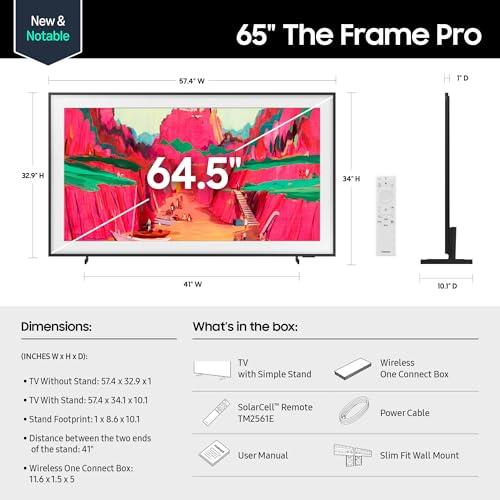
Customizable bezels in different colors and materials allow matching your home's décor style. The ultra-slim profile—designed to sit nearly flush against the wall—reinforces the gallery aesthetic. This isn't just marketing; the effect is genuinely striking when implemented thoughtfully.
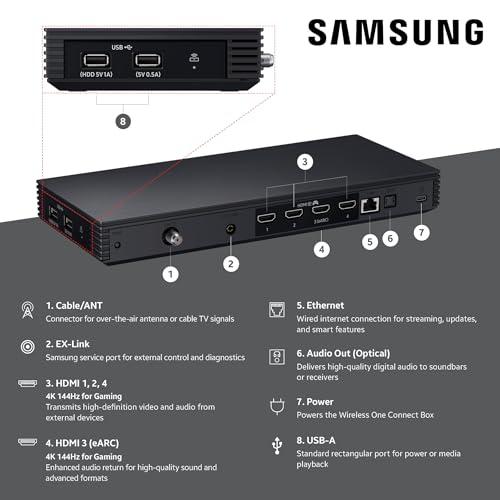
The Wireless One Connect Box enables completely cable-free installation. All inputs (cable box, gaming console, streaming device) connect to a box that can be hidden in a cabinet up to 10 meters away, transmitting everything wirelessly to the TV. For clean, minimalist installations, this is revolutionary.
However, this wireless system has no wired backup. If your network experiences interference or the wireless connection becomes unstable, you cannot switch to a cable connection. This puts significant pressure on your home network reliability.
The Q6F follows conventional TV design principles with standard bezels, traditional connectivity, and flexible placement options. While less visually striking, this approach offers reliability and lower complexity.
For many users, traditional design actually works better. Standard TV stands offer more placement flexibility, wired connections eliminate wireless variables, and conventional aesthetics blend into rooms without demanding specific décor choices.
Our research into user experiences reveals concerning software reliability issues with the Frame Pro. Multiple reviews describe the TV as "very buggy and unreliable," with problems including failure to turn on, significant delays in responding to commands, and general software instability.
One reviewer characterized their Frame Pro experience as a "disaster" and expressed genuine regret about their purchase. While not universal, these issues occur frequently enough to warrant serious consideration.
The Q6F, being a simpler design with fewer advanced features, typically experiences fewer software complications. For users prioritizing reliability over cutting-edge features, this represents a meaningful advantage.
The Frame Pro's wall-mounting and wireless setup often benefit from professional installation to achieve the intended aesthetic effect. Proper cable management for the One Connect Box and optimal positioning for wireless signal strength require planning and expertise.
The Q6F accommodates standard installation approaches that most users can handle independently or with basic professional assistance.
At the time of writing, these TVs occupy different price segments reflecting their different target markets and feature sets.
The Frame Pro commands premium pricing that positions it among high-end TVs from all manufacturers. However, its value proposition is unique—you're paying for aesthetic integration and lifestyle features rather than purely performance metrics.
If your priority is maximum picture quality per dollar, the Frame Pro doesn't compete effectively with performance-focused models at similar prices. Samsung's own QN90F series delivers superior contrast, color accuracy, and gaming performance for competitive pricing.
However, if you value the art display functionality, wireless installation, and gallery aesthetic enough to accept picture quality and reliability compromises, the Frame Pro offers capabilities no other TV provides.
The Q6F targets budget-conscious buyers wanting Samsung's QLED technology and smart platform without premium features. In this segment, value depends heavily on actual pricing compared to competitors from TCL, Hisense, and others.
Samsung's smart platform, build quality, and color processing provide genuine advantages over some budget competitors, but the performance differences may not justify significant price premiums for cost-focused buyers.
For dedicated home theater environments with controlled lighting, neither TV represents an optimal choice.
The Frame Pro's matte coating, while excellent for bright rooms, slightly reduces contrast and color saturation in dark environments compared to glossy screens. Its poor local dimming performance becomes more apparent in dark room viewing where contrast differences are most visible.
The Q6F's limited brightness and basic processing capabilities don't meet the performance standards most home theater enthusiasts expect.
Home theater applications benefit from TVs optimized for dark room performance, such as OLED models or high-end Neo QLED TVs with effective local dimming systems.
Both TVs have notable limitations in format support that affect long-term value.
Neither TV supports Dolby Vision, a premium HDR format used by many streaming services and 4K Blu-ray discs. They also lack DTS audio support, disappointing for physical media collections where these formats are common.
For users with extensive 4K Blu-ray libraries or those planning to build physical media collections, these omissions represent meaningful limitations.
The Frame Pro offers more comprehensive connectivity with its One Connect Box approach, though the wireless transmission adds complexity. Both TVs support current HDMI standards adequately for most users' needs.
After extensive research and analysis, here's how to approach this decision:
Aesthetics are paramount. If you want a TV that genuinely disappears into your décor when not in use and doubles as wall art, nothing else offers this capability. The art display function works beautifully, and customizable bezels allow genuine integration with your home's style.
Bright room performance matters most. The Frame Pro's exceptional brightness and anti-reflective coating make it genuinely usable in challenging lighting conditions where most TVs fail. Living rooms with large windows or unconventional lighting benefit enormously.
Wireless installation appeals to you. If cable management frustrates you and you have reliable home networking, the Wireless One Connect Box creates incredibly clean installations.
You're willing to accept trade-offs for unique features. The Frame Pro requires accepting software reliability concerns and contrast limitations in exchange for capabilities no other TV provides.
Budget is the primary concern. If you want Samsung's smart platform and basic QLED benefits at entry-level pricing, the Q6F provides reasonable value.
Reliability is crucial. Traditional design and simpler software reduce potential failure points compared to the Frame Pro's complexity.
Standard TV functionality meets your needs. If you want a conventional TV experience without lifestyle integration features, the Q6F avoids paying for capabilities you won't use.
Gaming is important. Both TVs have gaming limitations that make other Samsung models more suitable for serious gaming.
Dark room viewing dominates your usage. Both TVs have contrast weaknesses that become more apparent in dedicated viewing environments.
Maximum picture quality is the goal. Neither TV competes with Samsung's flagship models or competitor OLEDs for pure performance.
Software reliability cannot be compromised. The Frame Pro's documented stability issues make other options preferable for users who need consistent operation.
The Frame Pro succeeds brilliantly as a lifestyle product that happens to be a TV, rather than a TV that offers lifestyle features. If its unique aesthetic integration and bright room performance justify the premium pricing and reliability concerns for your specific situation, it provides genuinely revolutionary capabilities.
However, most TV buyers prioritizing performance per dollar should explore Samsung's QN90F or QN85F series, which offer superior picture quality, gaming performance, and reliability at competitive prices.
The Q6F—if available in 65"—serves buyers wanting basic QLED benefits and Samsung's ecosystem at entry-level pricing. However, verify availability and compare carefully with competitors before deciding, as the budget TV segment offers many compelling options from multiple manufacturers.
Ultimately, your choice should align with how you actually use your TV and what aspects of the viewing experience matter most to your household. Both TVs serve their intended audiences well, but those audiences have very different priorities and expectations.
| Samsung 65" QLED Q6F 4K Smart TV 2025 | Samsung 65" The Frame Pro 4K Neo QLED Smart TV 2025 |
|---|---|
| Display Technology - Determines brightness and contrast capabilities | |
| Standard QLED with edge-lit backlighting | Neo QLED with Mini-LED backlighting |
| Peak Brightness - Critical for bright room viewing and HDR performance | |
| ~400 nits (struggles in bright rooms) | ~1,000 nits (excellent for daylight viewing) |
| Processor - Affects upscaling quality and smart features | |
| Q4 Lite (basic upscaling and optimization) | NQ4 AI Gen3 (flagship-level processing power) |
| Refresh Rate - Important for sports and gaming smoothness | |
| 60Hz native | 100Hz native (up to 144Hz for gaming) |
| Screen Coating - Impacts reflection handling | |
| Standard glossy finish | Matte anti-reflective coating |
| Audio System - Built-in sound quality | |
| 20W 2-channel with OTS Lite | 40W 2.0.2-channel with Dolby Atmos and OTS |
| Connectivity Innovation - Cable management approach | |
| Traditional wired connections | Wireless One Connect Box (up to 10m range) |
| Design Philosophy - Aesthetic integration vs traditional TV | |
| Conventional TV design with standard bezels | Ultra-slim art frame with customizable bezels |
| Art Mode - Lifestyle feature for when TV is off | |
| Not available | Full Art Mode with Samsung Art Store access |
| Gaming Features - Console compatibility and performance | |
| Basic gaming with Auto Game Mode | VRR, ALLM, 4K@144Hz (but high input lag via wireless) |
| Local Dimming - Contrast enhancement capability | |
| Basic edge-lit zones | Mini-LED zones (though poorly implemented) |
| Smart Platform - Streaming and voice control | |
| Tizen with Bixby, Alexa, Google Assistant | Tizen with Bixby, Alexa, Google Assistant |
| Target Market - Who each TV is designed for | |
| Budget-conscious buyers wanting basic QLED | Premium lifestyle buyers prioritizing aesthetics |
The Samsung 65" Frame Pro Neo QLED is significantly better for bright rooms. It delivers around 1,000 nits of peak brightness compared to the Samsung 65" QLED Q6F's 400 nits, plus it features a matte anti-reflective coating that eliminates glare. If your living room gets a lot of natural light, the Frame Pro will maintain vibrant colors and clear visibility where the Q6F would appear washed out.
The Samsung 65" QLED Q6F uses standard QLED with edge-lit backlighting, while the Samsung 65" Frame Pro Neo QLED uses Neo QLED with Mini-LED backlighting. Neo QLED has hundreds of tiny LEDs that can dim individually for better contrast control, whereas standard QLED uses fewer, larger LED zones. This gives the Frame Pro superior brightness and more precise local dimming, though both technologies use quantum dots for enhanced color.
Both TVs run Samsung's Tizen smart platform with identical streaming apps and voice assistants. However, the Samsung 65" Frame Pro Neo QLED has Samsung's flagship NQ4 AI Gen3 processor, while the Samsung 65" QLED Q6F uses the basic Q4 Lite processor. This means the Frame Pro offers superior 4K upscaling, better motion handling, and faster performance when navigating menus or switching between apps.
Neither TV is ideal for serious gaming. The Samsung 65" Frame Pro Neo QLED supports 144Hz and gaming features like VRR, but its Wireless One Connect Box creates over 30ms of input lag. The Samsung 65" QLED Q6F has standard input lag but only supports 60Hz refresh rates. For competitive gaming, you'd want to consider Samsung's QN90F or QN85F series instead of either the Q6F or Frame Pro.
The Samsung 65" Frame Pro Neo QLED transforms into wall art when not in use, displaying paintings or photos through Art Mode. It features customizable bezels to match your décor and an ultra-slim design that sits nearly flush against the wall. The Wireless One Connect Box eliminates visible cables for a clean, gallery-like installation. The Samsung 65" QLED Q6F is a traditional TV without these aesthetic integration features.
The Samsung 65" Frame Pro Neo QLED has superior audio with a 40W, 2.0.2-channel system featuring Dolby Atmos and Object Tracking Sound. The Samsung 65" QLED Q6F has a basic 20W, 2-channel system with Object Tracking Sound Lite. The Frame Pro delivers more immersive sound with better power and spatial audio effects, though both benefit from adding a dedicated soundbar for optimal audio performance.
The Samsung 65" QLED Q6F typically has fewer reliability issues due to its simpler design. However, the Samsung 65" Frame Pro Neo QLED has documented software stability problems, with users reporting startup failures, significant delays, and general bugginess. The Frame Pro's Wireless One Connect system also has no wired backup option, making network reliability crucial for consistent operation.
Value depends on your priorities. The Samsung 65" QLED Q6F offers basic QLED performance at entry-level pricing, making it better value for budget-conscious buyers wanting core functionality. The Samsung 65" Frame Pro Neo QLED commands premium pricing for its unique lifestyle features and superior brightness, but you're paying for aesthetics rather than pure performance. For maximum picture quality per dollar, neither Q6F nor Frame Pro competes with Samsung's performance-focused models.
Both TVs have contrast limitations that become apparent in dark rooms. The Samsung 65" Frame Pro Neo QLED has disappointing local dimming performance despite its Mini-LED technology, resulting in washed-out blacks. The Samsung 65" QLED Q6F has typical entry-level contrast with basic edge-lit dimming. For dedicated dark room viewing, OLED TVs or Samsung's higher-end Neo QLED models with effective local dimming would provide better cinematic experiences than either the Q6F or Frame Pro.
The Samsung 65" QLED Q6F uses traditional wired connections with standard HDMI and USB ports. The Samsung 65" Frame Pro Neo QLED features an innovative Wireless One Connect Box that transmits all inputs wirelessly up to 10 meters away, enabling cable-free installation. The Frame Pro also includes a micro HDMI port directly on the TV for wired gaming connections when needed.
Both the Samsung 65" QLED Q6F and Samsung 65" Frame Pro Neo QLED support standard HDR formats like HDR10+, but neither supports Dolby Vision or DTS audio. This limits compatibility with some premium streaming content and 4K Blu-ray discs. Both TVs access all major streaming platforms through Samsung's Tizen platform, but the format limitations may disappoint users with extensive physical media collections or those prioritizing maximum compatibility.
The Samsung 65" Frame Pro Neo QLED is specifically designed for aesthetic integration with Art Mode, customizable bezels, and flush wall mounting that makes it look like a framed artwork. The Samsung 65" QLED Q6F follows conventional TV design and won't blend into décor the same way. If having a TV that doubles as wall art and disappears into your room's design is important, only the Frame Pro offers this capability, though you'll pay a premium for these lifestyle features over the traditional Q6F.
We've done our best to create useful and informative comparisons to help you decide what product to buy. Our research uses advanced automated methods to create this comparison and perfection is not possible - please contact us for corrections or questions. These are the sites we've researched in the creation of this article: samsung.com - samsung.com - youtube.com - rtings.com - samsung.com - bestbuy.com - manuals.plus - shopjetson.com - samsung.com - samsung.com - samsung.com - samsung.com - bestbuy.com - jefflynch.com - tomsguide.com - youtube.com - smarthomesounds.co.uk - images.samsung.com - rtings.com - samsung.com - bestbuy.com - bestbuy.com - businessinsider.com - dentonstv.com - samsung.com - flatpanelshd.com - samsung.com - jefflynch.com - youtube.com - costco.com

Privacy Policy
Terms and Conditions - Affiliate Policy
Home Security
© Copyright 2008-2026.
11816 Inwood Rd #1211, Dallas, TX 75244