

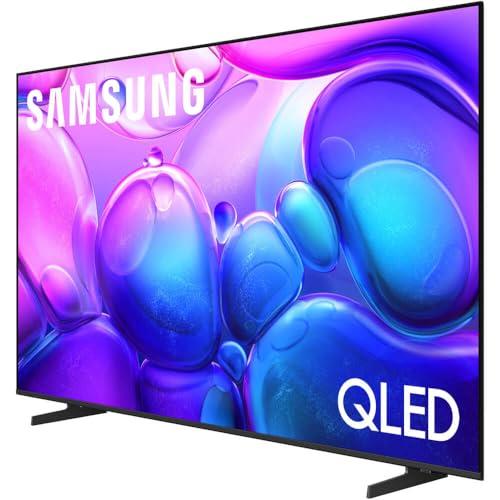
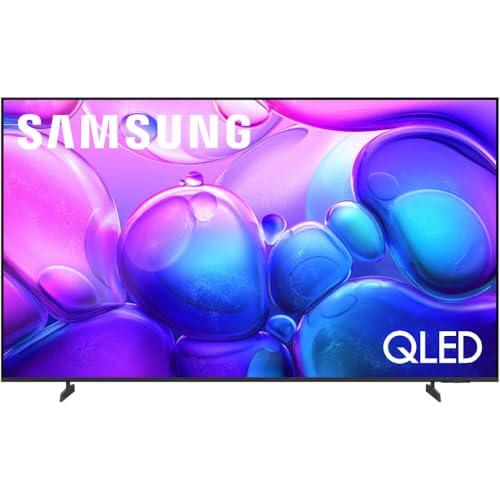
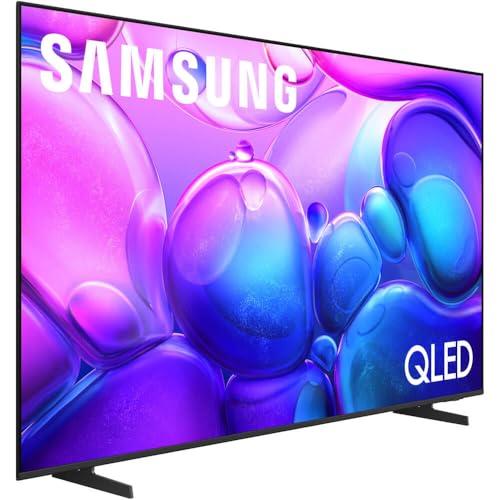


Shopping for a new TV in 2025 can feel overwhelming, especially when you're trying to decode Samsung's alphabet soup of model numbers. Today we're diving deep into Samsung's entry-level QLED lineup to help you understand what you're actually getting for your money - and we've discovered something important that might completely change your shopping plans.
QLED technology represents Samsung's answer to OLED displays, using quantum dots (tiny semiconductor particles) to enhance color reproduction and brightness. Think of quantum dots as microscopic color filters that can produce incredibly pure, vibrant colors when hit by light. This technology sits above standard LED TVs in Samsung's hierarchy but below their premium models with advanced features like local dimming zones.
Entry-level QLED TVs target buyers who want better colors and Samsung's smart TV ecosystem without paying premium prices. These models typically sacrifice advanced features like high refresh rates, local dimming, and peak brightness to hit more accessible price points. The key question becomes: which compromises matter most for your viewing habits?
Here's where things get interesting - and potentially frustrating if you had your heart set on the Q6F. After extensive research, we've confirmed that Samsung only offers the Q6F in 75" and 85" sizes for 2025. If you want a 65" entry-level QLED from Samsung this year, the Q7F is essentially your only option.
This limitation significantly changes the shopping equation. Instead of comparing two 65" models, you're really choosing between Samsung's lone 65" entry-level QLED or looking at different screen sizes or brands entirely.
The Q7F launched in early 2025 as Samsung's refresh of their entry-level QLED lineup. However, our research reveals something concerning: this newer model actually performs worse in several key areas compared to Samsung's 2024 Q60D series. This represents an unusual step backward in the TV industry, where each year typically brings improvements.
The most significant change for 2025 was the introduction of Samsung Vision AI, which we'll explore in detail. But Samsung appears to have made compromises elsewhere to accommodate new AI features while maintaining budget pricing.
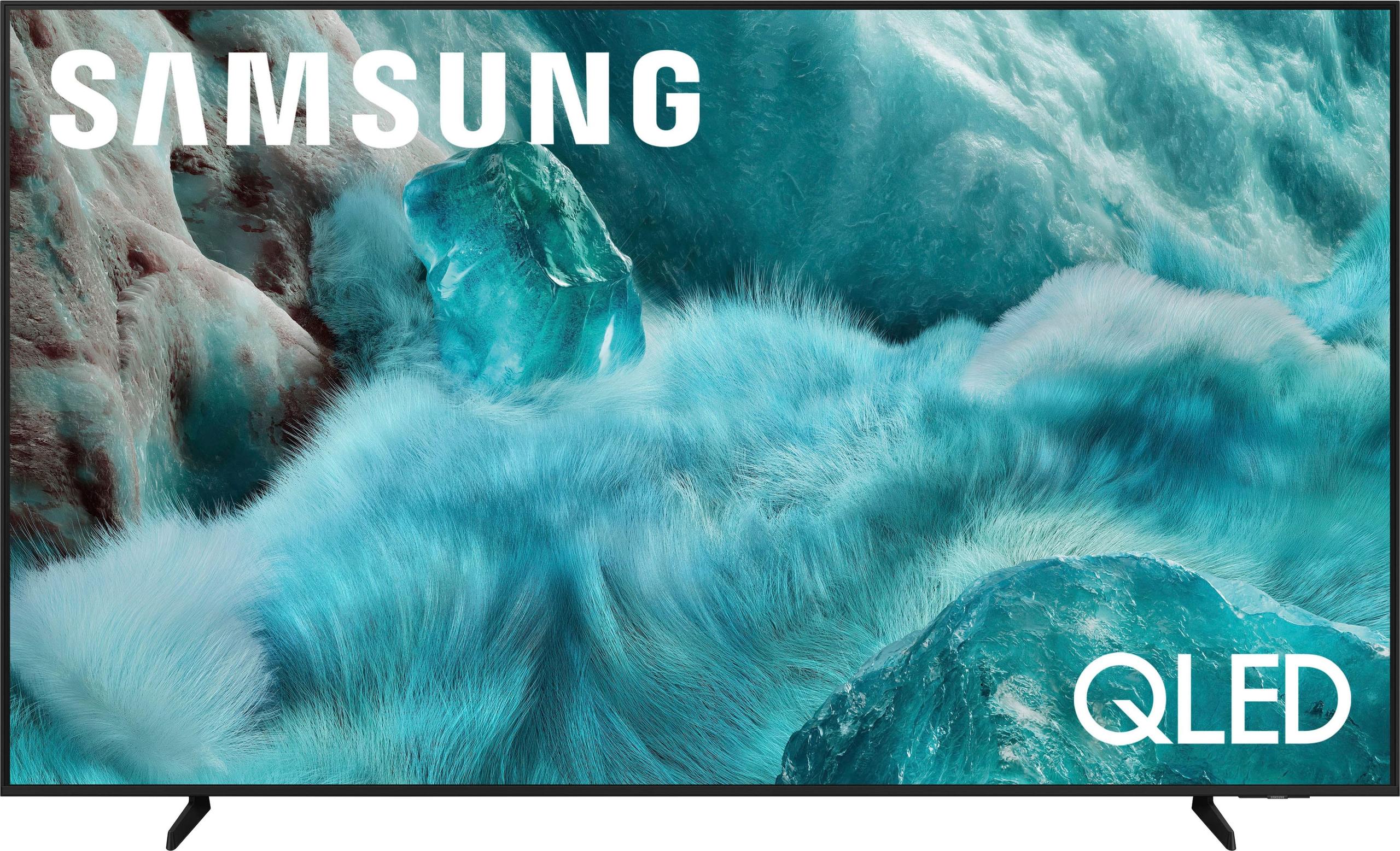
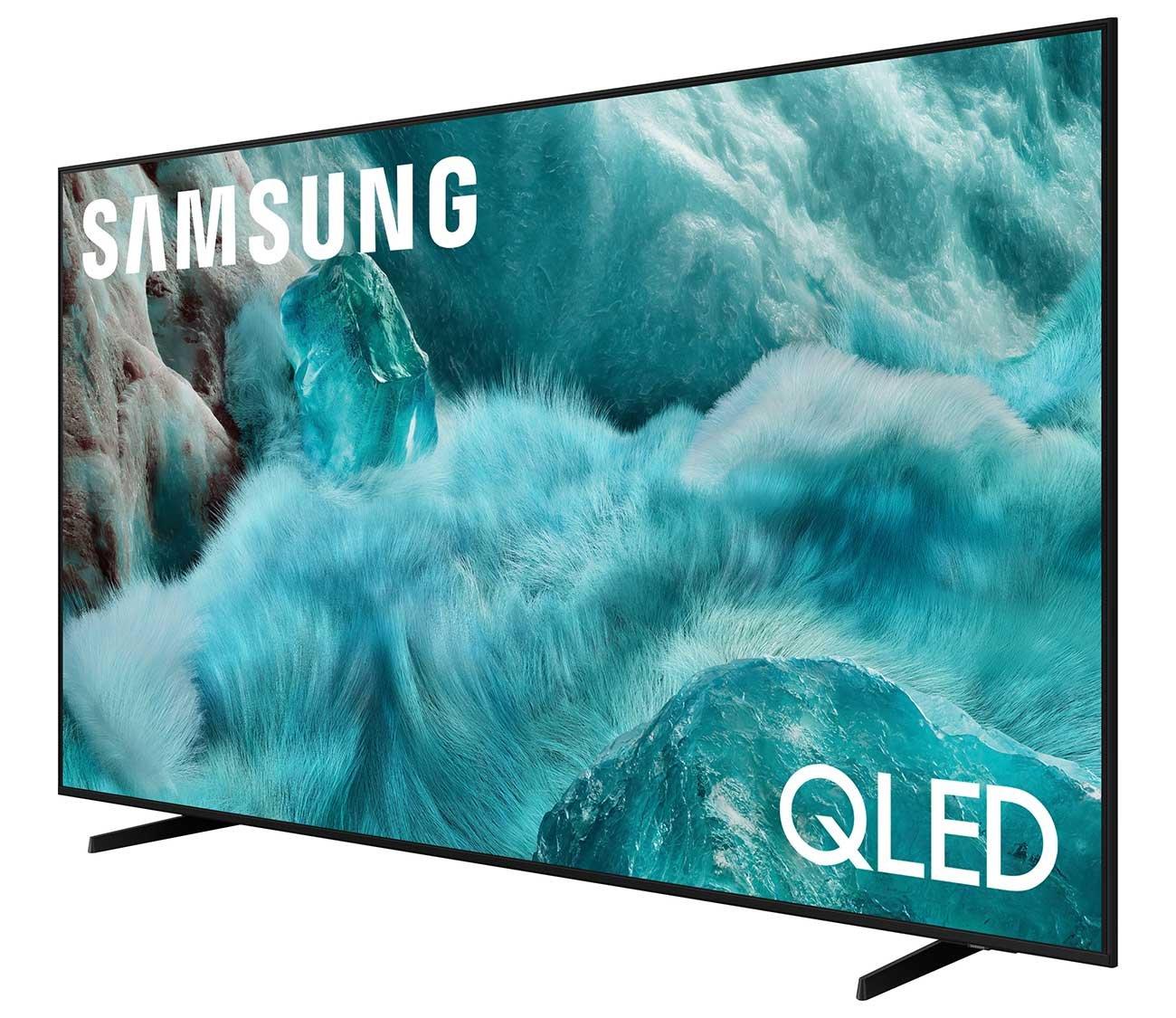
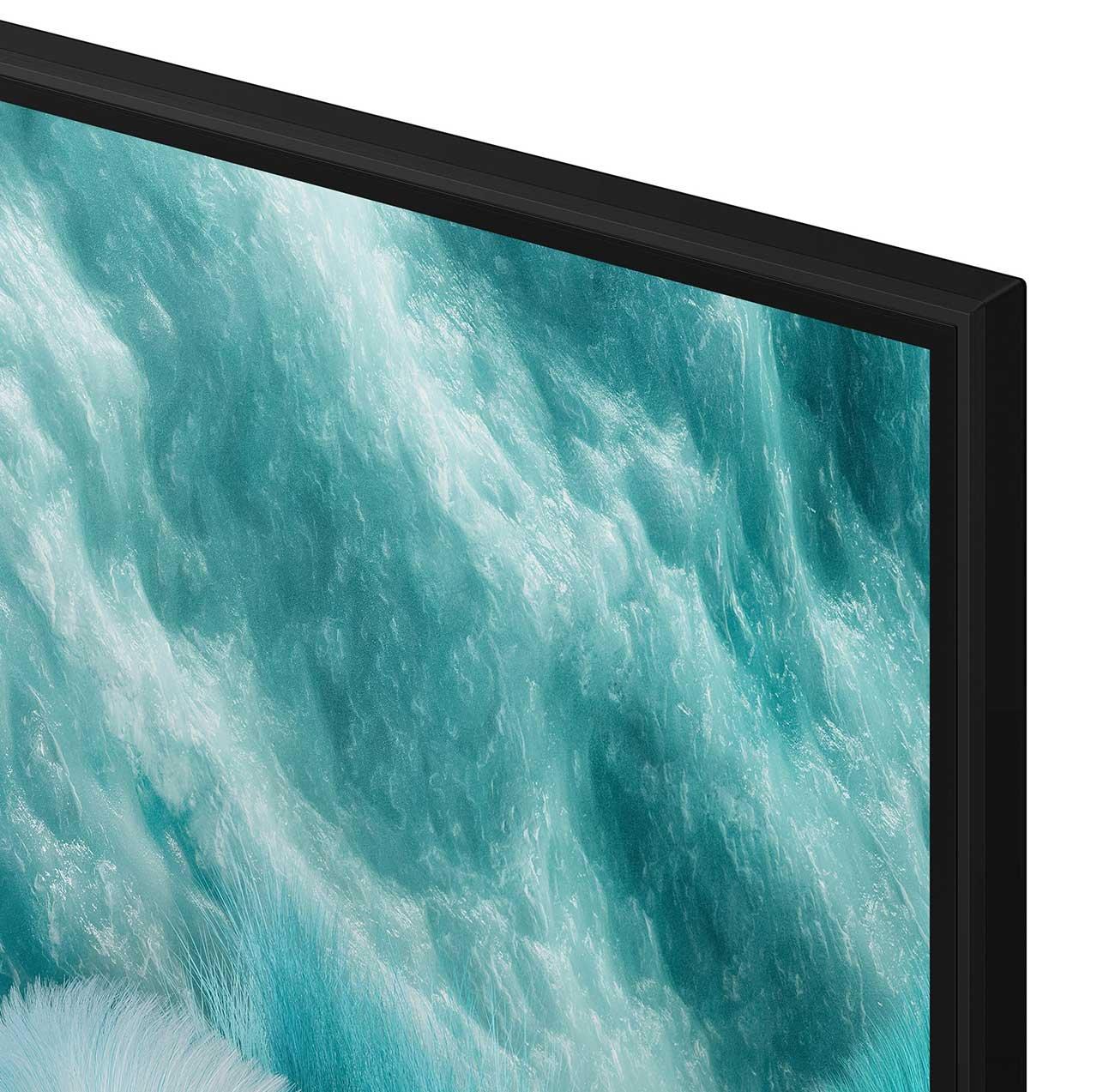
The Q7F uses a direct-lit LED backlight system, which places LED lights across the entire back panel rather than just around the edges (edge-lit). This matters because direct-lit systems provide more uniform brightness across the screen. Imagine trying to light a room with flashlights - you'd get better, more even lighting with multiple flashlights spread around rather than just a few pointed from the corners.
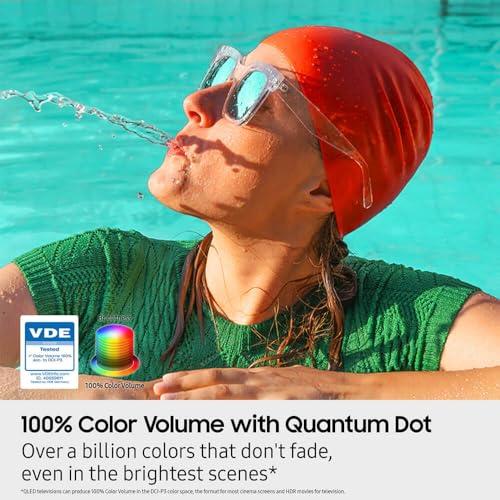
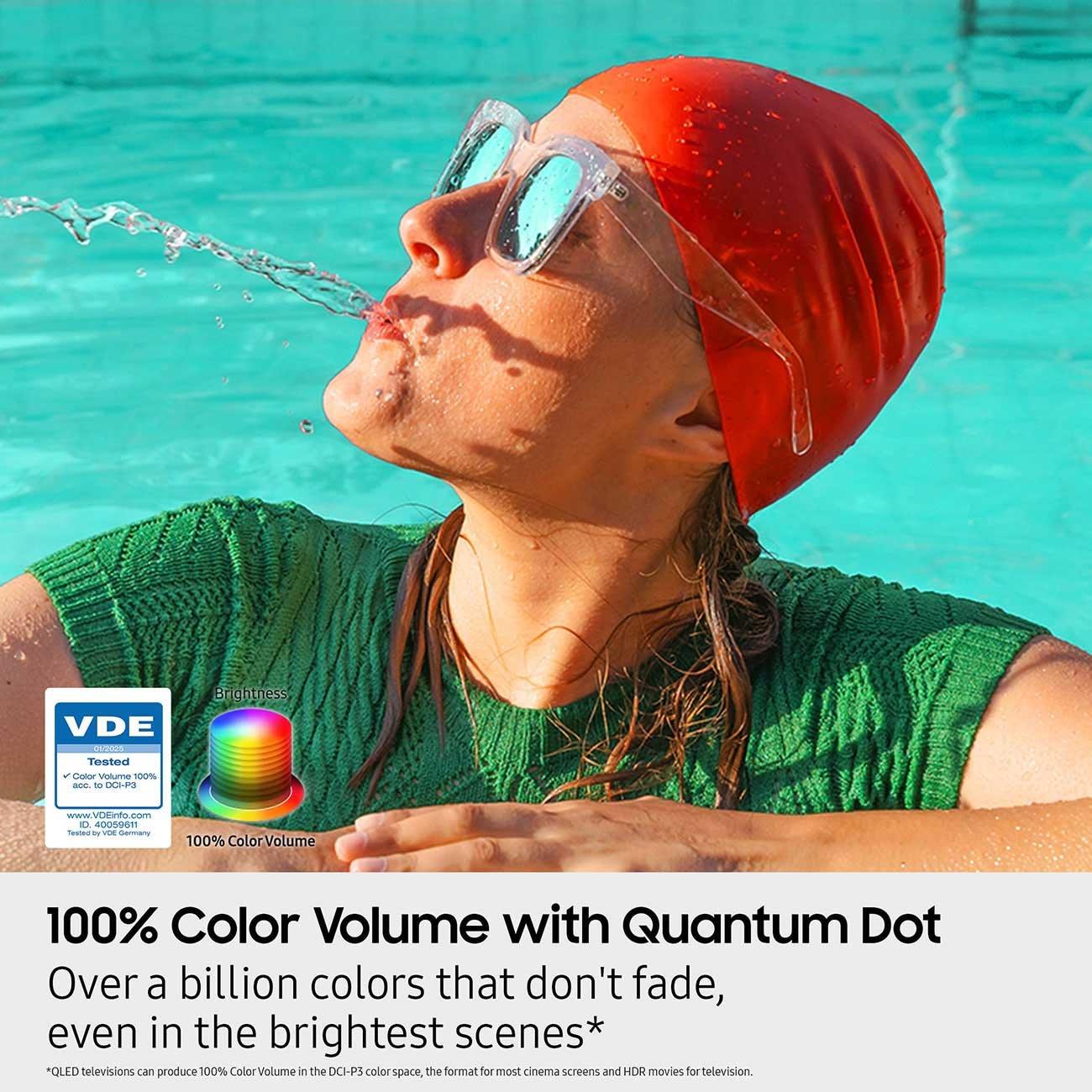
The quantum dot layer sits between the LED backlight and the LCD panel, converting blue LED light into highly pure red and green colors. This process allows the Q7F to achieve what Samsung calls "100% Color Volume" - essentially meaning it can produce accurate colors at any brightness level, not just in ideal conditions.
Peak brightness reaches approximately 500 cd/m² (candelas per square meter - a measurement of luminous intensity). For context, a typical indoor environment is around 100-200 cd/m², while direct sunlight can exceed 100,000 cd/m². The Q7F's brightness is adequate for most home viewing but won't punch through bright room lighting like premium models that can exceed 1,000 cd/m².
Samsung Vision AI represents the Q7F's most distinctive feature. This isn't just marketing fluff - it's a genuinely advanced system that learns your viewing habits and preferences over time. The AI can provide real-time translation of on-screen text, offer personalized content recommendations across streaming services, and even enable gesture controls when paired with compatible Samsung wearables.
More practically, Vision AI optimizes picture settings automatically based on content type and viewing conditions. Watching a dark movie at night? It adjusts accordingly. Streaming sports during the day? Different optimization profile. This kind of intelligent adaptation used to require manual adjustments or expensive calibration.
The enhanced Bixby integration offers more contextual understanding than previous generations. You can ask complex questions like "Show me action movies from the 1990s that got good reviews" rather than simple commands.
The Q7F operates at 60Hz refresh rate, which means it displays 60 frames per second maximum. This is perfectly adequate for movies (24fps), TV shows (30fps), and most streaming content. However, it's not ideal for competitive gaming where 120Hz displays provide smoother motion and reduced input lag.
Motion Xcelerator technology attempts to smooth out motion by predicting and interpolating between frames. This works well for sports and action content but can introduce the "soap opera effect" that makes movies look unnaturally smooth. Fortunately, this can be adjusted or disabled.
For gaming, the Auto Game Mode (ALLM) automatically detects when you're gaming and switches to optimized settings with lower input lag. Our research suggests input lag around 20-30 milliseconds, which is acceptable for casual gaming but not competitive enough for serious esports players who prefer sub-10ms response times.
The 20W, 2-channel audio system won't replace a dedicated sound system, but it's surprisingly competent for built-in TV speakers. Object Tracking Sound Lite creates the illusion of audio movement that follows on-screen action - when a car drives across the screen, the sound appears to move with it.
Q-Symphony compatibility is particularly clever: if you add a compatible Samsung soundbar later, the TV's speakers don't shut off. Instead, they work together to create a more immersive soundscape. The TV speakers might handle dialogue while the soundbar provides bass and surround effects.
Adaptive Sound analyzes audio content in real-time and adjusts settings automatically. Dialogue in quiet scenes gets enhanced clarity, while action sequences get more dynamic range. This kind of intelligent processing was rare in budget TVs just a few years ago.
The quantum dot technology in the Q7F delivers noticeably better color reproduction than standard LED TVs. Colors appear more saturated and accurate, particularly in bright scenes. The Pantone certification means color professionals have verified the display's accuracy against industry standards.
However, our research reveals that the Q7F produces less vibrant colors than Samsung's 2024 Q60D series. This regression is puzzling and suggests Samsung may have used different quantum dot materials or processing to reduce costs.
High Dynamic Range (HDR) content contains more color and brightness information than standard content, but the TV must be capable of displaying it effectively. The Q7F supports HDR10+ with dynamic tone mapping, which adjusts brightness and color scene-by-scene rather than applying static settings to entire movies.
The lack of Dolby Vision support is a limitation, as this competing HDR format is used by Netflix, Disney+, and other major streaming services. While HDR10+ content looks good on the Q7F, you'll miss out on optimal presentation of Dolby Vision titles.
The bigger limitation is peak brightness. Effective HDR requires bright highlights to create impact, but the Q7F's 500 cd/m² ceiling means HDR content won't have the dramatic brightness peaks intended by content creators. Premium TVs achieving 1,000+ cd/m² deliver much more impactful HDR experiences.
The Q7F handles casual gaming well but has clear limitations for serious gamers. The 60Hz refresh rate means you won't benefit from high frame rate gaming on PlayStation 5 or Xbox Series X, which can output 120fps in supported games.
Variable Refresh Rate (VRR) support is absent, which means screen tearing can occur when game frame rates fluctuate. This technology synchronizes the TV's refresh rate with the console's output for smoother gaming.
Auto Game Mode works effectively, reducing input lag and optimizing picture settings automatically. However, the overall gaming experience feels a generation behind what's available on mid-range and premium TVs.
For dedicated home theater use, the Q7F presents a mixed proposition. The quantum dot color enhancement and decent peak brightness work well for movie watching, especially in moderately lit rooms. The direct-lit backlight provides more uniform brightness than edge-lit alternatives.
However, several factors limit its home theater credentials. The lack of local dimming zones means black levels remain elevated - dark movie scenes appear grayish rather than truly black. This significantly impacts contrast ratio and the cinematic experience, particularly in dark viewing environments.
The 60Hz limitation also affects movie enthusiasts who prefer the smooth motion interpolation that 120Hz panels enable. While Motion Xcelerator helps, it's not as sophisticated as systems in premium models.
Audio performance is adequate but not exceptional. Most home theater enthusiasts will want to add a soundbar or surround sound system, which the Q7F supports well through eARC connectivity and Q-Symphony technology.
At the time of writing, the Q7F occupies an awkward position in Samsung's lineup. As the only 65" entry-level QLED option, it lacks direct competition within Samsung's 2025 range. However, the performance regression compared to 2024 models raises serious value questions.
Our research suggests the 2024 Q60D series offers better peak brightness, more effective upscaling of lower resolution content, and more vibrant colors. If you can find Q60D models at competitive pricing, they may represent better value despite being a year older.
The Vision AI features do add genuine utility, particularly for users invested in Samsung's smart home ecosystem. The improved content recommendations and automatic optimization work well in practice. However, these software features may not justify compromises in core picture quality performance.
Samsung's Tizen operating system with One UI provides one of the most polished smart TV experiences available. The interface is responsive, intuitive, and regularly updated with new features. Samsung TV Plus offers hundreds of free streaming channels, while major streaming apps like Netflix, Disney+, and YouTube work seamlessly.
The SmartThings integration is particularly valuable if you have other Samsung devices or smart home products. The TV can act as a hub for controlling lights, thermostats, and other connected devices. Multi-View support allows watching two sources simultaneously - perhaps keeping an eye on sports while browsing social media.
Voice control through Bixby, Alexa, and Google Assistant provides flexibility for different user preferences. The Vision AI enhancement makes these interactions more natural and contextually aware.
You're committed to a 65" Samsung QLED and want the latest smart features. The Vision AI capabilities, improved voice control, and Samsung ecosystem integration provide real value for users who will utilize these features regularly.
Casual viewers who prioritize ease of use and automatic optimization will appreciate the intelligent picture and sound adjustments. The direct-lit backlight provides better uniformity than many budget alternatives from other brands.
Picture quality is your top priority. The performance regression compared to 2024 models is concerning, and competing brands may offer better value at similar price points. LG's QNED and Sony's X series provide alternative approaches to budget 4K TVs.
Gaming is important to your usage. The 60Hz limitation and lack of advanced gaming features make the Q7F unsuitable for serious gaming. Mid-range models with 120Hz and VRR support provide dramatically better gaming experiences.
Home theater use is the primary goal. The elevated black levels and limited HDR performance compromise the cinematic experience. OLED TVs, while more expensive, deliver the contrast ratio that movie enthusiasts prefer.
The Samsung Q7F represents Samsung's vision of an AI-enhanced, ecosystem-integrated smart TV at an accessible price point. The Vision AI features work well and provide genuine utility for appropriate users. The quantum dot color enhancement and direct-lit backlight deliver better picture quality than standard LED TVs.
However, the performance regression compared to previous generations is troubling. Samsung appears to have prioritized new features over core picture quality improvements, resulting in a TV that's smarter but not necessarily better at its primary function.
At the time of writing, careful price comparison with 2024 models is essential. If you can find a Q60D series TV at a competitive price, it may deliver better overall value despite lacking the latest AI features.
For buyers specifically seeking a 65" Samsung QLED, the Q7F is currently the only option. Just ensure you understand the compromises involved and consider whether stepping up to Samsung's mid-range models might provide better long-term satisfaction.
The TV market moves quickly, and Samsung's decision to regression-test some performance aspects while advancing others reflects the complex balancing act manufacturers face. The Q7F isn't a bad TV - it's just not necessarily the best TV Samsung has made at this price point, which makes the buying decision more complex than it should be.
| Samsung 65" QLED Q6F 4K Smart TV 2025 | Samsung 65" Q7F QLED 4K Vision AI Smart TV 2025 |
|---|---|
| Availability - Critical factor for 65" buyers | |
| Not available in 65" size (only 75" and 85") | Available in 65" size |
| Backlight Technology - Affects brightness uniformity and longevity | |
| Edge-lit LED (less uniform, shorter lifespan) | Direct-lit LED (more uniform brightness distribution) |
| Processor - Controls upscaling and smart features | |
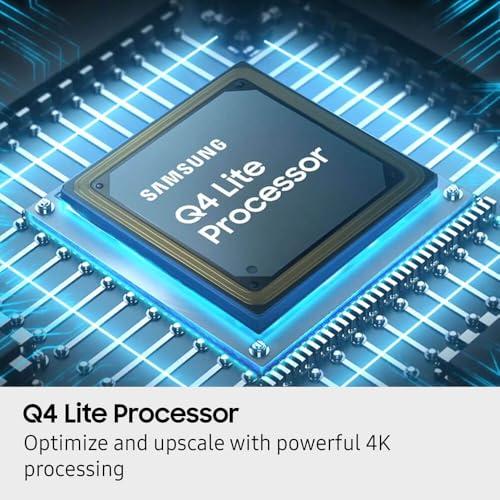
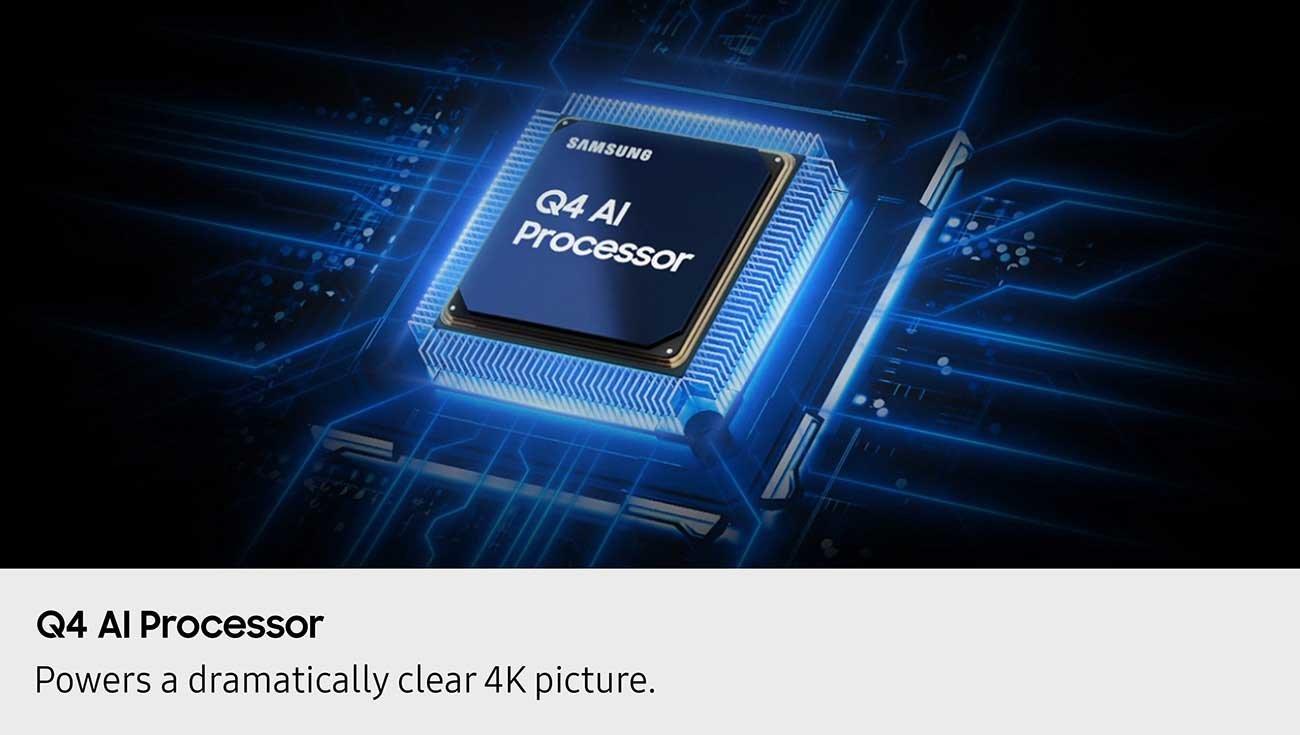
| Q4 Lite Processor | Q4 AI Processor with Vision AI |
| AI Features - Advanced smart TV capabilities | |
| Standard Tizen smart features | Samsung Vision AI with personalized recommendations, real-time translation, gesture controls |
| Voice Assistants - Smart home integration | |
| Bixby, Alexa, Google Assistant (basic) | Enhanced Bixby with Vision AI, Alexa, Google Assistant |
| Peak Brightness - Important for HDR and bright rooms | |
| Not specified (likely lower than Q7F) | ~500 cd/m² (adequate for most rooms) |
| Refresh Rate - Gaming and motion smoothness | |
| 50Hz/60Hz with Motion Xcelerator | 60Hz with Motion Xcelerator |
| Gaming Features - Console compatibility | |
| Auto Game Mode (ALLM), HGiG | Auto Game Mode (ALLM), AI Auto Game Mode, HGiG |
| Audio System - Built-in sound quality | |
| 20W 2CH with OTS Lite, Q-Symphony | 20W 2CH with OTS Lite, Q-Symphony, Adaptive Sound |
| Design Weight - Installation and mounting | |
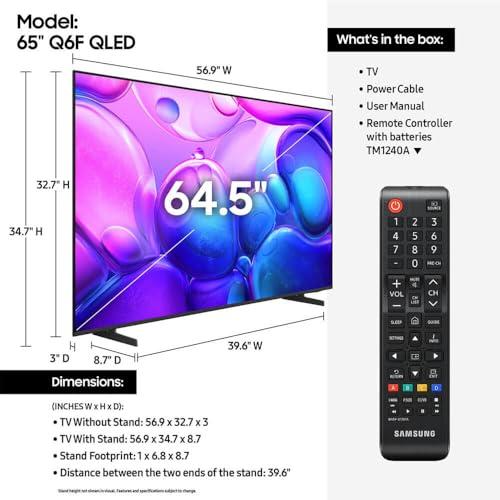
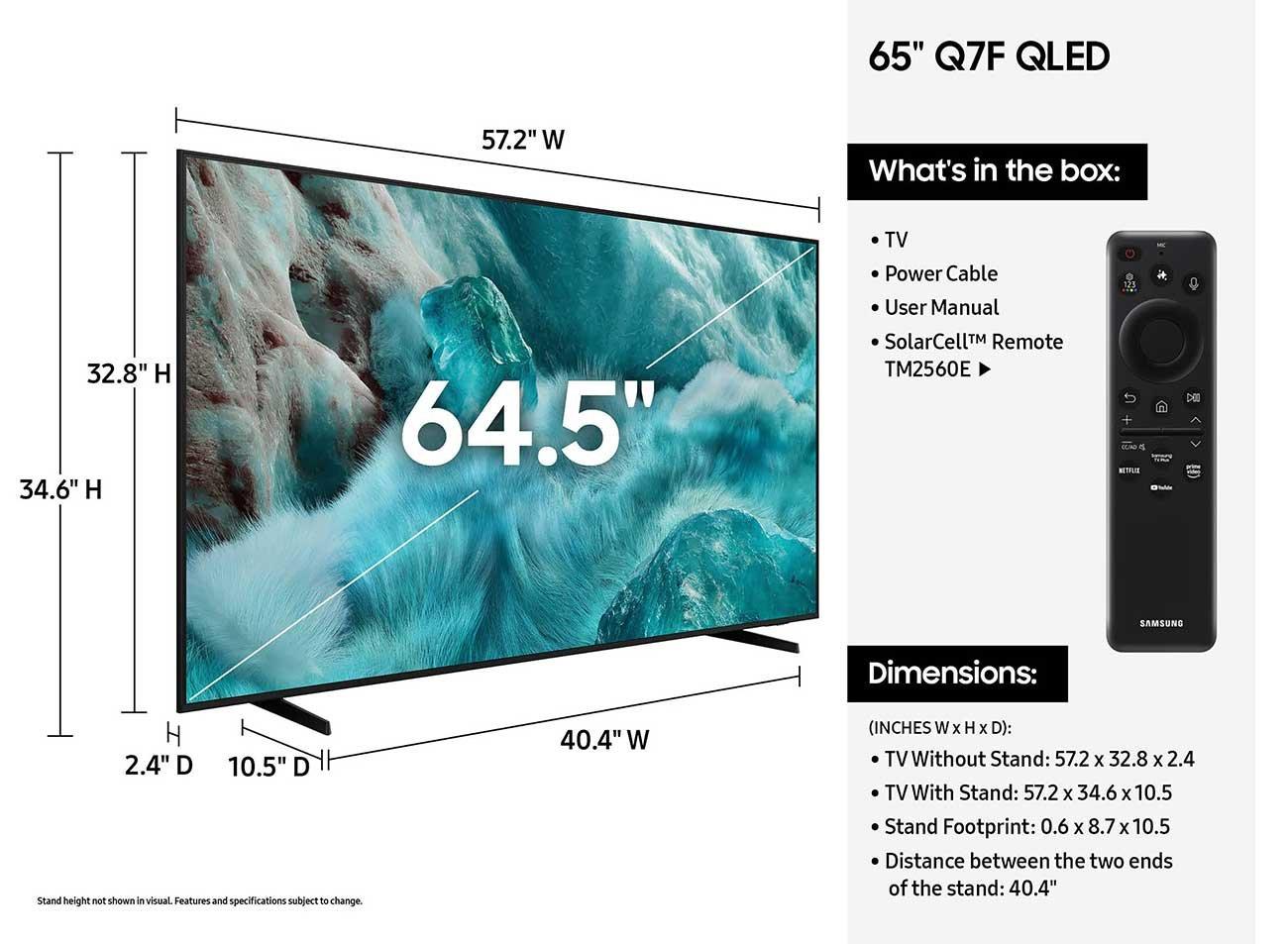
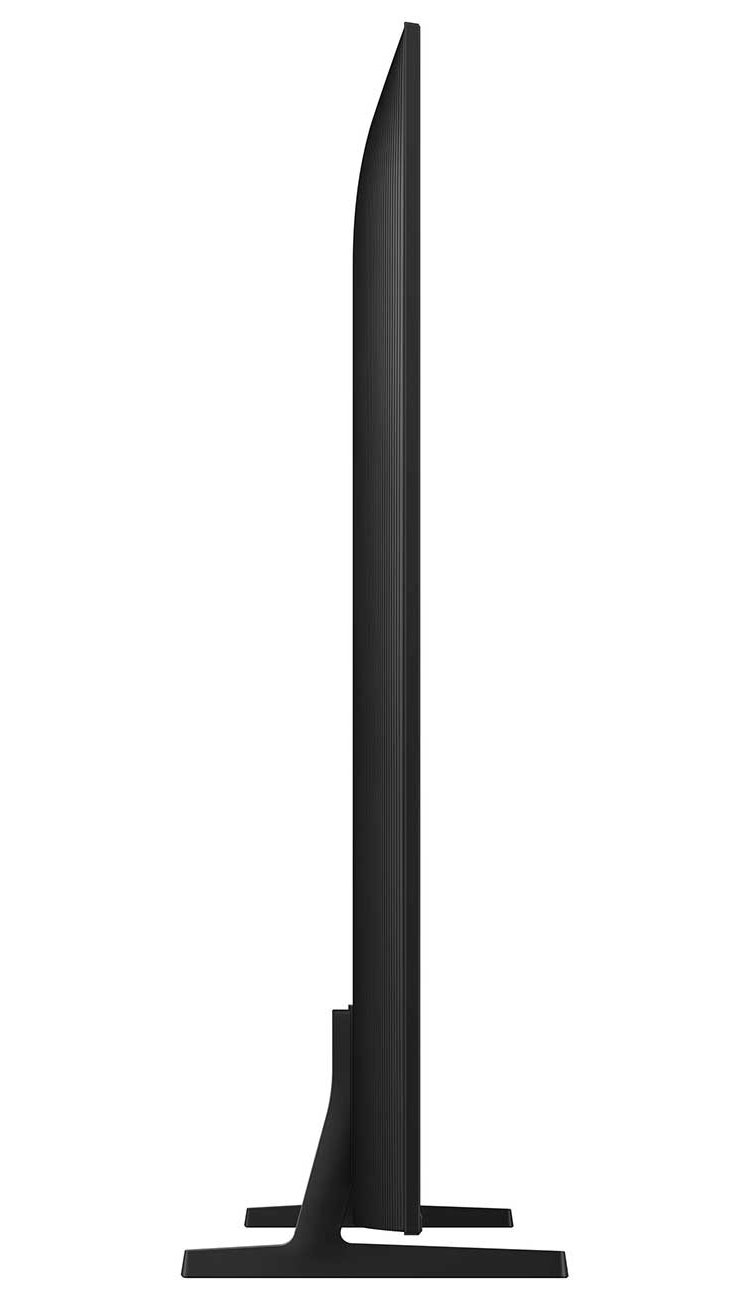
| Not specified | 35 pounds (lightweight for 65" TV) |
| HDR Support - Premium content compatibility | |
| Quantum HDR, HDR10+ | Quantum HDR, HDR10+ (no Dolby Vision on either) |
| Local Dimming - Contrast and black levels | |
| None (budget positioning) | None (budget positioning) |
| Value Consideration - Performance vs previous generation | |
| N/A (not available in 65") | Performance regression vs 2024 Q60D in brightness and color vibrancy |
No, the Samsung 65" QLED Q6F is not available in a 65-inch size for 2025. Samsung only offers the Q6F model in 75" and 85" sizes. If you want a 65" entry-level QLED from Samsung in 2025, the Q7F is your only option in that screen size.
The Q6F uses edge-lit LED backlighting, while the Q7F features direct-lit LED technology. Direct-lit systems place LEDs across the entire back panel, providing more uniform brightness and better long-term reliability. Edge-lit systems position LEDs only around the perimeter, which can result in less consistent brightness and potential durability issues.
The Samsung Q7F offers significantly more advanced smart features with Samsung Vision AI, providing personalized content recommendations, real-time translation, and enhanced voice control through Bixby. The Q6F includes standard Tizen smart features but lacks the advanced AI processing and contextual understanding found in the Q7F.
Both the Q6F and Q7F offer basic gaming compatibility with Auto Game Mode (ALLM) and 60Hz refresh rates. However, neither TV includes advanced gaming features like 120Hz support or Variable Refresh Rate (VRR), making them suitable for casual gaming but not optimal for competitive gaming or taking full advantage of next-gen console capabilities.
The Samsung Q7F is better suited for home theater use due to its direct-lit backlighting system, which provides more uniform brightness across the screen. However, both models lack local dimming zones, meaning they cannot achieve the deep blacks and high contrast ratios that serious home theater enthusiasts prefer. Neither model supports Dolby Vision HDR format.
The Samsung Q7F provides better picture quality with its direct-lit backlighting and Pantone-certified color accuracy. Both models use quantum dot technology for enhanced color reproduction, but the Q7F's more uniform backlighting system delivers more consistent picture quality across the entire screen compared to the edge-lit system in the Q6F.
The Samsung Q7F likely offers better long-term reliability due to its direct-lit LED backlighting system. Research indicates that direct-lit TVs generally have longer lifespans compared to edge-lit models like the Q6F. The Q7F also weighs only 35 pounds, making it easier to mount and handle during installation.
Since the Samsung 65" Q6F isn't available in 65" size, value comparison is difficult. The Q7F represents Samsung's only 65" entry-level QLED option for 2025, but research suggests it performs worse than Samsung's 2024 Q60D in some areas like brightness and color vibrancy, despite adding AI features.
If you specifically want a 65" Samsung QLED TV from the 2025 lineup, the Samsung Q7F is your only choice in the entry-level category. The Q6F simply doesn't exist in 65" size. However, you might want to consider Samsung's 2024 Q60D series if available at competitive pricing, as it may offer better picture quality performance than the 2025 Q7F.
We've done our best to create useful and informative comparisons to help you decide what product to buy. Our research uses advanced automated methods to create this comparison and perfection is not possible - please contact us for corrections or questions. These are the sites we've researched in the creation of this article: tomsguide.com - bestbuy.com - samsung.com - rtings.com - youtube.com - rtings.com - bestbuy.com - samsung.com - samsung.com - samsung.com - manuals.plus - shopjetson.com - samsung.com - samsung.com - samsung.com - samsung.com - bestbuy.com - jefflynch.com - bestbuy.com - youtube.com - samsung.com - samsung.com - pcrichard.com - samsung.com - samsung.com - videoandaudiocenter.com - displayspecifications.com - bestbuy.com - samsung.com - samsung.com - samsung.com - samsung.com - news.samsung.com

Privacy Policy
Terms and Conditions - Affiliate Policy
Home Security
© Copyright 2008-2026.
11816 Inwood Rd #1211, Dallas, TX 75244