

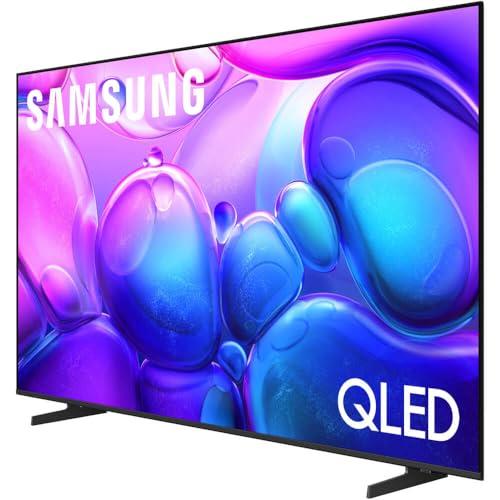
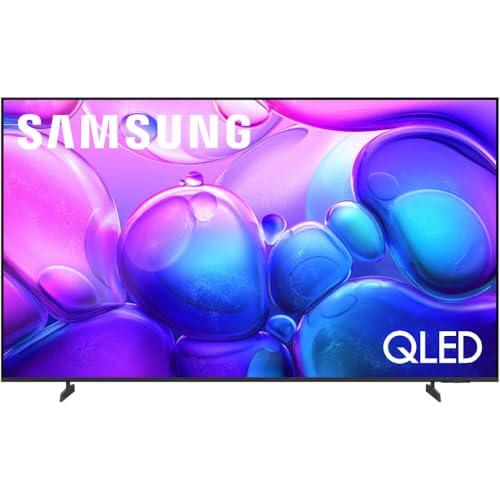
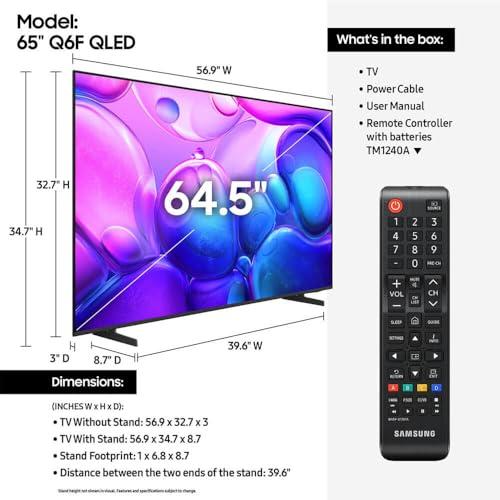
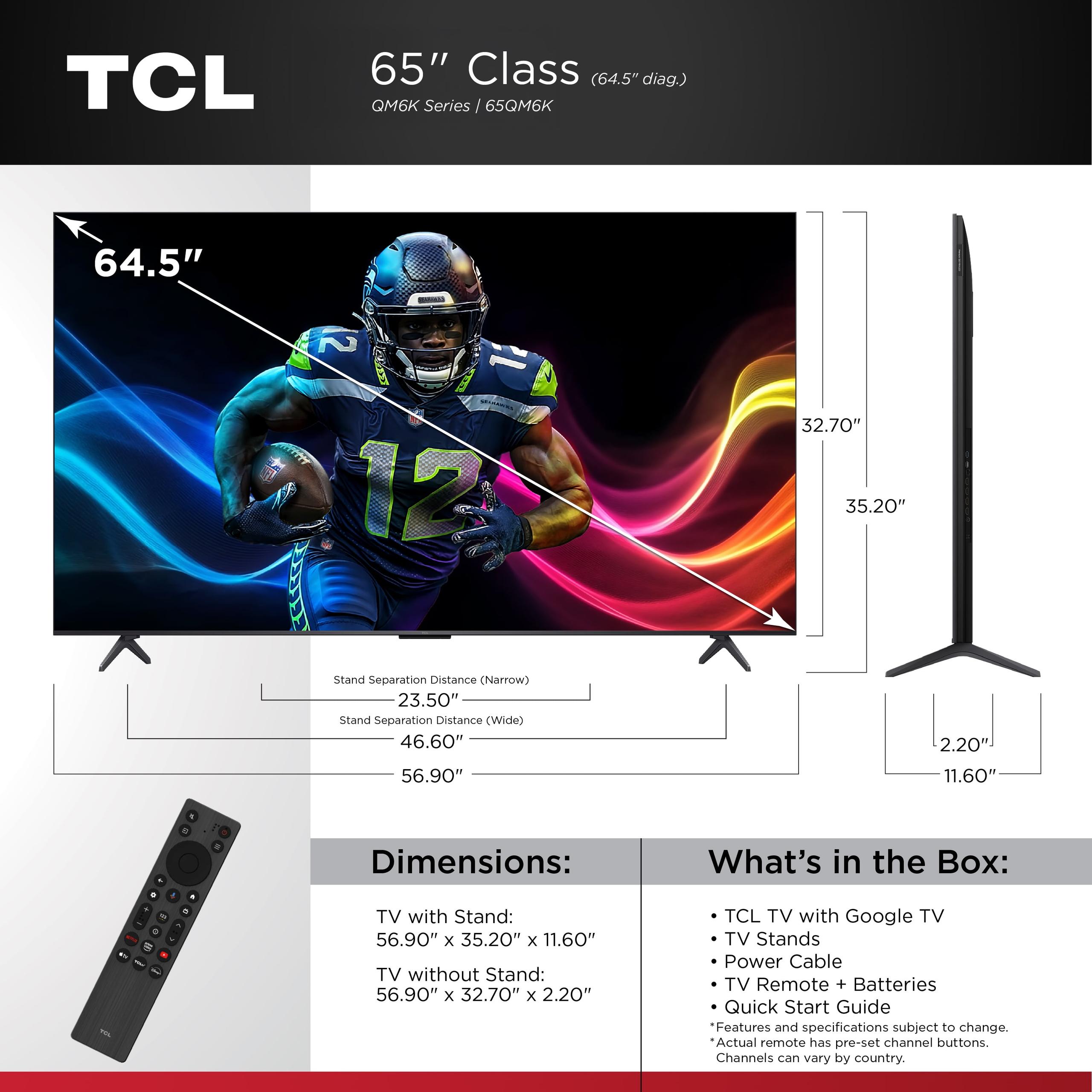
Shopping for a 65-inch 4K TV can feel overwhelming with so many options promising the best picture quality for your money. Two models that consistently appear in budget-conscious shoppers' research are the Samsung Q6F and the TCL QM6K. While both compete in the same price range, they represent fundamentally different approaches to delivering premium features at accessible prices.
The budget 4K TV market has evolved dramatically since 2020, when basic LED panels dominated this price segment. Today's consumers expect quantum dot color enhancement, local dimming capabilities, and gaming features that were once exclusive to flagship models. The challenge for manufacturers is delivering these premium technologies while maintaining competitive pricing.
When evaluating TVs in this category, picture quality remains the primary consideration. This encompasses color accuracy (how realistic colors appear), brightness levels (important for HDR content and bright rooms), and contrast performance (the difference between the darkest blacks and brightest whites). Gaming performance has become equally crucial, with features like high refresh rates and variable refresh rate (VRR) technology—which synchronizes the TV's display with gaming console frame rates to eliminate screen tearing—now expected even in budget models.
Smart TV capabilities round out the essential features, though most modern platforms offer similar app selections. Build quality and long-term reliability, while harder to quantify immediately, significantly impact value over a TV's typical 7-10 year lifespan.
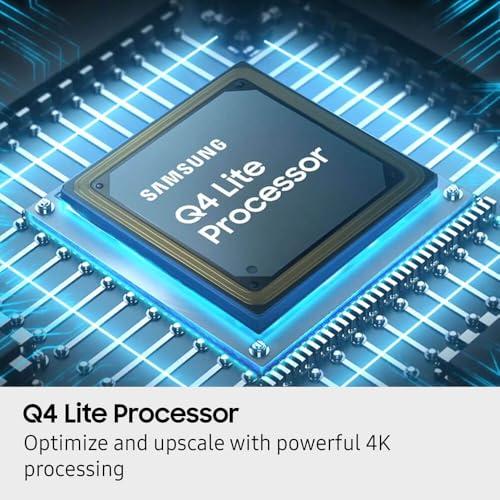
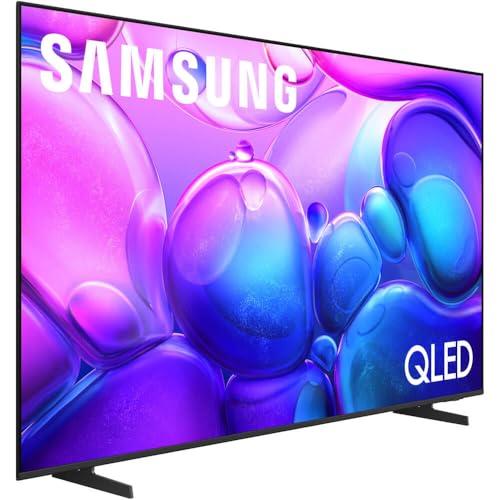
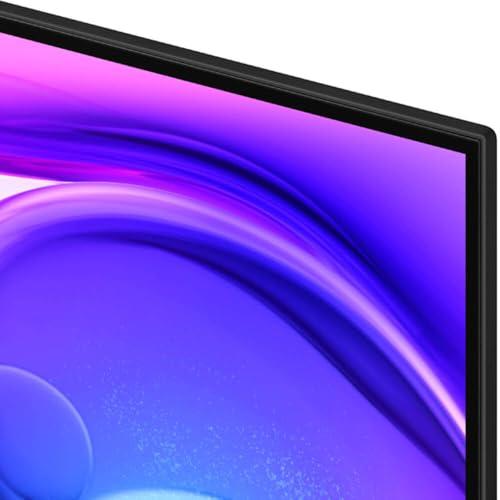
The most significant difference between the Samsung Q6F and TCL QM6K lies in their fundamental display architecture. The Samsung employs traditional LED backlighting without local dimming zones. This means the entire screen—or large sections of it—brighten and dim together, preventing the TV from displaying deep blacks alongside bright highlights simultaneously.
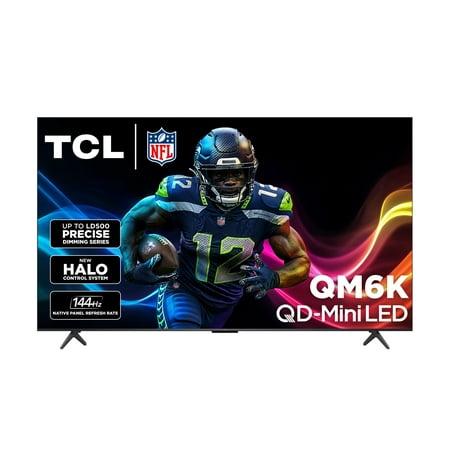
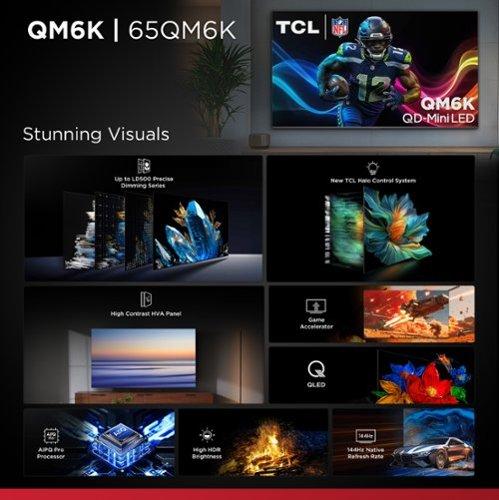
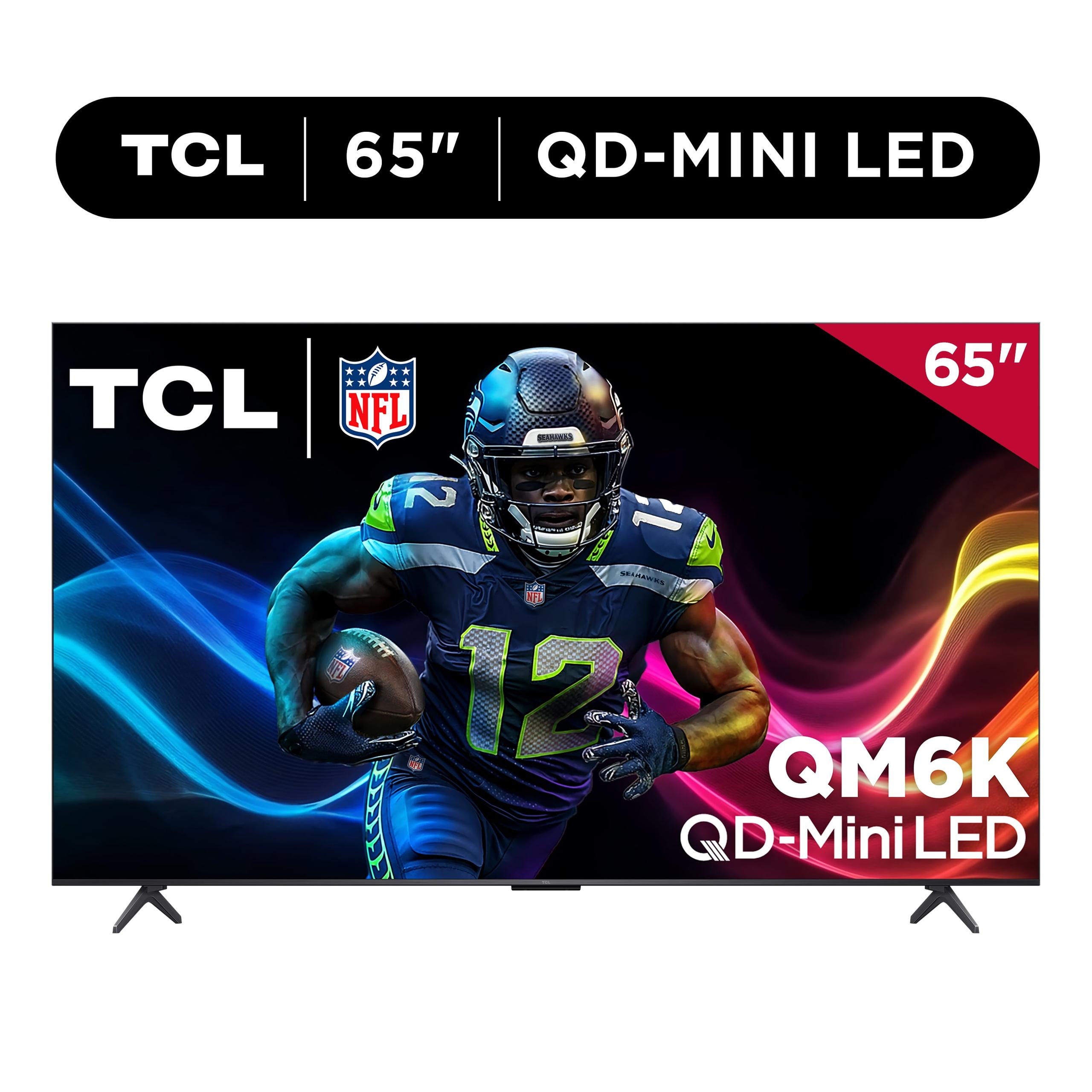
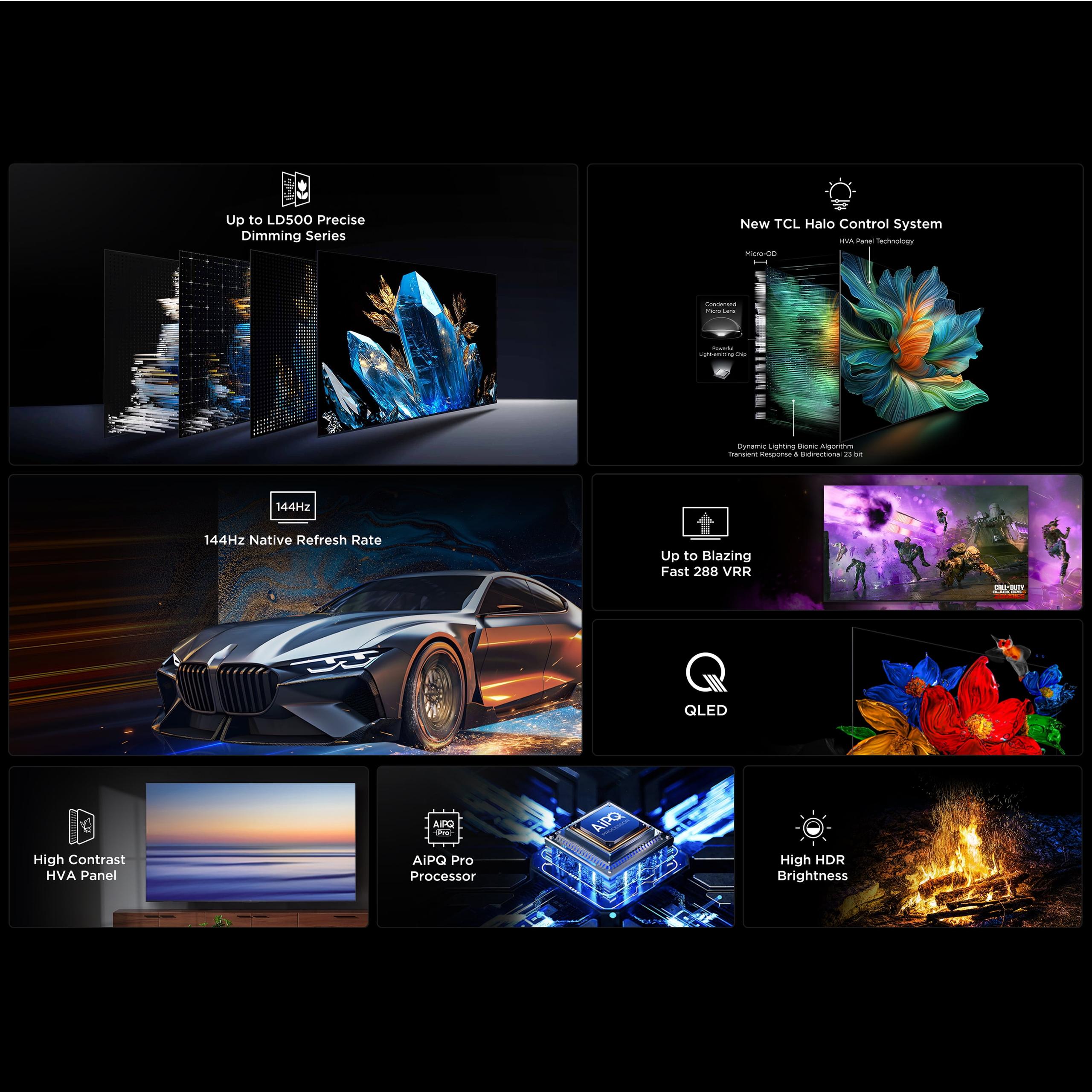
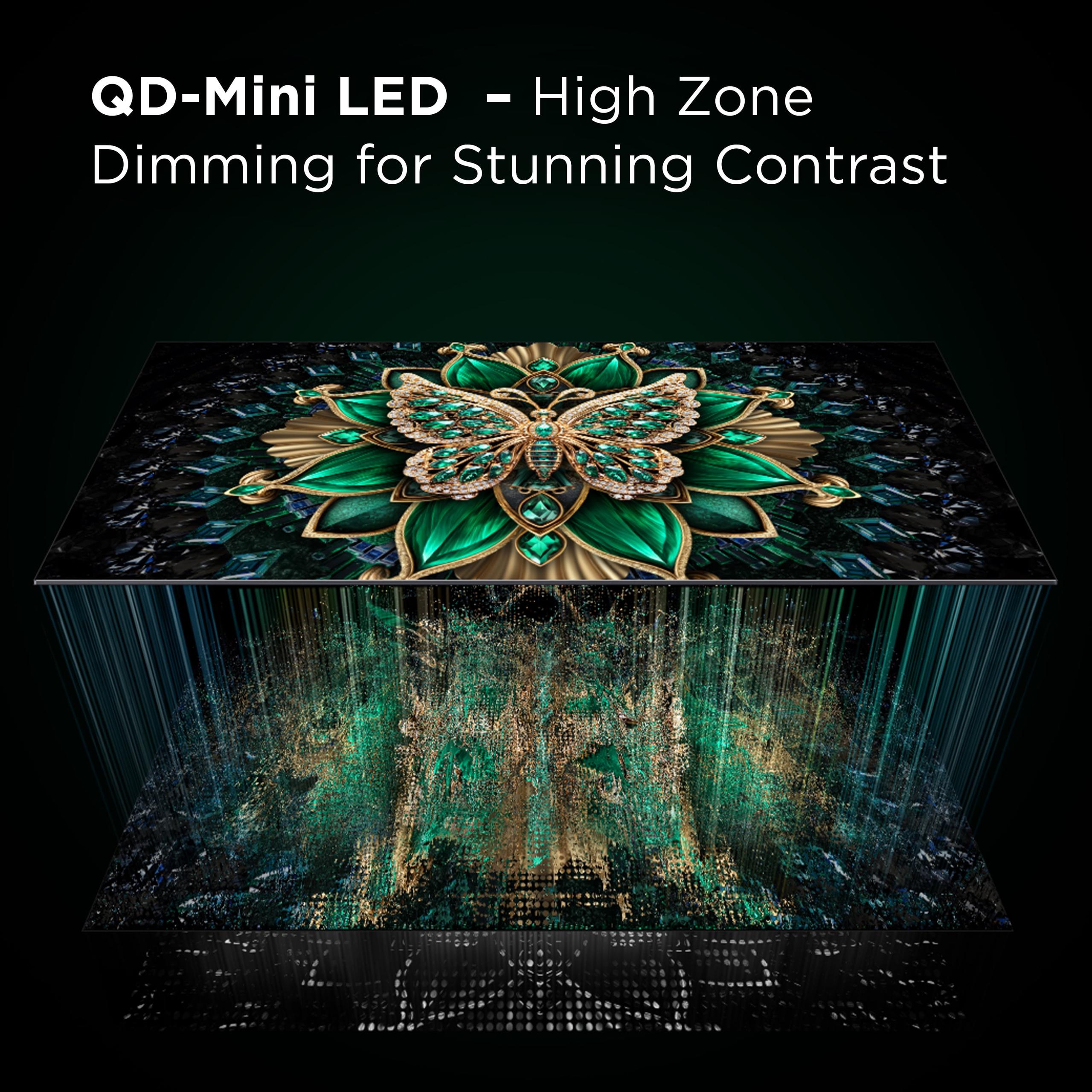
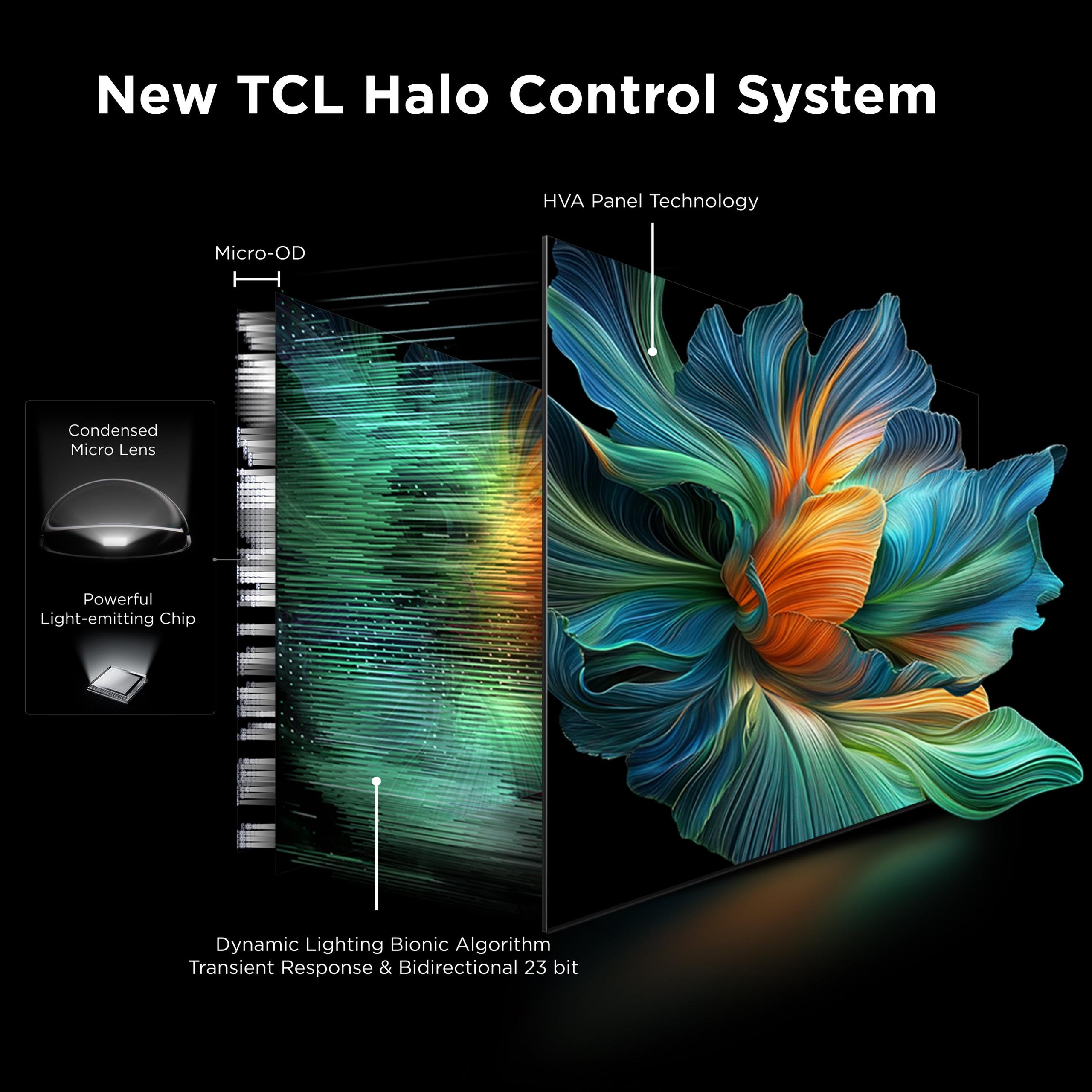
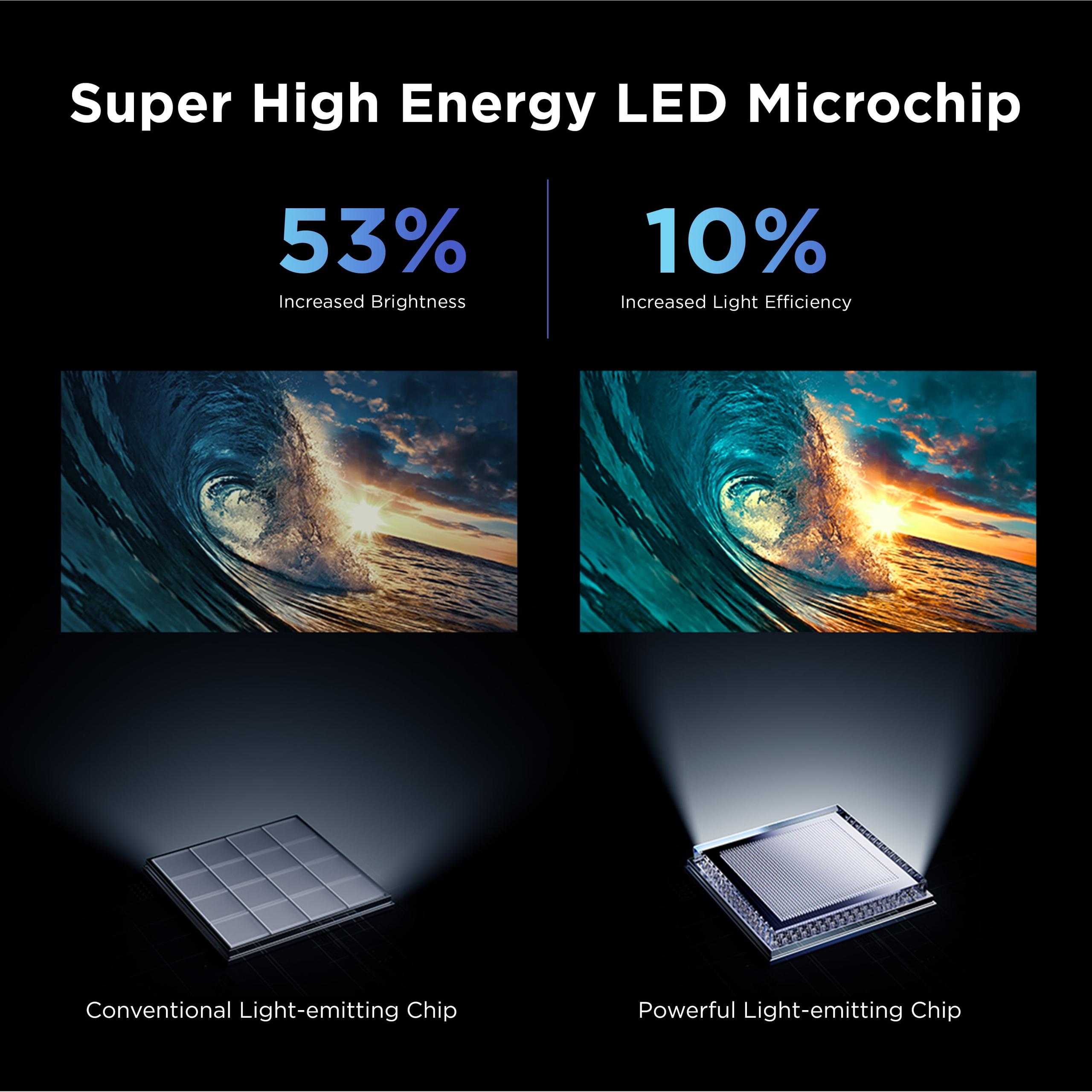
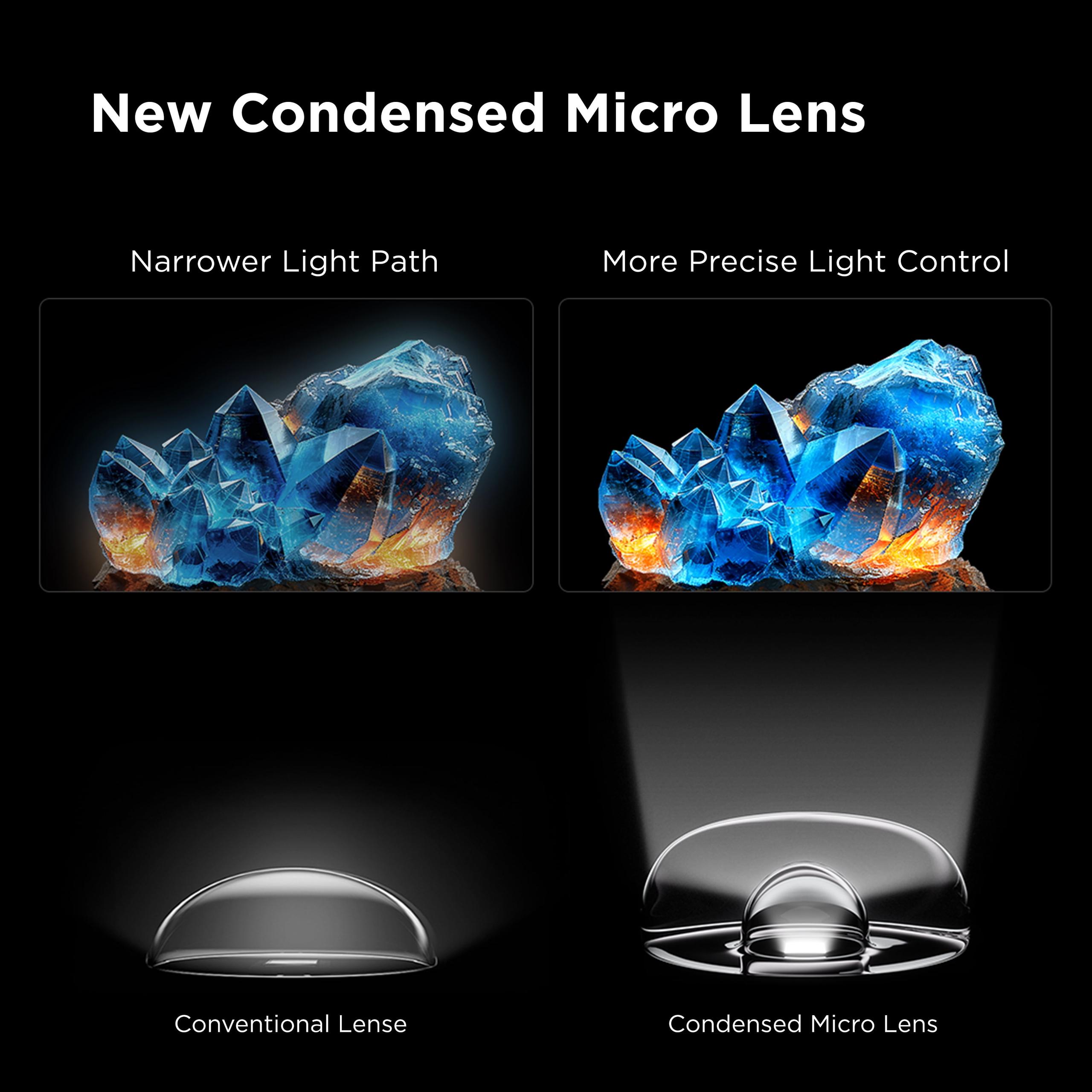
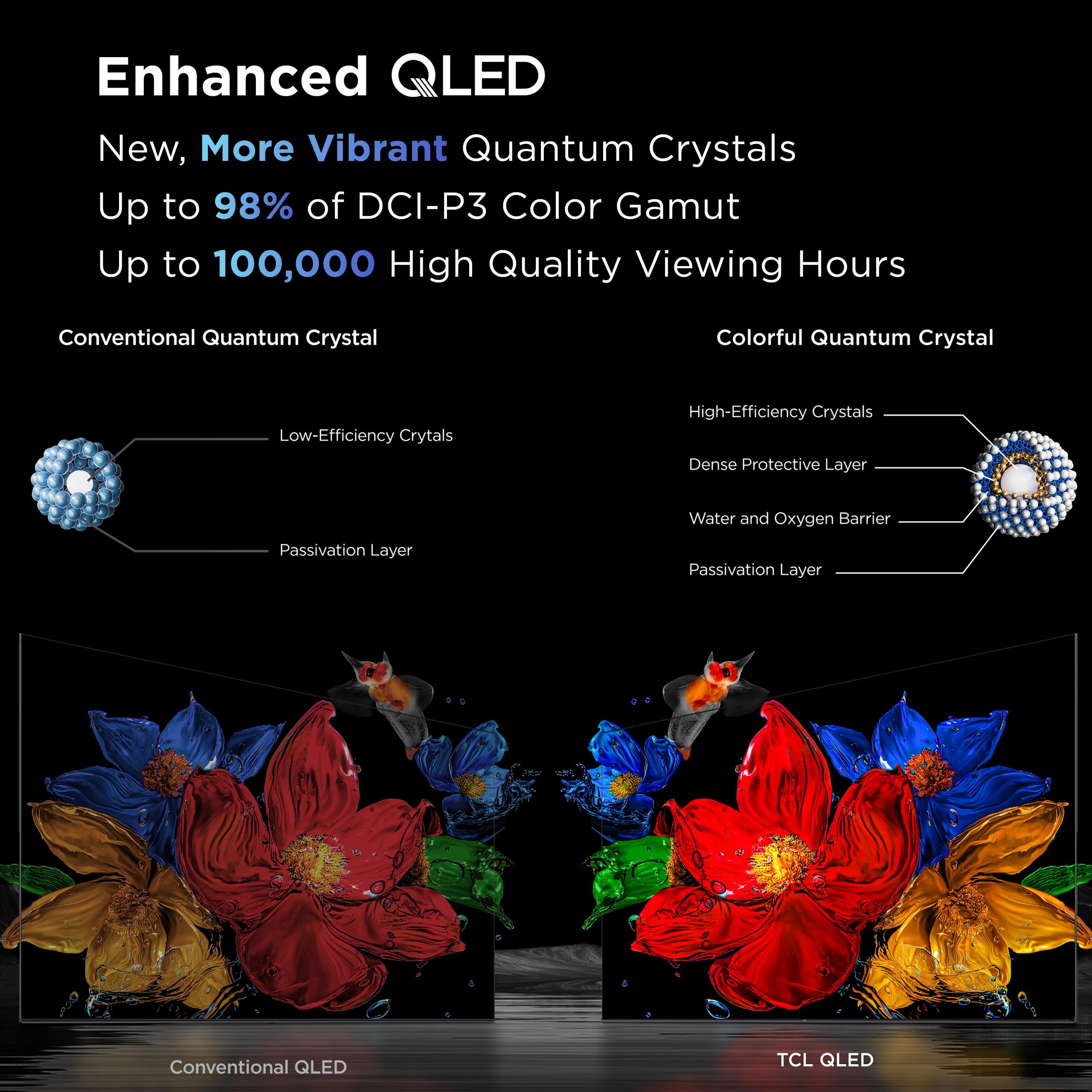
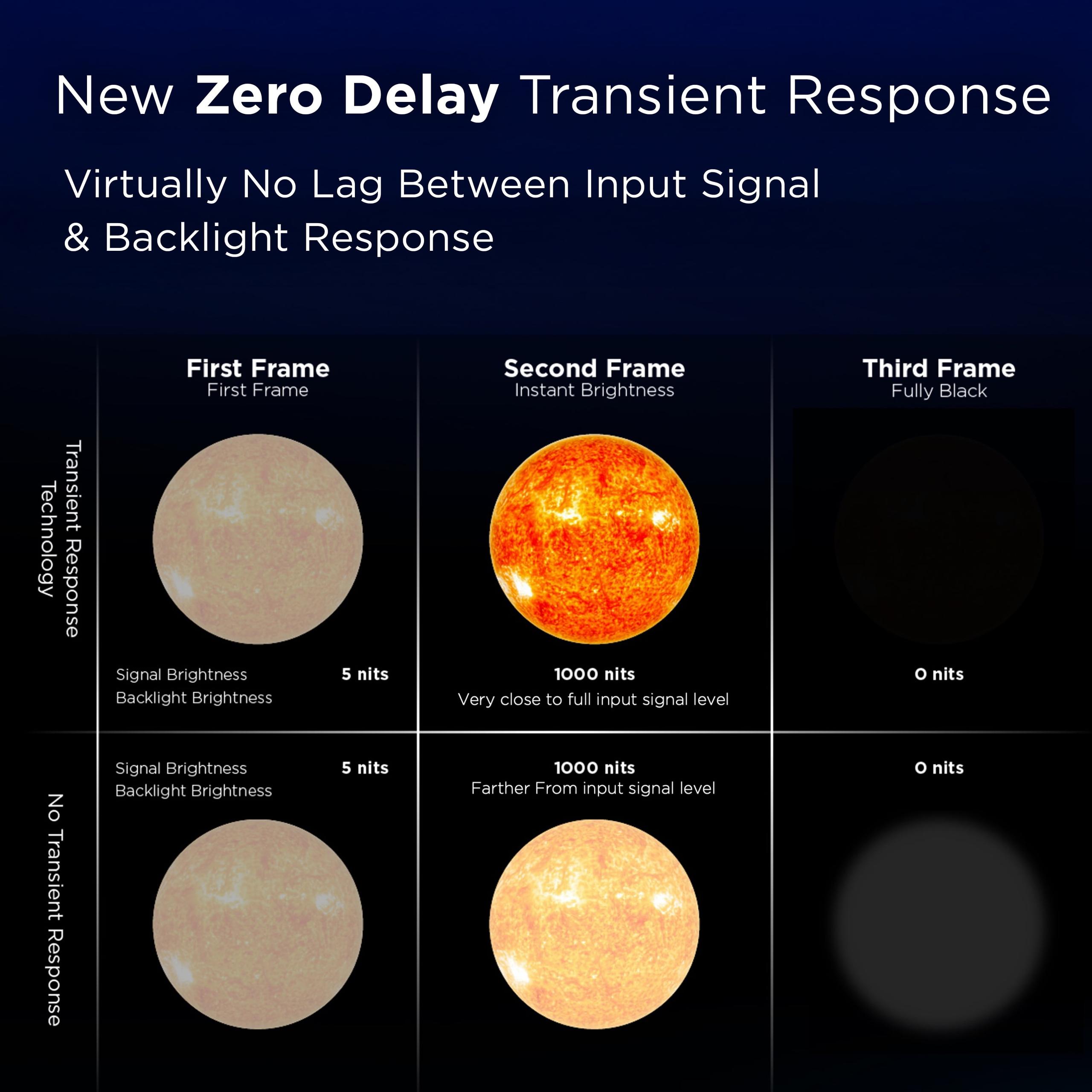
The TCL QM6K represents a technological leap forward with its QD-Mini LED implementation. Mini LED backlighting uses thousands of smaller LEDs compared to conventional systems, allowing for more precise control. Combined with full-array local dimming (FALD), which enables hundreds of individual zones to dim and brighten independently, this creates dramatically better contrast performance. The quantum dot (QD) layer enhances color volume and saturation beyond what standard LED panels can achieve.
This isn't merely a technical specification difference—it fundamentally changes the viewing experience. When watching a movie scene with both dark shadows and bright highlights, the TCL QM6K can display true blacks in dark areas while simultaneously showing brilliant whites elsewhere. The Samsung Q6F, lacking this capability, must compromise, resulting in grayish blacks that reduce the image's depth and realism.
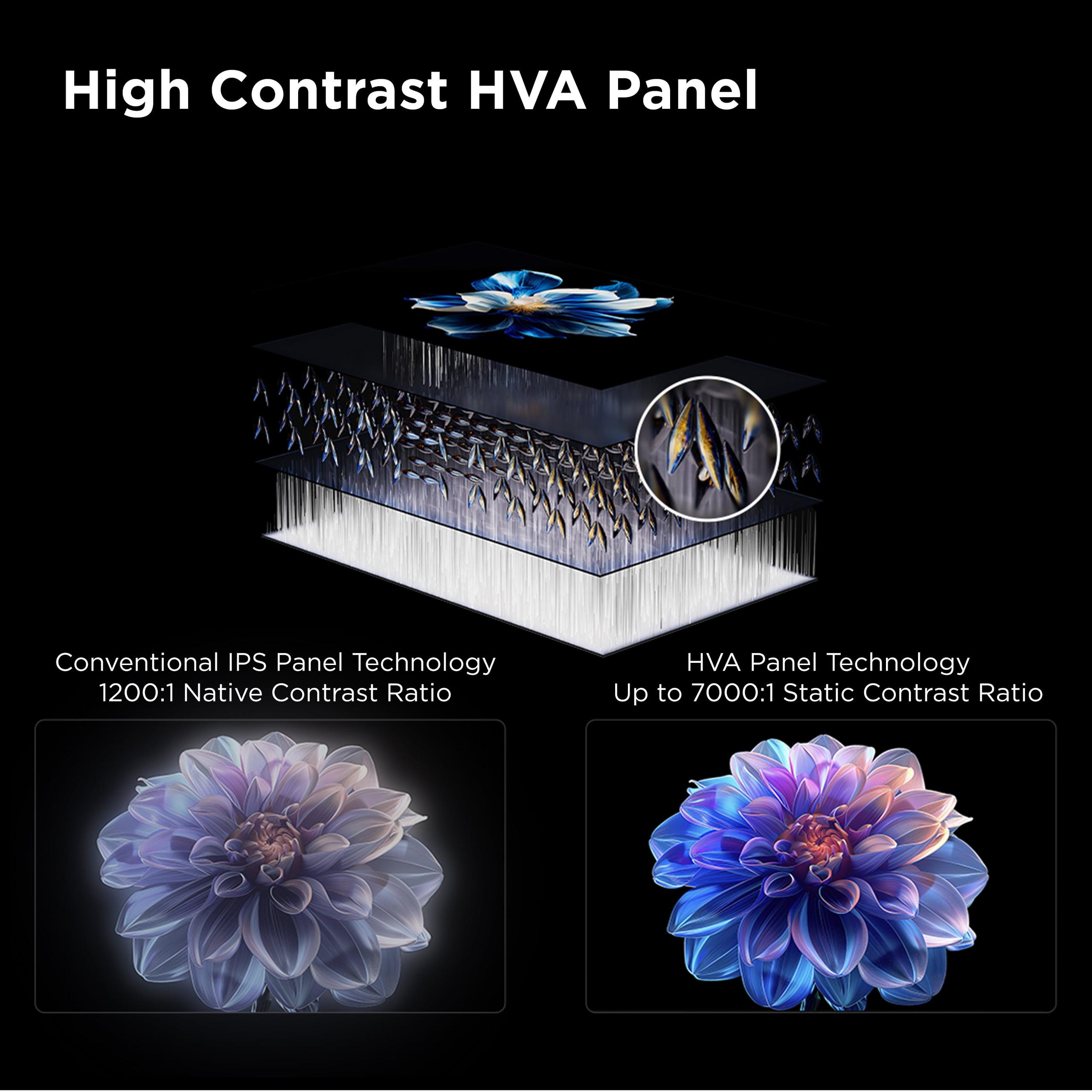
Black level performance separates good TVs from great ones, particularly for movie watching and home theater applications. The TCL QM6K's local dimming capability delivers what reviewers consistently describe as "true blacks"—areas of the screen can turn completely off while adjacent zones remain illuminated. This creates genuine depth and dimensionality that makes images appear more three-dimensional.
The Samsung Q6F's inability to achieve selective dimming means dark scenes appear washed out with grayish blacks rather than true black. While this may seem like a minor detail, it significantly impacts movie watching, especially in darkened rooms where contrast differences become most apparent. Horror films, space scenes, and nighttime sequences lose much of their intended dramatic impact.
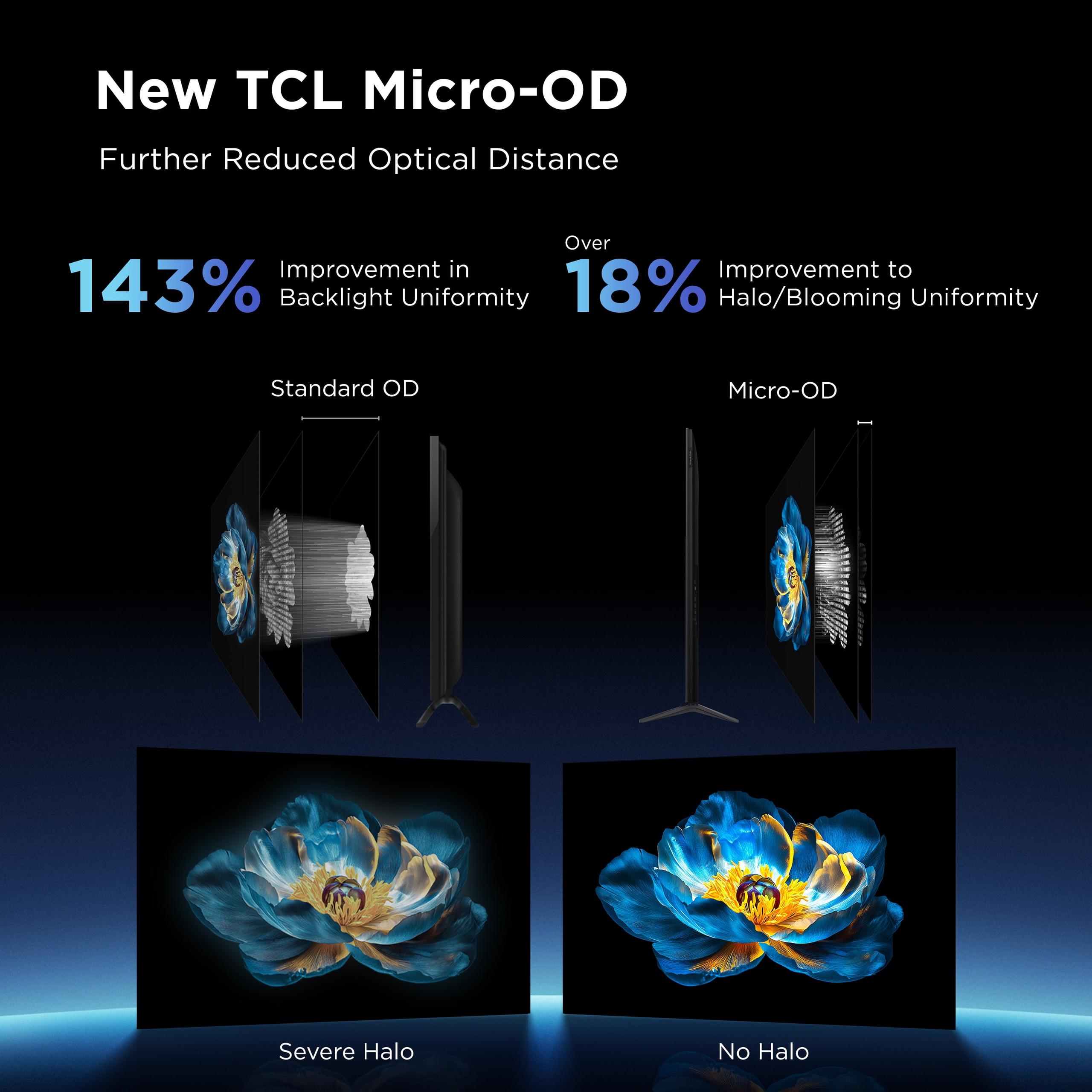
However, the TCL QM6K's local dimming isn't perfect at this price point. Budget Mini LED implementations often exhibit "haloing" or "blooming"—a subtle glow around bright objects on dark backgrounds. Subtitles on black letterbox bars or bright stars against dark skies may show slight halos. While noticeable to critical viewers, this trade-off still delivers superior overall contrast compared to non-dimming alternatives.
Peak brightness determines a TV's ability to display impactful HDR (High Dynamic Range) content and perform well in bright rooms. HDR expands the range between the darkest and brightest parts of an image, but without sufficient brightness capability, HDR content appears barely different from standard dynamic range material.
The TCL QM6K achieves approximately 736 nits peak brightness on larger areas and higher peaks on smaller highlights. While this places it in the lower tier compared to premium Mini LED TVs that can exceed 1,000 nits, it's substantially brighter than the Samsung Q6F can manage. This brightness advantage helps HDR content display more realistic sun-drenched scenes, gleaming metal surfaces, and other bright highlights that should pop off the screen.
For practical viewing, this means HDR movies on streaming services like Netflix or Disney+ will look noticeably more vibrant and realistic on the TCL QM6K. The Samsung Q6F struggles to differentiate HDR from standard content, making its HDR support more of a checkbox feature than a meaningful viewing enhancement.
Color reproduction separates modern TVs from older models, and quantum dot technology provides a significant advantage. The TCL QM6K's quantum dot layer enables wider color gamut coverage, producing more saturated and lifelike colors across the spectrum. Reds appear more vivid, blues more deep and rich, and greens more natural compared to standard LED color reproduction.
The Samsung Q6F, despite Samsung's QLED branding, uses a more basic quantum dot implementation that doesn't deliver the same color enhancement. While colors don't appear dull or lifeless, they lack the vibrancy and accuracy that makes content feel more immersive and realistic.
This difference becomes most apparent with nature documentaries, animated content, and HDR movies where color saturation plays a crucial role in the visual experience. The TCL QM6K makes tropical fish appear more brilliant, autumn leaves more vibrant, and sunset scenes more captivating.
Gaming capabilities have become a crucial differentiator in the TV market, driven by the popularity of PlayStation 5 and Xbox Series X/S consoles that support advanced features. The performance gap between these TVs is particularly stark in gaming applications.
The TCL QM6K delivers comprehensive next-generation gaming support with its native 144Hz panel and support for up to 288Hz variable refresh rates. VRR technology synchronizes the TV's display refresh with the gaming console's output, eliminating screen tearing and stuttering for smoother gameplay. Two HDMI 2.1 ports provide the bandwidth necessary for 4K gaming at high frame rates, while low input lag ensures responsive control.
For competitive gamers or those who appreciate smooth motion in fast-paced games, the TCL QM6K transforms the gaming experience. Racing games display smoother motion around curves, first-person shooters feel more responsive, and sports games show cleaner motion during quick plays.
The Samsung Q6F offers basic gaming functionality limited to 4K at 60Hz without VRR support. While adequate for casual gaming, it cannot take full advantage of modern console capabilities. Gamers invested in current-generation consoles or planning to upgrade will find the Samsung limiting their hardware's potential.
Both TVs offer comprehensive smart TV platforms, though with different approaches and strengths. The TCL QM6K runs Google TV, which provides excellent app selection, intuitive content discovery, and seamless integration with Google services and Chromecast functionality. The interface aggregates content from multiple streaming services, making it easier to find something to watch across platforms.
The Samsung Q6F uses Samsung's Tizen operating system, which offers similar app support but focuses more heavily on Samsung ecosystem integration. For users with Samsung smartphones, tablets, or other devices, Tizen provides seamless connectivity and shared functionality through SmartThings integration.
Both platforms support major streaming services and receive regular updates, making this more of a preference choice based on existing device ecosystems rather than a significant performance differentiator.
For dedicated home theater setups, display technology differences become even more critical. The TCL QM6K's superior contrast performance, local dimming capability, and higher brightness make it significantly better suited for darkened room viewing where picture quality differences are most apparent.
The TV's DTS audio passthrough capability allows it to send high-quality surround sound formats to external sound systems without compression, an important feature for audiophiles with dedicated receivers and speakers. Combined with its superior HDR performance, the TCL QM6K delivers a more cinematic experience that justifies the investment in a proper home theater environment.
The Samsung Q6F's limitations become more pronounced in home theater applications. Without meaningful contrast capability or sufficient brightness for impactful HDR, it cannot deliver the dramatic visual experience that makes home theater worthwhile compared to standard TV viewing.
At the time of writing, both TVs compete in similar price ranges, making the TCL QM6K an exceptional value proposition. It delivers Mini LED technology and local dimming typically found in TVs costing significantly more, along with gaming features that future-proof the purchase for years of console gaming.
The Samsung Q6F represents more traditional value—reliable brand name recognition, familiar software, and adequate performance for basic viewing needs. However, its display technology feels dated in 2025's competitive landscape, particularly when compared directly to Mini LED alternatives at similar prices.
For buyers prioritizing long-term satisfaction and performance, the TCL QM6K offers substantially more advanced technology that will remain relevant longer. The superior picture quality, gaming capabilities, and HDR performance provide benefits that compound over the TV's lifespan.
The TCL QM6K makes sense for the majority of buyers in this price range. Anyone who watches movies regularly, games on modern consoles, or wants the best possible picture quality for their investment will appreciate its advanced display technology. The Mini LED backlighting and local dimming deliver visual improvements that are immediately noticeable and enhance virtually all content types.
Choose the TCL QM6K if you:
The Samsung Q6F appeals to buyers with specific Samsung ecosystem needs or those who prioritize brand familiarity over cutting-edge features. If you primarily watch basic cable or standard streaming content and don't game seriously, its simpler technology may prove adequate while offering Samsung's generally reliable customer service and software support.
Choose the Samsung Q6F if you:
The TCL QM6K represents the clear choice for most buyers seeking maximum value and performance in a 65-inch 4K TV. Its Mini LED technology, comprehensive gaming features, and superior HDR performance deliver capabilities typically found in much more expensive models. While it may exhibit minor haloing effects common to budget local dimming implementations, the overall picture quality improvement justifies this trade-off for most viewers.
The Samsung Q6F serves buyers with specific brand preferences or those who prioritize simplicity over advanced features. However, its traditional LED technology struggles to compete with Mini LED alternatives at similar price points, making it harder to recommend unless Samsung ecosystem integration is essential to your setup.
In today's competitive TV market, display technology advancement has democratized premium features that were once exclusive to flagship models. The TCL QM6K exemplifies this trend, delivering professional-grade picture quality at mainstream prices that make it an exceptional value for the performance it provides.
| Samsung 65" QLED Q6F 4K Smart TV 2025 | TCL 65" QM6K QD-Mini LED 4K TV |
|---|---|
| Display Technology - The foundation that determines picture quality | |
| Traditional LED with no local dimming | QD-Mini LED with up to 500 local dimming zones |
| Peak Brightness - Critical for HDR impact and bright room viewing | |
| Limited brightness, poor HDR performance | ~736 nits peak, meaningful HDR enhancement |
| Black Levels - Essential for movie watching and contrast | |
| Grayish blacks due to no dimming zones | True blacks with independent zone control |
| Gaming Refresh Rate - Determines smoothness for console gaming | |
| 60Hz native (basic gaming only) | 144Hz native with up to 288Hz VRR support |
| HDMI Gaming Features - Required for PS5/Xbox Series X full capability | |
| Standard HDMI, no VRR or 120Hz support | Two HDMI 2.1 ports, VRR, low input lag |
| Color Technology - Affects vibrancy and accuracy of all content | |
| Basic quantum dot implementation | Enhanced quantum dot with wider color gamut |
| Smart Platform - Your daily interface for streaming and apps | |
| Samsung Tizen OS with SmartThings integration | Google TV with Chromecast and Assistant built-in |
| Motion Handling - Important for sports and action content | |
| Basic 60Hz motion processing | Superior 144Hz with advanced motion clarity |
| Audio Features - Determines sound quality and external system compatibility | |
| Standard audio output | DTS passthrough for high-quality external audio |
| Ideal Use Case - Who should consider this TV | |
| Samsung ecosystem users, basic viewing needs | Movie watchers, gamers, best value seekers |
The TCL QM6K delivers significantly better picture quality for movies thanks to its QD-Mini LED technology with local dimming. This allows it to display true blacks alongside bright highlights simultaneously, creating more realistic and dramatic movie scenes. The Samsung Q6F lacks local dimming zones, resulting in grayish blacks that reduce contrast and movie impact.
QLED on the Samsung Q6F refers to quantum dot color enhancement over traditional LED backlighting without local dimming. QD-Mini LED on the TCL QM6K combines quantum dot technology with Mini LED backlighting and up to 500 local dimming zones, providing superior contrast, brightness, and color performance.
The TCL QM6K is dramatically better for next-gen console gaming. It offers 144Hz native refresh rate, up to 288Hz VRR support, HDMI 2.1 ports, and low input lag. The Samsung Q6F is limited to 60Hz without VRR, preventing it from utilizing modern consoles' full gaming capabilities.
The TCL QM6K performs better in bright rooms due to its higher peak brightness of approximately 736 nits, which helps overcome glare and maintain picture quality. The Samsung Q6F has lower brightness capabilities, making it more suitable for darker viewing environments.
The TCL QM6K provides substantially better HDR performance with its higher brightness and local dimming capability. HDR content shows meaningful improvements with brighter highlights and deeper blacks. The Samsung Q6F struggles to display noticeable differences between HDR and standard content due to limited brightness and contrast.
The Samsung Q6F runs Samsung's Tizen OS with SmartThings integration, while the TCL QM6K uses Google TV with built-in Chromecast and Google Assistant. Both platforms support major streaming apps, with the choice often depending on your existing device ecosystem.
The TCL QM6K is significantly better for home theater use. Its local dimming provides true blacks essential for darkened room viewing, higher brightness for impactful HDR, and DTS passthrough for high-quality external audio systems. The Samsung Q6F lacks the contrast performance needed for dedicated home theater applications.
The TCL QM6K may show minor haloing around bright objects on dark backgrounds, which is common in budget Mini LED TVs. Both TVs have narrow viewing angles typical of VA panels. The Samsung Q6F's main limitation is its inability to achieve deep blacks or meaningful contrast due to no local dimming.
The TCL QM6K provides exceptional value by delivering Mini LED technology, local dimming, and comprehensive gaming features typically found in much more expensive TVs. The Samsung Q6F offers basic functionality at a potentially lower price point but with outdated display technology for 2025.
The TCL QM6K offers superior motion handling with its 144Hz native refresh rate and advanced processing, making it better for sports and action content. The Samsung Q6F is limited to 60Hz with basic motion processing, adequate for standard viewing but less smooth for fast-moving content.
Samsung generally has a strong reputation for reliability and customer service, which may give the Samsung Q6F an edge in long-term support. However, TCL has improved significantly in recent years, and the TCL QM6K's advanced technology may provide better longevity and future-proofing despite any brand perception differences.
If you have Samsung phones, tablets, or smart home devices, the Samsung Q6F offers seamless ecosystem integration through SmartThings. If you use Google services, Android devices, or want easy casting from phones, the TCL QM6K with Google TV provides better integration. However, picture quality differences often outweigh ecosystem considerations for most buyers.
We've done our best to create useful and informative comparisons to help you decide what product to buy. Our research uses advanced automated methods to create this comparison and perfection is not possible - please contact us for corrections or questions. These are the sites we've researched in the creation of this article: tomsguide.com - bestbuy.com - samsung.com - rtings.com - youtube.com - rtings.com - bestbuy.com - samsung.com - samsung.com - samsung.com - manuals.plus - shopjetson.com - samsung.com - samsung.com - samsung.com - samsung.com - bestbuy.com - jefflynch.com - youtube.com - tomsguide.com - youtube.com - tcl.com - tomsguide.com - youtube.com - youtube.com - hometechnologyreview.com - rtings.com - bestbuy.com - tcl.com - youtube.com - youtube.com - bestbuy.com - youtube.com - youtube.com - youtube.com - tcl.com - youtube.com - walmart.com - tcl.com - displayspecifications.com - kitele.com - displayspecifications.com - flatpanelshd.com - woodruffappliance.com - displayspecifications.com - prnewswire.com - tcl.com - youtube.com - abt.com - youtube.com - tclkenya.co.ke - budgethomefurn.com

Privacy Policy
Terms and Conditions - Affiliate Policy
Home Security
© Copyright 2008-2026.
11816 Inwood Rd #1211, Dallas, TX 75244