

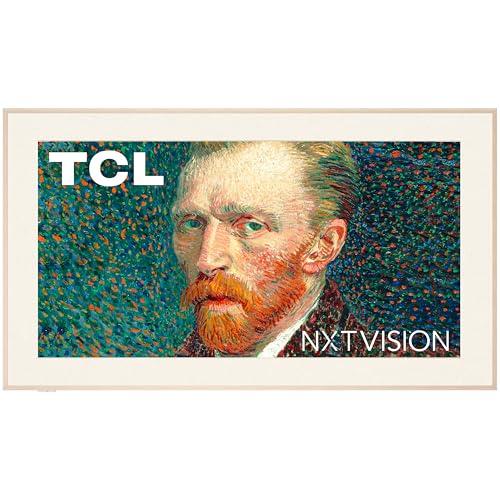


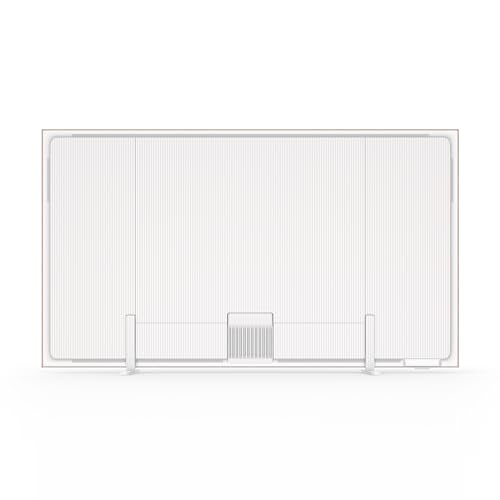
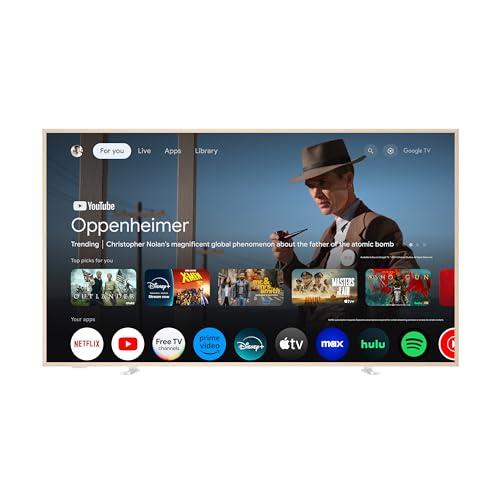
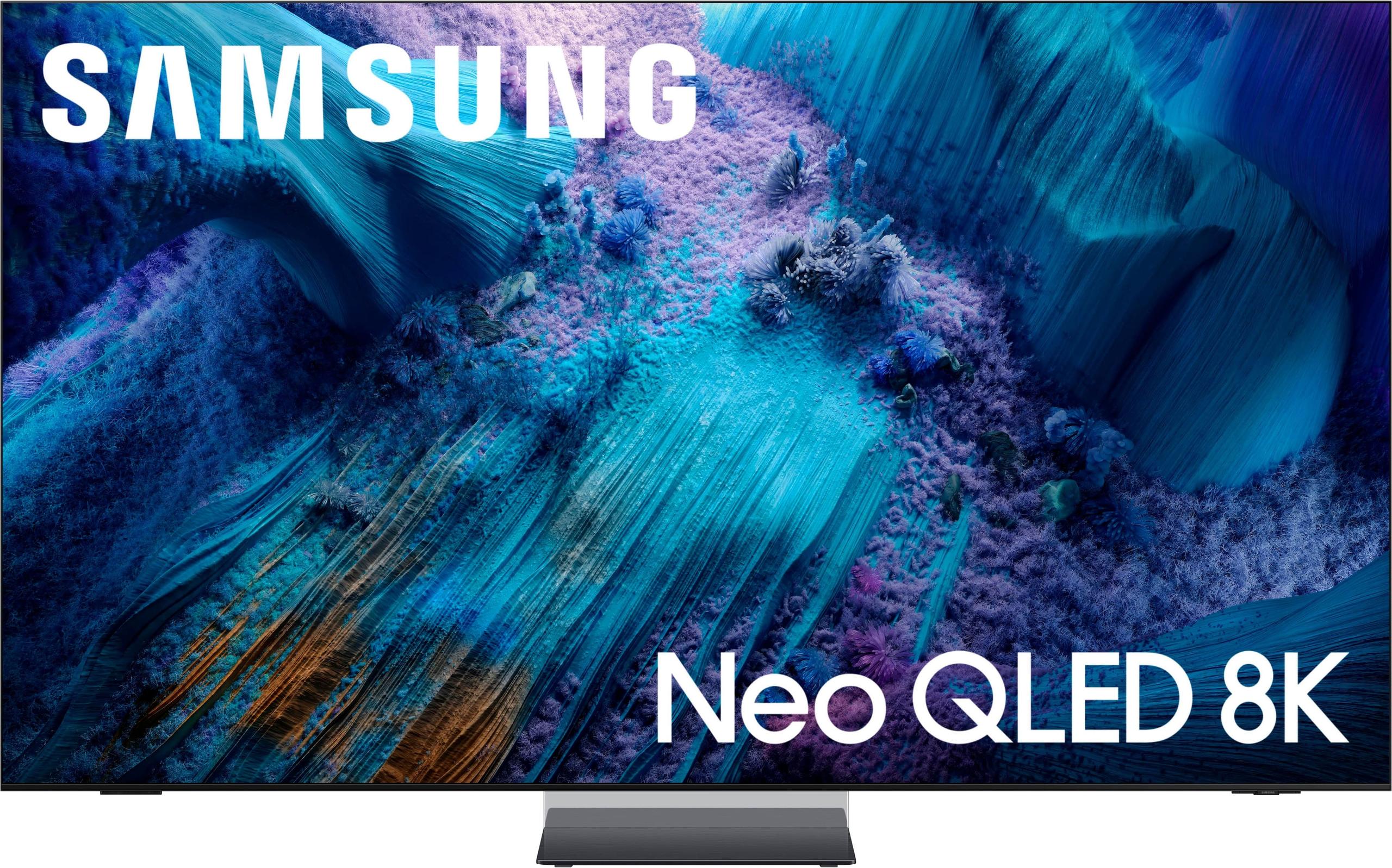
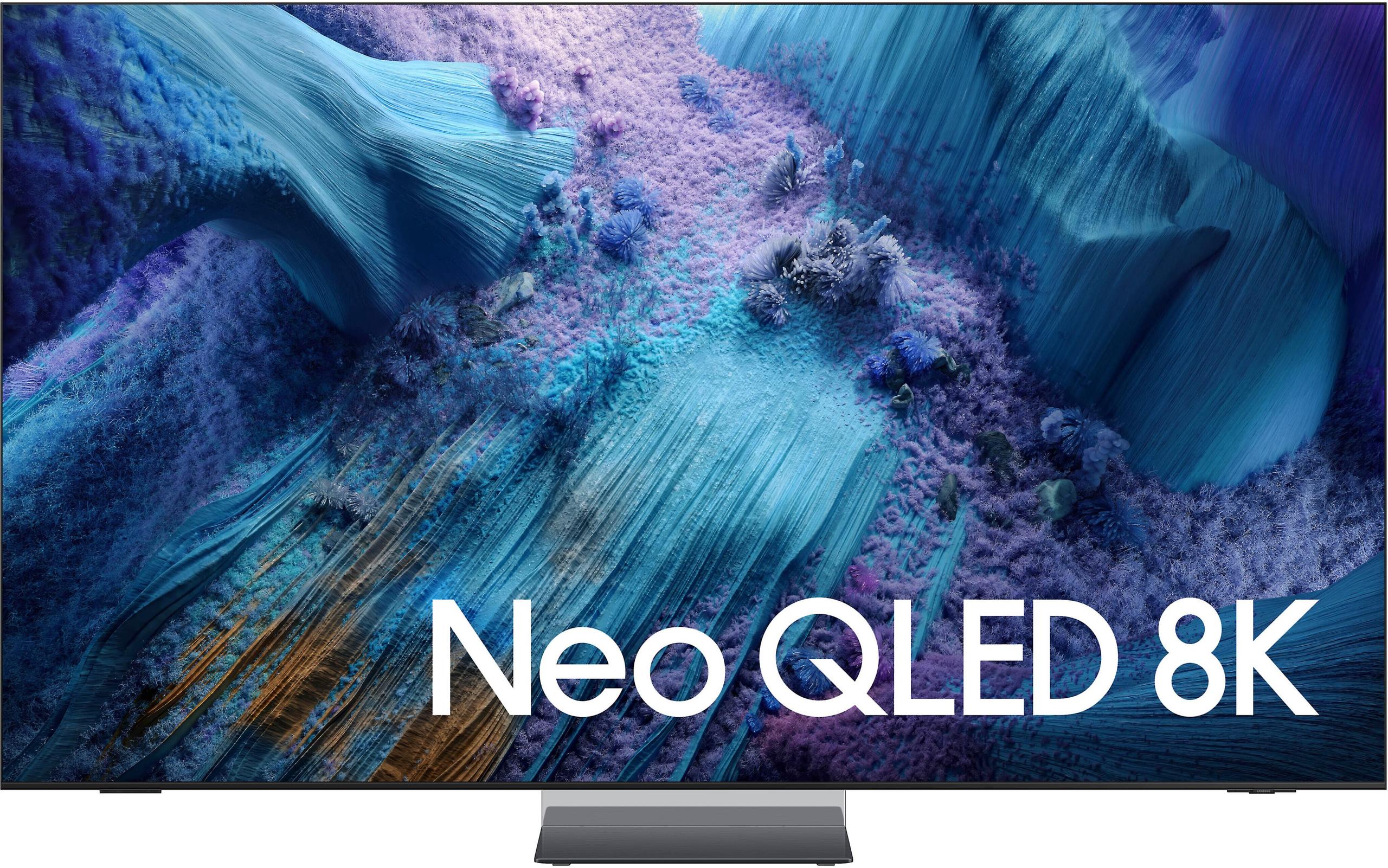
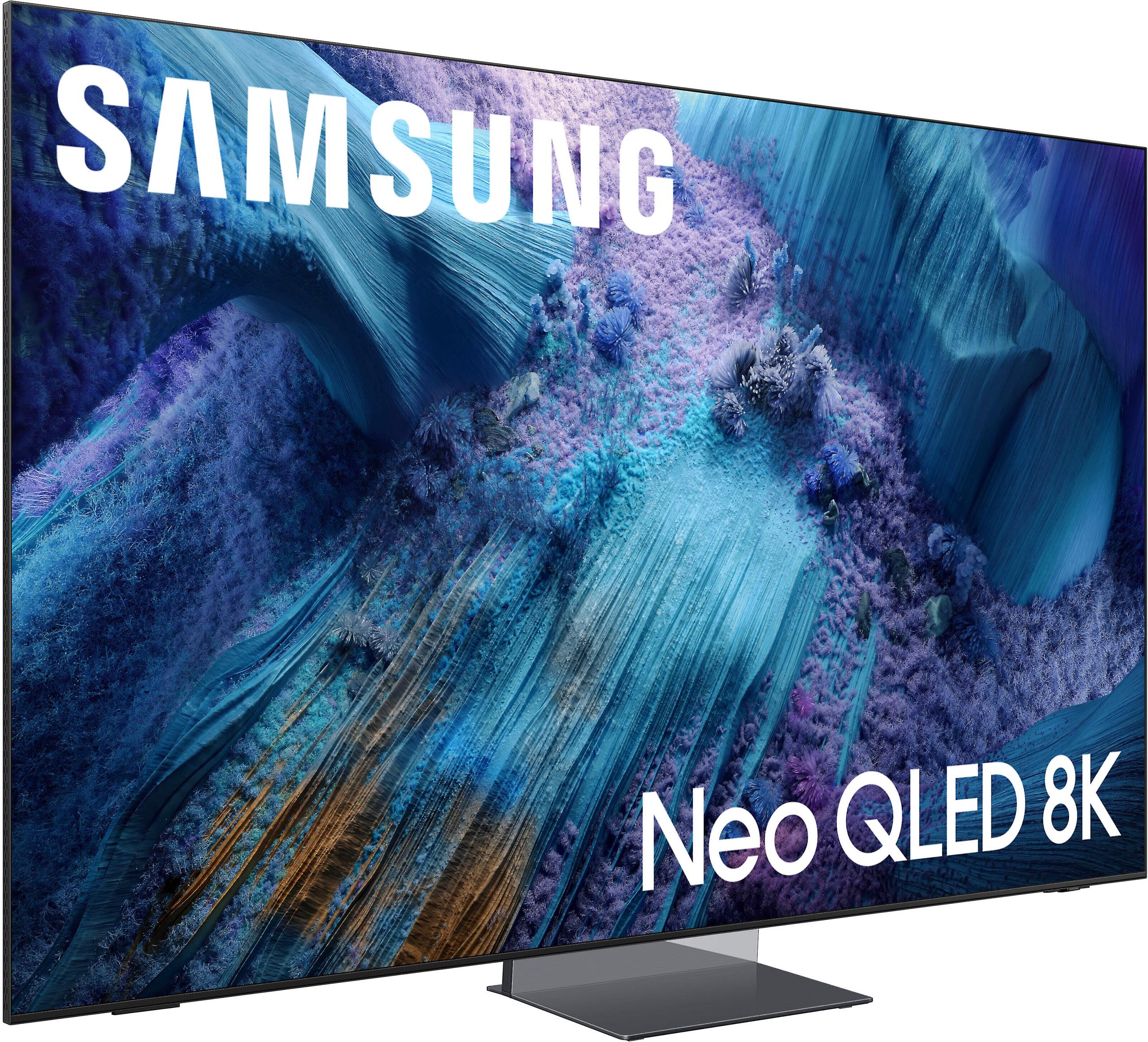
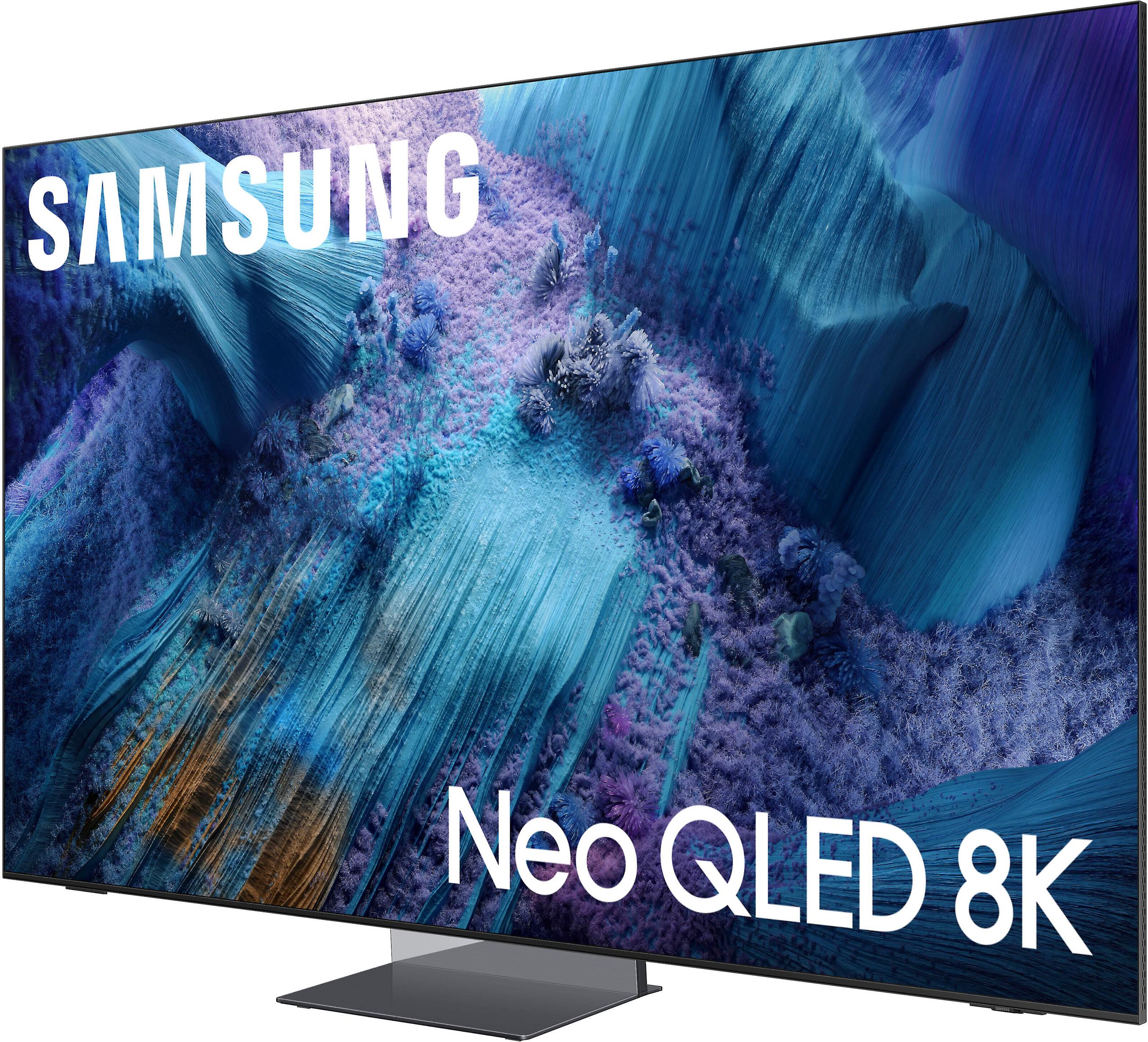

When shopping for a premium 65-inch TV in 2024 and 2025, you'll encounter two completely different philosophies. The TCL NXTVISION QLED 4K Art Frame TV, released in 2024, treats your television as living room décor that happens to display stunning content. Meanwhile, the Samsung Neo QLED QN990F 8K Smart TV, launched in 2025, focuses purely on delivering the most advanced display technology money can buy.
These aren't really competitors in the traditional sense. One prioritizes lifestyle integration while the other chases performance perfection. Understanding which approach fits your home and viewing habits will help you make the right choice.
The premium large-screen TV market has split into fascinating directions. Traditional flagship TVs push brightness, contrast, and resolution to extreme levels. But lifestyle TVs like the TCL NXTVISION ask a different question: what if your TV could disappear into your décor when you're not watching it?
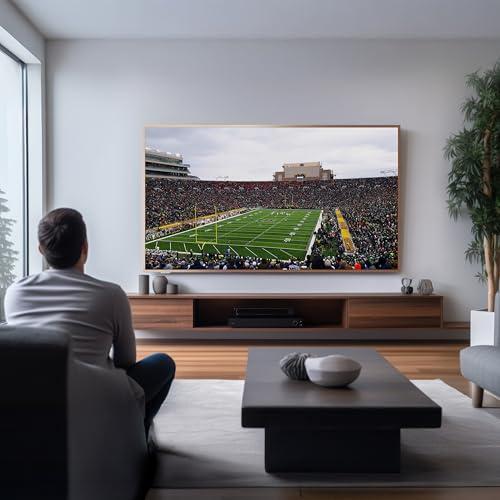
This matters more than you might think. Most TVs spend more time turned off than on, sitting as black rectangles dominating your wall. The art TV concept addresses this by transforming your display into a digital picture frame showing curated artwork, family photos, or AI-generated images.
Meanwhile, performance TVs like the Samsung QN990F double down on technical excellence. They use cutting-edge panel technologies, powerful processors, and advanced backlighting to deliver experiences that approach what you'd see in a commercial cinema.
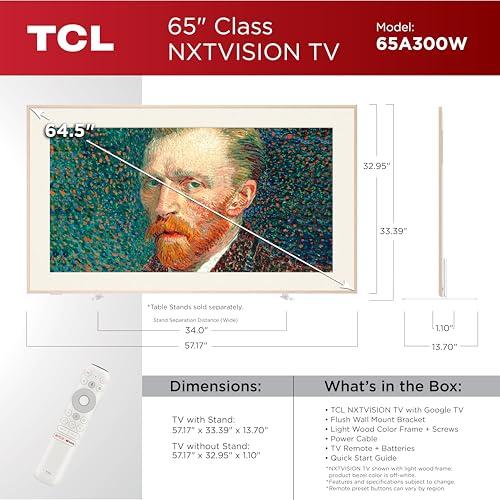
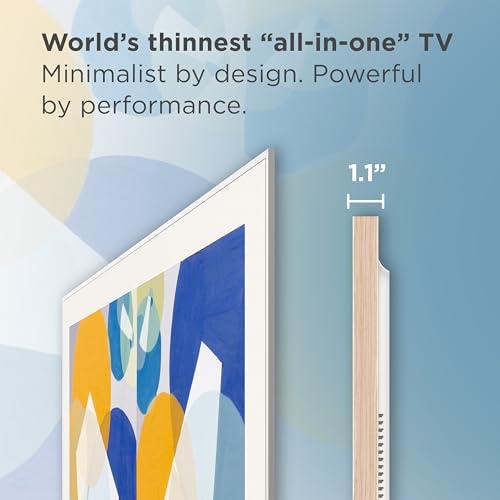
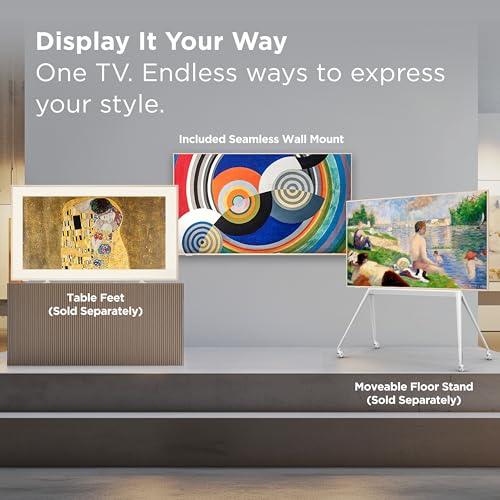
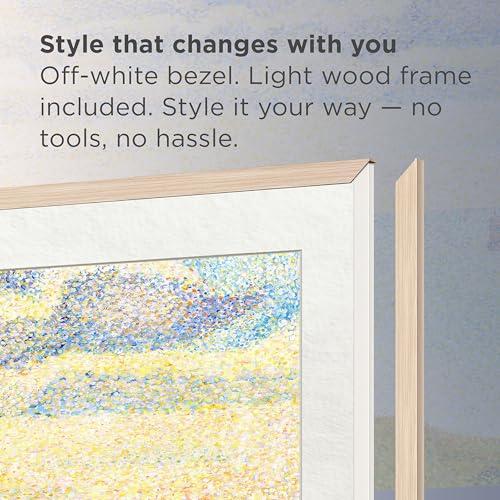
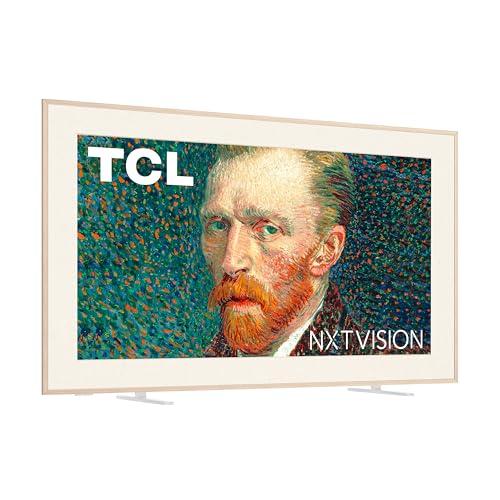
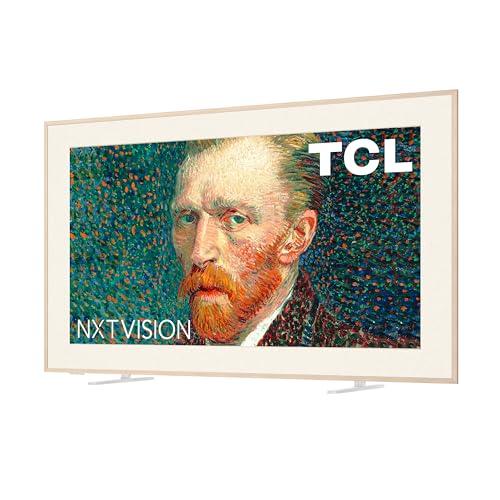
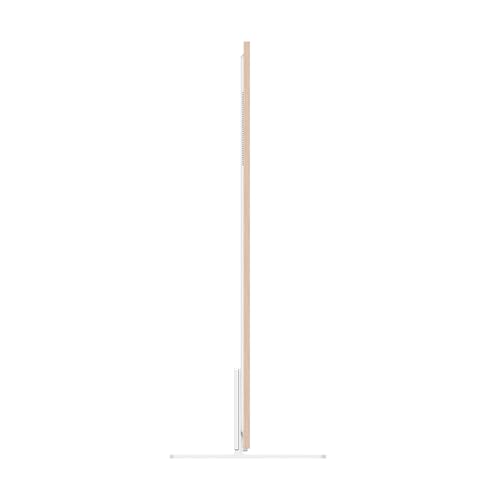
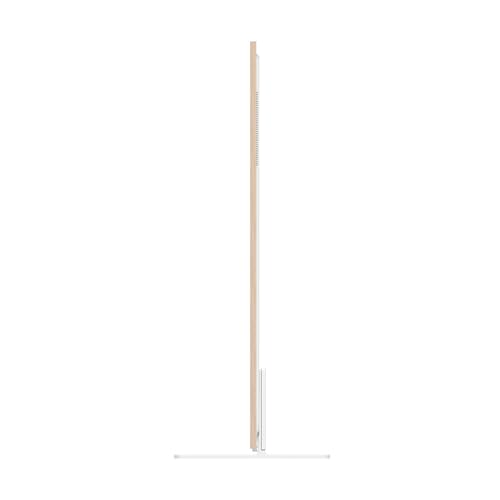
The TCL NXTVISION makes its intentions clear from the first glance. At just 1.1 inches deep, it's among the thinnest all-in-one TVs available. This ultra-slim profile eliminates the need for an external cable box or processing unit – everything is built into the display itself. The included magnetic wood frame can be swapped easily to match your décor, and the proprietary flush wall mount creates a gallery-like appearance.
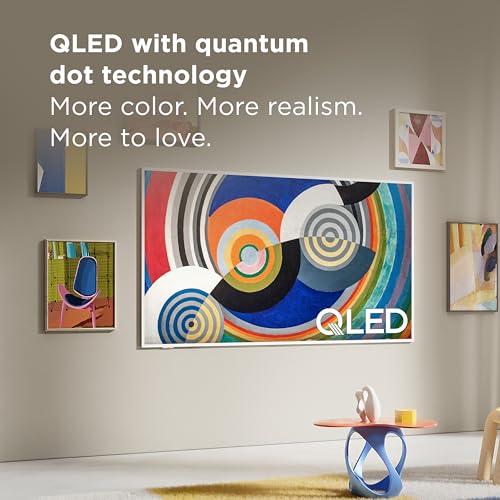
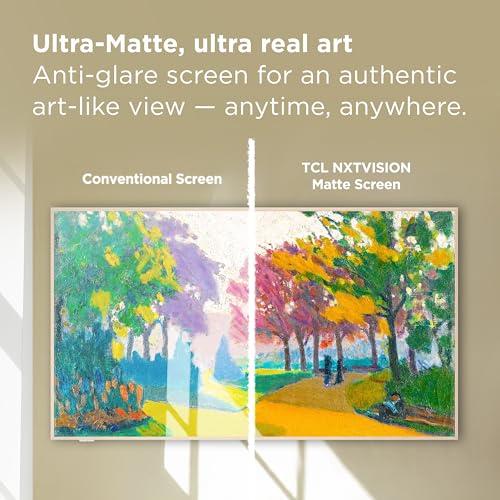
The star of the design is the matte anti-glare screen. Unlike glossy TV displays that reflect room lighting, this canvas-like surface minimizes reflections and gives displayed artwork an authentic, non-digital appearance. When showing a painting or photograph, it genuinely looks like framed art hanging on your wall.
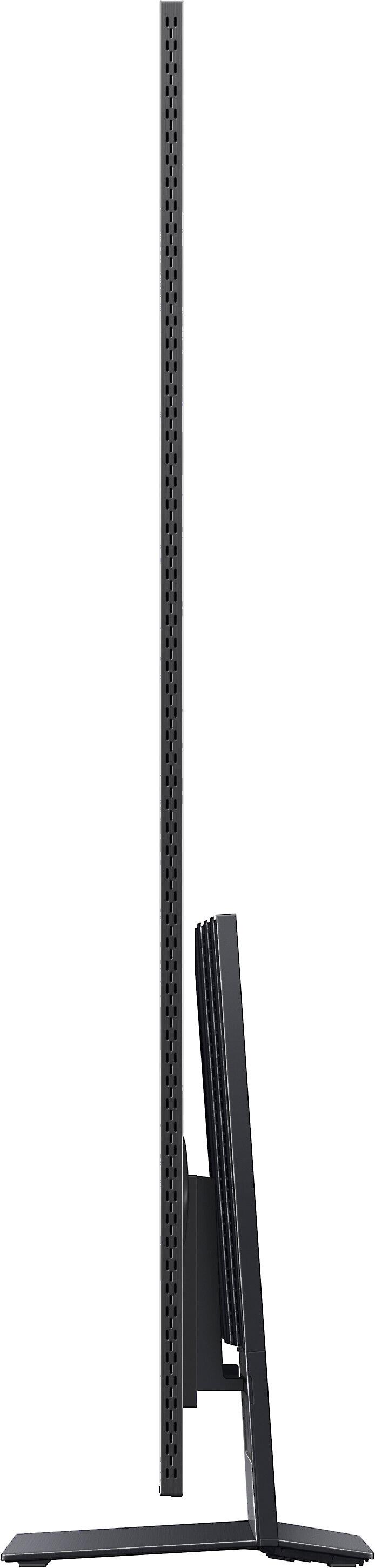
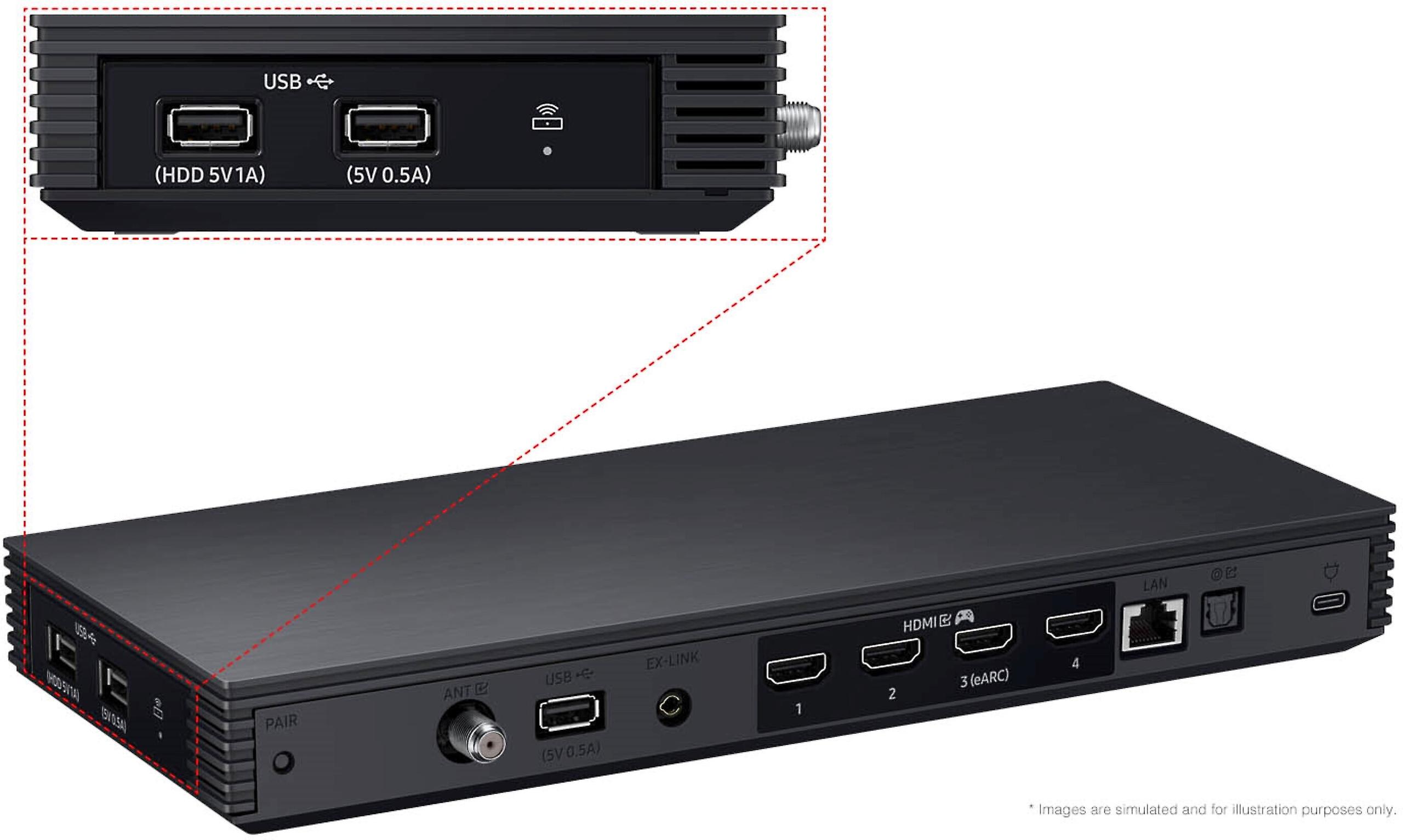
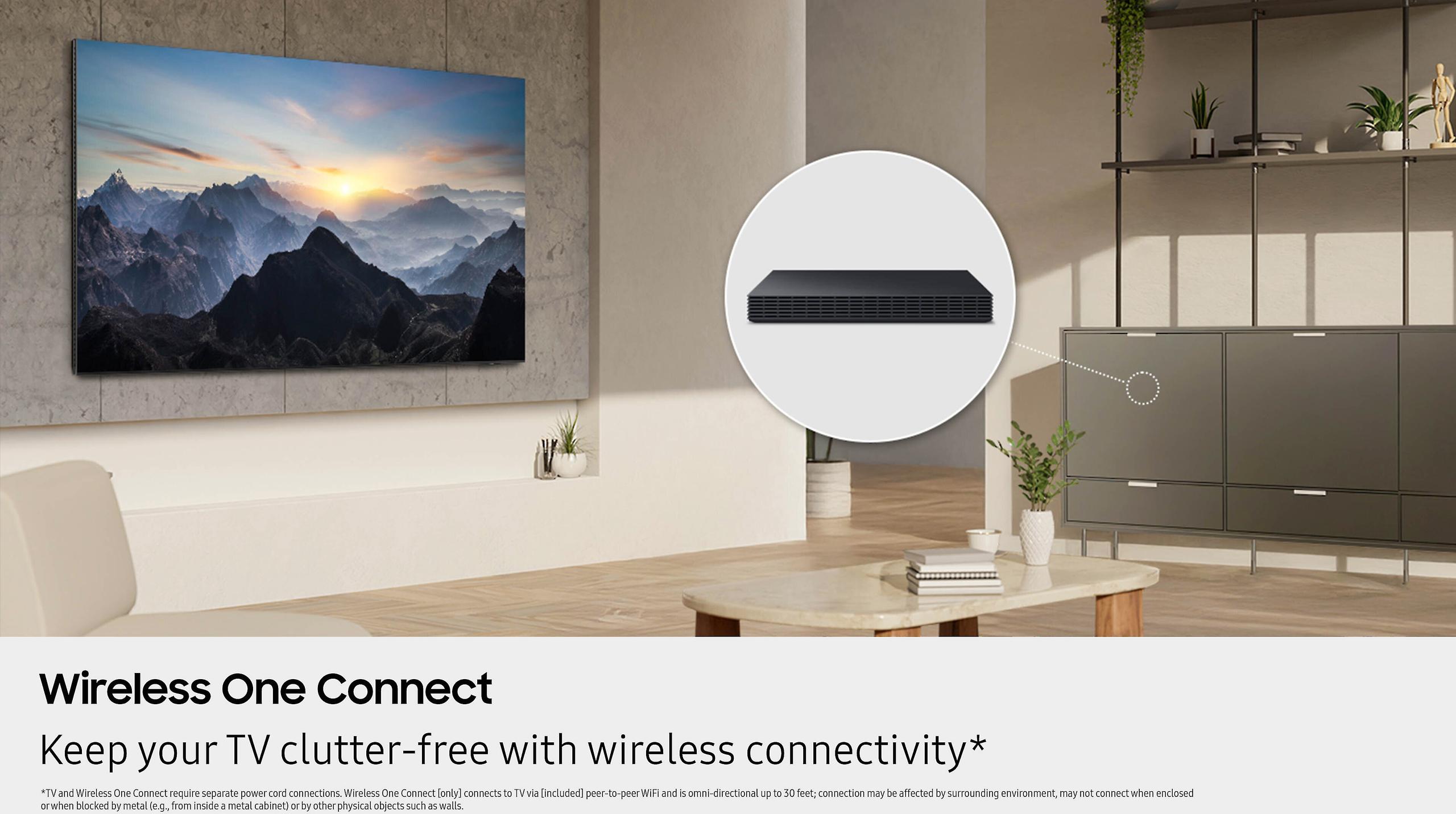
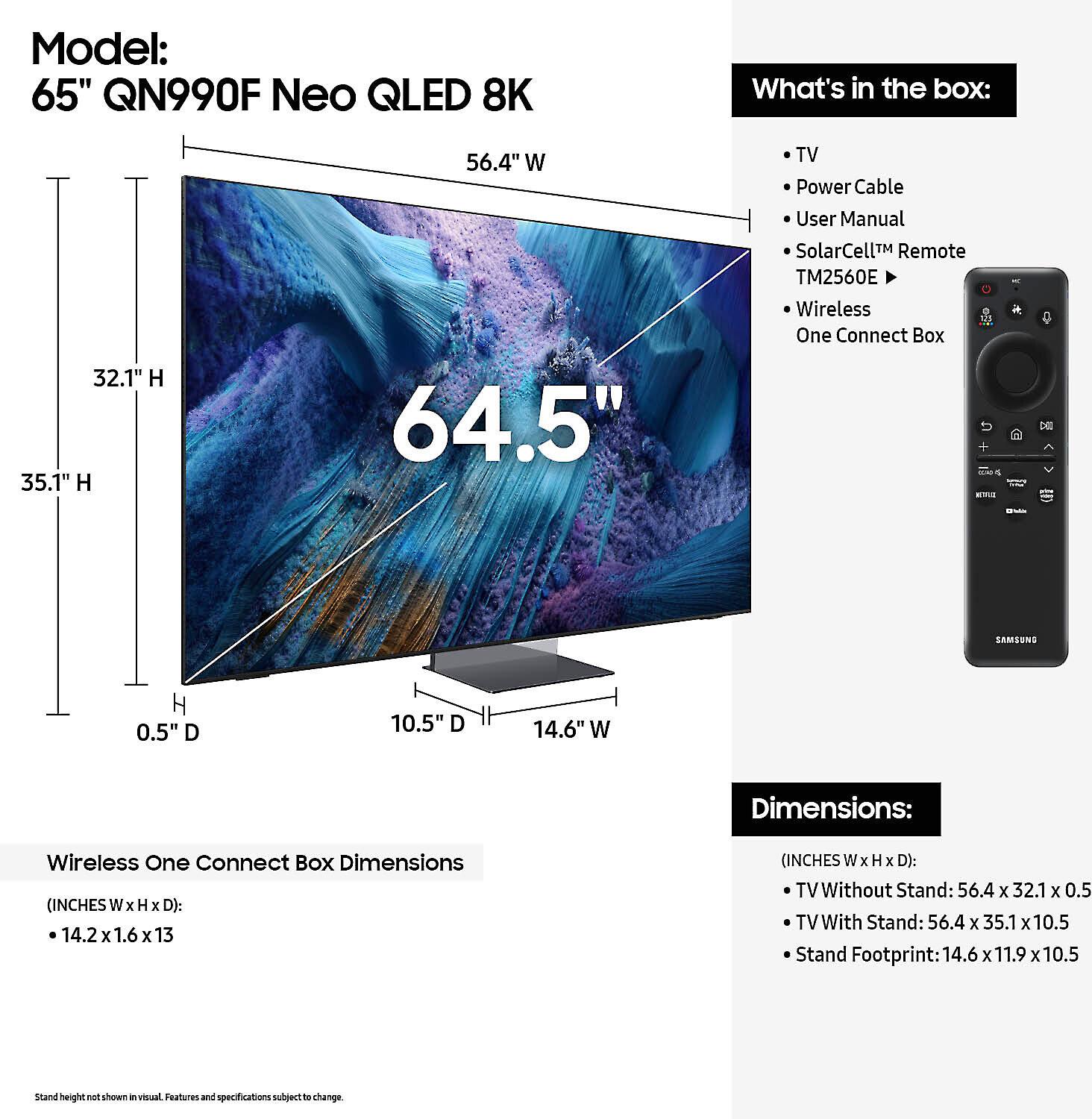
The Samsung QN990F takes a different approach with its Wireless One Connect Box system. This separate unit houses all your HDMI inputs, processing, and connectivity, connecting to the main display wirelessly. The benefit is dramatic – you can mount the slim TV on your wall with virtually no visible cables, while keeping all your devices up to 30 feet away in a media cabinet.
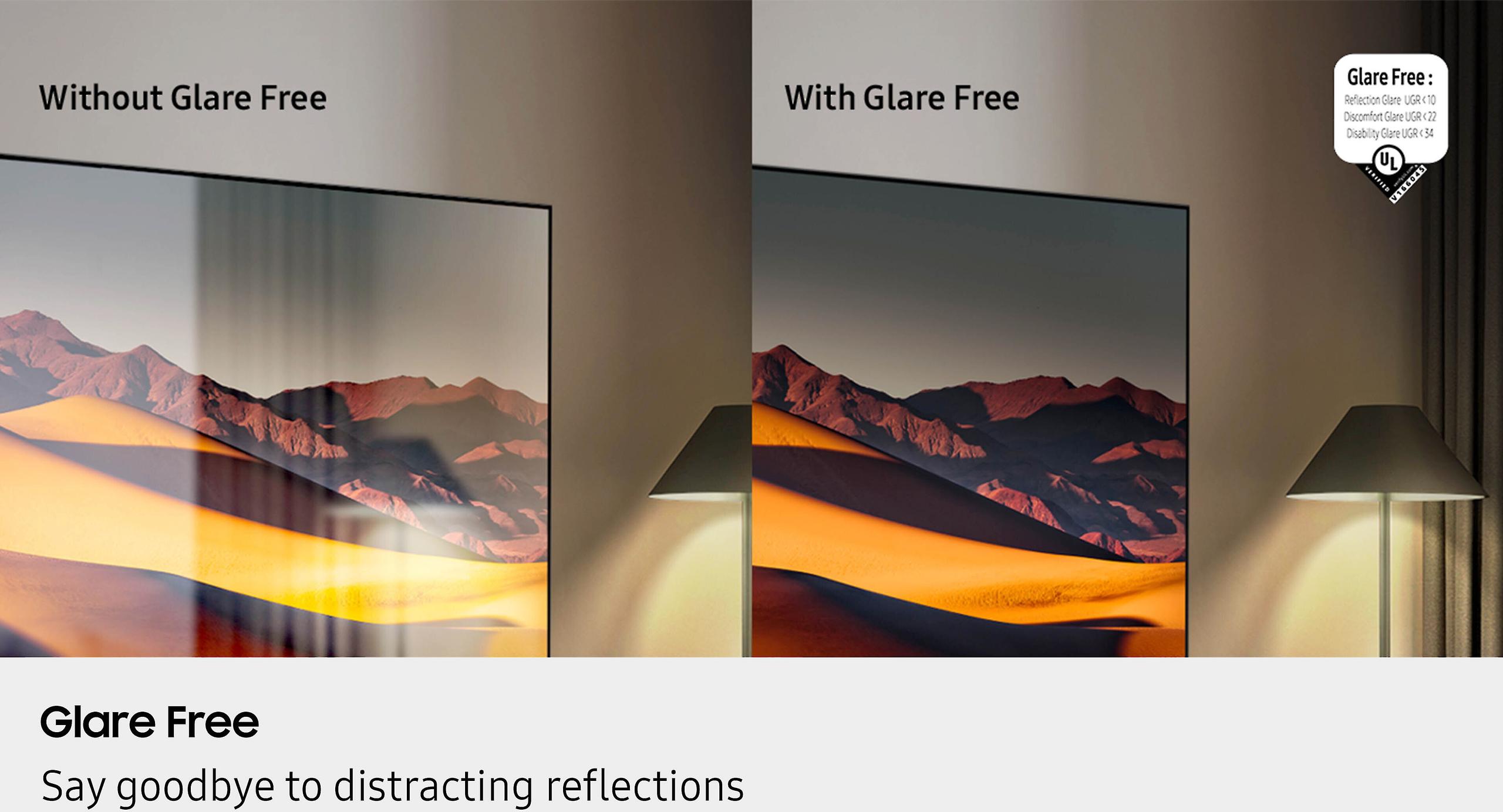
Samsung's nearly edgeless design maximizes screen real estate, and the metal frame construction feels premium. The Glare Free coating reduces reflections, but unlike TCL's art-focused matte screen, Samsung's coating optimizes viewing quality rather than aesthetic presentation.
For pure visual impact and lifestyle integration, the TCL NXTVISION wins. For clean installation with maximum performance flexibility, the Samsung QN990F takes the lead.
Here's where these TVs diverge most dramatically. The Samsung QN990F delivers 8K resolution – that's 7,680 x 4,320 pixels, or roughly 33 million individual pixels on screen. Compare that to the TCL NXTVISION's 4K resolution of 3,840 x 2,160 pixels (about 8 million pixels), and Samsung provides four times the detail potential.
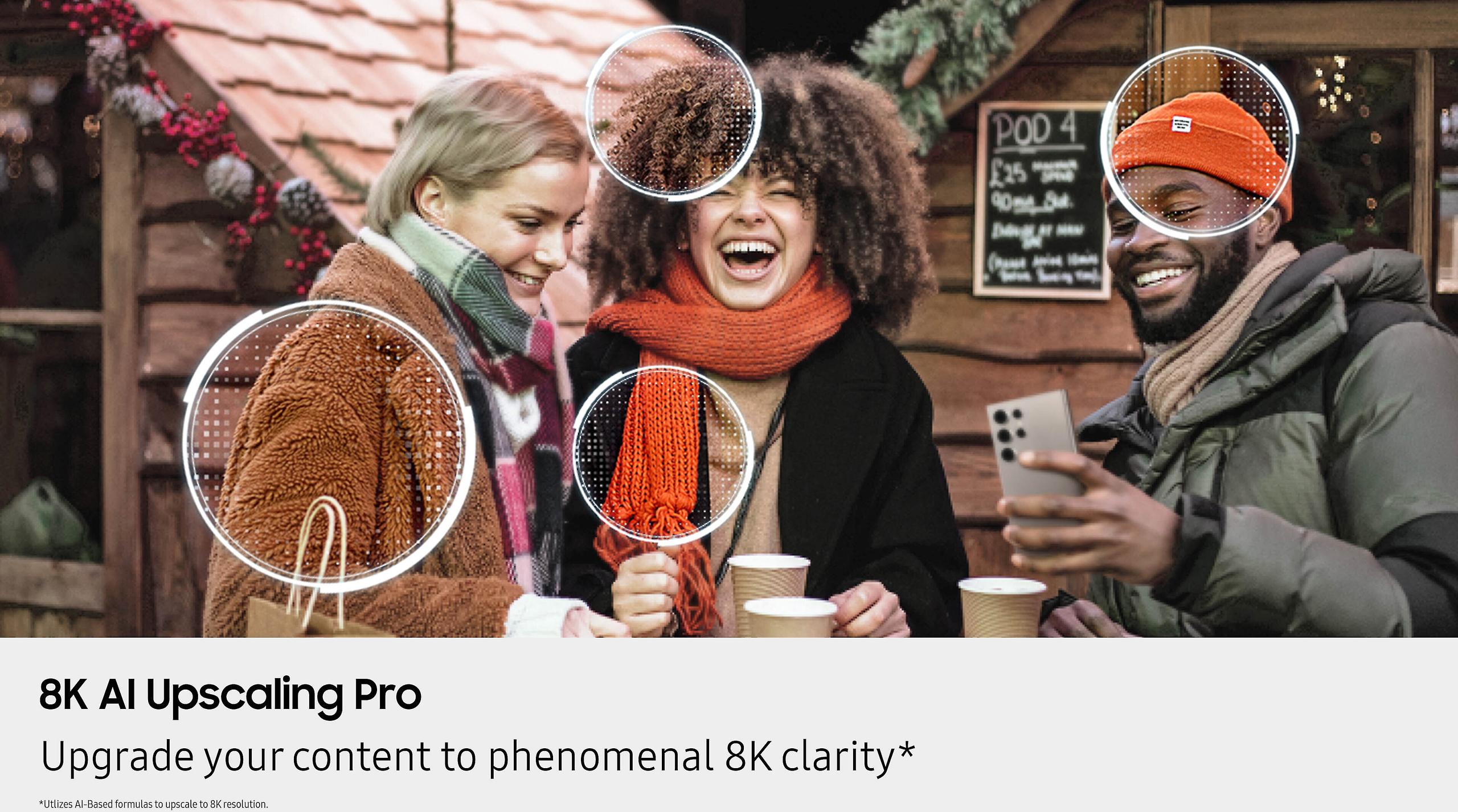
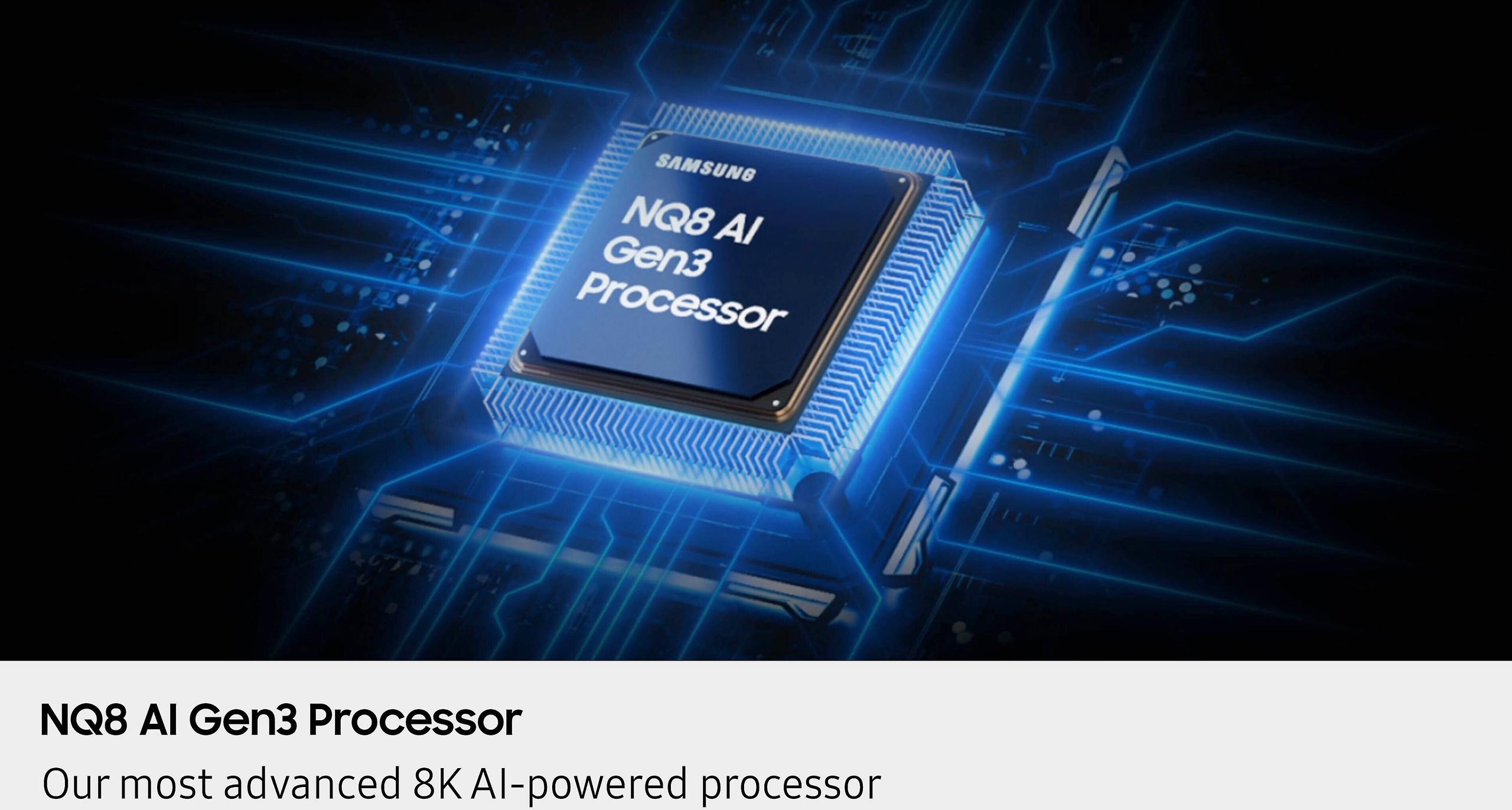
But resolution means nothing without content, and 8K programming remains scarce. Netflix, Disney+, and other streaming services focus on 4K HDR rather than 8K. The real benefit comes from Samsung's NQ8 AI Gen3 Processor, which uses 768 neural networks – essentially tiny artificial intelligence systems – to analyze and upscale lower-resolution content. This processor can take a 1080p movie and intelligently add detail to approach 8K quality.
The TCL NXTVISION uses its AIPQ PRO Processor for upscaling, which works well but operates at a much simpler level. For current content consumption, both TVs will look excellent, but Samsung's processing power becomes apparent with older or lower-quality sources.
Brightness and contrast tell a more decisive story. The Samsung QN990F uses Mini-LED backlighting – thousands of tiny LEDs behind the screen that can dim independently. This creates precise local dimming zones, meaning bright objects can appear brilliant while adjacent dark areas stay truly black. The result is exceptional contrast that makes HDR (High Dynamic Range) content pop with lifelike depth.
The TCL NXTVISION uses edge-lit LED backlighting, where LEDs around the screen's perimeter illuminate the entire display. While more affordable to manufacture, this approach can't achieve the contrast control of Mini-LED systems. Dark scenes will appear more gray than black, and bright highlights won't reach the same peak brightness levels.
For HDR format support, there's an interesting tradeoff. The TCL NXTVISION supports all major HDR standards: Dolby Vision IQ, HDR10+, HDR10, and HLG. The Samsung QN990F notably omits Dolby Vision, supporting only HDR10+ due to Samsung's ongoing format rivalry with Dolby Labs. This means some Netflix shows and Ultra HD Blu-rays won't display in their intended HDR format on the Samsung.
Color reproduction favors Samsung's Quantum Matrix Mini LED technology, which provides more accurate and vibrant colors. However, the TCL NXTVISION's matte screen necessarily reduces some color vibrancy to achieve its art-like appearance – a worthwhile tradeoff for its intended use.
Modern gaming demands low input lag (the delay between controller input and screen response), high refresh rates (how many times per second the screen updates), and variable refresh rate support (which synchronizes the TV's refresh with your gaming device's frame rate to eliminate screen tearing).
The Samsung QN990F specifications look incredible: 8K at 120Hz, 4K at 240Hz, and comprehensive VRR support. However, there's a critical catch. Gaming through the Wireless One Connect Box introduces 54 milliseconds of input lag – far too high for competitive or fast-paced gaming where every millisecond matters.
Samsung anticipated this limitation and included a Micro HDMI 2.1 port directly on the TV panel. Using this connection drops input lag to an excellent 4ms at 4K 240Hz and 8.8ms at 8K 120Hz. The compromise is obvious: you can only connect one gaming device directly for optimal performance.
The TCL NXTVISION offers more practical gaming connectivity with two HDMI 2.1 ports supporting 4K at 144Hz and 1080p at 240Hz. Input lag remains reasonable for casual gaming, and AMD FreeSync Premium provides smooth variable refresh rate support.
However, our research reveals concerning motion performance on the TCL NXTVISION. Slow pixel response times create noticeable blur during fast action, and there are screen flashing issues when running at 144Hz. The TV also forces you to choose between 4:4:4 chroma (which makes text crisp) and VRR – you can't use both simultaneously.
For serious gaming, particularly competitive titles, the Samsung QN990F offers superior performance despite requiring the direct panel connection. For casual gaming or multiple gaming devices, the TCL NXTVISION provides more flexibility.
Television speakers have improved dramatically in recent years, and these models showcase different approaches. The Samsung QN990F includes a substantial 90-watt, 6.2.2-channel speaker system with dedicated top-firing drivers for Dolby Atmos surround sound. Object Tracking Sound Pro technology moves audio around the room to follow on-screen action – car chase scenes actually sound like they're moving from side to side.
The TCL NXTVISION's 20-watt speaker system (two 10-watt speakers) provides adequate audio for its size constraints but lacks the power and spatial capabilities of Samsung's implementation. Both TVs support Dolby Atmos passthrough to external sound systems, but Samsung's built-in audio is significantly more capable.
In most home theater setups, you'll eventually add a soundbar or speaker system, making this difference less critical for long-term satisfaction. However, Samsung's superior integrated audio provides more immediate enjoyment out of the box.
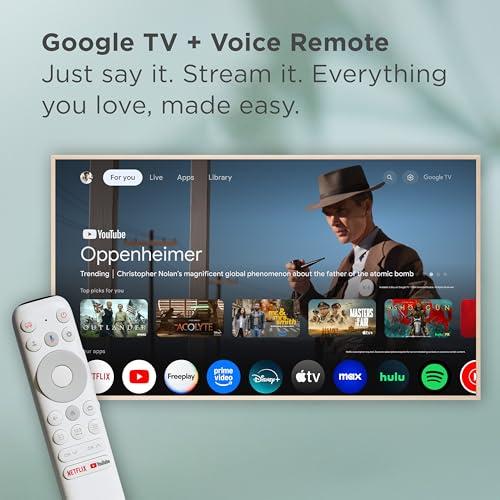
Both TVs run modern smart platforms, but with different strengths. The TCL NXTVISION uses Google TV, which excels at content discovery and integrates seamlessly with Google services. It supports Google Assistant voice control, Chromecast built-in, and Apple AirPlay 2 for comprehensive device compatibility.
The Samsung QN990F runs Samsung's Tizen operating system, which feels mature and responsive. The unique Wireless One Connect Box provides five HDMI 2.1 ports total – four on the box plus the direct panel connection. This connectivity advantage means you'll never run out of high-bandwidth ports for gaming consoles, Apple TV, soundbars, and other devices.
Both platforms provide access to all major streaming services, but Google TV's recommendation engine and search capabilities feel more sophisticated and personalized.
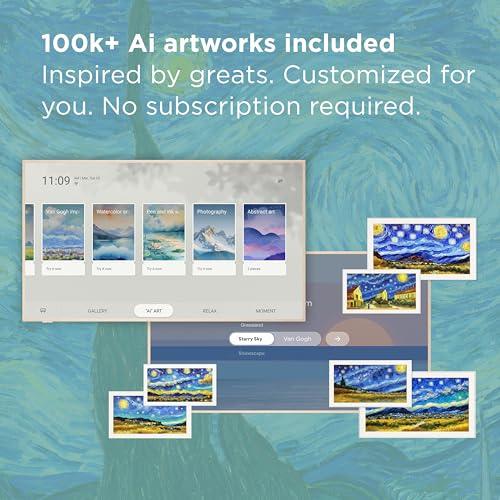
This is where the TCL NXTVISION has no competition from the Samsung QN990F. TCL's art functionality includes over 400 curated artworks from museums and galleries, plus an AI art generator that can create over 100,000 unique images based on your preferences.
The matte screen truly transforms the viewing experience when displaying art. Unlike glossy screens that clearly look like electronic displays, the canvas-like surface creates an authentic gallery appearance. You can upload personal photos, adjust matte levels for different art styles, and set the display to cycle through collections automatically.
The Samsung QN990F offers no comparable features – it's designed purely for active viewing rather than passive display.
At the time of writing, these TVs occupy different price tiers. The Samsung QN990F commands flagship pricing as Samsung's most advanced consumer display, while the TCL NXTVISION positions itself as an accessible entry into the art TV category.
The Samsung justifies its premium pricing with cutting-edge Mini-LED technology, 8K processing, and premium build quality. However, the limited 8K content availability raises questions about immediate value versus future-proofing.
The TCL NXTVISION offers exceptional value for buyers who want both a capable 4K TV and a digital art display. No other TV at its price point provides comparable art functionality, making it uniquely positioned in the market.
In dedicated home theater environments, the Samsung QN990F excels. Its superior brightness, contrast, and color accuracy create more engaging movie experiences, especially with HDR content. The powerful built-in audio system and Object Tracking Sound Pro provide impressive surround effects without additional equipment.
However, the lack of Dolby Vision support becomes more problematic in serious home theater setups where format compatibility matters. Many premium movies and shows use Dolby Vision for their definitive HDR presentations.
The TCL NXTVISION's matte screen, while perfect for art display, reduces perceived contrast and color vibrancy compared to glossy displays in dark viewing environments. Its edge-lit backlighting also limits deep black levels that enhance movie atmosphere.
Choose the TCL NXTVISION if you want your TV to serve double duty as home décor. Its art functionality, matte anti-glare screen, and attractive design make it perfect for living rooms, bedrooms, or any space where the TV should blend into your aesthetic. The comprehensive HDR support, decent gaming capabilities, and significantly lower price point make it an excellent value for most households.
The Samsung QN990F targets enthusiasts who prioritize cutting-edge display technology above all else. Its 8K resolution, Mini-LED backlighting, and superior processing create genuinely impressive visual experiences. Choose Samsung if you have a dedicated viewing space, want maximum future-proofing, and don't mind paying premium prices for flagship performance.
The fundamental question isn't which TV is better – they're optimized for completely different priorities. The TCL NXTVISION succeeds as a lifestyle product that happens to be an excellent TV, while the Samsung QN990F focuses purely on visual performance. Your choice should align with how you'll actually use and enjoy your display in daily life.
Both represent smart purchases in their respective categories, just for very different types of buyers with distinct priorities and usage patterns.
| TCL 65" NXTVISION QLED 4K Art Frame TV | Samsung 65" Neo QLED QN990F 8K Smart TV 2025 |
|---|---|
| Resolution - Higher resolution provides more detail but needs content to match | |
| 4K (3840 x 2160) - Perfect for current streaming content | 8K (7680 x 4320) - Future-proof but limited 8K content available |
| Display Technology - Determines contrast quality and black levels | |
| Edge-lit QLED with no local dimming zones | Mini-LED with thousands of precise dimming zones |
| Screen Type - Critical for room lighting and art display | |
| Ultra Matte Anti-Glare (canvas-like for art) | Glare Free coating (optimized for viewing quality) |
| Thickness - Affects wall mounting and aesthetic integration | |
| 1.1" ultra-slim all-in-one design | Standard thickness with separate Wireless One Connect Box |
| Art Features - Key differentiator for lifestyle integration | |
| 400+ curated artworks, AI art generation, magnetic frames | No dedicated art features |
| Gaming Performance - Input lag and refresh rates for competitive play | |
| 4K@144Hz, decent lag but motion blur issues | 8K@120Hz/4K@240Hz, 4ms lag via direct connection only |
| HDR Support - Format compatibility with streaming services | |
| All formats: Dolby Vision IQ, HDR10+, HDR10, HLG | HDR10+ only (no Dolby Vision support) |
| Audio System - Built-in speaker quality and power | |
| 20W basic speakers with Dolby Atmos passthrough | 90W 6.2.2CH with Object Tracking Sound Pro |
| Connectivity - HDMI ports and wireless features | |
| 4 HDMI ports (2 x HDMI 2.1), Google TV | 5 HDMI 2.1 ports via Wireless One Connect, Tizen OS |
| Target Use Case - Who each TV serves best | |
| Art display + everyday viewing in bright rooms | Premium home theater and future-proofing enthusiasts |
| Value Proposition - What you get for the investment | |
| Unique art TV at accessible pricing | Flagship display technology at premium pricing |
The TCL NXTVISION is specifically designed as an art TV with over 400 curated artworks, AI art generation, and a matte anti-glare screen that looks like canvas. The Samsung QN990F has no dedicated art features and focuses purely on viewing performance.
The Samsung QN990F offers superior picture quality with 8K resolution, Mini-LED backlighting, and thousands of dimming zones for better contrast. The TCL NXTVISION provides good 4K quality but uses edge-lit backlighting with limited contrast control.
For competitive gaming, the Samsung QN990F offers 4ms input lag and up to 4K at 240Hz when using its direct panel connection. The TCL NXTVISION provides more connectivity options but has motion blur issues and slower response times.
No - the TCL NXTVISION supports all major HDR formats including Dolby Vision, while the Samsung QN990F lacks Dolby Vision support and only works with HDR10+ formats.
The TCL NXTVISION is ultra-slim at 1.1 inches with a flush wall mount included, creating a gallery-like appearance. The Samsung QN990F uses a Wireless One Connect Box for clean cable management but isn't designed as a decorative piece.
Currently, 8K content is extremely limited, so the Samsung QN990F's 8K resolution mainly benefits upscaling older content. The TCL NXTVISION's 4K resolution is perfectly adequate for all current streaming services and content.
The Samsung QN990F has significantly better audio with 90W 6.2.2-channel speakers and Object Tracking Sound Pro. The TCL NXTVISION has basic 20W speakers that are adequate but not impressive.
Yes, but differently. The TCL NXTVISION has two HDMI 2.1 ports for multiple high-speed gaming devices. The Samsung QN990F has five HDMI 2.1 ports total, but only one direct connection provides optimal gaming performance.
Both handle bright rooms well, but the TCL NXTVISION excels with its matte anti-glare screen that virtually eliminates reflections. The Samsung QN990F has glare-free coating and higher brightness but won't match TCL's reflection control.
The TCL NXTVISION runs Google TV with excellent content discovery and voice control. The Samsung QN990F uses Samsung's Tizen OS, which is mature and responsive but has different interface preferences.
The TCL NXTVISION provides exceptional value as both a capable 4K TV and unique art display at a lower price point. The Samsung QN990F justifies premium pricing with cutting-edge display technology but costs significantly more.
Choose the TCL NXTVISION if you want the TV to blend into your décor and serve as art when off. Pick the Samsung QN990F if you prioritize maximum picture quality and future-proofing over lifestyle integration.
We've done our best to create useful and informative comparisons to help you decide what product to buy. Our research uses advanced automated methods to create this comparison and perfection is not possible - please contact us for corrections or questions. These are the sites we've researched in the creation of this article: rtings.com - tcl.com - bestbuy.com - tcl.com - bestbuy.com - tcl.com - youtube.com - rcwilley.com - businessinsider.com - bestbuy.com - target.com - youtube.com - support.tcl.com - nfm.com - woodruffappliance.com - flatpanelshd.com - tcl.com - samsung.com - abt.com - bestbuy.com - pcnation.com - samsung.com - videoandaudiocenter.com - exertisalmo.com - displayspecifications.com - theapplianceplug.com - news.samsung.com

Privacy Policy
Terms and Conditions - Affiliate Policy
Home Security
© Copyright 2008-2026.
11816 Inwood Rd #1211, Dallas, TX 75244