


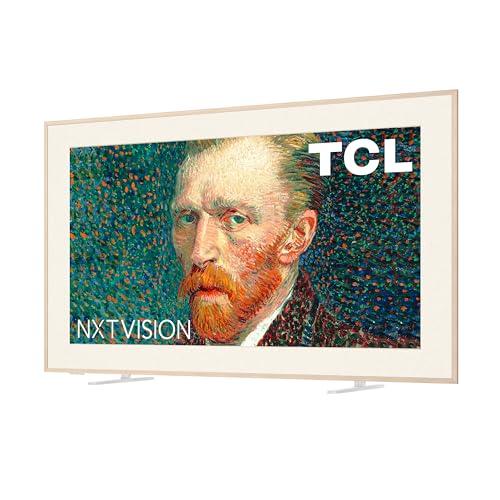
When you're shopping for a new 65-inch TV, you might find yourself torn between two very different approaches to television design. The TCL 65" NXTVISION QLED 4K Art Frame TV and the Sony BRAVIA 8 65" 4K OLED TV both deliver excellent 4K viewing experiences, but they're designed for completely different lifestyles and viewing preferences.
Released in 2024, both TVs represent the latest thinking in their respective categories. The TCL NXTVISION pioneered the ultra-thin art TV segment with its focus on room integration, while the Sony BRAVIA 8 refined OLED technology with improved brightness and Sony's advanced XR processing. Understanding which approach fits your home and viewing habits will help you make the right choice.
The modern TV market has split into distinct philosophies. Traditional TVs focus entirely on delivering the best possible picture and sound quality. But a newer category—lifestyle TVs—prioritizes how the television looks and functions when you're not actively watching it.
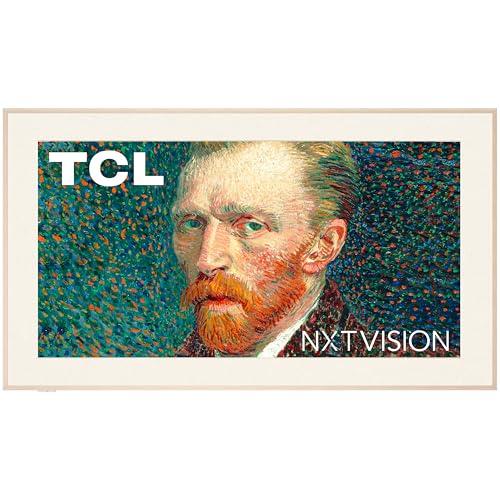
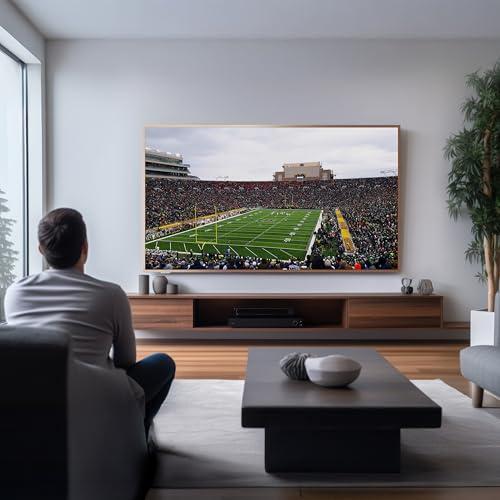
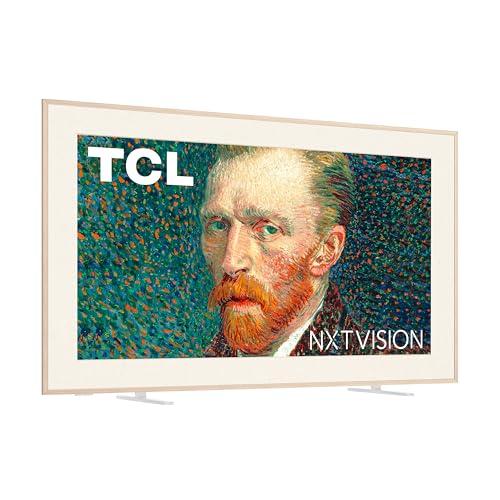
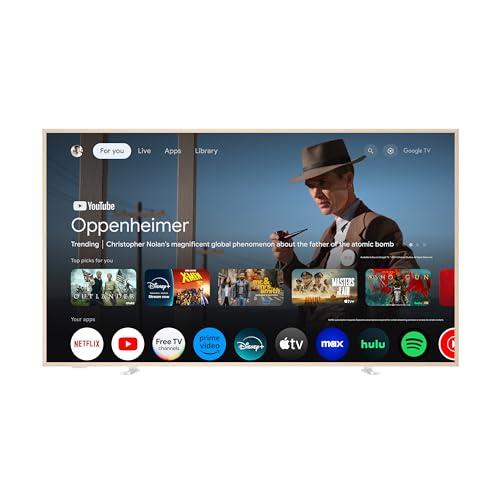
The TCL NXTVISION falls squarely into the lifestyle category. When turned off, it displays artwork and appears as a framed picture on your wall. The Sony BRAVIA 8 takes the performance-first approach, using premium OLED technology to deliver superior contrast and color accuracy.
Both strategies have merit, but they serve different needs. If you want your TV to disappear into your décor, the lifestyle approach makes sense. If you're primarily concerned with getting the most cinematic viewing experience possible, performance-focused designs typically deliver better results.
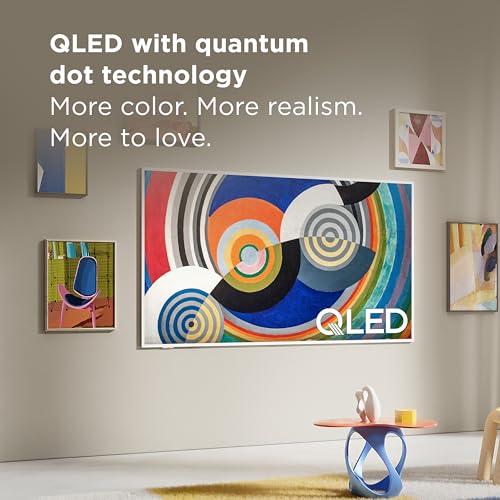
The fundamental distinction between these TVs lies in how they create the images you see. The TCL NXTVISION uses QLED technology, which combines traditional LED backlighting with a quantum dot layer. Think of quantum dots as microscopic crystals that glow specific colors when hit by light. This creates more vibrant greens and reds than standard LED TVs can produce.
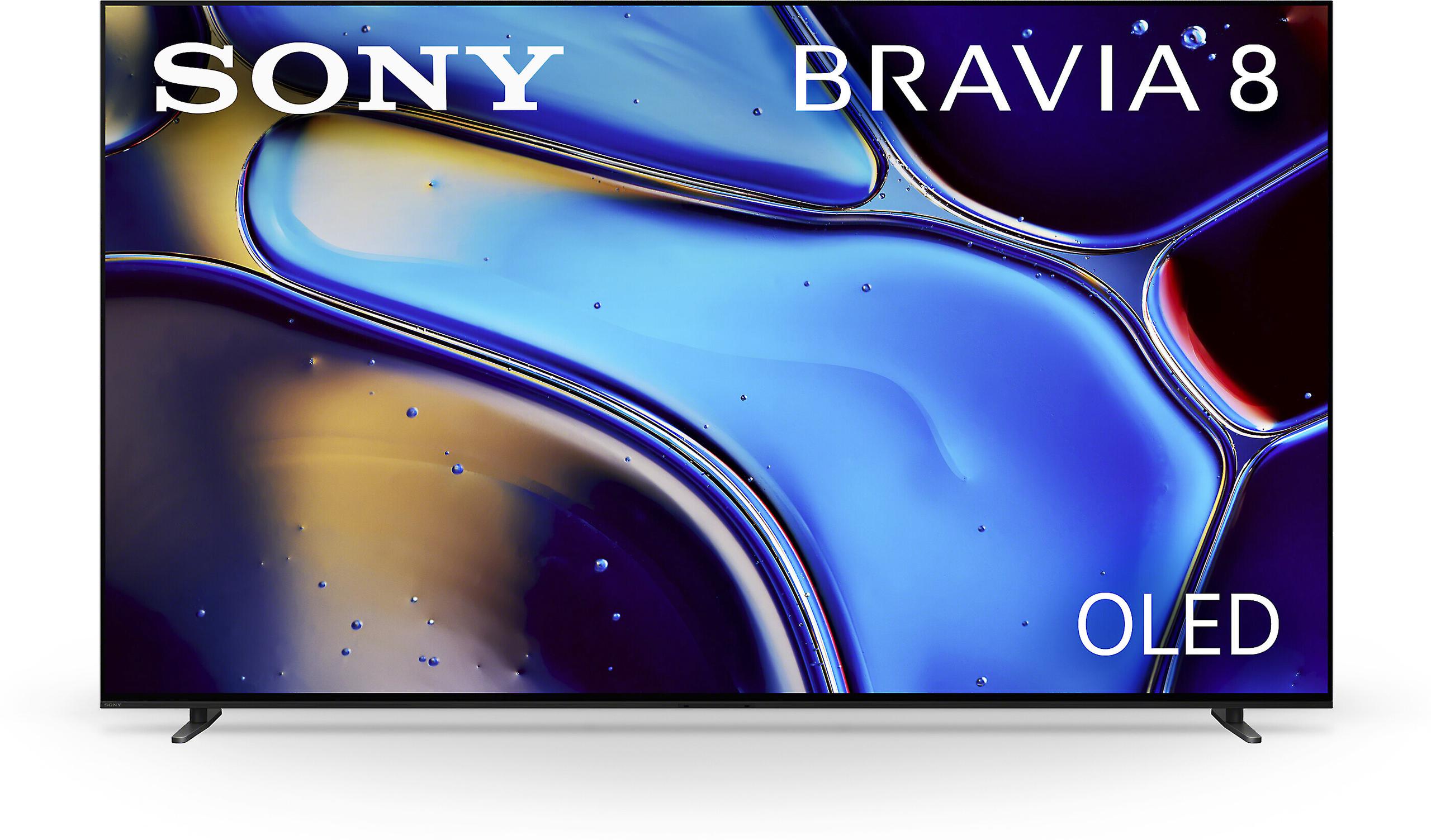
The Sony BRAVIA 8 uses OLED technology, where each of the 8.3 million pixels generates its own light. When a pixel needs to show black, it simply turns off completely. This creates what's called "infinite contrast"—the difference between the brightest whites and darkest blacks is theoretically unlimited.
From our research into expert reviews and user feedback, OLED consistently delivers superior picture quality in terms of contrast and color accuracy. However, QLED offers some practical advantages: it gets brighter (helpful in sunny rooms), costs less to manufacture, and doesn't risk burn-in from static images like channel logos or video game interfaces.
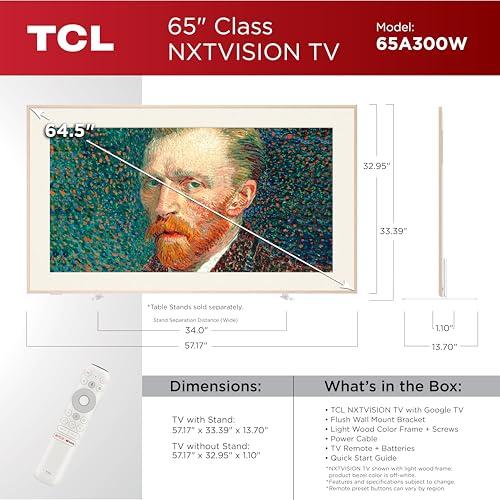
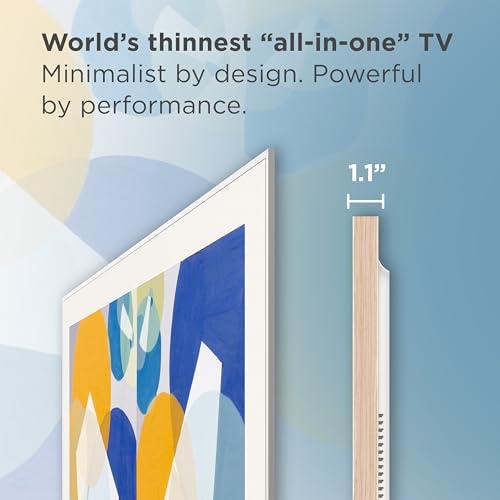
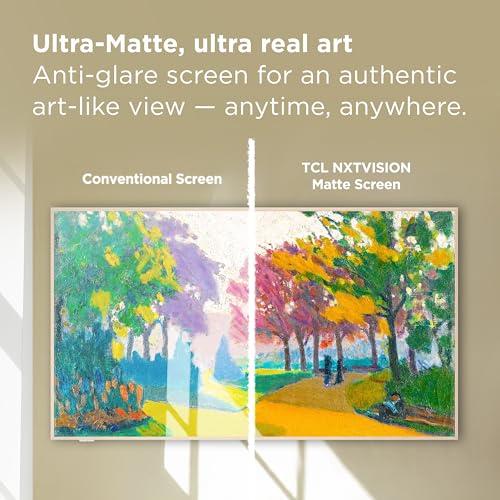
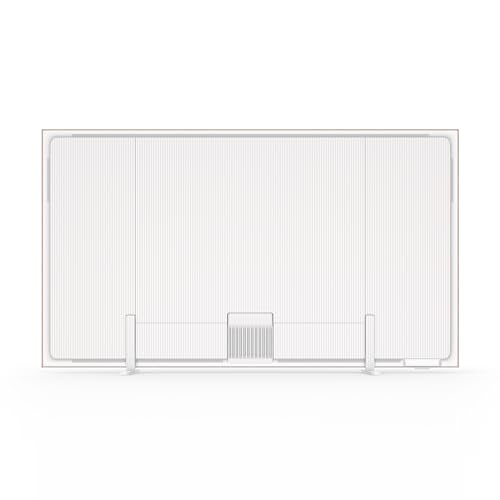
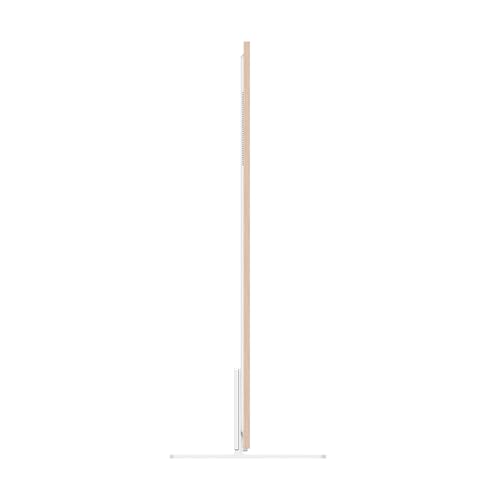
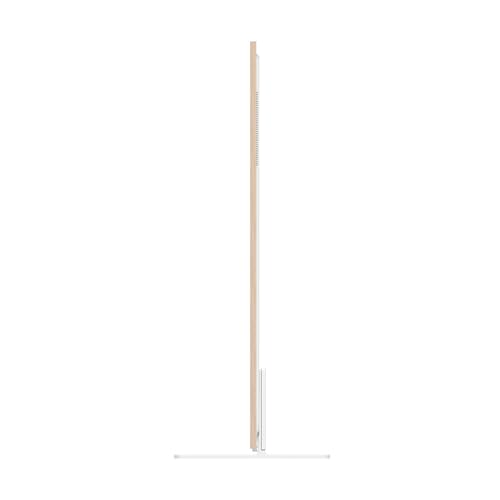
The TCL NXTVISION represents something genuinely new in TV design. At just 1.1 inches thick, it's one of the thinnest TVs ever made. More importantly, its ultra-matte screen coating eliminates reflections, making displayed artwork look remarkably similar to a real canvas painting.
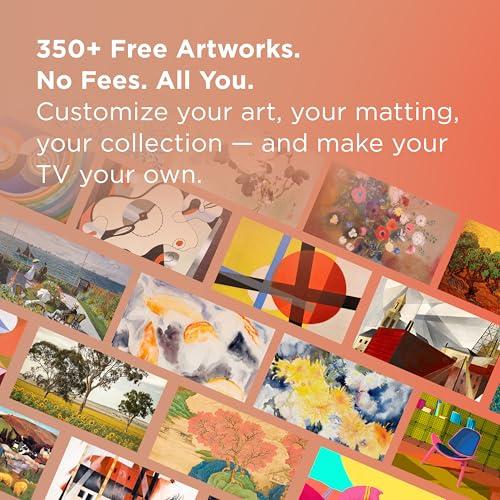
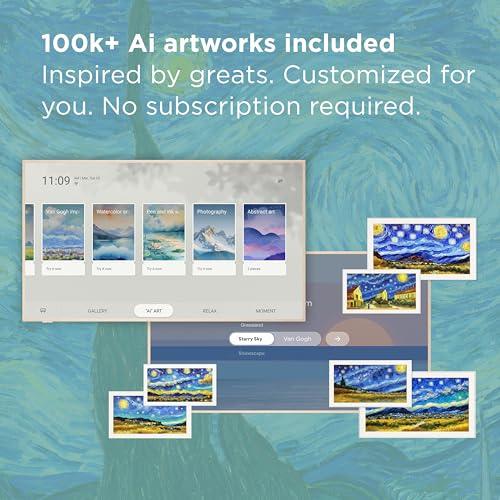
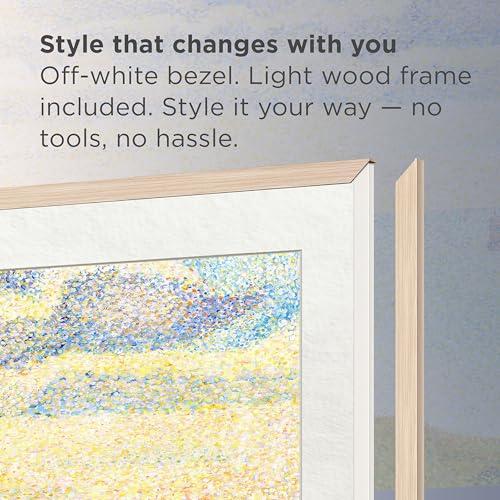
The art functionality goes deep. The TV includes a curated library of over 400 artworks, plus AI art generation that can create over 100,000 unique images based on your preferences. The magnetic bezel system lets you swap between different frame styles—the included light wood frame can be replaced with other colors and materials to match your décor changes.
Based on user reviews, this art mode actually works as advertised. The matte coating successfully reduces glare that would normally make a TV screen obviously artificial. However, this same coating also reduces contrast and color vibrancy during regular TV viewing—a trade-off that matters if you watch a lot of movies or sports.
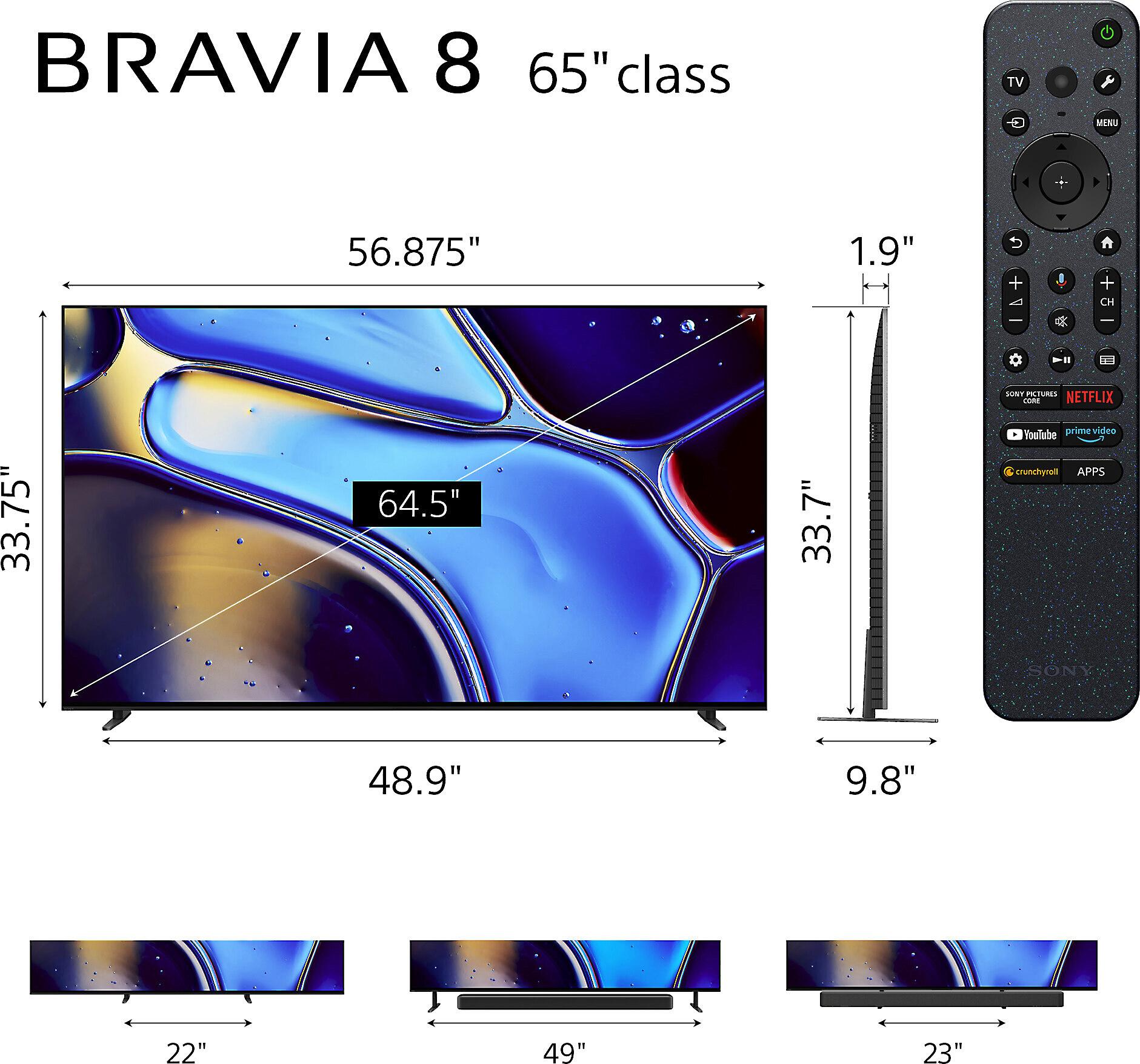
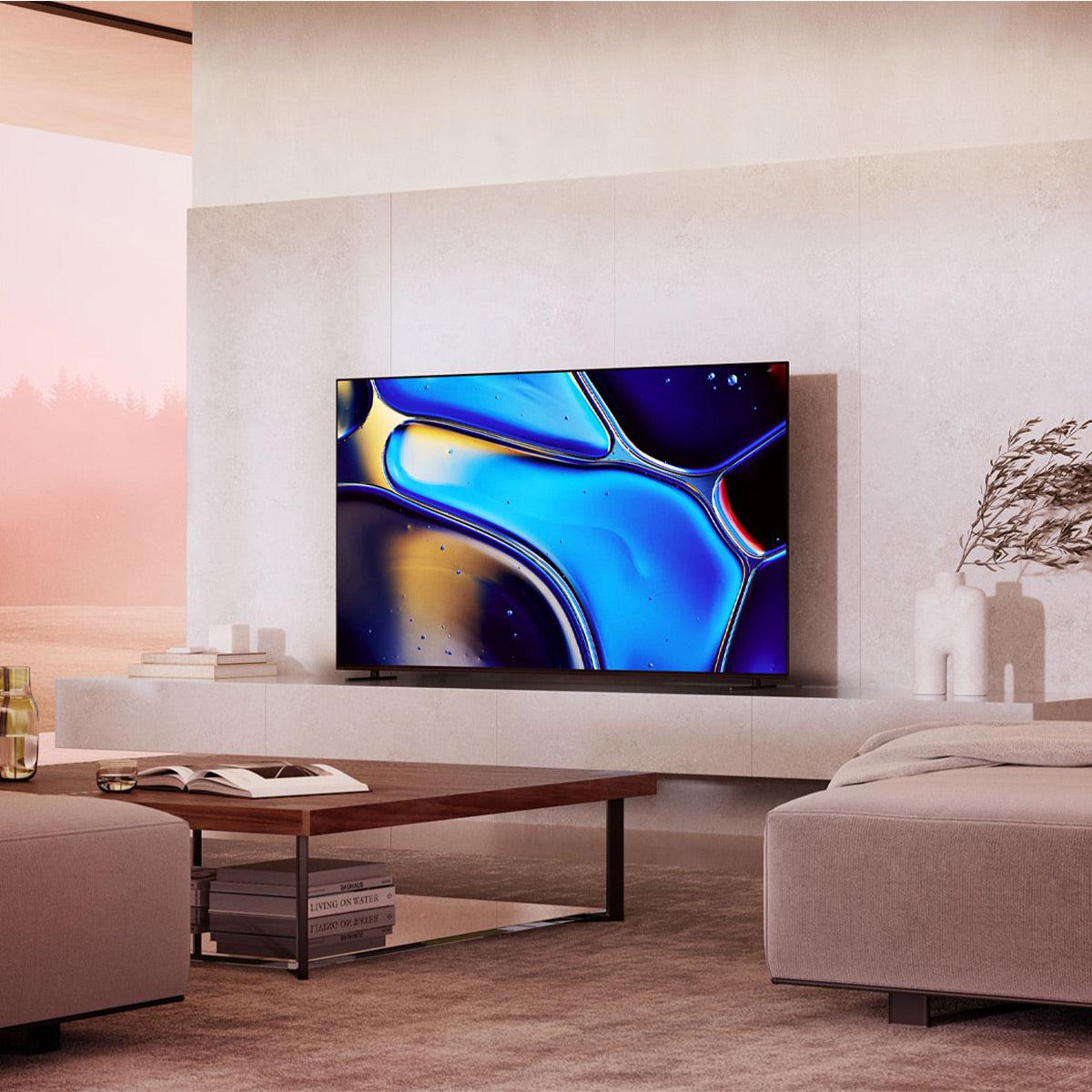
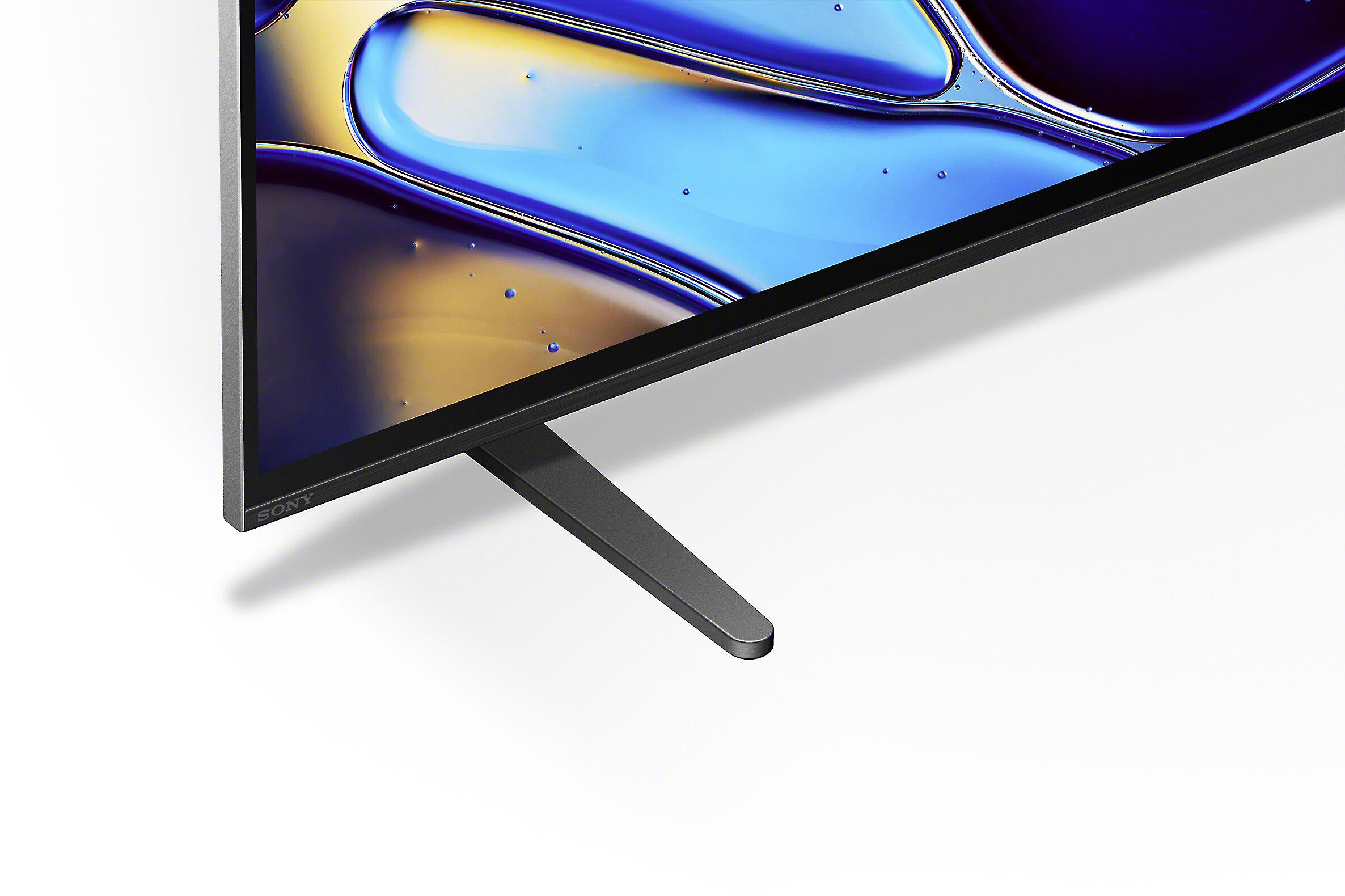
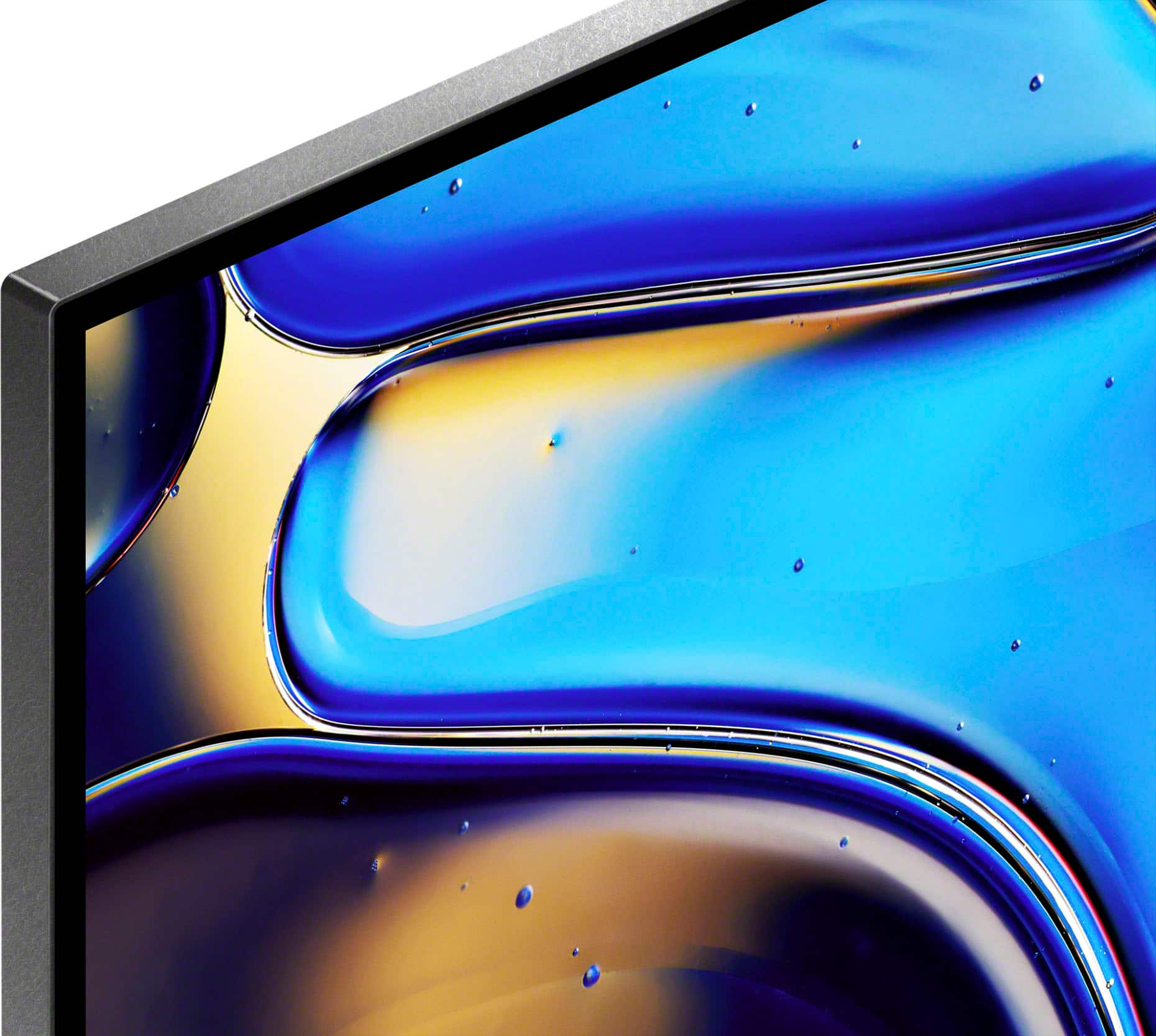
The Sony BRAVIA 8 takes a more traditional approach to design. At 1.5 inches thick, it's still quite slim but doesn't achieve the ultra-thin art TV aesthetic. The glossy screen optimizes light transmission for the best possible picture quality during viewing, but it will clearly look like a TV when displaying static content.
This is where the technology differences become most apparent. The Sony BRAVIA 8 delivers what most experts consider superior picture quality across several key metrics.
Black levels represent the biggest difference. OLED pixels can turn completely off, creating true black. When you're watching a movie with dark scenes—think of space movies or horror films—you'll see details in shadows that simply disappear on LED-backlit displays. The TCL NXTVISION, despite its quantum dot enhancement, still uses an edge-lit LED backlight that creates some light bleeding, preventing true blacks.
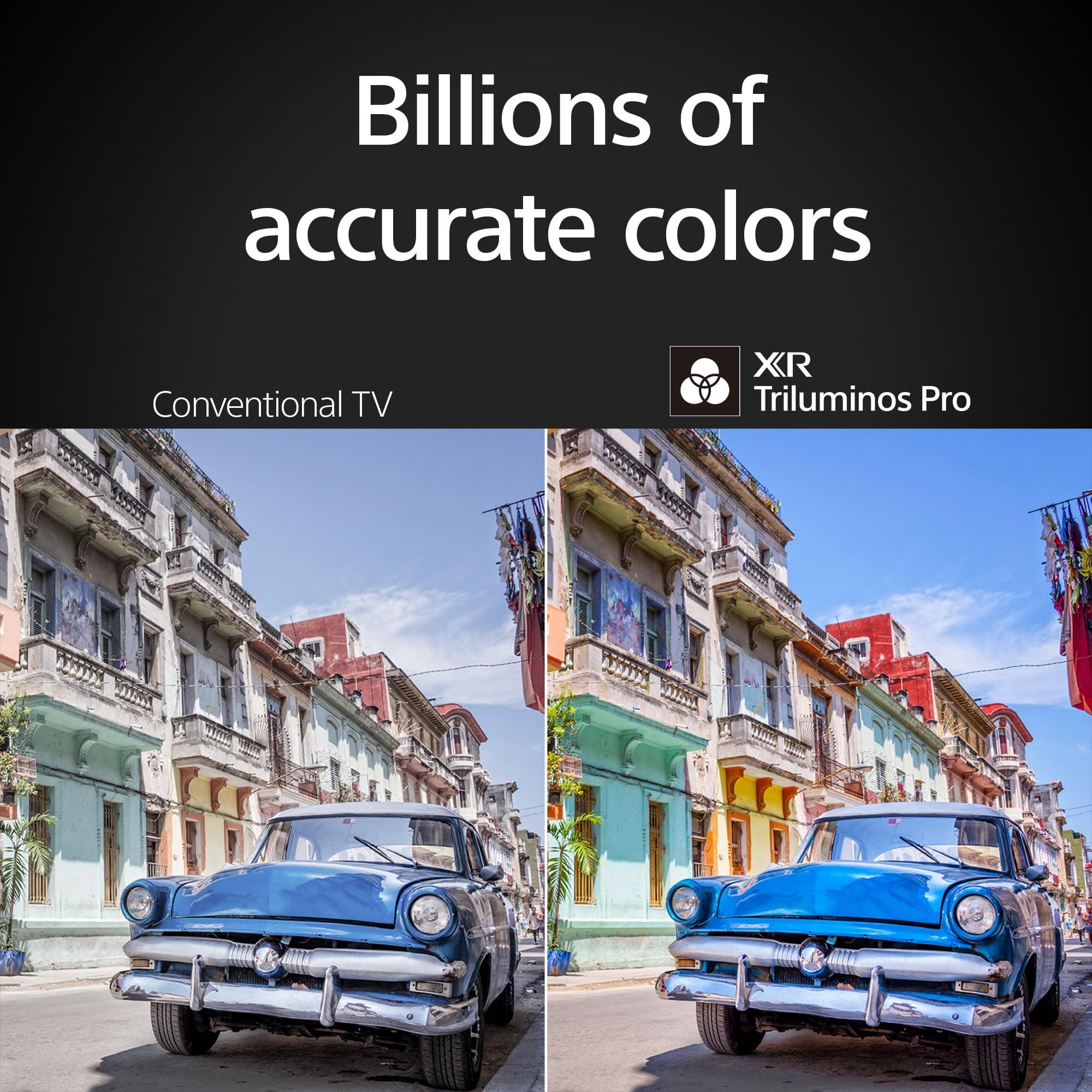
Color accuracy also favors the Sony BRAVIA 8. While the TCL's quantum dots create vibrant, eye-catching colors, they're often oversaturated compared to what directors intended. OLED panels, combined with Sony's XR Triluminos Pro processing, reproduce colors more accurately to industry standards.
Viewing angles present another consideration. OLED maintains consistent colors and contrast even when viewed from the side, making it better for rooms where people sit at different angles. The TCL NXTVISION uses a VA-type panel that looks best when viewed straight-on but degrades when viewed from wide angles.
However, the TCL NXTVISION wins in brightness. Its High Brightness+ LED backlight can output significantly more light than OLED panels. In very bright rooms with lots of windows, this extra brightness helps maintain picture visibility. The matte coating also reduces reflections, making it surprisingly effective in challenging lighting conditions.
Both TVs cater to gamers but in different ways. The TCL NXTVISION offers more aggressive gaming specifications on paper. Its Game Accelerator 240 supports refresh rates up to 144Hz with Variable Refresh Rate (VRR) technology, plus AMD FreeSync Premium certification. This means smoother motion in fast-paced games and reduced screen tearing.
The Sony BRAVIA 8 maxes out at 120Hz but offers something the TCL cannot: near-instantaneous pixel response times. OLED pixels switch from one color to another almost immediately, eliminating the motion blur that can make fast action look smeared. For competitive gaming where every millisecond matters, this responsiveness often matters more than higher refresh rates.
Based on gaming reviews, the choice depends on your gaming priorities. If you play competitive esports titles where motion clarity is paramount, the Sony's OLED technology provides a cleaner, more responsive experience. If you prefer games that benefit from higher refresh rates and don't mind some motion blur, the TCL's 144Hz capability offers an advantage.
Both TVs support Auto Low Latency Mode (ALLM), which automatically switches to game mode when they detect a gaming console, reducing input lag—the delay between pressing a controller button and seeing the action on screen.
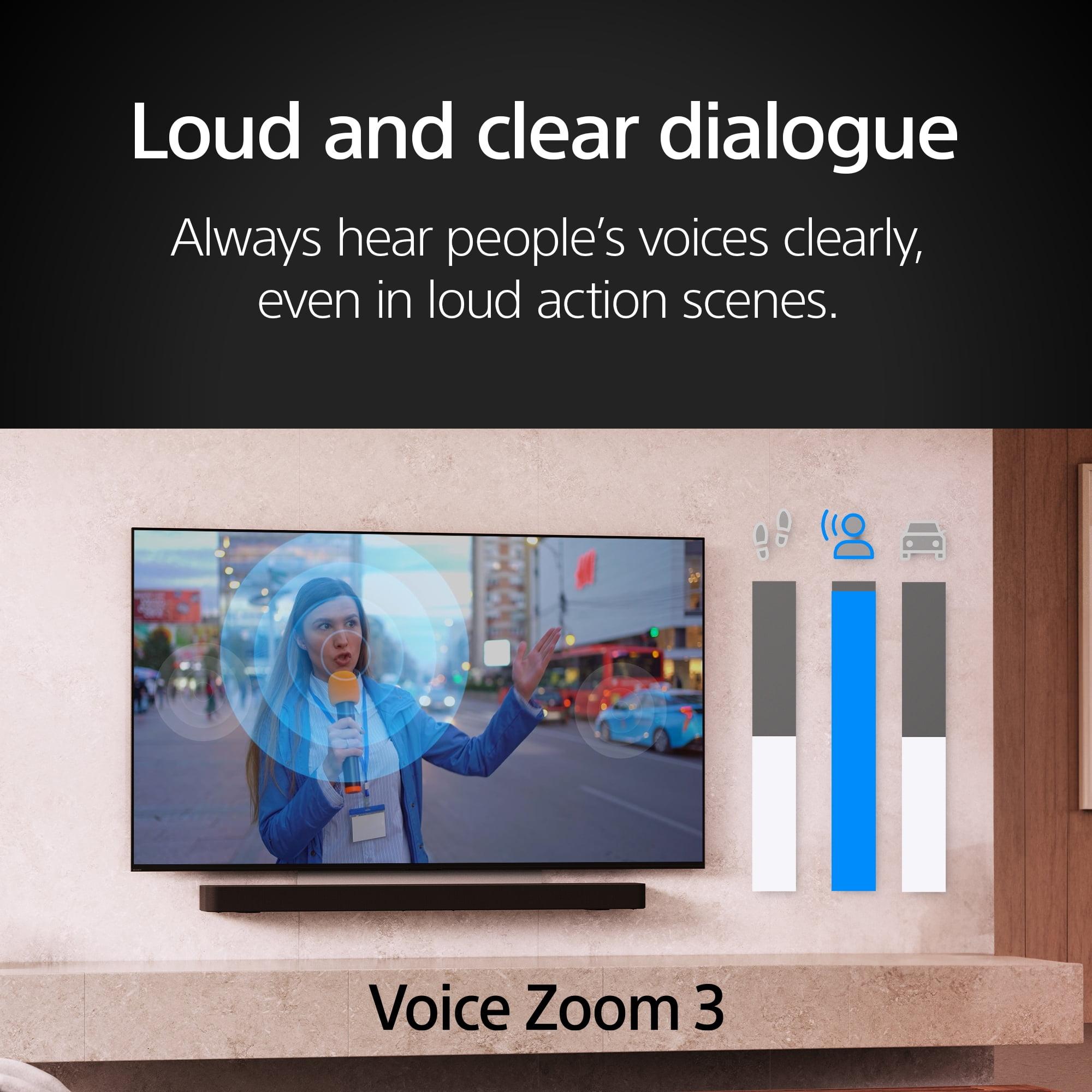
The audio systems reveal another philosophical difference. The Sony BRAVIA 8 features Acoustic Surface Audio+, which uses the entire OLED screen as a speaker membrane. This creates a unique effect where dialogue appears to come directly from characters' mouths rather than from speakers below the screen. With 50 watts of total power, it provides more robust sound than typical thin TVs.
The TCL NXTVISION uses a more conventional approach with 20 watts of built-in speakers, though it includes Dolby Atmos processing and an Enhanced Dialogue Mode. While adequate for casual viewing, it lacks the immersive quality of Sony's screen-as-speaker technology.
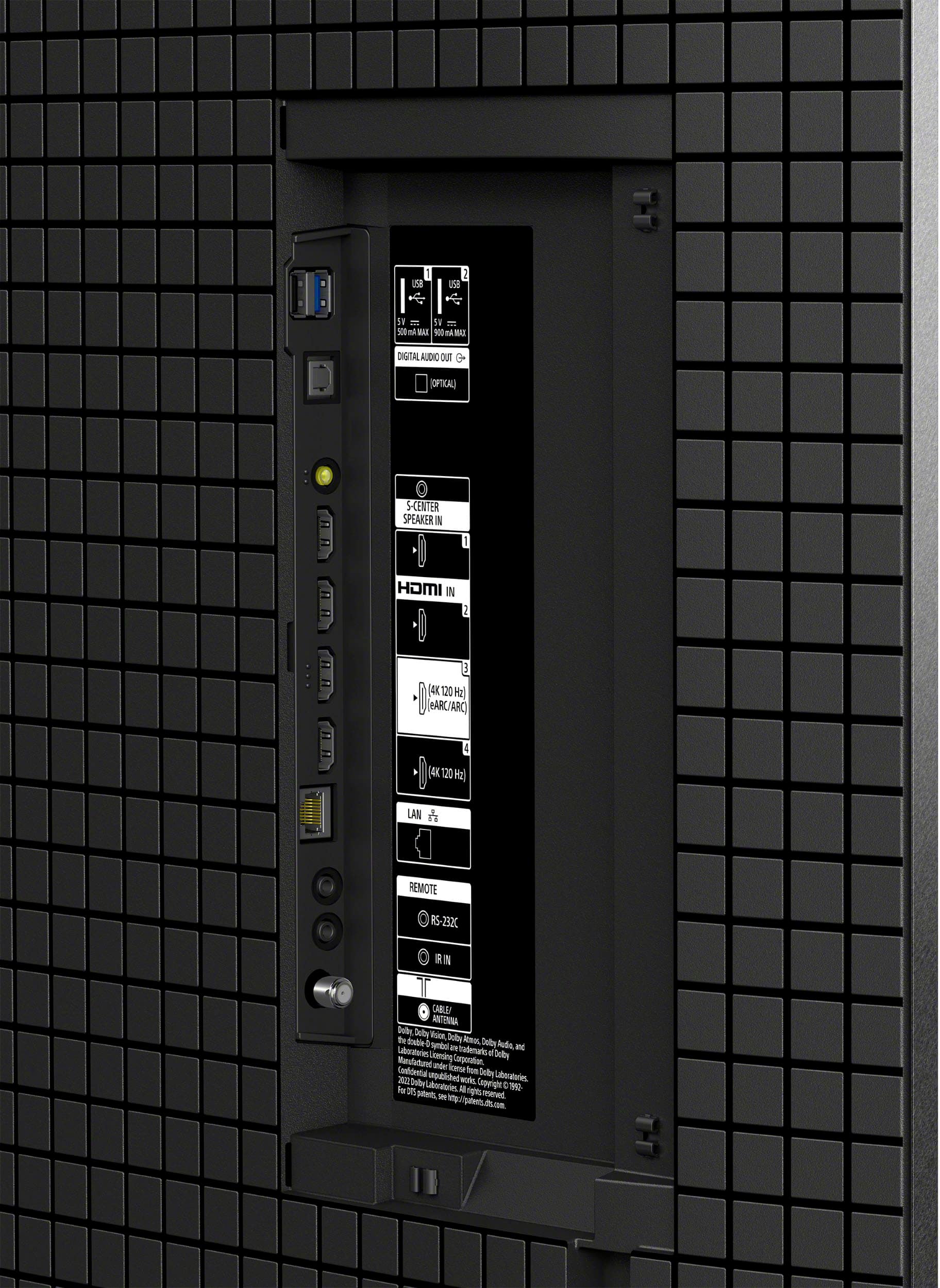
For serious home theater setups, both TVs include eARC (enhanced Audio Return Channel) support for connecting high-end soundbars or receiver systems. However, if you prefer using built-in speakers, the Sony BRAVIA 8 provides a notably better experience.
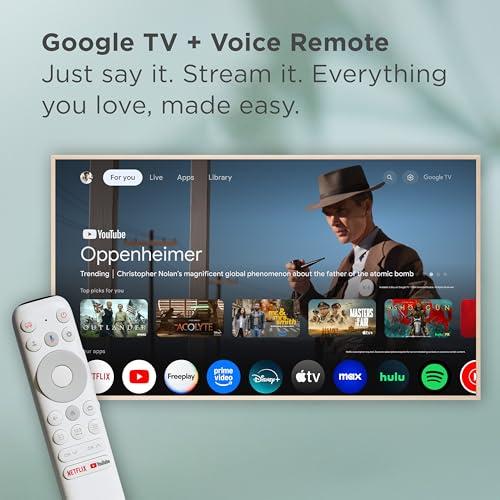
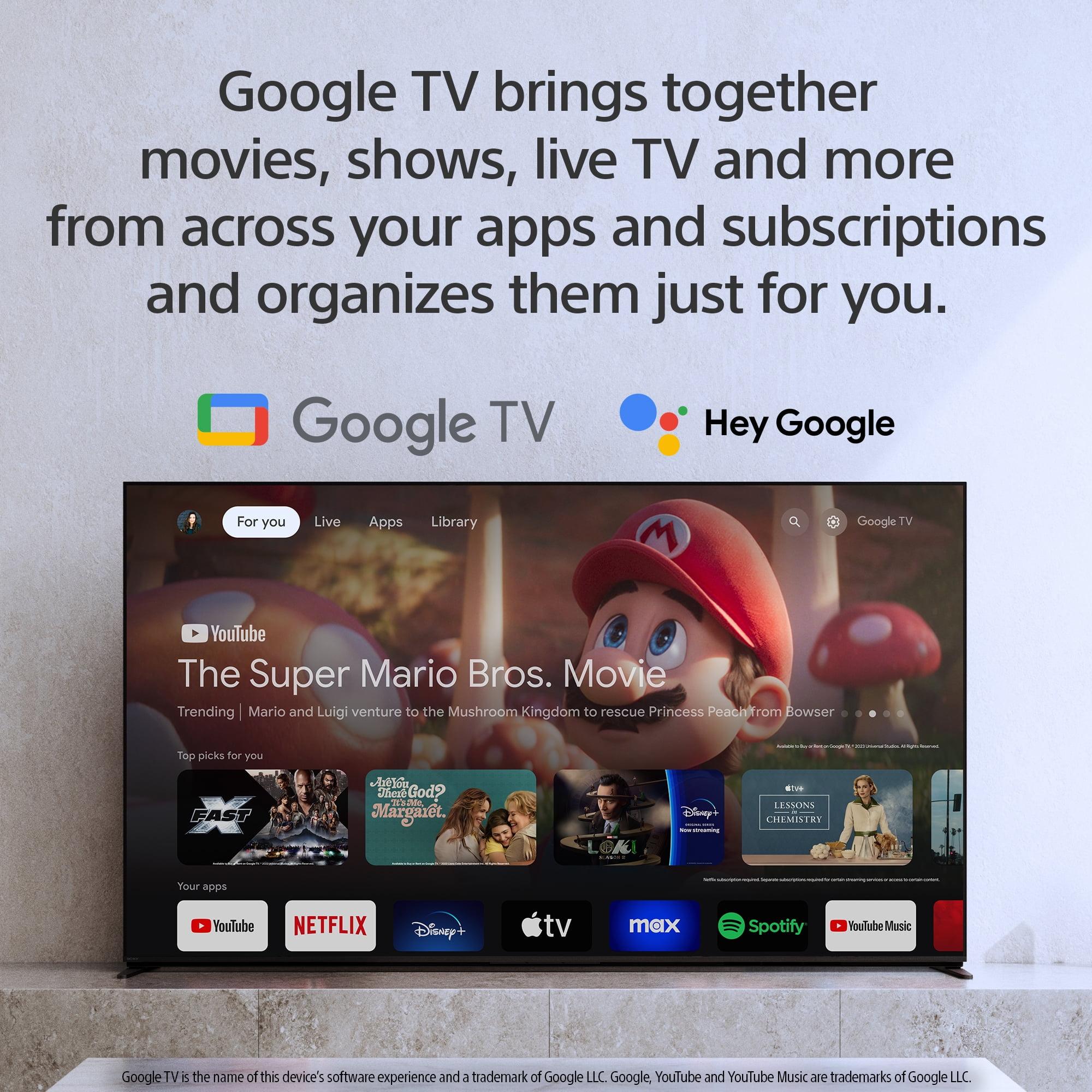
Both TVs run Google TV, providing access to all major streaming services and similar smart functionality. The interfaces are nearly identical, with voice control, Chromecast built-in, and Apple AirPlay support.
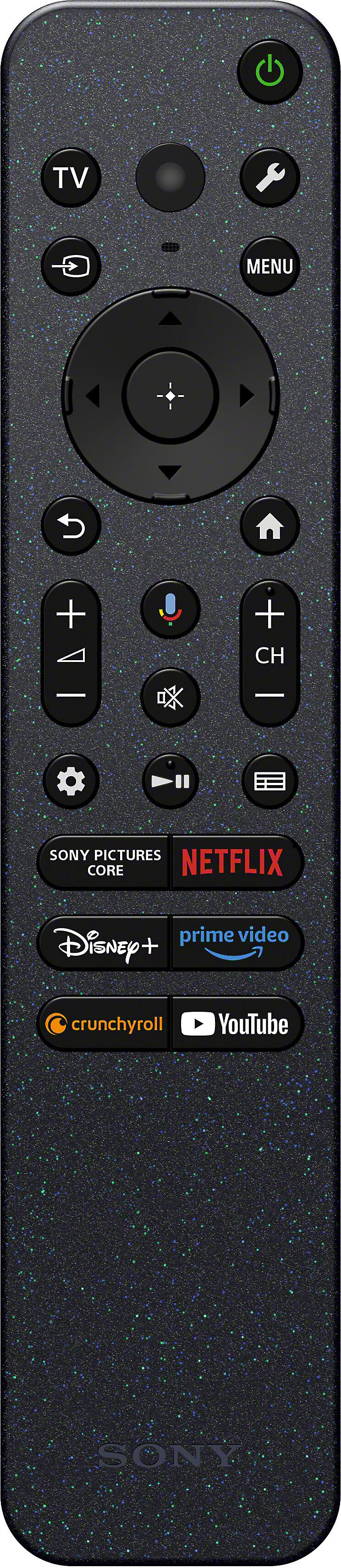
The TCL NXTVISION includes hands-free voice control, allowing you to adjust settings without finding the remote. The Sony BRAVIA 8 requires using the voice remote but integrates more deeply with Sony's ecosystem if you own other Sony devices.
Based on user feedback, both systems perform reliably with fast app loading and smooth navigation. The Google TV platform has matured significantly and provides a consistent experience regardless of the TV manufacturer.
For dedicated home theater rooms with controlled lighting, the Sony BRAVIA 8 excels. Its perfect black levels create the cinematic experience that movie enthusiasts seek. Dark scenes retain detail without the gray, washed-out look that backlit displays often exhibit.
The Sony's color accuracy also matters for home theater use. Movies are mastered with specific color standards, and OLED's ability to reproduce these colors accurately means you're seeing content closer to the director's intention.
However, OLED technology requires some caution in home theater setups. Static elements like pause screens, channel logos, or gaming interfaces can potentially cause burn-in if left on screen for extended periods. While modern OLED panels include various protections against this, it remains a consideration for users who frequently pause content or play games with persistent on-screen elements.
The TCL NXTVISION avoids burn-in concerns entirely but doesn't deliver the contrast performance that makes movies truly cinematic. For casual movie watching in multi-purpose rooms, it performs adequately, but serious cinephiles will notice the difference.
As of 2024, the TCL NXTVISION typically costs significantly less than the Sony BRAVIA 8, reflecting their different target markets and manufacturing costs. QLED technology is less expensive to produce than OLED, and TCL generally positions itself as a value-oriented brand.
The value equation depends entirely on your priorities. If you want art TV functionality with decent picture quality, the TCL NXTVISION delivers unique features unavailable in traditional TVs. If picture quality is your primary concern, the Sony BRAVIA 8 provides superior performance that justifies its premium pricing.
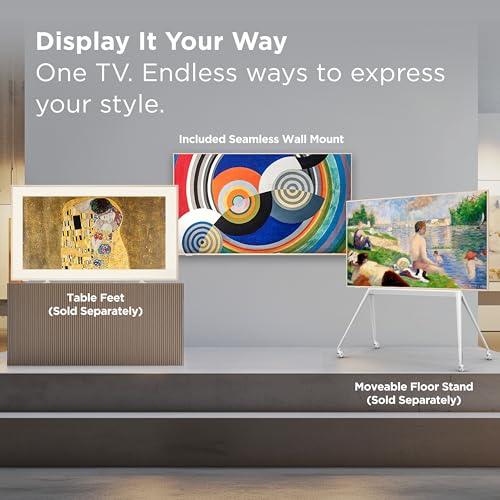
Consider the total cost of ownership as well. The TCL NXTVISION includes its proprietary wall mount and decorative frame, while the Sony BRAVIA 8 works with standard VESA mounts and includes a table stand. Factor in any additional mounting hardware or soundbar purchases when comparing total costs.
The TCL NXTVISION succeeds brilliantly as a lifestyle product. If you want a TV that disappears into your décor when not in use, displays beautiful artwork, and handles bright room conditions well, it delivers on those promises. The ultra-thin design and matte coating work as advertised, creating something closer to wall art than a traditional TV.
Choose the TCL NXTVISION if you:
The Sony BRAVIA 8 excels where it matters most for serious viewing: picture quality. The OLED technology delivers superior contrast, more accurate colors, and better viewing angles. For movie nights, binge-watching sessions, or gaming where visual quality matters most, it provides a noticeably better experience.
Choose the Sony BRAVIA 8 if you:
Both TVs represent excellent executions of their respective philosophies. The TCL NXTVISION pioneered ultra-thin art TV design at an accessible price point, while the Sony BRAVIA 8 refined OLED technology with improved brightness and processing. Your choice should align with whether you prioritize lifestyle integration or pure viewing performance—both are valid approaches to modern television ownership.
| TCL 65" NXTVISION QLED 4K Art Frame TV | Sony BRAVIA 8 65" 4K OLED TV |
|---|---|
| Display Technology - The fundamental difference affecting picture quality and longevity | |
| QLED (LED backlight + quantum dots) | OLED (self-emitting pixels) |
| Black Levels - Critical for movie watching and contrast | |
| Limited by edge-lit LED backlight | Perfect blacks (pixels turn completely off) |
| Peak Brightness - Most important for bright room viewing | |
| High Brightness+ LED (excellent for sunny rooms) | Lower peak brightness (better for controlled lighting) |
| Screen Finish - Affects both art display and regular viewing | |
| Ultra-matte anti-glare coating | Standard glossy finish |
| Thickness - Key factor for wall mounting and aesthetics | |
| 1.1 inches (ultra-thin art TV profile) | 1.5 inches (standard slim TV design) |
| Art Mode Features - Unique lifestyle functionality | |
| 400+ curated artworks, AI art generation, magnetic frames | Not available (traditional TV focus) |
| Gaming Refresh Rate - Important for competitive gaming | |
| 120Hz native, up to 144Hz VRR | 120Hz with VRR |
| Pixel Response Time - Critical for motion blur in gaming/sports | |
| Slower LED pixel response | Near-instantaneous OLED response |
| Audio System - Built-in sound quality | |
| 20W conventional speakers with Dolby Atmos | 50W Acoustic Surface Audio+ (screen as speaker) |
| Burn-in Risk - Long-term durability consideration | |
| No burn-in risk with static content | Potential OLED burn-in with prolonged static images |
| Viewing Angles - Important for wide seating arrangements | |
| Limited viewing angles (VA panel) | Excellent viewing angles (OLED) |
| Color Accuracy - Matters for movies and professional content | |
| Vibrant but less accurate quantum dot colors | Highly accurate OLED color reproduction |
| Mounting System - Installation flexibility | |
| Proprietary flush mount system included | Standard VESA compatibility |
| Target Room Type - Where each TV performs best | |
| Bright multi-purpose living spaces | Dark or controlled lighting home theaters |
The Sony BRAVIA 8 65" 4K OLED TV delivers superior picture quality with perfect black levels, infinite contrast, and more accurate colors. The OLED technology allows each pixel to turn completely off, creating true blacks that the TCL 65" NXTVISION QLED 4K Art Frame TV cannot achieve due to its LED backlight. However, the TCL NXTVISION gets brighter, making it better for very bright rooms.
The TCL NXTVISION uses QLED technology with an LED backlight and quantum dot layer for enhanced colors, while the Sony BRAVIA 8 uses OLED technology where each pixel generates its own light. OLED provides perfect blacks and infinite contrast, but QLED offers higher brightness and no burn-in risk. The Sony BRAVIA 8 excels in dark rooms, while the TCL NXTVISION performs better in bright spaces.
Both TVs offer excellent gaming features, but serve different needs. The TCL NXTVISION supports up to 144Hz refresh rates with AMD FreeSync Premium, while the Sony BRAVIA 8 maxes out at 120Hz but offers near-instantaneous pixel response times. For competitive gaming where motion clarity matters most, the Sony BRAVIA 8 provides cleaner, more responsive visuals.
Yes, the TCL NXTVISION genuinely functions as digital art when not in use. Its ultra-matte screen coating eliminates reflections, making displayed artwork appear canvas-like. The TV includes 400+ curated artworks, AI art generation, and magnetic decorative frames. The Sony BRAVIA 8 lacks these art-focused features and will clearly look like a TV when displaying static content.
The TCL NXTVISION excels in bright rooms thanks to its High Brightness+ LED backlight and ultra-matte anti-glare coating that reduces reflections. The Sony BRAVIA 8 has lower peak brightness and may struggle with glare in very sunny environments, though it performs adequately in moderately lit rooms.
The Sony BRAVIA 8 offers superior built-in audio with 50W Acoustic Surface Audio+ technology that turns the entire screen into a speaker, creating positional sound. The TCL NXTVISION has conventional 20W speakers with Dolby Atmos support, which is adequate but less immersive than the Sony's innovative audio system.
For dedicated home theaters with controlled lighting, the Sony BRAVIA 8 is the clear winner. Its perfect blacks, accurate colors, and superior contrast create a truly cinematic experience. The TCL NXTVISION works for casual movie watching but cannot match the Sony BRAVIA 8's contrast performance in dark room environments.
OLED burn-in is a potential concern with the Sony BRAVIA 8, particularly with static content like channel logos or gaming interfaces displayed for extended periods. Modern OLED panels include protections, but users should vary content and use screensavers. The TCL NXTVISION has no burn-in risk, making it worry-free for any content type.
Value depends on your priorities. The TCL NXTVISION typically costs significantly less and offers unique art TV functionality unavailable elsewhere. The Sony BRAVIA 8 costs more but delivers superior picture quality that justifies the premium for serious viewers. Consider whether you want lifestyle integration (TCL) or pure performance (Sony).
Both the TCL NXTVISION and Sony BRAVIA 8 run Google TV with identical streaming capabilities and app selection. The TCL includes hands-free voice control, while the Sony requires the voice remote but offers deeper integration with Sony devices. Overall smart functionality is comparable between both TVs.
The TCL NXTVISION is significantly thinner at 1.1 inches versus the Sony BRAVIA 8's 1.5-inch profile. The TCL includes a proprietary flush wall mount for a seamless art-like appearance, while the Sony BRAVIA 8 uses standard VESA mounting. For the ultimate thin wall-mounted look, the TCL NXTVISION wins decisively.
Choose the TCL NXTVISION if you want a TV that doubles as wall art, have bright rooms, prefer no burn-in concerns, and value unique lifestyle integration. Pick the Sony BRAVIA 8 if picture quality is your top priority, you watch movies in controlled lighting, want the most accurate colors, and can manage OLED care requirements for the best viewing experience.
We've done our best to create useful and informative comparisons to help you decide what product to buy. Our research uses advanced automated methods to create this comparison and perfection is not possible - please contact us for corrections or questions. These are the sites we've researched in the creation of this article: rtings.com - tcl.com - bestbuy.com - tcl.com - bestbuy.com - tcl.com - youtube.com - rcwilley.com - businessinsider.com - bestbuy.com - target.com - youtube.com - support.tcl.com - nfm.com - woodruffappliance.com - flatpanelshd.com - tcl.com - bestbuy.com - bestbuy.com - crutchfield.com - avsforum.com - electronics.sony.com - sony.com - store.sony.co.nz - sony.com - displayspecifications.com

Privacy Policy
Terms and Conditions - Affiliate Policy
Home Security
© Copyright 2008-2026.
11816 Inwood Rd #1211, Dallas, TX 75244