




The TV world has gotten complicated. What used to be a simple choice between brands and sizes has expanded into distinct categories serving different needs. Today we're comparing two fundamentally different approaches from TCL: the NXTVISION Art Frame TV that wants to be your living room's next art piece, and the QM6K Mini LED TV that focuses purely on delivering the best picture your money can buy.
Both are 65-inch displays from TCL, but they couldn't be more different in their goals. One prioritizes blending into your décor when you're not watching, while the other maximizes picture quality performance. Understanding these differences is crucial for making the right choice for your home and viewing habits.
The TV market has evolved beyond the traditional race for bigger screens and brighter colors. Lifestyle TVs like the NXTVISION represent a growing category where design integration matters as much as picture quality. These displays double as digital art when you're not actively watching content, featuring ultra-thin profiles and matte screens that mimic real canvas.
Performance TVs like the QM6K take the opposite approach, packing the latest display technologies into more traditional designs. They prioritize what happens when you turn them on rather than how they look when off.
The key consideration is simple: do you want a TV that disappears into your room's aesthetic, or one that delivers the most impressive viewing experience possible? Your answer shapes everything else about your decision.
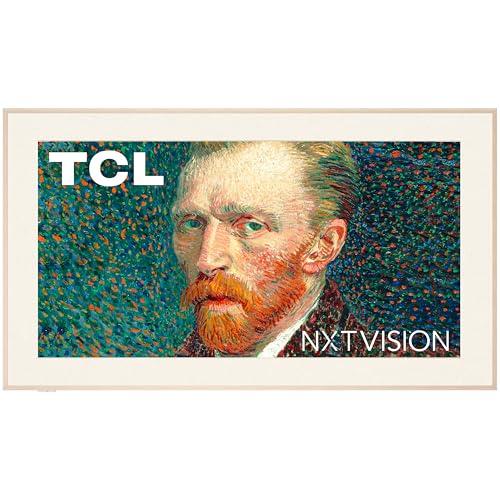
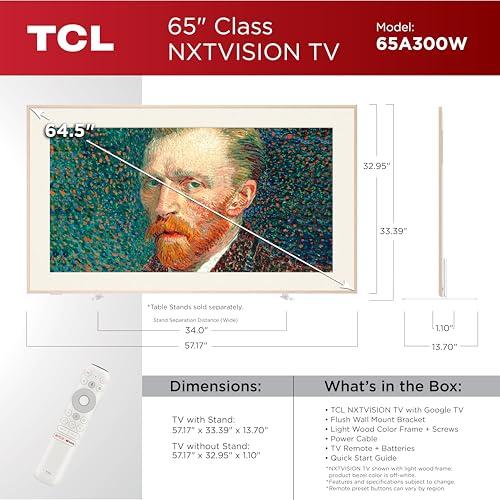
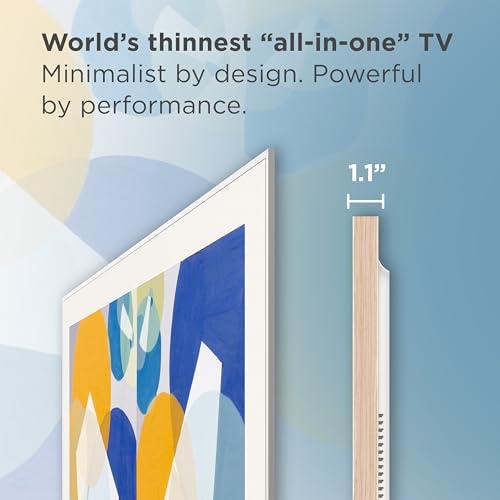
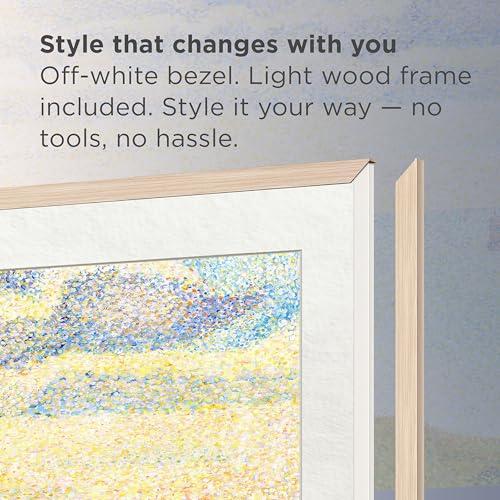
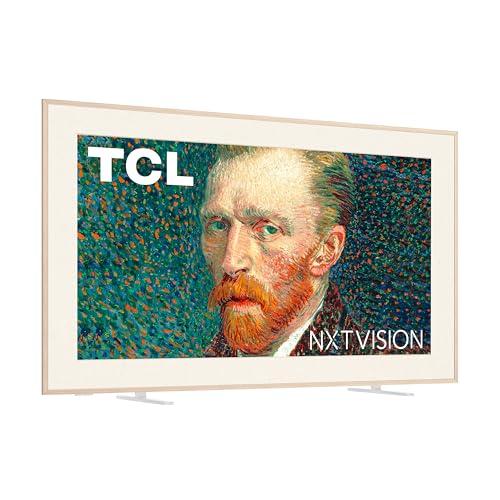
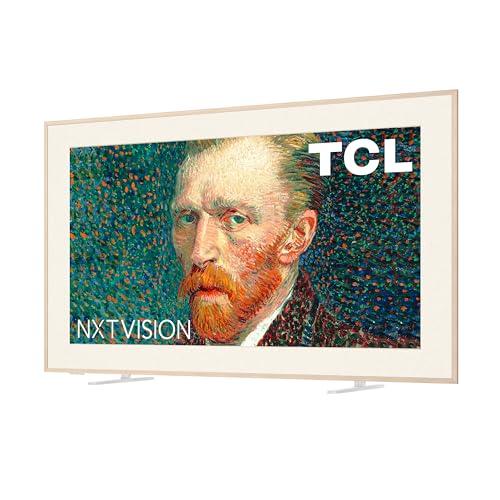
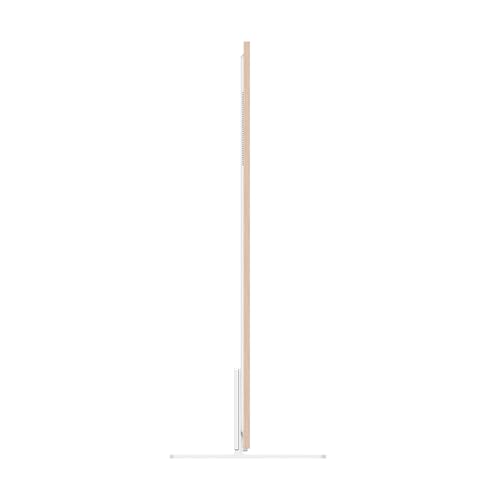
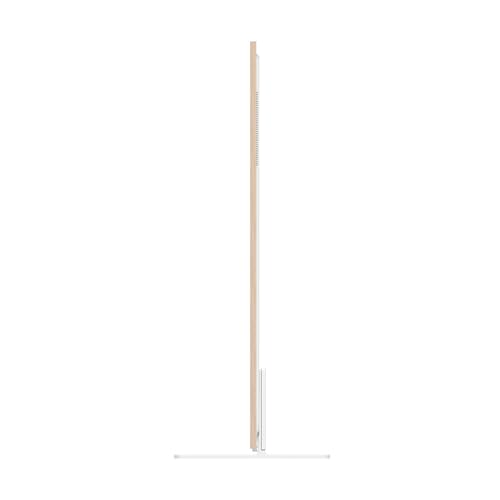
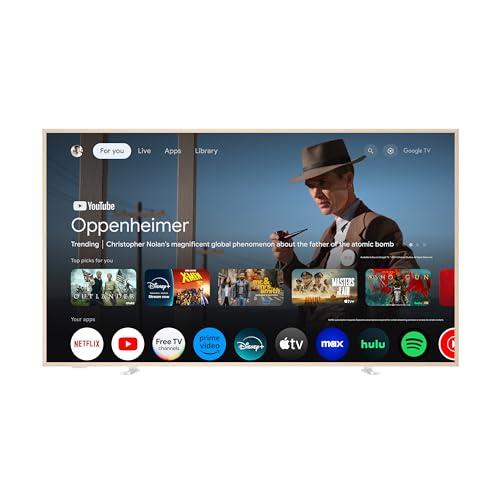
The NXTVISION launched in 2024 as TCL's answer to Samsung's popular Frame TV series. Its defining characteristic is an impossibly thin 1.1-inch depth that lets it mount nearly flush against your wall. When combined with the included magnetic wood frame and ultra-matte screen, it genuinely looks like a framed piece of art when displaying the built-in gallery.
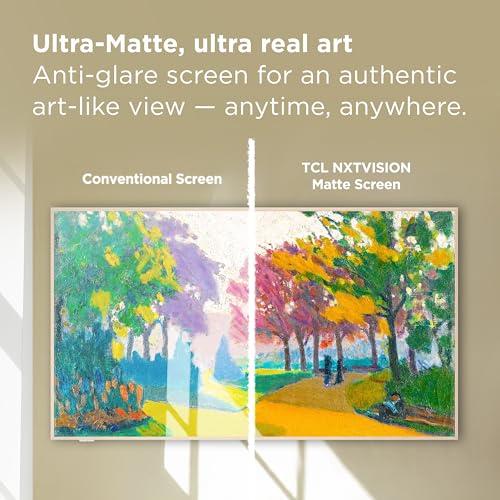
The ultra-matte anti-glare coating is perhaps the most impressive technical achievement here. Unlike typical matte screens that simply scatter light, this coating uses advanced materials to minimize reflections while maintaining image clarity. The result is a display that remains perfectly visible even with bright windows directly facing it – something that would wash out a traditional glossy TV screen completely.
This matte treatment serves dual purposes. During regular TV viewing, it eliminates the annoying reflections that plague most displays in bright rooms. In art mode, it creates the canvas-like texture that makes displayed artwork appear surprisingly authentic. The difference is immediately noticeable compared to glossy screens trying to show art – those look obviously digital, while the NXTVISION creates genuine ambiance.
The art functionality goes beyond simple photo display. TCL includes a curated library of over 400 artworks spanning different styles and periods. More intriguingly, the AI art generation feature can create unique pieces based on prompts or themes, giving you access to essentially unlimited artwork options. Personal photos can be displayed with various matte treatments to match different aesthetic preferences.
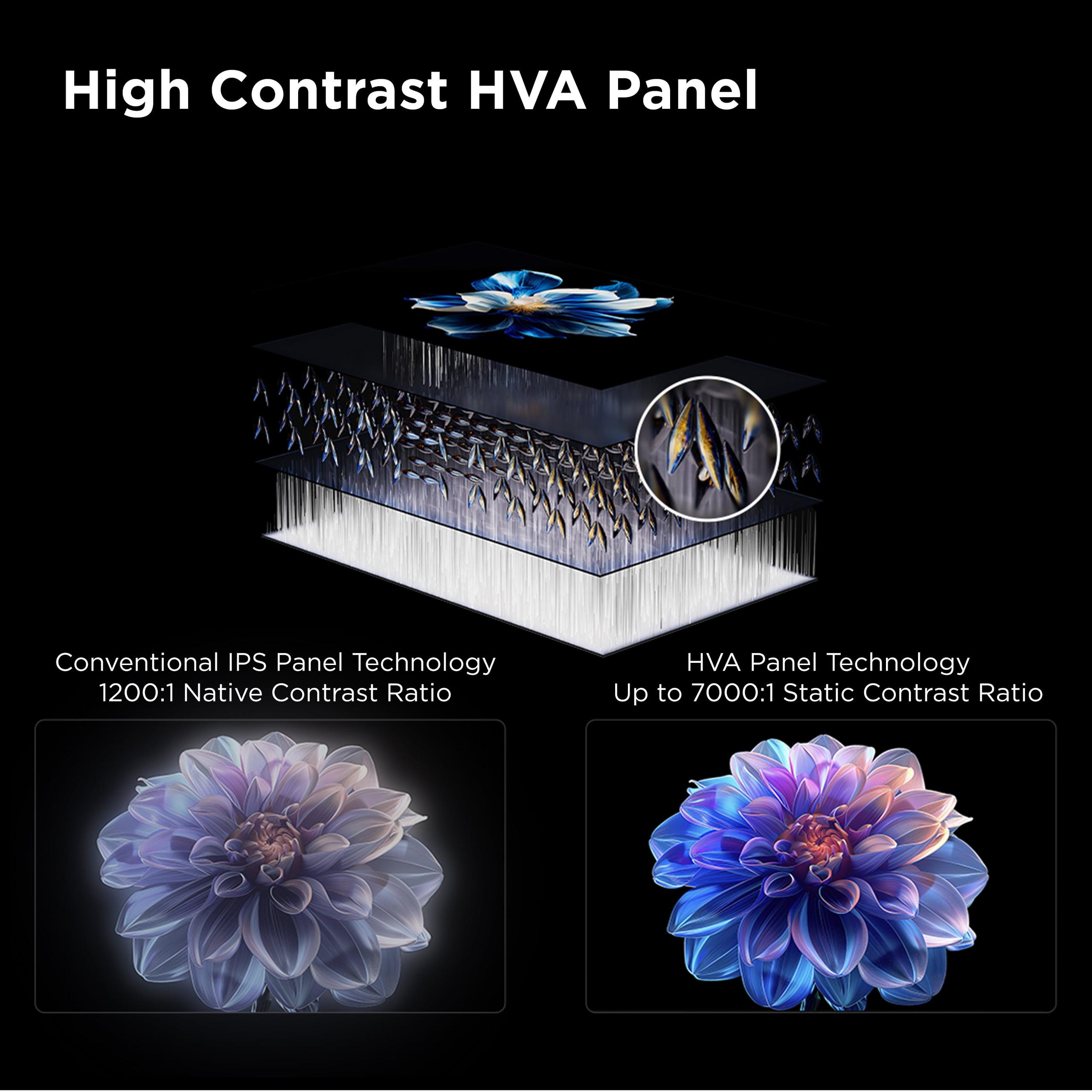
However, this design focus comes with performance compromises. The NXTVISION uses edge-lit LED technology – essentially LEDs placed around the display's perimeter rather than directly behind the screen. This approach enables the ultra-thin profile but limits picture quality. Local dimming (the ability to independently control different screen areas for better contrast) becomes nearly impossible with edge lighting, meaning darker scenes appear gray rather than true black.
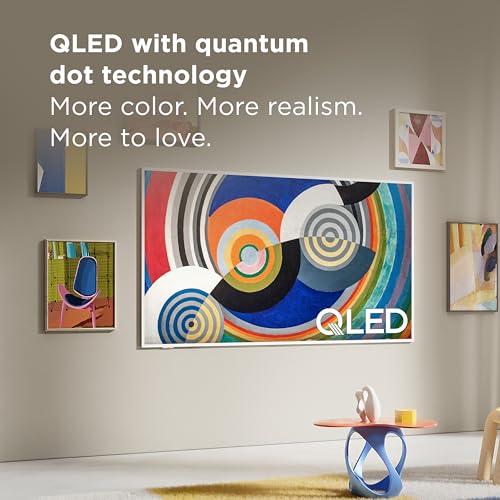
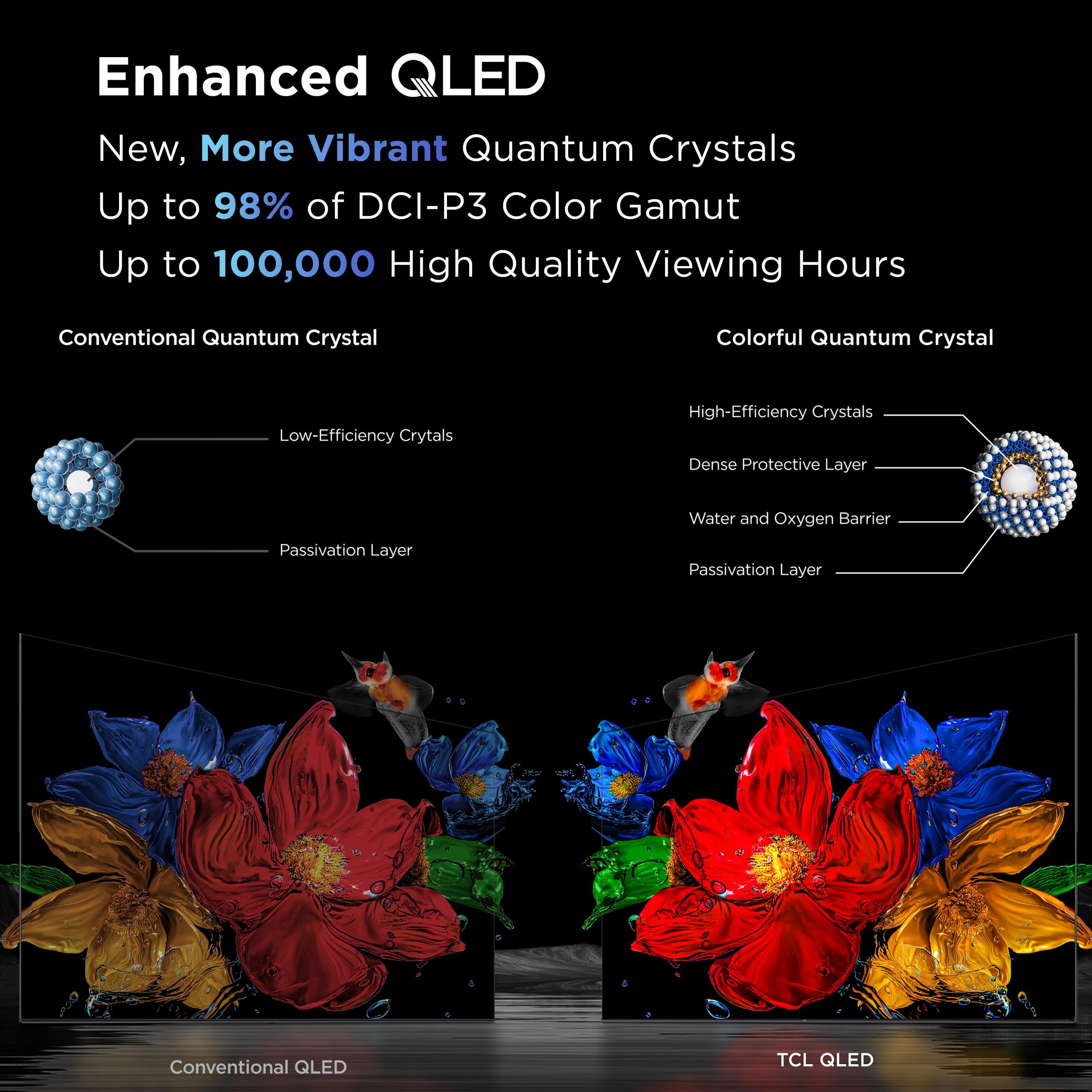
The QLED technology helps somewhat. Quantum Dot enhancement uses microscopic particles to produce more accurate colors than standard LED displays, particularly in reds and greens. But without the contrast control that comes from having LEDs directly behind the screen, the overall picture quality remains constrained by the design priorities.
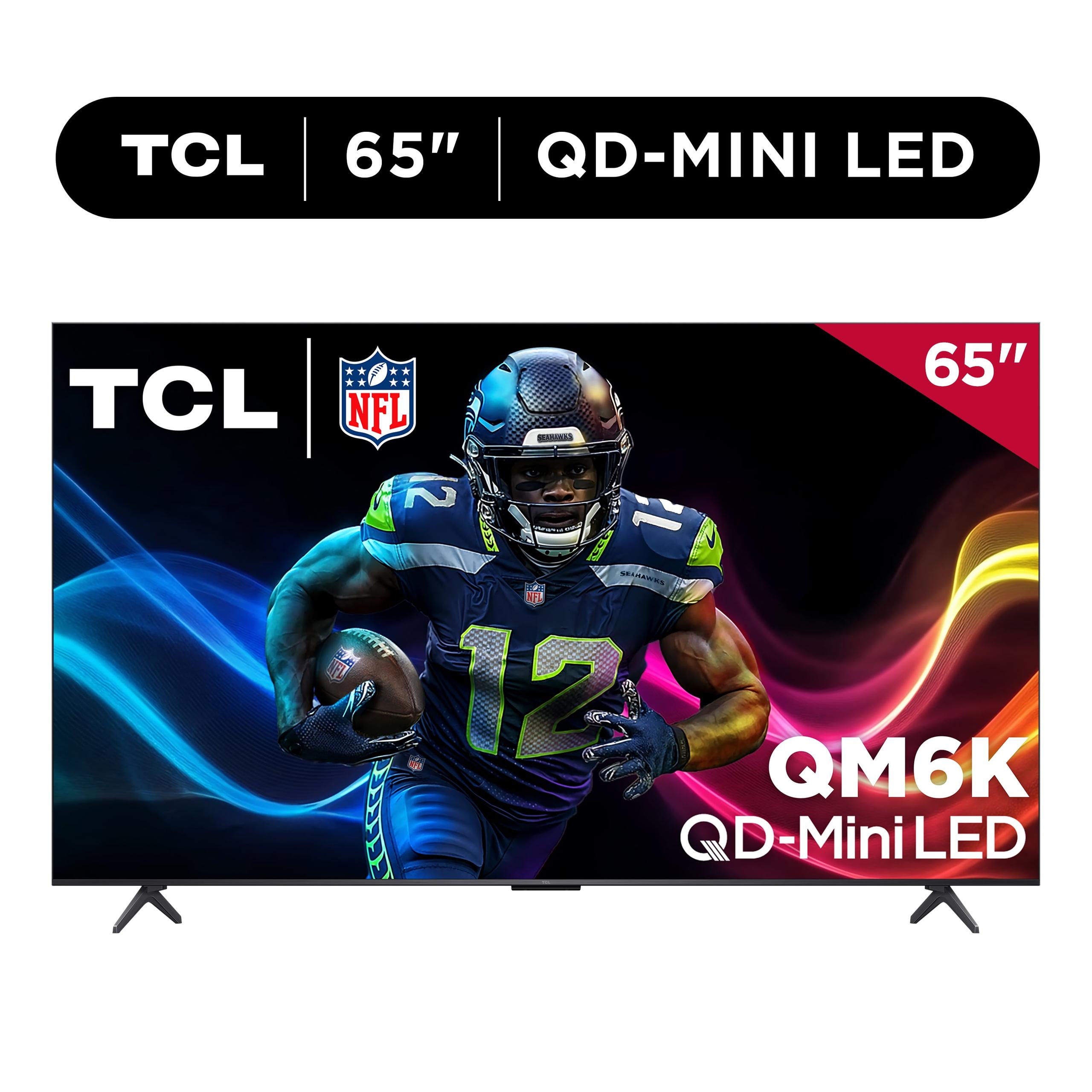
Released in 2025 as part of TCL's new performance lineup, the QM6K takes an entirely different approach. Here, picture quality technology drives every design decision, resulting in a display that showcases the latest advances in TV engineering.
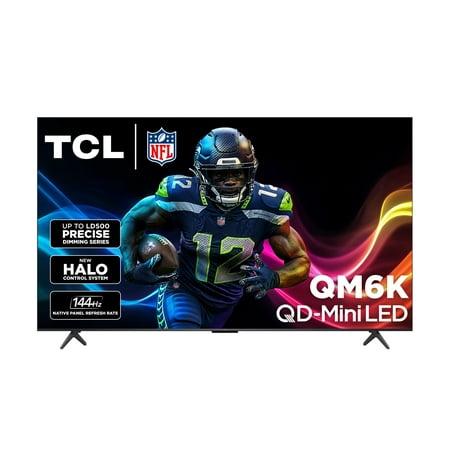
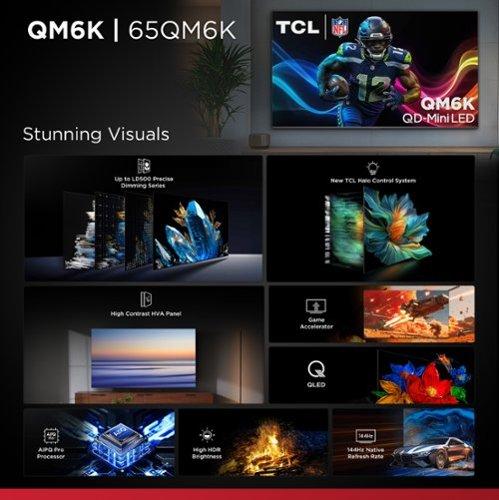
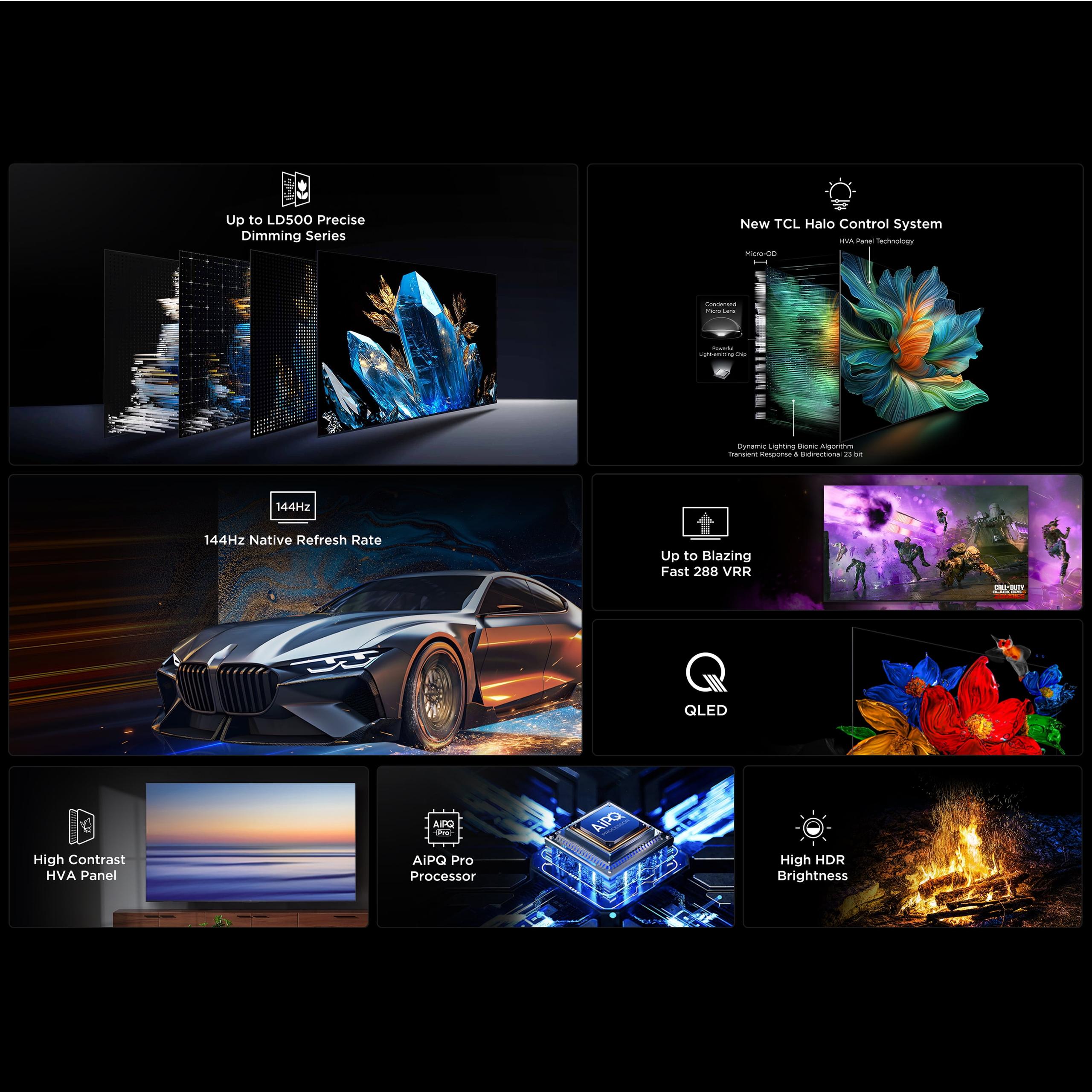
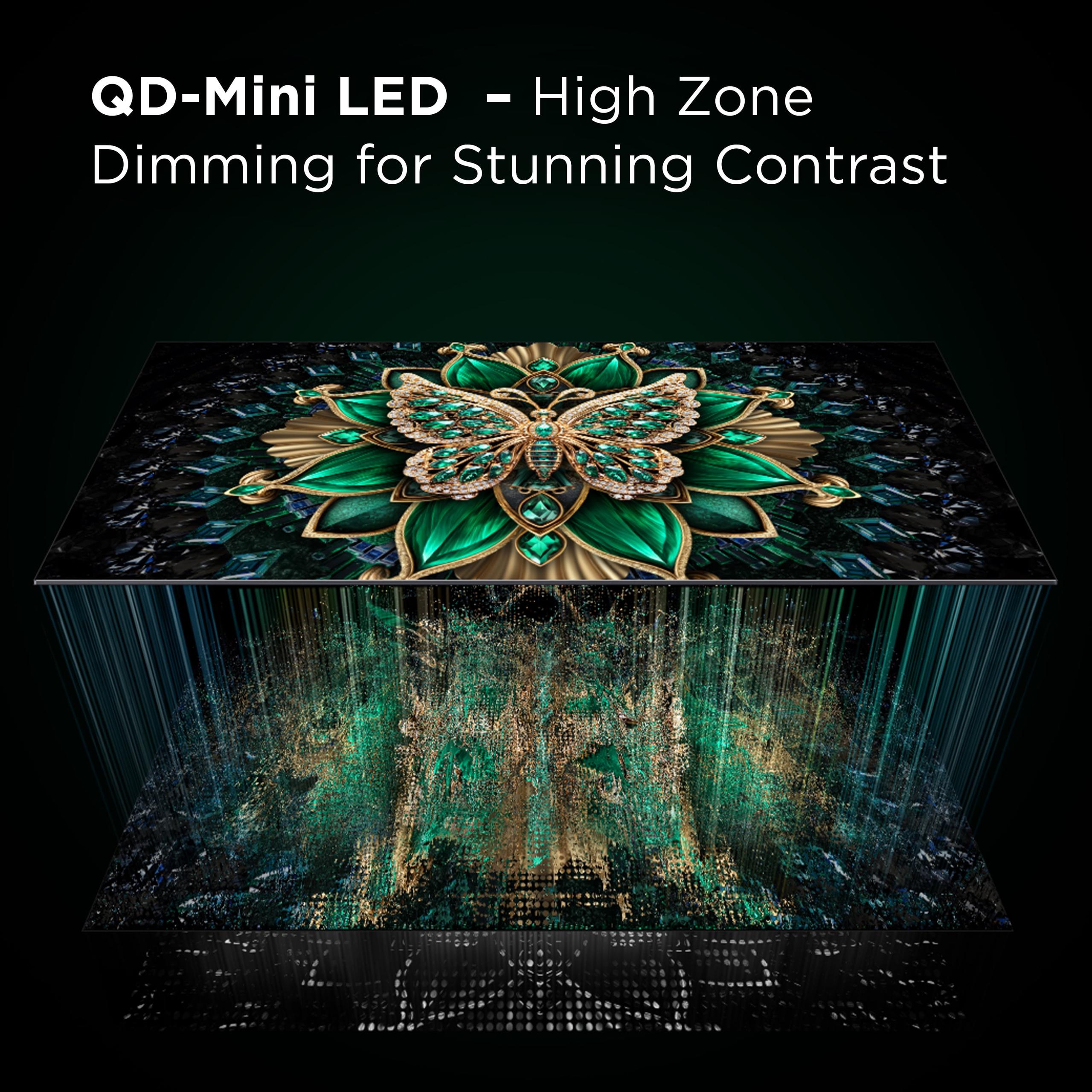
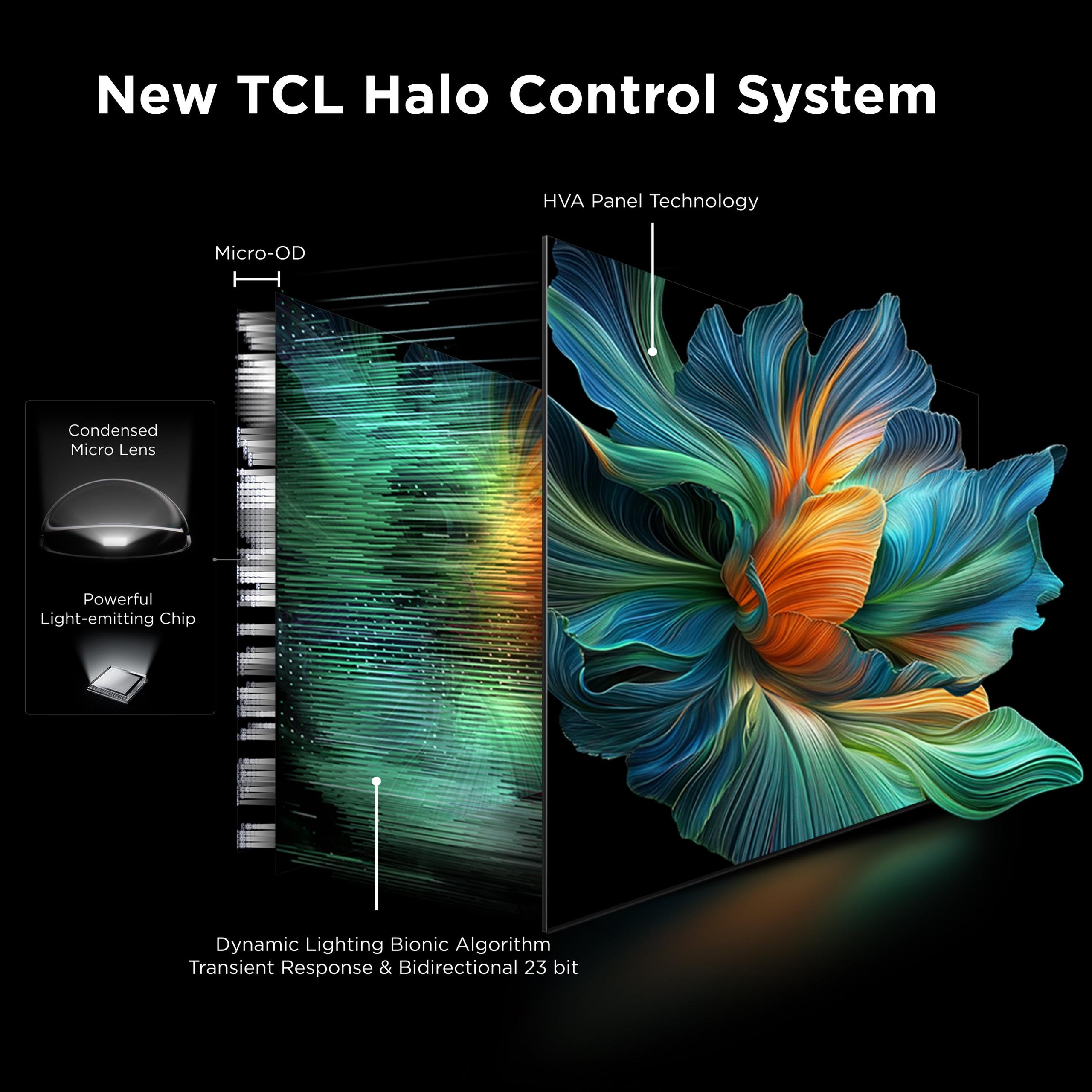
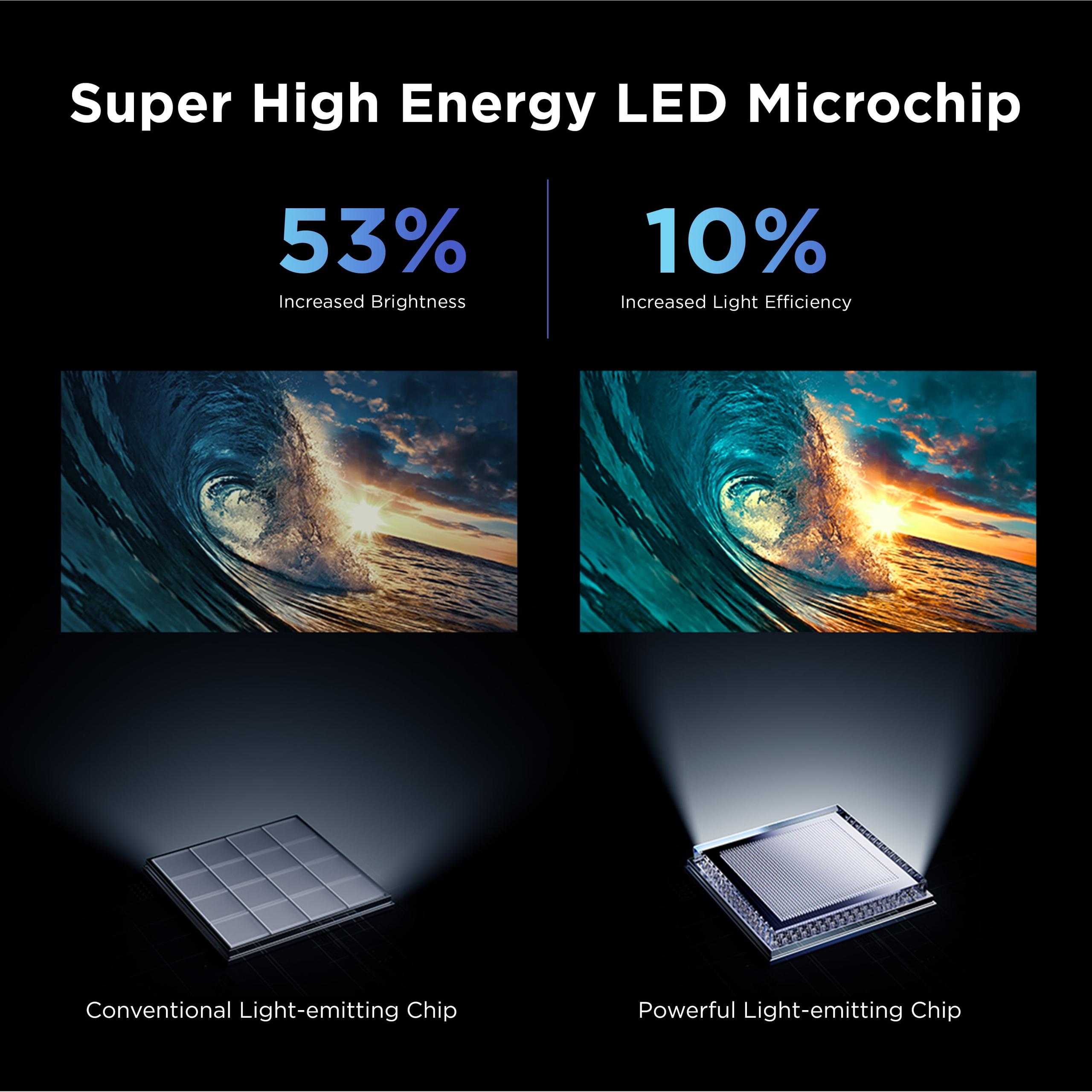
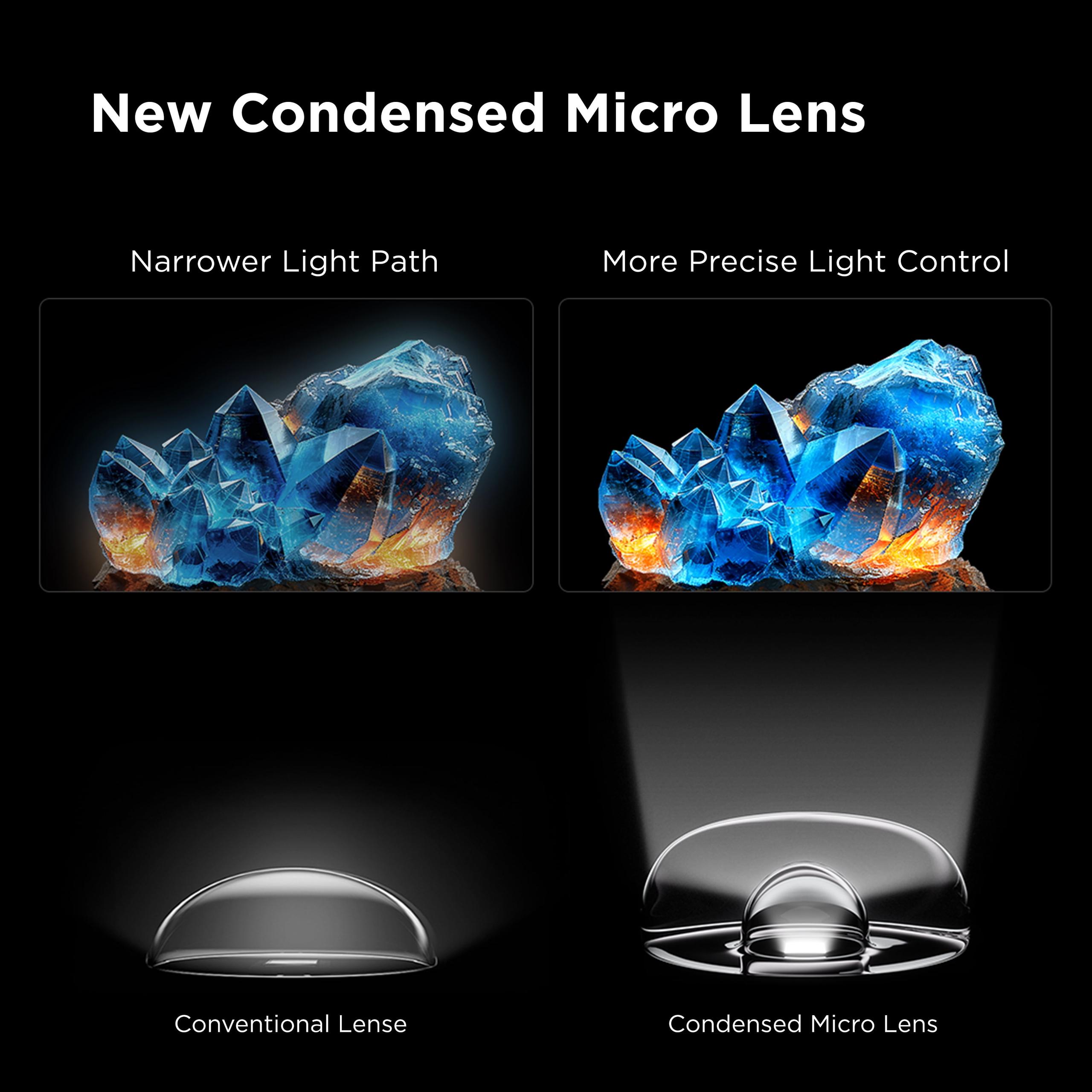
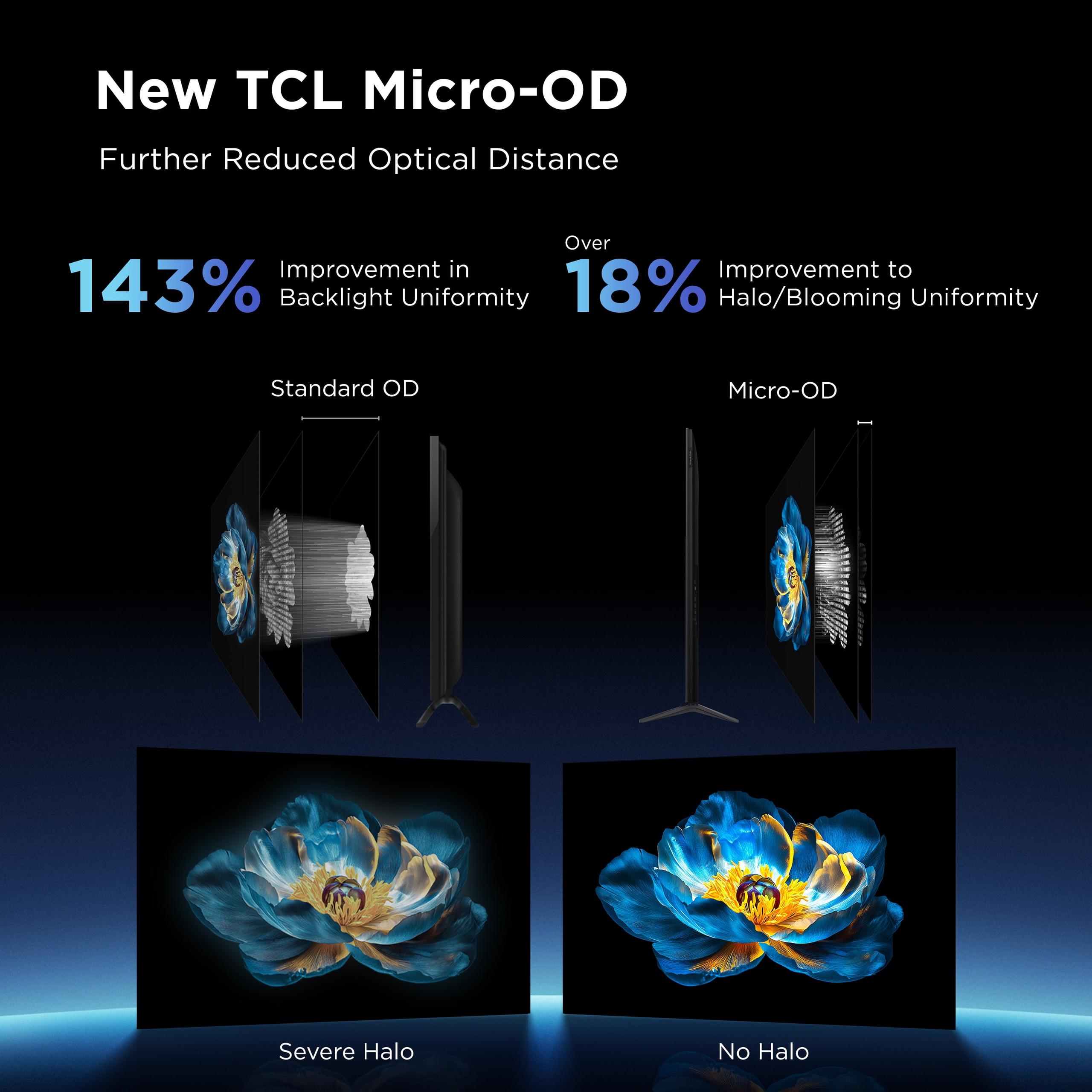
The headline feature is QD-Mini LED technology with up to 500 local dimming zones. Understanding this technology is crucial for grasping why the QM6K delivers such superior picture quality. Traditional LED TVs use relatively large LED lights across the back of the screen, making it difficult to control brightness in specific areas. Mini LED uses thousands of much smaller LEDs, allowing precise control over individual screen regions.
Local dimming zones are groups of these LEDs that can be independently controlled. When a movie scene shows bright stars against a dark night sky, the QM6K can keep the star areas bright while making the surrounding zones nearly black. The NXTVISION, with its edge lighting, must compromise – the entire screen receives similar backlighting, making dark areas appear grayish.
The 500 zones in the QM6K represent impressive precision for this price point. Higher-end models might have 1,000+ zones, but 500 provides dramatic improvements over edge-lit displays. In practical terms, you'll see deeper blacks, brighter highlights, and more realistic contrast that makes HDR content appear genuinely impactful rather than flat.
HDR (High Dynamic Range) deserves explanation since it's become crucial for modern content. HDR expands the range between the darkest and brightest parts of an image, creating more lifelike visuals. However, displaying HDR properly requires both high peak brightness and deep blacks – exactly what Mini LED excels at and edge lighting struggles with.
The QM6K's native 144Hz panel represents another performance advantage. Most content runs at 24fps (movies) or 60fps (most TV), but higher refresh rates become important for gaming and sports. The faster panel refresh reduces motion blur and enables Variable Refresh Rate (VRR) technology that synchronizes the display with gaming consoles for smoother gameplay.
Game Accelerator 288 might sound like marketing speak, but it represents real gaming performance improvements. This technology can handle refresh rates up to 288Hz when connected to compatible gaming systems, virtually eliminating the stuttering and tearing that can occur during fast-paced gaming sessions.
Based on our research into expert reviews and user feedback, the picture quality difference between these displays is substantial – perhaps more than many shoppers expect.
The QM6K's Mini LED advantage becomes immediately apparent in darker content. Movies with night scenes, space sequences, or dramatic lighting show the true potential of local dimming. Where the NXTVISION might display a gray-ish approximation of black, the QM6K can achieve near-perfect darkness in those same areas while keeping bright elements properly illuminated.
HDR performance represents perhaps the biggest gap. HDR content on the NXTVISION appears somewhat flat and lacks the dramatic impact that makes HDR worthwhile. The QM6K's Mini LED backlight can produce the bright highlights and deep shadows that HDR demands, making properly mastered content genuinely stunning.
Color accuracy is more complex. Both displays use QLED technology, so color volume and saturation are similarly impressive. However, the QM6K's superior backlight control means colors remain consistent across different brightness levels, while the NXTVISION might show slight variations in darker or brighter scenes.
The matte coating on the NXTVISION does provide unique advantages in bright environments. Standard glossy screens, including the QM6K, can become unwatchable with direct sunlight or bright room lighting. The matte treatment virtually eliminates this issue, maintaining good visibility even in challenging lighting conditions. However, this comes with a slight softening effect that reduces perceived sharpness compared to glossy displays.
Modern gaming demands have pushed TV manufacturers to implement features that were once exclusive to computer monitors. Both displays handle gaming well, but with different strengths.
The QM6K's native 144Hz panel provides smoother motion handling and enables higher refresh rate gaming. PlayStation 5 and Xbox Series X can output 120Hz in supported games, and the faster panel ensures these frames display properly without stuttering. The Game Accelerator 288 feature handles even higher refresh rates from gaming PCs.
Input lag – the delay between controller input and screen response – remains low on both displays when gaming mode is enabled. Neither will disappoint casual or serious gamers in this regard.
VRR (Variable Refresh Rate) technology synchronizes the display refresh with the gaming system's output, eliminating the screen tearing that can occur when frame rates fluctuate. Both displays support this, though the QM6K handles higher maximum refresh rates.
The Mini LED advantage becomes apparent in gaming content with high contrast scenes – exploring dark dungeons with bright magical effects, or racing games transitioning between tunnels and bright outdoor sections. The QM6K maintains detail in both dark and bright areas simultaneously, while the NXTVISION might lose shadow detail or have bright areas appear less impactful.
TV audio rarely receives the attention it deserves, but the differences here are meaningful. The QM6K includes a 40-watt system with a dedicated subwoofer, compared to the NXTVISION's 20-watt setup. This translates to noticeably better bass response and overall volume capability.
The dedicated subwoofer in the QM6K provides the low-frequency foundation that makes movie explosions feel impactful and music sound fuller. The NXTVISION's slimmer design simply cannot accommodate the larger drivers needed for comparable bass performance.
Both support Dolby Atmos – a surround sound format that creates three-dimensional audio effects – but the QM6K's superior drivers make these effects more noticeable. For viewers who don't plan to add external sound systems, this audio difference could significantly impact daily enjoyment.
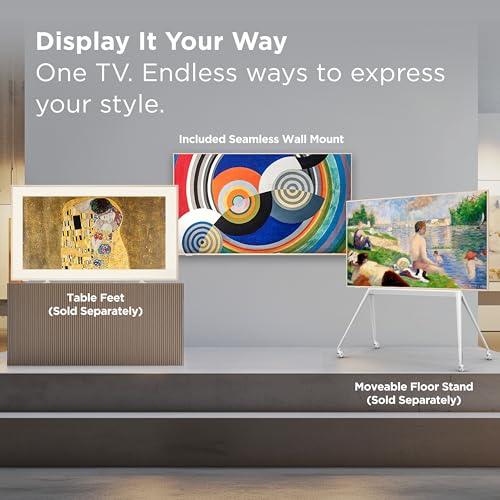
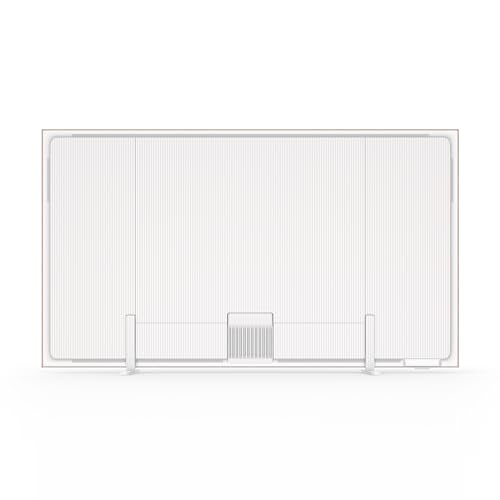
The installation experience differs dramatically between these approaches. The NXTVISION requires TCL's proprietary flush mounting system, which creates that seamless wall integration but limits your mounting options. You cannot use standard VESA mounts, and the table stand must be purchased separately if wall mounting isn't suitable.
However, when properly installed, the aesthetic impact is remarkable. The 1.1-inch total depth means the display appears to float on your wall, and the magnetic frame system allows easy customization to match seasonal décor or room changes. The art mode transforms a blank wall into a focal point that enhances rather than dominates the space.
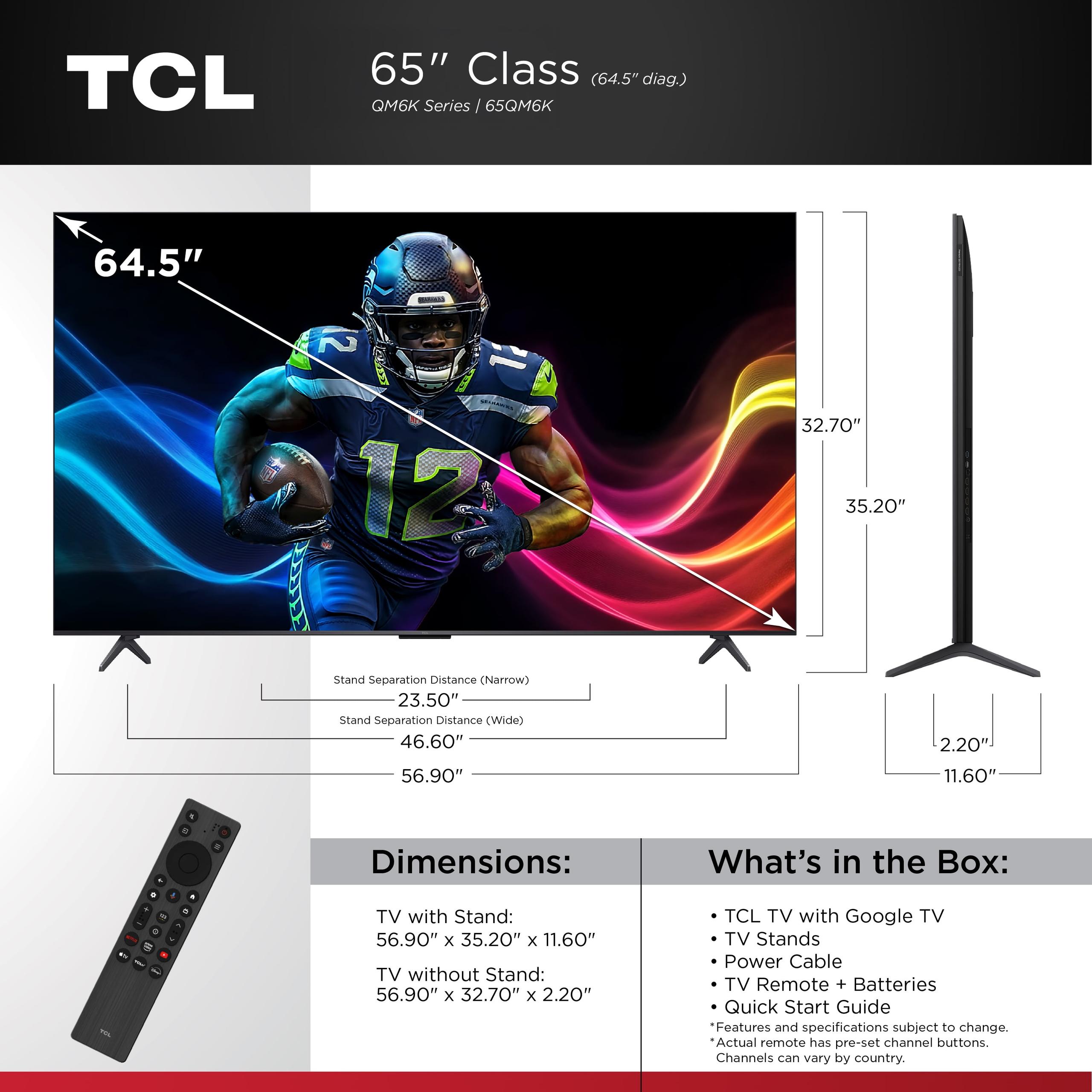
The QM6K follows traditional TV installation patterns. Standard VESA mounting means compatibility with any mount system, and the included table stand works immediately out of the box. The 2.2-inch depth is typical for modern TVs and won't create any unusual installation challenges.
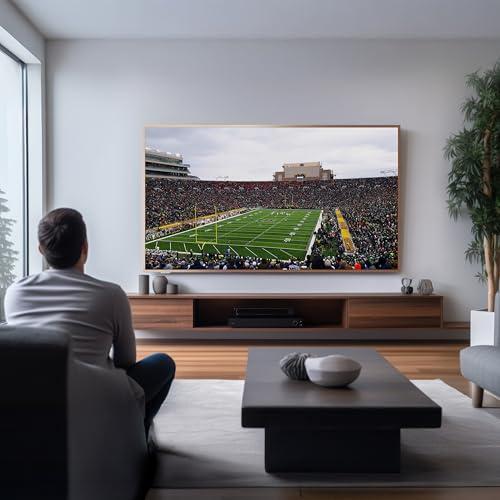
For rooms where the TV remains visible when off, the NXTVISION provides obvious advantages. In dedicated media rooms or spaces where the TV can be hidden when not in use, the QM6K's superior performance becomes more valuable than aesthetic integration.
At the time of writing, the QM6K represents exceptional value in the Mini LED category. Displays with similar local dimming capabilities typically command significantly higher prices, making this an attractive entry point into advanced display technology. The NXTVISION carries a premium for its design elements and art functionality rather than display technology advances.
The value equation depends entirely on your priorities. If you'll primarily use the TV for movie watching, gaming, and general entertainment, the QM6K's superior picture quality provides better performance per dollar. If room aesthetics and bright-room viewing are paramount, the NXTVISION's unique capabilities justify its different pricing structure.
Consider the long-term implications too. Display technology continues advancing rapidly, and the QM6K's Mini LED system represents current state-of-the-art that should remain competitive for years. The NXTVISION's design-focused approach means its value lies more in aesthetic integration than cutting-edge display technology.
The decision ultimately comes down to understanding your primary use cases and room environment.
Choose the NXTVISION if your TV will be mounted in a bright living space where it remains visible when off, and aesthetic integration matters more than absolute picture quality. The matte screen excels in challenging lighting conditions, and the art functionality provides genuine ambient value. This makes sense for main living areas where the TV serves as both entertainment device and room element.
Choose the QM6K if picture quality, gaming performance, or home theater applications are priorities. The Mini LED technology delivers dramatic improvements in contrast, HDR performance, and overall visual impact that justify choosing function over form. This approach works best when the TV primarily serves as an entertainment device rather than decorative element.
For dedicated home theater spaces, the QM6K becomes the clear recommendation. The superior contrast control and brightness capabilities unlock the full potential of HDR content and create the cinematic experience that makes home theaters worthwhile. The NXTVISION's edge-lighting limitations would constrain the immersive experience these spaces are designed to provide.
The NXTVISION serves a specific but valuable niche – spaces where traditional TV aesthetics clash with design goals, but where you still want capable performance for regular viewing. The QM6K delivers superior performance for anyone prioritizing what they see when the TV is on rather than how it looks when off.
Both represent competent choices within their intended categories. The key is honestly assessing which category better matches your needs and space, then choosing the display that excels in that area rather than compromising between different priorities.
| TCL 65" NXTVISION QLED 4K Art Frame TV | TCL 65" QM6K QD-Mini LED 4K TV |
|---|---|
| Display Technology - Determines contrast, black levels, and HDR performance | |
| Edge-lit QLED (no local dimming zones) | QD-Mini LED with up to 500 local dimming zones |
| Screen Coating - Critical for bright room viewing and reflections | |
| Ultra-matte anti-glare (canvas-like texture, eliminates reflections) | Standard glossy (maximum clarity but reflects light) |
| Design & Depth - Impacts room integration and mounting options | |
| Ultra-slim 1.1" depth, flush wall mount, magnetic frames | Traditional 2.2" depth, standard VESA mounting |
| Art & Lifestyle Features - For users wanting décor integration | |
| 400+ curated artworks, AI art generation, personal gallery mode | None (traditional TV functionality only) |
| Panel Refresh Rate - Affects gaming and motion smoothness | |
| 120Hz native (supports 144Hz VRR) | 144Hz native (supports up to 288Hz VRR) |
| Gaming Performance - Important for console and PC gaming | |
| Game Accelerator 240, HDMI 2.1, Auto Low Latency Mode | Game Accelerator 288, HDMI 2.1, AMD FreeSync Premium Pro |
| Audio System - Determines if external speakers are needed | |
| 20W (2 x 10W speakers) | 40W (2 x 10W + 20W subwoofer) |
| HDR Peak Brightness - Essential for proper HDR content display | |
| Limited by edge-lighting (modest peak brightness) | Higher peak brightness from Mini LED backlighting |
| Installation Flexibility - Affects setup options and compatibility | |
| Proprietary flush mount only, table stand sold separately | Standard VESA 300x300, table stand included |
| Weight - Impacts wall mounting requirements | |
| 49.6 lbs without stand | 37.4 lbs without stand |
| Best Use Case - Who should choose each model | |
| Bright living rooms prioritizing aesthetics and art display | Home theaters and gaming setups prioritizing picture quality |
The TCL NXTVISION is designed as an art TV that doubles as wall décor when not in use, featuring an ultra-thin 1.1" profile and matte anti-glare screen. The TCL QM6K is a performance TV focused on picture quality, using Mini LED technology with 500 local dimming zones for superior contrast and HDR performance.
The TCL NXTVISION excels in bright rooms thanks to its ultra-matte anti-glare screen that virtually eliminates reflections, even with direct sunlight. The QM6K has a standard glossy screen that may show reflections in bright lighting conditions.
Only the TCL NXTVISION offers dedicated art functionality with a curated library of 400+ artworks, AI art generation, and personal photo gallery modes. The QM6K is a traditional TV without art display features.
The TCL NXTVISION is extremely thin at 1.1" depth and includes a proprietary flush wall mount for seamless integration. The QM6K is 2.2" deep and uses standard VESA mounting, making it thicker but more flexible for installation options.
The TCL QM6K has superior audio with 40W output including a dedicated subwoofer, compared to the NXTVISION's 20W system. The enhanced bass response and higher power make the QM6K better for users not planning to add external speakers.
Choose the TCL NXTVISION if your living room is bright, aesthetics are important, and you want the TV to function as wall art when off. Choose the TCL QM6K if picture quality is your priority and you want the best possible viewing experience for movies, gaming, and streaming content.
We've done our best to create useful and informative comparisons to help you decide what product to buy. Our research uses advanced automated methods to create this comparison and perfection is not possible - please contact us for corrections or questions. These are the sites we've researched in the creation of this article: rtings.com - tcl.com - bestbuy.com - tcl.com - bestbuy.com - tcl.com - youtube.com - rcwilley.com - businessinsider.com - bestbuy.com - target.com - youtube.com - support.tcl.com - nfm.com - woodruffappliance.com - flatpanelshd.com - tcl.com - youtube.com - tomsguide.com - youtube.com - tcl.com - tomsguide.com - youtube.com - youtube.com - hometechnologyreview.com - rtings.com - bestbuy.com - tcl.com - youtube.com - youtube.com - bestbuy.com - youtube.com - youtube.com - youtube.com - tcl.com - youtube.com - walmart.com - tcl.com - displayspecifications.com - kitele.com - displayspecifications.com - flatpanelshd.com - woodruffappliance.com - displayspecifications.com - prnewswire.com - tcl.com - youtube.com - abt.com - youtube.com - tclkenya.co.ke - budgethomefurn.com

Privacy Policy
Terms and Conditions - Affiliate Policy
Home Security
© Copyright 2008-2026.
11816 Inwood Rd #1211, Dallas, TX 75244