

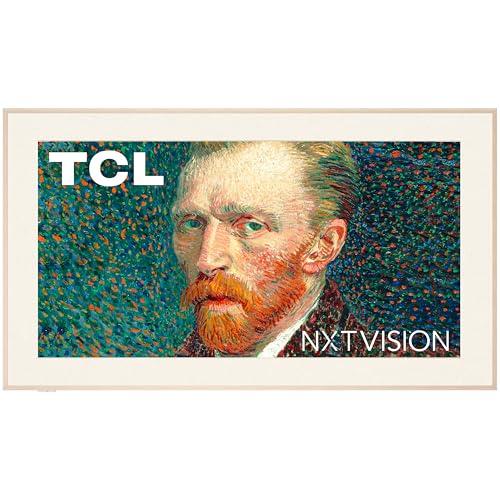

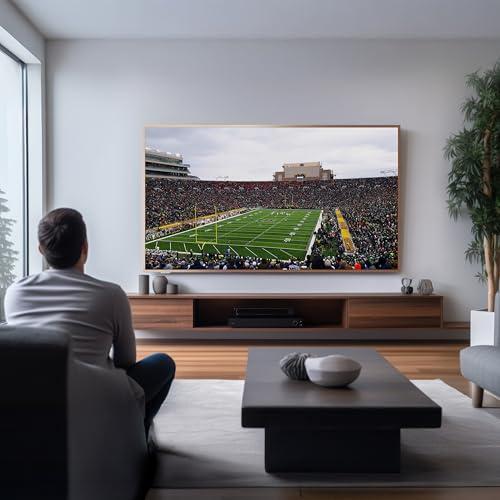


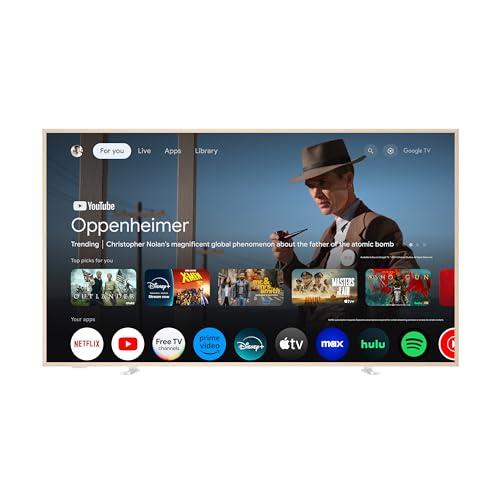
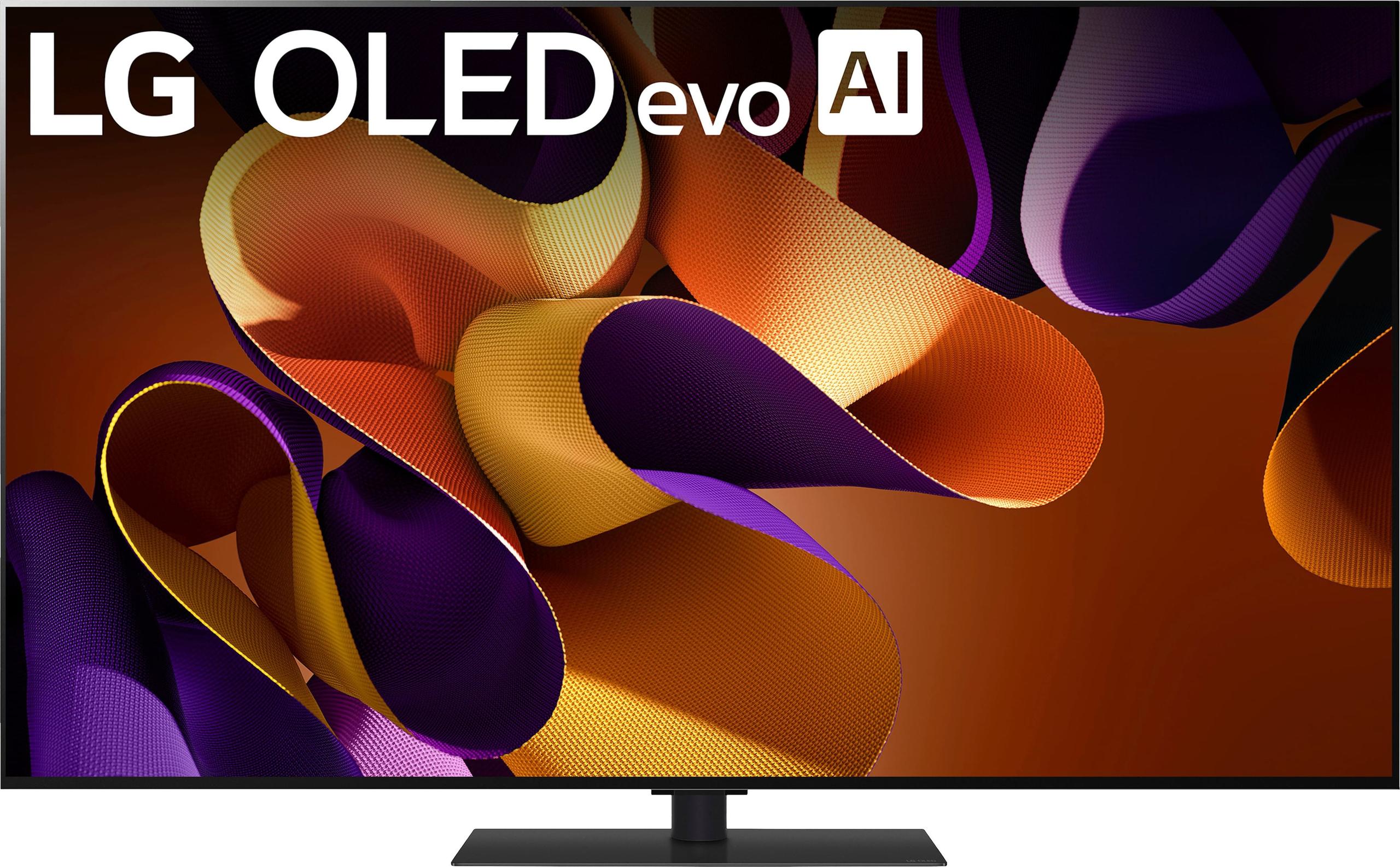
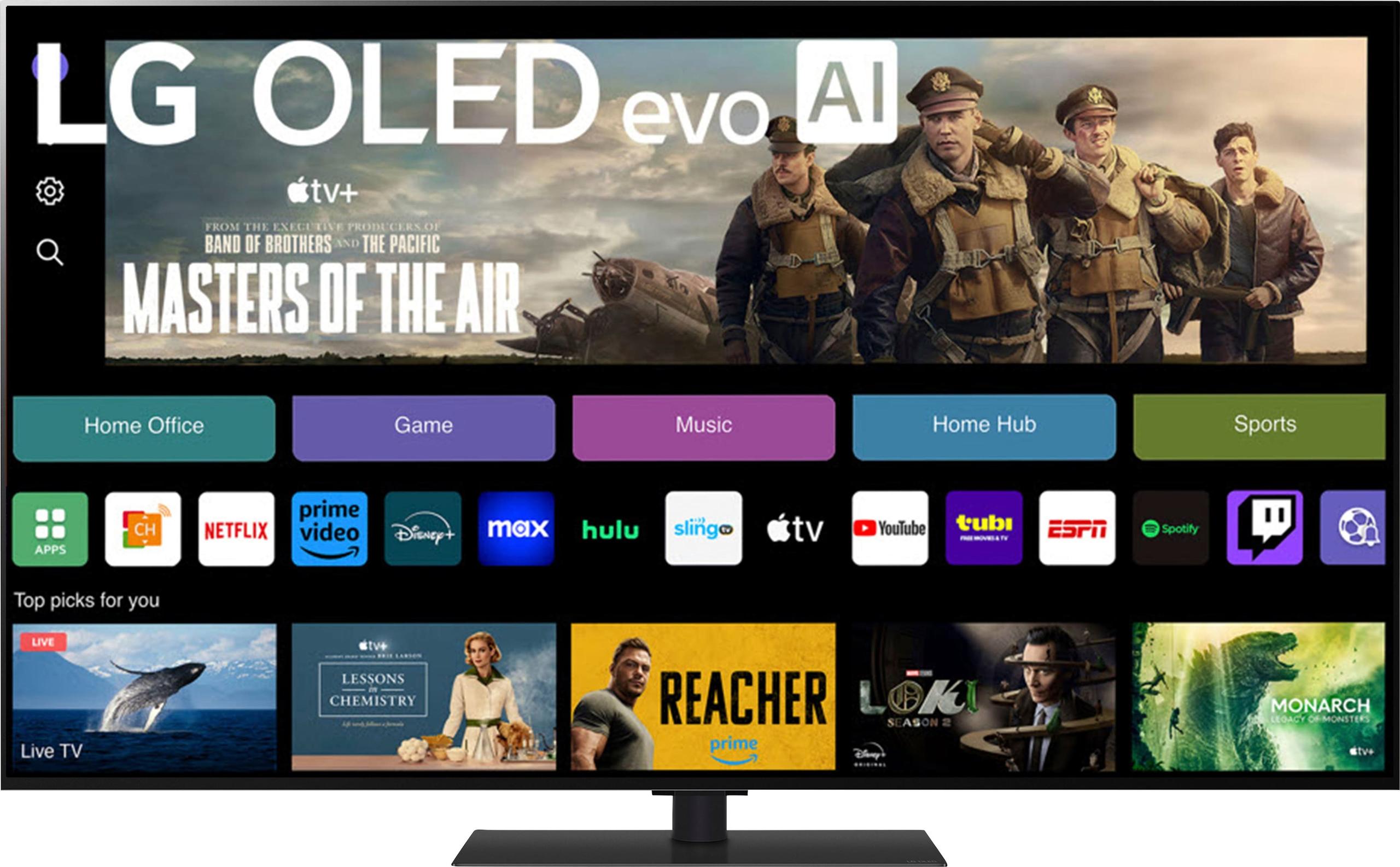
When shopping for a 65-inch TV in 2024, you'll encounter two completely different philosophies: TVs designed to disappear into your living space as art, and TVs engineered to deliver the ultimate viewing experience. The TCL NXTVISION QLED 4K Art Frame TV and LG G4 Series OLED evo represent these opposing approaches perfectly. While both launched in 2024 and share the same screen size, they couldn't be more different in their priorities and execution.
The TV landscape has evolved dramatically over the past few years. Art frame TVs like the TCL NXTVISION emerged as lifestyle products, capitalizing on our desire for technology that enhances rather than dominates our living spaces. Meanwhile, premium OLED displays like the LG G4 have pushed picture quality boundaries with technologies that would have seemed impossible just a decade ago.
Before diving into specifics, it's important to understand what you're actually choosing between. The TCL NXTVISION belongs to the "lifestyle TV" category – displays designed primarily to blend into your home décor when not actively being watched. Think of it as a digital picture frame that happens to be an excellent TV.
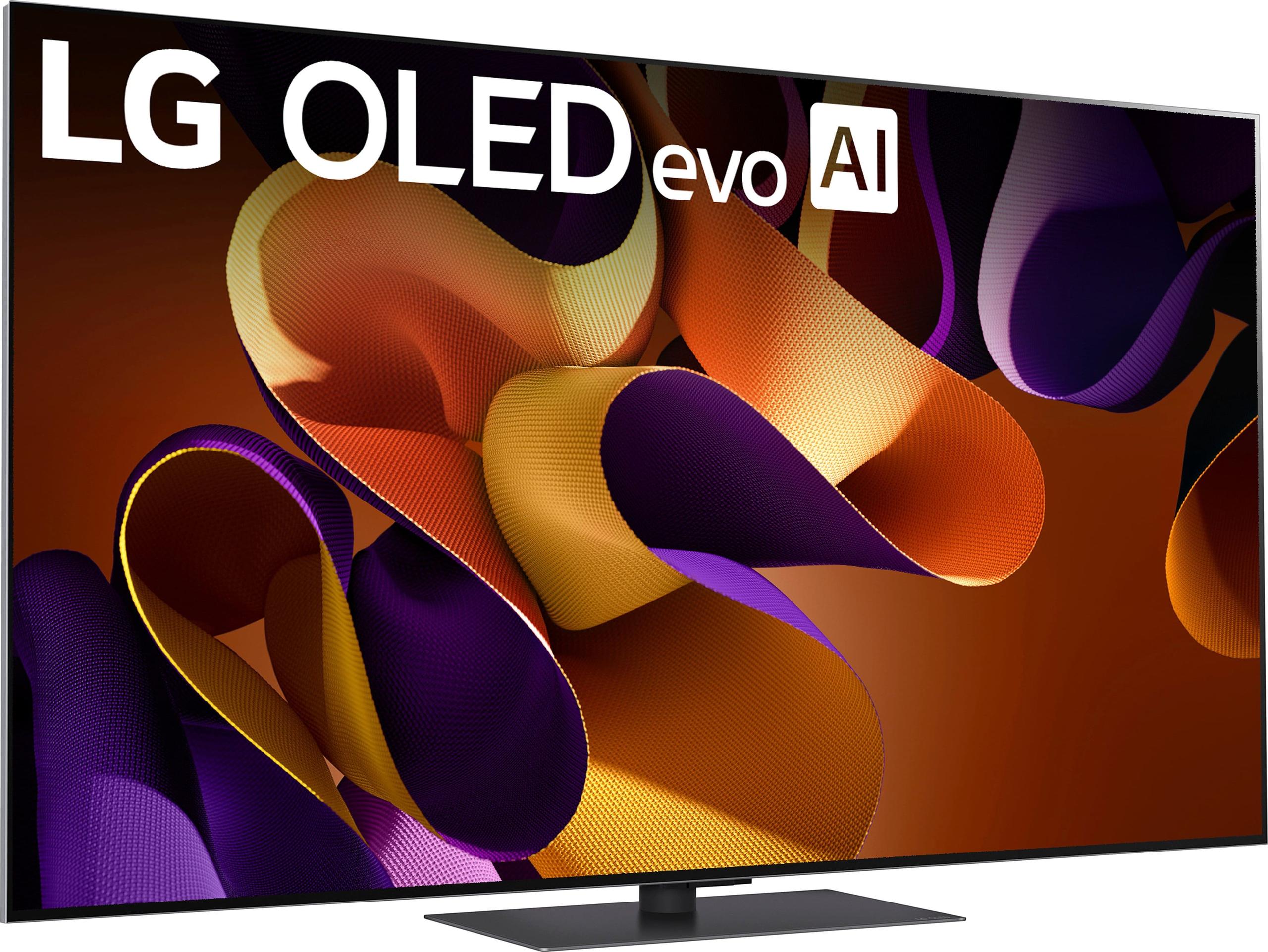
The LG G4 OLED, on the other hand, represents the pinnacle of display technology. OLED stands for Organic Light Emitting Diode, which means each pixel produces its own light instead of relying on a backlight like traditional LED TVs. This fundamental difference allows for perfect blacks – when a pixel needs to be black, it simply turns off completely.
The key consideration isn't which TV is "better" in absolute terms, but which approach better matches your priorities. Do you want your TV to function as living room art when you're not watching Netflix? Or are you primarily focused on getting the most cinematic experience possible when you do sit down to watch?
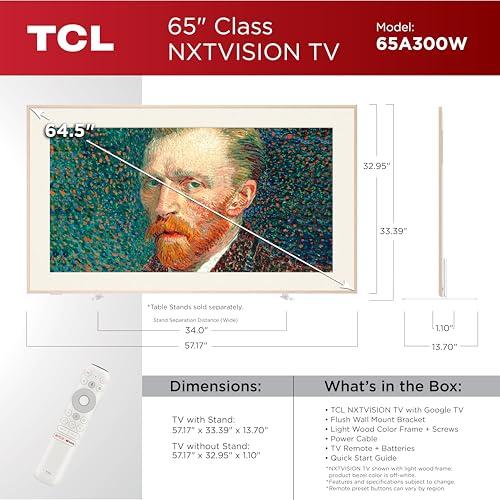
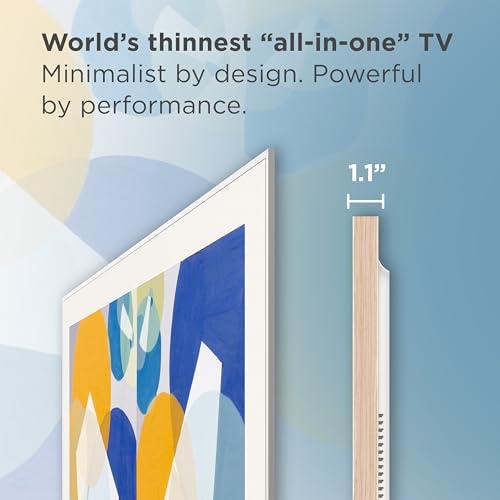
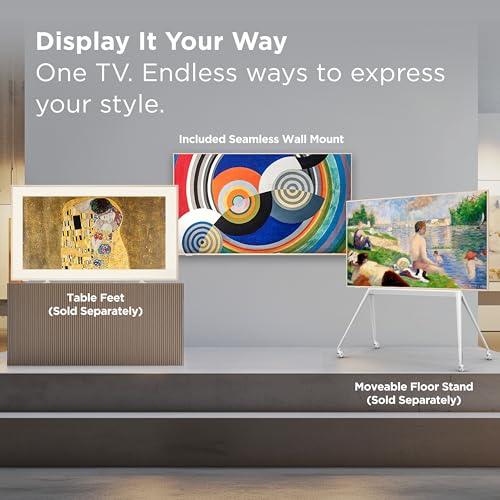
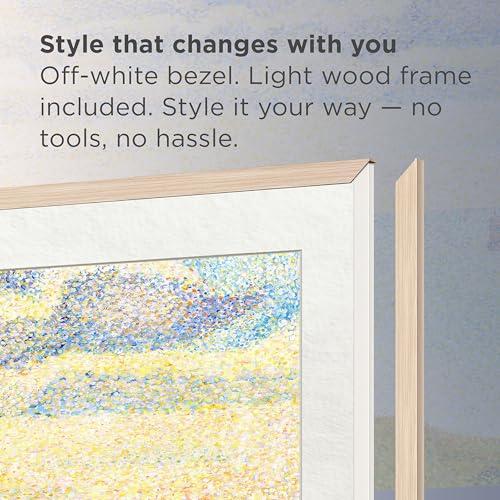
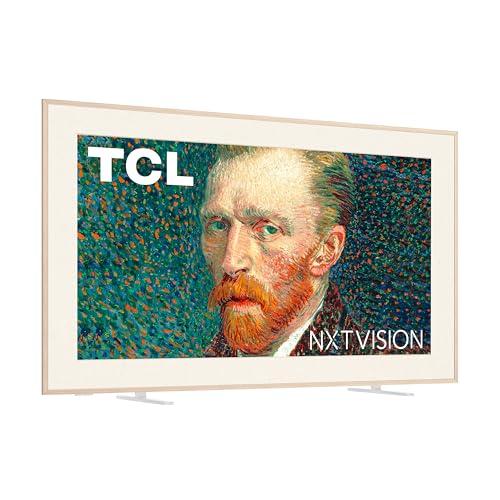
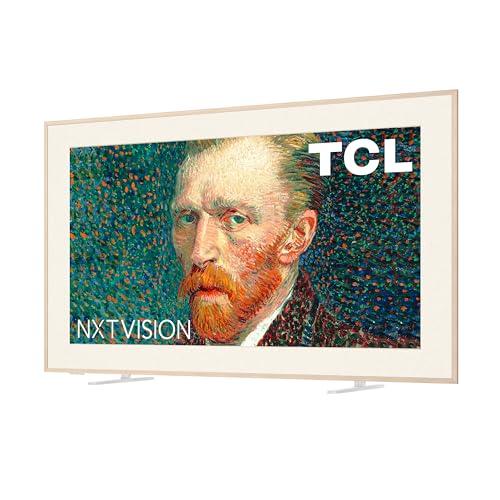
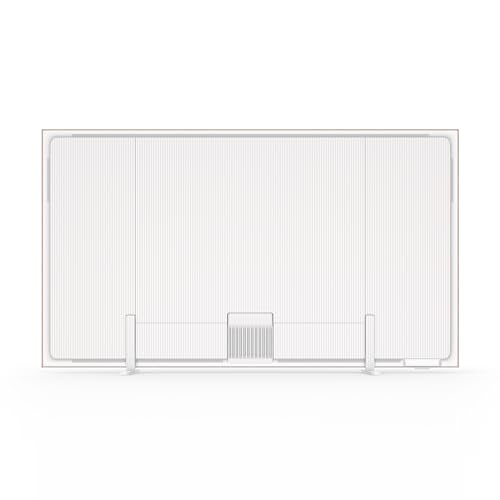
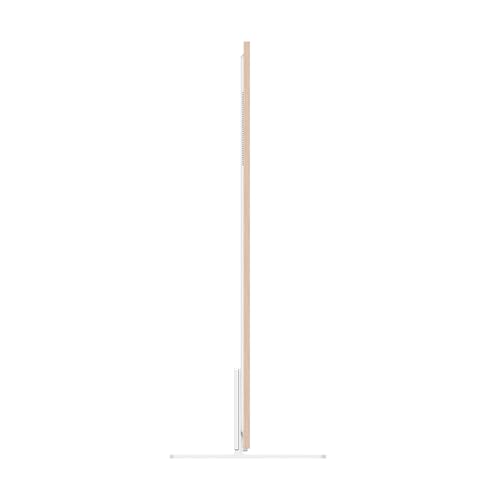
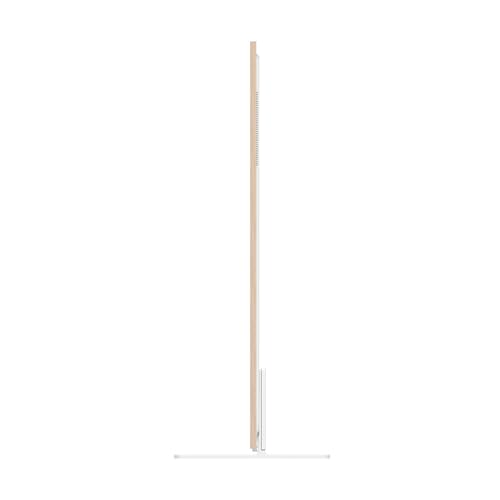
The TCL NXTVISION takes the art frame concept seriously. At just 1.1 inches deep, it's one of the thinnest all-in-one TVs available, designed to mount flush against your wall like a framed painting. The included flush wall mount and magnetic wood frame aren't afterthoughts – they're central to the entire product philosophy.
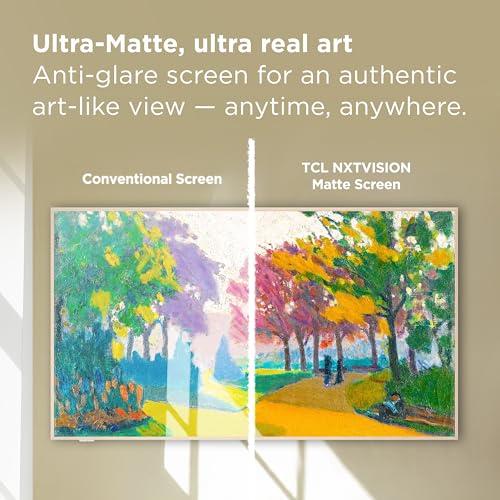
What sets the TCL NXTVISION apart is its ultra-matte anti-glare screen. This isn't your typical anti-glare coating that slightly reduces reflections. This is a highly engineered matte surface that essentially eliminates reflections, making the screen look like an actual canvas when displaying artwork. The trade-off is that this matte coating slightly softens the image sharpness compared to glossy screens, but for its intended use as a dual-purpose art display, this is actually beneficial.
The art functionality goes beyond just displaying your personal photos. The TCL NXTVISION includes a curated library of over 400 artworks and an AI art generation feature that can create over 100,000 unique images. When guests visit, they might not even realize they're looking at a TV until you pick up the remote.
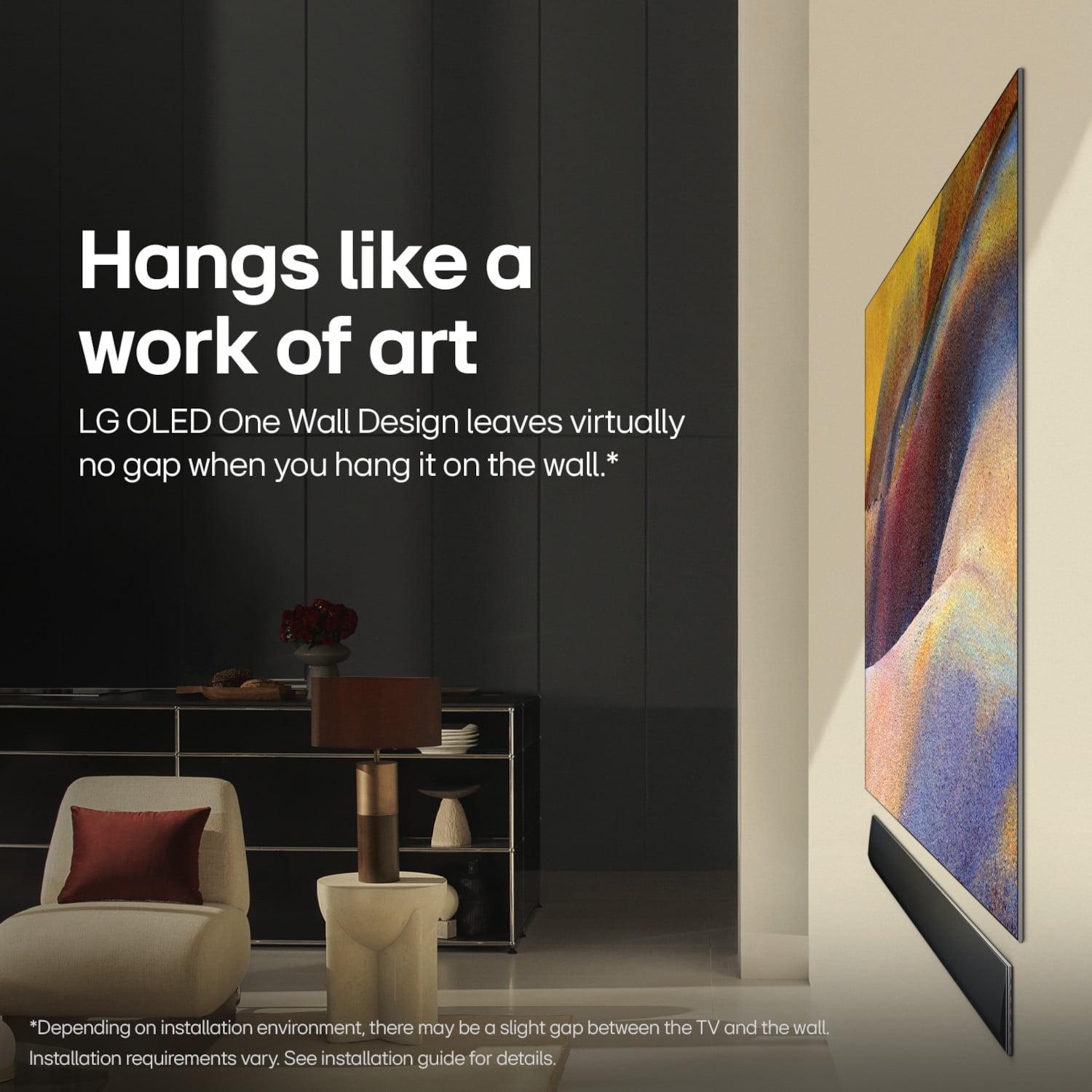
The LG G4 takes a different approach to premium design. While it can certainly mount flush to the wall and look elegant, its primary focus is delivering an uncompromising viewing experience. The slim bezels and minimalist aesthetic are designed to disappear when you're watching, putting all attention on the picture quality.
The OLED panel itself is the star here. Each of the 8.3 million pixels can turn on and off independently, creating what's called "perfect blacks." In practical terms, this means when you're watching a movie with dark scenes, black areas of the screen are truly black – not the dark gray you get with LED backlighting. This creates an almost infinite contrast ratio that makes colors appear more vibrant and creates a sense of depth that's immediately noticeable.
This is where the fundamental differences between these TVs become most apparent, and where your priorities will heavily influence which is right for you.
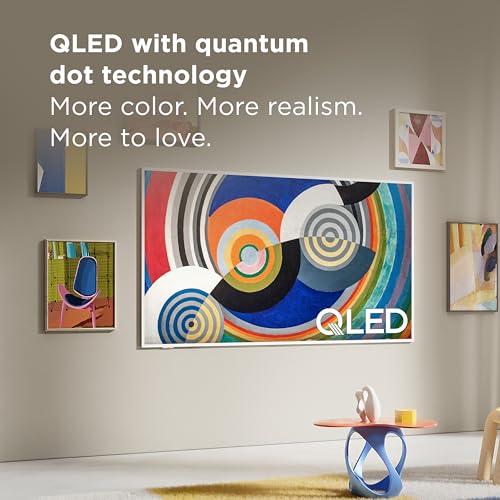
The TCL NXTVISION uses QLED (Quantum Dot LED) technology, which places a layer of quantum dots between the LED backlight and the LCD panel. These microscopic particles convert blue LED light into precise red and green wavelengths, theoretically producing more accurate and vibrant colors than standard LED TVs.
However, our research into professional reviews reveals that while colors are decent, the TCL NXTVISION struggles with color accuracy in both standard dynamic range (SDR) and high dynamic range (HDR) content. The edge-lit LED backlight – where LEDs are placed around the edges of the panel rather than behind it – limits its ability to control local brightness and darkness effectively.
The LG G4 OLED takes a completely different approach. Instead of filtering white light through layers, each pixel generates its own colored light. Combined with LG's second-generation Micro Lens Array (MLA) technology – tiny lenses that focus light more efficiently – the LG G4 achieves peak brightness levels up to 2,268 nits. That's bright enough to make HDR highlights truly pop while maintaining perfect blacks in the same scene.
In practical terms, when watching a movie like "Dune" with its mix of bright desert scenes and dark interiors, the LG G4 can display both with stunning realism. The bright sand dunes will have the intensity to make you squint slightly, while the shadows remain perfectly black without any gray wash or light bleeding.
High Dynamic Range (HDR) is where the differences between these TVs become most pronounced. HDR content contains a much wider range of brightness levels than standard content, from deep shadows to brilliant highlights that more closely match what our eyes see in real life.
The TCL NXTVISION supports all major HDR formats – Dolby Vision IQ, HDR10+, HDR10, and HLG – but supporting the formats and delivering great HDR performance are two different things. Without local dimming (the ability to dim specific areas of the backlight independently) and with limited peak brightness, HDR content on the TCL NXTVISION lacks the impact it should have. Bright scenes don't get bright enough, and dark scenes look gray rather than truly dark.
The LG G4 OLED excels at HDR precisely because of its self-lit pixel technology. When a scene calls for a bright explosion against a dark night sky, each bright pixel can reach peak brightness while the surrounding dark pixels turn completely off. This creates the dramatic contrast that makes HDR content so compelling.
Professional reviewers consistently note that HDR movies on the LG G4 deliver the "wow factor" that makes you want to re-watch your favorite films, while the same content on the TCL NXTVISION looks good but doesn't provide that same dramatic improvement over standard content.
Here's where the TCL NXTVISION fights back. Its ultra-matte screen is genuinely impressive at handling reflections. If your TV is in a bright living room with windows and lamps, the TCL NXTVISION maintains visibility where glossy screens might become mirrors. This makes it genuinely useful for daytime viewing in challenging lighting conditions.
The LG G4 OLED has improved significantly in bright rooms compared to earlier OLED generations. The increased brightness capabilities mean it's no longer limited to dark room viewing. However, in extremely bright conditions, the glossy screen can still reflect light, though less than most LED TVs.
For dedicated home theater setups with controlled lighting, the LG G4 is unquestionably superior. But for bright, multi-purpose living spaces, the TCL NXTVISION's anti-glare technology provides a real advantage.
Both TVs arrived in 2024 with gaming features that were premium territory just a few years ago, but their execution differs significantly.
The TCL NXTVISION includes what TCL calls "Game Accelerator 240," supporting Variable Refresh Rate (VRR) up to 240Hz and featuring two HDMI 2.1 ports that can handle 4K at 144Hz or 1080p at 240Hz. VRR synchronizes the TV's refresh rate with your gaming console or PC's frame rate, eliminating screen tearing and providing smoother gameplay.
However, the TCL NXTVISION is held back by slow pixel response times. In fast-moving games, this creates motion blur that can affect competitive gaming performance. It's adequate for casual gaming but won't satisfy serious gamers who notice these details.
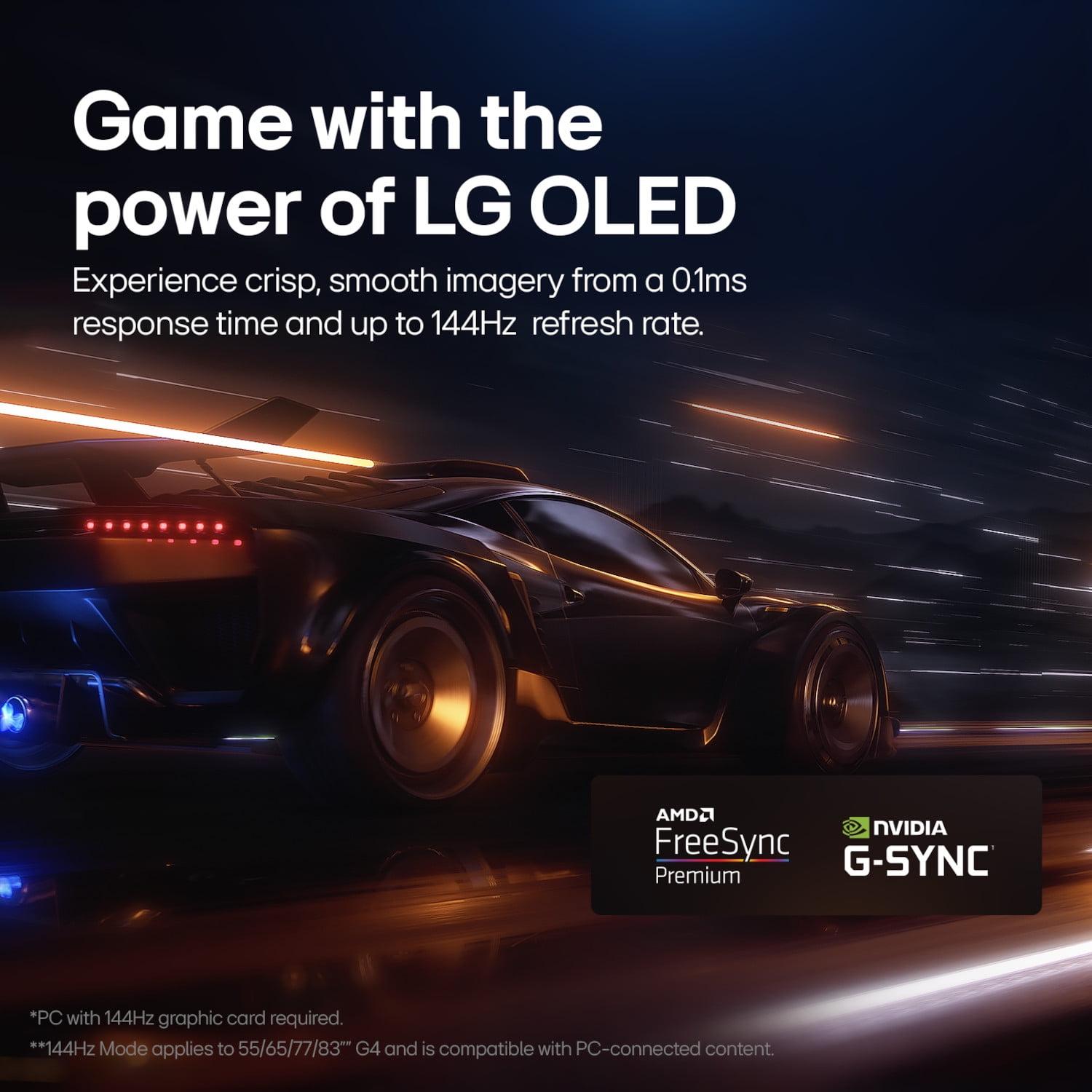
The LG G4 OLED is in a different league entirely. With four HDMI 2.1 ports, 0.1ms response time, and support for both NVIDIA G-Sync and AMD FreeSync Premium, it's designed for serious gaming. The near-instantaneous response time means motion appears crisp even in fast-paced first-person shooters or racing games.
Perhaps more importantly, the LG G4 maintains its color accuracy and contrast performance in Game Mode, while many TVs sacrifice picture quality for lower input lag. This means games look as good as movies, with vibrant colors and perfect blacks that make game worlds more immersive.
For anyone with a PlayStation 5, Xbox Series X, or high-end gaming PC, the LG G4 provides an experience that justifies its higher price point.
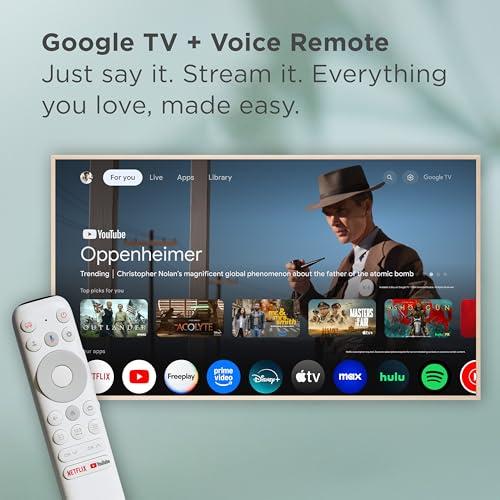
The TCL NXTVISION runs Google TV, which offers a clean interface and good app selection. The AIPQ PRO processor handles basic upscaling and image optimization adequately, though it's not particularly advanced by 2024 standards.
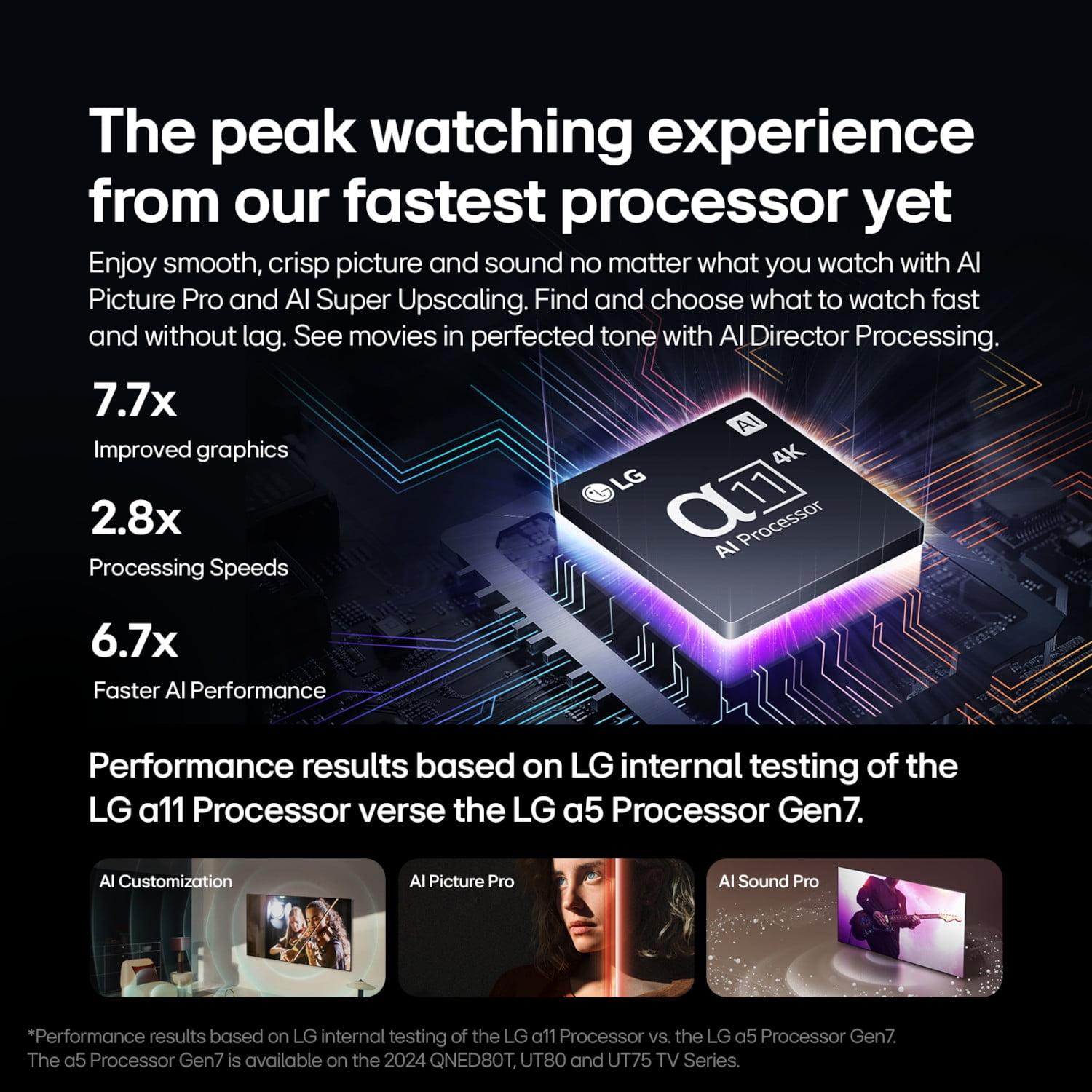
The LG G4 includes LG's α11 (Alpha 11) AI processor, which represents a significant leap in processing power – 6.7 times faster AI performance than previous generations. This translates to better upscaling of non-4K content, more sophisticated motion handling, and smarter automatic picture adjustments based on content type.
In practical terms, when watching older TV shows or streaming content that isn't perfect quality, the LG G4 does a noticeably better job of cleaning up the image and making it look sharp on the 65-inch screen.
Neither TV will replace a dedicated sound system, but there are meaningful differences. The TCL NXTVISION includes 20 watts of power (two 10-watt speakers) with Dolby Atmos support. It's adequate for casual viewing but lacks depth and power for movies or music.
The LG G4 OLED features a 4.2-channel, 60-watt system that can virtualize surround sound up to 11.1.2 channels using AI processing. While still not comparable to a dedicated soundbar or surround system, it's significantly more capable than the TCL NXTVISION and can provide a satisfying experience for many viewers.
At the time of writing, the TCL NXTVISION typically sells for significantly less than the LG G4 OLED – often $1,000 or more difference for the 65-inch models. This price gap reflects their different market positions and capabilities.
The TCL NXTVISION offers good value if its unique features align with your needs. You're getting a functional TV plus art display capabilities in an attractive package. For someone who prioritizes the aesthetic integration and bright room performance, it can be an excellent choice.
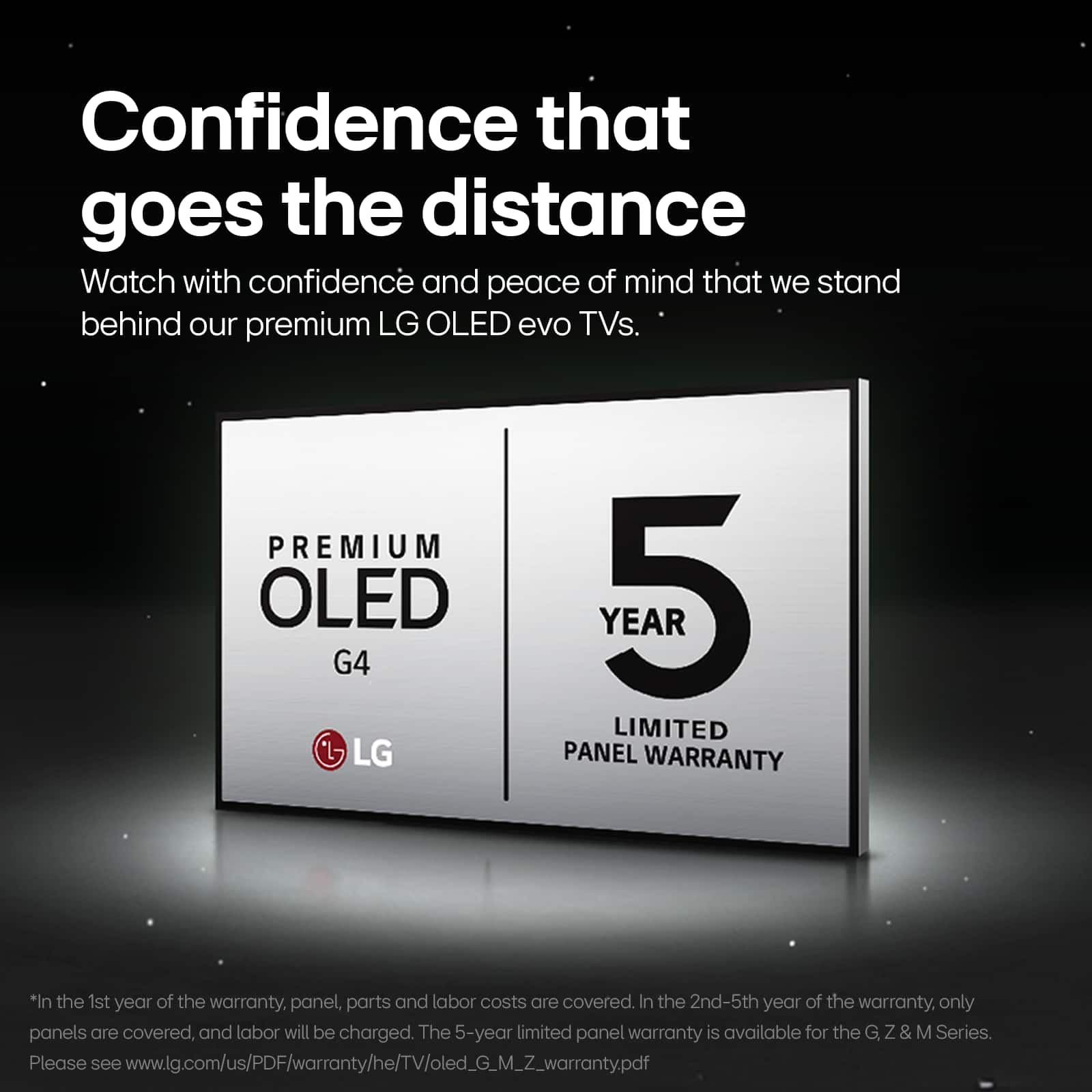
The LG G4 OLED commands a premium price but delivers premium performance across virtually every metric. When you consider the 5-year panel warranty, exceptional picture quality, and future-proof gaming features, it represents solid value for anyone prioritizing performance.
Choose the TCL NXTVISION if you want your TV to serve double duty as room décor. It's ideal for bright living spaces where anti-glare performance matters, and where the TV needs to look good even when displaying art rather than video content. It's also the better choice if budget is a primary concern and you don't need cutting-edge performance.
Choose the LG G4 OLED if picture quality is your priority. It's the clear winner for home theater enthusiasts, serious gamers, and anyone who watches a lot of HDR content. The superior contrast, color accuracy, and brightness make it worth the premium for viewers who will notice and appreciate the difference.
For most buyers focused primarily on watching movies and shows, the LG G4 OLED provides a more satisfying long-term experience despite its higher cost. But for those who genuinely want their TV to blend into their living space as art when not in use, the TCL NXTVISION offers something truly unique that the premium OLED market hasn't fully addressed.
The choice ultimately comes down to whether you're buying a TV that happens to look good on the wall, or buying a piece of functional art that happens to be an excellent TV.
| TCL 65" NXTVISION QLED 4K Art Frame TV | LG 65" G4 Series OLED evo 4K UHD Smart TV 2024 |
|---|---|
| Display Technology - Determines contrast and black levels | |
| QLED with edge-lit LED backlight (good colors, limited contrast) | OLED evo with self-lit pixels (perfect blacks, infinite contrast) |
| Peak Brightness - Critical for HDR impact and bright room viewing | |
| ~400-500 nits (adequate for SDR, limited HDR impact) | Up to 2,268 nits (excellent HDR performance, bright room capable) |
| Design Focus - What the TV prioritizes when not in use | |
| Ultra-slim 1.1" art frame design with flush mount and wood bezels | Premium slim profile optimized for viewing experience |
| Anti-Glare Performance - Matters most in bright, windowed rooms | |
| Ultra-matte anti-glare screen (excellent reflection control) | Standard glossy OLED (improved brightness helps but still reflective) |
| Gaming Performance - Important for console and PC gaming | |
| 2x HDMI 2.1, up to 144Hz, slow response time limits competitive gaming | 4x HDMI 2.1, up to 144Hz, 0.1ms response time (industry-leading) |
| HDR Support - All models support formats, but implementation varies | |
| Dolby Vision IQ, HDR10+, HDR10, HLG (poor performance due to low brightness) | Dolby Vision, HDR10+, HDR10, HLG (exceptional HDR impact) |
| Smart Platform - Affects app selection and user experience | |
| Google TV with voice control (clean interface, good app support) | webOS 24 with α11 AI processor (advanced features, superior performance) |
| Audio System - Built-in speakers rarely match external systems | |
| 20W (2x10W) with Dolby Atmos (adequate for casual viewing) | 60W 4.2-channel with AI Sound Pro (significantly better built-in audio) |
| Art Display Features - Unique selling point for lifestyle integration | |
| 400+ curated artworks, AI art generation, personal photo gallery modes | Standard screensaver/ambient modes (not designed as primary art display) |
| Motion Handling - Critical for sports and fast-paced content | |
| Motion Rate 480 with MEMC (adequate but noticeable blur in fast scenes) | Near-perfect motion with minimal blur (excellent for all content types) |
| Viewing Angles - Important for wide seating arrangements | |
| VA panel with limited viewing angles (color shifts off-center) | OLED wide viewing angles (consistent picture quality from any seat) |
| Warranty Coverage - Protection for premium display investment | |
| Standard 1-year warranty | 5-year panel warranty (exceptional coverage for OLED burn-in concerns) |
| Best Use Case - Who should choose this TV | |
| Bright living spaces where TV doubles as wall art and décor integration matters | Home theaters, serious viewing, and gaming where picture quality is priority |
The TCL NXTVISION is significantly better for bright rooms due to its ultra-matte anti-glare screen that eliminates reflections like a real canvas. While the LG G4 OLED has improved brightness compared to older OLEDs, its glossy screen can still reflect light in very bright conditions. If your TV is in a sun-filled living room, the TCL NXTVISION maintains better visibility throughout the day.
The TCL NXTVISION uses QLED technology with an LED backlight that illuminates the entire screen, while the LG G4 OLED has pixels that light themselves individually. This means the LG G4 OLED can achieve perfect blacks by turning off pixels completely, creating infinite contrast. The TCL NXTVISION cannot produce true blacks since its backlight is always on, resulting in darker grays instead.
The LG G4 OLED is superior for gaming with four HDMI 2.1 ports, 0.1ms response time, and support for all VRR technologies. While the TCL NXTVISION has gaming features like 144Hz support, its slower response time creates motion blur in fast-paced games. The LG G4 OLED also maintains excellent picture quality in Game Mode, making games look as good as movies.
Yes, but they approach this differently. The TCL NXTVISION is specifically designed as an art frame TV with over 400 curated artworks, AI art generation, and a matte screen that looks like a real canvas. The LG G4 OLED can display photos and artwork through screensaver modes, but it's not the primary focus and lacks the specialized art features of the TCL NXTVISION.
The LG G4 OLED delivers significantly better picture quality with perfect blacks, higher peak brightness (up to 2,268 nits), and superior color accuracy. HDR movies show dramatic contrast with bright highlights and true blacks. The TCL NXTVISION supports HDR formats but lacks the brightness and contrast needed for impactful HDR performance, making highlights appear dim and blacks look gray.
The LG G4 OLED has much better built-in audio with a 60W 4.2-channel system that can virtualize 11.1.2 surround sound using AI processing. The TCL NXTVISION has basic 20W speakers that are adequate for casual viewing but lack depth and power. While neither replaces a dedicated sound system, the LG G4 OLED provides a more satisfying audio experience.
The LG G4 OLED is ideal for home theaters with its perfect blacks, exceptional contrast, accurate colors, and superior HDR performance. In a controlled lighting environment, it delivers cinema-quality visuals that make movies more immersive. The TCL NXTVISION is better suited for multi-purpose living spaces where the TV needs to function as décor when not in use.
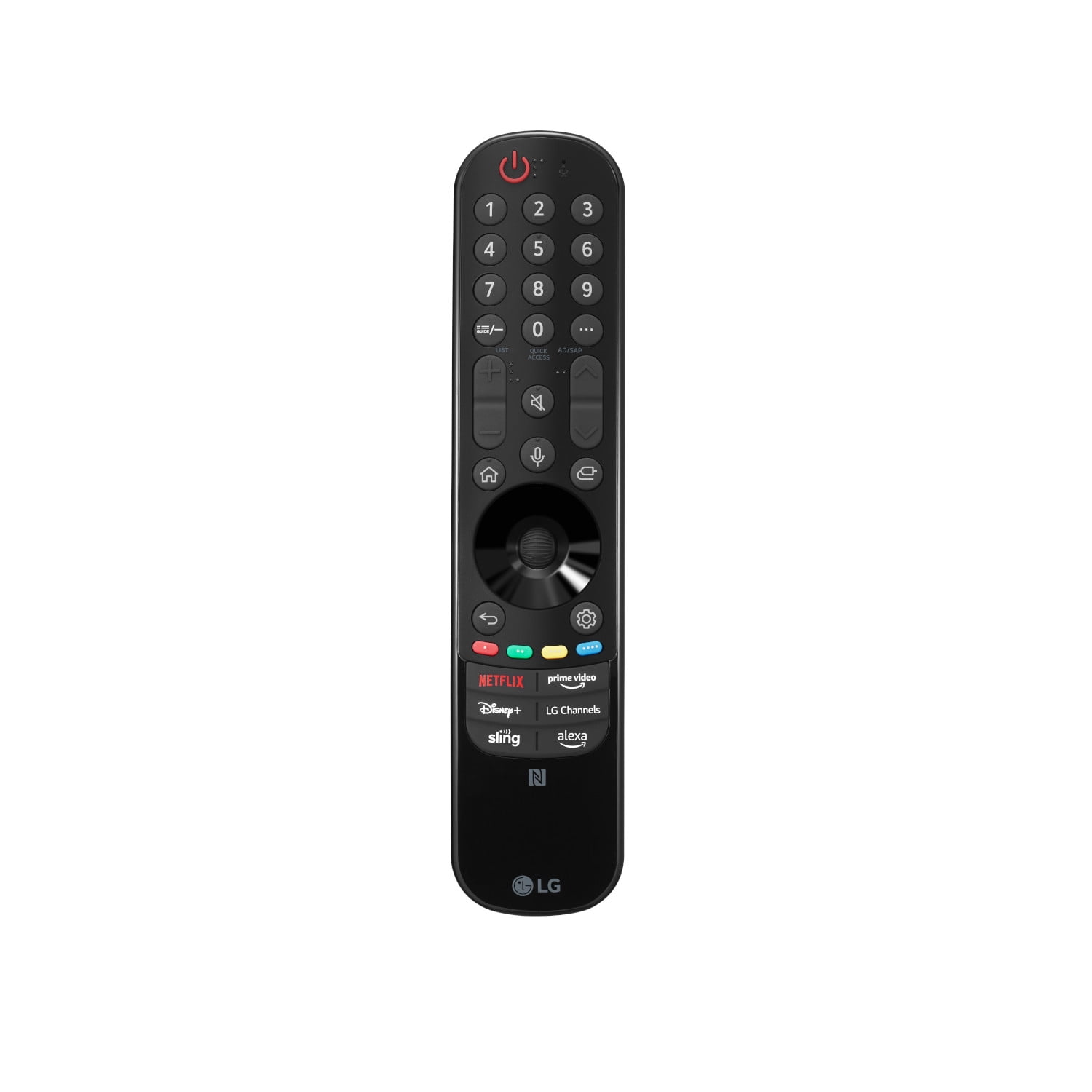
Both TVs offer comprehensive smart features, but the LG G4 OLED has more advanced capabilities with its α11 AI processor providing 6.7x faster performance, better upscaling, and webOS 24 platform. The TCL NXTVISION uses Google TV with good app selection and voice control, but lacks the processing power for advanced AI features found in the LG G4 OLED.
The TCL NXTVISION is extremely thin at just 1.1 inches and includes a flush wall mount with magnetic wood frames for a gallery-style installation. The LG G4 OLED is also slim and designed for wall mounting, but focuses on premium viewing rather than art display aesthetics. Both can achieve a clean, modern look when wall-mounted.
Value depends on your priorities. The TCL NXTVISION offers good value if you want art display functionality and bright room performance at a lower cost. The LG G4 OLED costs more but provides superior picture quality, gaming performance, and a 5-year panel warranty, making it better value for performance-focused buyers who will appreciate the quality difference.
The LG G4 OLED has excellent motion handling with minimal blur, making it ideal for sports and action content. The TCL NXTVISION has slower pixel response times that create noticeable motion blur in fast-moving scenes, though it's adequate for most casual viewing. For sports enthusiasts, the LG G4 OLED provides a much clearer, more enjoyable experience.
Choose the TCL NXTVISION if you want your TV to blend into your décor as functional art. Its ultra-slim design, included wooden frames, and art display capabilities make it ideal for design-conscious buyers. The LG G4 OLED has an elegant, minimalist design that looks premium on the wall, but it's clearly a TV rather than a decorative art piece like the TCL NXTVISION.
We've done our best to create useful and informative comparisons to help you decide what product to buy. Our research uses advanced automated methods to create this comparison and perfection is not possible - please contact us for corrections or questions. These are the sites we've researched in the creation of this article: rtings.com - tcl.com - bestbuy.com - tcl.com - bestbuy.com - tcl.com - youtube.com - rcwilley.com - businessinsider.com - bestbuy.com - target.com - youtube.com - support.tcl.com - nfm.com - woodruffappliance.com - flatpanelshd.com - tcl.com - hometechnologyreview.com - hometechnologyreview.com - whathifi.com - hometechnologyreview.com - youtube.com - tomsguide.com - tomsguide.com - smarthomesounds.co.uk - rtings.com - rtings.com - bhphotovideo.com - youtube.com - schaeferstv.com - bestbuy.com - costco.com - lg.com - lg.com - shopsilica.com - bestbuy.com - techradar.com - bestbuy.com - bestbuy.com - lg.com - lgnewsroom.com

Privacy Policy
Terms and Conditions - Affiliate Policy
Home Security
© Copyright 2008-2026.
11816 Inwood Rd #1211, Dallas, TX 75244