

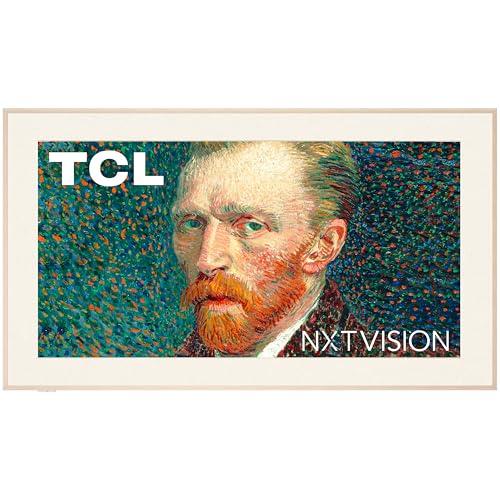



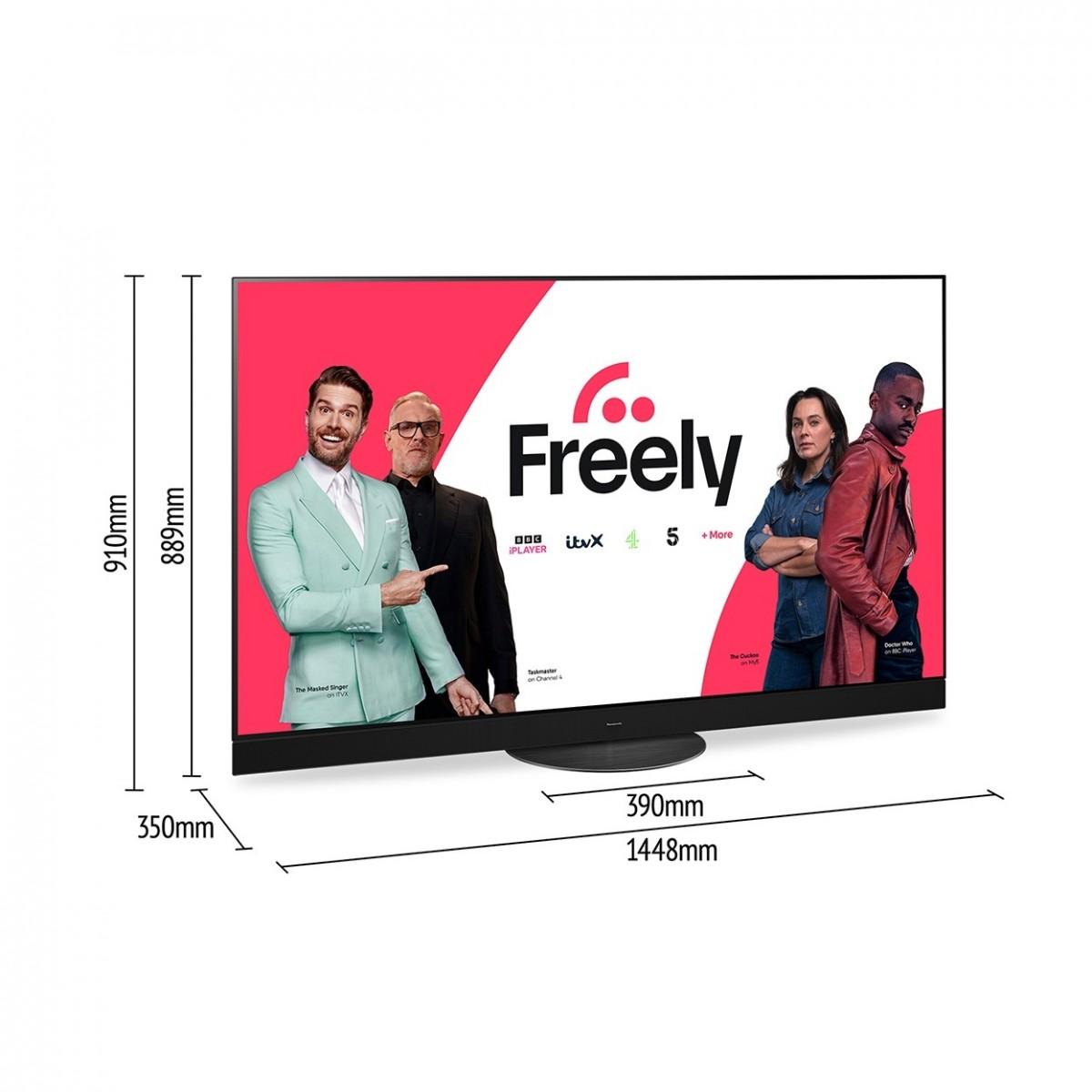
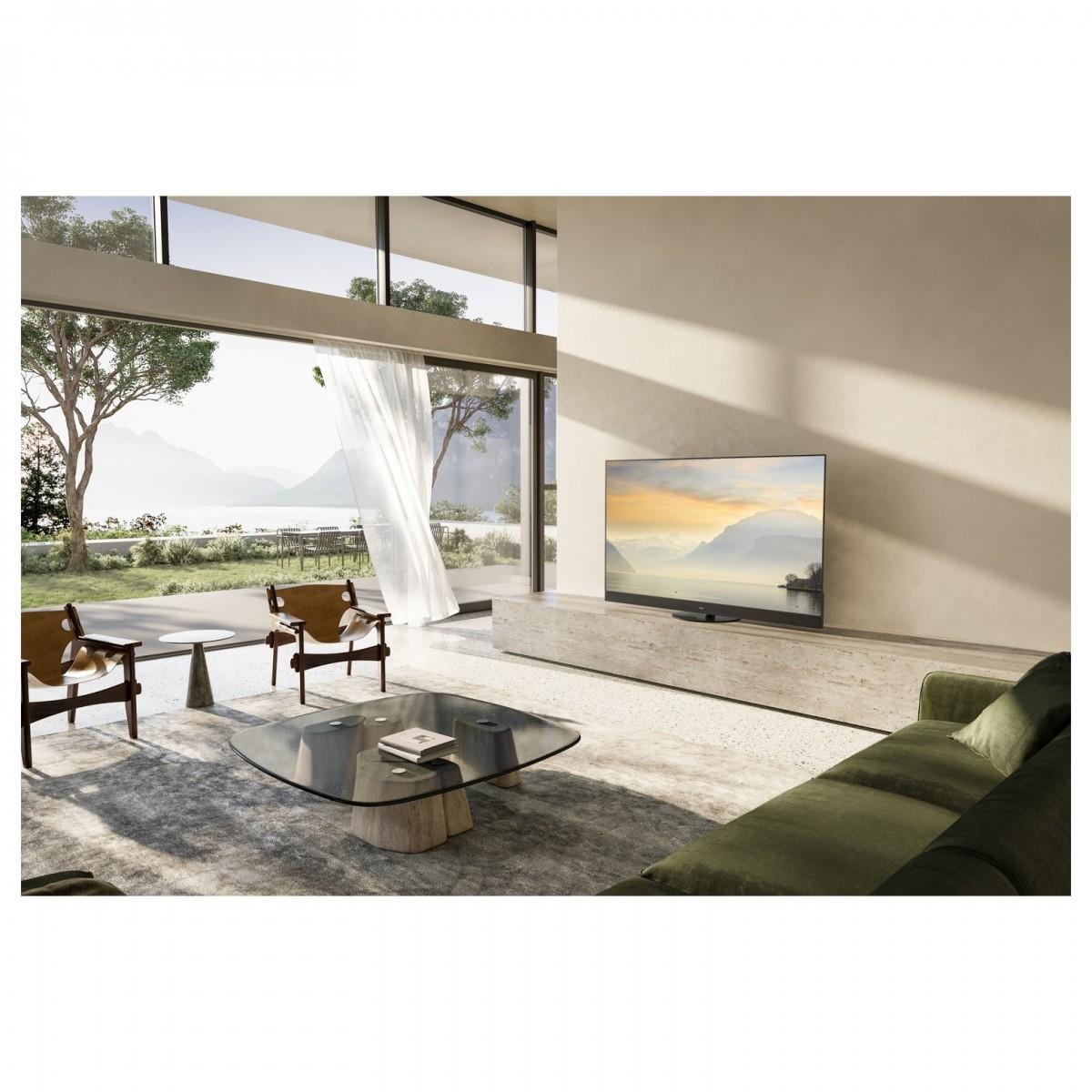
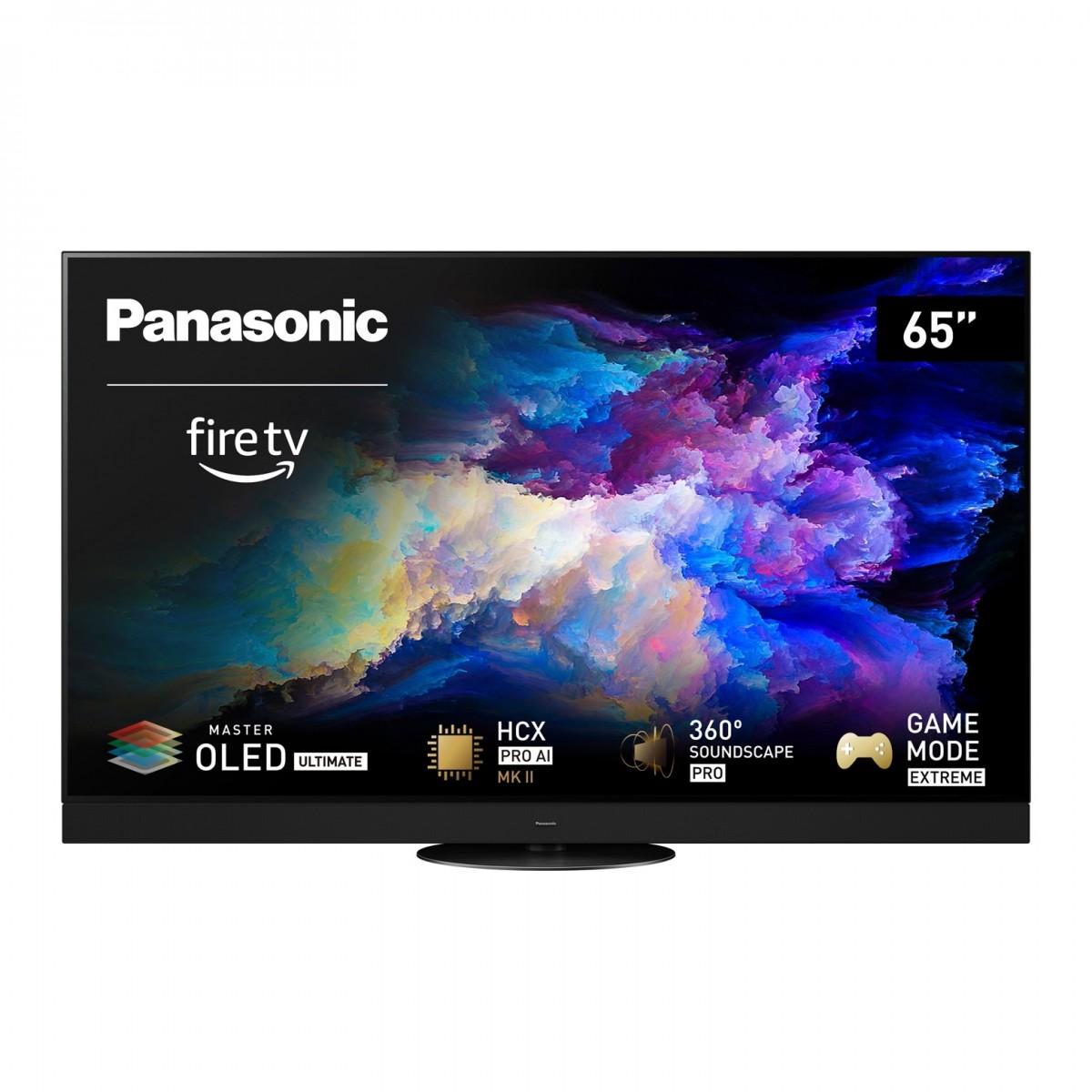
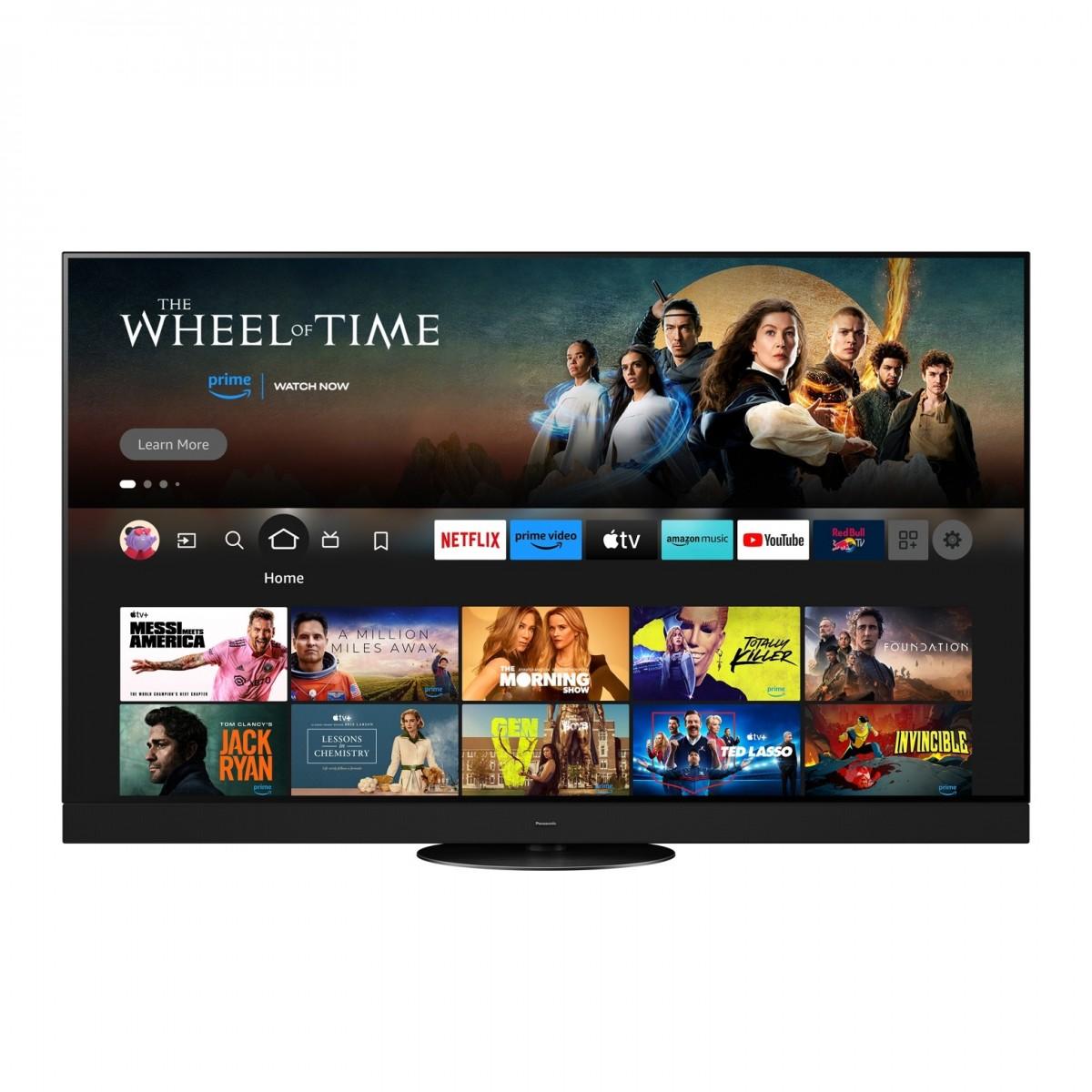
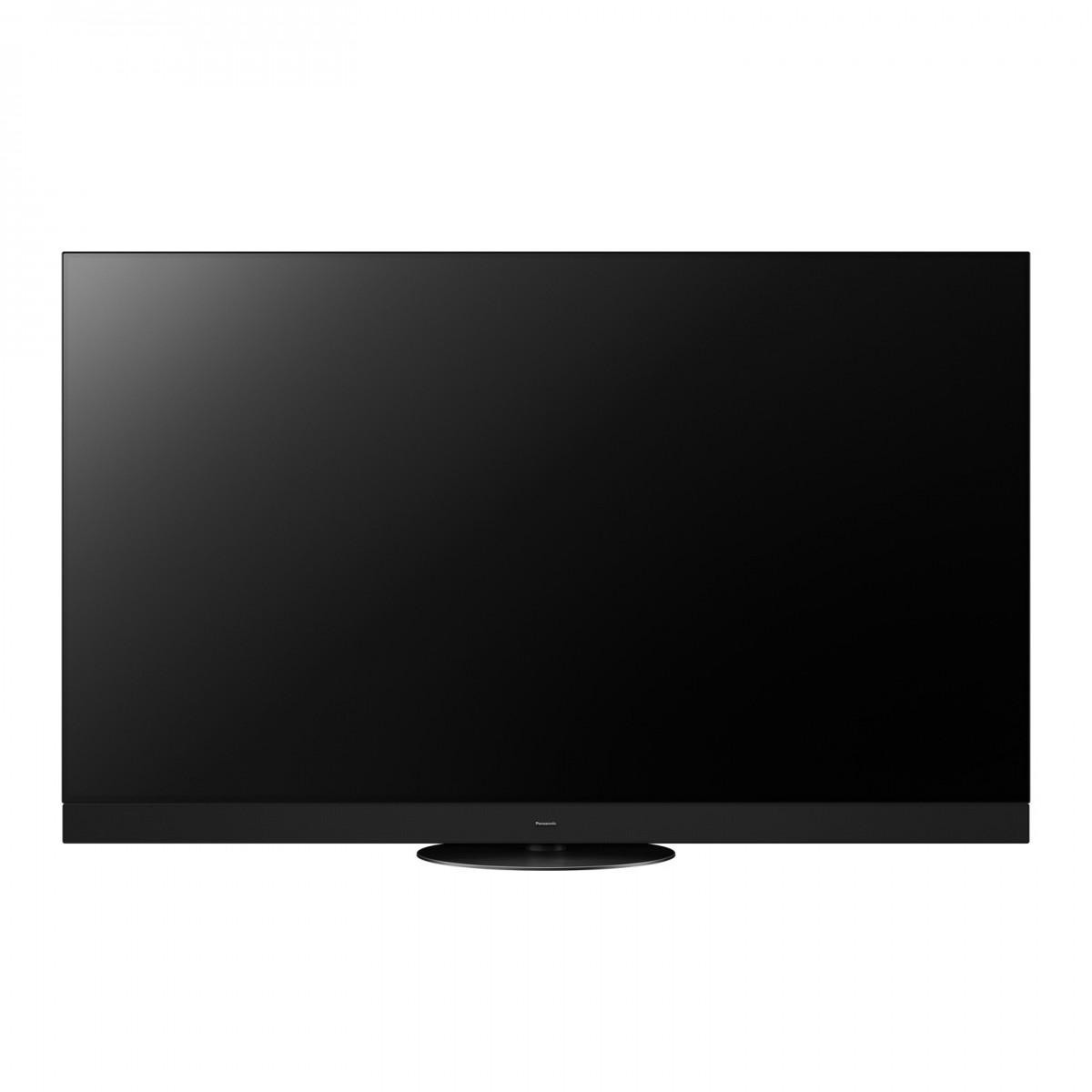
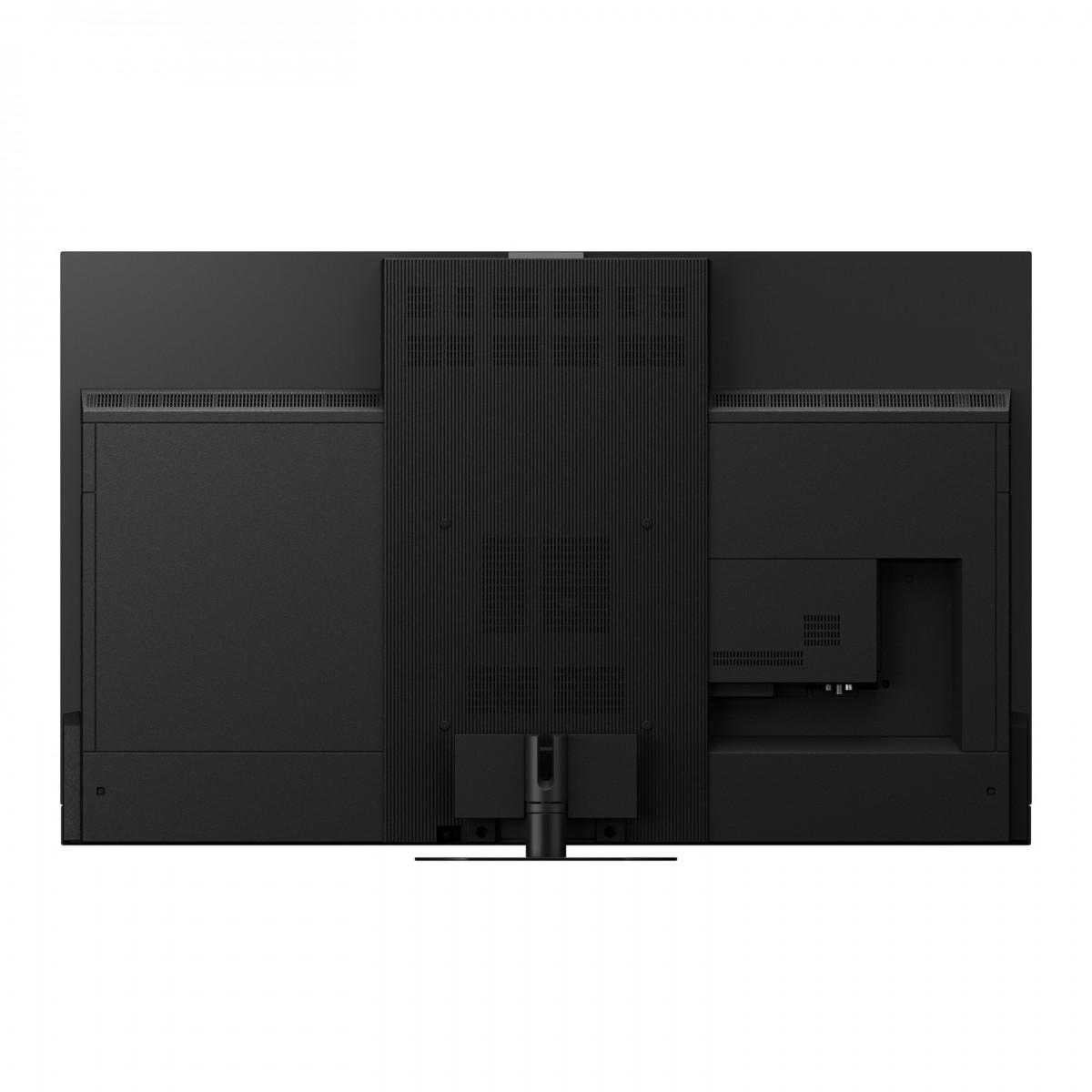
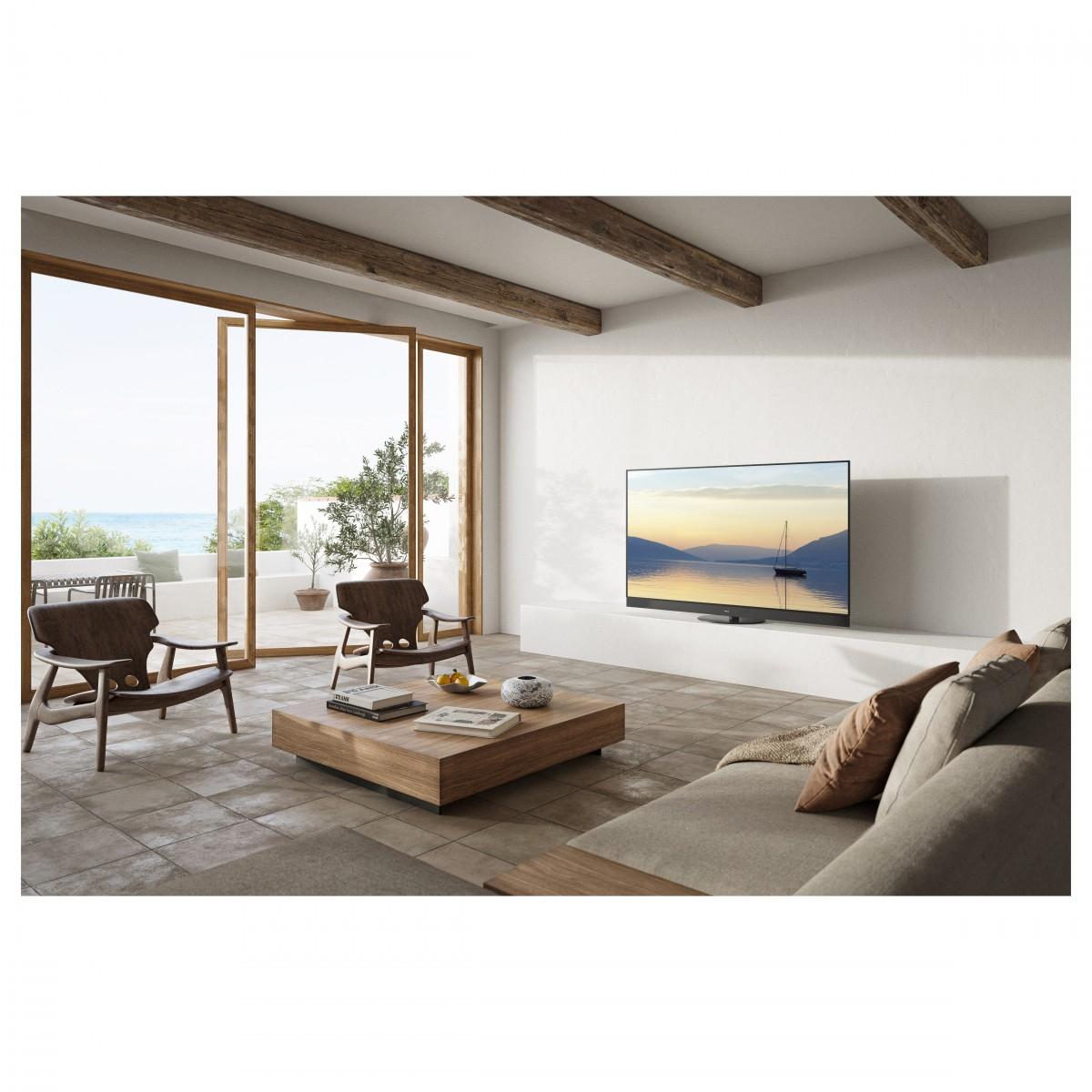
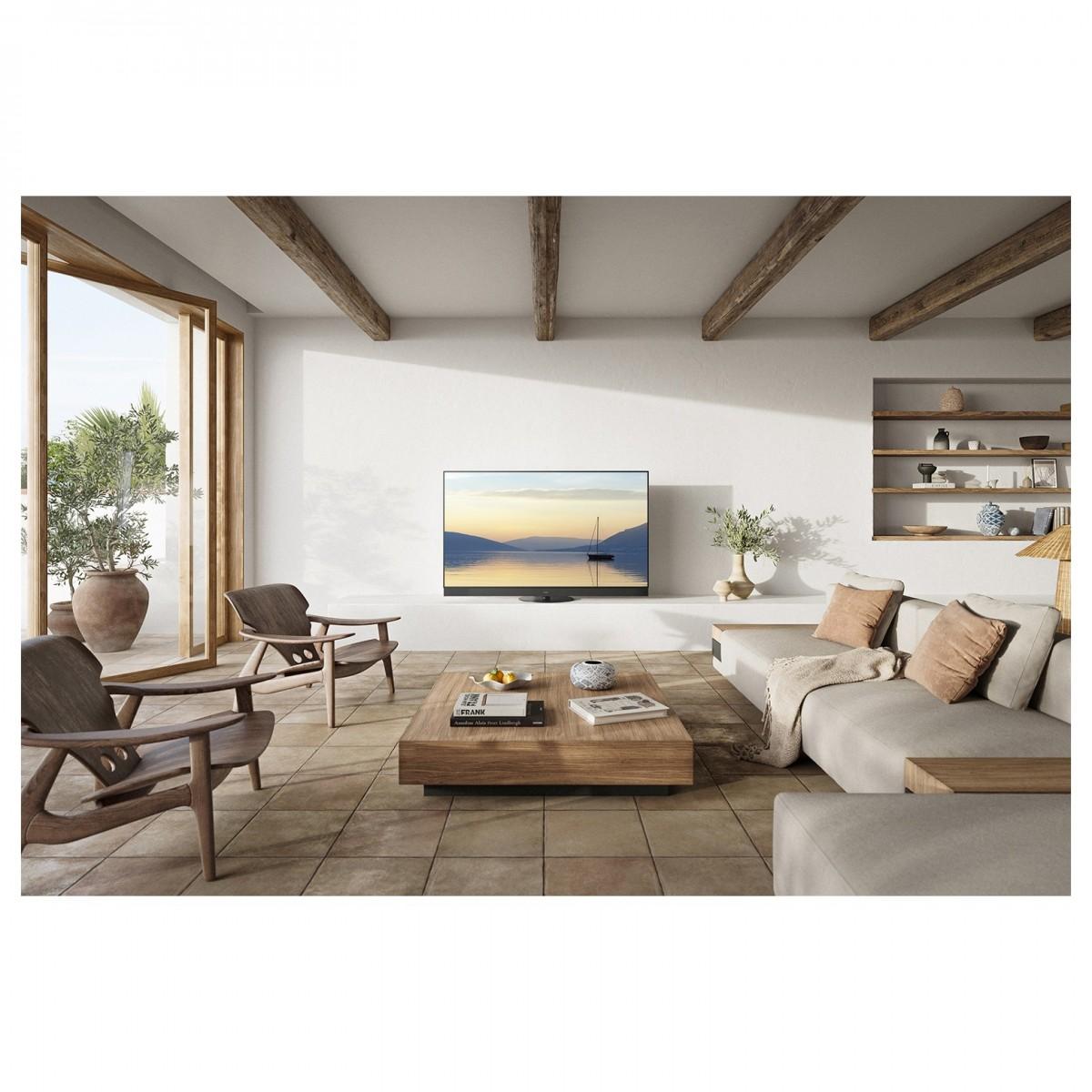
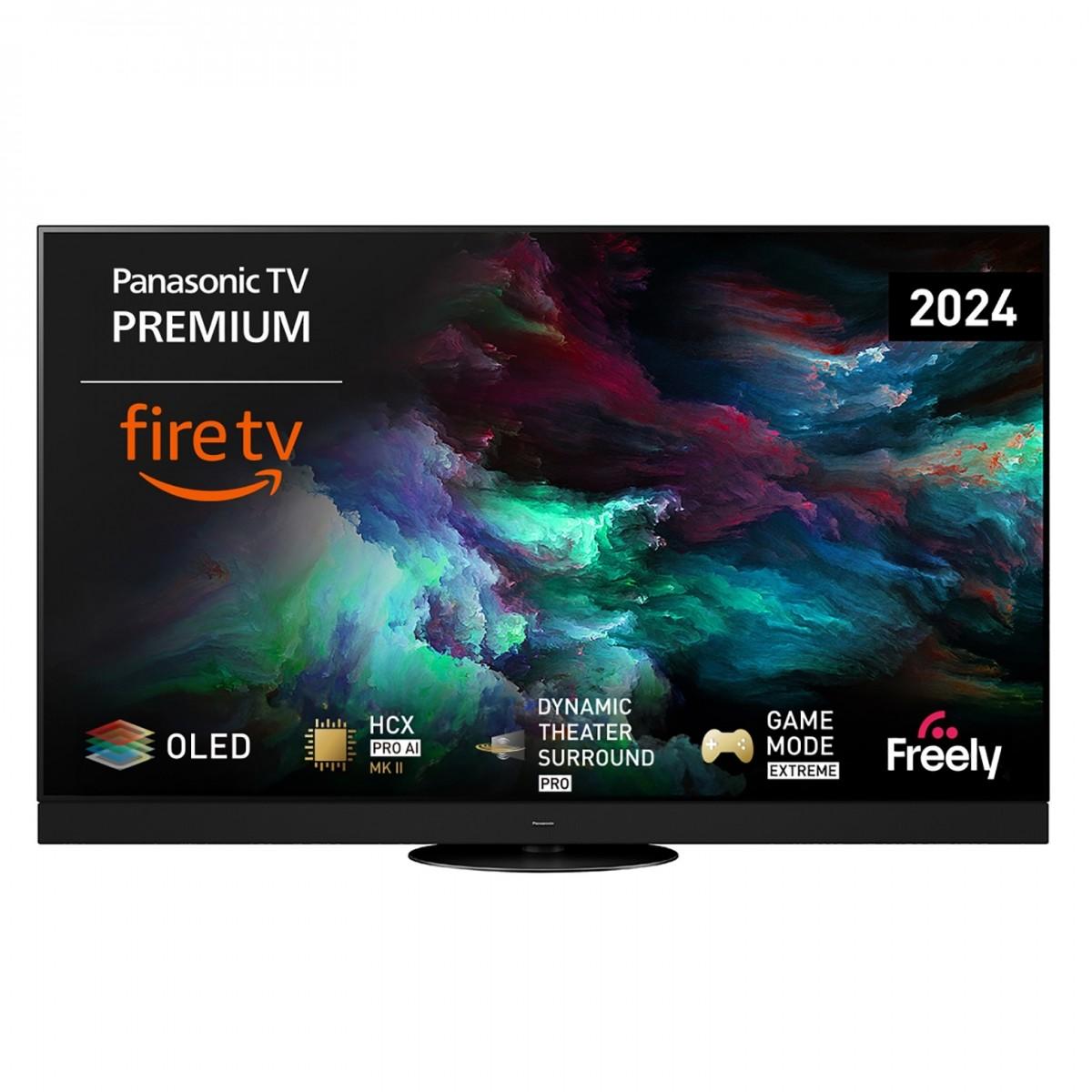
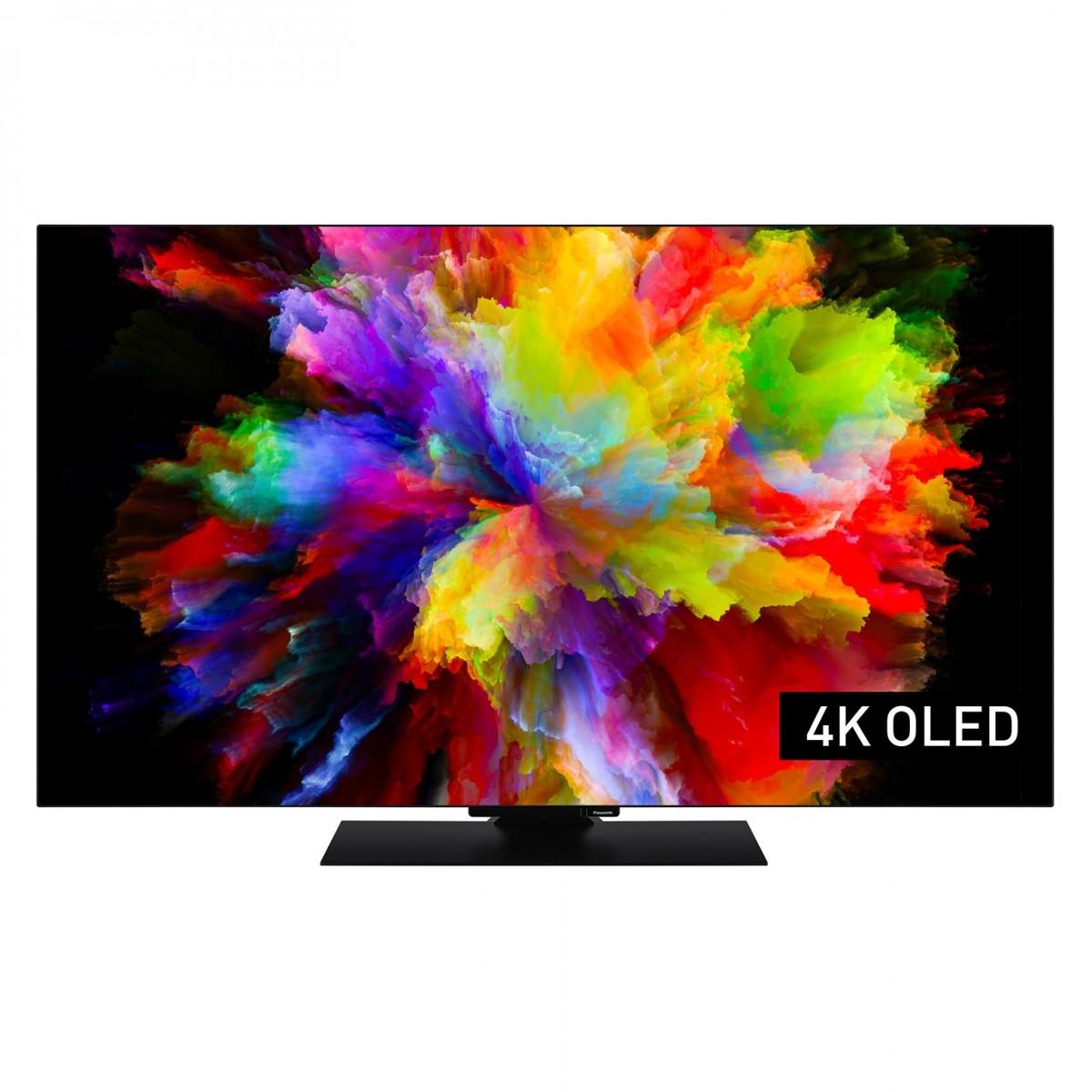
When you're shopping for a premium 65-inch TV, you're likely looking for something that will anchor your living room for the next decade. But what happens when you're torn between two completely different philosophies? That's exactly the situation you'll face when comparing the Panasonic Z95A OLED and the TCL NXTVISION QLED Art Frame TV.
Released in late 2023, the Panasonic Z95A represents the company's push to solve OLED's biggest weakness—brightness—while maintaining everything that makes OLED special. Meanwhile, TCL's 2024 NXTVISION tackles a different problem entirely: making your TV disappear into your décor when you're not watching it.
These aren't just different TVs; they're different approaches to what a modern television should be.
The heart of any TV comparison starts with how the screen actually creates the picture you see. Here's where these two take completely different paths.
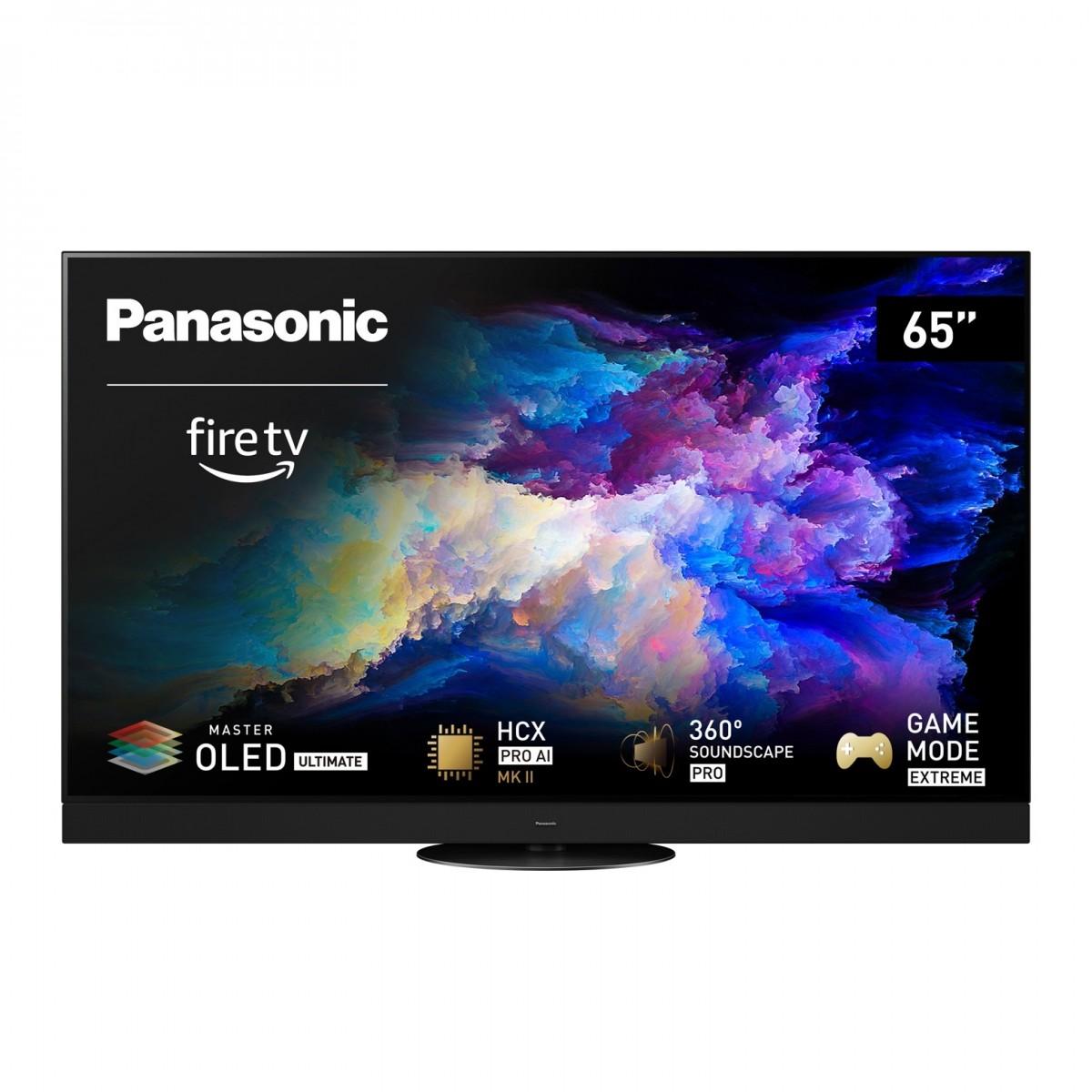
The Panasonic Z95A uses OLED (Organic Light Emitting Diode) technology, where each individual pixel generates its own light. Think of it like having 8.3 million tiny light bulbs that can turn on, off, or dim independently. When a pixel needs to show black, it simply turns off completely, creating what we call "perfect blacks" and infinite contrast ratios.
But here's what makes this particular OLED special: Panasonic added Micro Lens Array technology. Imagine placing a tiny magnifying lens over each pixel to focus and amplify the light output. This innovation boosts brightness by roughly 20% compared to previous OLED generations, addressing the technology's traditional weakness in bright rooms.
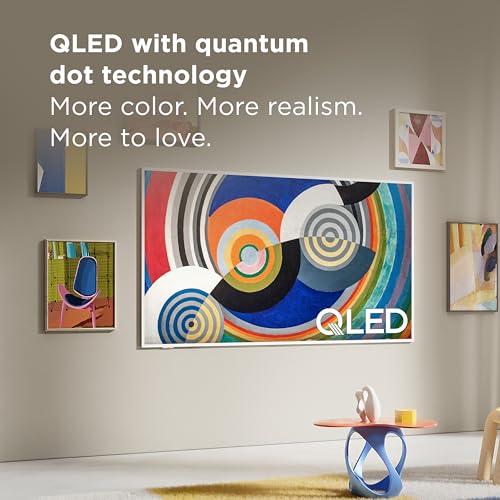
The TCL NXTVISION, on the other hand, uses QLED (Quantum Dot LED) technology with an edge-lit backlight system. Picture a flashlight shining from the edges of the screen, with a layer of quantum dots—microscopic crystals that glow specific colors when hit by light—converting that backlight into the colors you see. While this can produce very bright, vibrant images, it fundamentally cannot turn off individual areas of the backlight, meaning blacks always have some light bleeding through.
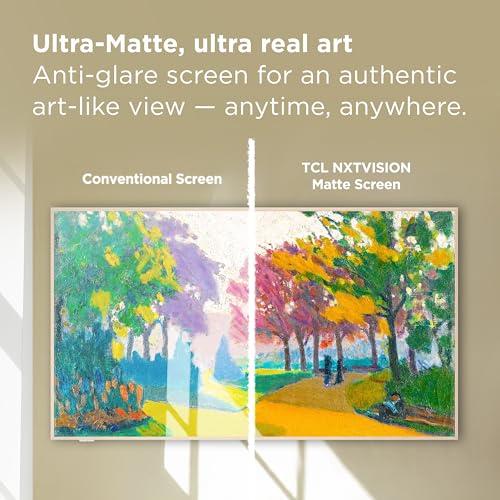
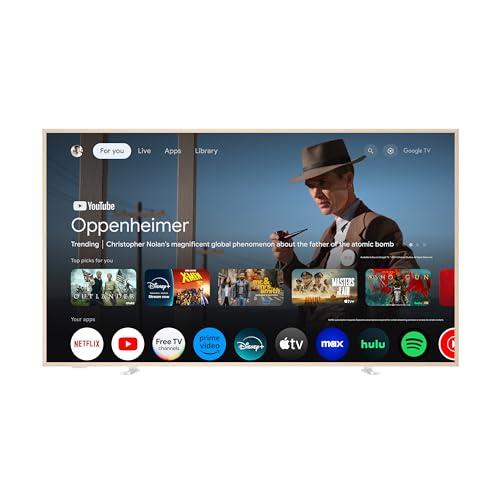
What makes the TCL unique is its ultra-matte anti-glare screen coating. Most TVs reflect room light like a mirror, but this coating scatters reflections so effectively that the screen looks more like a canvas than glass. It's specifically designed to make artwork and photos appear as natural as possible.
After researching extensive professional reviews and user feedback, the picture quality differences become clear, though they depend heavily on your viewing environment.
Color Accuracy and Processing
The Panasonic Z95A employs the HCX Pro AI Processor MKII, which analyzes incoming video signals frame by frame to optimize color, contrast, and motion. Professional reviewers consistently praise its color accuracy, particularly noting natural skin tones and what many describe as "reference-quality" color reproduction. The processor seems particularly adept at handling different content types—it automatically recognizes whether you're watching a movie, sports, or playing a game, then adjusts accordingly.
The TCL NXTVISION uses its AIPQ PRO Processor along with KSF phosphor coating to enhance color separation, especially for reds, greens, and blues. While colors are vibrant and eye-catching, multiple professional reviews note that overall color accuracy falls short of the Panasonic's precision. The processing is competent for upscaling lower-resolution content and reducing compression artifacts, but it prioritizes visual impact over accuracy.
HDR Performance: The Brightness Battle
HDR (High Dynamic Range) is where these TVs reveal their fundamental differences. HDR content contains brightness information that ranges from deep shadows to blazing highlights, requiring a TV to reproduce a wide range of light levels.
The Panasonic OLED supports Dolby Vision, HDR10+, and HLG, achieving peak brightness levels around 600-800 nits thanks to its Micro Lens Array technology. While this isn't as bright as premium LED TVs, the perfect blacks create spectacular contrast. When you're watching a movie scene with a campfire in a dark forest, those flames will genuinely pop against the inky black background.
The TCL NXTVISION also supports comprehensive HDR formats, including Dolby Vision IQ, which adjusts the HDR picture based on your room's lighting conditions. However, reviews consistently point out that the edge-lit LED backlight limits its HDR impact. Without local dimming zones (areas of the backlight that can brighten or dim independently), highlights appear less dramatic and blacks look gray rather than truly black.
Ambient Light Handling
This is where the TCL shows its strength. That ultra-matte screen coating dramatically reduces reflections, making it genuinely usable in bright rooms where other TVs would be washed out. If your TV faces windows or you primarily watch during the day, this advantage is substantial.
The Panasonic, despite its brightness improvements, still performs best in controlled lighting. OLED's perfect blacks are most impressive when the room is dark enough to appreciate them. In bright rooms, the screen can appear dim compared to LED alternatives.
Modern gaming demands have pushed TV manufacturers to prioritize features that were once only found on computer monitors.
The Panasonic Z95A delivers impressive gaming credentials with a native 144Hz refresh rate and 12.8ms input lag. Input lag is the delay between pressing a button and seeing the result on screen—anything under 20ms is considered excellent for gaming. The TV includes VRR (Variable Refresh Rate) and ALLM (Auto Low Latency Mode), which automatically switches to game mode when it detects a gaming console.
For context, traditional TVs might have 40-60ms of input lag due to image processing. The Panasonic's 12.8ms means you'll feel like your controller inputs are nearly instantaneous, crucial for competitive gaming.
The TCL NXTVISION offers a 120Hz native panel with VRR support up to 144Hz through its Game Accelerator 240 technology. It includes AMD FreeSync Premium certification and ALLM support. However, multiple reviews note that the TV's slower pixel response time creates noticeable motion blur during fast action sequences, making it less ideal for competitive gaming despite its impressive-sounding specifications.
The difference comes down to pixel response time—how quickly each pixel can change from one color to another. OLED pixels respond nearly instantaneously, while this particular QLED implementation is slower, causing trailing behind moving objects.
Both TVs offer comprehensive smart features, but they take different approaches to integration.
The Panasonic runs Amazon Fire TV with built-in Alexa and hands-free voice control. Fire TV provides easy access to major streaming services and integrates well with Amazon's ecosystem. The interface is clean and responsive, though some users prefer other platforms.
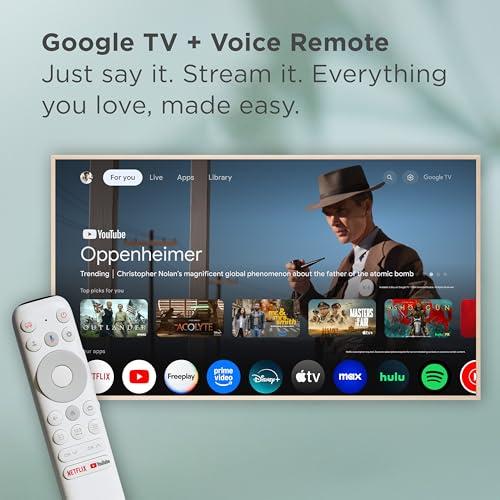
The TCL uses Google TV, which offers broader smart home integration. It supports Google Assistant, Amazon Alexa, and Apple HomeKit simultaneously, making it more flexible for mixed-ecosystem homes. The interface aggregates content from multiple services and provides personalized recommendations across platforms.
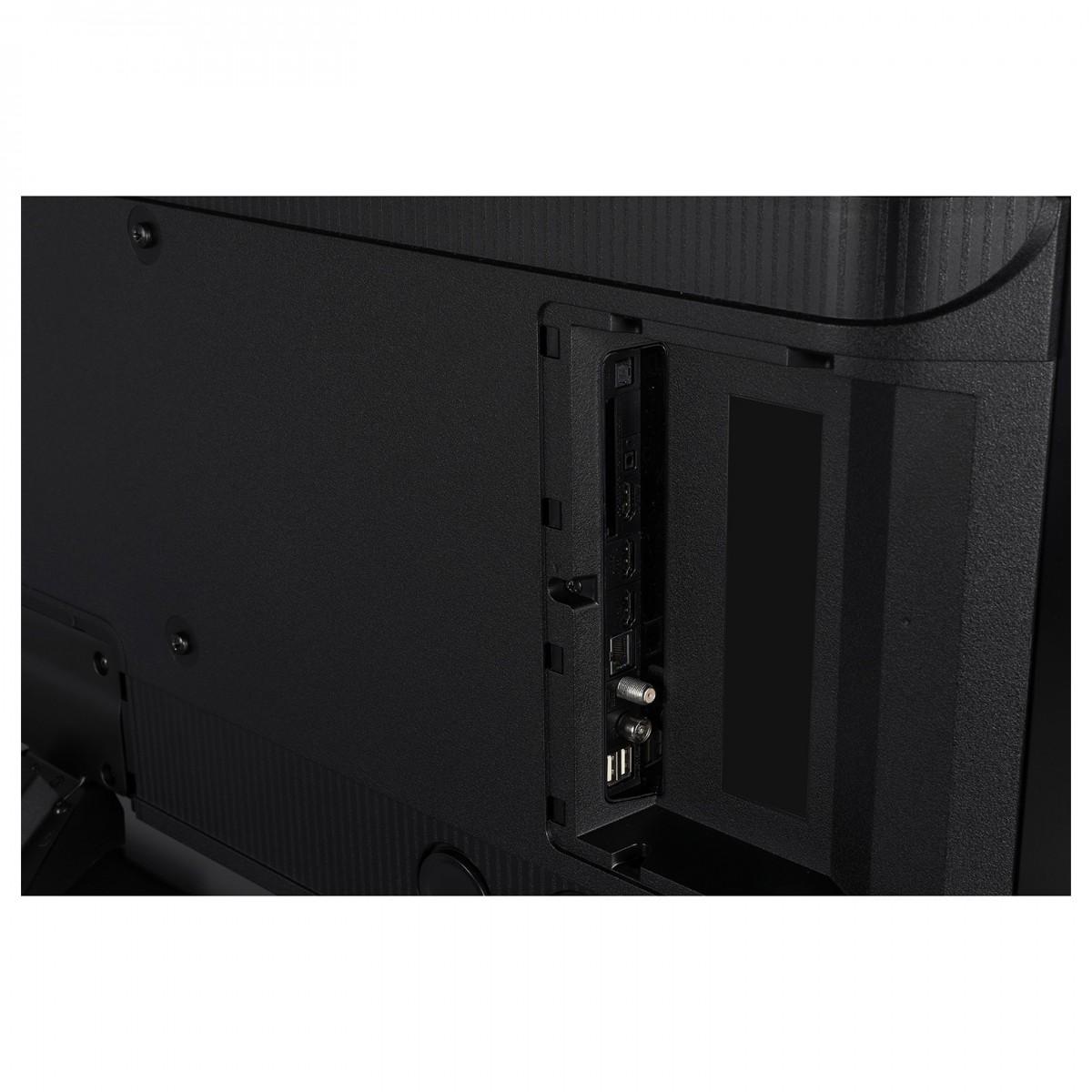
Both include essential connectivity, though the Panasonic offers four full HDMI 2.1 ports compared to the TCL's two. HDMI 2.1 ports support the highest bandwidth for gaming consoles and future devices, so more ports mean better expandability.
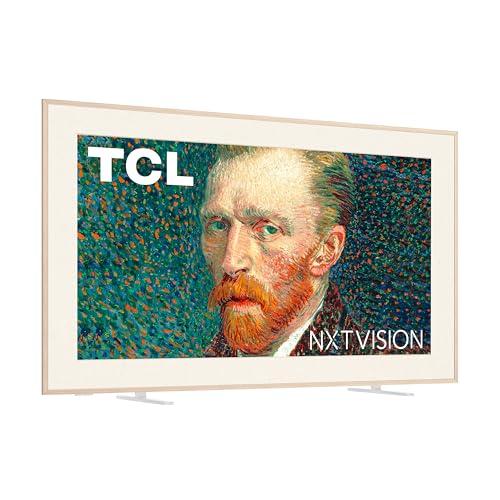
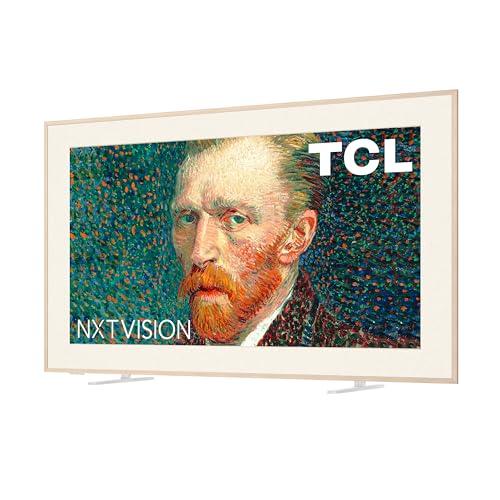
Here's where the TCL NXTVISION diverges completely from traditional TVs. When you're not actively watching content, it transforms into a digital art display with over 100,000 available artworks, including AI-generated pieces and personal photos.
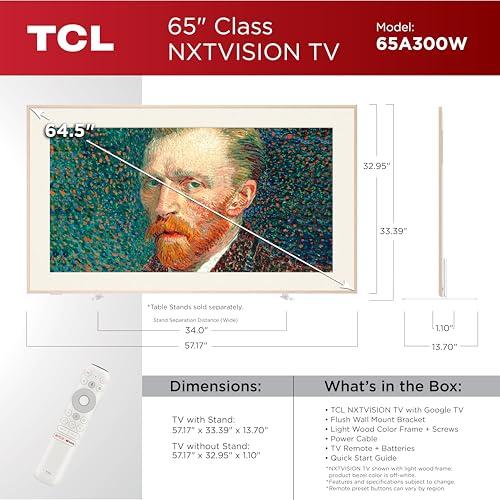
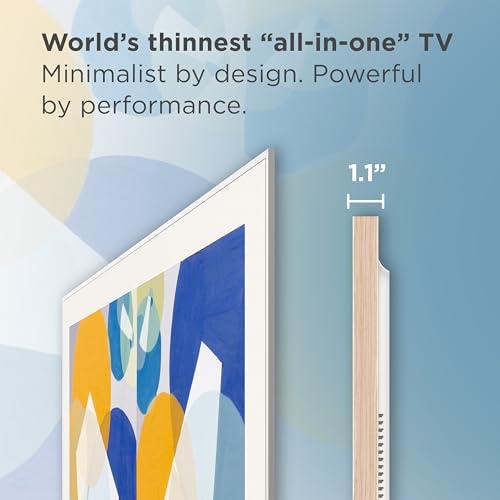
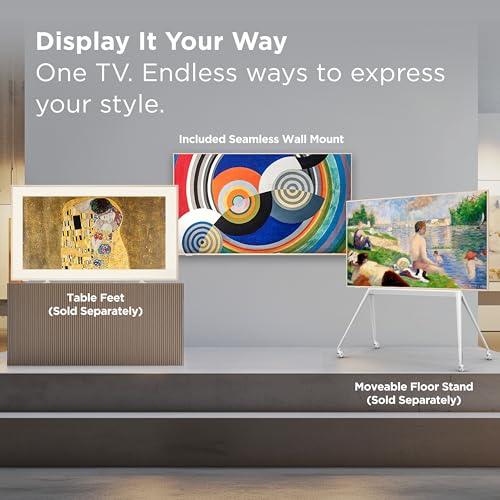
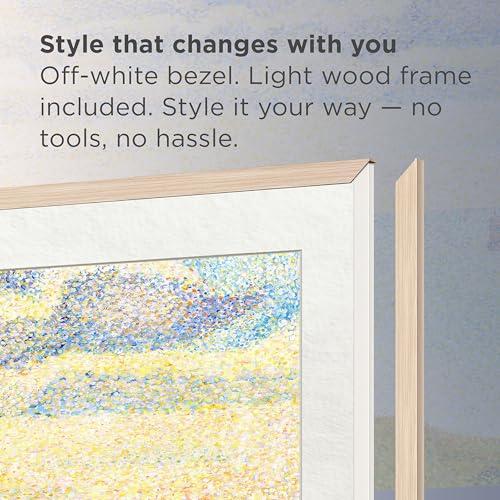
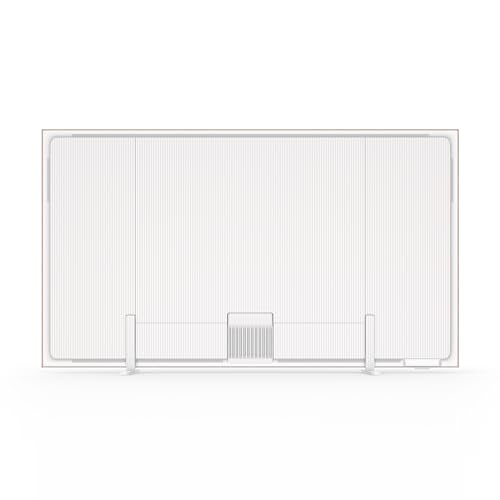
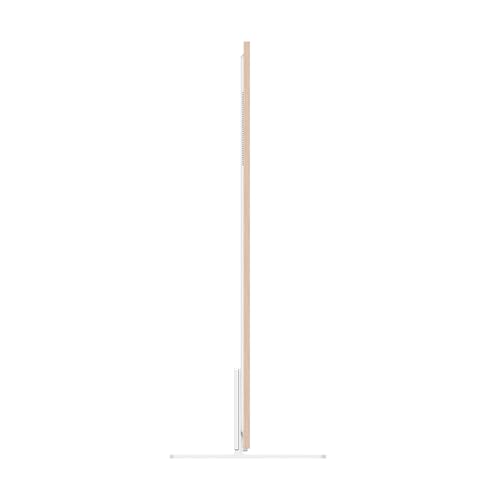
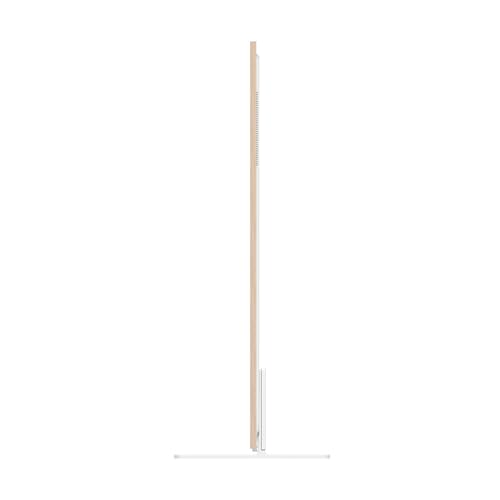
The ultra-slim 1.1-inch depth and included flush wall mount create an installation that genuinely resembles a framed painting. The magnetic wood-like frame can be swapped to match your décor, and the matte screen coating makes displayed artwork appear remarkably like a real canvas.
This isn't just a gimmick—it solves the "black rectangle problem" that many people struggle with. Instead of having a dark screen dominating your wall when not in use, you have what appears to be expensive artwork. For open-concept living spaces or homes where aesthetics are paramount, this represents genuine value.
The Panasonic takes a traditional approach, focusing entirely on picture quality when active. It's designed to disappear into a proper home theater setup rather than serve as room décor.
Both TVs include 20W audio systems with Dolby Atmos support, which represents solid performance for built-in speakers. However, at this price point and screen size, most users will benefit from external audio solutions.
The TCL adds Enhanced Dialogue Mode and DTS:X support, while the Panasonic focuses on clean, accurate sound reproduction. Neither will replace a dedicated sound system, but both are adequate for casual viewing.
At the time of writing, the Panasonic Z95A commands a significant premium over the TCL NXTVISION, typically costing several hundred to over a thousand dollars more depending on promotions and retailer.
The Panasonic justifies its higher cost with superior display technology, reference-quality picture accuracy, and comprehensive gaming features. You're paying for OLED's inherent advantages and Panasonic's processing expertise.
The TCL offers compelling value by providing solid picture quality, innovative art features, and excellent bright-room performance at a more accessible price. You're getting roughly 70-80% of premium TV performance at 60-70% of the cost, plus unique lifestyle features unavailable elsewhere.
For dedicated home theater setups, the Panasonic Z95A is the clear choice. Its perfect blacks, accurate colors, and low input lag create the ideal foundation for serious movie watching and gaming. The ability to completely turn off pixels means shadow details remain visible while bright scenes truly pop.
However, home theaters require controlled lighting to maximize OLED's advantages. If your setup includes windows or ambient lighting, some of OLED's benefits diminish.
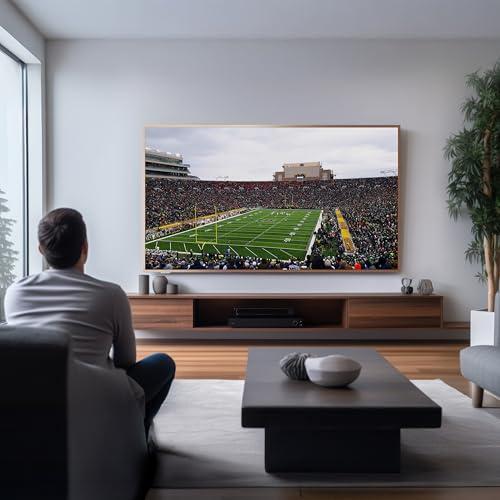
The TCL works better in living room environments where the TV serves multiple purposes throughout the day. Its anti-glare coating and art features make it suitable for casual viewing, background entertainment, and aesthetic enhancement simultaneously.
Choose the Panasonic Z95A OLED if you prioritize picture quality above all else. It's ideal for movie enthusiasts who appreciate accurate colors and perfect blacks, serious gamers who need minimal input lag, and anyone building a dedicated home theater. The higher cost is justified if you value reference-quality performance and comprehensive connectivity.
The TCL NXTVISION makes sense if you want your TV to enhance your living space even when off, primarily watch in bright rooms, or want solid performance without the premium price. It's particularly appealing for modern homes where aesthetics matter as much as functionality.
Consider your primary use case carefully. If you're a cinephile who watches movies in a dark room, the Panasonic's OLED technology will provide a noticeably superior experience. If you want a TV that disappears into your décor and performs well for everyday viewing, the TCL's innovative approach offers genuine value.
The technology improvements in both TVs—Panasonic's Micro Lens Array addressing OLED brightness and TCL's ultra-matte coating solving reflection issues—show how manufacturers are refining their approaches rather than just pursuing raw specifications.
Ultimately, both represent solid choices within their respective philosophies. The Panasonic delivers uncompromising picture quality for serious viewing, while the TCL offers innovative lifestyle integration with respectable performance. Your choice should align with whether you want the best possible picture quality or a TV that serves dual purposes while maintaining good everyday performance.
| Panasonic Z95A 65" OLED 4K Ultra HD Smart TV | TCL 65" NXTVISION QLED 4K Art Frame TV |
|---|---|
| Display Technology - The fundamental difference affecting picture quality | |
| OLED with Micro Lens Array (perfect blacks, infinite contrast) | QLED with edge-lit LED backlight (brighter but limited contrast) |
| Peak Brightness - Critical for HDR performance and bright room viewing | |
| 600-800 nits (excellent contrast but moderate brightness) | High Brightness+ LED system (superior bright room performance) |
| Black Levels - Makes the biggest visual impact for movies and dark content | |
| Perfect blacks (pixels turn completely off) | Gray blacks (backlight always on, limited by edge-lit design) |
| Screen Coating - Affects usability in different lighting conditions | |
| Standard glossy finish (best in dark rooms) | Ultra-matte anti-glare (eliminates reflections, ideal for bright rooms) |
| Color Accuracy - Important for natural-looking content | |
| Reference-quality with HCX Pro AI Processor MKII | Vibrant but less accurate colors with AIPQ PRO Processor |
| Gaming Performance - Refresh rate and input lag for responsive gaming | |
| 144Hz native, 12.8ms input lag (excellent for competitive gaming) | 120Hz native/144Hz VRR, slower response time (casual gaming suitable) |
| HDMI 2.1 Connectivity - Future-proofing for gaming consoles and devices | |
| 4 full HDMI 2.1 ports (maximum expandability) | 2 HDMI 2.1 ports out of 4 total (limited but adequate) |
| Design Philosophy - Fundamentally different approaches | |
| Traditional premium TV focused on picture quality | Ultra-slim 1.1" art frame design with flush wall mount |
| Art Display Features - Unique lifestyle functionality | |
| None (traditional TV when off) | 100,000+ artworks, AI art generation, magnetic frames |
| Smart Platform - Ecosystem integration and app availability | |
| Amazon Fire TV with Alexa built-in | Google TV with multi-assistant support (Google, Alexa, HomeKit) |
| Wi-Fi Technology - Network performance and future compatibility | |
| Wi-Fi 6 (latest standard, better performance) | Wi-Fi 5 (older standard but adequate for streaming) |
| Audio System - Built-in sound quality | |
| 20W Dolby Atmos (adequate but benefits from soundbar) | 20W Dolby Atmos/DTS:X with Enhanced Dialogue Mode |
| HDR Format Support - Compatibility with premium content | |
| Dolby Vision, HDR10+, HDR10, HLG | Dolby Vision IQ, HDR10+, HDR10, HLG (includes room lighting adaptation) |
| Ideal Use Case - Who should choose each TV | |
| Dark room viewing, serious gaming, movie enthusiasts | Bright rooms, aesthetic integration, casual viewing with art display |
| Value Proposition - Performance and features for the investment | |
| Premium price for reference-quality OLED performance | Moderate price for solid performance plus unique art features |
The Panasonic Z95A OLED delivers superior picture quality with perfect blacks, infinite contrast, and reference-quality color accuracy. Its OLED technology allows each pixel to turn completely off, creating true blacks that make dark movie scenes look incredibly realistic. The TCL NXTVISION QLED produces bright, vibrant colors but cannot match the contrast performance due to its edge-lit LED backlight system.
OLED technology in the Panasonic Z95A uses self-emissive pixels that generate their own light and can turn completely off for perfect blacks. QLED technology in the TCL NXTVISION uses quantum dots with an LED backlight system, producing brighter images but unable to achieve true blacks since the backlight stays on.
The TCL NXTVISION QLED excels in bright rooms thanks to its ultra-matte anti-glare screen coating that virtually eliminates reflections. The Panasonic Z95A OLED performs better in controlled lighting environments where its superior contrast can be fully appreciated.
Only the TCL NXTVISION offers dedicated art display features with over 100,000 curated artworks, AI-generated images, and personal photo gallery modes. The ultra-slim design and magnetic frames make it look like actual wall art. The Panasonic Z95A is a traditional TV without art display functionality.
The Panasonic Z95A OLED offers superior gaming performance with 12.8ms input lag, native 144Hz refresh rate, and fast pixel response times for minimal motion blur. While the TCL NXTVISION supports gaming features like 144Hz VRR and AMD FreeSync Premium, its slower response times create more motion blur during fast action.
The Panasonic Z95A runs Amazon Fire TV with built-in Alexa and hands-free voice control. The TCL NXTVISION uses Google TV with broader smart home integration, supporting Google Assistant, Amazon Alexa, and Apple HomeKit simultaneously for more flexible ecosystem compatibility.
The TCL NXTVISION provides compelling value with solid picture quality, unique art features, and excellent bright-room performance at a more accessible price point. The Panasonic Z95A OLED commands a premium but justifies it with superior display technology and reference-quality performance.
The Panasonic Z95A OLED is ideal for dedicated home theaters with its perfect blacks, accurate colors, and low input lag in controlled lighting. The TCL NXTVISION works better in living room environments where it serves multiple purposes including aesthetic enhancement when not actively viewing content.
The Panasonic Z95A includes four full HDMI 2.1 ports for maximum device connectivity and future-proofing. The TCL NXTVISION offers four HDMI ports total, with two supporting HDMI 2.1 bandwidth for high-end gaming consoles and devices.
The Panasonic Z95A OLED delivers superior HDR performance with perfect blacks creating spectacular contrast, though with moderate peak brightness. The TCL NXTVISION supports comprehensive HDR formats including Dolby Vision IQ but is limited by its edge-lit backlight design for true HDR impact.
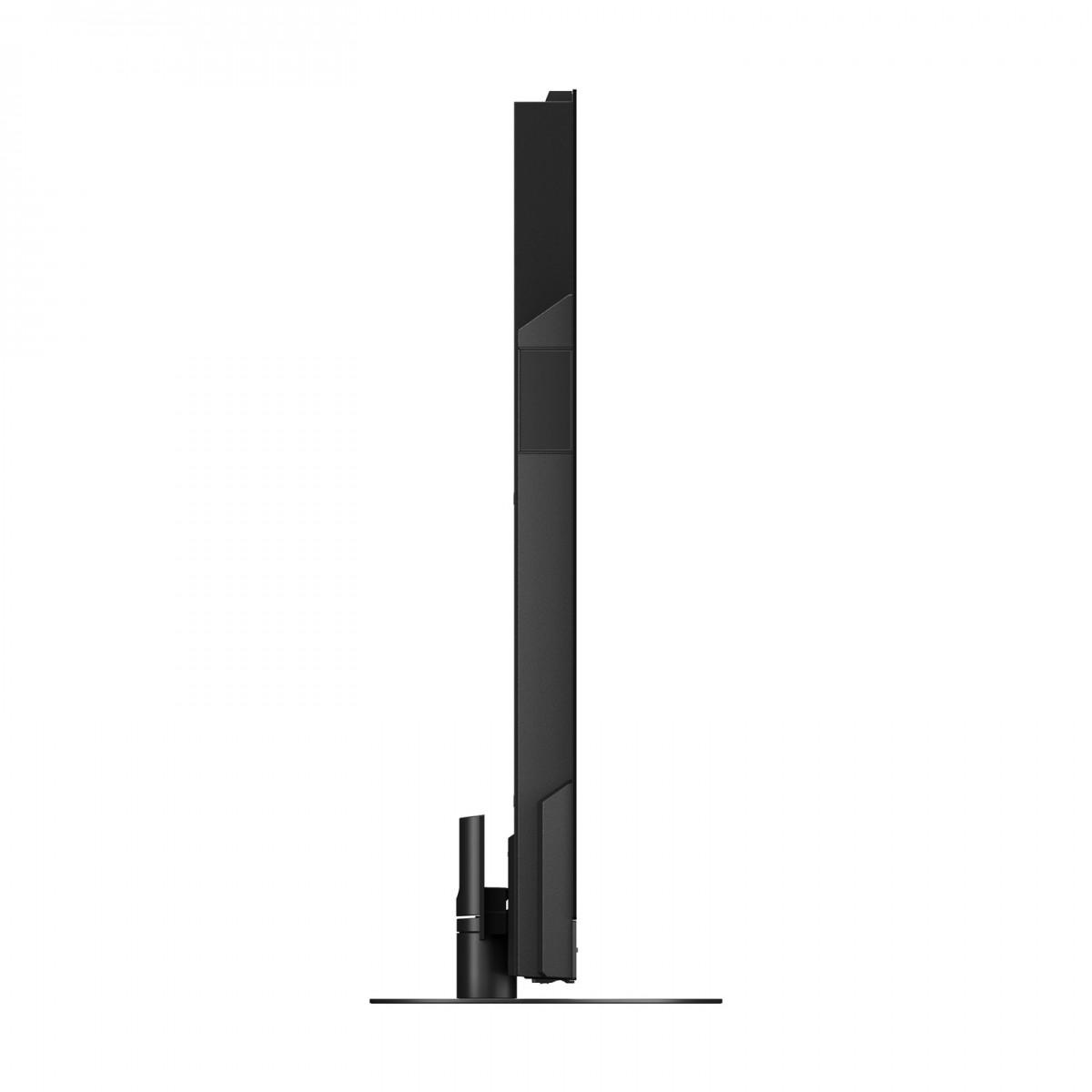
The TCL NXTVISION is ultra-slim at just 1.1 inches deep and includes a proprietary flush wall mount for seamless installation. The Panasonic Z95A has traditional TV dimensions and would require a separate wall mount purchase for installation.
Choose the Panasonic Z95A OLED if picture quality is your priority and you primarily watch in controlled lighting. Select the TCL NXTVISION if you want a TV that enhances your décor with art display features and performs well in bright rooms with excellent anti-glare properties.
We've done our best to create useful and informative comparisons to help you decide what product to buy. Our research uses advanced automated methods to create this comparison and perfection is not possible - please contact us for corrections or questions. These are the sites we've researched in the creation of this article: youtube.com - youtube.com - whathifi.com - tomsguide.com - shop.panasonic.com - store.in.panasonic.com - rtings.com - applianceplus.co.nz - rtings.com - store.in.panasonic.com - samsung.com - rtings.com - tcl.com - bestbuy.com - tcl.com - bestbuy.com - tcl.com - youtube.com - rcwilley.com - businessinsider.com - bestbuy.com - target.com - youtube.com - support.tcl.com - nfm.com - woodruffappliance.com - flatpanelshd.com - tcl.com

Privacy Policy
Terms and Conditions - Affiliate Policy
Home Security
© Copyright 2008-2026.
11816 Inwood Rd #1211, Dallas, TX 75244