

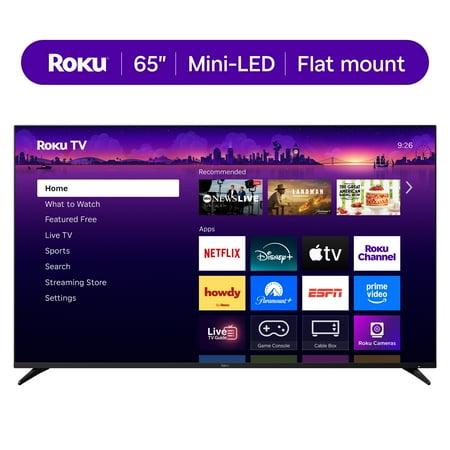
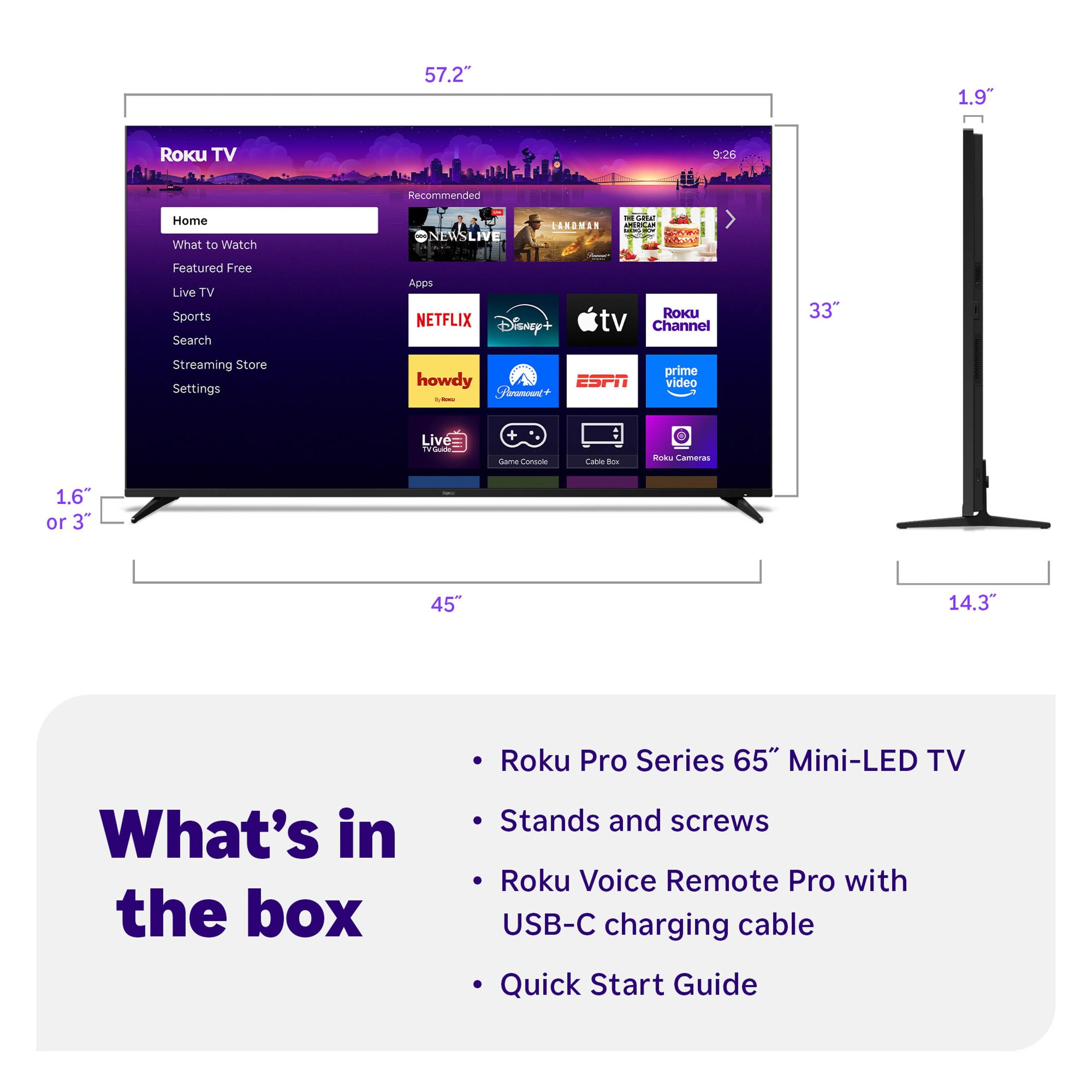
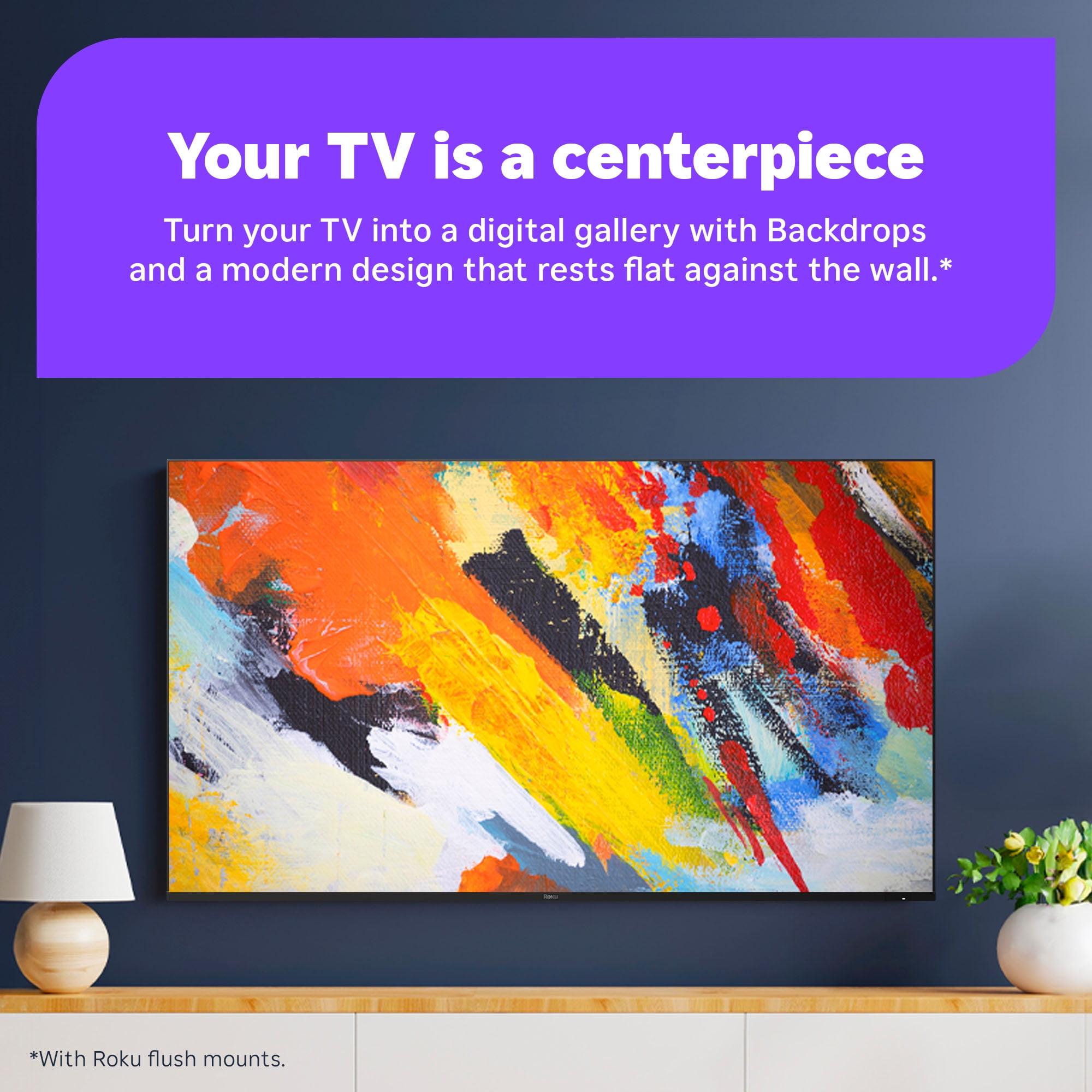
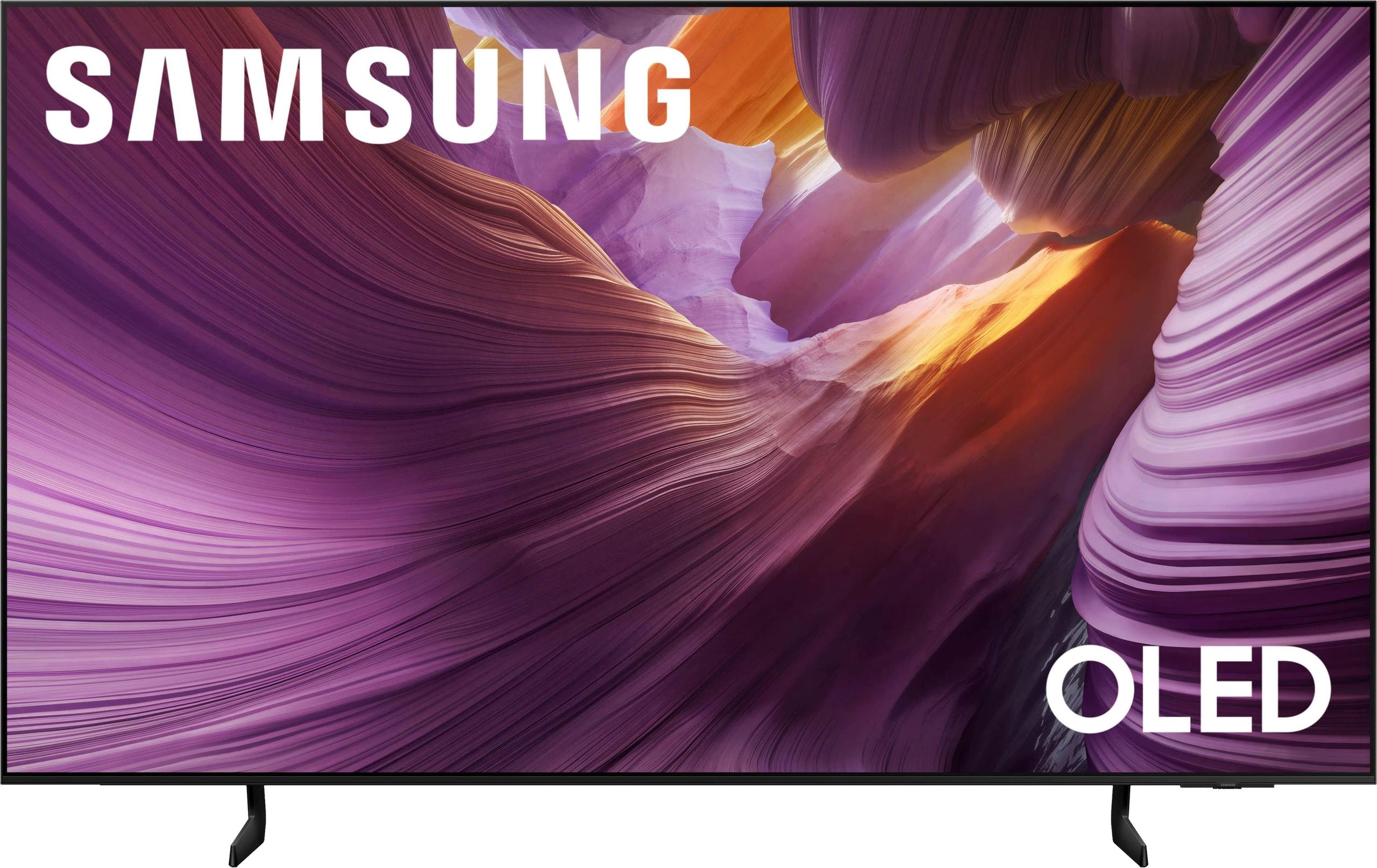
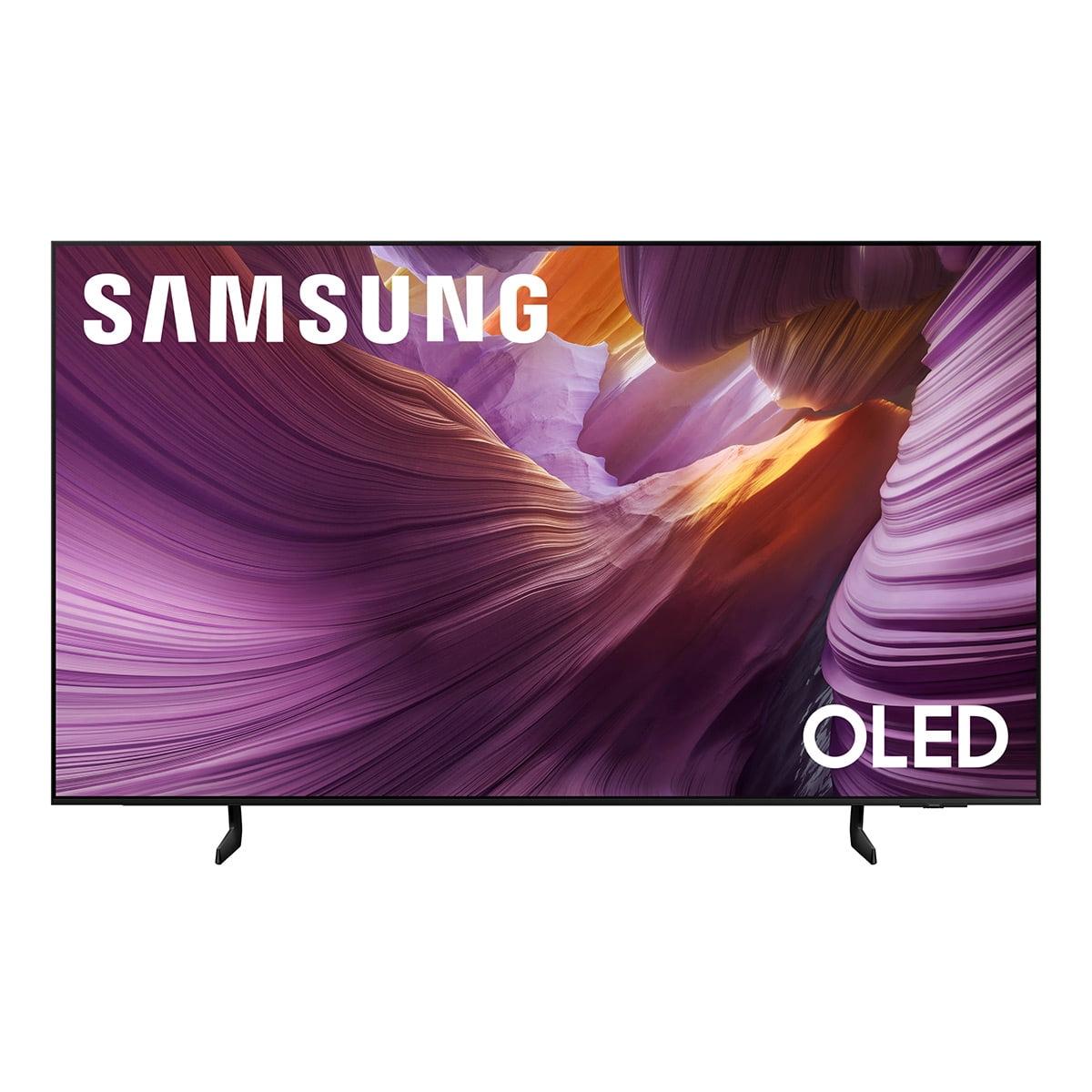
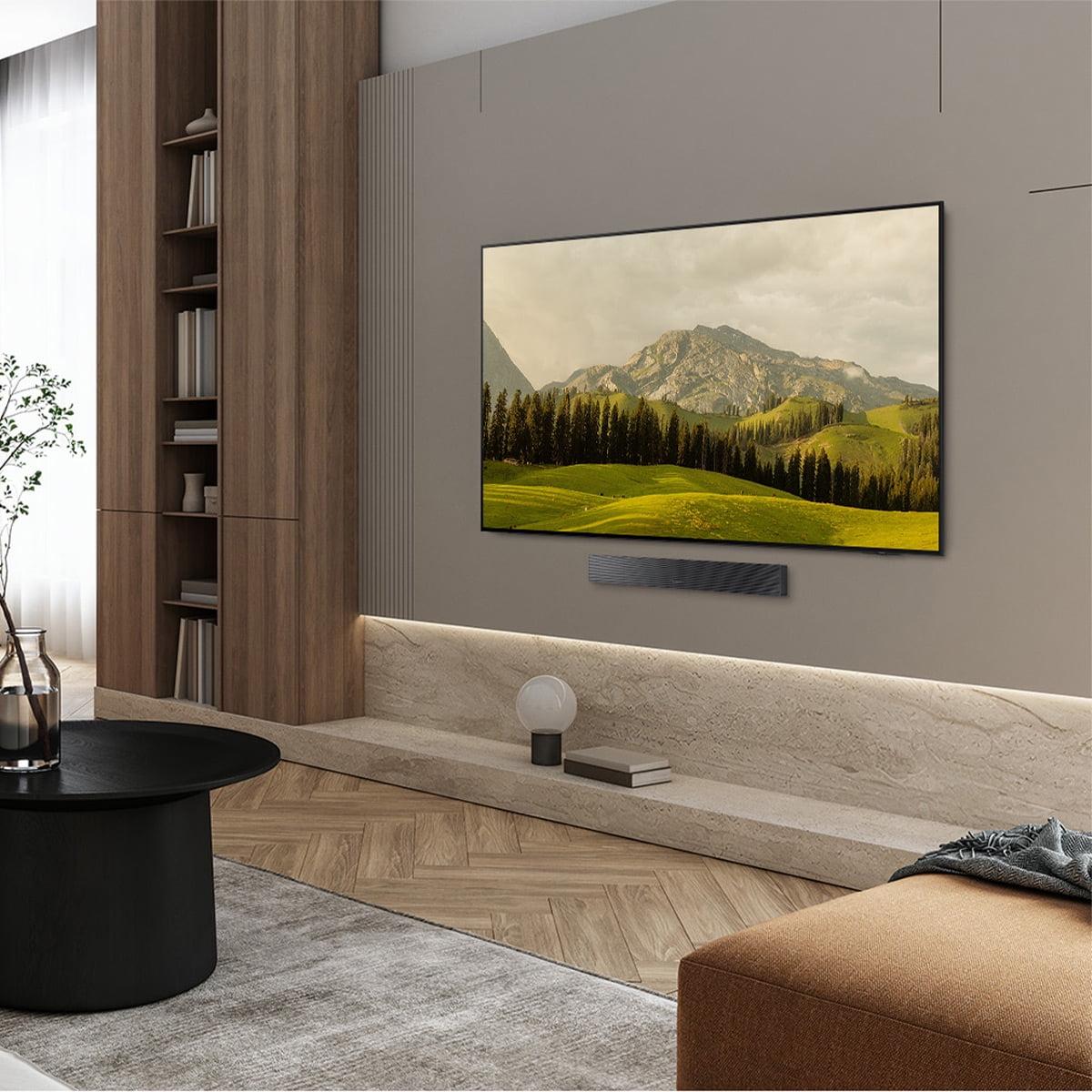

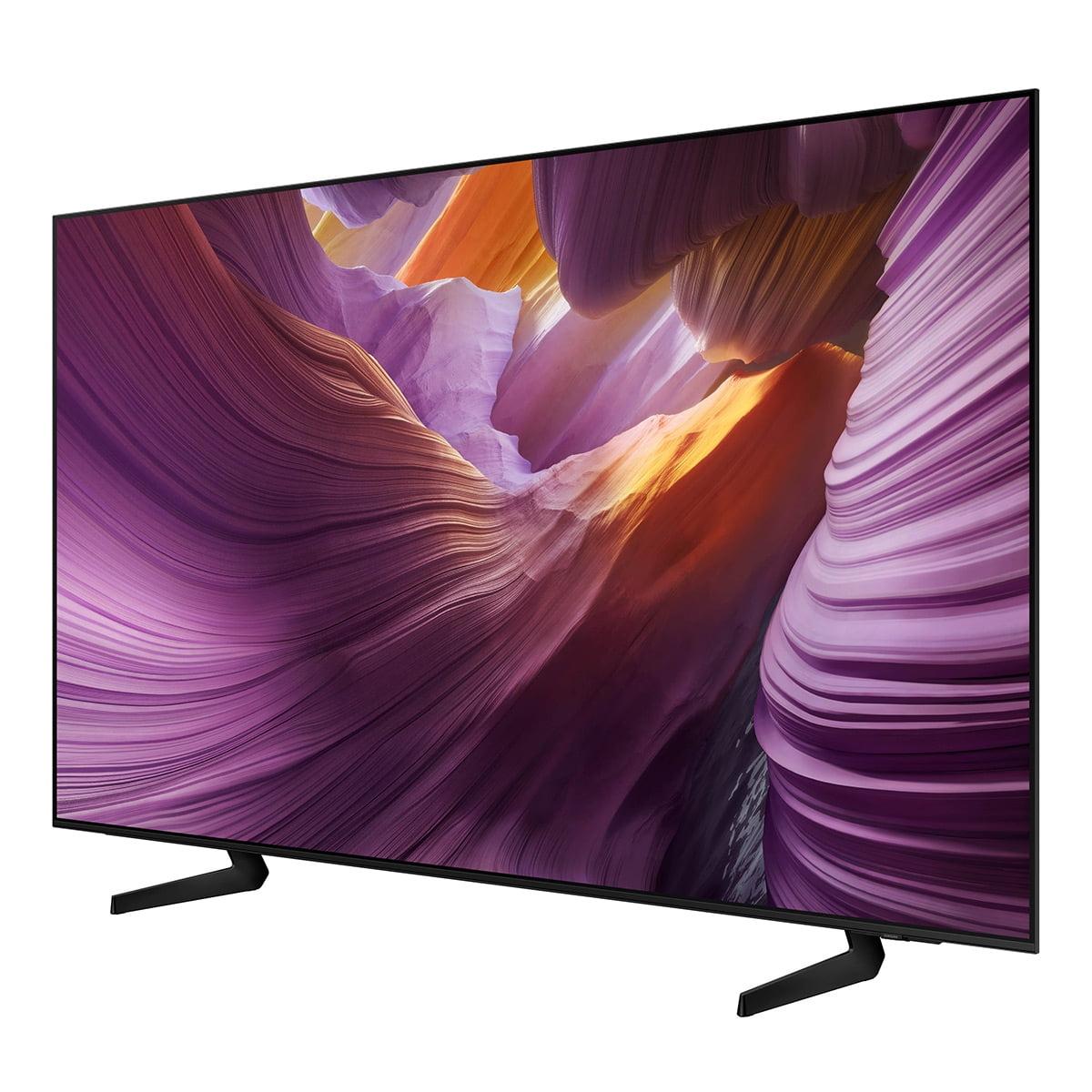
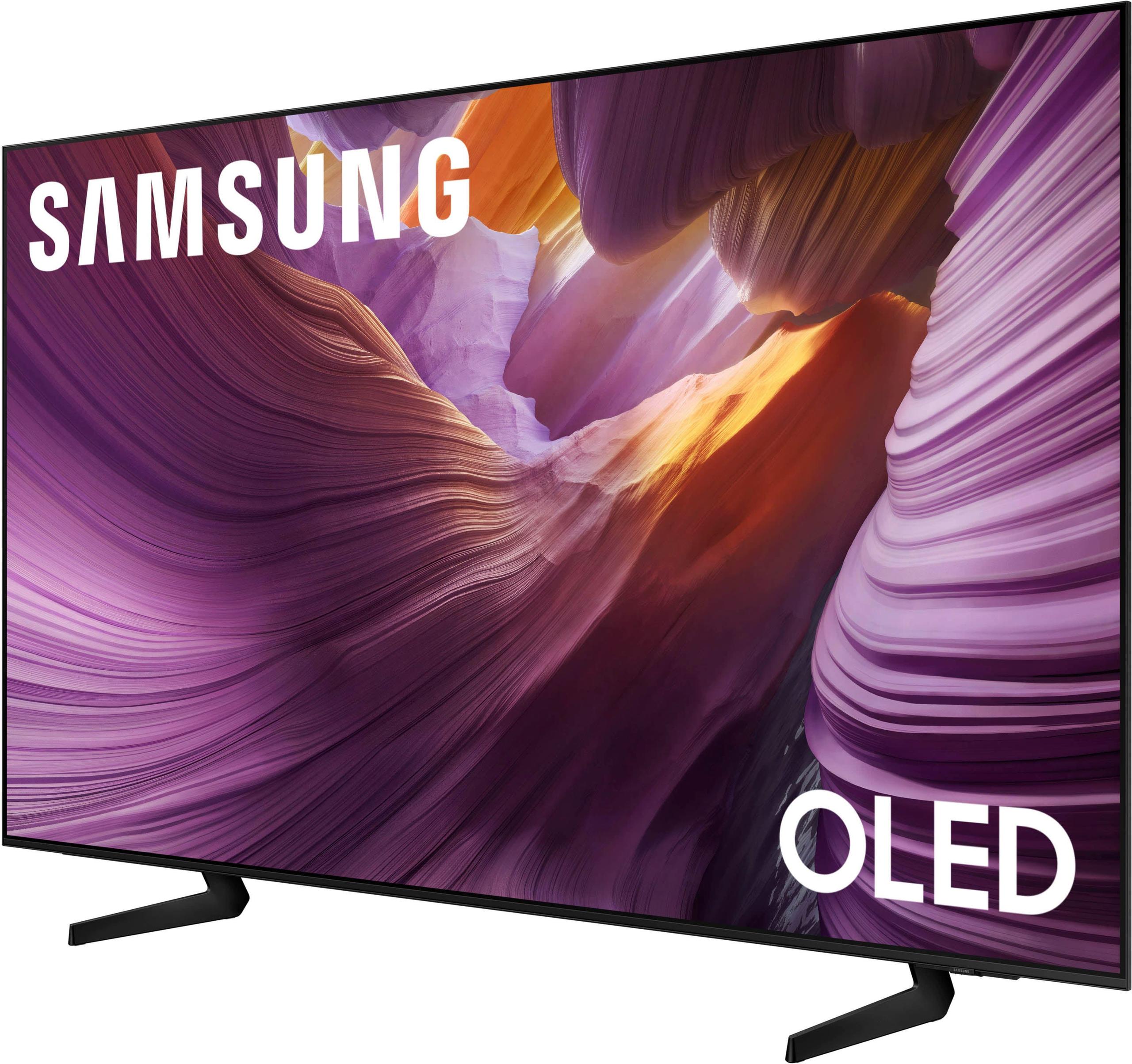
The premium 65-inch TV market hit a fascinating inflection point in 2025. For the first time, you can get either cutting-edge OLED technology or advanced Mini-LED performance at roughly the same price point. The Roku 65" Pro Series 2025 and Samsung 65" S85F OLED represent two fundamentally different approaches to premium picture quality, and choosing between them requires understanding how these technologies actually perform in real homes.
At the time of writing, both TVs compete in the $1,100-1,300 range, making this decision less about budget and more about which technology fits your specific viewing environment and priorities. After researching extensive user feedback and expert evaluations, the choice comes down to understanding what Mini-LED QLED and OLED each do exceptionally well—and where they struggle.
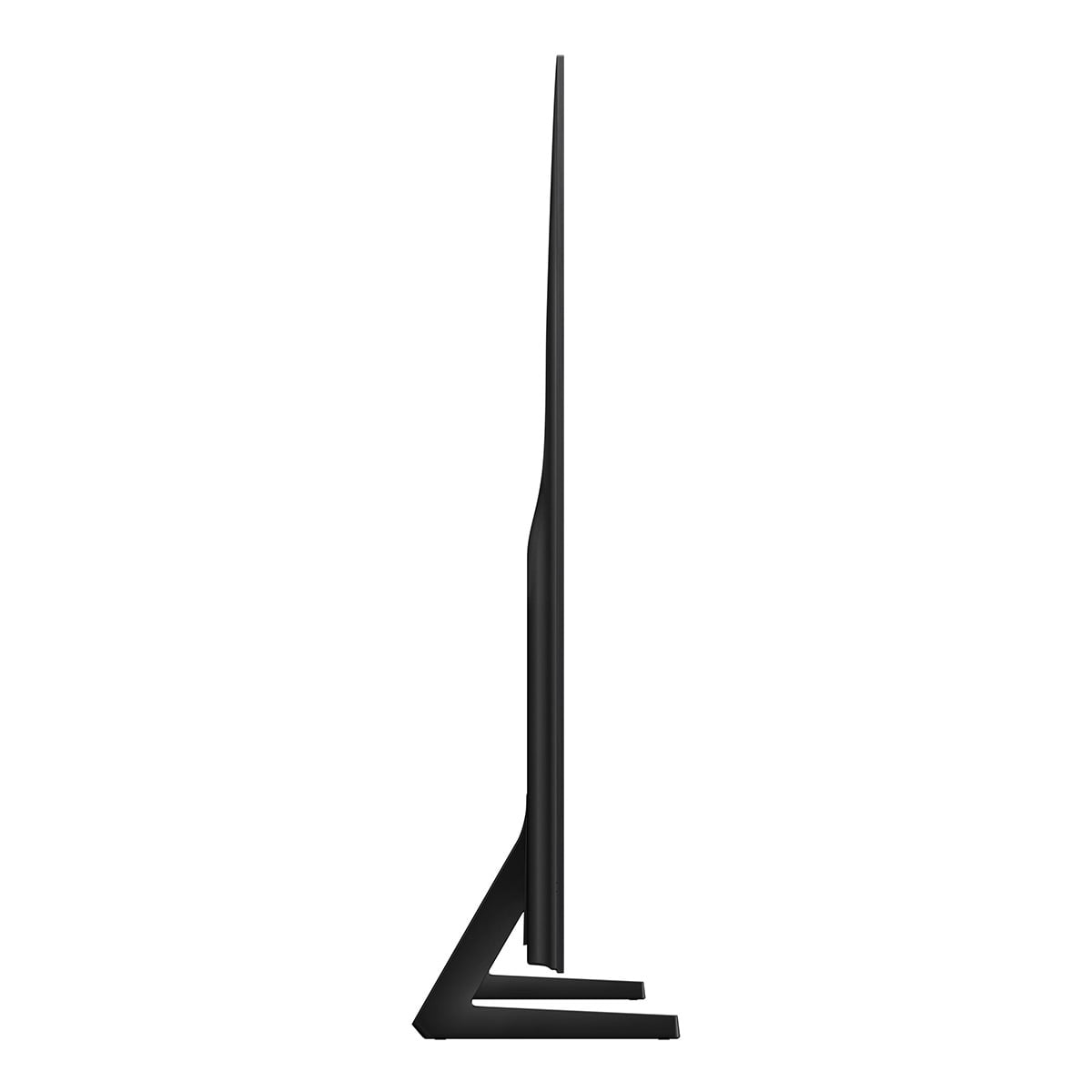
The fundamental difference between these TVs lies in how they create light and color. The Roku Pro Series uses thousands of tiny LED lights (Mini-LEDs) behind a quantum dot layer, with sophisticated software controlling which zones light up and dim down in real-time. Think of it like having thousands of tiny flashlights that can turn on and off independently to create the perfect lighting for each part of your screen.
The Samsung S85F, meanwhile, uses OLED technology where each individual pixel creates its own light. Instead of backlighting, every dot on your screen can turn completely off for perfect blacks or shine brightly for highlights. Samsung's version adds quantum dots to this OLED panel (called QD-OLED), which enhances color vibrancy beyond what traditional OLED can achieve.
This isn't just a technical curiosity—it determines everything about how these TVs perform in your living room.
Here's where the technology difference becomes immediately obvious. Our research shows the Roku Pro Series can hit peak brightness levels around 1,800 nits (a measurement of how bright the screen can get), while the Samsung OLED tops out around 750 nits for small bright objects and drops to roughly 150 nits when the whole screen needs to be bright.
That 1,200% difference in full-screen brightness isn't just a number—it's the difference between a TV that looks vibrant during afternoon football games and one that appears washed out. If your TV faces windows or sits in a bright living room, the Roku's Mini-LED approach maintains color saturation and contrast that makes the Samsung look dim by comparison.
This brightness advantage extends to HDR content (High Dynamic Range, which creates more realistic lighting in movies and shows). When a movie shows the sun glinting off water or an explosion lighting up a dark scene, the Roku delivers that visual punch with intensity that makes you squint reflexively. The Samsung presents these same scenes with more restraint, which is actually more accurate to how the filmmakers intended them to look, but feels less impactful to most viewers.
However, brightness isn't always better. In a dedicated dark room, especially late at night, the Samsung's more moderate brightness can be more comfortable for extended viewing. The OLED's ability to show perfect blacks alongside moderately bright highlights creates a more natural contrast ratio that doesn't strain your eyes during long movie sessions.
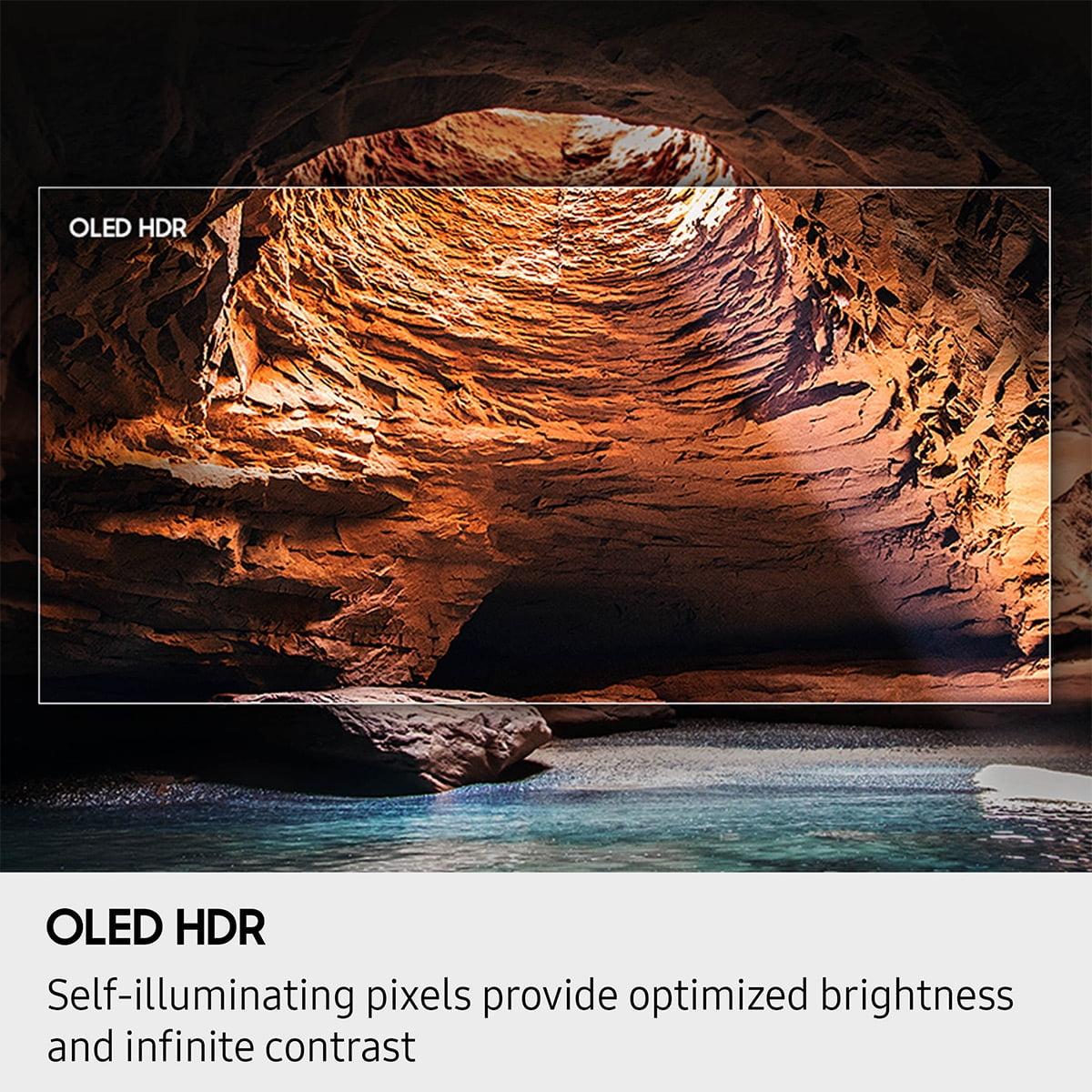
Both TVs excel at contrast, but through completely different methods. The Samsung OLED achieves perfect blacks by literally turning off pixels—when a scene calls for pure darkness, those pixels emit zero light. This creates theoretically infinite contrast ratios and makes dark movie scenes look incredibly realistic.
The Roku's Mini-LED system can't match that pixel-level control, but it comes surprisingly close through precise local dimming. The TV divides the screen into thousands of zones that can independently brighten or dim. When done well—and the 2025 Roku does it very well—this creates deep blacks with minimal "blooming" (unwanted light spilling around bright objects).
In practice, the Roku actually delivers more uniform black levels across the entire screen. OLED panels, despite their technical superiority, can show slight variations in darkness across different areas of the panel. For most content, the Roku's consistent black uniformity looks cleaner than the Samsung's theoretically perfect but potentially uneven blacks.
The real-world winner depends on your content and room. For dark room movie watching, especially films with deep shadows and subtle gradations, the Samsung edges ahead. For mixed content in varied lighting, the Roku provides more consistent performance.
Gaming reveals another interesting split between these technologies. The Samsung S85F offers nearly instantaneous response times—when you press a button, pixels change color almost immediately. This makes competitive gaming feel incredibly responsive, especially in fast-paced shooters or fighting games where every millisecond matters.
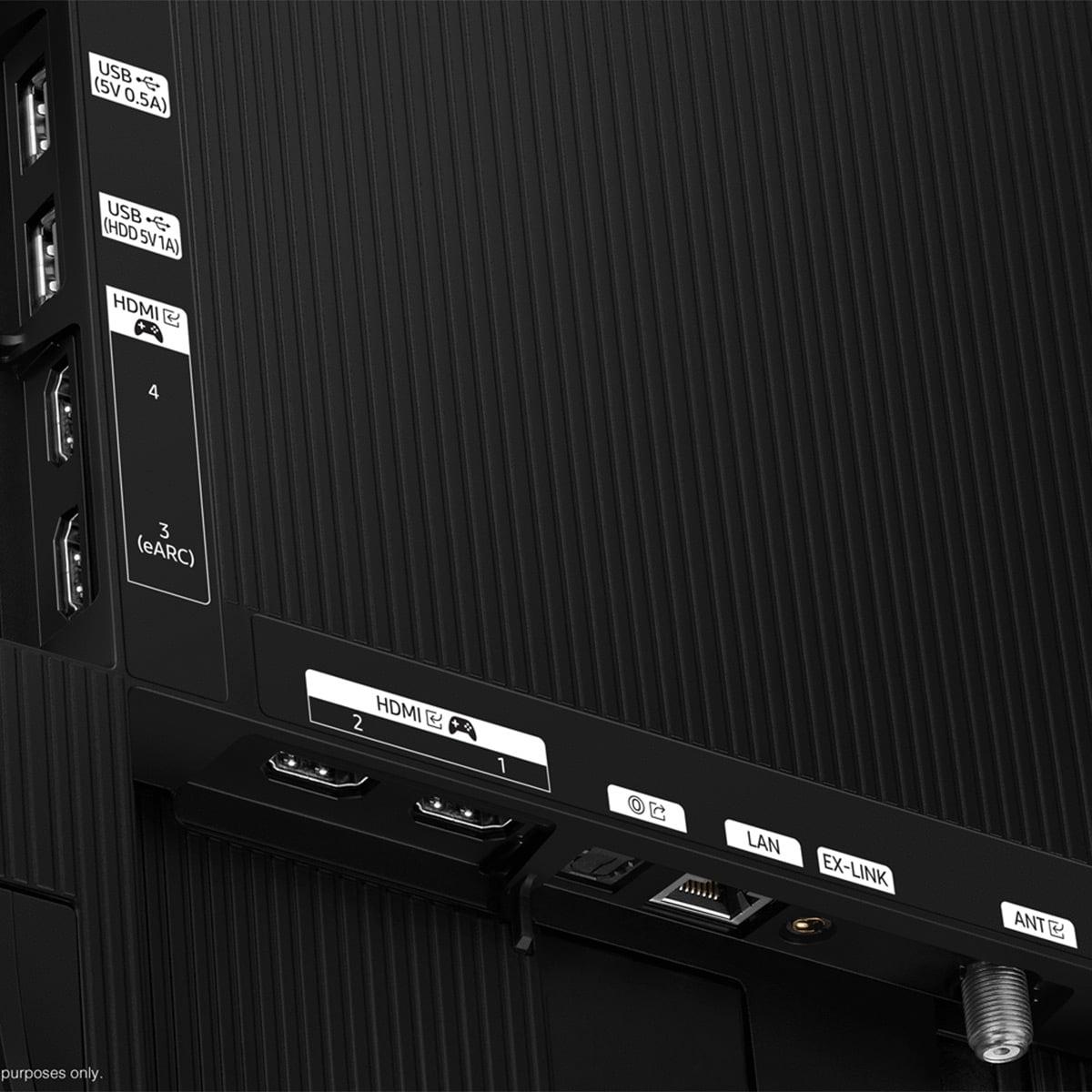
The Samsung also provides more gaming connectivity with four HDMI 2.1 ports compared to the Roku's two. If you're connecting a PlayStation 5, Xbox Series X, and a gaming PC, the Samsung makes setup simpler. It also includes more gaming-specific features like Ultra Wide Game View (which can stretch 21:9 content to fill more of the screen) and Dynamic Black EQ (which brightens dark areas to spot enemies hiding in shadows).
But the Roku counters with advantages that matter for casual gaming. Its native 120Hz refresh rate (compared to Samsung's 100Hz that gets upscaled) provides inherently smoother motion. More importantly, its superior brightness makes HDR gaming significantly more impactful. Games like Horizon Forbidden West or Cyberpunk 2077 look dramatically more vibrant and realistic on the brighter Mini-LED display.
For input lag—the delay between pressing a button and seeing the result—both TVs perform excellently. The Roku hits 5.2 milliseconds while the Samsung achieves near-zero lag. Unless you're a professional esports player, you won't notice the difference.
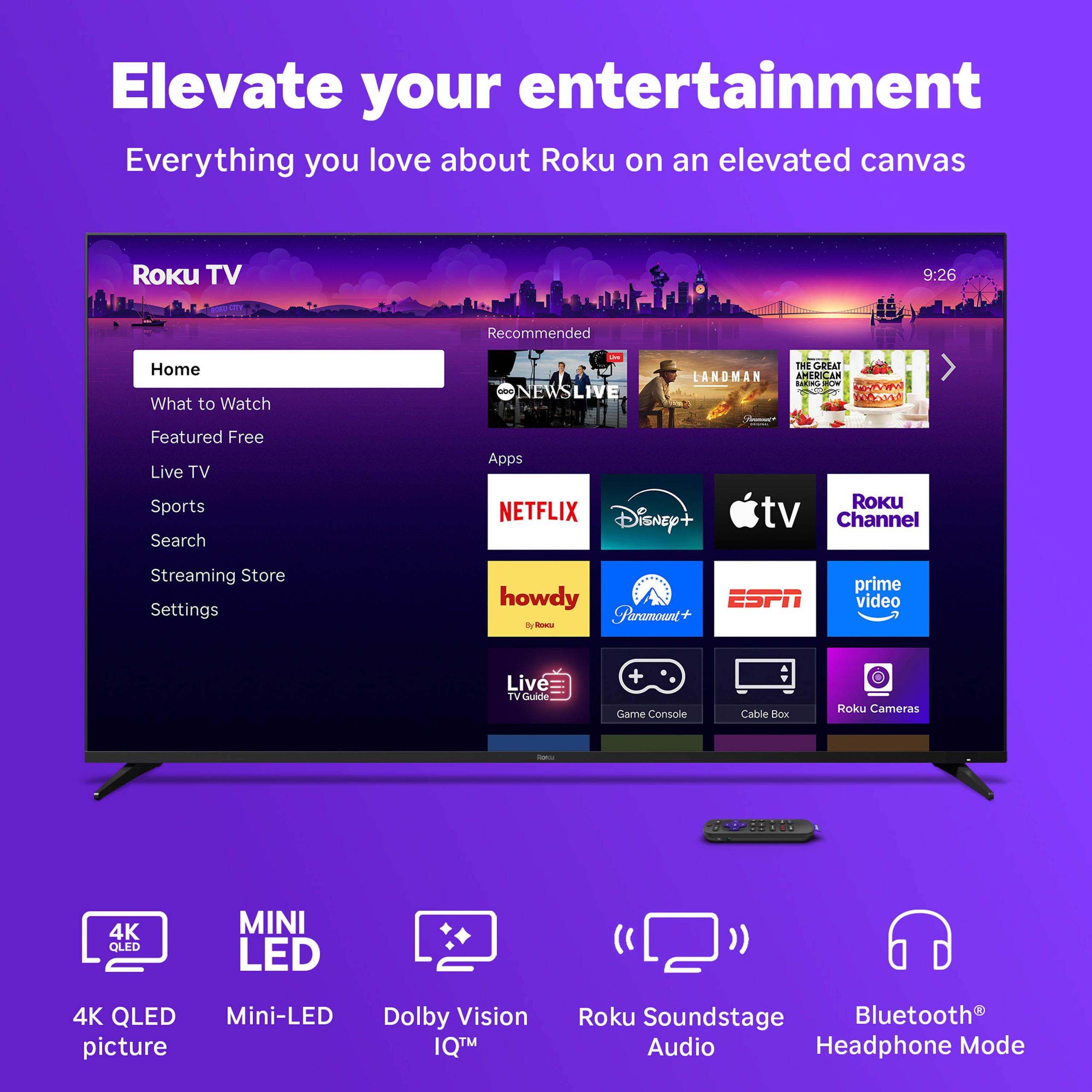
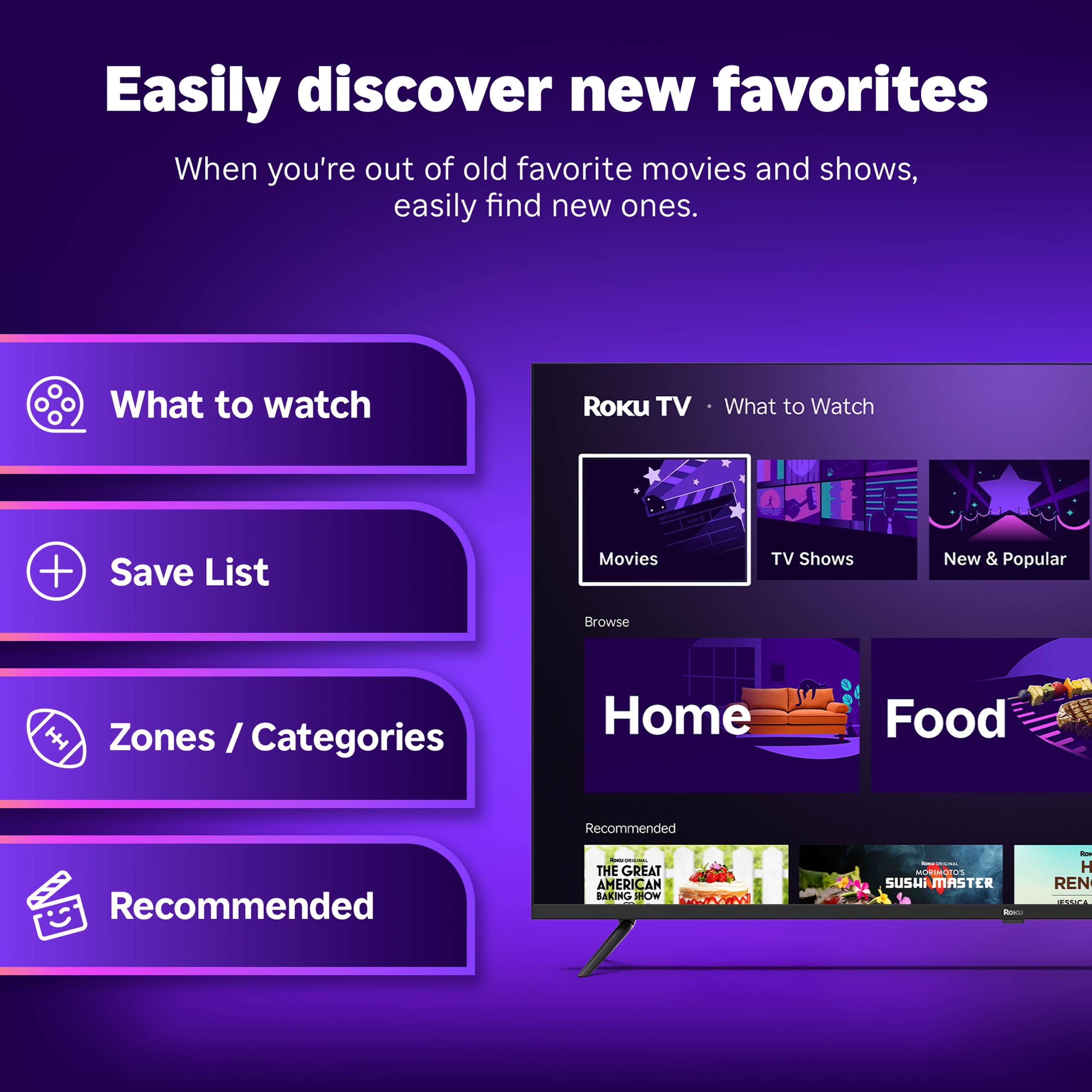
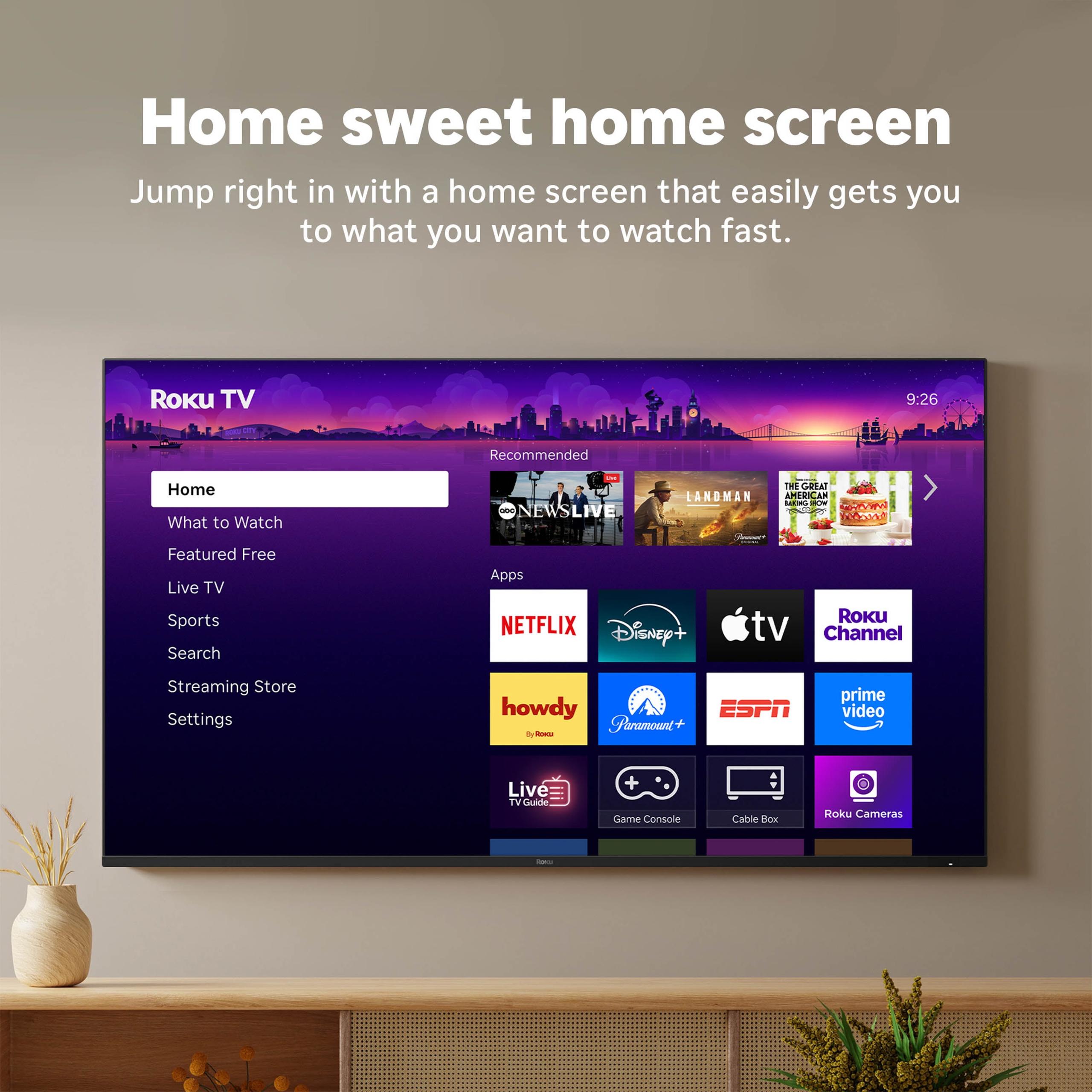
The software experience reveals each company's philosophy about what a smart TV should do. Roku TV OS prioritizes simplicity and content discovery. The interface feels familiar if you've used any Roku device—it's designed to get you watching shows quickly without unnecessary complexity. The platform excels at searching across multiple streaming services and presenting everything in a unified, easy-to-navigate format.
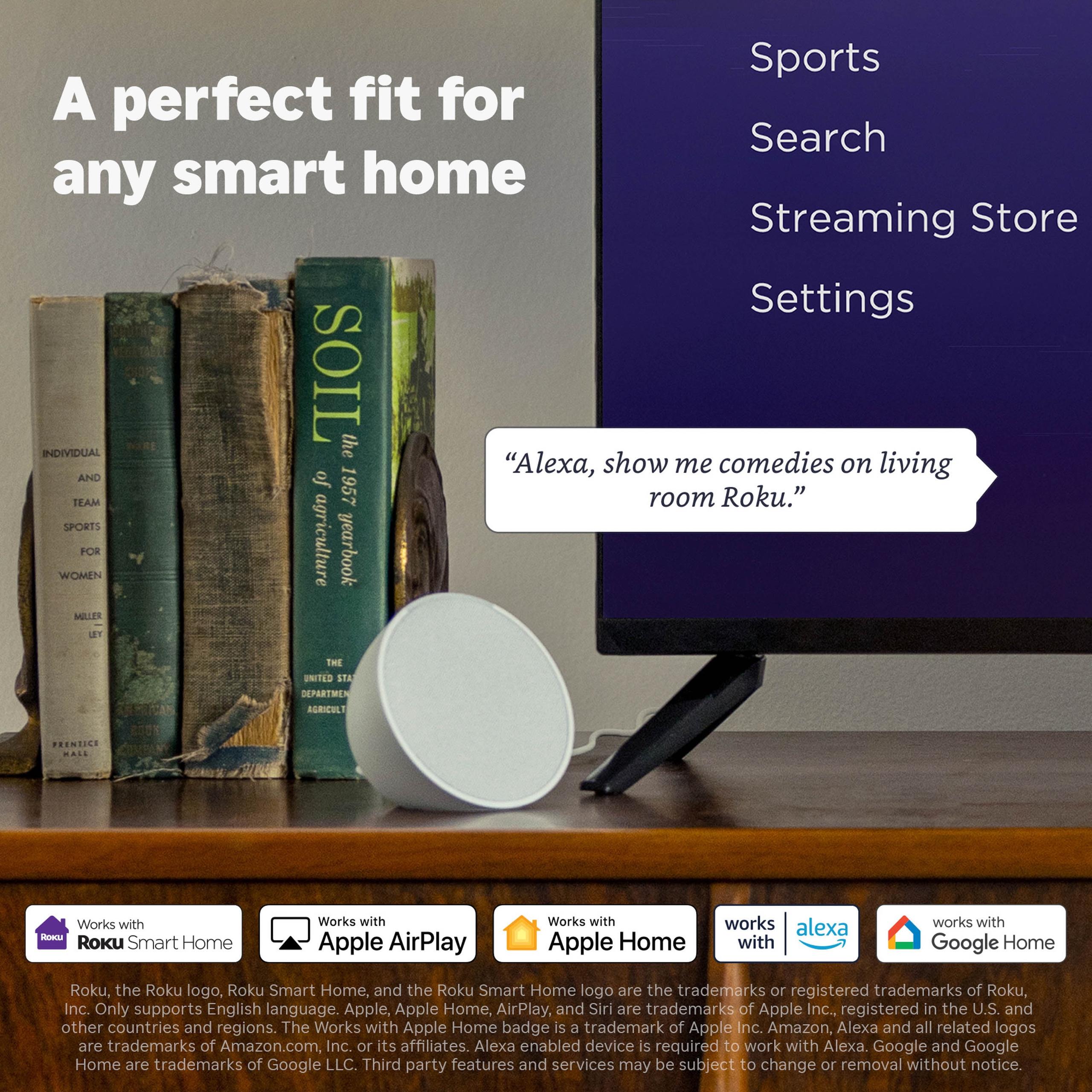
Samsung's Tizen OS takes the opposite approach, packing in features for users who want their TV to be a smart home hub. It can control lights, thermostats, and security systems directly from the TV interface. The Multi-View feature lets you watch two different videos simultaneously—handy for keeping an eye on sports scores while watching a movie. The platform also includes more sophisticated AI features that adapt picture and sound settings based on what you're watching and your room's acoustics.
The Roku wins for straightforward reliability and ease of use. The Samsung appeals to tech enthusiasts who want maximum functionality, even if it means occasional complexity.
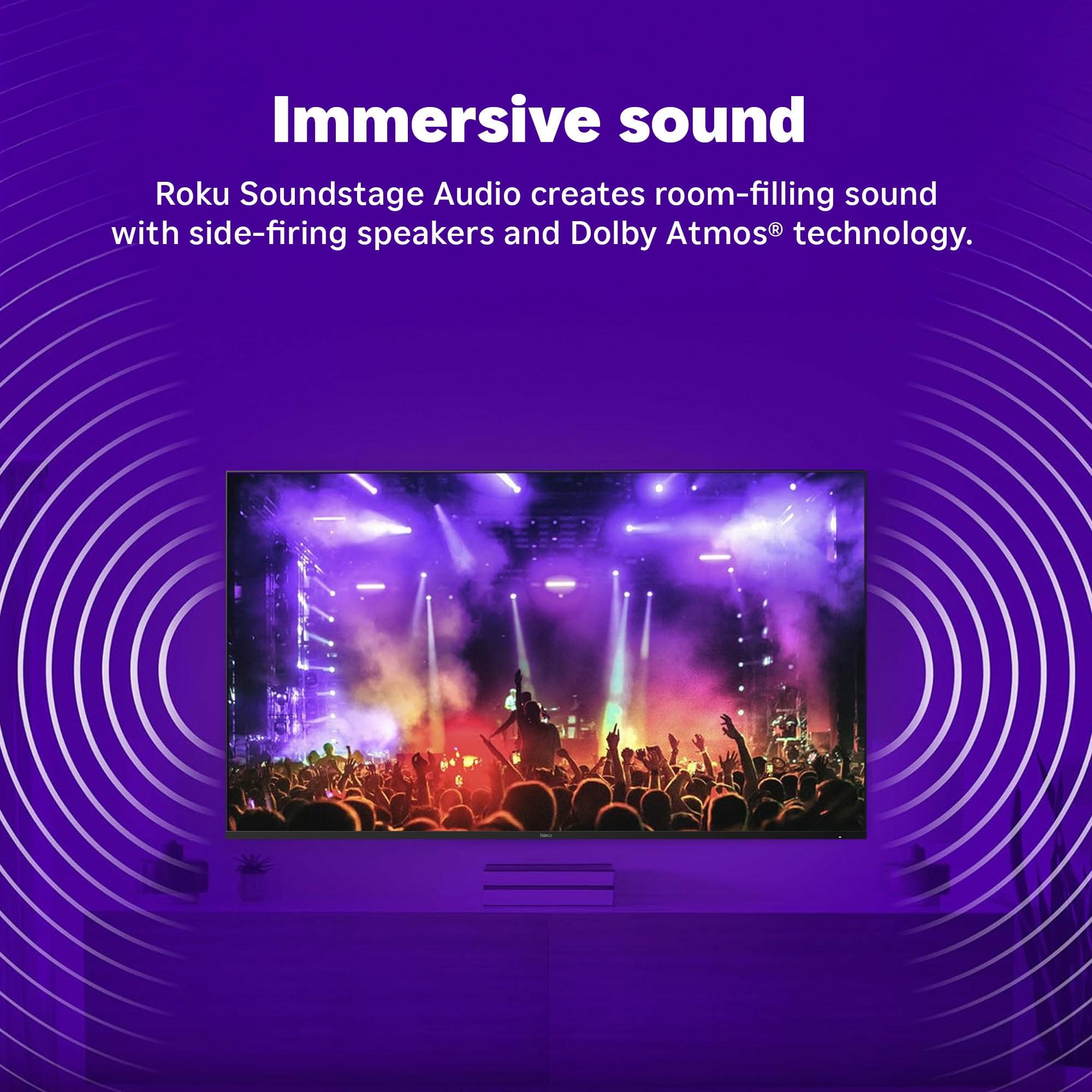
Built-in TV audio rarely impresses, but the Roku Pro Series breaks that trend with unexpectedly strong performance. User feedback consistently highlights bass response that "rattles walls" and overall sound quality that reduces the immediate need for a soundbar. The side-firing Dolby Atmos speakers create surprisingly room-filling audio for a TV this thin.
The Samsung's audio system focuses more on clarity and dialogue intelligibility through its Adaptive Sound Pro feature, which analyzes your room acoustics and adjusts accordingly. While competent, it doesn't match the Roku's impact and presence for standalone viewing.
Both TVs support advanced audio features like Dolby Atmos, but if you're planning to add a premium soundbar eventually, the Samsung's Q-Symphony feature synchronizes perfectly with Samsung audio equipment.
After analyzing extensive user feedback and expert reviews, room lighting emerges as the primary factor that should drive your decision.
Bright rooms and mixed lighting strongly favor the Roku Pro Series. Its Mini-LED brightness cuts through ambient light, maintaining color vibrancy and contrast when sunlight hits the screen or lights are on. The TV looks consistently excellent from morning cartoons to evening movies without requiring you to control room lighting.
Dark, controlled environments give the Samsung OLED its moment to shine. With room lighting minimized, OLED's perfect blacks and color accuracy create an almost film-projection-quality experience. Colors appear more natural and film-accurate, which appeals to movie enthusiasts who prioritize authenticity over visual impact.
Mixed lighting scenarios, common in most family rooms, lean toward the Roku. Its consistent performance across different lighting conditions makes it more versatile for real-world use.
For dedicated home theaters, the choice becomes more nuanced. The Samsung OLED provides reference-quality color accuracy that film purists appreciate, especially when professionally calibrated. Its perfect blacks and precise color reproduction make it the choice for serious cinephiles who want to see movies exactly as directors intended.
However, many home theaters aren't completely dark, and even small amounts of ambient light can wash out OLED blacks. The Roku's superior brightness provides more dramatic HDR impact, which many find more engaging even if it's less technically accurate.
Consider your seating arrangement too. OLED viewing angles remain excellent from the sides, while Mini-LED performance degrades more noticeably off-center. For wide seating areas, the Samsung maintains consistent picture quality better.
Both TVs launched in 2025 with significant improvements over their 2024 predecessors. The Roku Pro Series increased brightness by 75% and improved its AI processing engine, while the Samsung S85F added more advanced color processing and gaming features compared to the previous S85D model.
Historically, Roku TVs earn high marks for software longevity and consistent updates, while Samsung provides more frequent feature additions but sometimes at the cost of interface stability. The Roku's simpler approach typically results in fewer software issues over time.
Choose the Roku 65" Pro Series 2025 if you:
Choose the Samsung 65" S85F OLED if you:
The Roku represents the better choice for most buyers at the time of writing. Its superior brightness and consistent performance across different lighting conditions make it more versatile for typical living room use. The built-in audio quality also provides better immediate value, reducing the pressure to buy additional equipment.
The Samsung appeals to enthusiasts with specific needs: perfect dark room viewing, advanced smart features, or professional color accuracy requirements. In ideal conditions, OLED technology still provides an unmatched viewing experience.
Both TVs deliver premium performance that will satisfy the vast majority of viewers. Your room environment and viewing priorities should drive the final decision more than technical specifications alone. At similar price points, you're choosing between technologies, not value—and both represent excellent options for different use cases.
| Roku 65" Pro Series 2025 4K QLED TV | Samsung 65" S85F OLED 4K Smart TV (2025) |
|---|---|
| Display Technology - Determines fundamental performance characteristics | |
| Mini-LED QLED with full array local dimming | QD-OLED with self-illuminating pixels |
| Peak Brightness - Critical for bright rooms and HDR impact | |
| 1,818 nits (excellent for daytime viewing) | 750 nits small highlights, 150 nits full screen (best for dark rooms) |
| Refresh Rate - Affects motion smoothness and gaming | |
| Native 120Hz | Native 100Hz (upscaled to 120Hz for gaming) |
| HDMI 2.1 Ports - For next-gen gaming consoles and PCs | |
| 2 ports supporting 4K@120Hz | 4 ports supporting 4K@120Hz |
| Input Lag - Lower is better for competitive gaming | |
| 5.2ms at 120Hz | Near-zero (instantaneous OLED response) |
| HDR Support - Enhanced contrast and color range | |
| Dolby Vision IQ, HDR10+, HLG | OLED HDR (proprietary), HDR10+ Adaptive |
| Smart Platform - Affects ease of use and features | |
| Roku TV OS (simple, content-focused) | Tizen OS (feature-rich, smart home hub) |
| Audio System - Built-in speaker quality | |
| Side-firing Dolby Atmos with enhanced bass | 20W 2-channel with Object Tracking Sound Lite |
| Viewing Angle - Picture quality from the sides | |
| Good (typical for Mini-LED) | Excellent (OLED advantage) |
| Black Levels - Darkness quality in movies | |
| Very good with superior black uniformity | Perfect blacks but potential uniformity issues |
| Color Accuracy - Important for film enthusiasts | |
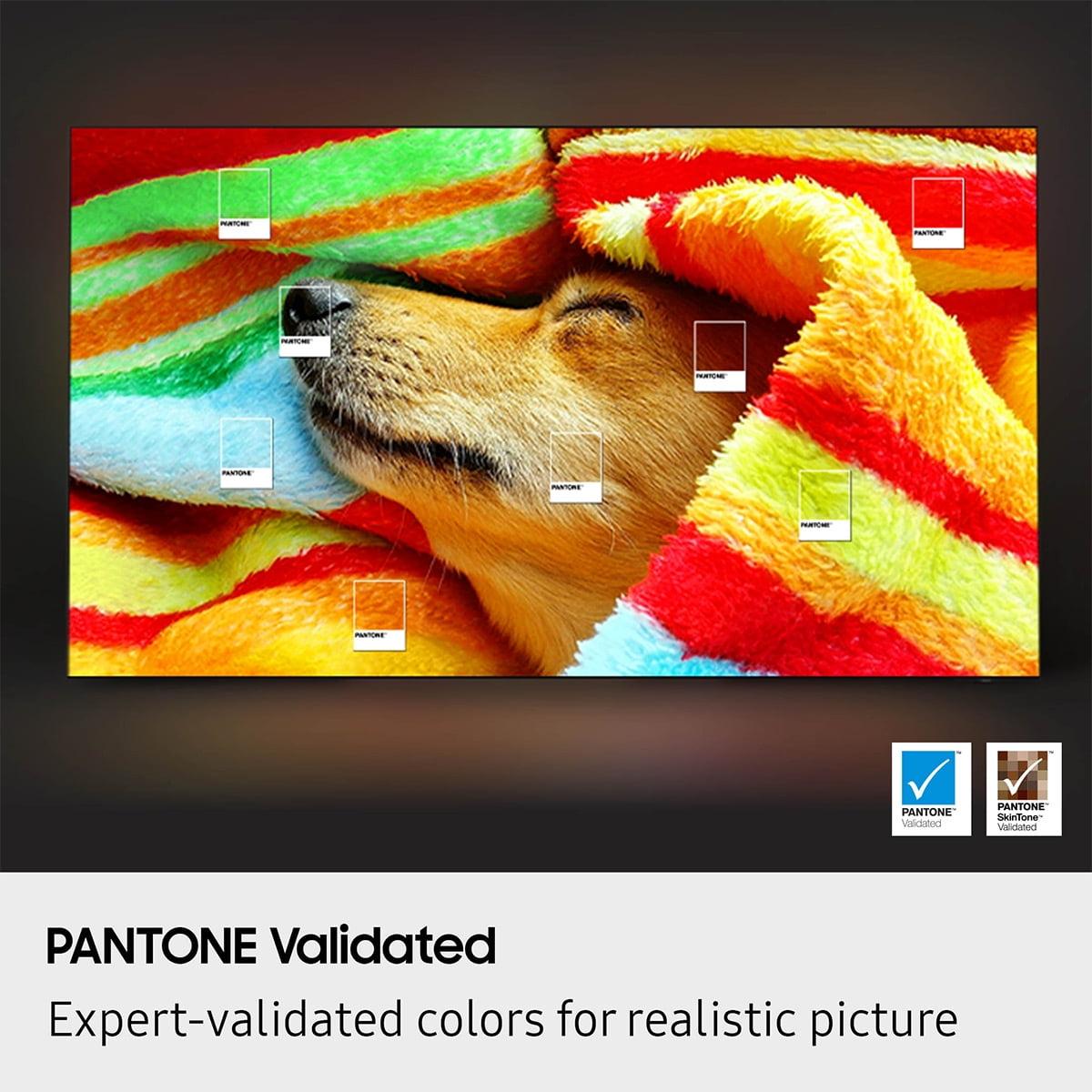
| Very good with vibrant, punchy colors | Excellent with Pantone validation |
| Processor - Affects upscaling and AI features | |
| Smart Picture Max AI processing | NQ4 AI Gen2 with 20 neural networks |
| Remote Control - Daily usability factor | |
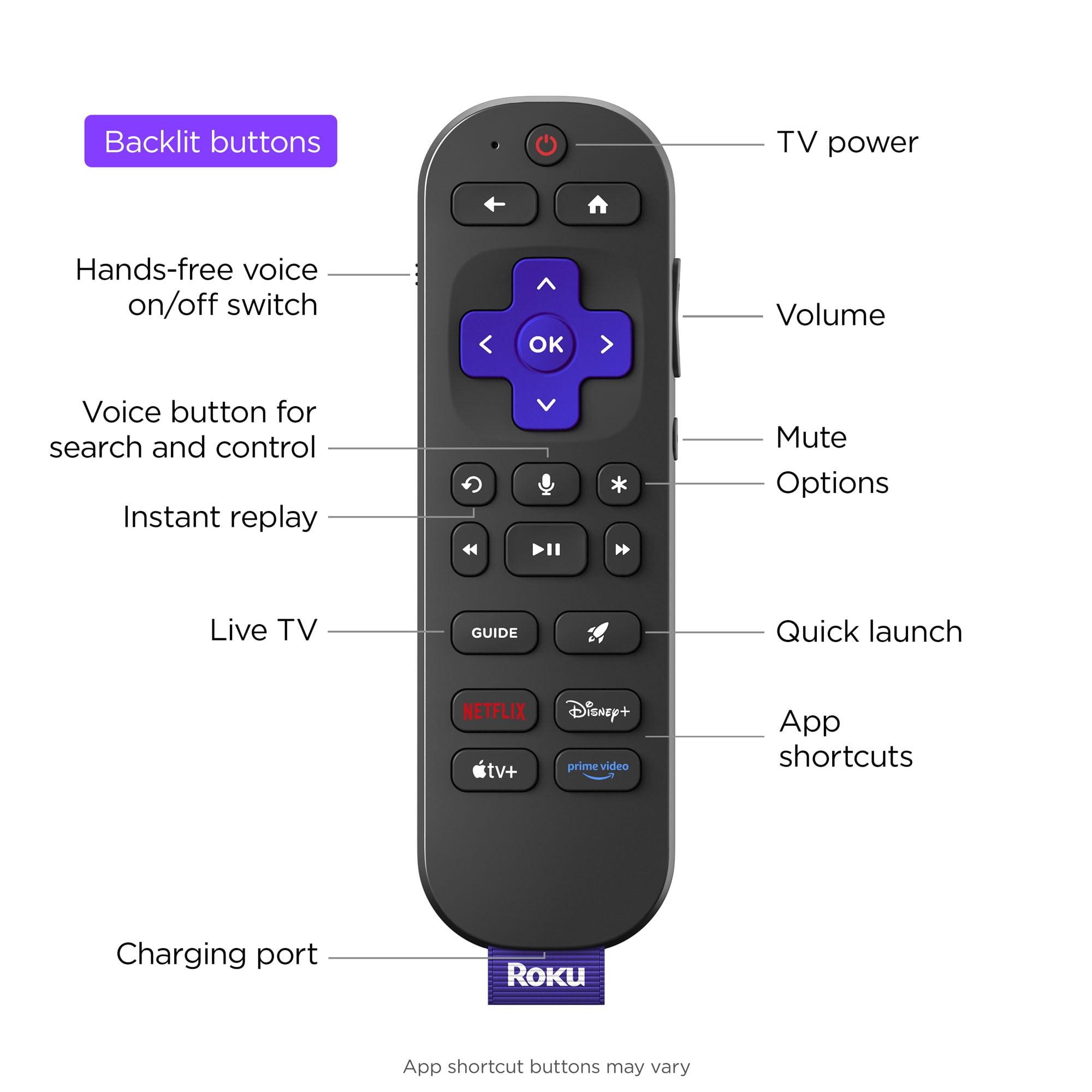
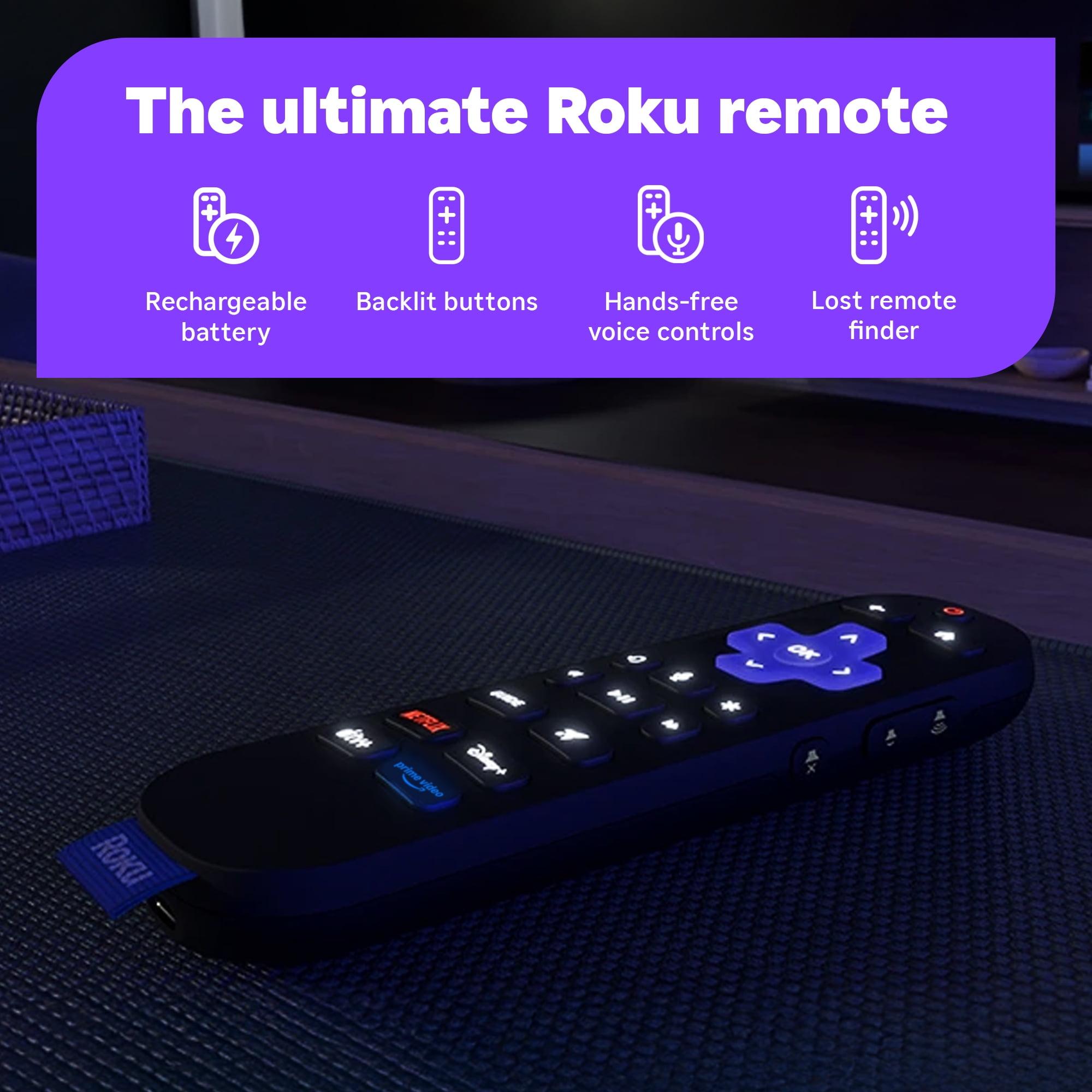
| Backlit Voice Remote Pro with charging dock | SolarCell Remote (solar powered) |
| Gaming Features - Beyond basic HDMI 2.1 support | |
| FreeSync Premium Pro, Auto Game Mode, VRR | Game Motion Plus, Dynamic Black EQ, Ultra Wide Game View, Gaming Hub |
| Best Room Environment - Where each TV excels | |
| Bright rooms and mixed lighting | Dark rooms and controlled lighting |
The Roku 65" Pro Series 2025 is significantly better for bright rooms, delivering up to 1,818 nits of peak brightness compared to the Samsung S85F OLED's 750 nits. This means the Roku maintains vibrant colors and strong contrast even with windows open or lights on, while the Samsung OLED can appear washed out in bright lighting conditions.
The Roku Pro Series uses Mini-LED technology with thousands of tiny LEDs behind the screen that can dim independently, while the Samsung S85F uses OLED where each pixel creates its own light. Mini-LED excels in brightness and works better in lit rooms, while OLED provides perfect blacks and works best in dark environments.
Both TVs offer excellent gaming, but with different strengths. The Samsung S85F OLED has four HDMI 2.1 ports versus the Roku's two, plus near-zero input lag and more gaming features. However, the Roku Pro Series offers native 120Hz refresh rate and superior brightness that makes HDR games more visually impactful.
Yes, they use completely different platforms. The Roku Pro Series runs Roku TV OS, which is simple and focused on content discovery across streaming services. The Samsung S85F uses Tizen OS, offering more advanced features like smart home hub integration and multi-view capabilities, but with added complexity.
The Samsung S85F OLED is better for dedicated dark rooms and home theaters. Its perfect black levels and precise color accuracy create a more film-accurate experience when lighting is controlled. The Roku performs well in dark rooms too, but the Samsung's OLED technology truly shines without ambient light interference.
The Roku Pro Series has notably better built-in audio with side-firing Dolby Atmos speakers that users describe as having "theater-like bass." The Samsung S85F offers competent 20W audio with smart features like room acoustics adaptation, but doesn't match the Roku's impact and presence for standalone viewing.
Both TVs compete at similar price points, making this about technology preference rather than value. The Roku Pro Series offers better practical performance for most living rooms with superior brightness and audio. The Samsung S85F provides premium OLED technology and more connectivity options, appealing to enthusiasts who prioritize perfect blacks and advanced features.
Yes, both support 4K gaming at 120Hz, but with different capabilities. The Samsung S85F offers four HDMI 2.1 ports for multiple consoles, while the Roku Pro Series has two HDMI 2.1 ports. The Samsung has faster response times for competitive gaming, while the Roku provides more vibrant HDR gaming visuals.
The Samsung S85F OLED offers superior color accuracy with Pantone validation and professional-grade color reproduction that's more faithful to filmmaker intentions. The Roku Pro Series delivers more vibrant, punchy colors that many viewers prefer for the visual impact, though they're less technically accurate than the Samsung's reference-quality colors.
The Samsung S85F OLED maintains excellent picture quality when viewed from the sides, making it better for wide seating arrangements. The Roku Pro Series shows more noticeable degradation in color and contrast when viewed off-center, which is typical for Mini-LED technology.
The Roku Pro Series historically offers better long-term software reliability with consistent updates and fewer interface issues due to its simpler operating system. The Samsung S85F provides more frequent feature updates but can sometimes experience software complexity issues. Both represent current-generation technology with expected longevity.
Choose the Roku Pro Series Mini-LED if your living room has variable lighting throughout the day and you want consistently good performance regardless of conditions. Choose the Samsung S85F OLED if you can control room lighting and prioritize perfect blacks with film-accurate colors, especially for evening and nighttime viewing.
We've done our best to create useful and informative comparisons to help you decide what product to buy. Our research uses advanced automated methods to create this comparison and perfection is not possible - please contact us for corrections or questions. These are the sites we've researched in the creation of this article: bestbuy.com - rtings.com - techradar.com - youtube.com - roku.com - youtube.com - walmart.com - bestbuy.com - youtube.com - electronicexpress.com - roku.com - pcvarge.com - ecoustics.com - rtings.com - samsung.com - youtube.com - rtings.com - youtube.com - samsung.com - bestbuy.com - avsforum.com - avsforum.com - samsung.com - displayspecifications.com - videoandaudiocenter.com - bestbuy.com - flatpanelshd.com - myallsouth.com - samsung.com - richstv.com - samsung.com - heartlandappliance.com

Privacy Policy
Terms and Conditions - Affiliate Policy
Home Security
© Copyright 2008-2026.
11816 Inwood Rd #1211, Dallas, TX 75244