

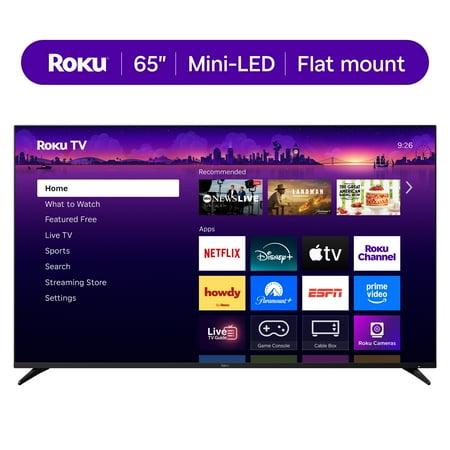
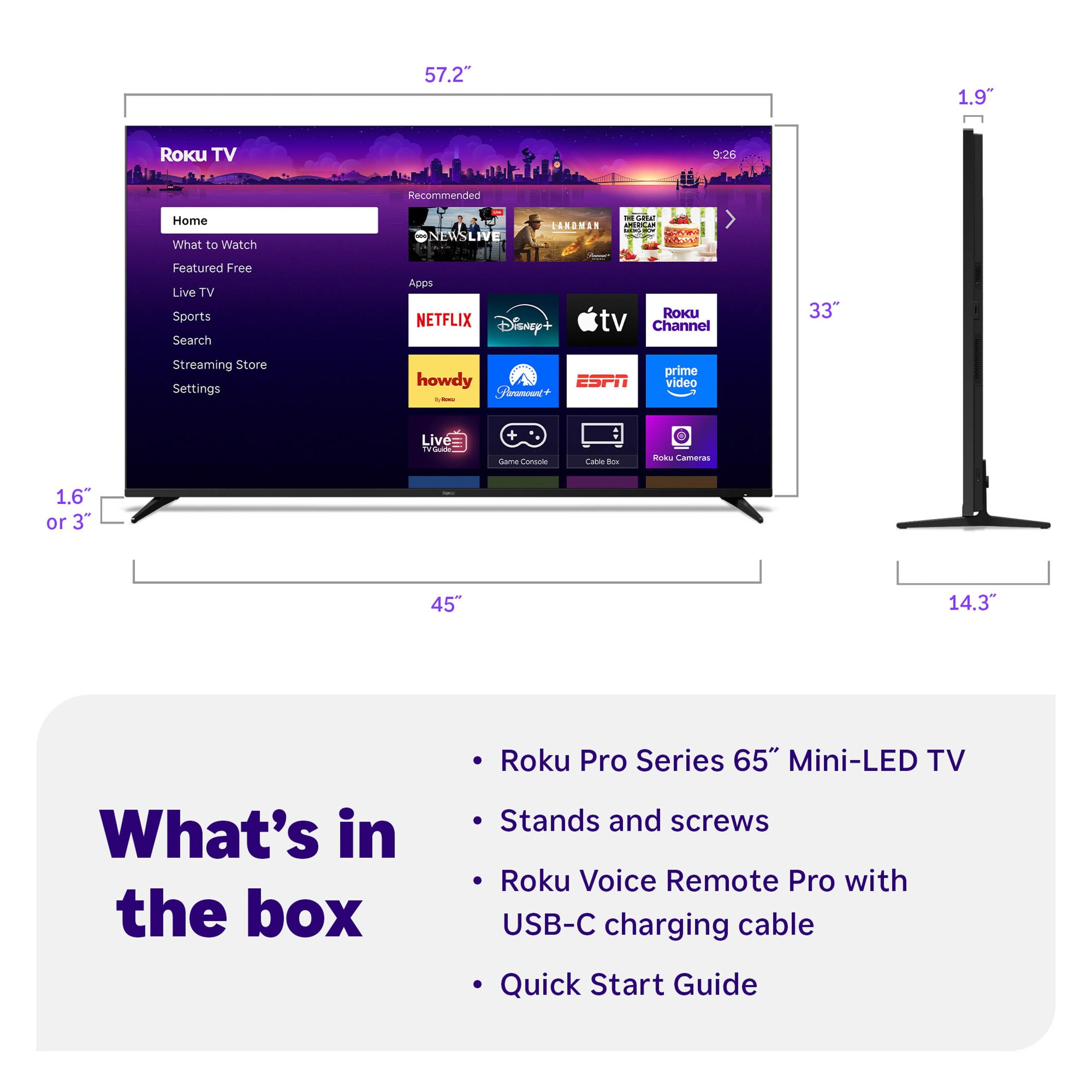
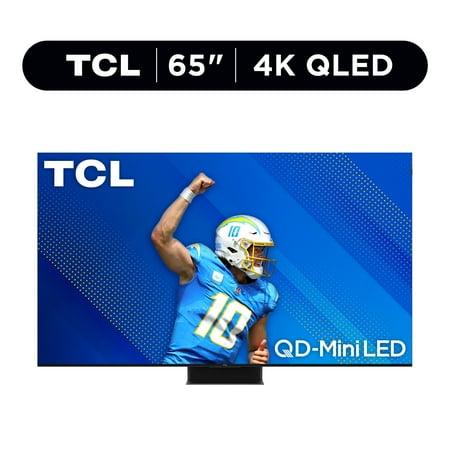




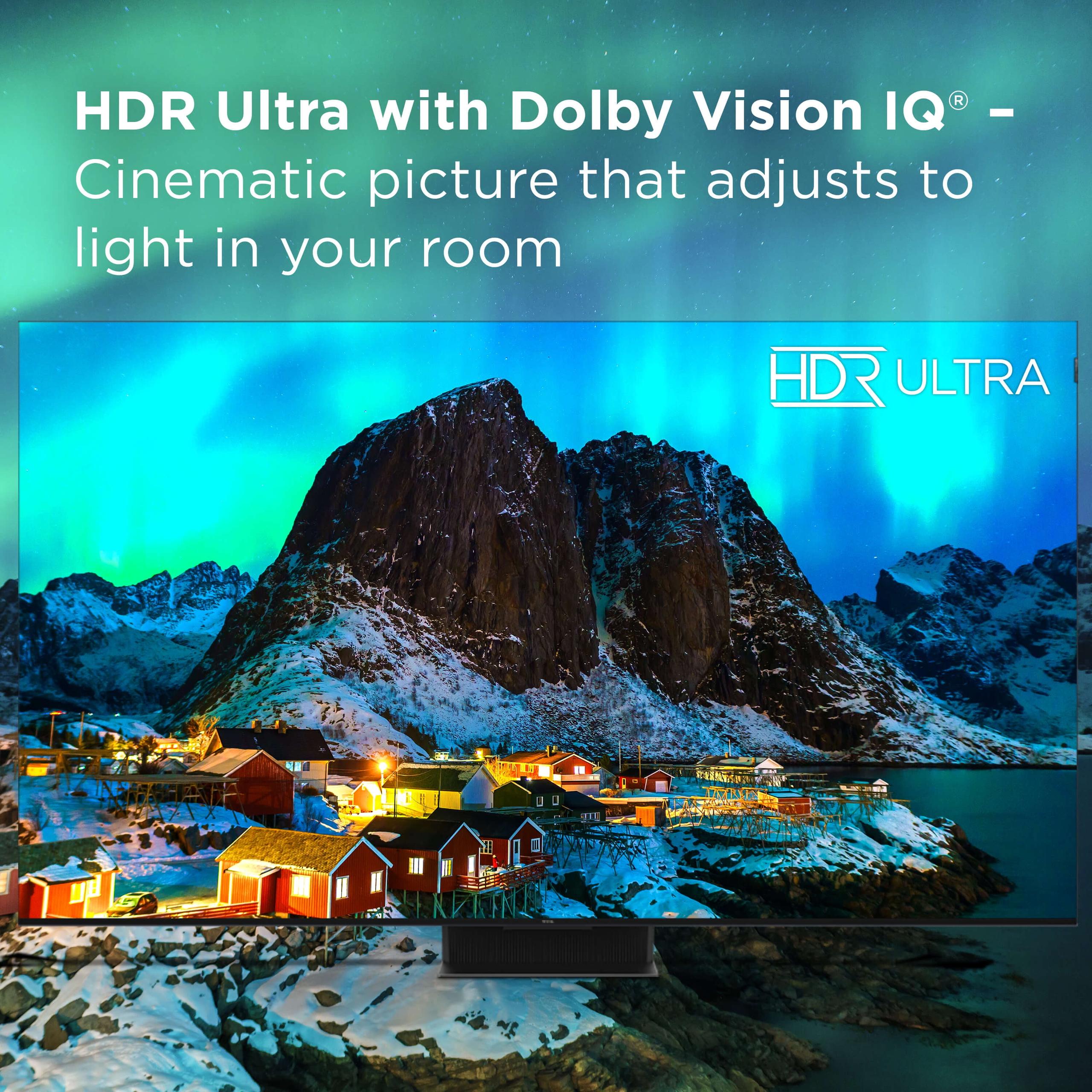
The 65-inch premium TV market has become incredibly competitive, especially in the mini-LED space where manufacturers are pushing the boundaries of what's possible without jumping to OLED technology. Two standouts that caught our attention are the Roku 65" Pro Series 2025 and the TCL 65" QM8 – both promising flagship-level performance but taking notably different approaches to get there.
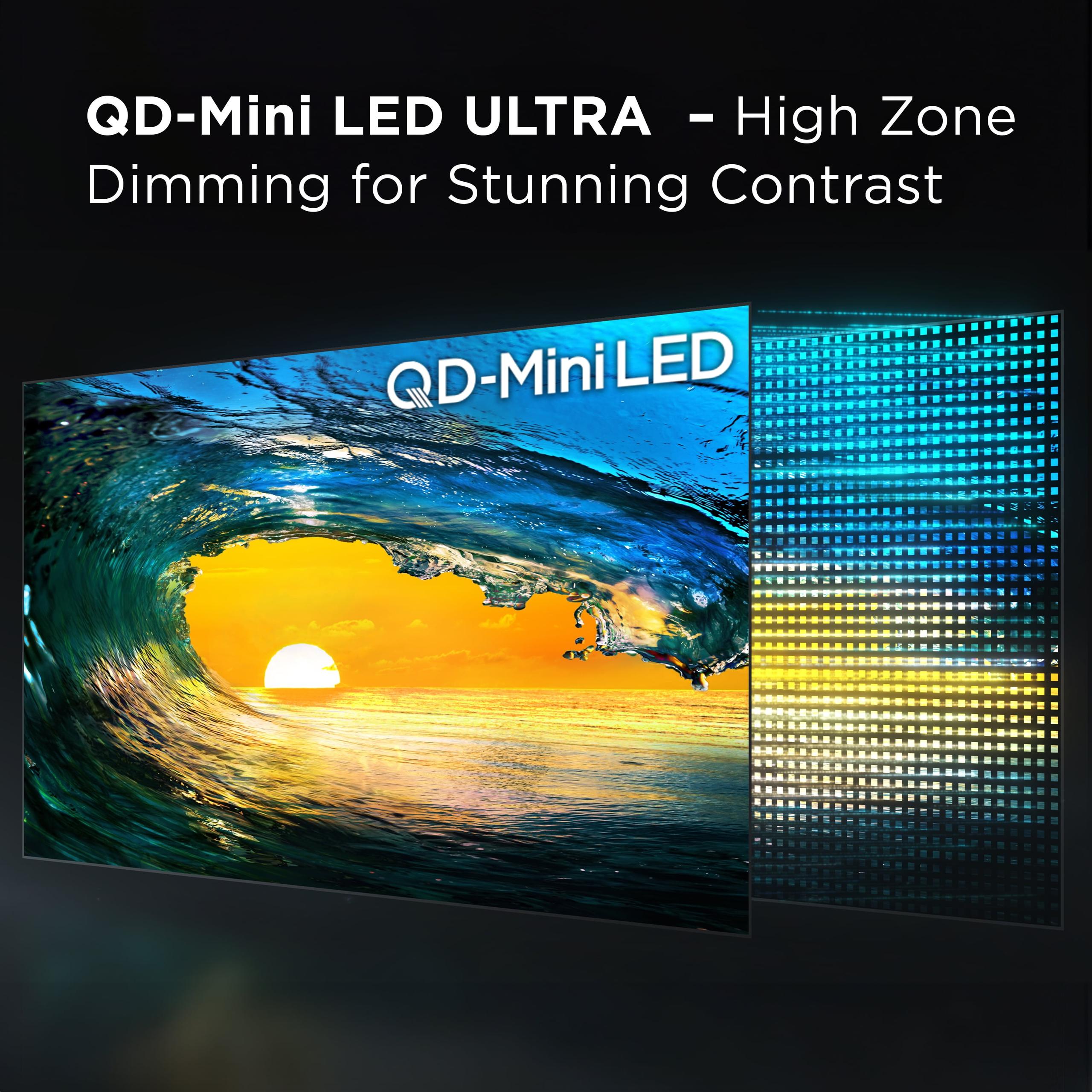
Before diving into the comparison, it's worth understanding what makes mini-LED TVs special. Traditional LED TVs use large LED lights behind the screen, which can create uneven brightness and "blooming" – that annoying halo effect around bright objects on dark backgrounds. Mini-LED technology uses thousands of tiny LEDs instead, each controlled individually through what's called "local dimming zones." Think of it like having thousands of tiny dimmer switches working together to create the perfect lighting for each part of your screen.
This technology sits between standard LED and OLED in both performance and price. You get much better contrast and brightness control than regular LEDs, without the burn-in risks that still concern some OLED buyers. For most people, premium mini-LED represents the sweet spot of performance, durability, and value.
The key factors that separate good mini-LED TVs from great ones include peak brightness capability (how bright the screen can get), the number and precision of dimming zones (how well it can control light and darkness), color accuracy, and how well the TV handles fast motion. Gaming performance has also become crucial, with features like high refresh rates and low input lag making a significant difference for console and PC gaming.
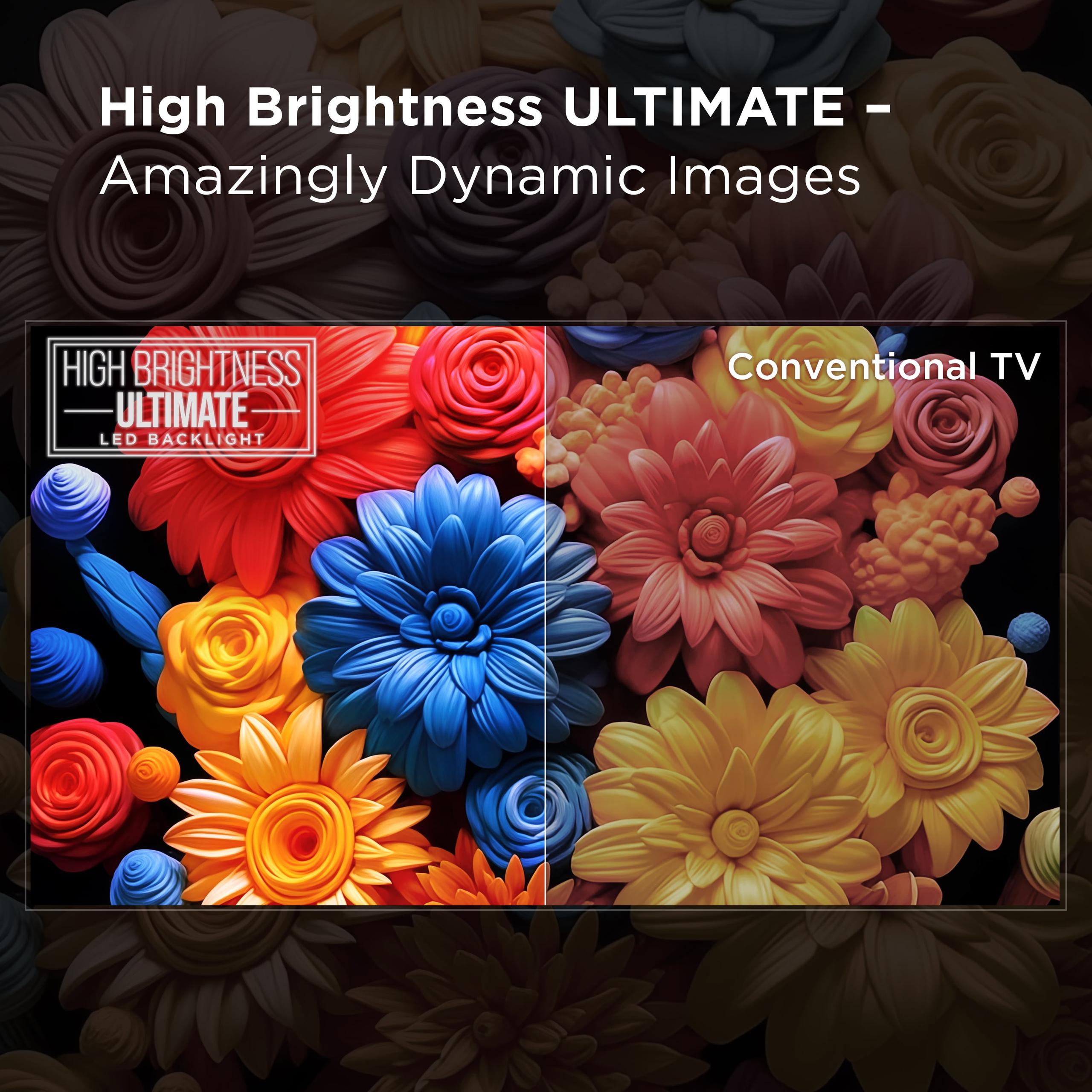
This is where the TCL QM8 establishes a commanding lead that's hard to ignore. The TCL can reach up to 5,000 nits of peak brightness, while the Roku Pro Series 2025 tops out around 1,800 nits in its brightest mode. To put this in perspective, a typical sunny day produces about 100,000 nits, while indoor lighting ranges from 100-1,000 nits. Most TVs struggle to get above 1,000 nits, so both of these are impressive – but the TCL's advantage is substantial.
What does this mean in real-world use? If you have a bright living room with large windows, the TCL QM8 will maintain vibrant colors and deep contrast even with significant ambient light, while the Roku might start to look washed out in the same conditions. For HDR content – which uses brightness peaks to create more realistic lighting effects – the TCL can reproduce the filmmaker's intent much more accurately. When a scene shows sunlight reflecting off water or the bright flash of an explosion, the TCL makes those moments genuinely impactful.
The TCL achieves this through what they call their "Super High Energy LED Microchip" combined with a "Condensed Micro Lens" system. This isn't just marketing speak – these components work together to focus more light output from each mini-LED while maintaining precise control. The result is both higher peak brightness and better efficiency.
The precision of local dimming zones makes a huge difference in picture quality, and here again the TCL QM8 takes a technical lead with up to 3,800 precisely controlled dimming zones compared to the Roku's more traditional full-array approach. More zones mean finer control over which parts of the screen are bright or dark at any given moment.
TCL's "Halo Control System" includes something called "Micro-OD technology" – essentially a way to position the LEDs extremely close to the screen surface. This proximity allows for more precise light control and virtually eliminates the blooming effect that can plague other mini-LED TVs. When you're watching a movie with white subtitles on a black background, the TCL keeps the light tightly controlled around just the text, while lesser TVs create distracting halos.
The Roku Pro Series does include full-array local dimming and has improved its zone precision for 2025, but it's working with fewer zones and less sophisticated control algorithms. In practice, this means you might notice some light bleeding in very dark scenes, especially if you're watching in a completely dark room where these imperfections become more visible.
Interestingly, this is one area where the Roku shows some advantages. The 2025 model includes "Smart Picture Max," an AI-powered processing system that analyzes incoming video signals scene by scene and automatically adjusts color, contrast, and sharpness. This technology has improved significantly since Roku's earlier TV efforts, and it shows in the color accuracy measurements.
Out of the box, the Roku achieves better color accuracy than the TCL, with a color error (measured in delta E) of 2.6 compared to the TCL's 3.9. For context, anything under 3.0 is considered very good, and most people can't detect differences below 2.0. This means the Roku requires less tweaking to look natural, while the TCL might benefit from some picture mode adjustments or calibration.
The Roku's processing also excels at cleaning up lower-quality content. If you're streaming older shows or watching cable TV, the Smart Picture Max system does impressive work reducing compression artifacts and sharpening details without creating that artificial "soap opera effect" that some processing can introduce.
The TCL QM8 counters with its "AIPQ PRO Processor," which uses machine learning to optimize picture settings based on content type. While not quite as refined as the Roku's system out of the box, it's highly effective once properly configured and offers more manual control for users who want to fine-tune their experience.
Gaming has become a crucial consideration for TV buyers, especially with PlayStation 5 and Xbox Series X pushing 4K gaming at higher frame rates. Both TVs handle modern gaming well, but with important differences.
The TCL QM8 supports native 144Hz refresh rates at 4K resolution, and can actually go up to 288Hz at 1080p – numbers that would have been unthinkable in consumer TVs just a few years ago. The Roku Pro Series offers a respectable 120Hz at 4K, which is still excellent and matches what most gaming consoles can output.
Higher refresh rates matter most for PC gaming and competitive gaming where every millisecond counts. If you're playing fast-paced shooters or racing games, the TCL's 144Hz capability provides noticeably smoother motion and can reduce input lag. For casual console gaming, the Roku's 120Hz is perfectly adequate and you likely won't notice the difference.
Both TVs include Variable Refresh Rate (VRR) technology, which synchronizes the TV's refresh rate with your gaming device to eliminate screen tearing – those distracting horizontal lines that can appear during fast motion. The Roku specifically includes AMD FreeSync Premium Pro, while the TCL supports multiple VRR standards for broader compatibility.
Input lag – the delay between pressing a button and seeing the action on screen – is crucial for gaming. Both TVs include automatic game modes that minimize this delay, but the Roku achieves particularly impressive input lag of just 5.2 milliseconds at 120Hz. For comparison, anything under 20ms is considered excellent for gaming, so both TVs perform exceptionally well here.
The TCL QM8 includes its "Game Accelerator 288" feature, which optimizes not just input lag but also motion processing and local dimming for gaming content. This prevents the dimming zones from creating distracting brightness changes during fast-paced gaming action.
Most TV speakers are afterthoughts, but both of these models take audio seriously enough that you might not need a soundbar immediately – though you'll probably want one eventually for a true home theater experience.
The TCL QM8 includes an impressive audio setup: an 80-watt system with dedicated left and right speakers, a built-in subwoofer, and two up-firing speakers for Dolby Atmos effects. The audio is tuned by ONKYO and engineered by Bang & Olufsen, which shows in the results. The dedicated subwoofer provides actual bass response that you can feel, while the up-firing speakers create a sense of height and space that most TV speakers can't achieve.
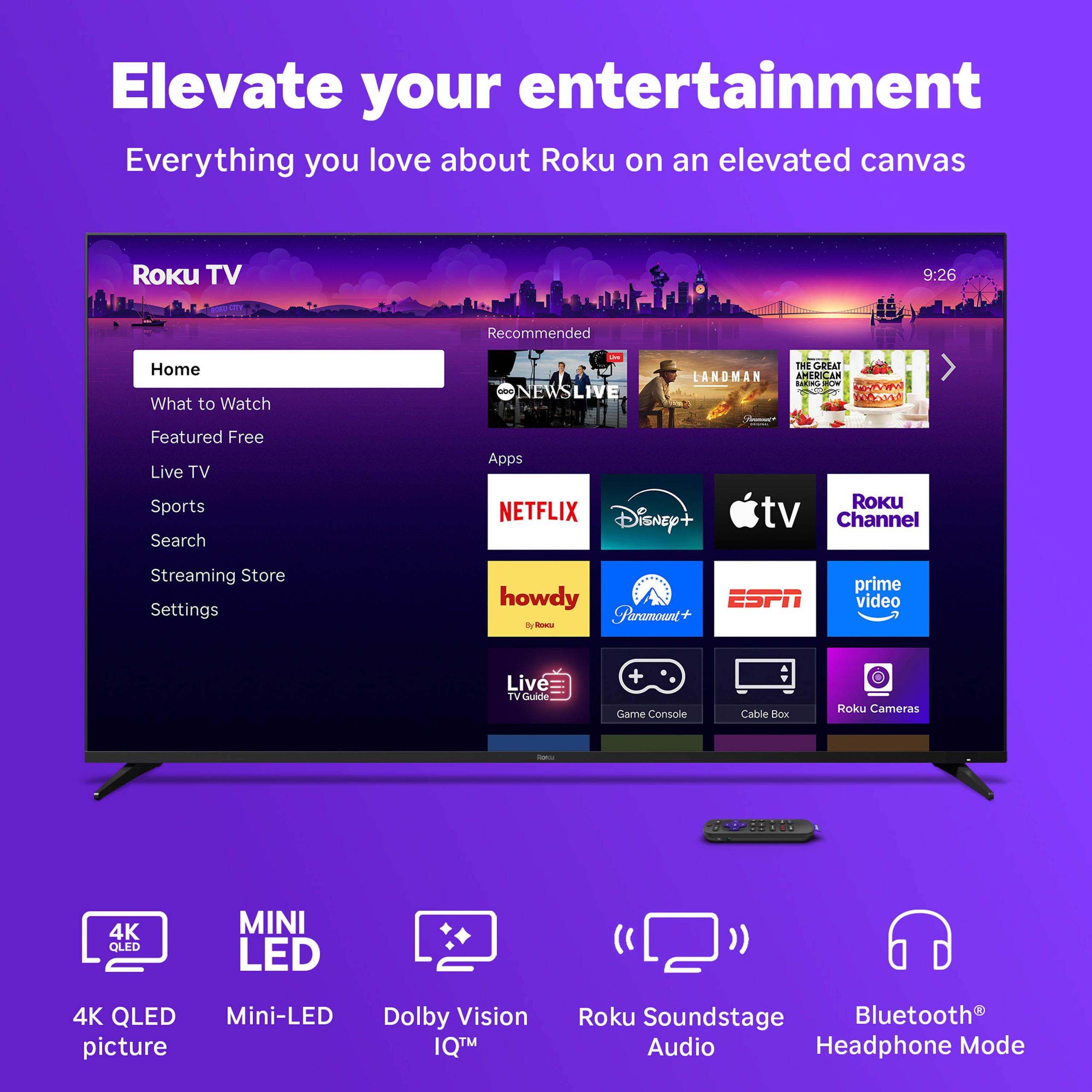
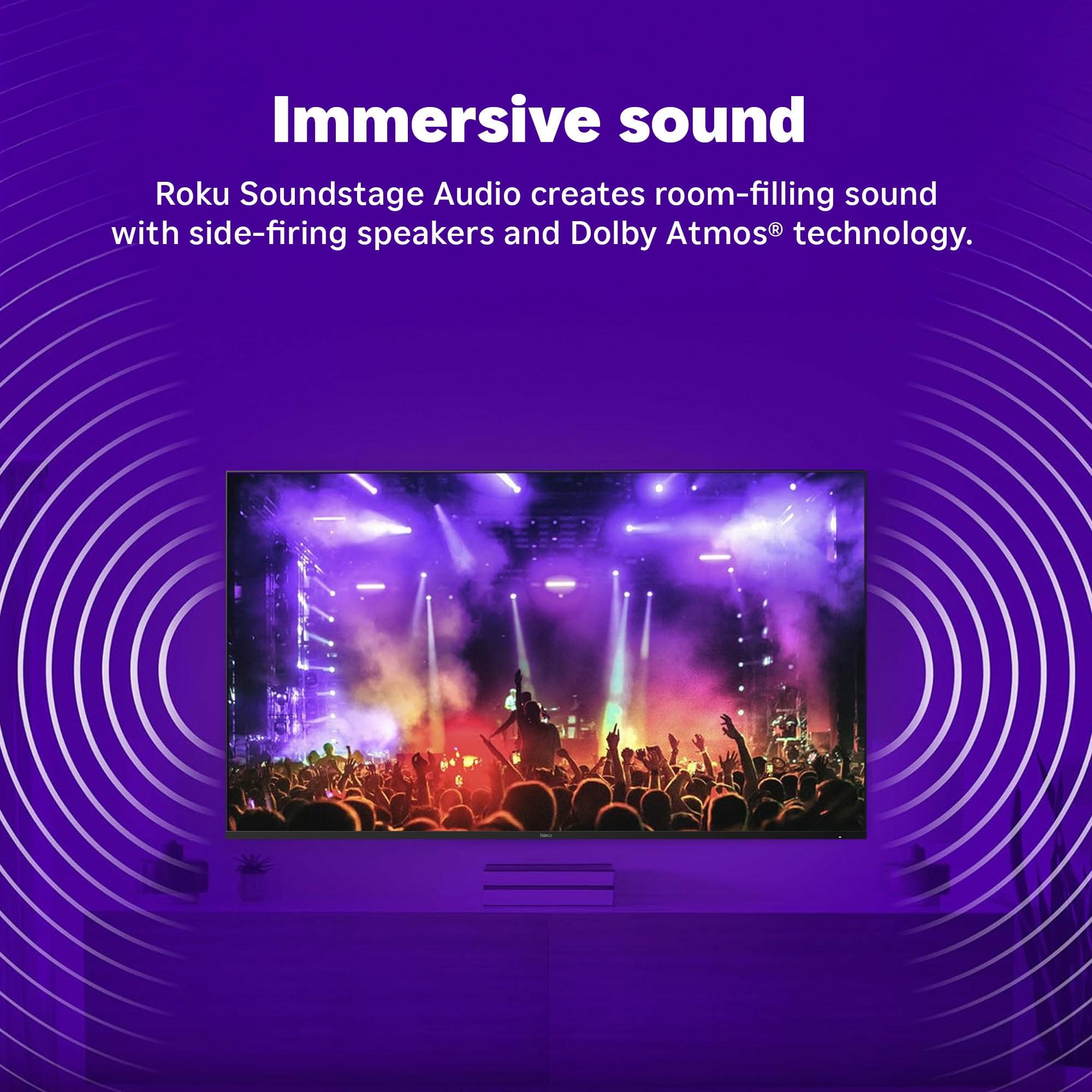
The Roku Pro Series takes a different approach with its "Sound Stage Audio" system, using side-firing speakers and Dolby Atmos processing. While it doesn't match the TCL's power output, user reviews consistently praise its clarity and surprisingly robust bass response. The Roku also includes a useful Bluetooth headphone mode that lets you route audio to wireless headphones for private listening.
For a home theater setup, both TVs support audio passthrough to external sound systems via eARC (enhanced Audio Return Channel), so they won't bottleneck a premium sound system. However, their strong built-in audio means you can start with just the TV and add a soundbar or surround system later.
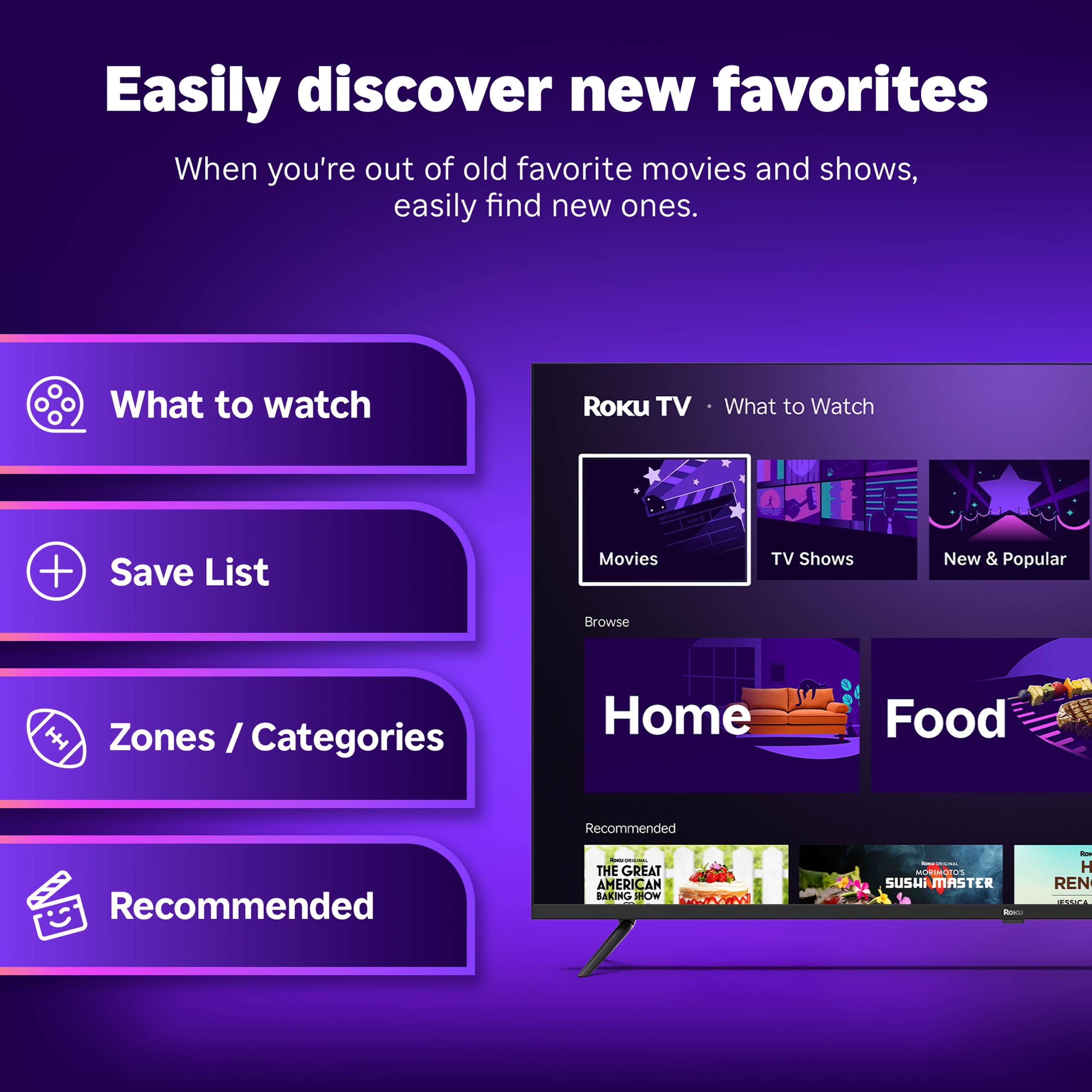
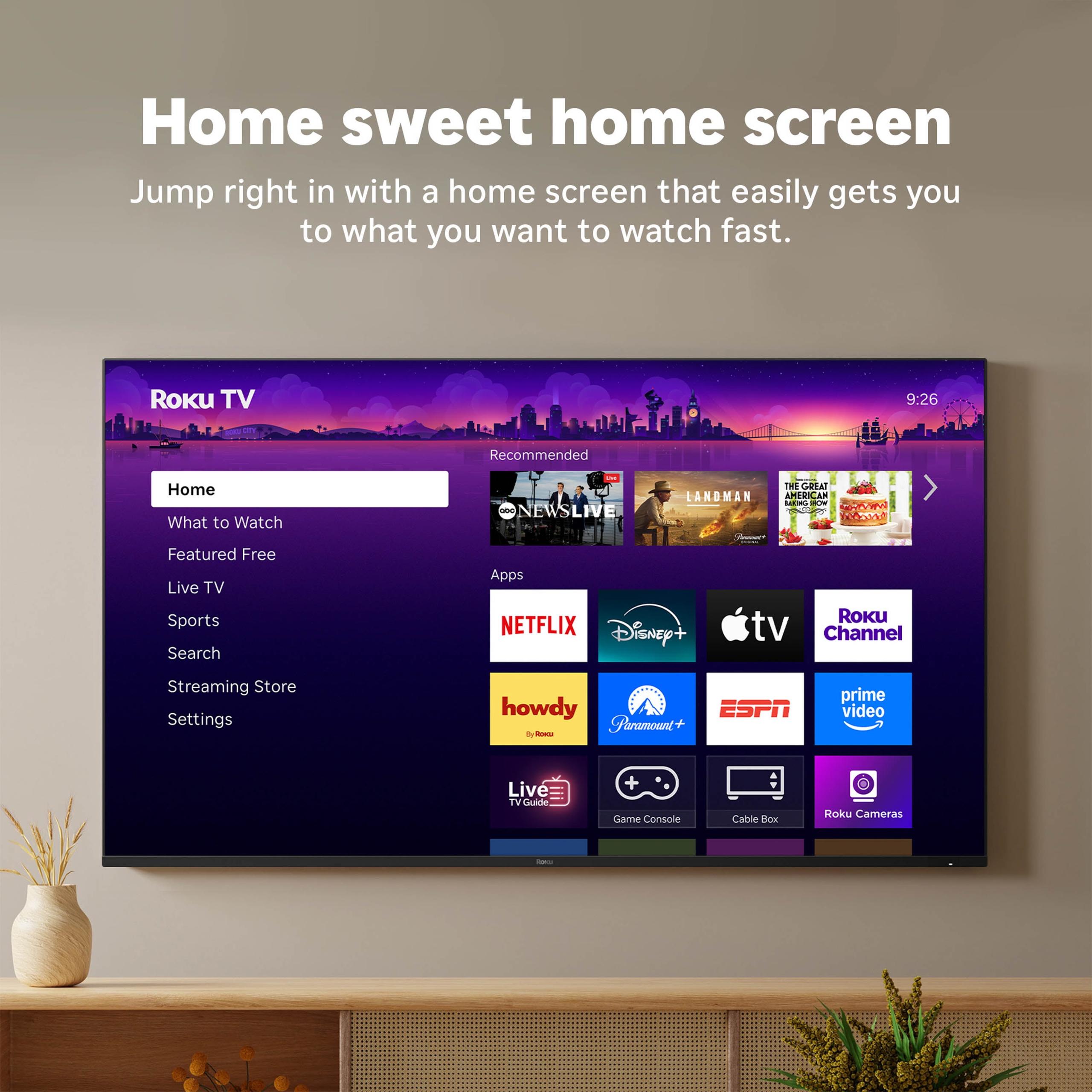
The choice between these platforms often comes down to personal preference and how you consume content. The Roku Pro Series runs Roku TV OS, which has earned a reputation for simplicity and excellent content discovery. The interface presents everything – streaming apps, live TV, free content – in a unified home screen that's genuinely intuitive to navigate.
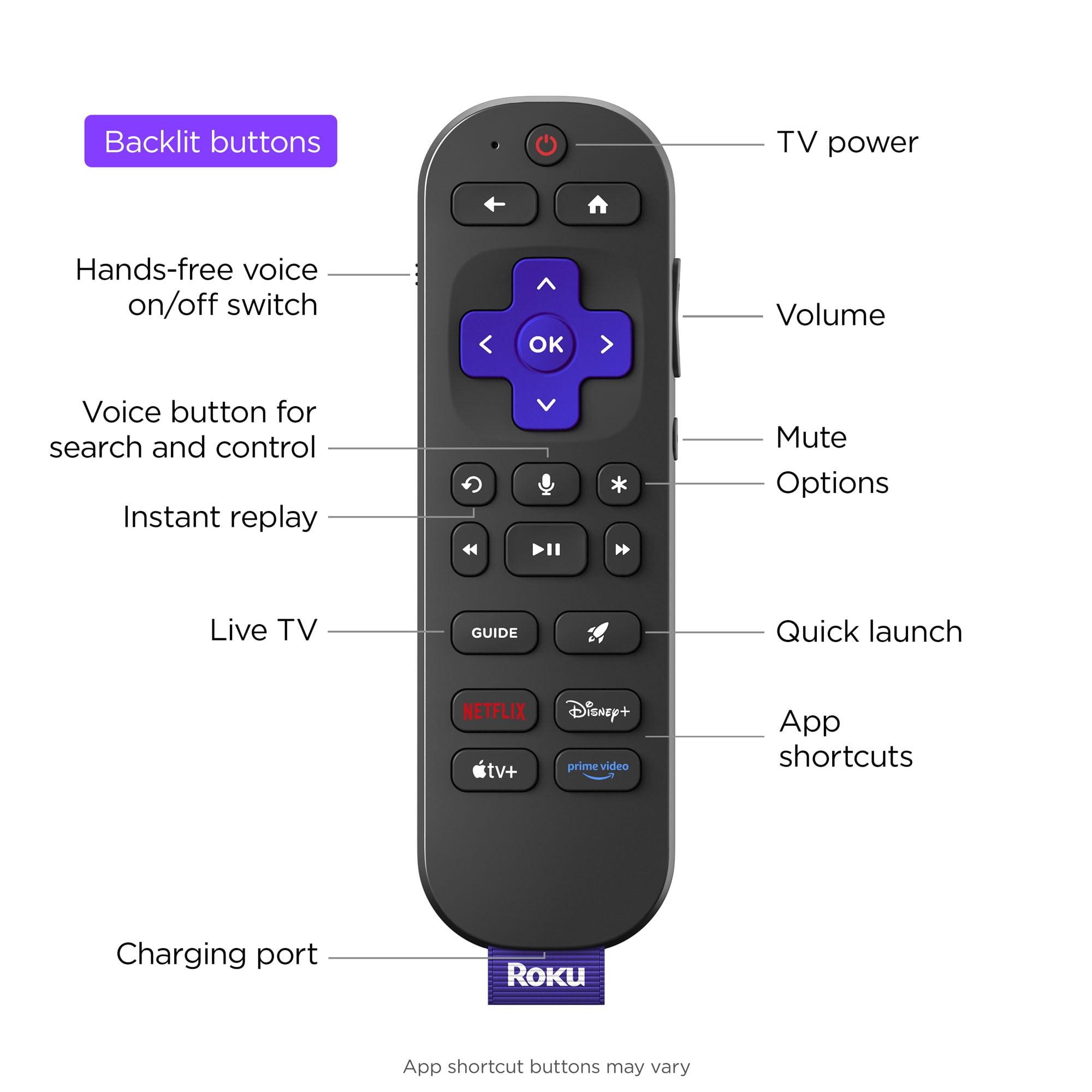
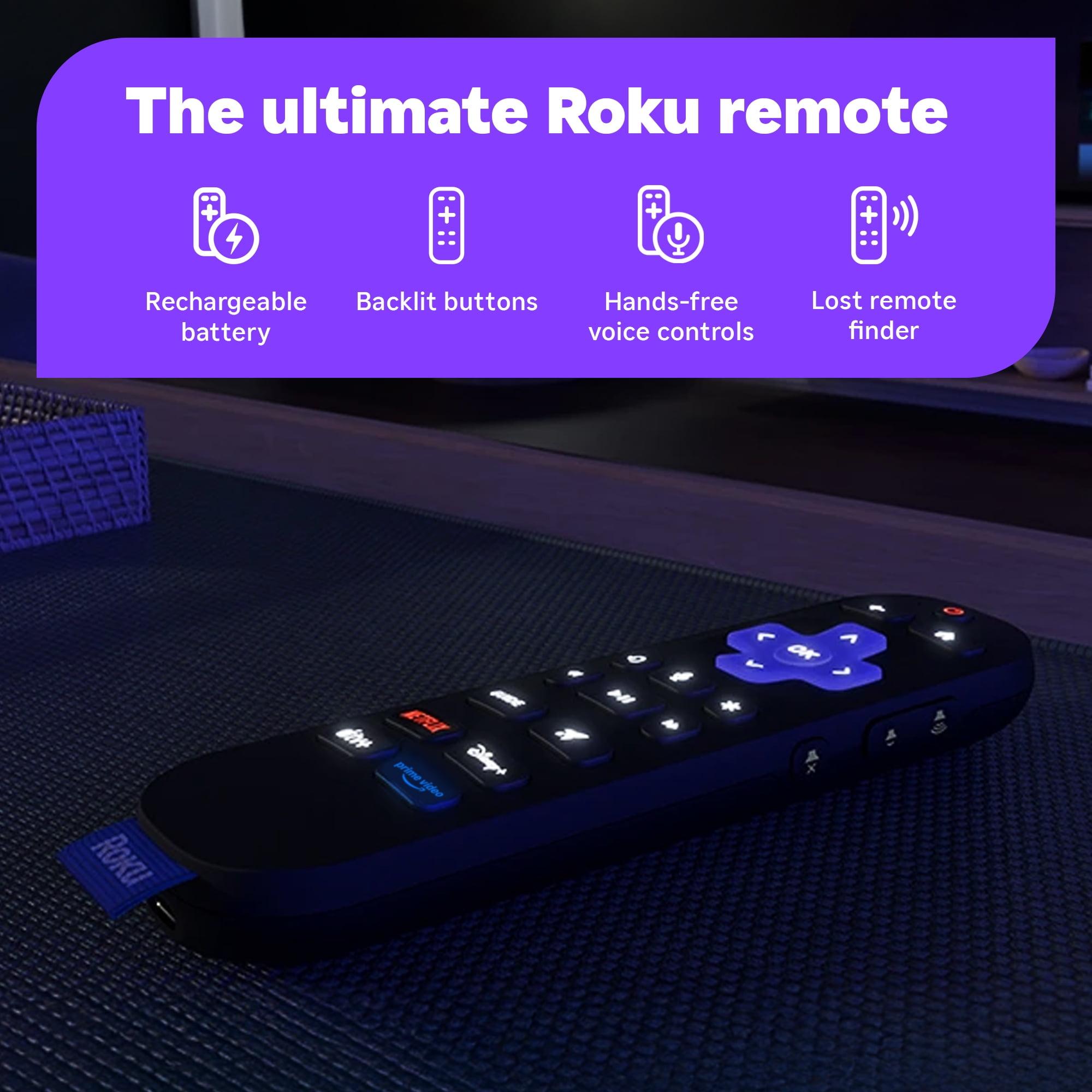
Roku's strength lies in its content-agnostic approach. Instead of promoting specific services, it helps you find what you want to watch regardless of where it's available. The voice remote includes useful features like a rechargeable battery, backlit keys for dark room use, and a finder button on the TV that makes the remote beep when you've lost it in the couch cushions.
The TCL QM8 runs Google TV, which offers more customization and deeper integration with Google services. If you use Google Assistant, Chromecast, or other Google ecosystem products, the TCL integrates seamlessly. Google TV also provides more detailed content recommendations based on your viewing history across different apps.
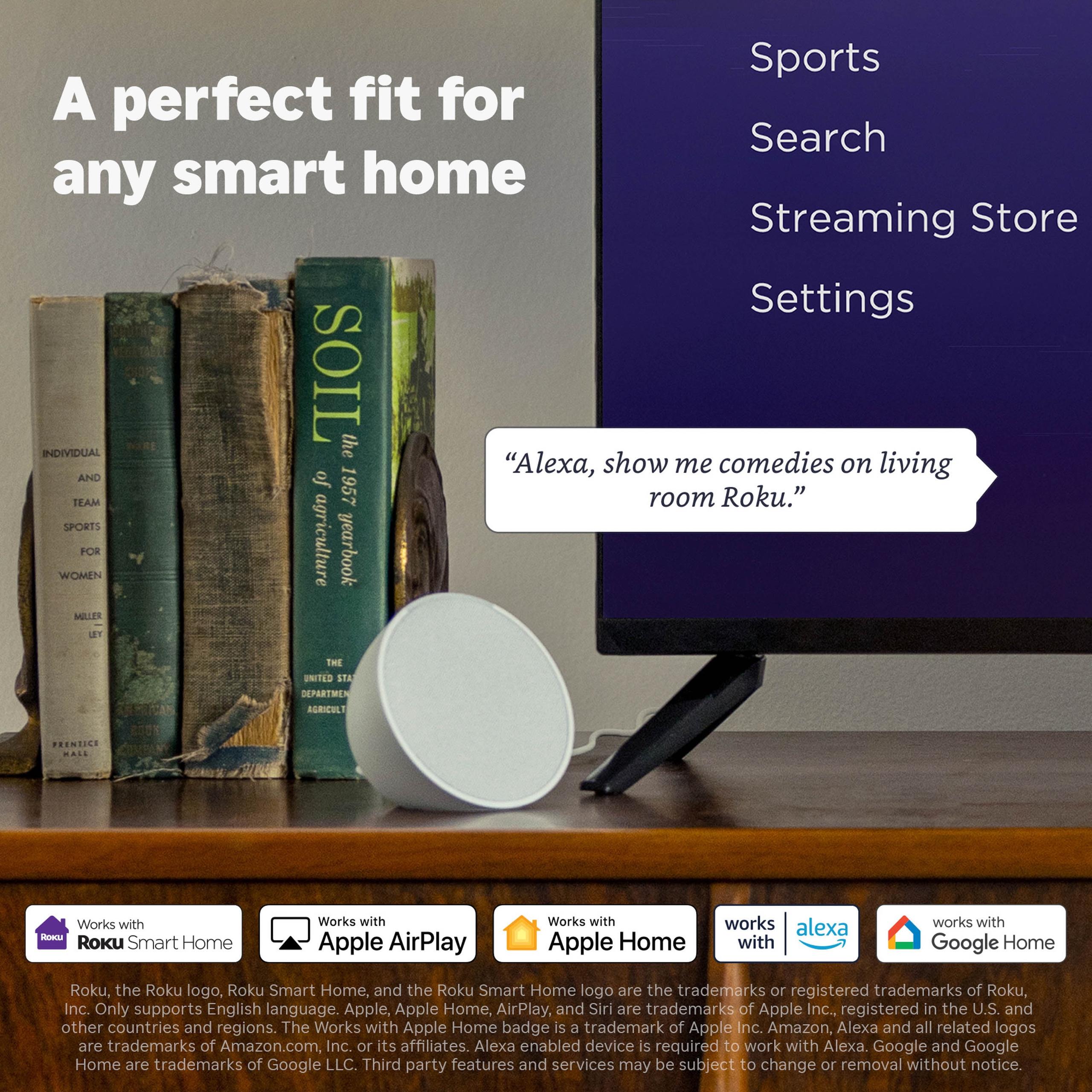
For 2025, the Roku has improved its performance with Wi-Fi 6 support and a streamlined operating system that makes app launches noticeably faster than previous generations. The TCL also includes Wi-Fi 6 and adds support for multiple voice assistants including Alexa and Apple HomeKit.
At the time of writing, the TCL QM8 typically costs several hundred dollars less than the Roku Pro Series, making the value comparison quite stark. You're getting measurably superior brightness, more precise local dimming, better gaming capabilities, and enhanced audio for significantly less money.
This pricing reflects different company strategies. Roku charges a premium for its user experience and brand reputation, while TCL focuses on delivering maximum technical performance at competitive prices. Both approaches have merit, but the performance gap makes the value equation clear for most buyers.
The Roku does justify some of its premium through build quality, design refinement, and the simplicity that many users genuinely prefer. If you've used Roku devices before and love the interface, the premium might be worthwhile for the seamless experience. The TV also includes thoughtful touches like the rechargeable remote and cleaner cable management.
However, for pure performance per dollar, the TCL QM8 is exceptional. You could add a dedicated Roku streaming device to a TCL TV for about $40 and still save money while getting superior picture and audio quality.
For a dedicated home theater setup, picture quality typically takes priority over interface convenience, which favors the TCL QM8. The dramatically higher brightness capability means HDR content looks more impactful, while the precision local dimming creates the deep blacks crucial for cinematic experiences in dark rooms.
The TCL's 144Hz refresh rate also future-proofs the display for potential improvements in streaming and gaming technology. While current streaming services typically max out at 60Hz, some gaming content and future video standards may take advantage of higher refresh rates.
Both TVs handle motion well, but the TCL includes more sophisticated motion processing that can eliminate judder – the stuttering effect you sometimes see in movies shot at 24 frames per second. For movie enthusiasts, this creates smoother, more film-like motion.
The viewing angle limitations of both TVs (common to LCD technology) mean they work best for smaller groups watching straight-on, rather than large gatherings where people might be viewing from the sides.
For most buyers, the TCL QM8 represents exceptional value and superior performance. Choose it if you prioritize picture quality, watch content in bright rooms, game frequently, or want the most performance for your money. The technical advantages are significant enough that they outweigh interface preferences for most users.
Consider the Roku Pro Series if you strongly prefer Roku's interface simplicity, don't watch in very bright conditions where the brightness difference matters, or if you value ease of setup over maximum performance. The Roku excels at being approachable and user-friendly, which has real value for some buyers.
For home theater enthusiasts specifically, the TCL QM8 is the clear choice. The superior brightness, contrast control, and gaming capabilities make it more versatile and future-ready. The only exception would be if you absolutely require Roku's specific interface and are willing to accept the performance compromises.
Both TVs represent the current state-of-the-art in mini-LED technology, released in 2024 and 2025 respectively, incorporating the latest advances in local dimming precision and AI-powered picture processing. You'll be happy with either choice, but the TCL delivers more performance for less money – a combination that's hard to argue against.
| Roku 65" Pro Series 2025 | TCL 65" QM8 |
|---|---|
| Peak Brightness - Critical for bright rooms and HDR impact | |
| 1,818 nits (good for most rooms) | 5,000 nits (excellent for very bright spaces) |
| Local Dimming Zones - Controls blooming and contrast | |
| Full array local dimming (standard precision) | Up to 3,800 precise zones (superior blooming control) |
| Gaming Refresh Rate - Smoothness for fast-paced games | |
| 120Hz at 4K (great for console gaming) | 144Hz at 4K, 288Hz at 1080p (ideal for PC gaming) |
| Display Technology - Color and contrast foundation | |
| QLED with Mini-LED backlight | Enhanced QLED with QD-Mini LED and CrystGlow panel |
| Smart Platform - Interface and app ecosystem | |
| Roku TV OS (simple, content-focused) | Google TV (customizable, Google ecosystem integration) |
| Audio System - Built-in sound quality | |
| Sound Stage Audio with Dolby Atmos | 80W ONKYO 2.1.2 system with dedicated subwoofer |
| AI Processing - Picture optimization and upscaling | |
| Smart Picture Max (excellent for low-quality content) | AIPQ PRO Processor (advanced scene optimization) |
| HDR Support - Enhanced contrast and color range | |
| Dolby Vision IQ, HDR10+ Adaptive, HDR10, HLG | HDR ULTRA with Dolby Vision IQ, HDR10+, HDR10, HLG |
| Gaming Features - Responsiveness and compatibility | |
| AMD FreeSync Premium Pro, 5.2ms input lag | Game Accelerator 288, Auto Game Mode, VRR support |
| Color Accuracy - Out-of-box picture quality | |
| 2.6 delta E (very good, minimal calibration needed) | 3.9 delta E (good, may benefit from adjustment) |
| Connectivity - Modern device compatibility | |
| 4 HDMI (2x HDMI 2.1), Wi-Fi 6 | 4 HDMI with eARC, Wi-Fi 6, ATSC 3.0 tuner |
| Voice Control - Remote and smart home integration | |
| Roku Voice Remote Pro with finder button | Google Assistant, Alexa, Apple HomeKit support |
The TCL QM8 is significantly better for bright rooms with its 5,000 nits peak brightness compared to the Roku Pro Series 2025 at 1,818 nits. This means the TCL QM8 maintains vibrant colors and deep contrast even with windows or bright lighting, while the Roku may appear washed out in very bright conditions.
The TCL QM8 offers superior gaming with 144Hz at 4K and 288Hz at 1080p, plus Game Accelerator 288 features. The Roku Pro Series 2025 provides excellent 120Hz gaming with AMD FreeSync Premium Pro and 5.2ms input lag. For competitive PC gaming, choose the TCL; for console gaming, both work great.
The TCL QM8 delivers superior picture quality with up to 3,800 local dimming zones and much higher peak brightness for better HDR performance. The Roku Pro Series 2025 offers better color accuracy out of the box and superior AI processing for lower-quality content. For pure picture performance, the TCL wins.
Yes, the Roku Pro Series 2025 runs Roku TV OS, known for its simple, content-focused interface that's easy to navigate. The TCL QM8 uses Google TV, which offers more customization and integrates well with Google services. Choose Roku for simplicity or TCL for flexibility.
The TCL QM8 is better for home theater use with its dramatically higher brightness for impactful HDR, superior local dimming for deep blacks, and 144Hz refresh rate for future content. The Roku Pro Series 2025 offers good home theater performance but can't match the TCL's technical capabilities in dark room viewing.
The TCL QM8 has superior audio with an 80W ONKYO 2.1.2 system including a dedicated subwoofer and up-firing speakers for Dolby Atmos. The Roku Pro Series 2025 offers good Sound Stage Audio with side-firing speakers. Both are above-average for TV speakers, but the TCL provides more powerful, theater-like sound.
The TCL QM8 provides exceptional value with superior brightness, more local dimming zones, better gaming features, and enhanced audio while typically costing several hundred dollars less than the Roku Pro Series 2025. The Roku charges a premium for its user-friendly interface and brand experience.
Yes, both the Roku Pro Series 2025 and TCL QM8 fully support modern gaming consoles with 4K@120Hz, HDMI 2.1, Variable Refresh Rate (VRR), and Auto Low Latency Mode. The TCL offers additional 144Hz capability for PC gaming and future console updates.
The Roku Pro Series 2025 is easier to set up and use with its intuitive Roku interface, rechargeable Voice Remote Pro with finder button, and streamlined user experience. The TCL QM8 offers more features but requires more setup time and menu navigation. Choose Roku for simplicity.
Both handle HDR well, but the TCL QM8 delivers more impactful HDR with its 5,000-nit brightness making highlights truly pop. The Roku Pro Series 2025 supports the same HDR formats (Dolby Vision IQ, HDR10+) with good performance, but can't achieve the dramatic brightness peaks of the TCL.
Both TVs excel at sports with their 120Hz+ refresh rates and good motion handling. The TCL QM8 has a slight edge with Motion Rate 480 technology and higher peak brightness for daytime viewing. The Roku Pro Series 2025 offers excellent sports performance with clean motion and Smart Picture Max optimization for broadcast content.
For your first premium TV, the TCL QM8 offers more performance for less money, making it an excellent entry point into premium mini-LED technology. Choose the Roku Pro Series 2025 if you prioritize ease of use and the Roku interface over maximum performance, or if you prefer a more premium brand experience despite the higher cost.
We've done our best to create useful and informative comparisons to help you decide what product to buy. Our research uses advanced automated methods to create this comparison and perfection is not possible - please contact us for corrections or questions. These are the sites we've researched in the creation of this article: bestbuy.com - rtings.com - techradar.com - youtube.com - roku.com - youtube.com - walmart.com - bestbuy.com - youtube.com - electronicexpress.com - roku.com - pcvarge.com - ecoustics.com - rtings.com - rtings.com - techradar.com - tcl.com - the-gadgeteer.com - nfm.com - ecoustics.com - careyscommunications.com - pcrichard.com - tcl.com

Privacy Policy
Terms and Conditions - Affiliate Policy
Home Security
© Copyright 2008-2026.
11816 Inwood Rd #1211, Dallas, TX 75244