





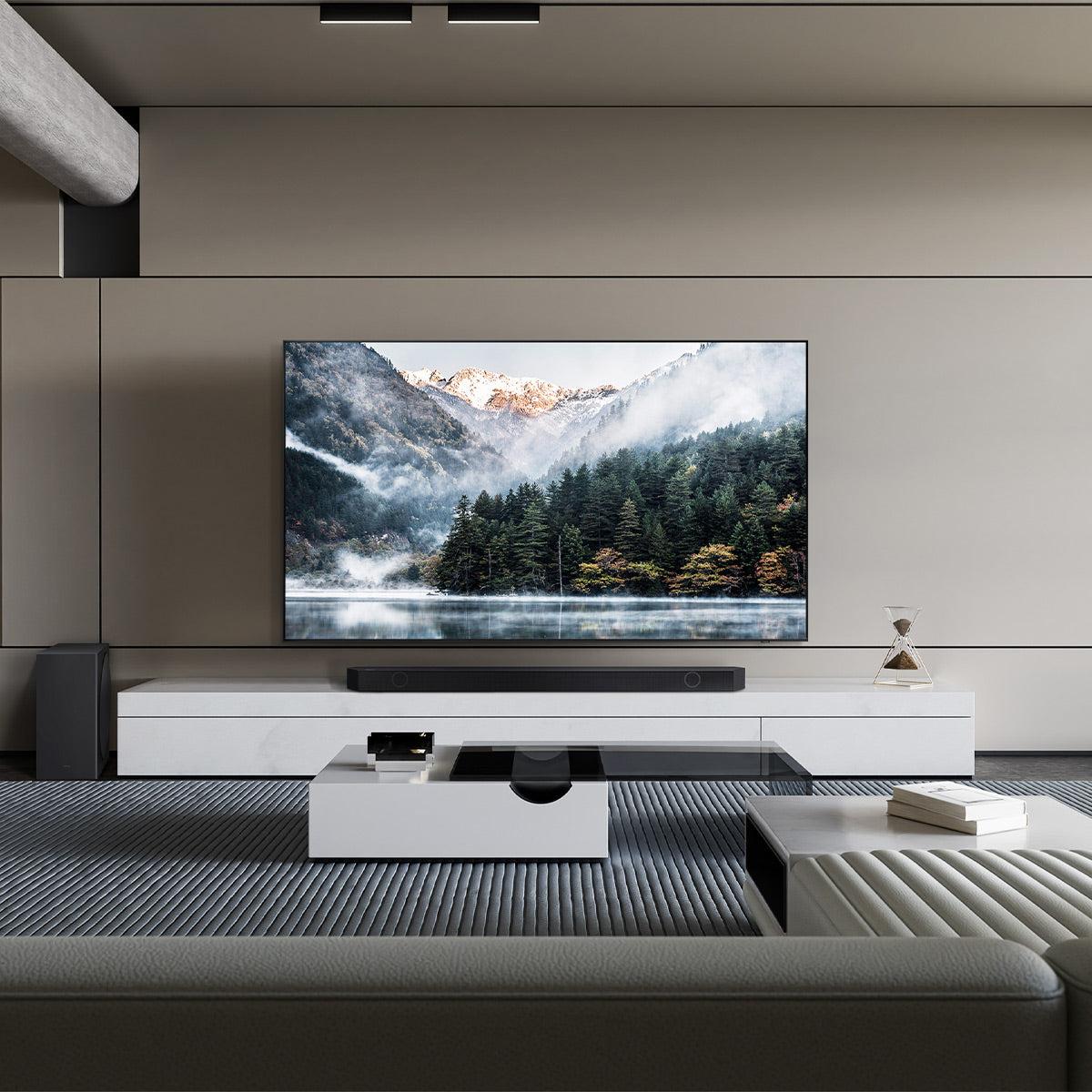
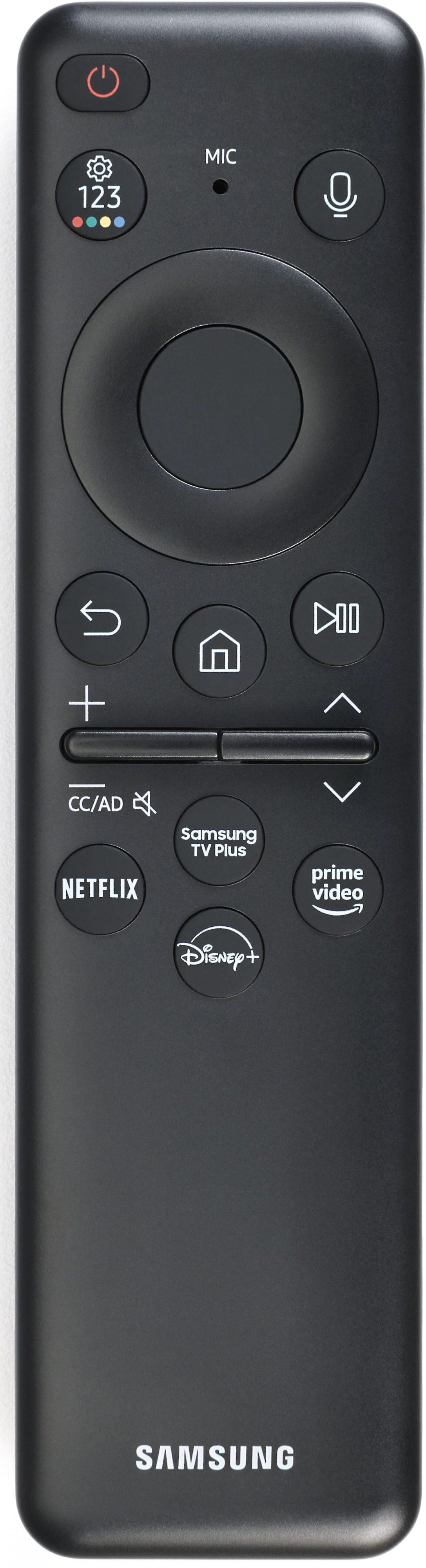
When shopping for a premium 65-inch TV, you're entering territory where every brand claims to offer the "best" picture quality and "most immersive" experience. But the reality is that two fundamentally different approaches dominate this space, and understanding these differences will save you from buyer's remorse and help you get the TV that actually works best in your home.
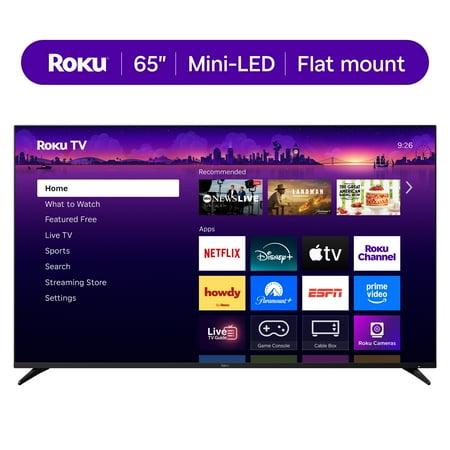
The Roku 65" Pro Series 2025 and Samsung 65" S95D represent these two distinct philosophies perfectly. At the time of writing, they sit at vastly different price points—the Samsung costs nearly double the Roku's price—but that gap tells only part of the story. What really matters is which approach better serves your specific viewing habits, room setup, and expectations.
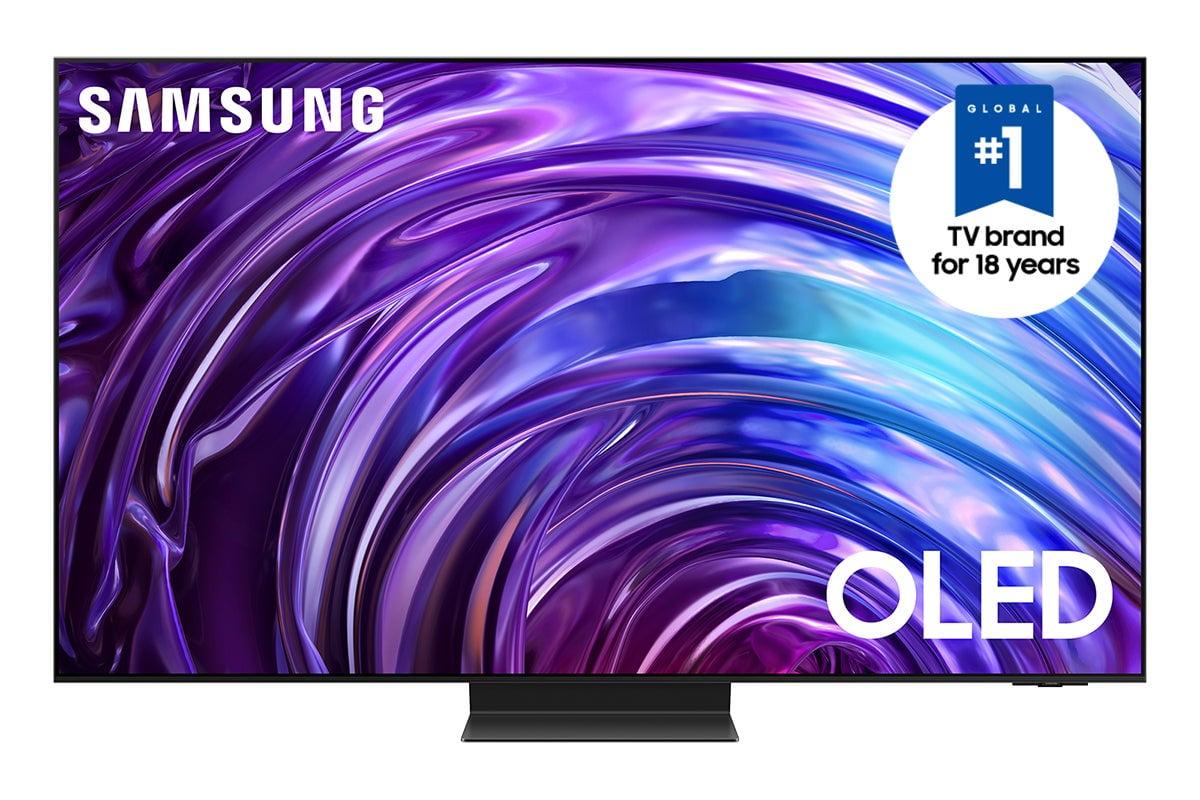
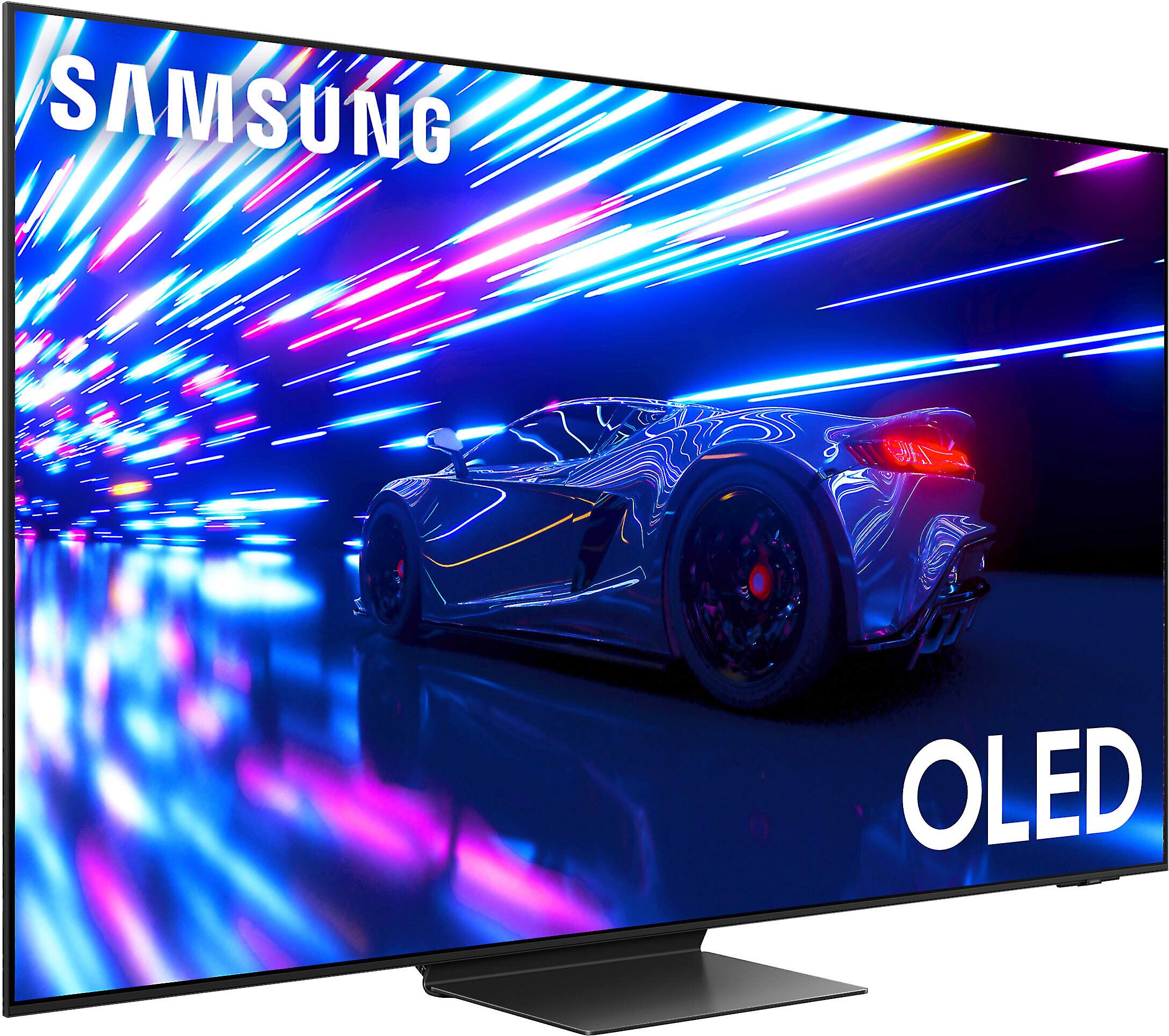
The core difference between these TVs comes down to their display technology, and this isn't just technical jargon that doesn't matter in real life. The Samsung S95D uses what's called QD-OLED technology, where each individual pixel can turn completely on or off independently. Think of it like having millions of tiny light bulbs that can each be controlled separately. When a pixel needs to be black, it simply turns off completely, creating what experts call "perfect blacks."
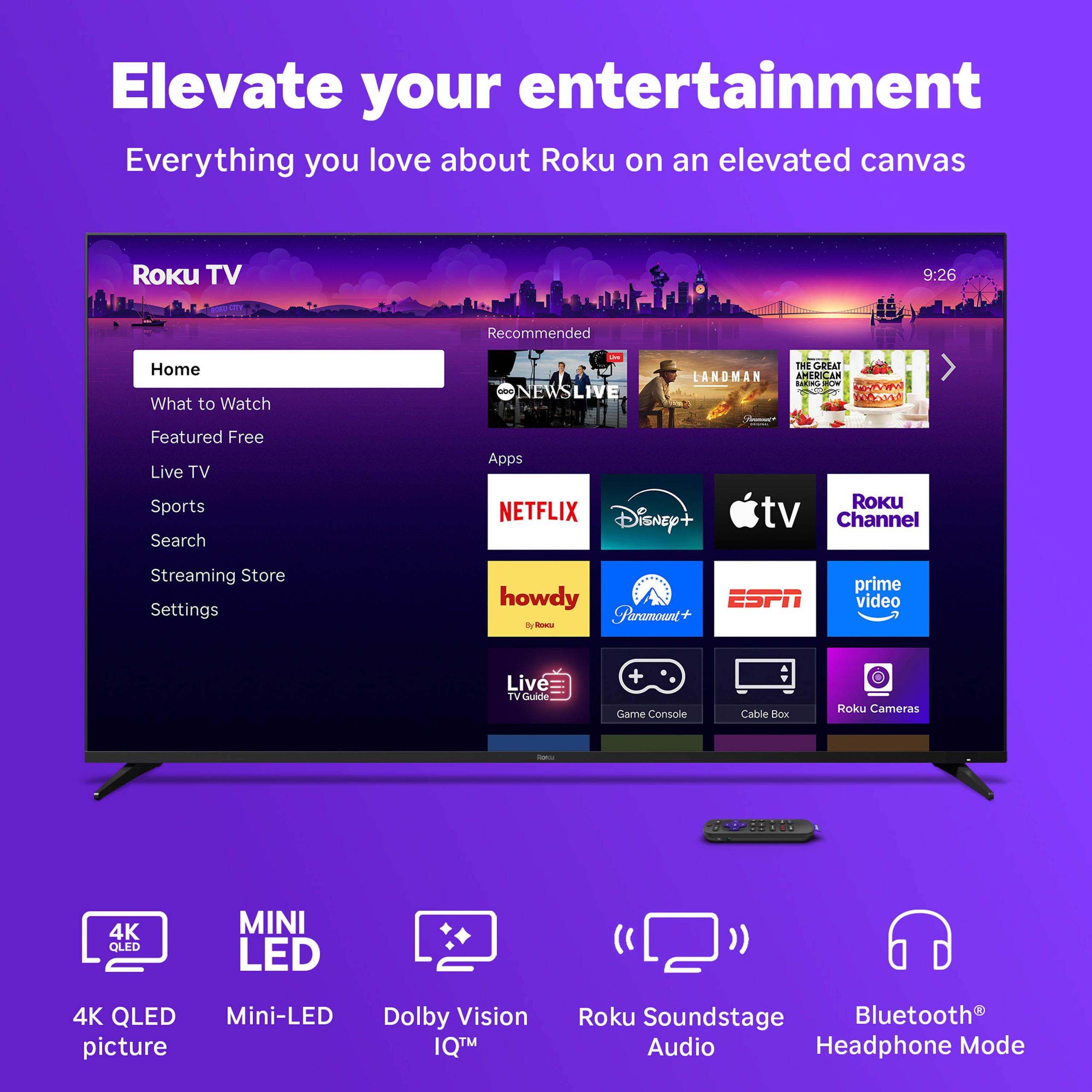
The Roku Pro Series, on the other hand, uses QLED technology with mini-LED backlighting. Instead of individual pixel control, it uses thousands of extremely small LED lights behind the screen that can dim or brighten in zones (called local dimming). It's like having thousands of flashlights behind a screen that can dim independently, but they can't turn off completely—there's always some light bleeding through.
Both approaches released their latest iterations in different years, with the Samsung S95D launching in 2024 as part of Samsung's flagship OLED push, while the Roku Pro Series 2025 represents Roku's entry into the premium TV hardware space as of 2025. The timing matters because it shows Samsung's head start in OLED refinement versus Roku's focus on delivering premium features at accessible prices.
The picture quality differences between these TVs become obvious the moment you sit down to watch, but they manifest differently depending on what you're viewing and when.
Contrast ratio—the difference between the brightest whites and darkest blacks a TV can display—forms the foundation of picture quality. The Samsung S95D achieves what's essentially infinite contrast because its OLED pixels can turn completely off. When you're watching a movie with a night scene, those black areas are truly black, not the dark gray you see on most TVs.
The Roku Pro Series can't match this absolute black level, but it gets surprisingly close through its mini-LED backlighting system. Roku claims 75% higher dynamic contrast compared to previous generations, and in practice, this means dark scenes look convincingly dark with minimal light bleeding—something that was a major problem with older LED TVs. The difference is noticeable in side-by-side comparisons, but for most viewers in most content, the Roku performs admirably.
Peak brightness matters more than many people realize, especially for HDR content (High Dynamic Range—content mastered with brighter highlights and more color information than standard video). The Samsung S95D can push significantly higher peak brightness levels, making HDR highlights like explosions, sunlight, or gleaming metal really pop off the screen.
The Roku Pro Series reaches respectable peak brightness levels around 750 nits in movie mode, which handles most HDR content well. However, the Samsung's superior brightness capabilities become especially important in bright rooms where ambient light washes out dimmer displays.
Here's where the Samsung S95D pulls its most significant practical advantage: its matte anti-glare screen coating. Traditional OLED TVs, despite their perfect blacks, suffer from one major weakness—they act like mirrors in bright rooms. The S95D solves this with a special matte coating that nearly eliminates reflections without significantly impacting picture quality.
Based on expert reviews and user feedback, this anti-glare technology represents a genuine breakthrough. Users report being able to watch TV normally even with windows directly behind their seating or bright overhead lighting—conditions that would make most TVs unwatchable due to reflections.
The Roku Pro Series uses a traditional glossy screen coating, which means it's susceptible to reflections in bright conditions. However, it compensates with higher brightness levels that can overpower some ambient light, though not as effectively as the Samsung's anti-glare approach.
Both TVs target serious gamers, but they approach gaming performance differently, and the differences matter if you own a PlayStation 5, Xbox Series X, or high-end gaming PC.
The Samsung S95D supports up to 144Hz refresh rates at 4K resolution, while the Roku Pro Series maxes out at 120Hz. In practical terms, this means the Samsung can display up to 144 unique images per second, while the Roku shows 120. For most gaming scenarios, including competitive console gaming, 120Hz provides plenty of smoothness. The 144Hz advantage only becomes meaningful for high-end PC gaming where you can actually generate frame rates above 120fps.
Response time—how quickly pixels can change from one color to another—heavily favors the Samsung S95D. OLED technology naturally provides nearly instantaneous response times (less than 1 millisecond), eliminating motion blur in fast-paced games. The Roku Pro Series has good but not exceptional response times, meaning you might see slight trailing or blur during rapid movement in competitive games.
Input lag measures the delay between when you press a button on your controller and when that action appears on screen. Both TVs perform well here, with the Samsung S95D achieving around 9 milliseconds and the Roku Pro Series reaching as low as 5.2 milliseconds at 120Hz—both excellent numbers that feel responsive for gaming.
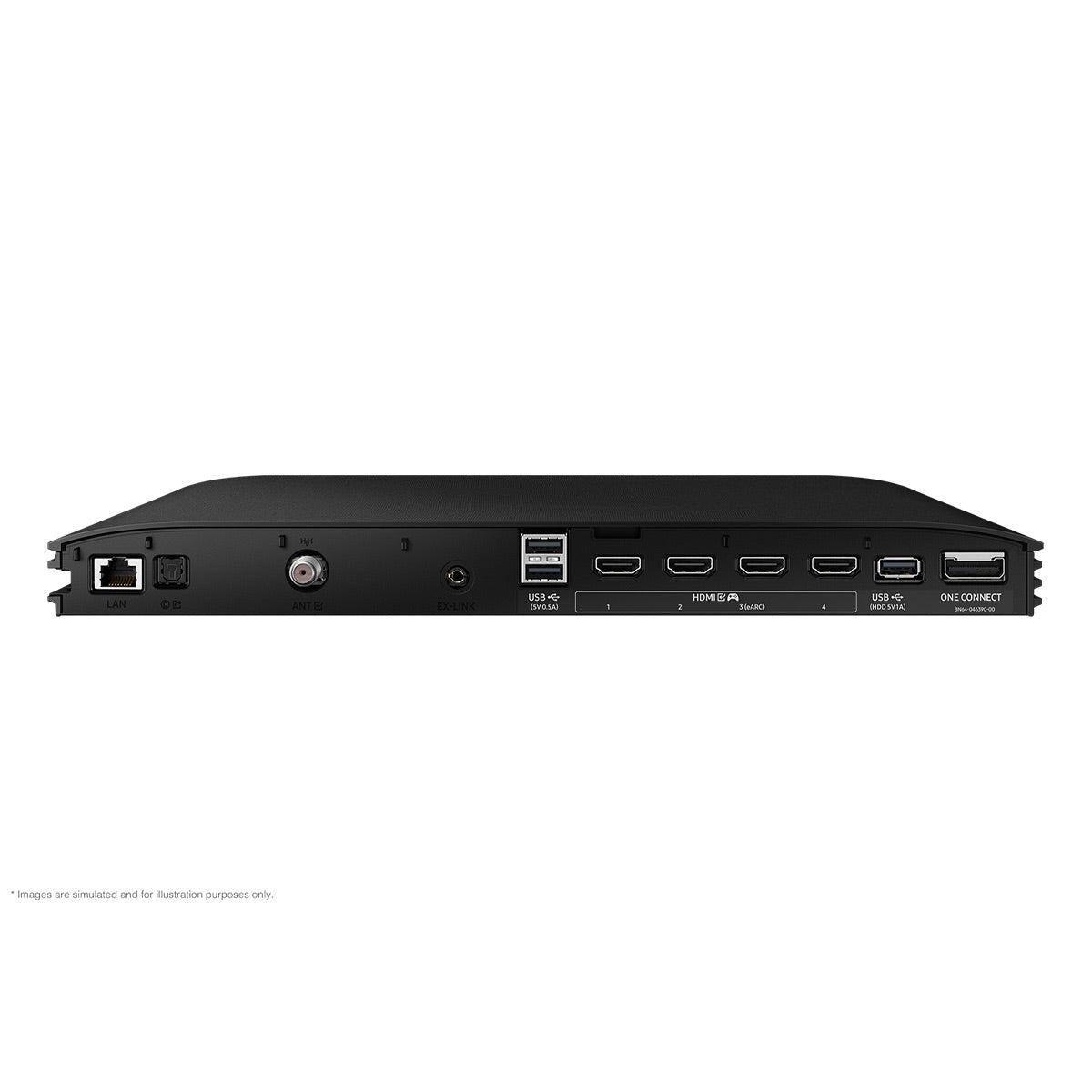
The Samsung S95D includes four HDMI 2.1 ports (the high-bandwidth connections needed for 4K gaming at high refresh rates), while the Roku Pro Series offers two. If you have multiple next-gen consoles plus other high-bandwidth devices, the Samsung's extra ports provide more flexibility.
Both support Variable Refresh Rate (VRR)—a technology that syncs the TV's refresh rate to your gaming device's frame rate output, eliminating screen tearing—and Auto Low Latency Mode (ALLM), which automatically switches to game mode when it detects gaming input.
TV speakers typically disappoint, but both of these sets attempt to break that trend with sophisticated audio systems.
The Samsung S95D implements a 4.2.2 channel system with 70 watts of power, featuring Dolby Atmos support and Object Tracking Sound+. This latter feature attempts to make sound move across the screen to match on-screen action—when a car drives from left to right, the audio follows spatially.
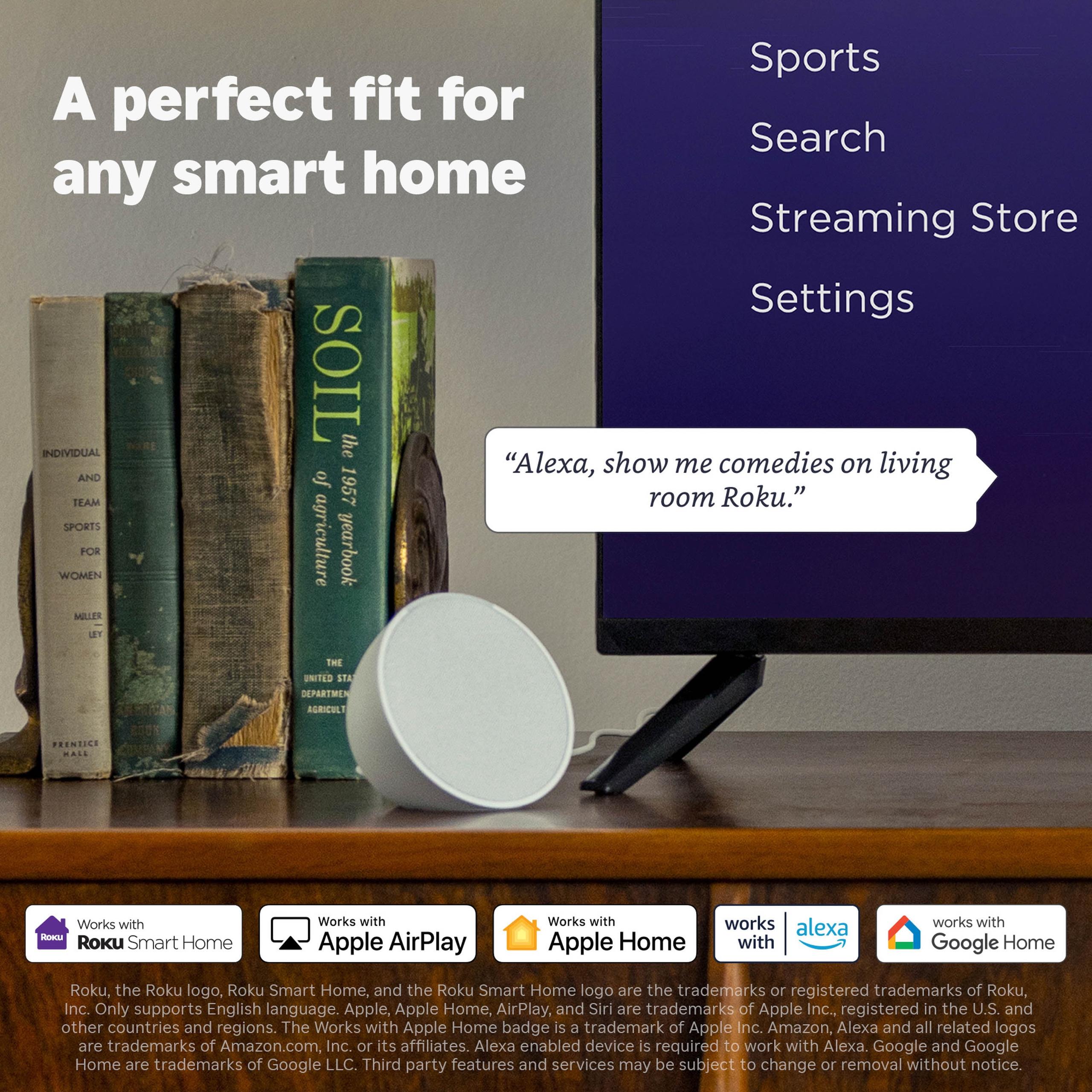
The Roku Pro Series surprised many reviewers with its Roku Soundstage Audio system. User reviews consistently praise its bass response and overall volume capabilities, with some describing it as "theater-like" and better than expected for a TV at this price point. It also supports Dolby Atmos, though without the advanced processing features of the Samsung.
For most users, both TVs provide significantly better audio than typical TV speakers, though dedicated soundbar enthusiasts will still want to add external audio eventually.
The smart TV platform determines how you'll interact with your TV every day, and the philosophies differ significantly between these models.
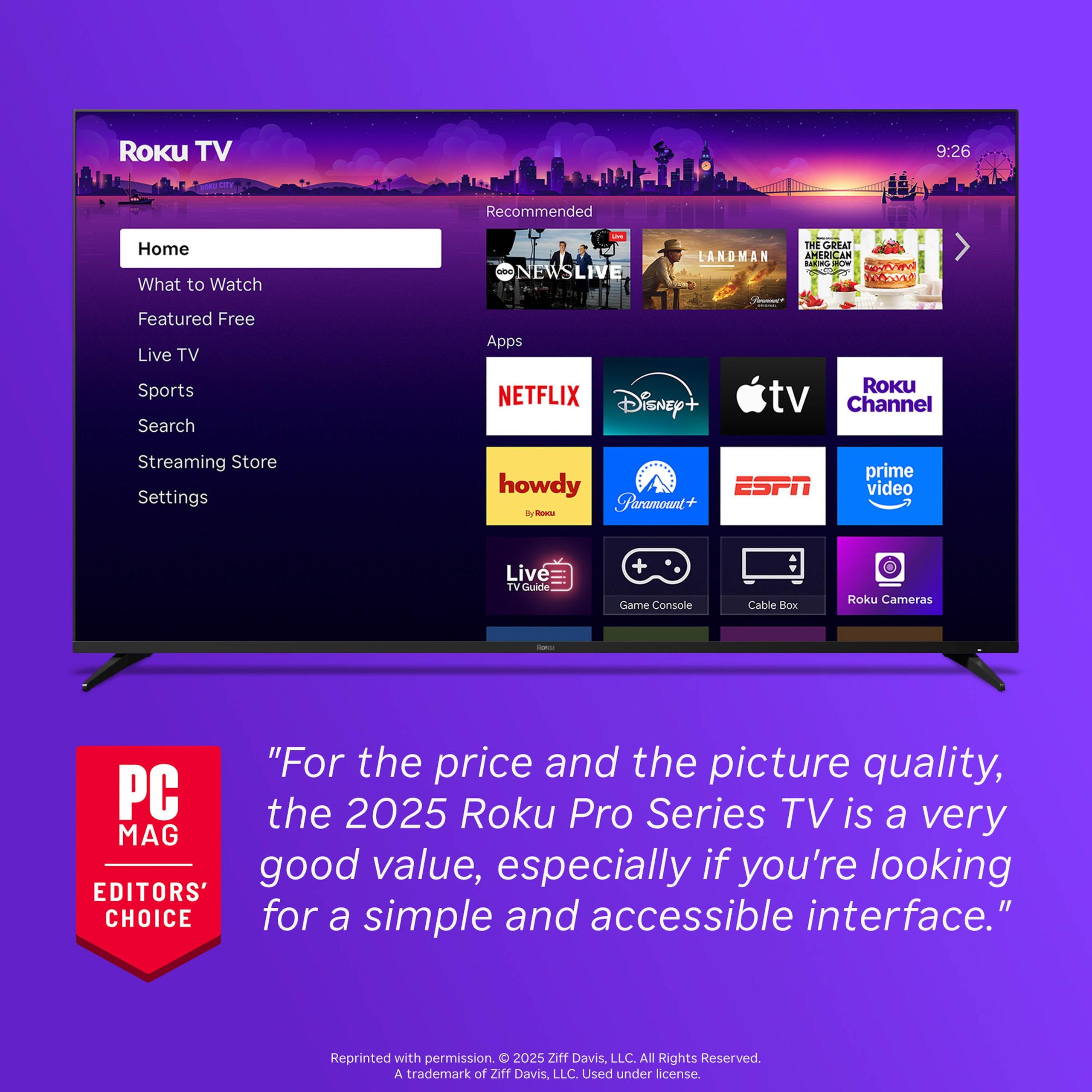
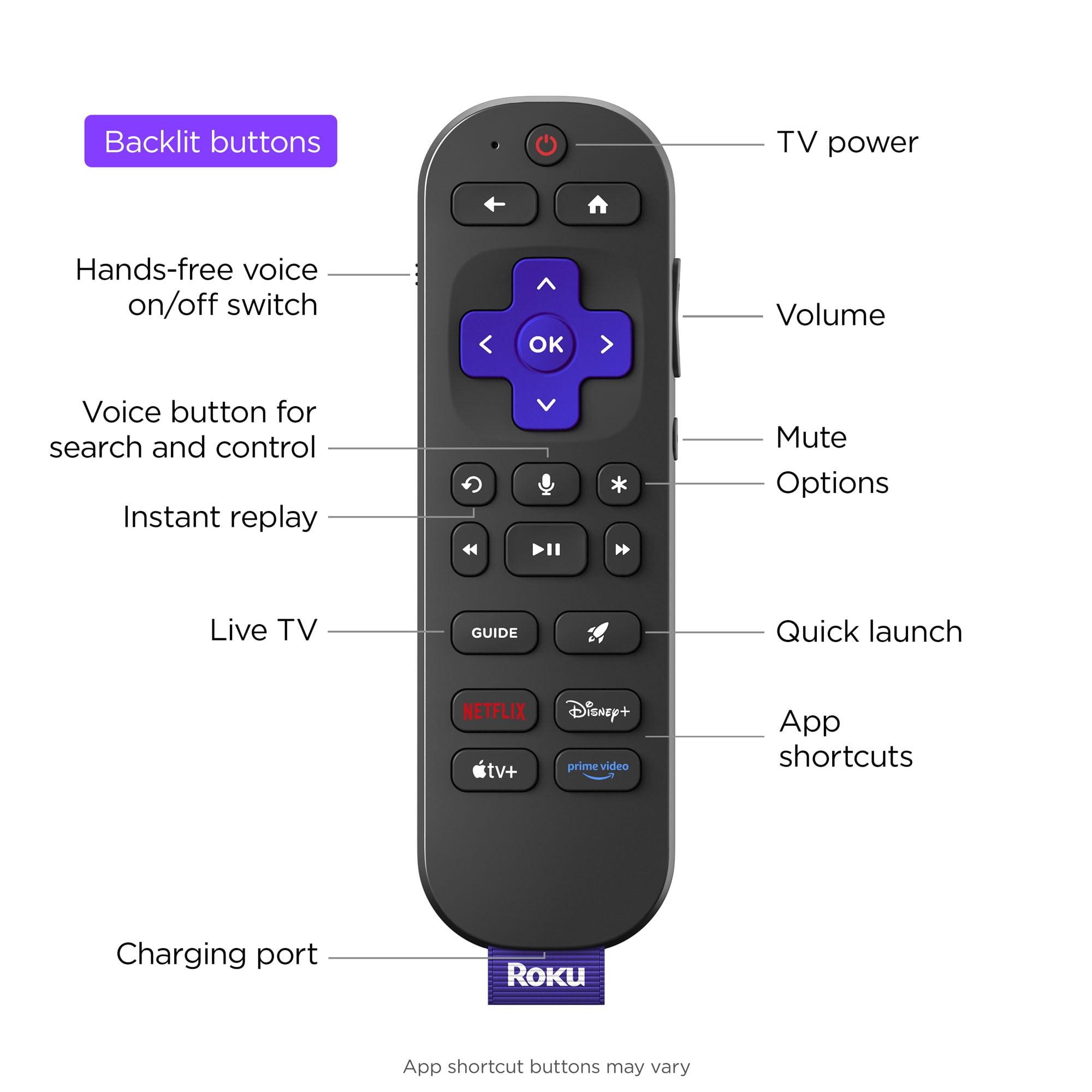
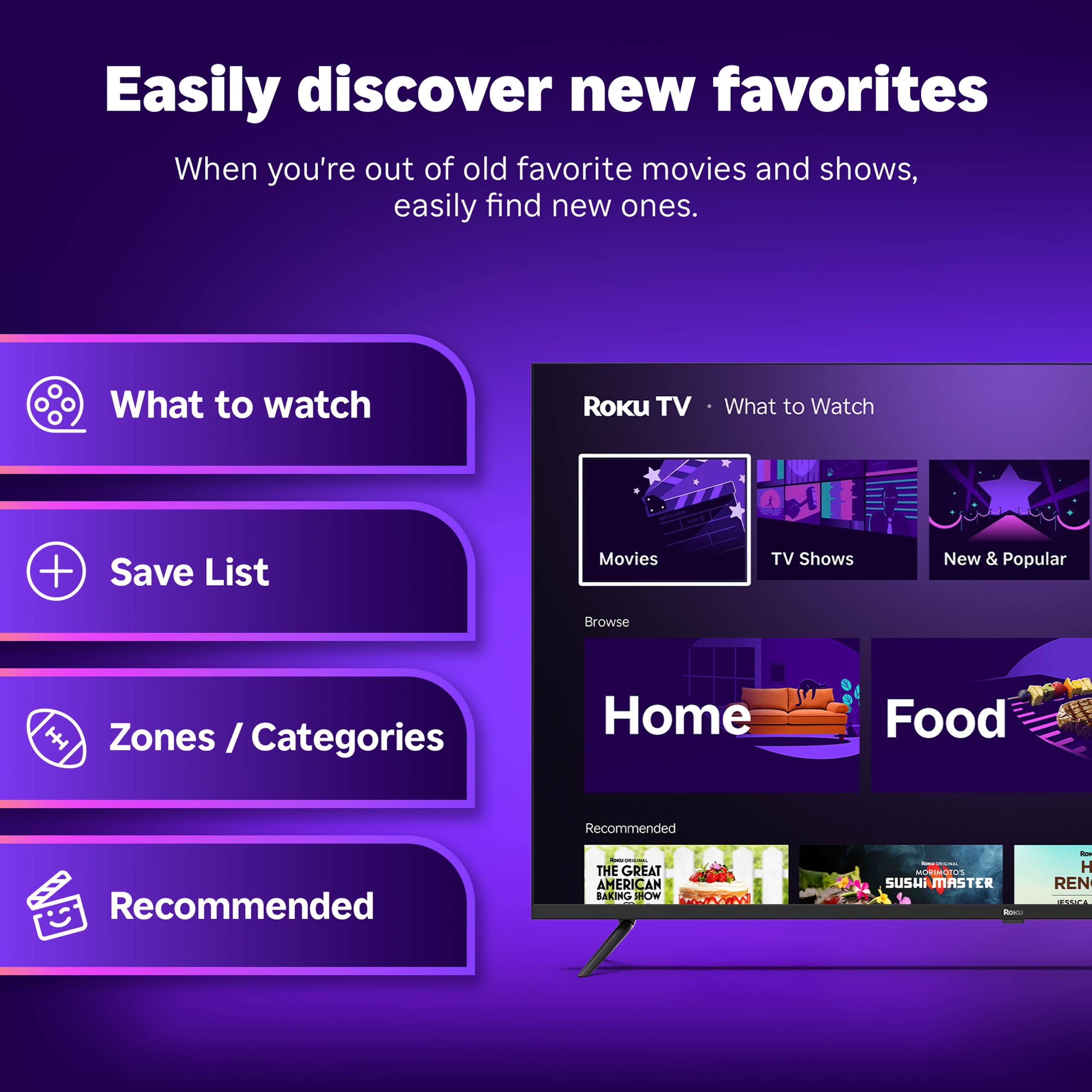
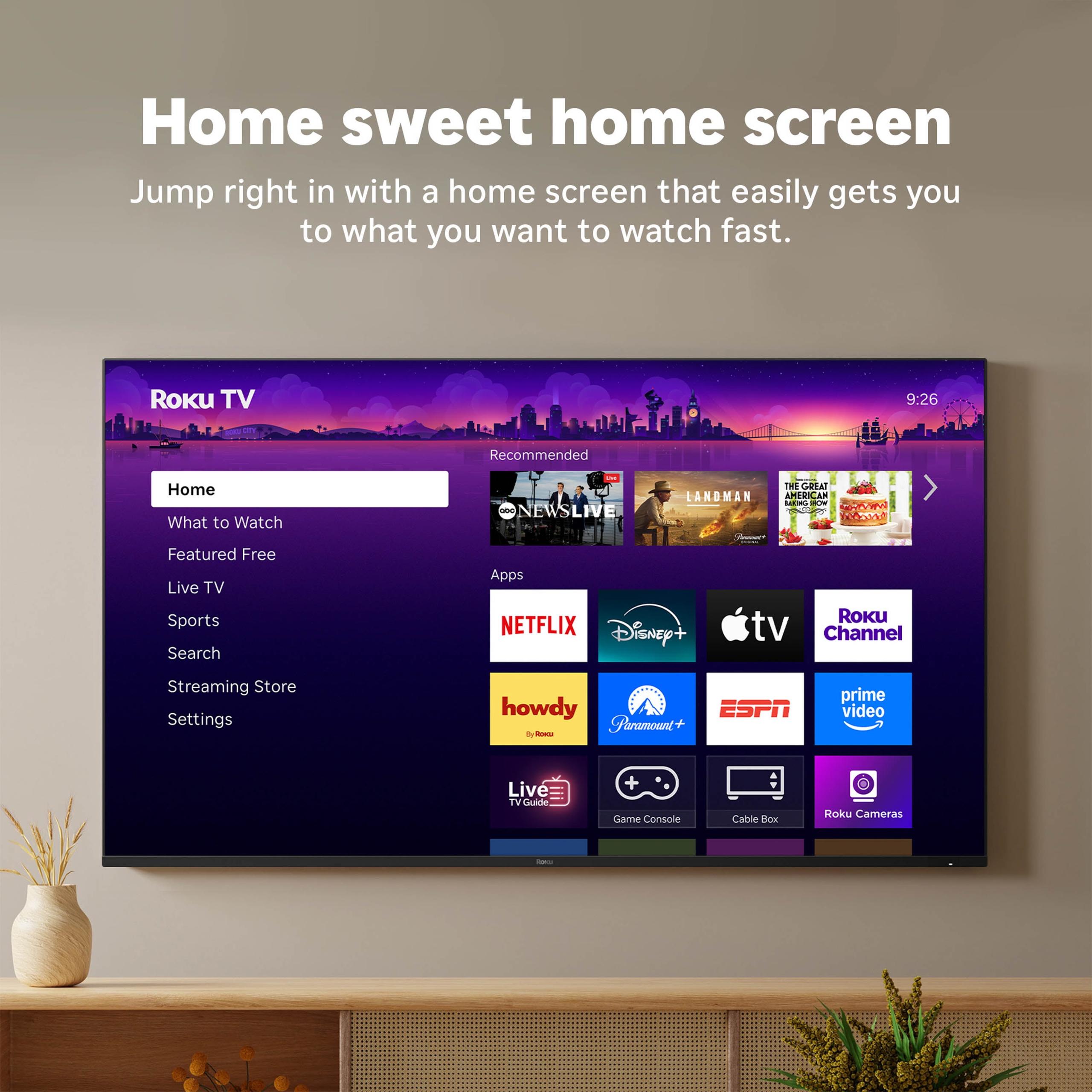
The Roku Pro Series runs Roku TV OS, which prioritizes simplicity and universal content discovery. The home screen aggregates content from multiple streaming services, making it easy to find something to watch regardless of which service hosts it. Roku's platform has earned praise for its straightforward interface and comprehensive app support, though it does include some advertising that bothers privacy-conscious users.
The Samsung S95D uses Samsung's Tizen operating system powered by their NQ4 AI Gen2 processor. Reviews consistently describe the interface as running smoothly with sophisticated features like AI-powered picture optimization that adjusts settings automatically based on content type. It integrates well with Samsung's broader ecosystem of devices, though the interface can feel more complex than Roku's approach.
Both platforms support all major streaming services, but Roku's universal search and content aggregation give it an edge for users who subscribe to multiple services and want seamless content discovery.
Your viewing environment significantly impacts which TV will work better for your situation, and this factor alone might determine your choice.
The Samsung S95D excels in bright rooms thanks to its anti-glare coating. Users report watching comfortably even with large windows or bright ceiling lights that would make other TVs difficult to see. The combination of high brightness and glare reduction makes it uniquely suited for living rooms, kitchens, or any space where controlling lighting isn't practical.
The Roku Pro Series struggles more in bright conditions due to its reflective screen coating, though its high brightness helps combat some ambient light. If your viewing room has controllable lighting or you primarily watch in evening conditions, this limitation becomes less significant.
In dark, controlled environments, both TVs shine, but the Samsung S95D pulls ahead thanks to its perfect black levels. Dark movie scenes reveal details that get lost in the gray blacks of LED-based displays, and the overall sense of depth and dimensionality improves dramatically.
The Roku Pro Series still performs well in dark rooms, with its mini-LED local dimming providing convincing blacks and minimal light bleeding around bright objects—a significant improvement over standard LED TVs.
At the time of writing, these TVs occupy very different value segments, and understanding what you get for the price difference helps clarify which makes sense for your priorities and budget.
The Roku Pro Series delivers what experts call exceptional value for its price point. You get solid 4K HDR performance, good gaming features, excellent built-in audio, and a proven smart TV platform at roughly half the cost of flagship OLEDs. It's the choice for users who want premium TV features without flagship pricing.
The Samsung S95D commands a significant premium but delivers flagship-level performance that justifies its cost for users who prioritize absolute picture quality. The anti-glare technology alone represents a major practical advantage worth paying extra for if you have a bright room. Add the superior gaming performance, perfect blacks, and premium build quality, and it becomes compelling for users who want the best available performance.
Based on comprehensive review analysis and user feedback, clear patterns emerge for who benefits most from each approach.
You want premium TV performance without flagship pricing. The Roku Pro Series excels for users who primarily watch in controlled lighting conditions and appreciate getting 80% of flagship performance for 50% of the cost. It's particularly appealing if you value Roku's simple, universal platform and don't need absolute cutting-edge gaming performance.
Budget-conscious enthusiasts who want solid 4K HDR, good gaming features, and surprisingly strong built-in audio will find the Roku delivers exceptional value. If you're upgrading from an older TV and want a significant improvement without breaking the bank, this represents an excellent choice.
You have a bright room where glare is problematic, or you prioritize absolute picture quality regardless of cost. The Samsung S95D justifies its premium pricing for users who want the best available technology and can appreciate the differences it provides.
Serious gamers who want cutting-edge refresh rates, perfect response times, and maximum HDMI 2.1 connectivity will benefit from the Samsung's advanced gaming features. The combination of OLED picture quality and anti-glare technology makes it particularly appealing for users who want flagship performance in challenging lighting conditions.
Both TVs represent excellent choices within their respective market segments, but they serve different user priorities and budgets. The Samsung S95D delivers flagship OLED performance with breakthrough anti-glare technology, while the Roku Pro Series provides premium features and solid performance at exceptional value.
Your room's lighting conditions should heavily influence your decision. If you struggle with glare and reflections, the Samsung's anti-glare OLED technology provides a transformative advantage worth the premium cost. If you have good lighting control or primarily watch in darker conditions, the Roku delivers outstanding performance for significantly less money.
Consider your long-term expectations too. The Samsung S95D represents cutting-edge technology that will likely maintain its performance advantage longer, while the Roku Pro Series offers proven reliability and excellent current performance at a more accessible price point. Both approaches have merit—the key is choosing the one that aligns with your priorities, budget, and viewing environment.
| Roku 65" Pro Series 2025 | Samsung 65" S95D |
|---|---|
| Display Technology - Fundamental difference affecting picture quality and price | |
| QLED with mini-LED backlighting and local dimming zones | QD-OLED with individual pixel control and quantum dot enhancement |
| Screen Coating - Critical for bright room performance | |
| Traditional glossy coating (reflective in bright rooms) | Anti-glare matte coating (nearly eliminates reflections) |
| Black Level Performance - Most noticeable difference in dark scenes | |
| Very good blacks with minimal blooming from local dimming | Perfect blacks as pixels turn completely off |
| Peak Brightness - Important for HDR content and bright rooms | |
| ~750 nits in movie mode (good for most HDR content) | Higher peak brightness with superior HDR highlight performance |
| Gaming Refresh Rate - Matters for high-end gaming | |
| 4K @ 120Hz (excellent for console gaming) | 4K @ 144Hz (advantage for high-end PC gaming) |
| HDMI 2.1 Ports - Needed for next-gen consoles and high refresh gaming | |
| 2 out of 4 total HDMI ports | 4 out of 4 total HDMI ports |
| Input Lag - Lower is better for competitive gaming | |
| As low as 5.2ms at 120Hz (excellent responsiveness) | ~9ms (still very responsive for gaming) |
| Smart TV Platform - Daily user experience | |
| Roku TV OS (simple interface, universal content search) | Samsung Tizen with NQ4 AI Gen2 processor (advanced AI features) |
| Built-in Audio Quality - Determines if you need a soundbar immediately | |
| Roku Soundstage with Dolby Atmos (surprisingly strong for price) | 4.2.2 channel system with Object Tracking Sound+ (premium audio processing) |
| Design and Build - Affects installation and aesthetics | |
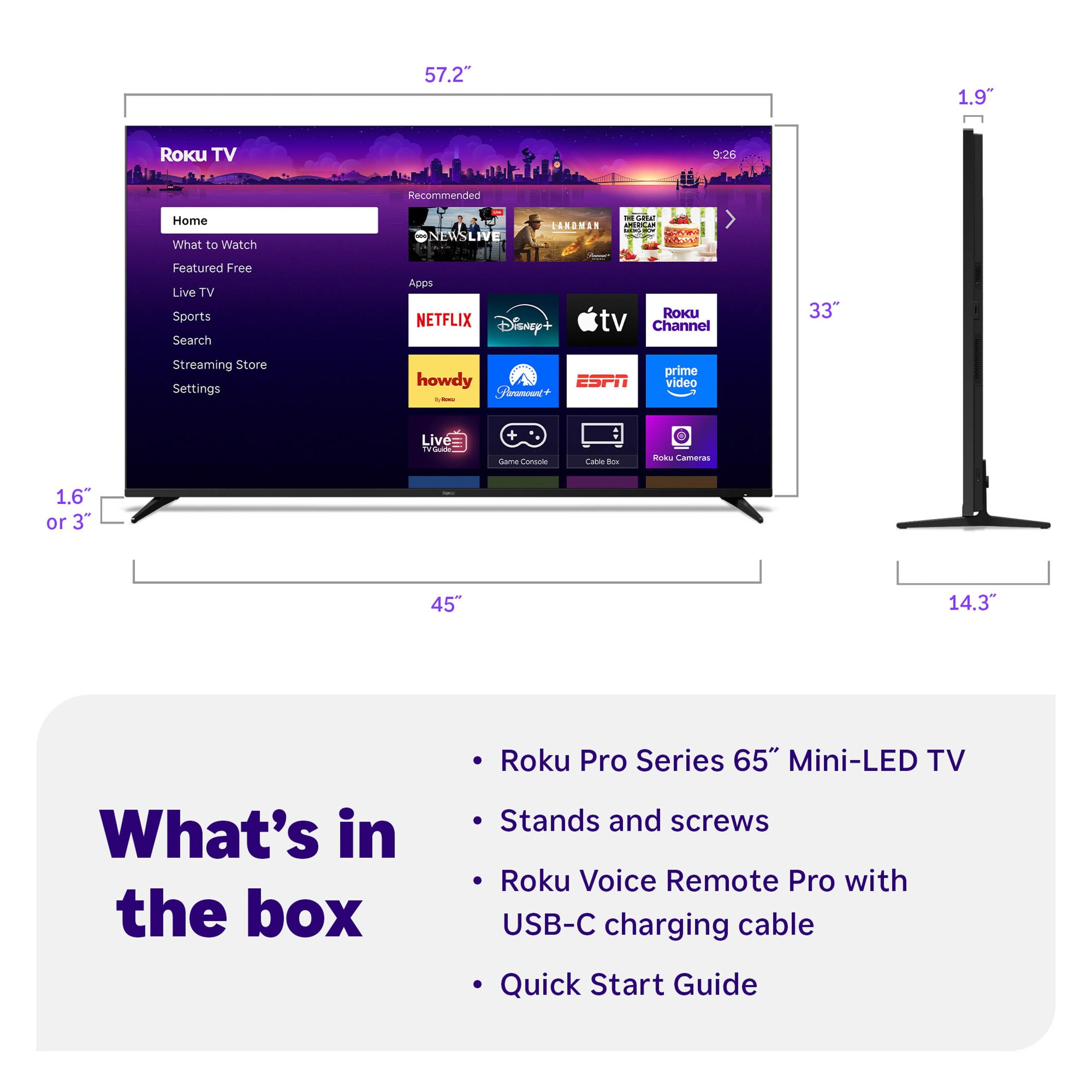
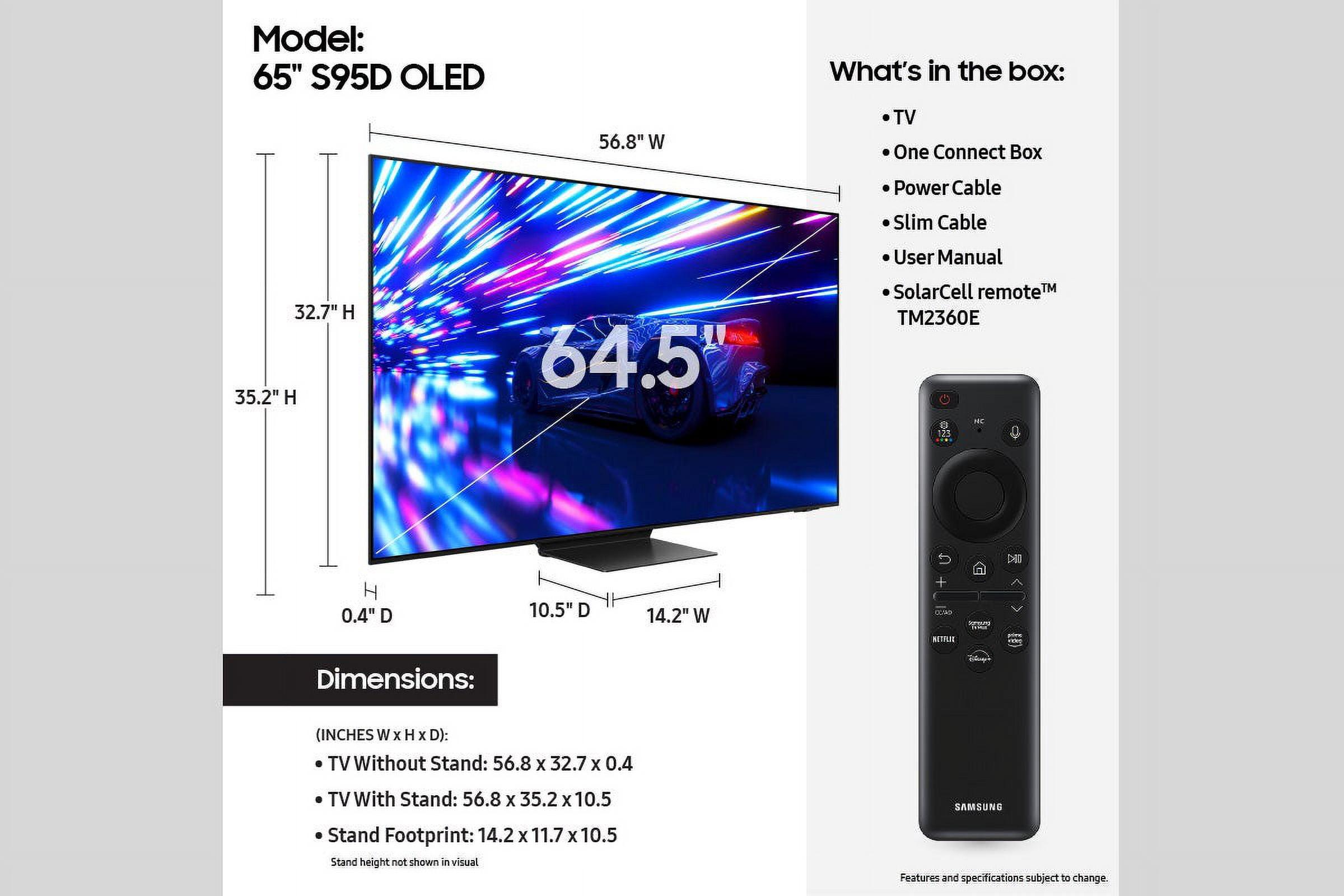
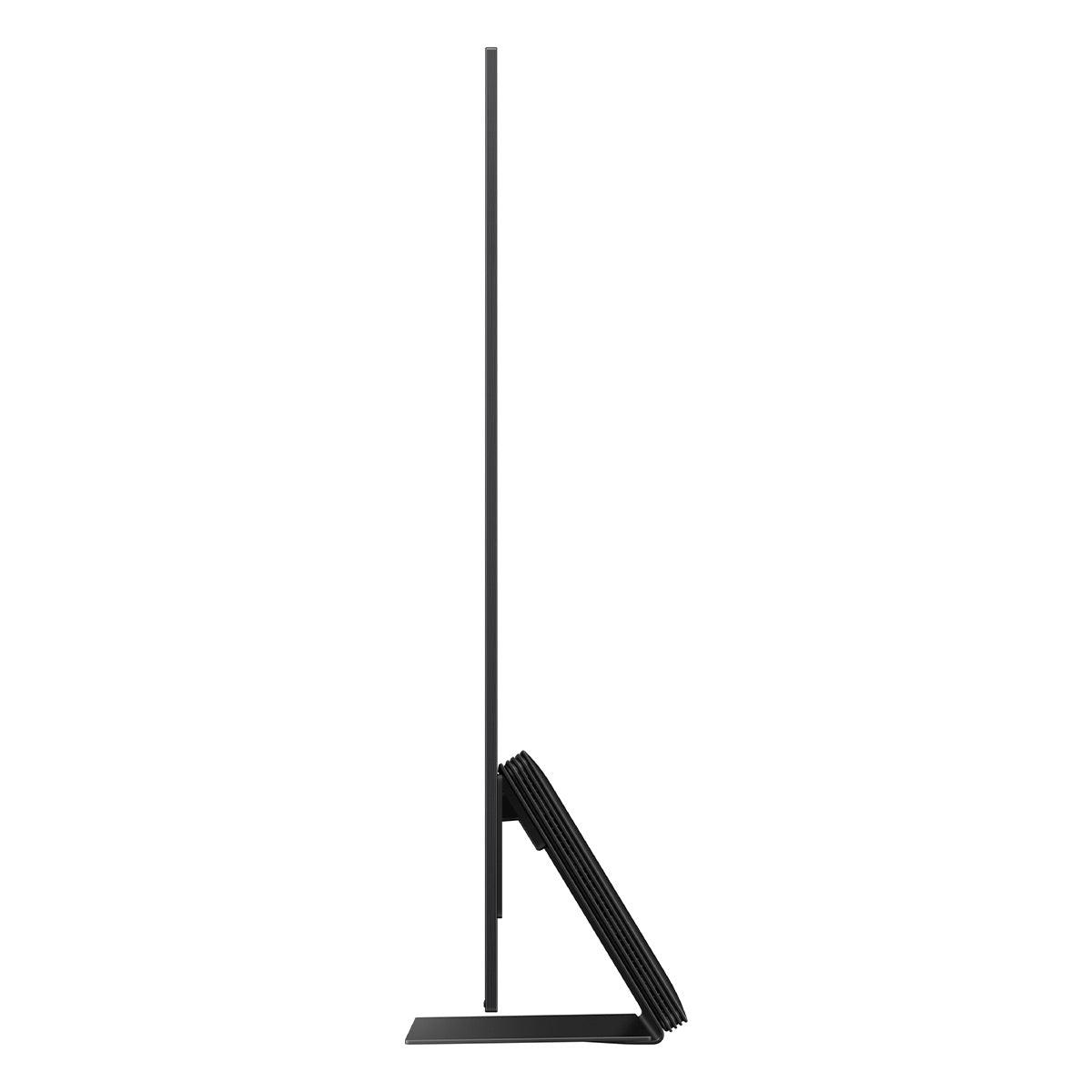
| Standard TV depth with built-in ports | Ultra-thin 11mm profile with external One Connect box |
| Best Use Case - Who should choose each TV | |
| Value seekers wanting premium features in controlled lighting | Users prioritizing flagship picture quality, especially in bright rooms |
The Samsung S95D is significantly better for bright rooms due to its revolutionary anti-glare matte screen coating that nearly eliminates reflections from windows and lights. The Roku Pro Series 2025 uses a traditional glossy screen that can create mirror-like reflections in bright conditions, though its high brightness helps combat some ambient light.
The Roku Pro Series 2025 uses QLED with mini-LED backlighting, which uses thousands of small LED zones behind the screen that can dim but not turn completely off. The Samsung S95D uses QD-OLED technology where each pixel can turn completely on or off independently, creating perfect blacks and infinite contrast ratios.
Both TVs excel at gaming, but the Samsung S95D has advantages with 4K at 144Hz refresh rates, four HDMI 2.1 ports, and nearly instant response times. The Roku Pro Series 2025 offers excellent 4K at 120Hz gaming with slightly lower input lag (5.2ms vs 9ms) and includes two HDMI 2.1 ports, which is sufficient for most gamers.
Both TVs offer surprisingly good built-in audio. The Roku Pro Series 2025 features Roku Soundstage Audio with impressive bass response that many users describe as theater-like. The Samsung S95D includes a more sophisticated 4.2.2 channel system with Object Tracking Sound+ that moves audio across the screen to match on-screen action.
The Roku Pro Series 2025 offers exceptional value, delivering premium TV features at roughly half the cost of the Samsung S95D. However, the Samsung justifies its premium pricing with flagship OLED picture quality, anti-glare technology, and advanced gaming features that matter for specific use cases.
The Roku Pro Series 2025 runs Roku TV OS, which is praised for its simple interface and universal content search across streaming services. The Samsung S95D uses Tizen with advanced AI features and smooth performance, but can feel more complex. Roku excels at content discovery while Samsung offers more sophisticated processing features.
In dark rooms, the Samsung S95D provides superior picture quality with perfect blacks since OLED pixels can turn completely off. The Roku Pro Series 2025 still performs very well in dark conditions with its mini-LED local dimming creating convincing blacks and minimal light bleeding, though it cannot match OLED's absolute black levels.
Both TVs support major HDR formats, but the Samsung S95D achieves higher peak brightness for more impactful HDR highlights and better color volume with its quantum dot technology. The Roku Pro Series 2025 handles HDR content well with good brightness levels and improved color accuracy, making most HDR content look vibrant and detailed.
For dedicated home theaters with controlled lighting, the Samsung S95D provides the ultimate picture quality with perfect blacks and superior contrast. However, the Roku Pro Series 2025 delivers excellent home theater performance at a more accessible price point, with strong HDR capabilities and surprisingly good built-in audio that may delay the need for additional equipment.
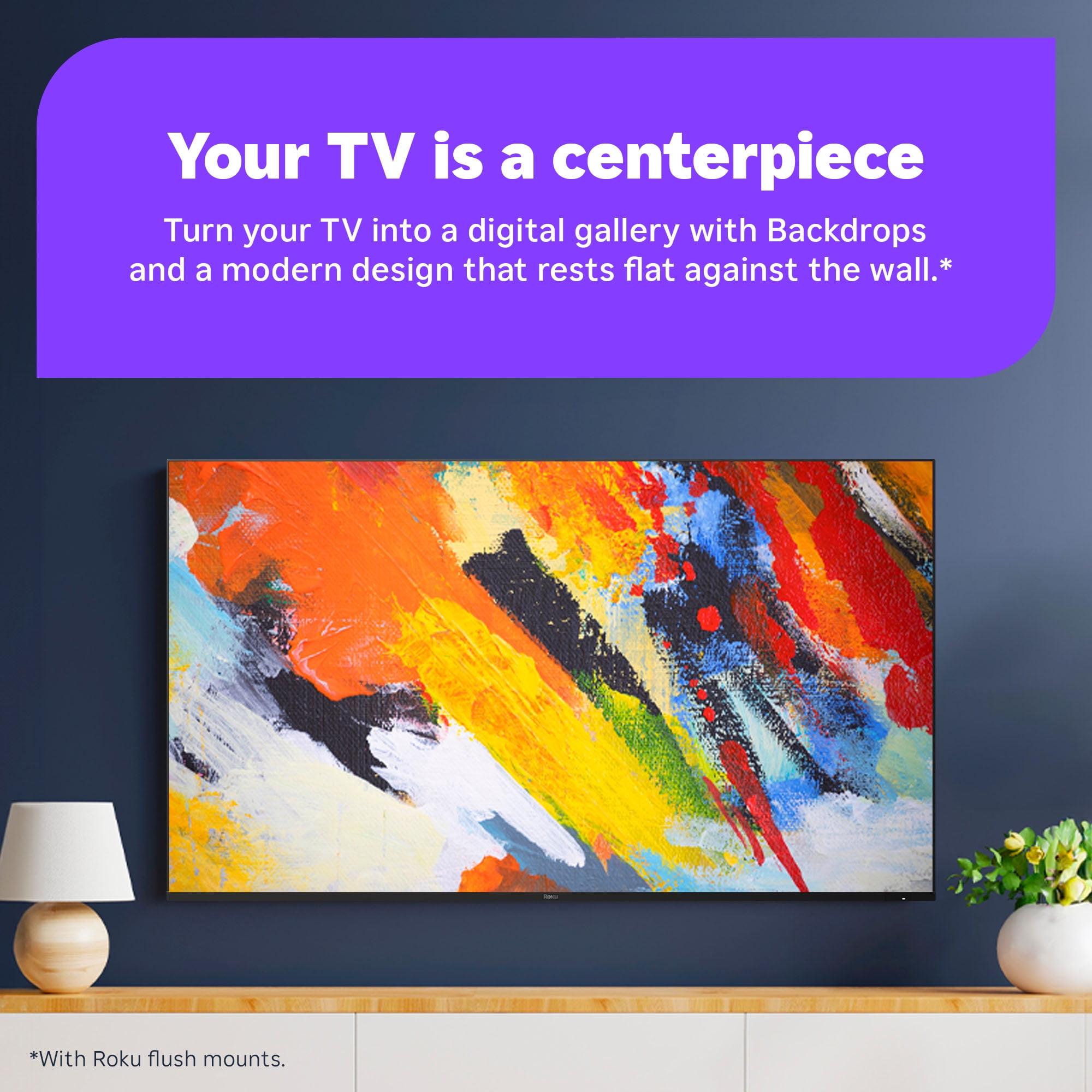
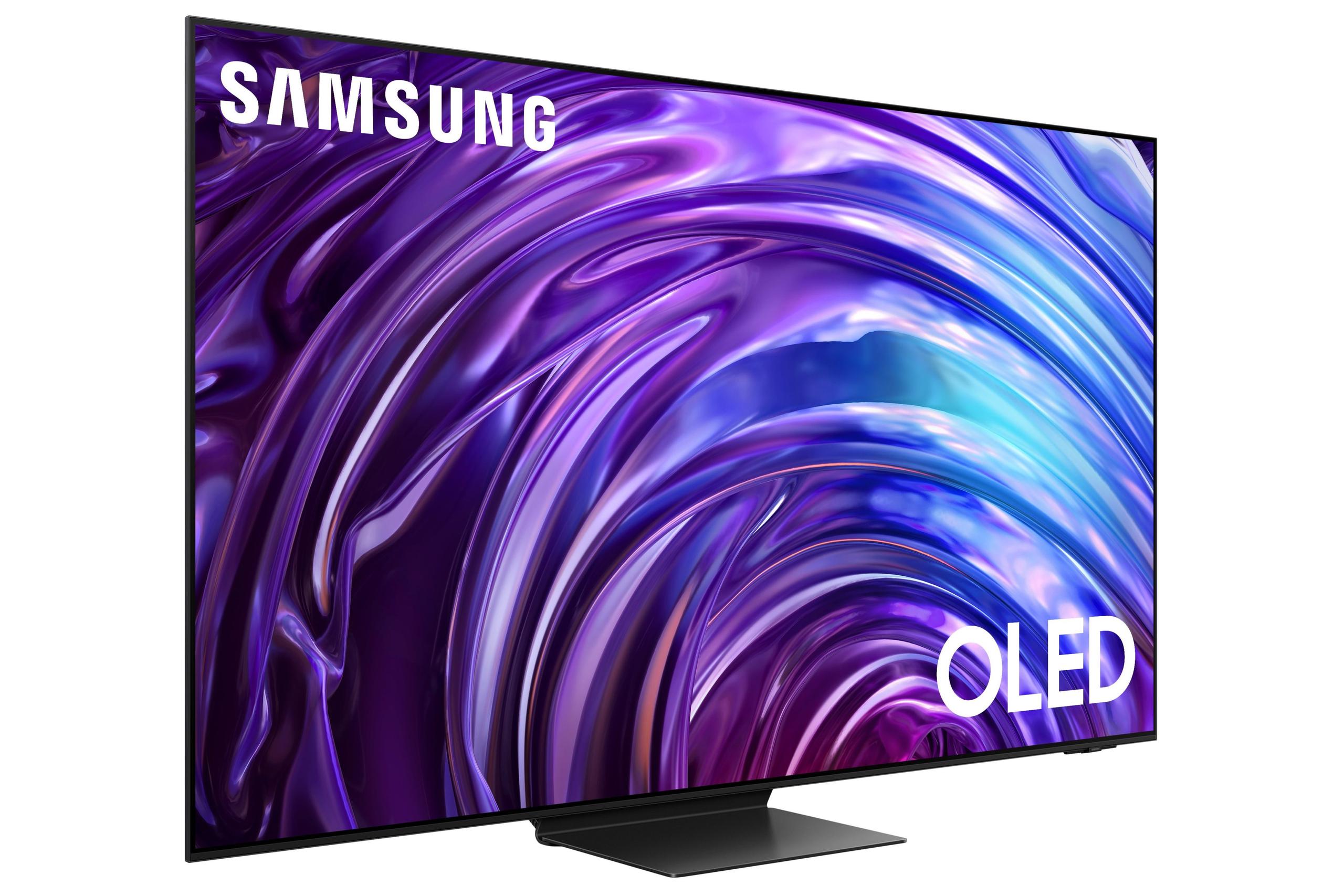
The Samsung S95D features an ultra-thin 11mm profile with an external One Connect box that houses all inputs, creating a clean, minimalist look. The Roku Pro Series 2025 has a more traditional design with built-in ports and standard depth, but still maintains an attractive appearance with a modern stand design.
Both TVs offer good longevity prospects. The Roku Pro Series 2025 benefits from Roku's strong track record of long-term software support and platform updates. The Samsung S95D represents cutting-edge OLED technology that should maintain its performance advantage longer, though OLED panels theoretically have more potential for burn-in over many years of use.
Choose the Roku Pro Series 2025 if you want excellent premium TV performance at exceptional value, primarily watch in controlled lighting, and appreciate Roku's simple platform. Choose the Samsung S95D if you have a bright room with glare issues, want absolute flagship picture quality, prioritize cutting-edge gaming features, or value premium design and build quality regardless of cost.
We've done our best to create useful and informative comparisons to help you decide what product to buy. Our research uses advanced automated methods to create this comparison and perfection is not possible - please contact us for corrections or questions. These are the sites we've researched in the creation of this article: bestbuy.com - rtings.com - techradar.com - youtube.com - roku.com - youtube.com - walmart.com - bestbuy.com - youtube.com - electronicexpress.com - roku.com - pcvarge.com - ecoustics.com - techradar.com - videoandaudiocenter.com - avsforum.com - cnet.com - abt.com - merlinstv.com - nfm.com - rtings.com - flintsfurniture.com - samsung.com - bestbuy.com - displayspecifications.com

Privacy Policy
Terms and Conditions - Affiliate Policy
Home Security
© Copyright 2008-2026.
11816 Inwood Rd #1211, Dallas, TX 75244