




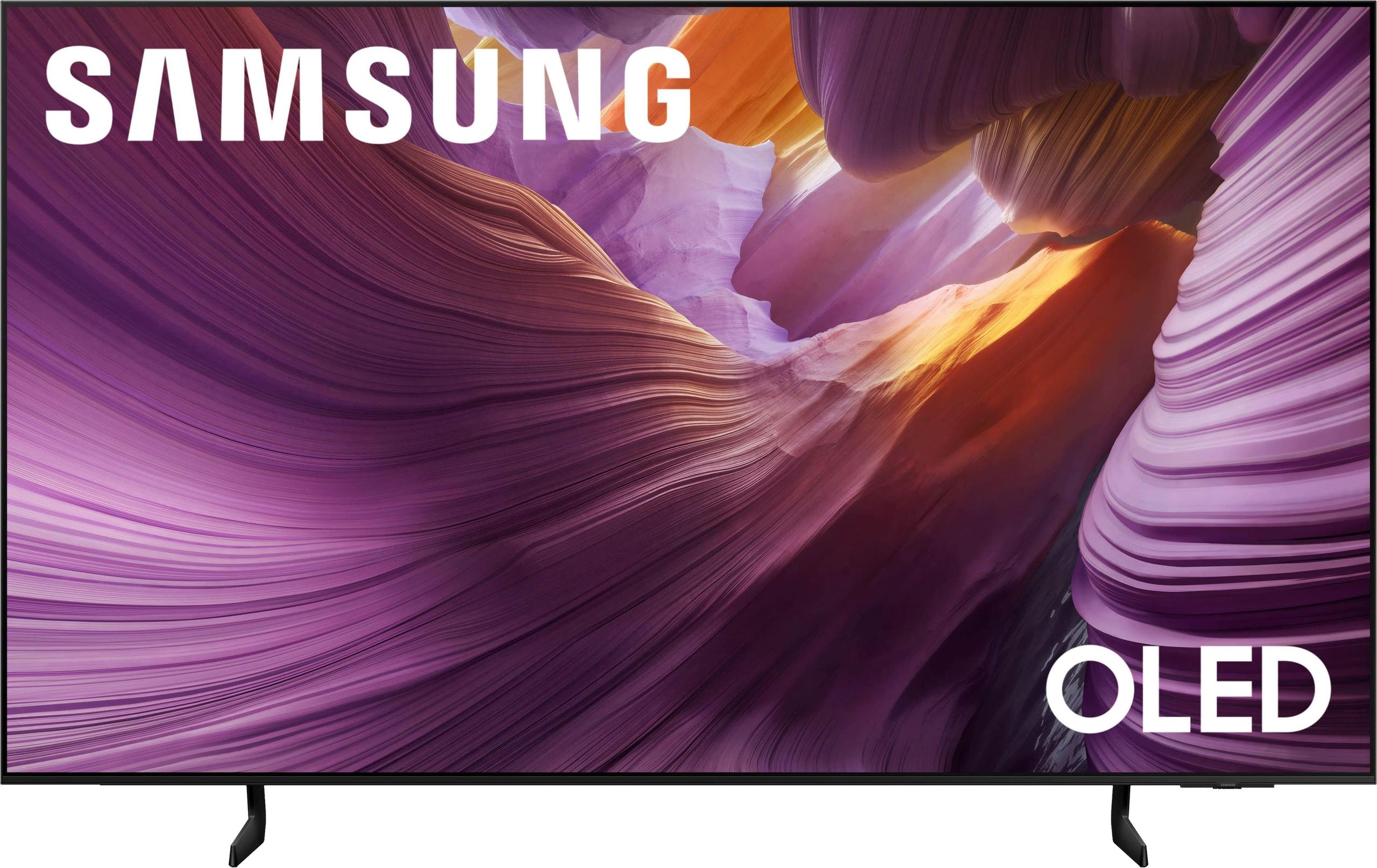
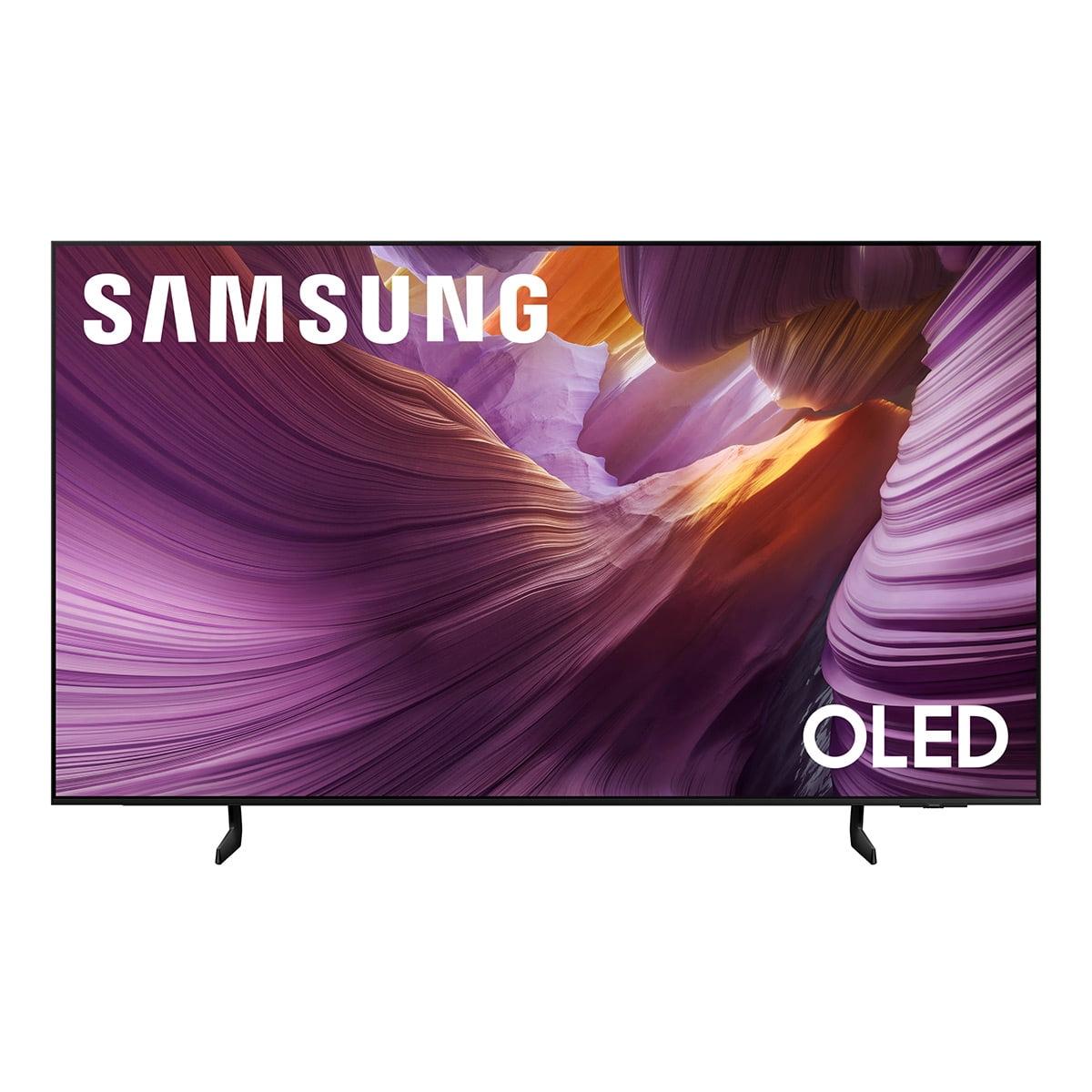
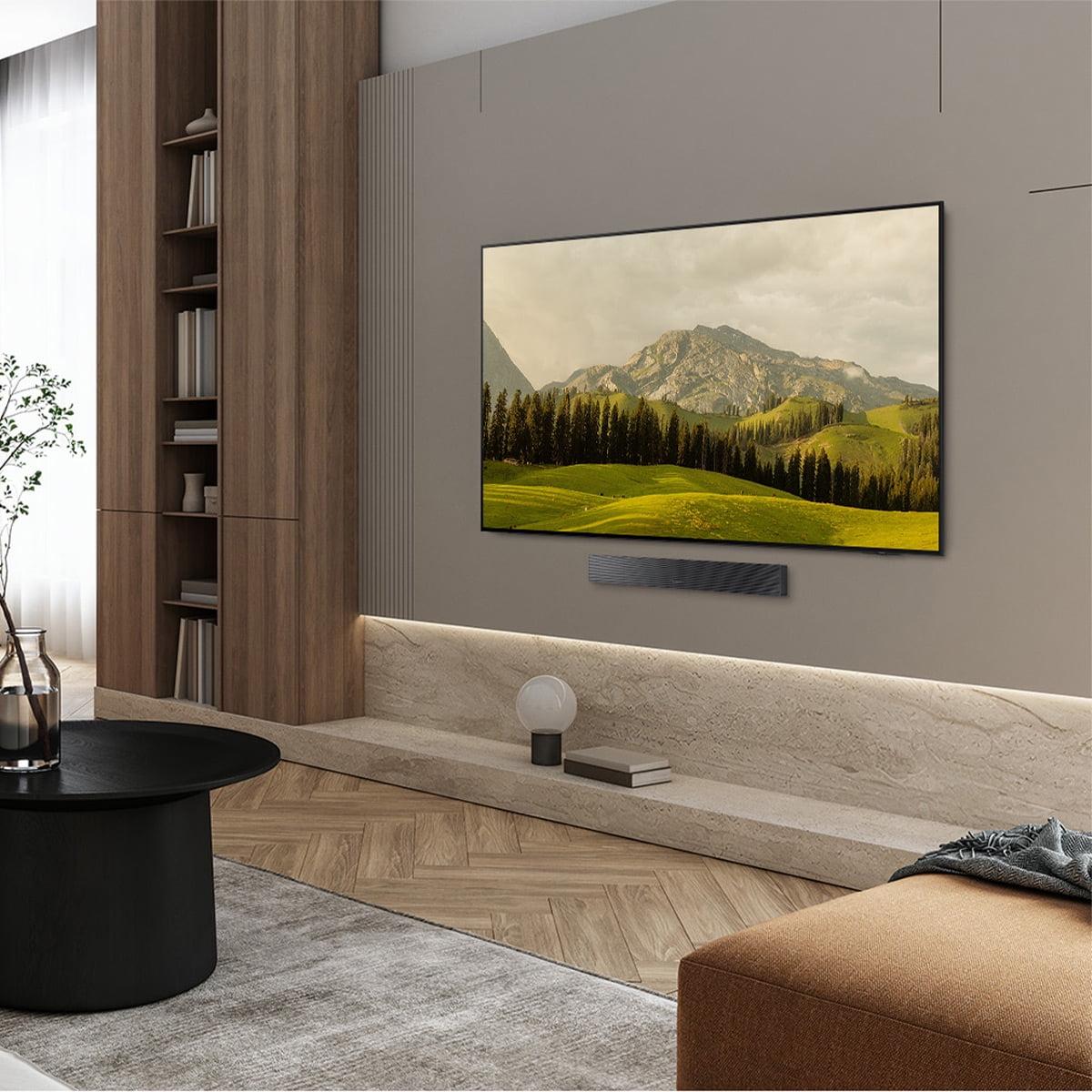

Samsung released two compelling 65-inch premium smart TVs in 2025, and both represent significant technological leaps from their predecessors. The Frame Pro Neo QLED builds on Samsung's lifestyle TV concept with major brightness improvements, while the S85F OLED brings cutting-edge QD-OLED technology to a more accessible price point. Both TVs showcase how far display technology has advanced, but they take fundamentally different approaches to delivering exceptional picture quality.
Understanding which TV suits your needs requires diving into the technical differences between Neo QLED and OLED technologies, examining real-world performance, and considering how each fits into your living space and viewing habits.
The core difference between these TVs lies in how they create light and color. The Frame Pro uses Neo QLED technology, which is Samsung's premium Mini-LED implementation. This means it has thousands of tiny LED lights behind the screen (the backlight) that shine through layers of quantum dot material and LCD panels to create the final image. The "mini" part is crucial – these LEDs are much smaller than traditional TV backlights, allowing for more precise control over brightness in different areas of the screen.
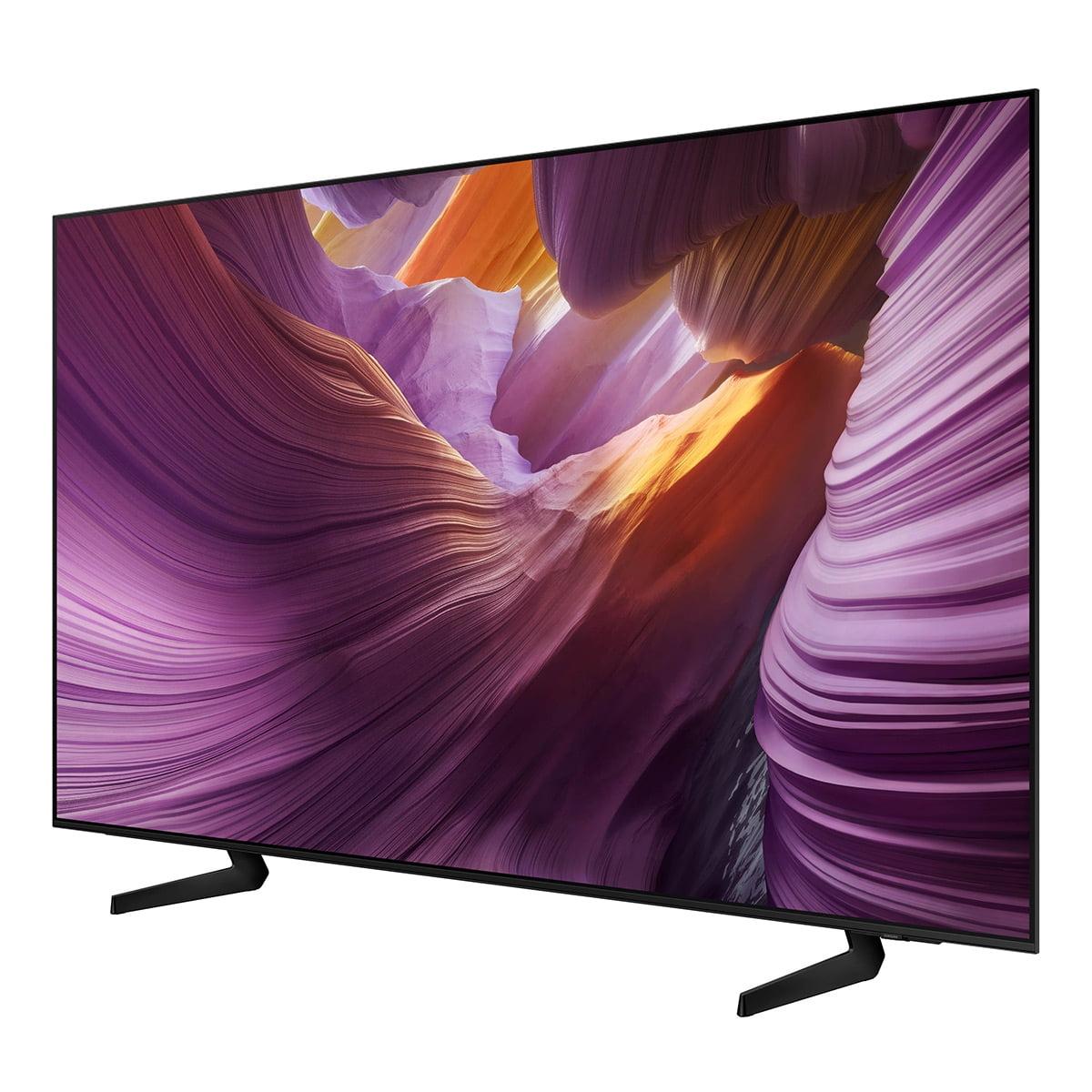
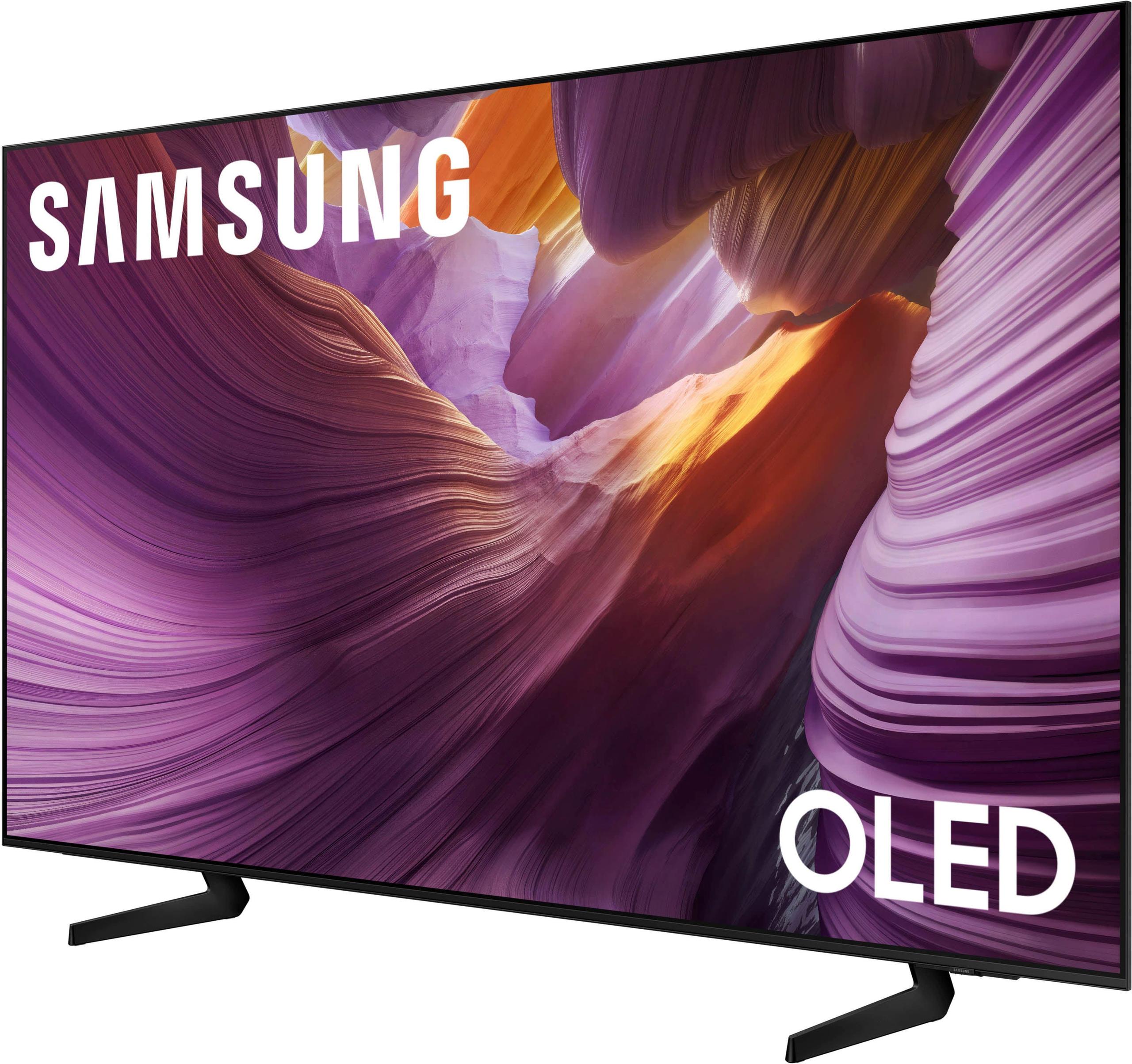
The S85F OLED takes a completely different approach using QD-OLED technology. Here, each pixel creates its own light through organic compounds that glow when electricity passes through them. The "QD" stands for quantum dot, which means this OLED panel also benefits from quantum dot color enhancement. When a pixel needs to be black, it simply turns off completely – no backlight bleed, no compromises.
Think of it this way: Neo QLED is like having thousands of tiny flashlights behind a stained glass window, while OLED is like having millions of individual colored light bulbs that can each turn on or off independently. Both approaches have their strengths, and understanding these differences is key to making the right choice.
If your TV will be in a bright living room with lots of windows or overhead lighting, the Frame Pro has a significant advantage. Our research into professional reviews and user feedback consistently shows that this TV can reach over 1,000 nits of peak brightness – that's nearly twice as bright as many premium TVs from just a few years ago.
This brightness advantage isn't just about numbers on a spec sheet. When you're watching HDR (High Dynamic Range) content, those extra nits translate directly into more impactful highlights. The sun reflecting off water in a nature documentary, the gleam of lightsabers in Star Wars, or the sparkle of jewelry in a period drama – all of these look more realistic and eye-catching on a brighter display.
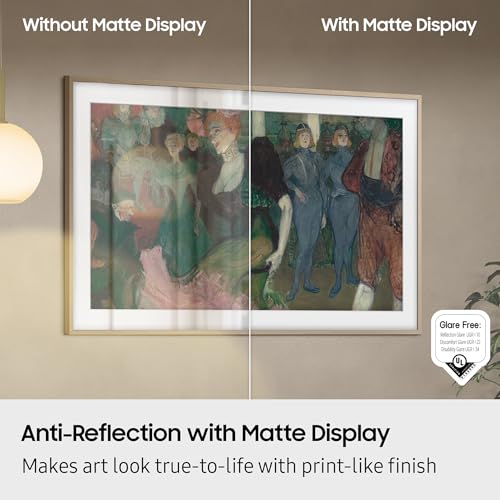
The Frame Pro's matte anti-reflection coating deserves special mention here. Most TVs have glossy screens that act like mirrors in bright rooms, but Samsung engineered this display to minimize reflections without sacrificing image sharpness. This makes it genuinely usable even when there's a window directly behind your seating area – something that would wash out most other TVs completely.
In contrast, the S85F OLED reaches about 750 nits in small highlights and drops to around 150 nits when displaying bright, full-screen content. This brightness limitation becomes apparent when watching HDR movies in well-lit rooms, where highlights lack the punch they should have, and the overall image can appear dim.
The tables turn dramatically when the lights go down. In a darkened home theater or bedroom, the S85F OLED delivers picture quality that's simply unmatched by any LCD technology, including the Frame Pro.
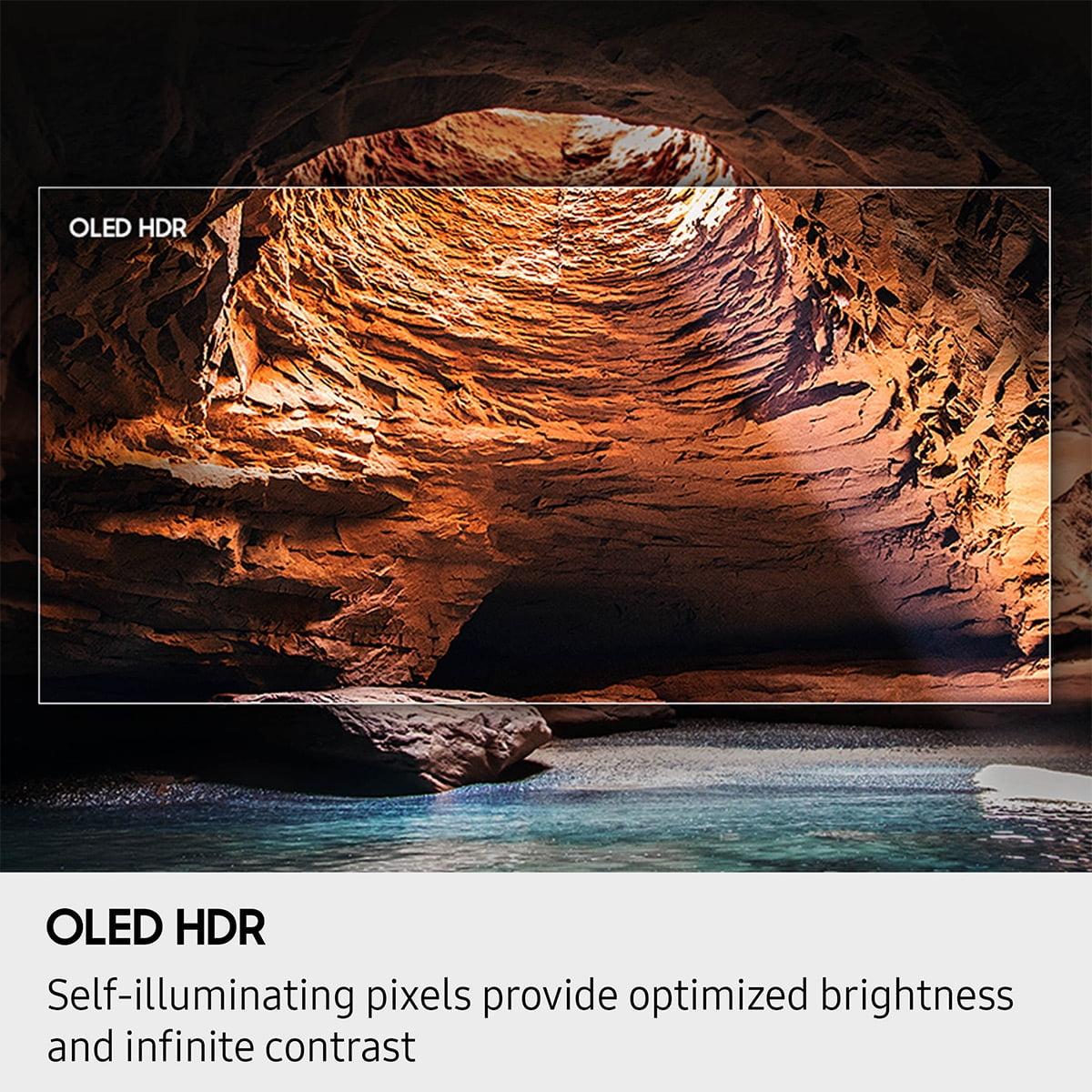
The technical reason is straightforward: when an OLED pixel needs to display black, it turns off completely. There's no backlight leaking through, no glow around bright objects in dark scenes, and no compromise in shadow detail. This creates what experts call "infinite contrast ratio" – the mathematical term for the difference between the darkest and brightest parts of an image being essentially unlimited.
For movie enthusiasts, this translates into several practical advantages. Horror movies maintain their atmospheric tension because shadows are truly dark. Space scenes in science fiction films show stars against the inky blackness of the void rather than a grayish background. Even regular TV shows benefit from more realistic nighttime scenes where you can actually distinguish details in shadows.
The Frame Pro, despite its advanced local dimming with Quantum Matrix Technology, still uses a backlight that must shine through LCD panels. While Samsung has minimized the issues compared to cheaper TVs, you'll still notice some blooming (light halos) around bright objects in dark scenes, and blacks appear more like dark gray than true black.
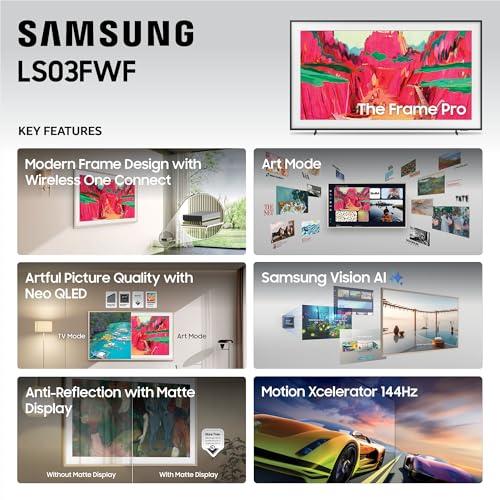
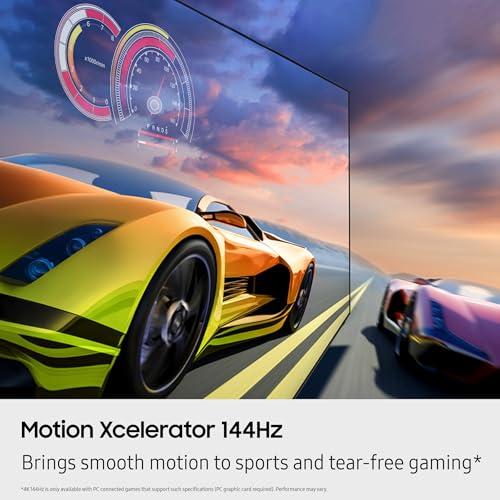
Both TVs support modern gaming features, but they excel in different areas. The Frame Pro technically supports a higher refresh rate at 144Hz compared to the S85F's 120Hz, which sounds impressive for PC gaming. However, our research into user experiences reveals a significant problem: input lag on the Frame Pro exceeds 30 milliseconds, which is noticeably high for competitive gaming.
Input lag measures the delay between when you press a button and when the action appears on screen. For context, serious gamers typically want this under 20ms, and many modern TVs achieve 10-15ms. The Frame Pro's higher lag likely stems from the processing required for its wireless One Connect Box system and extensive image enhancement features.
The S85F OLED delivers much better gaming performance with input lag typically measuring under 15ms and near-instantaneous pixel response times. This means no motion blur during fast-paced action and minimal delay between your controller inputs and on-screen results. For console gaming with PlayStation 5 or Xbox Series X, this creates a noticeably more responsive experience.
Both TVs support Variable Refresh Rate (VRR), which synchronizes the TV's refresh rate with your gaming device to eliminate screen tearing. They also include Auto Low Latency Mode (ALLM), which automatically switches to game mode when a console is detected.
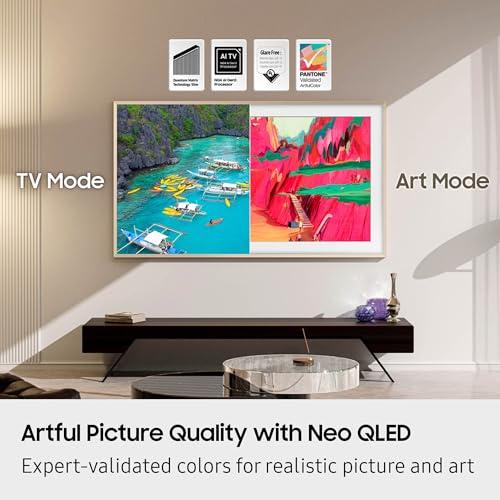
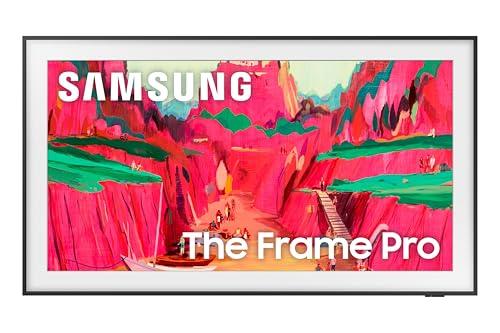
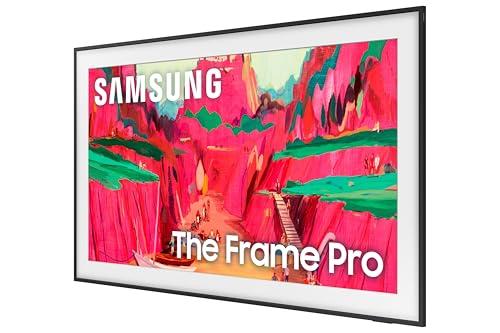
The Frame Pro represents Samsung's most ambitious attempt to solve the "big black rectangle" problem that many people have with TVs. When not in use, it transforms into a digital art gallery, displaying thousands of curated artworks from Samsung's Art Store or your personal photos. The customizable bezels let you match your room's decor, making it look like an actual framed painting on your wall.
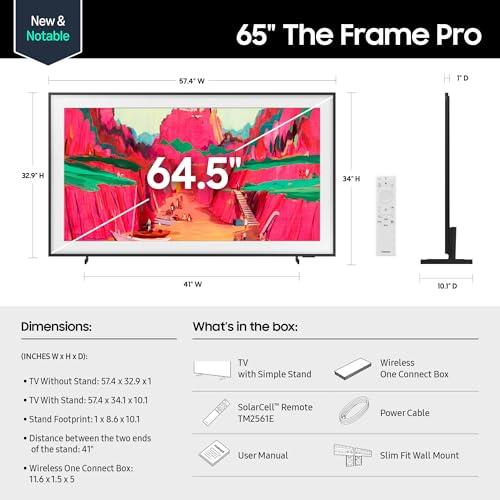
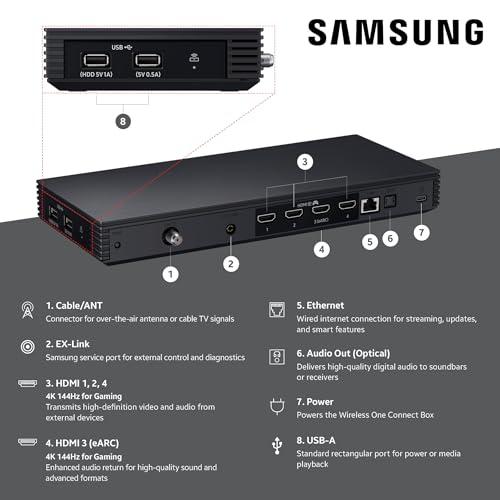
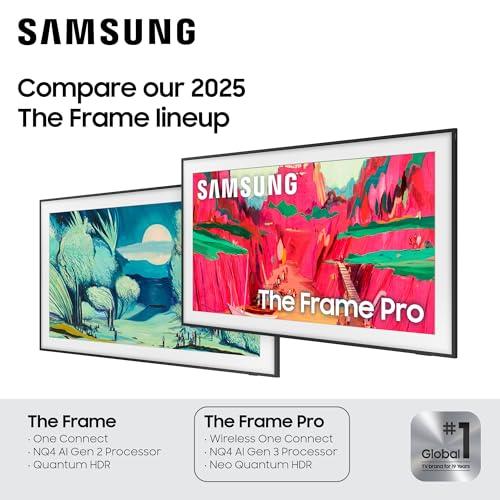
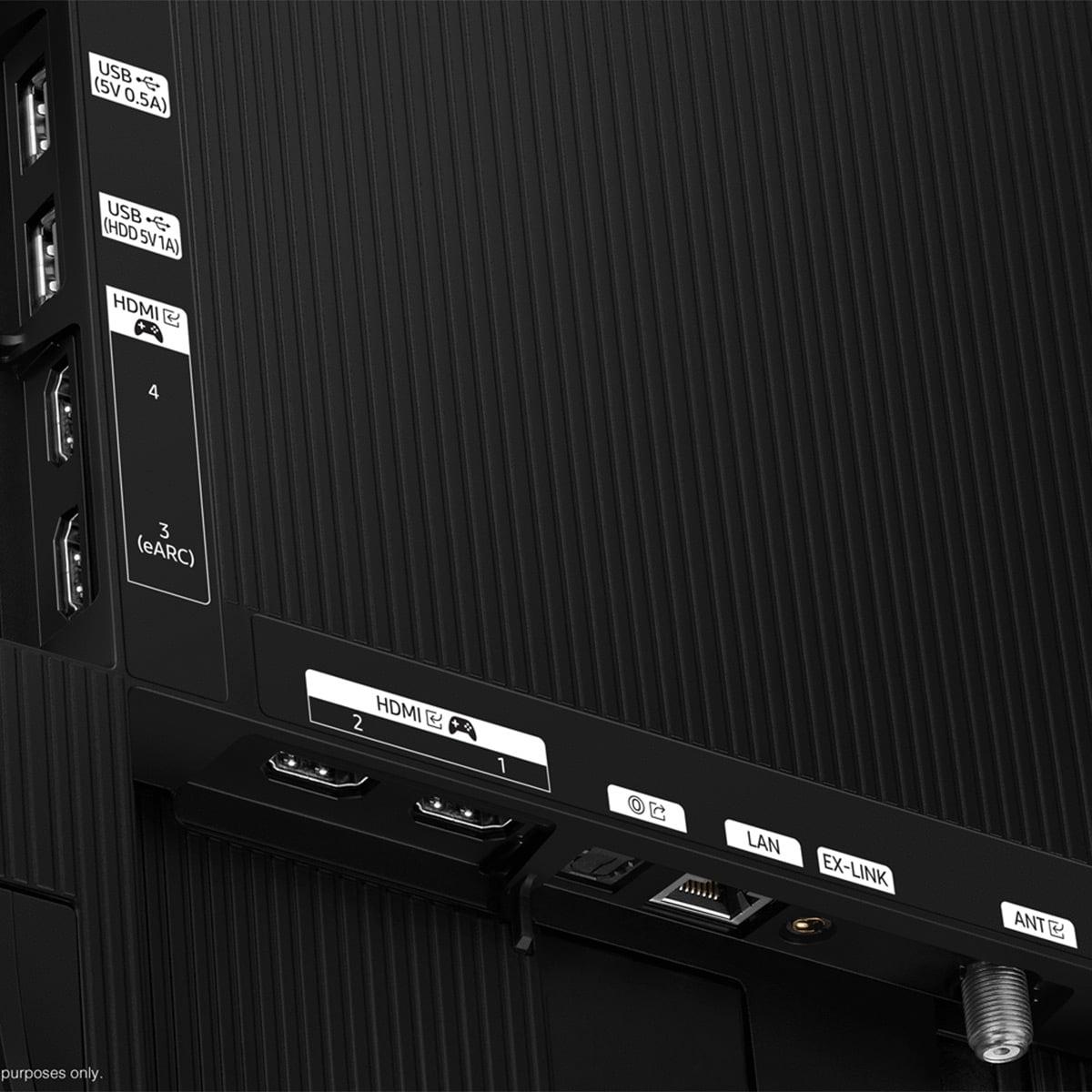
The wireless One Connect Box takes this concept further by eliminating visible cables entirely. All your devices connect to a separate box that can be placed up to 10 meters away, communicating wirelessly with the TV using Wi-Fi 7 technology and Samsung's Omni-Directional transmission system. This means you can mount the TV flush against the wall without any visible connections – crucial for maintaining the gallery aesthetic.
This lifestyle integration comes with trade-offs. The matte screen coating that reduces reflections also slightly reduces the image sharpness compared to glossy displays. The wireless connection, while convenient, introduces the potential for interference and latency issues that don't exist with wired connections.
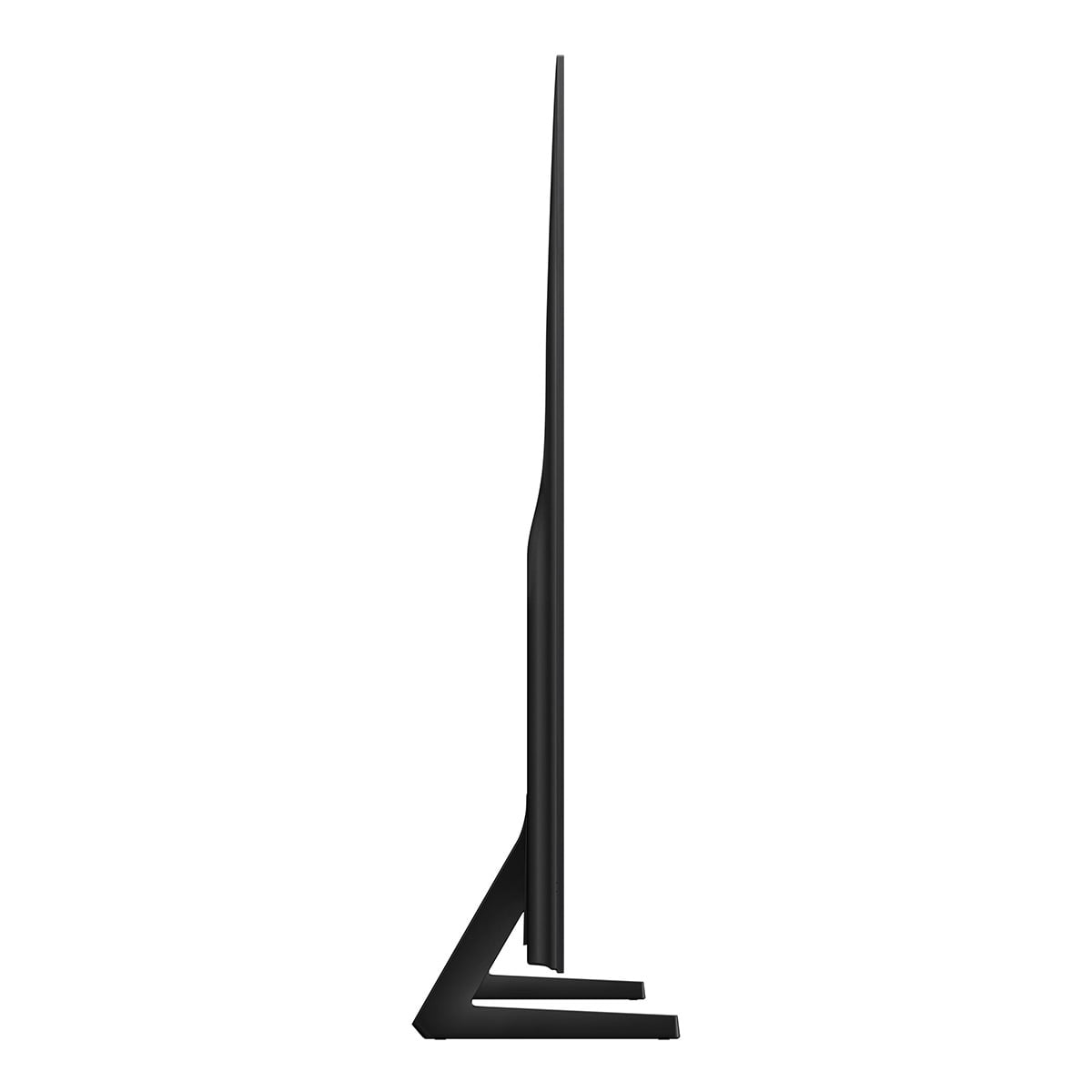
The S85F OLED takes a more traditional approach with a sleek, minimalist design. The incredibly thin profile (especially when wall-mounted) looks modern and unobtrusive, but it doesn't attempt to disguise itself as furniture or art. Some users prefer this honest, technology-forward aesthetic.
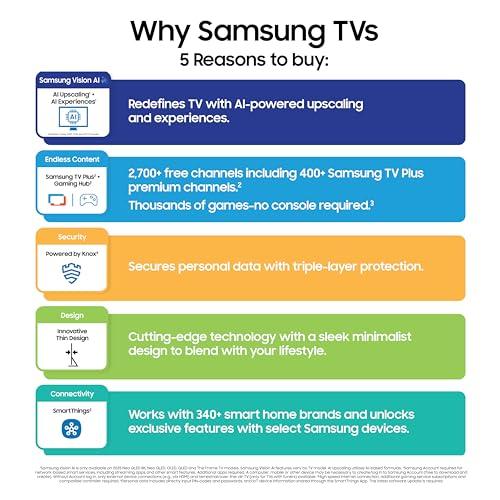
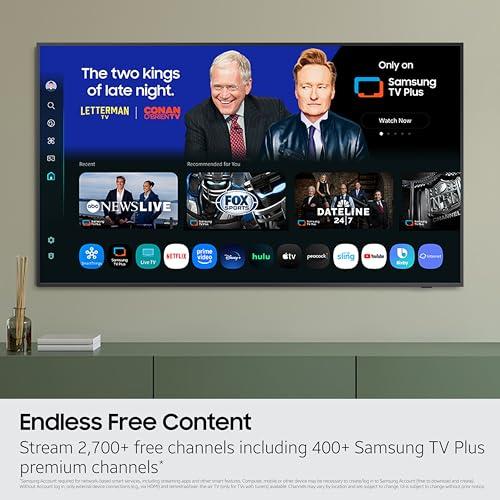
Both TVs run Samsung's Tizen operating system, which has matured significantly since its introduction. The interface is responsive, includes all major streaming apps, and integrates well with Samsung's SmartThings ecosystem for smart home control.
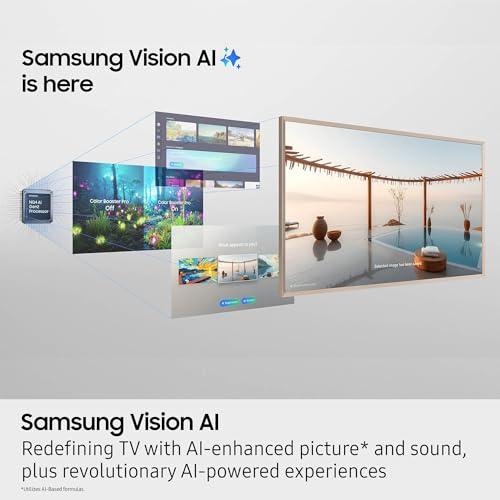
The Frame Pro includes Samsung Vision AI, a 2025 addition that provides more intelligent content recognition and user interaction. The S85F features the NQ4 AI Gen2 processor with 20 neural networks for real-time image optimization, upscaling lower-resolution content, and adjusting picture settings based on what you're watching.
One notable omission on both TVs is Dolby Vision support. Samsung uses HDR10+ instead, which provides similar dynamic HDR benefits but isn't as widely supported by content creators. This might matter if you're a serious home theater enthusiast with a large 4K Blu-ray collection, as many premium titles use Dolby Vision for their optimal viewing experience.
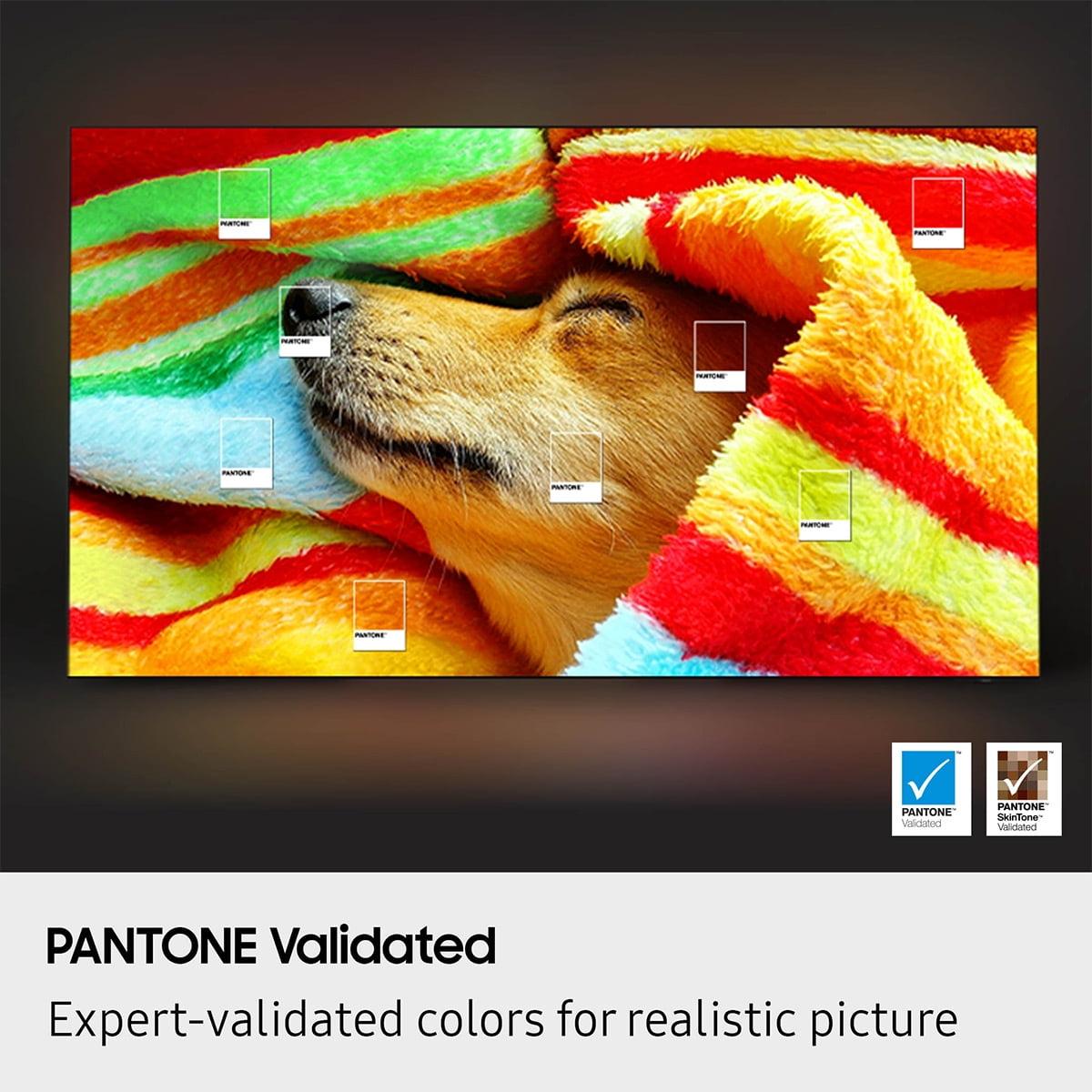
The S85F OLED achieves Pantone validation, covering over 2,140 colors and 110 skin tone variations with professional accuracy. This level of color precision typically requires expensive reference monitors, making it particularly valuable for content creators or anyone who prioritizes color accuracy.
The Frame Pro uses Samsung's Quantum Dot technology to achieve wide color coverage, though it lacks the specific Pantone validation. The higher brightness capability means colors can appear more vivid and saturated, particularly in HDR content, even if they're not technically more accurate than the OLED.
Both TVs include Smart Calibration features that use your smartphone's camera to optimize picture settings for your specific room conditions. This is a significant improvement over older TVs that required expensive calibration equipment for optimal performance.
The S85F OLED includes a 2.0 channel system with 20W output, while the Frame Pro features a more robust 2.0.2CH system with 40W output and upward-firing speakers for basic Dolby Atmos effects. Both TVs support Samsung's Q-Symphony technology, which coordinates TV speakers with compatible Samsung soundbars for improved audio performance.
For serious home theater setups, both TVs support eARC (Enhanced Audio Return Channel) for sending high-quality audio to external sound systems. However, neither supports DTS audio formats, which could be limiting if you have a collection of physical media with DTS soundtracks.
At the time of writing, the S85F OLED typically costs several hundred dollars less than the Frame Pro, making it an exceptional value for premium display technology. You're getting OLED picture quality with quantum dot color enhancement at a price that was unimaginable for this technology just a few years ago.
The Frame Pro commands its premium through lifestyle features and bright room performance. If you value the artistic integration and wireless convenience, the extra cost may be justified. However, for pure picture quality per dollar, especially in dark room viewing, the OLED represents better value.
Longevity considerations favor different aspects of each TV. OLED panels can experience burn-in if static images are displayed for extended periods, though modern safeguards and Samsung's warranty protection have largely mitigated this concern for normal use. The Frame Pro's LED backlights should theoretically last longer without degradation, and there's no burn-in risk.
Choose the Frame Pro if you have a bright living room with lots of natural light, want a TV that doubles as art, or prioritize having the latest connectivity features like the wireless One Connect Box. It's the clear winner for daytime viewing and family rooms where the TV might be visible even when not in use.
The S85F OLED is the better choice for dedicated movie watching, gaming enthusiasts who need low input lag, or anyone who primarily watches TV in controlled lighting conditions. The superior dark room performance and better value proposition make it compelling for traditional TV use cases.
For home theater applications, the S85F OLED is generally the better choice unless your theater room has significant ambient light. The perfect blacks and infinite contrast ratio create a more cinematic experience, while the lower input lag benefits gaming sessions.
Both TVs represent significant technological achievements and will provide excellent service for years to come. Your choice should ultimately depend on your viewing environment, aesthetic preferences, and whether you value the Frame Pro's lifestyle features enough to justify the premium over the S85F's superior traditional TV performance.
The evolution of display technology has reached a point where both approaches offer compelling advantages. The Frame Pro pushes the boundaries of what a TV can be in your living space, while the S85F OLED delivers reference-quality picture performance at an accessible price. Either choice will represent a substantial upgrade over older TV technologies and provide a window into the future of home entertainment.
| Samsung 65" The Frame Pro 4K Neo QLED Smart TV 2025 | Samsung 65" S85F OLED 4K Smart TV (2025) |
|---|---|
| Display Technology - Determines contrast, brightness capabilities, and viewing experience | |
| Neo QLED Mini-LED with LCD panel and quantum dots | QD-OLED with self-illuminating pixels and quantum dot enhancement |
| Peak Brightness - Critical for HDR impact and bright room viewing | |
| 1,000+ nits (excellent for daytime viewing and HDR highlights) | ~750 nits highlights, ~150 nits full screen (limited in bright rooms) |
| Black Levels - Affects contrast and dark scene detail | |
| Deep blacks with some blooming due to LCD backlight | Perfect blacks with infinite contrast (pixels turn completely off) |
| Gaming Refresh Rate - Higher rates provide smoother motion for PC gaming | |
| 144Hz (future-proof for high-end PC gaming) | 120Hz (sufficient for current consoles and most PC gaming) |
| Input Lag - Lower is better for competitive gaming responsiveness | |
| 30ms+ (noticeable delay, not ideal for competitive gaming) | Under 15ms (excellent for gaming, nearly imperceptible delay) |
| Anti-Reflection Technology - Reduces glare in bright environments | |
| Matte anti-glare coating (eliminates reflections but slightly reduces sharpness) | Standard anti-reflection (good but not as effective as matte coating) |
| Connectivity Setup - Affects installation flexibility and cable management | |
| Wireless One Connect Box (eliminates cable clutter, 10m range) | Traditional wired HDMI connections (requires cable management) |
| Art Mode Integration - Transforms TV into decorative element when not in use | |
| Full Art Mode with customizable bezels and Samsung Art Store access | Standard TV design without art display capabilities |
| Color Accuracy Certification - Professional-grade color reproduction | |
| Quantum Dot color enhancement (wide gamut, very good accuracy) | Pantone Validated (professional color accuracy for 2,140+ colors) |
| HDR Format Support - Determines compatibility with premium content | |
| Neo Quantum HDR, HDR10+ Adaptive (no Dolby Vision support) | OLED HDR, HDR10+ Adaptive (no Dolby Vision support) |
| Audio System - Built-in sound capabilities | |
| 2.0.2CH 40W with upward-firing speakers (basic Dolby Atmos) | 2.0CH 20W system (standard stereo, external sound recommended) |
| Processor - Affects smart features and image processing quality | |
| NQ4 AI Gen3 with Samsung Vision AI | NQ4 AI Gen2 with 20 neural networks |
| Best Room Conditions - Optimal viewing environment for each TV | |
| Bright living rooms, family spaces with windows | Dark rooms, dedicated home theaters, controlled lighting |
| Ideal User Profile - Who benefits most from each TV's strengths | |
| Lifestyle-focused users wanting art integration and bright room performance | Traditional TV users prioritizing picture quality and gaming performance |
The Samsung Frame Pro is significantly better for bright rooms due to its 1,000+ nits peak brightness and matte anti-glare coating. The S85F OLED only reaches about 750 nits and can appear washed out in well-lit environments. If your TV will be in a living room with windows or overhead lighting, the Frame Pro will deliver much better picture quality during daytime viewing.
The Samsung S85F OLED excels in dark rooms with perfect black levels and infinite contrast ratio. Each pixel can turn completely off, creating true blacks that the Frame Pro cannot match due to its LCD backlight. For movie watching in darkened rooms or home theaters, the S85F OLED provides a more cinematic experience with superior shadow detail.
The Samsung S85F OLED is better for gaming despite the Frame Pro's higher 144Hz refresh rate. The OLED has much lower input lag (under 15ms vs 30ms+), near-instantaneous response times, and better motion handling. While the Frame Pro supports higher refresh rates, the input lag makes it less suitable for competitive gaming.
Yes, both the Frame Pro and S85F OLED run Samsung's Tizen operating system with identical streaming apps, voice assistants (Bixby and Alexa), and smart home integration. The main difference is that the Frame Pro includes Samsung Vision AI for enhanced user interaction, while both offer excellent smart TV functionality.
The Samsung Frame Pro transforms into a digital art gallery when not in use, displaying artwork from Samsung's Art Store or personal photos. It features customizable bezels to match your decor and a wireless One Connect Box that eliminates visible cables. This makes it function as both a TV and a piece of wall art, unlike the traditional S85F OLED.
The Samsung S85F OLED typically offers better value, costing several hundred dollars less while delivering premium OLED picture quality. You get perfect blacks, excellent color accuracy, and superior gaming performance at a lower price. The Frame Pro commands a premium for its lifestyle features and bright room performance.
Both TVs offer excellent color performance but in different ways. The S85F OLED is Pantone validated for professional color accuracy across 2,140+ colors. The Frame Pro uses Quantum Dot technology for vibrant colors and can display HDR content with more impact due to its higher brightness, making highlights more dramatic.
The Samsung S85F OLED is generally better for dedicated home theaters due to its perfect black levels and infinite contrast ratio, which create a more cinematic experience in dark rooms. However, if your home theater has ambient lighting, the Frame Pro's higher brightness might be preferable. Both support eARC for external sound systems.
The Samsung Frame Pro has a more robust 40W 2.0.2CH system with upward-firing speakers for basic Dolby Atmos effects. The S85F OLED features a simpler 20W 2.0CH system. Both support Q-Symphony for integration with Samsung soundbars, though most users will want external audio for the best home theater experience.
Both TVs should provide excellent longevity. The S85F OLED has potential burn-in concerns with static images, though modern safeguards and Samsung's warranty largely mitigate this risk. The Frame Pro's LED backlight technology has no burn-in risk and may theoretically last longer, making it slightly more worry-free for varied content viewing.
Absolutely. Choose the Samsung Frame Pro for bright rooms with windows, mixed lighting, or spaces where the TV is visible during the day. Pick the S85F OLED for dark rooms, dedicated home theaters, or evening viewing where you can control ambient light. Room lighting is the most important factor in determining which TV will perform better for your specific situation.
We've done our best to create useful and informative comparisons to help you decide what product to buy. Our research uses advanced automated methods to create this comparison and perfection is not possible - please contact us for corrections or questions. These are the sites we've researched in the creation of this article: tomsguide.com - youtube.com - smarthomesounds.co.uk - images.samsung.com - rtings.com - samsung.com - bestbuy.com - bestbuy.com - businessinsider.com - dentonstv.com - samsung.com - flatpanelshd.com - samsung.com - jefflynch.com - youtube.com - costco.com - rtings.com - samsung.com - youtube.com - rtings.com - youtube.com - samsung.com - bestbuy.com - avsforum.com - avsforum.com - samsung.com - displayspecifications.com - videoandaudiocenter.com - bestbuy.com - flatpanelshd.com - myallsouth.com - samsung.com - richstv.com - samsung.com - heartlandappliance.com

Privacy Policy
Terms and Conditions - Affiliate Policy
Home Security
© Copyright 2008-2026.
11816 Inwood Rd #1211, Dallas, TX 75244