

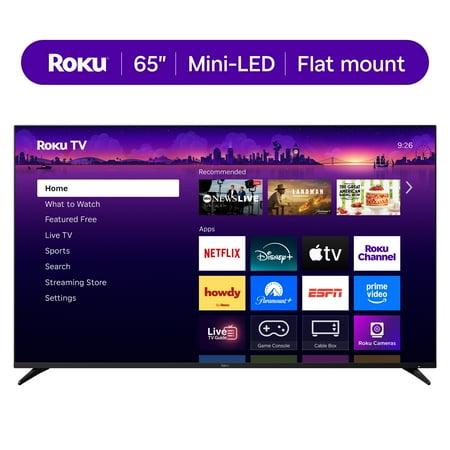
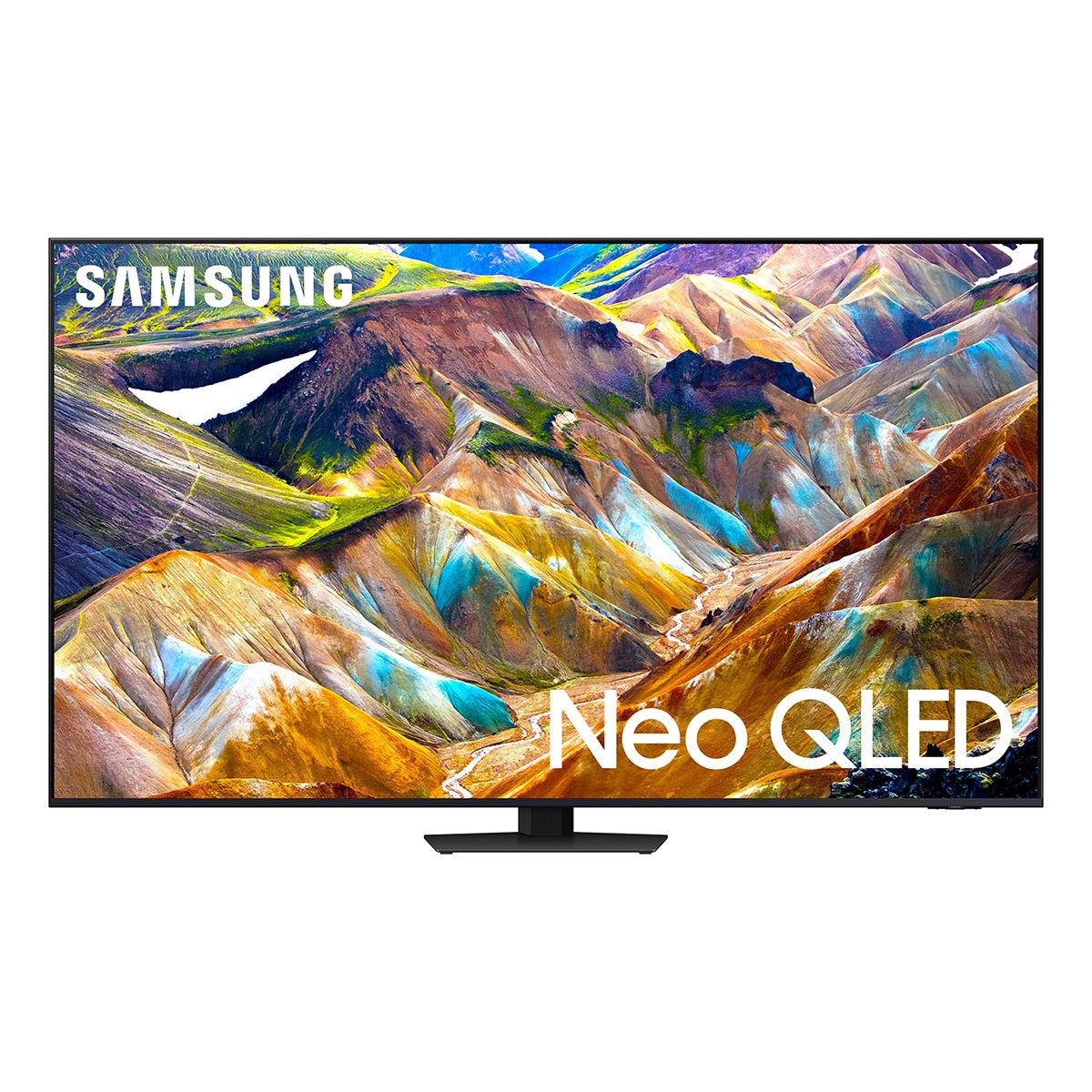
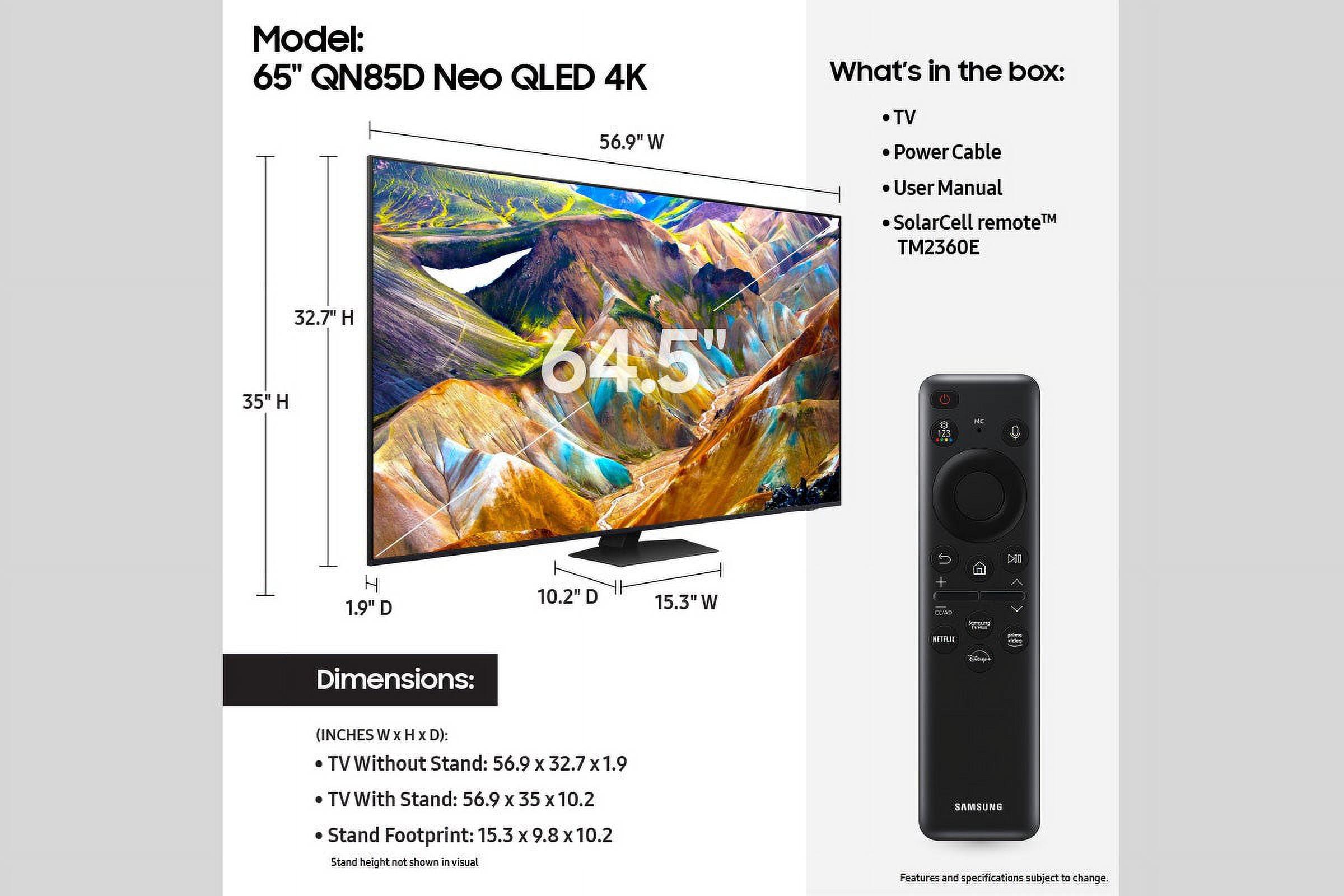
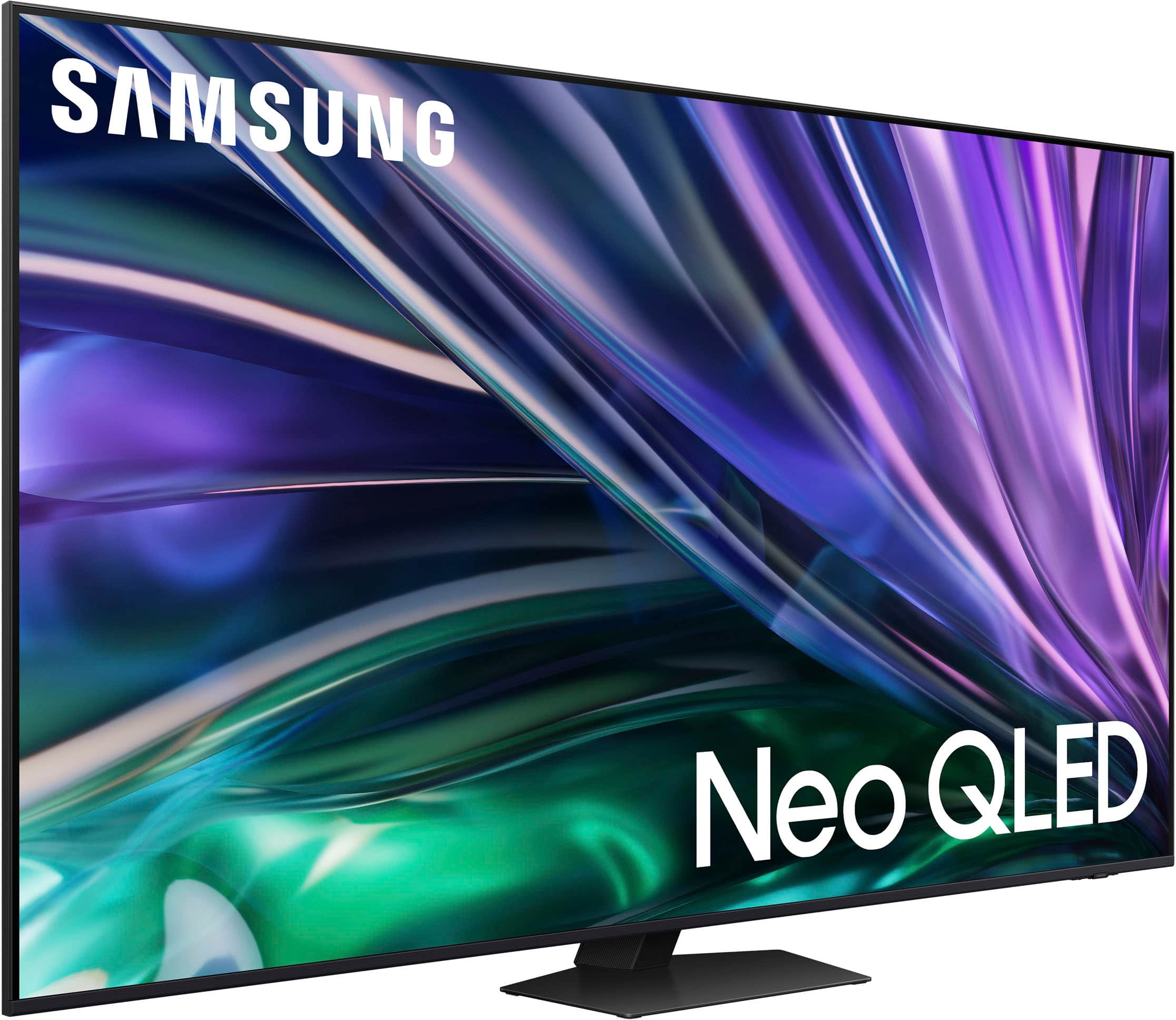
When you're shopping for a 65-inch TV around the $1,200 mark (at the time of writing), two standout options represent completely different approaches to premium picture quality. The Roku 65" Pro Series 2025 launched in 2025 as Roku's most ambitious TV yet, while the Samsung 65" QN85D Neo QLED from 2024 continues Samsung's reputation for contrast-rich displays. Both TVs cost nearly identical amounts, but they solve different problems in dramatically different ways.
The 65-inch premium TV space has evolved rapidly over the past few years. These TVs use Mini-LED backlighting—thousands of tiny LEDs behind the screen that can dim independently to create better contrast—combined with quantum dot technology for more vibrant colors. Think of Mini-LEDs as extremely precise spotlights that can illuminate just the parts of the screen that need to be bright while keeping dark areas truly dark.
The most crucial performance factors in this category are peak brightness (how bright the TV can get for HDR content), contrast ratio (the difference between the darkest and brightest parts of the image), color accuracy, and how well the TV handles motion. Gaming features have also become essential, with modern consoles demanding HDMI 2.1 ports that support 4K resolution at 120 frames per second.
What makes this comparison particularly interesting is that both the Roku Pro Series 2025 and Samsung QN85D excel in different areas, making them suitable for different viewing environments and priorities.
The Roku Pro Series 2025 takes an almost aggressive approach to brightness, reaching up to 1,818 nits in its brightest setting. To put this in perspective, most TVs struggle to hit 1,000 nits, and even premium models rarely exceed 1,500 nits. This exceptional brightness isn't just about showing off—it fundamentally changes how HDR (High Dynamic Range) content looks in your living room.
HDR content is mastered to display highlights that can be much brighter than standard TV content. When a movie shows sunlight streaming through a window or an explosion lighting up a scene, those highlights should genuinely look bright to your eye. The Roku's ability to hit nearly 1,800 nits means these HDR moments actually pop off the screen, even if you're watching with overhead lights on or sunlight coming through your windows.
The Samsung QN85D, while still very bright, doesn't quite reach the Roku's peak levels. This isn't necessarily a weakness—Samsung focused their engineering efforts elsewhere—but it does mean the Samsung performs better in darker viewing environments where its lower peak brightness is less noticeable.
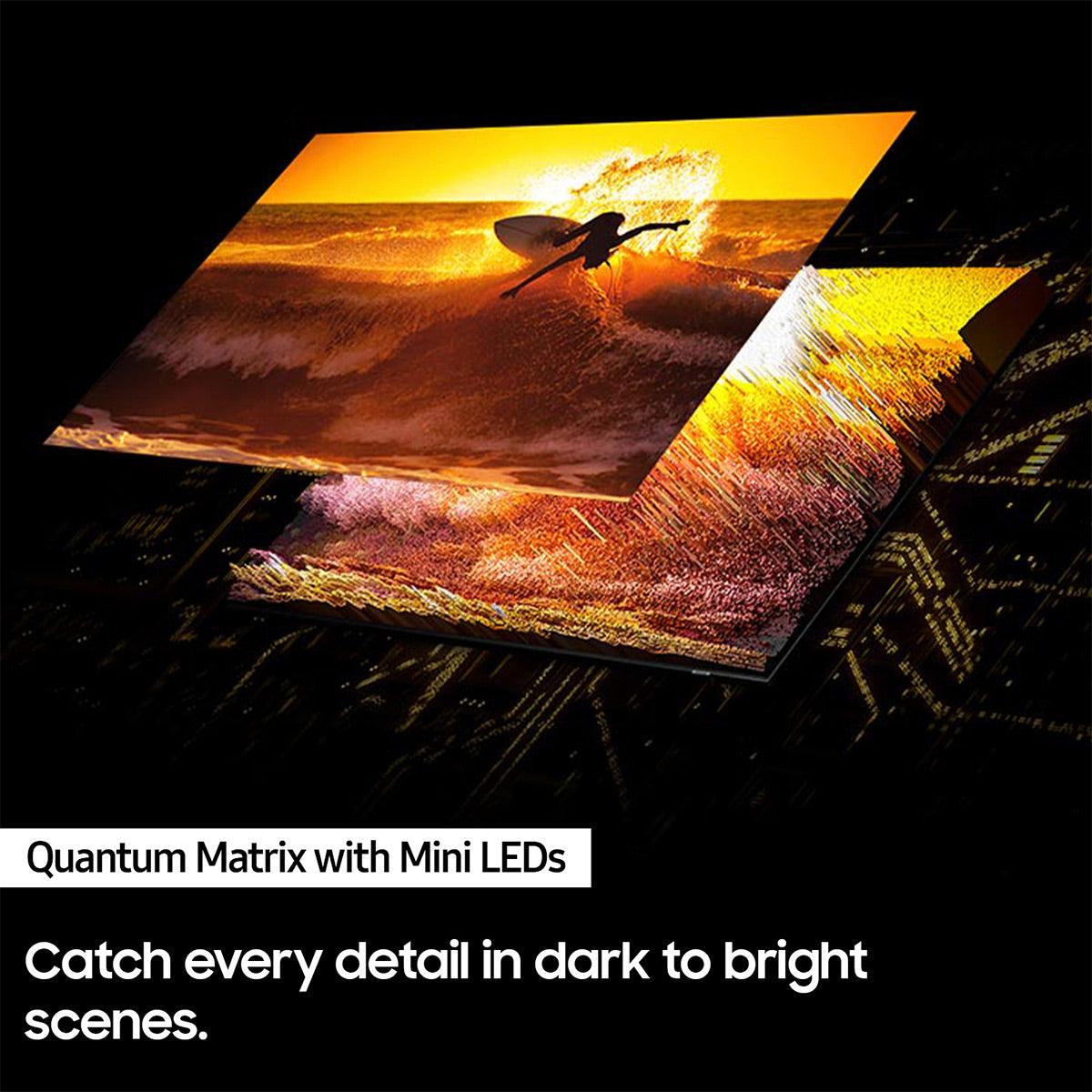
Where the Samsung QN85D absolutely crushes the competition is in contrast ratio. The Samsung achieves a native contrast ratio exceeding 160,000:1, which is genuinely impressive for any LED-based TV. Contrast ratio measures the difference between the deepest black and the brightest white the TV can display simultaneously, and higher numbers create more realistic, three-dimensional-looking images.
The Samsung accomplishes this through its VA (Vertical Alignment) panel technology combined with 160 local dimming zones. Each zone can dim independently, so when you're watching a movie with a dark night scene punctuated by bright streetlights, those streetlights can be blazingly bright while the surrounding darkness remains genuinely black.
The Roku Pro Series 2025 uses Mini-LED technology as well, but our research suggests it doesn't achieve the same level of zone control as the Samsung. This means you might notice some "blooming"—unwanted light spilling around bright objects in dark scenes—more on the Roku than the Samsung.
Here's where things get really interesting. The Roku Pro Series 2025 features something called Roku Smart Picture Max, an AI-powered system that analyzes every scene and automatically adjusts color saturation, sharpness, and contrast in real-time. This isn't just a marketing gimmick—it's similar to how your smartphone camera automatically adjusts settings, but for your TV's picture processing.
The system works scene-by-scene, meaning it might make one adjustment for a bright outdoor scene and a completely different adjustment when the action moves indoors. Based on our research into user experiences, this creates consistently good-looking images across different types of content without requiring you to fiddle with settings.
The Samsung QN85D takes a more traditional but refined approach. Samsung's quantum dot technology produces excellent color accuracy out of the box, and the TV's color gamut (the range of colors it can display) covers nearly all the colors in modern HDR content. While it doesn't automatically adjust scene-by-scene like the Roku, Samsung's color processing has been refined over many generations and produces reliably excellent results.
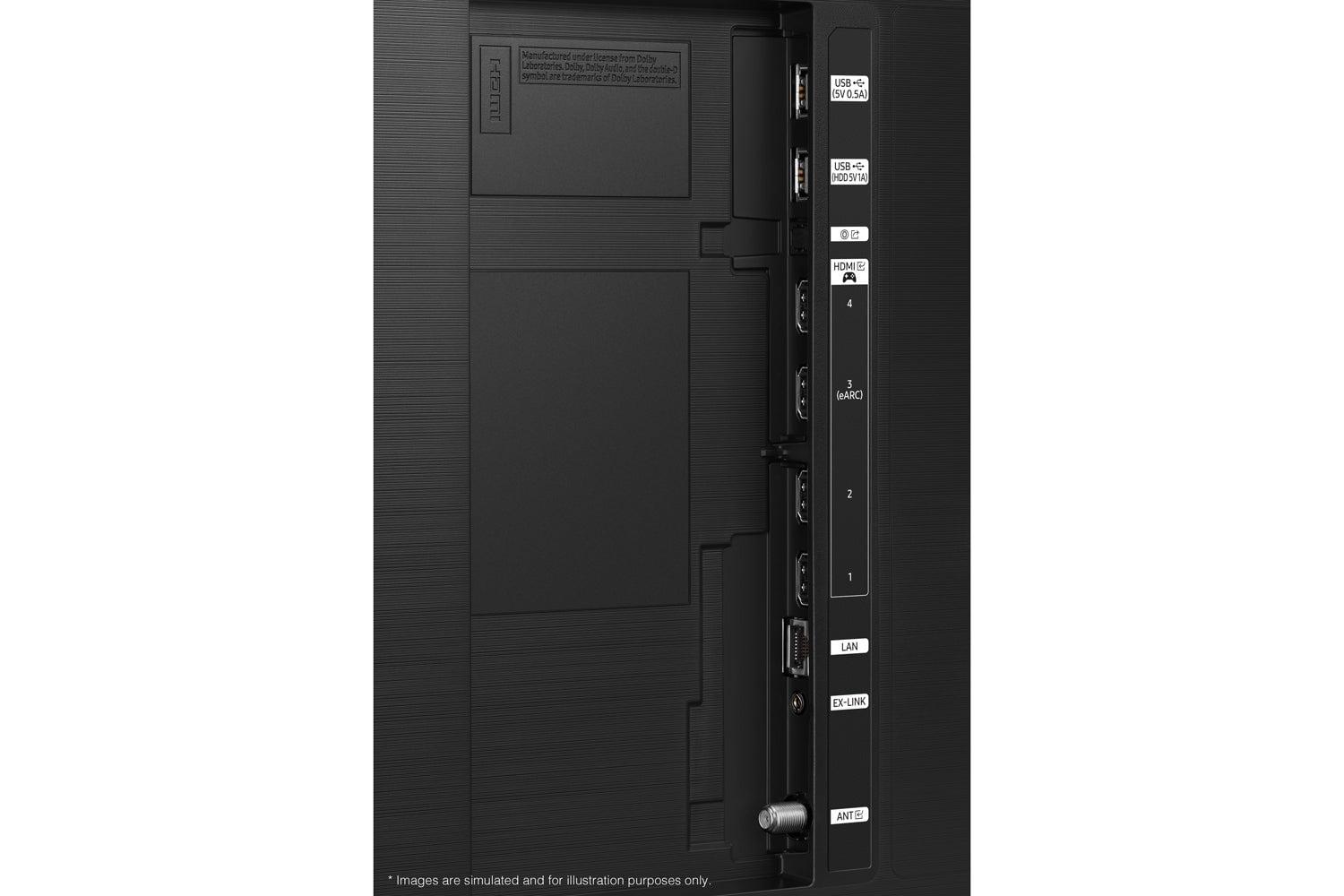
If gaming is important to you, the Samsung QN85D pulls significantly ahead. All four of Samsung's HDMI ports support HDMI 2.1, which is the connection standard required for 4K gaming at 120 frames per second. The Samsung also supports every major variable refresh rate (VRR) technology—this eliminates screen tearing when your console's frame rate fluctuates.
The Roku Pro Series 2025 includes gaming features, but only two of its HDMI ports support the full 4K at 120Hz specification. For most people with one or two consoles, this is probably fine, but if you have multiple gaming devices or want maximum flexibility, the Samsung's four full-spec HDMI 2.1 ports provide more options.
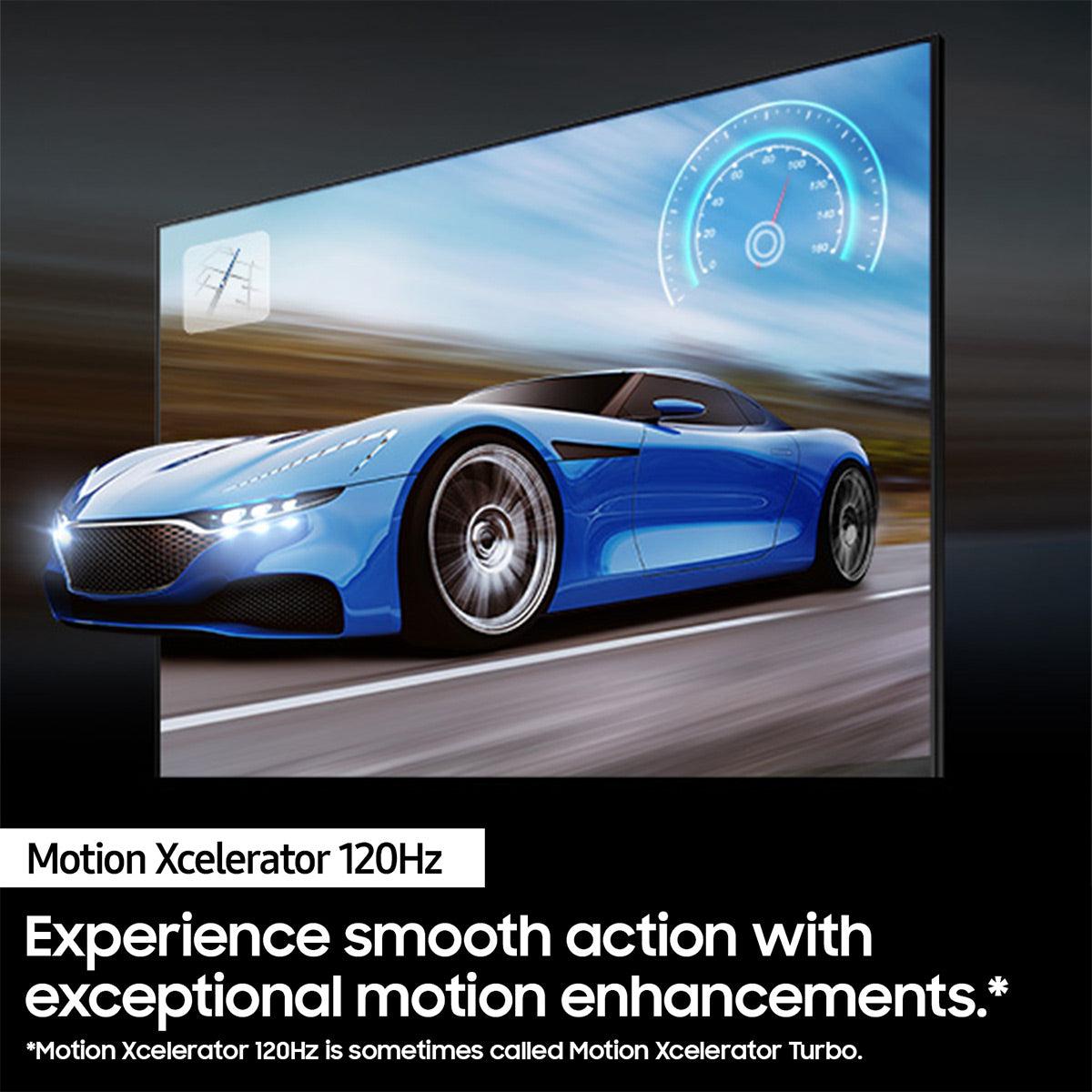
Input lag—the delay between pressing a button and seeing the action on screen—is excellent on both TVs, with the Roku achieving as low as 5.2 milliseconds in gaming mode. Both TVs support Auto Low Latency Mode (ALLM), which automatically switches to gaming mode when it detects a console.
However, the Samsung has one gaming weakness: slower pixel response times that can cause motion blur in fast-paced competitive games. If you're playing racing games or first-person shooters where every millisecond matters, this could be noticeable.
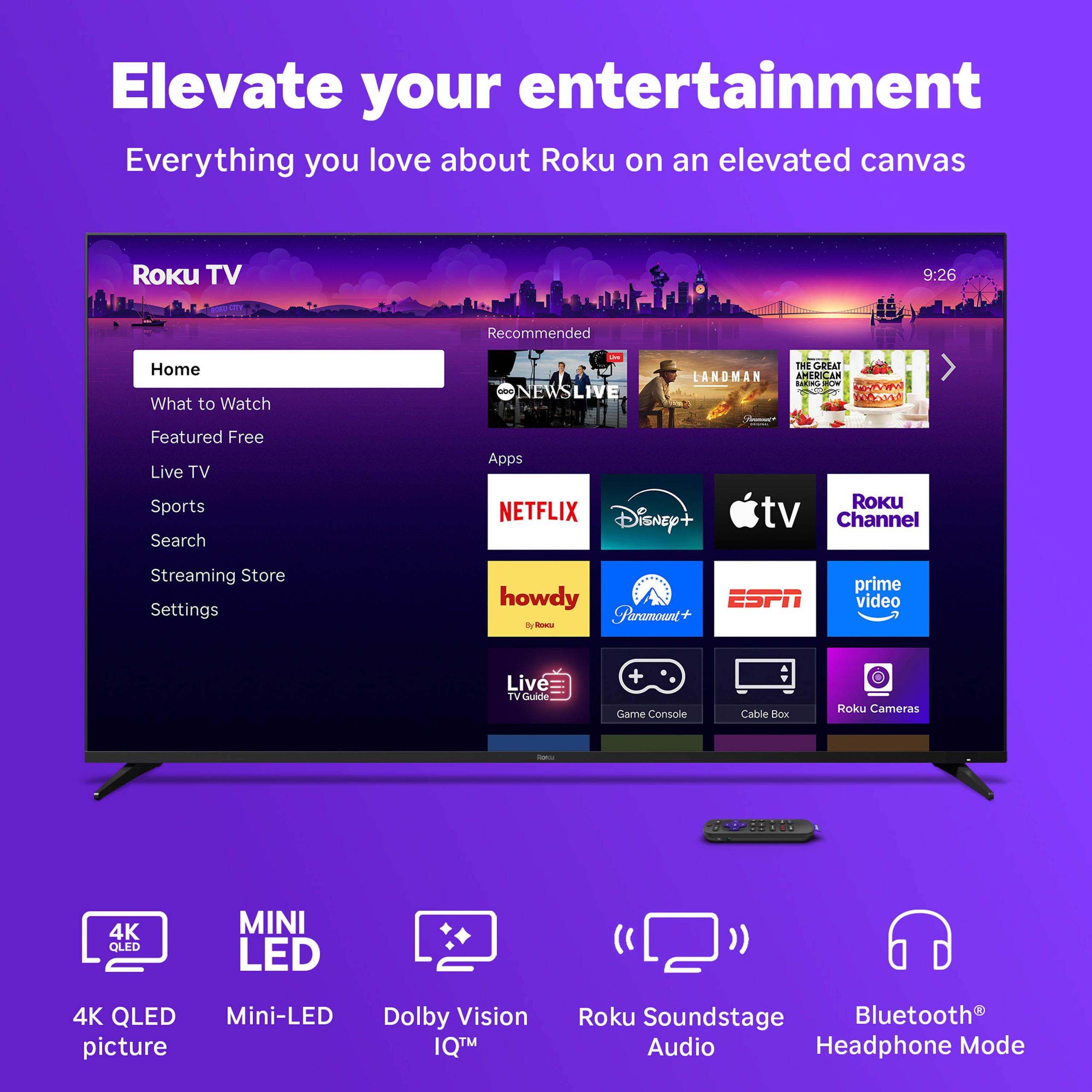
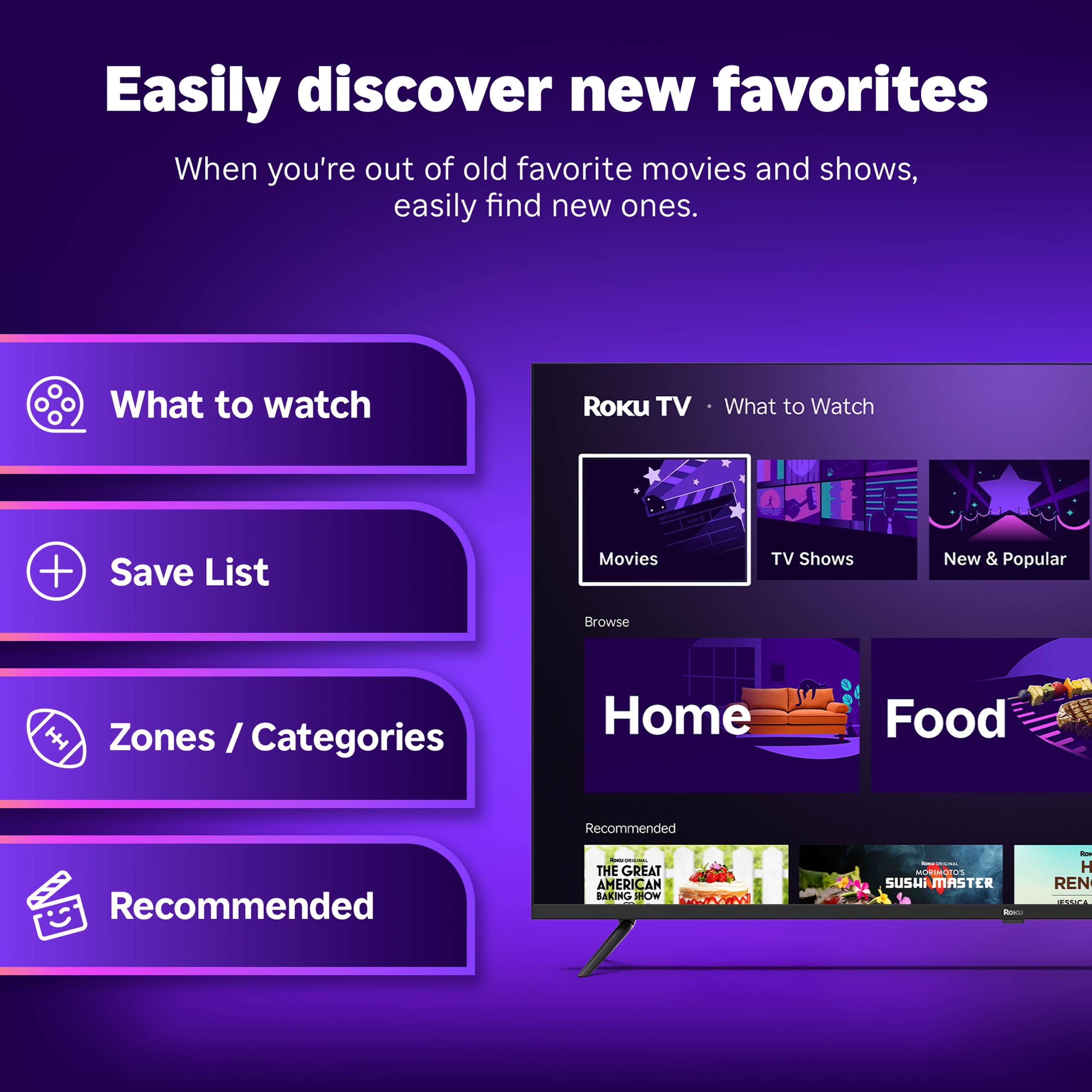
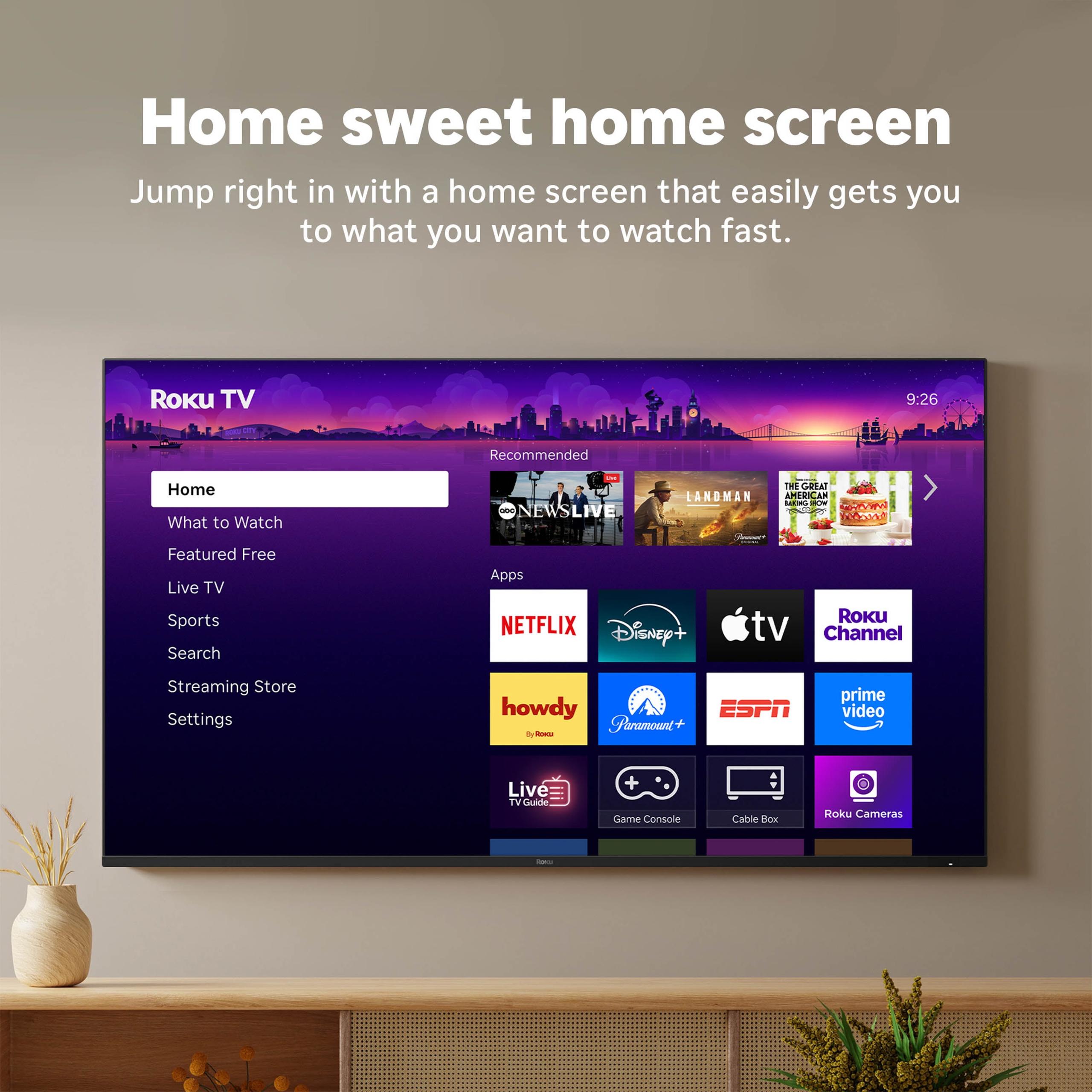
The smart TV experience differs dramatically between these two options. The Roku Pro Series 2025 runs Roku's TV operating system, which is beloved for its simplicity and unified approach to content discovery. Instead of jumping between different apps, Roku presents all your streaming options—Netflix, Disney+, HBO Max, even free content—in one unified interface.
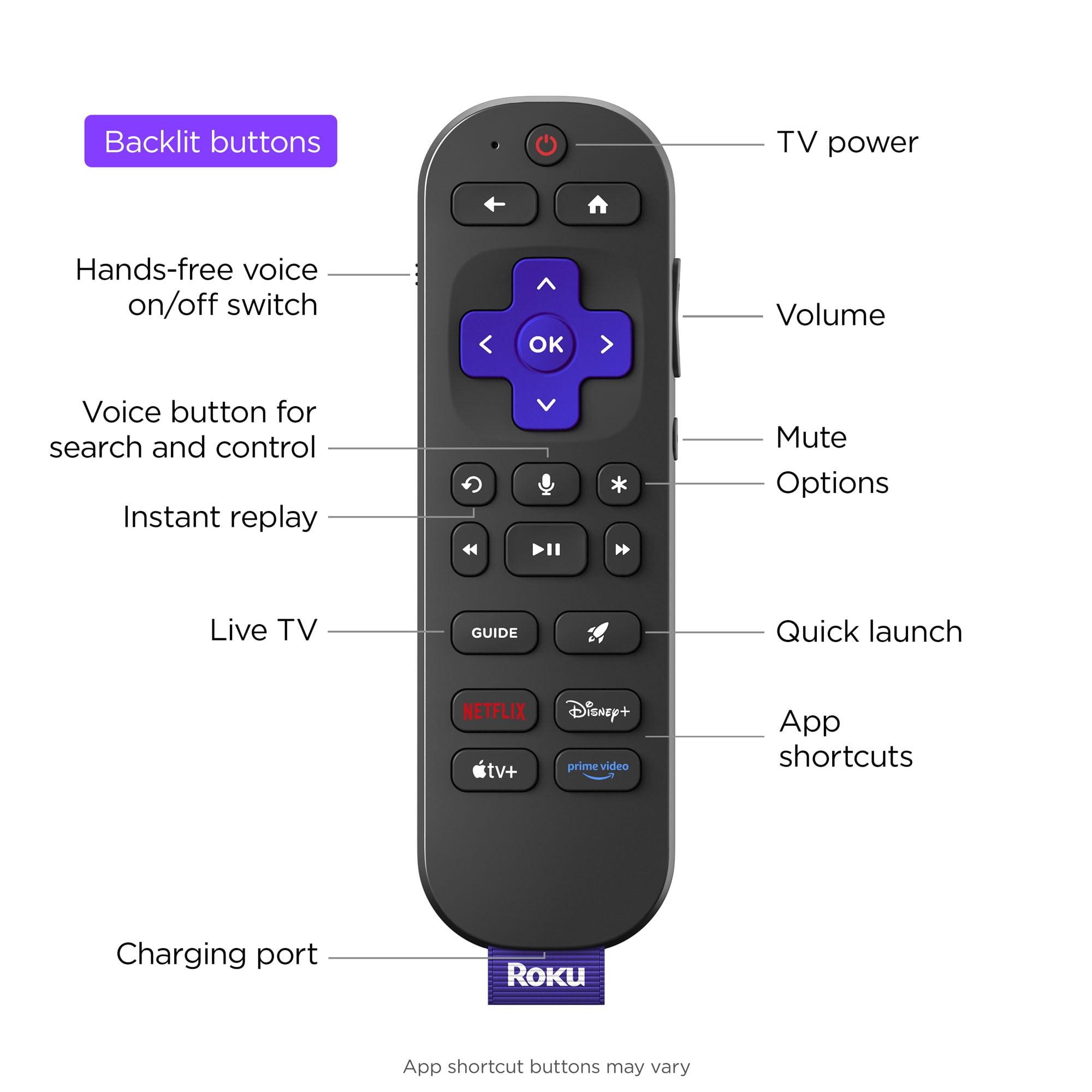
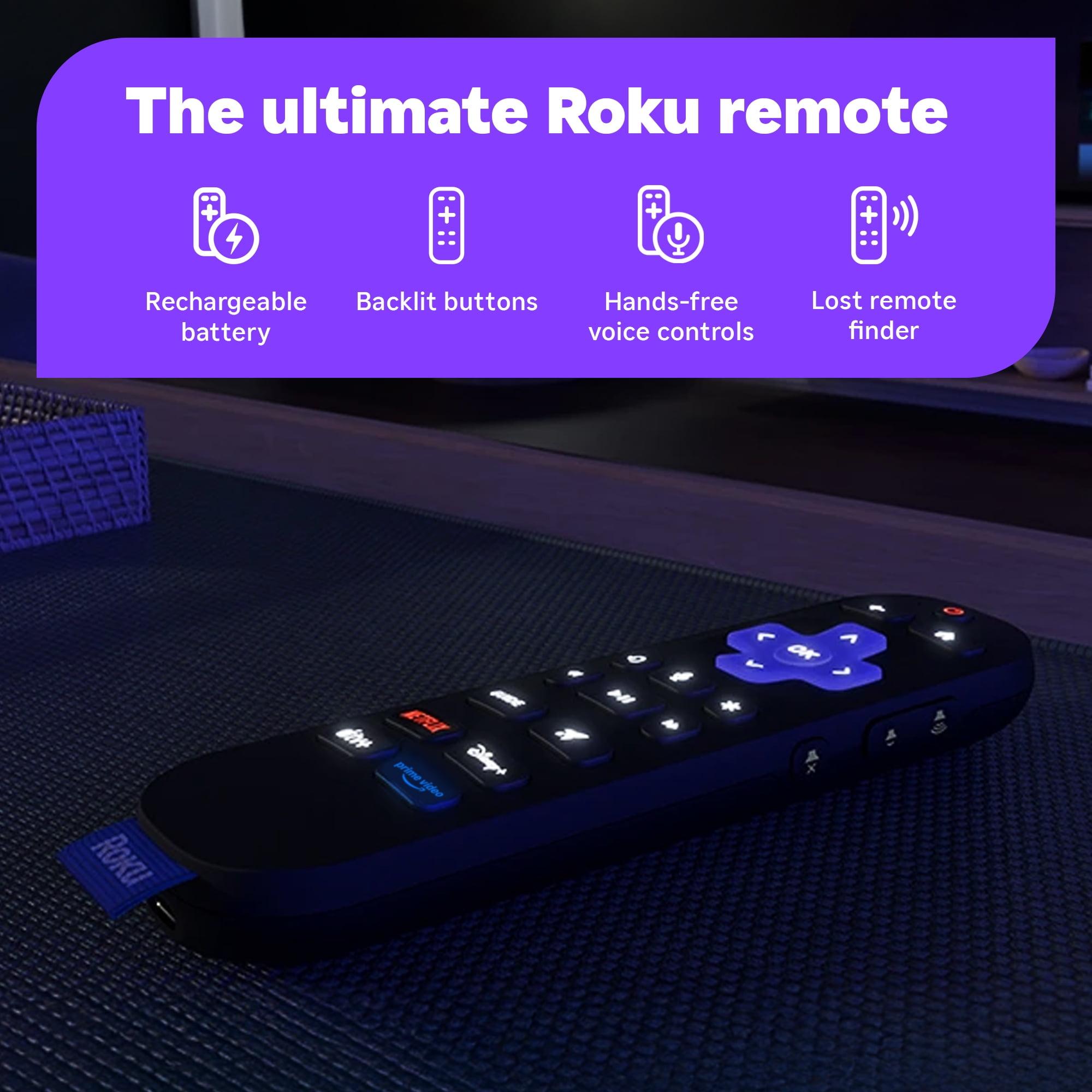
Roku's remote is genuinely excellent, featuring a rechargeable battery, backlit buttons, and a clever "find my remote" button built into the TV itself. If you've ever spent ten minutes looking for your TV remote, this feature alone might seal the deal.
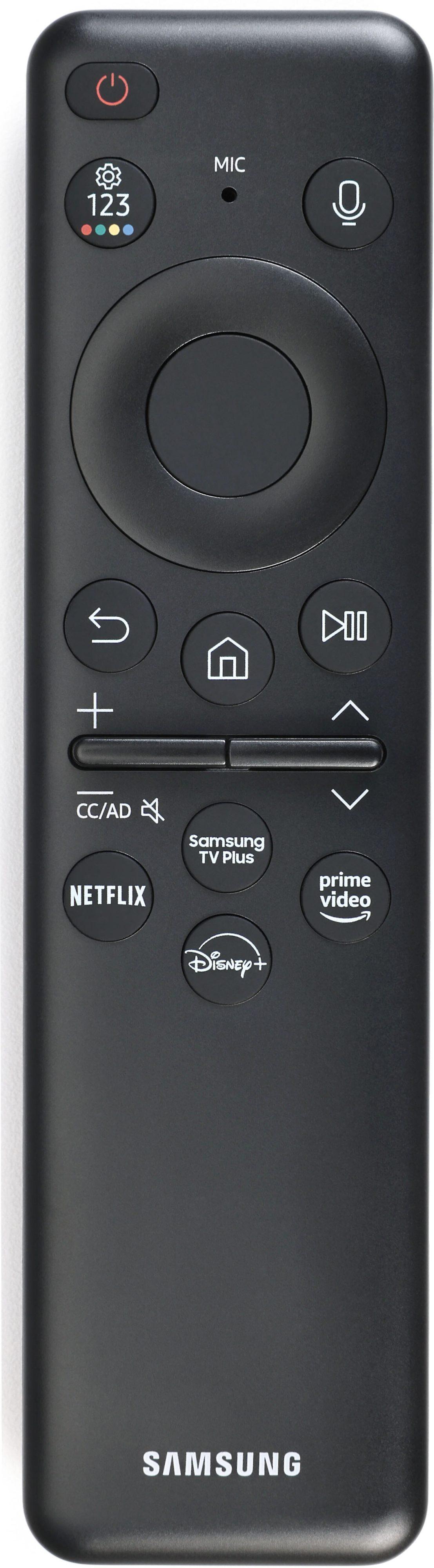
The Samsung QN85D runs Samsung's Tizen operating system, which offers more features but can feel more complex. Tizen includes Samsung TV Plus (free ad-supported channels), Samsung's Gaming Hub for cloud gaming, and extensive smart home integration through Samsung SmartThings. If you're already invested in Samsung's ecosystem or want your TV to be the center of a connected home, these features add significant value.
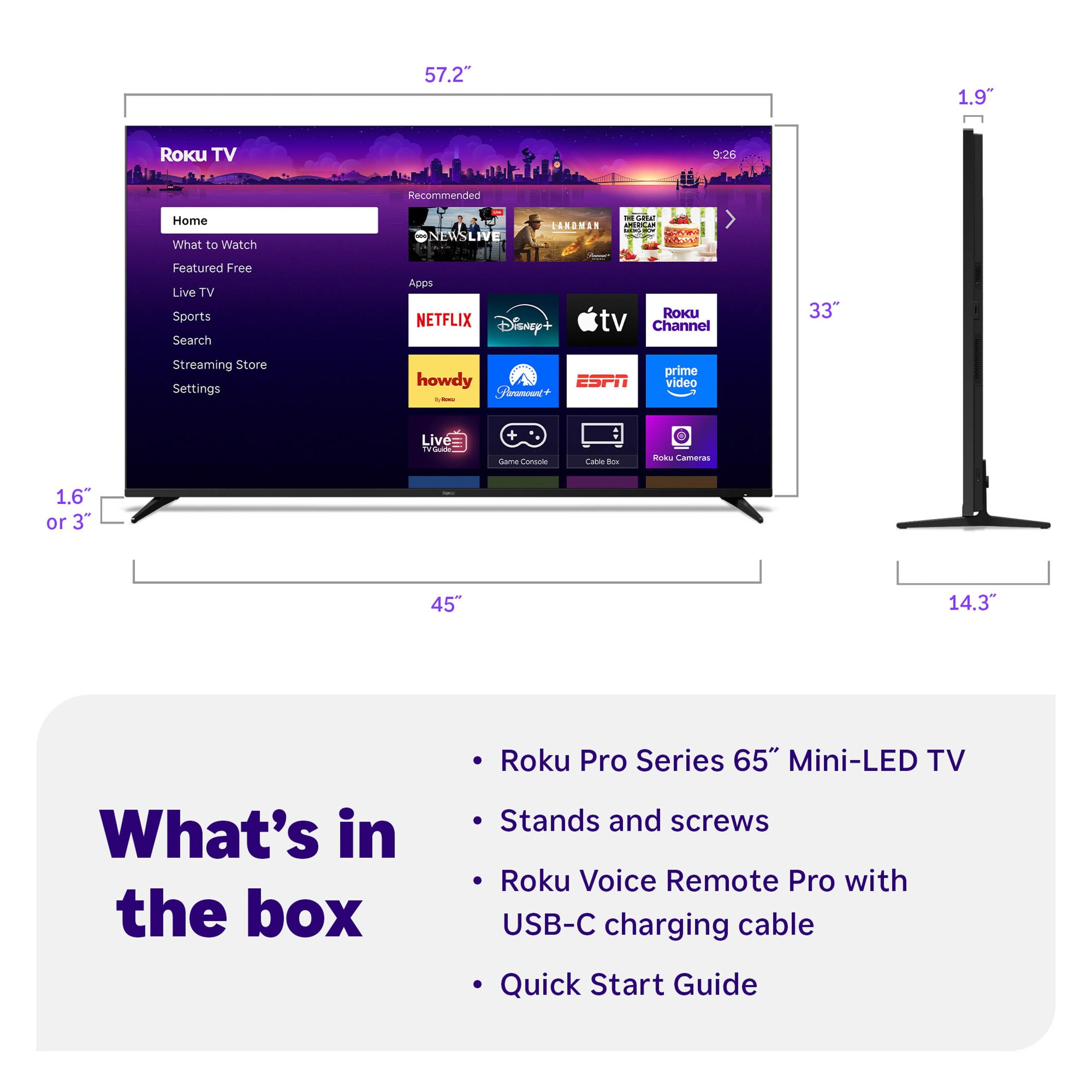
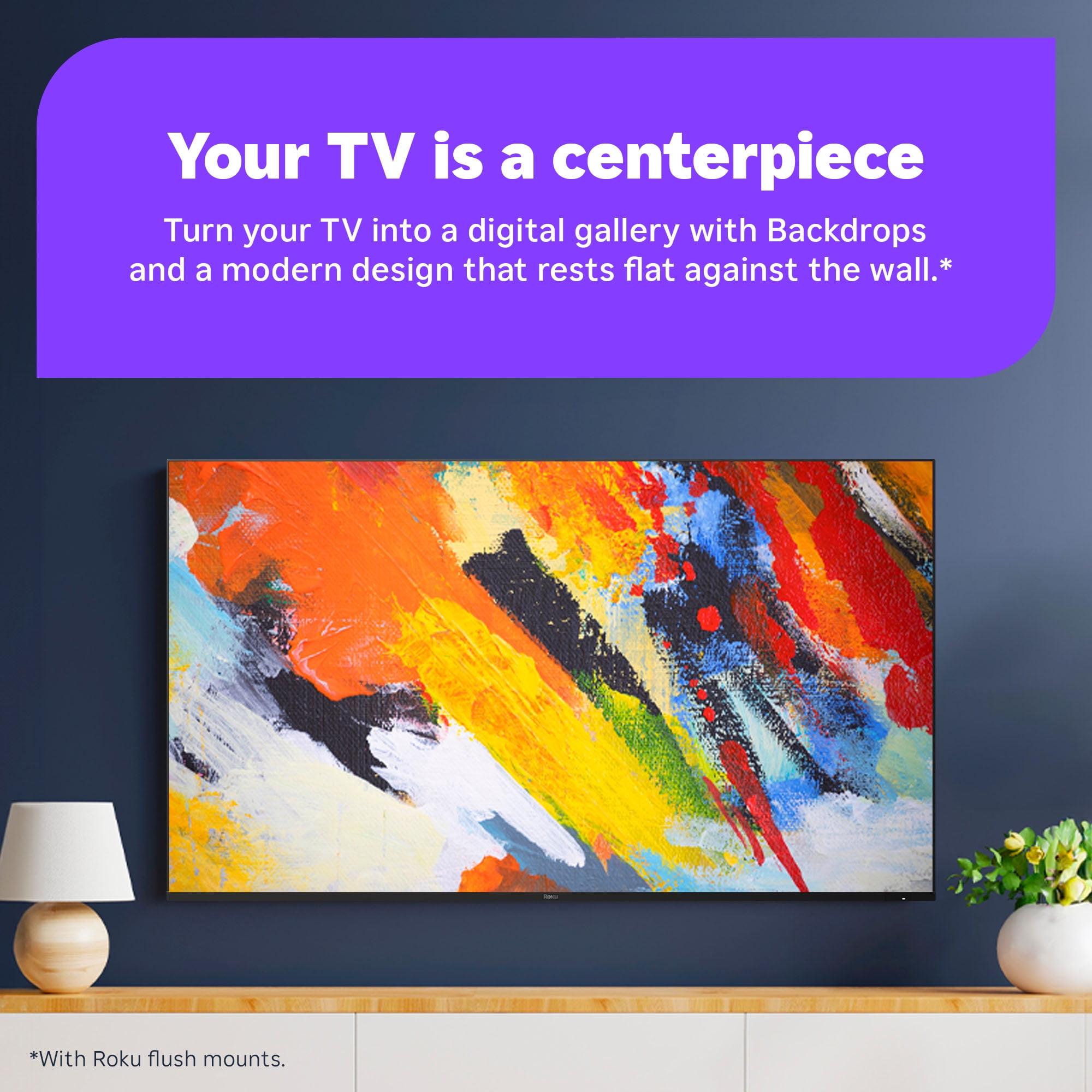
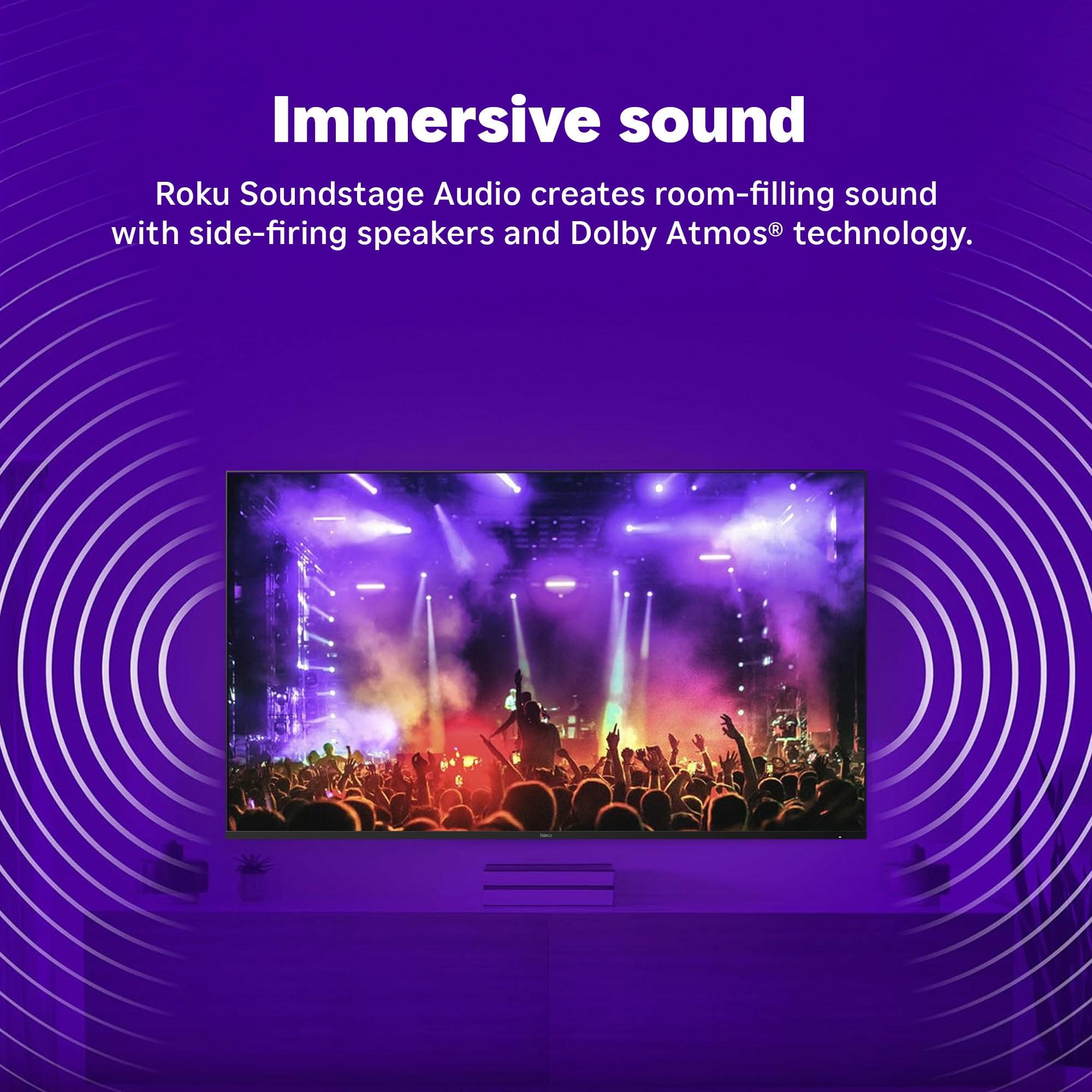
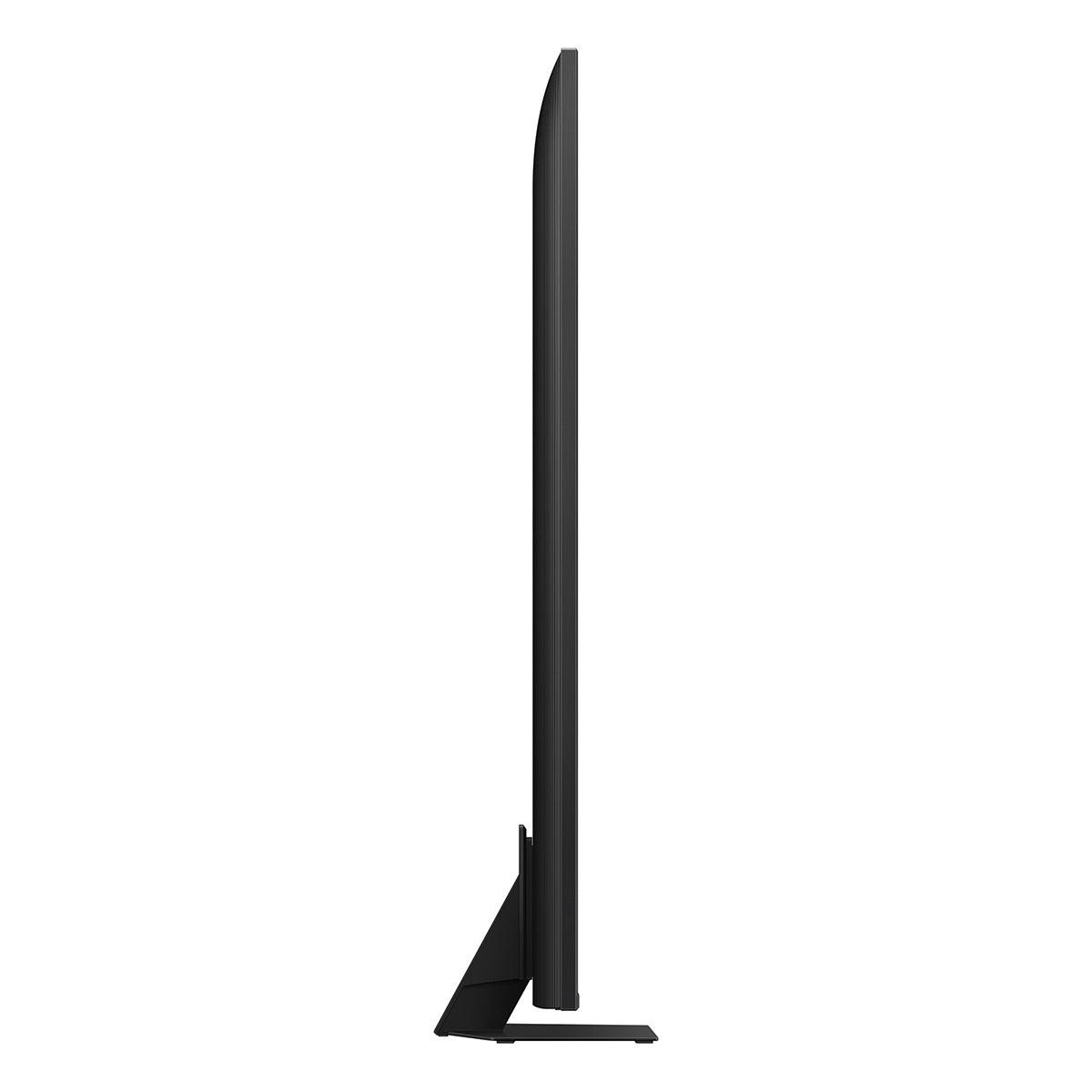
Both TVs include Dolby Atmos support, but their physical designs create different audio experiences. The Roku Pro Series 2025 uses what Roku calls a "shadowbox" design—essentially, the TV is much thicker than typical modern flat screens. While this goes against the current trend of ultra-thin TVs, it provides much more internal space for speakers and acoustic design.
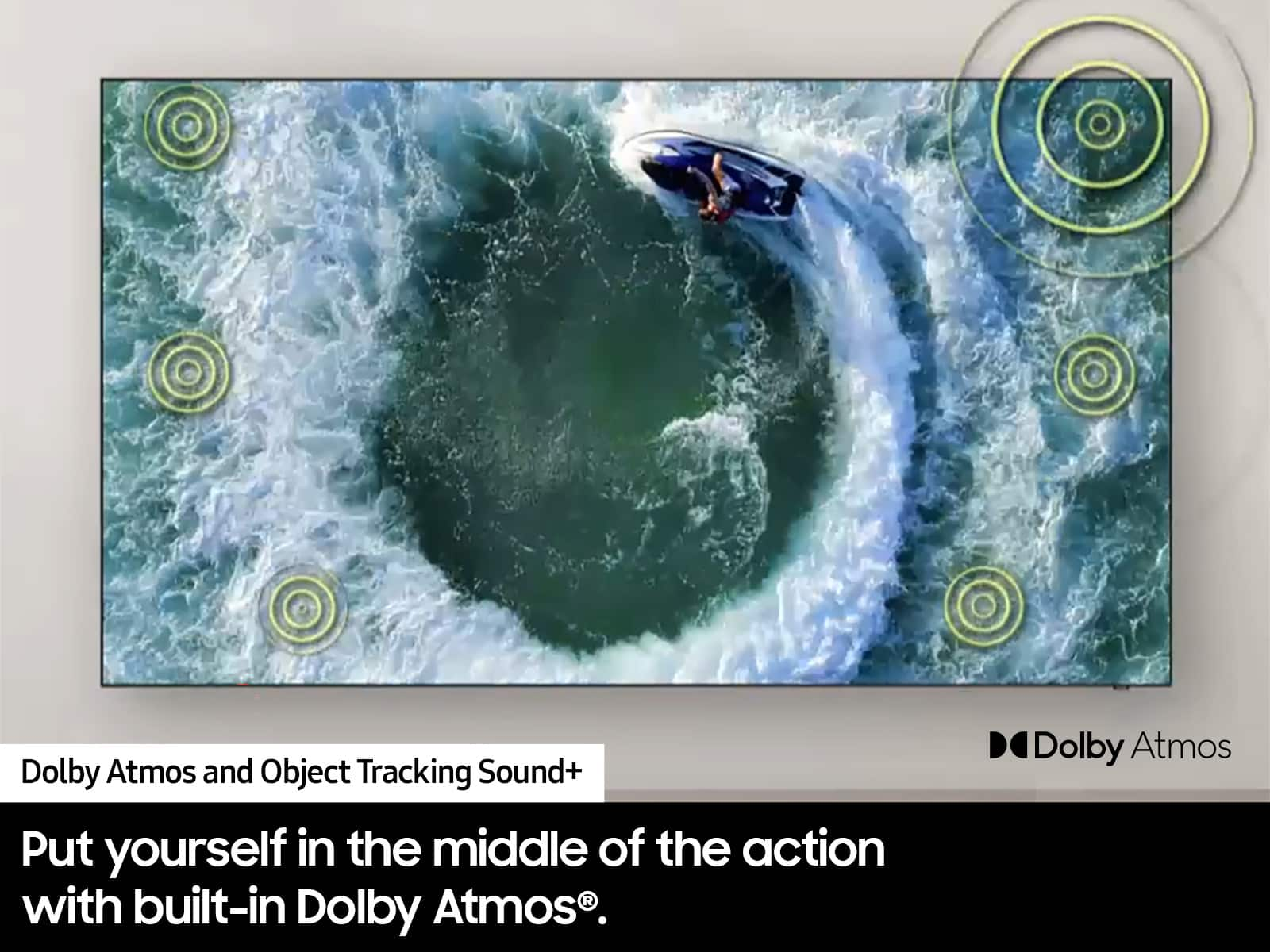
The result is noticeably better built-in audio than most TVs, with deeper bass and clearer dialogue. The Samsung includes Object Tracking Sound Lite, which moves audio effects around the screen to match the action, but it's constrained by the limitations of a thin TV cabinet.
If you're planning to add a soundbar anyway, this difference becomes less important. But if you want good audio straight out of the box, the Roku's design advantages are real and noticeable.
Your viewing environment should heavily influence your decision. The Roku Pro Series 2025 is engineered for bright rooms. Its exceptional peak brightness means HDR content remains impactful even with overhead lights on or sunlight streaming through windows. If your TV faces windows or you typically watch with lights on, the Roku's brightness advantage is transformative.
The Samsung QN85D performs best in darker, more controlled environments. Its superior contrast ratio creates more cinematic images when ambient light isn't washing out the screen. If you have a dedicated media room or typically watch movies with the lights dimmed, the Samsung's deep blacks and precise contrast create a more immersive experience.
Both TVs handle reflections reasonably well, but neither excels at dealing with direct light sources like lamps or windows positioned directly opposite the screen.
At similar price points (as of this writing), these TVs represent different value propositions. The Roku Pro Series 2025 offers newer technology and processing capabilities, potentially providing a longer useful life as streaming services continue evolving their picture quality standards. However, Roku is relatively new to the premium TV market, so their long-term software support track record is shorter.
The Samsung QN85D represents more mature, proven technology with Samsung's established track record of software updates and ecosystem integration. Samsung typically supports their TVs with updates for many years, and their integration with other Samsung devices can add value if you're already in their ecosystem.
For home theater enthusiasts specifically, the decision often comes down to viewing environment. In a dedicated, light-controlled theater room, the Samsung's superior contrast and black levels create a more cinematic experience. In a multi-purpose living room with variable lighting, the Roku's brightness advantage often provides better day-to-day viewing experiences.
After analyzing extensive user feedback and expert reviews, both TVs excel in their intended environments. The Roku Pro Series 2025 is the better choice if your TV will be in a bright room, if you value cutting-edge processing technology, or if you prefer simple, unified smart TV interfaces. Its exceptional brightness and scene-by-scene AI processing create consistently excellent images across varied content and lighting conditions.
The Samsung QN85D wins if you primarily watch in darker conditions, if gaming with multiple consoles is important, or if you want maximum contrast for movie watching. Its superior black levels and comprehensive gaming features make it ideal for dedicated entertainment spaces.
Neither choice is wrong—they're both excellent TVs optimized for different priorities and environments. The key is honestly assessing your viewing habits and room conditions to choose the one that matches how you'll actually use your TV.
| Roku 65" Pro Series 2025 4K QLED TV | Samsung 65" QN85D Neo QLED 4K Smart TV |
|---|---|
| Peak Brightness - Critical for HDR impact and bright room viewing | |
| Up to 1,818 nits (exceptional for daytime viewing) | Strong HDR brightness but lower than Roku (better for dark rooms) |
| Contrast Ratio - Determines black levels and image depth | |
| Good with Mini-LED local dimming | 160,000:1+ native contrast (significantly deeper blacks) |
| Local Dimming Zones - Controls blooming around bright objects | |
| Mini-LED with improved blooming control | 160 zones with aggressive VA panel dimming |
| HDMI 2.1 Ports - Essential for 4K gaming at 120Hz | |
| 2 ports supporting 4K@120Hz | 4 ports supporting full 4K@120Hz (better for multiple consoles) |
| Gaming Input Lag - Lower numbers mean more responsive gaming | |
| As low as 5.2ms at 120Hz with VRR support | Optimized low input lag across all HDMI 2.1 ports |
| Smart TV Platform - Affects daily usability and app performance | |
| Roku TV OS (simple, unified interface) | Samsung Tizen OS (more features, gaming hub, smart home integration) |
| Picture Processing - Automatic optimization capabilities | |
| Roku Smart Picture Max AI (scene-by-scene auto-adjustments) | Traditional Samsung processing (excellent but manual) |
| Color Accuracy - Out-of-box picture quality | |
| 96.9% UHDA-P3 coverage, 2.6 color accuracy rating | Excellent quantum dot colors with proven Samsung tuning |
| Audio System - Built-in sound quality without soundbar | |
| Roku Soundstage with side-firing Dolby Atmos (thick design helps bass) | Object Tracking Sound Lite with Dolby Atmos (standard TV thickness) |
| Viewing Angle - How picture degrades when viewed from sides | |
| Standard QLED viewing angle performance | VA panel with narrow viewing angle (colors shift off-center) |
| Design Philosophy - Physical appearance and thickness | |
| Thick "shadowbox" design (14.3" depth, better acoustics) | Traditional slim premium TV design |
| Remote Control - Daily interaction quality | |
| Rechargeable Voice Remote Pro with backlit buttons and finder function | Standard Samsung remote with solar charging |
| Release Year - Technology generation and future-proofing | |
| 2025 (latest processing and features) | 2024 (proven technology with established support) |
The Roku 65" Pro Series 2025 4K QLED TV is significantly better for bright rooms, reaching up to 1,818 nits peak brightness compared to the Samsung 65" QN85D Neo QLED 4K Smart TV. This exceptional brightness means HDR content remains vibrant even with overhead lights on or sunlight streaming through windows. The Samsung performs better in darker, controlled lighting environments where its superior contrast can shine.
For movie watching, it depends on your viewing environment. The Samsung 65" QN85D Neo QLED 4K Smart TV offers superior contrast with a 160,000:1+ ratio and deeper blacks, making it ideal for dark room cinema experiences. The Roku 65" Pro Series 2025 4K QLED TV excels with brighter HDR highlights and AI-powered scene-by-scene optimization, providing more consistent quality across varied lighting conditions.
The Samsung 65" QN85D Neo QLED 4K Smart TV is better for gaming, featuring four full HDMI 2.1 ports supporting 4K at 120Hz, compared to just two on the Roku 65" Pro Series 2025 4K QLED TV. The Samsung also includes comprehensive VRR support and Samsung Gaming Hub for cloud gaming, though both TVs offer excellent low input lag performance.
The Roku 65" Pro Series 2025 4K QLED TV runs Roku's simple, unified interface that aggregates all streaming content in one place, making it easy to find shows across different services. The Samsung 65" QN85D Neo QLED 4K Smart TV uses Tizen OS with more features including Samsung TV Plus, smart home integration, and gaming services, but with a more complex interface.
The Roku 65" Pro Series 2025 4K QLED TV has superior built-in audio due to its thicker "shadowbox" design that provides more internal space for speakers and better bass response. The Samsung 65" QN85D Neo QLED 4K Smart TV includes Object Tracking Sound Lite but is limited by its thin design. Both support Dolby Atmos and work well with external soundbars.
Both the Roku 65" Pro Series 2025 4K QLED TV and Samsung 65" QN85D Neo QLED 4K Smart TV offer excellent value at similar price points. The Roku provides newer 2025 technology with exceptional brightness and AI processing, while the Samsung offers proven performance with superior contrast and comprehensive gaming features. Value depends on your specific priorities and viewing environment.
Yes, both TVs excel at HDR content but in different ways. The Roku 65" Pro Series 2025 4K QLED TV delivers more impactful HDR highlights with its 1,818-nit peak brightness, making bright scenes truly pop. The Samsung 65" QN85D Neo QLED 4K Smart TV provides better HDR contrast with deeper blacks and more realistic shadow detail, especially in darker viewing environments.
For dedicated home theaters with controlled lighting, the Samsung 65" QN85D Neo QLED 4K Smart TV is typically the better choice due to its superior 160,000:1+ contrast ratio and deeper blacks that create a more cinematic experience. However, if your home theater has ambient lighting, the Roku 65" Pro Series 2025 4K QLED TV may perform better with its exceptional brightness capabilities.
The Samsung 65" QN85D Neo QLED 4K Smart TV has narrower viewing angles due to its VA panel technology, meaning colors and contrast degrade when viewed from the sides. The Roku 65" Pro Series 2025 4K QLED TV likely offers better off-angle viewing performance, making it more suitable for wider seating arrangements or family viewing scenarios.
The Samsung 65" QN85D Neo QLED 4K Smart TV has a proven track record of long-term software support and regular updates from Samsung's established TV division. The Roku 65" Pro Series 2025 4K QLED TV offers newer 2025 technology that may stay current longer, but Roku has a shorter track record in the premium TV market for long-term support commitments.
The Roku 65" Pro Series 2025 4K QLED TV features an unusually thick "shadowbox" design that prioritizes audio performance over ultra-thin aesthetics. The Samsung 65" QN85D Neo QLED 4K Smart TV uses a traditional slim premium TV design. The Roku's thickness may affect wall-mounting aesthetics but provides better built-in sound and potentially better heat management.
Choose the Roku 65" Pro Series 2025 4K QLED TV if your living room has lots of natural light, you want the latest AI processing technology, and you prefer simple smart TV interfaces. Select the Samsung 65" QN85D Neo QLED 4K Smart TV if you primarily watch in darker conditions, gaming is important with multiple consoles, or you want maximum contrast for movie experiences.
We've done our best to create useful and informative comparisons to help you decide what product to buy. Our research uses advanced automated methods to create this comparison and perfection is not possible - please contact us for corrections or questions. These are the sites we've researched in the creation of this article: bestbuy.com - rtings.com - techradar.com - youtube.com - roku.com - youtube.com - walmart.com - bestbuy.com - youtube.com - electronicexpress.com - roku.com - pcvarge.com - ecoustics.com - bestbuy.com - rtings.com - youtube.com - youtube.com - avsforum.com - youtube.com - samsung.com - videoandaudiocenter.com - shopjetson.com - mysoundconcepts.com - samsung.com - merlinstv.com - youtube.com - samsung.com - samsung.com

Privacy Policy
Terms and Conditions - Affiliate Policy
Home Security
© Copyright 2008-2026.
11816 Inwood Rd #1211, Dallas, TX 75244