

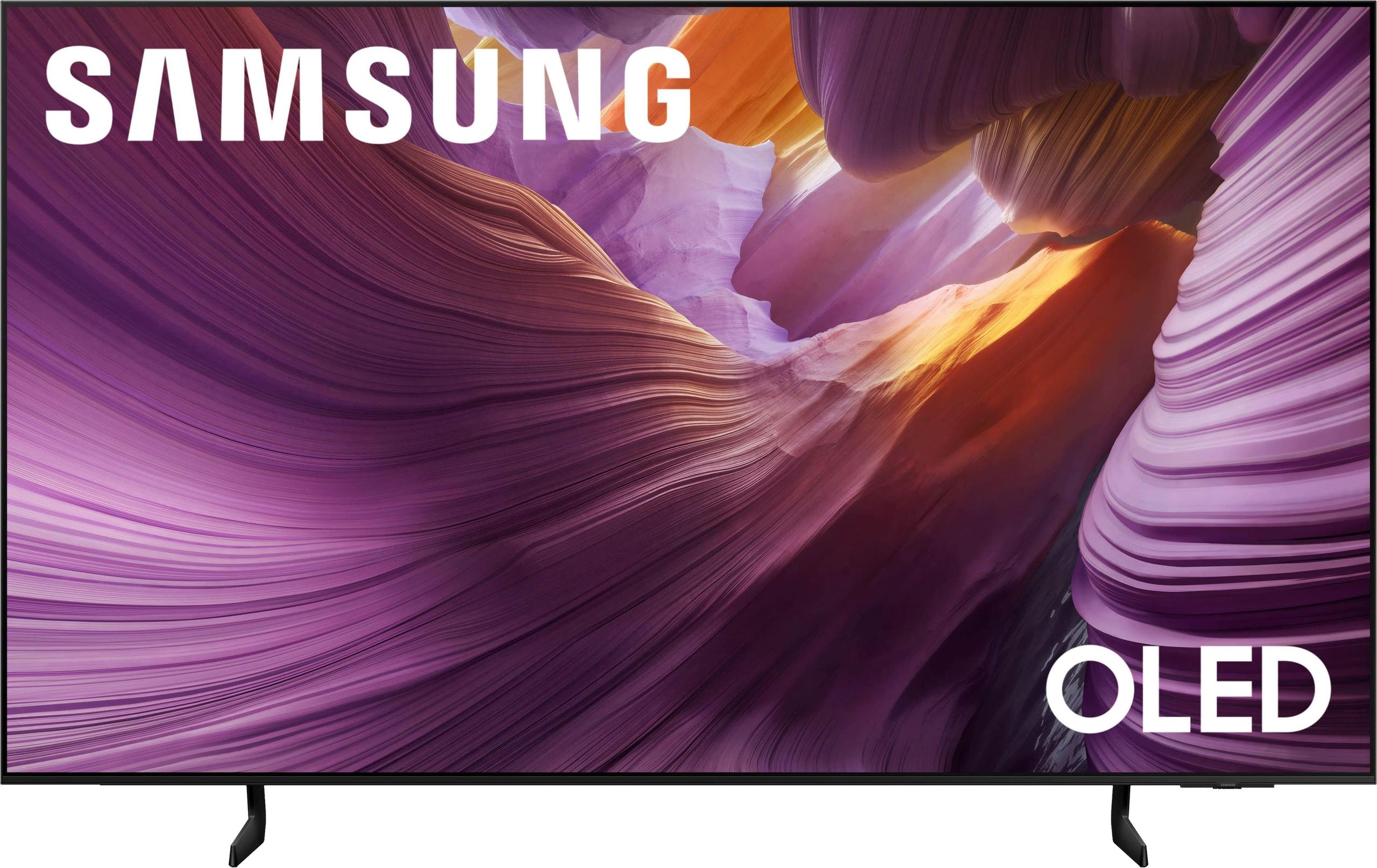
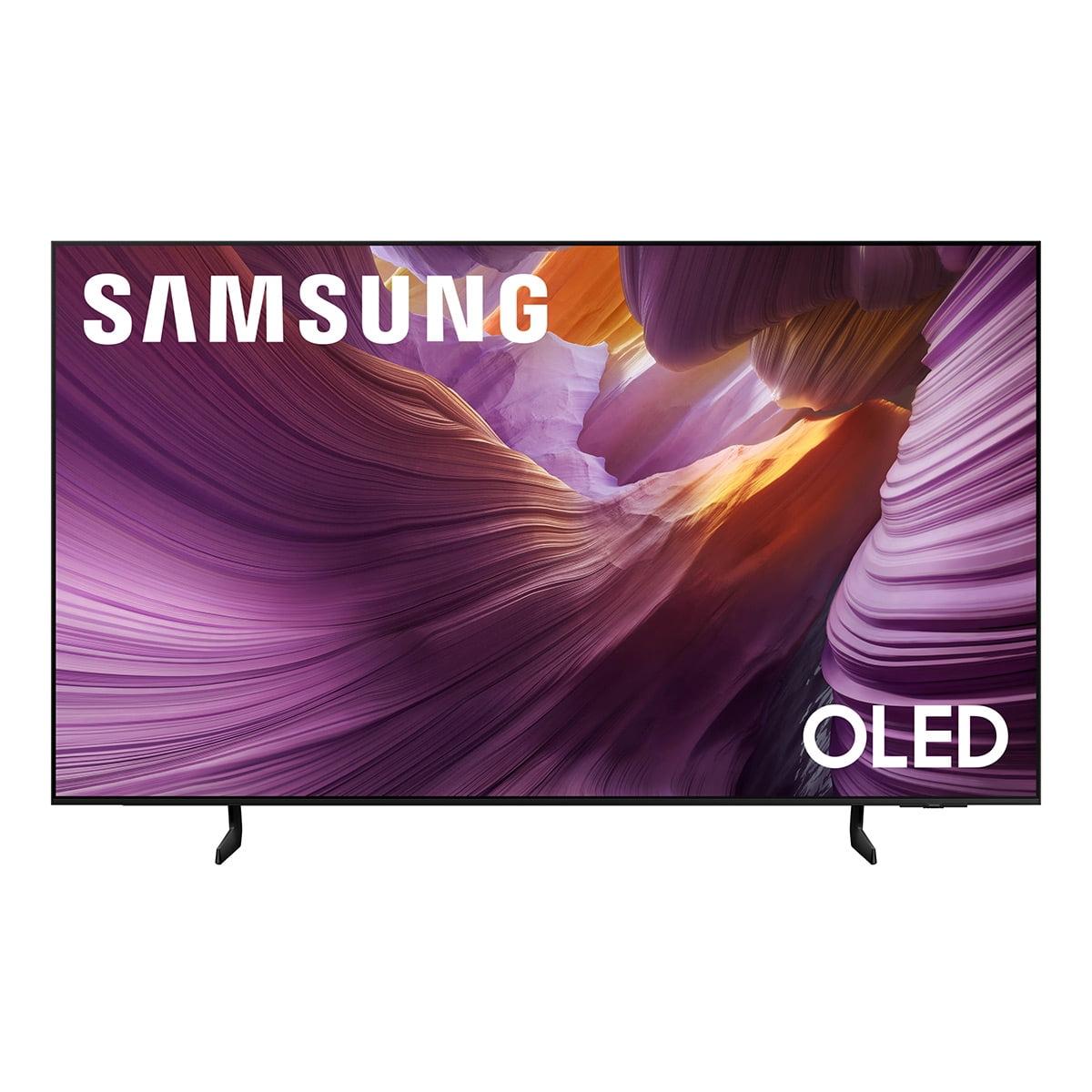
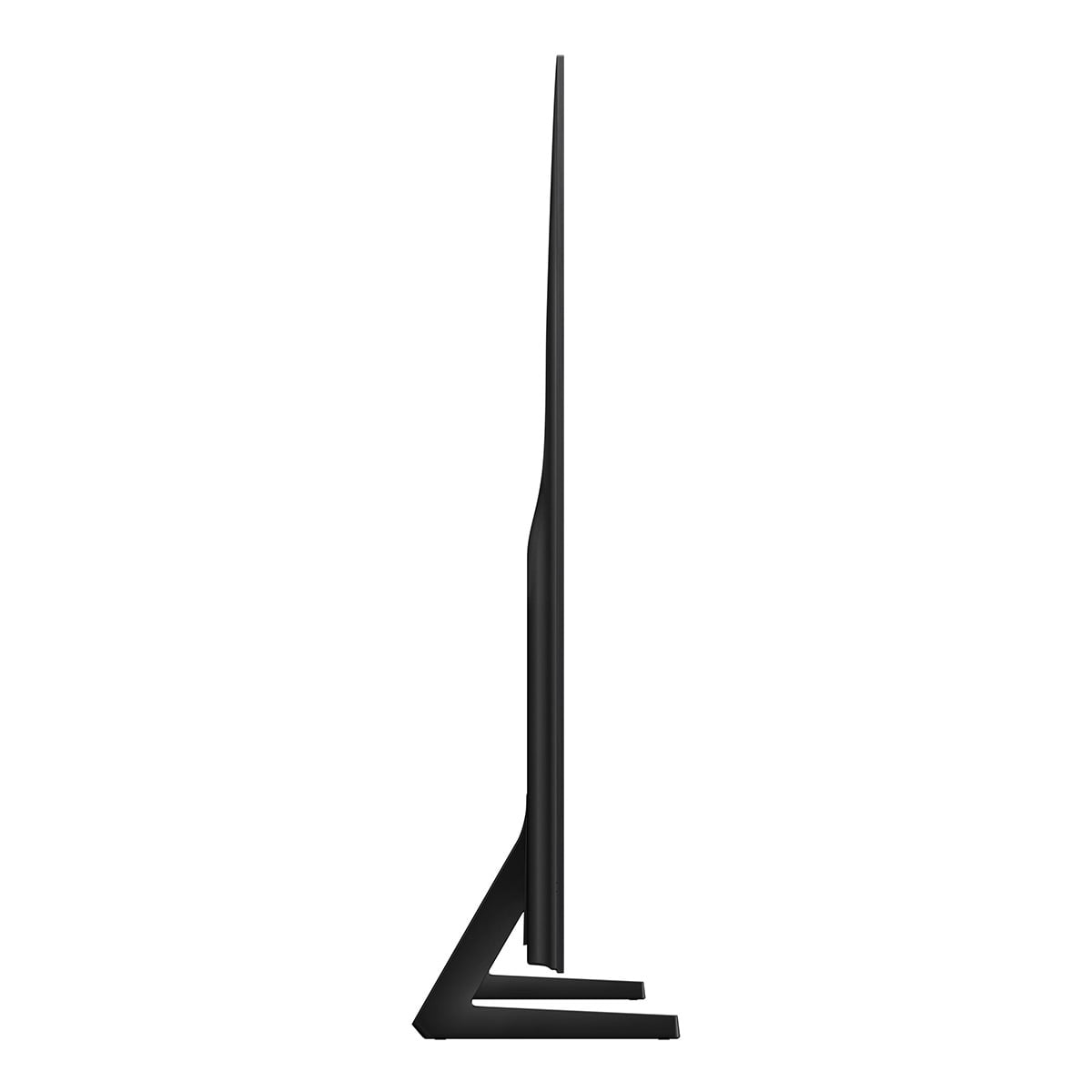

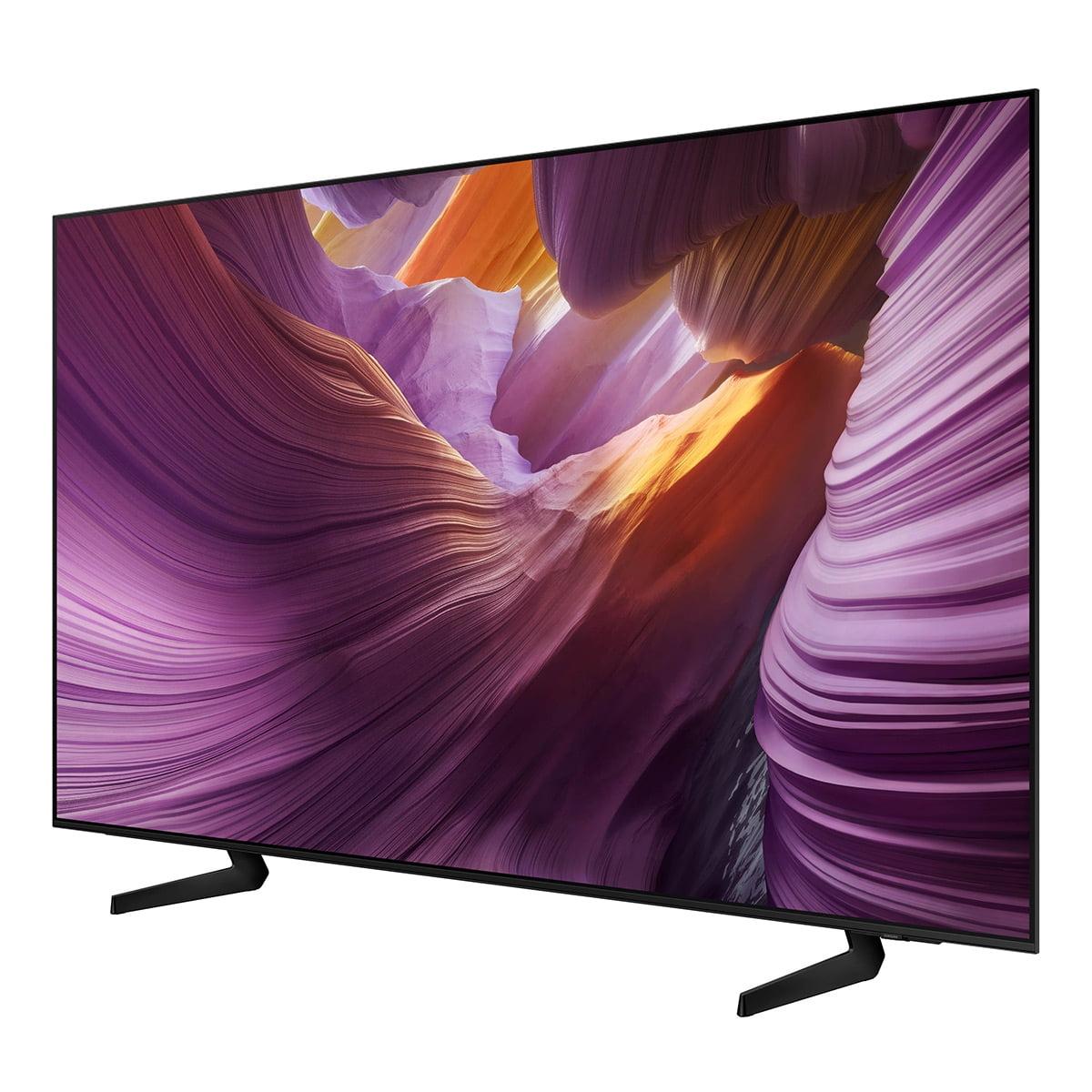
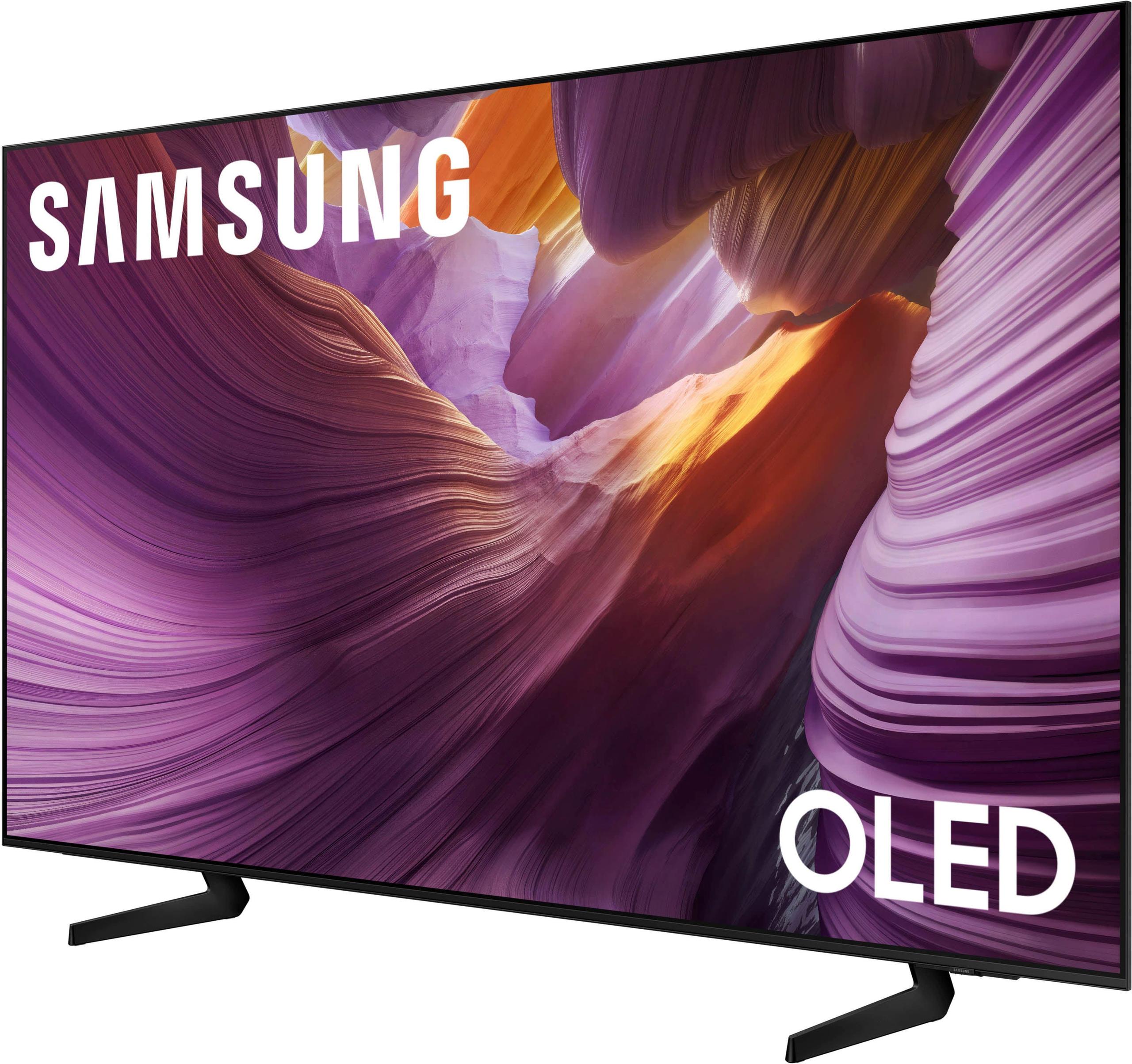
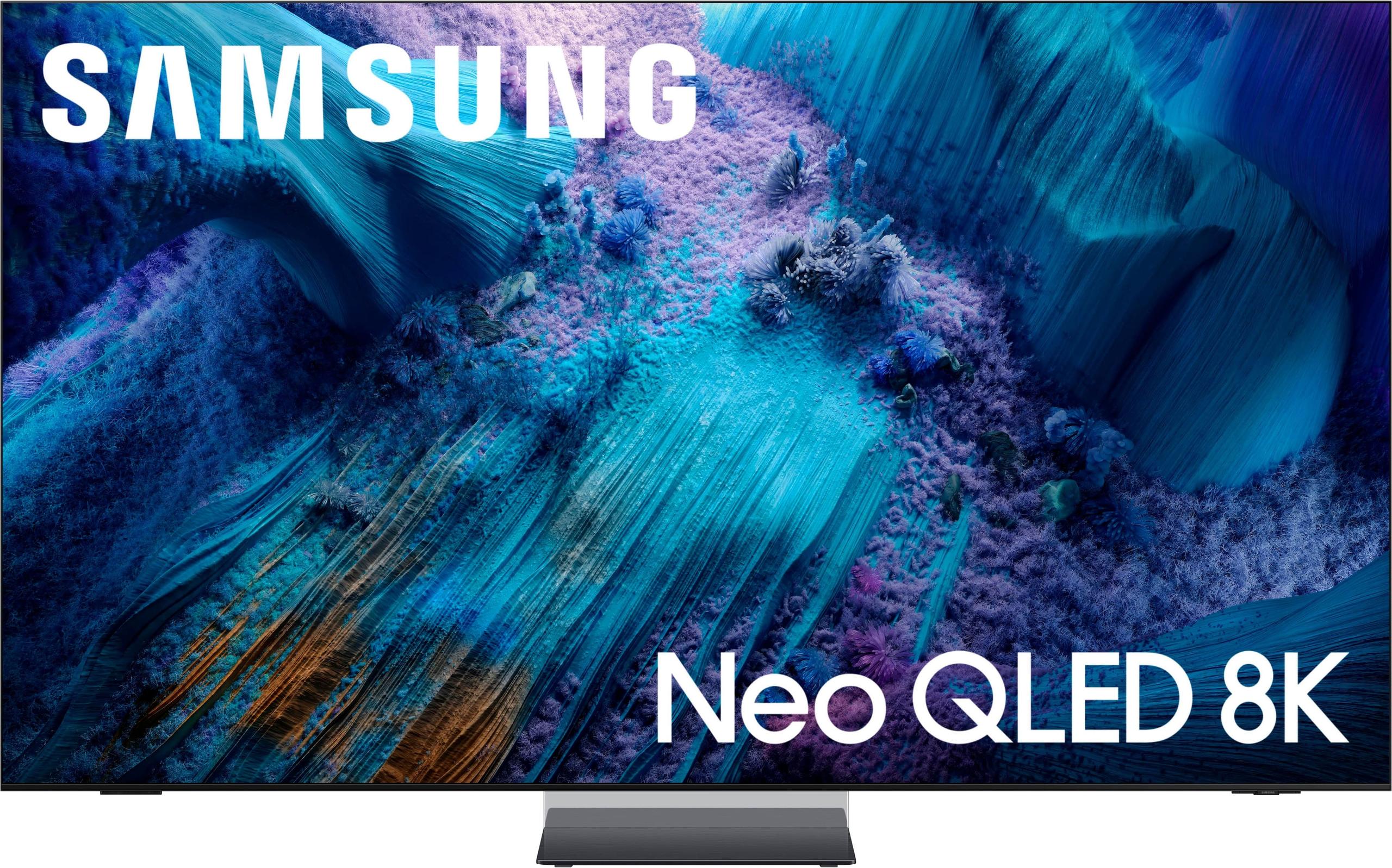
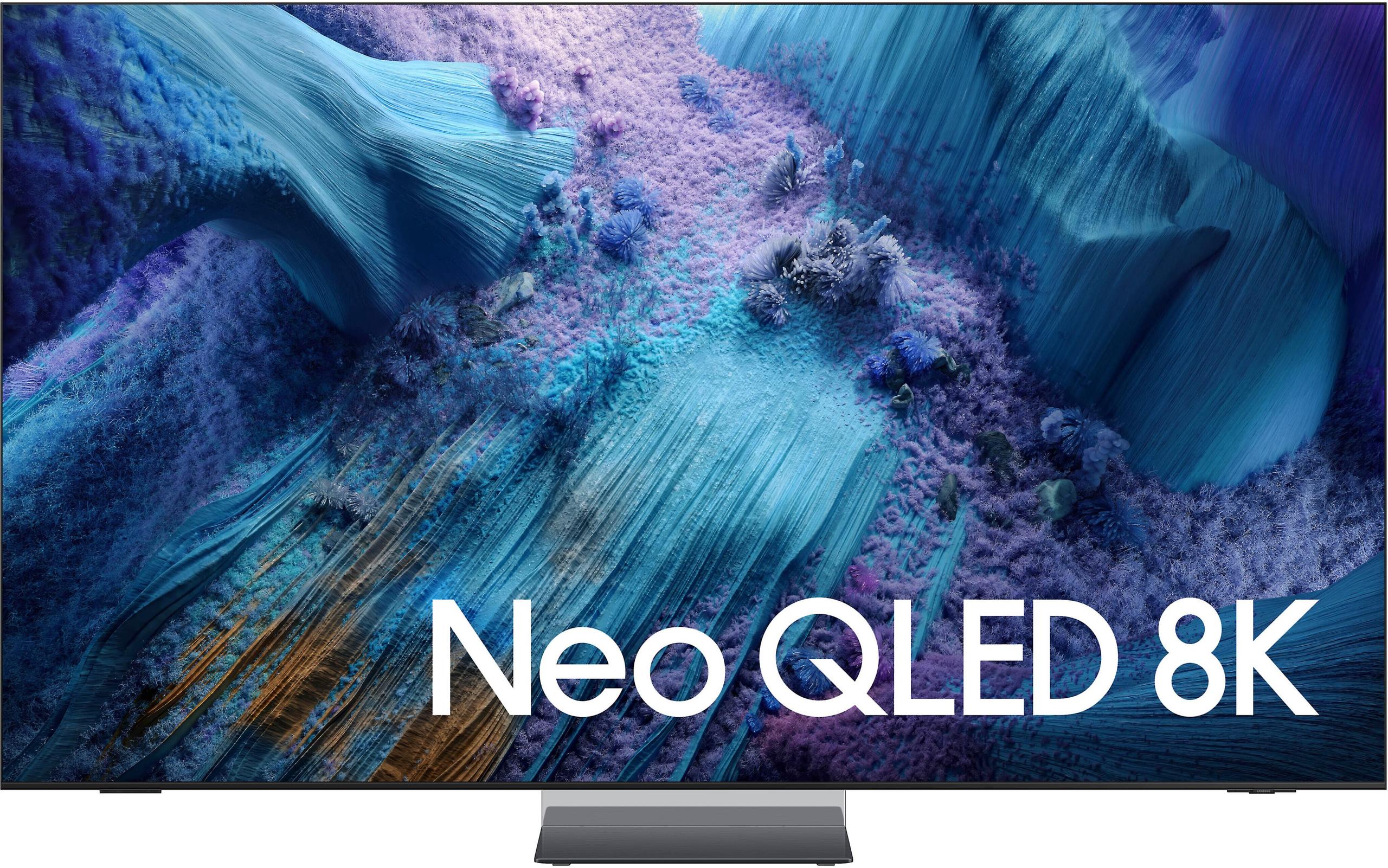
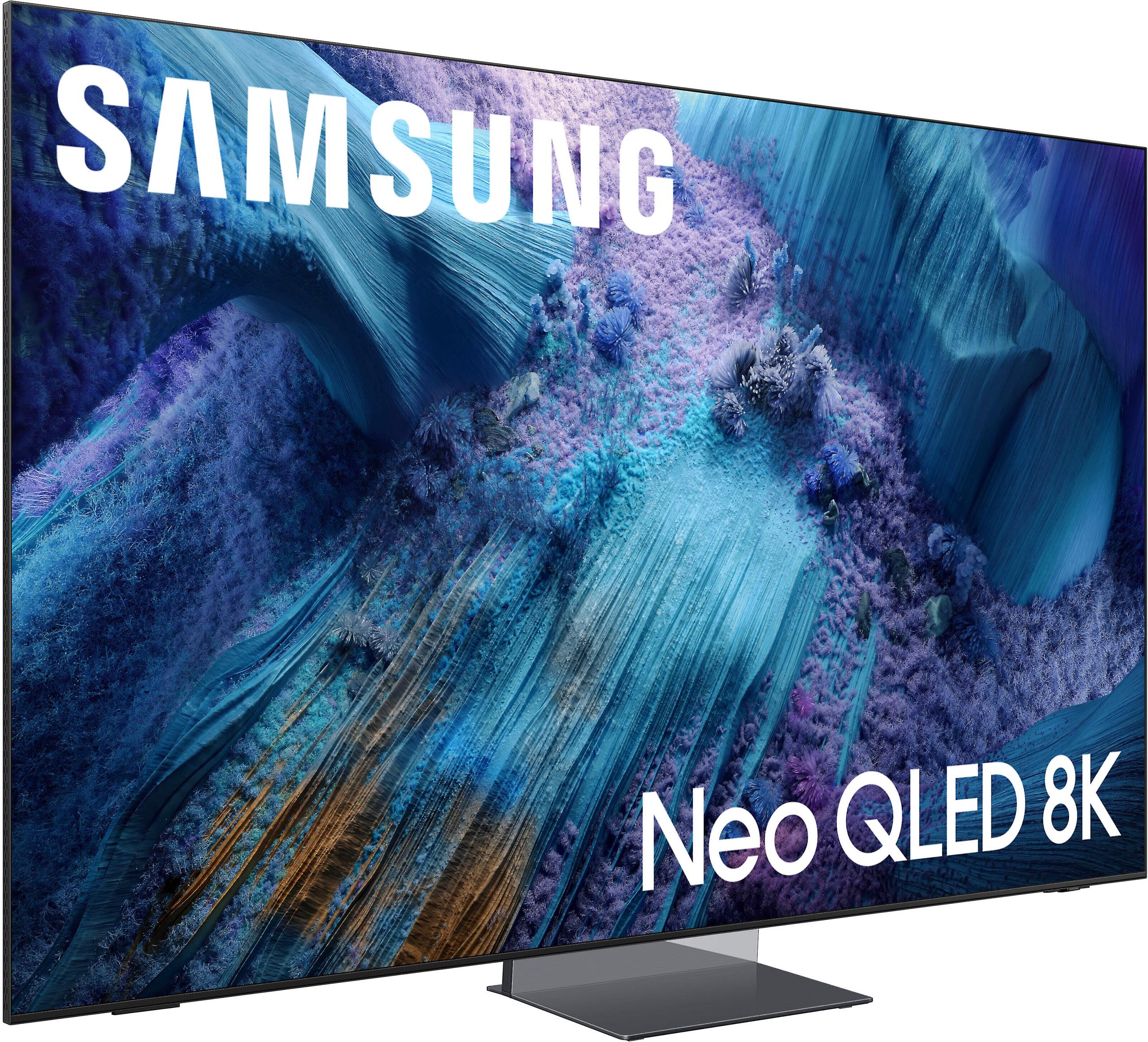
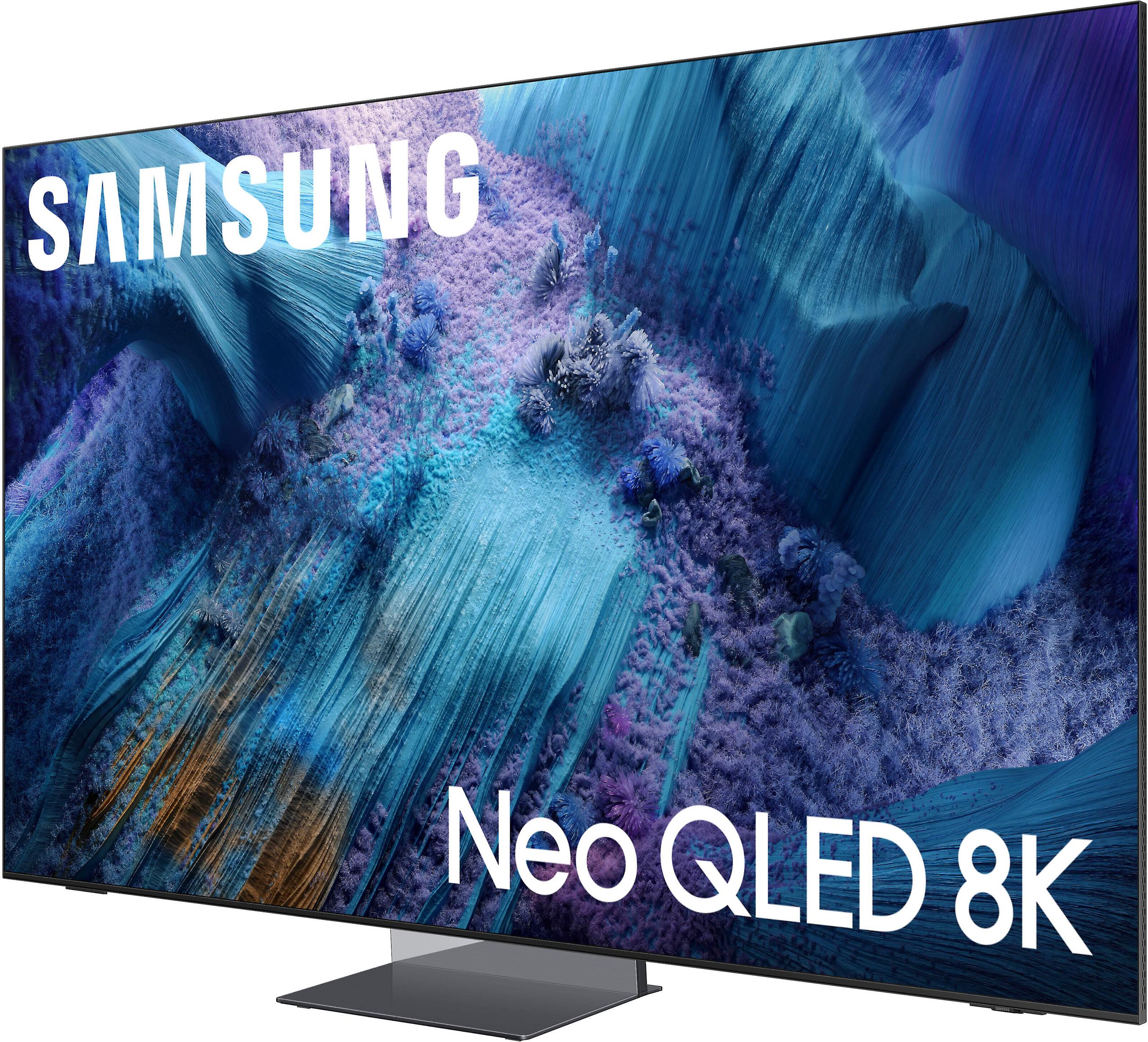
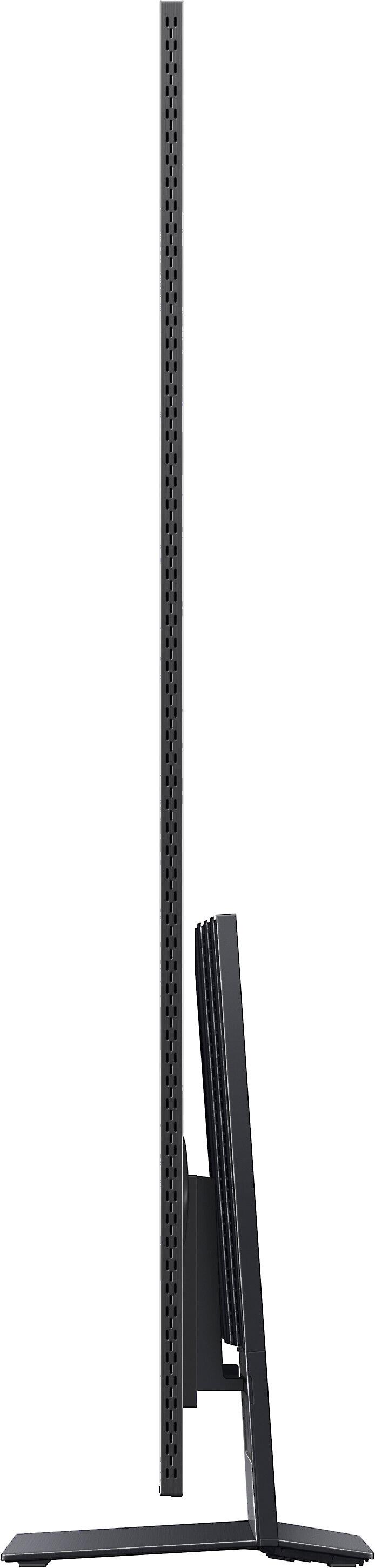

If you're shopping for a premium 65-inch TV in 2025, you've probably come across two impressive options from Samsung: the S85F OLED 4K Smart TV ($1,599.99) and the QN990F Neo QLED 8K Smart TV ($5,297.99). Both are excellent televisions, but they represent completely different approaches to delivering great picture quality. Let me walk you through everything you need to know to make the right choice for your home.
Before diving into specifics, it's helpful to understand what makes these TVs "premium." We're talking about displays that go far beyond basic HD viewing. These TVs are designed for people who want the best possible picture quality, whether they're watching movies, gaming, or streaming content.
The main thing to understand is that there are two competing display technologies at the high end: OLED and Mini LED. OLED (Organic Light Emitting Diode) panels have pixels that light themselves up individually, which means they can turn completely off to create perfect black levels. Mini LED, on the other hand, uses thousands of tiny LED lights behind an LCD panel to create very precise brightness control.
Think of it this way: OLED is like having millions of tiny flashlights that can each turn on and off independently, while Mini LED is like having a really sophisticated backlight system that can dim and brighten different areas of the screen with incredible precision.
The Samsung S85F OLED launched in early 2025 as Samsung's entry-level OLED offering. Don't let "entry-level" fool you – this is still a premium TV that uses QD-OLED technology in the 65-inch model for North American markets. QD-OLED combines quantum dots (tiny crystals that emit pure colors) with OLED technology to create more vibrant colors than traditional OLED panels.
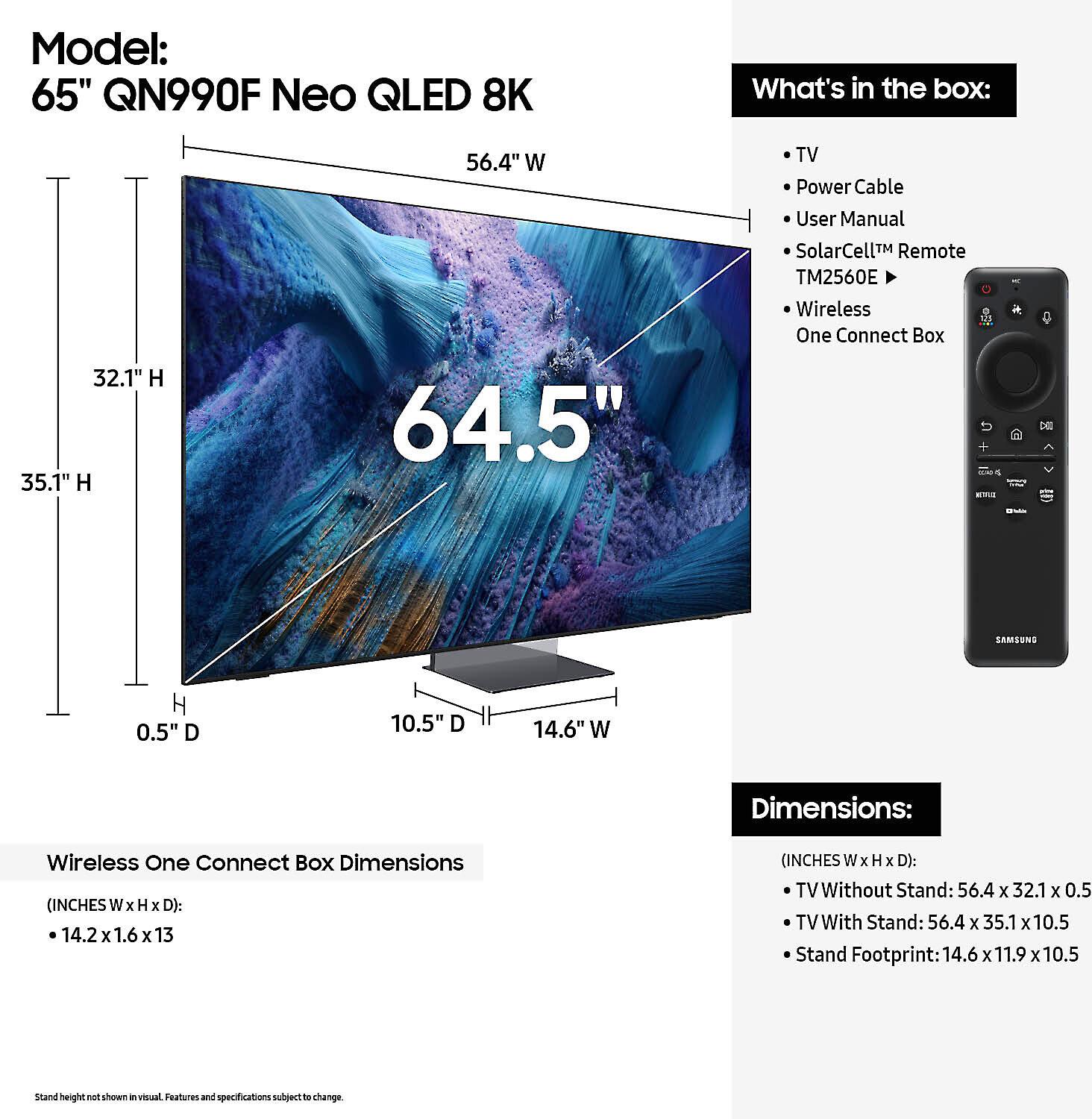
The Samsung QN990F Neo QLED arrived a few months later as Samsung's flagship Mini LED TV. This represents the pinnacle of Samsung's LCD technology, featuring their Quantum Matrix Mini LED system and 8K resolution. It's positioned as their "no compromises" television for people who want the absolute best, regardless of price.
What's interesting is how these TVs reflect Samsung's broader strategy. They're covering both bases – offering the perfect blacks that OLED enthusiasts love, while also pushing the brightness and resolution envelope with their Mini LED technology.
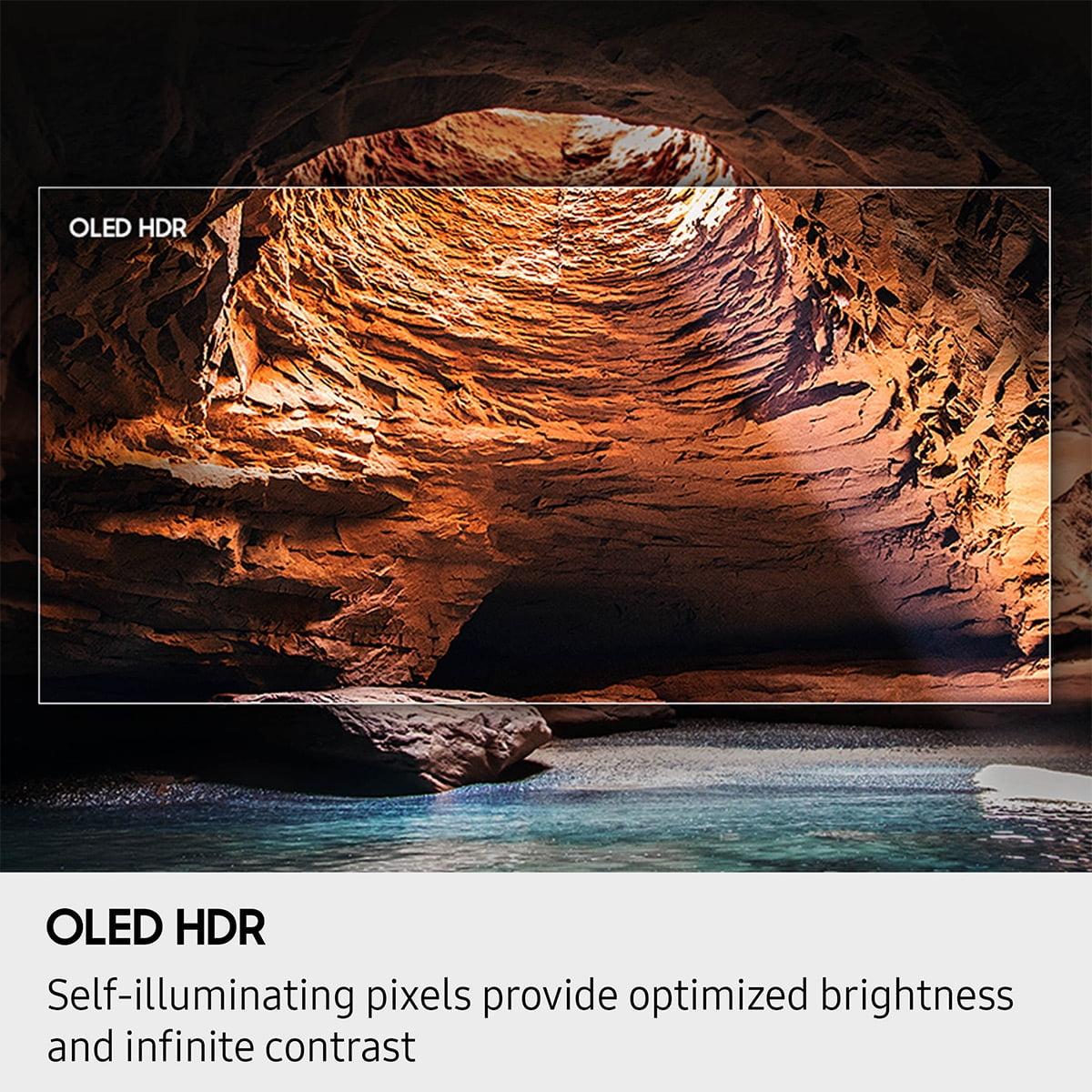
This is where the fundamental difference between these technologies becomes most apparent. The S85F OLED delivers what we call "perfect blacks" – when a pixel needs to be black, it simply turns off completely. There's no light leakage, no gray tint, just pure black. This creates an infinite contrast ratio, which means the difference between the darkest and brightest parts of the image is as dramatic as it can possibly be.
I've spent considerable time with OLED displays, and this contrast capability never stops being impressive. When you're watching a movie with dark scenes – think of something like "Dune" or "The Batman" – the way shadows disappear into true blackness while bright elements pop off the screen is genuinely striking.
The QN990F Neo QLED, being an LCD panel, can't achieve true blacks. However, Samsung's Quantum Matrix Mini LED technology gets remarkably close. The TV uses thousands of tiny LEDs arranged in zones that can dim independently. When a zone needs to be dark, these LEDs reduce their brightness dramatically, creating what looks like black to most viewers.
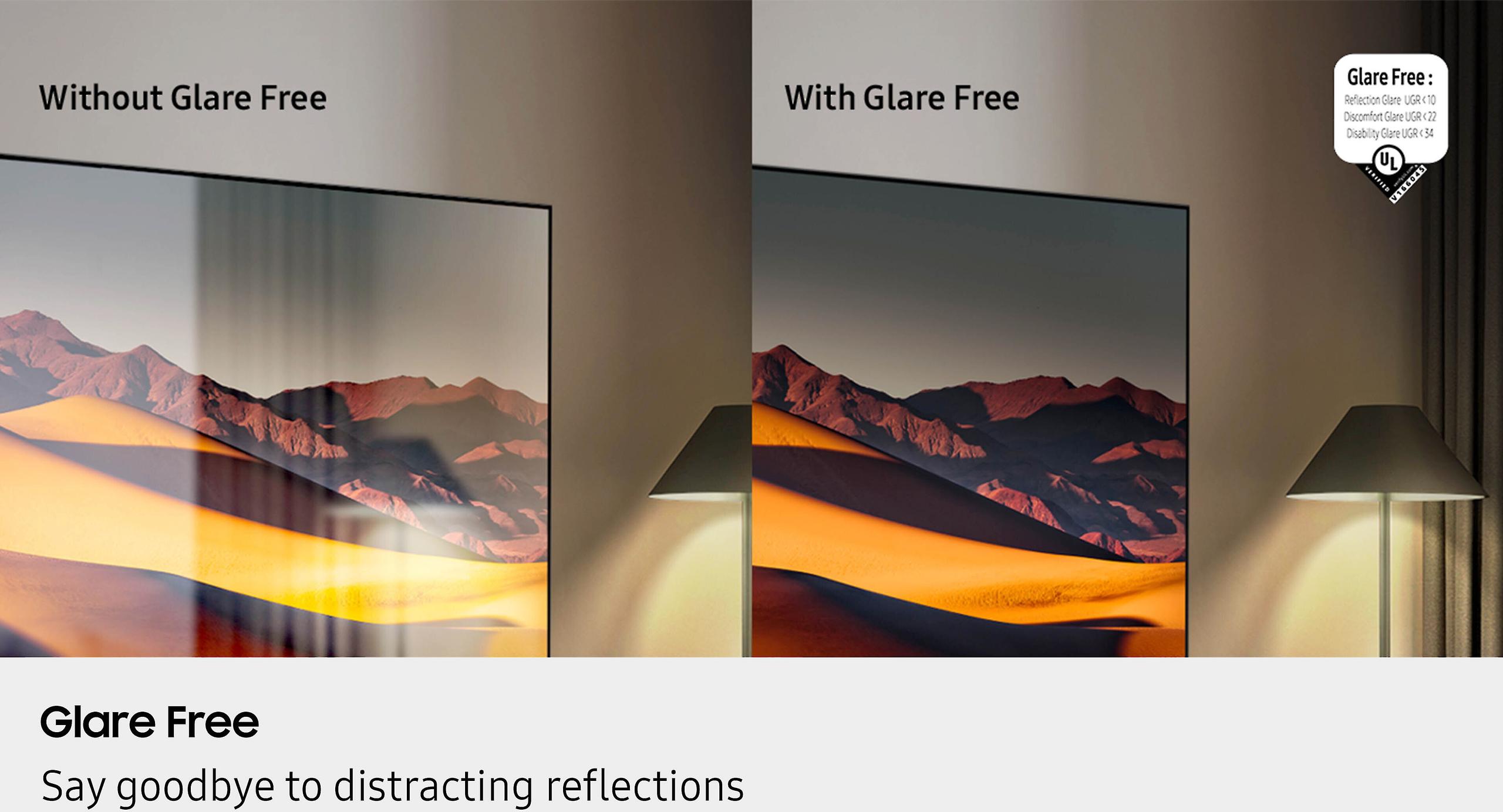
The difference is subtle in most content, but it becomes noticeable in scenes with bright objects against dark backgrounds – like stars in space or credits rolling over a black screen. The OLED will show pure black, while the Mini LED might show a very dark gray with perhaps a slight halo around bright objects (called "blooming").
Here's where the tables turn dramatically. The S85F OLED reaches peak brightness of around 750 nits in small highlights – that's bright enough for good HDR (High Dynamic Range) performance, but it's not class-leading. More importantly, when displaying larger bright scenes, the brightness drops to around 150 nits, which isn't particularly impressive for daytime viewing.
The QN990F Neo QLED is significantly brighter across the board. While Samsung doesn't publish exact numbers, Mini LED TVs in this class typically achieve peak brightness levels of 2,000 nits or higher. This makes a huge difference for HDR content, where bright highlights like sunlight, explosions, or shiny objects really pop off the screen.
HDR is basically a way of encoding much more information about brightness levels in video content. Instead of the limited range that standard video uses, HDR can represent everything from the darkest shadows to the brightest highlights that might exist in real life. To show this properly, your TV needs to be able to get both very dark and very bright.
This brightness difference also affects daytime viewing. If your TV room has large windows or bright lighting, the QN990F will maintain better picture quality because it can overpower ambient light more effectively.
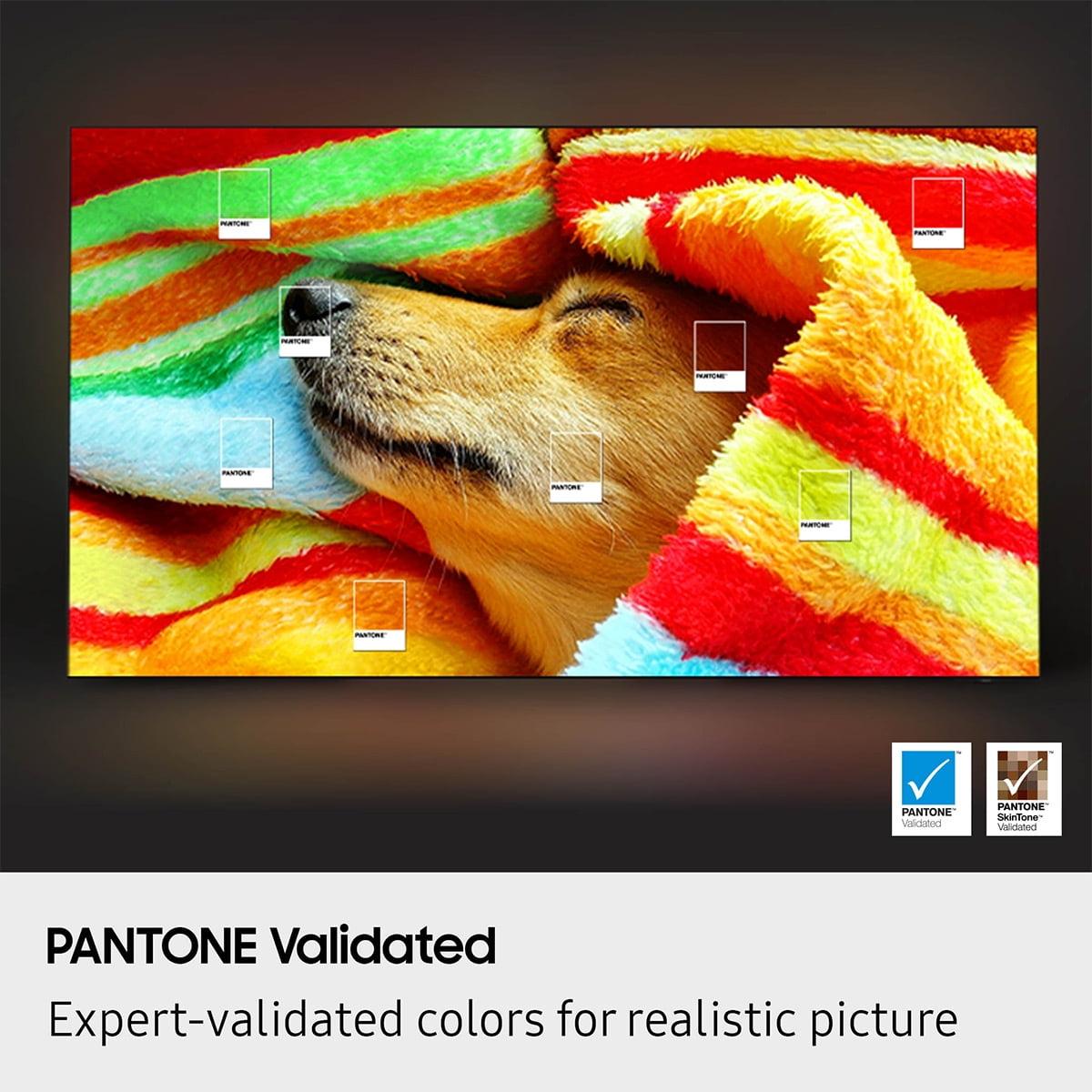
Both TVs excel in color reproduction, but they achieve it differently. The S85F OLED uses QD-OLED technology, which combines quantum dots with OLED pixels. This creates a wider color gamut (range of colors) than traditional OLED panels. The TV is also Pantone Validated, meaning it can accurately reproduce over 2,140 colors and 110 different skin tones as defined by the Pantone color standard.
The QN990F Neo QLED uses quantum dot technology as well, but in a different configuration. Quantum dots are microscopic crystals that emit pure colors when hit by light. This technology excels at maintaining color accuracy even at high brightness levels – something that's particularly important for HDR content.
Color volume is a concept that combines color accuracy with brightness. It's not enough to show accurate colors; you need to show them at the right brightness levels too. The Mini LED's superior brightness gives it an advantage here, especially for vibrant HDR content.
Both TVs are excellent for gaming, but they approach it slightly differently. The S85F OLED offers nearly instantaneous response time – basically, there's no delay between when a pixel is told to change and when it actually changes. This is crucial for competitive gaming where every millisecond matters.
The TV also has very low input lag, which is the delay between when you press a button on your controller and when the action appears on screen. Combined with its 120Hz refresh rate, this makes it excellent for gaming on PlayStation 5 or Xbox Series X.
The QN990F Neo QLED matches these gaming credentials but goes further. It supports 4K gaming at up to 240Hz when connected to a high-end gaming PC. This is overkill for current console games, but it's future-proofing for what's coming next. The TV also supports 8K gaming at 120Hz, though there's virtually no content that can take advantage of this yet.
Both TVs include all the modern gaming features you'd expect: Variable Refresh Rate (VRR) to eliminate screen tearing, Auto Low Latency Mode (ALLM) that automatically switches to game mode when it detects a console, and support for AMD FreeSync Premium.
The processing power difference between these TVs is significant. The S85F OLED uses Samsung's NQ4 AI Gen2 processor, which is capable but not cutting-edge. It handles 4K upscaling well – taking lower resolution content and making it look better on the 4K screen – but it's not as sophisticated as what you'll find in higher-end models.
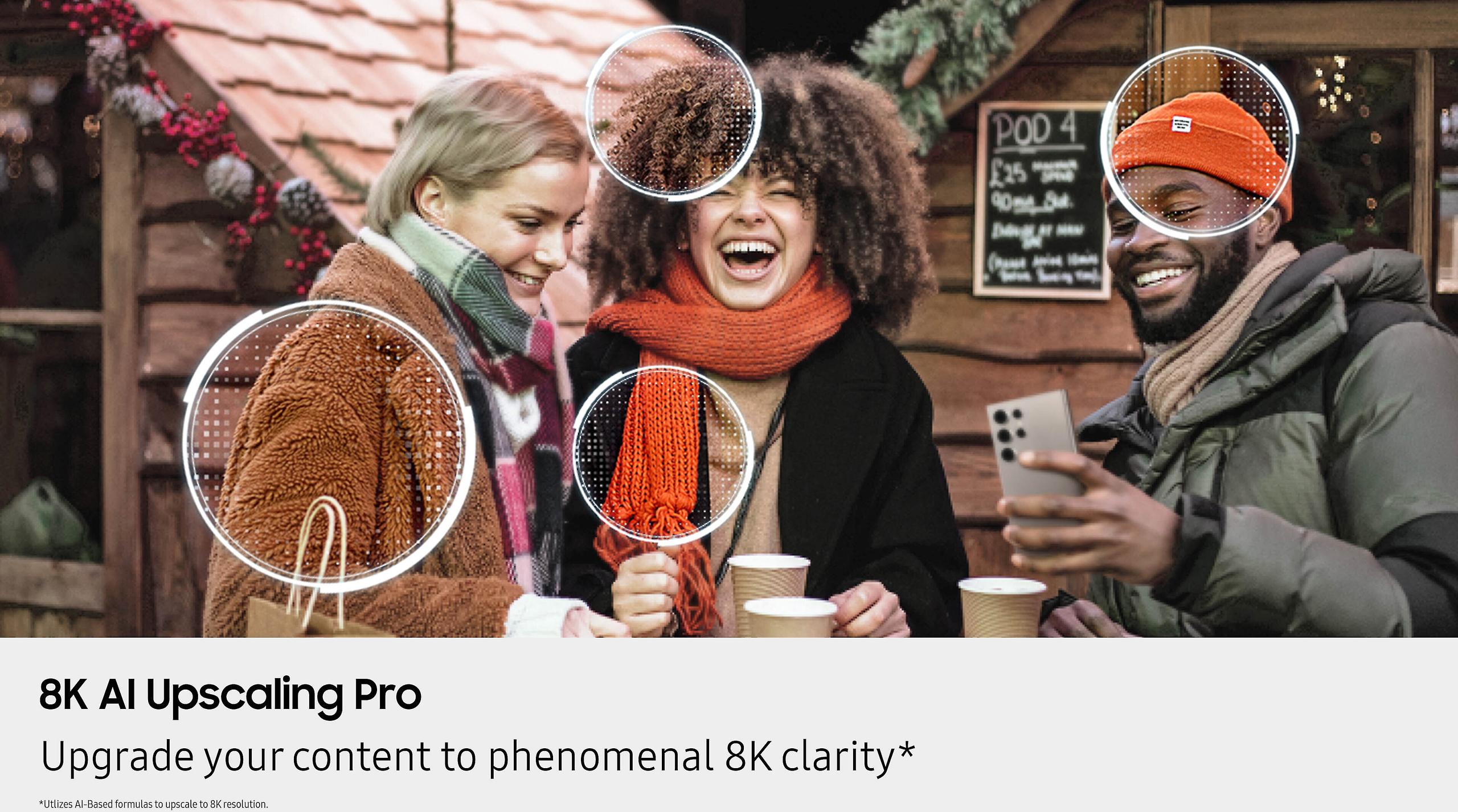
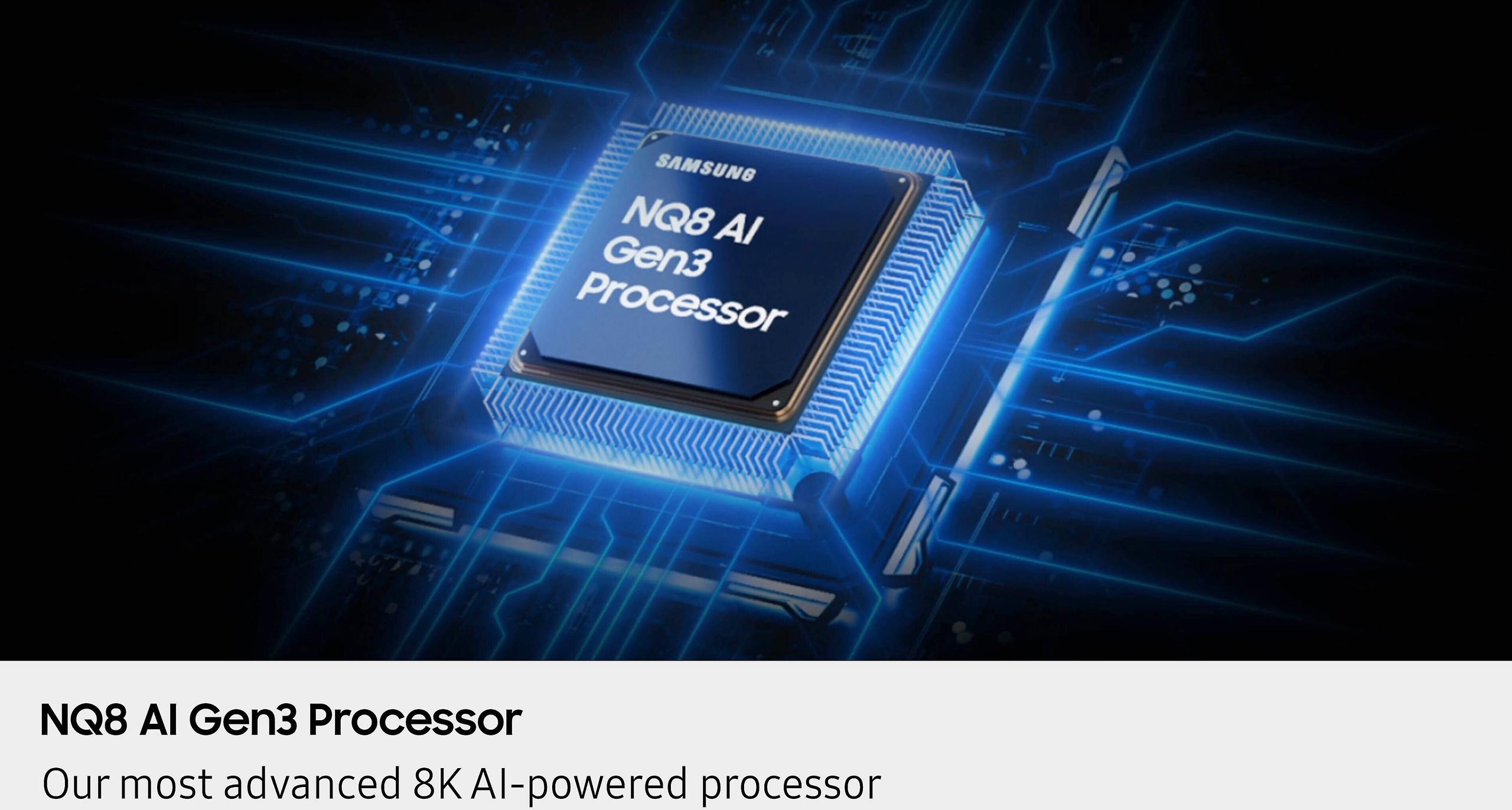
The QN990F Neo QLED features the NQ8 AI Gen3 processor, which is Samsung's most advanced TV processor. This chip uses 768 neural networks for AI upscaling, which means it can analyze content and enhance it in real-time using machine learning. The 8K AI Upscaling Pro feature is particularly impressive, taking 4K content and making it look surprisingly good at 8K resolution.
Both TVs run Samsung's Tizen operating system, which is fast and user-friendly. The interface is intuitive, and you get access to all major streaming services. However, there's one notable limitation: Samsung TVs don't support Dolby Vision HDR format, instead using their own HDR10+ format. This isn't a dealbreaker for most people, but it's worth noting if you're particular about HDR formats.
This is where the QN990F Neo QLED really shows its flagship status. It features a 6.4.4 channel speaker system with 120 watts of total power, including dedicated top-firing speakers for Dolby Atmos. The result is genuinely immersive audio that can fill a room without needing a separate sound system.
The S85F OLED has a more basic 2.0 channel system with 20 watts of power. It's adequate for casual viewing, but serious movie watchers will want to pair it with a soundbar or home theater system.
Both TVs support advanced audio processing features like Adaptive Sound Pro, which analyzes content and adjusts audio settings automatically, and Object Tracking Sound, which tries to position audio effects to match what's happening on screen.
The QN990F's 8K resolution deserves special discussion. 8K means 7680 × 4320 pixels – four times as many pixels as 4K. On a 65-inch screen, this creates incredibly sharp detail, but there's a catch: there's almost no native 8K content available.
Most of what you'll watch is 4K or lower resolution, which means the TV needs to upscale it. Samsung's 8K AI Upscaling Pro does this well, but you're essentially paying a premium for the TV to guess what extra detail should be there.
The counter-argument is future-proofing. 8K content will eventually become more common, and having an 8K TV means you'll be ready. However, the transition from 4K to 8K is happening much more slowly than the transition from HD to 4K did.
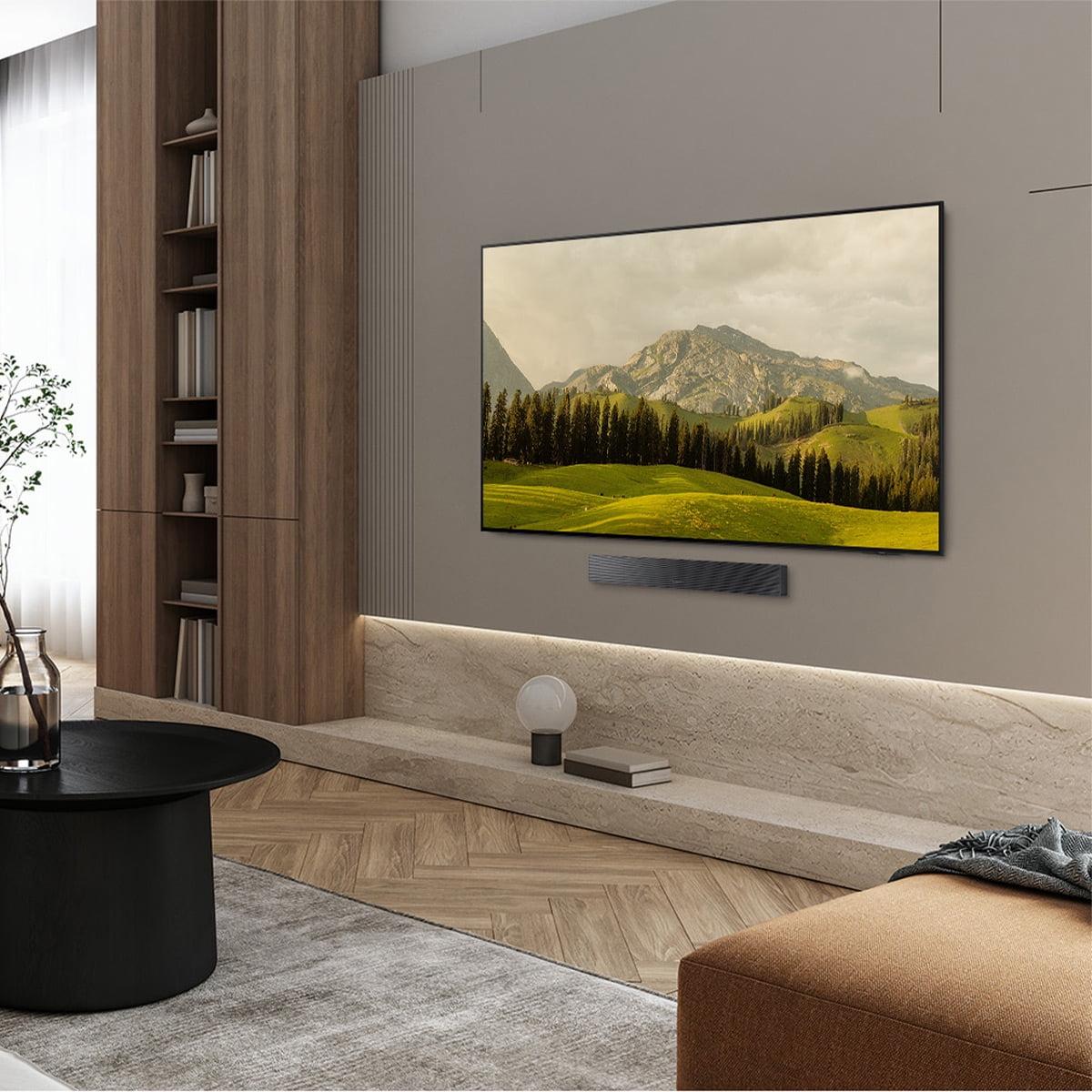
If you're setting up a dedicated home theater room, the S85F OLED has some distinct advantages. OLED's perfect blacks are particularly impressive in dark rooms, where they can truly disappear. The wide viewing angles also mean that everyone in the room gets a good picture, regardless of where they're sitting.
However, the QN990F Neo QLED shouldn't be dismissed for home theater use. Its superior brightness can actually be an advantage if you can't control all the light in your room, and the premium audio system means you might not need to invest in a separate sound system immediately.
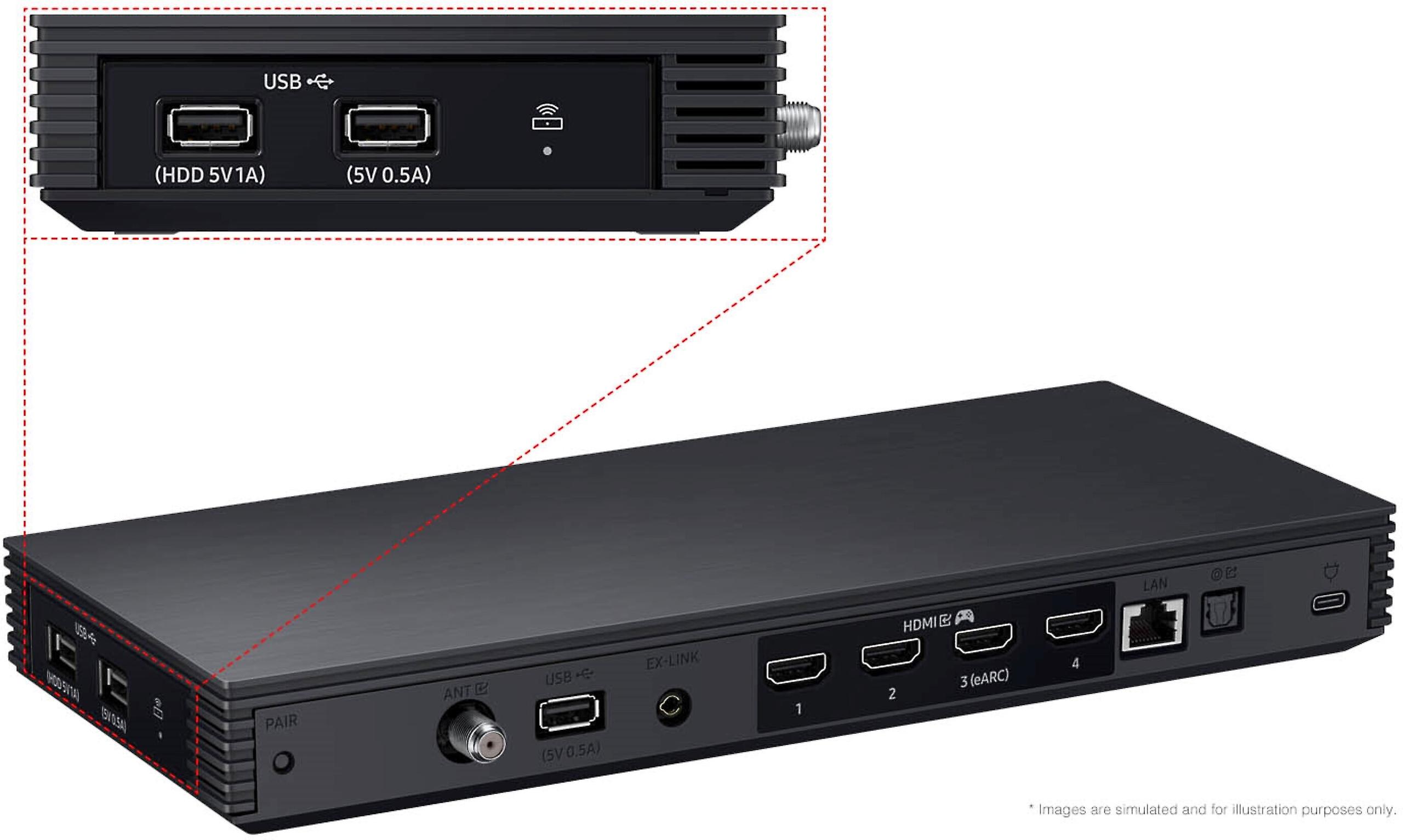
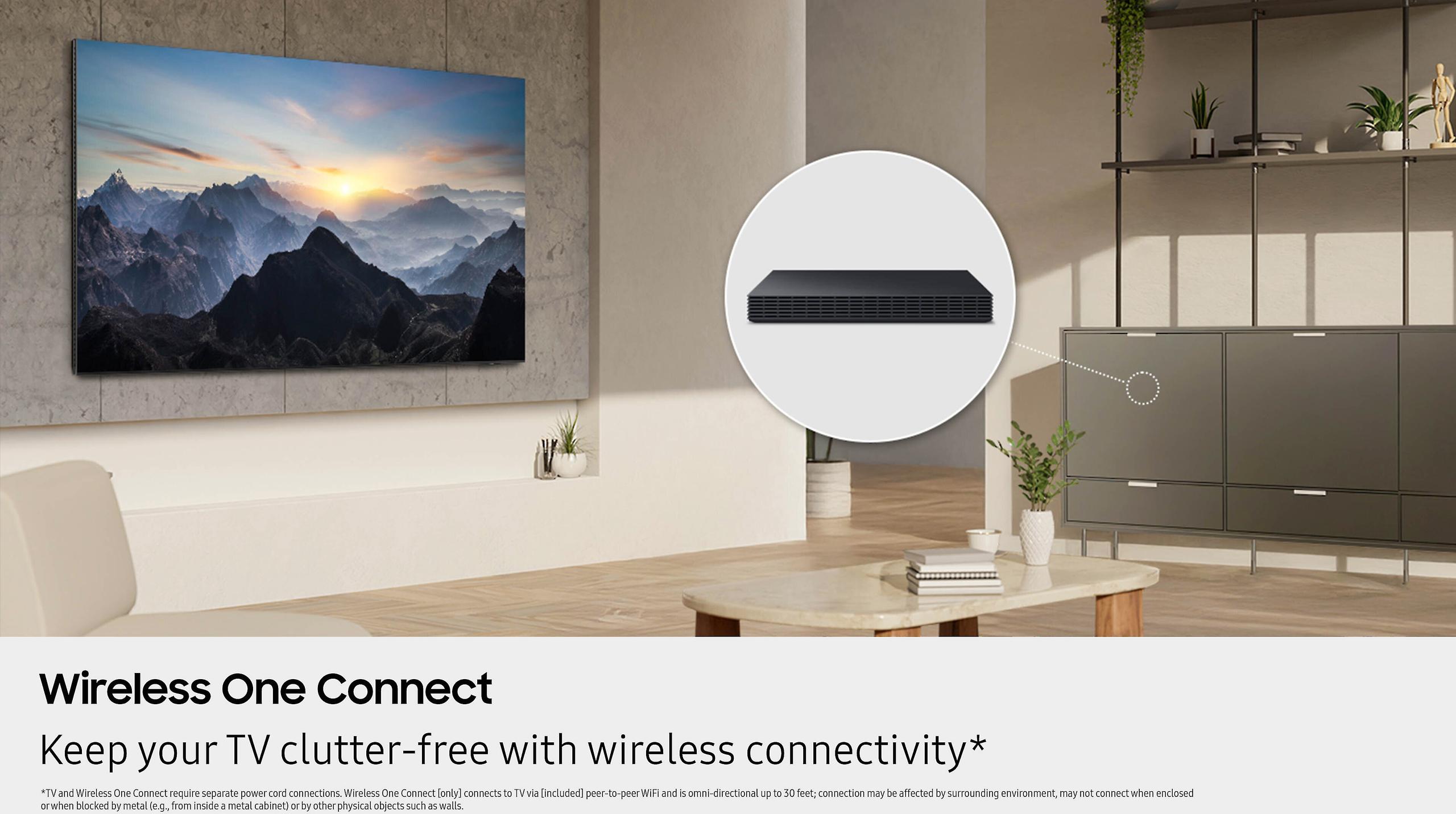
The QN990F also includes a Wireless One Connect box, which is a game-changer for clean installations. All your devices connect to this box, which then sends the signal wirelessly to the TV. This eliminates cable clutter and makes wall mounting much cleaner.
At $1,599.99, the S85F OLED represents exceptional value in the premium TV market. You're getting genuine OLED technology with perfect blacks, excellent gaming performance, and solid smart features at a price that's accessible to many buyers.
The QN990F Neo QLED at $5,297.99 is harder to justify purely on value. You're paying more than three times as much for improvements that, while real, may not be transformative for most viewing. The superior brightness, 8K resolution, and premium audio are nice-to-haves rather than must-haves for most people.
Choose the Samsung S85F OLED if you primarily watch TV in a dark or dimly lit room, want excellent gaming performance, and value the cinematic experience that perfect blacks provide. It's also the clear choice if you want premium performance without paying flagship prices.
Choose the Samsung QN990F Neo QLED if you watch TV in a bright room, want the absolute best brightness and HDR performance, or if you're someone who always wants the latest and greatest technology regardless of cost.
For most people, I'd recommend the S85F OLED. It delivers about 90% of the premium TV experience at 30% of the flagship price. The perfect blacks and excellent gaming performance make it a joy to use, and the money you save could go toward a great sound system or other home theater improvements.
The QN990F Neo QLED is impressive, but it's a showcase product for enthusiasts rather than a practical choice for most buyers. If you have the budget and want to experience the absolute cutting edge of TV technology, it won't disappoint. Just be honest about whether you'll actually benefit from its premium features.
Both TVs represent the current state of the art in their respective technologies. Your choice ultimately comes down to your room environment, viewing preferences, and budget priorities.
| Samsung 65" S85F OLED 4K Smart TV ($1,599.99) | Samsung 65" Neo QLED QN990F 8K Smart TV ($5,297.99) |
|---|---|
| Display Technology - Core difference affecting picture quality | |
| QD-OLED with perfect blacks and infinite contrast | Mini LED LCD with Quantum Matrix for superior brightness |
| Resolution - Content availability vs future-proofing | |
| 4K (3840x2160) - matches most premium content | 8K (7680x4320) - relies on AI upscaling for most content |
| Peak Brightness - Critical for HDR impact and bright rooms | |
| ~750 nits (adequate for controlled lighting) | 2,000+ nits (excellent for any lighting condition) |
| Processor - Affects upscaling and smart features | |
| NQ4 AI Gen2 with 4K upscaling | NQ8 AI Gen3 with 8K AI Upscaling Pro (768 neural networks) |
| Gaming Performance - Refresh rates and response time | |
| 120Hz, near-instant response, very low input lag | 120Hz native, 4K 240Hz support, low input lag |
| Audio System - Built-in sound quality | |
| 2.0 channel, 20W (basic, likely needs soundbar) | 6.4.4 channel, 120W with Dolby Atmos (premium quality) |
| Smart Features - Operating system and connectivity | |
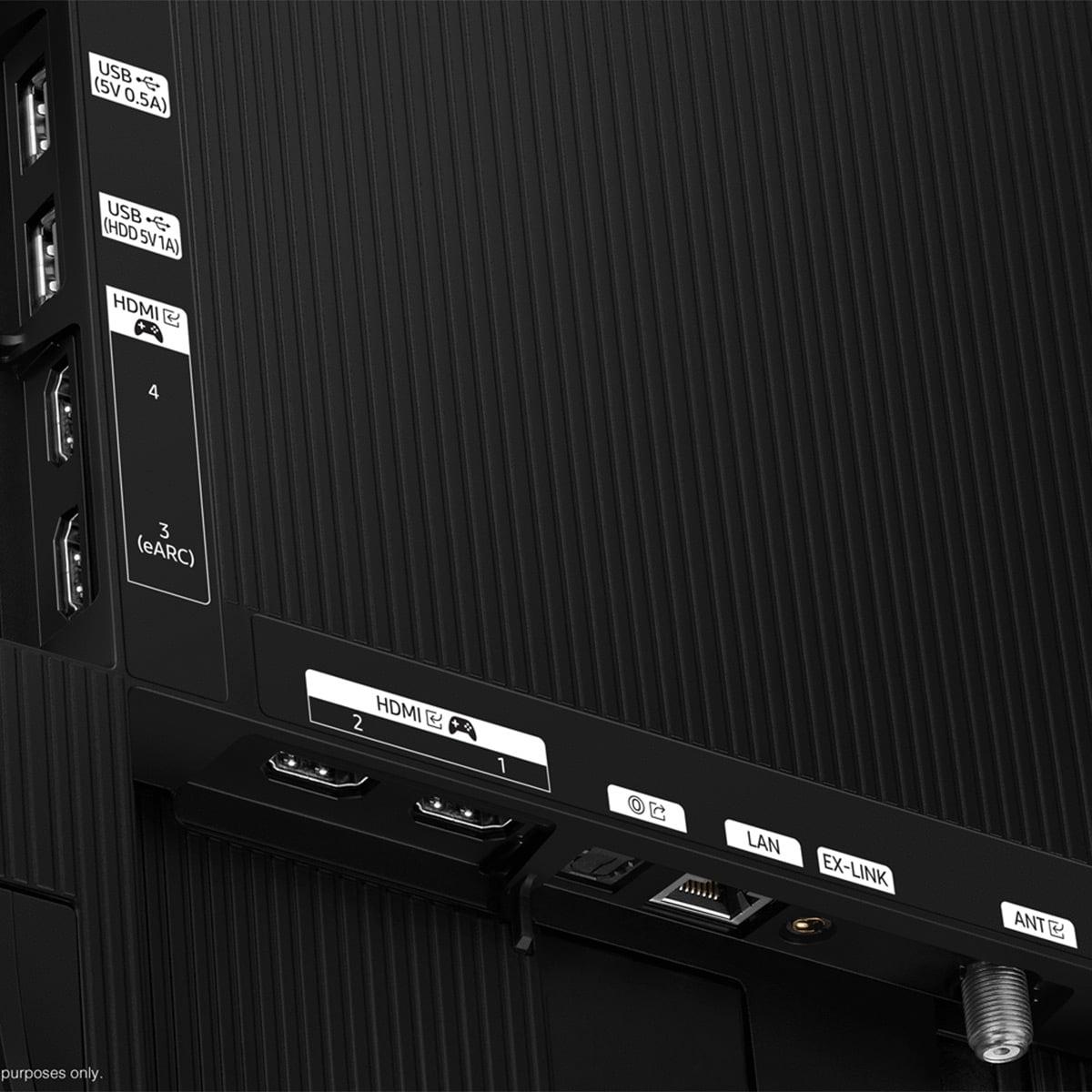
| Tizen OS, 4x HDMI 2.1, standard connectivity | Tizen OS, 4x HDMI 2.1, Wireless One Connect box |
| Room Suitability - Optimal viewing environments | |
| Best in dark/dim rooms, adequate in moderate light | Excellent in any lighting, superior for bright rooms |
| Value Proposition - Performance per dollar | |
| Exceptional OLED experience at entry-level pricing | Premium flagship with 3x price for incremental gains |
The Samsung S85F OLED ($1,599.99) delivers superior picture quality for movies due to its perfect black levels and infinite contrast ratio. OLED technology creates true blacks that make dark scenes more immersive and cinematic. While the Samsung QN990F Neo QLED ($5,297.99) offers brighter highlights, the OLED's contrast advantage makes it ideal for home theater movie watching.
OLED pixels emit their own light and can turn completely off for perfect blacks, while Neo QLED uses thousands of mini LEDs behind an LCD panel for precise brightness control. The Samsung S85F OLED excels in dark rooms with perfect contrast, whereas the Samsung QN990F Neo QLED performs better in bright rooms due to its superior peak brightness capabilities.
Both TVs are excellent for gaming, but they serve different needs. The Samsung S85F OLED offers nearly instantaneous response time and 120Hz refresh rate, perfect for console gaming. The Samsung QN990F Neo QLED supports higher refresh rates up to 4K 240Hz for PC gaming, making it more future-proof for high-end gaming setups.
Currently, 8K content is extremely limited, making the Samsung QN990F Neo QLED's 8K resolution more about future-proofing than immediate benefits. The Samsung S85F OLED offers abundant 4K content support at a much lower price point. Unless you specifically want cutting-edge resolution for upscaling, 4K provides better value.
The Samsung QN990F Neo QLED ($5,297.99) significantly outperforms in bright rooms due to its superior peak brightness of 2,000+ nits. The Samsung S85F OLED peaks around 750 nits, which can struggle against ambient light. For rooms with large windows or bright lighting, the Neo QLED maintains better picture quality.
The Samsung S85F OLED costs $1,599.99 while the Samsung QN990F Neo QLED costs $5,297.99 - over three times more expensive. The price difference is difficult to justify for most buyers, as the OLED delivers 90% of premium TV performance at 30% of the flagship price. The Neo QLED's advantages mainly benefit specific use cases like very bright rooms.
The Samsung QN990F Neo QLED features the more advanced NQ8 AI Gen3 processor with 768 neural networks for superior upscaling, while the Samsung S85F OLED uses the capable but less powerful NQ4 AI Gen2 processor. Both run Samsung's Tizen OS with similar app support, but the Neo QLED offers more advanced AI features and processing power.
The Samsung QN990F Neo QLED includes a premium 6.4.4 channel speaker system with 120W and Dolby Atmos support, delivering impressive built-in audio. The Samsung S85F OLED has a basic 2.0 channel, 20W system that's adequate for casual viewing but will likely require a soundbar for serious home theater use.
For dedicated home theater rooms, the Samsung S85F OLED ($1,599.99) excels due to its perfect blacks and wide viewing angles, creating an immersive cinematic experience in controlled lighting. The Samsung QN990F Neo QLED works well too, especially if you can't fully control room lighting, plus its premium audio system reduces the need for additional sound equipment.
Both TVs support 4K 120Hz gaming with VRR and low input lag. The Samsung S85F OLED offers faster response times ideal for competitive gaming, while the Samsung QN990F Neo QLED supports up to 4K 240Hz for high-end PC gaming. Console gamers will be satisfied with either, but PC gamers might prefer the Neo QLED's higher refresh rate capabilities.
The Samsung S85F OLED provides exceptional value with premium OLED technology, perfect blacks, and excellent gaming performance at $1,599.99. The Samsung QN990F Neo QLED offers flagship features but at a premium price that's hard to justify for most buyers. The OLED delivers the premium TV experience most people want at a reasonable cost.
The Samsung S85F OLED performs best in dark or dimly lit rooms and may appear washed out in very bright environments. The Samsung QN990F Neo QLED has limited native 8K content availability, making its resolution advantage largely theoretical. Both TVs lack Dolby Vision support, using Samsung's HDR10+ format instead, which some users may find limiting.
We've done our best to create useful and informative comparisons to help you decide what product to buy. Our research uses advanced automated methods to create this comparison and perfection is not possible - please contact us for corrections or questions. These are the sites we've researched in the creation of this article: rtings.com - samsung.com - youtube.com - rtings.com - youtube.com - samsung.com - bestbuy.com - avsforum.com - avsforum.com - samsung.com - displayspecifications.com - videoandaudiocenter.com - bestbuy.com - flatpanelshd.com - myallsouth.com - samsung.com - richstv.com - samsung.com - heartlandappliance.com - samsung.com - abt.com - bestbuy.com - pcnation.com - samsung.com - videoandaudiocenter.com - exertisalmo.com - displayspecifications.com - theapplianceplug.com - news.samsung.com

Privacy Policy
Terms and Conditions - Affiliate Policy
Home Security
© Copyright 2008-2026.
11816 Inwood Rd #1211, Dallas, TX 75244