

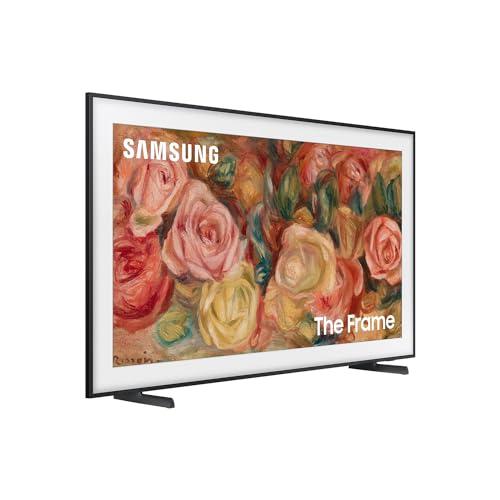
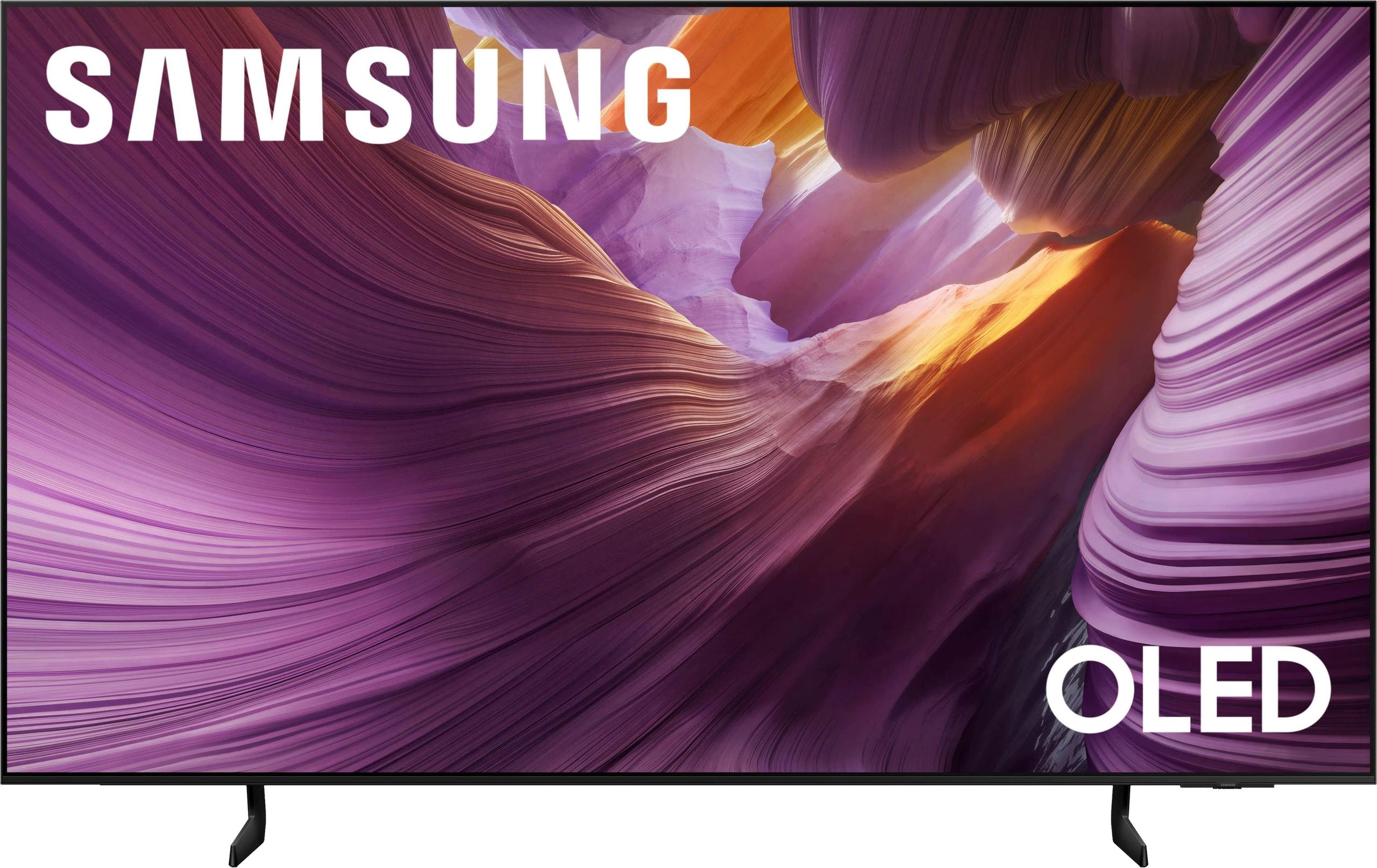
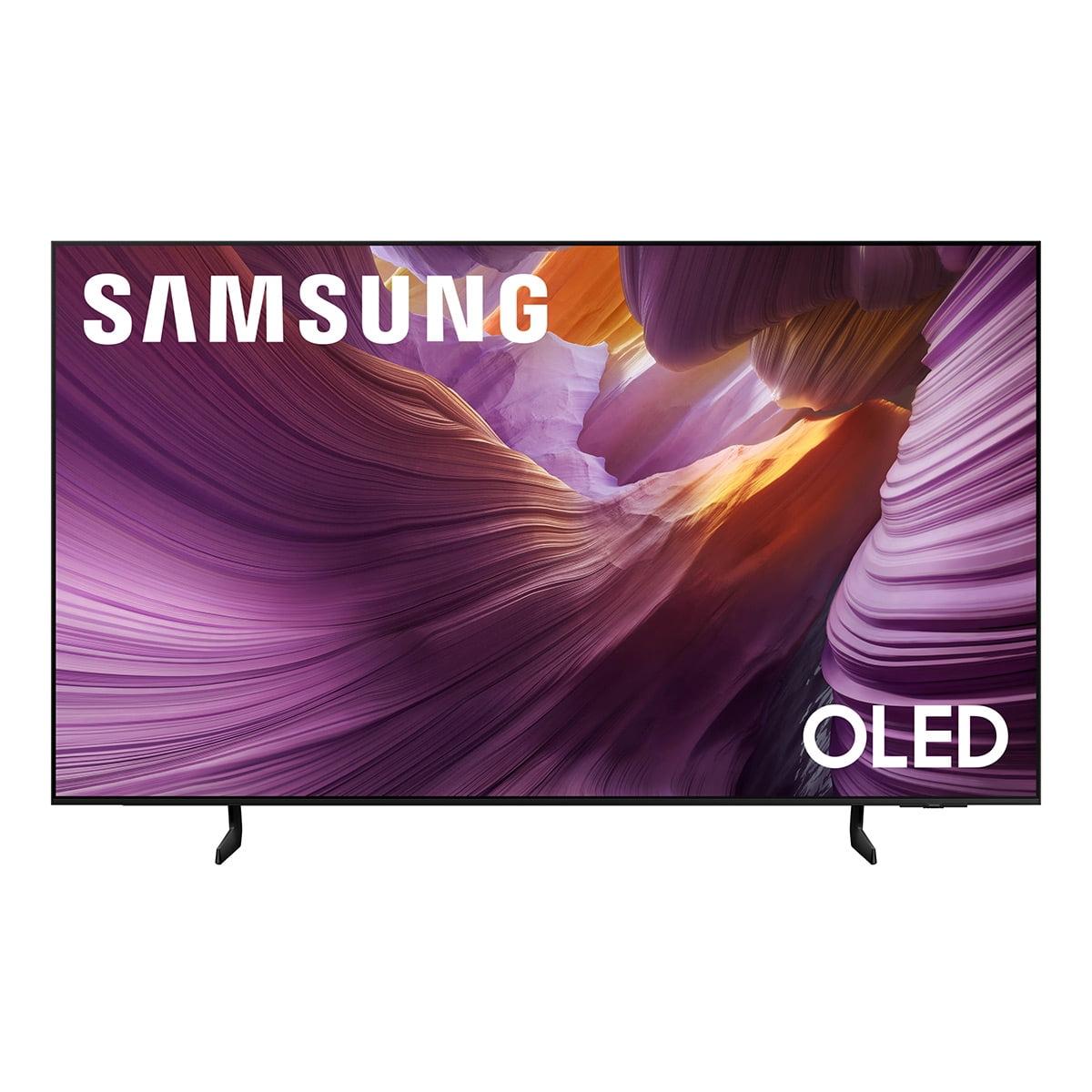
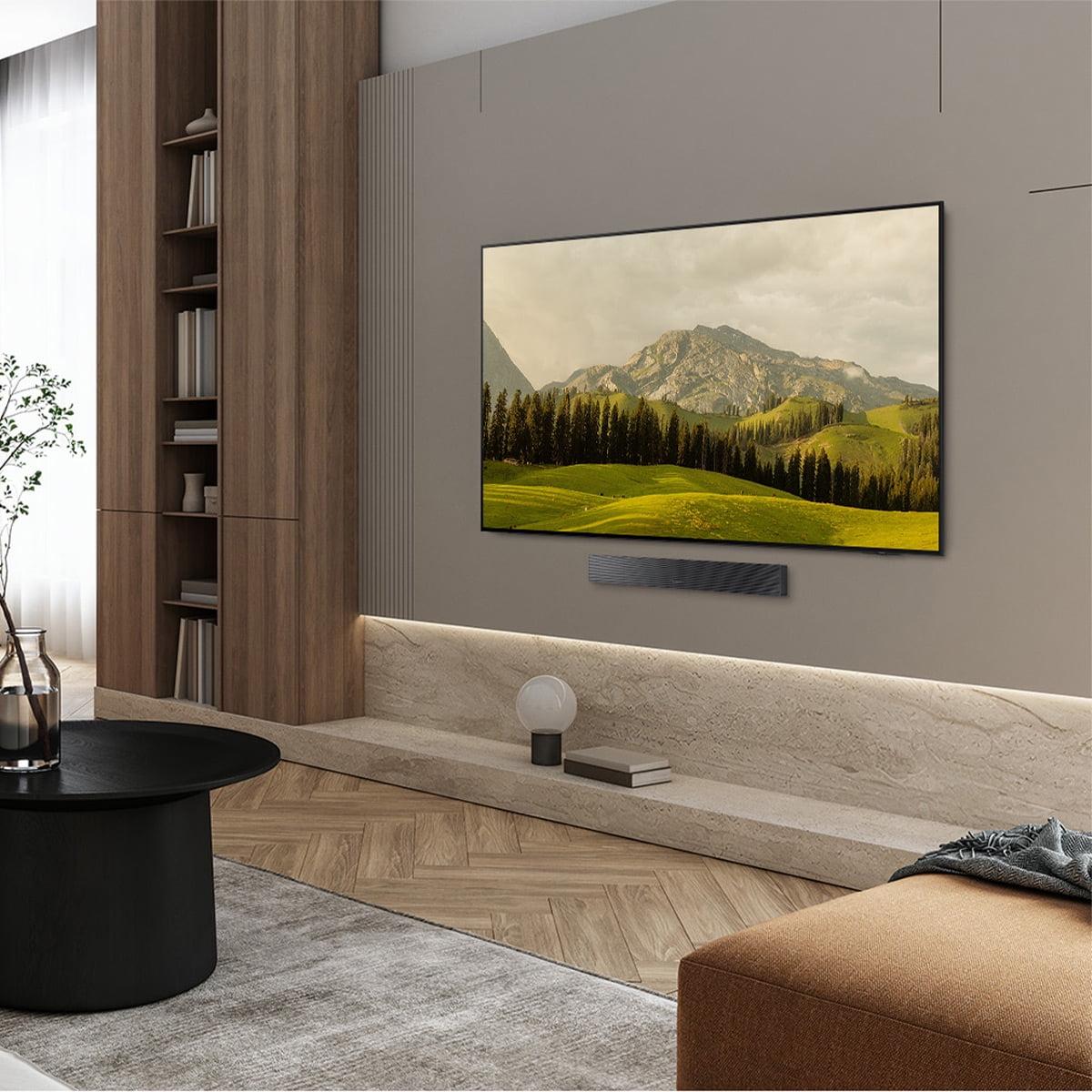

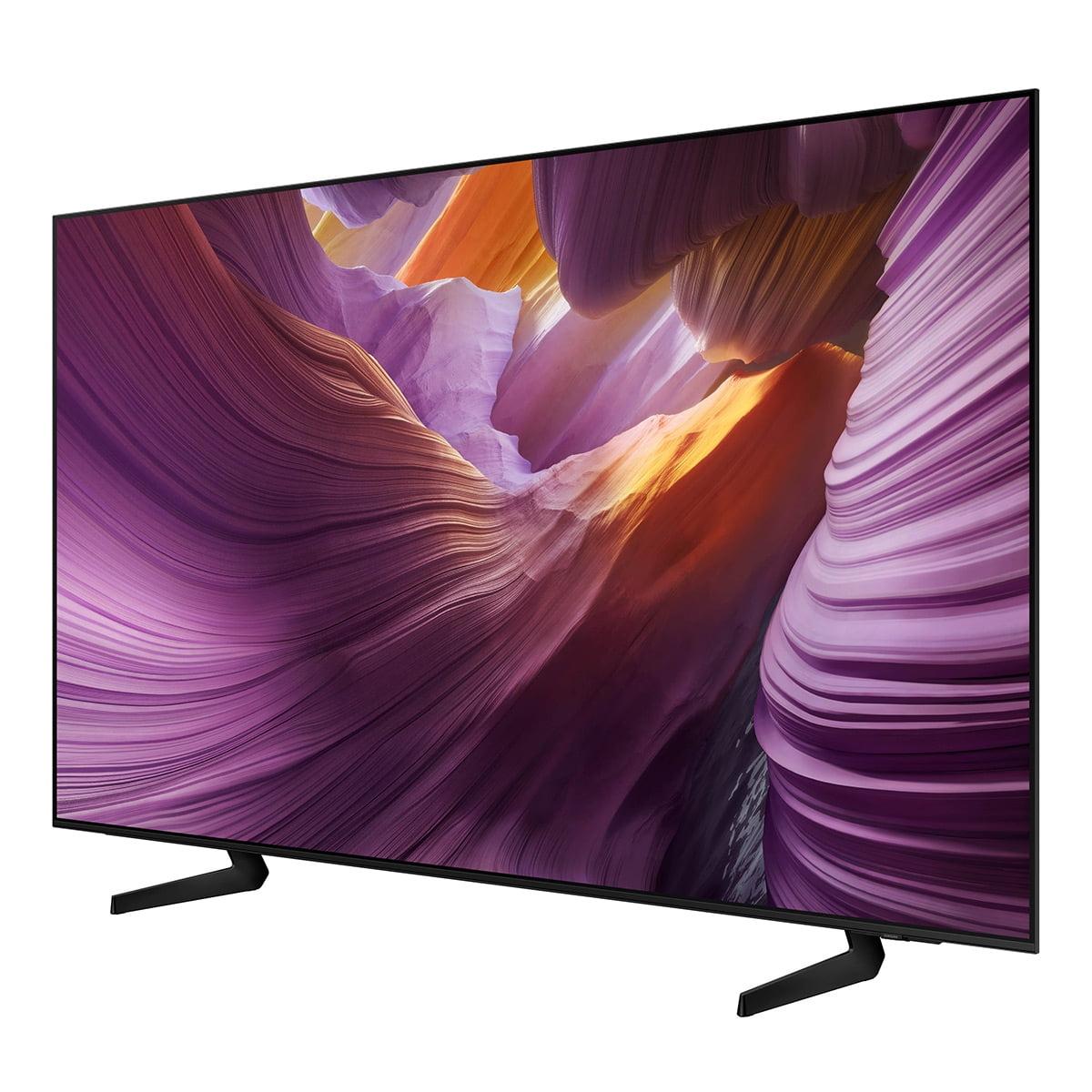
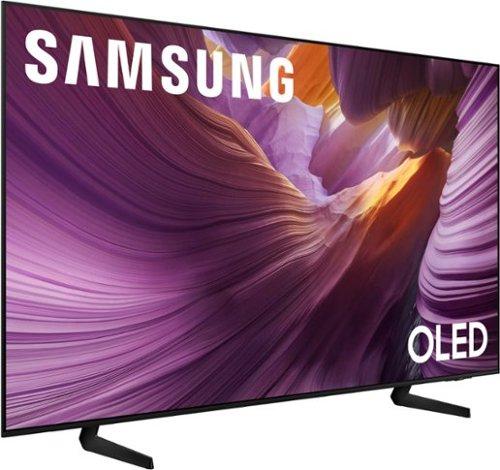
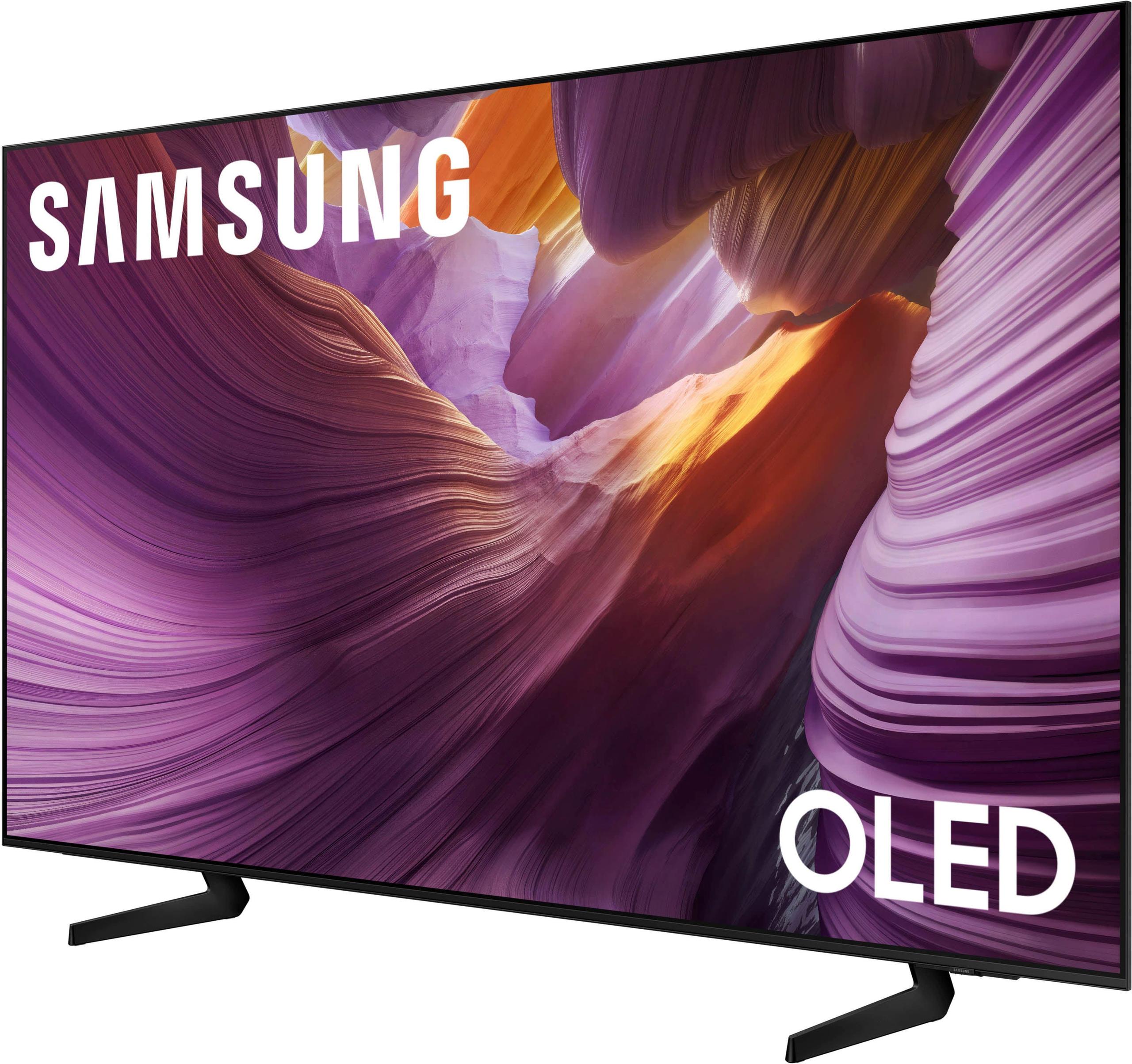
When you're shopping for a premium 65-inch TV, two Samsung models perfectly illustrate the fundamental choice modern buyers face: style over substance, or substance over style. The Samsung 65" The Frame QLED 4K 2024 TV, released in early 2024, transforms your living room into an art gallery but asks you to pay extra for the privilege. Meanwhile, the Samsung 65" S85F OLED 4K Smart TV, launched in spring 2025, focuses entirely on delivering exceptional picture quality at a surprisingly competitive price.
Both TVs excel in different areas, and understanding these differences will help you avoid buyer's remorse. Let's dive into what makes each approach work—and where each falls short.
The premium TV market has split into two distinct camps. On one side, you have lifestyle TVs like The Frame that prioritize blending seamlessly into your home decor. These TVs acknowledge that most people don't live in dedicated home theaters—they watch TV in bright living rooms where the display needs to look good even when turned off.
On the other side, performance TVs like the S85F OLED focus entirely on delivering the best possible picture quality and gaming experience. These displays make no compromises for aesthetics, instead maximizing every technical specification that affects what you actually see on screen.
The choice between these approaches often comes down to your viewing habits and living situation. Do you watch TV critically in a darkened room, or casually with the lights on? Is your TV the focal point of your entertainment setup, or should it disappear when not in use? These questions matter more than you might think.
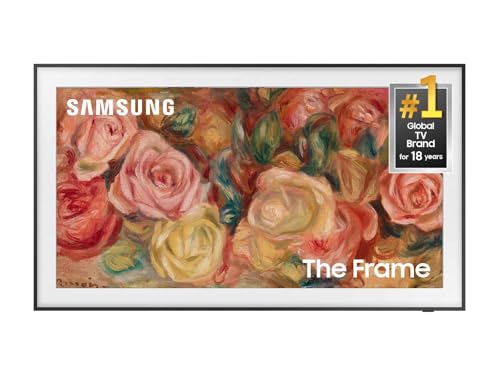
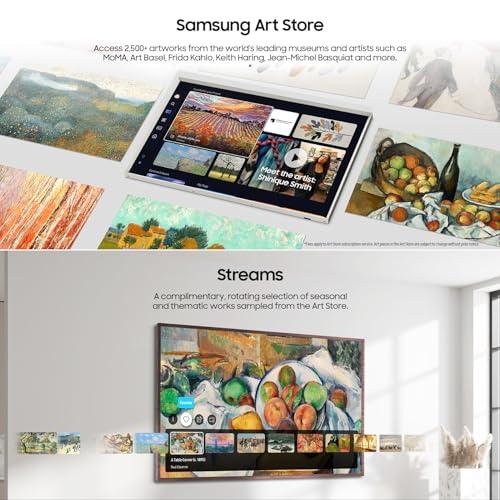
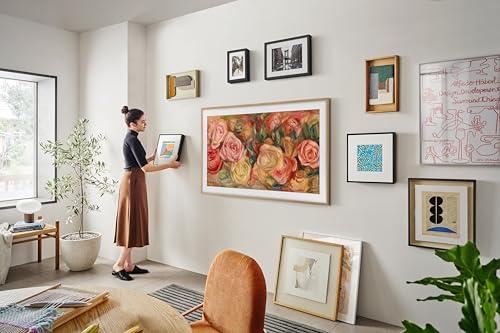
The Frame QLED 2024 represents Samsung's most successful attempt at solving the "big black rectangle" problem that traditional TVs create when turned off. The TV's Art Mode transforms the screen into a digital canvas, displaying curated artwork or your personal photos with remarkable realism.
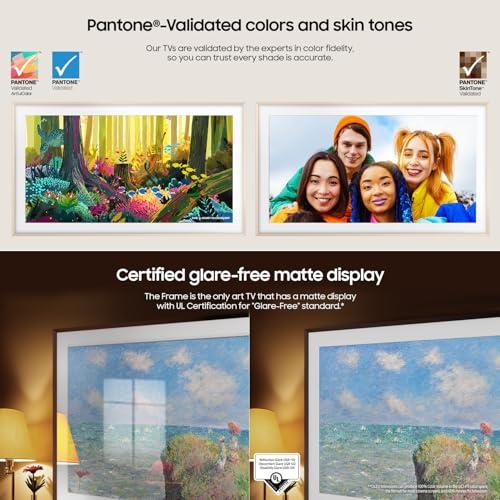
The key innovation here is the Anti-Glare Matte Display, which uses a premium matte finish to scatter ambient light rather than reflecting it directly back at your eyes. This technology makes artwork appear more like an actual canvas, reducing the telltale "screen glare" that usually gives away digital displays. The matte coating is sophisticated enough that many visitors won't immediately realize they're looking at a TV screen rather than a framed print.
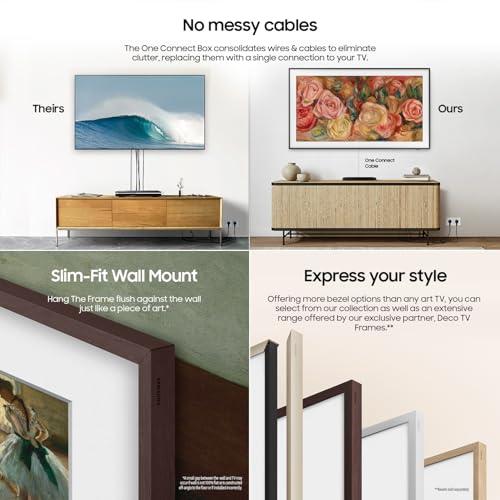
Samsung takes the art illusion further with magnetic customizable bezels that attach to the TV's edges, mimicking different frame styles from modern minimal to ornate traditional. These bezels aren't just cosmetic—they're engineered to create proper depth and shadow effects that enhance the artwork illusion.
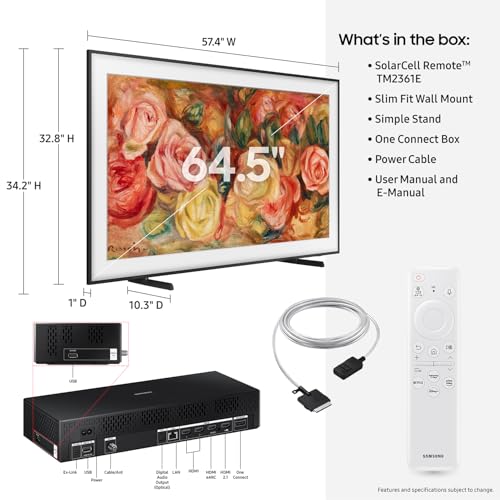
The One Connect Box centralizes all your device connections in a separate unit, allowing just one nearly invisible cable to run to the TV itself. This enables truly clean wall installations where The Frame appears to float on your wall like a genuine piece of art.
When displaying art, the TV automatically adjusts its refresh rate from 120Hz down to 60Hz to save energy, while brightness and color sensors continuously optimize the display for your room's lighting conditions. The result is artwork that looks natural throughout the day, automatically adapting as sunlight changes.
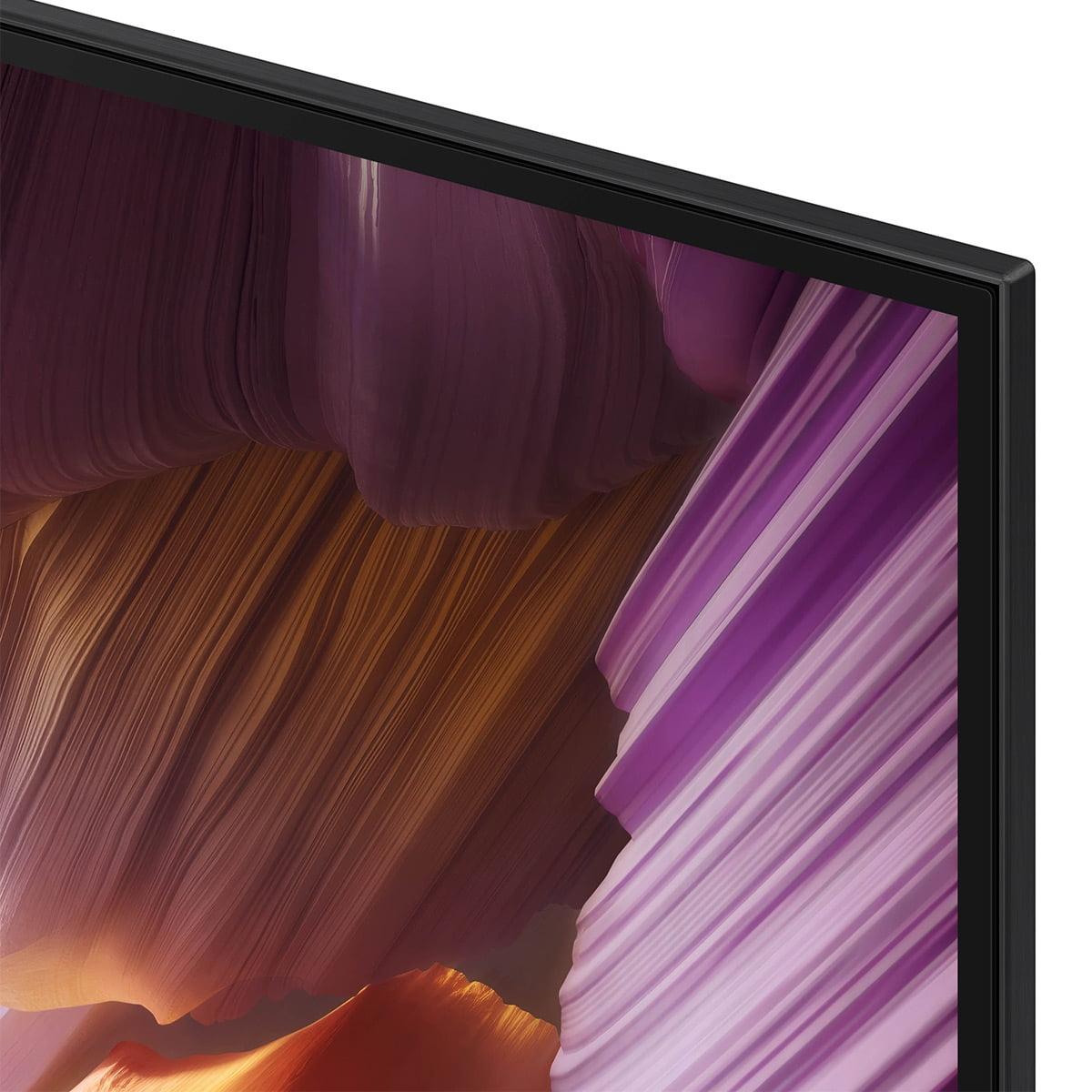
The S85F OLED 2025 takes a completely different approach, focusing entirely on display technology advancement. The 65-inch model uses QD-OLED panels (Quantum Dot OLED) in North America, which combine the perfect blacks of traditional OLED with the enhanced color volume of quantum dot technology.
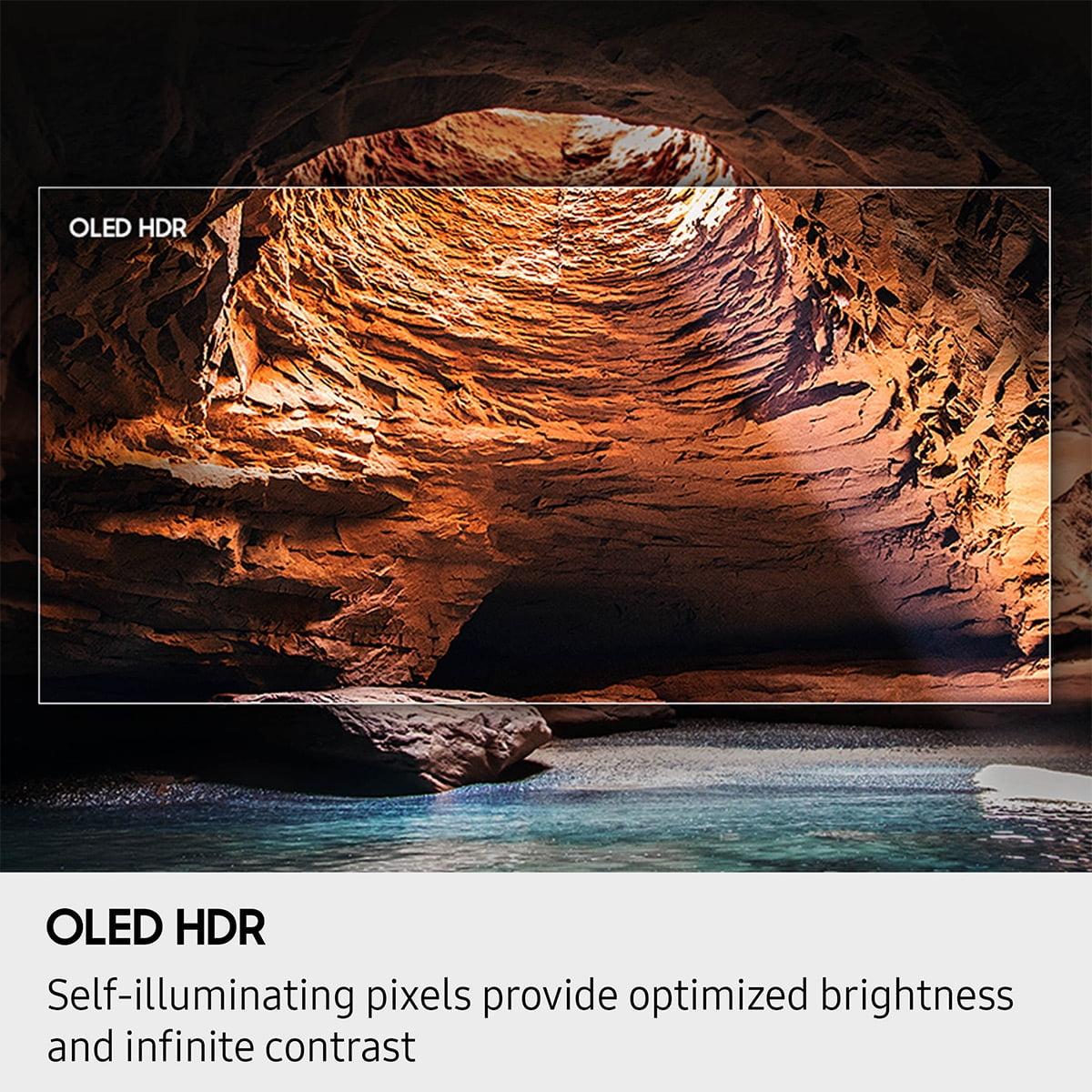
Here's why this matters: traditional LCD TVs (including QLED) use a backlight that shines through liquid crystal filters. Even when displaying black, some light still leaks through, creating gray-looking "blacks" rather than true darkness. OLED pixels generate their own light and can turn completely off, creating perfect blacks and infinite contrast ratios—the difference between the brightest whites and darkest blacks.
QD-OLED takes this further by adding quantum dots, microscopic particles that convert blue OLED light into extremely pure red and green light. This process creates a wider color gamut (range of colors) and higher color volume (ability to maintain color accuracy at different brightness levels) than either traditional OLED or QLED alone.
The S85F's NQ4 AI Gen2 Processor uses machine learning to optimize picture quality in real-time. The processor analyzes each scene and applies AI upscaling to improve lower-resolution content, scene-by-scene HDR optimization, and adaptive picture settings that adjust to your room's lighting conditions.
The picture quality differences between these TVs are substantial, and understanding them helps explain the value proposition of each approach.
Contrast ratio measures the difference between the brightest whites and darkest blacks a display can produce. Higher contrast ratios create more realistic images with better depth and dimension.
The S85F OLED delivers perfect blacks because individual pixels can turn completely off. When you're watching a space scene, the starfield appears against true darkness rather than the gray-black of LCD displays. This creates an almost three-dimensional depth that's immediately noticeable, especially in darkened rooms.
The Frame QLED uses edge-lit LED backlighting without local dimming zones—areas where the backlight can be independently controlled. This means the entire backlight stays on even when displaying mostly dark content, resulting in blacks that appear more gray than black. The contrast ratio is decent but nowhere near OLED levels.
In practical terms, this means the S85F excels with dark content like movies and prestige TV shows, while The Frame works better for bright, colorful content like sports and daytime TV.
HDR (High Dynamic Range) expands the range of brightness levels TVs can display, creating more realistic highlights like sunlight reflecting off water or bright explosions in action movies. However, HDR requires adequate peak brightness to be effective.
The S85F OLED reaches approximately 750 nits peak brightness in small highlights—bright enough for impactful HDR but not class-leading. Where OLED struggles is full-screen brightness, dropping to around 150 nits when displaying bright scenes. This limitation makes OLED less suitable for very bright rooms where ambient light can overpower the display.
The Frame QLED achieves higher sustained brightness levels, making it more suitable for bright living rooms with lots of windows. The Anti-Glare Matte Display further improves bright room performance by reducing reflections, though it slightly softens image sharpness.
The key insight: OLED excels in controlled lighting, while QLED handles bright rooms better. If you can control your room's lighting, OLED's superior contrast outweighs its brightness limitations. If you watch TV with all the lights on, QLED's brightness advantage becomes more valuable.
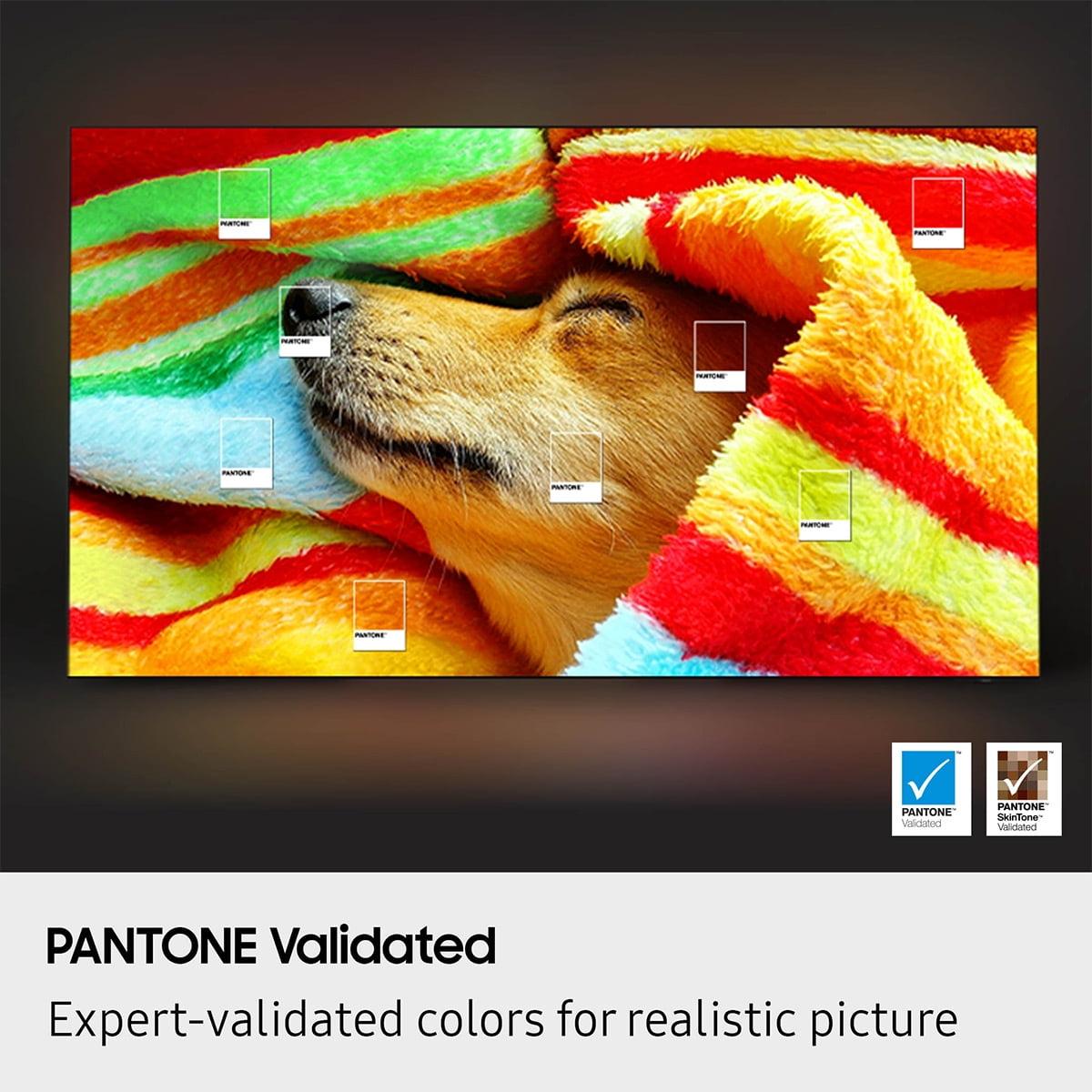
Both TVs deliver excellent color performance but through different approaches. The S85F OLED is Pantone Validated, meaning it can accurately reproduce over 2,140 specific colors and 110 skin tone variations according to industry standards. The QD-OLED technology provides exceptional color volume—the ability to maintain color accuracy across different brightness levels.
The Frame QLED uses Quantum Dot technology to achieve 100% color volume in bright scenes. However, based on our research of expert reviews, the overall color performance is described as "good but not exceptional" for the price range.
For critical viewing like movies and high-end TV shows, the S85F's color accuracy advantage is noticeable. For casual viewing, both TVs deliver satisfying color performance.
Gaming has become a crucial TV specification, and both models offer solid but different gaming experiences.
Input lag measures the delay between pressing a controller button and seeing the action on screen. Response time measures how quickly pixels can change colors, affecting motion blur.
The S85F OLED delivers exceptional gaming performance with sub-10ms input lag and nearly instantaneous pixel response times. OLED pixels can change states almost immediately, eliminating motion blur even in fast-paced games. The result is crystal-clear motion during quick camera pans or fast-moving objects.
The Frame QLED achieves respectable 9.2ms input lag but has slower pixel response times typical of LCD technology. Fast motion appears slightly blurred compared to OLED, though most casual gamers won't find this problematic.
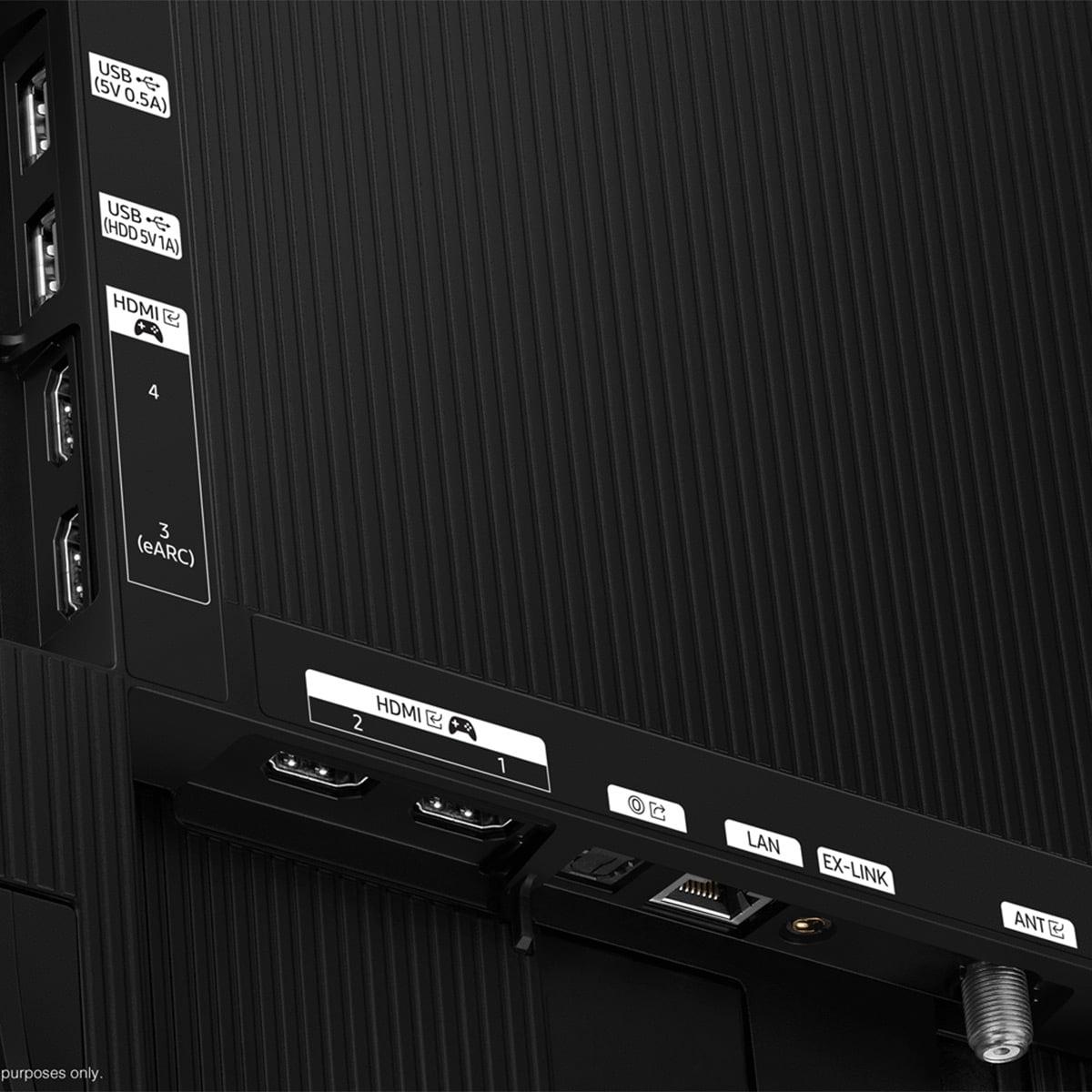
The S85F OLED includes four HDMI 2.1 ports supporting 4K at 120Hz with Variable Refresh Rate (VRR). VRR synchronizes the TV's refresh rate with your gaming console's output, eliminating screen tearing and stuttering. Having four HDMI 2.1 ports means you can connect multiple next-generation consoles and PCs without compromising performance.
The Frame QLED offers HDMI 2.1 support but with limited bandwidth (40Gbps) and fewer high-bandwidth ports. This restriction can impact users with multiple gaming devices or those planning for future console upgrades.
For serious gamers, the S85F's superior connectivity and motion performance provide a noticeable advantage. Casual gamers will find The Frame adequate for current needs.
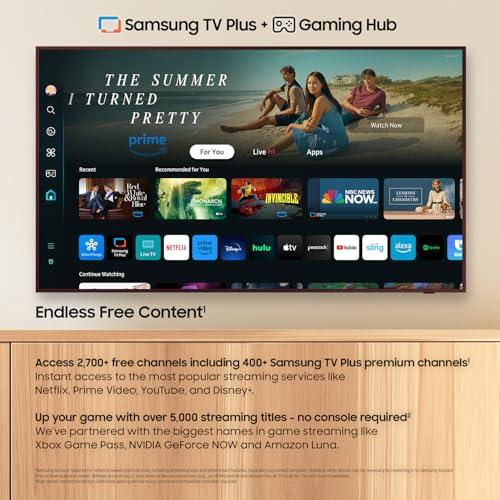
Both TVs run Samsung's Tizen operating system, offering similar smart TV capabilities including voice control through Bixby and Alexa, comprehensive streaming service support, and Samsung's SmartThings ecosystem integration.
The S85F OLED includes more advanced AI features like Color Booster Pro, which uses machine learning to enhance colors scene-by-scene, and more sophisticated adaptive picture processing that optimizes image quality based on content type and viewing conditions.
The Frame QLED focuses its smart features on the art experience, including access to Samsung's Art Store (subscription required) and seamless integration with the SmartThings app for uploading personal artwork.
Both TVs support Apple AirPlay, Multi-View for displaying multiple content sources simultaneously, and comprehensive voice control. The practical difference lies in how each TV's AI processing enhances the viewing experience.
Audio quality often gets overlooked in TV comparisons, but both models offer respectable built-in sound systems.
The S85F OLED features a 20W 2.0 channel system with Dolby Atmos support, Object Tracking Sound Lite (which tries to position audio based on screen action), and Q-Symphony technology for coordinating with compatible Samsung soundbars.
The Frame QLED delivers a more powerful 40W 2.0.2 channel system with True Dolby Atmos including dedicated up-firing drivers for enhanced spatial audio. The additional power and drivers create more immersive sound, particularly noticeable when wall-mounted.
Neither TV replaces a dedicated sound system for serious home theater use, but The Frame's audio advantage helps justify some of its price premium.
At the time of writing, the pricing picture strongly favors the S85F OLED, which typically costs several hundred dollars less than The Frame QLED while delivering superior picture quality and gaming performance.
The Frame asks buyers to pay a significant premium for its aesthetic capabilities and art functionality. When you factor in additional costs for magnetic bezels ($200-300) and Art Store subscriptions, the total ownership cost increases substantially.
The value proposition becomes clear when you consider performance per dollar. The S85F delivers flagship-level picture quality, premium gaming features, and future-proof connectivity at an entry-level OLED price. The Frame delivers unique lifestyle features and solid performance at a premium price.
For dedicated home theater use, the S85F OLED is the clear winner. The perfect blacks, infinite contrast, and accurate colors create the cinematic experience that home theater enthusiasts seek. The dark room performance is exceptional, and the multiple HDMI 2.1 ports support complex AV setups.
The Frame QLED works better in multi-purpose living spaces where the TV needs to look good with ambient lighting and serve dual purposes as both entertainment and decor.
However, both TVs lack Dolby Vision HDR support, instead using Samsung's HDR10+ format. This limitation affects compatibility with some streaming services and Ultra HD Blu-rays that prioritize Dolby Vision, though the impact varies by content library.
After extensive research into expert reviews and user feedback, the choice between these TVs comes down to your primary use case and values.
Choose The Frame QLED 2024 if you:
Choose The S85F OLED 2025 if you:
The Samsung S85F OLED represents better value for most buyers, delivering cutting-edge display technology and comprehensive features at a competitive price. The Samsung Frame QLED serves a specific niche brilliantly but asks you to sacrifice performance for style.
Your decision ultimately depends on whether you view your TV as a piece of technology that should disappear into your decor, or as a performance device that should excel at displaying content. Both approaches have merit—choose the one that matches your lifestyle and priorities.
| Samsung 65" The Frame QLED 4K 2024 TV | Samsung 65" S85F OLED 4K Smart TV (2025) |
|---|---|
| Display Technology - The foundation that determines picture quality | |
| Edge-lit QLED with Quantum Dot (no local dimming) | QD-OLED with self-illuminating pixels |
| Black Levels & Contrast - Critical for movie watching and dark scenes | |
| Mediocre blacks appear gray, decent contrast | Perfect blacks, infinite contrast ratio |
| Peak Brightness - Essential for HDR impact and bright room viewing | |
| Higher sustained brightness, better for bright rooms | ~750 nits peak, limited in very bright environments |
| Anti-Glare Performance - Key for daytime TV watching | |
| Excellent matte anti-glare coating reduces reflections | Good reflection handling but blacks wash out with ambient light |
| Gaming Performance - Input lag and refresh rate for console gaming | |
| 9.2ms input lag, 120Hz, limited HDMI 2.1 ports | Sub-10ms input lag, 120Hz, four HDMI 2.1 ports |
| Motion Handling - Important for sports and action content | |
| Decent response time with some motion blur | Nearly instantaneous pixel response, crystal clear motion |
| Color Accuracy - Matters for realistic skin tones and natural images | |
| Good Quantum Dot color volume | Pantone Validated with 2,140+ accurate colors |
| HDR Support - Affects streaming and 4K disc compatibility | |
| HDR10, HDR10+ (no Dolby Vision) | HDR10, HDR10+ (no Dolby Vision) |
| Art Mode Features - Unique selling point for lifestyle integration | |
| Full Art Mode with customizable bezels, motion sensor | Not available (standard TV appearance) |
| Design Flexibility - How well it integrates into home decor | |
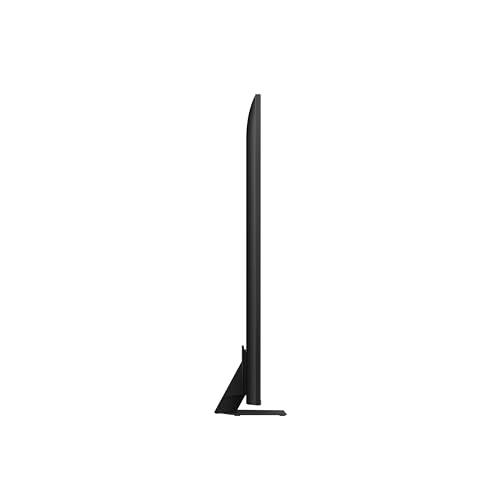
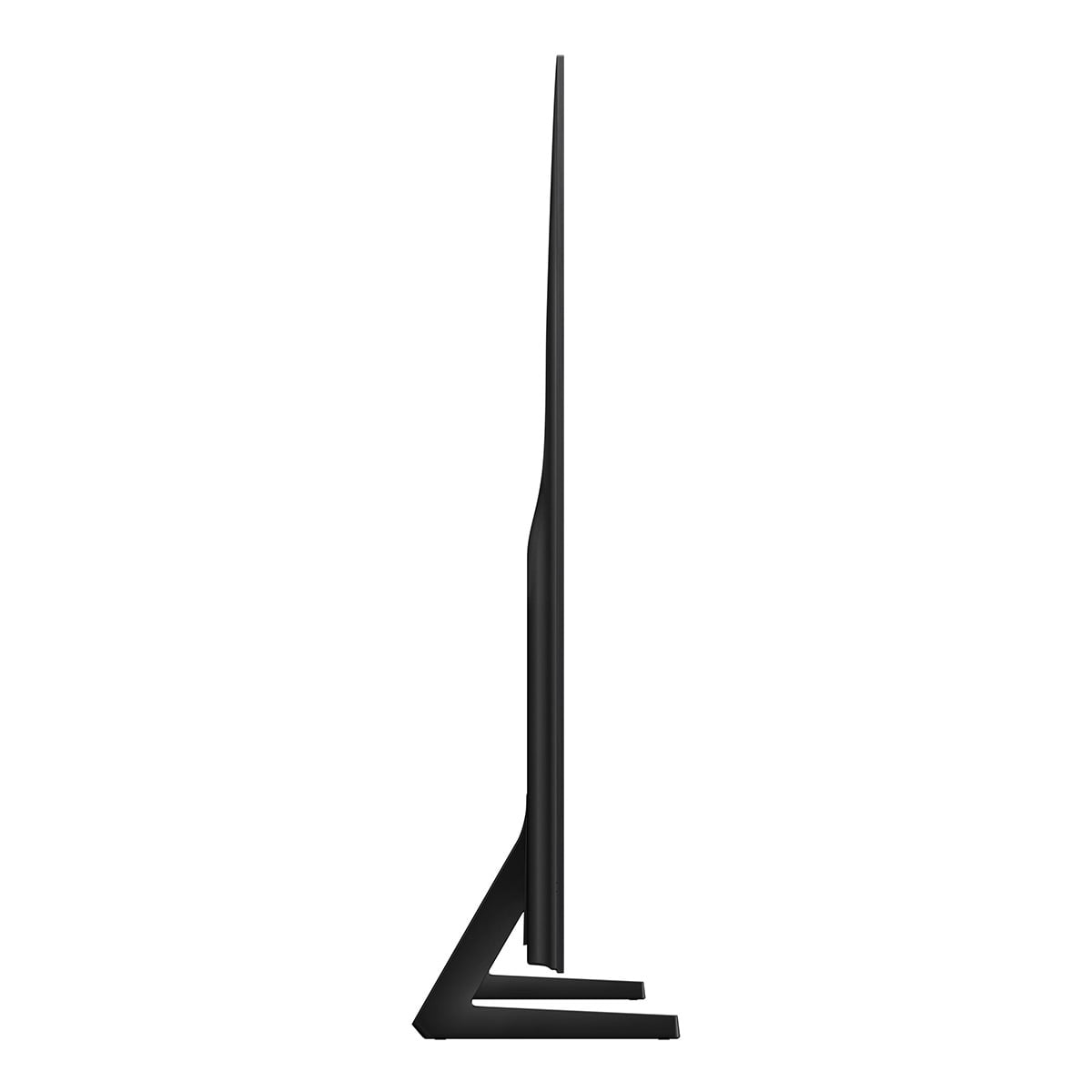
| 1" thin profile, magnetic bezels, One Connect Box | Sleek modern TV design, standard connectivity |
| Audio System - Built-in sound quality | |
| 40W 2.0.2CH with True Dolby Atmos, up-firing speakers | 20W 2.0CH with Dolby Atmos, Object Tracking Sound Lite |
| Smart Features - AI processing and interface capabilities | |
| Tizen OS with Art Store integration | Tizen OS with NQ4 AI Gen2 processor, Color Booster Pro |
| Best Use Case - Who should choose this TV | |
| Bright rooms, lifestyle integration, dual-purpose art display | Dark/controlled lighting, picture quality priority, serious gaming |
The Samsung S85F OLED delivers significantly better picture quality with perfect blacks, infinite contrast, and more accurate colors thanks to its QD-OLED technology. The Samsung Frame QLED offers decent picture quality but can't match OLED's contrast performance, especially in dark scenes. For critical movie watching, the S85F OLED is the clear winner.
QLED TVs like The Frame use LED backlights shining through quantum dot filters, providing good brightness but limited contrast. OLED TVs like the S85F have self-illuminating pixels that can turn completely off, creating perfect blacks and infinite contrast. OLED excels in dark rooms, while QLED performs better in bright environments.
The Samsung Frame QLED handles bright rooms much better with its Anti-Glare Matte Display technology and higher sustained brightness. The Samsung S85F OLED struggles in bright environments where ambient light makes blacks appear gray. If you can't control room lighting, The Frame is the better choice.
Yes, the Samsung Frame QLED features a dedicated Art Mode that displays curated artwork or personal photos with remarkable realism. The matte anti-glare screen, customizable magnetic bezels, and ultra-thin profile create a convincing art gallery effect. The S85F OLED doesn't offer this feature and looks like a traditional TV when off.
The Samsung S85F OLED offers superior gaming performance with four HDMI 2.1 ports, sub-10ms input lag, and nearly instantaneous pixel response times for crystal-clear motion. The Samsung Frame QLED provides decent gaming with 9.2ms input lag but has limited HDMI 2.1 connectivity and slower response times.
Neither the Samsung Frame QLED nor the Samsung S85F OLED supports Dolby Vision HDR. Both TVs support HDR10 and HDR10+ formats. This limitation may affect compatibility with some streaming services and Ultra HD Blu-rays that prioritize Dolby Vision content.
The Samsung S85F OLED typically offers better value, delivering flagship-level picture quality and premium features at a lower price point than The Frame. However, The Frame QLED provides unique lifestyle features that justify its premium for buyers who prioritize aesthetics and art functionality.
The Samsung Frame QLED features a more powerful 40W 2.0.2 channel system with True Dolby Atmos and up-firing speakers. The Samsung S85F OLED has a 20W 2.0 channel system with Dolby Atmos support. Neither replaces a dedicated sound system, but The Frame has the audio advantage.
The Samsung S85F OLED excels in home theater applications with perfect blacks, infinite contrast, and accurate colors that create a true cinematic experience in darkened rooms. The Samsung Frame QLED works better in multi-purpose living spaces where ambient lighting control isn't possible.
The Samsung Frame QLED includes a Slim-Fit Wall Mount and One Connect Box for an ultra-clean installation with just one cable to the TV. The Samsung S85F OLED can be wall mounted but requires a separate mount purchase and standard cable management. The Frame is specifically designed for seamless wall integration.
Both the Samsung Frame QLED and Samsung S85F OLED run Samsung's Tizen operating system with voice assistants, streaming apps, and SmartThings integration. The S85F includes more advanced AI processing features like Color Booster Pro, while The Frame focuses on art-related smart features and Art Store integration.
There's no perfect middle ground between these TVs since they serve different priorities. Choose the Samsung S85F OLED if picture quality and performance matter most, or the Samsung Frame QLED if you value aesthetics and bright room viewing. The S85F OLED offers better overall value for most buyers focused on entertainment performance.
We've done our best to create useful and informative comparisons to help you decide what product to buy. Our research uses advanced automated methods to create this comparison and perfection is not possible - please contact us for corrections or questions. These are the sites we've researched in the creation of this article: tomsguide.com - rtings.com - rtings.com - youtube.com - bestbuy.com - techlicious.com - youtube.com - smalllilystudio.com - theeverymom.com - livingetc.com - pcrichard.com - image-us.samsung.com - samsung.com - images.samsung.com - samsung.com - buydig.com - tvsbook.com - bestbuy.com - samsung.com - samsung.com - flatpanelshd.com - rtings.com - samsung.com - youtube.com - rtings.com - youtube.com - samsung.com - bestbuy.com - avsforum.com - avsforum.com - samsung.com - displayspecifications.com - videoandaudiocenter.com - bestbuy.com - flatpanelshd.com - myallsouth.com - samsung.com - richstv.com - samsung.com - heartlandappliance.com

Privacy Policy
Terms and Conditions - Affiliate Policy
Home Security
© Copyright 2008-2026.
11816 Inwood Rd #1211, Dallas, TX 75244