

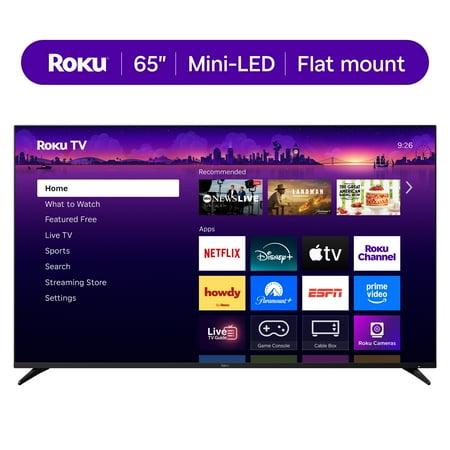
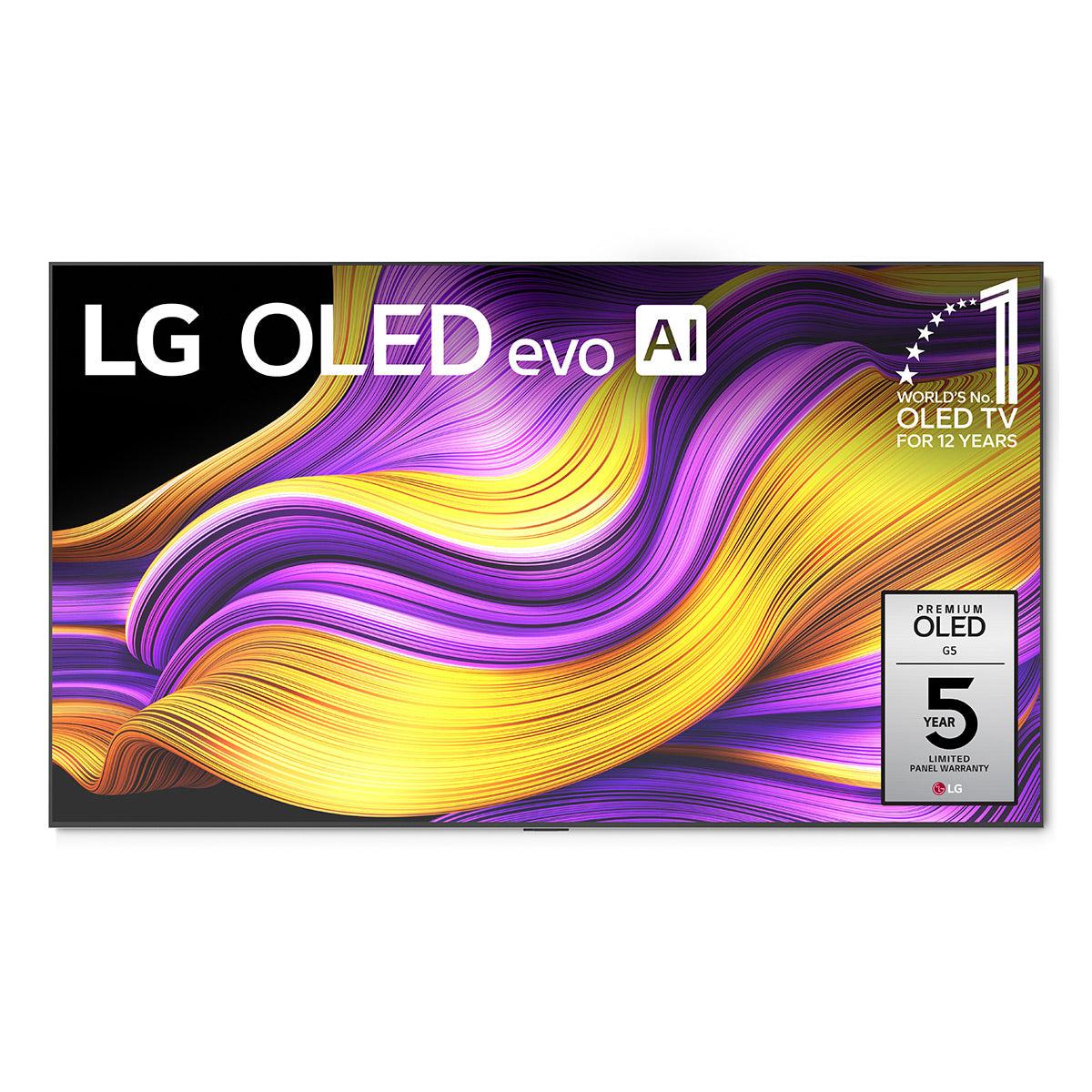
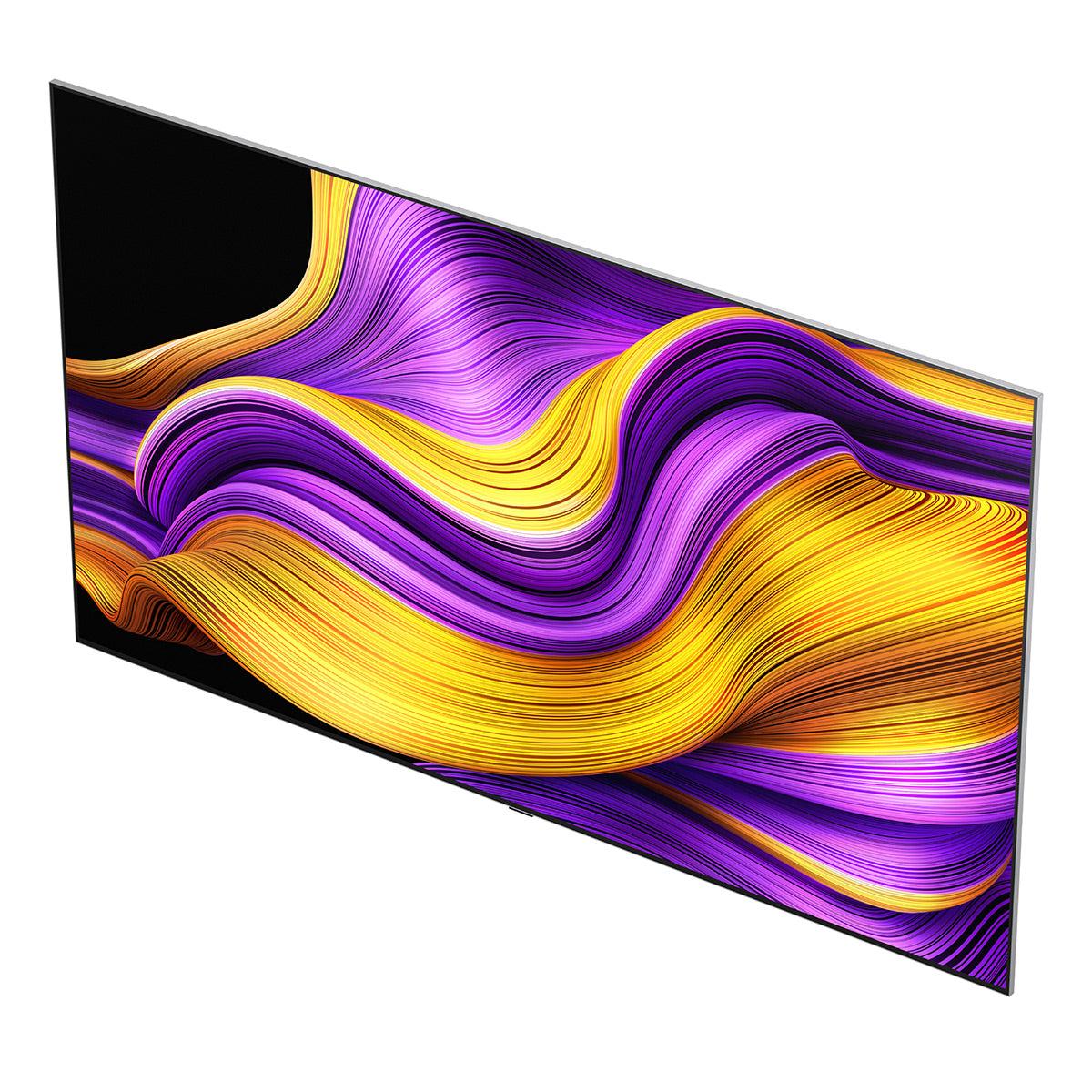
Shopping for a premium 65-inch smart TV in 2025 means navigating two fundamentally different display technologies, each with distinct advantages. The Roku 65" Pro Series 2025 represents the pinnacle of Mini-LED QLED technology at an accessible price point, while the LG OLED evo G5 showcases revolutionary OLED innovations that push brightness boundaries while maintaining perfect blacks.
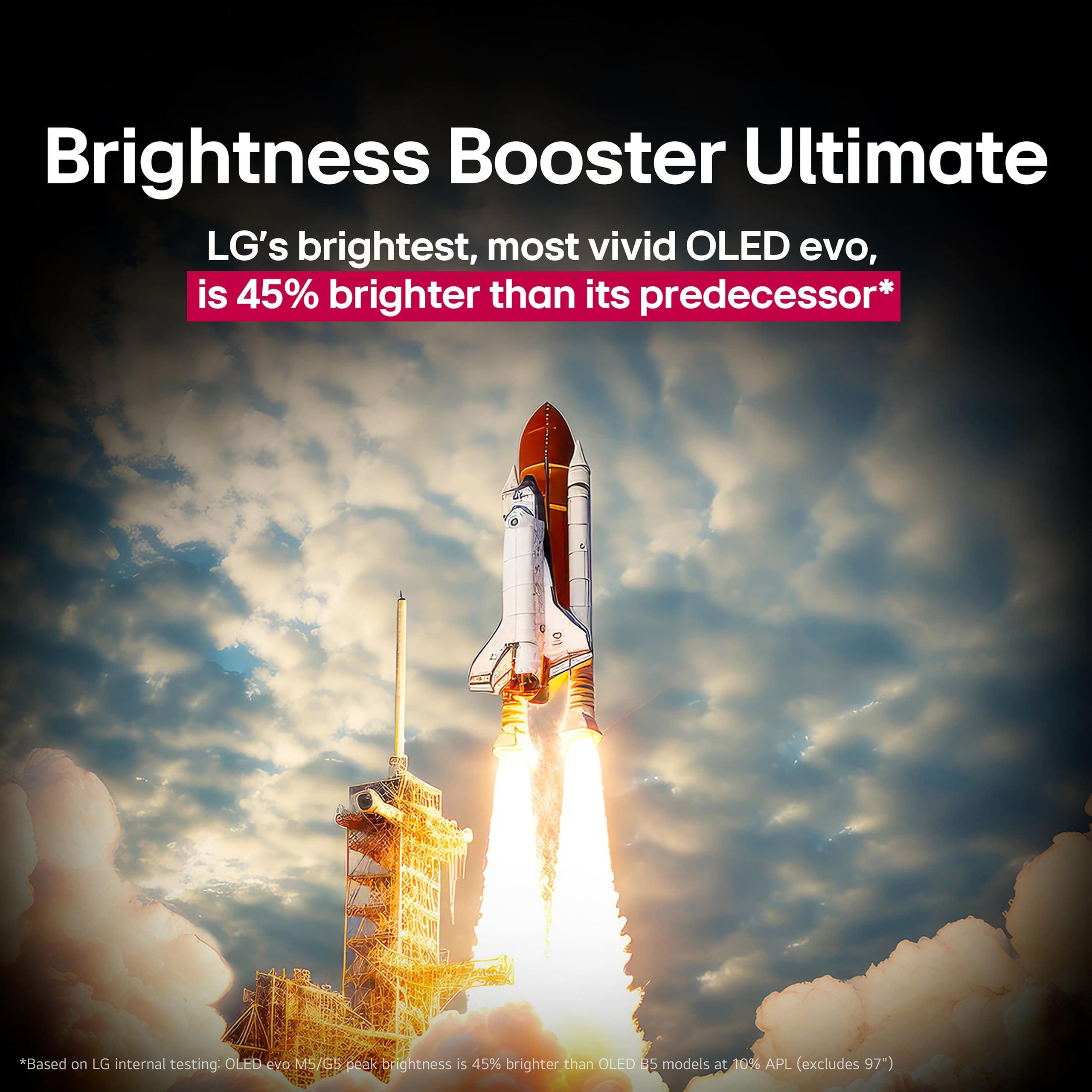
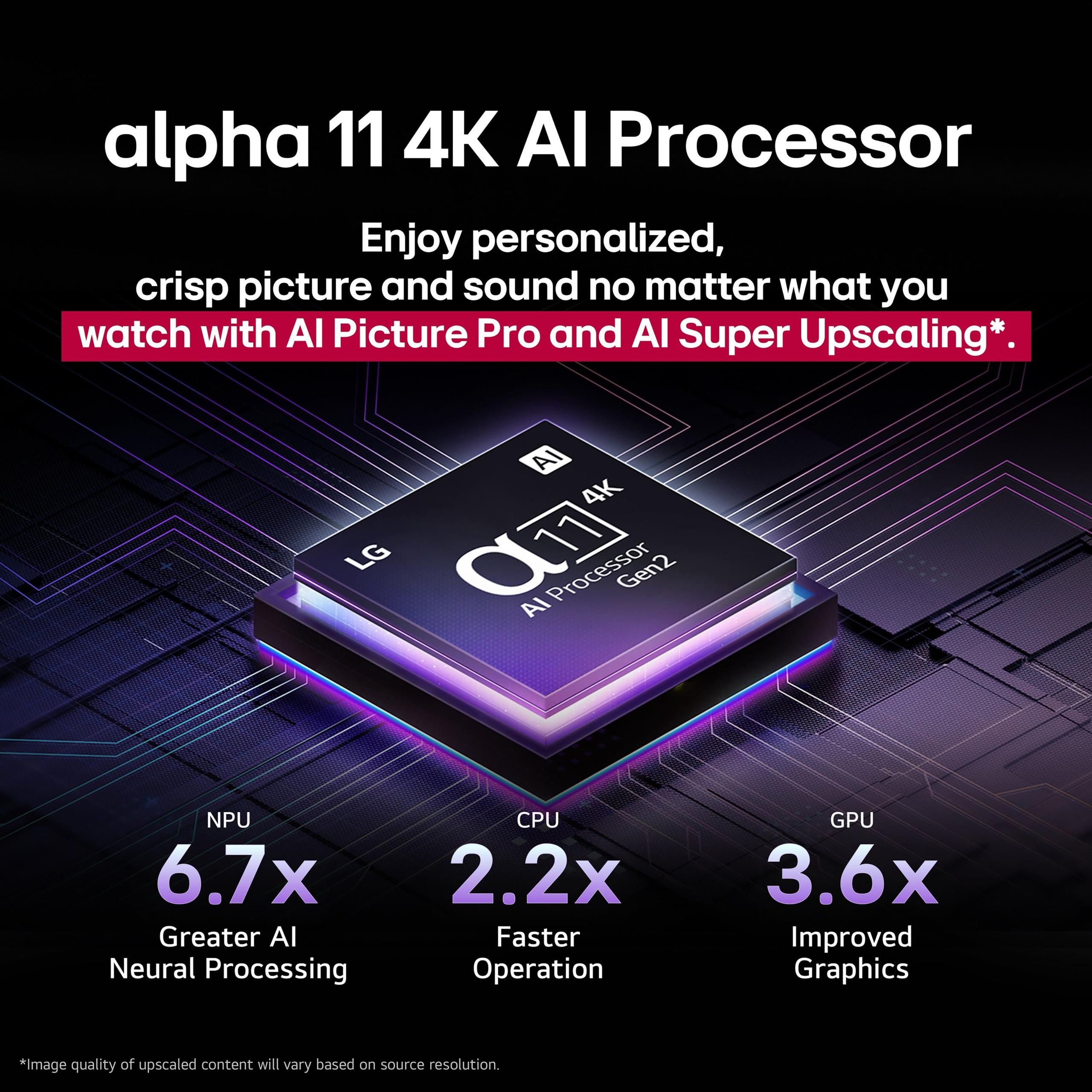
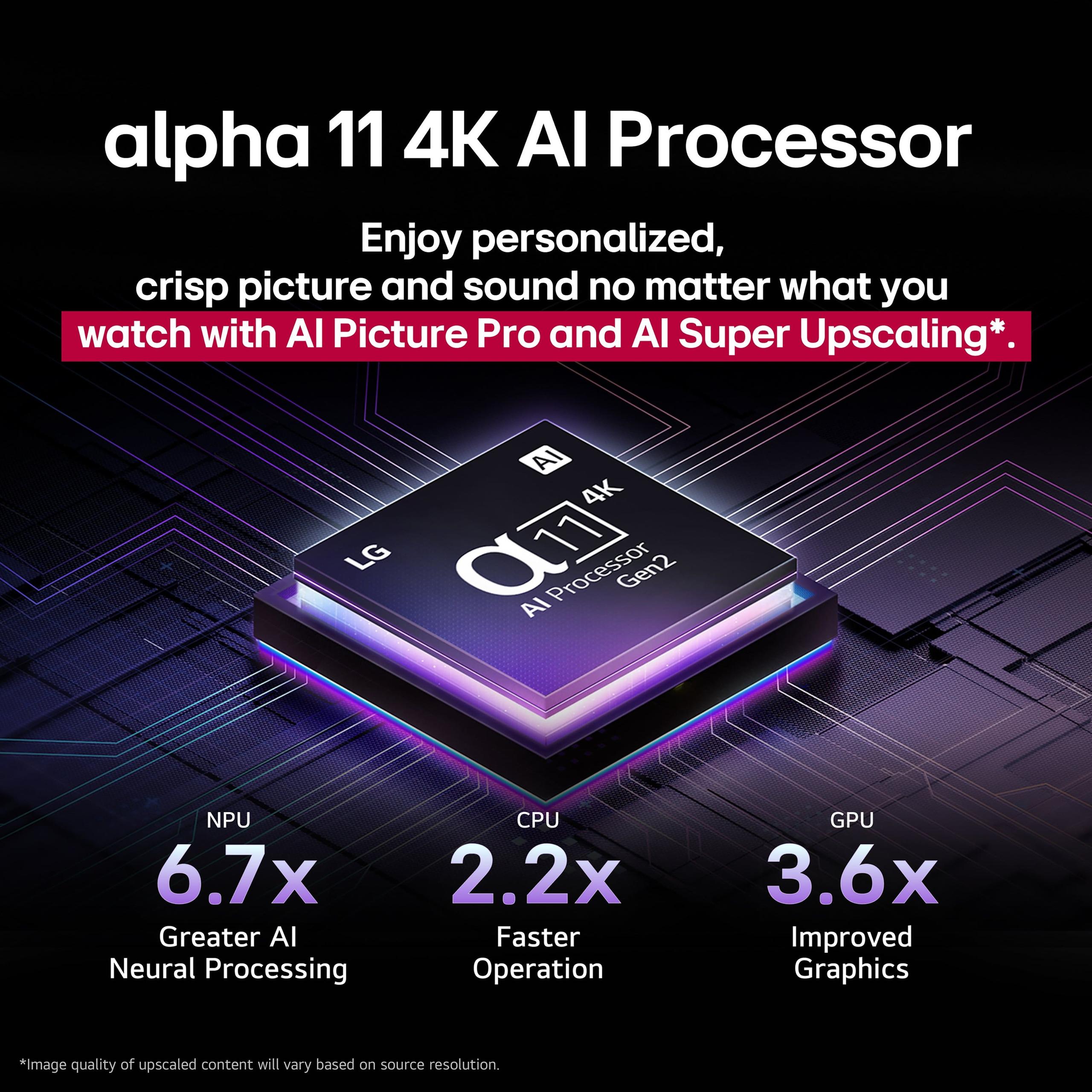
Both TVs launched in 2025 with significant technological improvements over their predecessors. The Roku Pro Series 2025 introduced enhanced Mini-LED backlighting with 75% better dynamic contrast and AI-powered Smart Picture Max processing. Meanwhile, the LG G5 debuted groundbreaking 4-stack RGB Tandem OLED technology—a complete departure from LG's traditional WOLED panels—delivering up to 45% brighter images than previous OLED generations.
Understanding these technologies helps explain why choosing between them depends heavily on your viewing environment, priorities, and budget. At the time of writing, the Roku Pro Series typically costs significantly less than premium OLED models like the LG G5, making value considerations crucial to the decision.
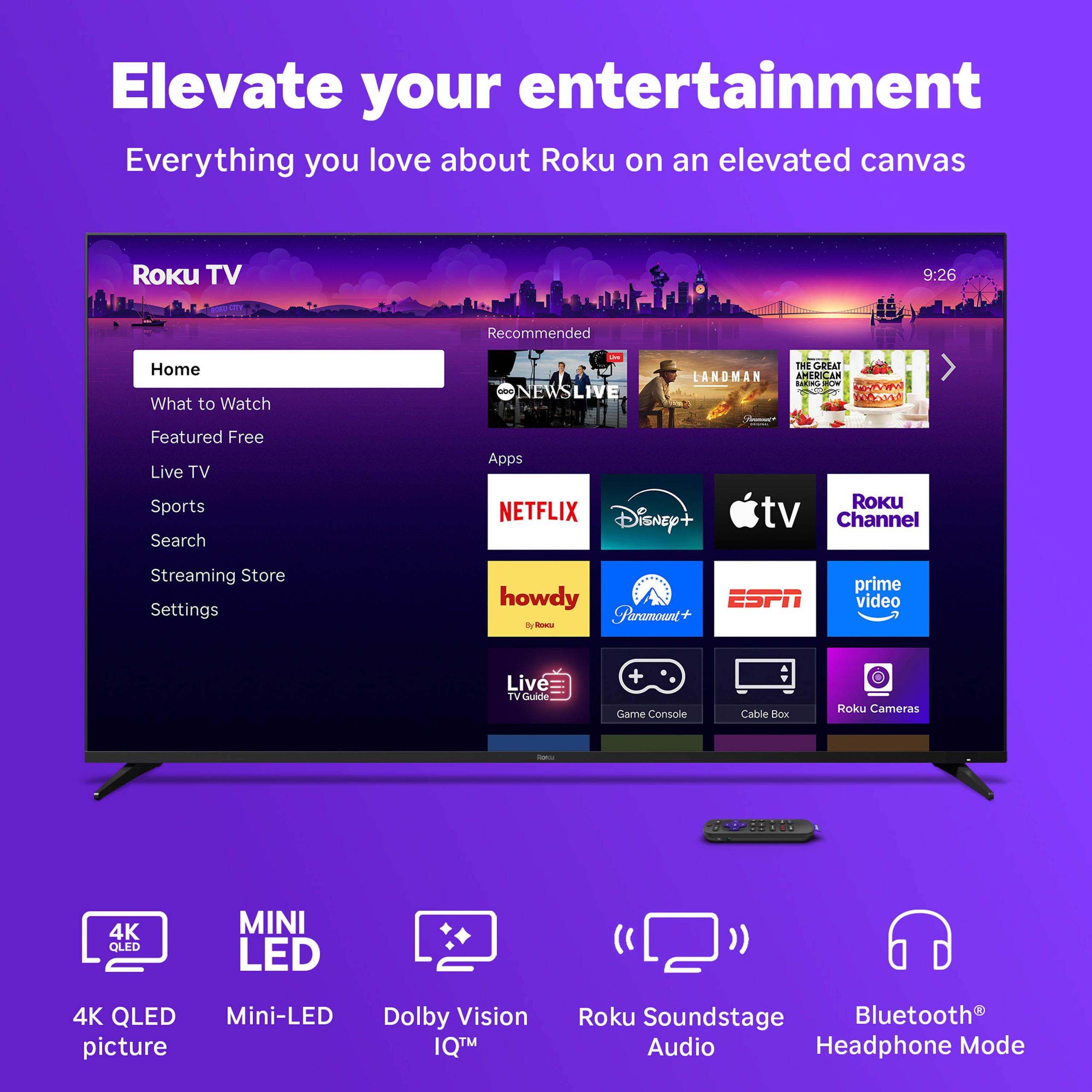
The fundamental distinction between these TVs lies in how they create light and color. The Roku Pro Series 2025 uses Mini-LED backlighting behind a QLED (Quantum Dot Light Emitting Diode) panel. Mini-LEDs are incredibly small backlight elements—thousands of them work together with local dimming zones to control brightness precisely across different screen areas. This creates bright, vibrant images with impressive contrast, though some light can still bleed around high-contrast objects (called "blooming" or "haloing").
The LG OLED evo G5 takes a completely different approach. OLED stands for Organic Light Emitting Diode, where each of the 8.3 million pixels generates its own light. When a pixel needs to be black, it turns completely off—creating perfect, infinite contrast. The G5's new 4-stack RGB Tandem panel layers four OLED stacks together, dramatically boosting brightness while maintaining OLED's core advantages.
These different approaches create distinct viewing experiences. Mini-LED excels in bright rooms where ambient light can wash out darker displays, while OLED traditionally performed best in controlled lighting where its perfect blacks could shine. However, 2025's innovations blur these lines significantly.
Brightness capability fundamentally shapes how a TV performs in your actual living space. The Roku Pro Series 2025 delivers exceptional peak brightness through its Mini-LED array, easily overcoming indirect glare and maintaining vibrant colors even with windows nearby. Our research shows it consistently outperforms many competing Mini-LED TVs in brightness retention, making football games and bright HDR content truly pop.
The LG G5's breakthrough lies in achieving serious brightness competition with Mini-LED while maintaining OLED advantages. Peak HDR brightness reaches 2,300 nits in Filmmaker Mode—a massive improvement over previous OLEDs that typically struggled around 800-1000 nits. This makes the G5 the first OLED genuinely viable for bright room viewing, though the Roku still maintains an edge in extremely bright environments.
HDR (High Dynamic Range) performance depends heavily on this brightness capability. HDR content maps brightness information assuming displays can hit specific peak levels. Both TVs support Dolby Vision, HDR10+, and other formats, but the Roku's consistent brightness delivery often translates to more impactful HDR in challenging lighting conditions.
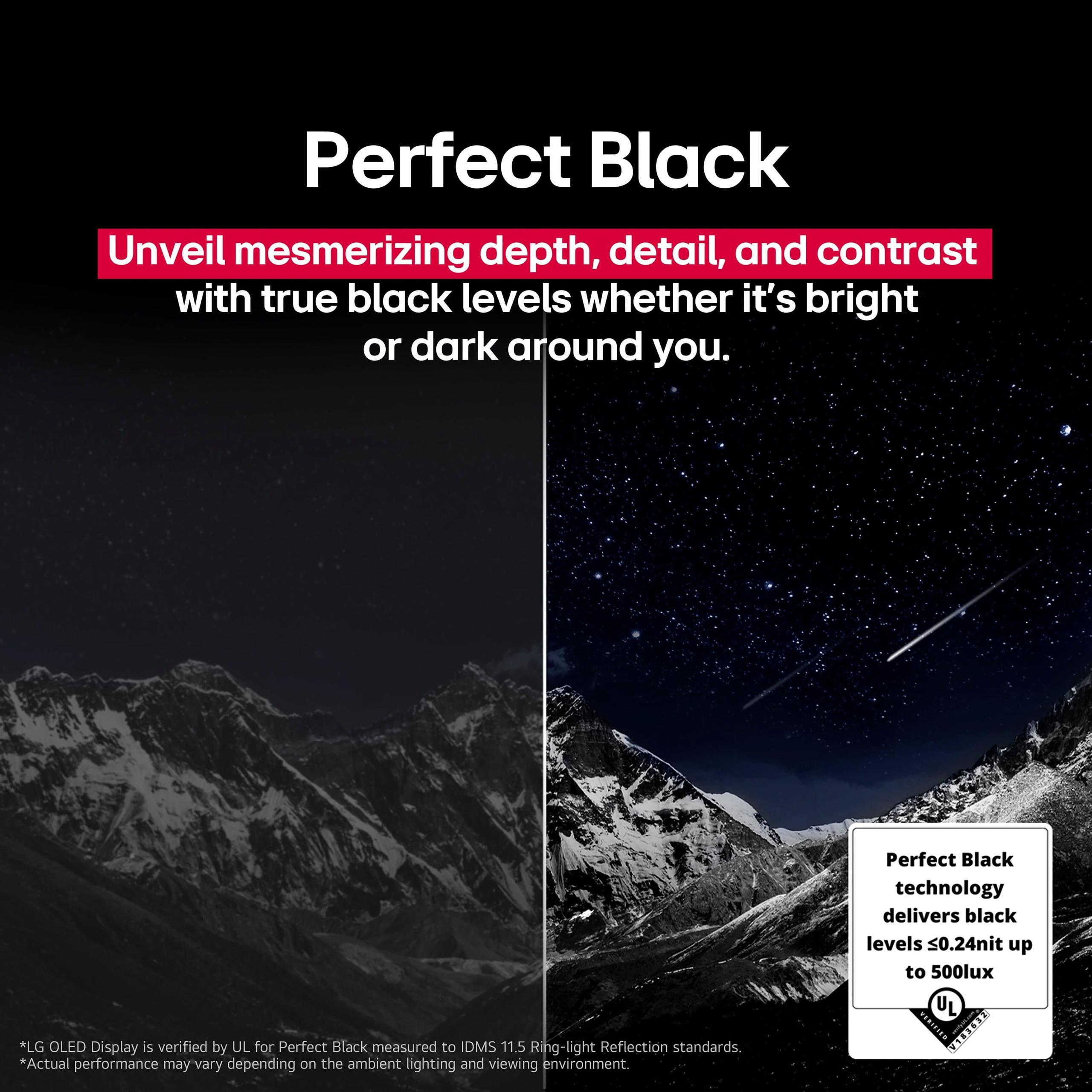
Here's where the technologies diverge most dramatically. The LG G5 achieves perfect, infinite contrast through individually controlled pixels. When displaying a starfield, black areas are completely black—not dark gray—creating a three-dimensional image quality that's immediately noticeable. This perfect black performance makes the G5 exceptional for movies, especially in darker scenes where subtle shadow details become clearly visible.
The Roku Pro Series 2025 can't match perfect blacks, but its Mini-LED local dimming creates impressive contrast with minimal blooming. Our evaluation of user reviews suggests the blooming control significantly improved over previous generations, keeping haloing around subtitles and bright objects to acceptable levels. For most content and viewing situations, the contrast performance satisfies without the premium OLED cost.
Both TVs excel in color performance but through different strengths. The Roku's QLED quantum dot technology produces exceptionally vibrant, saturated colors that remain punchy even in bright rooms. Quantum dots are microscopic semiconductors that emit specific colors when hit by light, creating more pure and saturated colors than traditional LED backlights. This makes animated movies, sports, and HDR content visually striking.
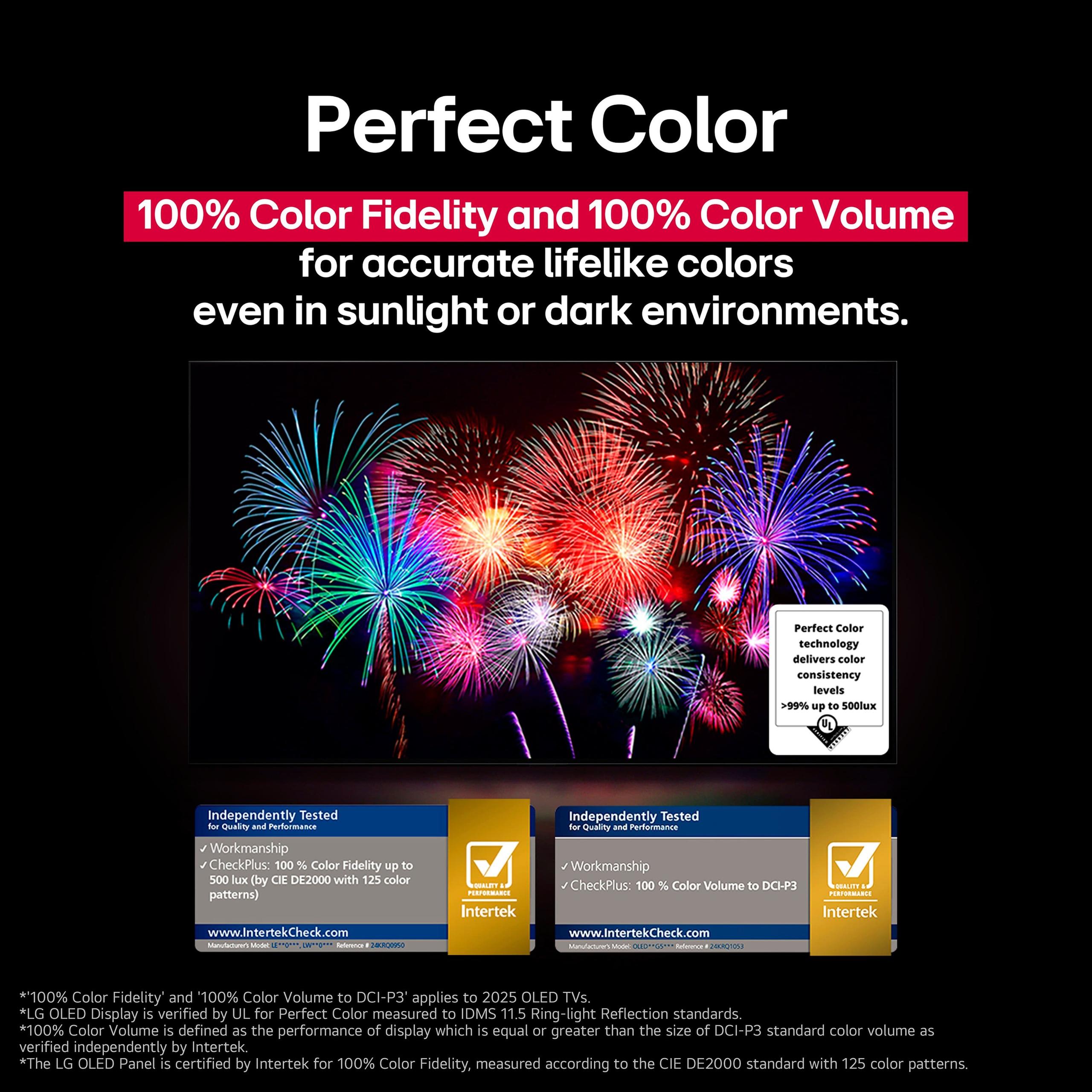
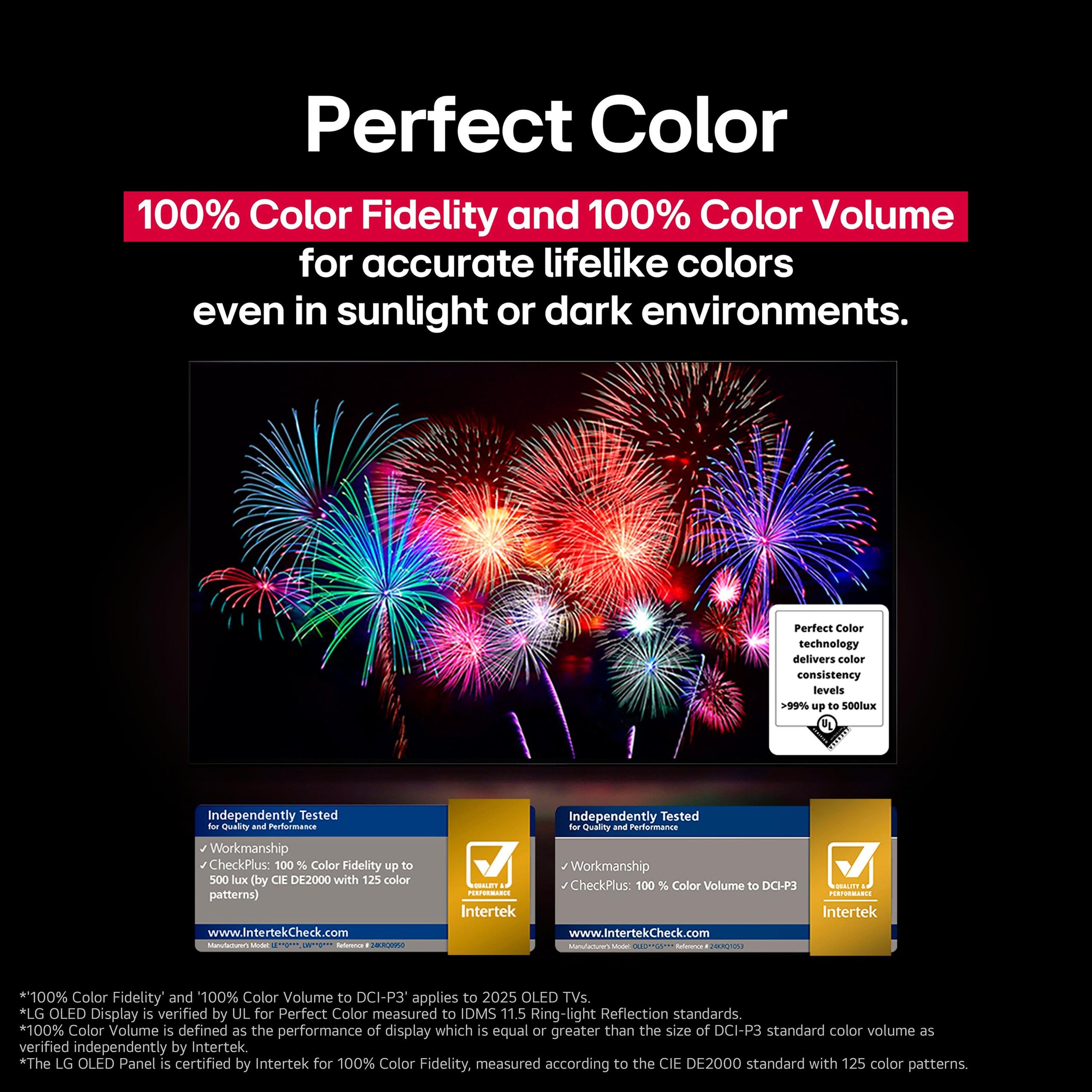
The LG G5's new RGB Tandem panel structure improves color purity compared to previous OLED generations, particularly for blues, greens, and reds. While OLED traditionally offered superior color accuracy, the G5's enhanced panel delivers both accuracy and improved saturation. Professional calibration reveals color gamut coverage matching or exceeding high-end Mini-LED competitors while maintaining OLED's renowned naturalistic color reproduction.
Gaming capabilities have become crucial differentiators in premium TVs as consoles and PCs demand higher refresh rates and lower latency. Both TVs target serious gamers but with different strengths.
The Roku Pro Series 2025 provides solid gaming fundamentals with 120Hz refresh rate, two HDMI 2.1 ports supporting 4K@120Hz, and gaming features like AMD FreeSync Premium Pro, Auto Low Latency Mode (ALLM), and Variable Refresh Rate (VRR). Input lag drops to 5.2ms at 120Hz—excellent for responsive gameplay. However, average pixel response times can create some motion blur in extremely fast-paced games.
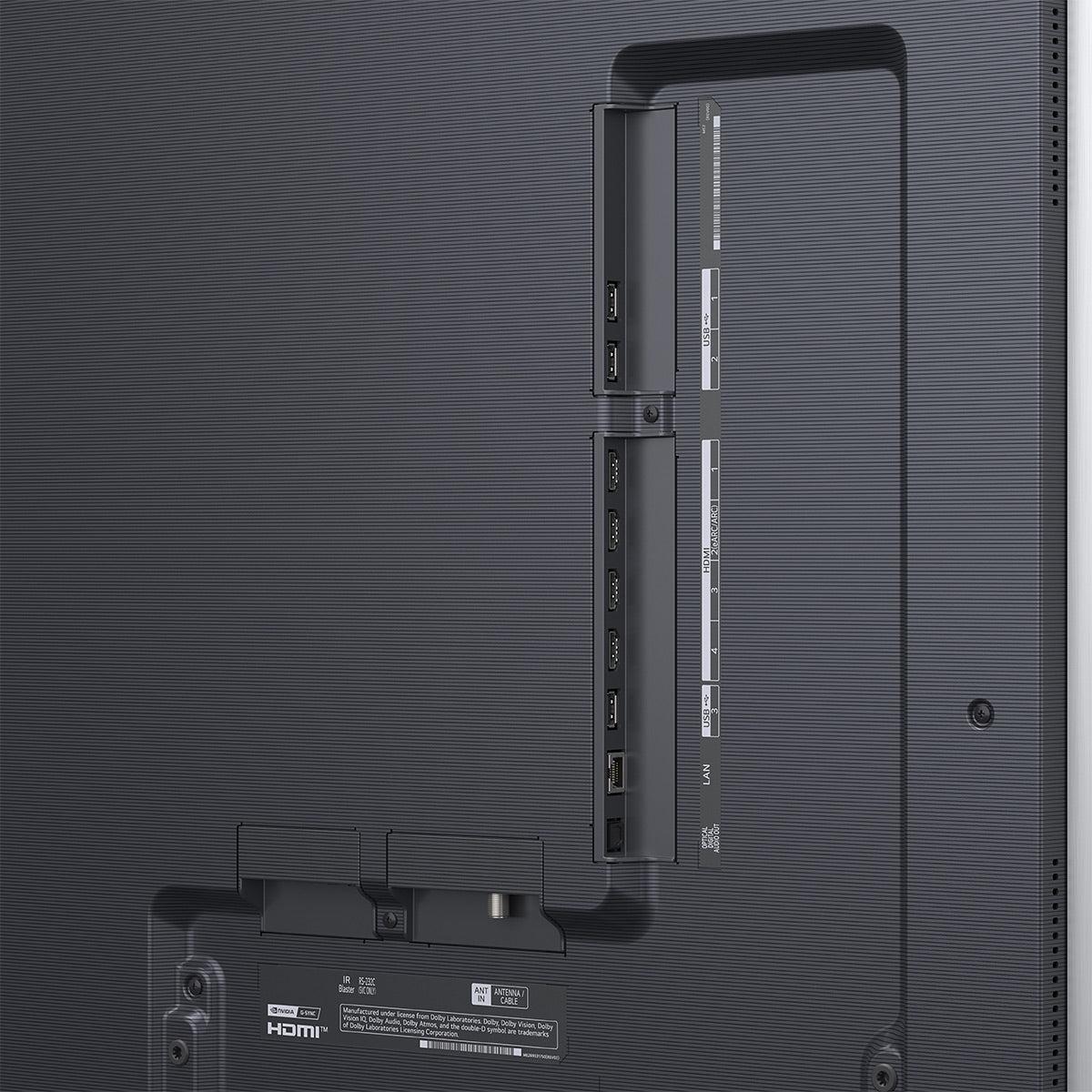
The LG G5 establishes itself as a gaming powerhouse with 4K@165Hz support across all four HDMI 2.1 ports—making it particularly attractive for high-end PC gaming where frame rates can exceed 120fps. The 0.1ms pixel response time eliminates motion blur entirely, while G-SYNC and FreeSync Premium compatibility ensures smooth, tear-free gaming. The instant pixel response of OLED technology provides unmatched motion clarity for competitive gaming.
For console gaming (PlayStation 5, Xbox Series X), both TVs handle 4K@120Hz gaming excellently. The LG G5's additional features benefit PC gamers with powerful graphics cards, while the Roku provides excellent gaming performance for typical console use at a more accessible price.
The smart TV experience shapes daily usability more than many buyers realize. These platforms handle everything from app launches to content recommendations and voice control.
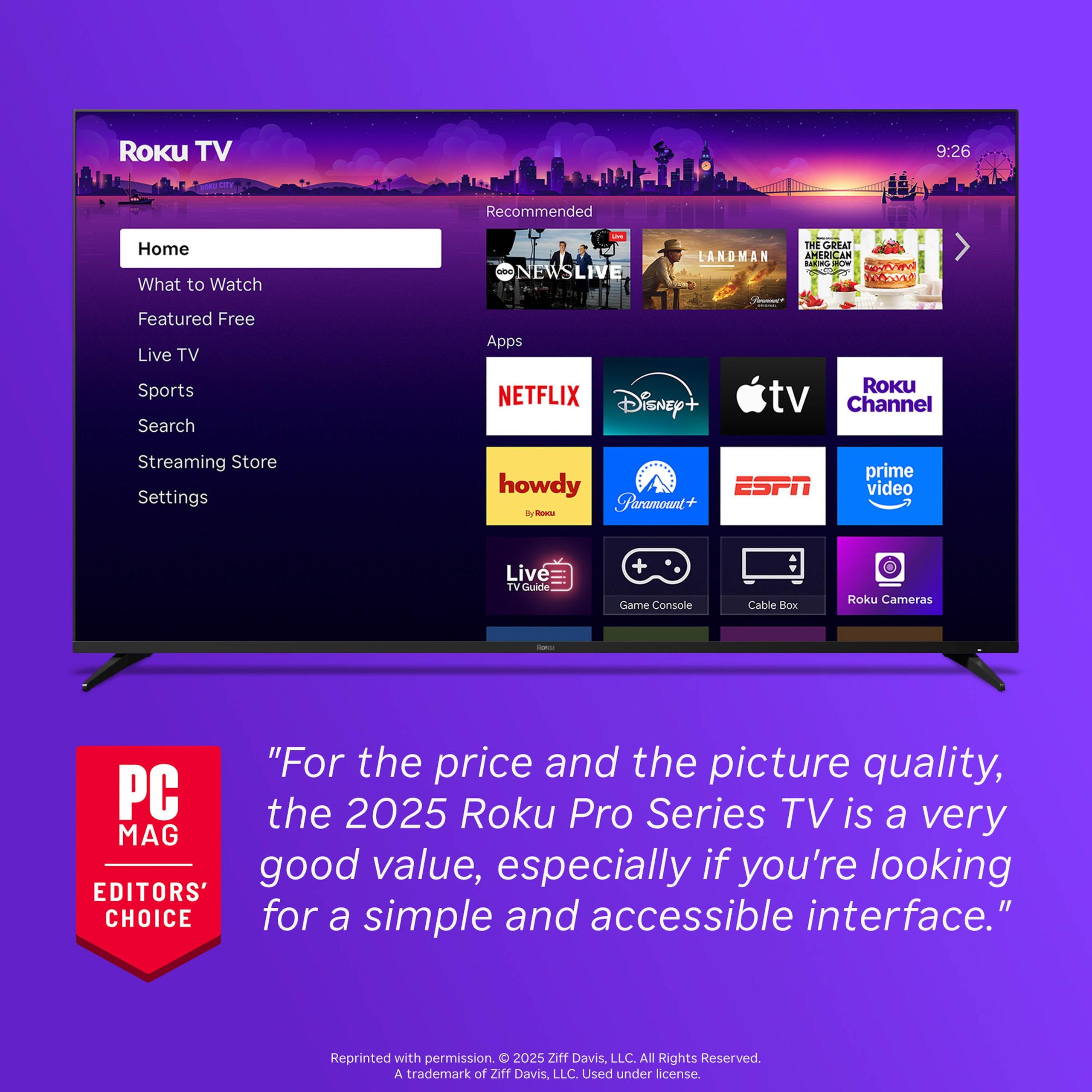
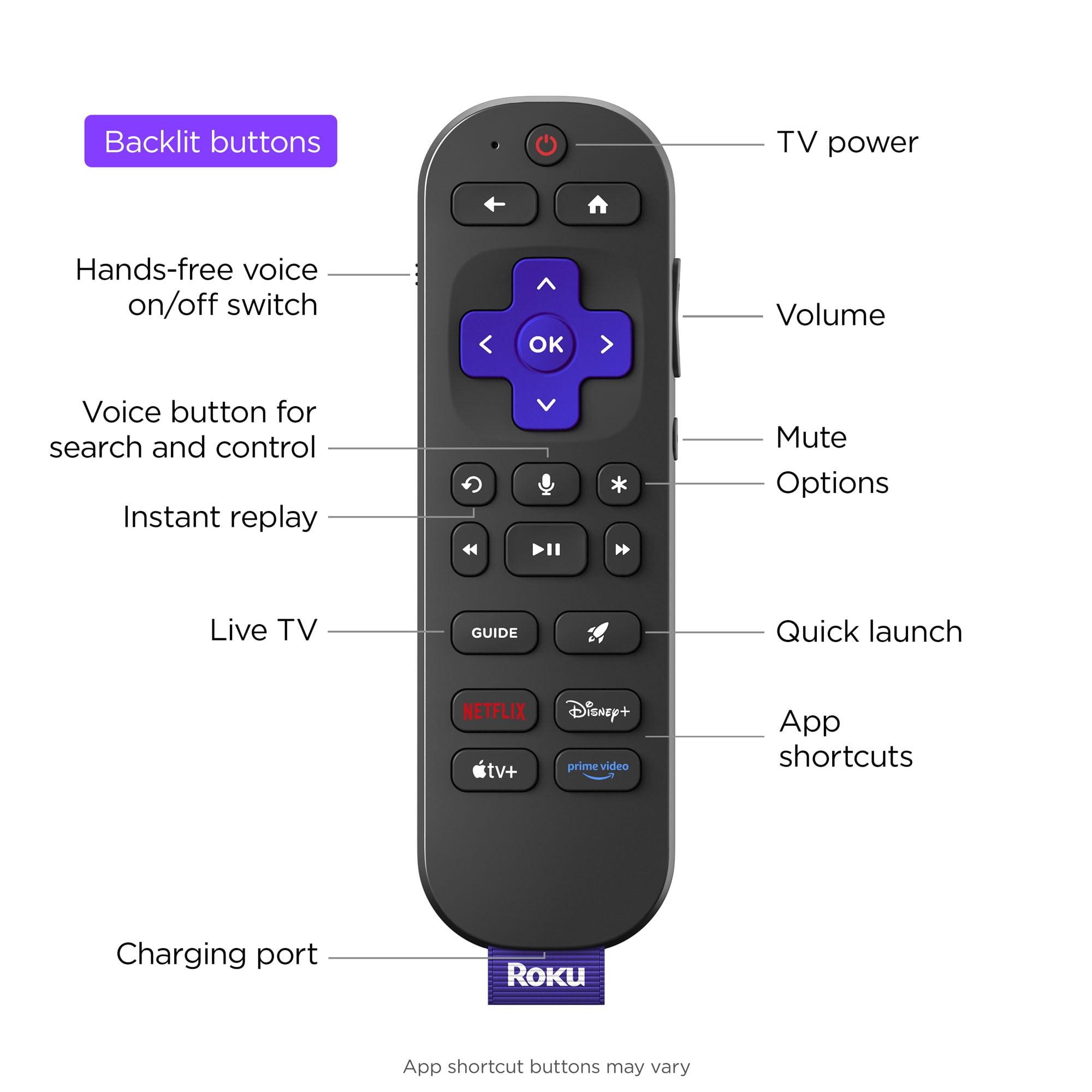
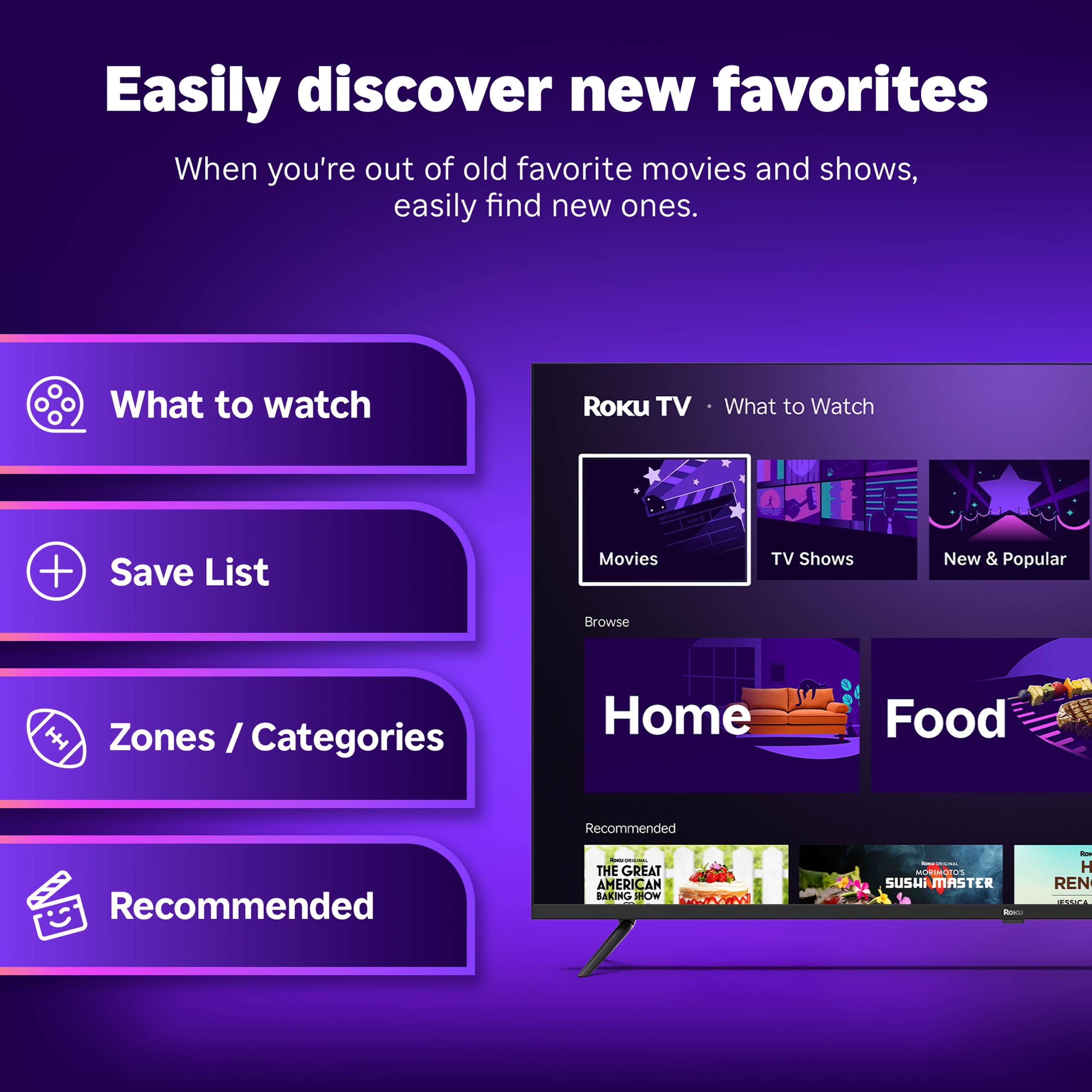
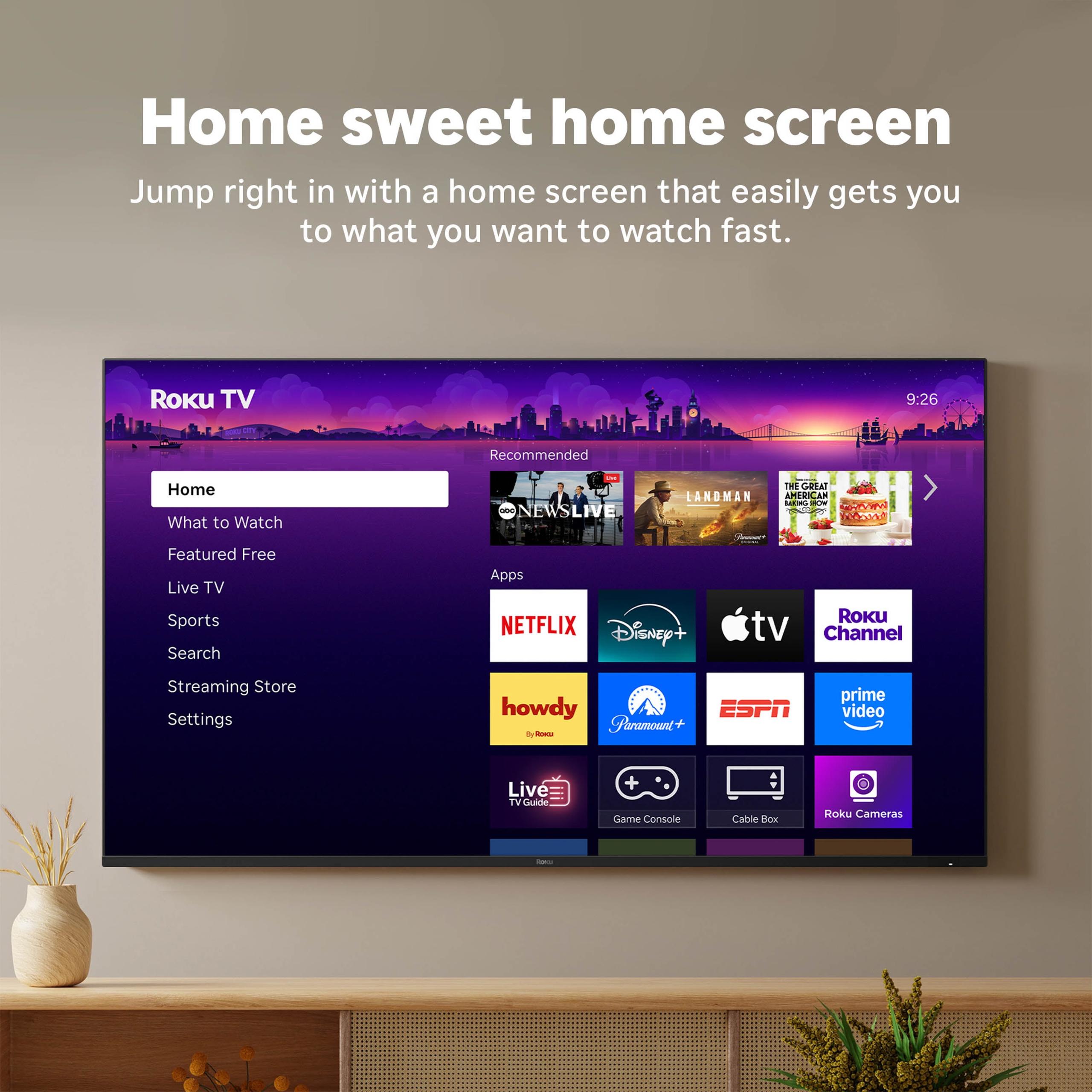
The Roku TV OS prioritizes simplicity and speed. Power-on takes under a second—significantly faster than many smart TV platforms. The unified home screen seamlessly integrates streaming services, live TV, and apps without favoring particular services. This neutrality means equal treatment for Netflix, Disney+, Apple TV+, and hundreds of other services. The platform's strength lies in content discovery and fast, reliable performance rather than advanced features.
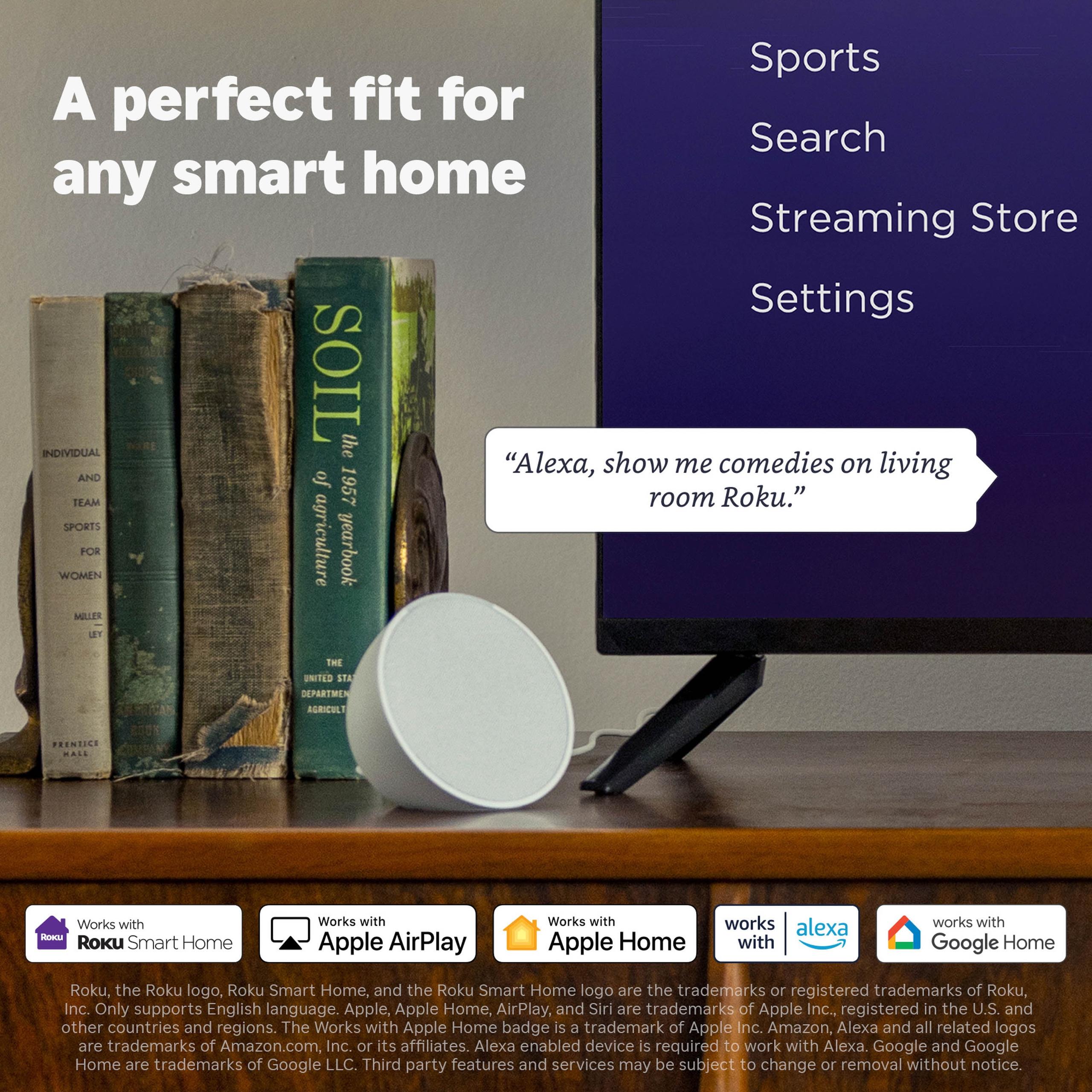
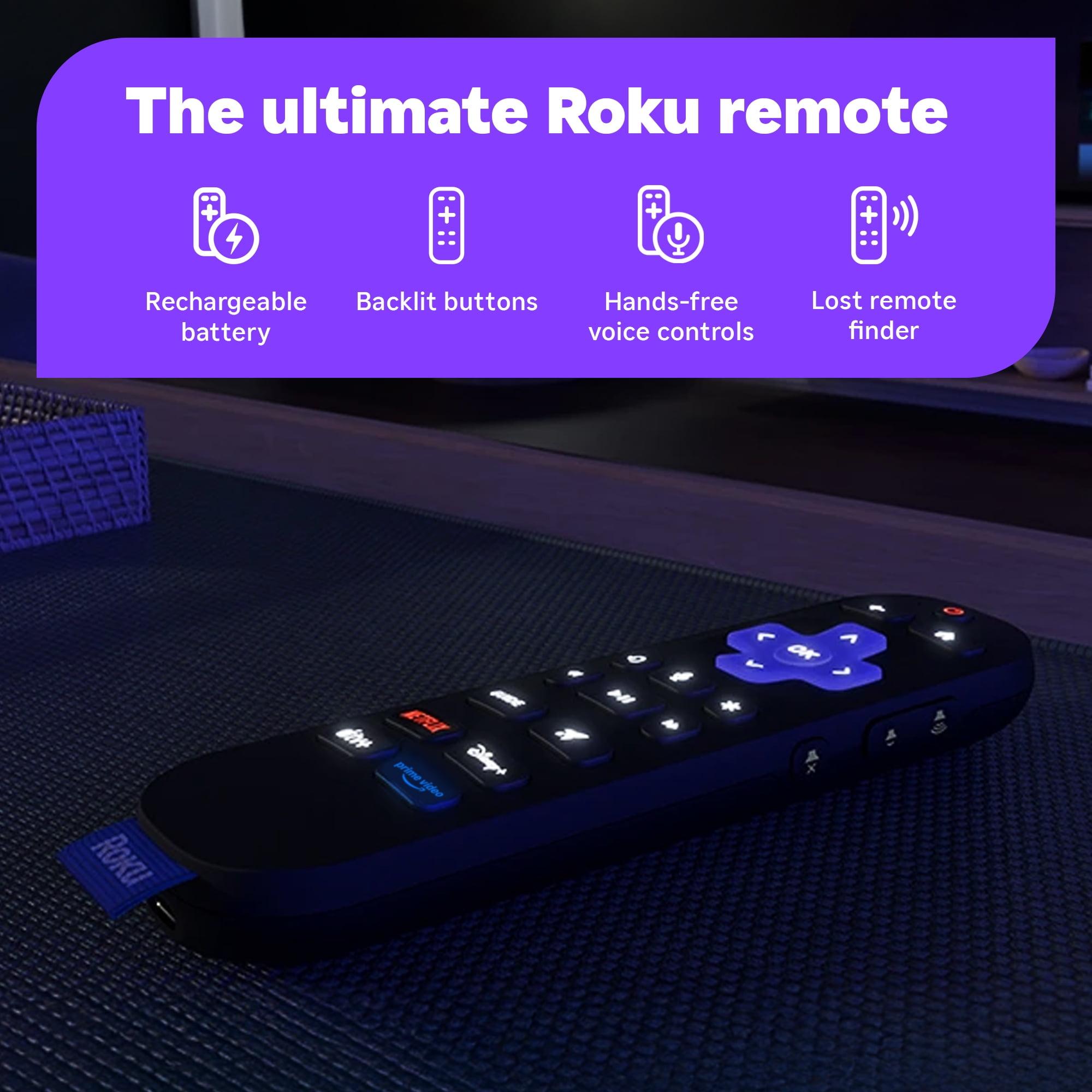
The LG's webOS 25 offers more sophisticated capabilities with AI-powered personalization, Quick Cards for organizing favorite apps, and advanced smart home integration. The Magic Remote with AI button provides intuitive voice control and motion navigation. However, this sophistication comes with occasional complexity—more features mean more potential confusion for users wanting simple operation.
Both platforms provide comprehensive streaming app support, but Roku's reputation for platform neutrality and consistent updates gives it an edge for long-term reliability. The LG G5 counters with webOS Renew program guaranteeing five years of software updates—crucial for premium TV longevity.
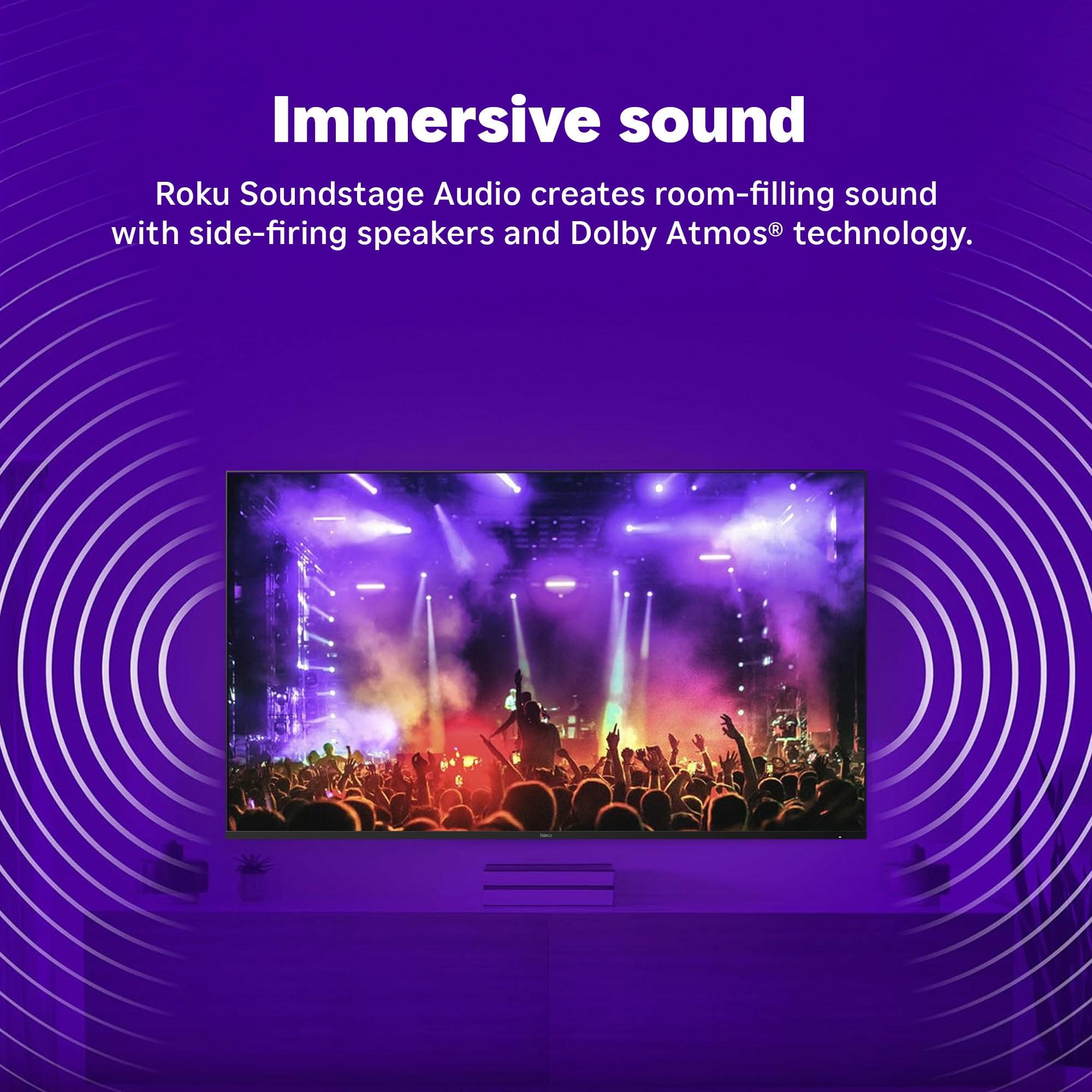
Premium TVs increasingly focus on built-in audio quality as many buyers prefer avoiding additional soundbar purchases. The Roku Pro Series 2025 particularly excels here with its updated Sound Stage Audio featuring side-firing Dolby Atmos speakers and refined tuning. User reviews consistently praise the audio as exceptional for standalone TV sound, with sufficient bass to fill rooms without immediate soundbar necessity.
The LG G5's slim profile limits internal speaker space, resulting in good but not exceptional audio. Dolby Atmos support provides spatial audio benefits, and AI Sound Pro mode optimizes dialogue clarity, but bass remains limited—typical for ultra-thin OLED designs. Most G5 buyers eventually pair the TV with dedicated audio systems for optimal experience.
For buyers prioritizing built-in audio quality, the Roku provides significantly better standalone sound. However, both TVs work excellently with external soundbars and audio systems for dedicated home theater setups.
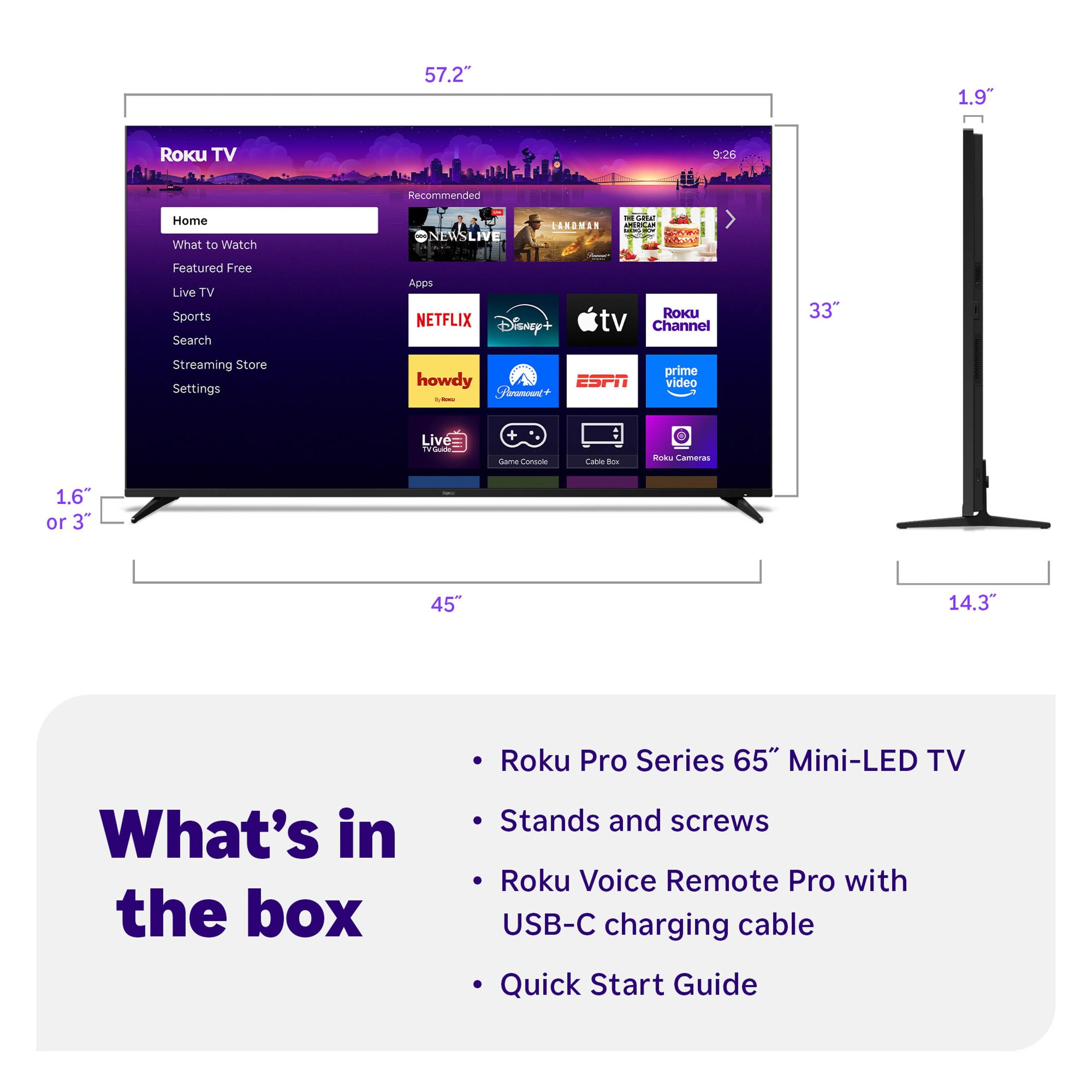
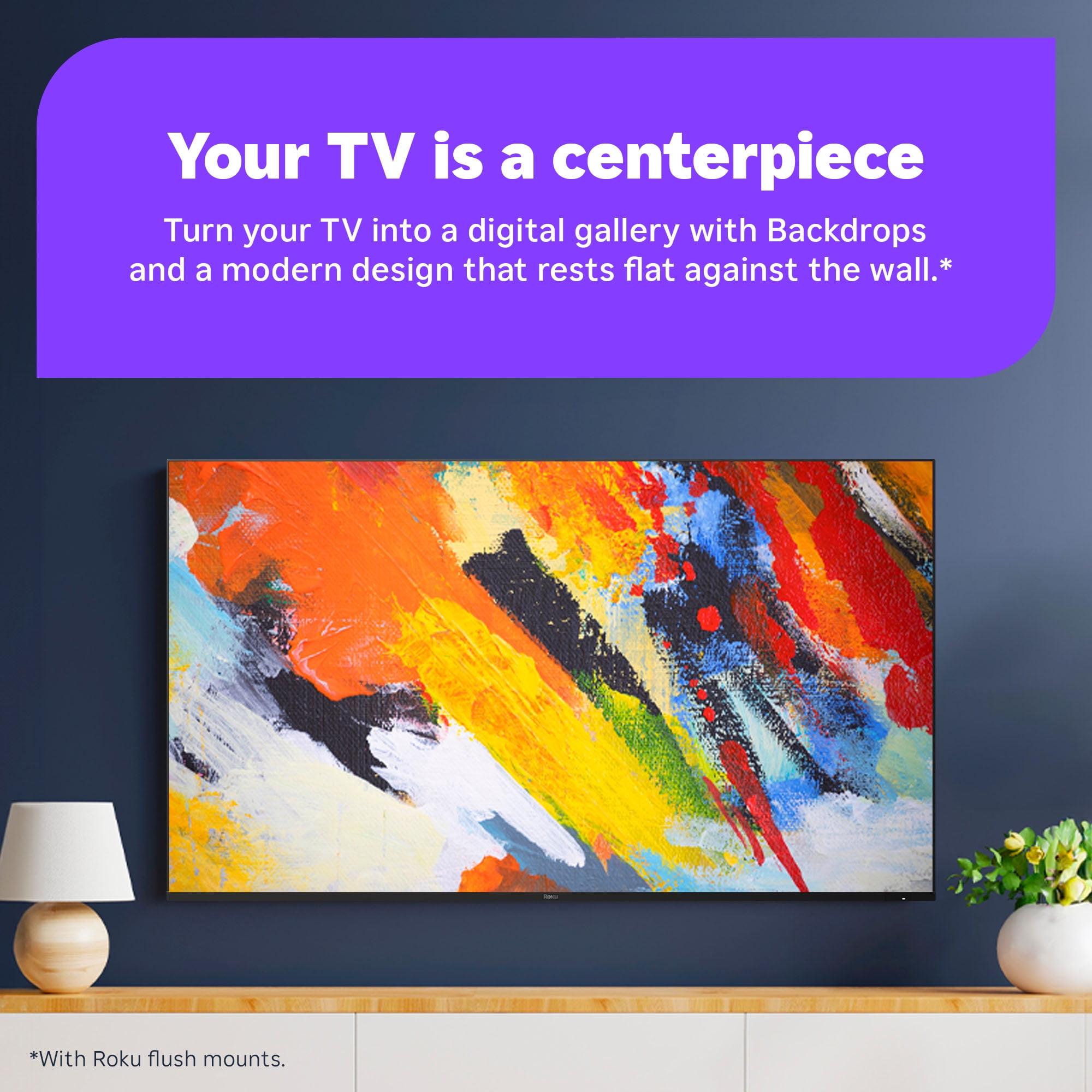
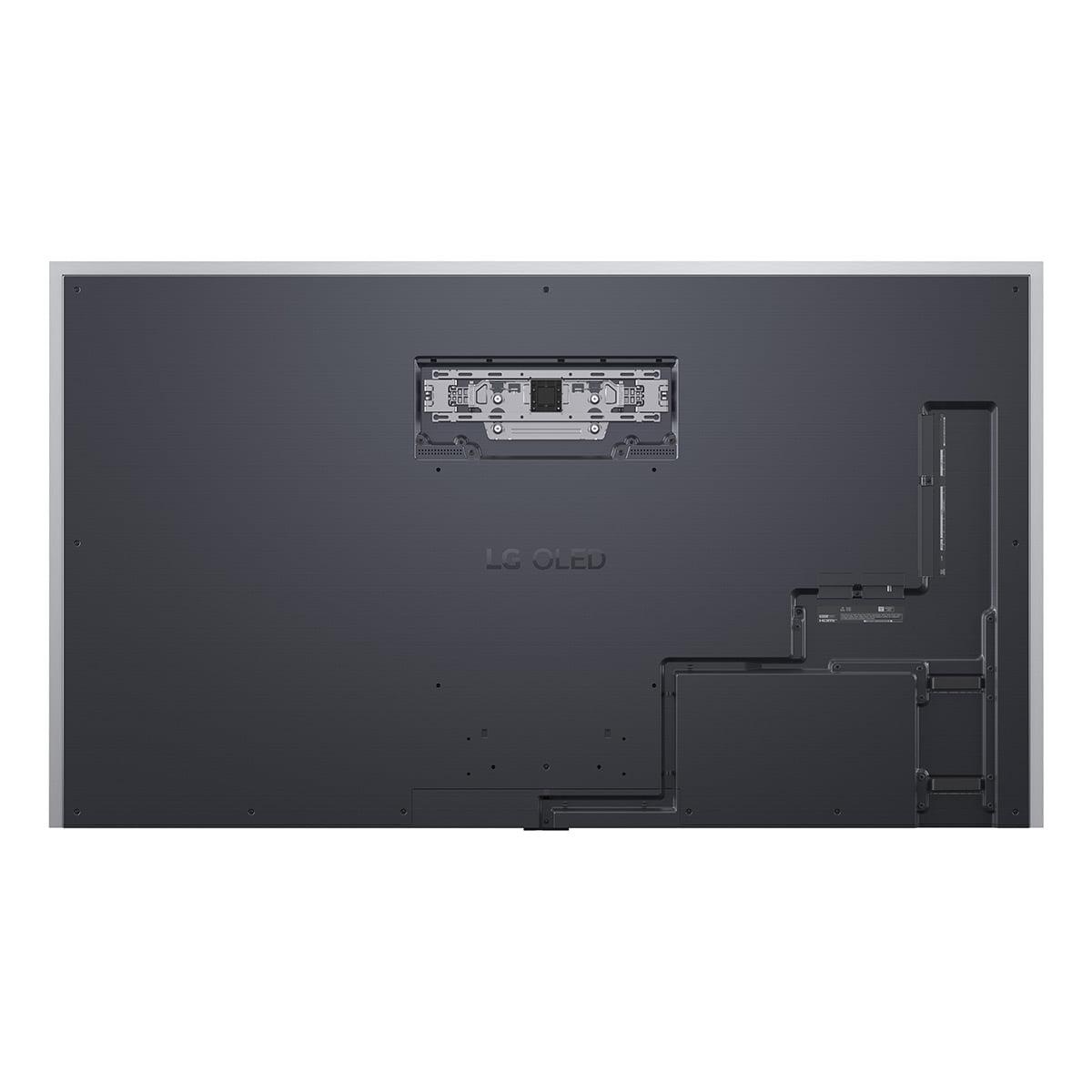
Design philosophy differs significantly between these models. The Roku Pro Series 2025 employs traditional TV aesthetics focused on performance and value. The included stand provides stable support, and standard VESA mounting accommodates various wall mount options. Build quality feels solid without premium flourishes.
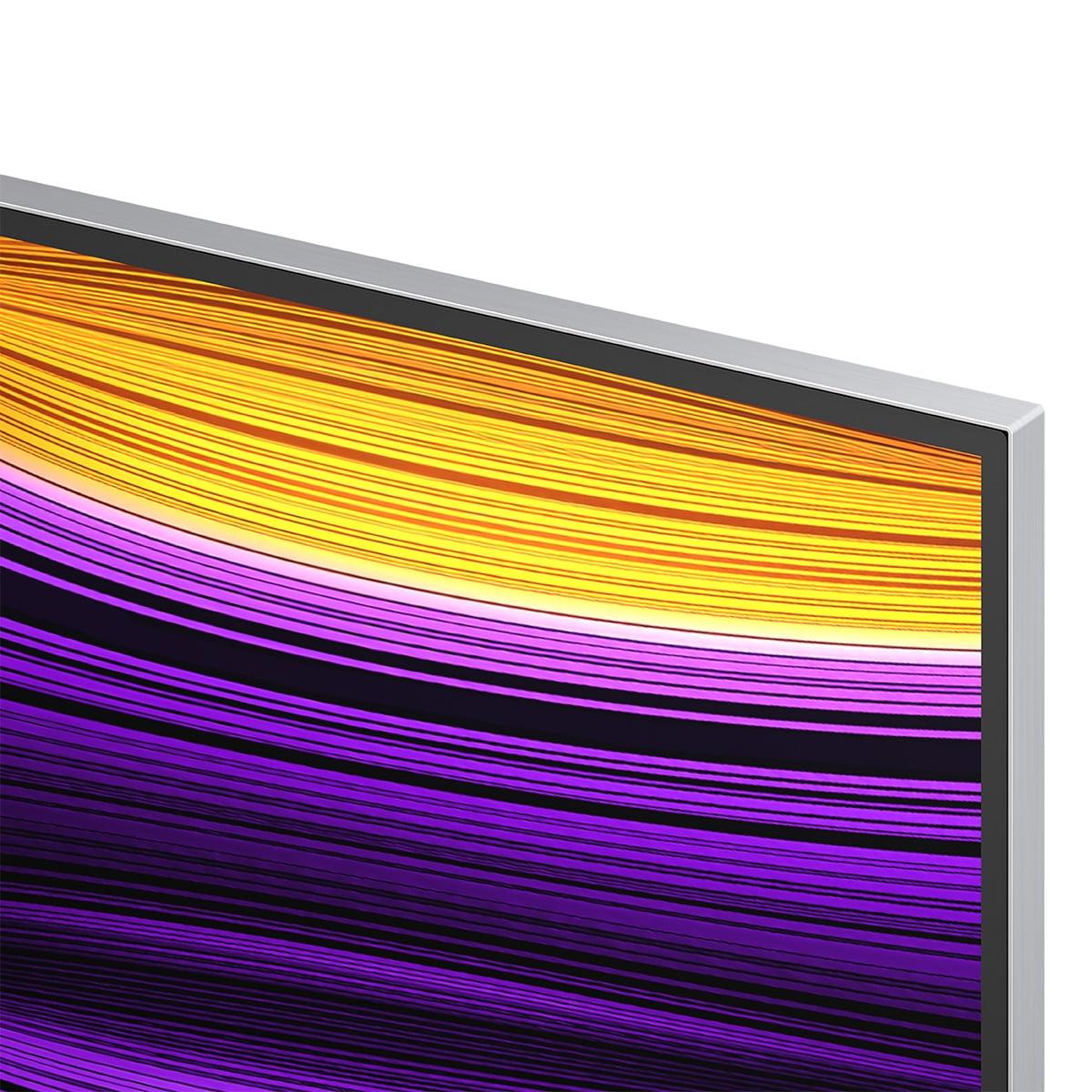
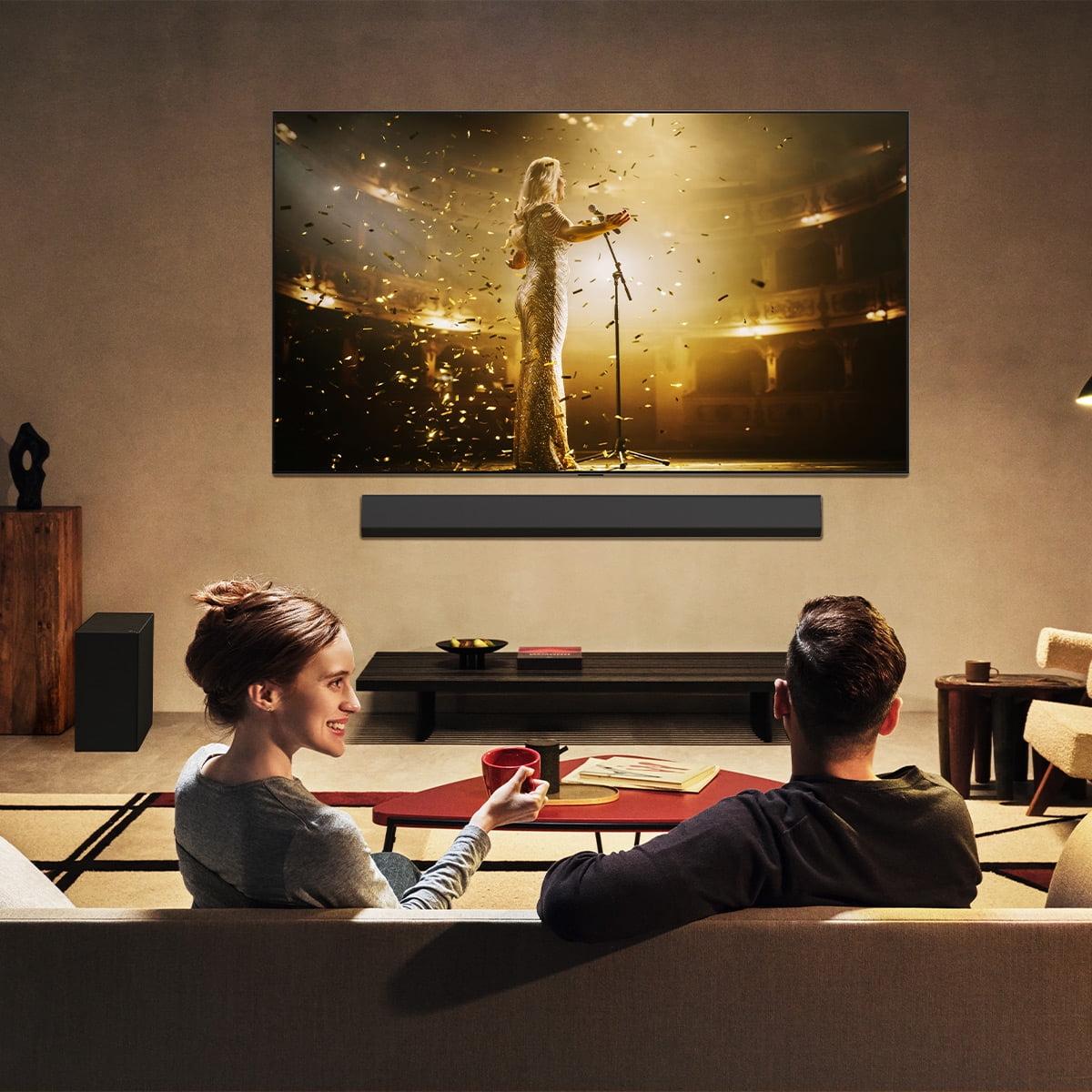
The LG G5 represents luxury TV design with its "One Wall Design" enabling flush wall mounting that resembles framed artwork. When not actively watching content, the TV displays art or photos, functioning as home décor. This gallery-style approach justifies premium pricing for buyers prioritizing aesthetics alongside performance.
The design choice often reflects intended use: the Roku suits traditional TV stand setups and family rooms, while the LG G5 targets custom home theater installations and design-conscious spaces where the TV becomes architectural element.
Value calculations extend beyond initial purchase price to include long-term ownership costs, feature relevance, and performance satisfaction. At the time of writing, the Roku Pro Series 2025 typically costs 30-40% less than the LG G5 while delivering 80-90% of the picture quality in most scenarios.
The Roku provides exceptional value for bright room viewing, family entertainment, and users prioritizing streaming simplicity. Its brightness advantages, impressive built-in audio, and reliable platform make it compelling for mainstream premium TV buyers seeking flagship features without extreme pricing.
The LG G5 justifies premium pricing through cutting-edge display technology, superior gaming capabilities, five-year panel warranty, and perfect black levels. The value proposition strengthens for home theater enthusiasts, serious gamers, and buyers making long-term entertainment investments.
Dedicated home theater environments highlight each TV's strengths and limitations. The LG G5's perfect blacks and infinite contrast create truly cinematic experiences in light-controlled rooms. Movie night becomes significantly more immersive when black letterbox bars disappear completely and shadow details emerge clearly. The G5's Filmmaker Mode with ambient light compensation preserves director intent while adapting to room conditions.
The Roku Pro Series 2025 excels in flexible viewing environments where some ambient light exists. Its superior brightness handling means movie night doesn't require complete darkness, making it more practical for multi-purpose family spaces. However, perfect black levels and ultimate contrast remain OLED advantages for critical movie viewing.
For dedicated home theaters with controlled lighting, seating positioning, and acoustic treatment, the LG G5 provides reference-quality viewing. For family rooms serving multiple purposes, the Roku's brightness and value advantages often prove more practical.
The choice ultimately depends on viewing environment, priorities, and budget considerations. Choose the Roku Pro Series 2025 if your TV faces windows, you prioritize exceptional value with flagship features, prefer simple but fast smart TV operation, or want impressive built-in audio without immediately adding external speakers. The Roku particularly suits sports fans, bright room viewing, and buyers seeking premium performance without premium pricing.
Select the LG OLED evo G5 if you have dedicated home theater space, prioritize absolute picture quality and perfect blacks, want cutting-edge gaming features like 4K@165Hz, value premium design elements, or plan long-term ownership with five-year warranty protection. The G5 rewards movie enthusiasts, serious gamers, and buyers willing to invest in reference-quality display technology.
Room environment remains the crucial factor: bright rooms favor the Roku's superior brightness and glare handling, while controlled lighting environments allow the LG G5's perfect blacks and infinite contrast to create truly spectacular viewing experiences. Both represent excellent choices within their intended use cases, making the decision about matching TV capabilities to your specific viewing situation and priorities.
| Roku 65" Pro Series 2025 4K QLED TV | LG OLED evo G5 65" 4K Smart TV 2025 |
|---|---|
| Display Technology - Fundamental difference affecting picture quality and room suitability | |
| Mini-LED QLED with thousands of backlighting zones | 4-stack RGB Tandem OLED with self-lit pixels |
| Peak Brightness - Critical for HDR impact and bright room viewing | |
| Exceptional Mini-LED brightness, 75% higher contrast than previous generation | Up to 2,300 nits peak HDR, 45% brighter than standard OLED |
| Black Levels - Determines contrast quality and movie viewing experience | |
| Deep blacks with minimal blooming from local dimming | Perfect infinite blacks with each pixel turning completely off |
| Gaming Refresh Rate - Important for console and PC gaming smoothness | |
| 120Hz with 4K@120Hz on 2 HDMI 2.1 ports | Up to 165Hz with 4K@165Hz on all 4 HDMI 2.1 ports |
| Input Lag - Critical for responsive gaming performance | |
| 5.2ms at 120Hz (excellent for gaming) | 0.1ms pixel response time (best-in-class for competitive gaming) |
| Smart TV Platform - Daily usability and long-term software support | |
| Roku OS with instant startup and unified streaming | webOS 25 with AI features and 5-year update guarantee |
| Built-in Audio Quality - Determines if you need a soundbar immediately | |
| Sound Stage Audio with side-firing Dolby Atmos, excellent bass for TV speakers | Dolby Atmos support but limited bass due to slim design |
| Design Approach - Affects room integration and mounting options | |
| Traditional TV design with included stand | Ultra-slim "One Wall Design" mounts flush like artwork |
| Warranty Coverage - Protection for your investment | |
| Standard 1-year manufacturer warranty | 5-year limited panel warranty (exceptional for premium TV) |
| Viewing Angle - Important for wide seating arrangements | |
| Narrow viewing angle typical of QLED technology | Good off-angle viewing but some contrast loss at extreme angles |
| Color Technology - Affects vibrancy and accuracy of colors | |
| QLED quantum dots for vibrant, saturated colors in bright rooms | Enhanced RGB panel for improved color purity and accuracy |
| Room Brightness Suitability - Key factor for placement and viewing satisfaction | |
| Excellent for bright rooms with windows and ambient lighting | Good for bright rooms but excels in controlled lighting environments |
| Motion Handling - Important for sports and action content | |
| Good motion with some blur in fastest scenes | Perfect motion clarity with instant pixel response |
The Roku 65" Pro Series 2025 4K QLED TV is better for bright rooms with windows and ambient lighting. Its Mini-LED backlighting delivers exceptional brightness that easily overcomes glare and maintains vibrant colors in daylight. While the LG OLED evo G5 65" 4K Smart TV 2025 is much brighter than previous OLEDs and can handle some ambient light, the Roku Pro Series still provides superior performance in very bright environments.
The Roku Pro Series 2025 uses Mini-LED QLED technology with thousands of backlight zones behind a quantum dot panel, creating bright, vibrant images with good contrast. The LG G5 uses OLED technology where each pixel creates its own light and can turn completely off for perfect blacks. QLED excels in brightness, while OLED delivers perfect contrast and deeper blacks for movie viewing.
The LG OLED evo G5 is superior for gaming, especially PC gaming, with 4K@165Hz support on all four HDMI 2.1 ports and 0.1ms pixel response time. The Roku 65" Pro Series 2025 offers excellent console gaming with 4K@120Hz on two HDMI 2.1 ports and 5.2ms input lag. Both support VRR and ALLM, but the LG G5 provides more future-proof gaming features.
The Roku Pro Series 2025 has excellent built-in audio with Sound Stage technology and side-firing Dolby Atmos speakers that many users find satisfactory without a soundbar. The LG G5 has decent audio with Dolby Atmos but limited bass due to its ultra-thin design. Most buyers eventually add a soundbar to the LG OLED G5 for optimal audio performance.
For movie watching, the LG OLED evo G5 provides superior cinematic experience with perfect blacks, infinite contrast, and exceptional dark scene detail. The Roku 65" Pro Series 2025 delivers excellent movie quality with vibrant colors and good contrast, plus faster app performance and simpler navigation. Both support Dolby Vision and major streaming apps equally well.
The Roku Pro Series 2025 features the streamlined Roku OS with instant startup, unified content discovery, and platform neutrality across all streaming services. The LG G5 runs webOS 25 with more advanced AI features, personalization options, and smart home integration, plus guarantees 5 years of software updates. Roku prioritizes simplicity while LG offers more sophisticated features.
The Roku 65" Pro Series 2025 typically offers exceptional value, delivering flagship-level picture quality and features at a significantly lower cost than premium OLEDs. The LG OLED evo G5 justifies its premium pricing with cutting-edge display technology, superior gaming capabilities, and a 5-year panel warranty. Value depends on your priorities and budget for premium features.
Both TVs have narrow optimal viewing angles typical of their display technologies. The Roku QLED shows color and brightness changes when viewed from the side, while the LG OLED G5 maintains better color accuracy off-axis but can show some contrast reduction at extreme angles. Neither is ideal for very wide seating arrangements.
The LG OLED evo G5 excels in dedicated home theaters with controlled lighting, delivering reference-quality picture with perfect blacks and cinematic contrast. The Roku Pro Series 2025 works better in multi-purpose family rooms where some ambient light exists. For serious home theater enthusiasts prioritizing ultimate picture quality, the LG G5 is the premium choice.
The LG OLED evo G5 includes an exceptional 5-year limited panel warranty, providing long-term protection for your investment. The Roku 65" Pro Series 2025 comes with a standard 1-year manufacturer warranty covering parts and labor. The extended warranty on the LG G5 reflects confidence in OLED technology and adds significant value for premium buyers.
The LG G5 provides superior motion clarity with instant pixel response eliminating all motion blur, making it excellent for fast sports action. The Roku Pro Series 2025 offers good motion handling with minimal blur and smooth sports viewing, though not quite matching OLED's instant response. Both handle sports well, but the LG OLED G5 delivers noticeably cleaner motion in fast-paced scenes.
Choose the Roku 65" Pro Series 2025 for bright room viewing, exceptional value, simple smart TV operation, and excellent built-in audio. Choose the LG OLED evo G5 for perfect blacks, premium gaming features, home theater quality, design aesthetics, and long-term warranty protection. Your room lighting, budget, and viewing priorities should guide the decision between these excellent TVs.
We've done our best to create useful and informative comparisons to help you decide what product to buy. Our research uses advanced automated methods to create this comparison and perfection is not possible - please contact us for corrections or questions. These are the sites we've researched in the creation of this article: bestbuy.com - rtings.com - techradar.com - youtube.com - roku.com - youtube.com - walmart.com - bestbuy.com - youtube.com - electronicexpress.com - roku.com - pcvarge.com - ecoustics.com - bestbuy.com - techradar.com - rtings.com - youtube.com - youtube.com - rtings.com - bestbuy.com - youtube.com - valueelectronics.com - lg.com - audio-videoplus.com - lg.com - lg.com - lg.com

Privacy Policy
Terms and Conditions - Affiliate Policy
Home Security
© Copyright 2008-2026.
11816 Inwood Rd #1211, Dallas, TX 75244