

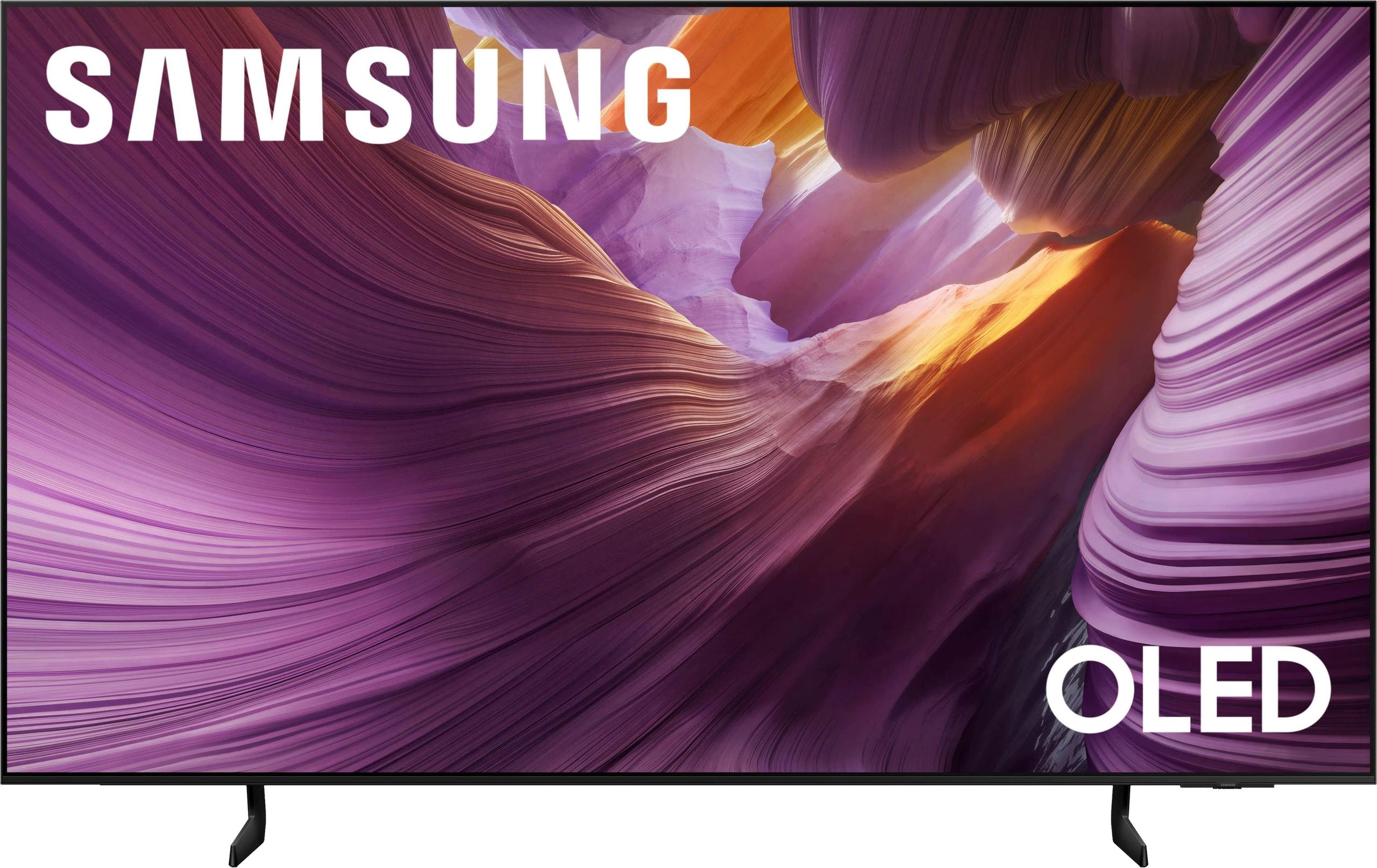
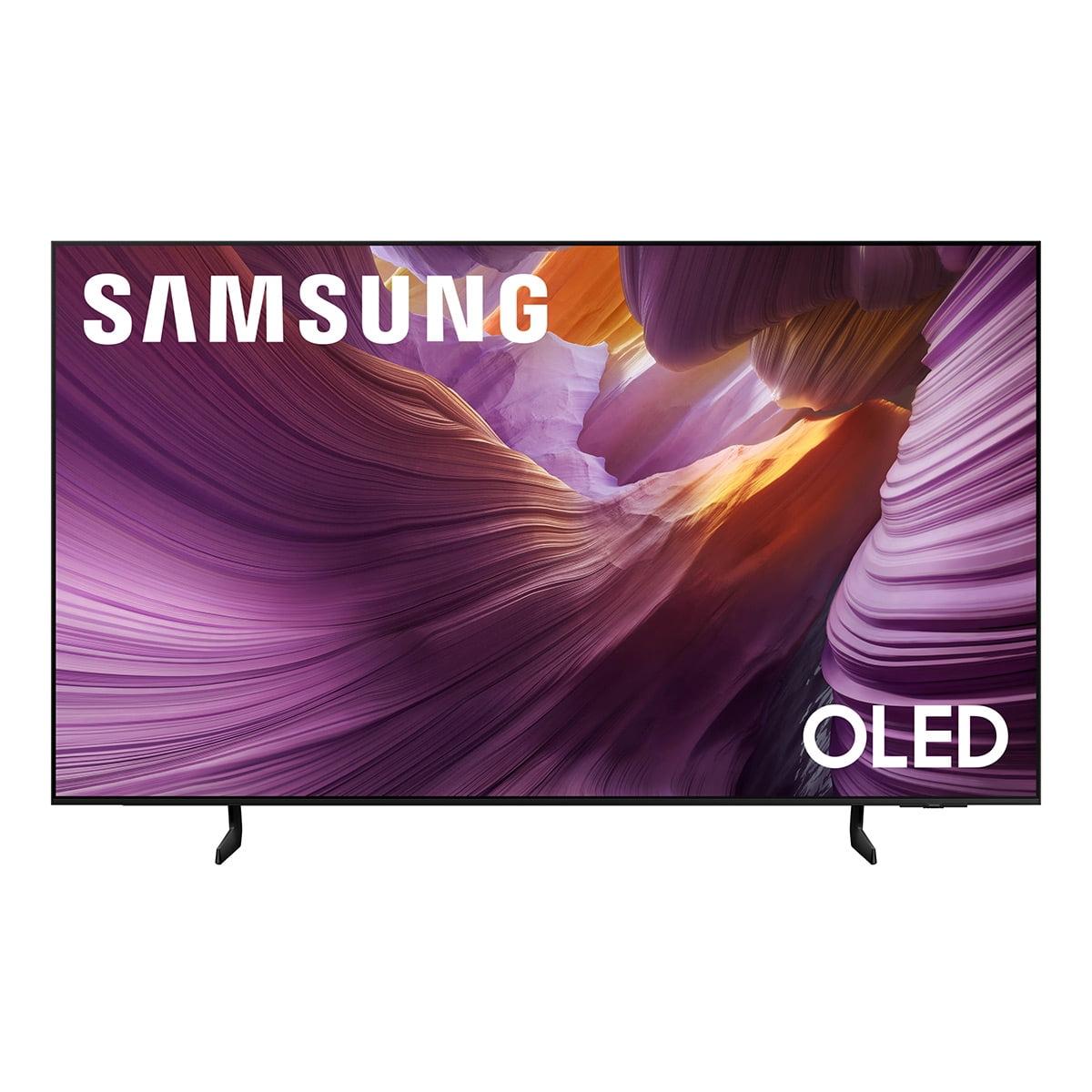
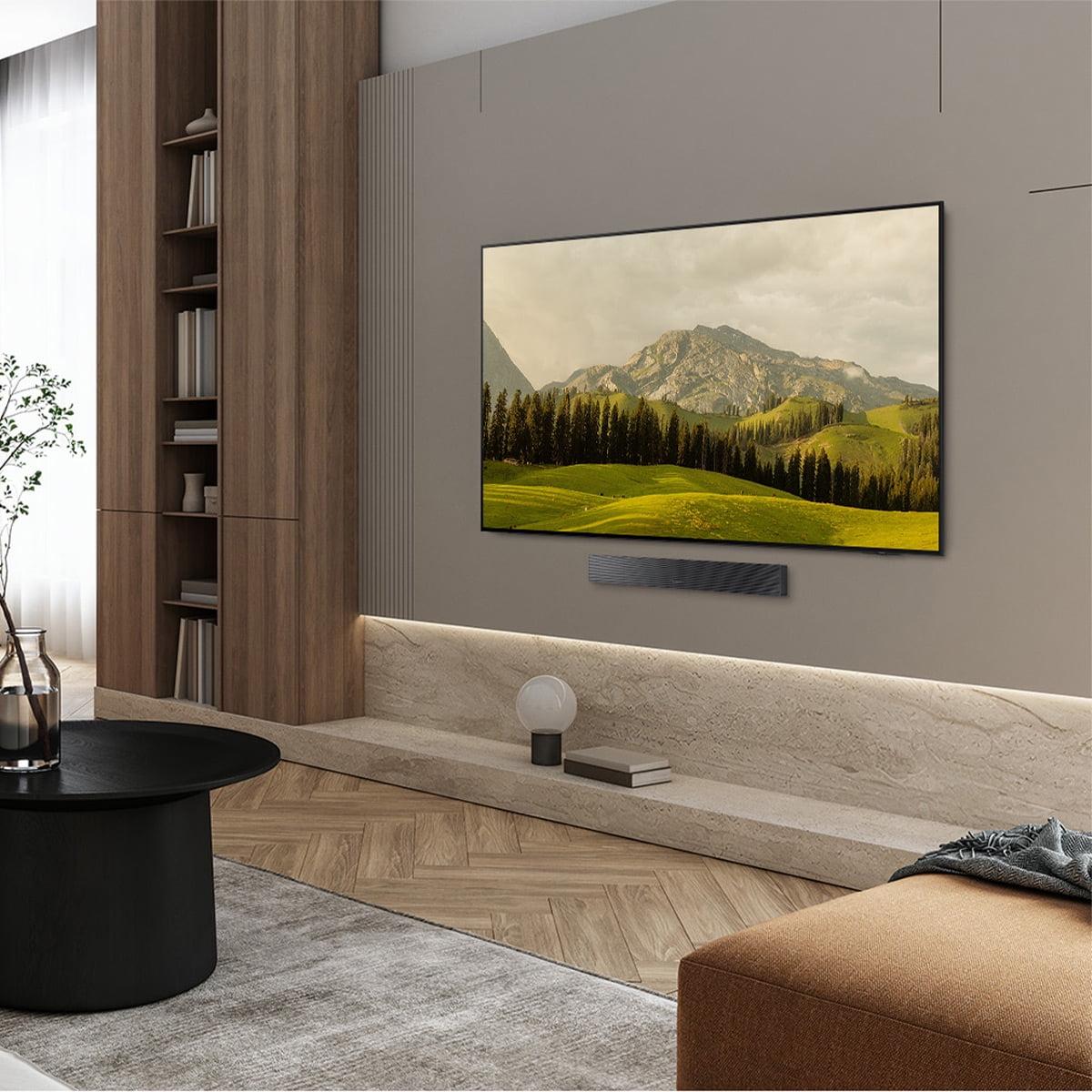
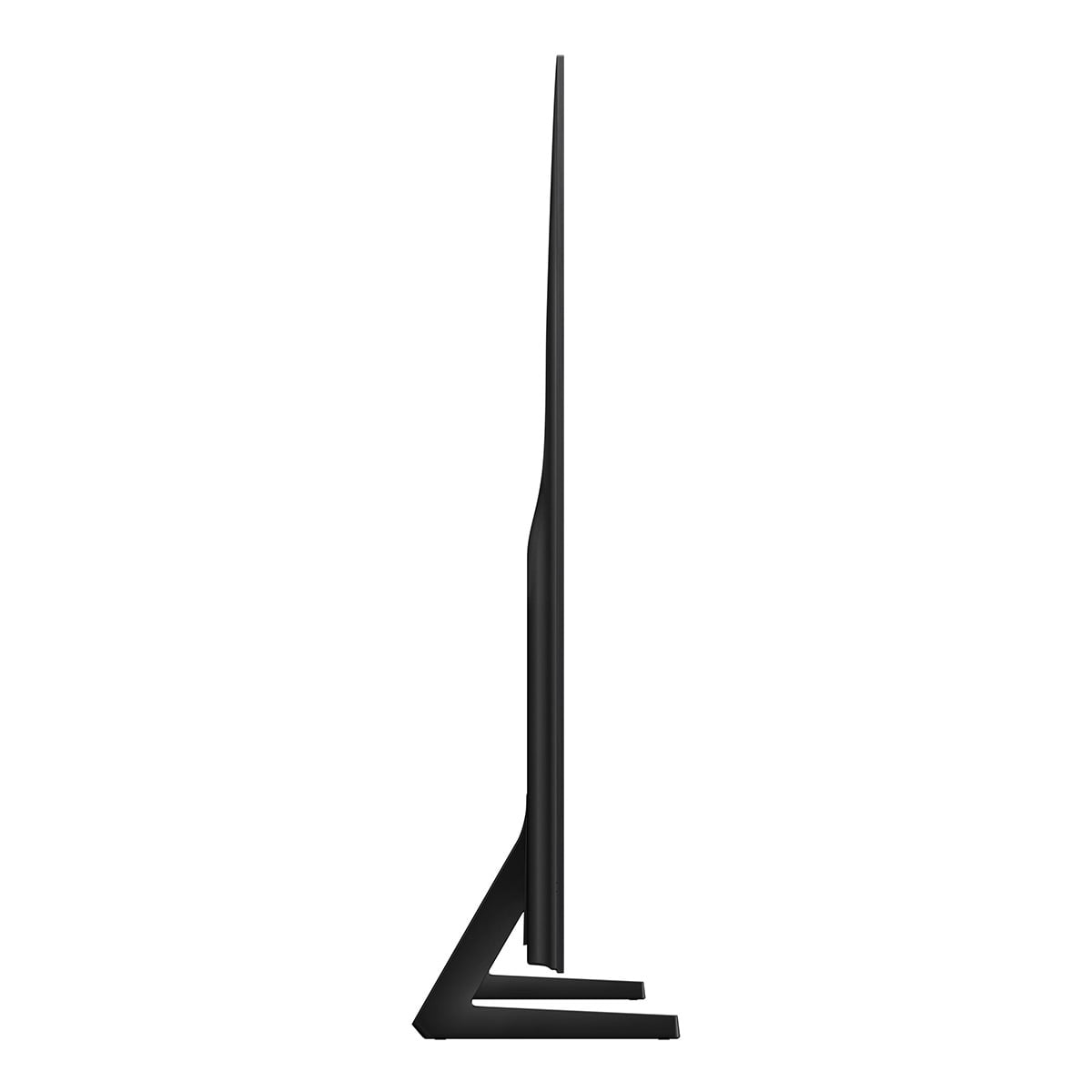

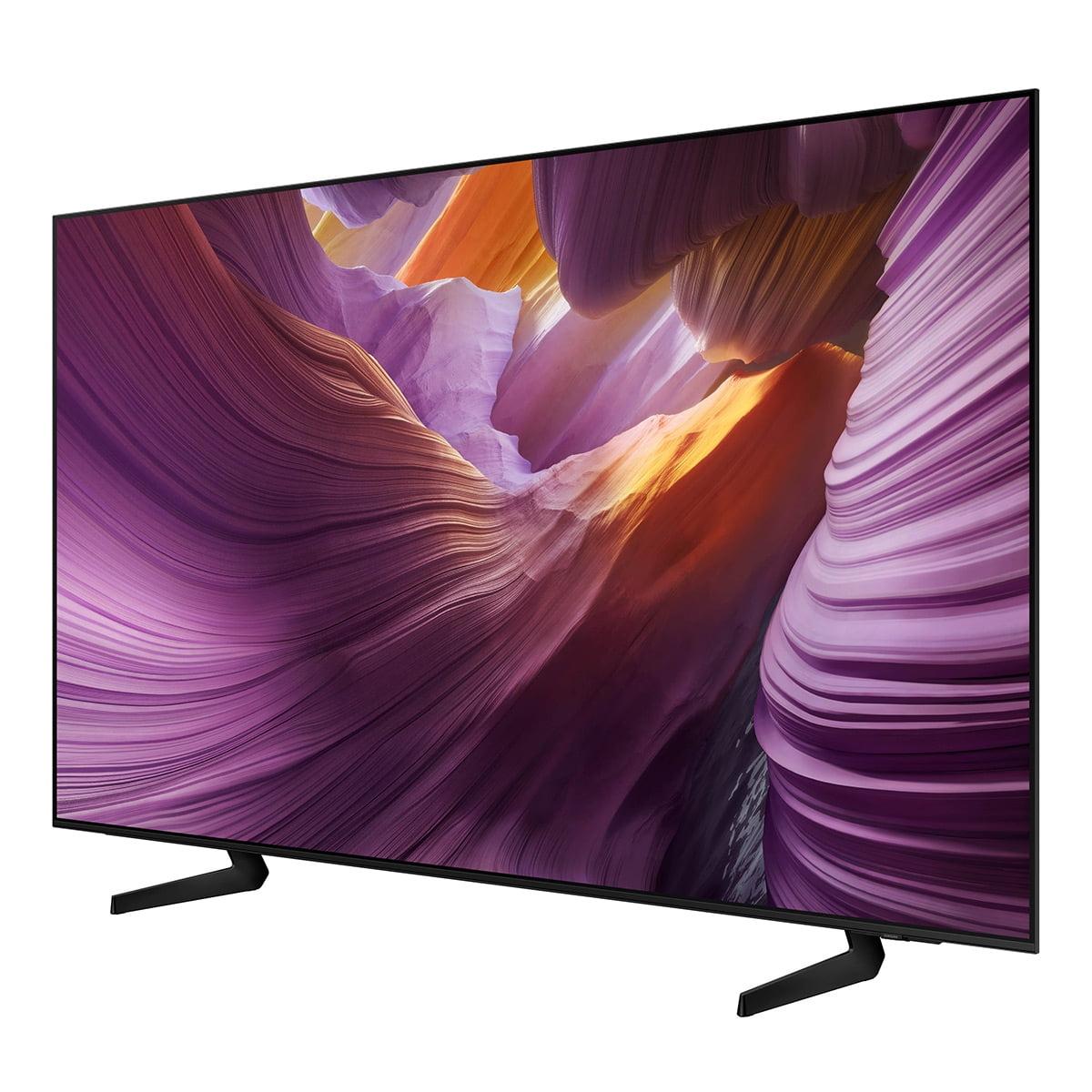
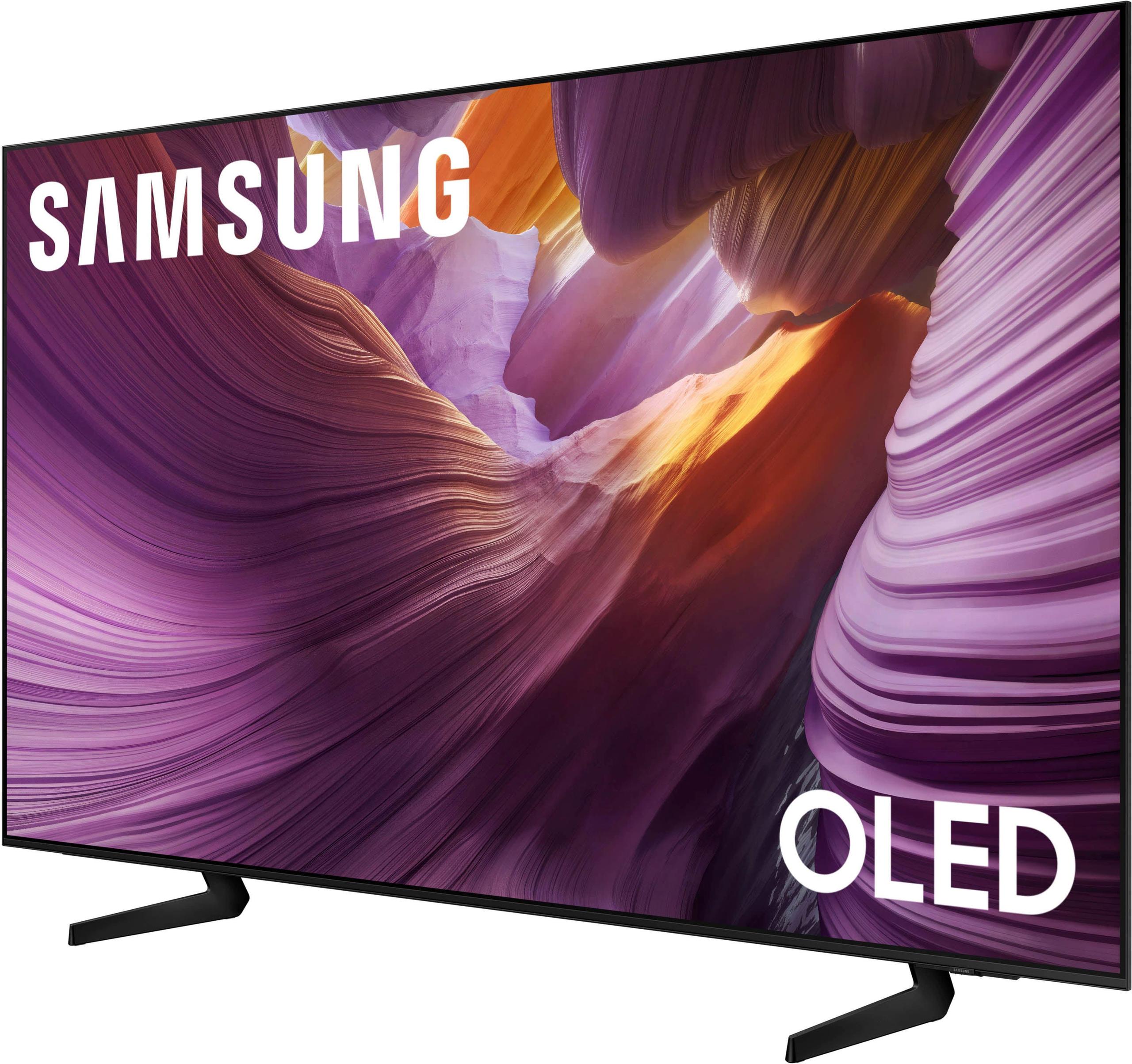
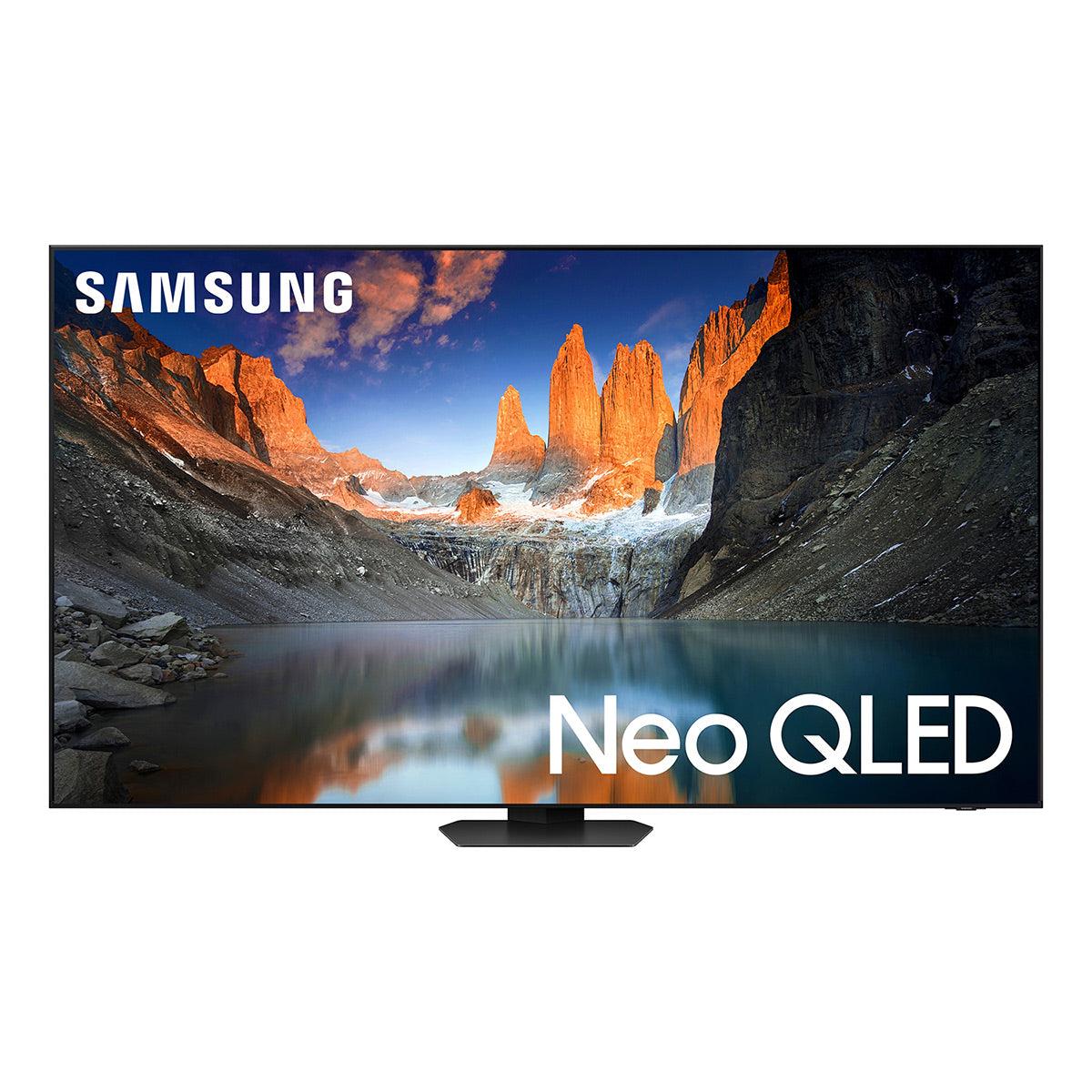
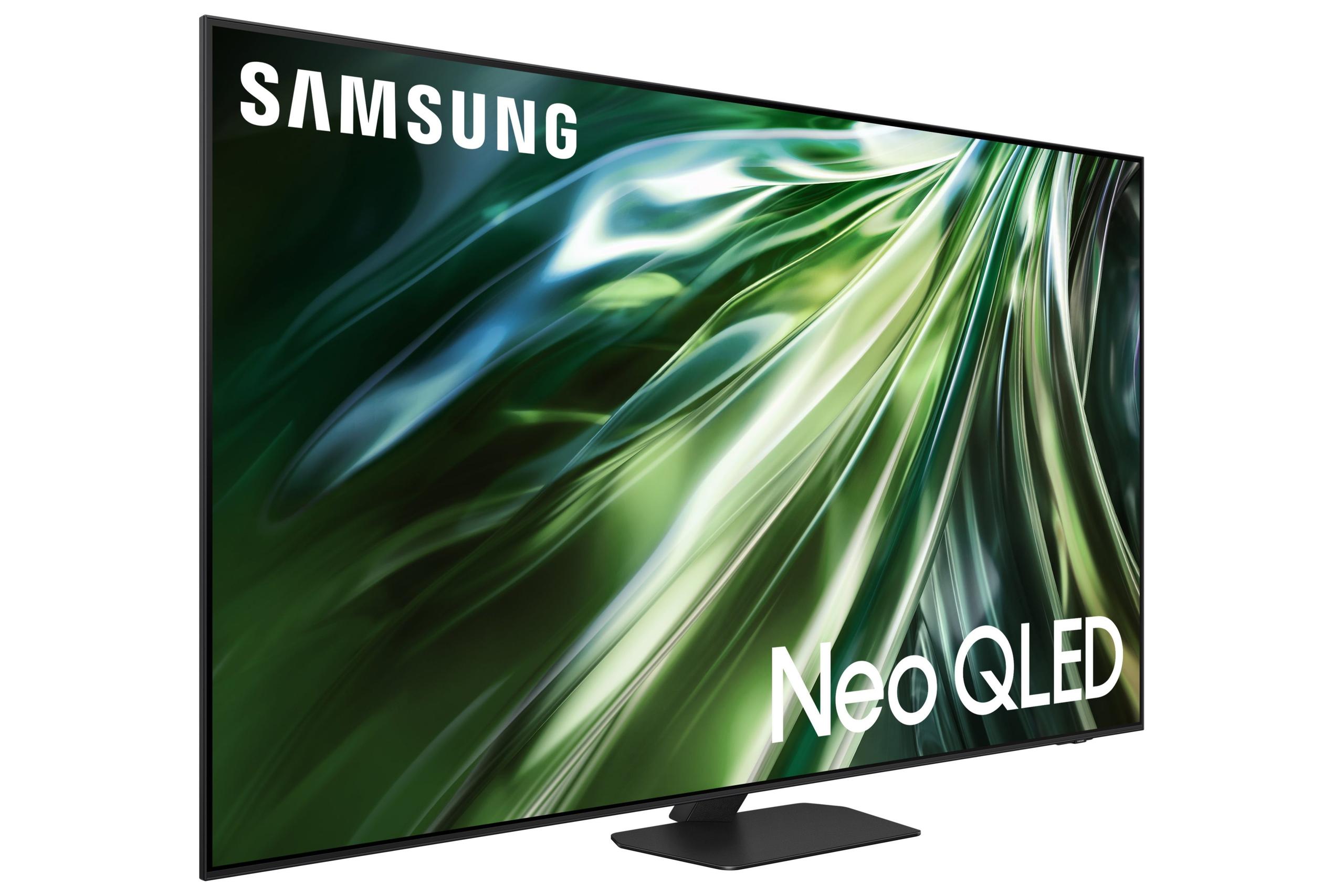
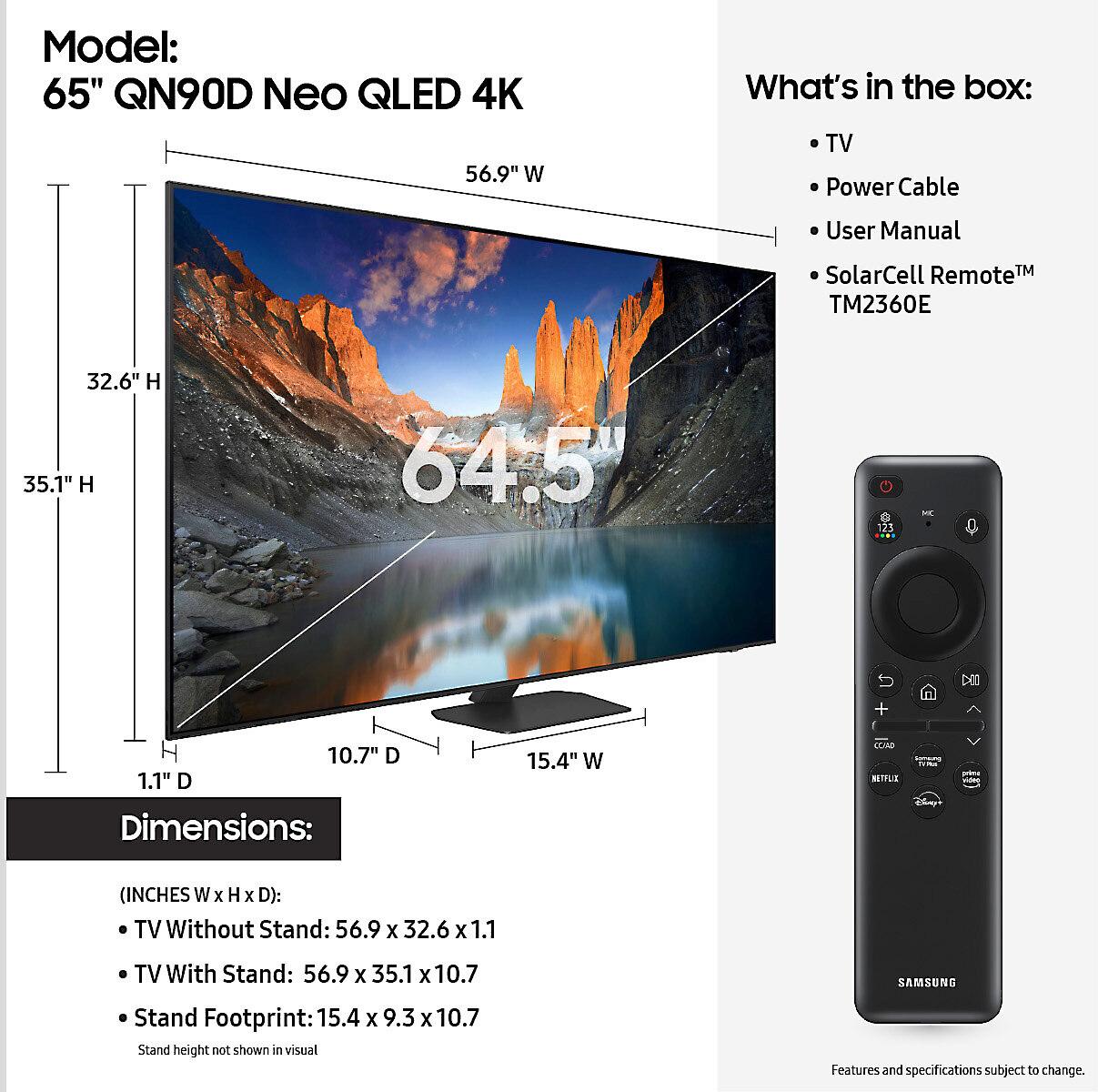
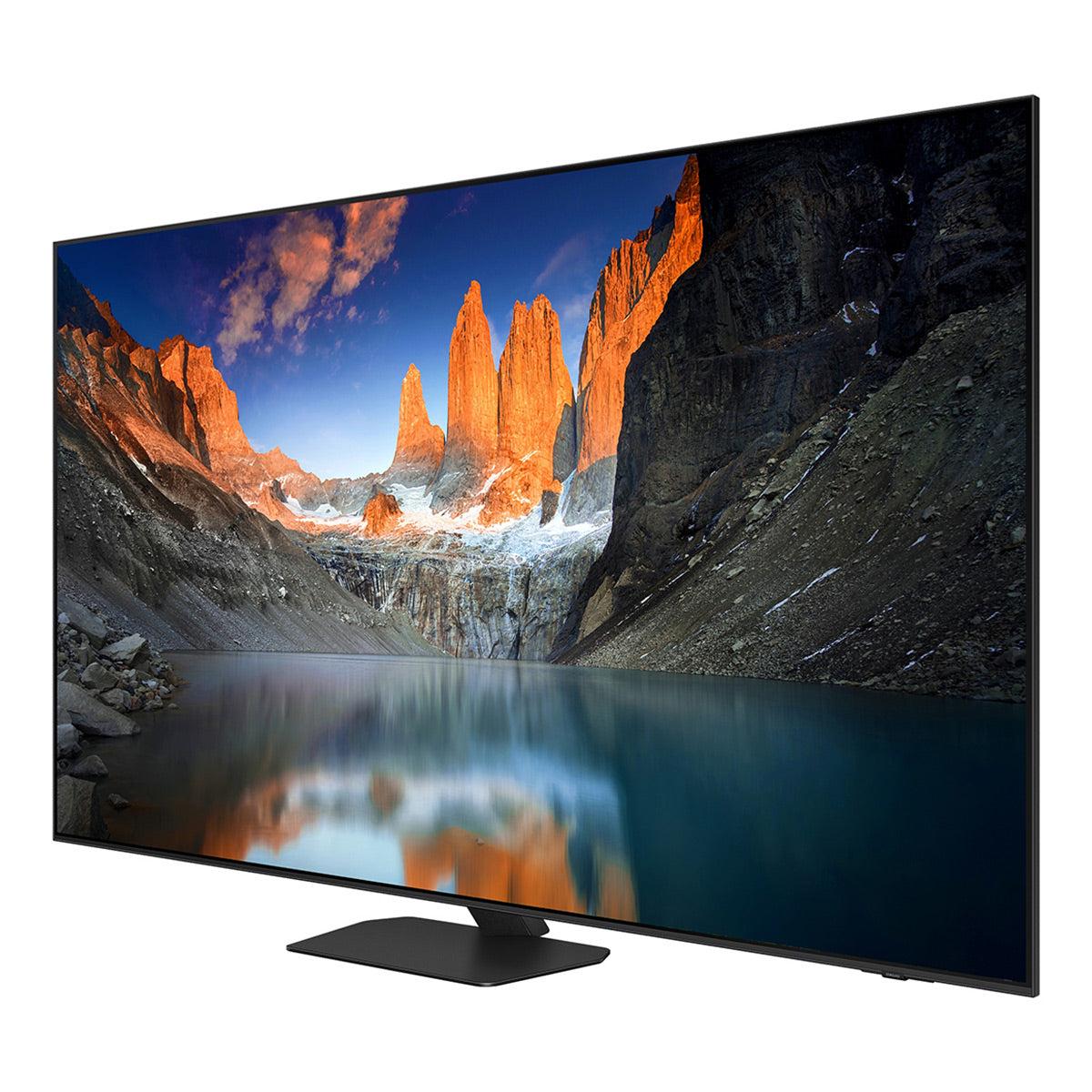
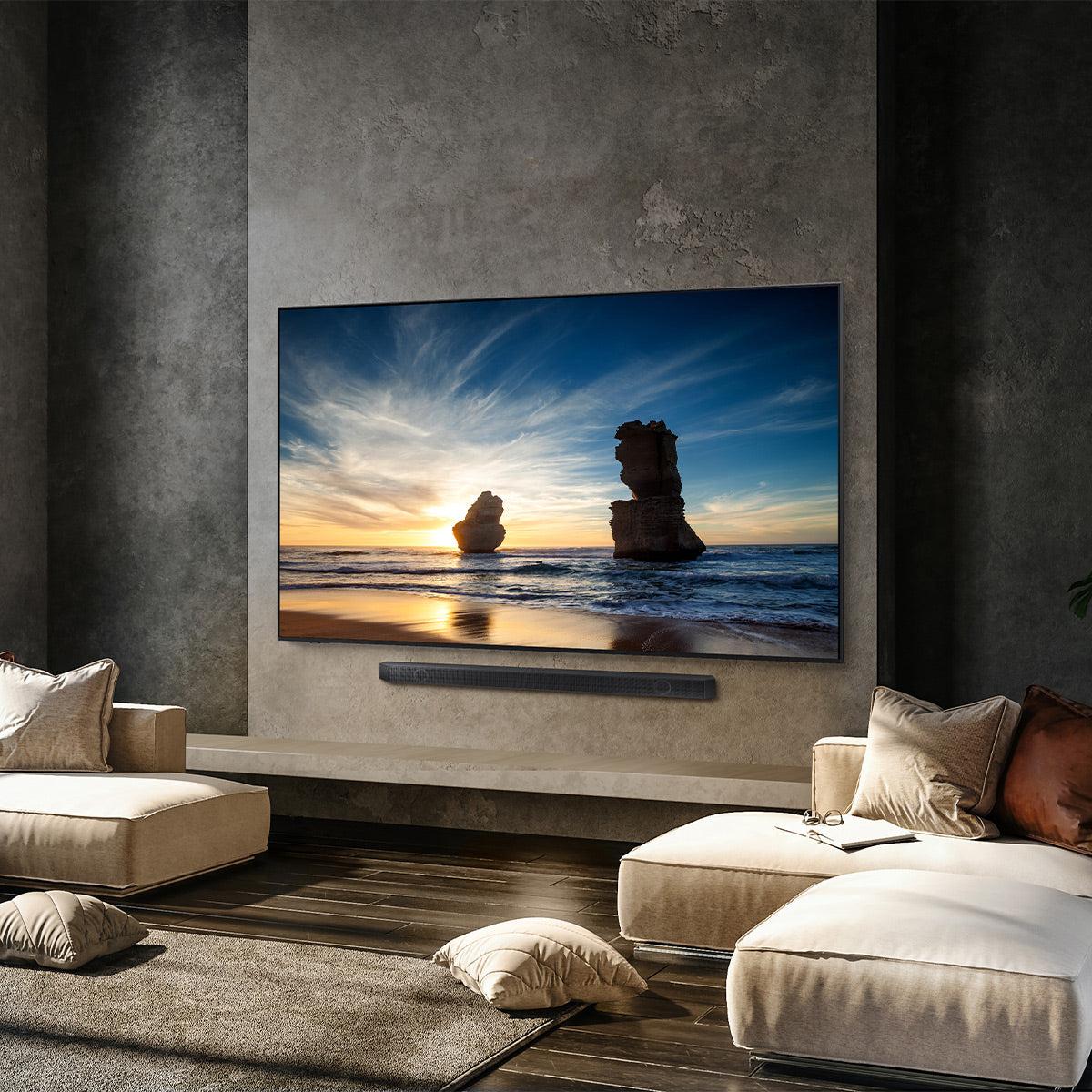
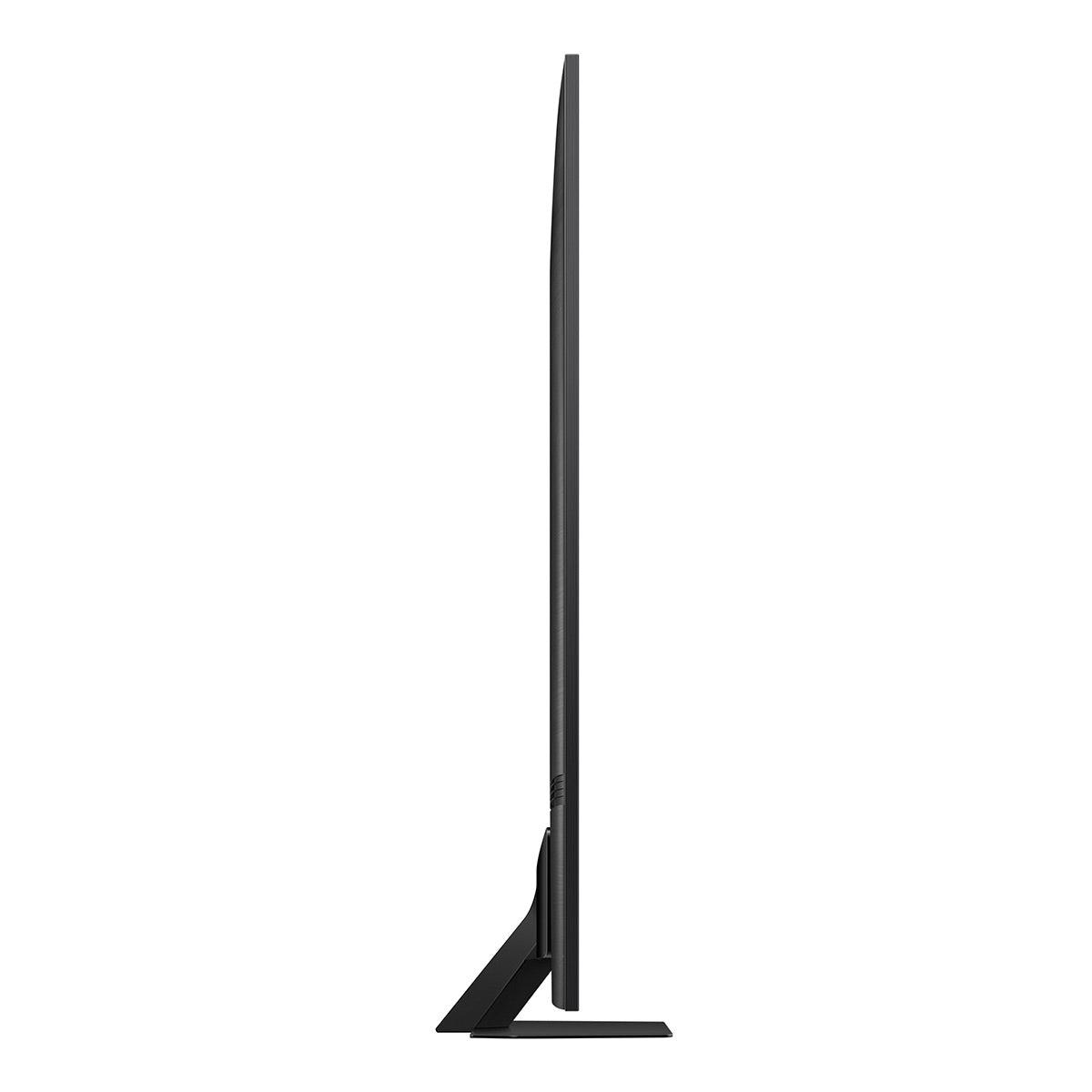
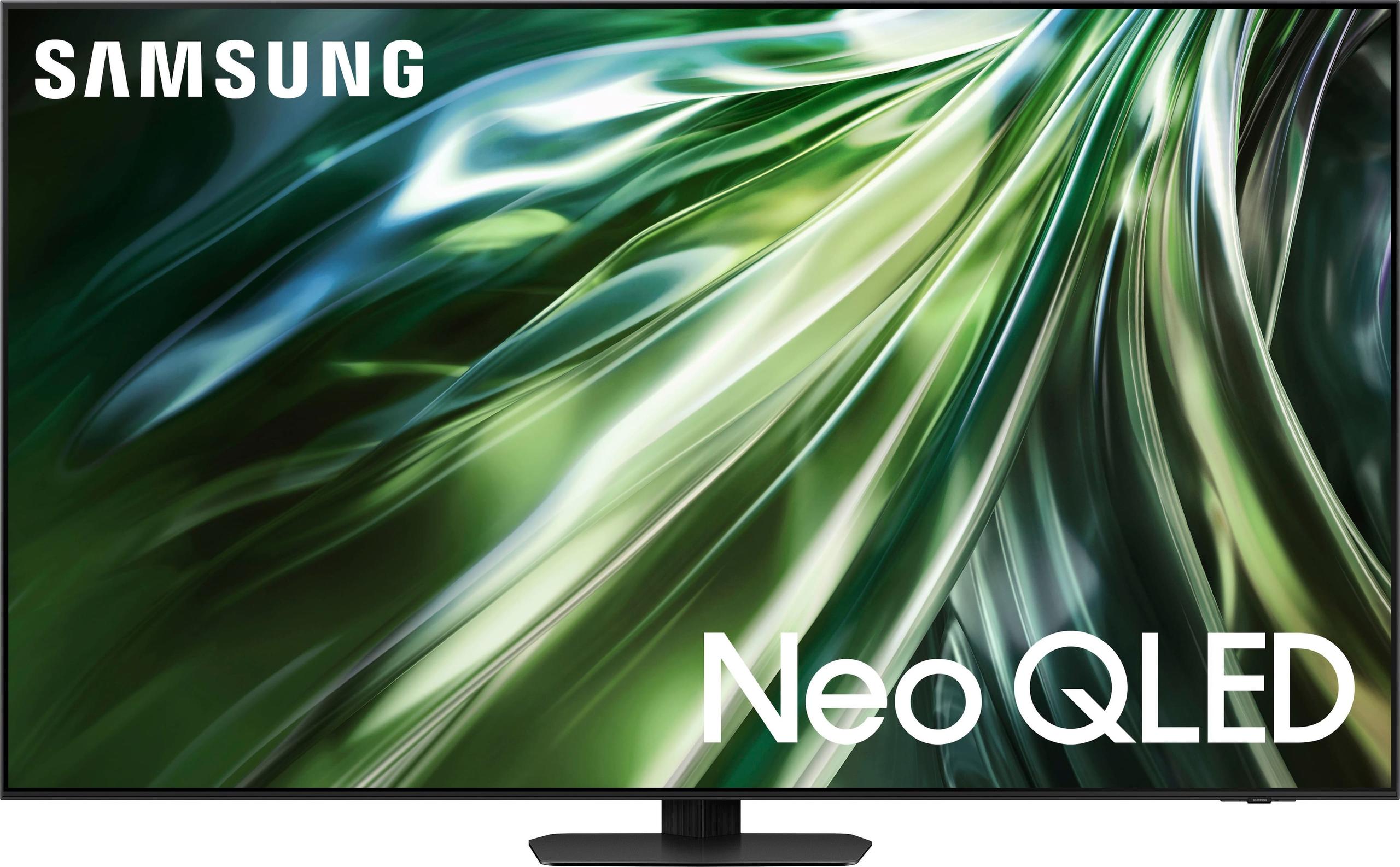
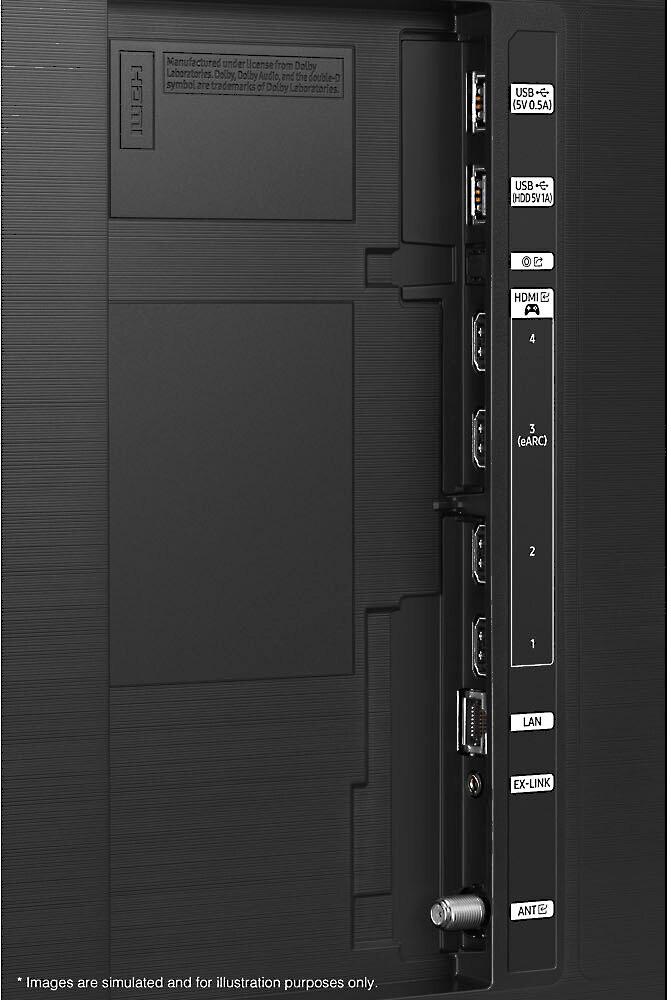

When you're shopping for a premium 65-inch TV, you'll quickly run into two very different technologies that both promise amazing picture quality. Samsung's 65" S85F OLED 4K Smart TV (2025) - $1,599.99 and their 65" QN90D Series 4K Neo QLED Smart TV - $2,700 represent two distinct approaches to creating stunning visuals, each with their own strengths and weaknesses.
The main difference comes down to how each TV creates light and color. OLED TVs like the S85F can turn individual pixels completely on or off, creating perfect blacks and incredible contrast. Neo QLED TVs like the QN90D use thousands of tiny LED lights behind a quantum dot layer to create bright, vibrant colors. Think of it like comparing a theater where you can control every single light bulb versus one with really sophisticated spotlights.
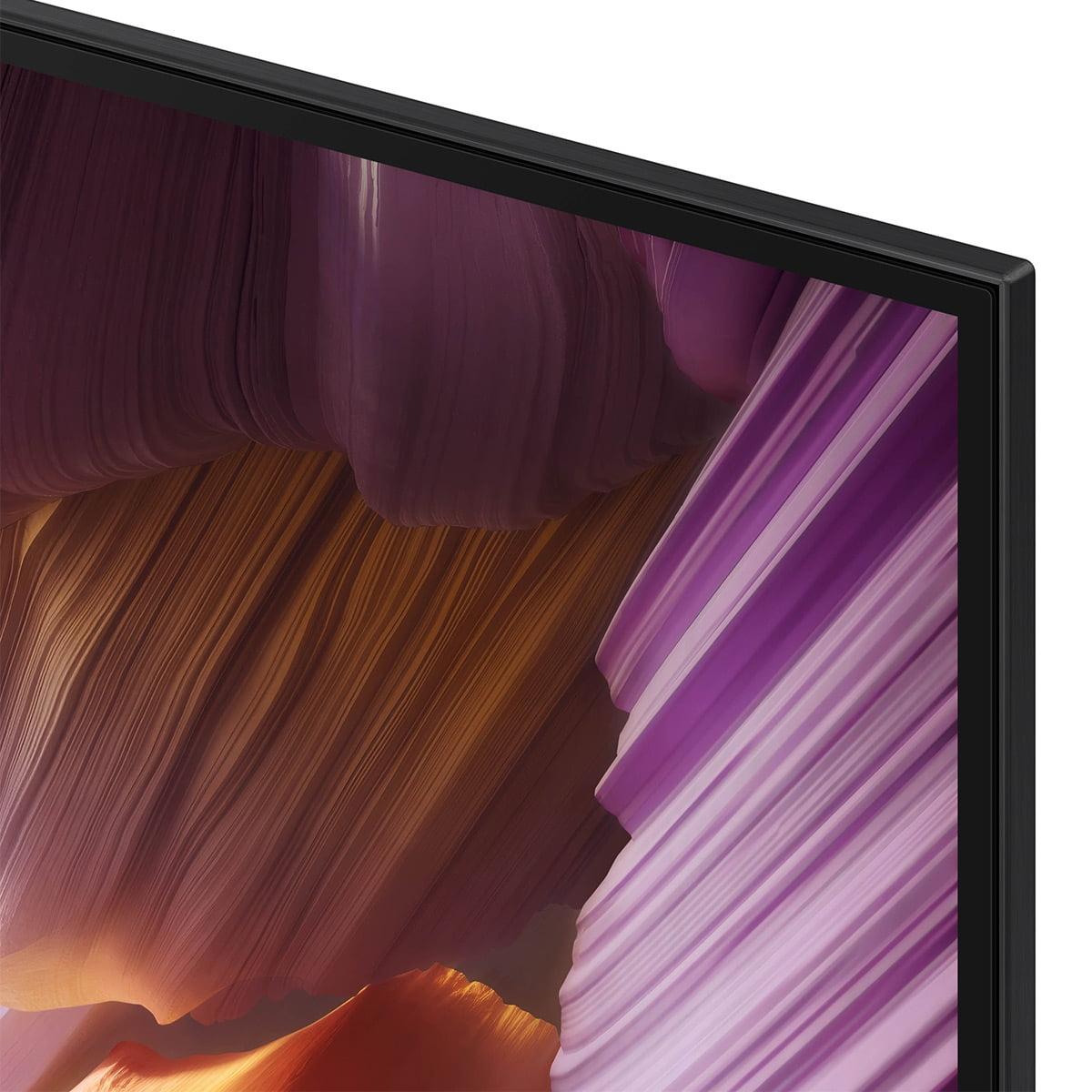
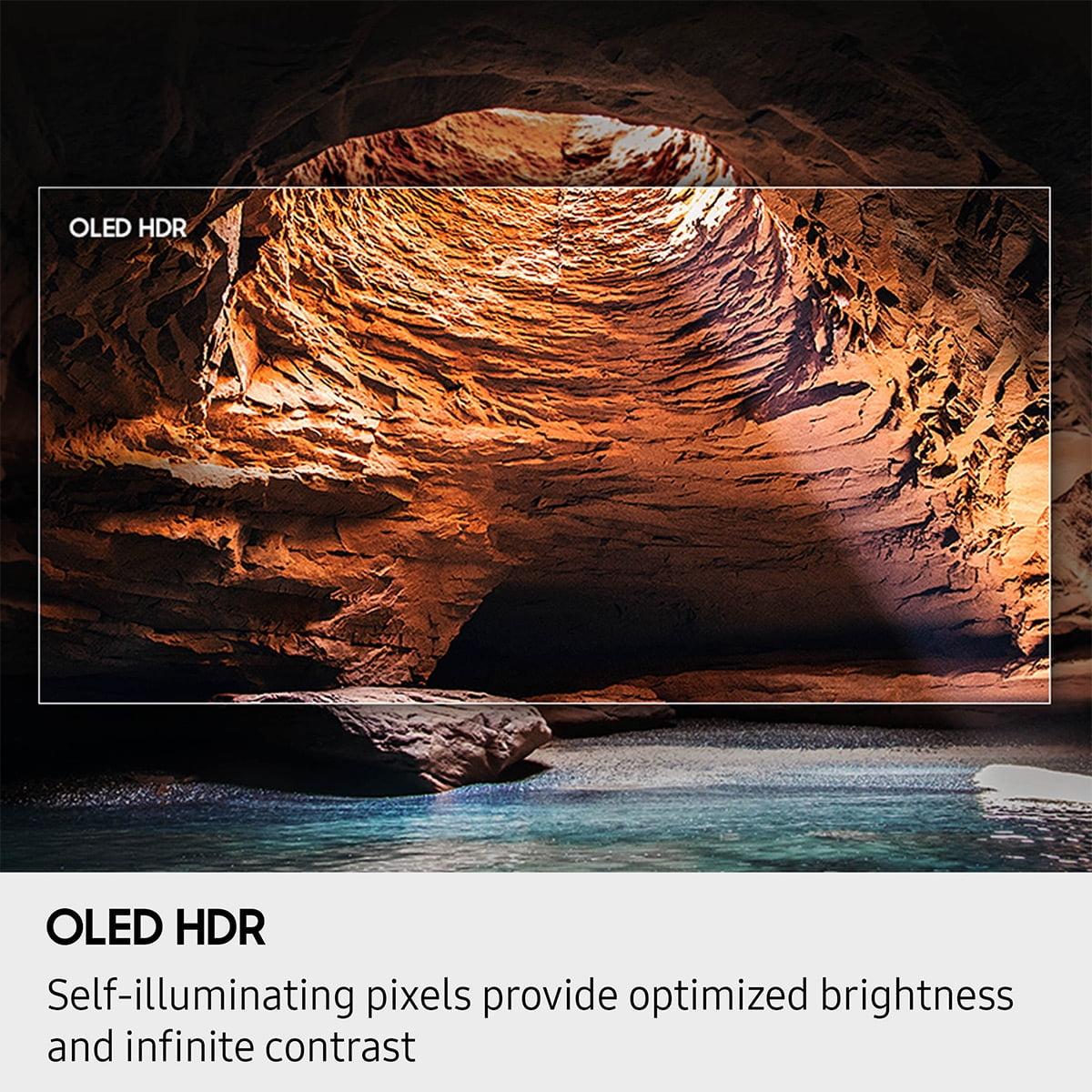
The S85F OLED uses what Samsung calls QD-OLED technology, which combines quantum dots with organic light-emitting diodes. Here's what makes this special: each pixel creates its own light and can turn completely off. When a pixel is off, it's truly black - not dark gray like you'd see on most TVs. This creates what we call "infinite contrast" because you're dividing by zero (mathematically speaking, the difference between bright and completely black is infinite).
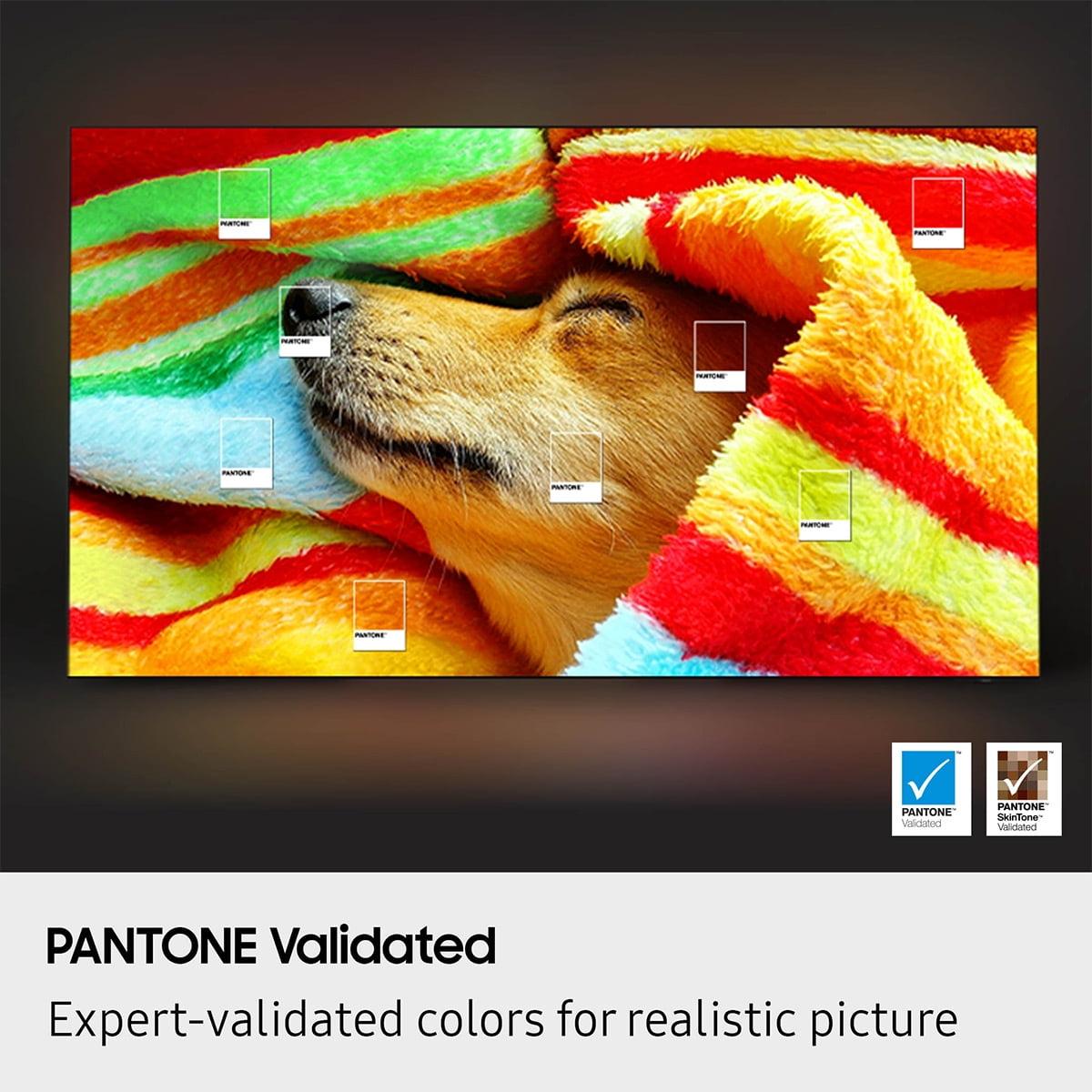
The QD-OLED panel in the 65-inch S85F is particularly impressive because it uses quantum dots to boost color accuracy. These microscopic particles convert blue light from the OLED into precise red and green wavelengths, resulting in colors that are both vivid and accurate. Samsung has even had this display Pantone validated, meaning it can reproduce over 2,140 colors and 110 different skin tones exactly as they're supposed to look.
The QN90D Neo QLED takes a completely different approach. Instead of individual pixels making their own light, it uses what's called a "full-array local dimming" system with thousands of tiny LED lights behind the screen. These LEDs are much smaller than traditional LED backlights - hence the "Mini-LED" technology - allowing for more precise control over different areas of the screen.
The quantum dot layer sits in front of these LEDs, converting their blue light into incredibly pure and saturated colors. This system can push much more light through the screen than OLED, making it excellent for bright rooms and HDR content that benefits from high brightness levels.
The QN90D came out in 2023 as part of Samsung's flagship Neo QLED lineup. At the time, it represented the cutting edge of LED TV technology with its advanced Mini-LED backlight system and improved quantum dot layer. The gaming features were particularly forward-thinking, with support for up to 144Hz refresh rates for PC gaming.
The S85F OLED, released in 2025, benefits from two additional years of OLED development. Samsung has refined their QD-OLED manufacturing process, improved the longevity of the organic compounds, and added new AI-driven features. The NQ4 AI Gen2 Processor includes 20 specialized neural networks that can analyze and optimize the picture in real-time, something that wasn't possible in the 2023 QN90D.
One of the most significant improvements in the 2025 model is the Color Booster Pro technology, which uses AI to analyze each scene and enhance colors on a frame-by-frame basis. This means the TV is constantly adjusting to show you the most accurate and vibrant colors possible, whether you're watching a nature documentary or playing a video game.
This is where the fundamental difference between these technologies becomes most apparent. The S85F OLED's ability to turn pixels completely off creates blacks that are literally perfect - there's no light coming from those pixels at all. When you're watching a movie with dark scenes, like a space thriller or horror film, the difference is striking. Stars actually look like points of light in true darkness, not gray specks against a dark gray background.
The QN90D's local dimming system does an impressive job for LED technology, but it can't match OLED's per-pixel control. When you have a bright object next to a dark area - like credits rolling over a dark scene - you might notice slight "blooming" where the bright area causes nearby dark areas to appear slightly lit. It's not bad, but it's noticeable if you're looking for it.
Here's where the QN90D Neo QLED fights back hard. While the S85F can reach about 750 nits of peak brightness in small highlights, the QN90D can sustain much higher brightness levels across larger areas of the screen. This makes a huge difference when watching HDR content during the day or in a bright room.
HDR (High Dynamic Range) content is designed to show both very bright and very dark areas in the same scene - think of a sunset where you can see detail in both the bright sky and the dark foreground. The QN90D's superior brightness means those bright sunset colors will look more like what you'd see in real life, while the S85F's perfect blacks mean the dark areas will have more detail and depth.
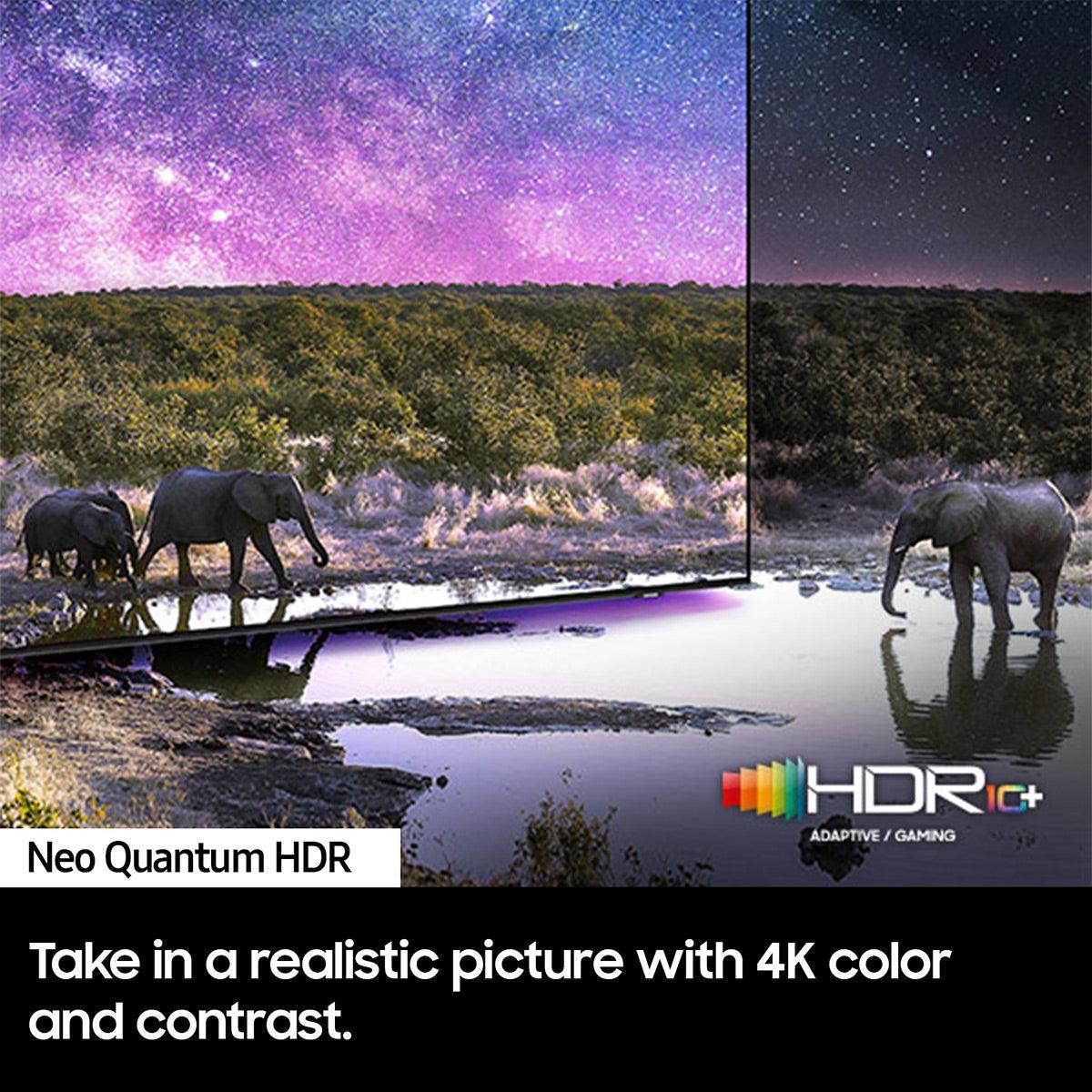
Both TVs support HDR10+ Adaptive, which adjusts the HDR mapping scene by scene. Neither supports Dolby Vision, which is Samsung's way of promoting their own HDR standard. In practice, this isn't a huge limitation since most content is mastered for HDR10+ anyway.
The S85F OLED has a clear advantage in color accuracy thanks to its Pantone validation and QD-OLED technology. Colors look natural and true to life, which is particularly important for skin tones and natural scenes. The quantum dots ensure that colors remain accurate even at different brightness levels.
The QN90D's quantum dot system produces incredibly vibrant colors, sometimes even more saturated than the OLED. While this can make some content look more "pop," it's not always more accurate. However, for sports, animation, and content where you want colors to really jump off the screen, many people prefer the Neo QLED's approach.
Both TVs excel at gaming, but in different ways. The S85F OLED has virtually instantaneous pixel response times because organic materials can change states incredibly quickly. This eliminates motion blur and ghosting, making fast-paced games look crystal clear. Input lag - the delay between pressing a button and seeing the result on screen - is also extremely low.
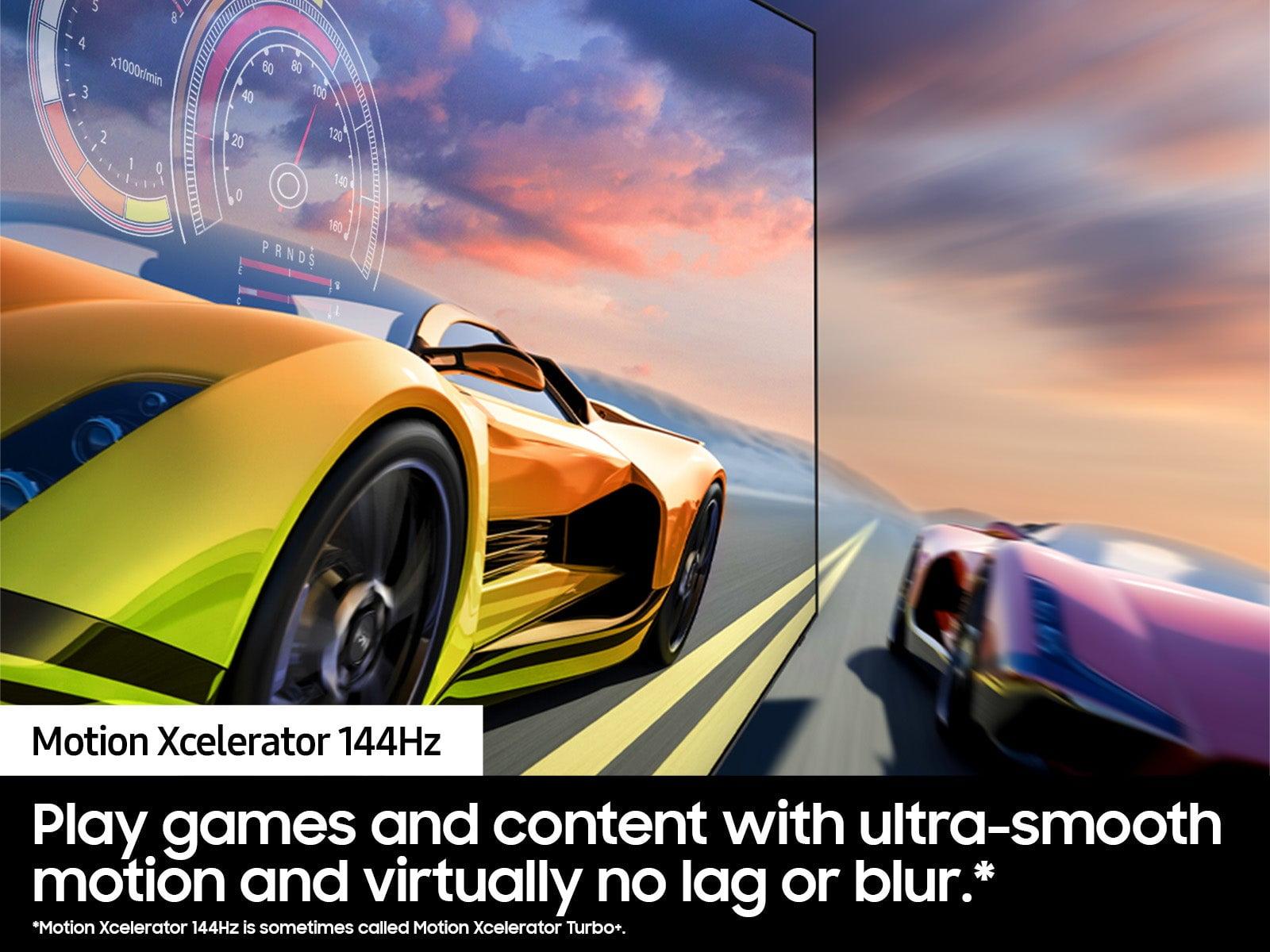
The QN90D's Mini-LED backlight can't quite match OLED's response time, but it's still excellent for gaming. Where it pulls ahead is in refresh rate capability. While the S85F tops out at 120Hz, the QN90D can handle up to 144Hz when connected to a gaming PC. This higher refresh rate can make competitive games feel more responsive and smooth.
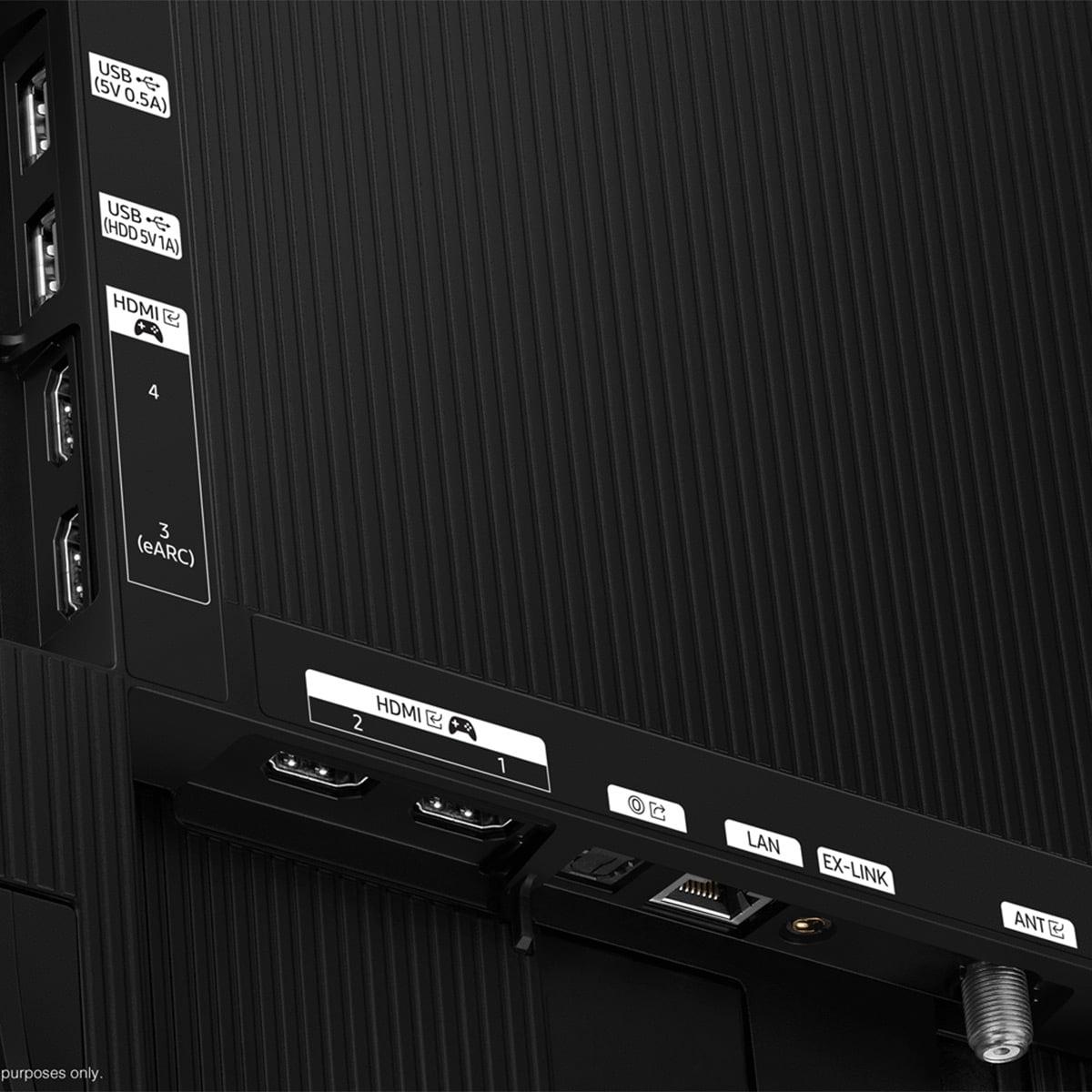
Both TVs include Samsung's comprehensive gaming feature set. Auto Game Mode automatically switches to low-latency settings when it detects a gaming console. VRR (Variable Refresh Rate) synchronizes the display's refresh rate with your console's frame rate, eliminating screen tearing. Both support FreeSync Premium, which is AMD's version of this technology.
The Gaming Hub on both TVs lets you access cloud gaming services like Xbox Game Pass and NVIDIA GeForce Now without needing a console. However, the S85F's newer processor handles these cloud services more smoothly and with better image quality.
Both TVs run Samsung's Tizen OS, which is one of the more polished smart TV platforms. The interface is intuitive, apps load quickly, and you get access to all major streaming services. The S85F's NQ4 AI Gen2 Processor makes everything feel a bit snappier, especially when switching between apps or loading content.
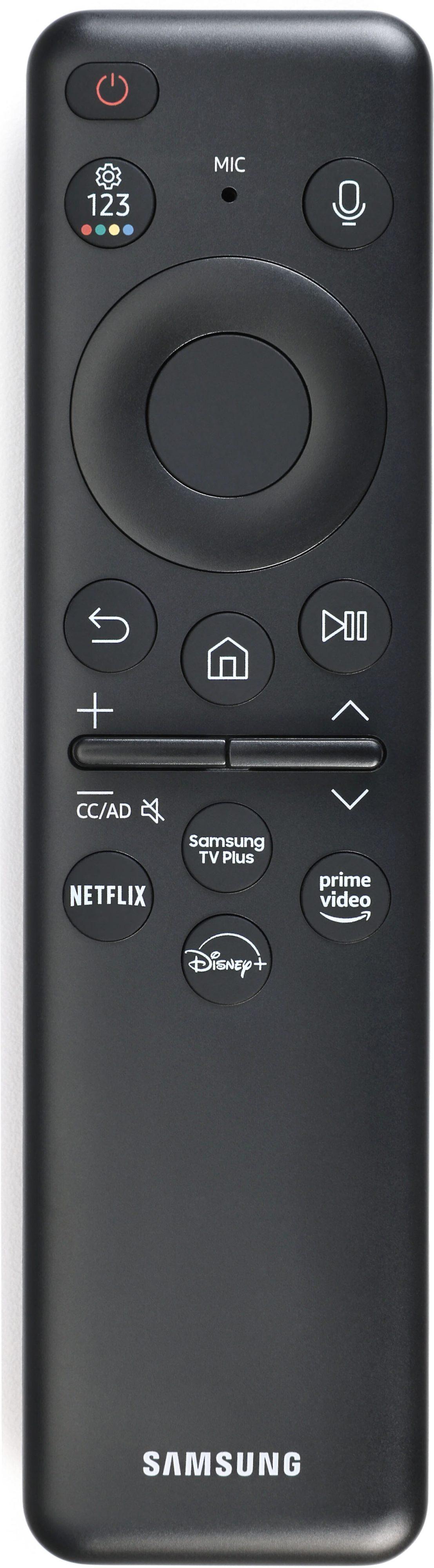
One unique feature of the S85F is its SolarCell Remote, which charges itself using ambient light. It's a small touch, but it means you'll never need to replace batteries. The remote also includes Far-Field Voice Interaction, so you can control the TV with voice commands from across the room without pointing the remote.
Both TVs include Samsung's SmartThings Hub functionality, turning them into control centers for your smart home devices. They support Matter and Thread protocols, which means they can control devices from different manufacturers. The S85F's newer processor handles these smart home tasks more efficiently and can manage more devices simultaneously.
The QN90D has a slight edge in built-in audio with its 4.2.2 channel, 60-watt speaker system compared to the S85F's 2.0 channel, 20-watt setup. Both support Dolby Atmos and Object Tracking Sound, which moves audio around the screen to match what's happening visually.
However, if you're investing in a premium TV, you'll probably want to pair it with a soundbar or home theater system anyway. Both TVs support Samsung's Q-Symphony technology, which lets compatible Samsung soundbars work together with the TV's built-in speakers for a more immersive experience.
This is where the QN90D Neo QLED really shines. If your TV will be in a living room with lots of windows or bright lighting, the Neo QLED's superior brightness helps it maintain picture quality even in challenging conditions. Colors stay vibrant, and you can still see detail in dark scenes.
The S85F's OLED technology struggles more in bright environments. While it has decent anti-reflection coating, bright lights can make the blacks appear gray rather than true black. If you're planning to watch during the day with curtains open, the QN90D is the better choice.
For a dedicated home theater room where you can control lighting, the S85F OLED is hard to beat. The perfect blacks and infinite contrast create an incredibly immersive experience that's particularly noticeable with movies and cinematic content. The wider viewing angles also mean everyone in the room gets a good picture, not just those sitting directly in front.
The OLED's superior motion handling makes it excellent for action movies and sports. Fast-moving objects appear crisp and clear without the slight blur that can sometimes affect LED displays.
OLED technology has historically raised concerns about burn-in - permanent image retention from static elements like channel logos or game HUDs. Modern OLEDs like the S85F have numerous safeguards including pixel shifting, logo detection, and automatic brightness adjustment. Samsung also warranties their OLED panels against burn-in.
The QN90D's LED technology doesn't have burn-in concerns at all. The inorganic LED lights and quantum dots are inherently more stable over time. If you plan to use your TV for things like displaying security camera feeds or playing games with persistent HUD elements, the Neo QLED might be the safer long-term choice.
The S85F is more energy-efficient because pixels can turn completely off, reducing power consumption during dark scenes. The QN90D's backlight system needs to stay on even for black areas, though local dimming does reduce power consumption somewhat.
At $1,599.99, the S85F OLED offers premium picture quality at a competitive price point. You're getting the latest OLED technology, excellent gaming performance, and superior contrast at a price that's reasonable for the quality level.
The QN90D at $2,700 costs significantly more but offers advantages in bright room performance and peace of mind regarding burn-in. It's also a more mature technology with a proven track record.
Choose the S85F OLED if you:
Choose the QN90D Neo QLED if you:
For most home theater setups, the S85F's superior contrast and competitive pricing make it the better choice. However, if your viewing environment is particularly bright or you have specific concerns about OLED technology, the QN90D's proven performance and bright room capabilities justify the higher price.
The TV market moves quickly, but both of these models represent excellent examples of their respective technologies. Your decision should ultimately come down to your specific room conditions, viewing habits, and whether you prioritize the dramatic contrast of OLED or the bright room performance of Neo QLED.
| Samsung 65" S85F OLED 4K Smart TV (2025) - $1,599.99 | Samsung 65" QN90D Series 4K Neo QLED Smart TV - $2,700 |
|---|---|
| Display Technology - Fundamental difference in how the TV creates light and color | |
| QD-OLED (pixels create their own light, can turn completely off) | Neo QLED with Mini-LED backlight (thousands of tiny LEDs behind quantum dot layer) |
| Black Level Performance - Critical for contrast and dark scene detail | |
| Perfect blacks (infinite contrast ratio) | Very good blacks with slight blooming in high-contrast scenes |
| Peak Brightness - Determines HDR impact and bright room performance | |
| 750 nits highlights, 150 nits full-screen (moderate brightness) | Significantly higher sustained brightness across large areas |
| Gaming Refresh Rate - Important for PC gaming and future console compatibility | |
| 120Hz native with Motion Xcelerator support | Up to 144Hz for PC gaming with Motion Xcelerator Turbo+ |
| Viewing Angles - Affects picture quality from side seating positions | |
| Excellent (consistent picture from any angle) | Good (some color/contrast shift when viewed from sides) |
| Burn-in Risk - Long-term durability concern with static content | |
| Possible but rare with modern safeguards and warranty protection | No burn-in risk due to inorganic LED technology |
| Room Lighting Performance - How well it handles bright environments | |
| Best in dark/controlled lighting (blacks can appear gray in bright rooms) | Excellent in bright rooms, maintains picture quality in daylight |
| Color Accuracy - Important for natural-looking content | |
| Pantone validated, exceptional accuracy across 2,140 colors | Very good color reproduction, sometimes oversaturated |
| Audio System - Built-in sound quality | |
| 2.0 channel, 20W with Dolby Atmos | 4.2.2 channel, 60W with Object Tracking Sound+ |
| Processor & AI Features - Affects performance and smart features | |
| NQ4 AI Gen2 with 20 neural networks, Color Booster Pro | Older processor, less advanced AI optimization |
| Release Year & Future-Proofing - Technology generation and longevity | |
| 2025 model with latest OLED advances | 2023 model, mature but older technology |
| Energy Efficiency - Operating costs over time | |
| Lower power consumption (pixels turn off for black areas) | Higher power consumption (backlight always on) |
| Best Use Case - Ideal viewing environment | |
| Home theater/controlled lighting, movie watching, gaming | Bright living rooms, daytime viewing, worry-free operation |
The Samsung 65" S85F OLED 4K Smart TV (2025) - $1,599.99 is significantly better for dark rooms due to its OLED technology that produces perfect blacks. Each pixel can turn completely off, creating infinite contrast that makes dark scenes look incredibly detailed and immersive.
The Samsung 65" QN90D Series 4K Neo QLED Smart TV - $2,700 excels in bright rooms with its superior peak brightness and Mini-LED backlight system. It maintains picture quality even with lots of ambient light, while the S85F's blacks can appear gray in bright environments.
The S85F OLED costs $1,599.99 compared to the QN90D Neo QLED at $2,700 - a $1,100 difference. The S85F offers better value for most users, providing premium OLED picture quality at a competitive price point.
The S85F OLED has minimal burn-in risk thanks to modern safeguards like pixel shifting and Samsung's warranty protection. The QN90D Neo QLED has no burn-in concerns at all due to its inorganic LED technology.
The Samsung 65" S85F OLED has superior contrast with perfect blacks since pixels can turn completely off. The QN90D has very good contrast for LED technology but can't match OLED's infinite contrast ratio.
The Samsung 65" S85F OLED is ideal for home theater use with its perfect blacks, superior contrast, and excellent viewing angles. It creates a more cinematic experience, especially in controlled lighting environments.
Both TVs run Samsung's Tizen OS with identical app support. The S85F has a newer NQ4 AI Gen2 processor that handles smart features more efficiently and includes unique features like the SolarCell Remote and Color Booster Pro.
The QN90D Neo QLED may have better long-term durability due to its inorganic LED technology with no burn-in concerns. However, modern OLEDs like the S85F have significantly improved lifespan and come with burn-in warranty protection.
The Samsung 65" S85F OLED is more energy-efficient because pixels turn completely off during dark scenes, reducing power consumption. The QN90D requires more power since its backlight system stays on even for black areas.
Choose the S85F OLED if you prioritize contrast, have a controlled lighting environment, and want the best value for premium picture quality. Choose the QN90D Neo QLED if you have a bright room, want worry-free operation, or need maximum gaming refresh rates.
We've done our best to create useful and informative comparisons to help you decide what product to buy. Our research uses advanced automated methods to create this comparison and perfection is not possible - please contact us for corrections or questions. These are the sites we've researched in the creation of this article: rtings.com - samsung.com - youtube.com - rtings.com - youtube.com - samsung.com - bestbuy.com - avsforum.com - avsforum.com - samsung.com - displayspecifications.com - videoandaudiocenter.com - bestbuy.com - flatpanelshd.com - myallsouth.com - samsung.com - richstv.com - samsung.com - heartlandappliance.com - samsung.com - standardtvandappliance.com - gerhardsappliance.com - bestbuy.com - image-us.samsung.com - rtings.com - youtube.com - images.samsung.com

Privacy Policy
Terms and Conditions - Affiliate Policy
Home Security
© Copyright 2008-2026.
11816 Inwood Rd #1211, Dallas, TX 75244