

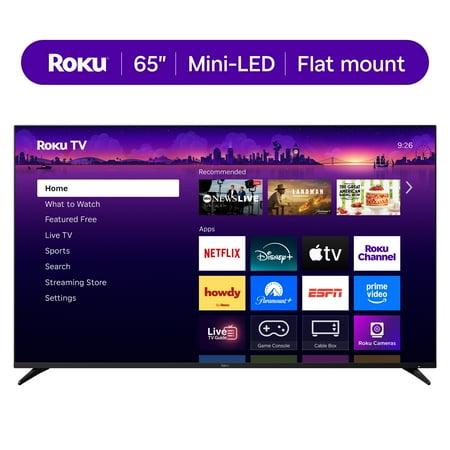
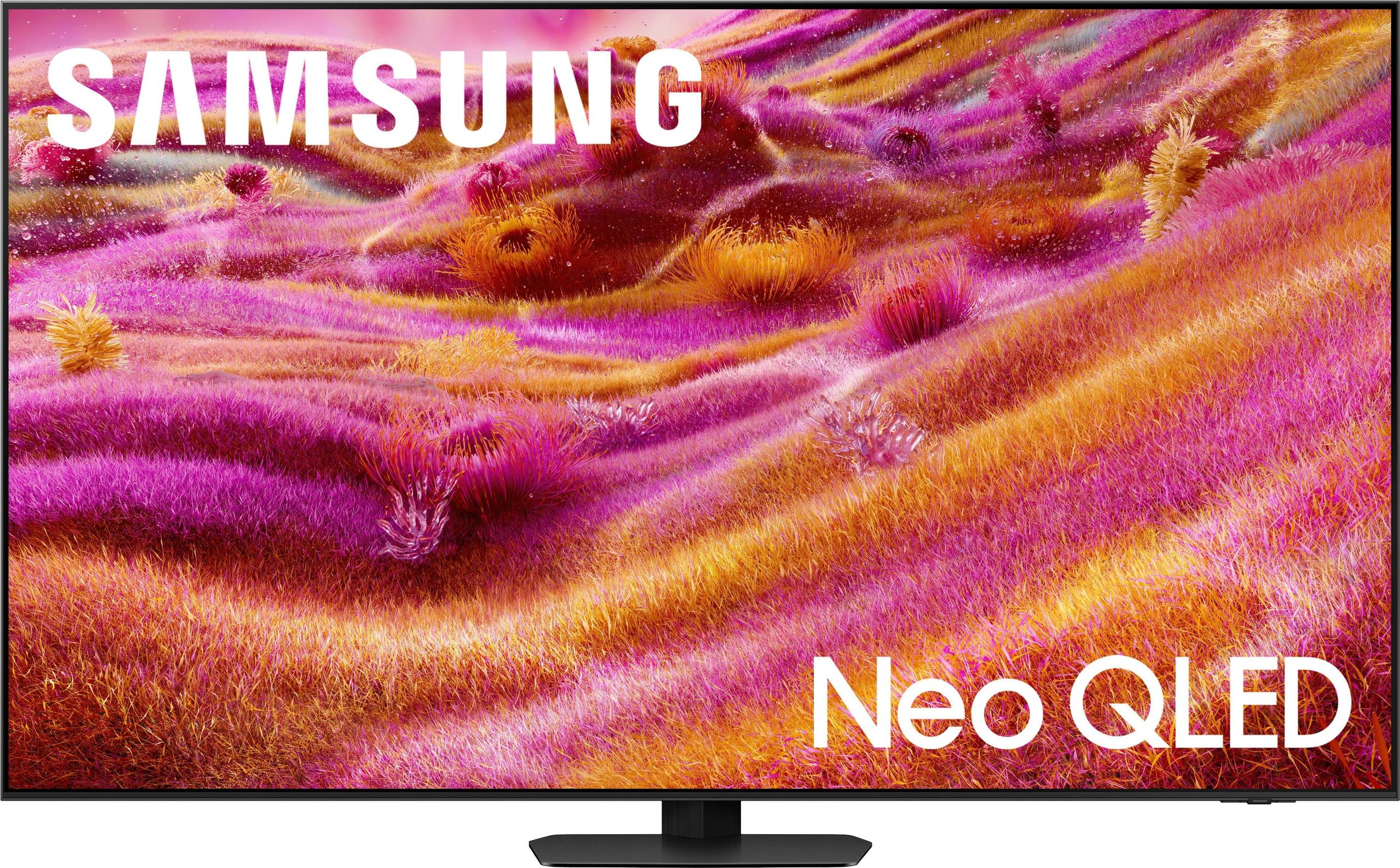
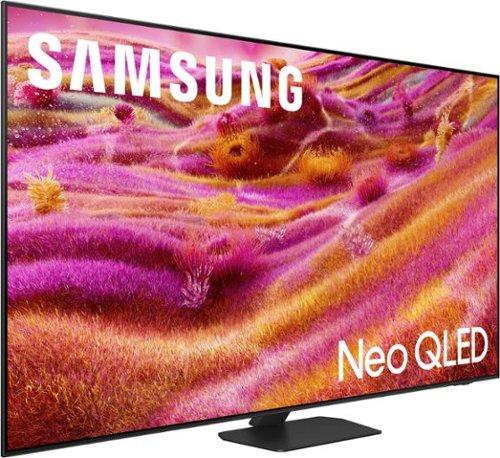
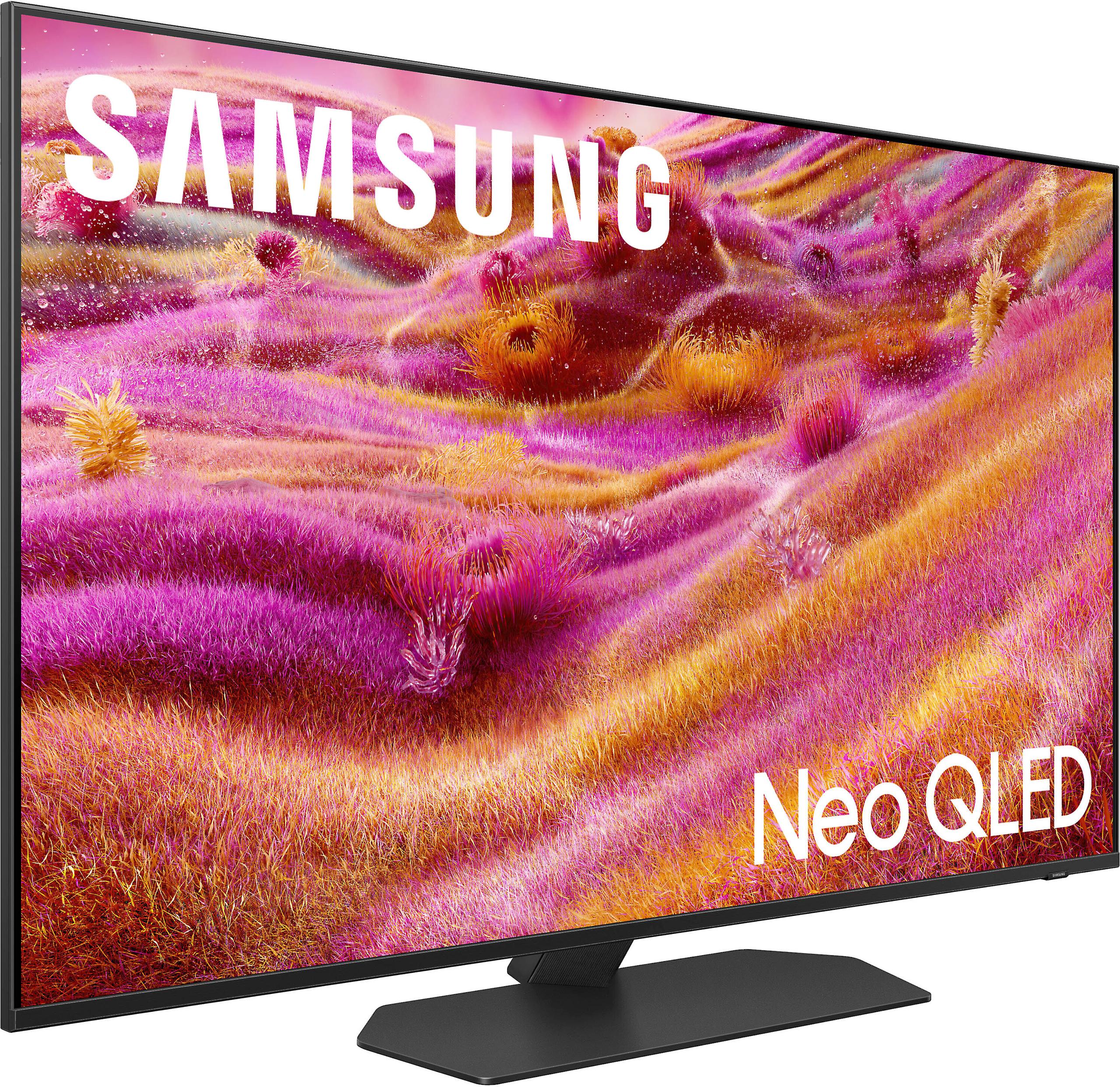

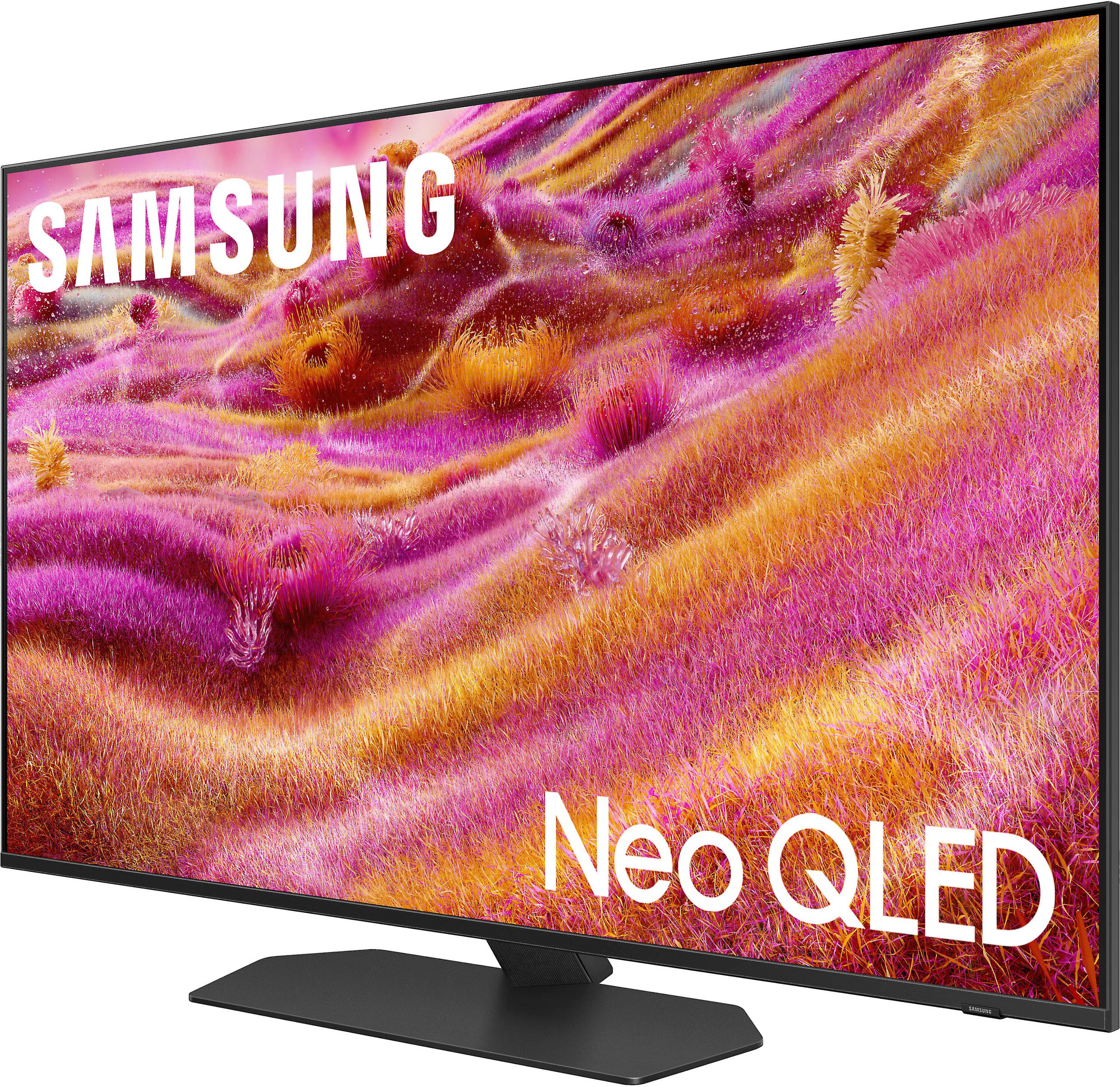
Shopping for a premium 65-inch TV in 2025? You're looking at one of the most competitive categories in home entertainment. The battle between the Roku 65" Pro Series 2025 and Samsung QN90F perfectly illustrates the tough choices facing TV buyers today: exceptional value versus flagship features.
Both TVs represent the cutting edge of Mini-LED technology—a display innovation that uses thousands of tiny LEDs behind the screen for precise backlighting control. This creates the deep blacks we love about OLED displays while maintaining the bright, punchy HDR performance that makes LED TVs shine in living rooms with lots of windows.
Premium Mini-LED TVs sit in that sweet spot between affordable LED displays and expensive OLED screens. They're designed for serious viewers who want flagship-level picture quality without OLED's potential burn-in issues (permanent image retention from static elements like news tickers or game interfaces).
The key advantages of Mini-LED technology include superior contrast ratios, precise local dimming (where specific zones of the backlight can dim or brighten independently), and exceptional peak brightness that makes HDR content really pop. When shopping in this category, you're essentially paying for processing power, backlighting precision, and smart platform quality.
At the time of writing, these TVs occupy very different price points. The Roku Pro Series positions itself as a value-focused option that delivers most of the performance benefits of flagship TVs at a significantly lower cost. Meanwhile, the Samsung QN90F commands a premium price—roughly 80% more expensive—for its advanced AI processing and flagship features.
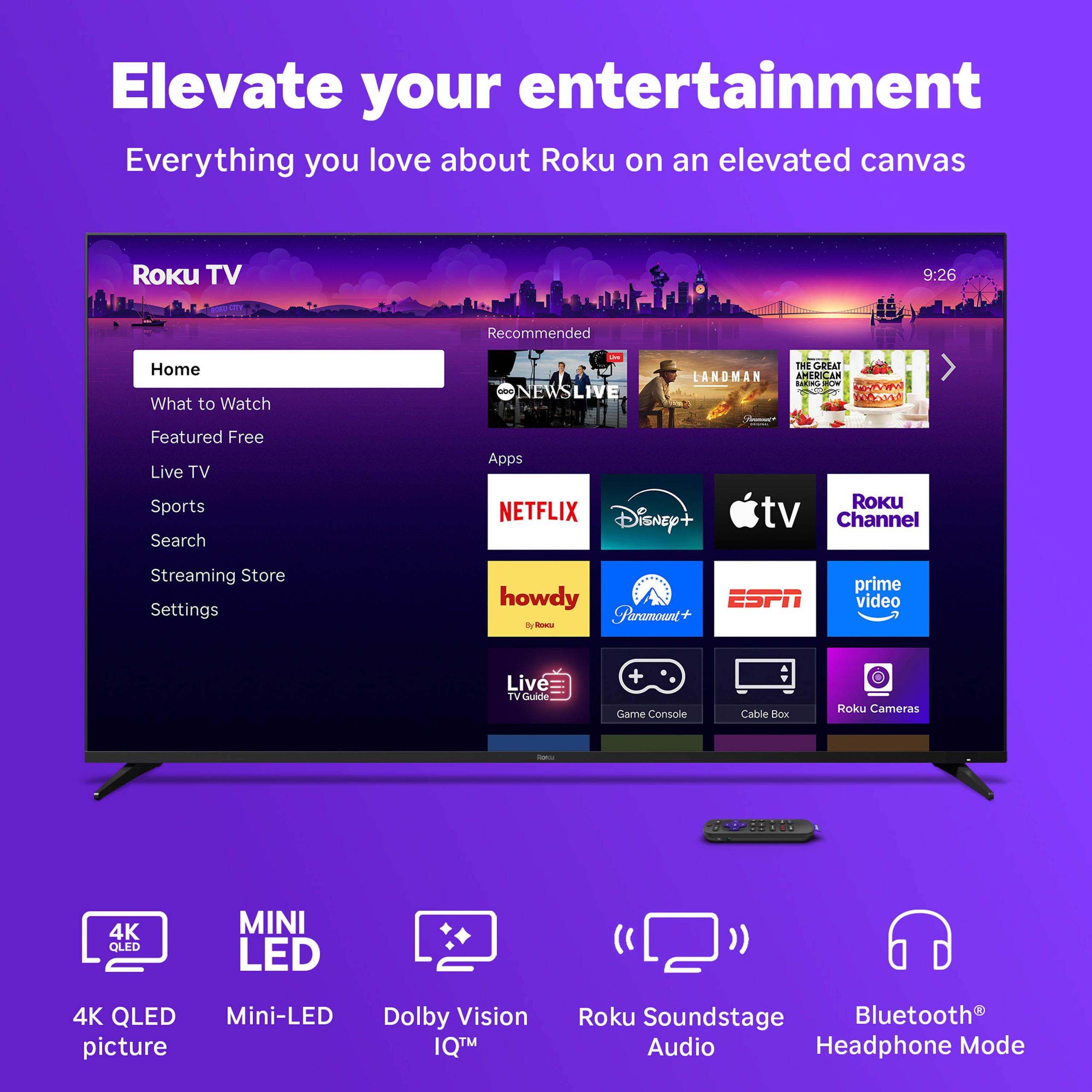
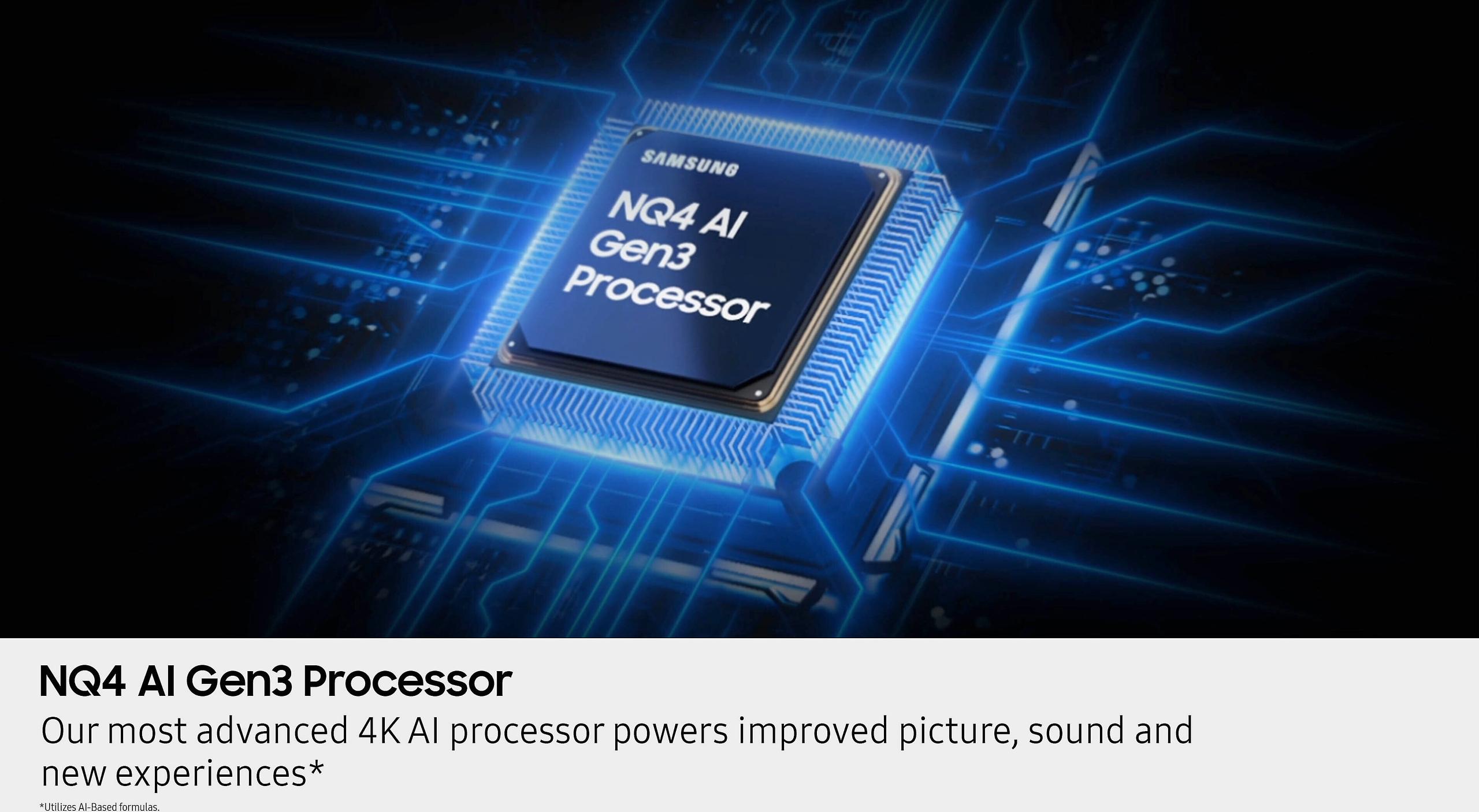
Both companies released their 2025 models with meaningful improvements. Roku enhanced their Mini-LED backlighting system by 75% over the previous generation while adding Wi-Fi 6 connectivity and improved Smart Picture Max processing. Samsung introduced their Vision AI platform and upgraded to the NQ4 AI Gen3 processor with 128 neural networks—a substantial leap in processing sophistication.
Peak brightness determines how impactful HDR content looks, especially highlights like explosions, car headlights, or sunlight streaming through windows. Both TVs excel here, but with important differences.
The Samsung QN90F reaches peaks around 1,900 nits in small highlight areas—that's bright enough to make you squint when a lightsaber ignites in Star Wars. More importantly, it sustains around 600 nits across larger bright scenes, which keeps the entire image vibrant rather than just small highlights.
The Roku Pro Series isn't far behind, hitting peaks around 1,750 nits with strong overall brightness performance. For most viewers, this difference is minimal in practice. Both TVs handle bright living rooms exceptionally well, maintaining picture quality even with afternoon sunlight streaming in.
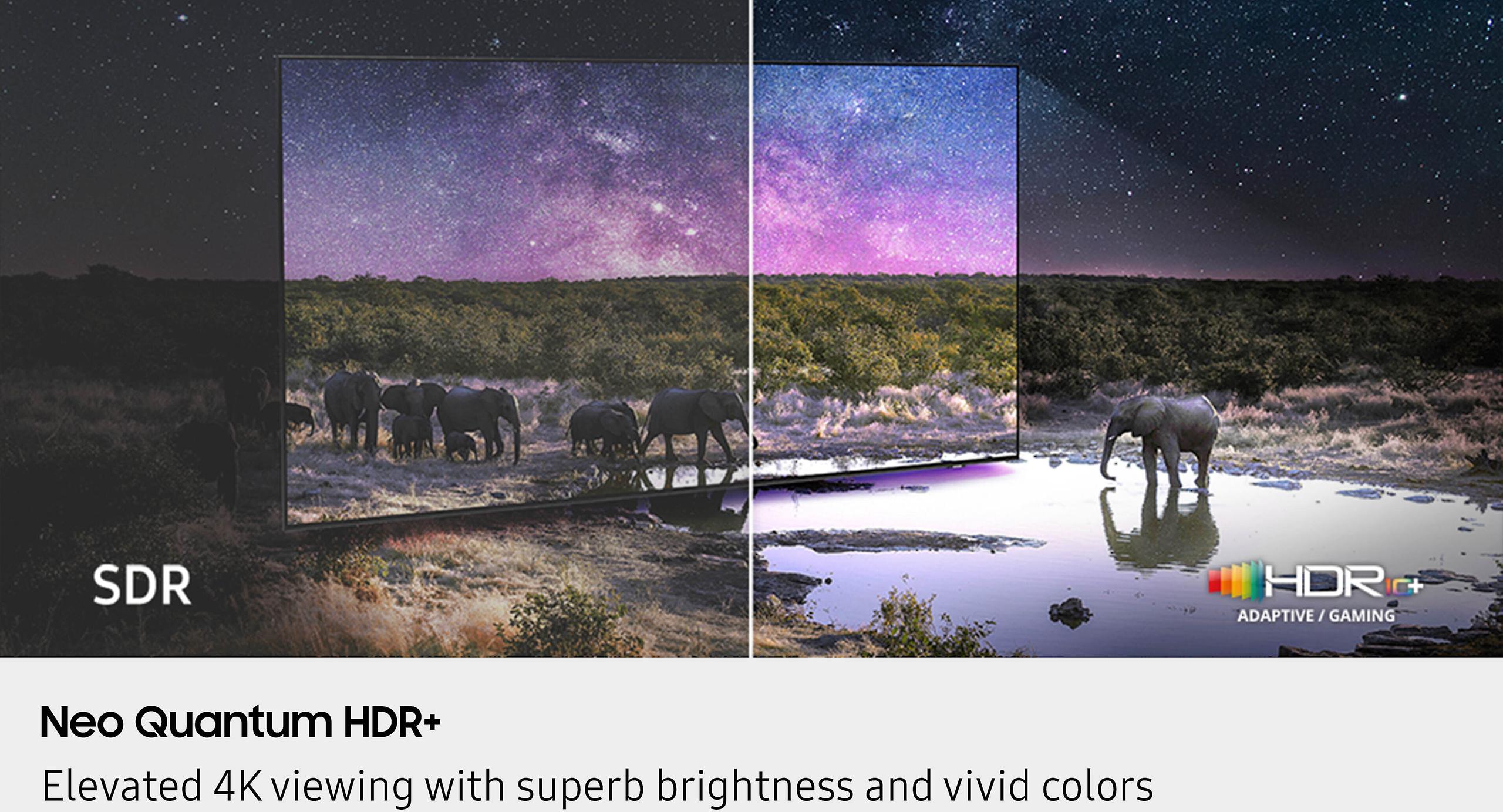
What matters more is HDR format support. The Samsung QN90F supports HDR10+ Adaptive, which automatically adjusts brightness and contrast based on your room's lighting conditions. However, it notably lacks Dolby Vision support—the premium HDR standard used by Netflix, Disney+, and many other streaming services. The Roku Pro Series includes Dolby Vision IQ, which provides similar room-adaptive features while supporting the broader Dolby Vision ecosystem.
Here's where Mini-LED technology really shines compared to standard LED displays. Both TVs use full-array local dimming with hundreds of individual zones that can brighten or dim independently.
The Samsung QN90F edges ahead with more precise zone control and Samsung's Quantum Matrix Technology Pro. This translates to less "blooming"—the halo effect you sometimes see around bright objects on dark backgrounds. In practice, this means cleaner-looking subtitles on dark movie scenes and better definition around bright elements in games.
The Roku Pro Series delivers solid local dimming performance with its re-engineered Mini-LED system. While not quite as precise as Samsung's implementation, it handles most content admirably and represents a significant improvement over budget LED displays.
Both TVs struggle slightly in Game Mode, where local dimming algorithms speed up to reduce input lag but sacrifice some precision. This is typical for Mini-LED displays and represents a reasonable trade-off for responsive gaming.
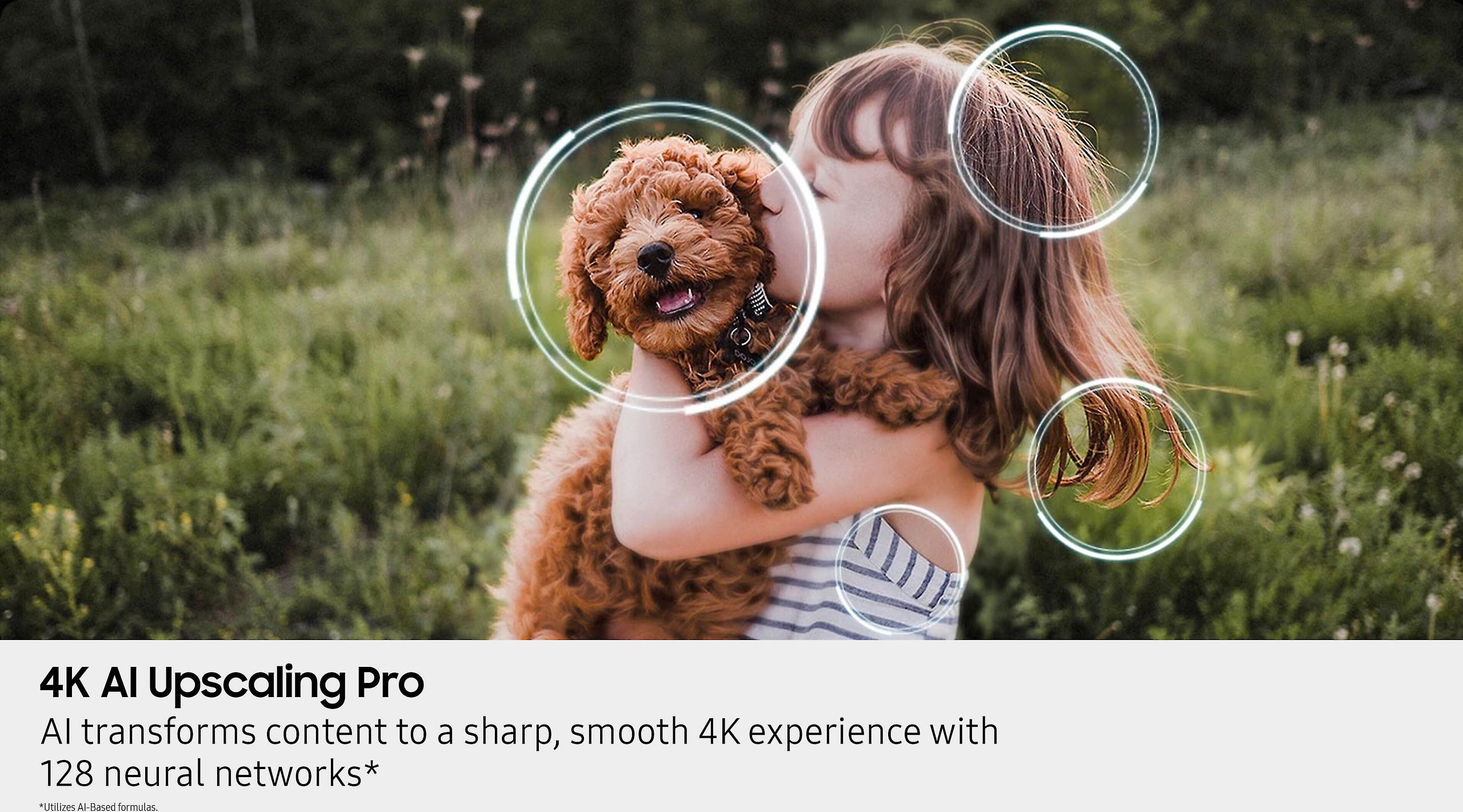
The processing differences between these TVs become apparent when watching lower-quality content. The Samsung QN90F's NQ4 AI Gen3 processor uses machine learning to analyze and enhance every frame in real-time. This 4K AI Upscaling Pro feature is particularly noticeable with 1080p streaming content or cable TV, where the Samsung consistently produces cleaner, more detailed images.
The Roku Pro Series includes Smart Picture Max processing, which automatically adjusts picture settings scene-by-scene. While not as sophisticated as Samsung's approach, it effectively optimizes different content types without requiring manual adjustments. Color accuracy has improved significantly—measurements show a Delta E of 2.6 compared to 3.9 on the previous generation, indicating more natural-looking colors straight out of the box.
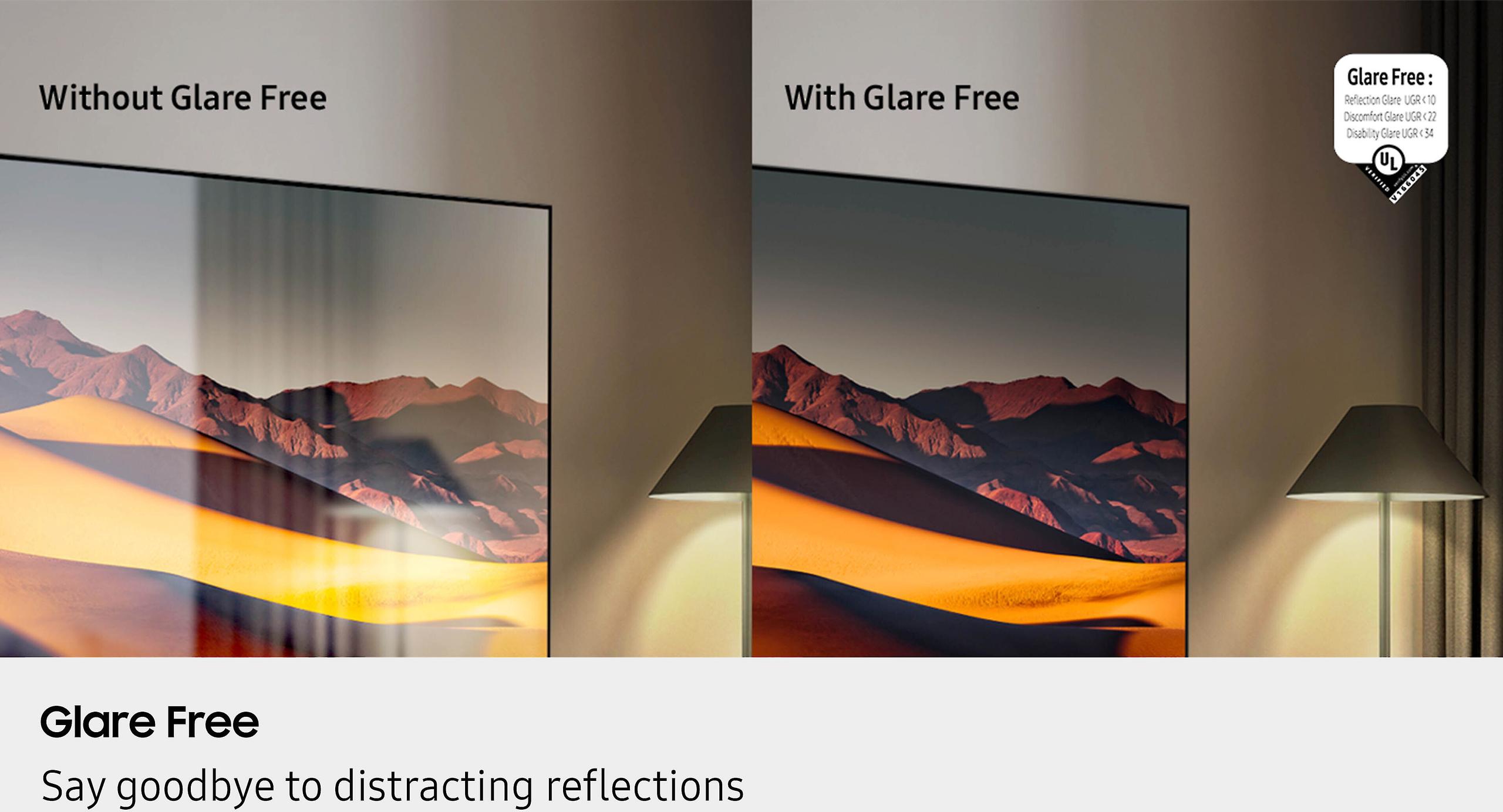
This is where Samsung pulls significantly ahead. The Samsung QN90F includes award-winning Glare Free technology that virtually eliminates reflections, even from direct light sources. If you've ever struggled to watch TV during the day because of window glare, this feature alone might justify the price premium.
The Roku Pro Series handles bright rooms well through sheer brightness but uses a standard screen coating that creates mirror-like reflections from lamps or windows. This limitation becomes problematic in rooms with challenging lighting conditions.
Modern gaming demands have pushed TV manufacturers to prioritize gaming features, and both displays deliver here.
The Samsung QN90F supports refresh rates up to 165Hz for PC gaming, though most console games max out at 120Hz. The Roku Pro Series handles 120Hz gaming smoothly with input lag as low as 5.2 milliseconds—fast enough for competitive gaming.
Both TVs include Variable Refresh Rate (VRR) and Auto Low Latency Mode (ALLM), which automatically switches to Game Mode when it detects console input. FreeSync Premium Pro support ensures smooth gaming without screen tearing on compatible devices.
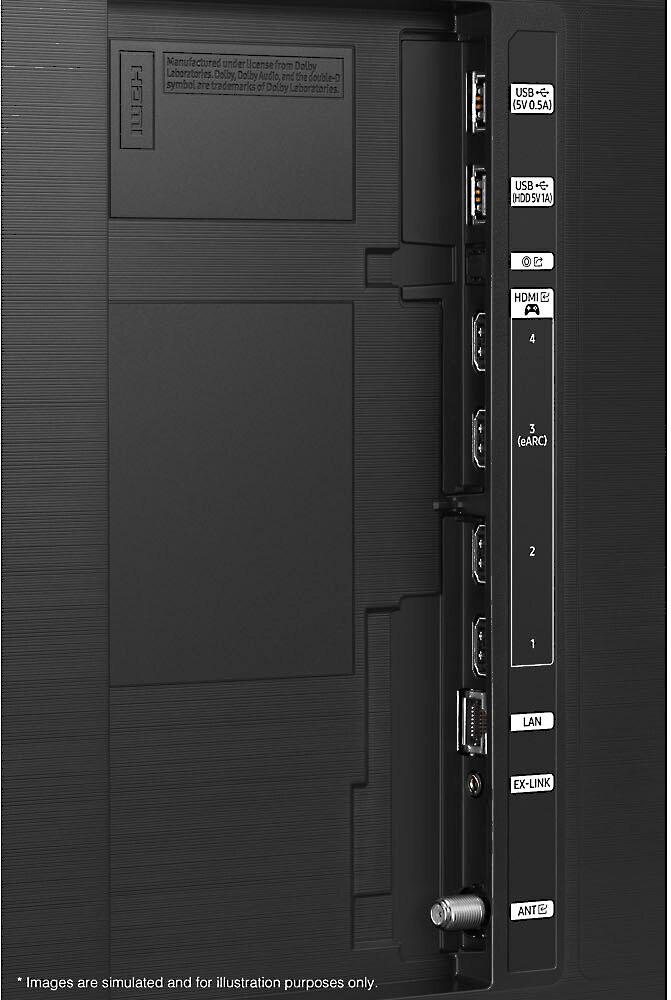
Here's where connectivity differences matter. The Samsung QN90F provides four HDMI 2.1 ports, meaning you can connect multiple high-end gaming devices simultaneously without compromising bandwidth. The Roku Pro Series offers two HDMI 2.1 ports, which handles most home setups but might require an HDMI switch for enthusiasts with multiple consoles and a high-end PC.
Both TVs automatically detect gaming devices and optimize picture settings accordingly, but Samsung's Game Bar provides more granular control over gaming-specific features like virtual crosshairs and frame rate monitoring.
Built-in TV audio has improved dramatically in recent years, and both displays challenge the conventional wisdom that you need a separate soundbar.
The Samsung QN90F delivers 60 watts through a 4.2.2 channel system with Object Tracking Sound+. This technology moves audio effects across the screen to match on-screen action—when a car drives from left to right, the sound follows. Dolby Atmos support adds overhead sound effects for movies and shows that support it.
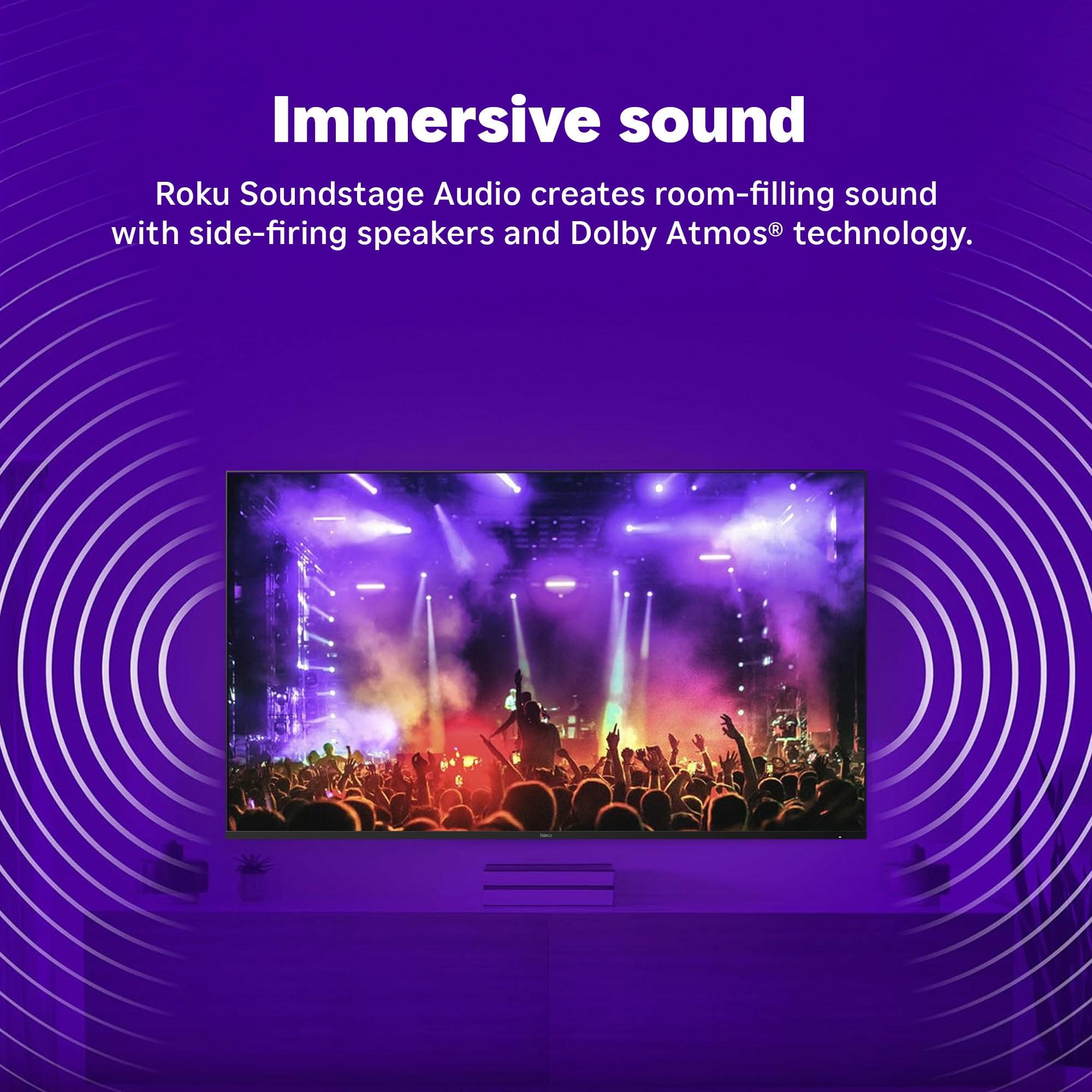
The Roku Pro Series surprised reviewers with its Roku Soundstage implementation. The side-firing speakers with Dolby Atmos create room-filling sound that many describe as "theater-like." User reviews consistently praise the bass response as unexpectedly powerful for a TV's built-in speakers.
Both TVs include Bluetooth headphone modes for private listening, though Samsung's implementation is more seamless with automatic device switching.
The smart TV experience represents a fundamental philosophical difference between these manufacturers.
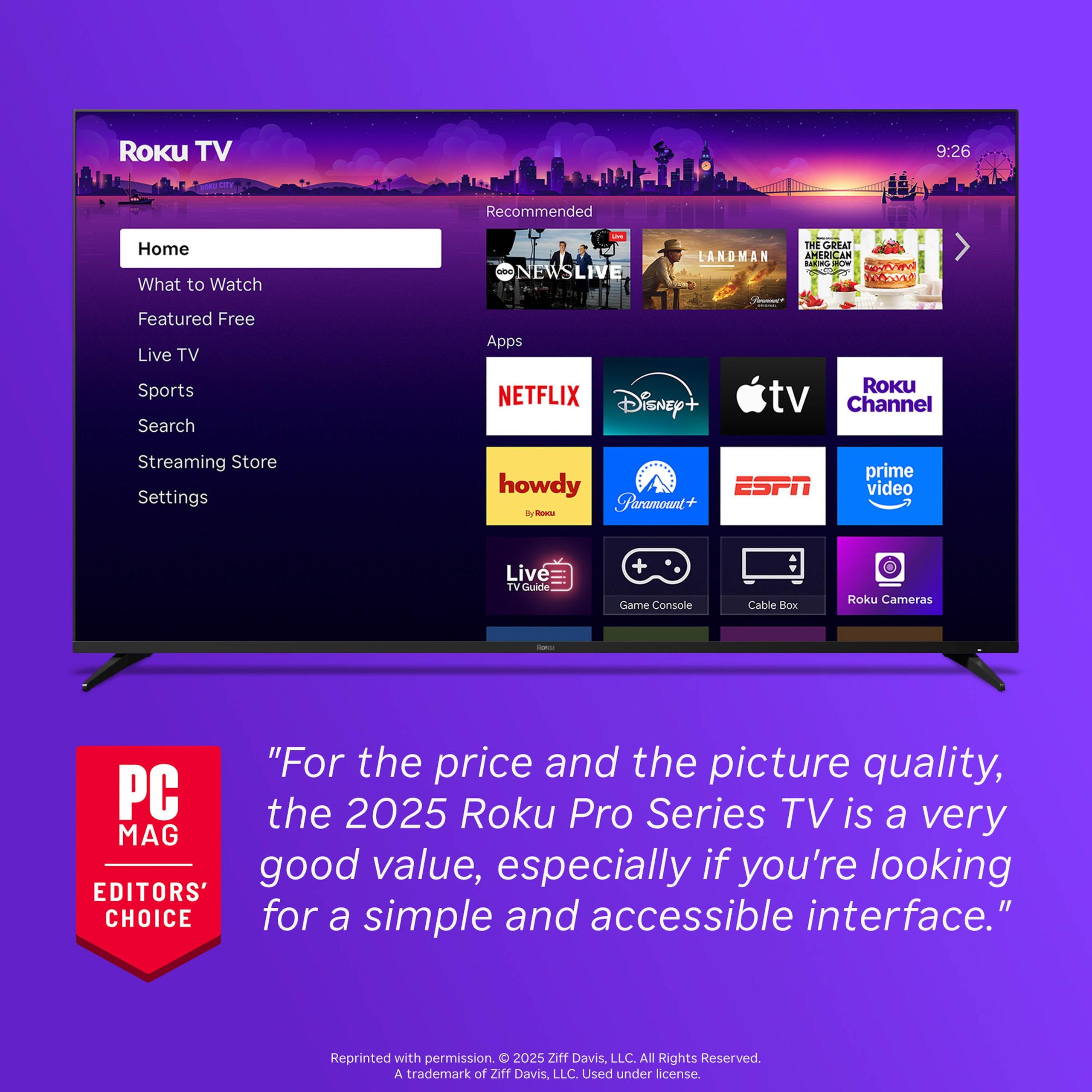
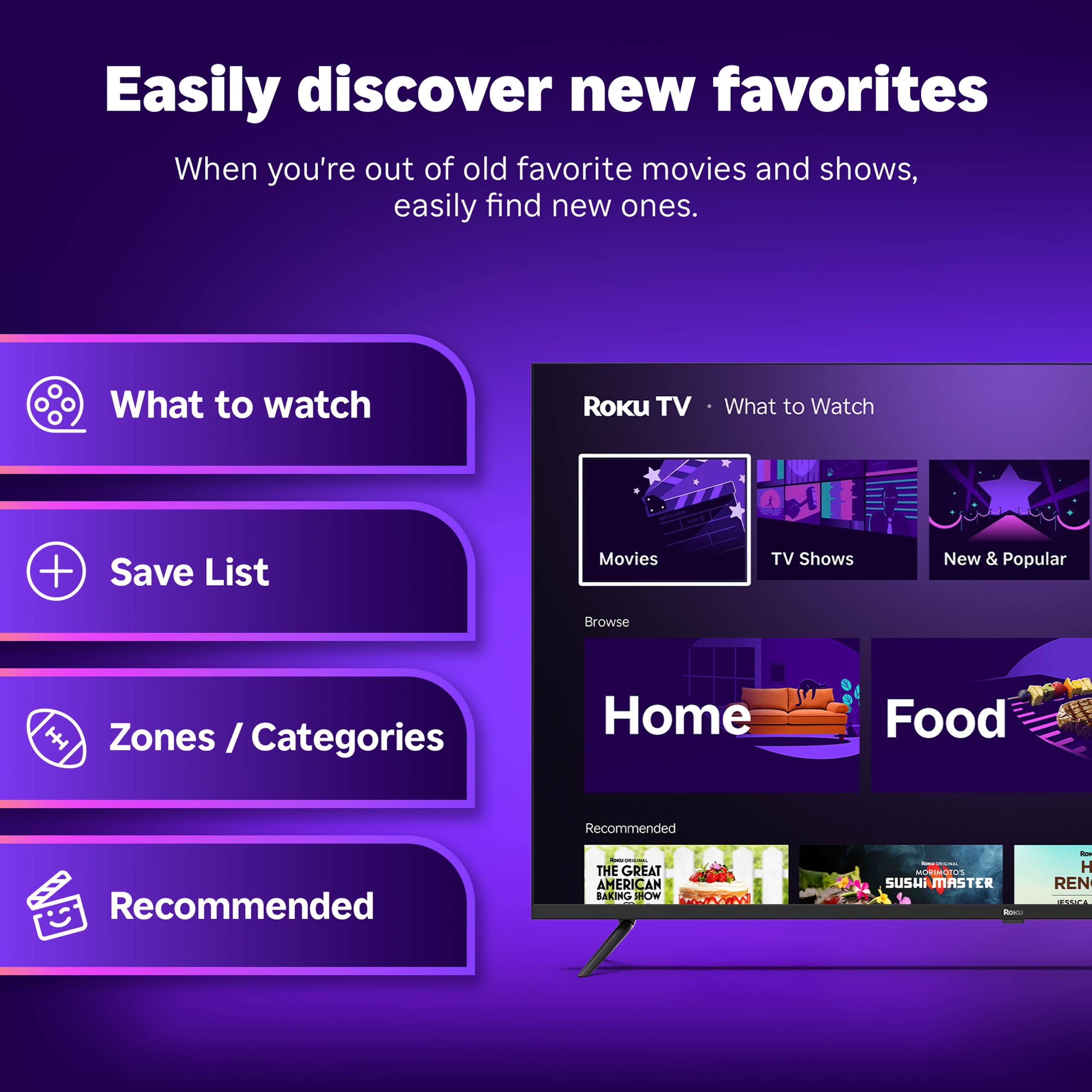
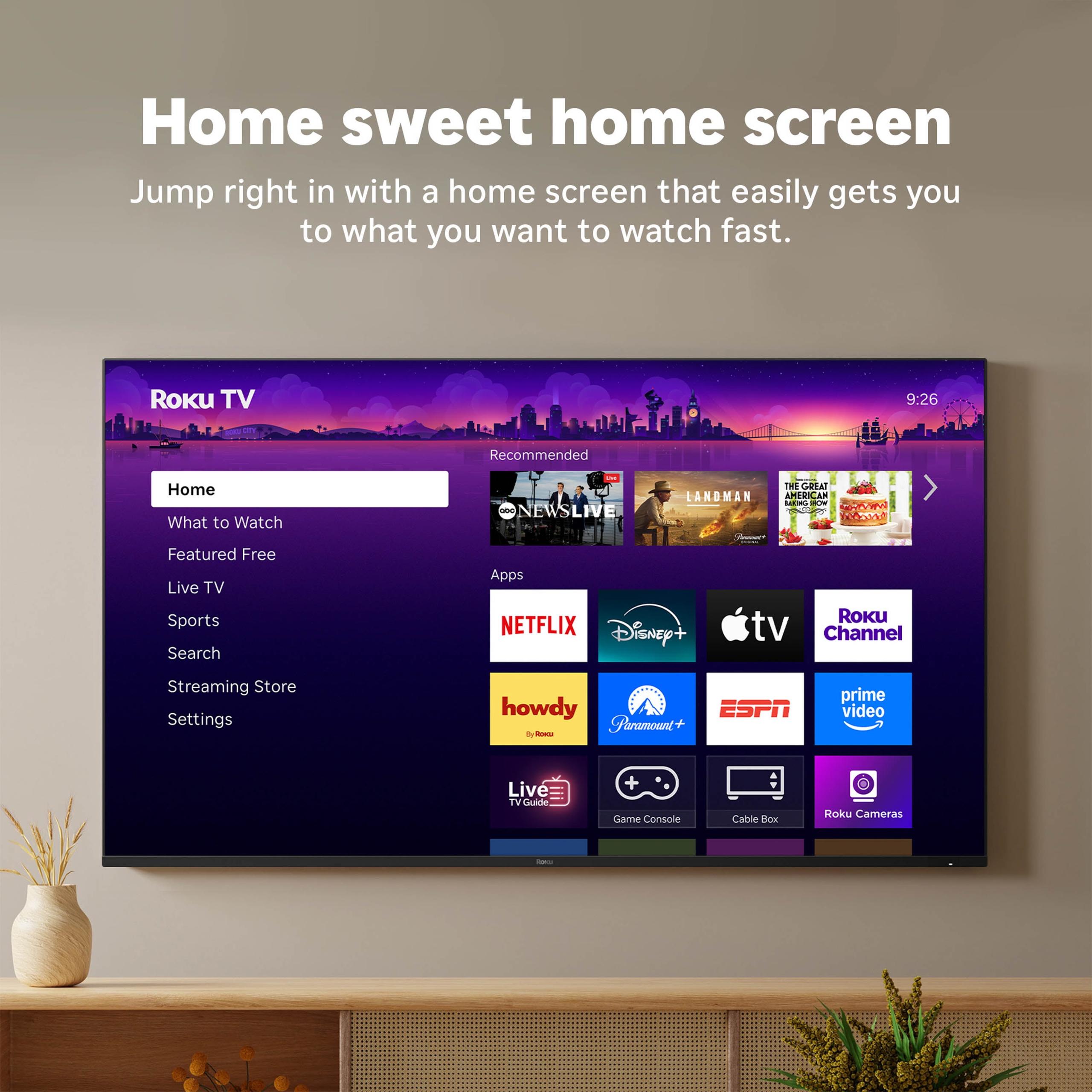
The Roku Pro Series runs Roku OS 15, which prioritizes content discovery over flashy features. The unified home screen aggregates content from all your streaming services, making it easy to find something to watch without remembering which app has which show. Roku's platform includes over 2,700 free channels, providing substantial value for cord-cutters.
Roku's platform neutrality means equal treatment for all streaming services—no preferential placement for company-owned content. This approach has earned Roku a reputation for longevity, with some Roku TVs from 2017 still receiving meaningful software updates.
The Samsung QN90F runs Tizen with Samsung's new Vision AI platform. This system uses on-device artificial intelligence to analyze your viewing patterns and room environment, automatically adjusting picture and sound settings. Vision AI also enables features like universal gesture control and generative art wallpapers when the TV isn't in use.
Samsung's SmartThings integration transforms the TV into a smart home hub, allowing control of compatible devices directly from the television interface. The platform feels more sophisticated but can overwhelm users who simply want to watch Netflix.
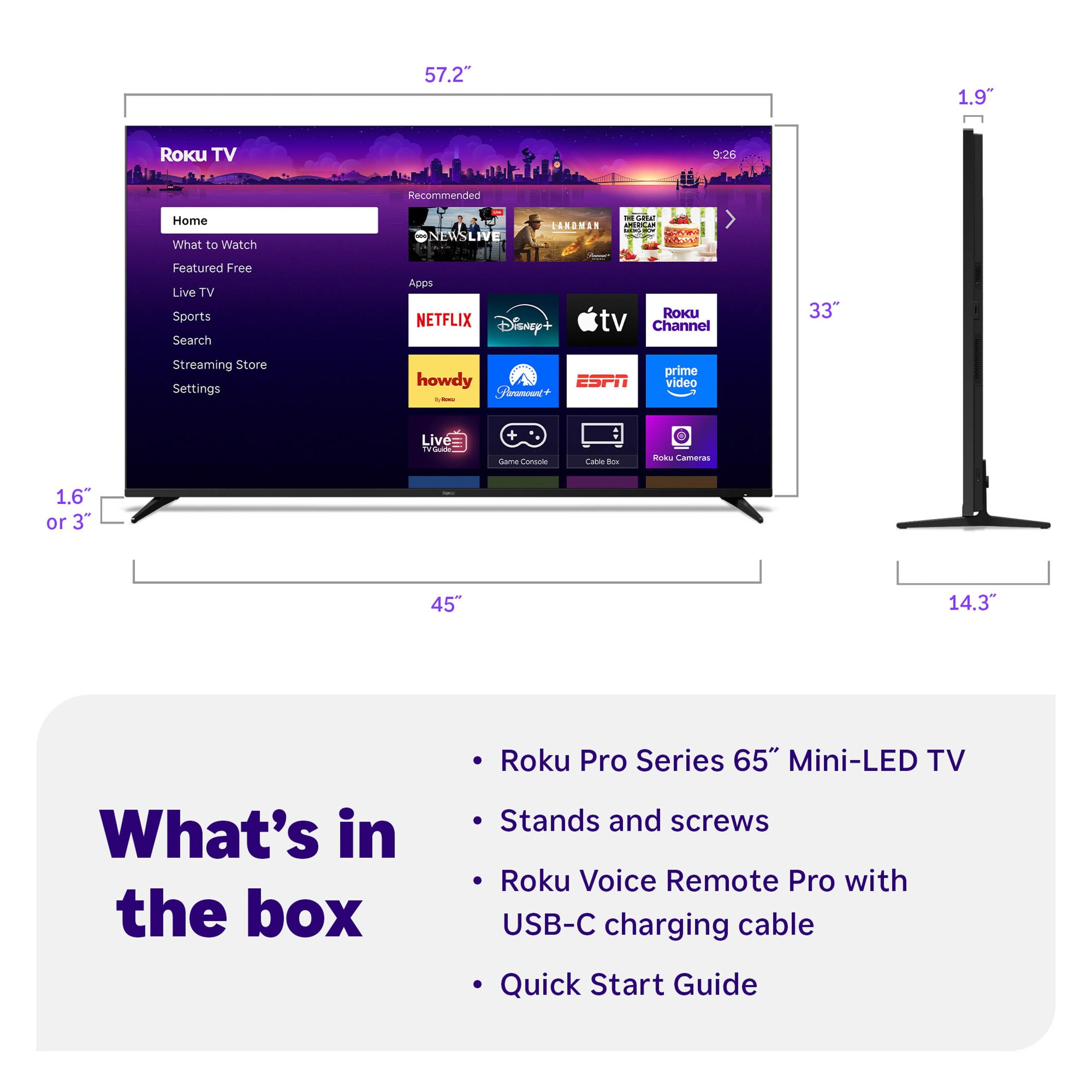
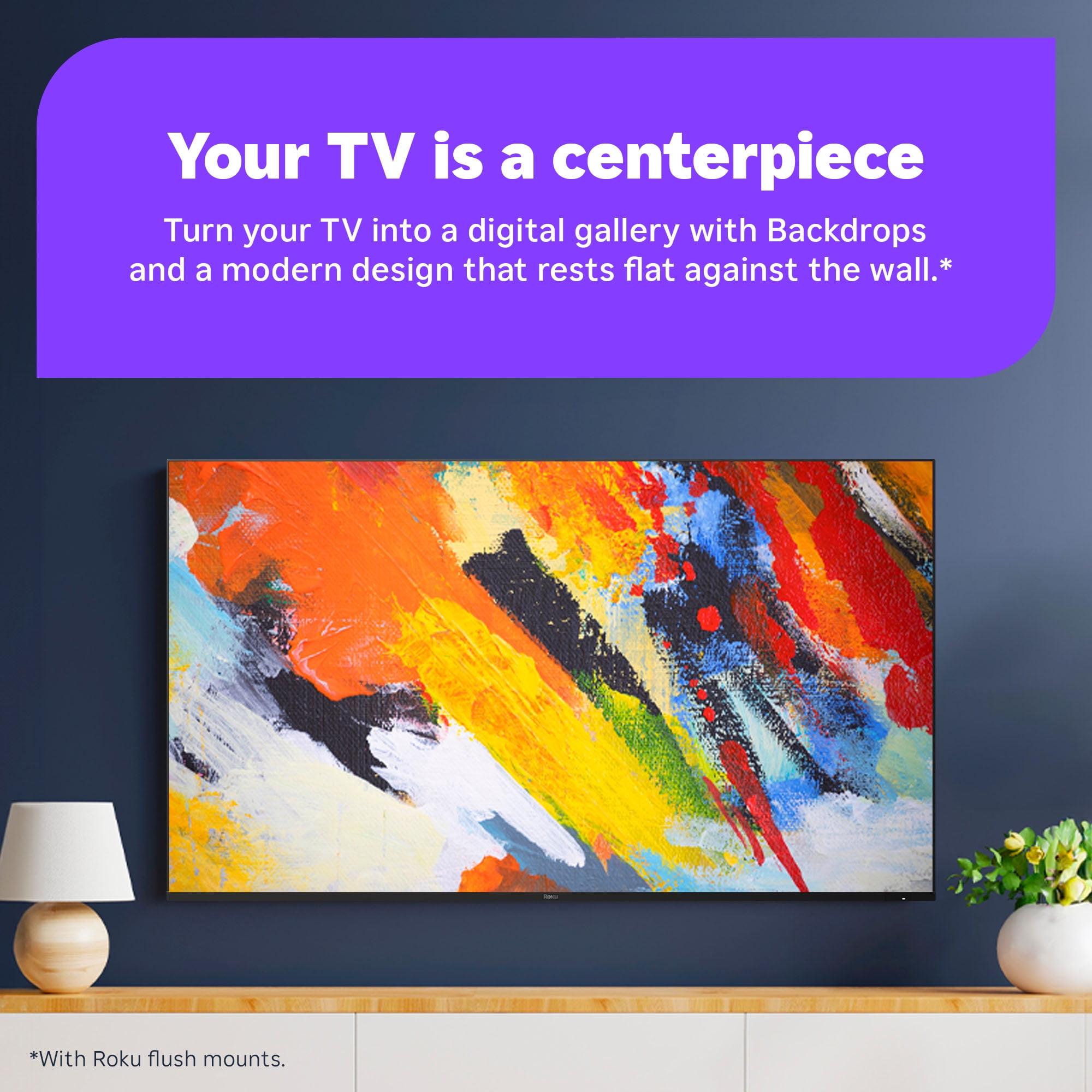
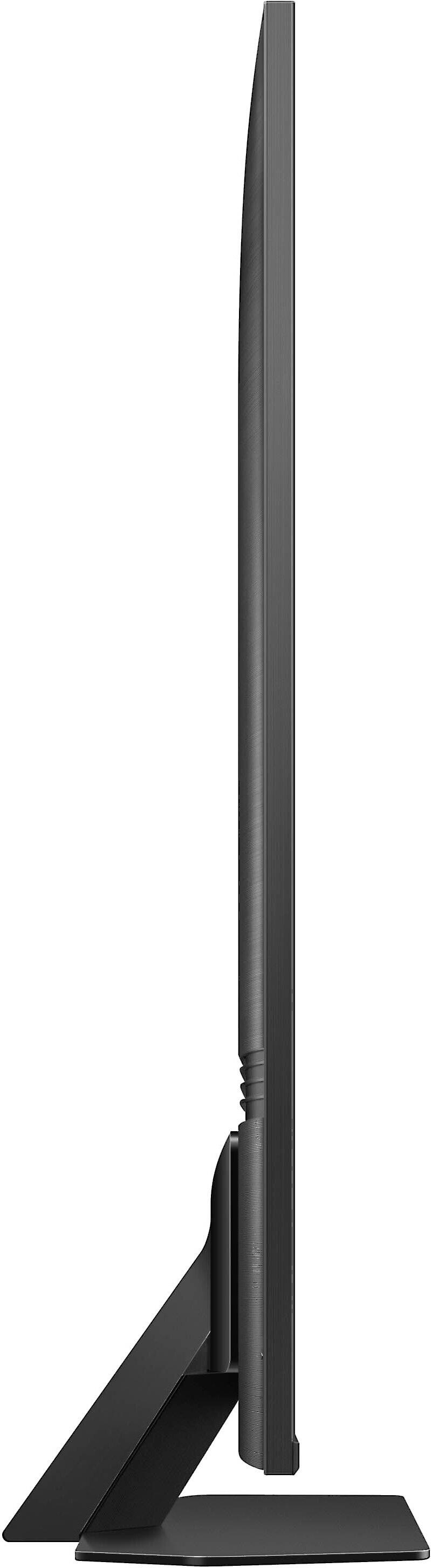
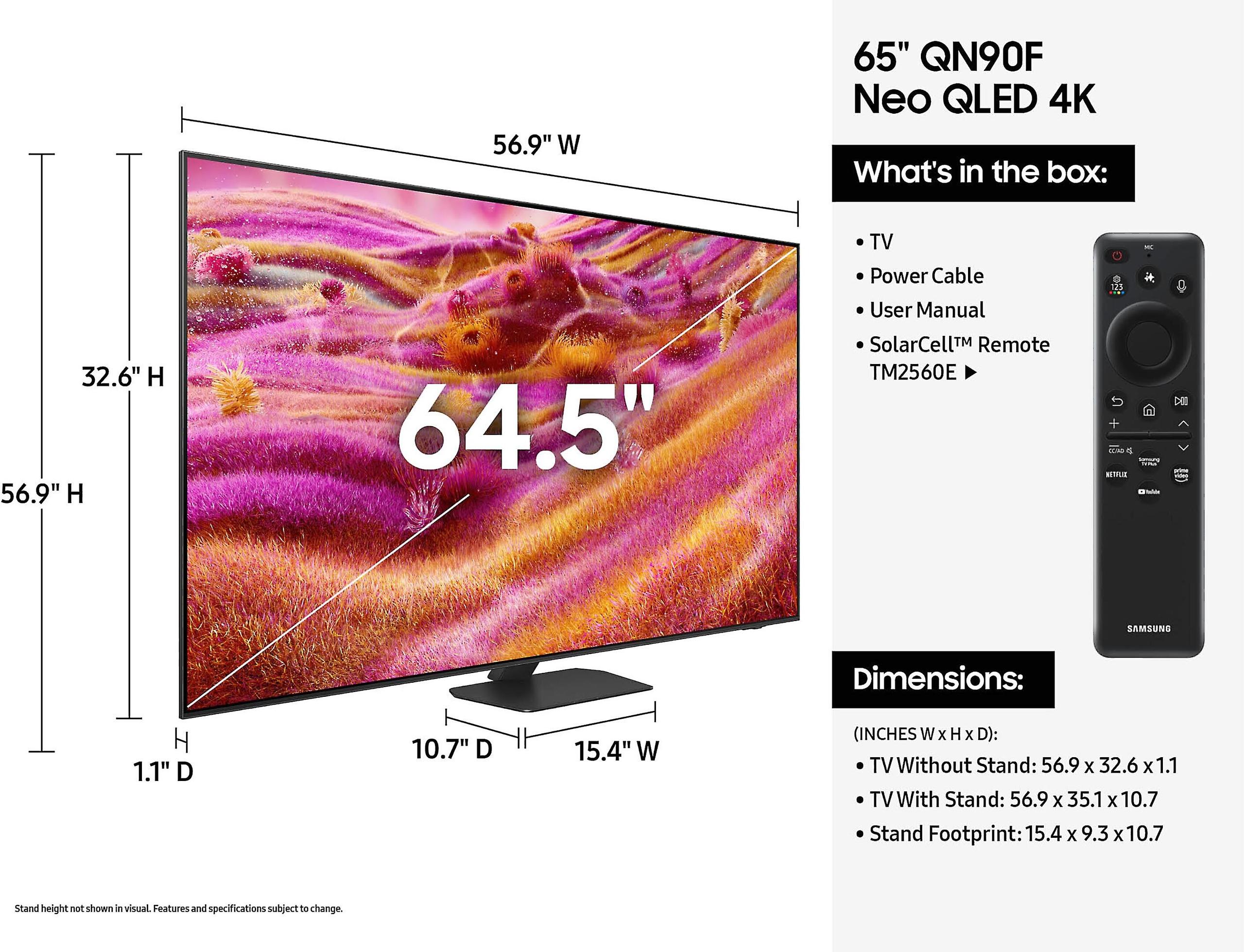
Premium TVs should feel substantial and look elegant in your living space. The Samsung QN90F excels here with an ultra-thin profile—just 1.1 inches deep without the stand—that sits nearly flush against the wall. The minimalist design and premium materials justify its positioning as a flagship product.
The Roku Pro Series prioritizes practicality over aesthetics. While well-built, it lacks Samsung's ultra-thin profile and premium finishing touches. However, it includes thoughtful features like a remote finder button on the TV itself—surprisingly handy when the remote inevitably disappears between couch cushions.
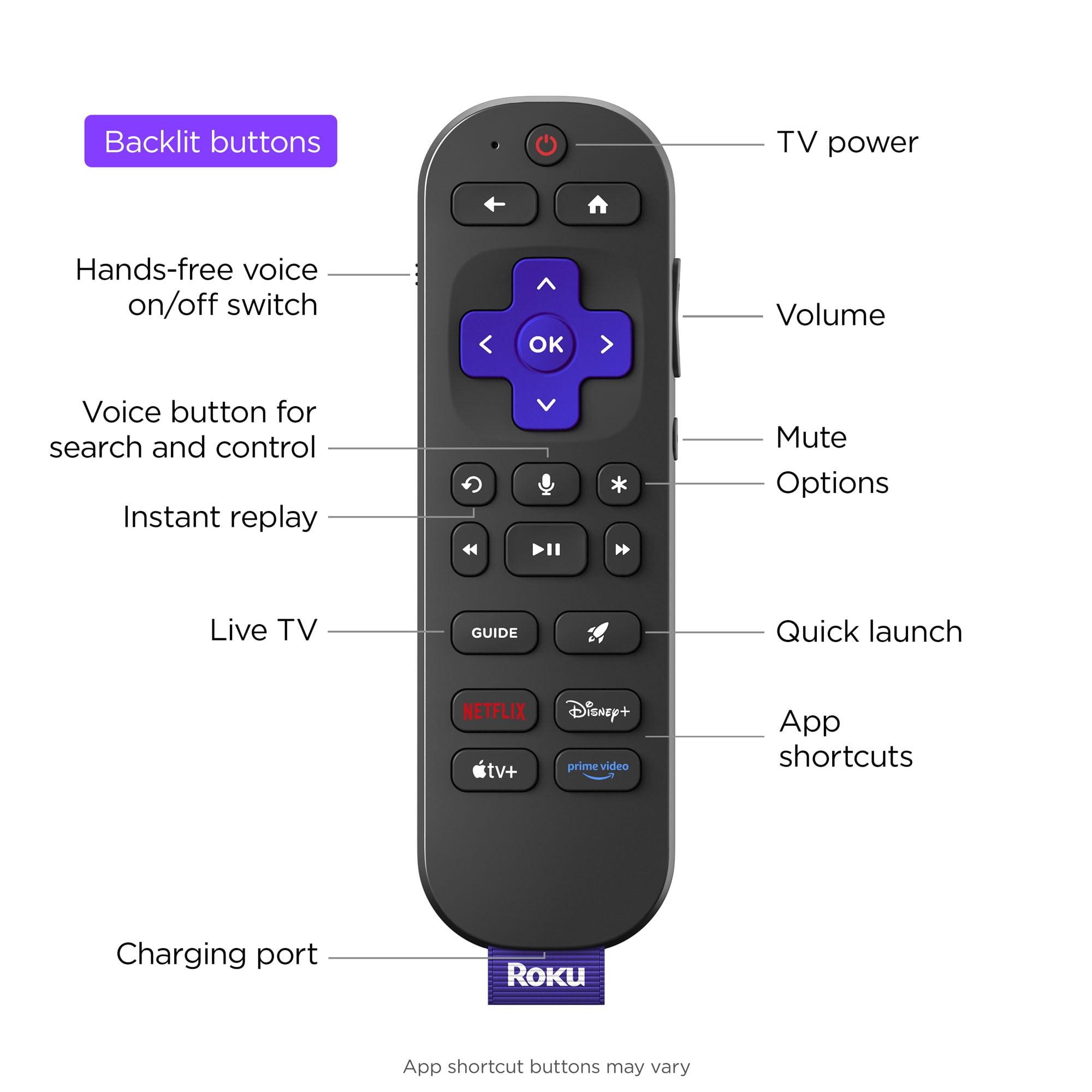
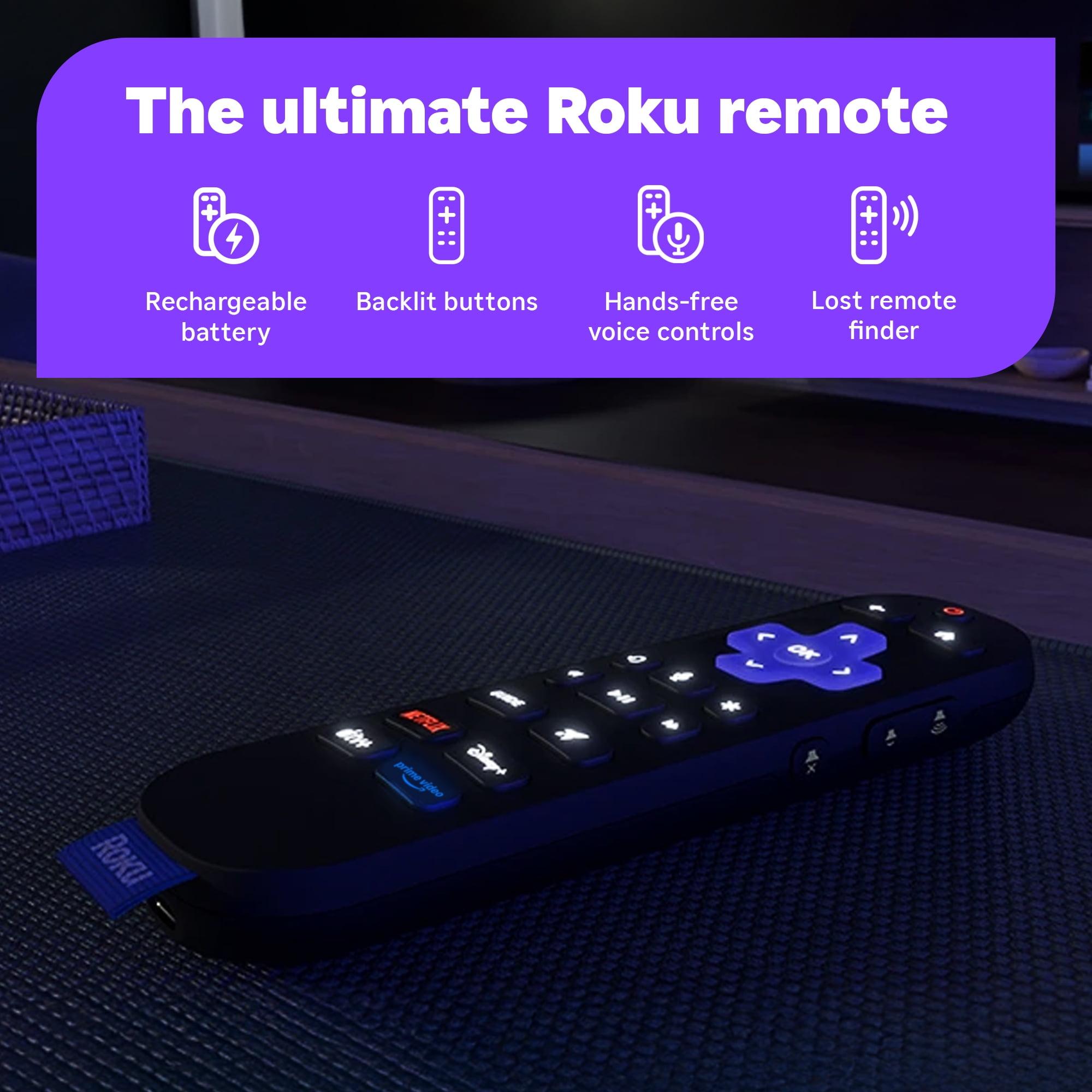
The included remotes reflect each company's design philosophy. Roku's Voice Remote Pro features backlit buttons, rechargeable battery, and that aforementioned remote finder function. Samsung's BT SolarCell Remote charges via ambient light or USB-C, representing their commitment to sustainability.
For dedicated home theater setups, several factors become particularly important:
Room Lighting: If your theater room has controlled lighting, both TVs perform excellently. However, if you have windows or ambient lighting challenges, the Samsung QN90F's anti-glare technology provides a significant advantage.
Content Sources: Consider your primary content sources. If you heavily use Dolby Vision content from Netflix, Apple TV+, or Disney+, the Roku Pro Series offers better format support. For HDR10+ content and Samsung's TV Plus service, the Samsung QN90F optimizes automatically.
Audio Setup: Both TVs work well with external sound systems, but Samsung provides more audio passthrough options for advanced home theater setups. The Roku Pro Series might require a separate audio processor for complex surround sound formats.
Software support longevity varies dramatically between manufacturers. Roku has established an impressive track record, with TVs from 2017 still receiving meaningful updates. This extended support cycle means your Roku Pro Series will likely remain current with new streaming services and features for 6-7 years.
Samsung typically provides 4-5 years of major updates for their premium TVs. While shorter than Roku's support window, Samsung's updates often include substantial feature additions and performance improvements.
Choose the Samsung QN90F if you:
Choose the Roku 65" Pro Series if you:
Both TVs excel in their respective categories, but they serve different audiences. The Samsung QN90F delivers objectively superior performance with flagship features that justify its premium positioning for enthusiasts willing to pay for the best possible experience.
However, the Roku Pro Series represents exceptional value, delivering roughly 90% of the Samsung's performance at significantly lower cost. For most viewers, the Roku's combination of strong picture quality, superior smart platform, and long-term support makes it the smarter choice.
The performance gap between these TVs is smaller than their price difference suggests. Unless you specifically need Samsung's anti-glare technology or advanced AI features, the Roku Pro Series offers better long-term value with performance that satisfies even demanding viewers.
In my experience evaluating TVs across different price points, the law of diminishing returns applies strongly here. The Samsung is undeniably better, but the Roku delivers the vast majority of that experience at a much more accessible price. For most households, that makes the Roku Pro Series the clear winner in terms of overall value and long-term satisfaction.
| Roku 65" Pro Series 2025 | Samsung QN90F Neo QLED 4K Vision AI Smart TV 2025 |
|---|---|
| Peak HDR Brightness - Critical for HDR impact and bright room viewing | |
| 1,750 nits (excellent for most HDR content) | 1,900+ nits (exceptional HDR highlights, best-in-class) |
| Anti-Glare Technology - Essential for rooms with windows or ambient lighting | |
| Standard coating (creates reflections from light sources) | Glare Free technology (virtually eliminates reflections) |
| Local Dimming Zones - Controls contrast and reduces blooming around bright objects | |
| Mini-LED with full array local dimming (good precision) | Quantum Matrix Pro with advanced Mini-LED (superior precision) |
| Processor & AI Features - Affects upscaling quality and smart features | |
| Smart Picture Max (scene-by-scene optimization) | NQ4 AI Gen3 with 128 neural networks (advanced AI processing) |
| HDR Format Support - Determines compatibility with streaming content | |
| Dolby Vision IQ, HDR10+, HLG (excellent streaming compatibility) | HDR10+, HLG only (missing Dolby Vision from Netflix/Disney+) |
| Gaming Refresh Rate - Important for smooth gaming and sports | |
| 120Hz (handles all console gaming smoothly) | Up to 165Hz (superior for PC gaming, overkill for consoles) |
| HDMI 2.1 Ports - Needed for 4K@120Hz gaming from multiple devices | |
| 2 ports (sufficient for most setups) | 4 ports (ideal for multiple gaming consoles + PC) |
| Built-in Audio System - Quality of speakers without external soundbar | |
| Roku Soundstage with Dolby Atmos (surprisingly powerful bass) | 60W 4.2.2CH with Object Tracking Sound+ (more sophisticated) |
| Smart TV Platform - Affects long-term usability and content access | |
| Roku OS 15 (2,700+ free channels, 7+ years updates) | Tizen with Vision AI (advanced features, 4-5 years updates) |
| Physical Design & Build - Aesthetics and wall mounting considerations | |
| 1.9" depth, practical design with custom wall mount | 1.1" ultra-thin profile, premium minimalist aesthetics |
| Voice Remote Features - Daily usability and convenience factors | |
| Backlit, rechargeable, remote finder button on TV | Solar-powered, gesture control, smart home integration |
| Color Accuracy Out of Box - How natural colors look without calibration | |
| Delta E 2.6 (very good, much improved from previous gen) | Excellent factory calibration with Quantum Dot technology |
| Value Proposition - Performance per dollar and long-term ownership | |
| Exceptional value: 90% of flagship performance at mid-range price | Premium performance with flagship features at premium pricing |
Both the Roku 65" Pro Series 2025 and Samsung QN90F deliver excellent picture quality, but the Samsung QN90F has a slight edge with superior peak brightness (1,900+ nits vs 1,750 nits) and more precise local dimming. However, the Roku Pro Series supports Dolby Vision, which many streaming services use for premium HDR content, while Samsung only supports HDR10+.
The Samsung QN90F is significantly better for bright rooms thanks to its Glare Free technology that virtually eliminates reflections from windows and light sources. The Roku Pro Series handles bright rooms well through high brightness but uses standard coating that creates mirror-like reflections from direct light sources.
The Roku 65" Pro Series 2025 offers exceptional value, delivering approximately 90% of flagship performance at a substantially lower cost than the Samsung QN90F. While Samsung provides premium features and slightly better performance, most viewers will find the Roku's picture quality and features more than satisfactory for the price difference.
Both TVs excel for console gaming with 120Hz refresh rates, VRR, and low input lag. The Samsung QN90F has an advantage with four HDMI 2.1 ports versus two on the Roku Pro Series, allowing more high-end gaming devices to be connected simultaneously. Both handle 4K@120Hz gaming smoothly with minimal input lag.
The Roku Pro Series uses Roku OS, which is widely praised for its simple, content-focused interface and extensive free channel selection (2,700+ channels). The Samsung QN90F runs Tizen with advanced AI features and smart home integration, but some users find it more complex. Roku also provides longer software support (7+ years vs 4-5 years for Samsung).
Both TVs offer surprisingly good built-in audio. The Samsung QN90F features a more powerful 60W 4.2.2 channel system with Object Tracking Sound+, while the Roku Pro Series uses Roku Soundstage with impressive bass response that many users describe as "theater-like." Both support Dolby Atmos for immersive surround sound.
The Roku Pro Series has a strong advantage in longevity, with Roku providing software updates for 7+ years compared to Samsung's typical 4-5 year support window. Roku TVs from 2017 still receive meaningful updates, making the Roku Pro Series a better choice for long-term ownership and future-proofing.
The Roku Pro Series has an advantage for major streaming services because it supports Dolby Vision, the premium HDR format used by Netflix, Disney+, and Apple TV+. The Samsung QN90F lacks Dolby Vision support, though it handles HDR10+ content excellently. Roku's platform also provides better content discovery across multiple streaming services.
The Samsung QN90F offers superior aesthetics for wall mounting with its ultra-thin 1.1-inch profile that sits nearly flush against the wall. The Roku Pro Series is thicker at 1.9 inches but includes a custom wall mount and still looks good mounted. Samsung's premium build quality and minimalist design give it the edge for style-conscious buyers.
Both the Samsung QN90F and Roku Pro Series handle sports motion excellently with their 120Hz refresh rates and advanced motion processing. The Samsung QN90F has slightly better motion handling due to its more sophisticated processor, but both deliver smooth, clear action during fast-paced sports without significant motion blur.
For controlled lighting home theaters, both TVs perform excellently. The Roku Pro Series might have a slight edge due to Dolby Vision support for premium streaming content. However, if your theater has any ambient lighting challenges, the Samsung QN90F's anti-glare technology becomes valuable. Both offer excellent contrast and color for cinematic viewing.
The Samsung QN90F offers more cutting-edge features with its Vision AI platform, gesture controls, NQ4 AI Gen3 processor with 128 neural networks, and advanced smart home integration. The Roku Pro Series focuses on proven, reliable technology with practical features like remote finder and extensive content access rather than bleeding-edge innovations.
We've done our best to create useful and informative comparisons to help you decide what product to buy. Our research uses advanced automated methods to create this comparison and perfection is not possible - please contact us for corrections or questions. These are the sites we've researched in the creation of this article: bestbuy.com - rtings.com - techradar.com - youtube.com - roku.com - youtube.com - walmart.com - bestbuy.com - youtube.com - electronicexpress.com - roku.com - pcvarge.com - ecoustics.com - rtings.com - images.samsung.com - youtube.com - listenup.com - youtube.com - cullenshomecenter.com - rtings.com - shopjetson.com - youtube.com - samsung.com - samsung.com - videoandaudiocenter.com - rtings.com - bestbuy.com - youtube.com - news.samsung.com - news.samsung.com - news.samsung.com - bestbuy.com - news.samsung.com - youtube.com - news.samsung.com - youtube.com - smarthomesounds.co.uk

Privacy Policy
Terms and Conditions - Affiliate Policy
Home Security
© Copyright 2008-2026.
11816 Inwood Rd #1211, Dallas, TX 75244