

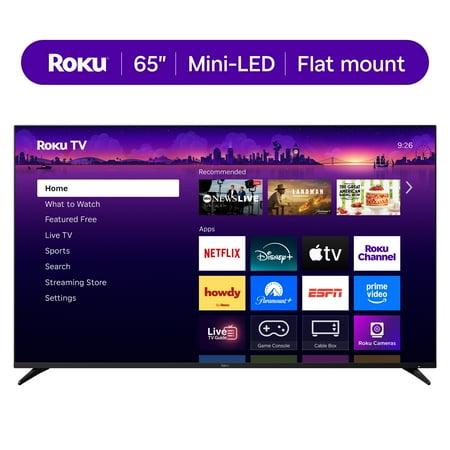
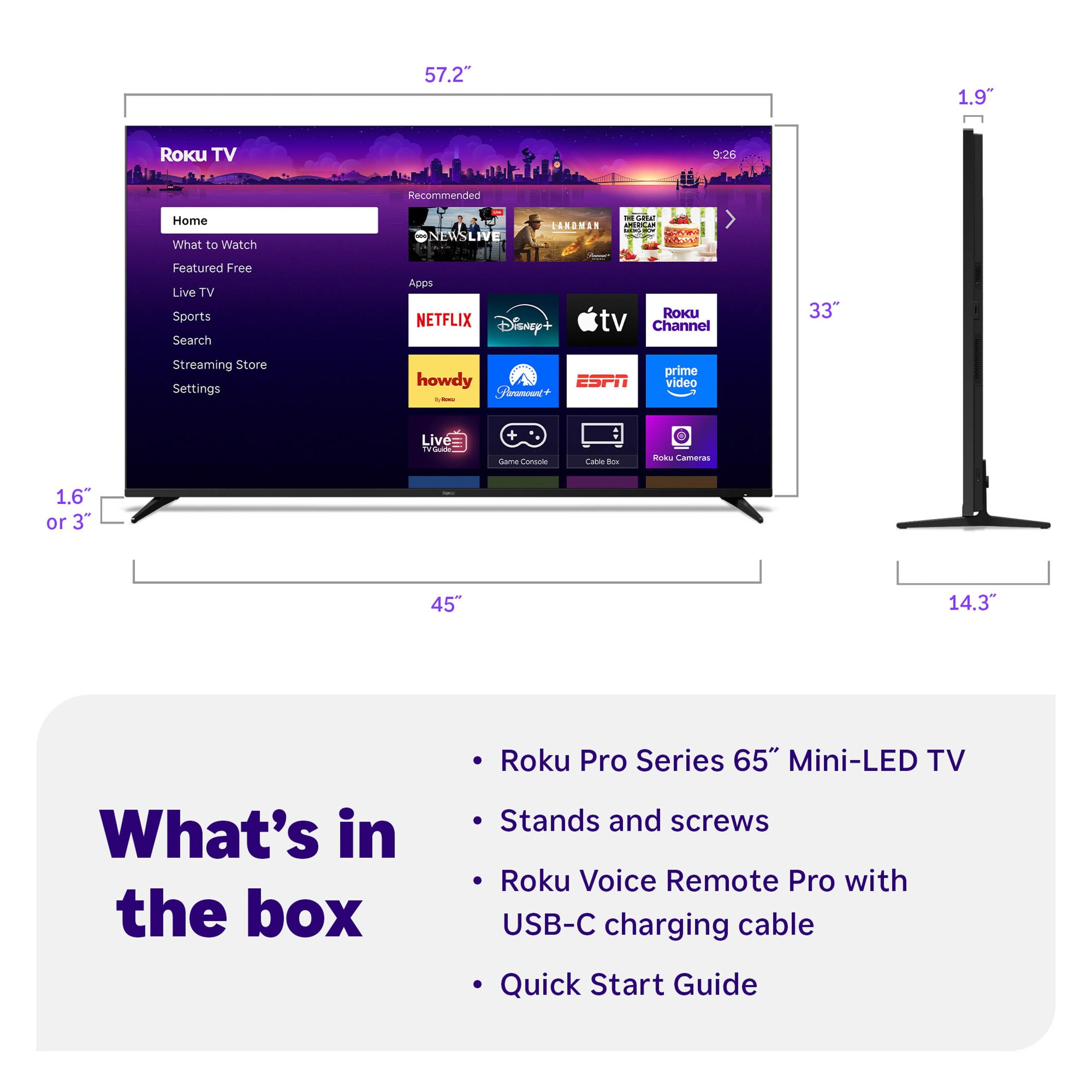
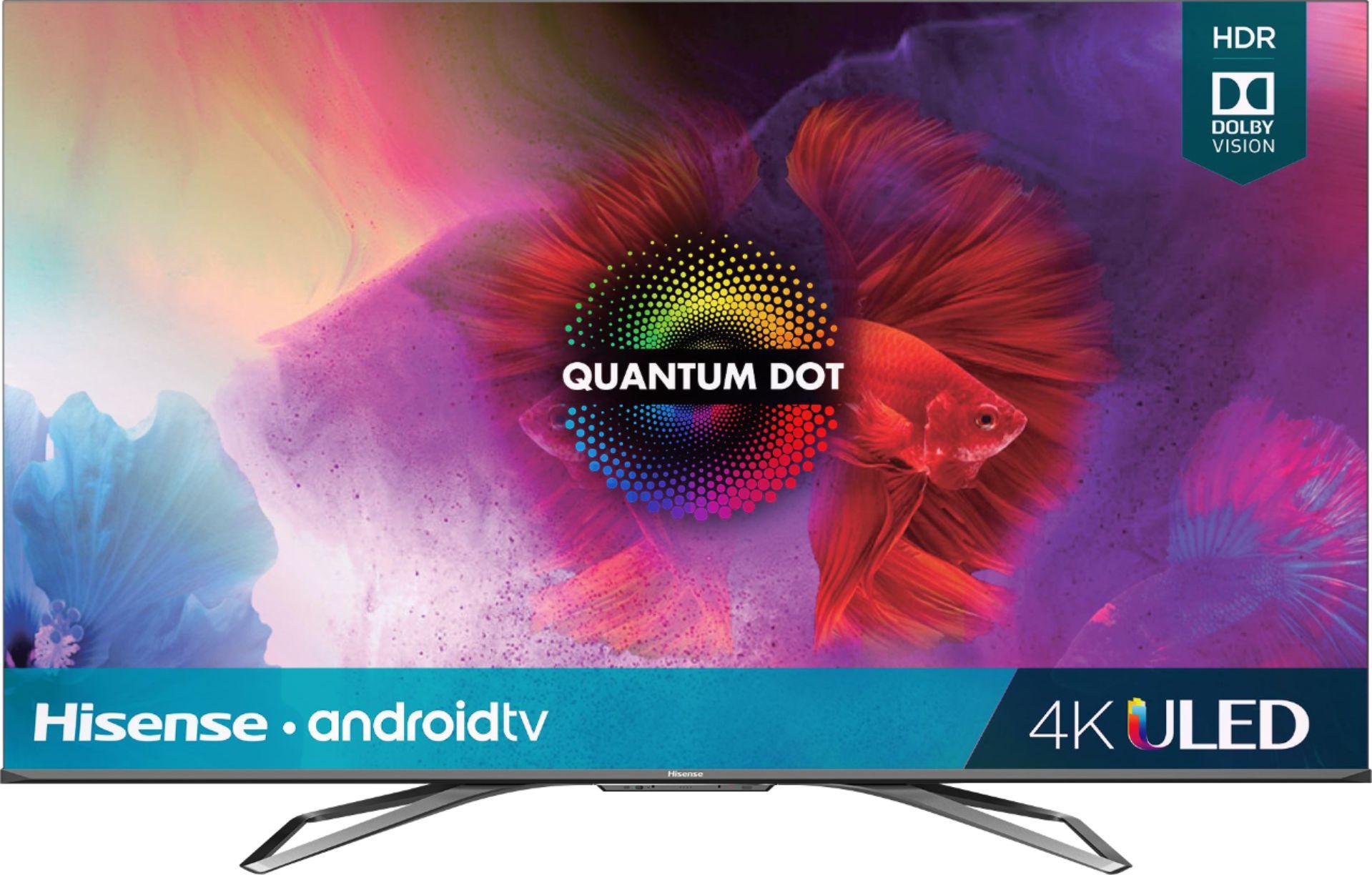
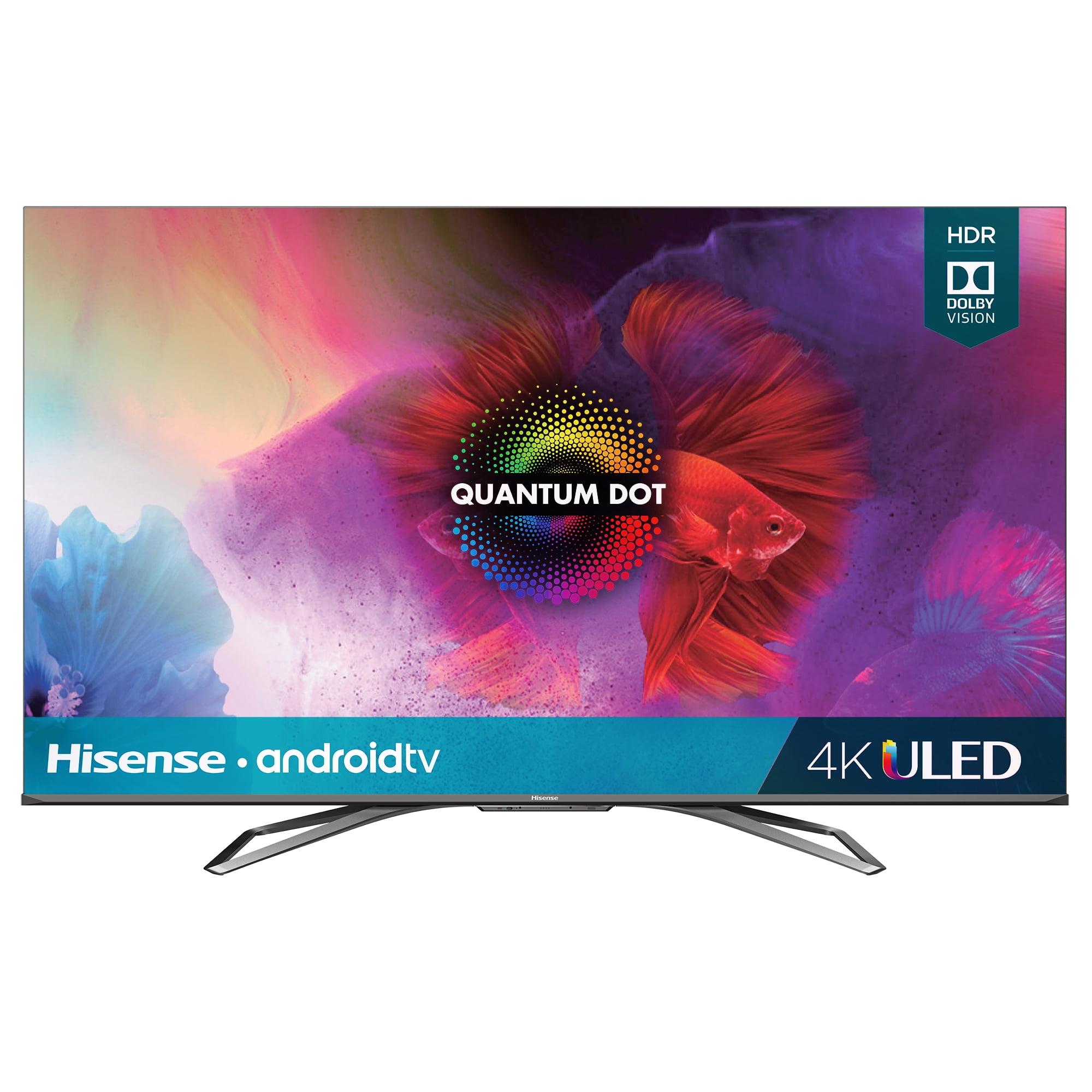
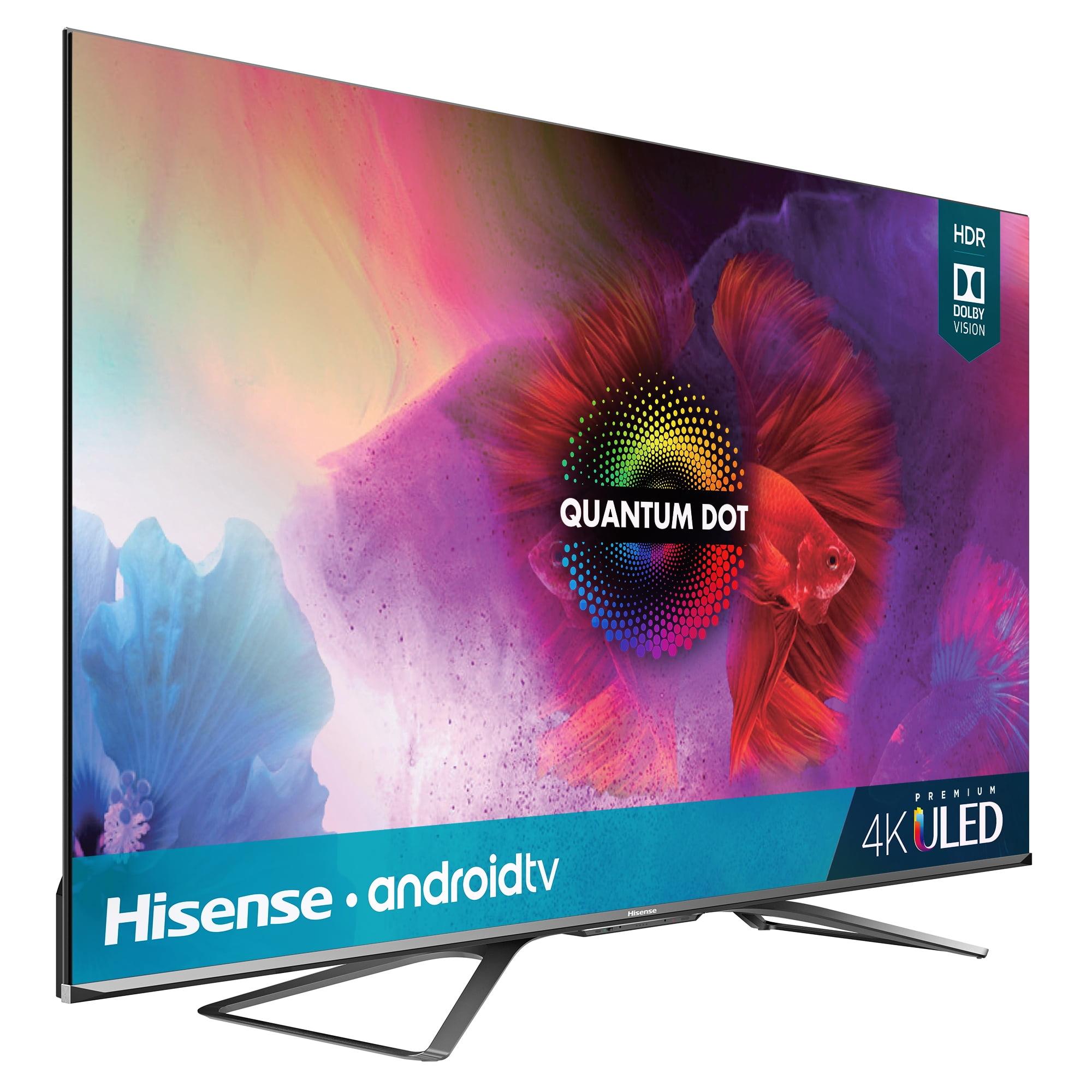

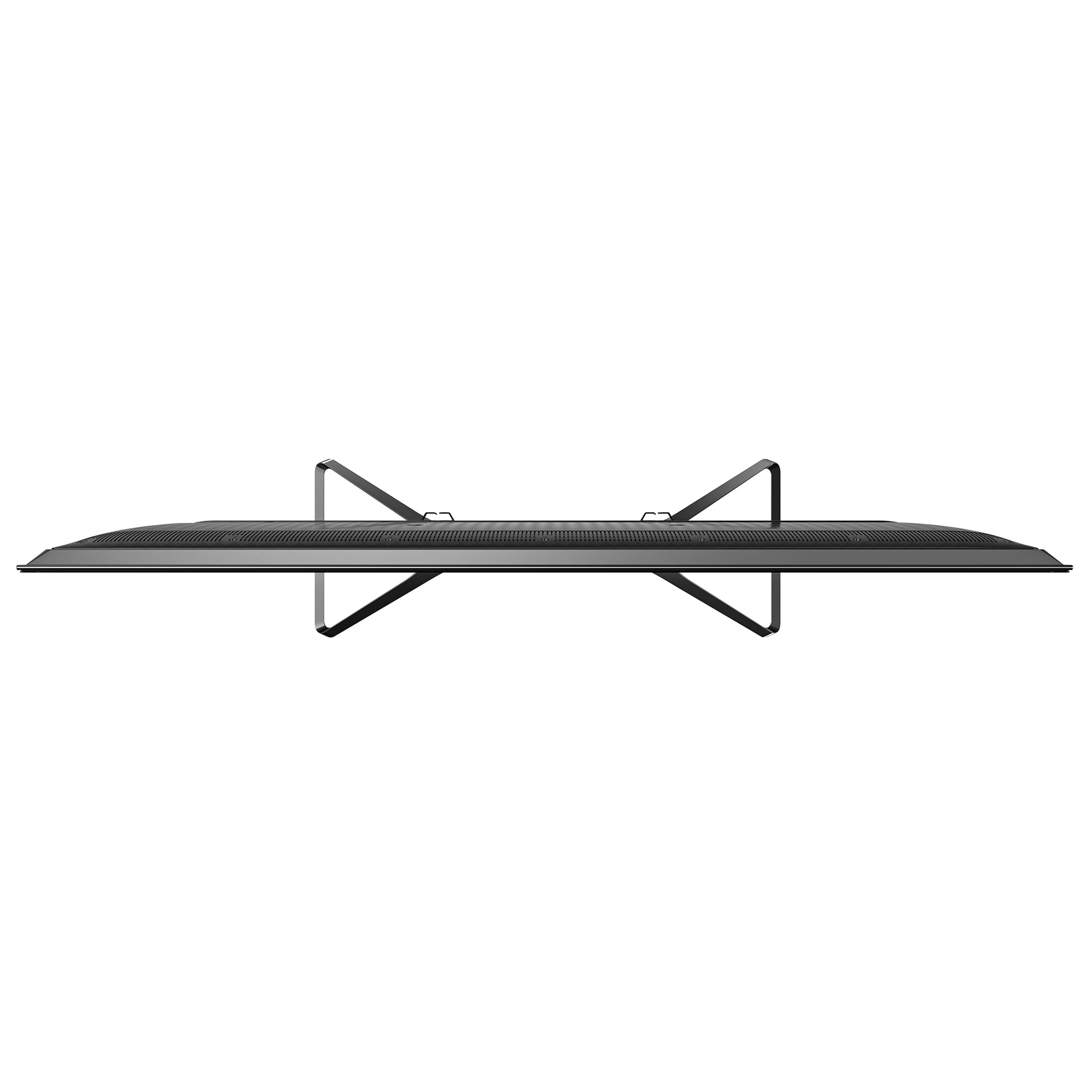
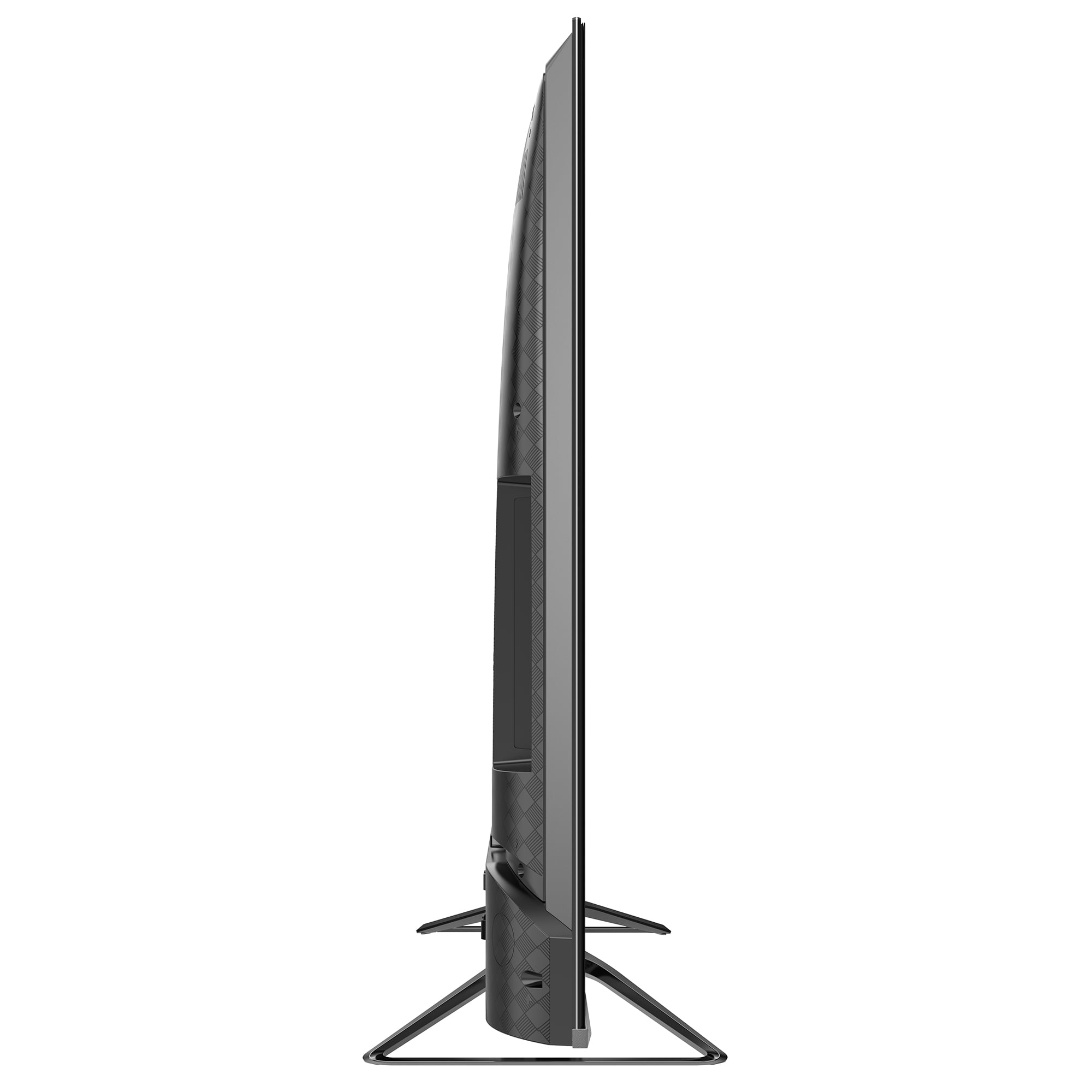
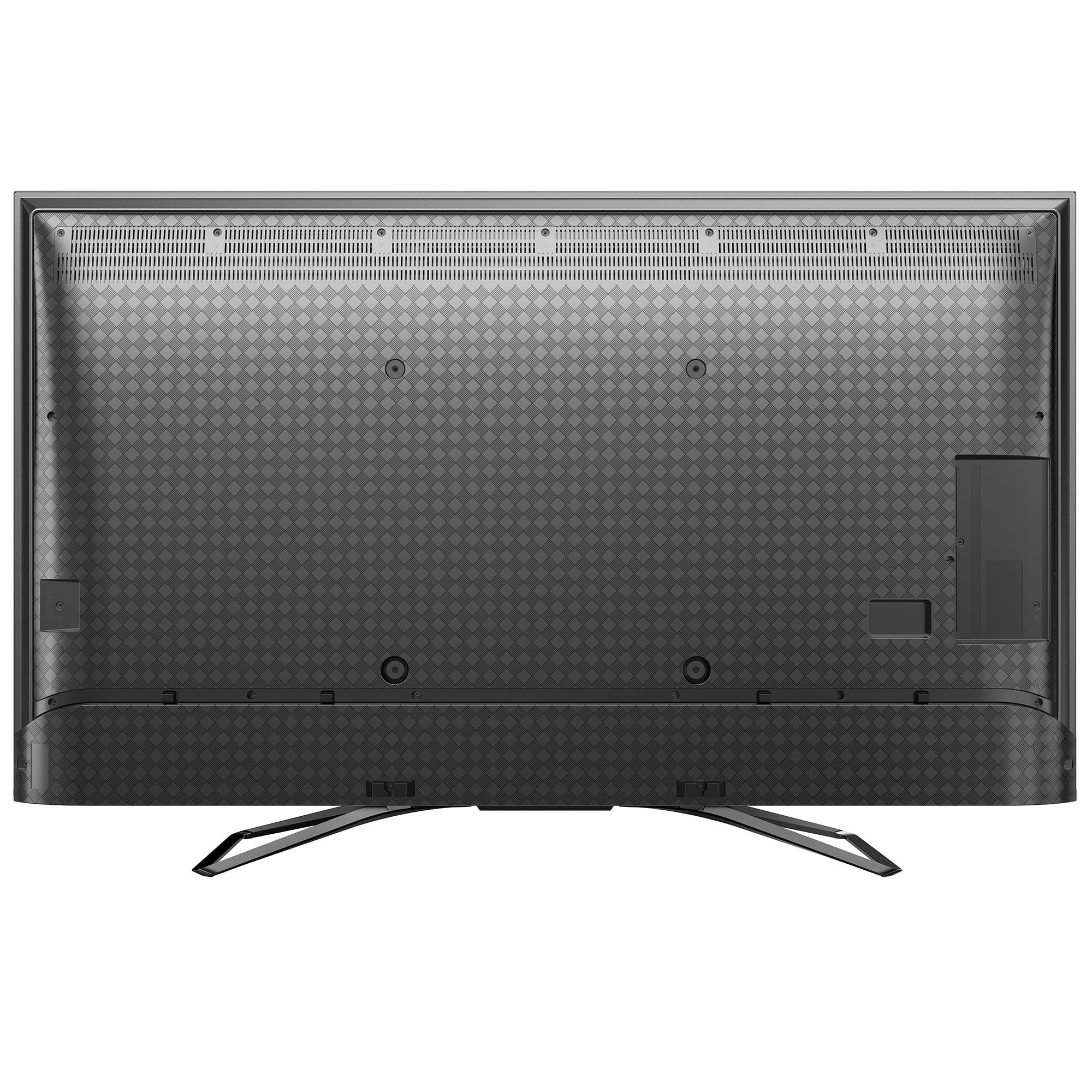
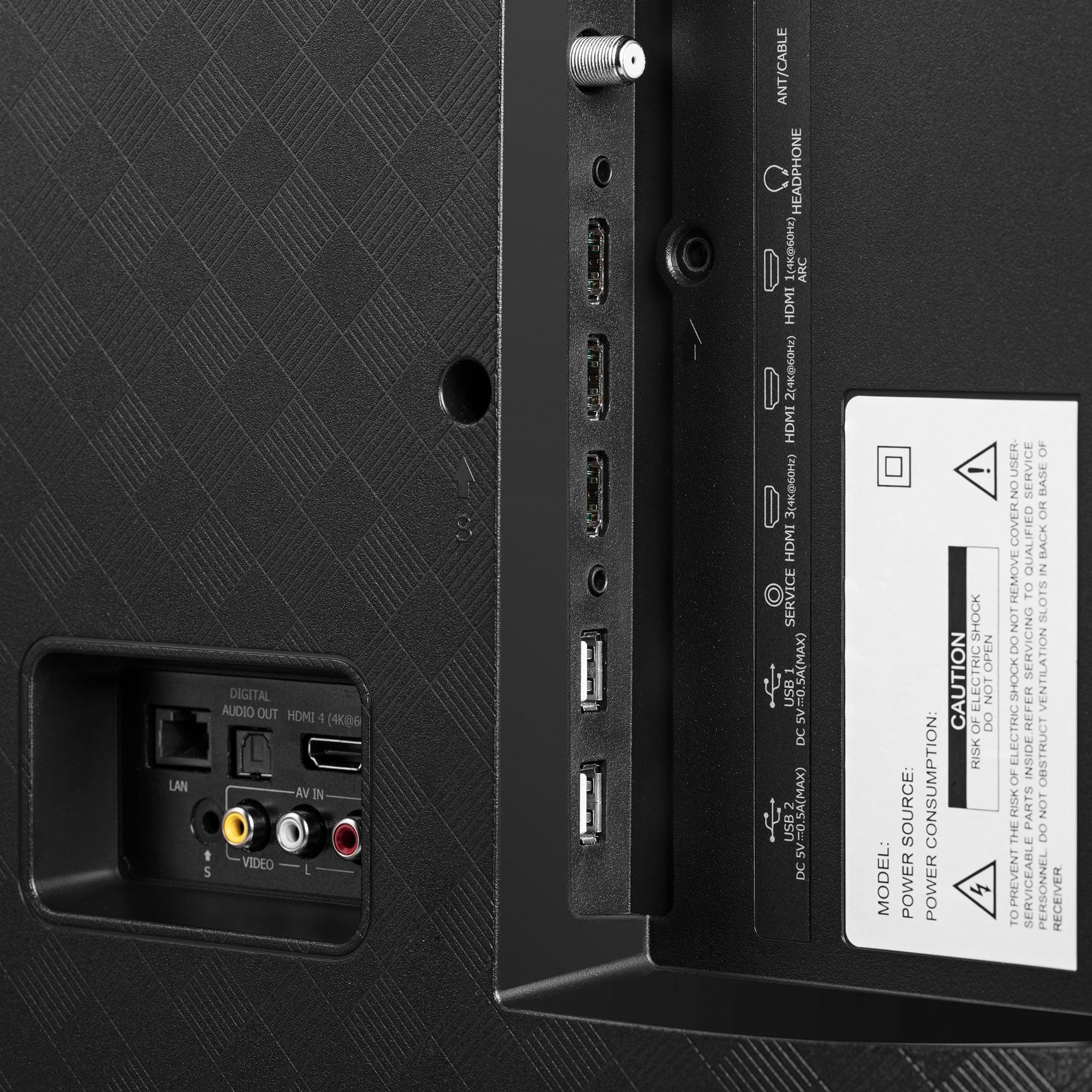
When you're shopping for a premium 65-inch 4K TV, you're likely looking for that sweet spot between cutting-edge performance and reasonable value. Two TVs that often come up in this conversation are the Roku 65" Pro Series 2025 and the Hisense 65" H9G Quantum. While both deliver impressive picture quality for their respective price points, they represent very different approaches to premium television technology.
The TV market has evolved dramatically over the past few years. Features that were once exclusive to flagship models—like quantum dot color technology, local dimming, and advanced HDR support—have trickled down to more affordable options. This creates both opportunities and challenges for buyers: you can get exceptional performance without breaking the bank, but choosing between competing technologies and feature sets has become more complex.
Before diving into specifics, it's worth understanding what separates premium 65-inch TVs from budget options. The key differentiators include peak brightness (how bright the TV can get for HDR content), local dimming capabilities (how precisely the TV can control brightness in different screen areas), color accuracy, motion handling, and smart platform performance.
Peak brightness matters more than many people realize. If your living room has windows or you watch TV during the day, a brighter display will maintain vibrant colors and contrast even with ambient light washing over the screen. Local dimming—where the TV can independently control brightness across hundreds or thousands of zones—prevents bright objects from creating unwanted glow around darker areas of the picture.
The Roku Pro Series 2025, released in 2025, represents current-generation display technology with Mini-LED backlighting, while the Hisense H9G Quantum launched in 2020 with more traditional LED backlighting. This four-year technology gap creates some significant performance differences that extend beyond simple spec comparisons.
The most substantial difference between these TVs lies in their display technology. The Roku Pro Series 2025 uses Mini-LED backlighting with thousands of individual dimming zones, compared to the Hisense H9G's 180 local dimming zones. Think of local dimming zones as tiny spotlights behind your TV screen—more zones mean more precise control over which parts of the image are bright and which are dark.
This translates to real-world performance in several ways. When watching a movie with bright explosions against a night sky, the Roku can make those explosions incredibly bright while keeping the surrounding darkness truly black. The Hisense, with fewer dimming zones, might create some unwanted glow (called "blooming") around those bright objects.
Peak brightness represents another major advantage for the Roku Pro Series 2025. Our research into professional reviews shows it reaching between 1,752 and 1,818 nits of peak brightness, compared to the Hisense H9G's 1,000 nits. To put this in perspective, standard dynamic range content (like regular TV shows) typically peaks around 100 nits, while HDR content can demand 1,000-4,000 nits for those spectacular highlights that make HDR worthwhile.
That extra brightness on the Roku becomes crucial if you're dealing with a bright living room. Sunlight streaming through windows can wash out TV images, but a brighter display fights back more effectively. The Hisense performs well in darker rooms but struggles more when ambient light becomes a factor.
Both TVs use quantum dot technology for enhanced color reproduction. Quantum dots are microscopic particles that emit specific colors when hit by light, allowing both displays to produce more vivid and accurate colors than traditional LED TVs. However, the Roku's newer implementation, combined with its Smart Picture Max AI processing, delivers notably better color accuracy according to professional measurements.
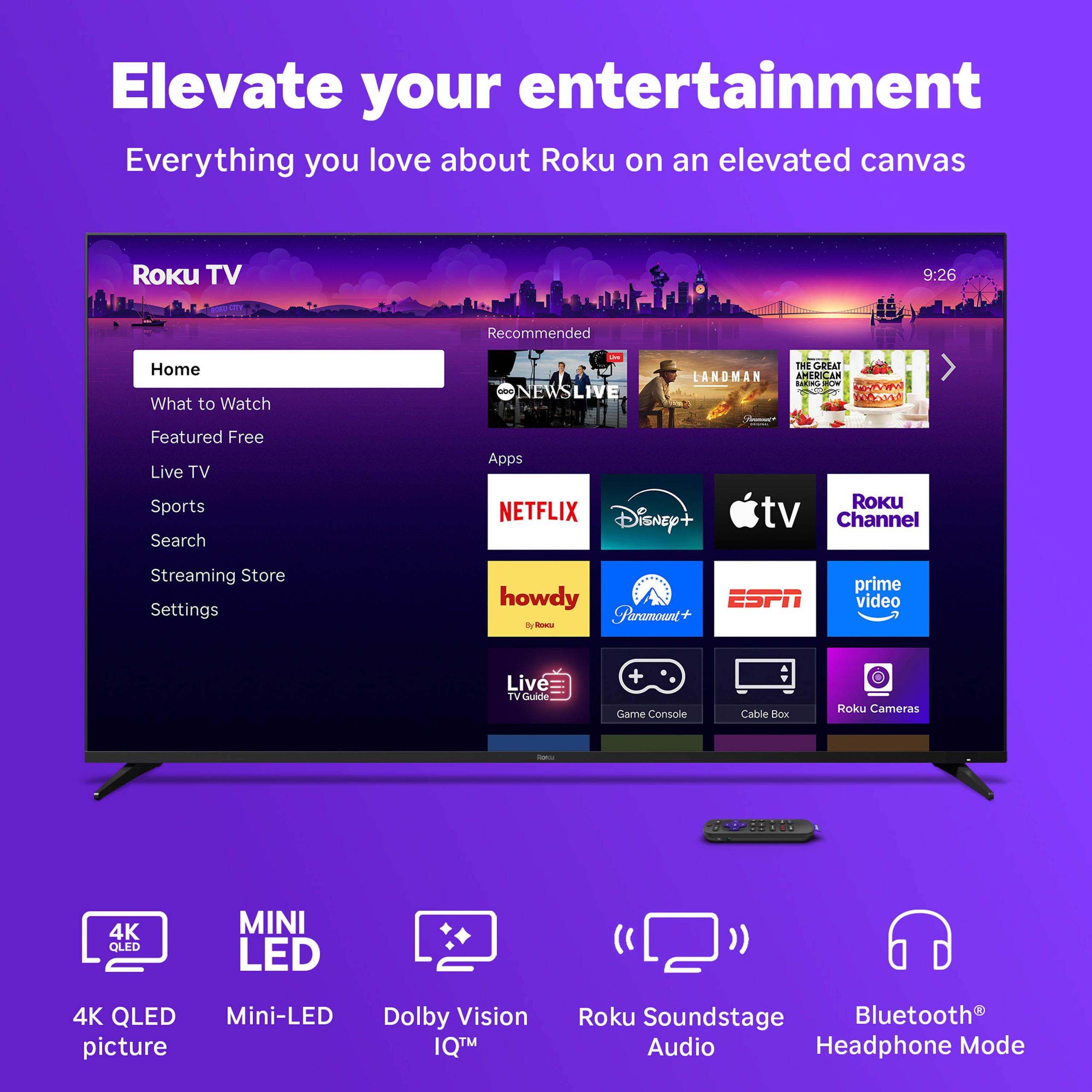
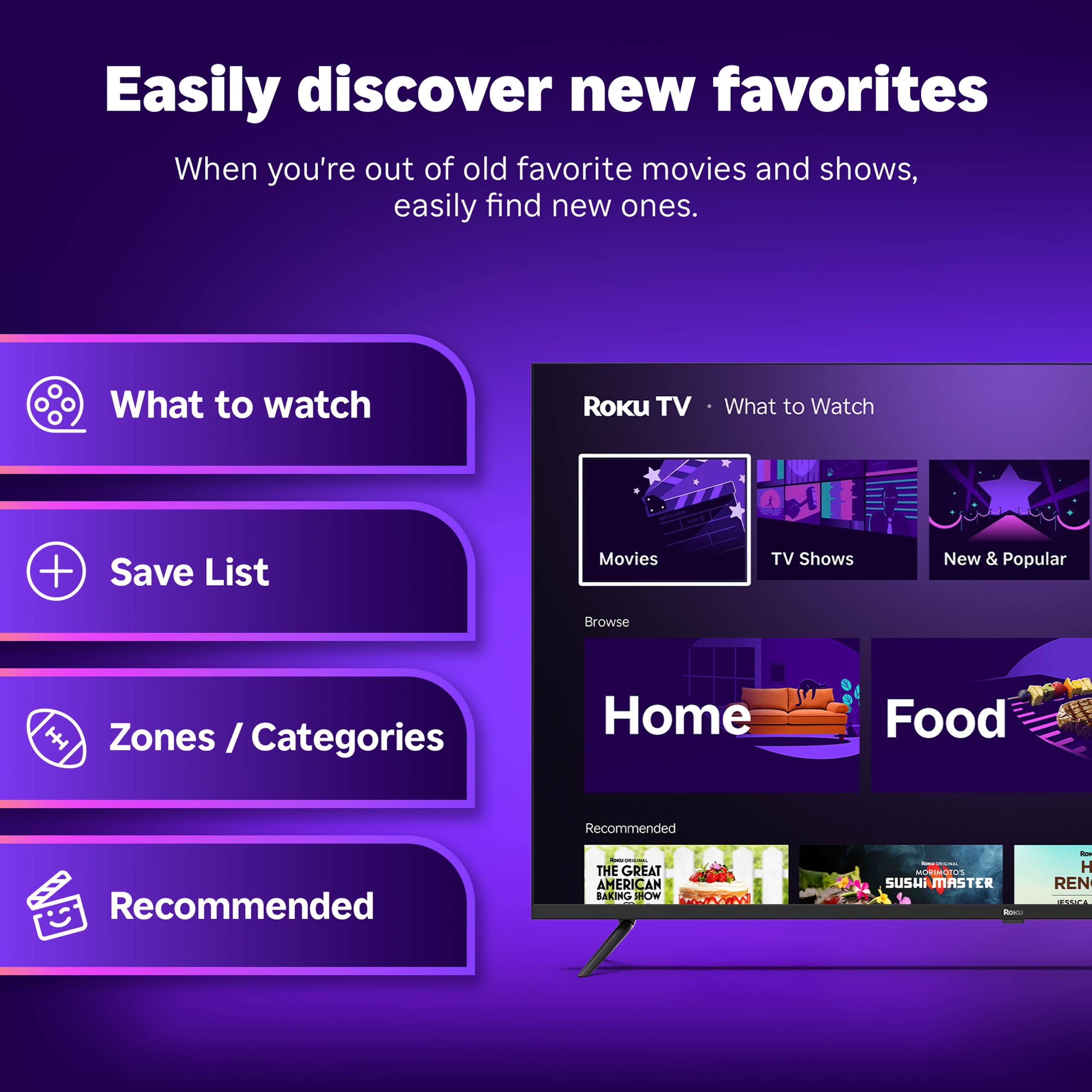
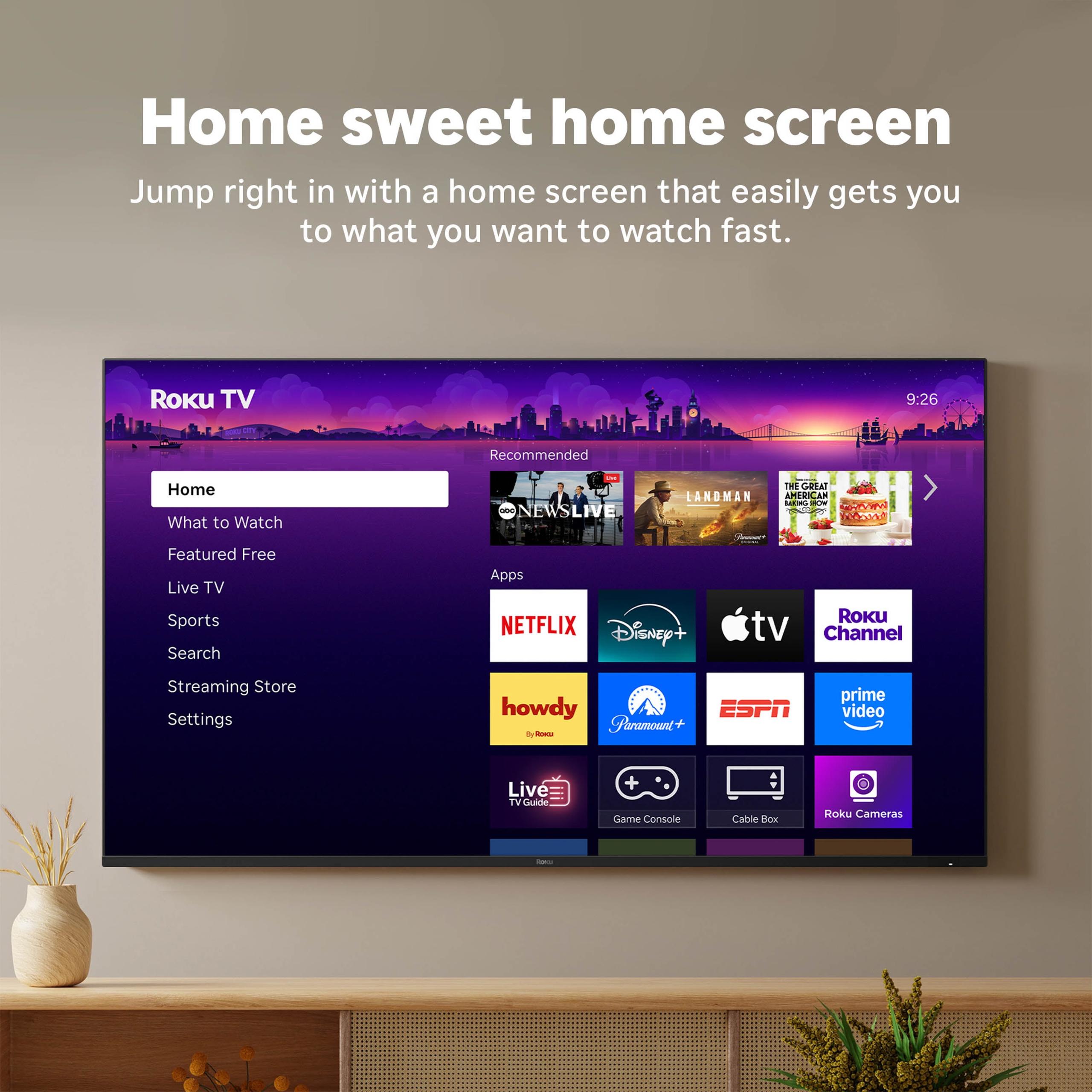
The smart TV experience represents a fundamental philosophical difference between these models. The Roku Pro Series 2025 runs Roku TV OS, which prioritizes content discovery and simplicity. The interface presents all your streaming options—whether from Netflix, your cable box, or free Roku channels—in a unified grid that makes finding something to watch remarkably straightforward.
Android TV on the Hisense H9G takes a different approach. It integrates deeply with Google services and offers extensive customization options through the Google Play Store. If you're already using Google Assistant, Chromecast, or have a smart home setup built around Google products, the Hisense provides seamless integration that the Roku can't match.
From a performance standpoint, the Roku benefits from Wi-Fi 6 connectivity and a streamlined operating system that launches apps noticeably faster. The Hisense's Android TV, while feature-rich, tends to feel slower in day-to-day operation—a common characteristic of Android TV implementations from that era.
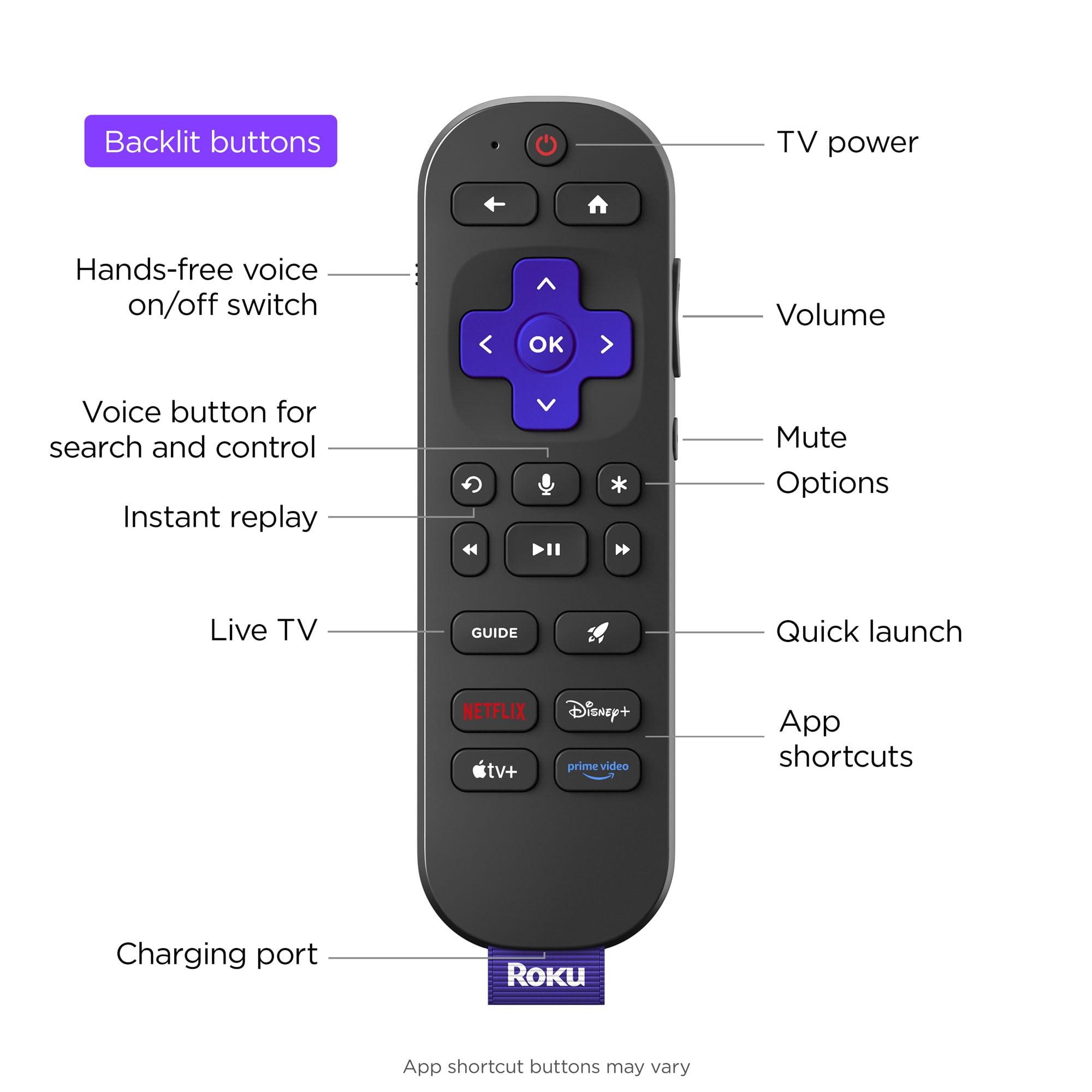
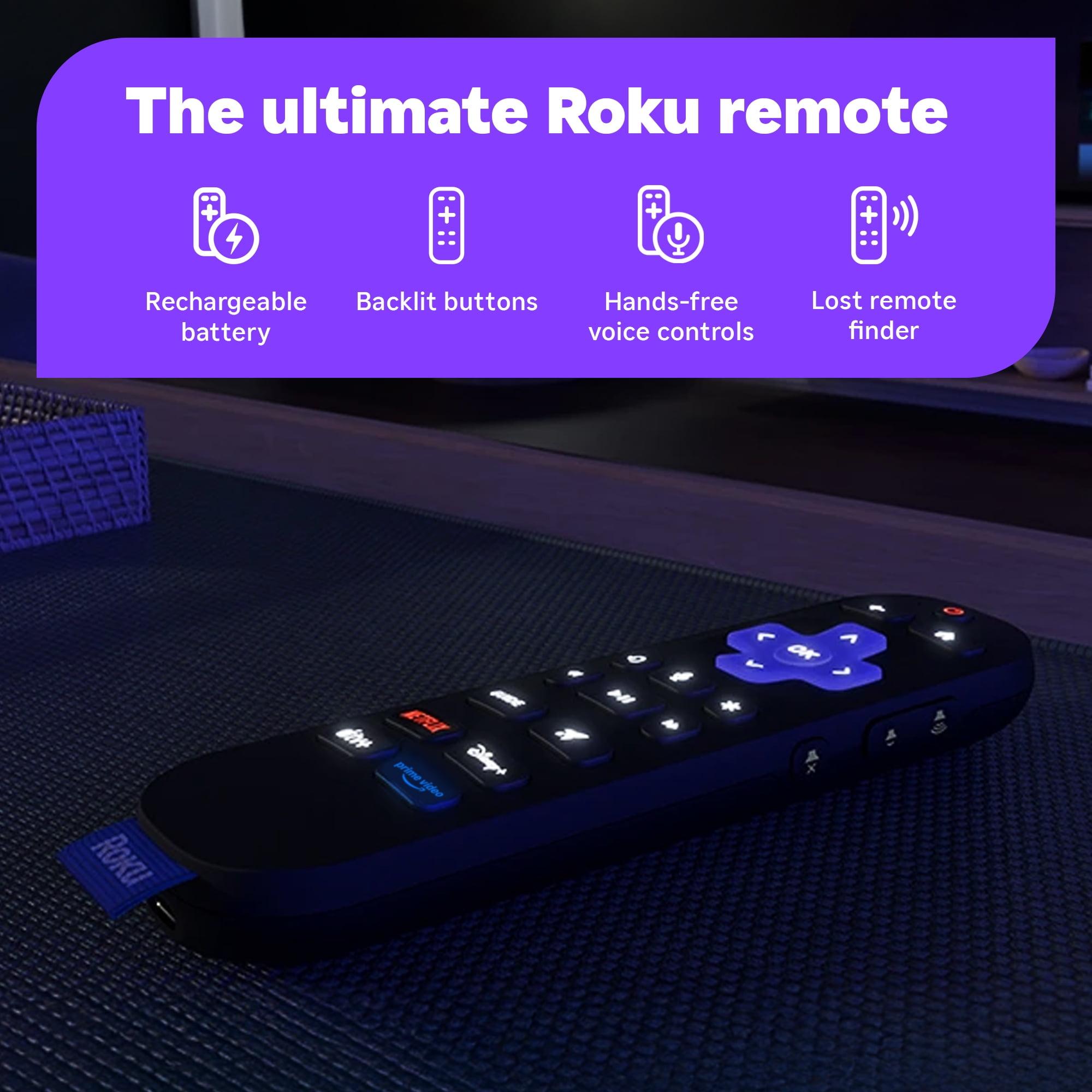
The Roku Voice Remote Pro deserves special mention. It's rechargeable, backlit for dark room use, and includes a finder button on the TV itself—incredibly useful when the remote inevitably disappears into couch cushions. The Hisense includes a standard voice remote, but without the premium touches that make the Roku remote notably more convenient.
If gaming matters to you, the choice becomes clearer. The Roku Pro Series 2025 includes two HDMI 2.1 ports capable of supporting 4K resolution at 120 frames per second—essential for getting the most out of PlayStation 5 or Xbox Series X consoles. It also supports Variable Refresh Rate (VRR), which eliminates screen tearing during gameplay, and Auto Low Latency Mode (ALLM), which automatically optimizes settings when it detects a game console.
Input lag—the delay between pressing a controller button and seeing the action on screen—measures as low as 5.2 milliseconds on the Roku at 120Hz. For comparison, anything under 20ms is considered excellent for gaming, so this represents truly exceptional responsiveness.
The Hisense H9G includes a dedicated Game Mode that reduces input lag for responsive gameplay, but it's limited to HDMI 2.0b connectivity. This means 4K gaming is capped at 60 frames per second, and there's no VRR support. For older consoles or casual gaming, this works fine. For next-generation console gaming, it feels limiting.
This difference extends beyond current gaming needs. As game developers continue optimizing titles for current-generation consoles, 120Hz gaming is becoming more common. The Roku's HDMI 2.1 implementation ensures it won't become obsolete as quickly.
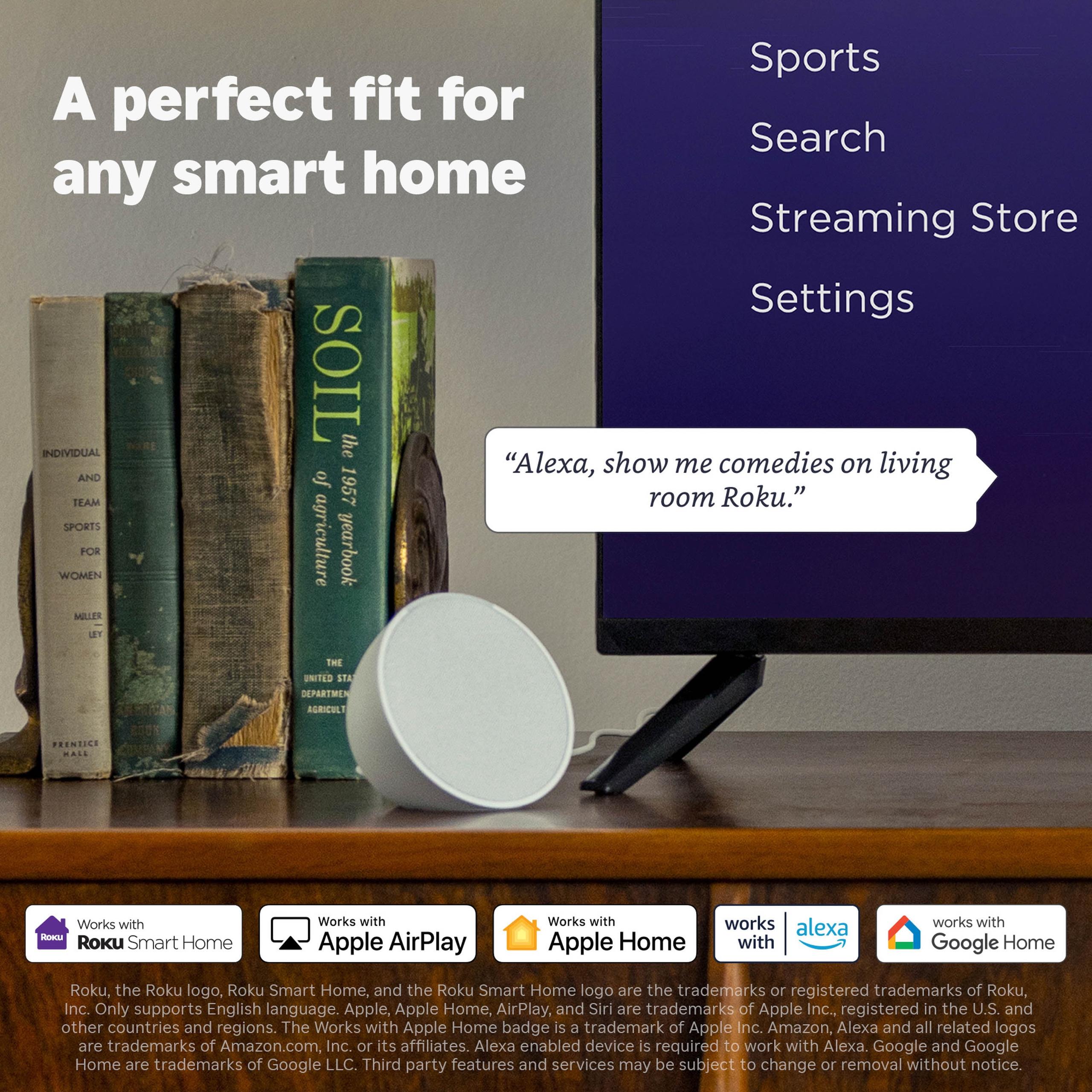
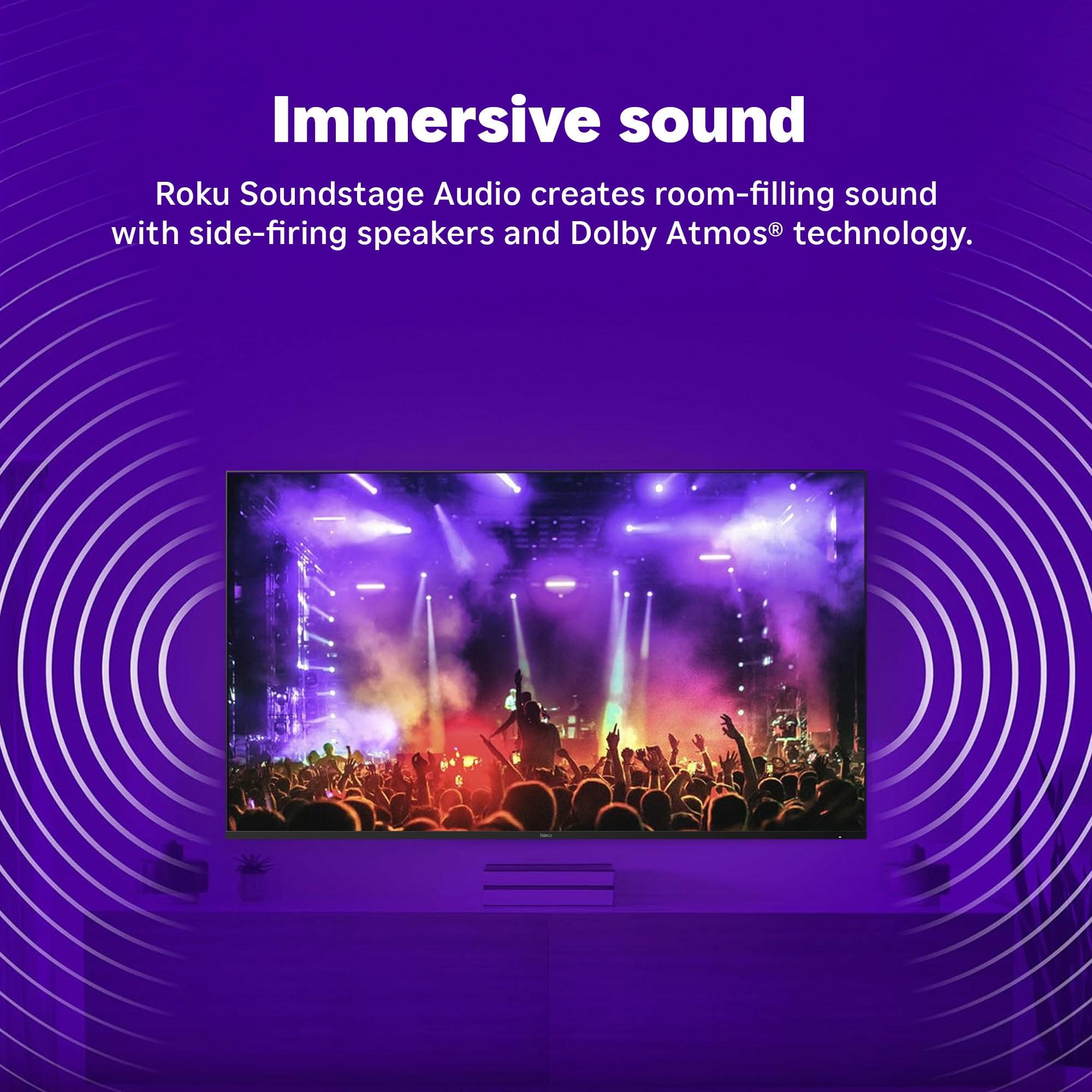
Both TVs support Dolby Atmos, the object-based surround sound format that creates more immersive audio experiences. However, their implementation differs significantly. The Roku Pro Series 2025 features what Roku calls "Sound Stage Audio" with side-firing speakers designed to create room-filling sound.
User feedback consistently highlights the Roku's superior audio performance. Several reviews mention bass response that "rattles walls" and overall sound quality that eliminates the immediate need for a soundbar. The Hisense H9G includes more traditional downward-firing speakers with 10 watts per channel—adequate but unremarkable.
This audio difference matters more than you might expect. A good soundbar can cost several hundred dollars, so exceptional built-in audio adds real value to the overall package. The Roku also includes Bluetooth headphone mode, allowing private listening without disturbing others—a thoughtful feature for families with different viewing preferences.
For dedicated home theater setups, both TVs offer compelling but different advantages. The Hisense H9G's excellent black levels and contrast ratio shine in dark viewing environments. Its VA panel technology delivers truly deep blacks that enhance the cinematic experience, especially for dark films and TV shows.
However, the Roku Pro Series 2025's Mini-LED backlighting provides a different kind of cinema experience. While it may not achieve the perfect blacks of OLED technology, it delivers spectacular brightness that makes HDR content truly pop. This becomes particularly noticeable with content like nature documentaries or action films where bright highlights need to compete with room lighting.
Viewing angles favor neither TV particularly well—both use VA panels that lose contrast and color accuracy when viewed from extreme angles. For a dedicated home theater with seating directly in front of the screen, this isn't problematic. For family rooms with wide seating arrangements, it's worth considering.
The Roku's superior upscaling and AI-powered picture processing become valuable for mixed content consumption. While both TVs excel with high-quality 4K HDR sources, the Roku handles lower-quality streaming content and broadcast television more gracefully.
At the time of writing, the Hisense H9G typically costs significantly less than the Roku Pro Series 2025, reflecting both the age difference and technology gap between these models. The question becomes whether the Roku's advantages justify the price premium.
For buyers primarily concerned with immediate cost savings, the Hisense delivers solid performance, especially in dark viewing environments. Its Android TV platform provides extensive app selection and Google ecosystem integration that some users prefer over Roku's approach.
However, the Roku Pro Series 2025's technology advantages suggest better long-term value. Its HDMI 2.1 ports, superior brightness, and current-generation processing will likely remain relevant longer. The Roku platform's track record for continued updates and new feature additions also supports long-term viability.
From a pure performance perspective, the Roku represents a significant upgrade across most metrics that matter for daily use. The brightness advantage alone makes it more versatile for different room conditions, while the gaming features future-proof it for evolving console capabilities.
Choose the Roku 65" Pro Series 2025 if you want cutting-edge performance and can accommodate the higher price point. It's particularly compelling for bright rooms, serious gamers with current-generation consoles, and anyone who prioritizes the simplest possible smart TV experience. The superior audio performance and premium remote add practical value that extends beyond just picture quality.
The Hisense 65" H9G Quantum makes sense for budget-conscious buyers who primarily watch in darker environments and don't need the latest gaming features. If you're already invested in Google's ecosystem and prefer extensive customization options, its Android TV platform provides advantages that Roku TV OS can't match.
Consider your specific use case carefully. The Roku's brightness advantage becomes crucial for daytime viewing, while the Hisense's excellent contrast serves dark room viewing well. Gaming needs, smart home integration, and audio requirements all factor into the decision.
Ultimately, the Roku Pro Series 2025 represents the better overall choice for most buyers at the time of writing. Its current-generation technology, superior brightness, comprehensive gaming support, and excellent built-in audio create a more complete package that should remain relevant longer. While the Hisense H9G offers good value for specific use cases, the Roku's advantages justify its premium positioning for buyers who can accommodate the price difference.
The TV market continues evolving rapidly, but buying current-generation technology like the Roku Pro Series 2025 provides the best protection against obsolescence. Four years may not seem like much in TV terms, but the technology gap between these models demonstrates how quickly display technology advances—and how those advances translate to meaningful real-world performance improvements.
| Roku 65" Pro Series 2025 4K QLED TV | Hisense 65" H9G Quantum Series 4K UHD Smart Android TV |
|---|---|
| Peak Brightness - Critical for HDR performance and bright room viewing | |
| 1,752-1,818 nits (exceptional for daytime use) | 1,000 nits (good for dark rooms, struggles with ambient light) |
| Local Dimming Technology - Controls blooming and contrast precision | |
| Mini-LED with thousands of zones (minimal blooming) | Full-array LED with 180 zones (some blooming around bright objects) |
| Gaming Features - Essential for PS5/Xbox Series X compatibility | |
| HDMI 2.1, 4K@120Hz, VRR, 5.2ms input lag | HDMI 2.0b, 4K@60Hz max, no VRR, basic Game Mode |
| Smart Platform - Affects daily usability and app performance | |
| Roku TV OS with Wi-Fi 6 (fast, simple interface) | Android TV (customizable but slower, better Google integration) |
| Audio Quality - Determines if you need a separate soundbar | |
| Sound Stage Audio with Dolby Atmos (room-filling bass) | 10W x 2 speakers with Dolby Atmos (adequate, likely needs soundbar) |
| Display Technology - Affects overall picture quality and longevity | |
| QLED with Mini-LED backlighting (2025 technology) | QLED with standard LED backlighting (2020 technology) |
| Remote Control - Daily convenience factor | |
| Voice Remote Pro with backlit keys, rechargeable, finder button | Standard voice remote (basic functionality) |
| HDR Support - Compatibility with premium content | |
| Dolby Vision IQ, HDR10+, HDR10, HLG | Dolby Vision, HDR10+, HDR10, HLG |
| Refresh Rate - Smoothness for sports and gaming | |
| Native 120Hz with motion processing | Native 120Hz with Motion Rate 480 |
| Release Year - Technology generation and future support | |
| 2025 (current-gen features and longer support cycle) | 2020 (proven but aging technology, limited future updates) |
| Value Proposition - Performance per dollar consideration | |
| Premium pricing for cutting-edge features and future-proofing | Budget-friendly option with solid performance in ideal conditions |
The Roku 65" Pro Series 2025 delivers superior performance in bright rooms with its peak brightness of 1,752-1,818 nits compared to the Hisense H9G Quantum's 1,000 nits. The Roku's Mini-LED backlighting also provides better contrast control, making colors appear more vibrant even with ambient light present.
The Roku Pro Series 2025 is significantly better for gaming, especially with PS5 or Xbox Series X consoles. It features HDMI 2.1 ports supporting 4K@120Hz, Variable Refresh Rate (VRR), and ultra-low 5.2ms input lag. The Hisense H9G is limited to HDMI 2.0b with 4K@60Hz maximum and lacks VRR support.
This depends on your preferences. The Roku Pro Series 2025 offers a faster, more streamlined interface that's easier to navigate, while the Hisense H9G Quantum runs Android TV with deeper Google integration and more customization options. Roku is generally simpler; Android TV offers more features for tech-savvy users.
The Roku 65" Pro Series 2025 features impressive Sound Stage Audio that many users find sufficient without a soundbar, delivering room-filling bass and clear dialogue. The Hisense H9G has more basic 10W speakers that typically benefit from adding a soundbar for the best audio experience.
Both TVs excel in dark rooms, but the Hisense H9G Quantum has exceptional black levels and contrast due to its VA panel technology. However, the Roku Pro Series 2025 offers superior highlight detail in HDR content thanks to its Mini-LED backlighting, making it excellent for cinematic viewing.
Both TVs support Dolby Vision, HDR10+, and HDR10 formats. The key difference is peak brightness performance - the Roku Pro Series 2025 can display much brighter HDR highlights (1,800+ nits vs 1,000 nits), making HDR content appear more dramatic and true to the creator's intent.
The Roku 65" Pro Series 2025 offers better future-proofing with current-generation HDMI 2.1 connectivity, Wi-Fi 6, and regular Roku OS updates. The Hisense H9G Quantum, being a 2020 model, may become obsolete sooner as new gaming and streaming standards emerge.
Both the Roku Pro Series 2025 and Hisense H9G Quantum use VA panel technology with similar narrow viewing angles. Colors and contrast degrade when viewed from extreme side angles, making both better suited for centered seating arrangements rather than wide family room setups.
Both TVs feature native 120Hz panels for smooth motion. The Hisense H9G includes Motion Rate 480 processing, while the Roku Pro Series 2025 relies on its faster processing and higher refresh rate capabilities. Both handle sports content well, with the Roku having a slight edge in processing speed.
The Roku Pro Series 2025 includes the premium Voice Remote Pro with rechargeable battery, backlit keys, and a finder button on the TV. The Hisense H9G Quantum comes with a standard voice remote. The Roku remote offers significantly better convenience features for daily use.
The Hisense H9G Quantum typically costs less and offers solid performance for budget-conscious buyers, especially for dark room viewing. The Roku Pro Series 2025 costs more but provides current-generation technology, better brightness, superior gaming features, and longer-term value through future-proofing.
Yes, both work well for home theater setups. The Hisense H9G excels with deep blacks for dark movie scenes, while the Roku Pro Series 2025 delivers spectacular HDR brightness and better built-in audio. The Roku's superior upscaling also handles mixed content sources better in home theater environments.
We've done our best to create useful and informative comparisons to help you decide what product to buy. Our research uses advanced automated methods to create this comparison and perfection is not possible - please contact us for corrections or questions. These are the sites we've researched in the creation of this article: bestbuy.com - rtings.com - techradar.com - youtube.com - roku.com - youtube.com - walmart.com - bestbuy.com - youtube.com - electronicexpress.com - roku.com - pcvarge.com - ecoustics.com - rtings.com - bestbuy.com - techradar.com - youtube.com - digitaltrends.com - assets.hisense-usa.com - bestbuy.com - youtube.com - bestbuy.com

Privacy Policy
Terms and Conditions - Affiliate Policy
Home Security
© Copyright 2008-2026.
11816 Inwood Rd #1211, Dallas, TX 75244