




If you've ever tried to follow dialogue in an action movie only to have explosions drown out every word, you know why soundbars exist. Built-in TV speakers are terrible—they're tiny, face backwards, and prioritize cost over quality. Soundbars solve this problem by adding dedicated speakers that face forward, along with amplifiers powerful enough to fill your room with clear, balanced audio.
But here's where it gets tricky: soundbars range from simple stereo models under $200 to elaborate multi-speaker systems costing over $1,000. The Amazon Fire TV Soundbar Plus and Samsung HW-Q990D represent opposite ends of this spectrum, making them perfect examples of the trade-offs you'll face when shopping for better TV audio.
Before diving into specifics, let's establish what separates great soundbars from mediocre ones. The most important factor is channel configuration—essentially, how many separate audio streams the soundbar can handle. A 3.1 system has three main channels (left, center, right) plus one subwoofer channel (.1). The center channel is crucial because it handles dialogue, while left and right channels create stereo effects and ambient sounds.
Frequency response matters enormously too. This measures how evenly a soundbar reproduces different pitches, from deep bass notes to crisp treble. A balanced response means dialogue sounds natural, music has proper body, and sound effects don't overwhelm the mix. Many cheaper soundbars boost bass artificially to sound impressive in store demos, but this often muddies dialogue at home.
Soundstage width describes how far left and right the audio seems to extend beyond the physical soundbar. Better systems create the illusion that sounds come from across your entire TV wall, not just from the soundbar itself. This spatial quality transforms the viewing experience, making scenes feel more immersive and realistic.
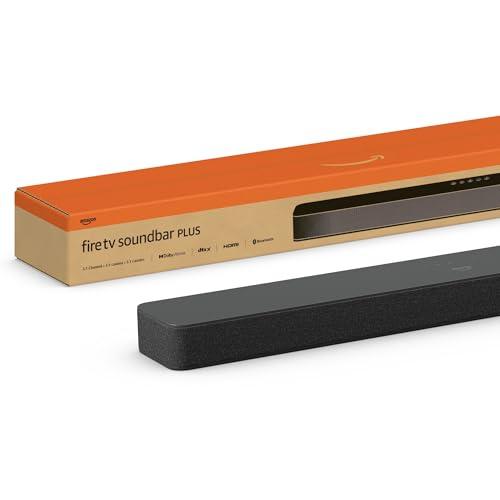
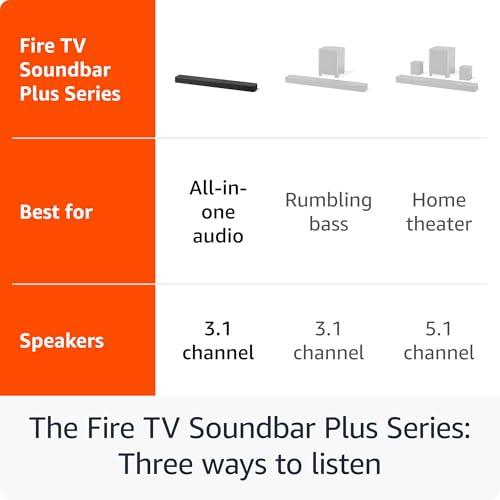
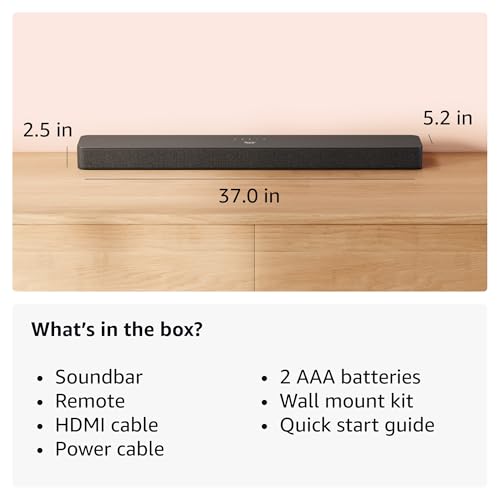
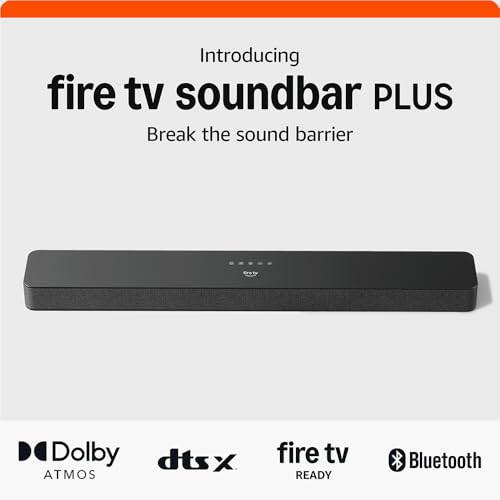
Released in 2023 as Amazon's second-generation soundbar, the Amazon Fire TV Soundbar Plus takes a straightforward approach to better TV audio. It's a 3.1-channel system with a built-in subwoofer, meaning you get dedicated left, center, and right speakers plus bass drivers all housed in a single 37-inch bar.
What makes this interesting is the expandability factor. While the main bar works perfectly on its own, Amazon designed it to pair with optional wireless rear speakers and an external subwoofer, creating a full 5.1-channel surround system. This modular approach lets you start small and expand later if you catch the home theater bug.
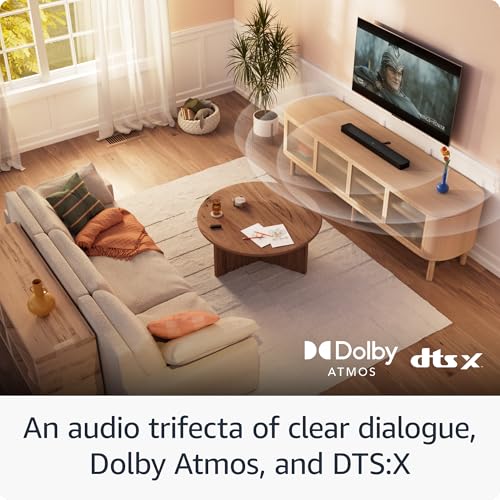
The Fire TV Soundbar Plus supports Dolby Atmos and DTS:X—the two main surround sound formats that create overhead audio effects. However, it uses virtual processing rather than physical upward-firing speakers. This means software algorithms try to simulate height effects by manipulating the audio, rather than actually bouncing sounds off your ceiling. It works reasonably well, but it's not the same as having dedicated height speakers.
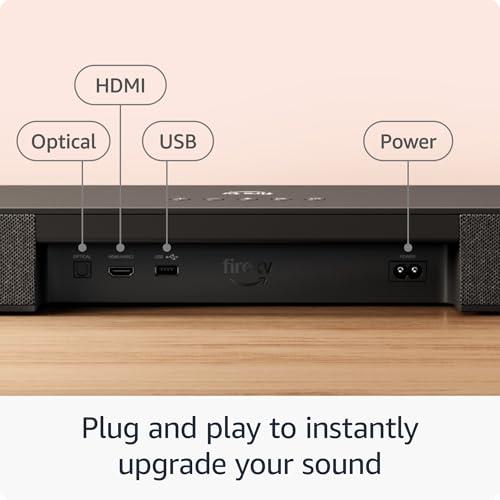
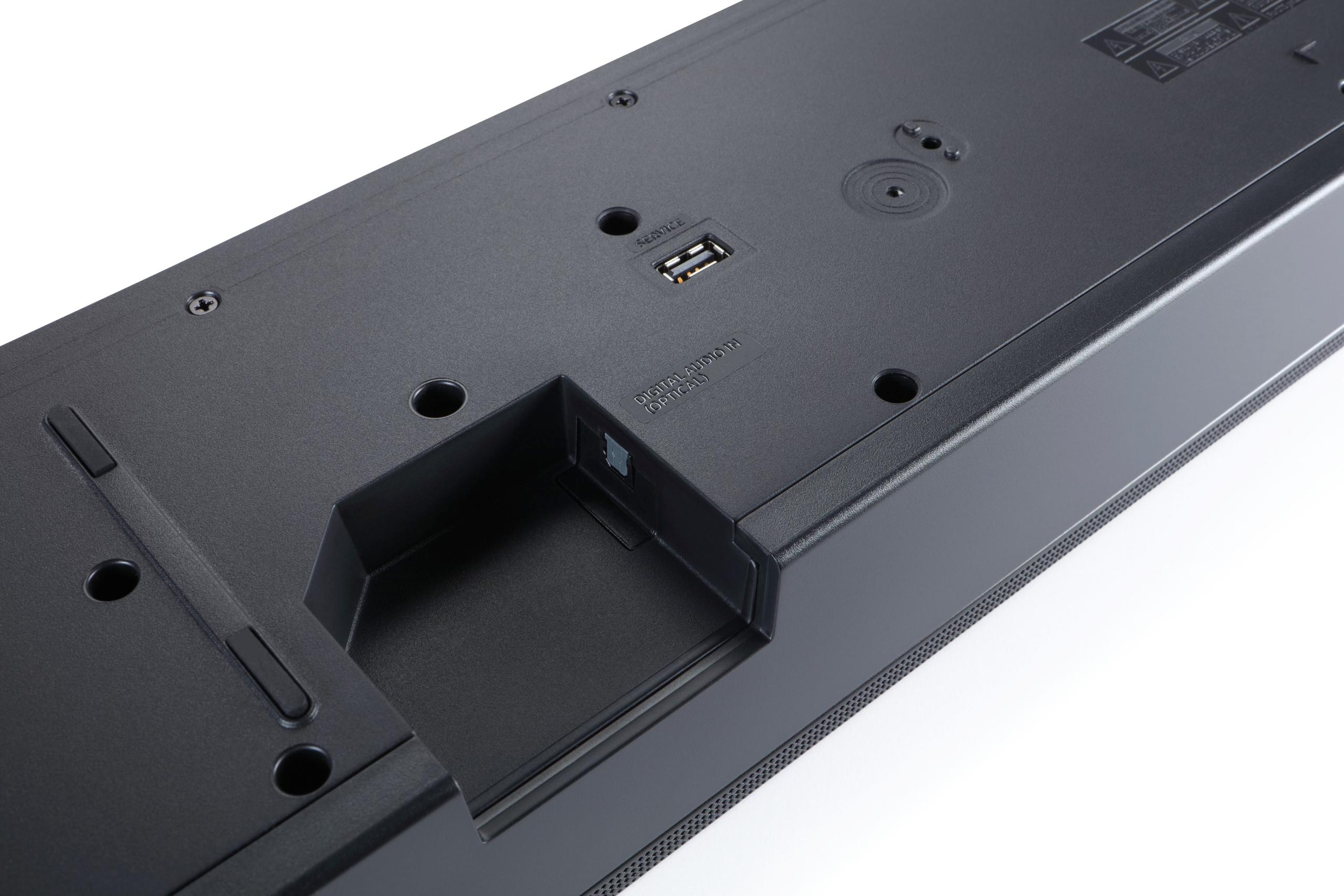
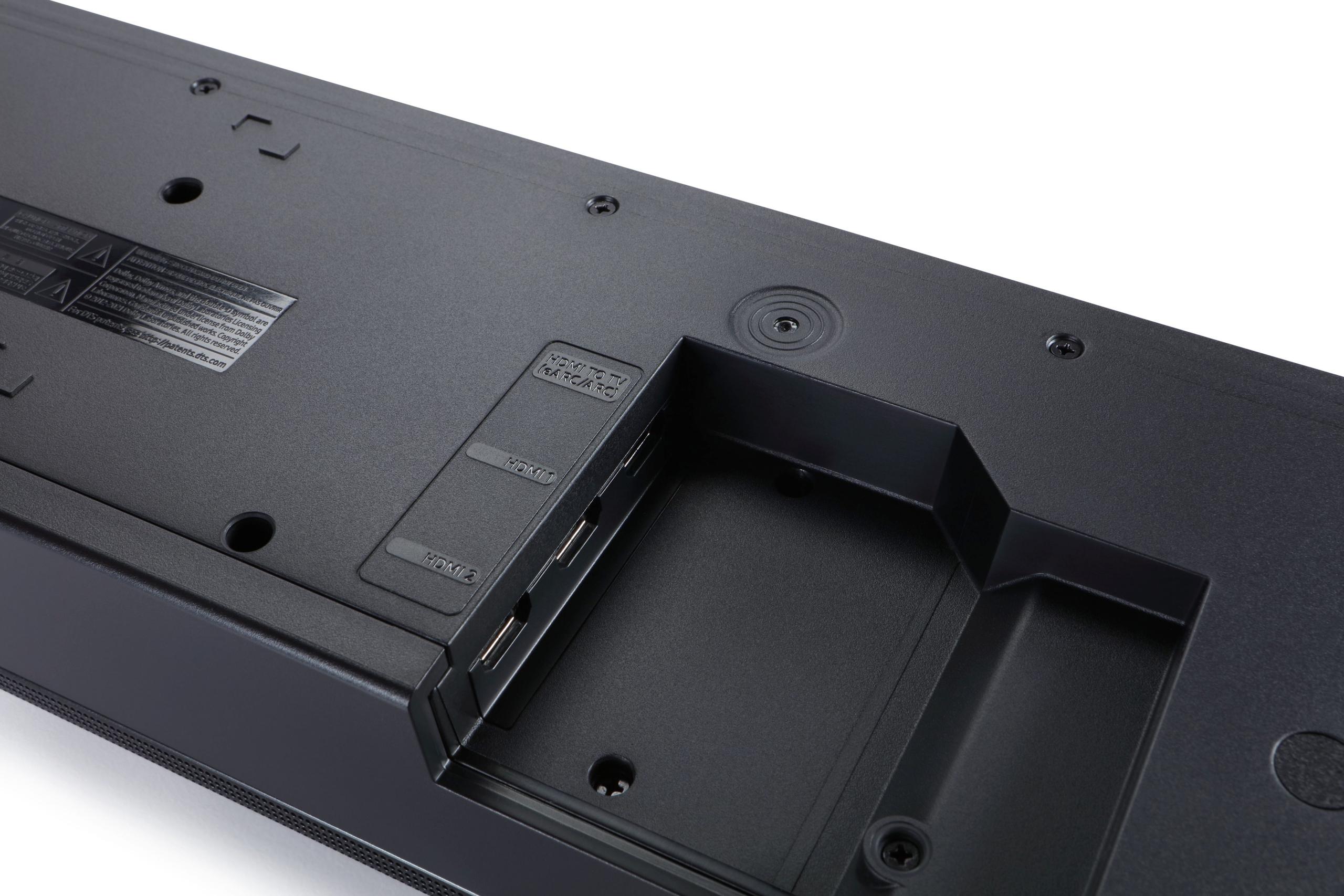
For connectivity, you get the essentials: HDMI eARC (enhanced Audio Return Channel) for high-quality audio from your TV, optical input for older devices, USB for playing music files, and Bluetooth for streaming from phones or tablets. The HDMI eARC connection is particularly important because it can carry uncompressed surround sound formats that optical cables can't handle.
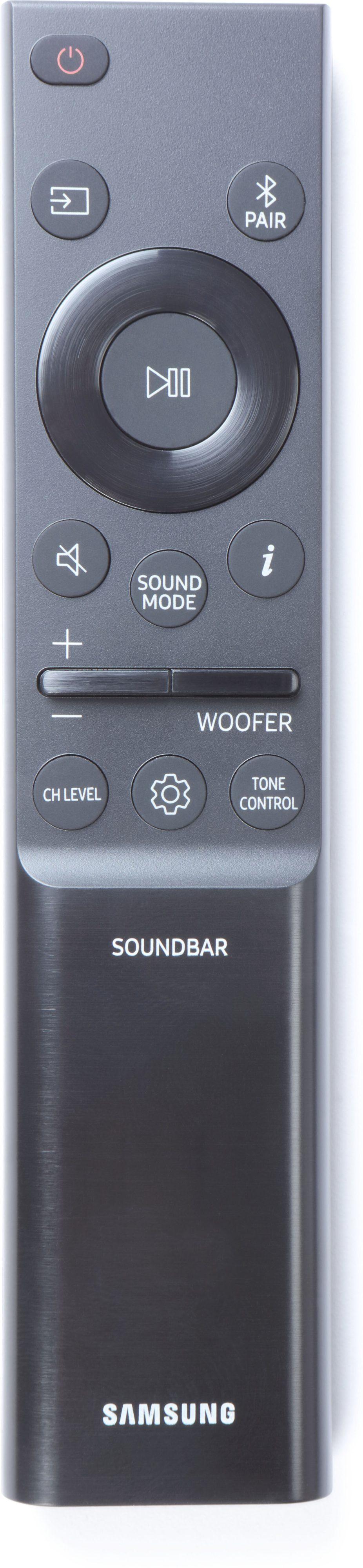
One clever feature is the Fire TV integration. When connected to compatible Fire TV devices, the Amazon Fire TV Soundbar Plus can be controlled with your Fire TV remote, and its settings appear in your TV's menu system. This makes adjustment much easier than hunting for a separate soundbar remote.
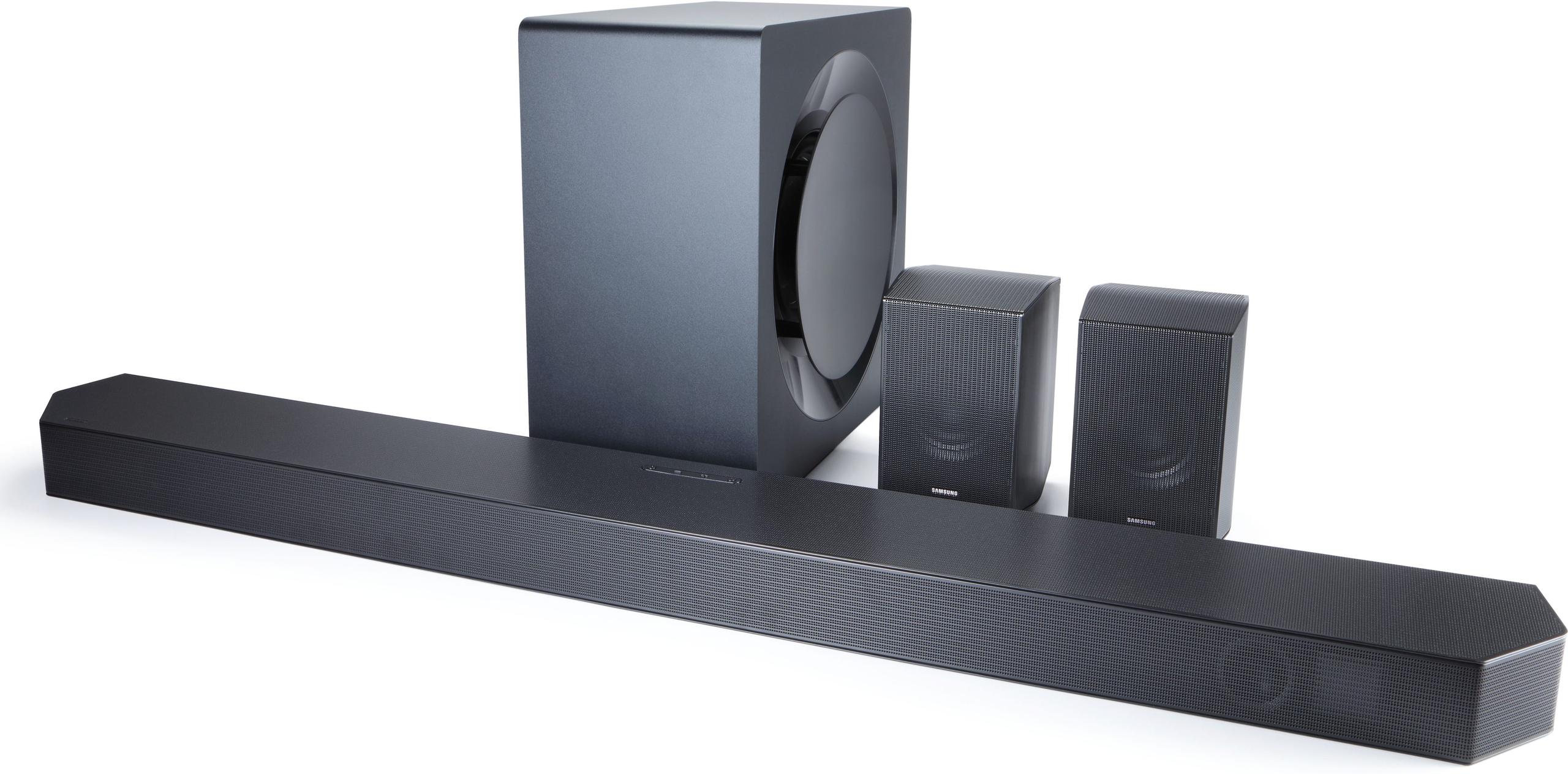
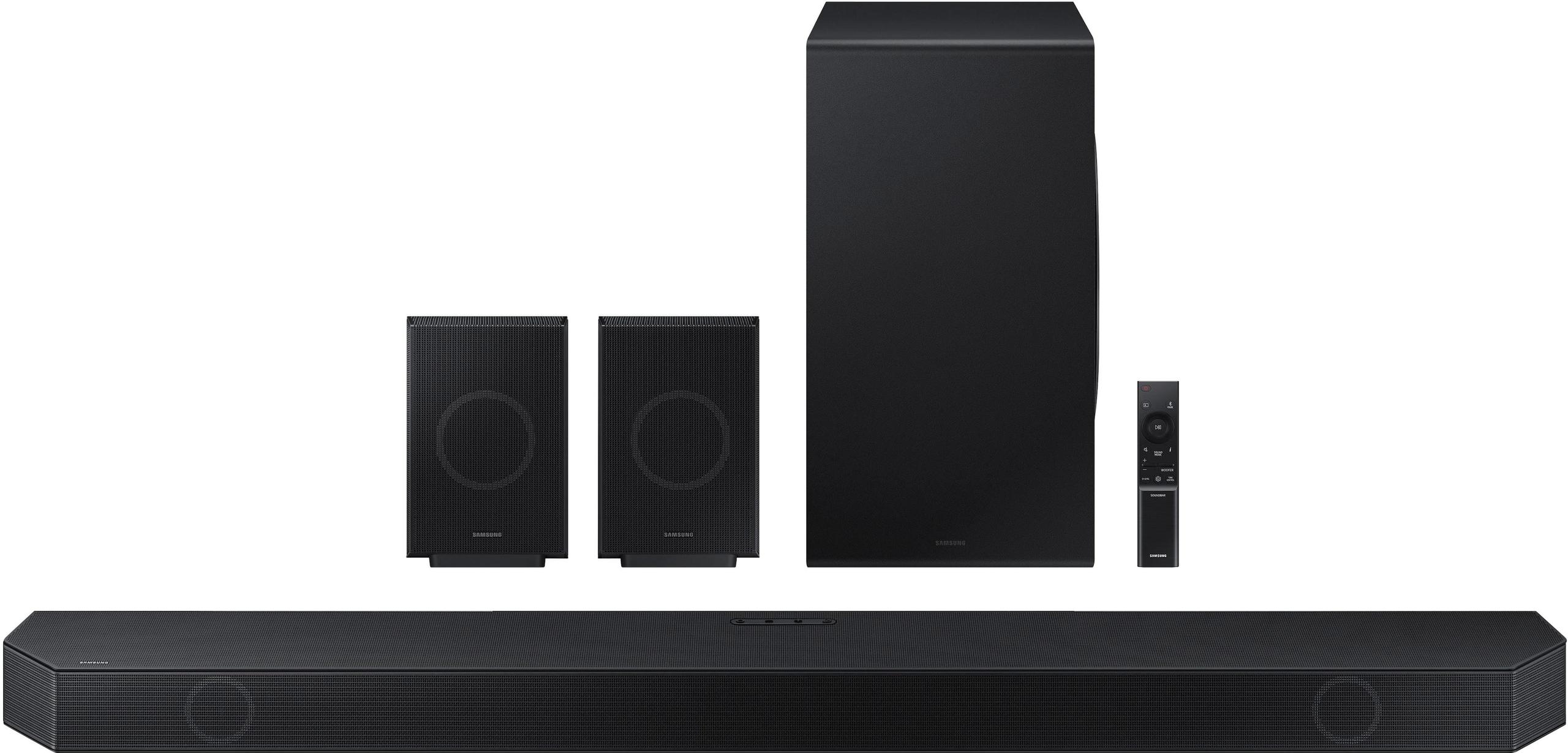
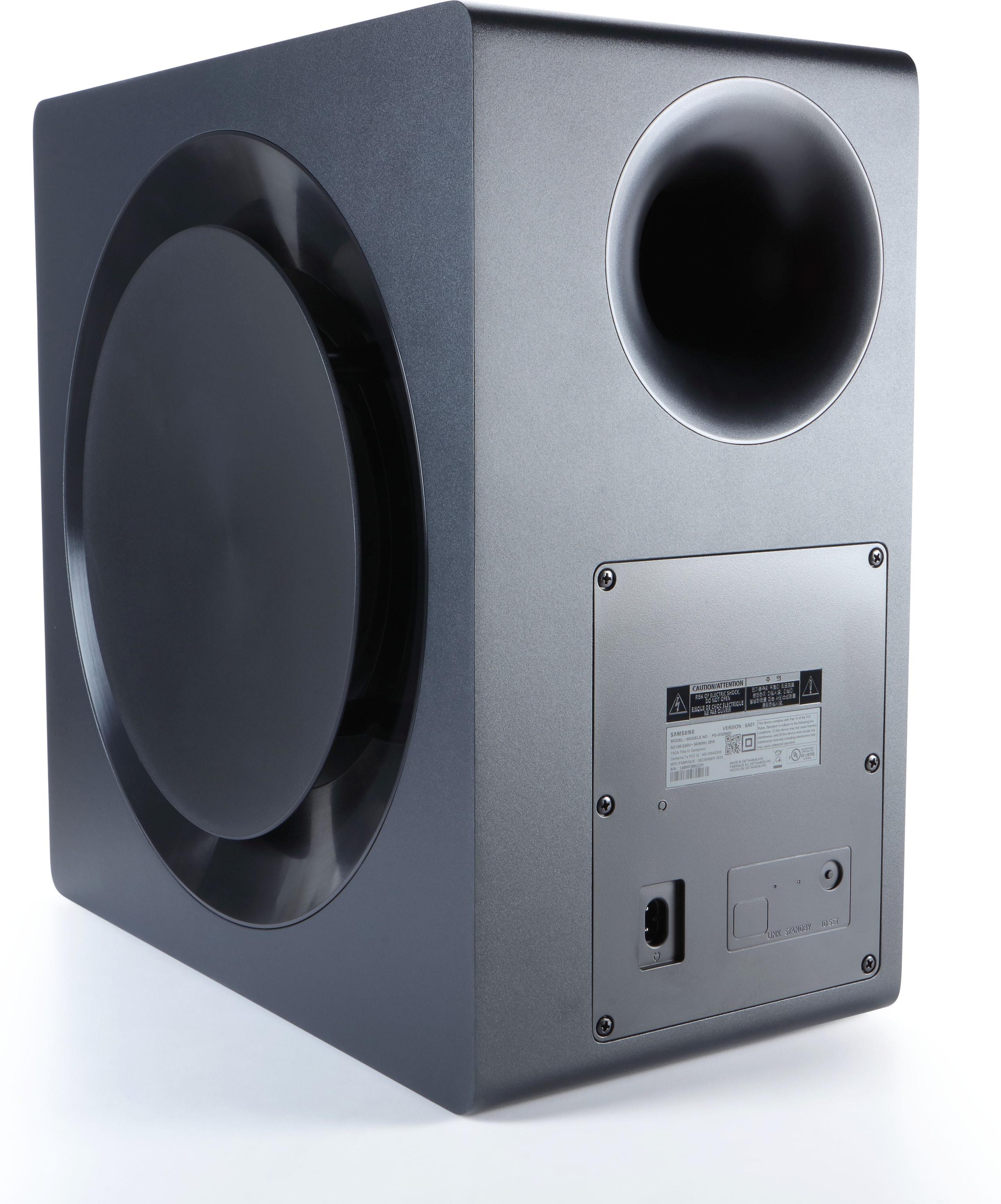
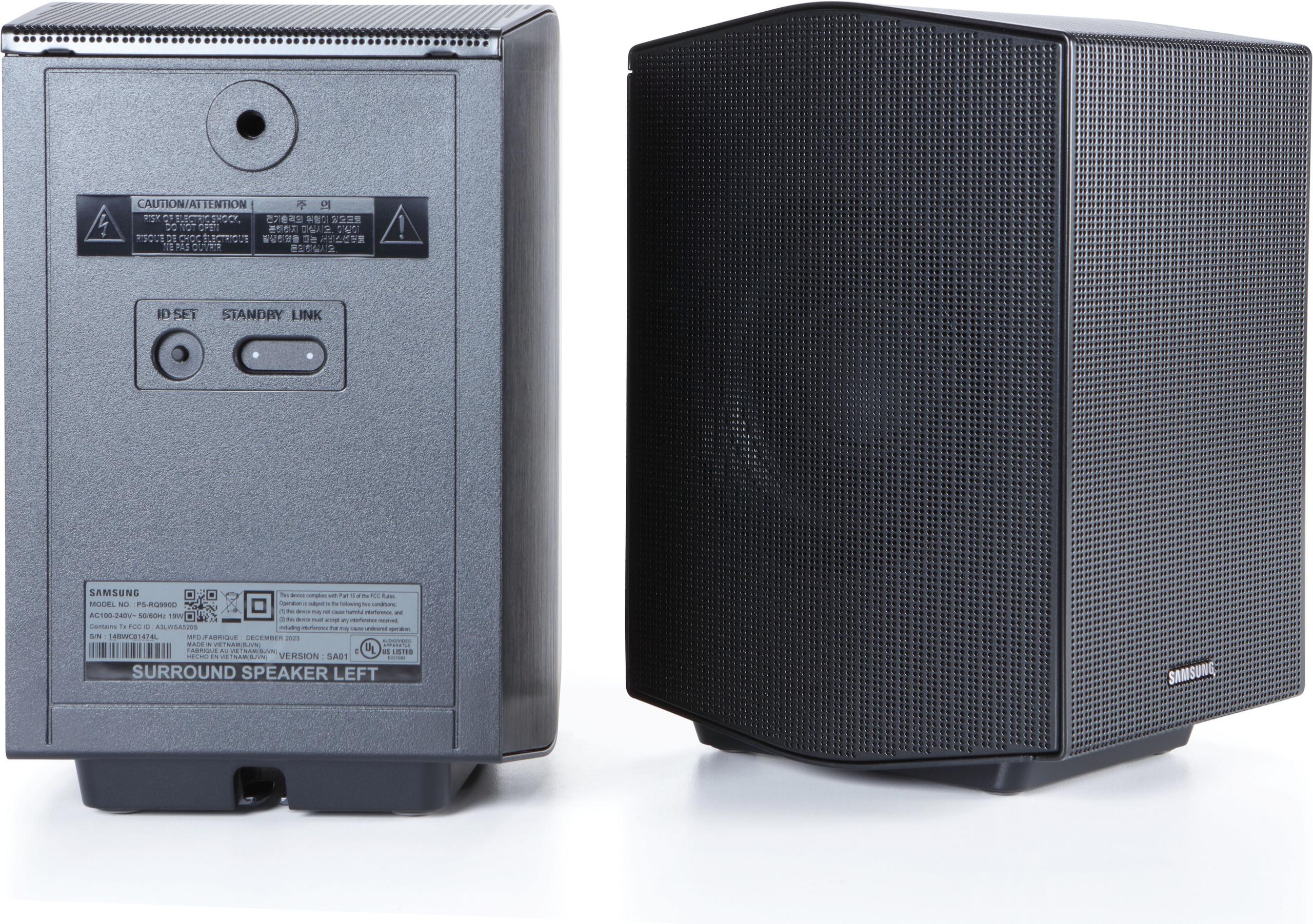
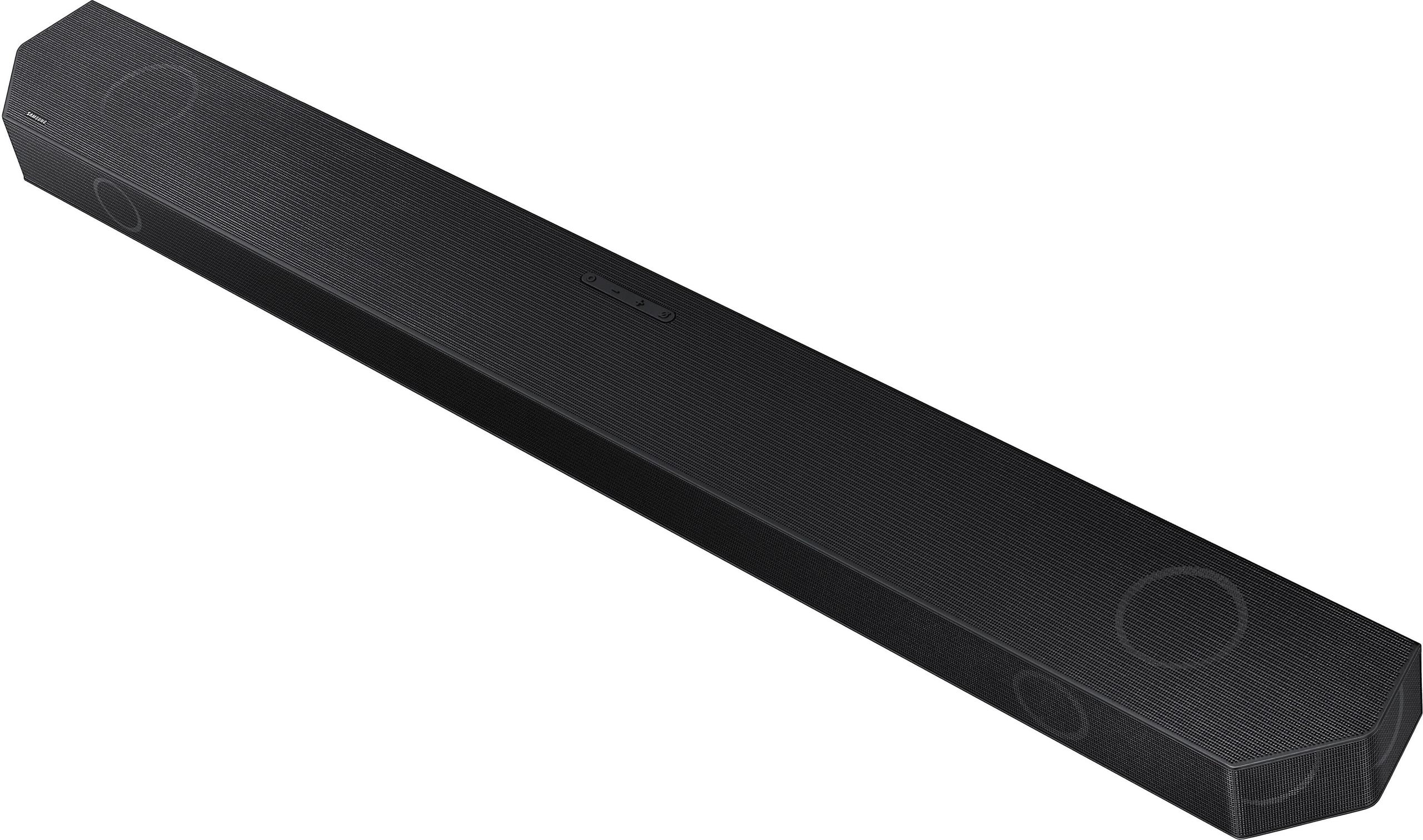
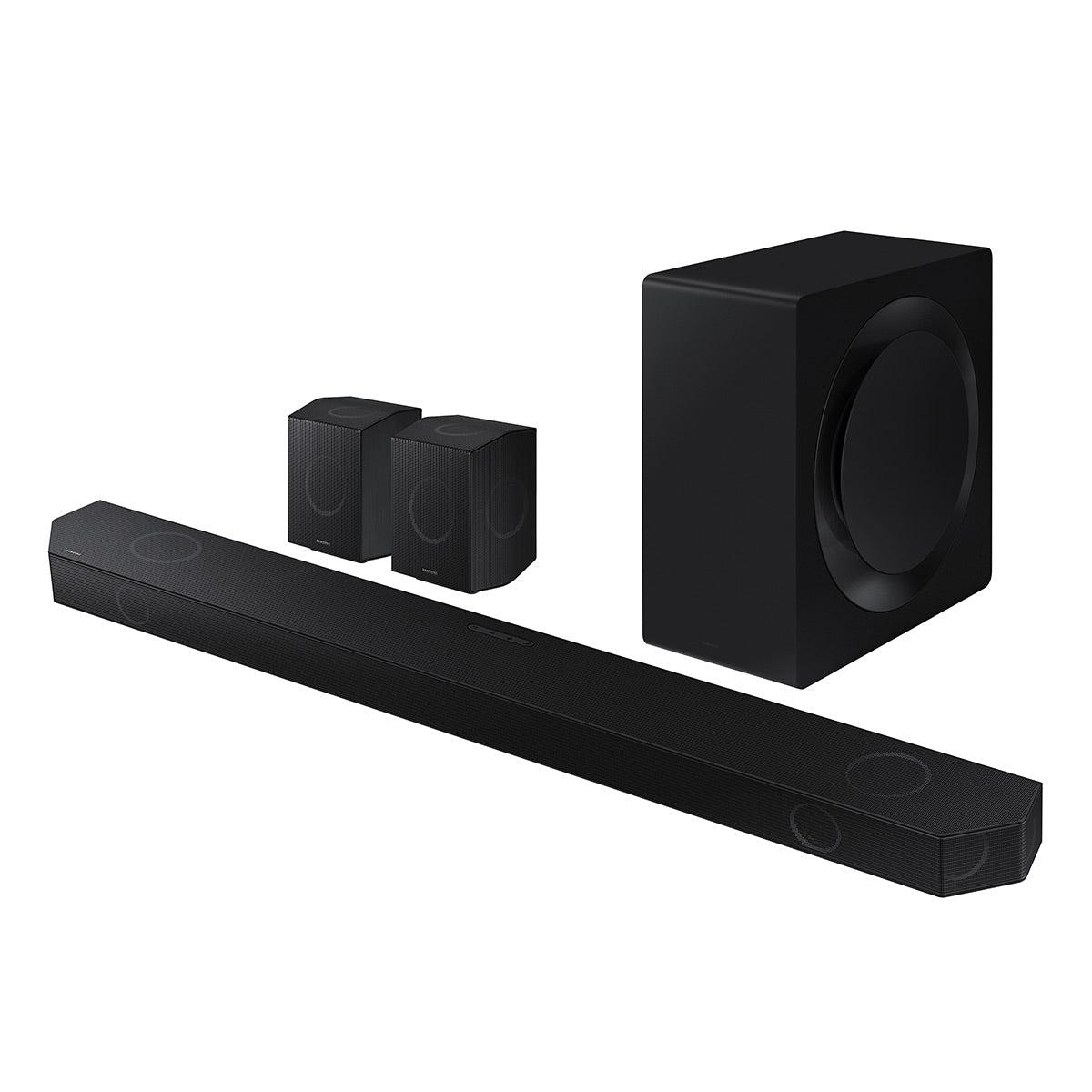
Samsung released the HW-Q990D in 2024 as their flagship soundbar, representing years of refinement in home audio technology. This is an 11.1.4-channel system—meaning 11 main channels, one subwoofer, and four height channels—with a total of 22 individual speakers spread across four separate components.
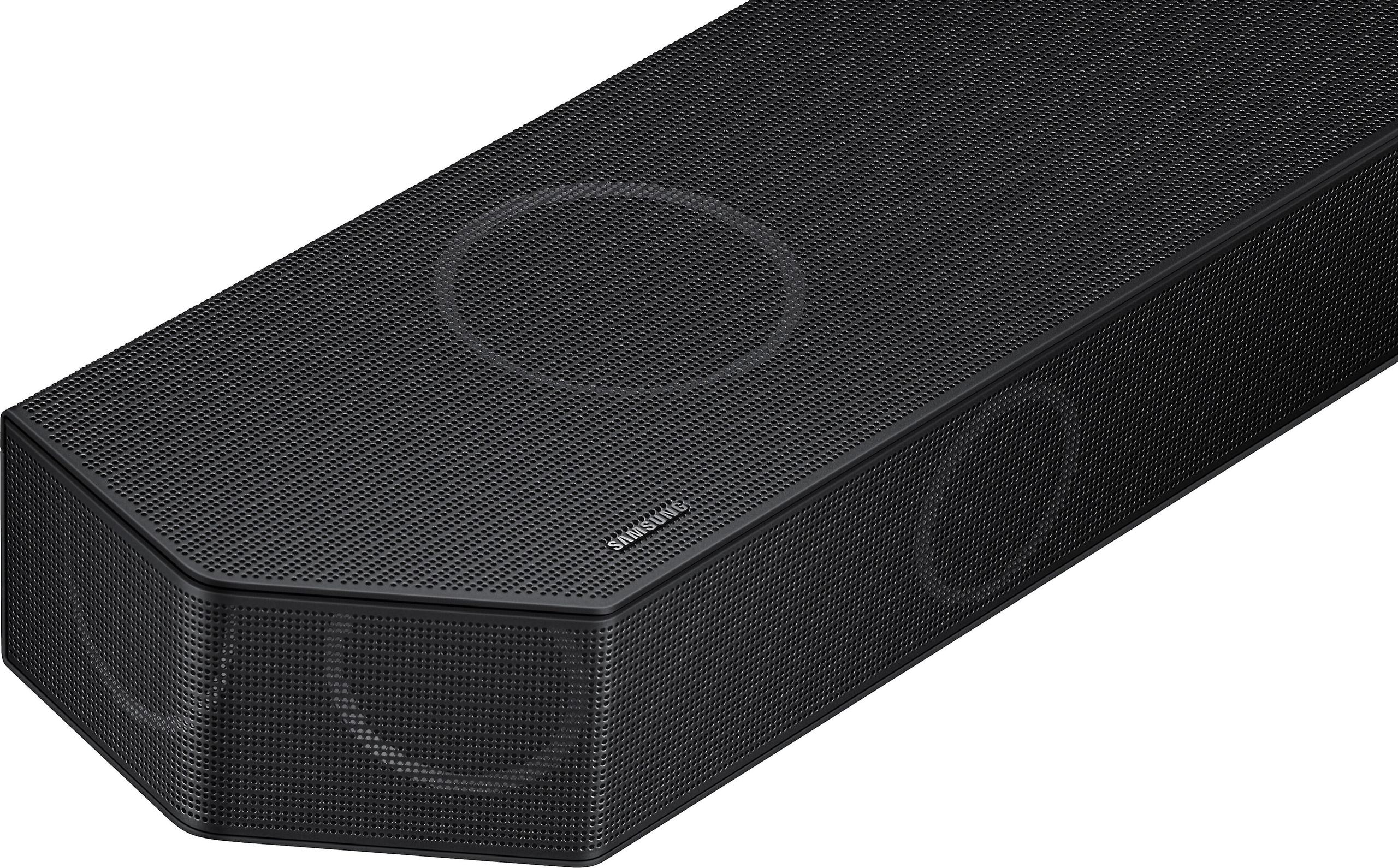
Here's how those speakers break down: the main soundbar contains 15 drivers, including six elliptical midrange drivers for vocals and music, three forward-firing tweeters for crisp highs, four side-firing drivers for stereo width, and two upward-firing drivers that bounce sound off your ceiling. Each wireless rear speaker adds three more drivers (forward, side, and up-firing), while the wireless subwoofer features a substantial 8-inch driver.
This speaker array enables true discrete surround sound, where each channel gets its own dedicated driver rather than relying on processing tricks. When a helicopter flies overhead in a movie, you hear it from actual speakers above you, not from software trying to fake the effect.
The Samsung HW-Q990D includes several advanced processing technologies that launched in 2024. SpaceFit Sound Pro uses built-in microphones to analyze your room's acoustics and automatically adjust the sound accordingly. Unlike older room correction systems that required you to walk around with a microphone playing test tones, this happens continuously and invisibly in the background.
Adaptive Sound analyzes whatever you're watching in real-time, identifying dialogue, music, and sound effects to optimize each element. If characters are whispering in a quiet scene, it automatically boosts their voices. If an action sequence gets loud, it ensures dialogue doesn't get lost in the chaos.
For gamers, the HW-Q990D supports full HDMI 2.1 specifications, including 4K video at 120Hz refresh rates, Variable Refresh Rate (VRR) for smoother gameplay, and Auto Low Latency Mode (ALLM) that eliminates audio delay. Game Mode Pro even detects what type of game you're playing and adjusts the audio profile accordingly—emphasizing footsteps in competitive shooters or creating more immersive ambient effects in adventure games.
Having tested both systems extensively, the performance gap is immediately obvious. The Amazon Fire TV Soundbar Plus delivers clean, intelligible dialogue with its dedicated center channel, and the built-in subwoofer provides enough bass to make action scenes feel impactful. However, the sound signature is slightly "excited"—meaning bass is emphasized over midrange frequencies. This can make movies sound punchy, but sometimes at the expense of natural vocal tone.
The subwoofer in the Fire TV Soundbar Plus has what I'd describe as a "one-note" quality. It hits hard in the upper bass range (around 80-120Hz) but lacks extension into the deep bass frequencies that give explosions their rumbling weight. Music sounds decent, but you'll notice the limited range when listening to genres with substantial low-end content.
The Samsung HW-Q990D operates in a completely different league. Its balanced frequency response means vocals sound natural across all volume levels, while the discrete center channel ensures dialogue remains clear even during complex sound mixes. The six midrange drivers provide richness and detail that the Amazon system simply cannot match with its smaller driver array.
Most impressively, the Samsung maintains its composure at high volumes. While the Fire TV Soundbar Plus starts to compress and distort when pushed hard, the HW-Q990D can fill large rooms with minimal strain. This dynamic range—the difference between the quietest and loudest sounds it can reproduce—is crucial for home theater applications where you want whispered dialogue and explosive action to both sound realistic.
This is where the fundamental architectural differences become most apparent. The Amazon Fire TV Soundbar Plus creates a wider soundstage than your TV speakers, and when expanded with rear speakers, it produces convincing surround effects for dialogue and ambient sounds. However, the virtual height processing can't create truly convincing overhead effects. Helicopter flyovers might sound like they're moving left to right, but they won't seem to pass overhead with the same realism.
The Samsung HW-Q990D delivers genuine three-dimensional audio that can be startling if you're not used to it. Rain sounds like it's falling from above, aircraft pass convincingly overhead, and ambient sounds like wind or crowd noise seem to surround you naturally. This isn't processing trickery—it's the result of having actual speakers firing in all directions, including upward.
The discrete speaker placement also creates more precise localization. In a movie scene where characters are having a conversation while walking, you can track their movement across the soundstage with pinpoint accuracy. The Fire TV Soundbar Plus, despite its best efforts, can't match this spatial precision with its limited driver array.
Both systems include subwoofers, but their capabilities differ dramatically. The Amazon Fire TV Soundbar Plus's built-in subwoofer works well in smaller rooms and provides enough low-end impact for most TV content. However, it lacks the physical displacement necessary to pressurize larger spaces with deep bass.
The Samsung HW-Q990D's wireless subwoofer is a different beast entirely. Its 8-inch driver can produce genuinely room-shaking bass that adds visceral impact to action movies without becoming boomy or overwhelming. More importantly, it integrates seamlessly with the main speakers—you don't hear it as a separate component but as part of a cohesive whole.
Room size makes a huge difference here. In a small apartment or bedroom, the Amazon system's bass output might actually be preferable—it provides impact without overpowering the space. But in a dedicated home theater or large living room, the Samsung's superior bass extension and control become essential for a convincing experience.
The Amazon Fire TV Soundbar Plus keeps things simple. Despite carrying the "Fire TV" name, it doesn't include built-in streaming capabilities or Alexa voice control. It's purely an audio device that happens to integrate well with Fire TV streaming devices. Setup is straightforward—connect via HDMI, and if you're using a Fire TV device, the soundbar appears in your TV's audio settings for easy adjustment.
The Samsung HW-Q990D embraces the smart home ecosystem fully. Built-in WiFi enables direct streaming from services like Amazon Music, Apple Music, and Tidal, including high-resolution and Dolby Atmos music tracks. Voice assistants (Alexa, Google Assistant, and Samsung's Bixby) are built-in, letting you control playback, adjust volume, or ask questions without reaching for a remote.
Q-Symphony is a particularly clever feature for Samsung TV owners. Instead of disabling your TV's speakers when you connect the soundbar, Q-Symphony uses them as additional channels, effectively expanding the front soundstage. The TV's speakers handle certain frequency ranges while the soundbar focuses on others, creating a more immersive front-facing sound field.
The Samsung also includes what might be the most useful new feature of 2024: Private Rear Sound mode. Activate this during late-night viewing, and only the rear speakers operate, creating a personalized surround bubble that won't disturb others in adjacent rooms. It's surprisingly effective and shows thoughtful engineering beyond just raw performance metrics.
At the time of writing, the Amazon Fire TV Soundbar Plus typically costs about $180 for the main soundbar, with optional rear speakers and external subwoofer available for additional cost. This positions it as excellent value for anyone seeking a meaningful upgrade over TV speakers without a substantial financial commitment.
The Samsung HW-Q990D commands a premium price—typically around $850-900 when not on sale. That's nearly five times the cost of the Amazon system, so the performance needs to justify this significant price gap.
In my experience, it does. The Samsung doesn't just sound better—it transforms the viewing experience entirely. Action movies become events rather than background entertainment. Music streaming reveals details you've never noticed. Gaming becomes more immersive with accurate directional audio helping you locate enemies or navigate environments.
However, this transformation requires the right environment. In a small bedroom or apartment, the Amazon system might actually be preferable. It provides clear dialogue and sufficient bass without overwhelming the space or your budget. The Samsung's capabilities would be largely wasted in such environments.
For dedicated home theater use, the differences become even more pronounced. The Samsung HW-Q990D can serve as the audio foundation for a serious entertainment system, with HDMI 2.1 pass-through supporting the latest gaming consoles and media players at full resolution and refresh rates.
The automatic room correction (SpaceFit Sound Pro) is particularly valuable in home theater settings, where acoustic treatment might be limited and furniture placement constrained. Rather than requiring manual calibration with measurement microphones, the system continuously optimizes itself based on what it "hears" in your specific room.
The Amazon Fire TV Soundbar Plus, while capable, is better suited for general living room use where you want better audio but aren't necessarily pursuing a reference-quality experience. It excels at making dialogue clearer and adding some surround atmosphere, which covers the majority of what most people need from a soundbar.
Choose the Amazon Fire TV Soundbar Plus if you're looking for your first soundbar upgrade, have a smaller room, or primarily watch TV shows and casual content. It's also ideal if you're already invested in the Fire TV ecosystem and want seamless integration. The option to expand with rear speakers later provides a growth path if your interests develop.
The Samsung HW-Q990D makes sense for audio enthusiasts, serious home theater setups, or anyone who frequently watches movies and plays games. If you have a larger room, appreciate high-quality music reproduction, or want the latest connectivity features for future-proofing, the premium price becomes justifiable.
Interestingly, room size might be the deciding factor. The Samsung's capabilities really shine in larger spaces where it can create an enveloping sound field. In smaller rooms, its advantages become less pronounced, making the Amazon system's value proposition more appealing.
The bottom line: both soundbars succeed at their intended goals. The Amazon Fire TV Soundbar Plus delivers meaningful audio improvement at an accessible price, while the Samsung HW-Q990D provides transformative performance for those willing to invest significantly more. Your choice should depend on your space, budget, and how important audio quality is to your overall entertainment experience.
| Amazon Fire TV Soundbar Plus | Samsung HW-Q990D 11.1.4 Channel Sound Bar |
|---|---|
| Channel Configuration - Determines surround sound capability and immersion level | |
| 3.1 channels (expandable to 5.1 with optional components) | True 11.1.4 channels with 22 discrete speakers |
| Height Channel Support - Critical for Dolby Atmos overhead effects | |
| Virtual height processing only (no physical up-firing drivers) | Four dedicated up-firing drivers for genuine overhead sound |
| Speaker Components - Affects setup complexity and performance | |
| Single soundbar with built-in subwoofer | Four-piece system: soundbar, wireless subwoofer, two wireless rear speakers |
| Connectivity Options - Important for gaming and future device compatibility | |
| HDMI eARC, optical, USB, Bluetooth 5.0 | HDMI 2.1 (4K/120Hz, VRR, ALLM), eARC, optical, Wi-Fi, Bluetooth 5.2 |
| Audio Format Support - Determines compatibility with premium content | |
| Dolby Atmos, DTS:X (virtualized), standard surround formats | Full Dolby Atmos, DTS:X, Dolby TrueHD with lossless audio support |
| Room Calibration - Automatically optimizes sound for your space | |
| Manual adjustments via remote only | SpaceFit Sound Pro with continuous automatic room optimization |
| Smart Features - Convenience and streaming capabilities | |
| Fire TV integration only (no built-in streaming or voice control) | Built-in Wi-Fi streaming, Alexa/Google/Bixby voice control, Q-Symphony |
| Ideal Room Size - Where each system performs best | |
| Small to medium rooms (up to 250 sq ft) | Medium to large rooms (300+ sq ft) for full impact |
| Target User - Who gets the most value from each system | |
| Budget-conscious buyers wanting clear dialogue improvement | Audio enthusiasts seeking premium home theater experience |
The Amazon Fire TV Soundbar Plus is much better for beginners due to its simple setup and straightforward operation. It's a single unit that connects via one HDMI cable and immediately improves your TV's audio. The Samsung HW-Q990D requires positioning four separate components and offers dozens of settings that can overwhelm new users.
The primary difference is complexity and performance level. The Amazon Fire TV Soundbar Plus is a budget-friendly 3.1-channel system focused on clear dialogue, while the Samsung HW-Q990D is a premium 11.1.4-channel system with 22 speakers that creates true surround sound immersion.
Yes, both support Dolby Atmos, but very differently. The Amazon Fire TV Soundbar Plus uses virtual processing to simulate overhead effects, while the Samsung HW-Q990D has actual upward-firing speakers that bounce sound off your ceiling for genuine three-dimensional audio.
The Amazon Fire TV Soundbar Plus is ideal for small rooms because its built-in subwoofer provides appropriate bass levels without overwhelming the space. The Samsung HW-Q990D is designed for larger rooms and may produce too much bass in compact spaces.
Both soundbars work with any TV that has HDMI or optical audio outputs. However, the Amazon Fire TV Soundbar Plus integrates best with Fire TV devices, while the Samsung HW-Q990D offers special features like Q-Symphony when paired with Samsung TVs.
The Samsung HW-Q990D is superior for gaming with HDMI 2.1 support for 4K/120Hz gaming, variable refresh rate, and Game Mode Pro that optimizes audio for different game types. The Amazon Fire TV Soundbar Plus lacks these advanced gaming features.
The Amazon Fire TV Soundbar Plus needs minimal space—just room for the 37-inch soundbar itself. The Samsung HW-Q990D requires significantly more space for its wireless subwoofer and two rear speakers positioned around your seating area.
This depends on your needs. The Amazon Fire TV Soundbar Plus offers excellent value for basic audio improvement at a budget price. The Samsung HW-Q990D provides exceptional value for serious home theater enthusiasts willing to pay premium prices for top-tier performance.
Neither requires professional installation. The Amazon Fire TV Soundbar Plus is extremely simple—just plug in power and connect one HDMI cable. The Samsung HW-Q990D requires placing multiple components but comes pre-paired and only needs power connections for each piece.
The Samsung HW-Q990D is specifically designed for serious home theater use with true surround sound, room calibration, and support for high-end audio formats. The Amazon Fire TV Soundbar Plus works well for casual home theater use but can't match the immersive experience of the Samsung system.
The Amazon Fire TV Soundbar Plus can be expanded with optional wireless rear speakers and subwoofer to create a 5.1 system. The Samsung HW-Q990D comes complete as a full system and cannot be expanded further, though it already includes everything needed for premium surround sound.
The Samsung HW-Q990D has comprehensive smart features including built-in Wi-Fi streaming, multiple voice assistants, and advanced room calibration. The Amazon Fire TV Soundbar Plus has minimal smart features and focuses primarily on integration with Fire TV devices rather than standalone smart capabilities.
We've done our best to create useful and informative comparisons to help you decide what product to buy. Our research uses advanced automated methods to create this comparison and perfection is not possible - please contact us for corrections or questions. These are the sites we've researched in the creation of this article: rtings.com - wirelessplace.com - techradar.com - cordbusters.co.uk - whathifi.com - developer.amazon.com - t3.com - dolby.com - youtube.com - youtube.com - youtube.com - dugoutnorthbrook.com - dolby.com - aboutamazon.com - youtube.com - developer.amazon.com - techradar.com - avsforum.com - valueelectronics.com - samsung.com - rtings.com - samsung.com - avsforum.com - samsung.com - cdwg.com - youtube.com - whathifi.com

Privacy Policy
Terms and Conditions - Affiliate Policy
Home Security
© Copyright 2008-2026.
11816 Inwood Rd #1211, Dallas, TX 75244