




Shopping for a soundbar can feel overwhelming with dozens of options spanning from basic stereo bars to complex surround sound systems. At their core, soundbars solve the same fundamental problem: most TV speakers sound terrible. But the approach each product takes—and the experience they deliver—can vary dramatically.
Today's soundbar market essentially splits into two philosophies. There are compact, smart-enabled bars designed to dramatically improve dialogue and add some spatial effects without cluttering your living space. Then there are full home theater replacement systems that aim to recreate a cinema experience with dedicated subwoofers, rear speakers, and advanced processing.
The Bose Smart Soundbar 1100, released in 2024, represents the refined compact approach. Meanwhile, Samsung's HW-Q990D, also from 2024, embodies the "go big or go home" philosophy with its complete 11.1.4 channel system.
Before diving into specifics, it helps to understand what makes a great soundbar. The most important performance metrics include dialogue clarity, bass response, soundstage width, and immersive effects capability. These factors determine whether you'll actually enjoy watching movies and TV shows more than you did with your TV's built-in speakers.
Dialogue clarity might be the single most important factor. If you find yourself constantly adjusting volume or using subtitles, your TV speakers aren't doing their job. A good soundbar should make every word crisp and natural, even during action sequences.
Bass response adds weight and impact to explosions, music, and sound effects. Without adequate low-frequency reproduction, action movies feel flat and music lacks fullness.
Soundstage width refers to how spacious the audio feels—whether sound seems to come from a narrow point or fills the room naturally. Wider soundstages create more engaging experiences.
Immersive effects involve technologies like Dolby Atmos that place sounds above, behind, and around you rather than just left and right. This three-dimensional audio can dramatically enhance movies and games.
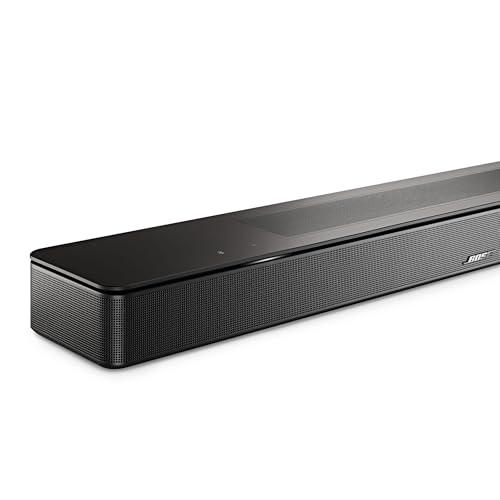
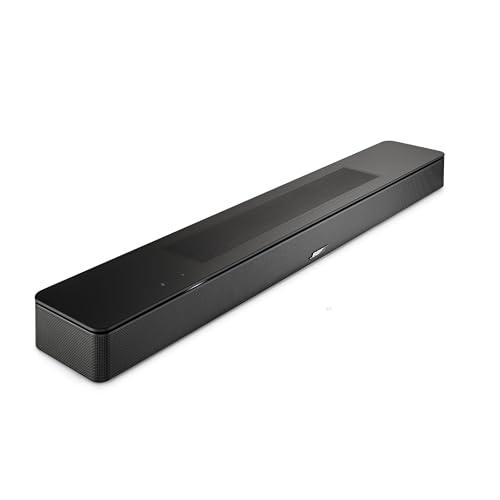
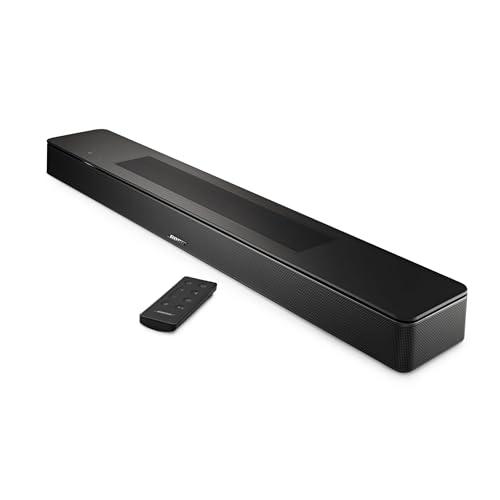
The Bose Smart Soundbar 1100 takes a "do more with less" approach. At roughly 27 inches wide and barely over 2 inches tall, it disappears under most TVs while delivering surprisingly sophisticated audio processing.
Bose designed this soundbar for people who want great sound without visual clutter or complex setups. The minimalist black design uses premium materials that feel solid without being ostentatious. Unlike many soundbars that try to look aggressive or high-tech, the Smart Soundbar 1100 aims for elegant simplicity.
The compact dimensions hide impressive engineering. Inside, five speakers work together: a center tweeter for dialogue, four midrange drivers, and two up-firing drivers for Dolby Atmos effects. This 3.0.2 channel configuration (three main channels, zero subwoofer, two height channels) maximizes performance within size constraints.
Where the Bose Smart Soundbar 1100 truly shines is dialogue reproduction. The company's AI Dialogue Mode uses artificial intelligence to automatically detect when people are speaking and adjusts the tonal balance accordingly. This means voices stay clear during explosive action scenes without you constantly reaching for the remote.
Bose's proprietary PhaseGuide technology creates the soundstage magic. Tiny transducers beam sound waves to specific points in your room, creating the illusion that audio extends far beyond the soundbar's physical boundaries. It's genuinely impressive how wide the soundstage feels from such a compact unit.
The two up-firing drivers enable true Dolby Atmos support, bouncing sound off your ceiling to create overhead effects. While the height sensation isn't as dramatic as dedicated ceiling speakers, it adds noticeable dimension to compatible content. For non-Atmos material, TrueSpace technology analyzes and upmixes regular stereo or surround sound to create similar spatial effects.
Bass performance represents the main compromise. Without a dedicated subwoofer, low-frequency response rolls off significantly below 80Hz. You'll hear the punch of explosions and the body of music, but deep rumbles and thunder lack true impact. Bose offers optional wireless subwoofers, but they're sold separately and add considerable cost.
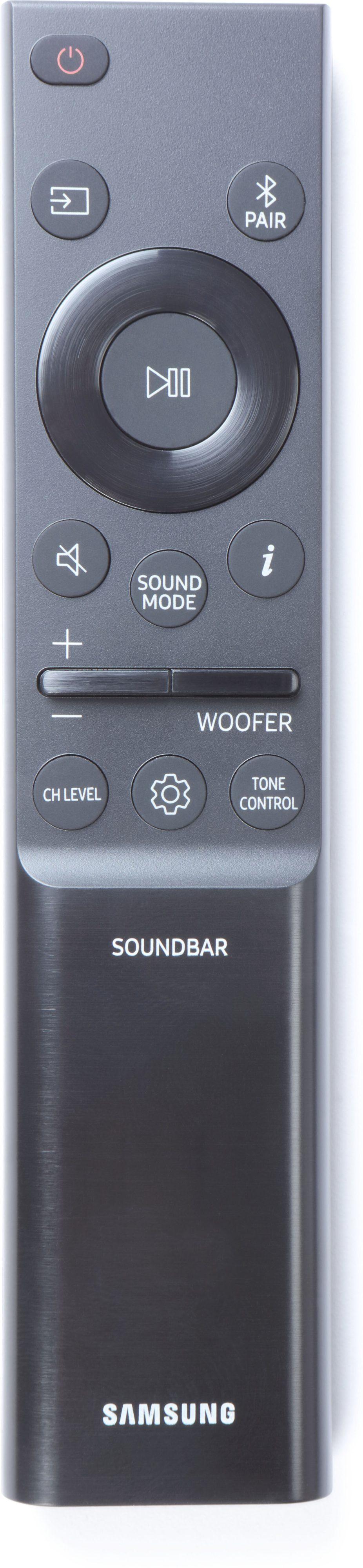
Built-in Amazon Alexa elevates the Smart Soundbar 1100 beyond simple audio reproduction. Voice4Video technology extends Alexa's capabilities to control your TV and cable box, letting you change channels or adjust volume with voice commands. Two noise-rejecting microphones ensure accurate voice recognition even when audio is playing loudly.
The soundbar connects to your home network via 802.11ac Wi-Fi, enabling streaming from virtually every major service. Apple AirPlay 2, Google Cast, Spotify Connect, and direct app support for Amazon Music, Pandora, TuneIn, and others provide extensive music options. Bluetooth 5.0 handles quick connections from phones and tablets.
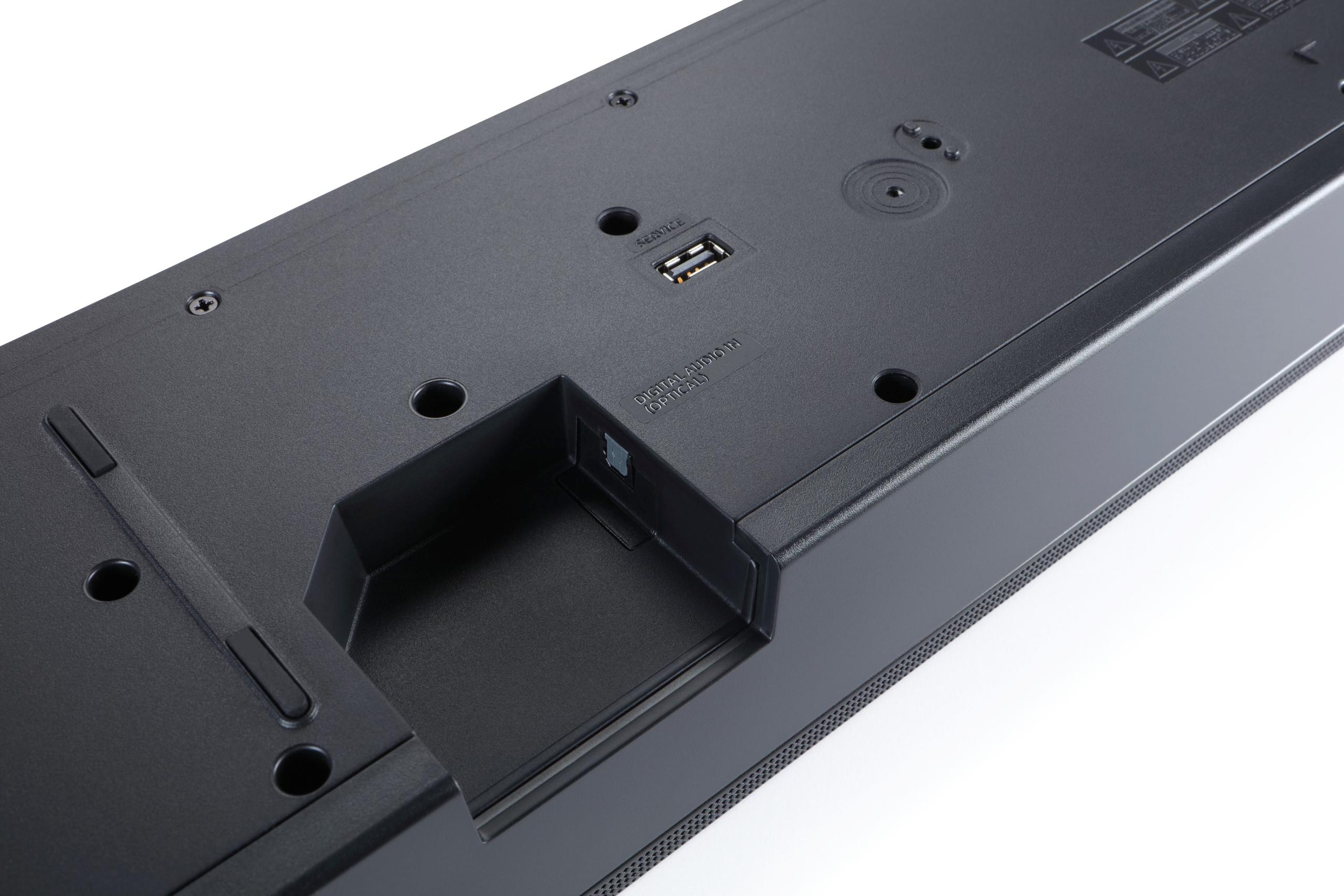
Connectivity options are deliberately streamlined. You get HDMI eARC output, one optical digital input, and that's essentially it. There's no HDMI passthrough, which means you can't route multiple devices through the soundbar. This keeps setup simple but limits flexibility compared to systems with multiple HDMI inputs.
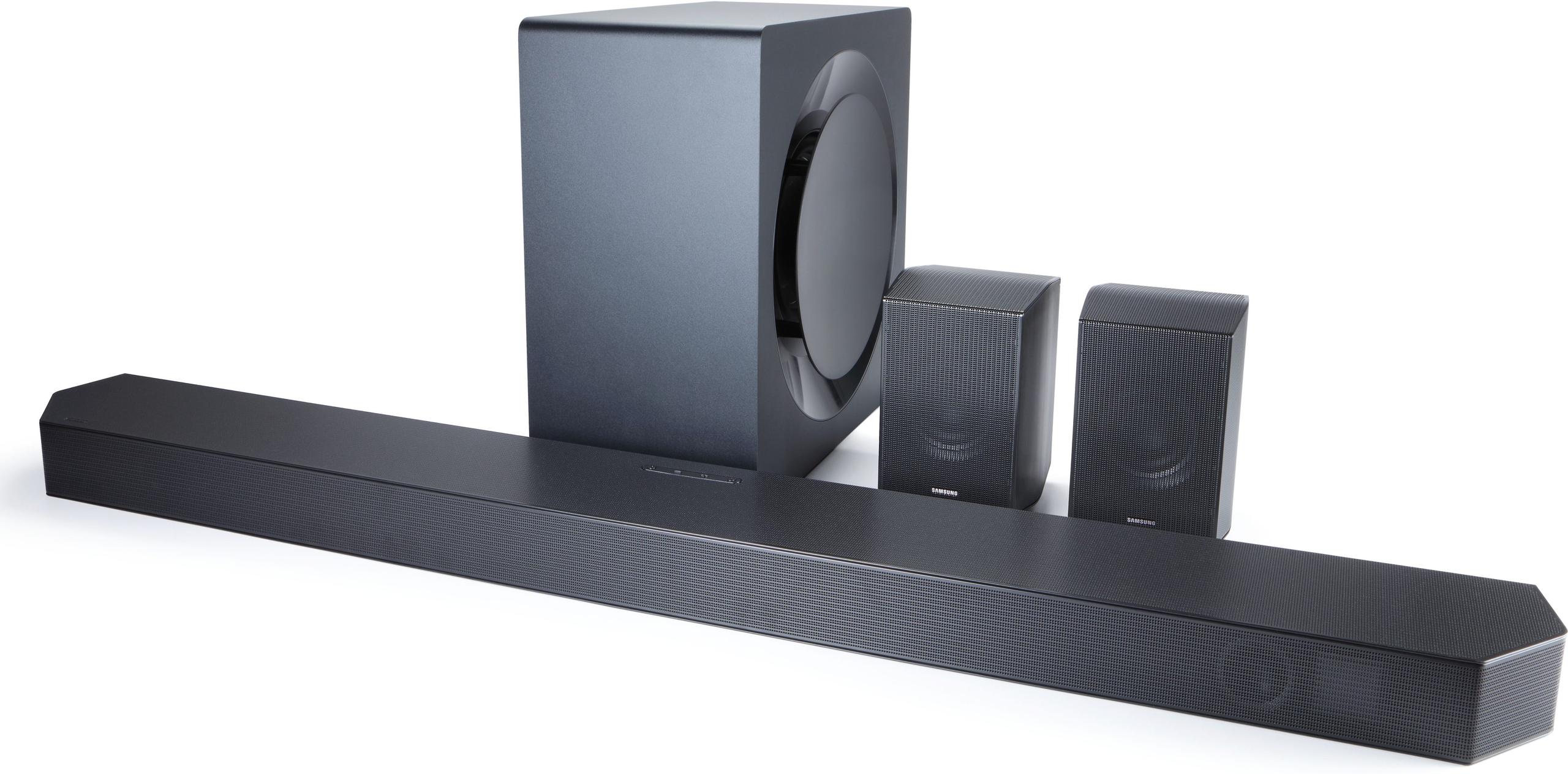
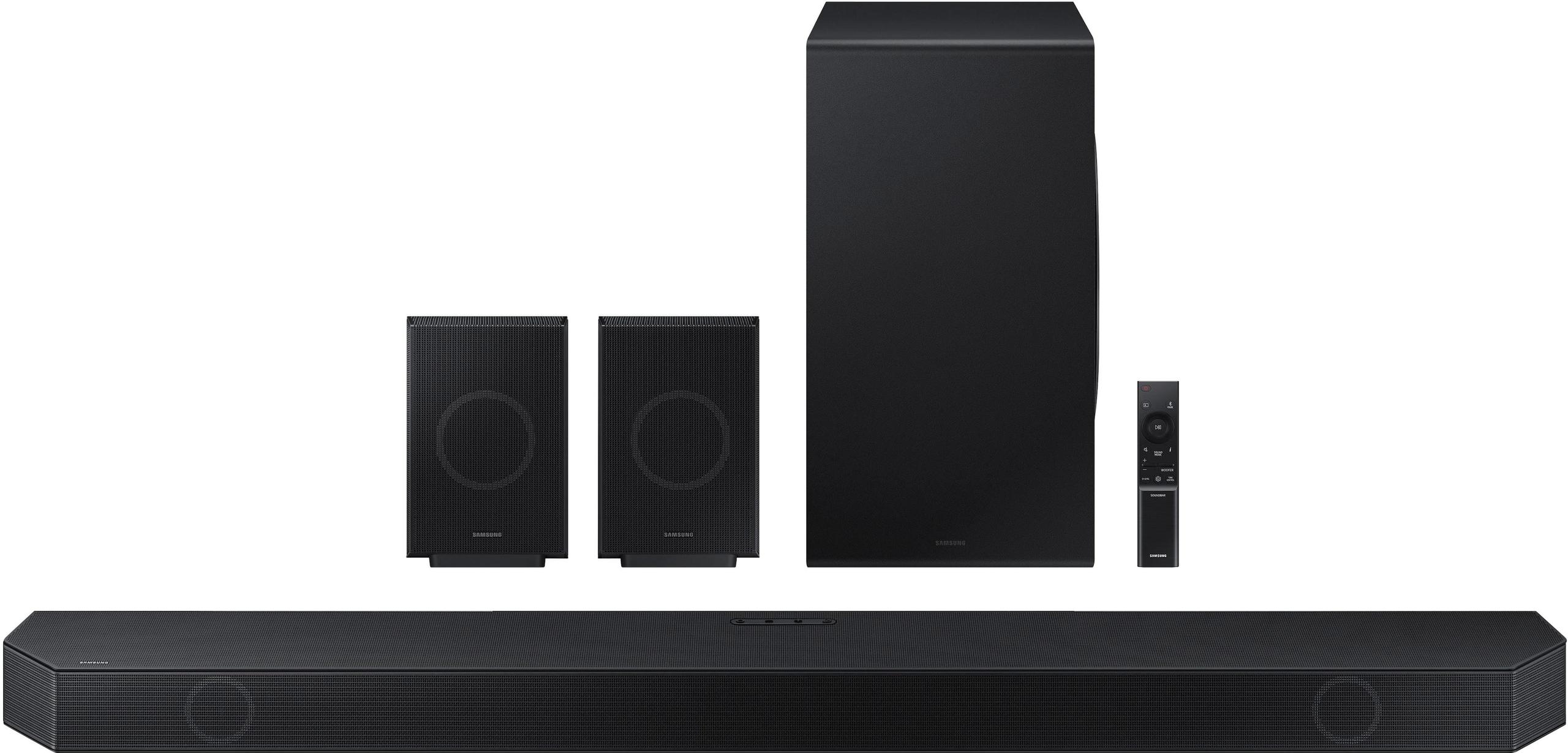
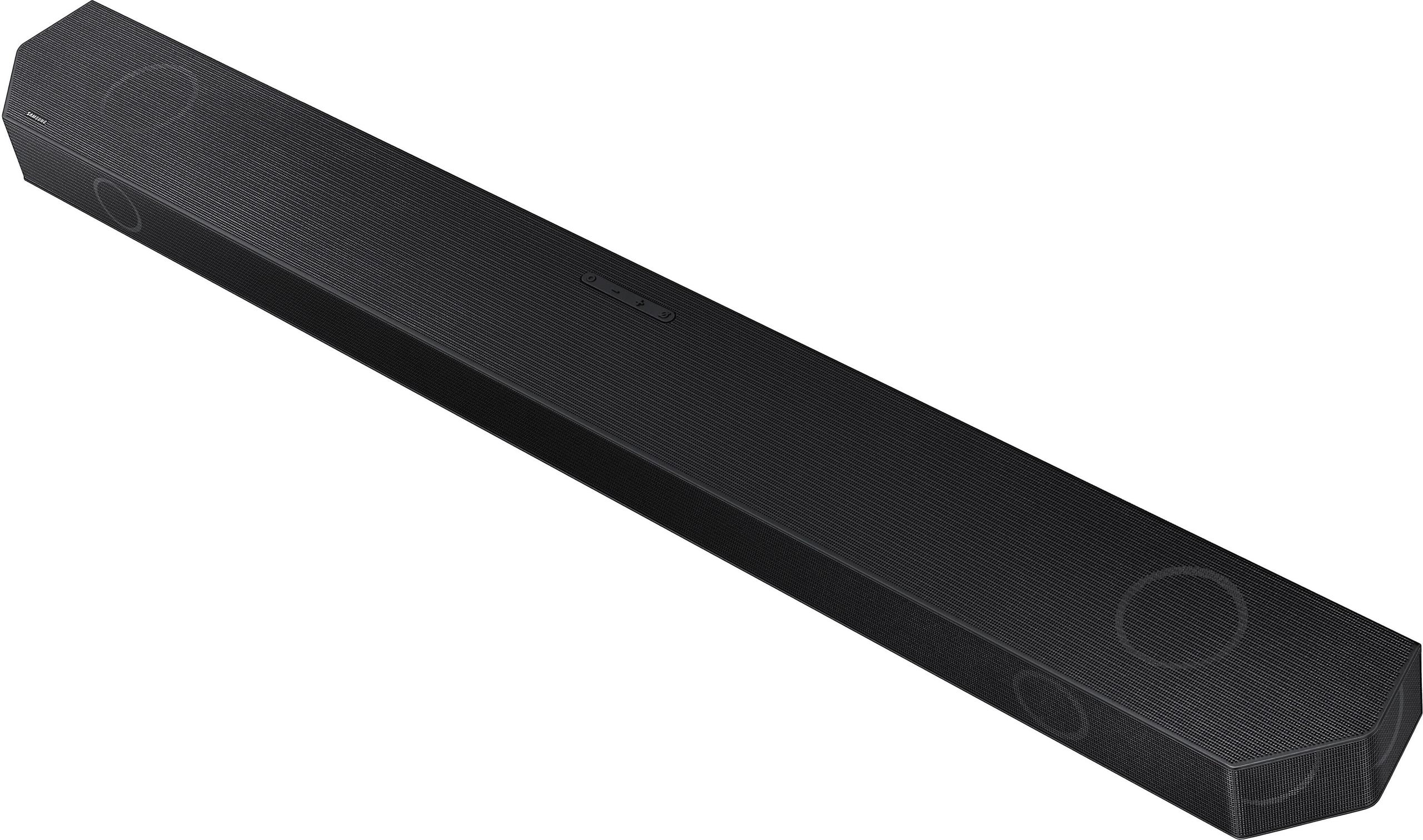
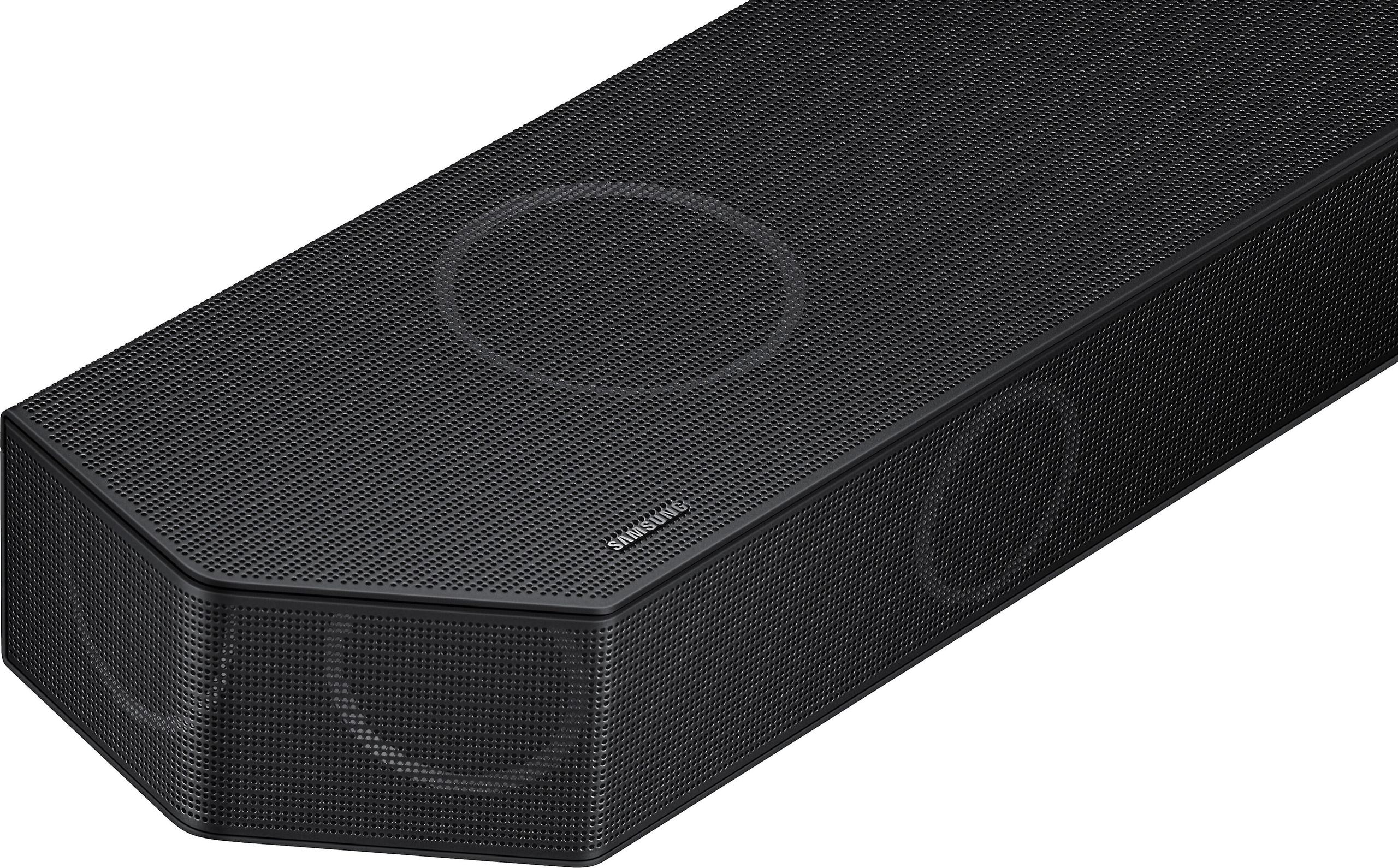
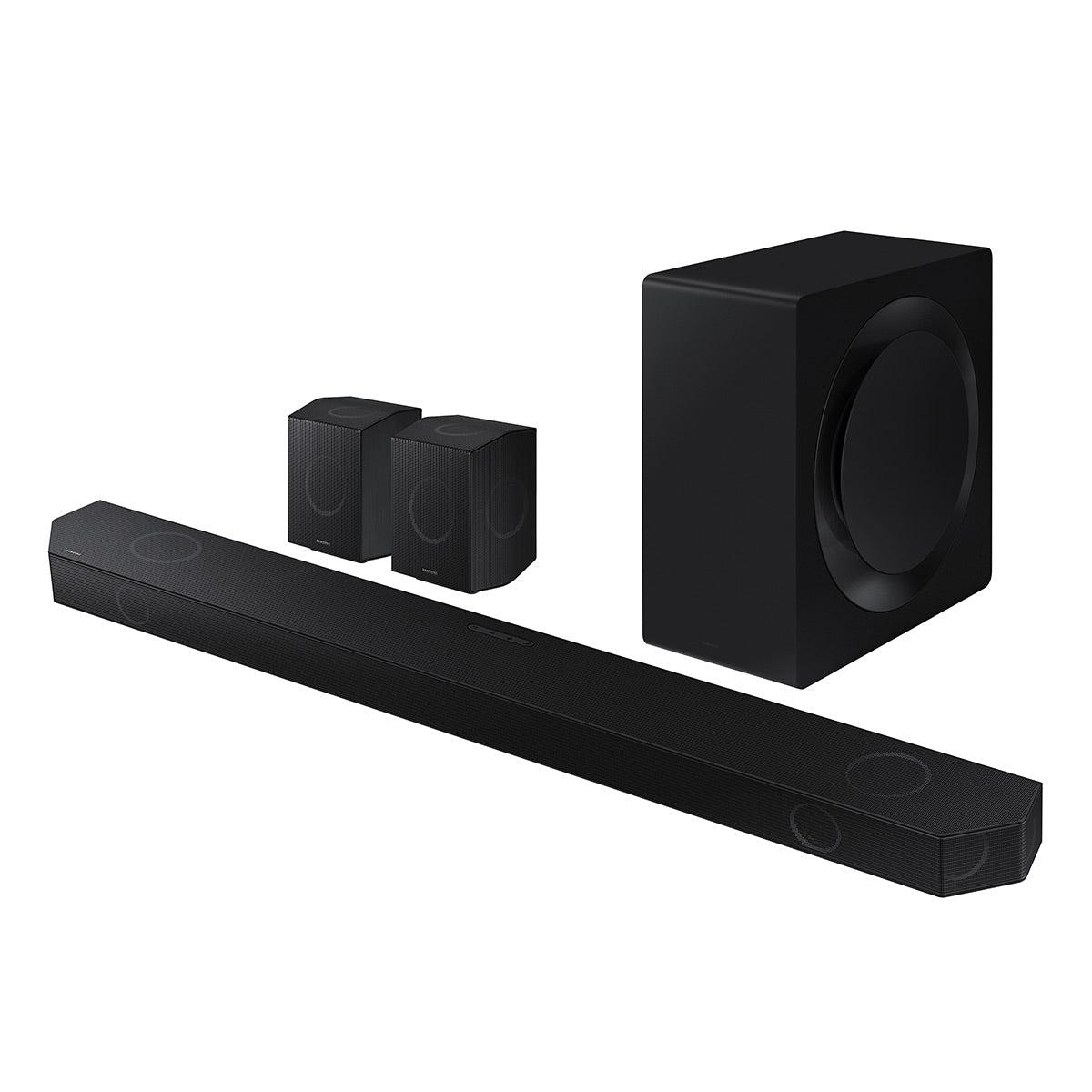
Samsung's HW-Q990D represents the opposite approach: maximum immersion through brute force and sophisticated processing. This 11.1.4 channel system includes the main soundbar, wireless subwoofer, and two rear speakers for genuine surround sound.
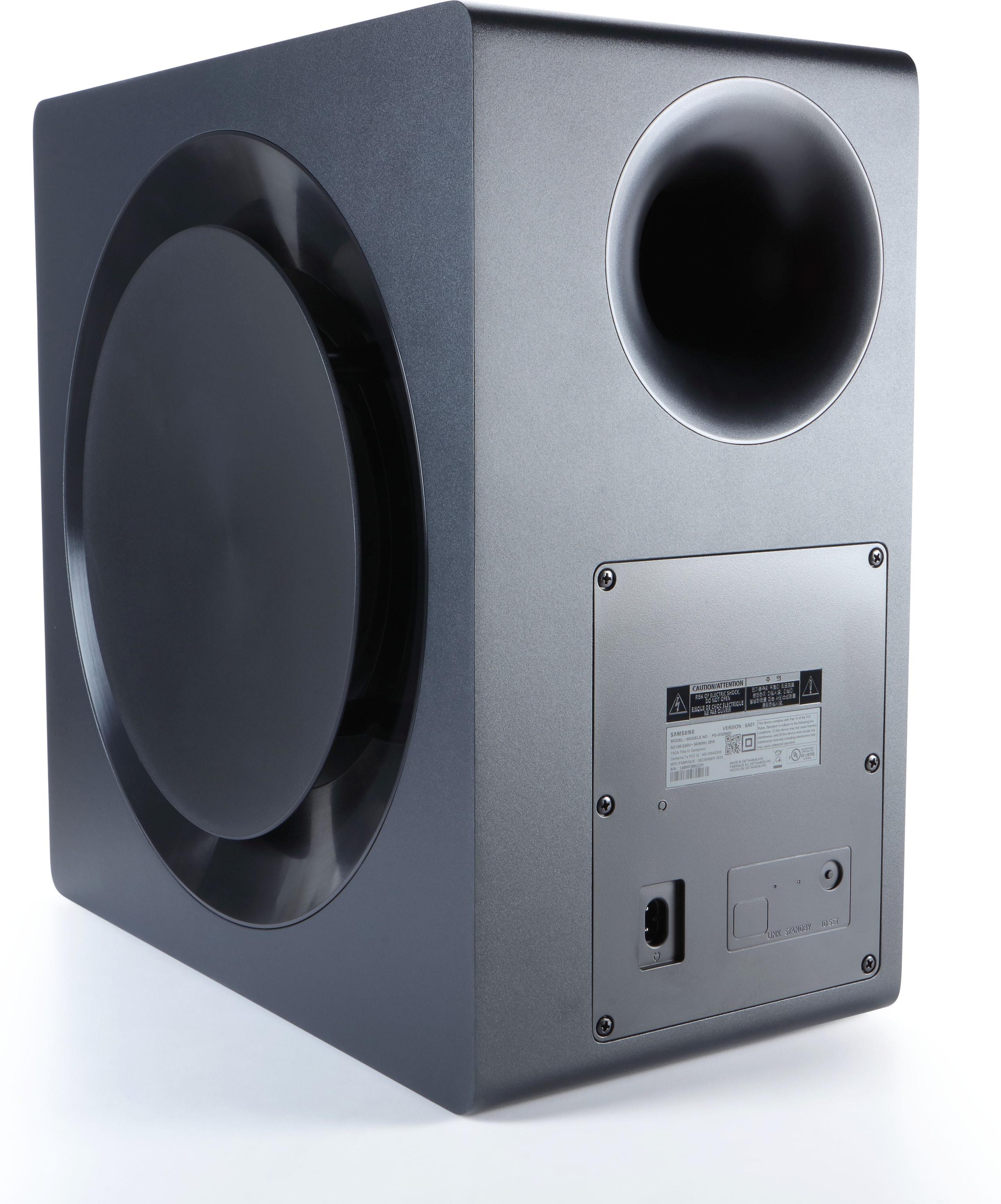
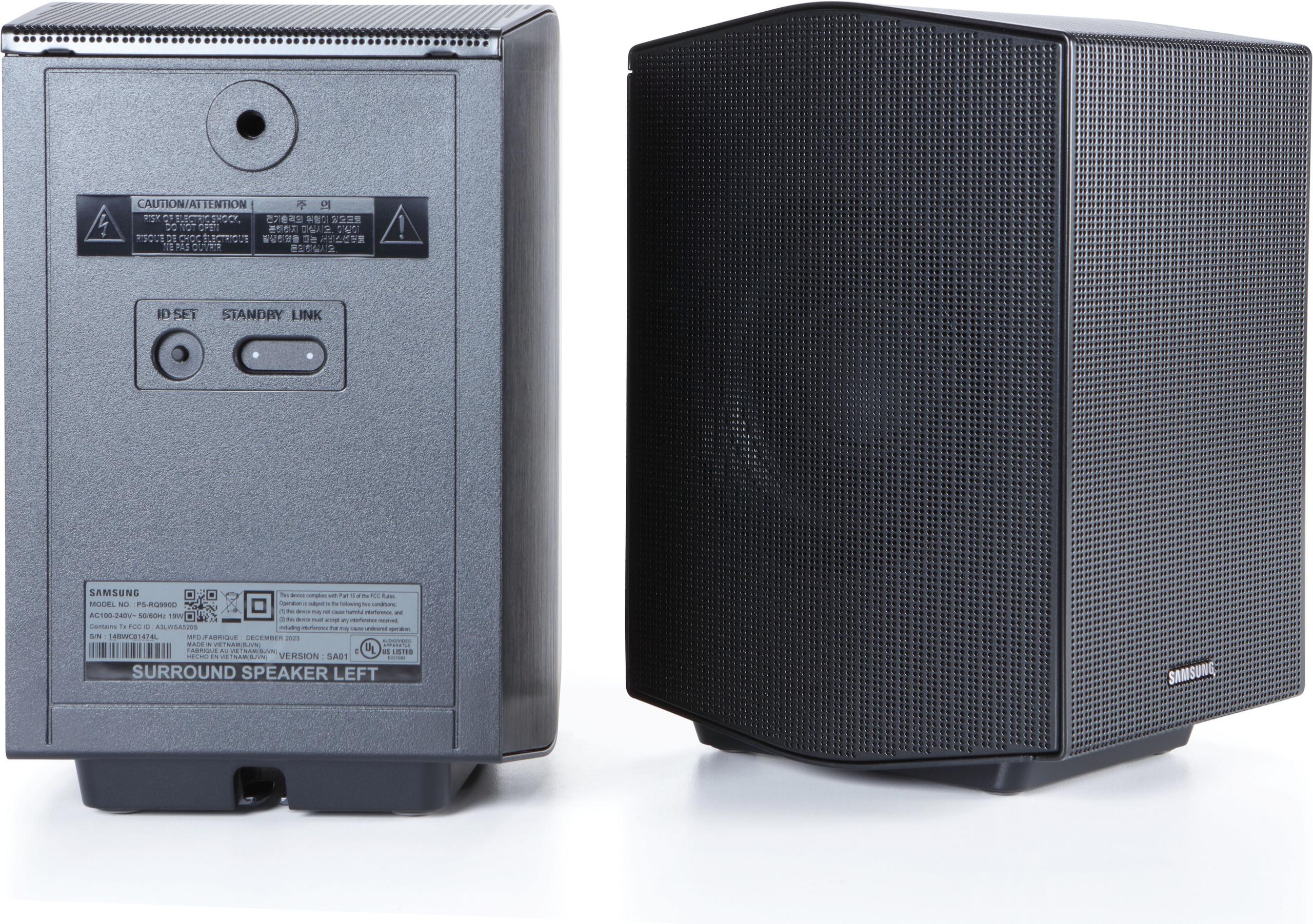
The complexity becomes apparent when you count the drivers. Twenty-two total speakers work together across four separate units: the main soundbar contains 11 drivers (six elliptical midrange, three tweeters, two up-firing, four side-firing), each rear speaker has three drivers (forward, side, and up-firing), and the subwoofer features a substantial 8-inch driver.
This driver arrangement enables true 11.1.4 channel processing. The ".4" designation indicates four height channels—two in the main bar and one in each rear speaker. These height channels create convincing overhead effects that surround you from multiple directions rather than just bouncing sound off the ceiling.
The Samsung HW-Q990D delivers room-filling performance that can genuinely compete with traditional receiver-based surround systems. The dedicated subwoofer extends bass response well into the 30Hz range, providing the deep rumbles and impacts that make action movies visceral experiences.
Dynamic range—the difference between quiet and loud sounds—is exceptional. Whispered dialogue remains clear while explosions hit with startling impact. This wide dynamic range, combined with support for both Dolby Atmos and DTS:X formats, creates genuinely cinematic experiences at home.
Samsung's SpaceFit Sound Pro represents a significant technological advancement. Using built-in microphones, the system continuously analyzes your room's acoustics and adjusts processing accordingly. Unlike systems requiring test tones or manual setup, SpaceFit Sound Pro works automatically and adapts as you rearrange furniture or change seating positions.
The rear speakers transform the experience for compatible content. Rather than simply reflecting sound off walls, you get discrete surround channels that place effects behind and above you. During helicopter flyovers or rain scenes, the sensation of being inside the action is remarkably convincing.
Game Mode Pro showcases Samsung's attention to contemporary needs. When connected to gaming consoles, the system detects game genres and optimizes audio processing accordingly. Racing games emphasize engine sounds and spatial positioning, while first-person shooters prioritize directional audio cues that might provide competitive advantages.
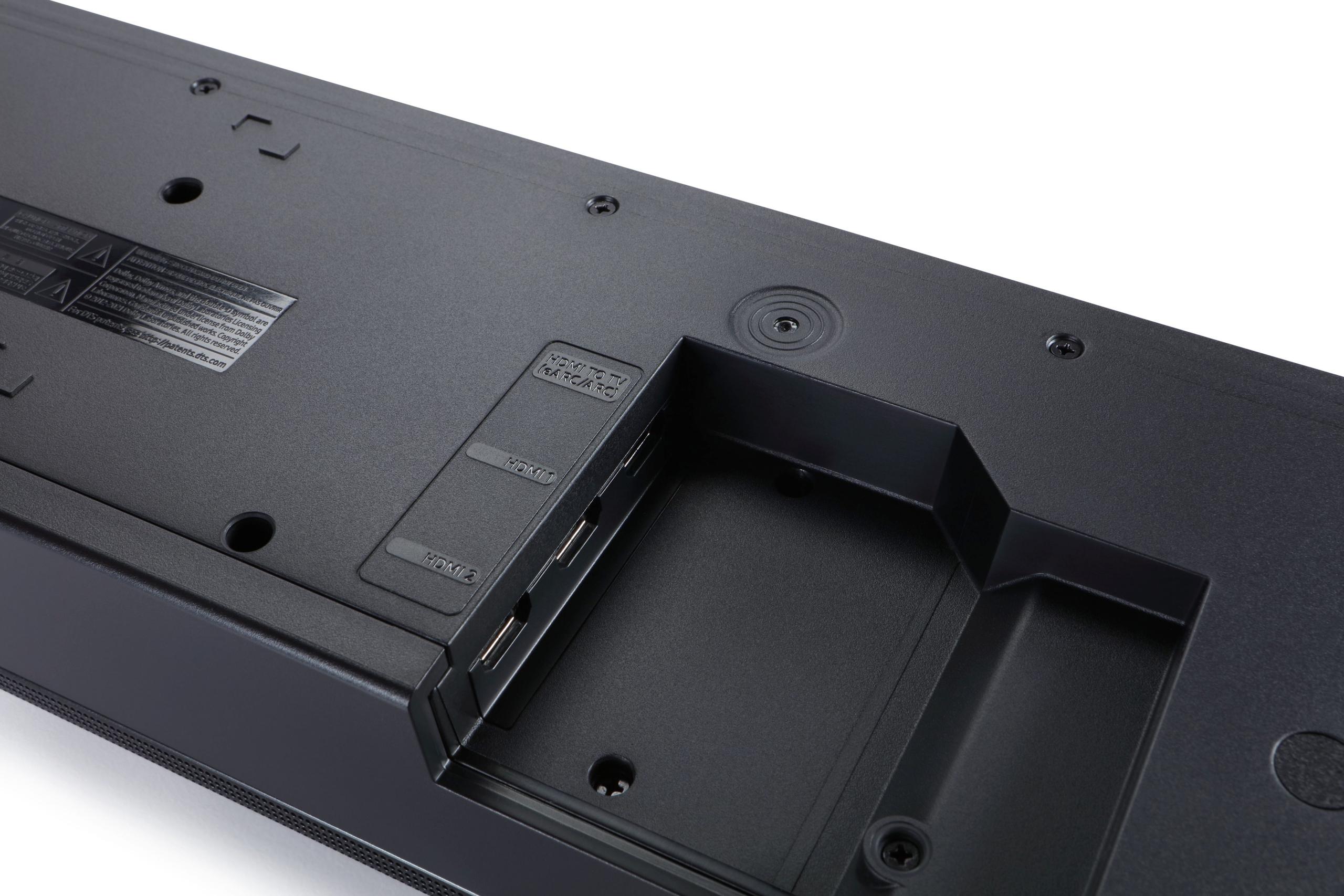
HDMI 2.1 support enables 4K/120Hz passthrough with Variable Refresh Rate (VRR) and Auto Low Latency Mode (ALLM). These features ensure gaming remains responsive while maintaining high-quality audio processing. Two HDMI inputs provide connectivity flexibility that the Bose system lacks.
For Samsung TV owners, Q Symphony integration synchronizes the TV's speakers with the soundbar, effectively expanding the front soundstage. This feature leverages the TV's processing power alongside the soundbar's capabilities for enhanced performance.
Both systems excel at dialogue reproduction, but for different reasons. The Bose Smart Soundbar 1100 uses AI processing and careful driver placement to ensure voices cut through background noise. The result is effortless clarity that makes dialogue sound natural and easy to follow.
The Samsung HW-Q990D achieves dialogue clarity through brute force—dedicated center channel processing and powerful amplification ensure voices project clearly even in large rooms. Active Voice Amplifier Pro analyzes content in real-time to enhance speech intelligibility.
For smaller rooms and casual viewing, the Bose approach feels more refined and less fatiguing. In larger spaces or when watching with groups, Samsung's power advantage becomes apparent.
This category isn't close. The Samsung system's dedicated 8-inch subwoofer delivers genuine low-frequency impact that the Bose soundbar simply cannot match. Action movies, electronic music, and gaming benefit enormously from extended bass response.
The Bose system produces respectable mid-bass—enough for most TV content and casual music listening. But when T-rexes stomp across the screen or spaceships rumble past, the Samsung system creates visceral experiences that the Bose cannot replicate without an additional subwoofer purchase.
Both systems support Dolby Atmos, but implementation differs significantly. The Bose Smart Soundbar 1100 creates height effects primarily through up-firing drivers that bounce sound off your ceiling. This approach works well in rooms with appropriate ceiling height and materials, creating noticeable overhead dimension.
The Samsung HW-Q990D takes immersion further with four discrete height channels and rear speakers. Rather than relying solely on reflected sound, you get true surround envelopment. Overhead effects feel more precise and dramatic, while rear channels add genuine behind-you positioning.
For casual Atmos content, the Bose system provides satisfying results. For dedicated home theater experiences, Samsung's approach proves more convincing.
The Bose Smart Soundbar 1100 integrates more seamlessly into smart home ecosystems. Built-in Alexa with Voice4Video creates a natural control hub for entertainment and connected devices. The noise-rejecting microphone array ensures reliable voice recognition.
Samsung includes multiple voice assistants (Alexa, Bixby, Google Assistant) but emphasizes Samsung ecosystem integration. If you own Samsung TVs or other Samsung devices, the synergy proves valuable. Otherwise, the smart features feel less cohesive than Bose's focused approach.
In typical apartments or smaller living rooms, the Bose Smart Soundbar 1100 often represents the sweet spot. Its compact size doesn't overwhelm the space visually, while the audio performance provides meaningful improvement over TV speakers without being excessive.
The Samsung system can work in smaller rooms but may prove overkill. The powerful subwoofer might disturb neighbors in apartment settings, and the rear speakers require careful placement to avoid overwhelming the listening position.
Larger spaces expose the Bose system's limitations. While dialogue remains clear, the overall presentation can feel thin when trying to fill substantial volumes. The lack of deep bass becomes more apparent when the soundbar must work harder to provide room-filling sound.
The Samsung HW-Q990D thrives in larger spaces. The powerful amplification, dedicated subwoofer, and rear speakers create immersive experiences that scale with room size. SpaceFit Sound Pro's automatic calibration proves particularly valuable in complex room layouts.
At the time of writing, these products occupy different value segments. The Bose Smart Soundbar 1100 represents premium compact performance—you pay more than basic soundbars but get significantly better build quality, smart features, and audio processing.
The Samsung HW-Q990D commands flagship pricing that reflects its comprehensive feature set and performance capabilities. When compared to building equivalent separate component systems, the pricing becomes more reasonable, though it remains a substantial investment.
Consider total cost of ownership. The Bose system works well standalone but might tempt future subwoofer purchases. Samsung includes everything needed for complete surround sound, though the initial outlay is higher.
You prioritize simplicity and elegance. The compact form factor suits smaller rooms or situations where visual minimalism matters. If your primary content involves dialogue-heavy TV shows, news, or casual movie watching, the Bose system provides excellent clarity without unnecessary complexity.
Smart home integration matters to you. The sophisticated Alexa implementation and comprehensive streaming support create seamless daily usage. If you value brand reputation and want a "set it and forget it" experience, Bose delivers reliable performance.
Your room size ranges from small to medium, and you don't want to deal with multiple speakers or subwoofer placement challenges.
You want maximum home theater immersion. The complete surround system with dedicated rear speakers and subwoofer creates convincing cinematic experiences that justify the higher investment.
Your room is large enough to accommodate and benefit from a full surround system. If you frequently watch action movies, play games, or listen to music at higher volumes, the Samsung system's power and dynamic range prove worthwhile.
Gaming features matter to you. HDMI 2.1 support, Game Mode Pro, and low-latency processing provide advantages for serious gaming setups.
You own Samsung TVs or other Samsung devices that can leverage Q Symphony and ecosystem integration.
Both soundbars represent thoughtful engineering approaches to different user needs. The Bose Smart Soundbar 1100 proves that compact doesn't mean compromised—it delivers sophisticated audio processing and smart features in an elegant package that works beautifully in appropriate contexts.
The Samsung HW-Q990D demonstrates what's possible when size and cost constraints are relaxed. The complete surround system creates genuinely impressive home theater experiences that can satisfy enthusiasts without requiring separate component complexity.
Your choice ultimately depends on room size, content preferences, and how much audio performance matters to your enjoyment. Either system will dramatically improve your TV audio experience—the question is whether you want refined simplicity or maximum immersion.
Consider your upgrade path too. If you might eventually want more bass or surround capability, starting with Samsung makes more sense. If you value the flexibility to gradually build a system over time, Bose's modular approach offers future expansion options.
Both products represent solid investments in better home entertainment, just with different philosophies about how to achieve that goal.
| Bose Smart Soundbar 1100 | Samsung HW-Q990D 11.1.4 Channel Sound Bar |
|---|---|
| Channel Configuration - Determines surround sound capability and immersion level | |
| 3.0.2 channels (compact system with basic height effects) | 11.1.4 channels (full surround with dedicated rear speakers and subwoofer) |
| Total Speaker Count - More drivers typically mean better sound distribution | |
| 5 speakers plus center tweeter | 22 speakers across 4 units |
| System Components - Affects setup complexity and room requirements | |
| Single soundbar only | Soundbar + wireless subwoofer + 2 rear speakers |
| Dimensions - Critical for TV compatibility and room aesthetics | |
| 27.3" W x 2.2" H x 4.6" D (ultra-compact) | Main bar: 51.5" W x 2.4" H x 10.9" D (plus separate components) |
| Dolby Atmos Support - Essential for modern immersive audio | |
| Yes, with 2 up-firing drivers (ceiling bounce method) | Yes, with 4 height channels (dedicated drivers in multiple locations) |
| DTS Support - Important for movie compatibility | |
| No DTS or DTS:X support | Full DTS:X and DTS support |
| Bass Extension - Determines impact for movies and music | |
| Limited without separate subwoofer purchase | Deep bass included with dedicated 8-inch wireless subwoofer |
| HDMI Connectivity - Affects gaming and device compatibility | |
| 1 HDMI eARC output only (no passthrough) | 2 HDMI 2.1 inputs + 1 eARC output (4K/120Hz gaming support) |
| Voice Control - Smart home integration capability | |
| Built-in Amazon Alexa with Voice4Video | Multiple assistants: Alexa, Bixby, Google Assistant |
| Room Calibration - Automatic sound optimization | |
| Basic Wall EQ preset only | SpaceFit Sound Pro with continuous room analysis |
| Streaming Services - Music and content access | |
| AirPlay 2, Chromecast, Spotify Connect, Amazon Music, others | AirPlay 2, Chromecast, plus Samsung ecosystem integration |
| Gaming Features - Performance for console gaming | |
| Standard audio processing | Game Mode Pro with genre-specific optimization |
| Expandability - Future upgrade options | |
| Optional Bose subwoofers and surrounds (sold separately) | Complete system included, no expansion needed |
| Best Room Size - Where each system performs optimally | |
| Small to medium rooms (10x12 to 15x18 feet) | Large rooms and open floor plans (18+ feet) |
| Primary Strength - What each does exceptionally well | |
| Crystal-clear dialogue and smart home integration | Maximum immersion with true surround sound |
The Bose Smart Soundbar 1100 is better suited for small to medium rooms. Its compact 27-inch design fits under most TVs without overwhelming the space, while still delivering clear dialogue and decent bass. The Samsung HW-Q990D with its large subwoofer and rear speakers can be too powerful for small rooms and may disturb neighbors in apartments.
Yes, both the Bose Smart Soundbar 1100 and Samsung HW-Q990D support Dolby Atmos. However, the Bose uses 2 up-firing drivers that bounce sound off your ceiling, while the Samsung system has 4 dedicated height channels across multiple speakers for more convincing overhead effects.
The Samsung HW-Q990D has significantly better bass thanks to its included 8-inch wireless subwoofer that delivers deep, impactful low frequencies. The Bose Smart Soundbar 1100 has limited bass extension without purchasing an optional subwoofer separately.
Both work for gaming, but the Samsung HW-Q990D is specifically designed for it with Game Mode Pro that optimizes audio for different game genres, plus HDMI 2.1 support for 4K/120Hz gaming. The Bose Smart Soundbar 1100 handles gaming audio well but lacks these specialized gaming features.
The Bose Smart Soundbar 1100 is much easier to set up since it's a single unit that connects with one HDMI cable. The Samsung HW-Q990D requires positioning a subwoofer and two rear speakers around your room, though they connect wirelessly to the main bar.
Yes, both support voice control. The Bose Smart Soundbar 1100 has built-in Amazon Alexa with Voice4Video technology for controlling your TV. The Samsung HW-Q990D supports multiple assistants including Alexa, Bixby, and Google Assistant.
Both excel at dialogue clarity, but in different ways. The Bose Smart Soundbar 1100 uses AI Dialogue Mode to automatically enhance speech intelligibility. The Samsung HW-Q990D uses powerful center channel processing and Active Voice Amplifier Pro for clear dialogue even in large rooms.
The Bose Smart Soundbar 1100 can be expanded with optional Bose subwoofers and surround speakers sold separately. The Samsung HW-Q990D comes as a complete system with everything included, so no expansion is needed or typically possible.
The Samsung HW-Q990D supports more formats including Dolby Atmos, DTS:X, Dolby TrueHD, and various DTS formats. The Bose Smart Soundbar 1100 supports Dolby Atmos and Dolby formats but lacks DTS and DTS:X support, which may limit compatibility with some movies.
The Bose Smart Soundbar 1100 connects via HDMI eARC or optical input but has no HDMI passthrough. The Samsung HW-Q990D offers more flexibility with 2 HDMI inputs plus eARC output, letting you connect multiple devices directly to the soundbar.
Value depends on your needs. The Bose Smart Soundbar 1100 offers excellent value for smaller spaces and simpler setups, delivering premium dialogue clarity and smart features. The Samsung HW-Q990D provides better value if you want complete home theater immersion with true surround sound included in one purchase.
Both handle music well but differently. The Bose Smart Soundbar 1100 delivers balanced, clear sound ideal for casual listening with comprehensive streaming service support. The Samsung HW-Q990D offers more powerful, dynamic music reproduction with deep bass and wide soundstage, better for serious music listening sessions.
We've done our best to create useful and informative comparisons to help you decide what product to buy. Our research uses advanced automated methods to create this comparison and perfection is not possible - please contact us for corrections or questions. These are the sites we've researched in the creation of this article: bestbuy.com - rtings.com - rtings.com - youtube.com - staples.com - youtube.com - soundguys.com - businessinsider.com - youtube.com - rtings.com - crutchfield.com - youtube.com - youtube.com - smart.dhgate.com - dolby.com - bose.com - assets.bose.com - bose.com - connection.com - bestbuy.com - cdw.com - dell.com - device.report - techradar.com - avsforum.com - valueelectronics.com - samsung.com - rtings.com - samsung.com - avsforum.com - samsung.com - cdwg.com - youtube.com - whathifi.com

Privacy Policy
Terms and Conditions - Affiliate Policy
Home Security
© Copyright 2008-2026.
11816 Inwood Rd #1211, Dallas, TX 75244