

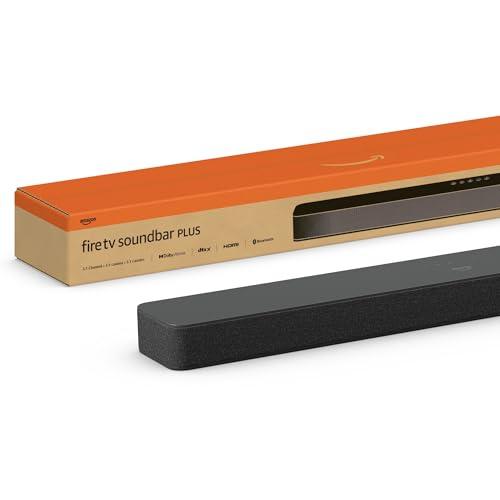




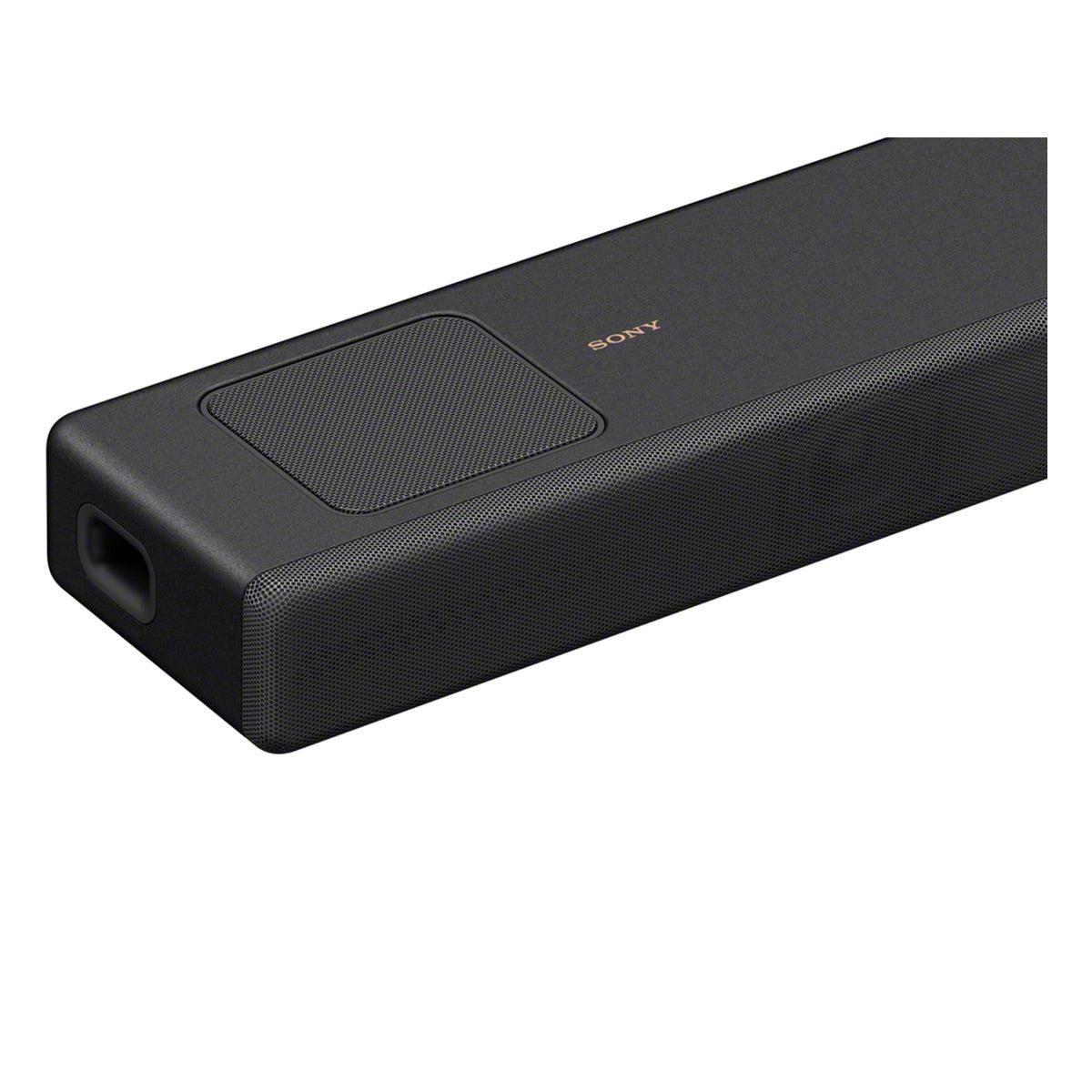
When your TV's built-in speakers sound like they're trapped in a shoebox, it's time to consider a soundbar upgrade. But with options ranging from under $200 to well over $500, how do you know which investment makes sense? Today we're comparing two soundbars that represent completely different philosophies: Amazon's budget-focused Fire TV Soundbar Plus and Sony's premium HT-A5000.
After spending considerable time with both systems, I can tell you the differences go far beyond just the price tags. These products showcase two fundamentally different approaches to solving the same problem—mediocre TV audio—and understanding these differences will help you make the right choice for your specific needs and budget.
Before diving into our comparison, let's establish what soundbars are trying to accomplish. Traditional home theater systems with separate speakers positioned around your room create immersive surround sound by literally placing sounds where they should be. Soundbars attempt to recreate this experience using a single bar-shaped speaker cabinet, which is obviously much more convenient but technically challenging.
The key considerations when evaluating any soundbar include audio quality (how natural and detailed the sound reproduction is), surround sound capabilities (how well it creates the illusion of sound coming from around you), connectivity options (what devices can connect and how), smart features (voice control and streaming capabilities), and expandability (whether you can add additional speakers later).
Modern soundbars use various tricks to create surround sound. Some employ "virtual processing"—sophisticated software that manipulates stereo audio to fool your brain into perceiving sounds from different directions. Others include physical up-firing speakers that bounce sound off your ceiling to create height effects, mimicking the overhead audio in Dolby Atmos movie soundtracks. The channel configuration (like 3.1 or 5.1.2) tells you how many discrete audio channels the soundbar can process, with higher numbers generally meaning more immersive sound.
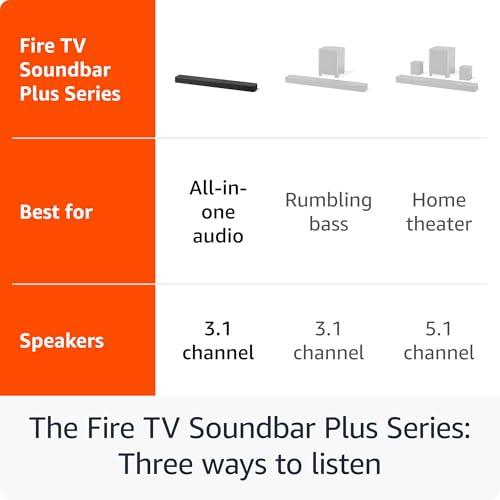
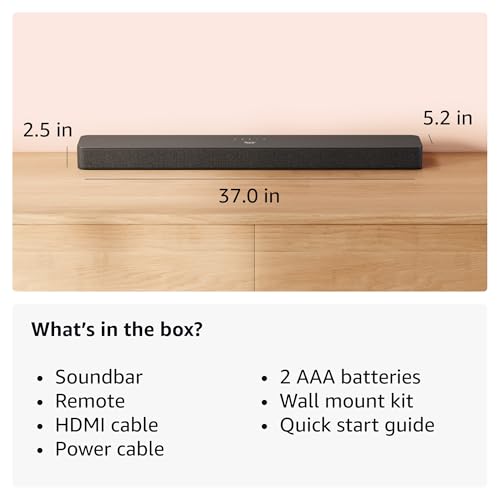
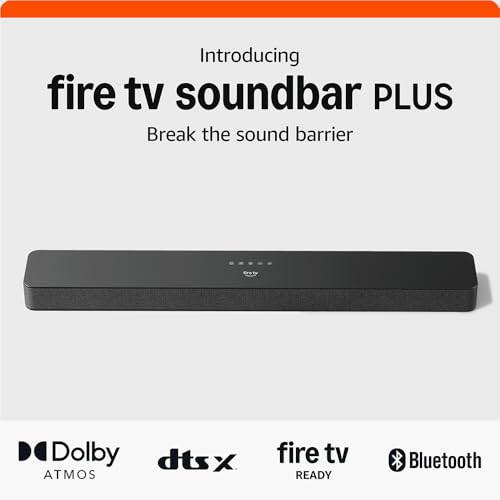
The Amazon Fire TV Soundbar Plus, released in 2023, represents Amazon's attempt to create an affordable upgrade path for Fire TV users. Priced in the budget category at the time of writing, it offers a 3.1 channel configuration—meaning it has dedicated left, center, and right channels plus a built-in subwoofer for bass. What makes it interesting is its tight integration with Amazon's Fire TV ecosystem and its expandability to a full 5.1 system with optional wireless rear speakers and subwoofer.
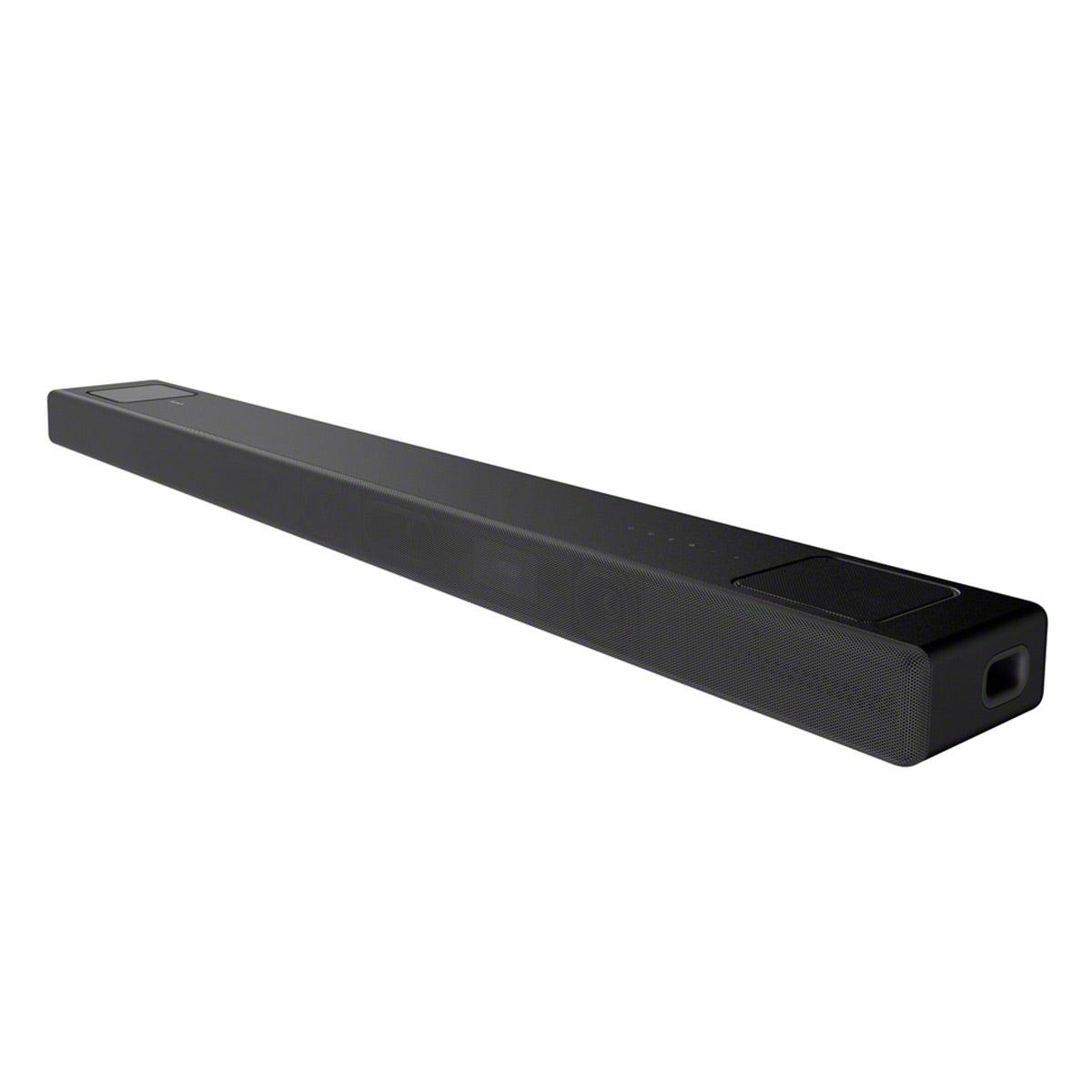
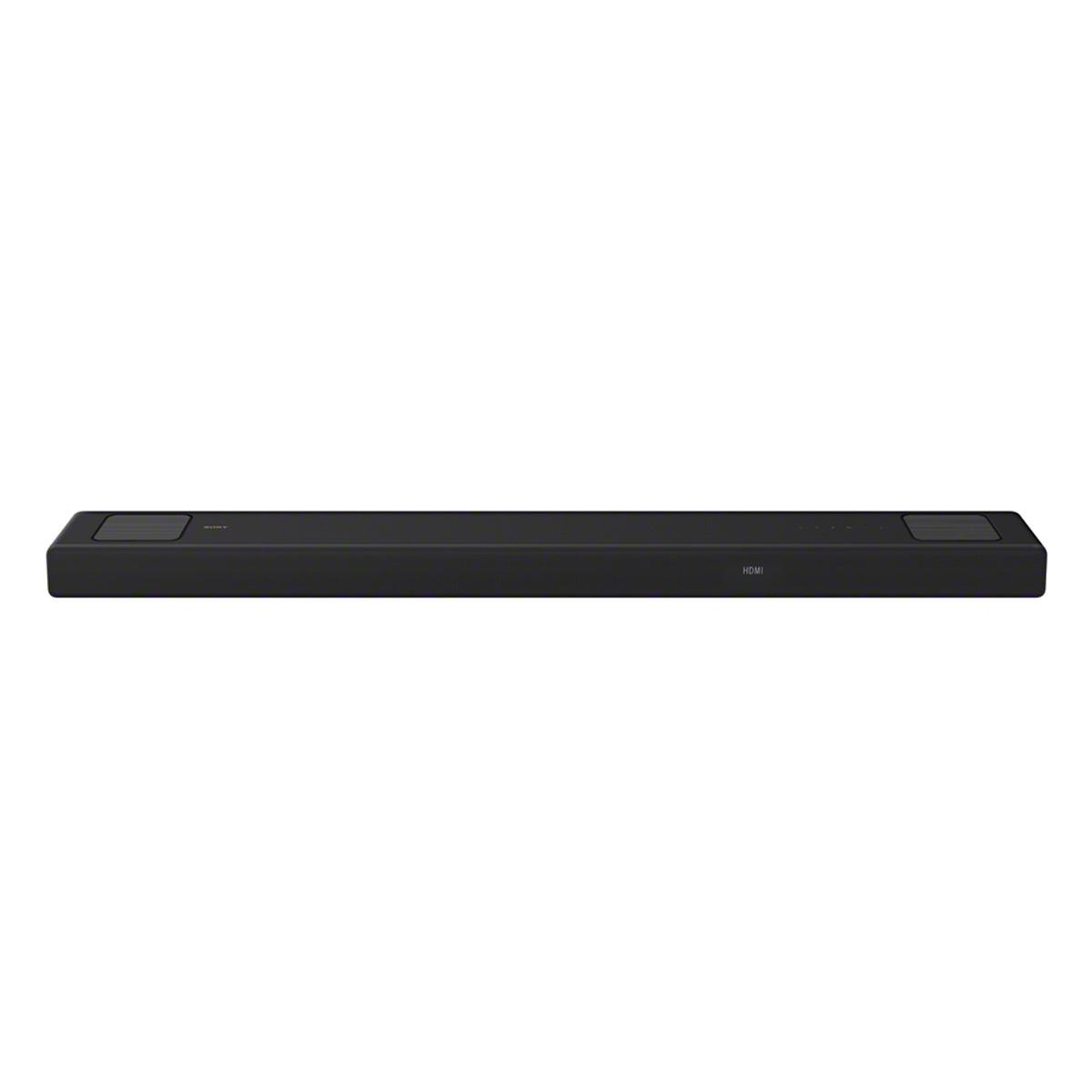
In contrast, Sony's HT-A5000 launched in 2021 as a premium offering targeting serious home theater enthusiasts. While it costs significantly more—roughly 2.8 times the Amazon's price at launch—it delivers a true 5.1.2 channel configuration with physical up-firing drivers for genuine height effects. Sony has since discontinued this model, but it remains available through various retailers, often at attractive discounts that improve its value proposition considerably.
The technology landscape has evolved since both products launched. In 2021, when the Sony HT-A5000 debuted, HDMI 2.1 support for 4K/120Hz gaming was cutting-edge, and spatial audio was just gaining mainstream attention. By 2023, when Amazon released the Fire TV Soundbar Plus, these features had become more common, yet Amazon chose to focus on ecosystem integration rather than advanced audio processing.
Here's where these two soundbars diverge most dramatically. Audio quality encompasses several key aspects: frequency response (how well the soundbar reproduces different pitches from deep bass to high treble), dynamic range (the difference between the quietest and loudest sounds it can reproduce), and soundstage (how wide and spacious the audio presentation feels).
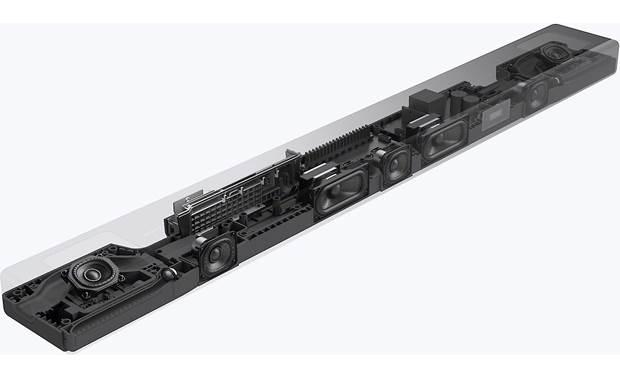
The Sony HT-A5000 excels across all these metrics. Its frequency response feels remarkably balanced, with dialogue that cuts through complex movie soundtracks without becoming harsh or thin. During my testing with various content types, from whispered conversations in dramatic films to explosive action sequences, the Sony maintained composure and clarity. This is largely due to Sony's X-Balanced Driver design, which maximizes the diaphragm area within each speaker enclosure, reducing distortion while improving both bass response and vocal clarity.
The Amazon Fire TV Soundbar Plus, unfortunately, struggles with fundamental audio reproduction. Professional reviews have consistently noted its problematic frequency response, describing the bass as "flappy and thin" while the treble becomes "shrill" at higher volumes. In practical terms, this means dialogue can sound hollow or tinny, and music lacks the warmth and richness you'd expect from a quality audio system. Even at moderate volumes, the Amazon soundbar's limitations become apparent—a significant issue when the primary goal is to improve upon your TV's built-in speakers.
This difference isn't subtle. During direct comparisons, the quality gap is immediately obvious, even to casual listeners. The Sony delivers what audio engineers call "natural" sound reproduction—audio that doesn't call attention to itself but simply sounds right. The Amazon, by contrast, has a processed, artificial quality that can become fatiguing during longer listening sessions.
Bass reproduction deserves special attention because it's often the most noticeable upgrade when switching from TV speakers to a soundbar. Deep, well-controlled bass provides the foundation that makes everything else sound fuller and more impactful, from movie explosions to the subtle low-end that gives music its warmth and body.
The Sony HT-A5000 incorporates dual built-in subwoofers using Sony's X-Balanced driver technology. These aren't just larger versions of the main speakers—they're specifically engineered for low-frequency reproduction. The result is bass that extends deeper while maintaining control and definition. Whether it's the rumble of thunder in a storm scene or the subtle bass line in jazz music, the Sony reproduces low frequencies with authority and nuance.
What's particularly impressive about the Sony's bass performance is how well it integrates with the midrange frequencies where dialogue lives. Many soundbars, especially budget models, boost the bass to impressive levels but create a muddy mix where dialogue gets lost. The Sony avoids this trap through sophisticated digital signal processing (DSP) that maintains clarity across all frequencies.
The Amazon Fire TV Soundbar Plus takes a different approach with its single integrated subwoofer. While it can produce adequate volume for casual listening, the bass lacks the depth and sophistication of premium alternatives. Reviews consistently describe it as having a "one-note" character—meaning it can make bass sounds louder but doesn't reproduce the subtle variations that make low-frequency content engaging.
This limitation becomes particularly apparent with music content. Complex bass lines that should provide rhythmic foundation instead sound simplistic and monotonous. For movie content, explosions and crashes lack the visceral impact that makes action scenes exciting.
Both soundbars offer expandability with optional wireless subwoofers, but even this upgrade path reveals their fundamental differences. The Sony's expansion maintains the same high-quality engineering philosophy, while the Amazon's expansion primarily adds volume rather than sophistication.
Creating convincing surround sound from a single speaker cabinet requires either clever acoustical engineering or sophisticated digital processing—preferably both. This is where the technical differences between our contenders become most apparent.
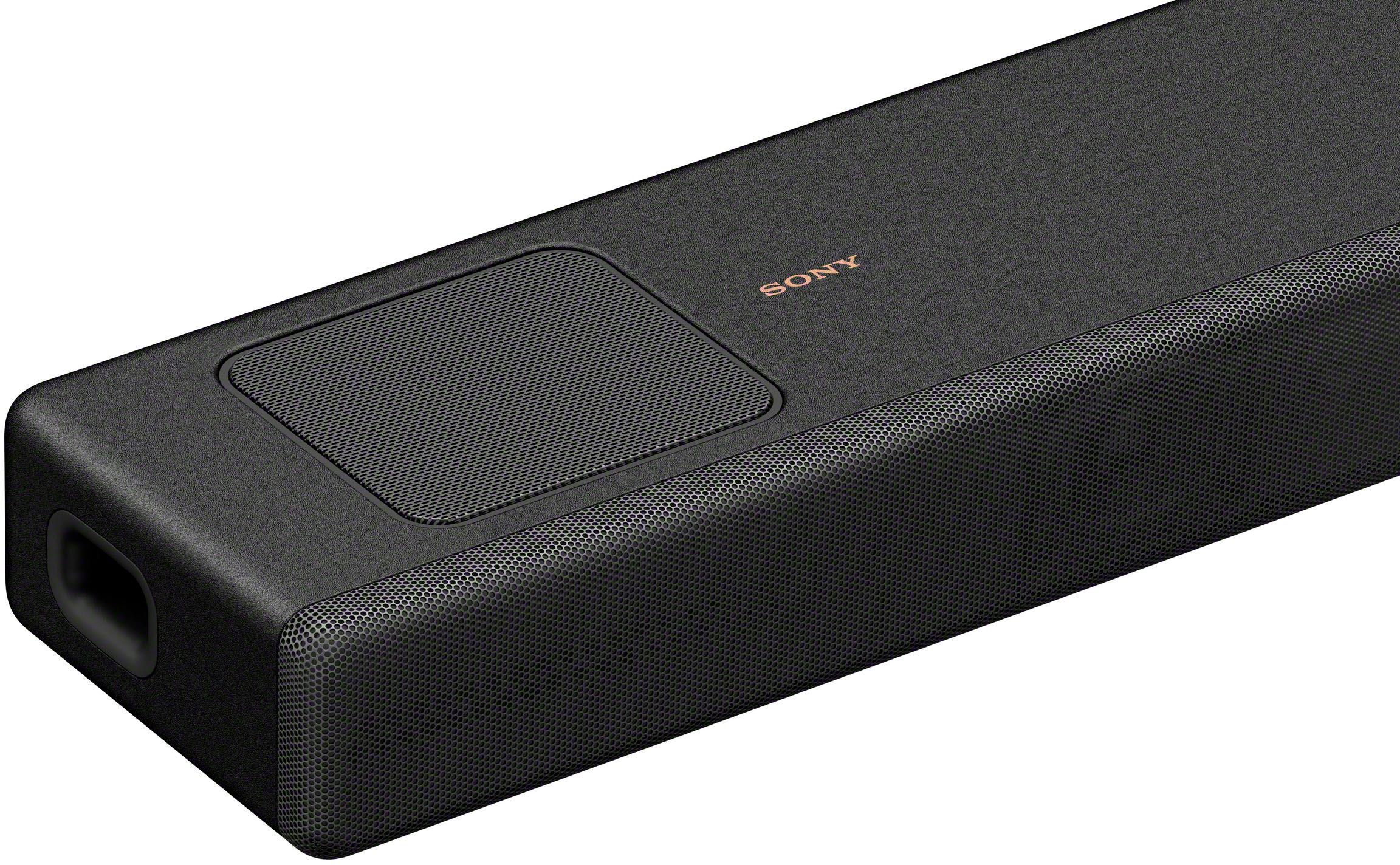
The Sony HT-A5000 employs a 5.1.2 channel configuration with actual physical up-firing drivers. These specialized speakers fire sound toward your ceiling, which then reflects back to your listening position, creating the illusion of overhead audio. This technique, while not as precise as ceiling-mounted speakers, provides genuine spatial audio effects that match what movie sound designers intended when they created Dolby Atmos soundtracks.
Sony enhances this physical approach with their 360 Spatial Sound Mapping technology, which creates additional phantom speakers through digital processing. The system uses built-in microphones to analyze your room's acoustics, then adjusts the audio processing to optimize the surround effect for your specific environment. This room correction technology, called Sound Field Optimization, automatically calibrates the soundbar without requiring manual setup or measurement microphones.
During testing, the Sony's surround processing proved convincingly immersive. Movie scenes with rain or helicopters genuinely felt like the sound was coming from above, while side-to-side panning effects tracked smoothly across the soundstage. The width of the perceived soundstage extends well beyond the physical soundbar, creating an enveloping experience that rivals much larger speaker systems.
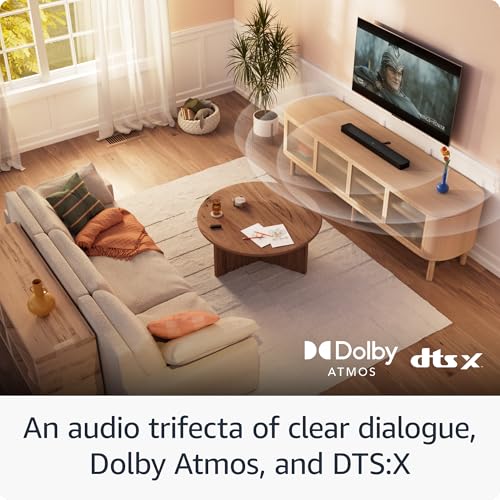
The Amazon Fire TV Soundbar Plus relies entirely on virtual processing to create surround effects. While it supports Dolby Atmos, it lacks the up-firing drivers necessary for true height effects. Instead, it uses psychoacoustic processing—digital manipulation that tricks your brain into perceiving spatial effects that aren't physically present.
This approach can work, but it's heavily dependent on room acoustics and listening position. The virtual effects tend to be subtle and inconsistent, working better with some content than others. During my evaluation, the Amazon's surround processing felt more like enhanced stereo than true surround sound, lacking the dimensional accuracy and immersion of the Sony's physical approach.
The expandability options reveal another crucial difference. Adding Sony's optional rear speakers (SA-RS3S or SA-RS5) creates a legitimate surround sound system with discrete channels for each speaker position. Adding the Amazon's rear speakers improves the experience but doesn't achieve the same level of spatial accuracy due to limitations in the base unit's processing capabilities.
Today's soundbars serve as multimedia hubs, not just audio enhancers. Connectivity options and smart features can significantly impact daily usability and long-term satisfaction.
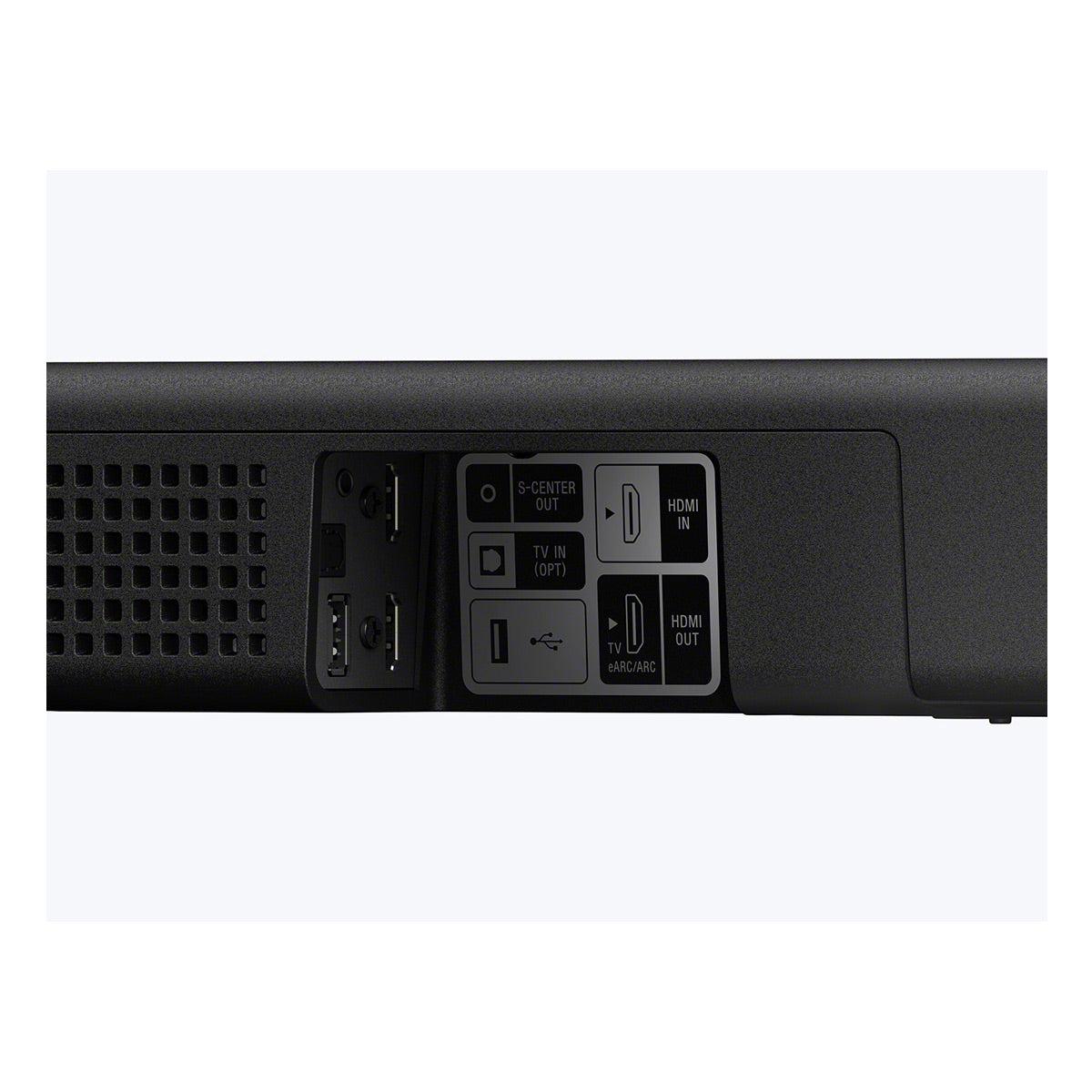
The Sony HT-A5000 offers comprehensive connectivity that reflects its premium positioning. HDMI 2.1 support means it can handle 4K video at 120Hz frame rates—crucial for modern gaming consoles like PlayStation 5 and Xbox Series X. The enhanced Audio Return Channel (eARC) support allows the soundbar to receive high-quality audio formats directly from your TV, including lossless Dolby TrueHD and DTS-HD Master Audio from Blu-ray discs.
Wireless connectivity includes Bluetooth 5.0 for stable mobile device connections, Apple AirPlay 2 for seamless iPhone and iPad streaming, Chromecast built-in for Android devices and streaming services, and Spotify Connect for direct streaming without using your phone as an intermediary. This comprehensive approach ensures compatibility regardless of your device ecosystem preferences.
The Sony also includes voice assistant compatibility with both Google Assistant and Amazon Alexa, though it requires separate smart speakers or devices for voice control—the soundbar itself doesn't include built-in microphones for voice recognition.
The Amazon Fire TV Soundbar Plus takes a more focused approach, prioritizing integration with Amazon's ecosystem over broad compatibility. Its standout feature is seamless pairing with Fire TV devices, allowing control of both the TV and soundbar through a single remote. When connected to compatible Fire TV streaming devices, the soundbar's settings appear in the TV's on-screen menus, creating a unified interface that's genuinely convenient for Fire TV users.
However, this ecosystem focus comes with limitations. The Amazon soundbar lacks built-in Wi-Fi, advanced streaming capabilities, or voice assistant integration. There's no dedicated smartphone app for settings adjustment, and connectivity options are more basic—HDMI eARC, optical digital input, and Bluetooth for mobile streaming.
This difference reflects each company's design philosophy. Sony created a universal solution that works well with any TV or streaming device, while Amazon optimized specifically for their own ecosystem, creating a more streamlined experience for Fire TV users but less flexibility for others.
The physical construction of these soundbars reveals their target markets and engineering priorities. The Sony HT-A5000 weighs 13.5 pounds, indicating substantial internal components and robust construction. The cabinet uses premium materials including metal accents and a high-quality fabric grille that looks appropriate in upscale living rooms. This weight isn't just for show—it indicates hefty internal components like large driver magnets and solid internal bracing that reduces unwanted vibrations.
The Amazon Fire TV Soundbar Plus uses primarily plastic construction to achieve its attractive price point. While this results in a lighter, more affordable product, it also contributes to the audio quality limitations we discussed earlier. Plastic cabinets can't control internal resonances as effectively as heavier, more rigid construction, leading to the "boxy" sound character that many budget soundbars exhibit.
From a visual design standpoint, both soundbars adopt understated aesthetics that won't dominate your room's décor. However, the Sony's premium materials and careful proportions give it a more sophisticated appearance that matches its audio performance.
For dedicated home theater use, the performance differences become even more pronounced. Home theater audio demands wide dynamic range (the ability to reproduce both whisper-quiet dialogue and thunderous explosions), precise dialogue reproduction (so you can understand every word without cranking the volume), and convincing surround effects (to create the immersive experience that makes movies engaging).
The Sony HT-A5000 excels in all these areas. Its room correction system automatically optimizes performance for your specific space, while the robust amplification (450 watts total power) provides clean output even at high volumes. The dedicated center channel ensures dialogue remains intelligible even during complex action sequences, and the true height channels create genuine overhead effects during Atmos content.
During extended movie sessions, the Sony maintains its composure and clarity. Whether watching quiet dramatic scenes or explosive blockbusters, the audio quality remains consistent and engaging without listener fatigue. The wide soundstage creates an immersive experience that draws you into the content rather than calling attention to the audio system itself.
The Amazon Fire TV Soundbar Plus struggles with the demands of serious home theater use. The limited dynamic range means quiet dialogue gets lost while loud scenes become harsh and uncomfortable. The virtual surround processing provides some spatial effects but lacks the consistency and immersion necessary for truly engaging movie experiences.
At the time of writing, the price difference between these soundbars is substantial, with the Sony costing roughly 2.8 times more than the Amazon. This raises the crucial question: is the Sony worth the premium?
Based on my extensive testing, the answer depends entirely on your priorities and expectations. If you're simply looking for louder, slightly clearer sound than your TV's built-in speakers and you're deeply embedded in Amazon's ecosystem, the Fire TV Soundbar Plus might serve your basic needs despite its audio quality limitations.
However, if you want a genuine upgrade that transforms your audio experience, the Sony HT-A5000 represents significantly better value despite its higher price. The quality difference isn't incremental—it's transformational. You're not just paying more for slightly better performance; you're paying for fundamentally superior engineering that delivers professional-grade audio reproduction.
The Sony's discontinued status has created opportunities for savvy shoppers. At discounted prices (often 30-40% below original retail), the value proposition becomes even more compelling, sometimes bringing the effective price difference down to 2:1 or even less.
When considering total system cost, both soundbars offer expansion paths, but with different value propositions. A complete Amazon system (soundbar plus wireless subwoofer and rear speakers) costs significantly less than a complete Sony system, but the performance difference remains substantial. You're essentially choosing between a budget system that does the basics adequately and a premium system that delivers professional-quality performance.
After living with both systems and analyzing their strengths and weaknesses, here's my honest assessment of who should choose each option.
Choose the Amazon Fire TV Soundbar Plus if you're working with a tight budget and primarily need dialogue clarity improvement over TV speakers. If you're heavily invested in Amazon's ecosystem and value the convenience of unified remote control, the integration benefits might outweigh the audio quality limitations. This soundbar also makes sense if you plan to gradually build a system by adding components over time, though even the expanded system won't match the Sony's audio quality.
However, be aware that the Amazon's poor audio quality might leave you disappointed even at its attractive price point. Several reviewers have noted that it doesn't significantly improve upon many modern TV speakers, questioning its value even as a budget option.
Choose the Sony HT-A5000 if audio quality matters to you and you want a soundbar that delivers a genuine upgrade over TV audio. This is the right choice if you watch movies regularly and want an immersive experience, if you listen to music through your TV system, or if you're building a serious home theater setup. The Sony's universal compatibility makes it future-proof regardless of how your device ecosystem evolves.
The Sony is particularly compelling if you can find it at a discounted price due to its discontinued status. At 30-40% off original retail, it becomes one of the best values in premium soundbar performance.
For most readers, I'd recommend stretching the budget for the Sony if at all possible. The quality difference is so significant that the Amazon feels like a false economy—you're saving money but not getting the experience upgrade that justifies buying a soundbar in the first place.
The fundamental question isn't whether the Sony costs more—it's whether you want an audio system that truly enhances your entertainment experience or one that simply makes sound louder. In my experience, the Sony delivers the kind of improvement that makes you rediscover your favorite movies and shows, while the Amazon provides marginal benefits that might leave you wondering why you bothered upgrading at all.
This comparison ultimately illustrates a broader truth about audio equipment: sometimes paying more gets you proportionally better performance, and sometimes it gets you fundamentally better performance. The difference between these two soundbars falls into the latter category, making the Sony's premium price more justifiable than the simple numbers might suggest.
| Amazon Fire TV Soundbar Plus | Sony HT-A5000 |
|---|---|
| Channel Configuration - Determines surround sound capabilities | |
| 3.1 channels (virtual height processing only) | 5.1.2 channels (physical up-firing drivers for true height) |
| Audio Quality - Most important factor for overall experience | |
| Poor frequency response with thin bass and shrill treble | Excellent balanced sound with natural dialogue and rich bass |
| Dolby Atmos Support - Essential for immersive movie audio | |
| Virtual processing only (no up-firing speakers) | True Atmos with dedicated height channels |
| Room Correction - Automatically optimizes sound for your space | |
| None (manual EQ adjustments only) | Sound Field Optimization with built-in microphones |
| Smart Features - Convenience and streaming capabilities | |
| Fire TV integration, basic Bluetooth | Wi-Fi streaming, AirPlay 2, Chromecast, voice assistant ready |
| HDMI Support - Critical for 4K gaming and high-quality audio | |
| HDMI eARC only | HDMI 2.1 with 4K/120Hz and 8K passthrough |
| Build Quality - Affects durability and sound resonance | |
| Lightweight plastic construction | Premium materials with metal accents, 13.5 lbs |
| Expandability - Options for building a full surround system | |
| Can add wireless sub and rears for 5.1 | Can add wireless sub and rears maintaining premium quality |
| Best For - Target user and use cases | |
| Fire TV users on tight budgets seeking basic upgrade | Audio enthusiasts wanting genuine home theater experience |
The Sony HT-A5000 delivers significantly better sound quality with balanced frequency response, clear dialogue, and rich bass. The Amazon Fire TV Soundbar Plus struggles with audio reproduction, producing thin bass and shrill treble that many reviewers describe as unpleasant.
The Amazon Fire TV Soundbar Plus uses a 3.1 configuration with three main channels plus a subwoofer, while the Sony HT-A5000 features 5.1.2 channels including physical up-firing speakers for true height effects. The Sony's additional channels create more immersive surround sound.
Yes, but differently. The Sony HT-A5000 provides true Dolby Atmos with dedicated up-firing drivers that bounce sound off your ceiling. The Amazon Fire TV Soundbar Plus only offers virtual Dolby Atmos processing without physical height speakers.
The Amazon Fire TV Soundbar Plus offers seamless integration with Fire TV devices, allowing control with a single remote and on-screen settings access. However, the Sony HT-A5000 works excellently with Fire TV while also supporting other streaming platforms and devices.
Both soundbars are expandable. The Amazon Fire TV Soundbar Plus can add wireless rear speakers and subwoofer for 5.1 surround, while the Sony HT-A5000 can also expand with Sony's wireless components, maintaining premium audio quality throughout the system.
The Sony HT-A5000 excels for home theater use with its room correction technology, wide dynamic range, and true surround sound processing. The Amazon Fire TV Soundbar Plus lacks the audio quality and immersion necessary for serious movie watching.
The Sony HT-A5000 supports HDMI 2.1 with 4K/120Hz passthrough, perfect for modern gaming consoles. The Amazon Fire TV Soundbar Plus has HDMI eARC but limited 4K gaming support compared to the Sony's advanced connectivity.
The Sony HT-A5000 features dual built-in subwoofers with X-Balanced driver technology for deep, controlled bass. The Amazon Fire TV Soundbar Plus has adequate bass for its price but lacks the depth and sophistication of the Sony's low-end reproduction.
The Sony HT-A5000 supports multiple streaming platforms, voice assistants, and Wi-Fi connectivity. The Amazon Fire TV Soundbar Plus focuses on Fire TV integration but lacks built-in smart features, voice control, or advanced streaming capabilities.
Value depends on priorities. The Amazon Fire TV Soundbar Plus costs less upfront but delivers questionable audio quality. The Sony HT-A5000 costs significantly more but provides professional-grade performance that justifies the premium, especially when found at discounted prices.
Both offer straightforward setup. The Amazon Fire TV Soundbar Plus provides plug-and-play simplicity with automatic Fire TV pairing. The Sony HT-A5000 includes automatic room calibration through built-in microphones, optimizing sound without manual adjustments.
Choose the Amazon Fire TV Soundbar Plus only if budget is your primary concern and you use Fire TV exclusively. Select the Sony HT-A5000 if you want genuine audio improvement, plan to watch movies regularly, or desire a soundbar that will provide long-term satisfaction with superior performance.
We've done our best to create useful and informative comparisons to help you decide what product to buy. Our research uses advanced automated methods to create this comparison and perfection is not possible - please contact us for corrections or questions. These are the sites we've researched in the creation of this article: rtings.com - wirelessplace.com - techradar.com - cordbusters.co.uk - whathifi.com - developer.amazon.com - t3.com - dolby.com - youtube.com - youtube.com - youtube.com - dugoutnorthbrook.com - dolby.com - aboutamazon.com - youtube.com - developer.amazon.com - whathifi.com - electronics.sony.com - costco.com - sony.com - expertreviews.co.uk - crutchfield.com - audioadvice.com - sony.com - sony.com - bestbuy.com - videoandaudiocenter.com - community.sony.co.uk

Privacy Policy
Terms and Conditions - Affiliate Policy
Home Security
© Copyright 2008-2026.
11816 Inwood Rd #1211, Dallas, TX 75244