





If you've ever found yourself cranking up the volume just to hear what actors are saying, only to have the explosion scenes blast you out of your seat, you know why soundbars have become essential home theater components. Today's TVs might look incredible with their razor-thin profiles, but that sleek design leaves no room for decent speakers. That's where soundbars come in, promising to transform your audio experience without cluttering your living room with a full surround sound system.
The soundbar market has evolved dramatically over the past few years, moving beyond simple TV audio enhancement to include smart features, expandable systems, and sophisticated audio processing. Two interesting approaches to this challenge are the Amazon Fire TV Soundbar Plus and the Yamaha SR-B30A. While both aim to improve your TV's audio, they take remarkably different paths to get there.
Before diving into these specific models, it's worth understanding what separates a good soundbar from a great one. The most critical factor is dialogue clarity—if you can't understand what people are saying, nothing else matters. This typically requires a dedicated center channel (a speaker specifically designed for voices) or sophisticated processing to make dialogue stand out from background music and sound effects.
Bass response is equally important but trickier to evaluate. Many soundbars promise "deep bass" but deliver boomy, one-note low-end that overwhelms everything else. The best soundbars provide controlled, musical bass that adds weight to action scenes without muddying dialogue or making music sound unnatural.
Surround sound capabilities have become increasingly sophisticated, with technologies like Dolby Atmos (which creates the illusion of sounds coming from above and around you) now available in compact soundbars. However, there's a significant difference between true surround sound from multiple speakers placed around your room and virtual surround processing that simulates the effect through clever audio tricks.
Finally, smart features and connectivity options determine how well a soundbar integrates into your existing entertainment setup. Some soundbars now include streaming capabilities, voice assistants, and seamless integration with specific TV brands or streaming devices.
The Amazon Fire TV Soundbar Plus and Yamaha SR-B30A represent two distinctly different philosophies in soundbar design. Released in recent years as the soundbar market matured, they showcase how manufacturers are targeting different user priorities.
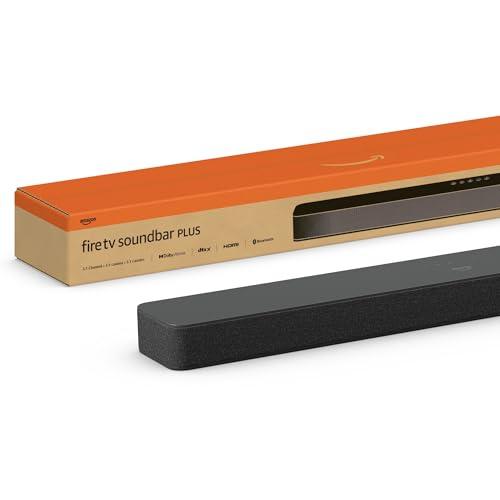
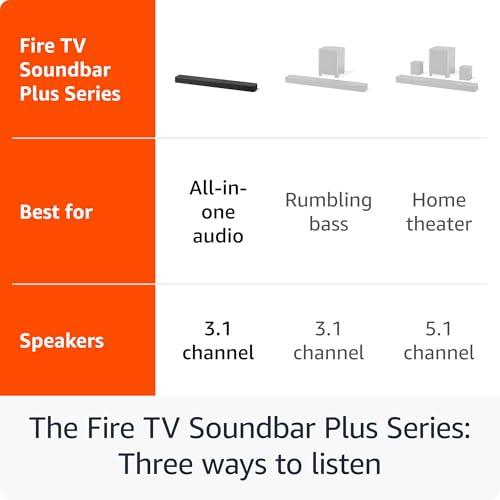
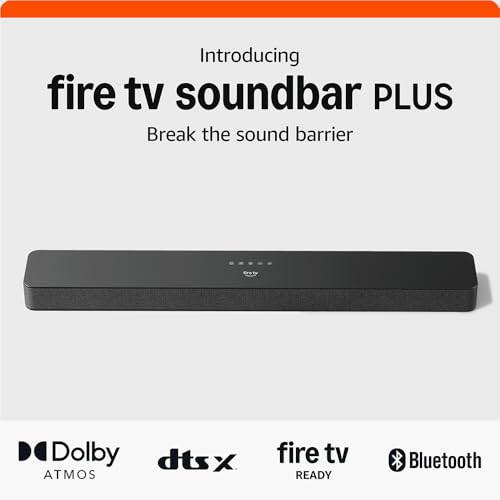
The Amazon Fire TV Soundbar Plus takes an ecosystem-focused approach, prioritizing integration with Amazon's Fire TV platform while offering expandability for users who want to build a more comprehensive system over time. It's designed as a 3.1-channel system (left, center, right speakers plus a built-in subwoofer) that can expand to full 5.1 surround sound with additional wireless components.
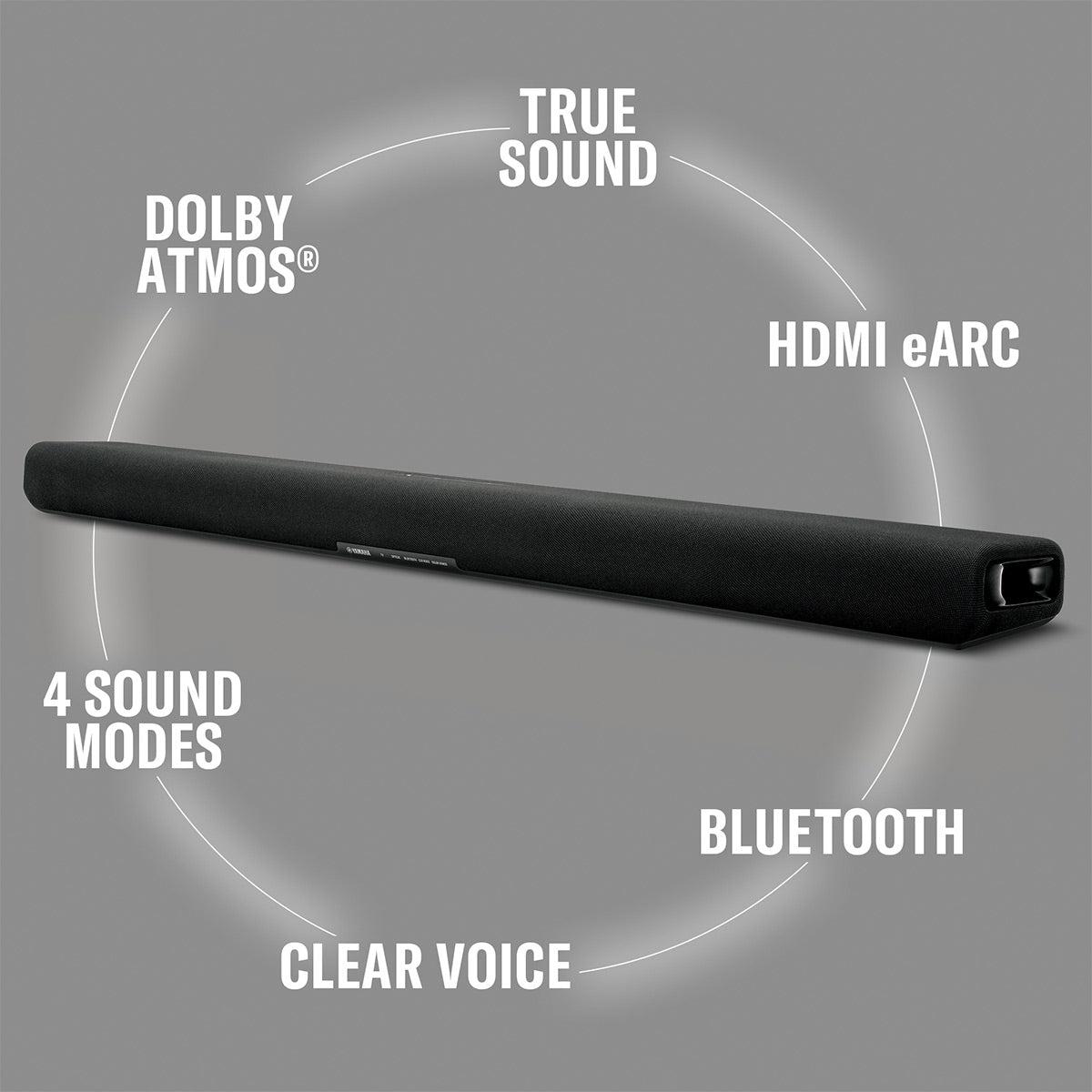
Meanwhile, the Yamaha SR-B30A represents a more traditional audiophile approach, focusing purely on audio quality and advanced processing technologies like Dolby Atmos in a single, compact unit. Yamaha, with decades of audio engineering experience, has prioritized sound quality over smart features.
This is where these soundbars reveal their different design priorities most clearly. The Amazon Fire TV Soundbar Plus includes a dedicated center channel—essentially a separate speaker specifically tuned for human voices. This physical center channel, combined with dialogue enhancement that can be adjusted across five levels, provides excellent speech intelligibility. However, reviews consistently note that the soundbar's bass-forward sound signature can sometimes overwhelm dialogue, particularly during action sequences where the built-in subwoofer kicks in strongly.
The Yamaha SR-B30A takes a different approach with its Clear Voice technology. Rather than relying solely on a physical center channel, Yamaha uses sophisticated digital signal processing (DSP) to enhance dialogue intelligibility. This system analyzes the audio signal in real-time and boosts the frequency ranges where human voices naturally occur while suppressing competing sounds. Consumer Reports testing suggests this approach provides more consistent dialogue clarity, though the overall midrange presentation has some minor haziness that audiophiles might notice during critical listening.
In practical terms, both soundbars will dramatically improve dialogue clarity compared to your TV's built-in speakers. The Amazon Fire TV Soundbar Plus might have a slight edge during quiet dialogue scenes thanks to its dedicated center channel, while the Yamaha SR-B30A maintains more consistent performance across different volume levels and content types.
Bass performance reveals another fundamental difference in design philosophy. The Amazon Fire TV Soundbar Plus includes a built-in subwoofer within the main soundbar unit, which provides satisfying bass impact for most content. However, reviews describe the bass character as somewhat "one-note"—meaning it emphasizes certain frequencies while lacking the nuanced low-end response that makes music sound natural and movie explosions feel realistic rather than just loud.
The system's real strength emerges when you add the optional wireless subwoofer, transforming it into a true 5.1 system with dedicated bass management. This expandability means you can start with decent bass and upgrade to excellent bass when budget allows.
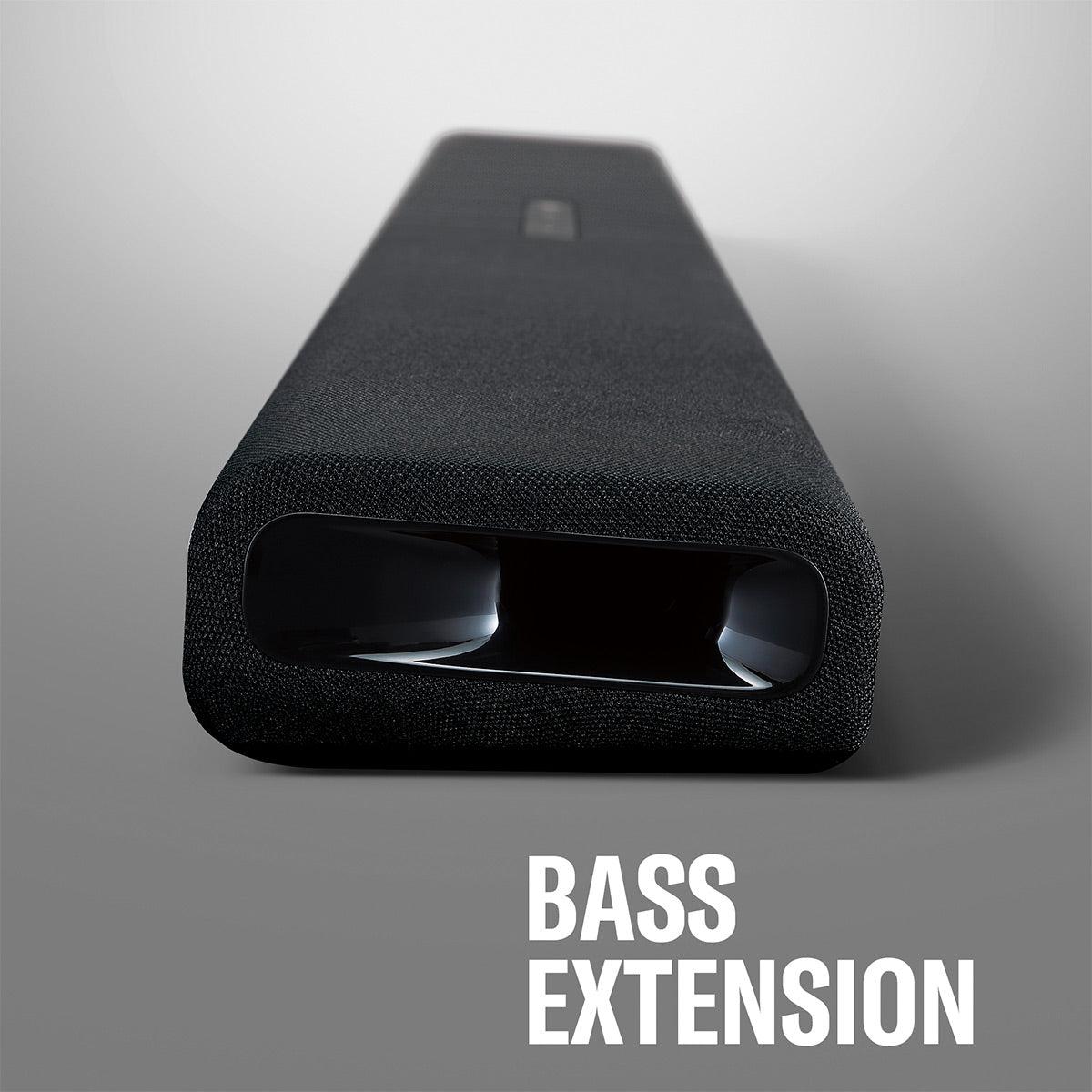
The Yamaha SR-B30A incorporates dual 3-inch subwoofer drivers in a bass-reflex design—a more sophisticated approach that uses precisely tuned ports to extend low-frequency response. The dual-driver setup helps distribute bass more evenly and reduces distortion at higher volumes. Yamaha's Bass Extension feature can enhance low-end presence when you want more impact, though Consumer Reports noted some boominess in their testing when this feature is engaged.
For music listening, the Yamaha SR-B30A provides more natural, controlled bass response. For home theater use, the Amazon Fire TV Soundbar Plus with its expansion options ultimately provides more impactful low-end, though at a higher total cost.
This category highlights perhaps the most significant technical difference between these soundbars. Both support Dolby Atmos, but their implementation approaches vary dramatically.
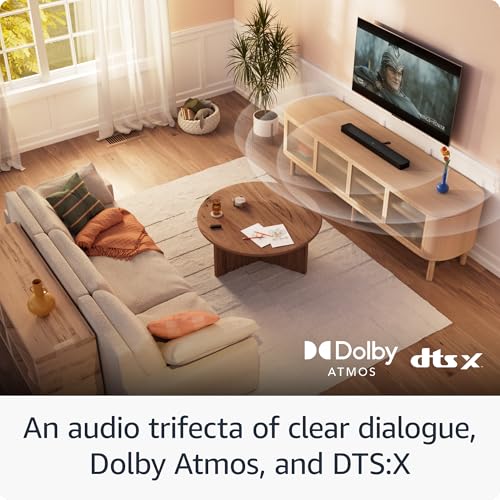
The Amazon Fire TV Soundbar Plus uses virtual processing to simulate Dolby Atmos effects from its main speaker array. Without upward-firing drivers (speakers that bounce sound off your ceiling to create height effects), the spatial audio experience is limited to lateral surround effects. However, when expanded with the optional wireless rear speakers, it creates a legitimate 5.1 surround sound system with physical speakers positioned around your listening area. This provides genuine surround immersion that virtual processing simply cannot match.
The Yamaha SR-B30A offers native Dolby Atmos support with more sophisticated object-based audio processing. While it's still a single-unit solution without physical height speakers, Yamaha's audio engineering creates more convincing virtual height effects and better overall spatial audio simulation. The Dolby Atmos processing analyzes the audio signal and identifies individual sound objects (like a helicopter flying overhead), then uses psychoacoustic processing to create the illusion of those sounds coming from specific locations in three-dimensional space.
For movies with high-quality Dolby Atmos soundtracks, the Yamaha SR-B30A provides a more immersive single-unit experience. For users willing to invest in the full system, the Amazon Fire TV Soundbar Plus with rear speakers delivers superior surround immersion through physical speaker placement.
The smart feature comparison reveals each manufacturer's target audience clearly. The Amazon Fire TV Soundbar Plus, despite its name, doesn't actually include built-in streaming capabilities or Alexa voice assistant. Instead, it's designed to integrate seamlessly with Fire TV devices, allowing unified control through a single remote and providing on-screen setup menus when paired with compatible Fire TV streamers or smart TVs.
This integration proves genuinely useful in daily use. When watching content through a Fire TV device, you can adjust soundbar settings, EQ, and sound modes directly through your TV's interface rather than juggling multiple remotes. The automatic component pairing for expansion speakers eliminates the often-frustrating setup process typical of wireless speaker systems.
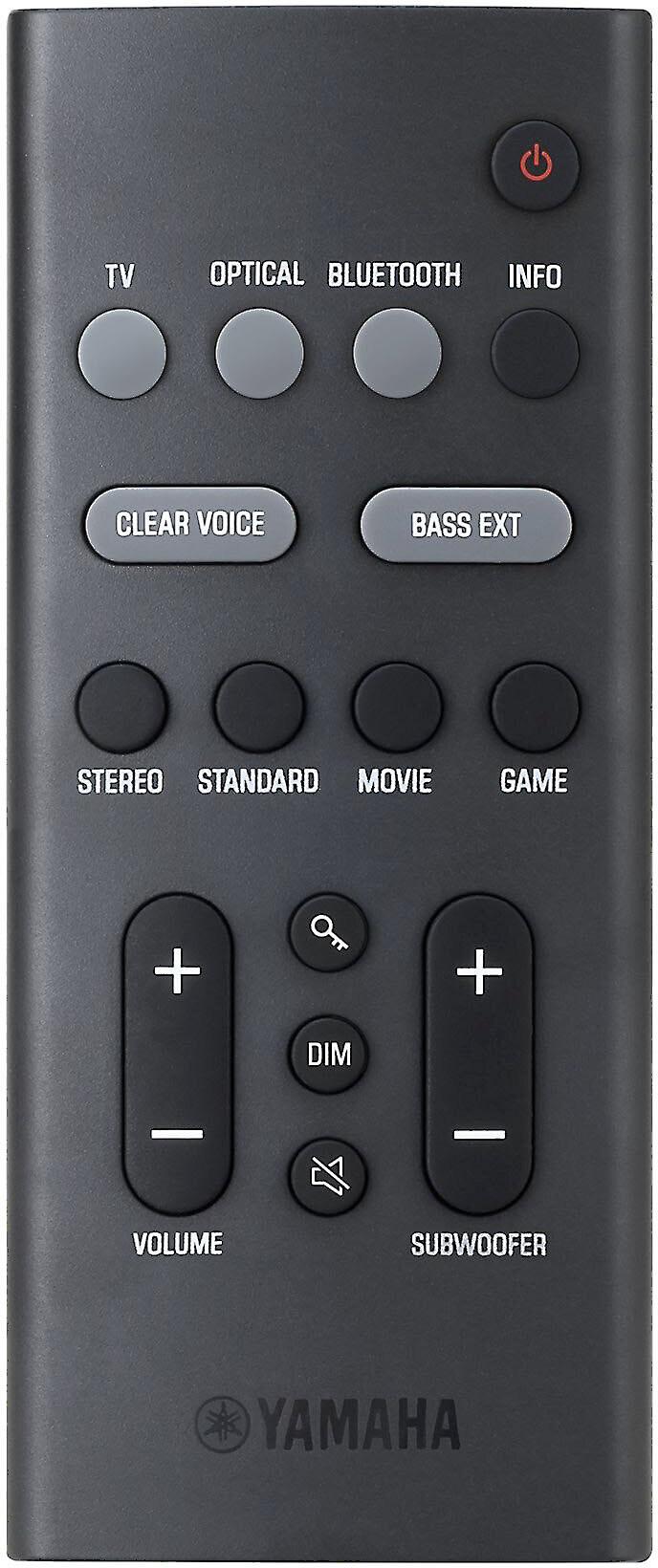
The Yamaha SR-B30A takes a more traditional approach, offering no voice control or smart streaming features. Control comes through the included remote or Yamaha's Sound Bar Remote app, which provides EQ adjustment and sound mode selection. While less flashy than smart features, this approach ensures the soundbar remains focused on its primary job: audio reproduction.
For users already invested in Amazon's ecosystem or those who appreciate integrated device control, the Amazon Fire TV Soundbar Plus provides meaningful convenience benefits. Users who prefer dedicated audio components or use multiple streaming platforms might appreciate the Yamaha SR-B30A's more universal approach.
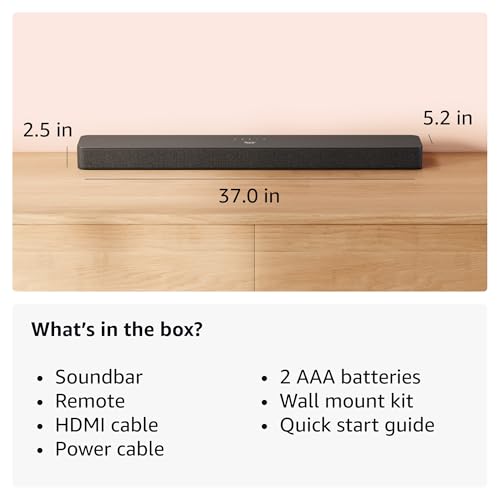
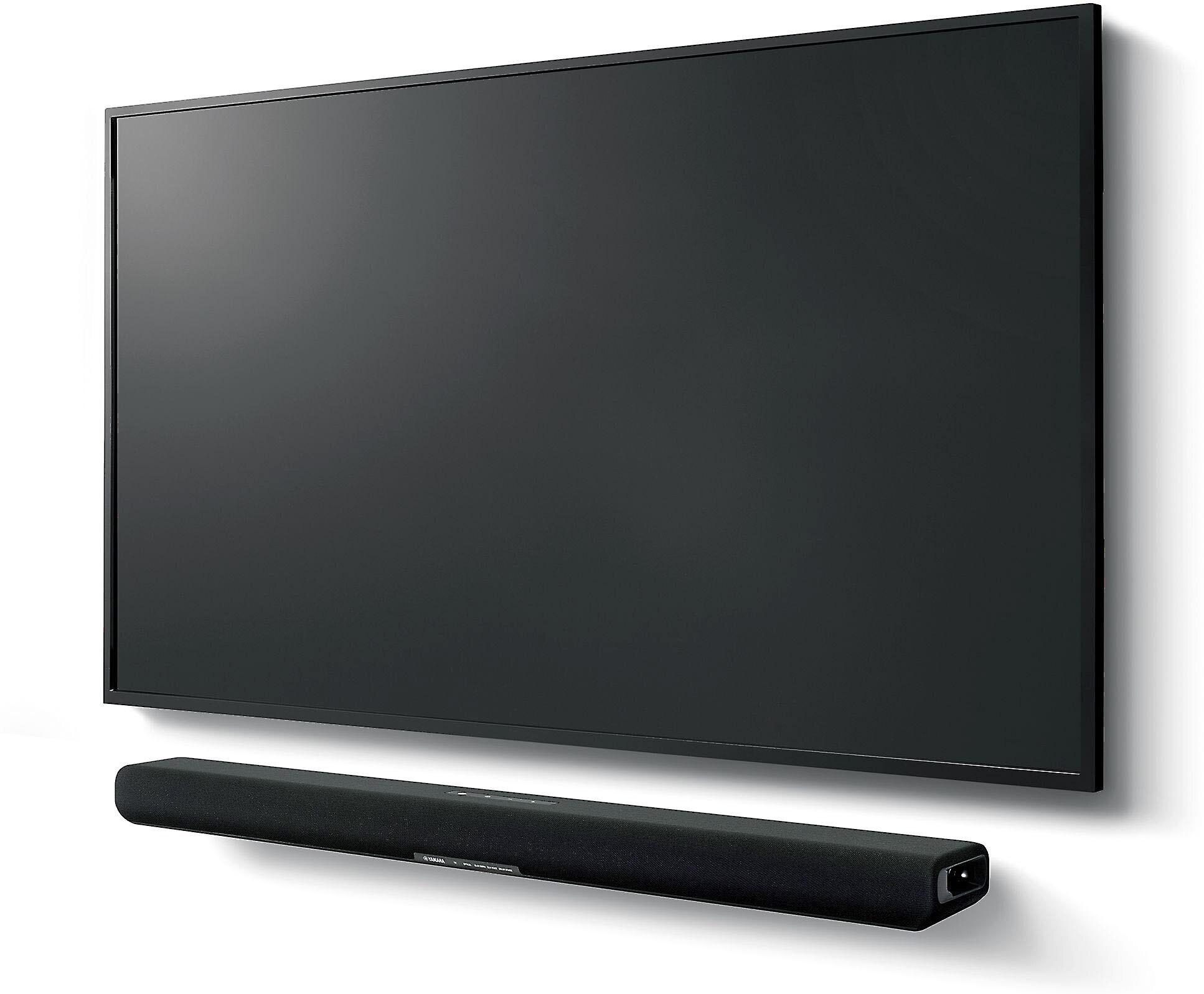
These soundbars' physical designs reflect their different target markets. The Amazon Fire TV Soundbar Plus measures approximately 37 inches in length, designed to complement 50-65 inch TVs. Its matte black finish with fabric grille provides an understated appearance that blends into modern entertainment centers. However, the system's true footprint includes placement considerations for the wireless subwoofer and optional rear speakers, requiring more room planning.
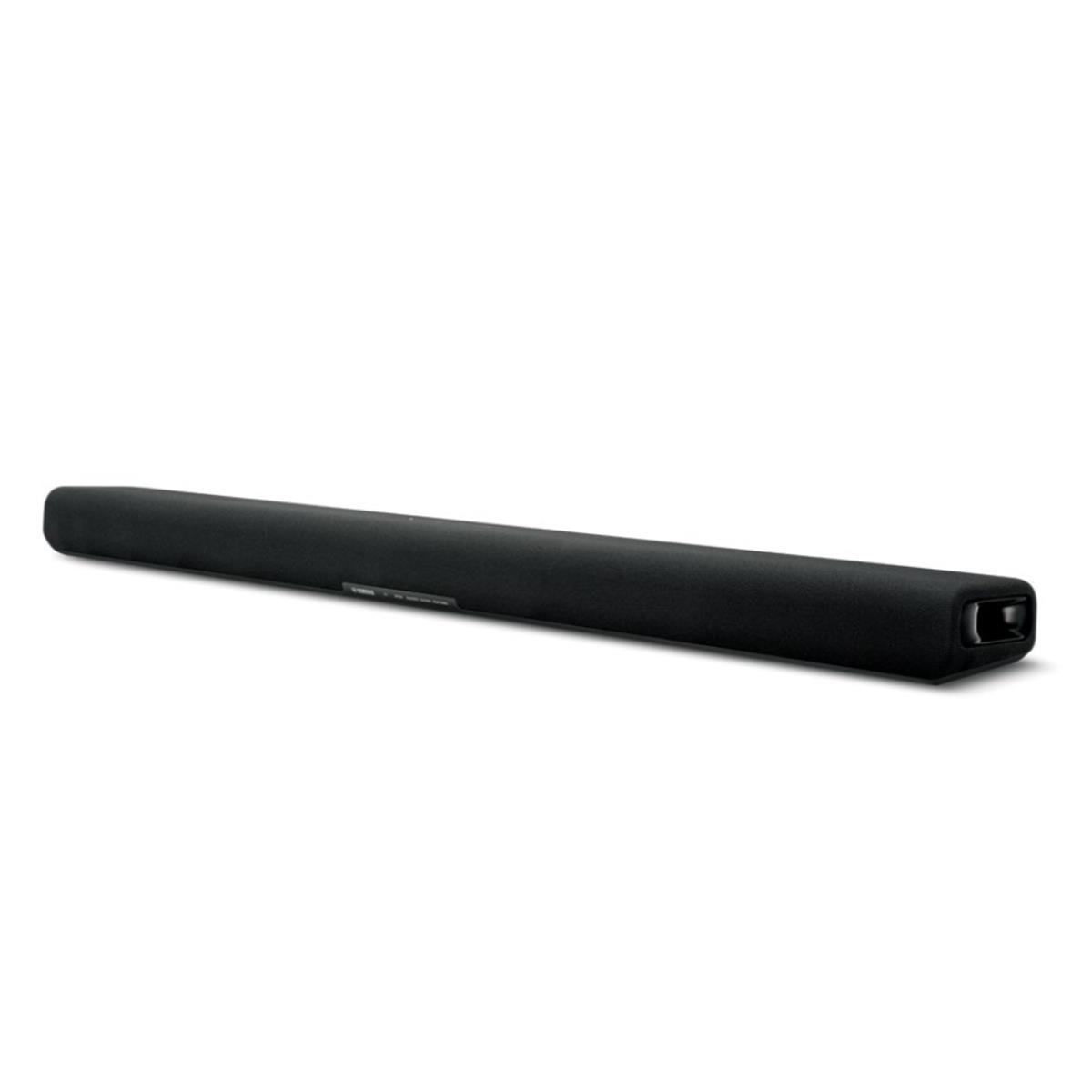
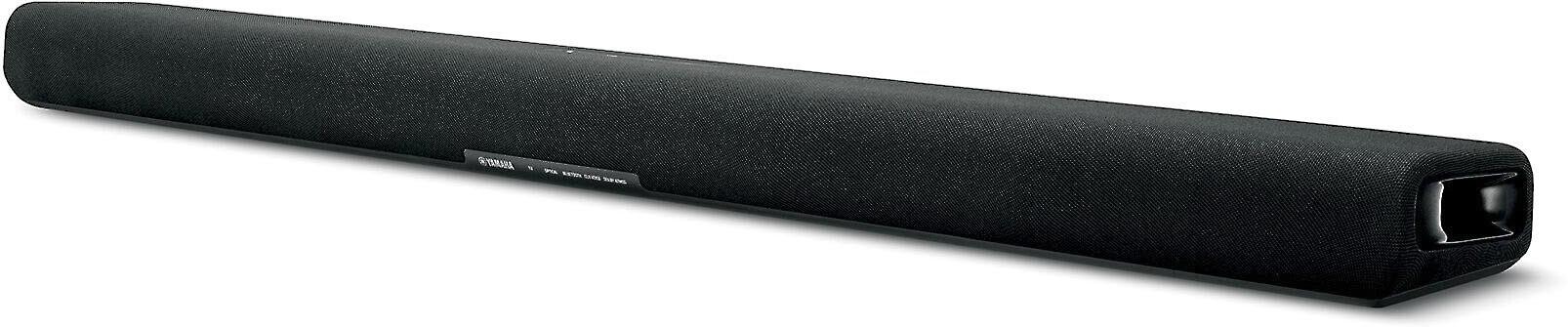
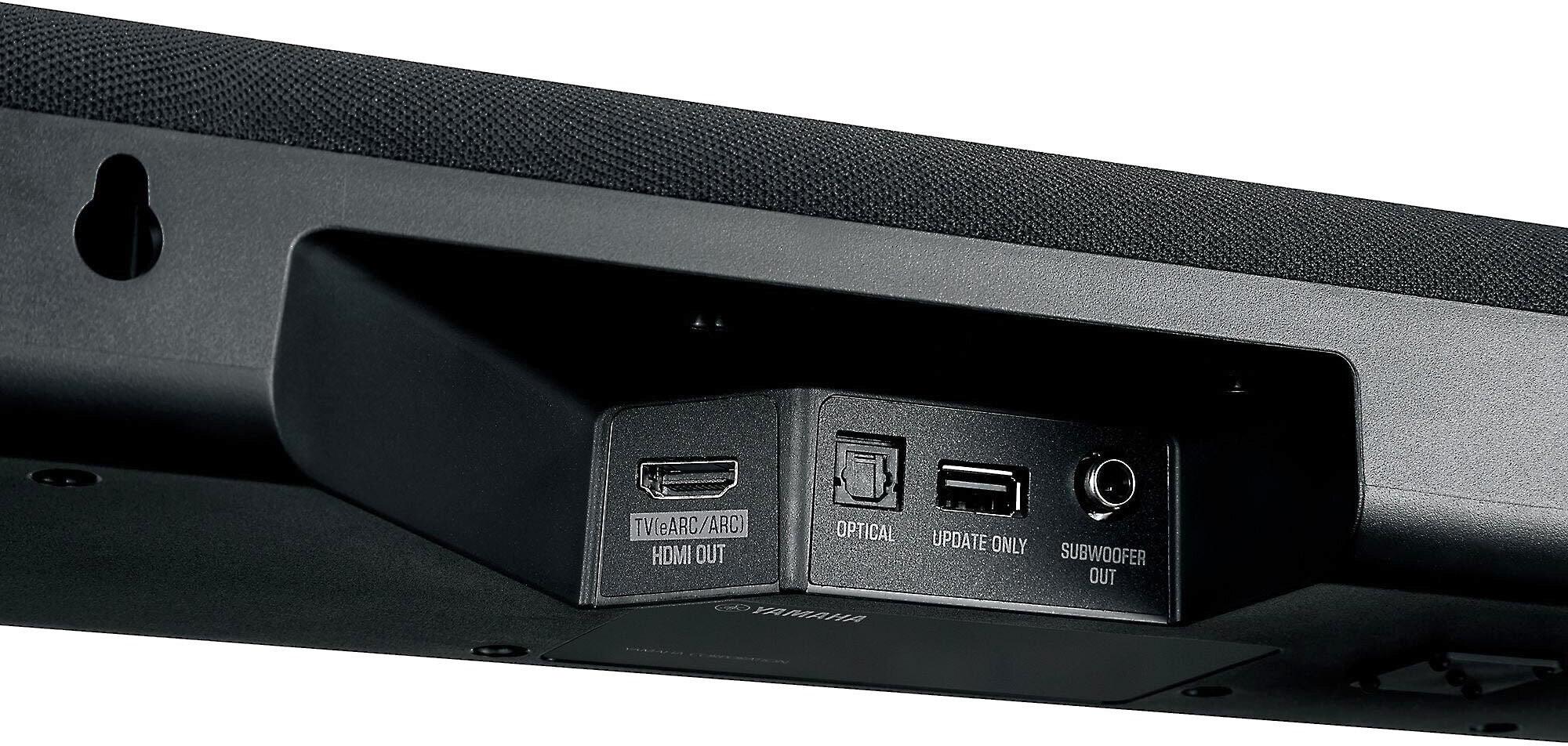
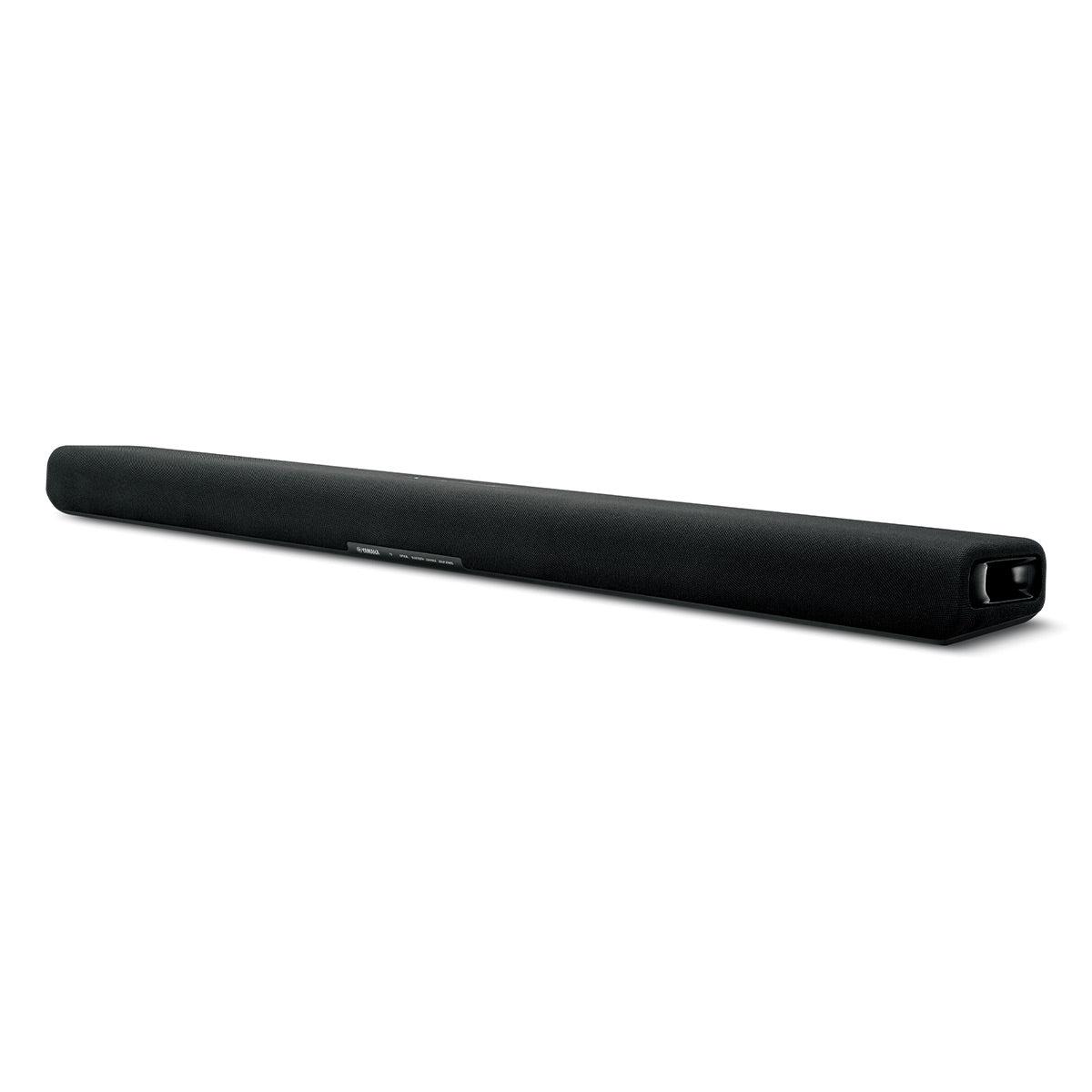
The Yamaha SR-B30A presents a more compact solution at 35.9 inches wide and just 2.6 inches tall. Its single-unit design eliminates cable runs and wireless connectivity concerns while providing flexible placement options. The built-in wall-mounting system uses simple keyholes rather than requiring bracket installation, making wall mounting more straightforward.
Both soundbars include rubberized feet for stable TV stand placement, but the Yamaha SR-B30A's lighter weight (8.6 pounds versus the Amazon's 8.8 pounds for just the main unit) makes it easier to handle during installation.
At the time of writing, these soundbars occupy different price segments, with the Amazon Fire TV Soundbar Plus positioned as a more budget-friendly option and the Yamaha SR-B30A commanding a premium for its audio engineering and Dolby Atmos capabilities.
The Amazon Fire TV Soundbar Plus provides excellent value by including a complete 3.1 system at an entry-level price point. The expansion path means users can invest gradually, starting with significant audio improvement and adding components as budget allows. However, the total cost of a full 5.1 system approaches the price of more premium alternatives.
The Yamaha SR-B30A represents a "buy once, cry once" approach—higher initial cost but a more complete audio solution that won't require additional purchases to achieve its full potential. The Dolby Atmos support also provides future-proofing as streaming services and UHD Blu-ray releases increasingly include Atmos soundtracks.
For dedicated home theater use, both soundbars offer advantages depending on your setup and priorities. The Amazon Fire TV Soundbar Plus shines in larger rooms where the expansion speakers can create genuine surround immersion. The wireless rear speakers eliminate cable runs while providing the psychological impact of sounds coming from behind your seating position.
The Yamaha SR-B30A excels in smaller to medium-sized rooms where a single soundbar must provide the entire audio experience. Its more sophisticated audio processing and balanced sound signature make it particularly effective for mixed content viewing—switching between dialogue-heavy dramas, music concerts, and action movies without requiring constant adjustment.
Both soundbars handle gaming well, with the Yamaha SR-B30A offering a dedicated Game mode that enhances directional audio cues while the Amazon Fire TV Soundbar Plus's expansion capabilities provide competitive gaming advantages through better spatial audio when fully equipped.
The decision between these soundbars ultimately depends on your priorities, room size, and long-term plans. Choose the Amazon Fire TV Soundbar Plus if you're already invested in the Fire TV ecosystem, want the flexibility to expand over time, have a larger room that would benefit from true surround speakers, or prefer to spread the investment across multiple purchases.
The Yamaha SR-B30A makes more sense if you prioritize audio quality above all else, want the most sophisticated single-unit performance available, prefer a clean setup without multiple components, or value the future-proofing that comes with proper Dolby Atmos support.
Both soundbars will dramatically improve your TV audio experience. The Amazon Fire TV Soundbar Plus offers more flexibility and ecosystem integration, while the Yamaha SR-B30A provides superior audio engineering in a more refined package. Your choice should align with how you prioritize convenience, audio quality, expandability, and integration with your existing entertainment setup.
| Amazon Fire TV Soundbar Plus | Yamaha SR-B30A Sound Bar with Built-In Subwoofers |
|---|---|
| Channel Configuration - Determines dialogue clarity and expansion options | |
| 3.1 channels (expandable to 5.1 with optional components) | 2.1 channels with dual built-in subwoofers |
| Total Power Output - Affects maximum volume and dynamic range | |
| 120W total (comparable performance levels) | 120W total (30W × 2 front, 60W subwoofer) |
| Dolby Atmos Support - Creates immersive overhead sound effects | |
| Virtual Dolby Atmos processing (no upfiring drivers) | Native Dolby Atmos with object-based audio processing |
| Smart Features - Integration with streaming and voice control | |
| Fire TV device integration, single remote control | No smart features, traditional remote and app control |
| Expandability - Future upgrade potential | |
| Wireless subwoofer and rear speakers available separately | Complete single-unit solution, no expansion options |
| Physical Design - Space requirements and aesthetics | |
| 37" main unit + separate wireless components | 35.9" × 2.6" × 5.2" compact single unit (8.6 lbs) |
| Connectivity Options - Determines compatibility with your devices | |
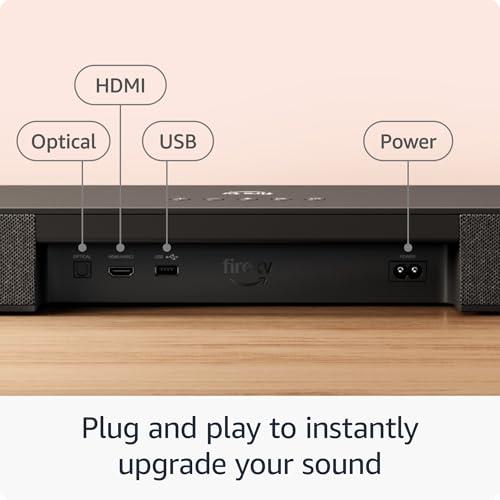
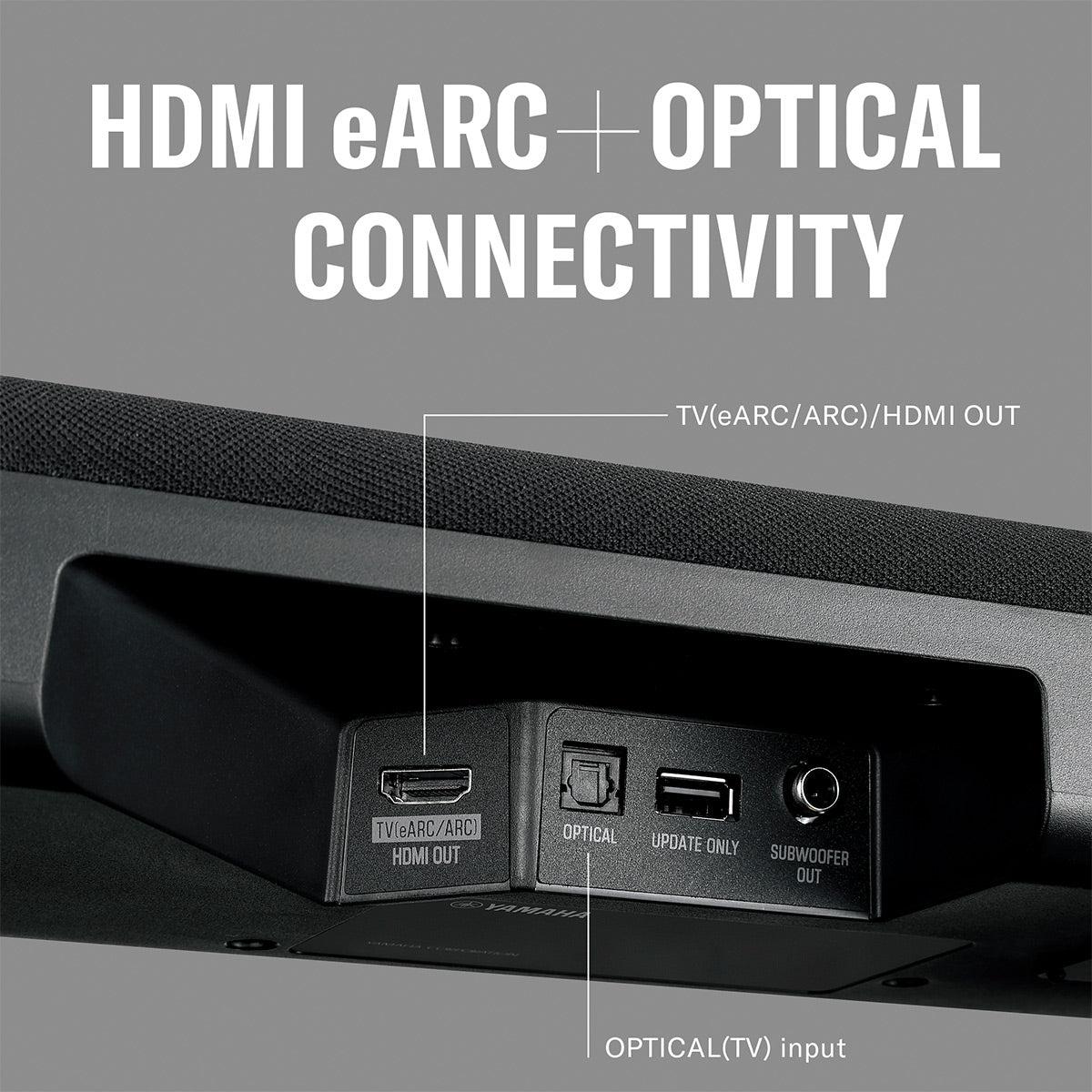
| HDMI eARC, Optical, USB-A, Bluetooth 5.0 | HDMI eARC, Optical, Bluetooth 5.1 (with AAC codec) |
| Dialogue Enhancement - Critical for clear speech | |
| Dedicated center channel + 5-level dialogue adjustment | Clear Voice technology with advanced DSP processing |
| Bass Approach - Affects music and movie impact | |
| Built-in subwoofer (expandable to dedicated wireless sub) | Dual 3" built-in subwoofers with bass reflex design |
| Sound Modes - Optimizes audio for different content types | |
| Movie, Music, Sports, Night modes | Stereo, Standard, Game, Movie modes |
| Setup Complexity - Installation time and technical requirements | |
| Multi-component system requires component placement | Simple single-unit installation with wall-mount keyholes |
| Value Positioning - Performance per dollar consideration | |
| Lower entry price with optional upgrade path | Higher upfront cost for complete premium solution |
The Yamaha SR-B30A generally provides superior dialogue clarity thanks to its Clear Voice technology, which uses advanced digital signal processing to enhance speech frequencies while suppressing competing sounds. The Amazon Fire TV Soundbar Plus offers good dialogue performance with its dedicated center channel and 5-level dialogue enhancement, but its bass-forward sound signature can sometimes overwhelm voices during action scenes.
The Amazon Fire TV Soundbar Plus is designed for expandability, allowing you to add wireless rear speakers and a dedicated subwoofer to create a full 5.1 surround sound system. The Yamaha SR-B30A is a complete single-unit solution with no expansion options, focusing on delivering the best possible performance from its compact design with dual built-in subwoofers.
For immediate bass impact, the Yamaha SR-B30A provides more controlled and musical bass through its dual 3-inch subwoofers and bass reflex design. However, the Amazon Fire TV Soundbar Plus offers superior ultimate bass potential when expanded with its optional wireless subwoofer, creating a more powerful low-end experience for home theater use.
Both soundbars support Dolby Atmos, but with different approaches. The Yamaha SR-B30A offers native Dolby Atmos with sophisticated object-based audio processing for more convincing virtual height effects. The Amazon Fire TV Soundbar Plus uses virtual Dolby Atmos processing without upward-firing drivers, though it can create genuine surround immersion when expanded with rear speakers.
The Yamaha SR-B30A offers simpler setup as a single-unit solution with straightforward wall-mounting using built-in keyholes. The Amazon Fire TV Soundbar Plus requires more planning for multi-component placement but features automatic pairing of wireless components and seamless Fire TV device integration for unified control.
The Amazon Fire TV Soundbar Plus integrates with Fire TV devices for single-remote control and on-screen settings menus, though it doesn't include built-in streaming or voice assistant features. The Yamaha SR-B30A focuses purely on audio performance with no smart features, relying on traditional remote control and a mobile app for adjustments.
The Yamaha SR-B30A typically provides better music reproduction with its more balanced sound signature, controlled bass response, and superior audio engineering. The Amazon Fire TV Soundbar Plus has a bass-forward sound signature that works well for movies but may sound less natural with music, though its expandability options can improve musical performance.
The Yamaha SR-B30A measures 35.9 inches wide and weighs 8.6 pounds as a compact single unit. The Amazon Fire TV Soundbar Plus is approximately 37 inches long for the main unit but requires additional space for optional wireless components, making it better suited for larger rooms when fully expanded.
The Amazon Fire TV Soundbar Plus typically offers better entry-level value with lower upfront cost and the option to expand gradually. The Yamaha SR-B30A represents premium single-purchase value, providing sophisticated audio processing and Dolby Atmos support without requiring additional components for optimal performance.
Both soundbars offer HDMI eARC and optical connections for TV integration. The Amazon Fire TV Soundbar Plus includes USB-A ports and Bluetooth 5.0, while the Yamaha SR-B30A features more advanced Bluetooth 5.1 with AAC codec support for higher-quality wireless audio streaming from mobile devices.
The Yamaha SR-B30A includes a dedicated Game mode that enhances directional audio cues for competitive gaming. The Amazon Fire TV Soundbar Plus provides good gaming performance, with its expansion speakers offering spatial audio advantages for immersive gaming when the full 5.1 system is configured.
Choose the Amazon Fire TV Soundbar Plus if you want expandability to true 5.1 surround sound, have a larger room, use Fire TV devices, or prefer to upgrade gradually. Select the Yamaha SR-B30A if you prioritize audio quality, want sophisticated Dolby Atmos processing, prefer a single-unit solution, or need the most refined sound in a compact package.
We've done our best to create useful and informative comparisons to help you decide what product to buy. Our research uses advanced automated methods to create this comparison and perfection is not possible - please contact us for corrections or questions. These are the sites we've researched in the creation of this article: rtings.com - wirelessplace.com - techradar.com - cordbusters.co.uk - whathifi.com - developer.amazon.com - t3.com - dolby.com - youtube.com - youtube.com - youtube.com - dugoutnorthbrook.com - dolby.com - aboutamazon.com - youtube.com - developer.amazon.com - usa.yamaha.com - worldwidestereo.com - audiolab.com - shop.sg.yamaha.com - consumerreports.org - usa.yamaha.com - vinylsound.ca - bestbuy.com - modernappliancewoodward.com - bluestardist.com - target.com - my.yamaha.com

Privacy Policy
Terms and Conditions - Affiliate Policy
Home Security
© Copyright 2008-2026.
11816 Inwood Rd #1211, Dallas, TX 75244