




Shopping for a soundbar can feel overwhelming, especially when you're trying to understand terms like "3.1.2 channels" or "virtual Dolby Atmos." If you've been using your TV's built-in speakers and wondering what all the fuss is about regarding soundbars, you're in the right place. Today, we're comparing two popular options that promise to bring cinematic audio to your living room: the Amazon Fire TV Soundbar Plus and the Klipsch Flexus Core 200.
Before diving into the comparison, let's talk about what makes these soundbars special. Both products belong to the "budget Dolby Atmos" category—a sweet spot that emerged around 2020-2022 as manufacturers figured out how to deliver three-dimensional audio without requiring a full surround sound system with speakers mounted on your ceiling.
Dolby Atmos is audio technology that places sounds not just left and right, but also above you. Think of it like this: in a regular stereo setup, a helicopter flying across the screen moves from your left speaker to your right speaker. With Dolby Atmos, that helicopter can also fly over your head, creating a dome of sound around you rather than just a flat wall of audio.
The challenge for soundbar manufacturers is recreating this overhead effect. Some use "virtual processing" (basically smart audio tricks), while others include actual upward-firing speakers that bounce sound off your ceiling. As you might guess, there are trade-offs between these approaches, which brings us to our two contenders.
The Amazon Fire TV Soundbar Plus, released in 2024, takes the virtual approach and positions itself as an affordable entry point into better TV audio. Meanwhile, the Klipsch Flexus Core 200, also from 2024, uses real upward-firing speakers and costs significantly more. At the time of writing, you're looking at roughly a $200 price difference between these two options, which raises an important question: is that extra cost worth it?
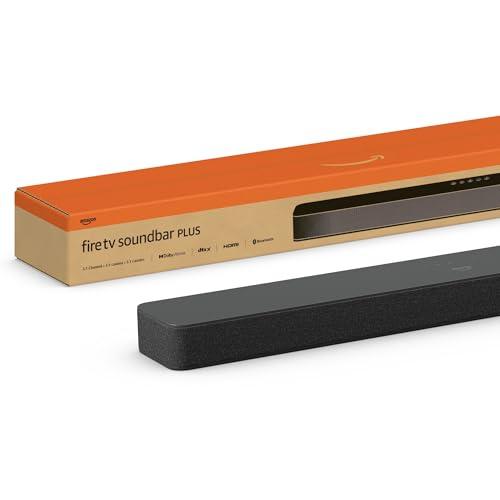
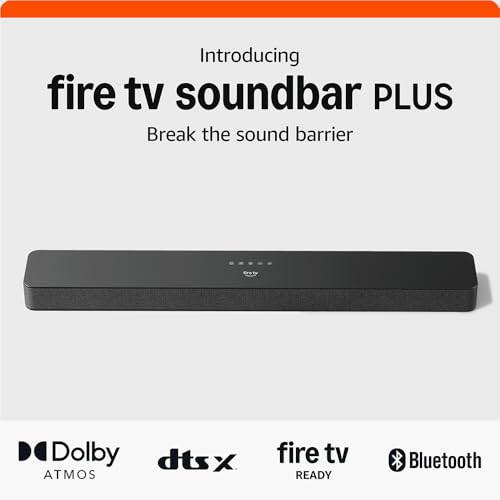
Let's start with Amazon's offering. The Amazon Fire TV Soundbar Plus is what I'd call a "no-nonsense" soundbar. Despite its "Fire TV" branding, it doesn't actually include Amazon's streaming platform or Alexa voice control—something that initially confused me when I first encountered it. Instead, it's purely an audio device that happens to integrate well with Fire TV streaming sticks and smart TVs.
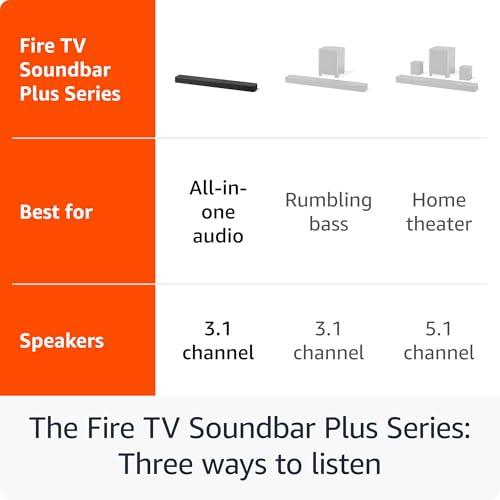
The soundbar uses a 3.1 channel configuration, which means it has left, center, and right channels, plus a built-in subwoofer (that's what the ".1" represents). The center channel is crucial because it handles dialogue—those moments when you're constantly reaching for the remote to turn up the volume during quiet conversation scenes, then scrambling to turn it down when the action starts.
What makes this soundbar interesting is its expandability. You can start with just the main unit, then later add wireless rear speakers and an external subwoofer to create a full 5.1 surround system. This modular approach means you're not locked into one configuration forever, which is smart for budget-conscious buyers who might want to upgrade gradually.
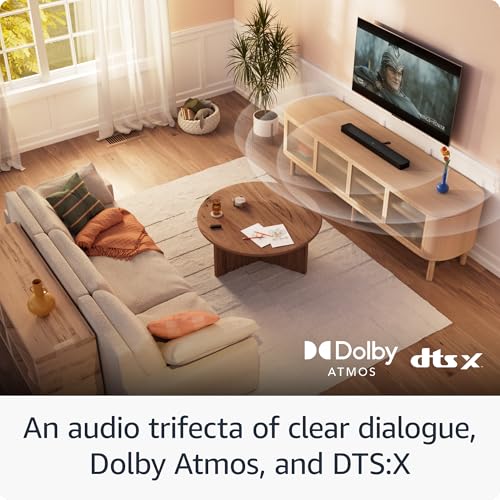
The Amazon Fire TV Soundbar Plus handles Dolby Atmos through virtual processing. Essentially, it uses clever audio algorithms to simulate the effect of overhead speakers without actually having any. The soundbar analyzes the Dolby Atmos soundtrack and uses psychoacoustic tricks to fool your brain into perceiving height. It's similar to how noise-canceling headphones can create the illusion of spaciousness in a small driver—impressive when it works, but not quite the same as the real thing.
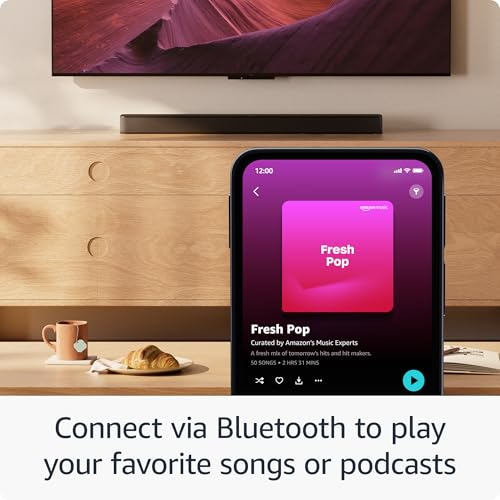
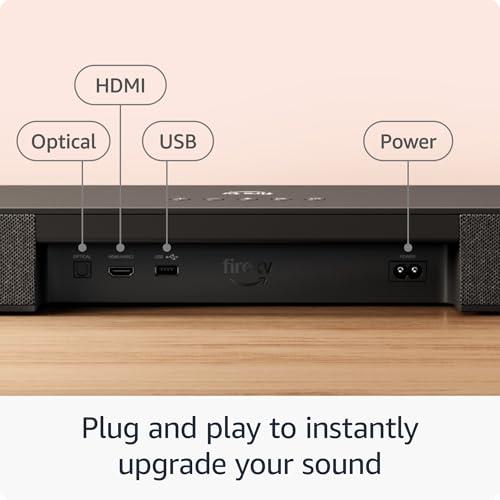
In terms of connectivity, Amazon keeps things simple but functional. You get HDMI eARC (the best connection for modern TVs), optical digital input (for older equipment), and Bluetooth for streaming music from your phone. There's also a USB-A port, which is handy for playing music files directly from a flash drive—a feature that's becoming increasingly rare but appreciated when you need it.
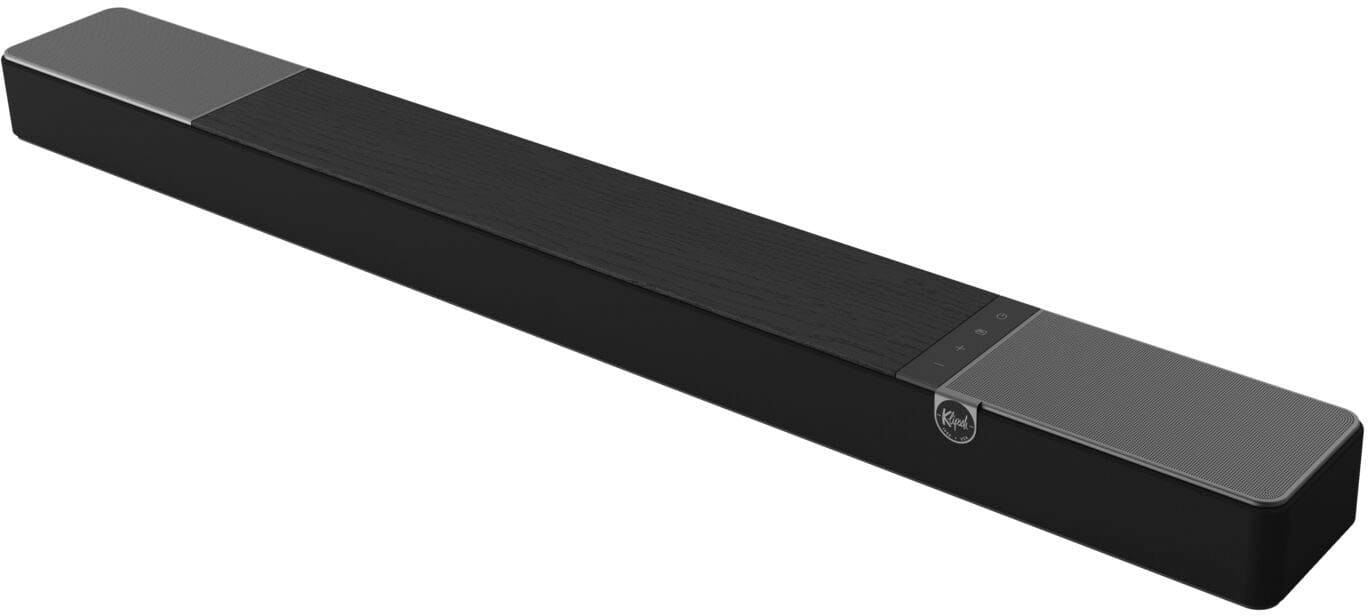
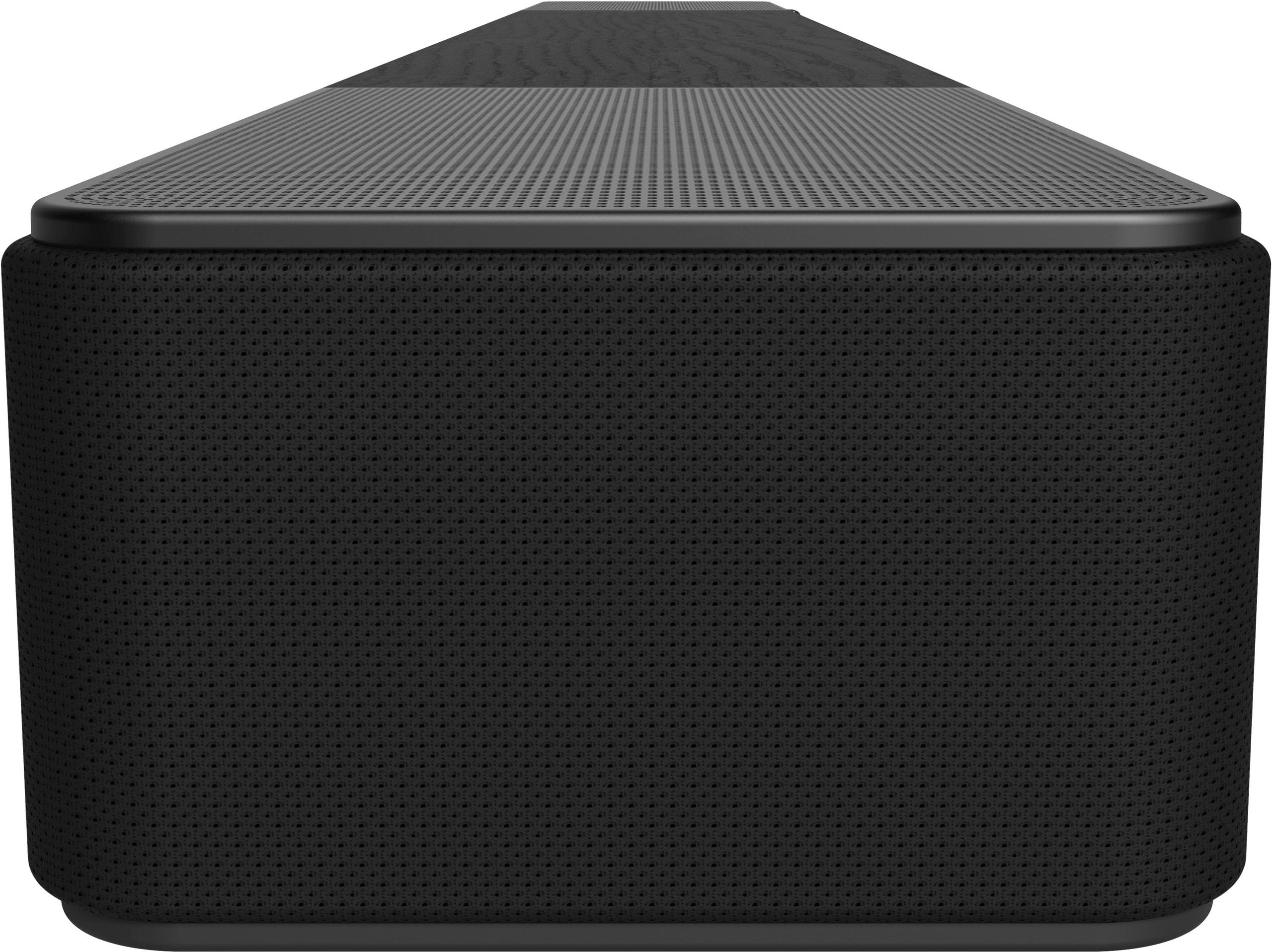
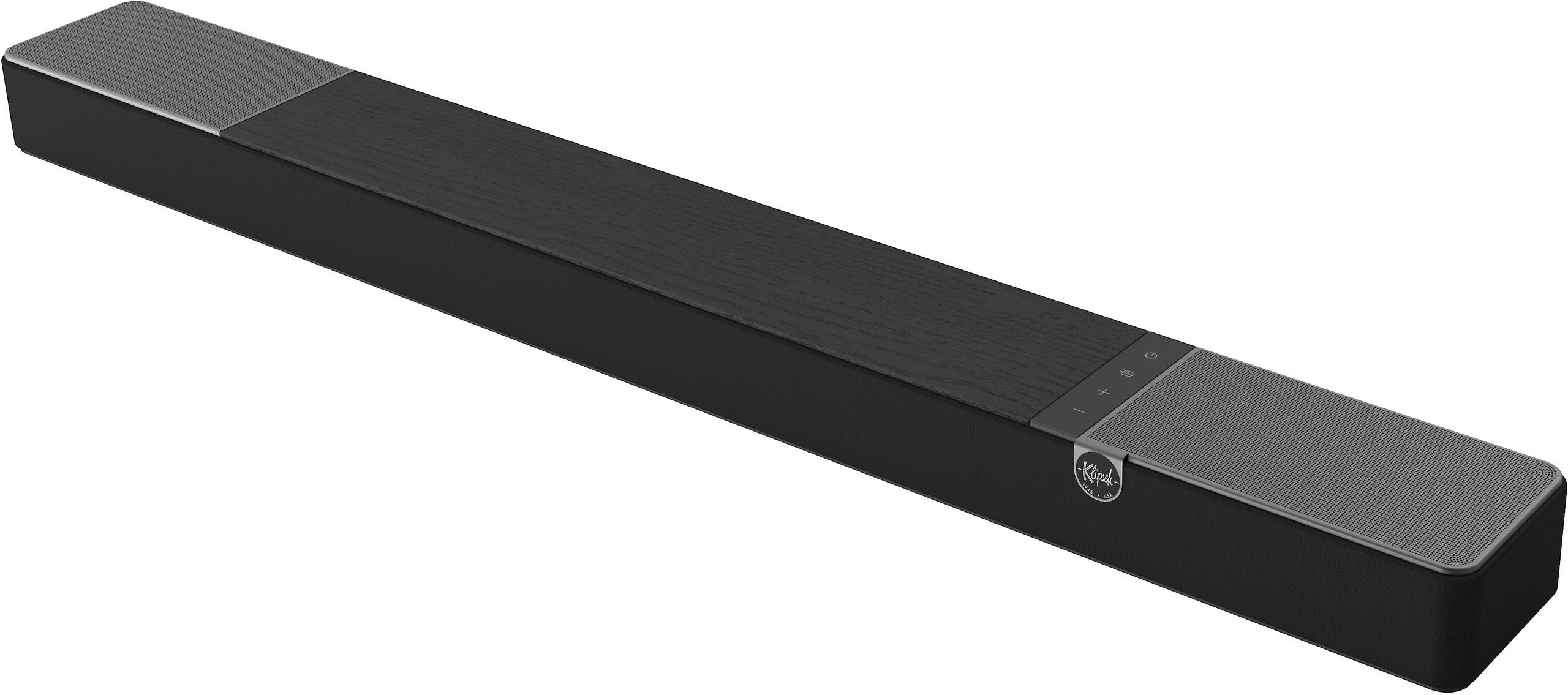
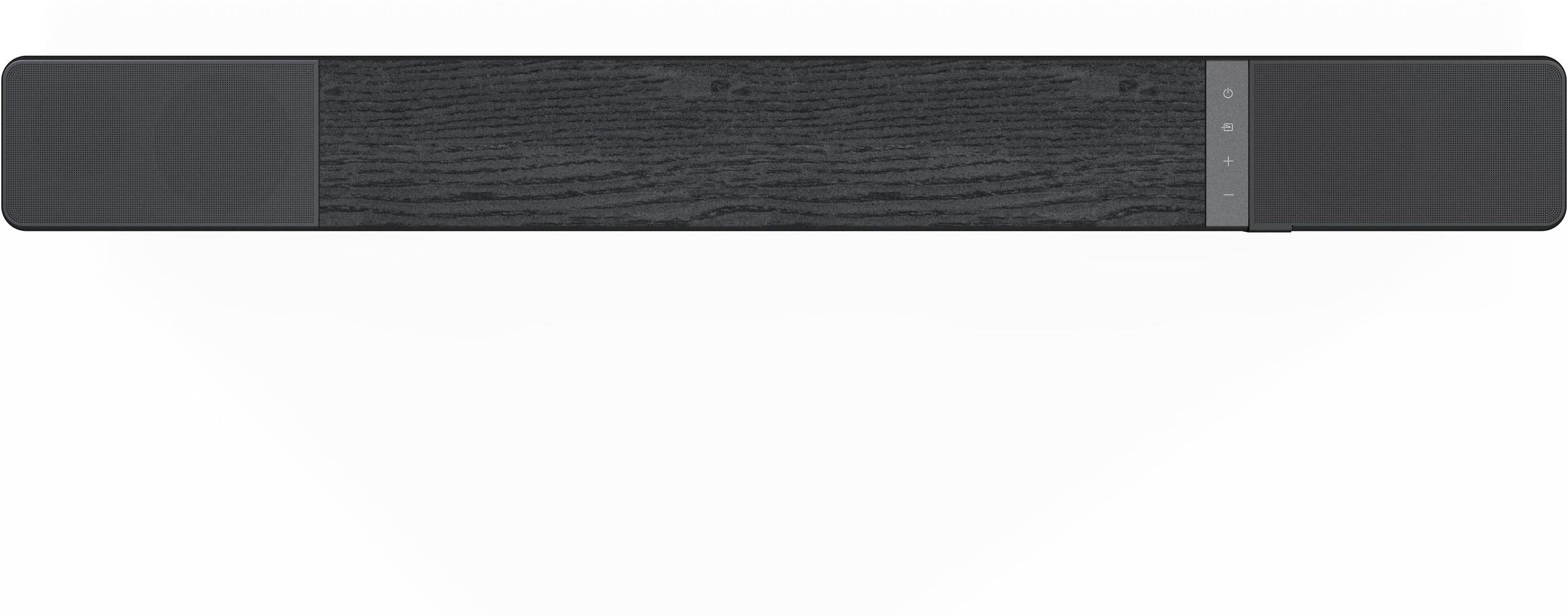
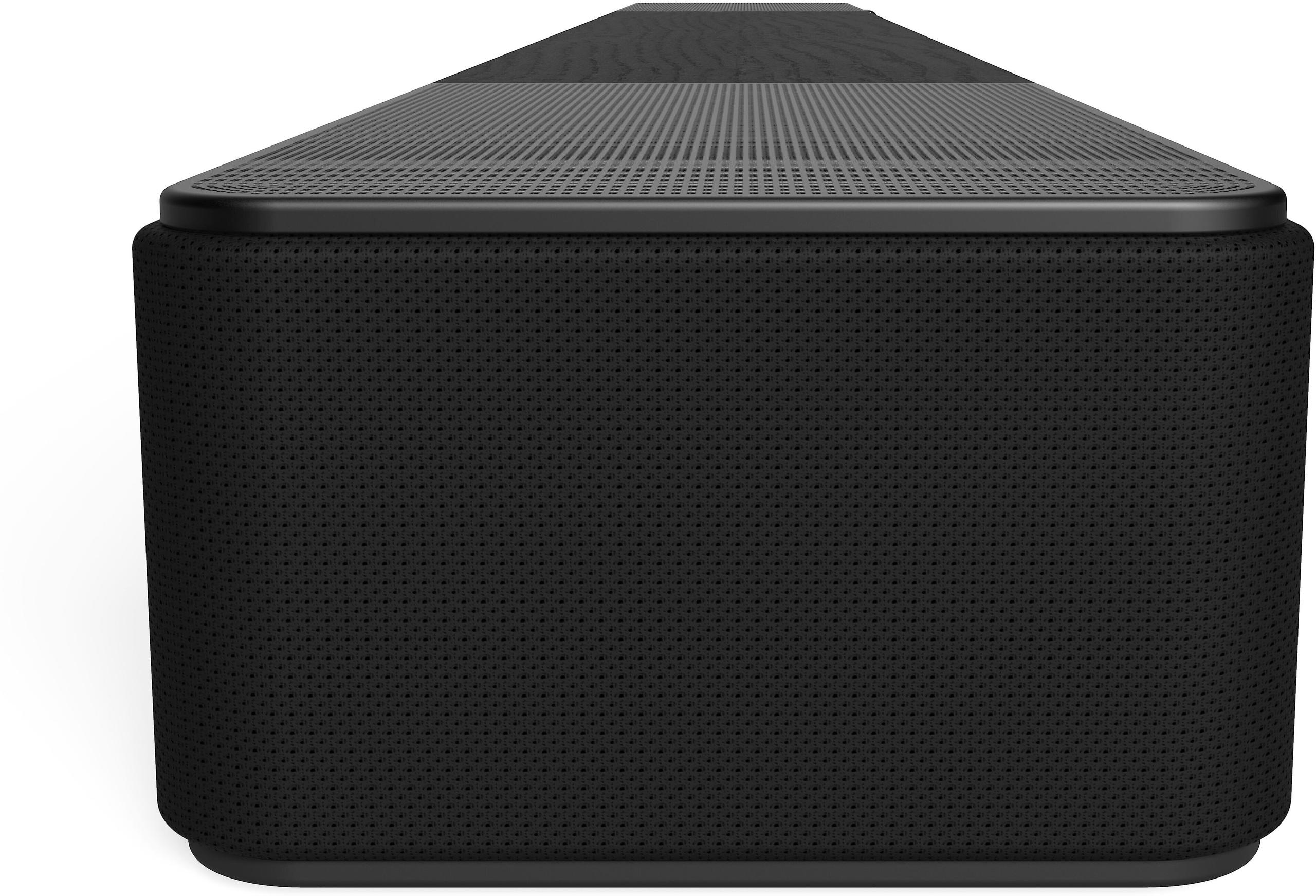
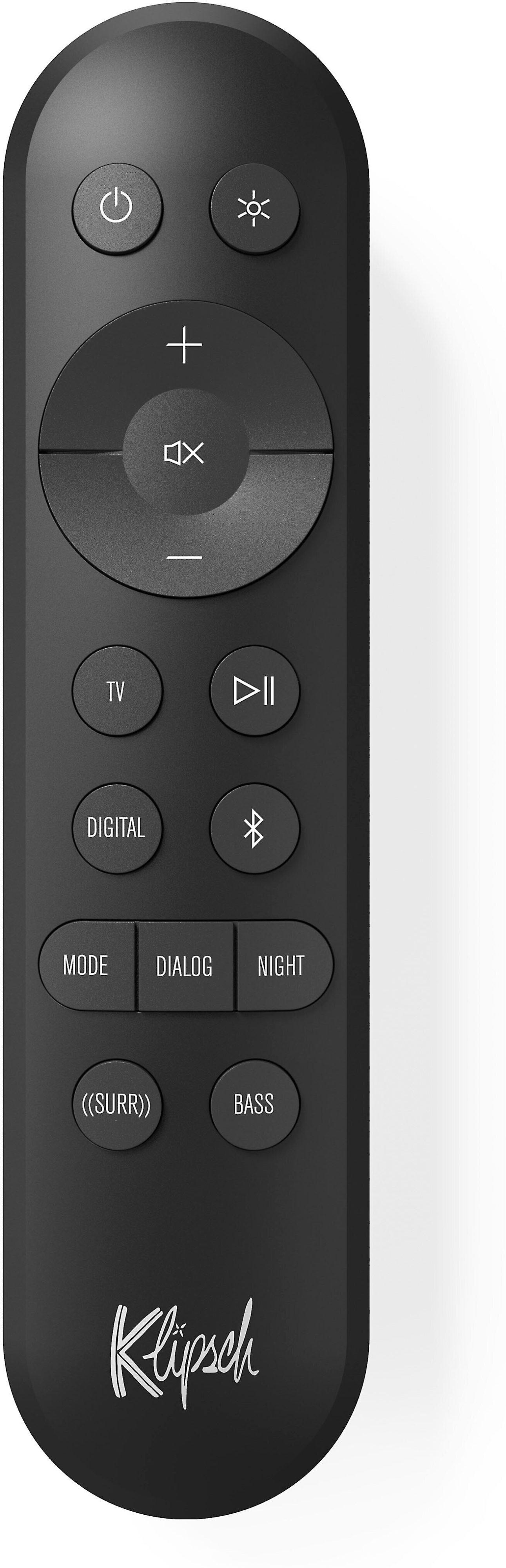
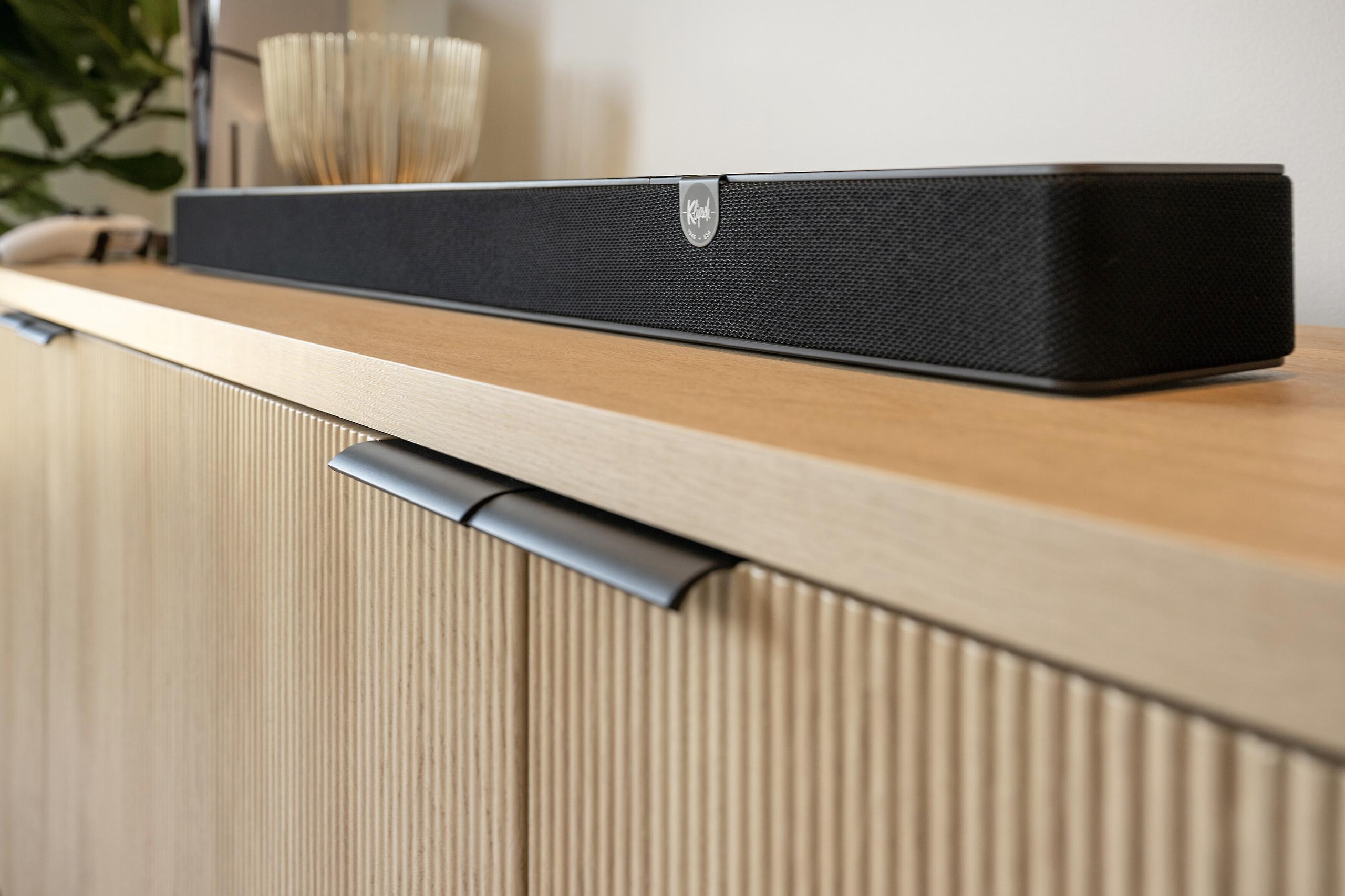
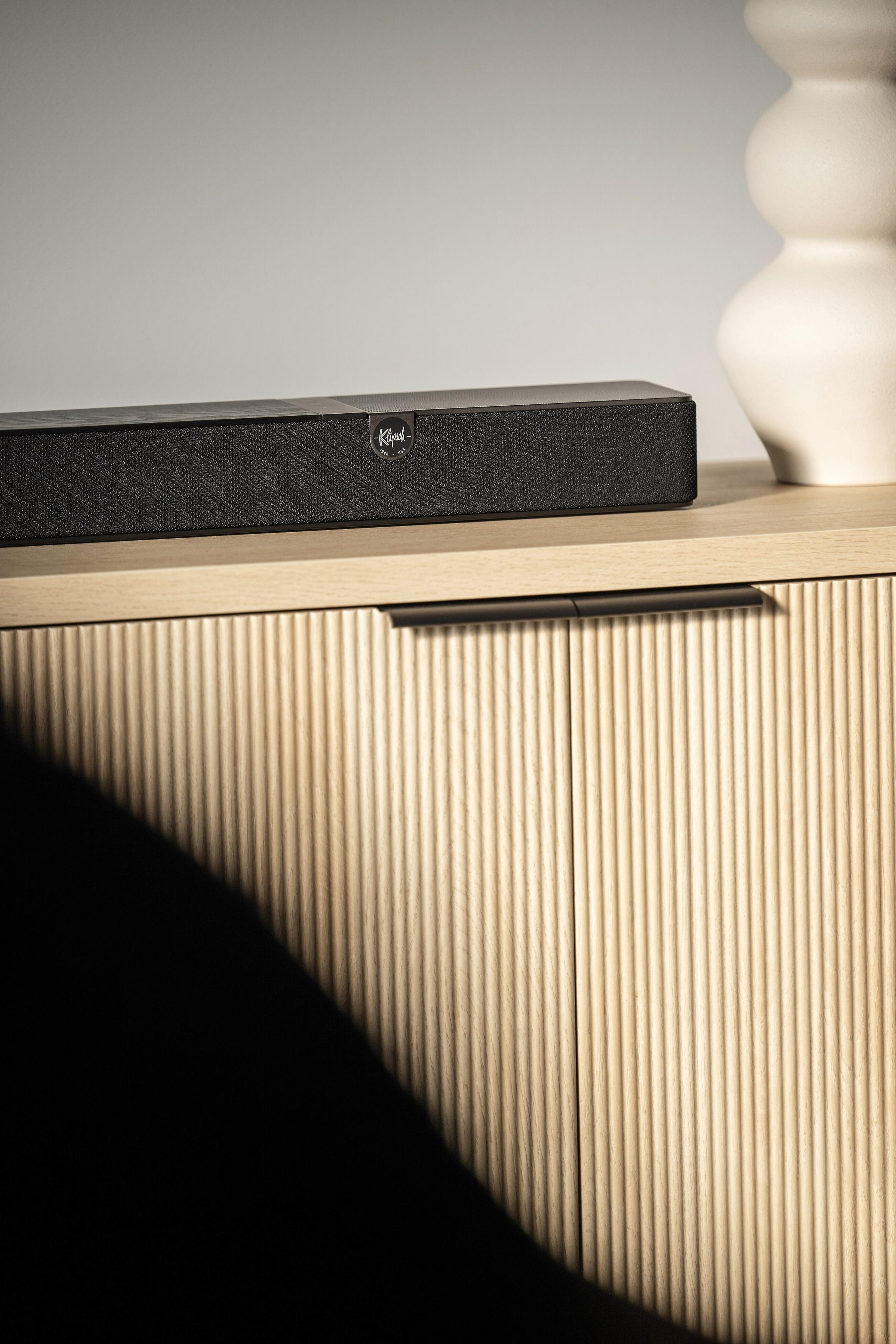
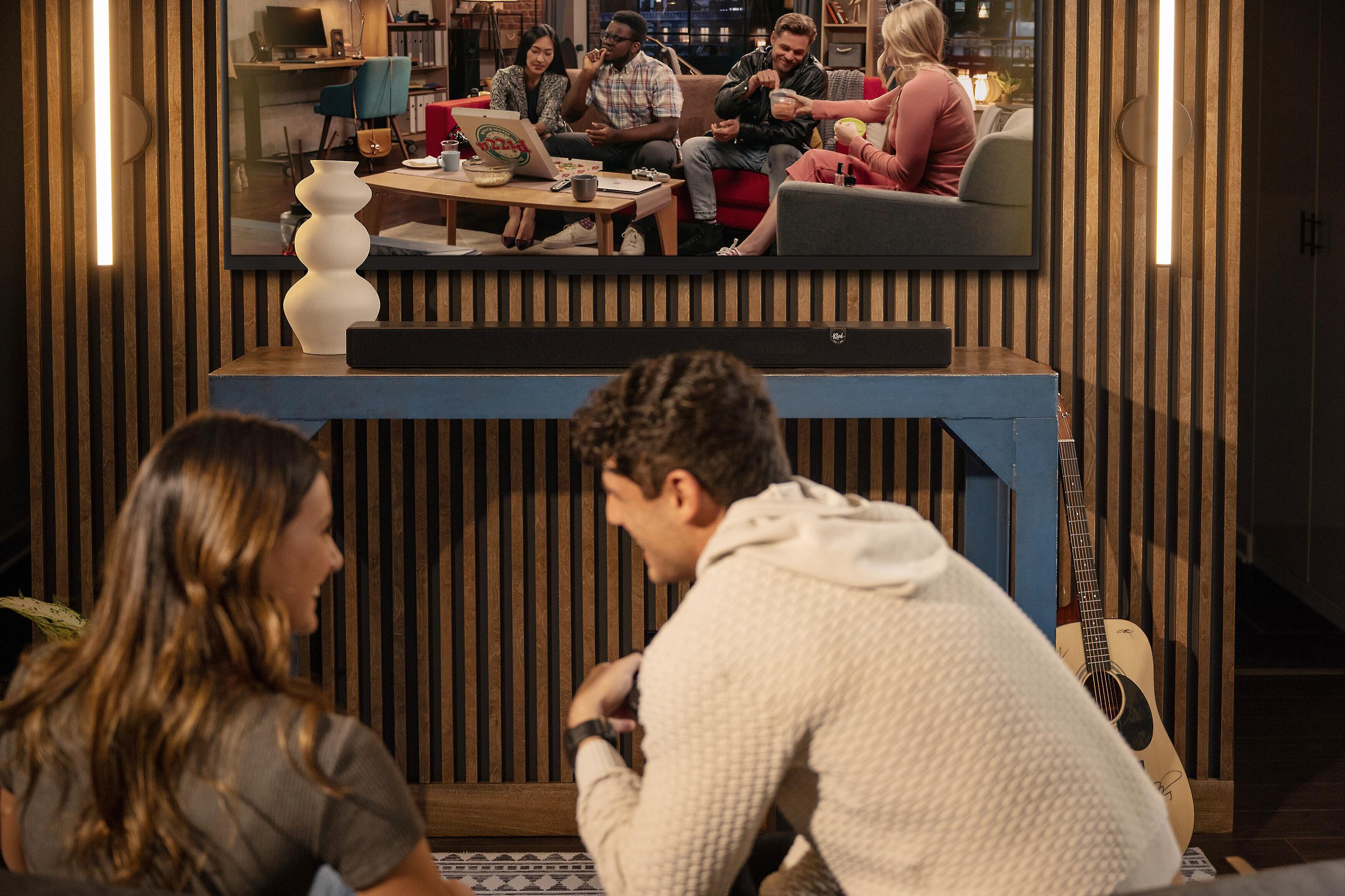
The Klipsch Flexus Core 200 takes a fundamentally different approach. This is a collaboration between Klipsch, known for their signature horn-loaded speakers, and Onkyo, a company with decades of home theater expertise. When you combine Klipsch's acoustic know-how with Onkyo's digital processing, you get something that feels more like a traditional audio company's take on the soundbar format.
The "3.1.2" designation tells the whole story. Like the Amazon model, it has left, center, right, and subwoofer channels. But those two additional numbers represent dedicated upward-firing speakers—actual drivers that point toward your ceiling to create authentic overhead effects. These aren't just regular speakers turned upside down; they're specifically designed 2.25-inch full-range drivers positioned to bounce sound off your ceiling and back down to your listening position.
What impressed me most about the Klipsch Flexus Core 200 is its dedication to dialogue clarity. The center channel uses a horn-loaded tweeter—Klipsch's signature technology that's been refined over decades. Horn loading essentially acts like a megaphone for the speaker, making it more efficient and giving it better directional control. This means dialogue cuts through background music and sound effects more effectively, even at lower volumes.
The soundbar also includes dual 4-inch built-in subwoofers, compared to the single subwoofer setup in the Amazon Fire TV Soundbar Plus. More importantly, these aren't just bigger drivers—they're tuned to work together, providing more controlled and nuanced bass response. The frequency response extends down to 43Hz, which covers the fundamental frequencies of most movie soundtracks without needing an external subwoofer.
Like Amazon's option, the Klipsch Flexus Core 200 is expandable, but within Klipsch's own ecosystem. You can add the Flexus Sub 100 for even deeper bass or the Flexus SURR 100 speakers for rear-channel effects. The system uses Klipsch Transport technology for wireless connections—essentially a proprietary wireless protocol designed for low-latency, high-quality audio transmission between components.
This is probably the most significant difference between these two soundbars, and it's worth understanding what each approach actually delivers in your living room.
The Amazon Fire TV Soundbar Plus creates height effects through virtual processing. When I tested similar systems, the results can be surprisingly effective with the right content. Movies with atmospheric soundtracks—think rain falling or helicopters flying overhead—do create a sense of expanded soundstage. However, the effect is more about width than true height. You'll hear sounds that seem to come from beyond the physical boundaries of the soundbar, but they don't convincingly appear to come from above.
The Klipsch Flexus Core 200, with its physical elevation speakers, delivers more authentic overhead positioning. When a helicopter flies across the screen in "Top Gun: Maverick," you can actually track its movement from behind you, over your head, and off into the distance. The difference is subtle but meaningful—it's the distinction between an impressive audio illusion and genuine three-dimensional sound placement.
However, here's an important caveat: the effectiveness of upward-firing speakers depends heavily on your room. You need a ceiling that's not too high (8-10 feet is ideal), not too low (less than 7 feet creates weird reflections), and reasonably flat. Vaulted ceilings, textured surfaces, or rooms with odd shapes can diminish the effect considerably.
Bass performance reveals another crucial difference between these soundbars. The Amazon Fire TV Soundbar Plus delivers what I'd characterize as "enthusiastic" bass—it's definitely present and adds impact to movie soundtracks, but it can sometimes feel like a single note being played at different volumes rather than the nuanced low-frequency reproduction you get from dedicated subwoofers.
The dual subwoofers in the Klipsch Flexus Core 200 provide more sophisticated bass management. Instead of just adding thump, they handle different aspects of the low-frequency spectrum. This becomes apparent when listening to complex movie soundtracks where you have deep rumbling effects, musical bass lines, and dialogue all happening simultaneously. The Klipsch maintains better separation between these elements, preventing the bass from overwhelming other frequencies.
Dynamic range—the difference between the quietest and loudest sounds—is another area where the price difference shows. The Klipsch Flexus Core 200 handles sudden volume changes more gracefully, maintaining clarity during whispered dialogue and staying composed during explosive action sequences. The Amazon Fire TV Soundbar Plus is more prone to compression effects at higher volumes, where everything starts to sound more similar in level.
If there's one thing that will make or break your soundbar experience, it's dialogue clarity. Both soundbars address this crucial need, but through different approaches.
The Amazon Fire TV Soundbar Plus includes a dedicated center channel and dialogue enhancement features. You can boost dialogue levels independently from other audio elements, and the system does a reasonable job of keeping voices intelligible. However, some users report that deeper voices can sound thin, and the dialogue enhancement sometimes creates an artificial quality to speech.
The Klipsch Flexus Core 200 takes a more sophisticated approach with its horn-loaded center channel tweeter. This isn't just marketing speak—horn loading genuinely improves dialogue reproduction by providing better directional control and higher efficiency. The result is dialogue that sounds more natural and remains clear even without artificial enhancement processing.
In my experience, this difference becomes most apparent during challenging content like Christopher Nolan films, where dialogue is often mixed quite low compared to the music and sound effects. The Klipsch maintains better speech intelligibility without requiring as much manual adjustment.
The day-to-day experience of using these soundbars reveals some practical differences that might influence your decision.
The Amazon Fire TV Soundbar Plus keeps things simple, perhaps too simple. There's no smartphone app, so all adjustments happen through the included remote. While this eliminates the need to download yet another app, it also means cycling through bass and treble settings using up and down buttons—a process that becomes tedious when you're trying to fine-tune the sound for different content types.
The four sound modes (Movie, Music, Sport, and Night) are helpful starting points, but the lack of more granular control can be frustrating. The Night mode compresses audio to avoid disturbing others, while Movie mode emphasizes surround effects. However, you can't see your current settings or make precise adjustments without a lot of button pressing.
The Klipsch Flexus Core 200 includes the Klipsch Connect Plus app, which transforms your smartphone into a comprehensive remote control. You can see all current settings at a glance, adjust EQ curves visually, and save custom presets for different types of content. The app also provides access to features like Dialogue Boost and Night Mode without navigating through menu systems.
This might seem like a minor point, but after living with soundbars that require app control versus those that don't, I've come to appreciate having visual feedback and easy access to settings. It's the difference between fumbling with a remote in a dark room versus quickly adjusting audio from your phone.
Both soundbars are designed to grow with your needs, but they take different paths to get there.
The Amazon Fire TV Soundbar Plus integrates seamlessly with Fire TV devices, allowing single-remote control when paired with compatible streaming sticks or Fire TV smart TVs. This is genuinely convenient if you're already invested in Amazon's ecosystem. The expandability path involves adding Amazon's own wireless subwoofer and surround speakers, creating a complete 5.1 system that's pre-paired and supposedly works out of the box.
However, there's a limitation worth noting: you're locked into Amazon's specific component ecosystem. If you want to upgrade your subwoofer or add different surround speakers later, you'll need to stick with Amazon's offerings or start over with a different system.
The Klipsch Flexus Core 200 offers broader expandability within Klipsch's ecosystem. The Klipsch Transport wireless technology supports adding multiple components, including up to three subwoofers total if you really want to go overboard with bass. More importantly, Klipsch has a long history in the audio industry, so there's greater confidence in long-term component availability and compatibility.
For serious home theater applications, the Klipsch also provides better integration with external components through its subwoofer RCA output. This means you could eventually connect it to a more powerful external subwoofer if the built-in ones aren't sufficient for your room or preferences.
After spending time with both approaches to budget Dolby Atmos, here's how I'd break down the decision:
Choose the Amazon Fire TV Soundbar Plus if you're primarily looking for a significant upgrade from TV speakers without breaking the budget. It's ideal for casual viewing, where dialogue clarity and basic surround effects are your main concerns. The virtual Dolby Atmos processing works well enough for most content, and the expandability means you're not committing to a final configuration immediately.
This soundbar makes the most sense for smaller rooms, apartments where you can't use high volumes anyway, or situations where the primary content is television shows, news, and lighter entertainment rather than blockbuster movies. It's also the clear choice if you're heavily invested in Fire TV devices and want simplified control.
The Klipsch Flexus Core 200 is worth the additional investment if audio quality is a higher priority and you can appreciate the differences it delivers. The physical elevation speakers create genuinely immersive experiences with well-mixed Dolby Atmos content, and the superior dialogue reproduction makes challenging content more enjoyable without constant volume adjustments.
I'd recommend the Klipsch particularly for dedicated home theater spaces, larger rooms where you have more distance from the soundbar, or if you frequently watch action movies, gaming content, or atmospheric films where the enhanced immersion adds real value to the experience.
Both the Amazon Fire TV Soundbar Plus and Klipsch Flexus Core 200 successfully address the fundamental problem of poor TV audio, but they target different priorities and budgets.
The Amazon option proves that you don't need to spend a fortune to get significantly better sound than your TV's built-in speakers. It's a solid, no-frills upgrade that delivers on its basic promises without unnecessary complexity.
The Klipsch represents a more premium approach that justifies its higher cost through better engineering, more sophisticated features, and genuinely superior audio performance. The difference isn't just theoretical—it's audible in daily use, particularly with challenging content.
Your choice ultimately comes down to how much you value those performance improvements and whether your viewing habits, room setup, and budget align with what each soundbar does best. Either way, you'll be getting substantially better audio than what came with your TV, which is the most important upgrade of all.
| Amazon Fire TV Soundbar Plus | Klipsch Flexus Core 200 |
|---|---|
| Channel Configuration - Determines surround sound capability and immersion level | |
| 3.1 channels (expandable to 5.1) | 3.1.2 channels with dedicated height speakers |
| Dolby Atmos Implementation - Critical for overhead sound effects and spatial audio | |
| Virtual processing only (no physical height speakers) | Physical 2.25" elevation drivers for authentic overhead positioning |
| Built-in Subwoofers - Affects bass depth and whether you need external sub | |
| Single built-in subwoofer | Dual 4" built-in subwoofers with 43Hz-20kHz frequency response |
| Total Power Output - Determines maximum volume and dynamic range handling | |
| Not specified (lower power class) | 185W RMS (better headroom for demanding content) |
| Smart Features and App Control - Impacts ease of use and customization options | |
| No app support; remote control only with basic Fire TV integration | Klipsch Connect Plus app with comprehensive EQ and preset control |
| Connectivity Options - Determines compatibility with your existing equipment | |
| HDMI eARC, Optical, USB-A, Bluetooth | HDMI eARC, Optical, USB-C, Bluetooth, RCA subwoofer output |
| Expandability Ecosystem - Important for future upgrades and component matching | |
| Amazon wireless subwoofer and surrounds (limited ecosystem) | Klipsch Flexus system with Sub 100 and SURR 100 options |
| Dialogue Enhancement Technology - Critical for speech clarity in movies and TV | |
| Dedicated center channel with 5-level dialogue boost | Horn-loaded center tweeter with advanced dialogue processing |
| Physical Dimensions - Affects TV compatibility and room placement options | |
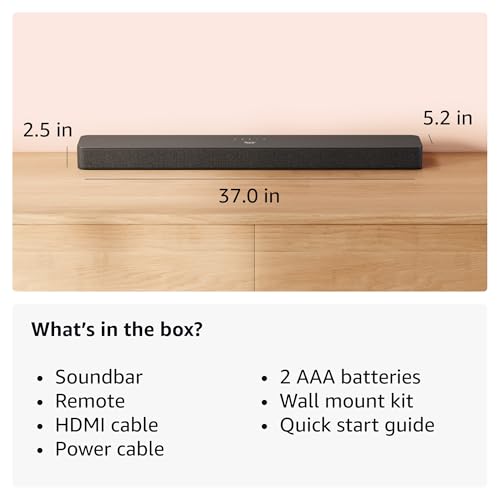
| 6.4 x 94 x 13.2 cm, 4kg (compact for 50-65" TVs) | 7.8 x 111.8 x 12.6 cm (designed for larger TV setups) |
| Sound Customization Options - Determines how well you can tune audio to your preferences | |
| 4 preset modes, basic bass/treble adjustment (1-9 scale) | Multiple EQ presets, Night Mode, custom tuning via app interface |
The Amazon Fire TV Soundbar Plus offers exceptional value for budget-conscious buyers who want a significant upgrade from TV speakers without premium features. The Klipsch Flexus Core 200 justifies its higher cost through superior audio engineering, physical height speakers, and comprehensive app control. Choose Amazon for basic improvement, Klipsch for authentic Dolby Atmos and better sound quality.
The Amazon Fire TV Soundbar Plus supports Dolby Atmos through virtual processing only, meaning it uses software algorithms to simulate overhead effects without physical upward-firing speakers. While this creates a wider soundstage than regular stereo, it cannot produce true overhead positioning like soundbars with dedicated height drivers.
The Amazon Fire TV Soundbar Plus uses 3.1 channels (left, center, right, plus subwoofer), while the Klipsch Flexus Core 200 features 3.1.2 channels, adding two dedicated height speakers. Those extra ".2" channels provide physical upward-firing drivers that bounce sound off your ceiling for authentic Dolby Atmos overhead effects.
The Klipsch Flexus Core 200 delivers superior dialogue clarity through its horn-loaded center channel tweeter, a technology Klipsch has refined for decades. While the Amazon Fire TV Soundbar Plus includes dialogue enhancement features, the Klipsch provides more natural speech reproduction without artificial processing artifacts.
Both soundbars support expansion but through different ecosystems. The Amazon Fire TV Soundbar Plus can add wireless subwoofer and surround speakers for 5.1 setup. The Klipsch Flexus Core 200 expands within Klipsch's ecosystem using Transport wireless technology, supporting additional subwoofers and surround speakers with potentially better long-term component availability.
The Amazon Fire TV Soundbar Plus has no app support and relies entirely on its included remote control for all adjustments. The Klipsch Flexus Core 200 includes the Klipsch Connect Plus app, providing visual EQ controls, presets, and easier access to advanced features, though it also comes with a physical remote.
For dedicated home theater use, the Klipsch Flexus Core 200 provides superior performance with authentic Dolby Atmos height effects, better dynamic range handling, and more sophisticated bass management through dual subwoofers. The Amazon Fire TV Soundbar Plus works well for casual movie watching but lacks the immersive capabilities of physical elevation speakers.
Both soundbars include HDMI eARC, optical input, and Bluetooth connectivity. The Amazon Fire TV Soundbar Plus adds a USB-A port for direct media playback, while the Klipsch Flexus Core 200 features USB-C input and a dedicated RCA subwoofer output for connecting external subwoofers.
The Amazon Fire TV Soundbar Plus includes a single built-in subwoofer that provides adequate bass for its price range but can sometimes overpower dialogue. The Klipsch Flexus Core 200 features dual 4-inch subwoofers with more controlled, nuanced bass response and better integration with midrange frequencies.
The Amazon Fire TV Soundbar Plus offers simpler setup with basic connectivity and straightforward operation, especially when paired with Fire TV devices. The Klipsch Flexus Core 200 provides more setup flexibility through its app but may require more initial configuration to optimize performance for your room and preferences.
Neither soundbar includes built-in streaming capabilities. The Amazon Fire TV Soundbar Plus, despite its name, doesn't contain Fire TV streaming features or Alexa integration. The Klipsch Flexus Core 200 focuses purely on audio performance. Both rely on your TV or external streaming devices for content access.
For small apartments where volume levels are limited, the Amazon Fire TV Soundbar Plus provides excellent value with meaningful improvement over TV speakers and a Night mode for quiet listening. However, if audio quality is important and budget allows, the Klipsch Flexus Core 200 offers better performance even at moderate volume levels.
We've done our best to create useful and informative comparisons to help you decide what product to buy. Our research uses advanced automated methods to create this comparison and perfection is not possible - please contact us for corrections or questions. These are the sites we've researched in the creation of this article: rtings.com - wirelessplace.com - techradar.com - cordbusters.co.uk - whathifi.com - developer.amazon.com - t3.com - dolby.com - youtube.com - youtube.com - youtube.com - dugoutnorthbrook.com - dolby.com - aboutamazon.com - youtube.com - developer.amazon.com - soundandvision.com - avnirvana.com - avsforum.com - cnet.com - klipsch.com - klipsch.com - youtube.com - assets.klipsch.com - klipsch.com - worldwidestereo.com - klipsch.com - crutchfield.com - digitaltrends.com

Privacy Policy
Terms and Conditions - Affiliate Policy
Home Security
© Copyright 2008-2026.
11816 Inwood Rd #1211, Dallas, TX 75244