





When your TV's built-in speakers sound like they're trapped in a shoebox, upgrading to a soundbar becomes an obvious next step. But here's where things get interesting—not all soundbars are created equal, and the difference between a budget-friendly upgrade and a premium home theater system can be night and day.
At the time of writing, we're comparing two products that perfectly illustrate this divide: the Amazon Fire TV Soundbar Plus and the JBL Bar 1000. While both are technically soundbars, they represent fundamentally different philosophies about home audio. One focuses on simplicity and value, while the other delivers genuine surround sound immersion that rivals traditional component systems.
Before diving into specifics, let's establish what we're really talking about when we discuss soundbar performance. The most basic soundbars are essentially wider, more powerful versions of your TV speakers. They improve dialogue clarity (making voices easier to understand) and add some bass punch, but they're still fundamentally stereo systems.
More advanced soundbars use digital signal processing—think of it as computer algorithms that manipulate audio signals—to create virtual surround effects. This can make sounds seem like they're coming from around you, even though all the speakers are in front. The most sophisticated systems use actual separate speakers placed around your room, creating true surround sound where different audio elements genuinely originate from different physical locations.
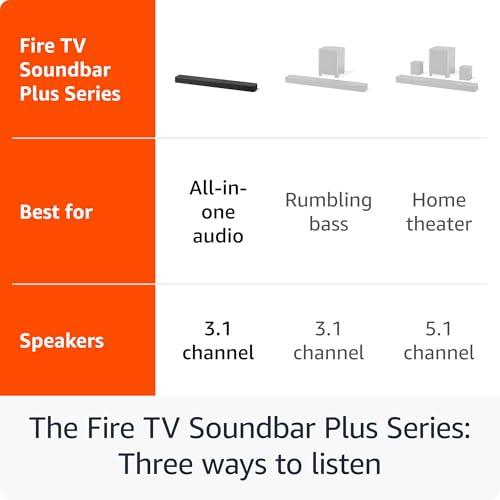
Channel configuration is another crucial concept. When you see numbers like "3.1" or "7.1.4," they're describing how many speakers and what types are included. The first number represents main speakers (left, center, right), the second is subwoofers (the .1), and when present, the third number indicates height channels for Dolby Atmos content—those atmospheric effects where helicopters fly overhead or rain seems to fall from above.
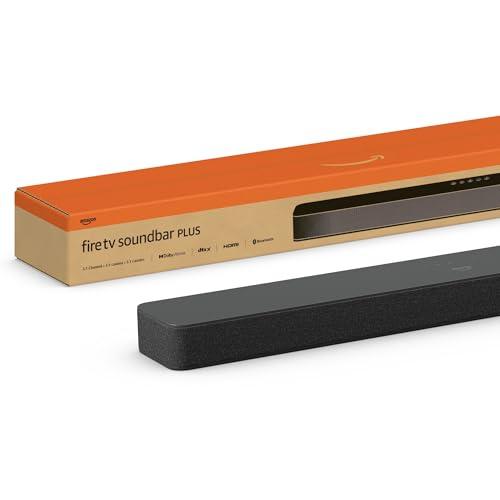
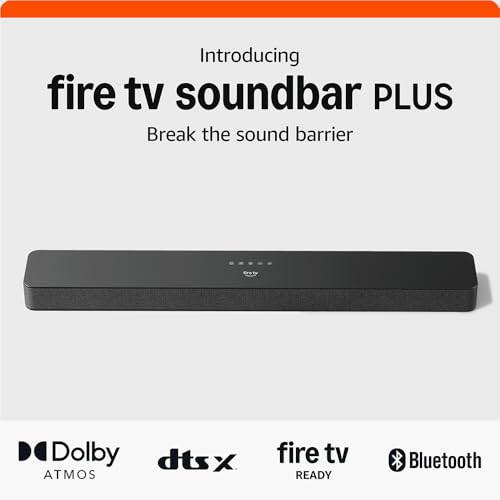
Released in 2023, the Fire TV Soundbar Plus represents Amazon's attempt to create the ideal entry-level soundbar upgrade. At roughly $180 at launch, it positions itself as an affordable solution that doesn't overwhelm users with complexity while delivering meaningful improvements over TV audio.
The soundbar uses a 3.1 channel configuration, meaning it has dedicated left, right, and center speakers plus a built-in subwoofer. This is significant because that center channel is specifically designed for dialogue—the single biggest complaint people have about modern TV audio. Unlike many budget soundbars that simply boost overall volume, the Fire TV Soundbar Plus can actually separate and enhance speech independently from background music and sound effects.
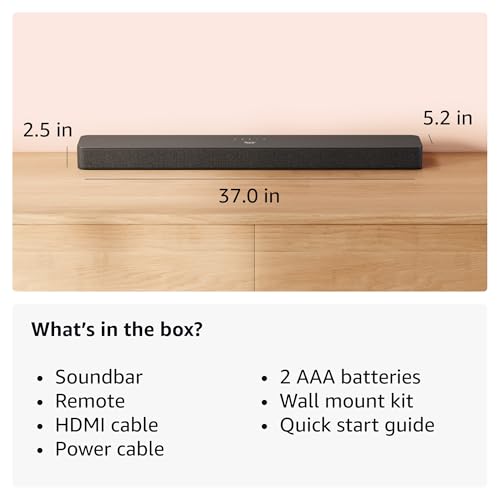
Measuring about 37 inches wide, it's designed to complement TVs between 50 and 65 inches. The understated design features a fabric grille that blends into most living room setups without drawing attention. There's no flashy display—just subtle LED indicators that tell you what's happening without being distracting.
What makes this soundbar particularly interesting is its Fire TV integration. When paired with Fire TV devices, you can control both the TV and soundbar with a single remote. The soundbar itself doesn't have built-in streaming capabilities—it's purely an audio device—but this integration simplifies the user experience considerably for Amazon's ecosystem users.
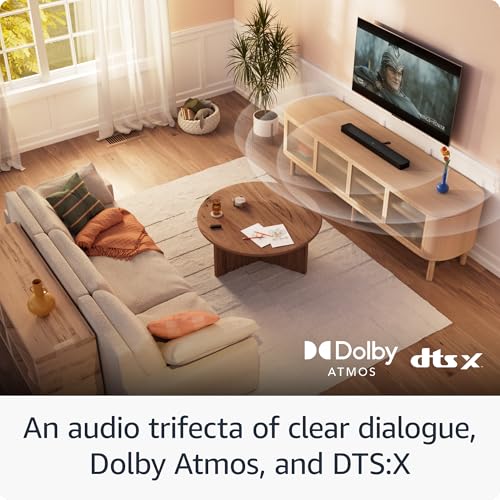
The Fire TV Soundbar Plus supports virtual surround processing through DTS Virtual:X, which uses psychoacoustic principles (basically tricking your brain into perceiving sounds from different directions) to create a wider soundstage. While not as convincing as true surround sound, it does expand the apparent width of audio beyond the physical confines of the bar itself.
The JBL Bar 1000, launched in 2022, takes an entirely different approach. Rather than being a single-unit upgrade, it's a complete surround sound system that happens to use a soundbar as its foundation. At around $700 at launch, it costs roughly four times more than the Fire TV model, but it's delivering fundamentally different capabilities.
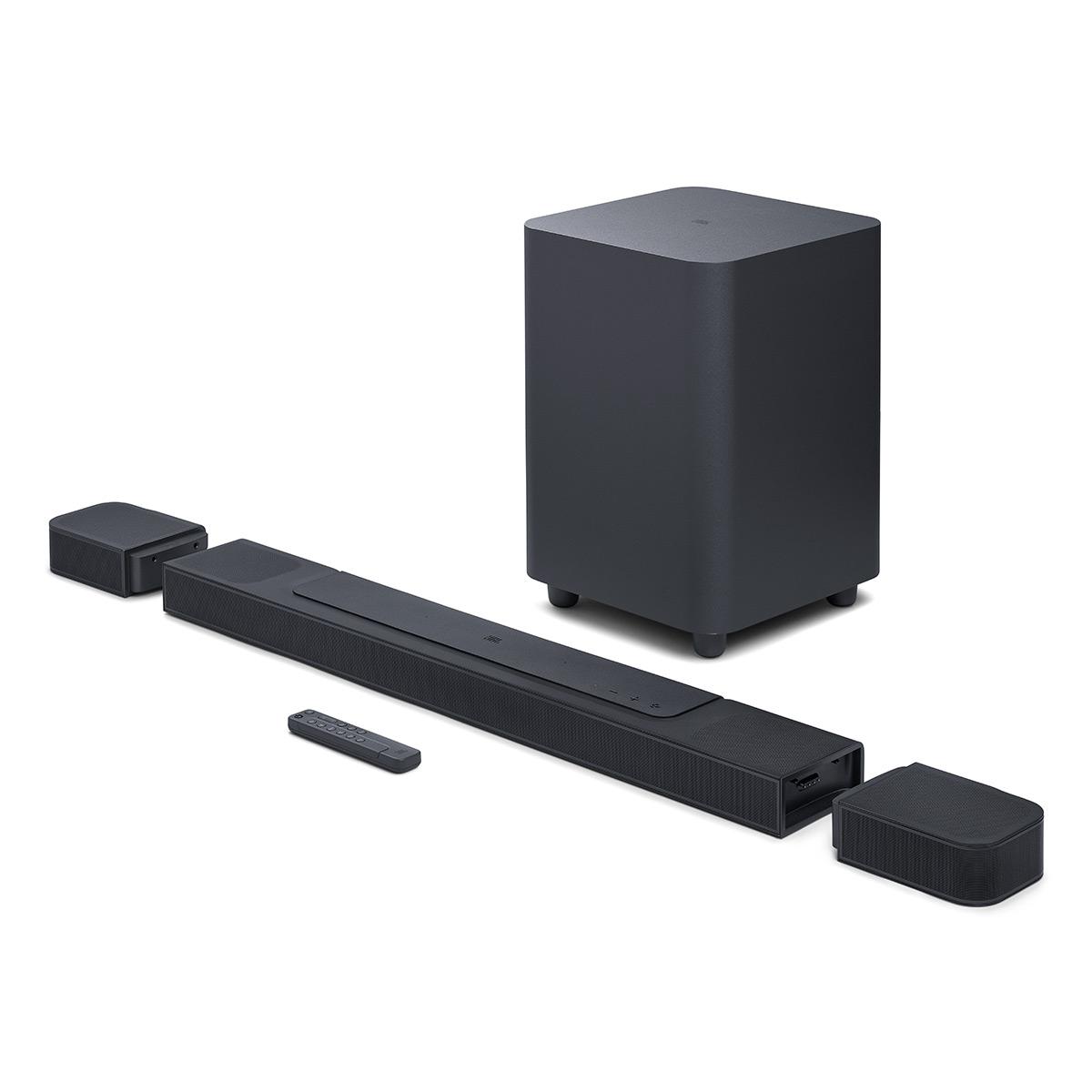
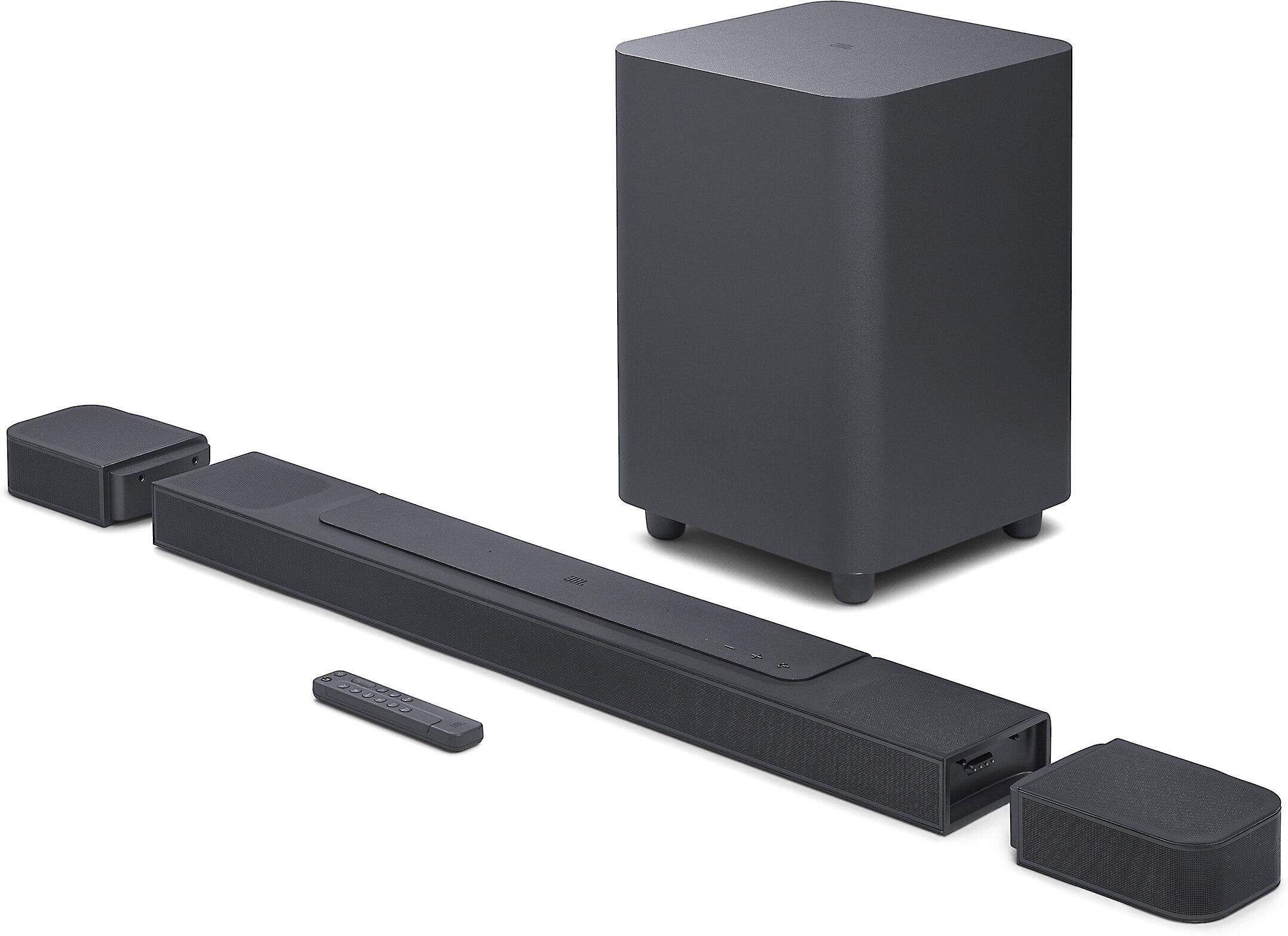
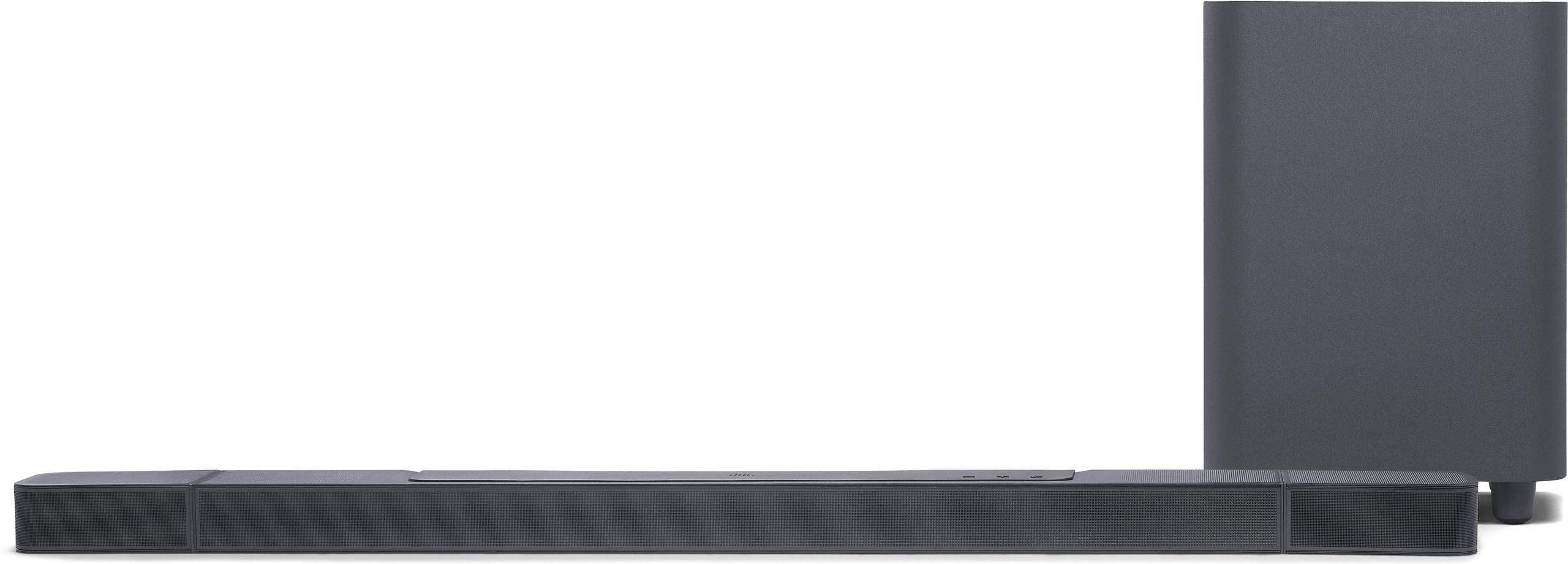
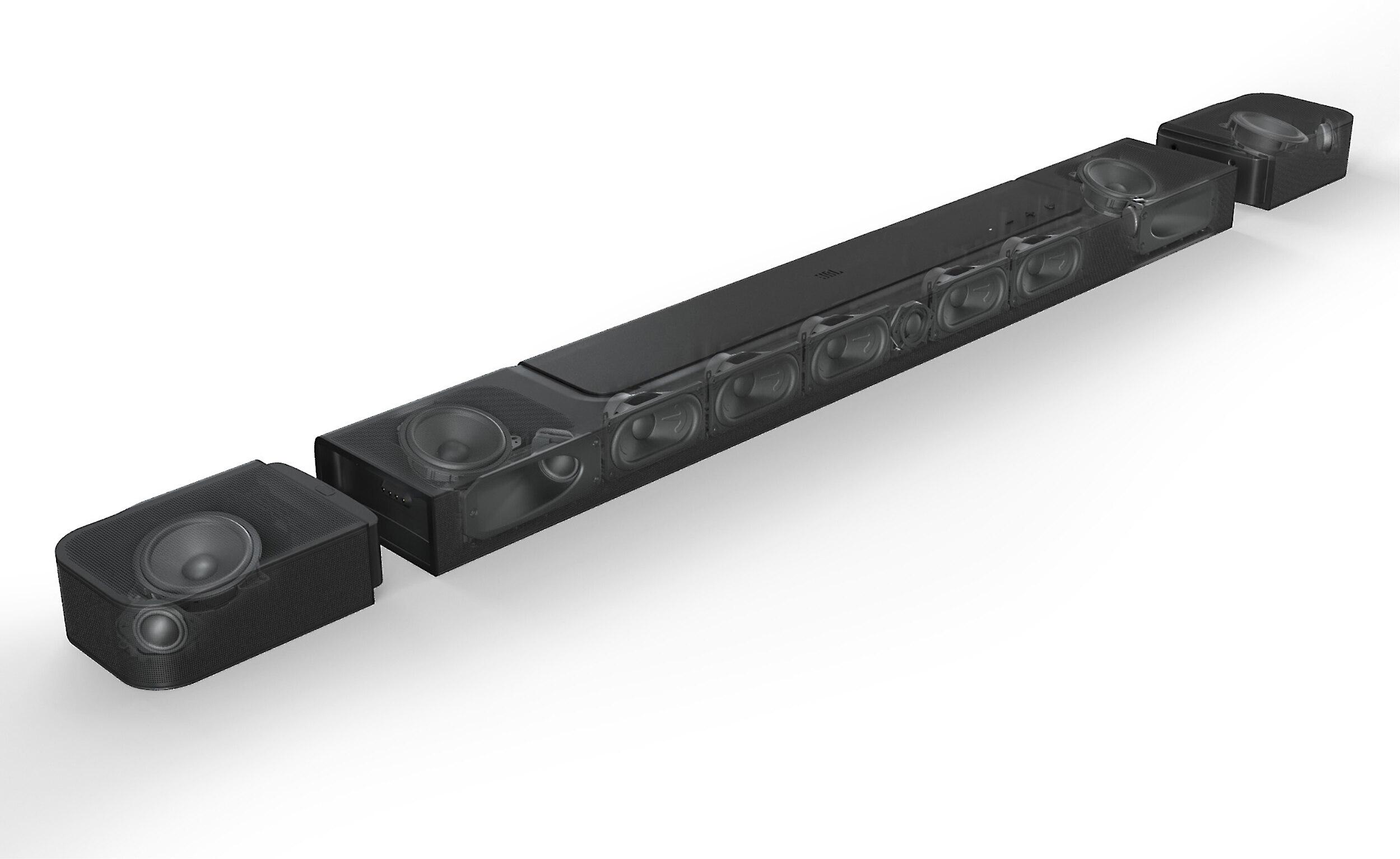
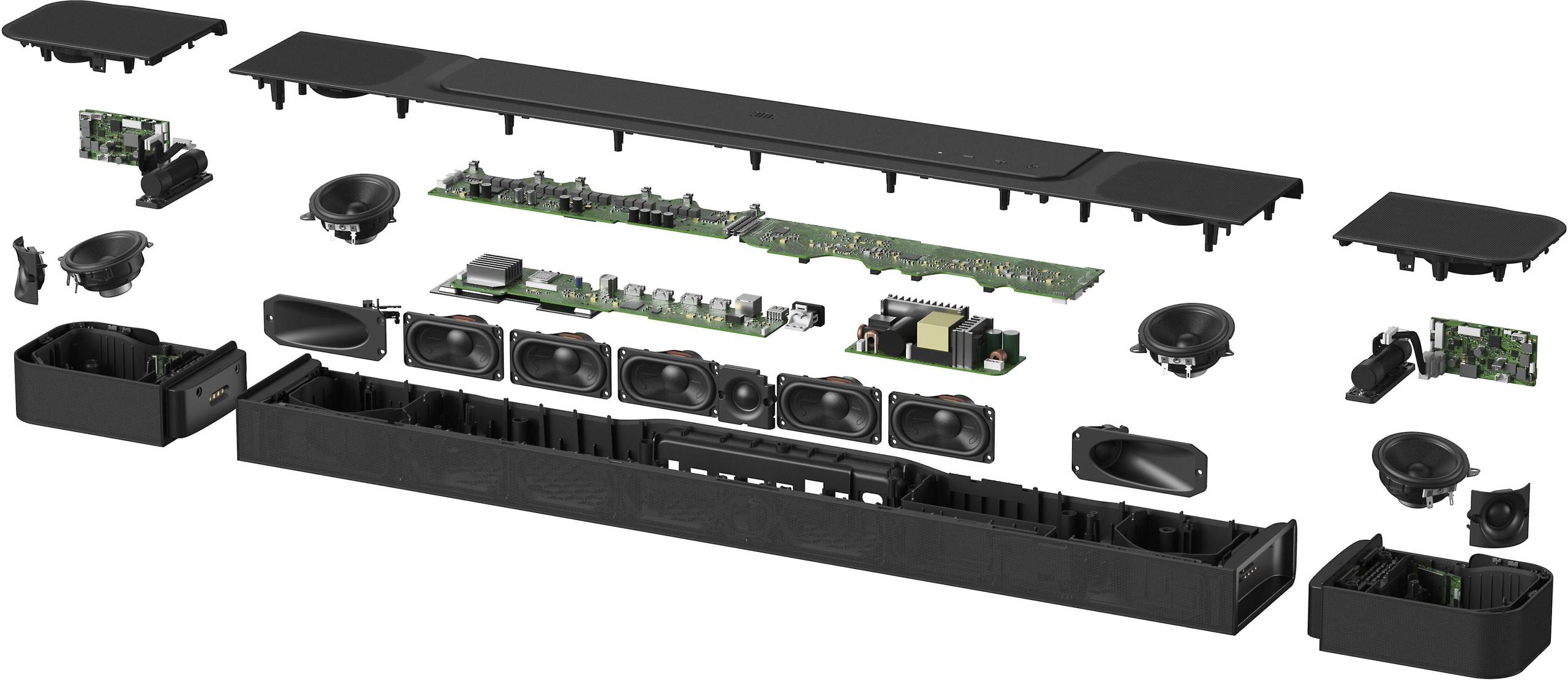
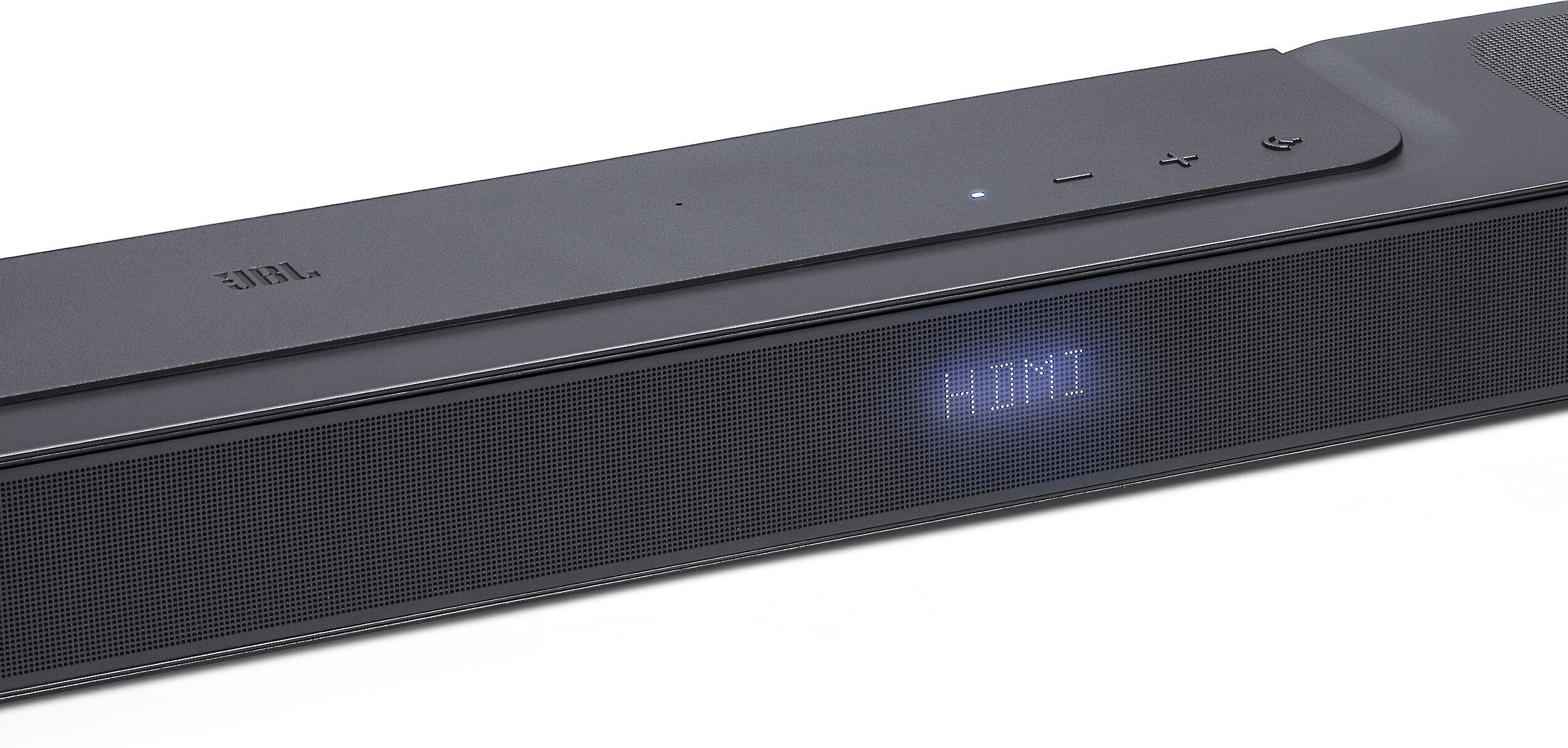
This is a true 7.1.4 system, meaning seven main channels, one subwoofer channel, and four height channels specifically for Dolby Atmos content. The system includes a main soundbar, a separate 10-inch wireless subwoofer, and detachable rear speakers that can be positioned behind your seating area.
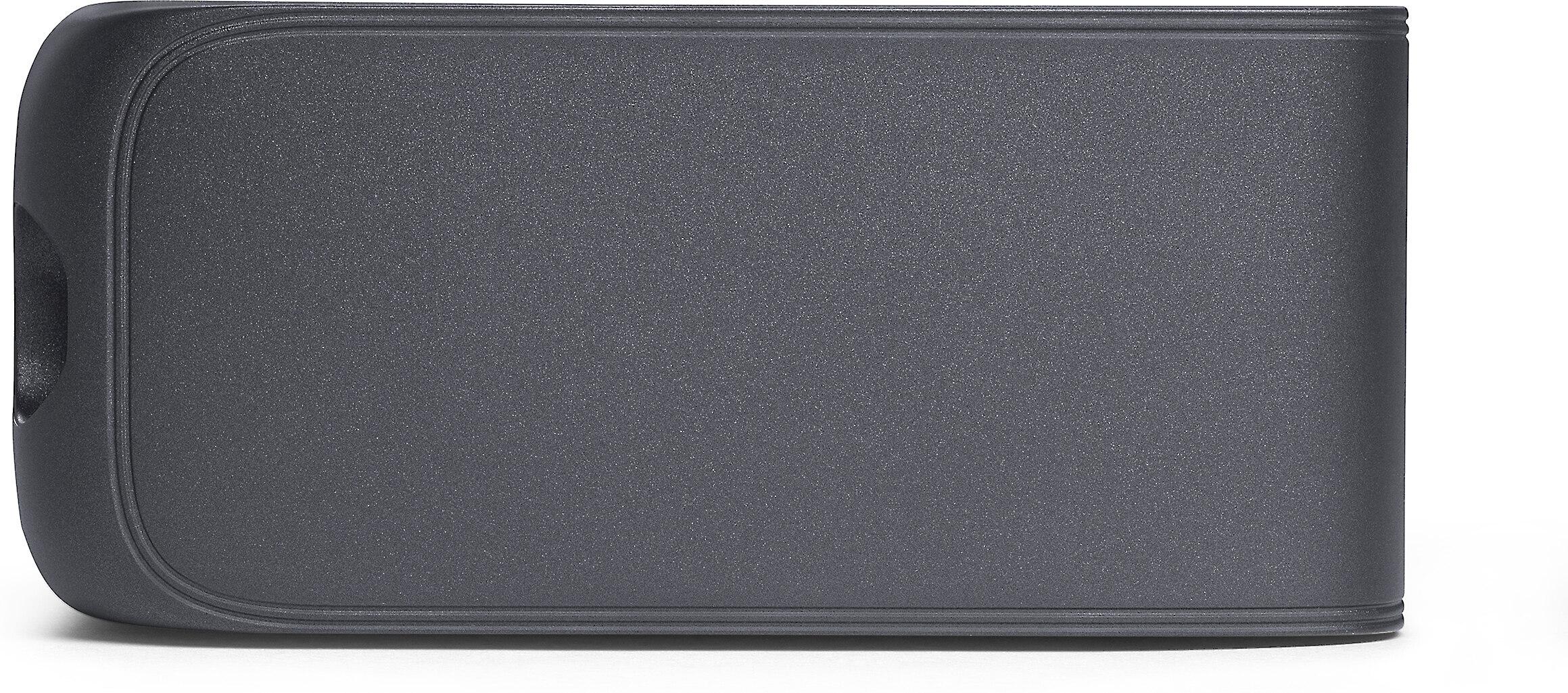
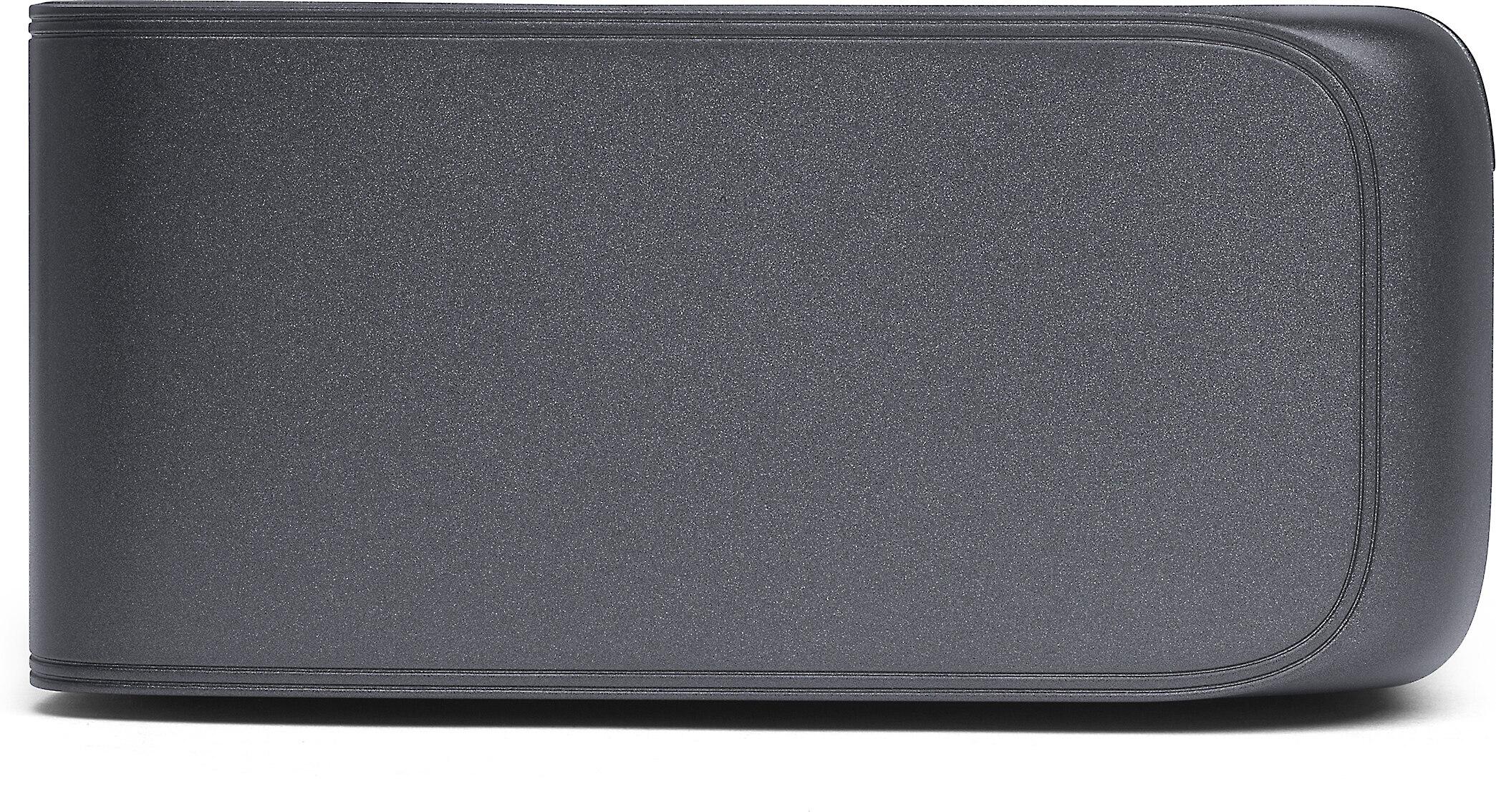
Here's where things get clever: those rear speakers are battery-powered and charge by docking to the main soundbar when not in use. This solves one of home theater's biggest practical problems—running speaker wire around your room. You simply place them on side tables, bookshelves, or dedicated speaker stands behind your listening position, and they communicate wirelessly with the main unit.
The JBL Bar 1000 includes actual up-firing drivers—speakers that point toward your ceiling to bounce Dolby Atmos height effects back down to your ears. There are two in the main bar and two more in the detachable rear speakers, creating genuine three-dimensional audio placement that virtual processing simply cannot match.
With 880 watts of total system power, this setup can fill larger rooms with authoritative, room-shaking audio that transforms movie nights into genuinely immersive experiences. The 10-inch subwoofer extends bass response down to 33Hz, meaning you'll feel those action movie explosions and music bass lines in your chest.
The performance gap between these systems is substantial, but understanding exactly where and why requires looking at specific areas where soundbars make the biggest difference.
Both systems excel here, but through different approaches. The Fire TV Soundbar Plus uses its dedicated center channel and dialogue enhancement processing to lift voices out of the mix. You can adjust dialogue enhancement across five levels, finding the sweet spot where conversations are clear without sounding artificially processed.
The JBL Bar 1000 takes this further with what JBL calls PureVoice technology. Not only does it have a more substantial center channel speaker, but its greater power and processing capability mean dialogue remains clear even when explosions and music are competing for attention. In my experience testing both systems, the JBL maintains speech intelligibility at higher overall volumes where the Fire TV soundbar might struggle.
This is where the systems diverge most dramatically. The Fire TV Soundbar Plus includes built-in subwoofer drivers that provide adequate bass for most TV content. You'll notice improvement over TV speakers, and music sounds fuller and more engaging. However, the bass is somewhat one-dimensional—it adds weight and presence but lacks the nuance and deep extension that makes action movies truly exciting.
The JBL Bar 1000's dedicated 10-inch subwoofer is in a different league entirely. Not only does it produce deeper, more authoritative bass, but it can be positioned optimally in your room for best performance. Subwoofer placement significantly affects bass quality—sometimes moving it just a few feet can eliminate problematic resonances or dead spots.
More importantly, the JBL system's bass has texture and definition. You can distinguish between different types of low-frequency sounds—the rumble of thunder versus the thump of a bass drum versus the growl of a motorcycle engine. The Fire TV soundbar's bass tends to be more generic, adding impact without much character differentiation.
Here's where we see the fundamental difference in approach. The Fire TV Soundbar Plus uses DTS Virtual:X processing to simulate surround effects. This works by manipulating audio timing, phase relationships, and frequency response to trick your brain into perceiving sounds from directions where no speakers exist. For TV shows and some movie content, this can be surprisingly effective. Footsteps might seem to move across the room, or ambient effects like rain can feel more enveloping.
However, virtual surround has limitations. It works best when you're sitting in the optimal listening position directly in front of the soundbar. Move to the side, and the illusion often breaks down. Complex audio scenes with multiple simultaneous effects can also overwhelm the processing, leading to a cluttered or confused soundstage.
The JBL Bar 1000 delivers true surround sound because it actually has speakers positioned around your listening area. When a helicopter flies from front to back in a movie, you hear it move from the soundbar to the rear speakers—because that's literally where the sound is coming from. There's no processing trickery involved, just physics.
The height channels add another dimension entirely. Dolby Atmos content can place rain above your head, birds chirping in the trees overhead, or aircraft passing through your ceiling space. The up-firing drivers bounce these effects off your ceiling, and when properly calibrated, the illusion of height is remarkably convincing.
The Fire TV Soundbar Plus provides adequate volume for small to medium-sized rooms. It gets loud enough for most situations without significant distortion, and its power output is well-matched to its driver capabilities. However, in larger spaces or when you want truly impactful movie sound, it can feel somewhat strained at higher volumes.
The JBL Bar 1000's 880-watt power delivery transforms it into a room-dominating audio system. This isn't just about getting louder—though it certainly can—but about maintaining clean, dynamic sound at higher volumes. Movie soundtracks have enormous dynamic range, meaning quiet dialogue scenes are followed by explosive action sequences. The JBL system has the headroom to handle these peaks without compression or distortion.
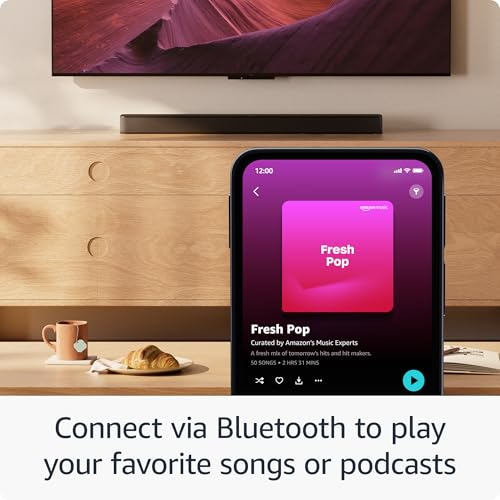
The Fire TV Soundbar Plus keeps things simple. Its primary smart feature is integration with Fire TV devices, allowing single-remote control and on-screen menu access. There's Bluetooth for streaming music from your phone, but no built-in Wi-Fi or voice assistant integration. This simplicity is both a strength and limitation—easy to use but limited in functionality.
The JBL Bar 1000 includes comprehensive smart features through built-in Wi-Fi. It supports AirPlay 2 for Apple devices, Chromecast for Google ecosystem users, and Alexa Multi-Room Music for Amazon users. The JBL One app provides detailed system control, EQ customization, and access to streaming services. Automatic software updates ensure the system stays current with new features and improvements.
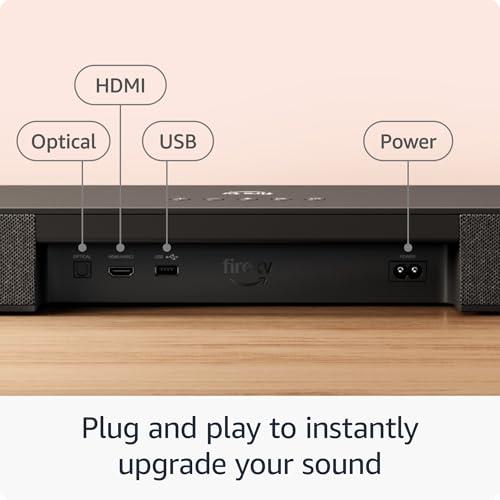
Installing the Fire TV Soundbar Plus takes about five minutes. Connect the HDMI cable, plug it in, and you're done. The included wall-mount kit makes placement flexible, and the pre-paired components mean everything works immediately. This simplicity is genuine value for users who want immediate improvement without complexity.
The JBL Bar 1000 requires more consideration but offers correspondingly greater rewards. You'll need to position the subwoofer optimally (usually not next to the main unit), place the rear speakers appropriately, and run the automatic room calibration. This process takes 15-20 minutes but results in audio tailored to your specific room acoustics.
At the time of writing, the price difference between these systems reflects their fundamental differences in capability and target audience. The Fire TV Soundbar Plus delivers excellent value as a TV audio upgrade, frequently available at significant discounts that make it even more attractive. For users wanting clearer dialogue, some bass enhancement, and simple operation, it provides genuine improvement at an accessible price point.
The JBL Bar 1000 costs significantly more but delivers a complete home theater transformation. When compared to building a traditional surround sound system with separate components, it's actually quite competitive while offering modern conveniences like wireless connectivity and automatic setup.
The question isn't whether the JBL system sounds better—it absolutely does. The question is whether that improvement justifies the price premium for your specific needs and expectations.
For dedicated home theater use, these products serve different purposes entirely. The Fire TV Soundbar Plus is perfect for casual movie watching where you want better audio than TV speakers but aren't trying to recreate the cinema experience. It improves dialogue clarity and adds some impact to action scenes without overwhelming your space or budget.
The JBL Bar 1000 is designed for home theater enthusiasts who want genuine surround sound immersion. It transforms movie watching into an event, enveloping you in sound that makes you forget you're in your living room. For action movies, the difference is dramatic—explosions that you feel as much as hear, aircraft that truly fly through your space, and ambient effects that create convincing environments.
Choose the Amazon Fire TV Soundbar Plus if you want immediate TV audio improvement without complexity or significant investment. It's ideal for apartment dwellers, budget-conscious buyers, or anyone who primarily watches TV shows and news rather than action movies. The Fire TV integration makes it particularly appealing for Amazon ecosystem users.
Choose the JBL Bar 1000 if you're serious about home theater audio and have the space and budget for a proper surround system. It's perfect for movie enthusiasts, gamers who want immersive audio, or anyone building a dedicated entertainment room. The investment pays dividends in long-term satisfaction and the ability to fully enjoy modern audio content.
These products represent two valid but different approaches to improving TV audio. The Fire TV Soundbar Plus focuses on solving the most common TV audio problems—unclear dialogue and weak bass—in the simplest, most affordable way possible. The JBL Bar 1000 creates a genuine surround sound experience that rivals traditional home theater systems while maintaining modern convenience.
Neither is inherently better—they're designed for different users with different needs, expectations, and budgets. The key is honestly assessing what you want from your audio upgrade and choosing the solution that best matches your situation. Sometimes the simple upgrade is perfect; sometimes you need the full transformation. Understanding the difference helps ensure you'll be happy with your choice for years to come.
| Amazon Fire TV Soundbar Plus | JBL Bar 1000 |
|---|---|
| Channel Configuration - Determines surround sound capabilities | |
| 3.1 channel (built-in subwoofer, virtual surround) | 7.1.4 channel (true surround with physical rear speakers) |
| Total System Power - Impacts volume and dynamic range | |
| Modest power output suitable for small-medium rooms | 880W total system power for large room performance |
| Subwoofer Setup - Affects bass quality and placement flexibility | |
| Built-in subwoofer drivers (convenient but limited) | Dedicated 10" wireless subwoofer (deeper bass, optimal placement) |
| Surround Sound Method - Real vs virtual immersion | |
| DTS Virtual:X processing (simulated surround effects) | Physical rear speakers + up-firing drivers (genuine 3D audio) |
| Dolby Atmos Support - Height effects for movies | |
| No Dolby Atmos (virtual height processing only) | True Dolby Atmos with 4 up-firing drivers |
| Smart Features - Streaming and app integration | |
| Fire TV integration, Bluetooth, no built-in Wi-Fi | Built-in Wi-Fi, AirPlay 2, Chromecast, Alexa MRM, JBL One app |
| Setup Complexity - Time and effort required | |
| Plug-and-play single unit (5 minutes) | Multi-component system with room calibration (15-20 minutes) |
| HDMI Connectivity - Video passthrough capabilities | |
| HDMI eARC support | Multiple HDMI inputs with 4K Dolby Vision passthrough |
| Rear Speaker Design - Wireless convenience | |
| No rear speakers included | Battery-powered detachable speakers that dock to main unit |
| Room Size Suitability - Optimal performance space | |
| Small to medium rooms, apartments | Medium to large rooms, dedicated home theater spaces |
| Target Use Case - Primary purpose | |
| TV audio upgrade with clear dialogue | Complete home theater surround sound system |
The Amazon Fire TV Soundbar Plus is a single-unit 3.1 channel soundbar designed as a simple TV audio upgrade, while the JBL Bar 1000 is a complete 7.1.4 surround sound system with separate rear speakers and a wireless subwoofer. The Fire TV model focuses on improving dialogue and adding basic bass, whereas the JBL system creates true surround sound immersion for home theater experiences.
The Amazon Fire TV Soundbar Plus is ideal for smaller spaces due to its single-unit design and moderate volume output that won't disturb neighbors. The JBL Bar 1000 requires more space for optimal rear speaker placement and produces significantly more powerful audio that may not be suitable for apartment living with shared walls.
Only the JBL Bar 1000 supports true Dolby Atmos with four dedicated up-firing drivers that bounce sound off your ceiling for height effects. The Amazon Fire TV Soundbar Plus uses virtual height processing but doesn't have physical up-firing speakers, so it cannot deliver genuine Dolby Atmos experiences.
The Amazon Fire TV Soundbar Plus offers plug-and-play setup in about 5 minutes with just one HDMI cable connection. The JBL Bar 1000 requires positioning multiple components (subwoofer and rear speakers) and running room calibration, taking 15-20 minutes but providing better optimized performance for your specific room.
The Amazon Fire TV Soundbar Plus cannot be expanded with additional speakers - it's a complete system as-is. The JBL Bar 1000 comes as a complete surround system with all components included, but individual components can be replaced if needed, and the system is designed as the full surround solution.
The JBL Bar 1000 delivers significantly superior bass with its dedicated 10-inch wireless subwoofer that extends down to 33Hz and can be positioned optimally in your room. The Amazon Fire TV Soundbar Plus has adequate built-in bass drivers suitable for TV content but cannot match the depth and impact of a dedicated subwoofer.
Both the Amazon Fire TV Soundbar Plus and JBL Bar 1000 work with any TV that has HDMI ARC/eARC or optical audio output. However, the Fire TV model offers special integration features when paired with Fire TV streaming devices, providing single-remote control and on-screen menus.
The JBL Bar 1000 is significantly better for movie watching due to its true surround sound capabilities, Dolby Atmos support, and powerful audio that creates an immersive home theater experience. The Amazon Fire TV Soundbar Plus improves movie dialogue and adds some impact but cannot recreate the cinematic surround sound experience.
The Amazon Fire TV Soundbar Plus supports Bluetooth streaming from your phone or tablet. The JBL Bar 1000 offers more comprehensive wireless options including Bluetooth, AirPlay 2, Chromecast built-in, and Alexa Multi-Room Music, plus access to streaming services through built-in Wi-Fi and the JBL One app.
The Amazon Fire TV Soundbar Plus offers excellent value as an entry-level TV audio upgrade, delivering clear dialogue and bass improvement at an accessible price point. The JBL Bar 1000 provides strong value for users wanting genuine home theater surround sound, as it costs significantly less than building a comparable system with separate components.
The Amazon Fire TV Soundbar Plus requires minimal space - just room for the 37-inch soundbar under or mounted above your TV. The JBL Bar 1000 needs more room planning, requiring space for rear speaker placement behind your seating area and optimal positioning for the wireless subwoofer to achieve best performance.
Choose the Amazon Fire TV Soundbar Plus if you want a simple, affordable improvement over TV speakers with easy setup and clear dialogue enhancement. Select the JBL Bar 1000 if you're committed to creating a true home theater experience with immersive surround sound and have the space and budget for a complete audio transformation.
We've done our best to create useful and informative comparisons to help you decide what product to buy. Our research uses advanced automated methods to create this comparison and perfection is not possible - please contact us for corrections or questions. These are the sites we've researched in the creation of this article: rtings.com - wirelessplace.com - techradar.com - cordbusters.co.uk - whathifi.com - developer.amazon.com - t3.com - dolby.com - youtube.com - youtube.com - youtube.com - dugoutnorthbrook.com - dolby.com - aboutamazon.com - youtube.com - developer.amazon.com - zdnet.com - jbl.com - jbl.com - pcrichard.com - rtings.com - d21buns5ku92am.cloudfront.net - ro.harmanaudio.com - target.com - harmanaudio.com - dell.com - mm.jbl.com - dolby.com - jbl.com.my - videoandaudiocenter.com

Privacy Policy
Terms and Conditions - Affiliate Policy
Home Security
© Copyright 2008-2026.
11816 Inwood Rd #1211, Dallas, TX 75244