

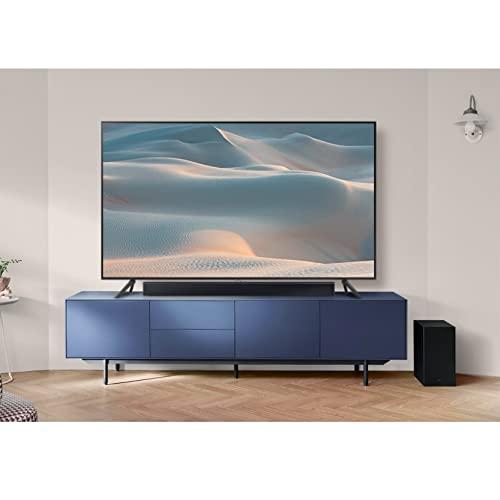
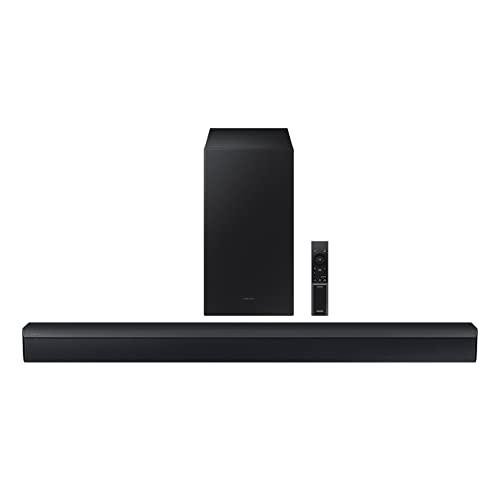


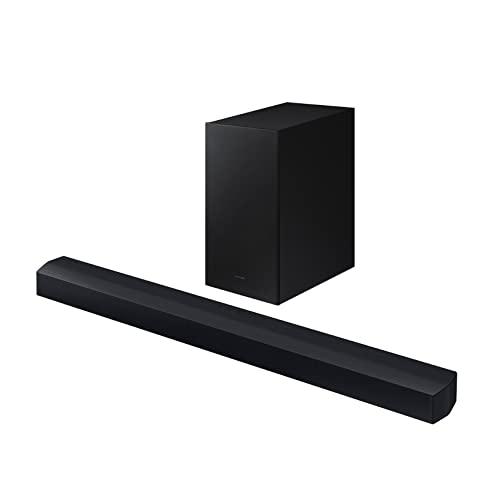
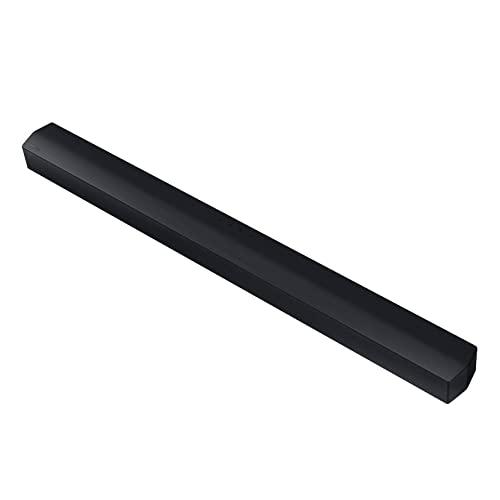
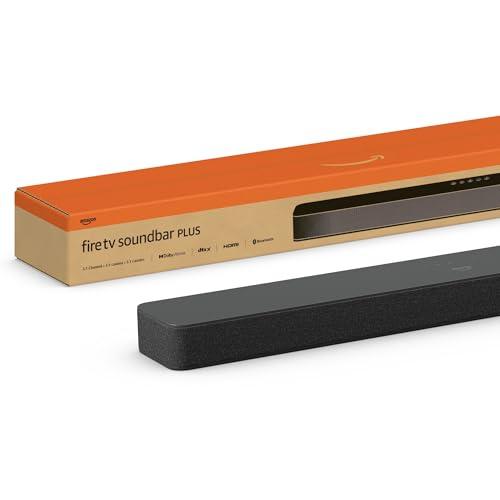

If you've ever tried watching an action movie on your TV's built-in speakers, you know the struggle. Dialogue gets lost in explosions, bass sounds like a tiny rumble, and the whole experience feels flat. Budget soundbars promise to fix these problems without breaking the bank or requiring a degree in home theater engineering. But with so many options around the $150-175 price range at the time of writing, choosing between models like the Samsung HW-C450 and Amazon Fire TV Soundbar Plus can feel overwhelming.
Both soundbars target the same frustrated TV watchers, but they take notably different approaches to solving your audio problems. Understanding these differences—and which matters more for your specific setup—can save you from buyer's remorse and ensure your hard-earned money goes toward the right upgrade.
Budget soundbars occupy a sweet spot in home audio. They're designed for people who want dramatically better sound than TV speakers can provide, but don't want the complexity or cost of a full surround sound system with multiple speakers positioned around the room. Most models in this category, including both the Samsung HW-C450 and Amazon Fire TV Soundbar Plus, focus on three core improvements: making dialogue clearer, adding real bass response, and creating a wider soundstage that makes audio feel less cramped.
The challenge in this price range is that manufacturers must make tough choices about where to spend their limited budget. Some prioritize powerful bass with large subwoofers, others focus on advanced processing chips that simulate surround sound, and still others invest in better connectivity options for modern TVs. These trade-offs create distinct personalities between competing models.
At the time of writing, both soundbars sit in that crucial $150-175 range where many people decide whether to upgrade their TV audio. The Samsung HW-C450, released in 2023, represents Samsung's entry-level approach with gaming-focused features and traditional 2.1-channel design. The Amazon Fire TV Soundbar Plus, also launched in 2023, attempts to bring more premium features like Dolby Atmos support to the budget segment through a 3.1-channel architecture.
The biggest difference between these soundbars lies in their channel configuration—the foundation that determines how they reproduce audio. The Samsung HW-C450 uses a 2.1 setup, meaning two main speakers (left and right) in the soundbar plus one subwoofer for bass. This matches how most music is recorded and creates a traditional stereo image where instruments and effects pan from left to right.
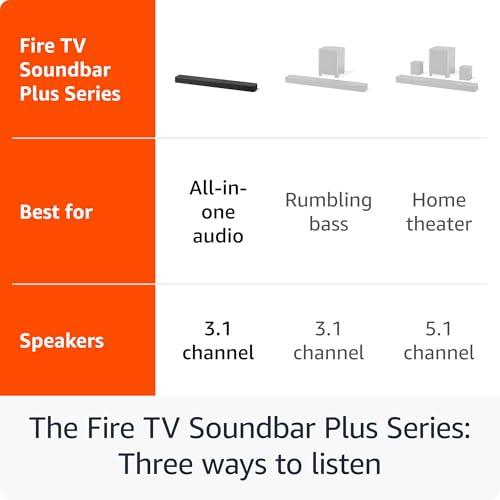
The Amazon Fire TV Soundbar Plus takes a 3.1 approach, adding a dedicated center channel to handle dialogue and vocals. This third channel sits between the left and right speakers and focuses specifically on sounds that should appear to come from the center of the screen—primarily speech. In movies and TV shows, this center channel makes a dramatic difference in dialogue clarity because voices don't have to compete with music and effects that might be panned to the left or right.
Here's why this matters in practice: when you're watching a movie with the Samsung HW-C450, dialogue comes from a "phantom center"—your brain processes the left and right speakers and creates the illusion that voices come from between them. This works reasonably well when you're sitting directly in front of the TV, but if you move to the side or if there's a lot happening in the soundtrack, dialogue can sound less focused and harder to follow.
The Amazon Fire TV Soundbar Plus's dedicated center channel physically places dialogue in the center, making voices sound more anchored and easier to understand regardless of where you're sitting or how complex the sound mix becomes. This advantage becomes particularly noticeable during action scenes where explosions and music might otherwise mask important dialogue.
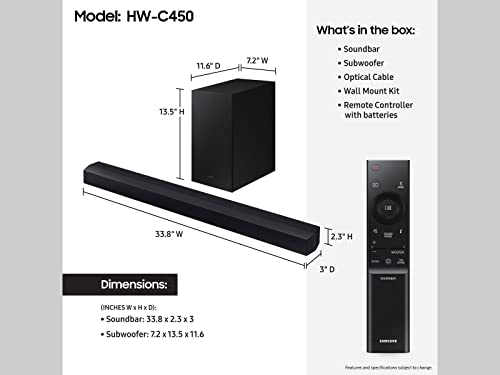
Both soundbars recognize that bass response represents the most obvious upgrade over TV speakers, but they achieve this through completely different methods. The Samsung HW-C450 includes a separate wireless subwoofer—a dedicated speaker box designed specifically to reproduce low frequencies. This approach offers several advantages: the subwoofer can be larger than what fits inside the main soundbar, it can be positioned anywhere in the room for optimal bass response, and it doesn't compete for space with the other speakers.
Samsung's wireless subwoofer measures about 7.2 inches wide and 13.5 inches tall, giving it substantial internal volume to move air and create deep bass. This size allows it to reproduce the kinds of low-frequency effects that make explosions feel impactful and music sound full-bodied. The wireless connection eliminates the need for speaker cables running across your room, though it does require its own power outlet.
The Amazon Fire TV Soundbar Plus takes the integrated approach with a built-in subwoofer. This design prioritizes convenience and space savings—you only need one power outlet and one device to manage. However, physics limits how much bass a subwoofer can produce when it's constrained by the soundbar's dimensions. Built-in subwoofers typically can't move as much air or reach as low in frequency as dedicated external units.
Based on our research into user experiences and professional reviews, the Samsung HW-C450's approach generally produces more impactful bass for action movies and bass-heavy music. Users consistently report feeling the low-end effects during explosions and appreciating the fuller sound when listening to hip-hop, electronic music, or other bass-focused genres. The Amazon Fire TV Soundbar Plus's built-in subwoofer provides noticeable improvement over TV speakers but doesn't match the physical impact of a dedicated subwoofer unit.
However, Amazon offers an interesting compromise: the Fire TV Soundbar Plus can be expanded with optional wireless subwoofer and surround speakers to create a full 5.1-channel system. This means you can start with the convenience of an all-in-one unit and add more powerful bass later if desired.
Both soundbars promise surround sound experiences despite having speakers only in front of you. This might sound impossible, but audio processing has become sophisticated enough to create convincing spatial effects through psychoacoustic tricks—essentially exploiting how your brain processes directional audio cues.
The Samsung HW-C450 uses DTS Virtual:X technology to simulate a surround sound environment. This processing analyzes incoming audio and uses carefully timed delays, phase shifts, and frequency adjustments to make sounds appear to come from beside and behind you. The effect works by bouncing audio off your room's walls and exploiting your ears' sensitivity to tiny timing differences between sounds reaching your left and right ears.
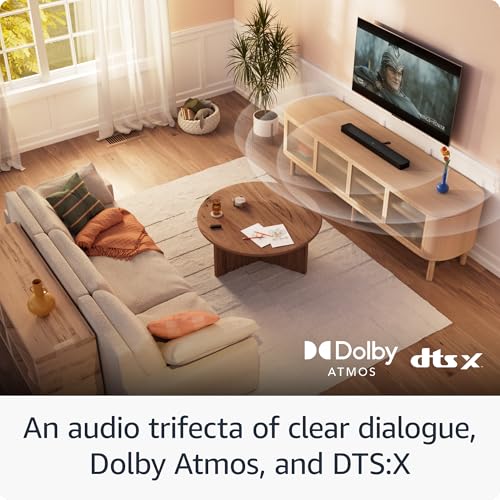
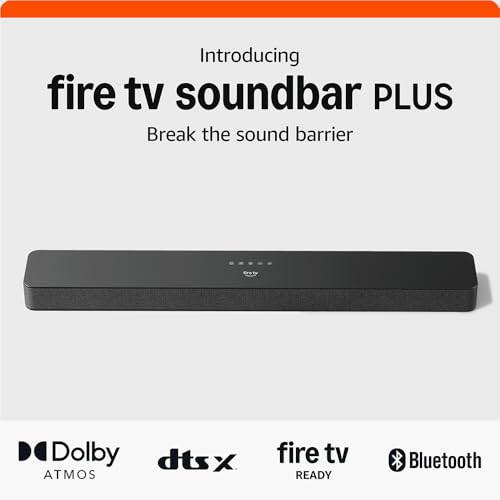
Amazon's approach with the Fire TV Soundbar Plus supports both Dolby Atmos and DTS:X virtual processing. These represent more advanced spatial audio standards that include height information—the ability to make sounds appear above you as well as around you. Dolby Atmos, originally designed for movie theaters with speakers mounted in the ceiling, uses sophisticated algorithms to create the illusion of three-dimensional sound placement.
The reality of virtual surround sound is more nuanced than marketing materials suggest. Neither soundbar includes upward-firing drivers (speakers pointed at the ceiling) that create true height effects, so the three-dimensional experience relies entirely on processing. User reports suggest these features do create a noticeably wider and more enveloping soundstage compared to basic stereo, but the effects vary significantly depending on your room's acoustics, seating position, and the specific content you're watching.
The Amazon Fire TV Soundbar Plus has a theoretical advantage here because its 3.1-channel configuration provides a better foundation for virtual surround processing. Having that center channel means the processing algorithms have more precise control over how they position sounds in the virtual space.
Gaming audio presents unique challenges that differ from movies or music. Gamers need precise directional cues—the ability to hear exactly where footsteps are coming from or which direction gunfire originated. They also benefit from reduced audio latency (the delay between when something happens on screen and when you hear it) and enhanced clarity for communication during online multiplayer games.
The Samsung HW-C450 specifically targets gamers with its Game Mode feature. This mode adjusts the audio processing to emphasize positional cues while reducing background ambient sounds that might mask important audio information. If you're playing a competitive shooter, for example, Game Mode helps footsteps and weapon sounds cut through background music and environmental effects.
Samsung's implementation also includes low-latency processing to minimize the delay between visual and audio cues. This synchronization becomes crucial in fast-paced games where split-second reactions determine success or failure. The wireless subwoofer adds impact to explosion effects and vehicle engines without the muddy bass response that can obscure important mid-range audio cues.
The Amazon Fire TV Soundbar Plus lacks dedicated gaming features, instead offering general-purpose sound modes (Movie, Music, Sports, Night) that optimize for different content types. While these modes can improve gaming audio compared to TV speakers, they don't provide the specific enhancements that serious gamers appreciate.
For casual gaming, this difference might not matter much. But if you spend significant time with competitive multiplayer games, racing simulators, or other titles where audio positioning provides gameplay advantages, the Samsung HW-C450's gaming focus represents a meaningful benefit.
Modern home entertainment systems rely heavily on HDMI connectivity for both video and audio transmission. HDMI ARC (Audio Return Channel) and eARC (enhanced Audio Return Channel) allow TVs to send audio back to soundbars through the same cable used for video, simplifying setup and enabling better audio format support.
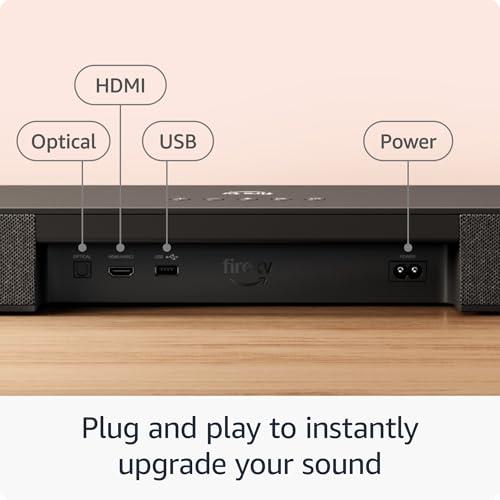
This represents one of the Samsung HW-C450's most significant limitations: it lacks HDMI connectivity entirely. Instead, it relies on optical digital audio input and Bluetooth for connections. Optical connections work reliably for basic audio formats like standard Dolby Digital, but they can't handle the higher-bandwidth audio formats that streaming services and modern gaming consoles increasingly use.
The Amazon Fire TV Soundbar Plus includes HDMI eARC support, representing more future-proof connectivity. This allows it to receive higher-quality audio formats directly from compatible TVs and handles advanced formats like Dolby TrueHD and DTS-HD that optical connections can't support. The eARC connection also enables better TV integration, allowing the TV's remote to control soundbar volume and power without additional programming.
Bluetooth connectivity works similarly on both soundbars for streaming music from phones and tablets, though neither supports advanced Bluetooth codecs like aptX that can improve wireless audio quality.
The connectivity difference becomes important as streaming services continue adopting advanced audio formats. Netflix, Disney+, and other platforms increasingly offer Dolby Atmos content that requires HDMI connectivity to experience fully. While the Samsung HW-C450 can receive these streams through optical connection, it will downgrade them to standard formats, potentially missing some audio enhancements.
Neither soundbar functions as a smart hub in the way some premium models do, but they offer different levels of integration with their respective ecosystems. The Samsung HW-C450 works particularly well with Samsung TVs through features like One Remote Control, which allows Samsung TV remotes to control soundbar power, volume, and basic settings without additional programming.
Samsung's Adaptive Sound Lite feature automatically analyzes incoming audio and adjusts settings based on content type. This helps maintain consistent dialogue levels when switching between quiet TV shows and loud commercials, or when moving between different streaming services with varying audio mastering.
The Amazon Fire TV Soundbar Plus integrates specifically with Fire TV devices, allowing single-remote control when paired with Fire TV streaming sticks or smart TVs. However, despite the "Fire TV" branding, the soundbar itself doesn't include streaming capabilities or Alexa voice control—it functions purely as an audio upgrade.
Both soundbars include automatic features that improve daily usability. Night modes on both models compress loud sounds and boost quiet ones, making late-night viewing more neighbor-friendly. Voice enhancement modes help dialogue cut through background noise, particularly useful for users with hearing difficulties or when watching content with heavy accents.
For dedicated home theater use, both soundbars provide meaningful upgrades over TV speakers, but with different strengths. The Samsung HW-C450's wireless subwoofer delivers more impactful bass for action movies, making explosion effects and dramatic music sound more engaging. The ability to position the subwoofer optimally in the room—away from walls that might cause boomy bass or in corners that enhance low-frequency response—gives it flexibility that built-in subwoofers can't match.
However, the Amazon Fire TV Soundbar Plus's center channel advantage becomes particularly apparent during dialogue-heavy content. Movies with complex sound mixes, foreign films with subtitles, or TV shows with multiple characters speaking simultaneously all benefit from having voices anchored in a dedicated center channel.
The Dolby Atmos support on the Fire TV Soundbar Plus also provides some future-proofing for home theater use. While the virtual height effects won't match dedicated ceiling speakers, they do add some spatial enhancement to compatible content from Netflix, Amazon Prime Video, and other streaming services that offer Atmos mixes.
Both soundbars work best in small to medium-sized rooms. Their power levels and speaker configurations suit spaces up to about 200-300 square feet effectively. In larger rooms, you might find yourself wishing for more volume and bass impact regardless of which model you choose.
After researching professional reviews, user feedback, and technical specifications, clear patterns emerge about who should choose each soundbar.
Choose the Samsung HW-C450 if you prioritize bass impact and gaming features. The wireless subwoofer provides more satisfying low-end response for action movies and bass-heavy music genres. The dedicated gaming mode makes it particularly appealing for console and PC gamers who want competitive advantages through clearer positional audio. The strong Samsung TV integration also makes it attractive for Samsung TV owners who value ecosystem consistency.
The Amazon Fire TV Soundbar Plus makes more sense for users who prioritize dialogue clarity and future-proofing. The dedicated center channel significantly improves speech intelligibility, making it ideal for households that watch a lot of TV shows, news, or movies with complex soundtracks. The HDMI eARC connectivity and Dolby Atmos support provide better compatibility with modern streaming content and TVs.
Budget considerations also play a role. At the time of writing, the Samsung HW-C450 typically costs about $25 less than the Amazon Fire TV Soundbar Plus. For some buyers, that difference might be meaningful, especially when the Samsung model provides more impactful bass for certain content types.
The upgrade path differs between models as well. Samsung allows adding rear speakers to create a surround system, but you're limited to the existing subwoofer. Amazon's expandability to a full 5.1 system with optional subwoofer and rear speakers provides more flexibility for future upgrades.
Ultimately, both soundbars deliver on their core promise of dramatically improved audio over TV speakers. The Samsung HW-C450 excels at providing immediate bass satisfaction and gaming optimization, while the Amazon Fire TV Soundbar Plus offers better dialogue handling and modern connectivity. Your choice should align with your primary use cases and long-term home entertainment plans.
For most users prioritizing movie and TV watching, the Amazon Fire TV Soundbar Plus's dialogue clarity and HDMI connectivity justify its slightly higher price. But if gaming or bass-heavy content represents your main interest, and especially if you own Samsung TVs, the Samsung HW-C450 provides excellent value and immediate audio impact.
| Samsung HW-C450 | Amazon Fire TV Soundbar Plus |
|---|---|
| Channel Configuration - Determines dialogue clarity and soundstage width | |
| 2.1 channels (stereo + subwoofer) | 3.1 channels (left/right/center + subwoofer) |
| Subwoofer Type - Affects bass impact and room placement flexibility | |
| Wireless external subwoofer (more powerful bass, flexible placement) | Built-in subwoofer (space-saving, less impactful bass) |
| Audio Formats - Future-proofing for streaming content | |
| Dolby 2-channel, DTS Virtual:X (basic formats only) | Dolby Atmos, DTS:X (advanced spatial audio support) |
| HDMI Connectivity - Essential for modern TV integration | |
| None (optical and Bluetooth only) | HDMI eARC (simplified setup, better audio quality) |
| Gaming Features - Important for console and PC gamers | |
| Dedicated Game Mode with positional audio enhancement | Standard listening modes only |
| Smart Integration - Ecosystem compatibility | |
| Samsung HW-C450 One Remote Control with Samsung TVs, Adaptive Sound Lite | Amazon Fire TV Soundbar Plus Fire TV device integration, no built-in streaming |
| Sound Customization - User control over audio tuning | |
| Bass Boost, Voice Enhance, Night Mode (preset-based) | Adjustable bass/treble (1-9 scale), dialogue enhancement (1-5 scale) |
| Expandability - Upgrade path for larger systems | |
| Compatible with wireless rear speakers for surround sound | Expandable to full 5.1 with optional subwoofer and rear speakers |
| Physical Design - Space requirements and aesthetics | |
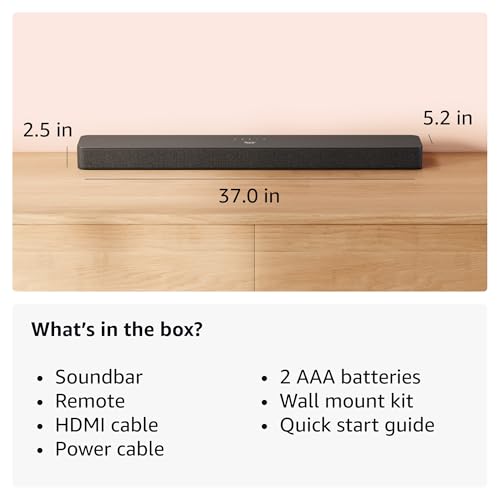
| Separate subwoofer requires additional floor space and power outlet | All-in-one design, wall-mountable with included bracket |
| Best For - Primary use case recommendations | |
| Gaming, bass-heavy content, Samsung HW-C450 TV owners seeking budget upgrade | Dialogue-focused content, modern TV compatibility, future-proofing |
The Amazon Fire TV Soundbar Plus is significantly better for dialogue clarity due to its dedicated center channel. This 3.1 configuration physically separates voices from music and effects, making speech easier to understand during complex scenes. The Samsung HW-C450 relies on phantom center imaging from its 2.1 setup, which can cause dialogue to sound less focused, especially if you're not sitting directly in front of the TV.
Only the Amazon Fire TV Soundbar Plus supports Dolby Atmos through virtual processing, along with DTS:X for enhanced spatial audio. The Samsung HW-C450 is limited to basic Dolby 2-channel and DTS Virtual:X formats. While neither has upward-firing speakers for true height effects, the Fire TV model provides better future-proofing for streaming content that uses advanced audio formats.
The Samsung HW-C450 delivers more impactful bass through its dedicated wireless subwoofer, which can be positioned anywhere in the room for optimal performance. The Amazon Fire TV Soundbar Plus uses a built-in subwoofer that saves space but can't match the low-frequency impact of Samsung's external sub for action movies and bass-heavy music.
The Amazon Fire TV Soundbar Plus includes HDMI eARC connectivity for simplified setup and better audio quality with modern TVs. The Samsung HW-C450 lacks HDMI entirely, relying only on optical and Bluetooth connections. This limits Samsung's compatibility with advanced audio formats and makes TV integration less seamless.
The Samsung HW-C450 is specifically designed with gamers in mind, featuring a dedicated Game Mode that enhances positional audio cues and reduces distracting background noise. The Amazon Fire TV Soundbar Plus offers general listening modes but lacks gaming-specific optimizations, making Samsung the clear choice for serious console or PC gaming.
Both models offer easy setup, but with different approaches. The Samsung HW-C450 requires positioning both the main bar and wireless subwoofer, with automatic pairing between components. The Amazon Fire TV Soundbar Plus simplifies installation with its all-in-one design and includes a wall-mount kit, requiring only one power outlet and cable connection.
Both the Samsung HW-C450 and Amazon Fire TV Soundbar Plus support expansion, but through different approaches. Samsung allows adding wireless rear speakers while keeping the existing subwoofer. Amazon offers a complete 5.1 upgrade path with optional wireless subwoofer and surround speakers, providing more comprehensive expansion possibilities.
The Amazon Fire TV Soundbar Plus offers better modern TV compatibility through HDMI eARC and works seamlessly with Fire TV devices for single-remote control. The Samsung HW-C450 excels specifically with Samsung TVs through One Remote Control integration and Bluetooth connectivity, but has limited compatibility with other TV brands due to its optical-only connection.
Both the Samsung HW-C450 and Amazon Fire TV Soundbar Plus include night mode functionality that compresses loud sounds and boosts quiet dialogue for late-night viewing. Samsung also offers Voice Enhance mode, while Amazon provides more granular control with adjustable dialogue enhancement levels from 1-5 scale.
The Amazon Fire TV Soundbar Plus generally provides better overall value with its additional center channel, HDMI connectivity, and Dolby Atmos support for a modest price premium. However, the Samsung HW-C450 offers excellent value for users who prioritize powerful bass and gaming features, especially Samsung TV owners who benefit from ecosystem integration.
For dedicated home theater setups, the Amazon Fire TV Soundbar Plus excels with superior dialogue clarity and modern audio format support essential for streaming movies. The Samsung HW-C450 provides more impactful bass for action scenes but may struggle with dialogue intelligibility during complex soundtracks. Both work best in small to medium-sized rooms.
The Amazon Fire TV Soundbar Plus is significantly more future-proof with HDMI eARC connectivity and Dolby Atmos support, ensuring compatibility with evolving streaming content and TV technologies. The Samsung HW-C450 is limited by its optical-only connection, which may become restrictive as more content adopts advanced audio formats that require HDMI bandwidth.
We've done our best to create useful and informative comparisons to help you decide what product to buy. Our research uses advanced automated methods to create this comparison and perfection is not possible - please contact us for corrections or questions. These are the sites we've researched in the creation of this article: e-catalog.com - alibaba.com - smart.dhgate.com - greentoe.com - requiremints.com - versus.com - bhphotovideo.com - rtings.com - soundmachine.com.mt - samsung.com - samsung.com - youtube.com - bhphotovideo.com - newegg.com - images.samsung.com - bestbuy.com - samsung.com - youtube.com - jsappliance.com - gadgetsleo.com - youtube.com - saraappliance.com - walmart.com - rtings.com - wirelessplace.com - techradar.com - cordbusters.co.uk - whathifi.com - developer.amazon.com - t3.com - dolby.com - youtube.com - youtube.com - youtube.com - dugoutnorthbrook.com - dolby.com - aboutamazon.com - youtube.com - developer.amazon.com

Privacy Policy
Terms and Conditions - Affiliate Policy
Home Security
© Copyright 2008-2026.
11816 Inwood Rd #1211, Dallas, TX 75244