





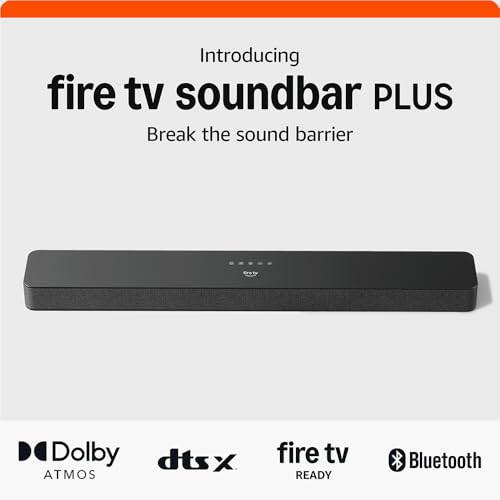
Your TV probably sounds terrible. I know that's blunt, but it's true—modern TVs prioritize thin designs over audio quality, leaving viewers straining to hear dialogue while explosions blow out their speakers. Amazon's Fire TV Soundbar Plus line, released in 2023, attempts to solve this problem with two distinct approaches: a standalone soundbar and a complete 5.1 channel system.
Understanding the differences between these products matters because you're not just buying a speaker—you're investing in how you'll experience entertainment for years to come. Let's dive into what each system offers and help you decide which fits your needs and budget.
Before we compare these specific products, it's worth understanding what separates good soundbars from mediocre ones. The most important performance metrics are dialogue clarity, bass response, soundstage width, and surround sound effectiveness.
Dialogue clarity comes from having a dedicated center channel—a speaker specifically designed to handle human voices. Without this, voices can get lost in the mix, especially during action scenes. Both the standalone Fire TV Soundbar Plus and the 5.1 system feature dedicated center channels, which immediately puts them ahead of basic 2.0 channel soundbars.
Bass response determines whether explosions feel impactful or just sound like loud noise. This is where the two systems diverge significantly. Soundstage width refers to how spread out the audio feels—whether instruments and effects seem to come from specific locations or just from a single point in front of you.
Surround sound effectiveness is about creating the illusion that audio is coming from all around you, not just from the front of the room. True surround sound requires multiple speakers placed around your listening area, while virtual surround uses digital processing to simulate this effect through front-facing speakers.
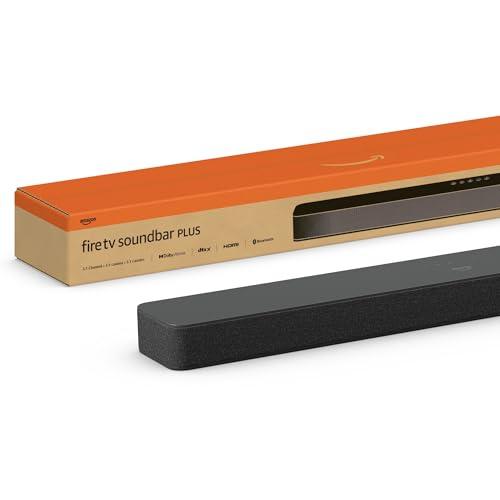
The standalone Amazon Fire TV Soundbar Plus represents Amazon's entry-level approach to home theater audio. At roughly half the cost of the full system (at the time of writing), it targets users who want meaningful improvement over TV speakers without the complexity of multiple components.
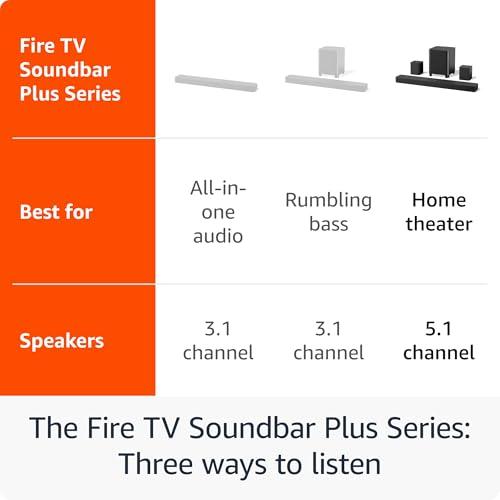
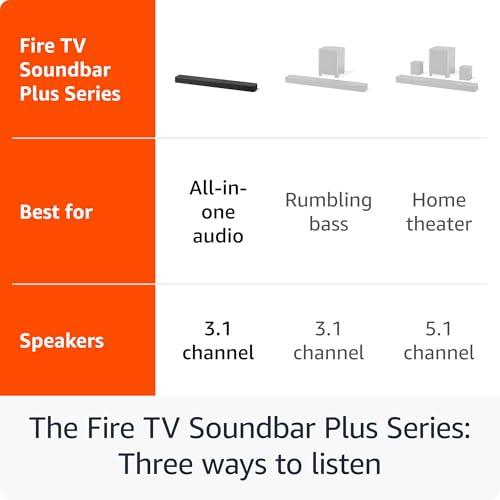
This soundbar uses a 3.1 channel configuration, meaning it has three main channels (left, center, right) plus a dedicated subwoofer channel handled by built-in drivers. The center channel does an excellent job with dialogue clarity—voices sound natural and remain intelligible even when background music or sound effects get loud.
However, our research into user and expert reviews reveals some consistent limitations. The soundstage tends to feel "narrow and close together," meaning audio doesn't extend much beyond the physical width of the soundbar itself. When a helicopter flies from left to right in a movie, you'll hear it move, but the effect feels constrained rather than room-filling.
Bass response from the built-in subwoofer drivers is adequate for most TV content but lacks the depth and impact needed for action movies or music. Explosions sound more like loud thuds than room-shaking events. This isn't necessarily bad—it's simply a physics limitation of trying to produce low frequencies from a single, relatively compact enclosure.
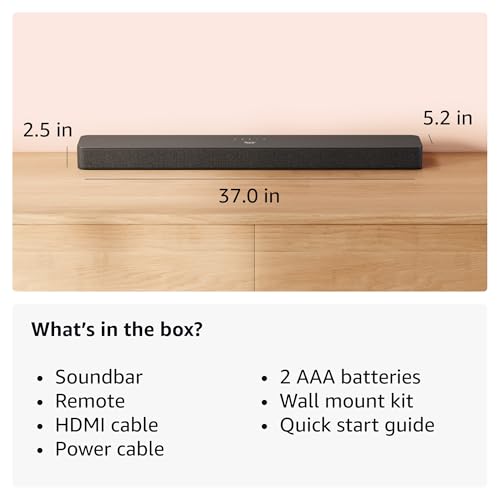
The standalone soundbar works best in bedrooms, small apartments, or secondary viewing areas. Its single-component design makes placement straightforward—you can set it on a TV stand or mount it to the wall without worrying about positioning additional speakers or running power to multiple locations.
In spaces up to about 200 square feet, the standalone unit provides noticeable improvement over TV speakers. Dialogue becomes clearer, and you'll notice more detail in soundtracks and effects. However, in larger living rooms, the sound can feel underwhelming, lacking the presence needed to fill the space effectively.
Both soundbars in this line share the same connectivity options, which is refreshingly comprehensive. The HDMI eARC (enhanced Audio Return Channel) connection is the most important—this single cable can carry high-quality audio from your TV back to the soundbar, and it allows you to control the soundbar volume with your TV remote. For older TVs without eARC, there's an optical digital input that handles most surround sound formats, though with some limitations.
Bluetooth 5.0 connectivity means you can stream music directly from your phone or tablet, and the USB port accepts flash drives loaded with music files. The Fire TV integration is genuine—when connected to a Fire TV device, you can adjust soundbar settings through your TV's menu system rather than fumbling with a separate remote.
What's notably absent are smart features you might expect from an Amazon product. There's no built-in Alexa, no Wi-Fi connectivity, and no streaming capabilities despite the "Fire TV" name. This soundbar is purely an audio device, not a streaming hub.
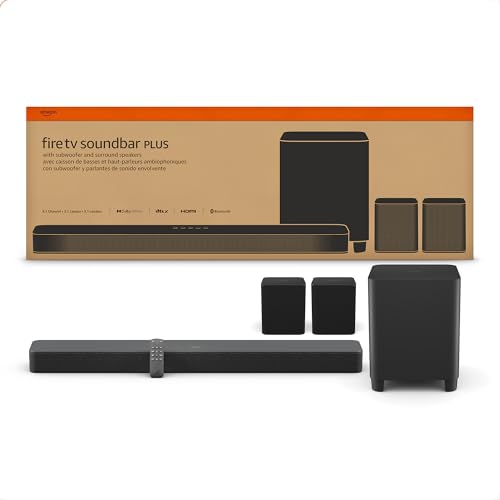
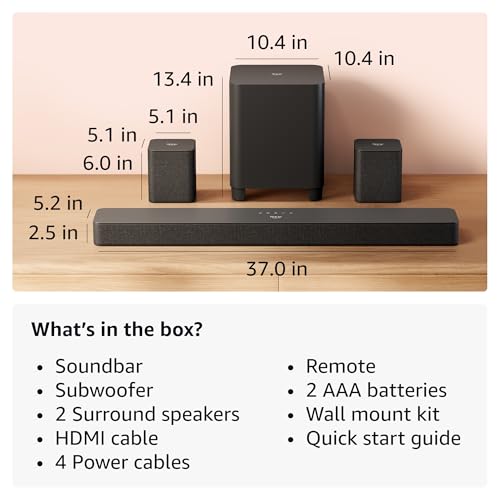
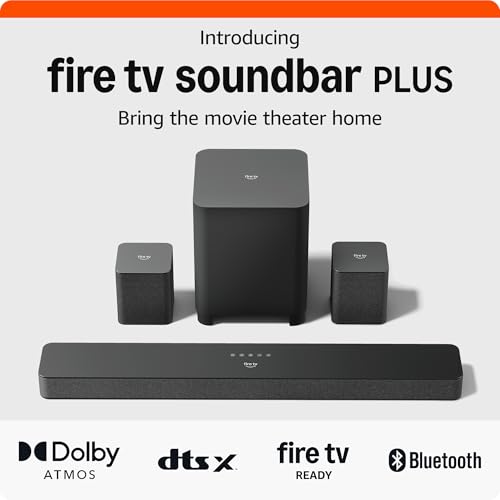
The Amazon Fire TV Soundbar Plus 5.1 Channel System takes a completely different approach. Instead of cramming everything into a single enclosure, it spreads the audio across four separate components: the main soundbar, a wireless subwoofer, and two wireless rear speakers.
The main soundbar in the 5.1 system is identical to the standalone unit, so dialogue clarity remains excellent. The real difference comes from the dedicated subwoofer and rear speakers, which transform the listening experience from enhanced TV audio to genuine home theater sound.
The wireless subwoofer handles all low-frequency content, and the difference is immediately apparent. Explosions have weight and impact, music has depth and richness, and even dialogue benefits from the fuller frequency range. However, reviews consistently note that the subwoofer can be somewhat aggressive—it may overpower dialogue during action scenes if not properly adjusted using the bass controls.
The rear speakers create the most significant improvement in the 5.1 system. Instead of virtual surround processing trying to trick your brain into hearing effects behind you, these physical speakers actually place sounds there. When a character walks from the front to the back of a scene, you hear their footsteps travel around the room. Ambient sounds like rain or crowd noise truly surround you rather than coming from a single direction.
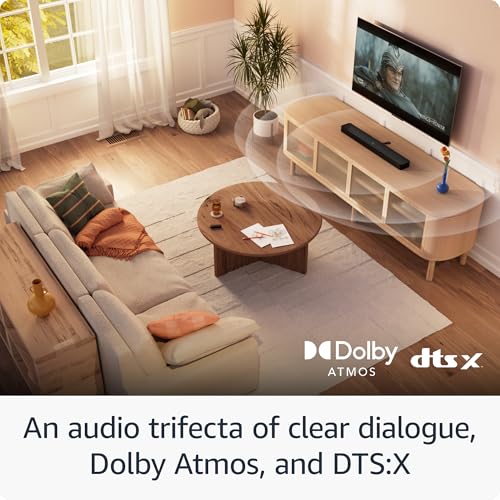
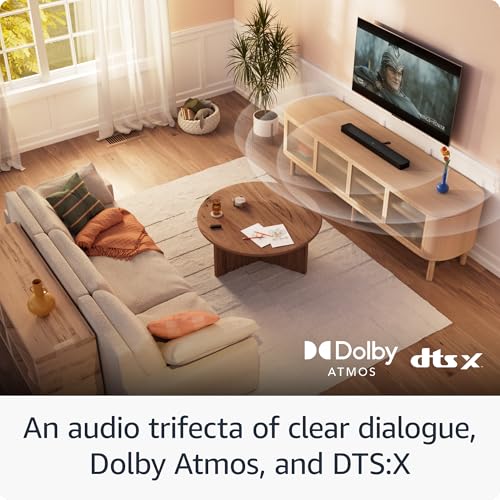
Both systems support Dolby Atmos and DTS:X, but it's crucial to understand what this means in practice. These are object-based audio formats—instead of traditional channel-based mixing, sounds are treated as objects that can be placed anywhere in three-dimensional space.
However, neither soundbar includes upward-firing drivers (speakers that bounce sound off the ceiling to create height effects), so the Atmos and DTS:X processing is entirely virtual. The 5.1 system creates excellent lateral surround effects (sounds moving left to right and front to back), but vertical height effects remain limited.
This is important to understand because true Dolby Atmos requires physical speakers above or angled toward the ceiling. What you get here is very good surround sound that's significantly more immersive than the standalone unit, but it's not the full three-dimensional audio experience that Atmos was designed to deliver.
The 5.1 system is designed for medium to large living rooms—spaces where you can position the rear speakers at least six to eight feet behind your seating area. The wireless design eliminates the need for speaker wire, but you'll still need power outlets near where you place the rear speakers and subwoofer.
Placement matters significantly for optimal performance. The subwoofer is relatively flexible—corner placement often provides the strongest bass response, though you may need to experiment to avoid excessive boom or muddiness. The rear speakers should be positioned slightly behind and to the sides of your main seating area, ideally at ear height or slightly above.
Both systems excel at dialogue reproduction thanks to their dedicated center channels. However, the 5.1 system's additional subwoofer support allows the center channel to focus entirely on midrange frequencies where voices live, rather than trying to handle bass as well. The result is slightly clearer, more natural-sounding dialogue.
The dialogue enhancement feature works well on both systems, with five levels of adjustment available. Level 2 or 3 typically provides noticeable improvement without making voices sound artificially boosted, while higher levels can become obvious and potentially fatiguing during long viewing sessions.
This is where the systems diverge most dramatically. The standalone soundbar's built-in subwoofer provides adequate bass for TV dialogue and light music listening, but it struggles with demanding content. Action movies, electronic music, and gaming audio reveal the limitations quickly.
The 5.1 system's dedicated subwoofer transforms the experience. Bass extends deeper and hits harder, making explosions feel impactful rather than just loud. However, reviews consistently mention that the subwoofer tends toward a "one-note" character—it's powerful but not particularly nuanced. Complex bass lines in music can sound somewhat simplified, though this is less noticeable during movie watching.
The standalone soundbar creates a soundstage that extends slightly beyond its physical width but remains relatively narrow. Stereo effects are present but constrained, with some reviewers noting gaps in the imaging when sounds pan from left to right.
The 5.1 system addresses this limitation partially. While the main soundbar still has the same imaging characteristics, the rear speakers create a much wider overall soundstage that wraps around the listening position. Effects can travel convincingly from front to back, and ambient sounds fill the entire room rather than coming from a single direction.
Both systems handle quiet dialogue and loud effects reasonably well, though neither matches the dynamic range of premium soundbars. The 5.1 system has more headroom for loud passages thanks to its distributed driver array, while the standalone unit can compress slightly when pushed to high volumes.
The Night mode on both systems works effectively for apartment living or late-night viewing, compressing the dynamic range so that quiet dialogue remains audible while preventing loud effects from disturbing others.
At the time of writing, the standalone soundbar costs roughly half what you'd pay for the complete 5.1 system. This price difference reflects not just additional components but a fundamentally different audio experience.
For the standalone unit, you're paying for significant improvement over TV speakers, clear dialogue, and simple setup. It's excellent value if your needs are modest and your room is small. The improvement over built-in TV audio is dramatic enough to justify the cost for most users.
The 5.1 system costs nearly double but delivers more than double the audio experience in the right room. The addition of true surround separation and dedicated subwoofer bass creates an experience that's qualitatively different, not just quantitatively better. However, this premium pricing puts it in competition with other established brands that may offer better audio quality or more features.
Given Amazon's ecosystem of smart home devices, both soundbars are surprisingly feature-light. Neither includes Alexa voice control, built-in streaming services, or Wi-Fi connectivity. The "Fire TV" branding refers only to integration with existing Fire TV devices, not built-in streaming capabilities.
This limitation is both a strength and weakness. On the positive side, it keeps costs down and reduces complexity—these are pure audio devices focused on doing one thing well. On the negative side, competitors often include smart features at similar price points, making Amazon's offerings feel somewhat dated.
The Fire TV integration that is present works well. When connected to a Fire TV Stick or smart TV, you can control both devices with a single remote and access soundbar settings through the TV's menu system. Setup is genuinely plug-and-play, with the 5.1 system's components pre-paired out of the box.
For dedicated home theater use, room acoustics play a crucial role in soundbar performance. Hard surfaces like tile or hardwood floors can make dialogue sound harsh while reducing bass impact. Soft furnishings, carpeting, and wall treatments help both systems perform better by reducing unwanted reflections.
The 5.1 system is more sensitive to room acoustics because of its multiple components. In acoustically treated rooms, the surround effects become more convincing and the overall balance improves. In very reflective spaces, the rear speakers can create confusing reflections that muddy the soundstage.
Seating position matters more with the 5.1 system as well. The sweet spot for optimal surround effects is relatively narrow—typically one or two seats directly in front of the soundbar. Family members seated to the sides may not experience the full surround benefit.
Both systems earn praise for exceptional setup simplicity. The standalone soundbar is literally plug-and-play—connect the power and HDMI cable, and you're done. The 5.1 system is only slightly more complex, with components that pair automatically when powered on.
The included remote is small but functional, providing access to all essential controls including EQ presets (Movie, Music, Sports, Night), individual bass and treble adjustment, and dialogue enhancement. The lack of an alphanumeric display means you rely on LED indicators and voice prompts for feedback, which can be slightly annoying during initial setup.
Wall mounting is straightforward for the soundbar itself, with included hardware and templates. However, the 5.1 system requires additional consideration for component placement and power outlet access.
You have a bedroom, small apartment, or secondary viewing area where the primary goal is improving dialogue clarity and adding some bass presence. If you're upgrading from TV speakers and want something that "just works" without complexity, the standalone unit delivers excellent value.
It's also ideal for users who prioritize simplicity over ultimate performance, those with budget constraints, or anyone who can't accommodate multiple components due to space or aesthetic concerns. The single-component design integrates cleanly into most setups without requiring additional furniture or cable management.
You have a medium to large living room where you regularly watch movies, play games, or listen to music, and you want a genuinely immersive audio experience. The 5.1 system is worth the additional investment if you can properly position all components and your primary content includes surround sound material.
This system makes sense for users building a dedicated home theater setup, those who find themselves constantly adjusting volume during movies (quiet dialogue, loud effects), or anyone who has experienced good surround sound elsewhere and wants to recreate that experience at home.
Based on our research and analysis of expert and user reviews, both systems deliver on their core promises but serve different needs and budgets.
The standalone Amazon Fire TV Soundbar Plus is an excellent entry point into better TV audio. It solves the primary problems with built-in TV speakers—poor dialogue clarity and weak bass—at a reasonable price with minimal complexity. While it won't create a theatrical experience, it provides meaningful improvement for everyday TV watching.
The Amazon Fire TV Soundbar Plus 5.1 Channel System transforms the experience from enhanced TV audio to genuine home theater sound. The addition of rear speakers and a dedicated subwoofer creates immersion that's qualitatively different from the standalone unit. However, this comes at nearly double the cost and requires appropriate room setup to reach its potential.
Neither system will satisfy audiophiles or compete with premium home theater setups costing significantly more. However, both offer solid performance, exceptional ease of setup, and clear improvement over built-in TV audio. Your choice should depend primarily on room size, budget, and how important surround sound immersion is to your entertainment enjoyment.
For most users upgrading from TV speakers, either option will feel like a significant step forward. The key is matching the system's capabilities to your space and expectations rather than simply choosing based on features or price alone.
| Amazon Fire TV Soundbar Plus 5.1 Channel System | Amazon Fire TV Soundbar Plus |
|---|---|
| Audio Configuration - Determines surround sound capability and immersion level | |
| True 5.1 channels with main soundbar + wireless subwoofer + 2 rear speakers | 3.1 channels with built-in subwoofer drivers (all-in-one design) |
| Bass Response - Critical for movie impact and music enjoyment | |
| Dedicated 10.4" wireless subwoofer delivers deep, room-filling bass | Built-in subwoofer drivers provide adequate bass but limited depth |
| Surround Sound Experience - Key differentiator for movie watching | |
| Physical rear speakers create true 360° surround with convincing directional effects | Virtual surround processing only - effects simulated through front speakers |
| Room Coverage - Determines which spaces each system can fill effectively | |
| Medium to large living rooms (300+ sq ft) with proper speaker placement | Small to medium rooms, bedrooms, apartments (up to 200 sq ft) |
| Setup Complexity - Important for users who want plug-and-play simplicity | |
| Four components require strategic placement but pre-paired for easy connection | Single component setup - just connect power and HDMI cable |
| Soundstage Width - Affects how spacious and engaging audio feels | |
| Wide soundstage wraps around listening position with rear channel separation | Narrow soundstage limited to soundbar width with some stereo spread |
| Value Proposition - Performance improvement relative to cost difference | |
| Nearly double the price but transforms experience to true home theater audio | Excellent value for significant TV speaker upgrade at moderate cost |
| Ideal Use Cases - Best scenarios for each system | |
| Primary living room home theater with movie/gaming focus | Bedroom, apartment, or secondary room TV audio enhancement |
The key difference is that the Amazon Fire TV Soundbar Plus is a standalone 3.1-channel soundbar with built-in subwoofer drivers, while the Amazon Fire TV Soundbar Plus 5.1 Channel System includes the main soundbar plus a separate wireless subwoofer and two rear speakers for true surround sound. The 5.1 system creates a much more immersive home theater experience with physical speakers placed around your room.
The Amazon Fire TV Soundbar Plus standalone unit is ideal for small rooms, bedrooms, and apartments. Its single-component design is easier to place, and it provides excellent dialogue clarity and adequate bass for spaces up to 200 square feet without the complexity of multiple speakers.
Yes, if you want true surround sound effects. The Amazon Fire TV Soundbar Plus 5.1 Channel System with physical rear speakers creates genuine directional audio where sounds actually come from behind you. The standalone soundbar only offers virtual surround processing, which simulates these effects but can't match the immersion of real rear channels.
The Amazon Fire TV Soundbar Plus 5.1 Channel System has significantly better bass thanks to its dedicated wireless subwoofer. While the standalone soundbar includes built-in subwoofer drivers that work well for dialogue and light content, the separate subwoofer in the 5.1 system delivers much deeper, more impactful bass for movies and music.
Both are surprisingly easy to set up. The Amazon Fire TV Soundbar Plus is truly plug-and-play with just power and HDMI connections needed. The 5.1 Channel System is only slightly more complex since all components come pre-paired—you just need to position and plug in the subwoofer and rear speakers around your room.
For serious movie watching, the Amazon Fire TV Soundbar Plus 5.1 Channel System is the clear winner. The combination of dedicated subwoofer bass and rear speakers creates a cinematic experience with explosions that feel impactful and sound effects that truly surround you. The standalone unit improves dialogue clarity but lacks the immersion needed for home theater use.
Yes, both the Amazon Fire TV Soundbar Plus and 5.1 Channel System integrate seamlessly with Fire TV devices through HDMI eARC connections. You can control both your TV and soundbar with a single remote and access audio settings through your Fire TV's menu system.
It depends on your needs. The Amazon Fire TV Soundbar Plus offers excellent value for users wanting a significant upgrade from TV speakers at a moderate cost. The 5.1 Channel System costs nearly double but delivers a qualitatively different experience—true surround sound that justifies the higher price for movie enthusiasts and larger rooms.
Neither the Amazon Fire TV Soundbar Plus nor the 5.1 Channel System includes built-in streaming capabilities, Wi-Fi, or Alexa voice control despite the "Fire TV" branding. They're pure audio devices that integrate with existing Fire TV devices but don't function as streaming hubs themselves.
The standalone soundbar works best in rooms up to 200 square feet—bedrooms, small living rooms, or apartments. The 5.1 Channel System is designed for medium to large living rooms of 300+ square feet where you have space to properly position rear speakers at least 6-8 feet behind your seating area.
For casual music listening, both perform adequately, but the Amazon Fire TV Soundbar Plus 5.1 Channel System has an advantage due to its dedicated subwoofer providing fuller bass response. However, neither system is optimized specifically for music—they're designed primarily for TV and movie audio enhancement with dialogue clarity as the top priority.
If you're new to soundbars and have a smaller space or budget constraints, start with the Amazon Fire TV Soundbar Plus standalone unit. It provides dramatic improvement over TV speakers with simple setup. However, if you have a larger living room and regularly watch movies, the 5.1 Channel System delivers a more complete home theater experience that you won't outgrow quickly.
We've done our best to create useful and informative comparisons to help you decide what product to buy. Our research uses advanced automated methods to create this comparison and perfection is not possible - please contact us for corrections or questions. These are the sites we've researched in the creation of this article: rtings.com - cordbusters.co.uk - techradar.com - developer.amazon.com - t3.com - hometechnologyreview.com - youtube.com - hometechnologyreview.com - whathifi.com - hometechnologyreview.com - hometechnologyreview.com - youm.design - hometechnologyreview.com - dolby.com - wirelessplace.com - dolby.com - youtube.com - youtube.com - dugoutnorthbrook.com - dolby.com - aboutamazon.com - youtube.com - developer.amazon.com

Privacy Policy
Terms and Conditions - Affiliate Policy
Home Security
© Copyright 2008-2026.
11816 Inwood Rd #1211, Dallas, TX 75244