





When shopping for a premium 65-inch 4K TV, you'll quickly discover that not all high-end displays are created equal. Two standout models—the Samsung 65" The Frame QLED 2024 and the LG OLED evo C5 2025—represent completely different philosophies about what a premium television should do.
The Samsung Frame treats your TV as furniture, transforming into a digital art display when you're not watching. The LG C5 focuses purely on delivering the best possible picture quality and gaming performance. Understanding these fundamental differences is crucial for making the right choice for your home.
Before diving into specifics, it helps to understand the core display technologies at play. QLED (Quantum Dot Light Emitting Diode) and OLED (Organic Light Emitting Diode) represent fundamentally different approaches to creating images on your screen.
The Samsung Frame uses QLED technology, which places a layer of quantum dots—microscopic particles that emit specific colors when hit by light—in front of an LED backlight. Think of it like a sophisticated filter that improves color accuracy and brightness. However, the Frame uses an edge-lit design, meaning LEDs only illuminate from the sides rather than directly behind the screen, which limits contrast performance.
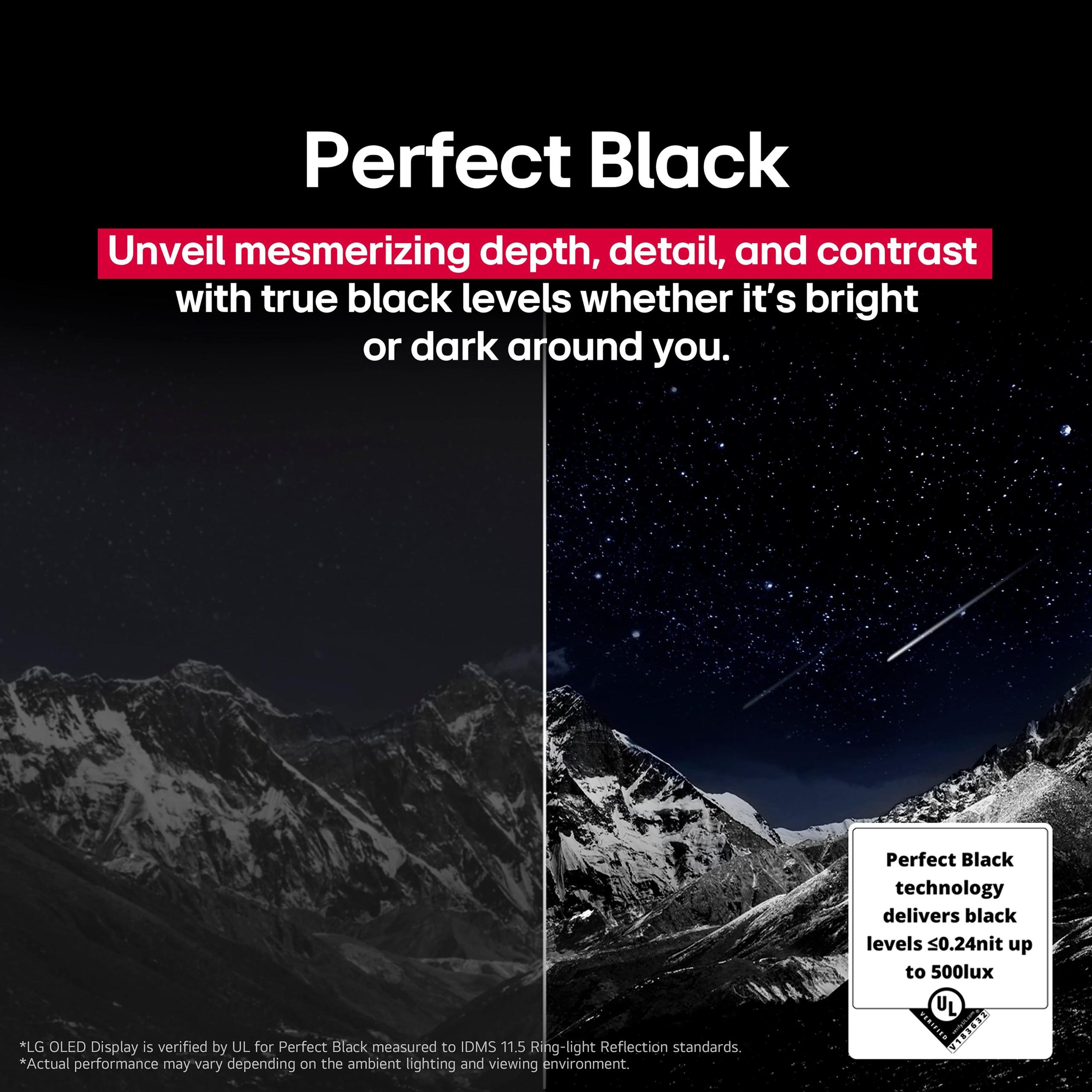
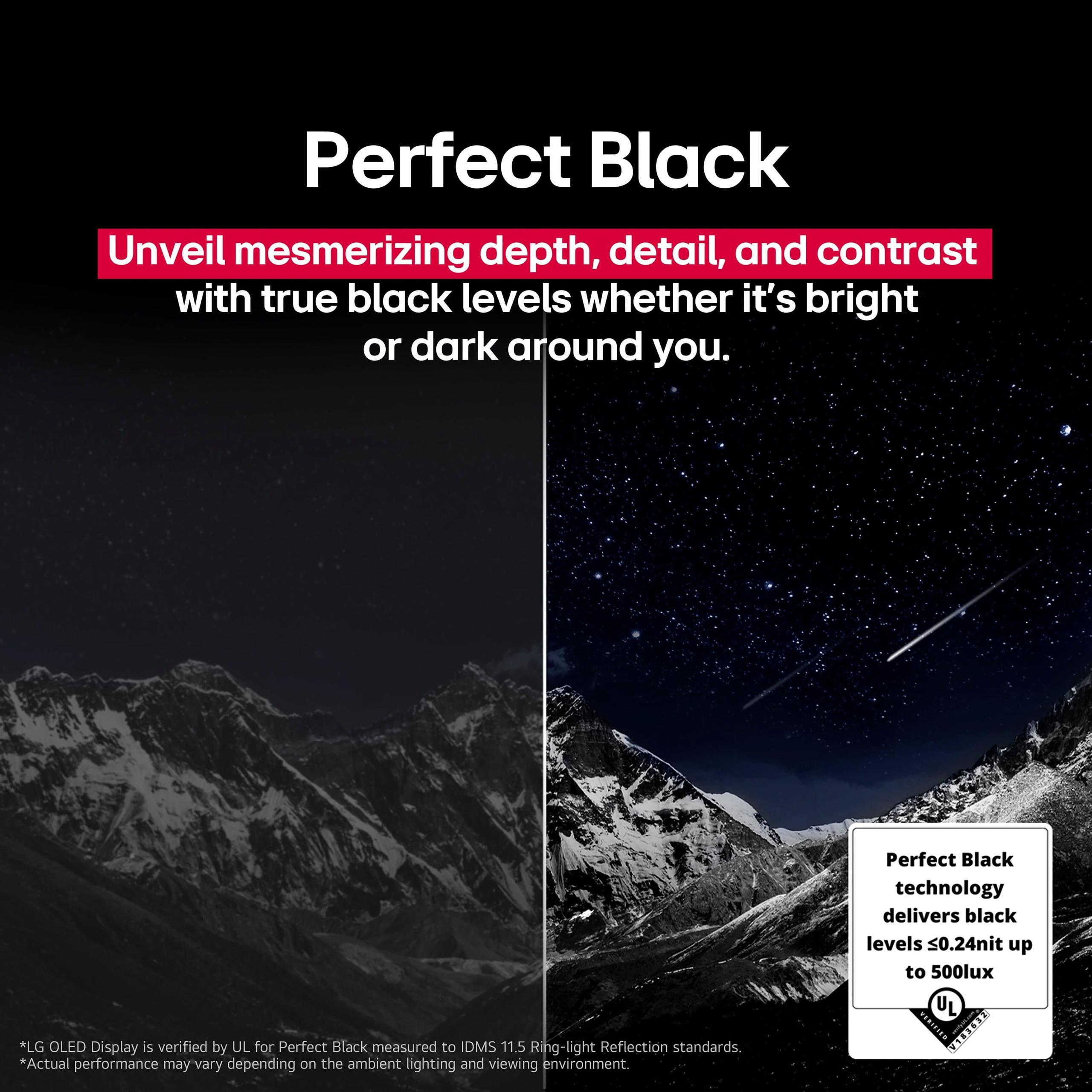
The LG C5 employs OLED technology, where each pixel generates its own light. When you need black, those pixels simply turn off completely. This creates what's called "perfect black" and infinite contrast ratio—technical terms that translate to incredibly realistic images, especially in dark scenes.
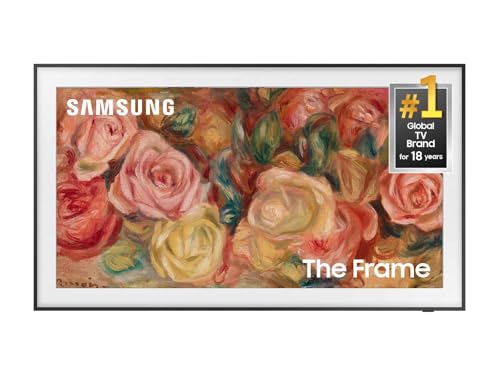
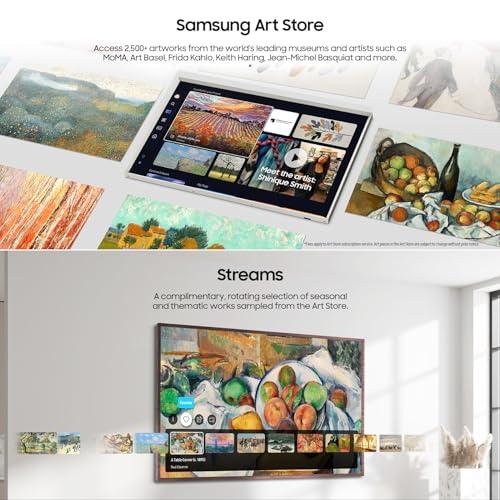
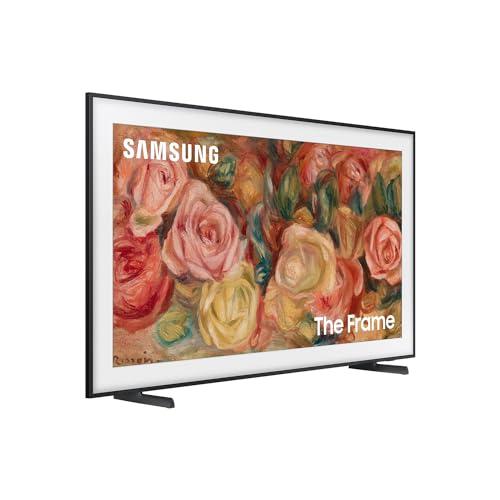
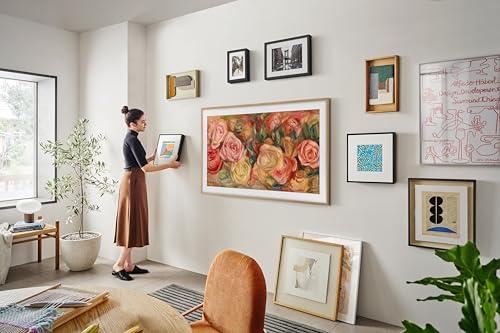
Released in 2024, the Samsung Frame continues Samsung's mission to make TVs that don't look like TVs. The most striking feature is Art Mode, which transforms your screen into a digital art gallery when you're not actively watching content. The TV uses a motion sensor to detect when someone enters the room and automatically displays artwork, creating the illusion of a framed painting on your wall.
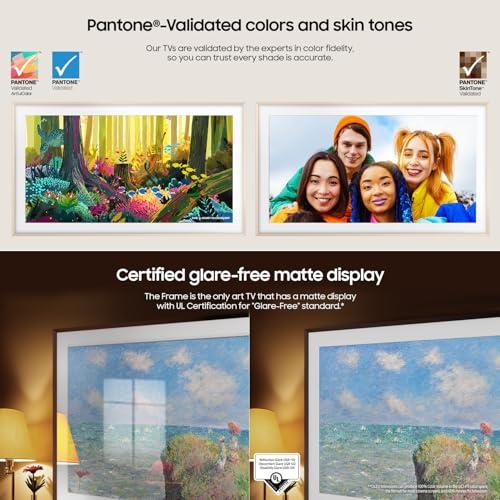
What makes this particularly convincing is the matte anti-reflective display coating. Traditional TVs reflect light like mirrors, but the Frame's matte finish scatters ambient light, reducing glare and making displayed art look more like an actual canvas. Samsung has even achieved Pantone art certification for color accuracy—a first in the TV industry.
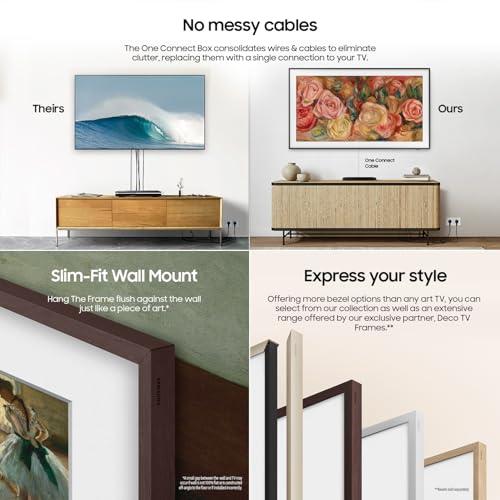
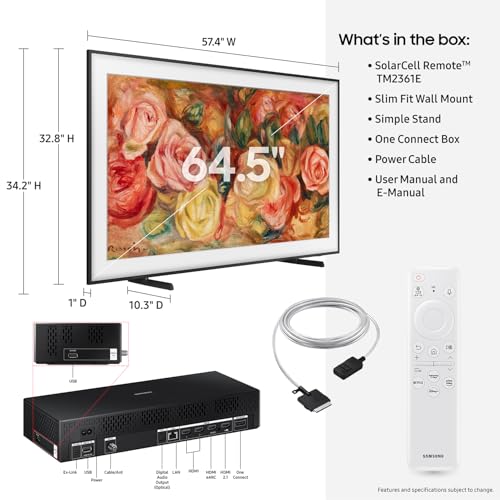
The customization options extend beyond the screen itself. Samsung offers magnetic bezels in various colors and materials that snap onto the TV's edges, allowing you to match your decor. The included Slim-Fit Wall Mount sits flush against the wall, and the One Connect Box centralizes all cable connections to maintain the clean aesthetic.
However, these lifestyle features come with trade-offs in core TV performance. The edge-lit QLED panel lacks local dimming zones, which are small sections of the backlight that can dim independently to improve contrast. Without this technology, dark movie scenes appear grayish rather than truly black, and bright objects in dark scenes can cause unwanted glow around their edges.
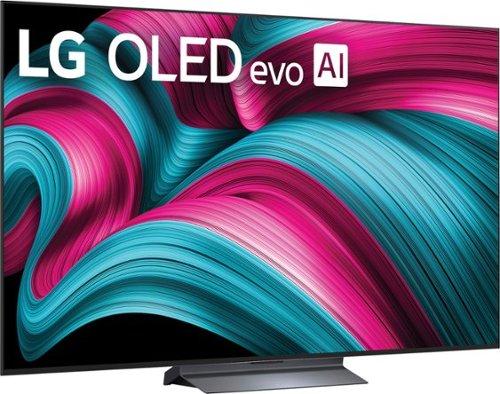
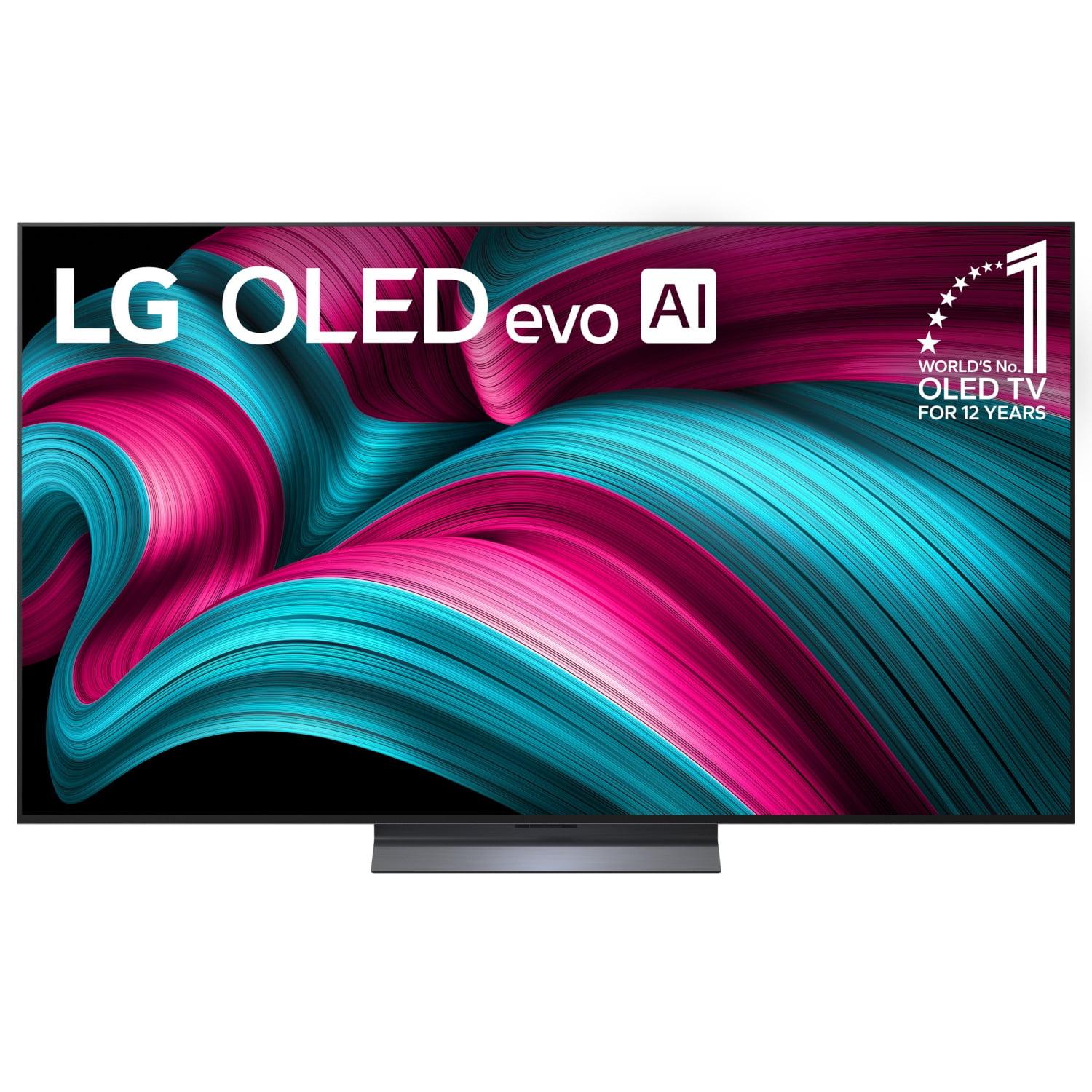
The LG C5, released in 2025, takes the opposite approach—every engineering decision prioritizes picture quality and performance. As LG's midrange OLED offering, it inherits most of the premium display technology from their flagship models while maintaining a more accessible price point.
The self-lit OLED pixels create perfect blacks that edge-lit QLED simply cannot match. When you're watching a space scene in a movie, stars appear to float in genuinely black space rather than dark gray. This infinite contrast ratio makes colors appear more vibrant and realistic, since they're not competing with unwanted background glow.
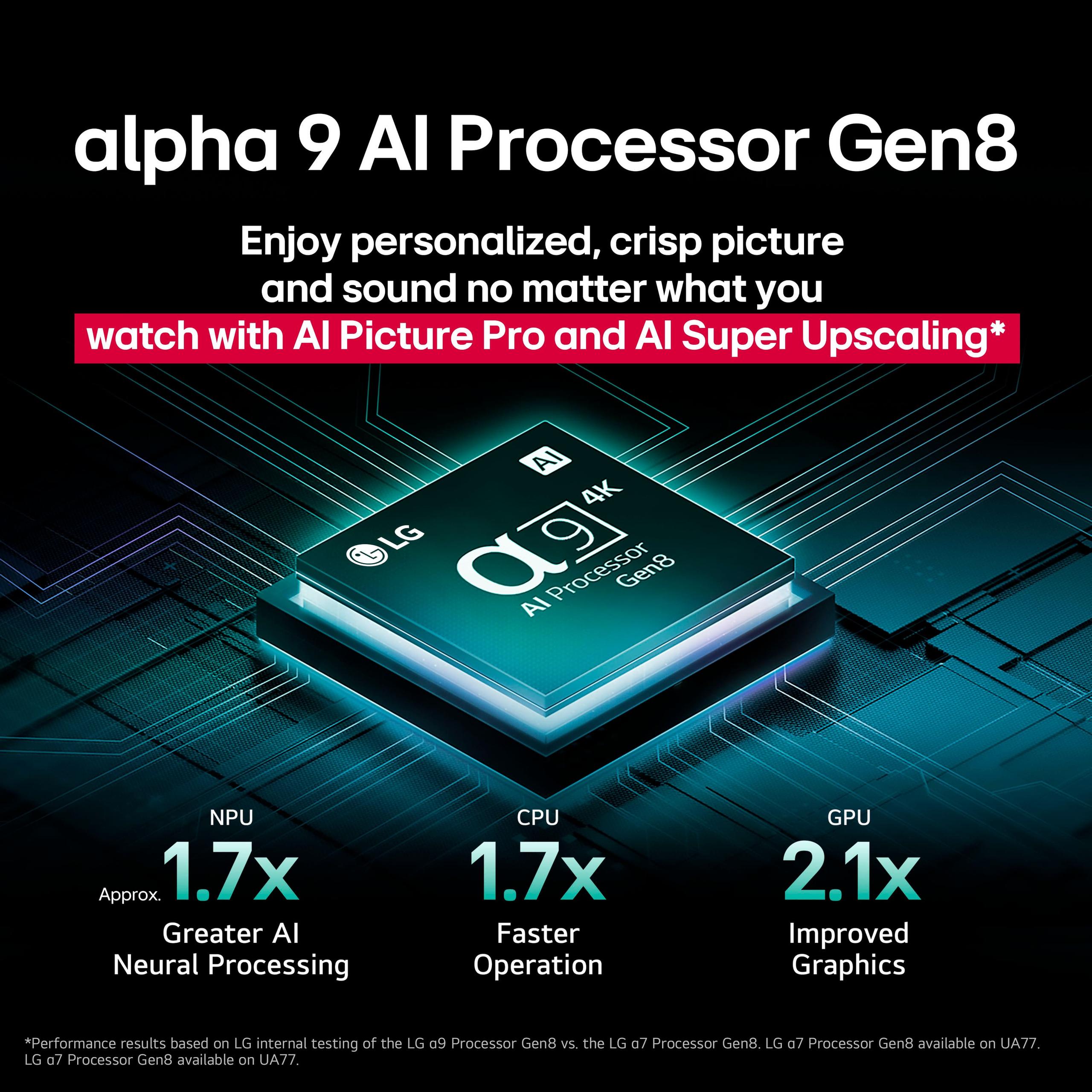
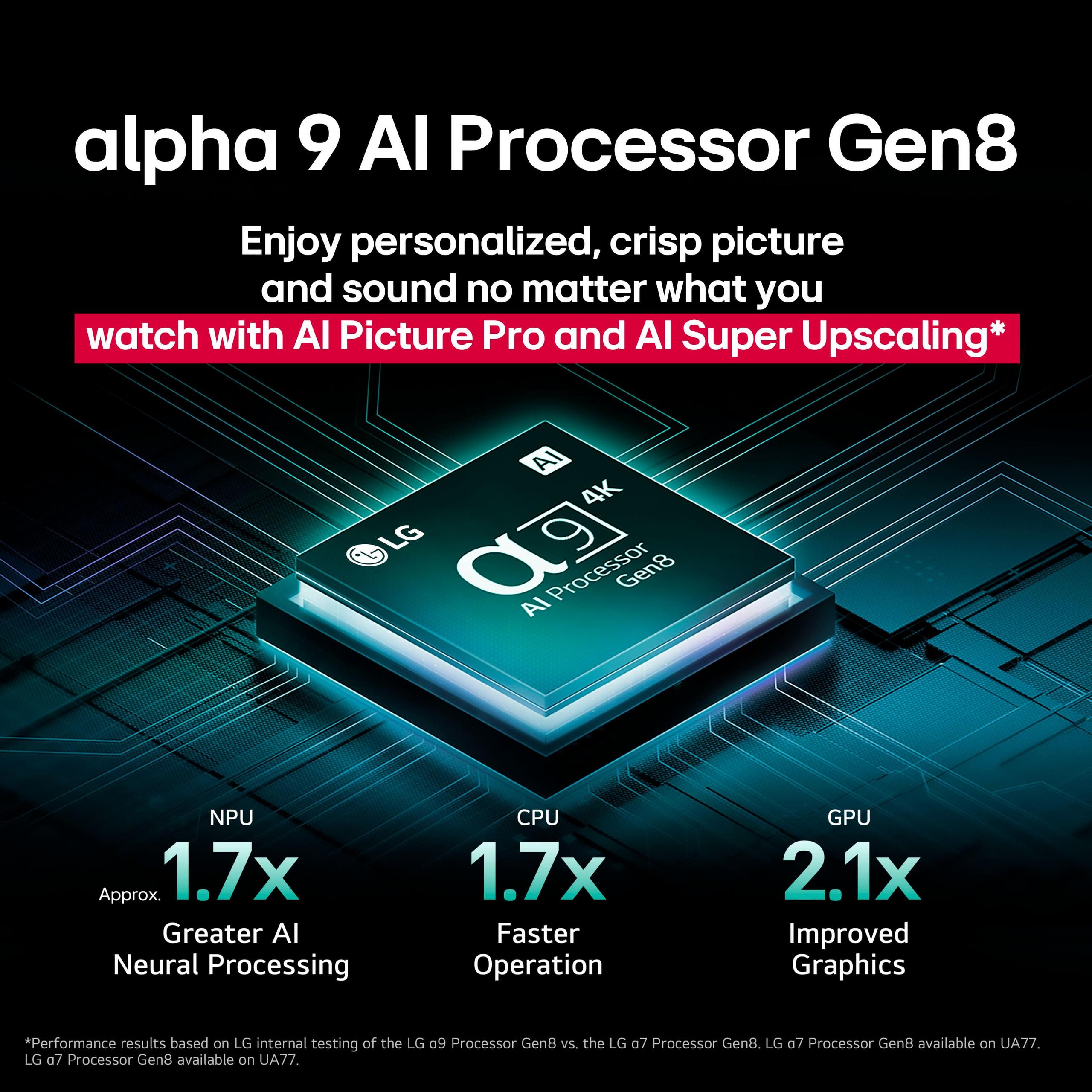
LG improved brightness significantly in the C5 compared to earlier OLED generations. The Alpha 9 Gen8 AI Processor—exclusive to LG OLEDs—analyzes content in real-time and optimizes brightness, color, and sharpness for each scene. In HDR (High Dynamic Range) content, bright highlights like explosions or sunlight genuinely pop while maintaining detail in darker areas of the same frame.
The processing improvements extend to upscaling, which is crucial since most streaming content isn't true 4K. The C5's AI Super Upscaling analyzes lower-resolution content and intelligently adds detail to approach 4K quality. This matters more than you might think—most Netflix shows, for example, are actually upscaled 1080p.
Modern gaming demands have pushed TV manufacturers to prioritize low input lag (the delay between pressing a button and seeing the result on screen) and high refresh rates (how often the image updates per second). This is where the LG C5 establishes clear superiority.
With a 0.1ms response time and support for 4K at up to 144Hz, the C5 delivers gaming performance that rivals dedicated gaming monitors. All four HDMI ports support HDMI 2.1, meaning you can connect multiple next-generation consoles or a high-end PC without compromising on features. Variable Refresh Rate (VRR) technology synchronizes the TV's refresh rate with your gaming device's output, eliminating screen tearing and stuttering.
The Samsung Frame offers respectable gaming performance with low input lag around 9.2ms, but it only provides one HDMI 2.1 port capable of 4K at 120Hz. For casual gamers with a single console, this suffices. However, if you own both a PlayStation 5 and Xbox Series X, or plan to connect a gaming PC, you'll need to choose which device gets the premium connection.
Response time differences become apparent in fast-paced games. The C5's nearly instantaneous pixel transitions mean moving objects appear sharp and clear, while the Frame's slower response can create motion blur in racing games or first-person shooters.
Here's where the Samsung Frame fights back effectively. The matte display coating that makes artwork look realistic also excels at managing ambient light during TV viewing. In bright living rooms with large windows, the Frame maintains better image quality than traditional glossy screens.
The LG C5 has improved brightness compared to earlier OLED models—what LG calls "Bright Room Ready" technology—but it still struggles with direct sunlight or bright overhead lighting. OLED's perfect blacks become less impressive when ambient light raises the overall screen brightness, washing out the contrast advantage.
This represents a fundamental trade-off in display technology. The Frame sacrifices some contrast and color vibrancy for better ambient light performance, while the C5 prioritizes maximum image quality in controlled lighting conditions.
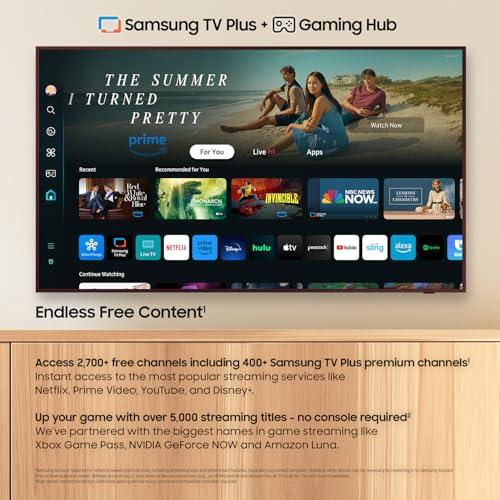
Both TVs run different smart TV platforms that affect your daily experience. The Samsung Frame uses Tizen OS, which covers all major streaming apps but isn't considered best-in-class for content discovery or interface design. The Art Store requires a subscription for full access to curated artwork, adding to long-term ownership costs.
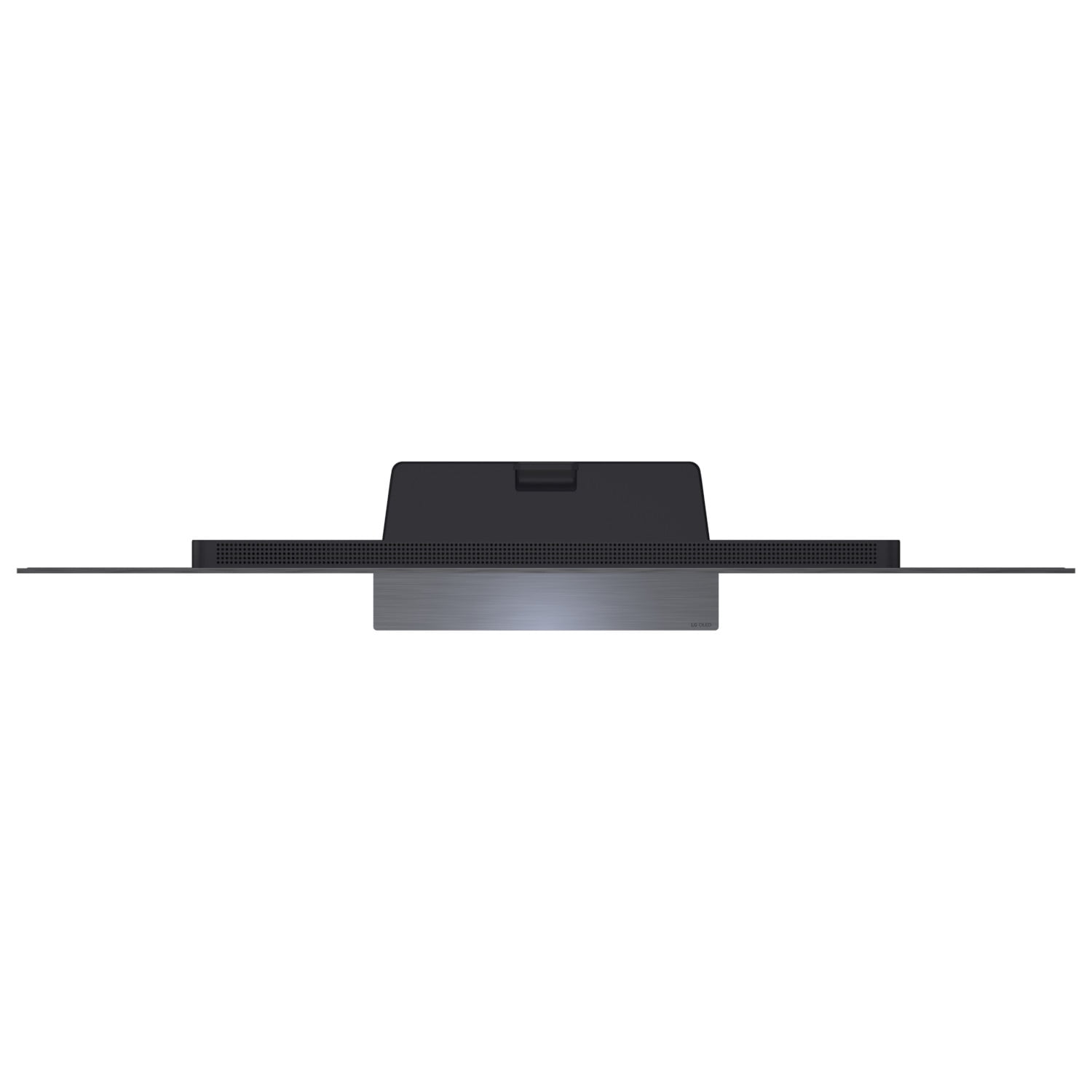
The LG C5 runs webOS 25, the latest generation of LG's platform. Our research suggests users find it more intuitive for content discovery, with better AI-driven recommendations. LG's Re:New Program promises five years of software updates and feature additions, providing better long-term support than Samsung's typical update cycle.
For dedicated home theater setups, the choice becomes clearer. The LG C5 excels in dark or dimmed rooms where its perfect blacks and infinite contrast create the most cinematic experience. Dolby Vision HDR support enhances compatible content with scene-by-scene optimization, while Filmmaker Mode preserves movies exactly as directors intended.
The C5's superior viewing angles also benefit home theater seating arrangements. While both TVs maintain image quality when viewed from the side, OLED technology traditionally handles off-axis viewing better than edge-lit QLED.
However, if your "home theater" is actually a bright family room used for multiple purposes, the Samsung Frame's glare resistance might outweigh the C5's contrast advantages. The ability to display art during parties or gatherings adds genuine utility beyond traditional TV functions.
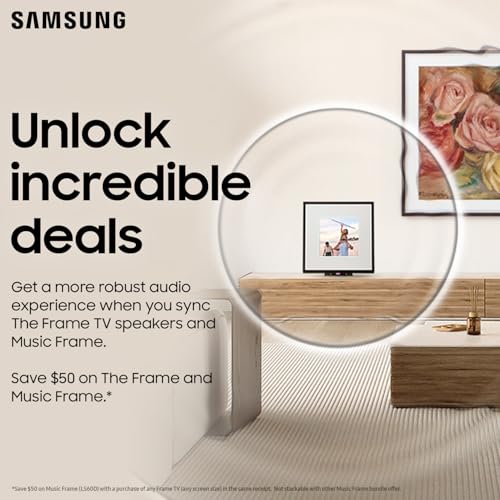
Both TVs include competent built-in audio systems, but neither excels enough to skip external speakers for serious home theater use. The Samsung Frame features 40W speakers with Dolby Atmos support and Object Tracking Sound technology, which aims to match audio direction with on-screen action.
The LG C5 also supports Dolby Atmos but notably dropped DTS audio passthrough in 2025, which could affect users with specific audio equipment preferences. However, most modern content uses Dolby formats, so this limitation rarely affects typical viewing.
For the best audio experience with either TV, plan to add a soundbar or surround sound system. Both TVs support eARC (enhanced Audio Return Channel) for high-quality audio passthrough to external speakers.
At the time of writing, both TVs command premium prices but offer different value equations. The Samsung Frame asks you to pay extra for lifestyle features and aesthetic integration. Factor in the cost of additional bezels and potential art subscription fees when calculating total ownership costs.
The LG C5 focuses value on display performance and features. While still expensive, the price primarily reflects cutting-edge OLED technology and comprehensive gaming capabilities. For pure entertainment value per dollar, especially if you prioritize picture quality, the C5 typically offers better traditional TV value.
However, value extends beyond specifications. If the Frame prevents you from needing to hide or specially mount a traditional TV in your living space, its aesthetic benefits might justify the premium for your specific situation.
Choose the Samsung Frame if your TV will be prominently displayed in a bright, formal living area where aesthetics matter as much as performance. It's ideal for users who want their technology to enhance rather than dominate their living space, and who primarily watch streaming content with occasional casual gaming.
The Frame makes most sense for design-conscious buyers who view their TV as furniture first and entertainment device second. If you frequently host gatherings where the TV doubles as conversation-starting art, the premium becomes easier to justify.
Select the LG C5 if picture quality, gaming performance, or home theater experience ranks as your top priority. It's the clear choice for serious gamers needing multiple high-bandwidth connections, movie enthusiasts who watch in controlled lighting, or anyone who simply wants the best possible image quality their budget allows.
The C5 also makes more sense for future-proofing, as its superior gaming capabilities and comprehensive feature set will remain relevant longer than the Frame's more specialized focus.
These TVs serve different masters. The Samsung Frame prioritizes lifestyle integration and aesthetic appeal, accepting some performance compromises to achieve its unique value proposition. The LG C5 focuses purely on delivering premium entertainment performance without gimmicks.
Neither approach is inherently better—it depends entirely on your priorities, room setup, and viewing habits. The Frame represents a genuinely innovative approach to TV design that successfully addresses real-world living space constraints. The C5 delivers the premium picture quality and gaming performance that enthusiasts expect from a high-end television.
Consider your room lighting, viewing priorities, and whether you value having technology that blends into your decor versus technology that excels at its primary function. Both TVs succeed at their intended purposes, but understanding those purposes is crucial for making the right choice for your home.
| Samsung 65" The Frame QLED 4K 2024 TV | LG OLED evo C5 65" 4K TV 2025 |
|---|---|
| Display Technology - Fundamental difference affecting picture quality | |
| QLED with Quantum Dot, edge-lit LED backlight | OLED with self-lit pixels, no backlight needed |
| Black Levels - Critical for movie watching and contrast | |
| Mediocre blacks (grayish in dark scenes) due to edge-lit design | Perfect blacks with infinite contrast ratio |
| Peak Brightness - Important for HDR content and bright rooms | |
| Good HDR brightness, excellent with anti-glare coating | ~590 nits HDR peak, improved over previous generation |
| Glare Handling - Crucial for bright living rooms | |
| Exceptional matte anti-reflective coating, UL Glare Free certified | Standard glossy screen, struggles with direct light |
| Gaming Performance - Essential for console and PC gaming | |
| One HDMI 2.1 port (4K@120Hz), 9.2ms input lag | Four HDMI 2.1 ports (4K@144Hz), 0.1ms response time |
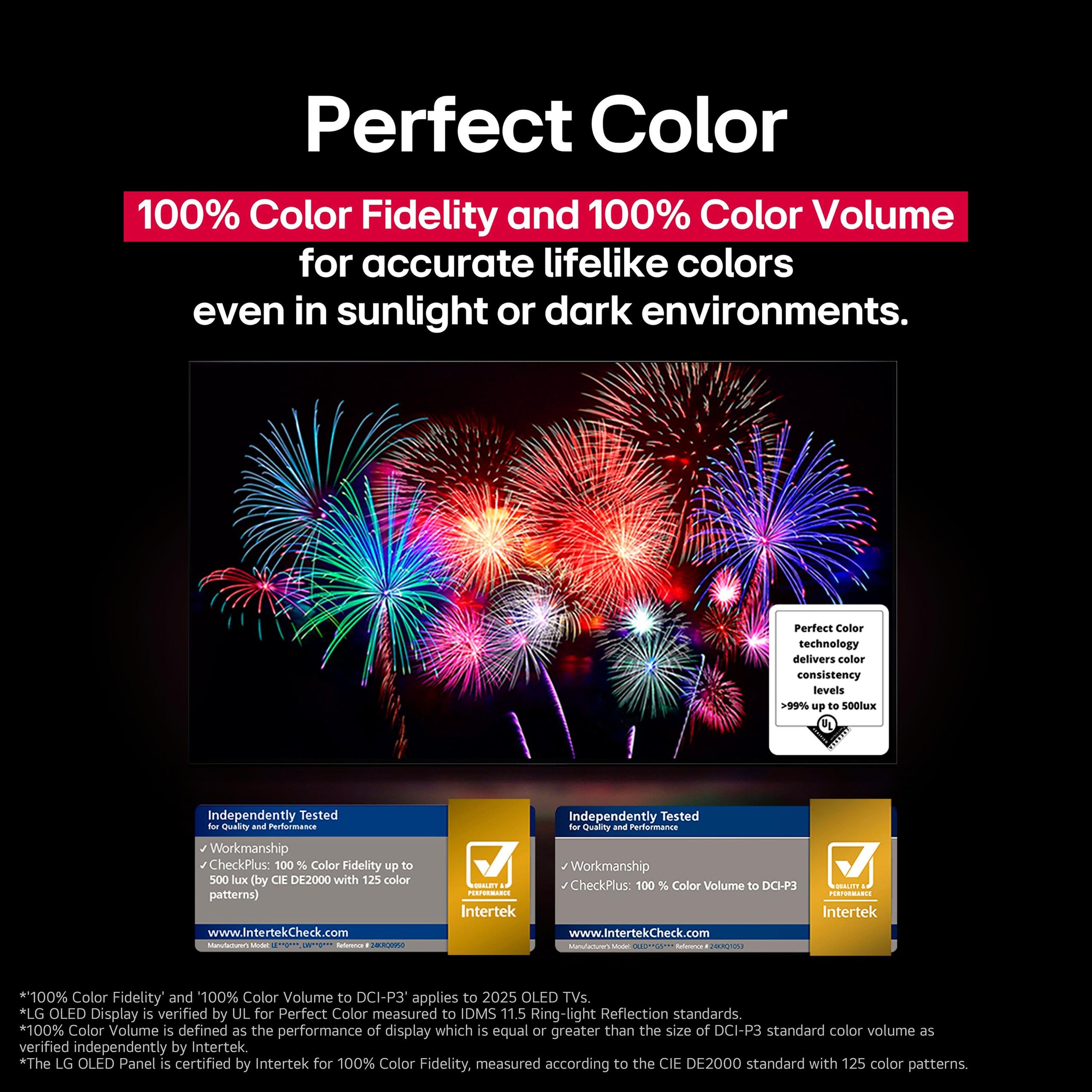
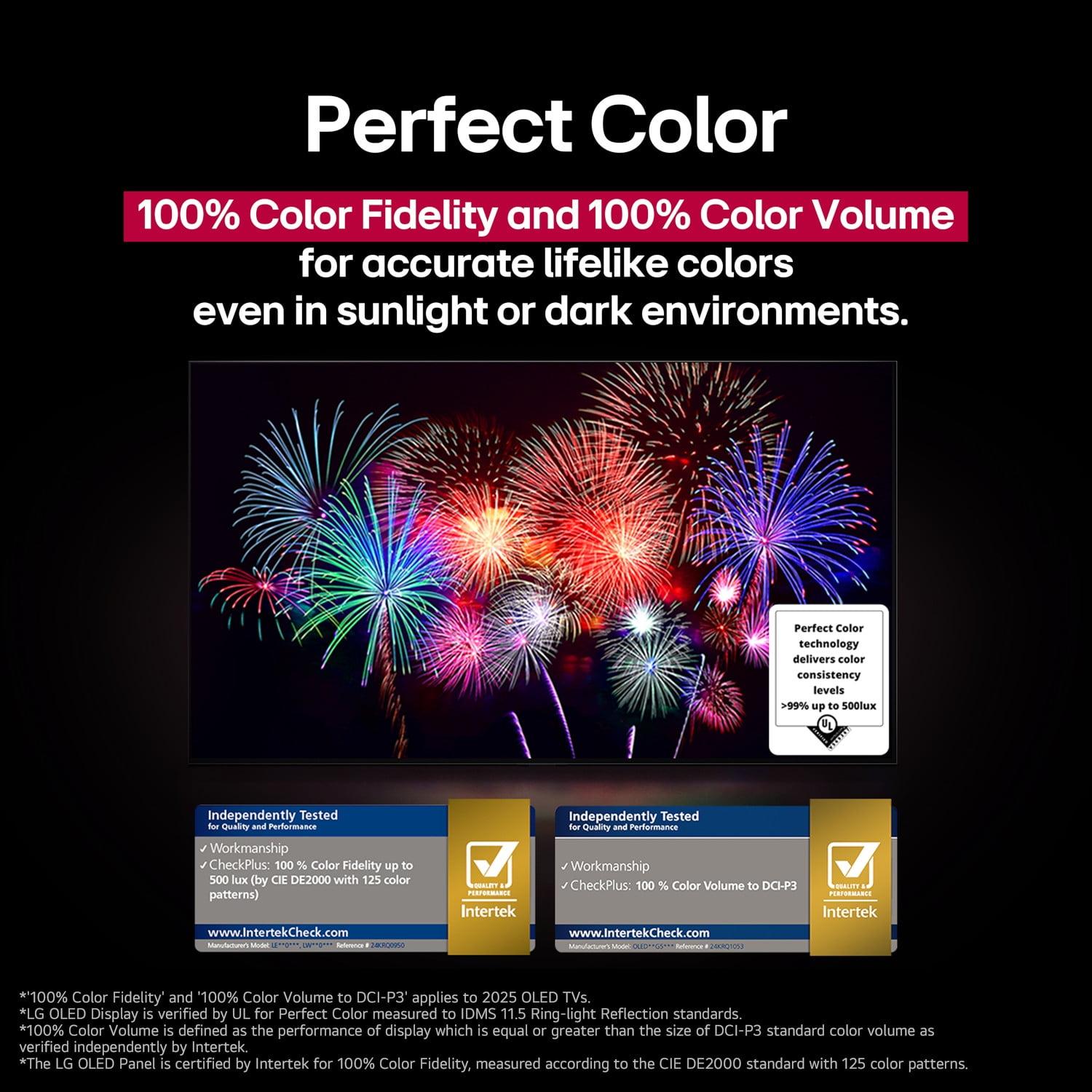
| Color Accuracy - Affects how realistic content looks | |
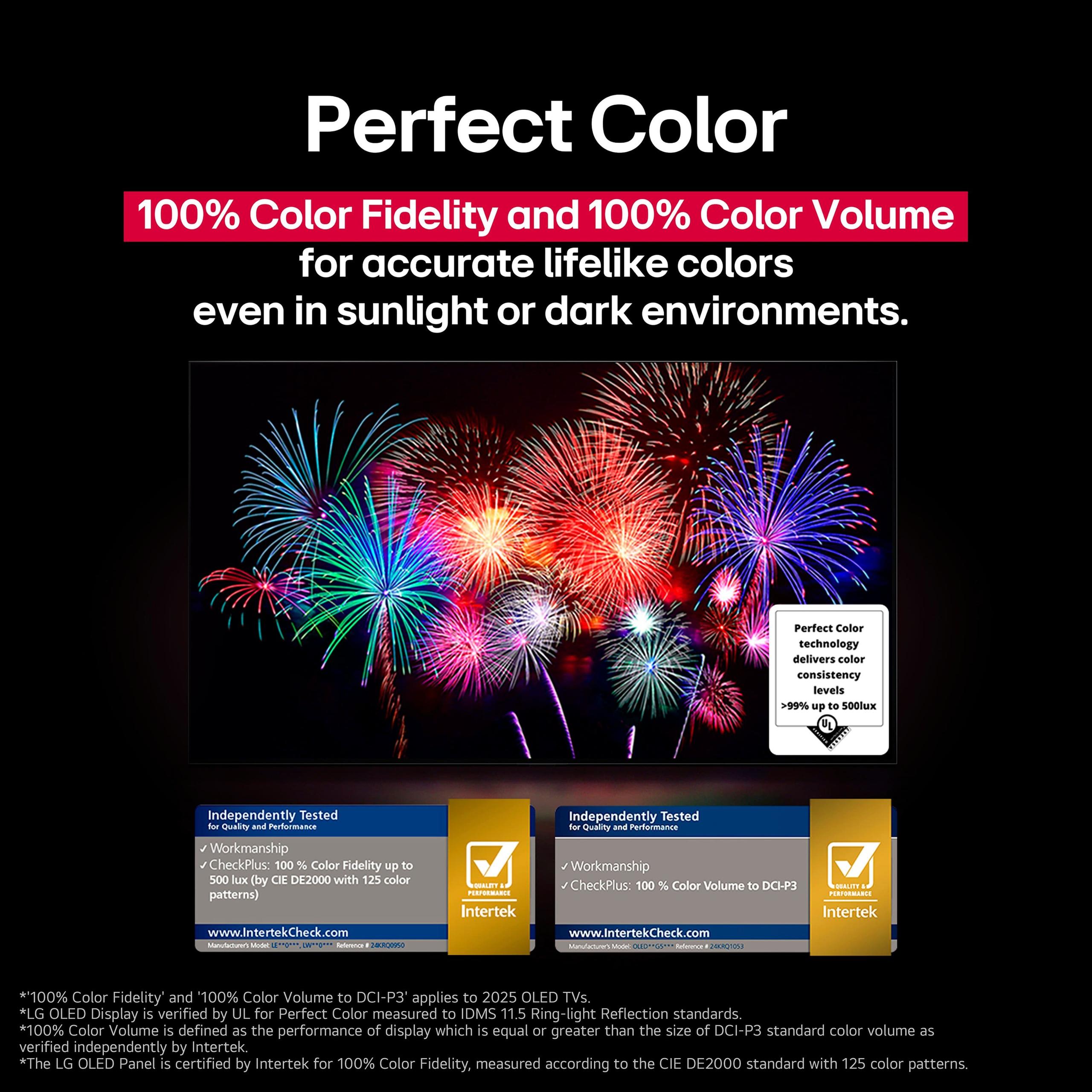
| Solid but unremarkable, Pantone art certification | Excellent out-of-the-box accuracy, rich color reproduction |
| Design Philosophy - Determines how it fits your space | |
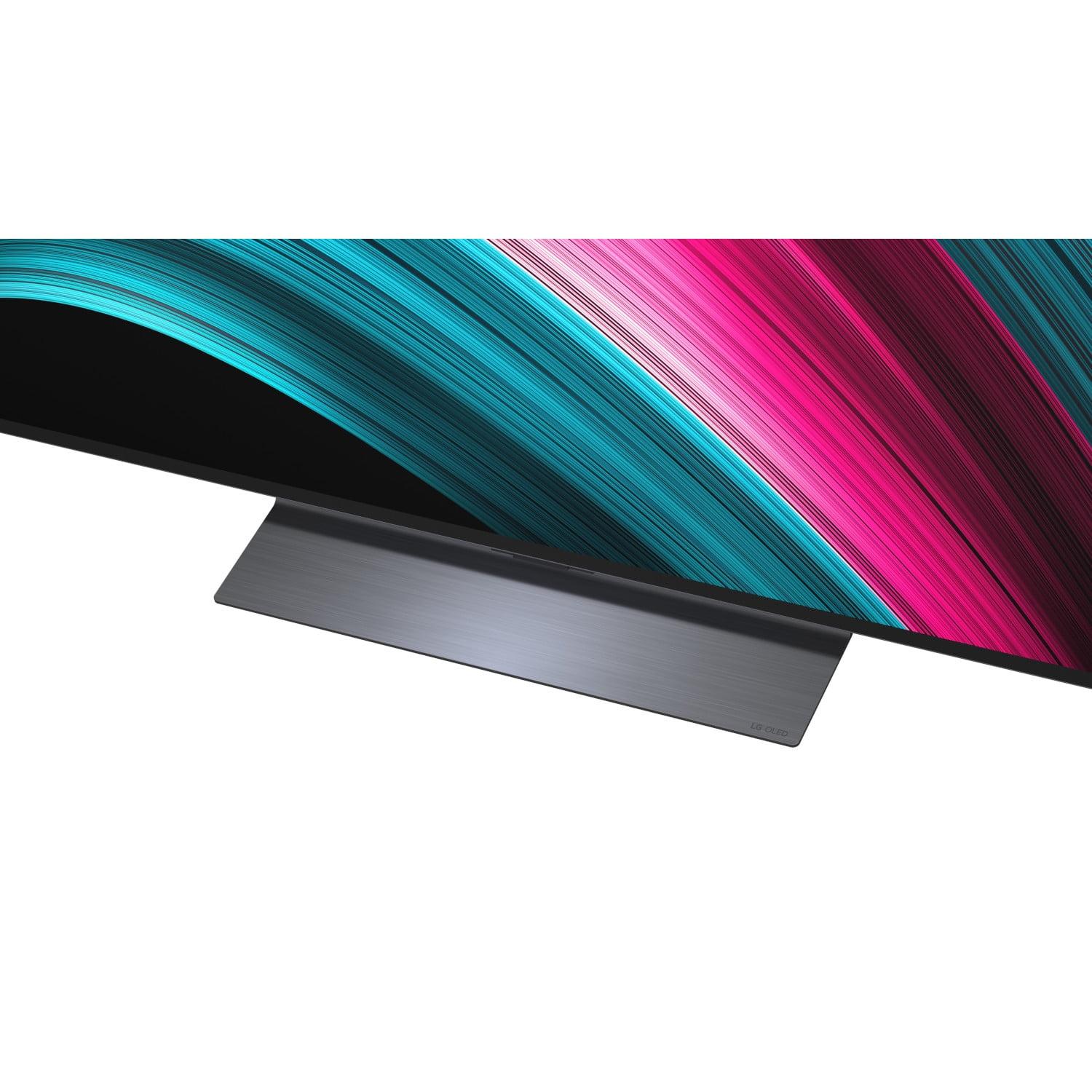
| Lifestyle TV with Art Mode and customizable bezels | Traditional premium TV with nearly invisible bezels |
| Unique Features - What sets each apart | |
| Art display mode, magnetic bezels, One Connect Box | AI Picture Pro, perfect blacks, comprehensive gaming features |
| Smart Platform - Affects daily user experience | |
| Tizen OS (functional but less refined) | webOS 25 (latest generation with AI recommendations) |
| Best Use Case - Who should choose each TV | |
| Design-conscious users in bright formal living spaces | Performance-focused users prioritizing picture quality and gaming |
| Long-term Value - Future-proofing and support | |
| Aesthetic integration, ongoing art subscription costs | 5-year Re:New software support, superior gaming specs |
The LG OLED evo C5 2025 delivers superior picture quality with perfect blacks, infinite contrast ratio, and excellent color accuracy. The Samsung 65" The Frame QLED 4K 2024 TV offers solid but unremarkable picture quality, with mediocre black levels due to its edge-lit design. For pure image quality, the LG C5 is the clear winner.
The Samsung 65" The Frame QLED 4K 2024 TV excels in bright rooms thanks to its exceptional matte anti-reflective coating that reduces glare and maintains image clarity. The LG OLED evo C5 2025 has improved brightness over previous OLED models but still struggles with direct sunlight. For bright living spaces, the Samsung Frame is the better choice.
The LG OLED evo C5 2025 is significantly better for gaming with four HDMI 2.1 ports supporting 4K at 144Hz, 0.1ms response time, and comprehensive VRR support. The Samsung 65" The Frame QLED 4K 2024 TV offers decent gaming with one HDMI 2.1 port and 9.2ms input lag, suitable for casual gaming but not ideal for serious gamers with multiple consoles.
The Samsung 65" The Frame QLED 4K 2024 TV uniquely transforms into a digital art display when not in use, with customizable magnetic bezels and Art Mode. The LG OLED evo C5 2025 focuses purely on premium TV performance without lifestyle features. The Samsung Frame is designed for users who want their TV to blend into their decor as functional art.
The LG OLED evo C5 2025 is superior for home theater setups with its perfect blacks, infinite contrast ratio, and excellent performance in dark rooms. It supports Dolby Vision and Filmmaker Mode for cinema-accurate viewing. The Samsung 65" The Frame QLED 4K 2024 TV works for casual home theater but cannot match the LG C5's contrast performance in dark environments.
Yes, both the Samsung 65" The Frame QLED 4K 2024 TV and LG OLED evo C5 2025 support 4K resolution and HDR content. The LG C5 supports Dolby Vision HDR for enhanced color and brightness, while the Samsung Frame supports HDR10 and HDR10+ but not Dolby Vision.
The LG OLED evo C5 2025 runs webOS 25 with superior AI recommendations and a more intuitive interface. The Samsung 65" The Frame QLED 4K 2024 TV uses Tizen OS, which covers all major streaming apps but isn't considered as refined. Both platforms support popular streaming services, but the LG C5 offers a better user experience.
The LG OLED evo C5 2025 offers better viewing angles with consistent picture quality from various seating positions. The Samsung 65" The Frame QLED 4K 2024 TV has average viewing angles typical of edge-lit QLED displays, with some image degradation at extreme angles. For group viewing or wide seating arrangements, the LG C5 is preferable.
The Samsung 65" The Frame QLED 4K 2024 TV uses more energy overall due to its LED backlighting system, though Art Mode reduces power consumption when displaying static images. The LG OLED evo C5 2025 is generally more energy efficient since OLED pixels only consume power when lit, and black areas use no energy. The LG C5 typically has lower operating costs.
Yes, both TVs support wall mounting. The Samsung 65" The Frame QLED 4K 2024 TV includes a Slim-Fit Wall Mount for flush installation and uses a One Connect Box to minimize cables. The LG OLED evo C5 2025 uses standard VESA mounting and is wall-mountable but doesn't include specialized mounting hardware. The Samsung Frame is specifically designed for seamless wall integration.
Value depends on priorities. The LG OLED evo C5 2025 offers better traditional TV value with superior picture quality and gaming features. The Samsung 65" The Frame QLED 4K 2024 TV provides unique lifestyle value for users who want their TV to function as art, though additional bezels and art subscriptions increase total cost. The LG C5 delivers more performance per dollar for entertainment-focused buyers.
Choose the Samsung 65" The Frame QLED 4K 2024 TV if your living room is bright, you prioritize aesthetics, and want the TV to blend into your decor. Select the LG OLED evo C5 2025 if picture quality is your top priority, you can control room lighting, or you're a serious gamer. The Samsung Frame excels as lifestyle furniture, while the LG C5 excels as a premium entertainment display.
We've done our best to create useful and informative comparisons to help you decide what product to buy. Our research uses advanced automated methods to create this comparison and perfection is not possible - please contact us for corrections or questions. These are the sites we've researched in the creation of this article: tomsguide.com - rtings.com - rtings.com - youtube.com - bestbuy.com - techlicious.com - youtube.com - smalllilystudio.com - theeverymom.com - livingetc.com - pcrichard.com - image-us.samsung.com - samsung.com - images.samsung.com - samsung.com - buydig.com - tvsbook.com - bestbuy.com - samsung.com - samsung.com - flatpanelshd.com - bestbuy.com - rtings.com - youtube.com - businessinsider.com - youtube.com - bestbuy.com - lg.com - files.bbystatic.com - lg.com - flatpanelshd.com - lg.com - blvdhome.com - bhphotovideo.com - flanners.com - videopro.com.au

Privacy Policy
Terms and Conditions - Affiliate Policy
Home Security
© Copyright 2008-2026.
11816 Inwood Rd #1211, Dallas, TX 75244