














Television technology has evolved far beyond simple entertainment devices. Art TVs represent one of the most interesting developments in recent years—displays that double as digital galleries when you're not watching Netflix or gaming. Two models have emerged as the leading choices in this specialized category: Samsung's premium Frame series and Hisense's value-focused CanvasTV.
Both launched in 2024, marking significant improvements over their predecessors. The Samsung Frame represents the latest evolution of a product line Samsung has been refining since 2017, while the Hisense CanvasTV is the company's first serious entry into the art TV space. Understanding which one fits your needs requires diving deep into their technical differences and real-world performance.
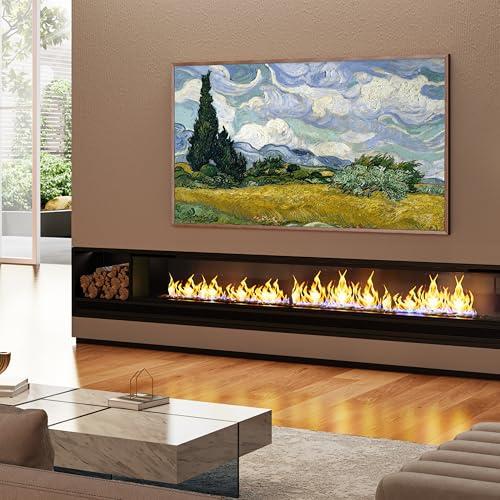
Art televisions solve a fundamental problem with modern home design: the giant black rectangle that dominates your living room when turned off. These specialized displays use anti-glare matte screens, ultra-slim profiles, and extensive artwork libraries to transform your TV into something that looks like a framed painting on the wall.
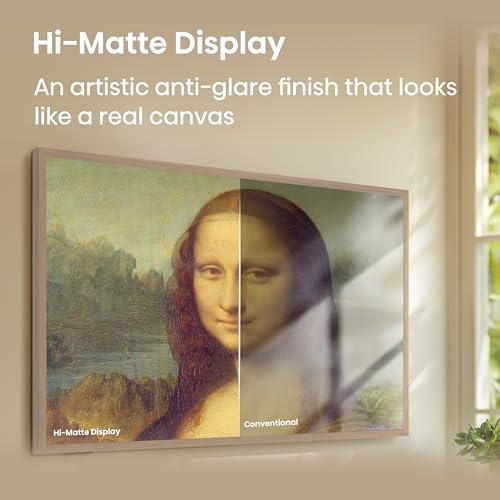
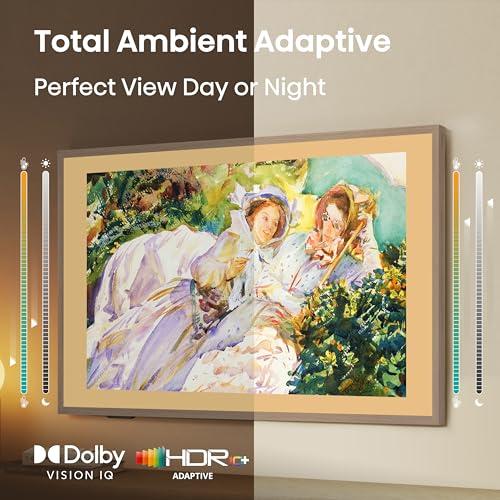
The technology behind this transformation involves several key components. The matte display coating scatters ambient light to reduce reflections—think of how a museum painting doesn't have the harsh glare of a computer monitor. Motion sensors detect when someone enters the room to automatically switch between art and standby modes. Ambient light sensors adjust brightness to match your room's lighting conditions, making the artwork appear more natural throughout the day.
Cable management becomes crucial since these TVs are meant to hang flush against walls like artwork. Both the Samsung Frame and Hisense CanvasTV tackle this challenge differently, with significant implications for installation and aesthetics.
When evaluating TV performance, brightness and contrast form the foundation of picture quality. Peak brightness, measured in nits (candelas per square meter), determines how well HDR content displays those brilliant highlights—like sunlight reflecting off water or explosions in action movies. Our research into professional reviews and user feedback reveals a clear winner here.
The Samsung Frame achieves approximately 590 nits peak brightness compared to the Hisense CanvasTV's 420 nits. That 170-nit difference translates to noticeably more impactful HDR content, especially in bright rooms where ambient light competes with the display. For context, HDR content is mastered at 1,000+ nits, so neither TV fully realizes the format's potential, but Samsung gets substantially closer.
Contrast ratio—the difference between the darkest blacks and brightest whites—reveals an even larger gap. Both TVs use edge-lit LED backlighting rather than more expensive full-array local dimming, but Samsung implements dual LED zones that provide some contrast control. The Hisense CanvasTV uses standard edge-lit backlighting without sophisticated dimming zones.
This technical difference manifests in real viewing scenarios. Dark movie scenes on the Samsung Frame maintain better black levels, while the Hisense CanvasTV suffers from raised, grayish blacks that lack depth. When bright highlights appear alongside dark areas—like a character holding a torch in a cave—the Hisense struggles to maintain contrast across the image.
Color accuracy presents another performance divide. Both TVs use QLED (Quantum Dot Light Emitting Diode) technology, which employs tiny semiconductor crystals to produce more precise colors than traditional LED-LCD displays. However, Samsung's implementation proves more accurate out of the box. Professional calibration reviews consistently show the Samsung Frame requiring minimal adjustment to achieve proper color representation, while the Hisense CanvasTV needs significant calibration work to reach similar accuracy.
For home theater use, these differences become pronounced. The Samsung's superior brightness handles ambient light better, while its contrast advantage creates more engaging dark scenes. The Hisense's raised blacks particularly hurt movie night experiences where proper black levels are crucial for immersion.
Gaming represents one area where the more expensive Samsung Frame actually falls behind. Modern gaming increasingly demands high refresh rates—the number of times per second the display updates its image. Higher refresh rates create smoother motion, especially important for competitive gaming where every frame matters.
The Hisense CanvasTV supports 144Hz refresh rates, meaning it can display 144 unique frames per second. It achieves 4K resolution at 144Hz and can even push 1080p content at 240Hz. Variable refresh rate (VRR) technology synchronizes the display's refresh rate with your gaming device's frame output, eliminating screen tearing—those horizontal lines that appear when the display and graphics card fall out of sync.
Meanwhile, the Samsung Frame caps out at 120Hz. For current PlayStation 5 and Xbox Series X owners, this limitation doesn't matter since those consoles max out at 4K/120Hz anyway. However, PC gamers with high-end graphics cards can benefit from the Hisense's higher refresh capabilities.
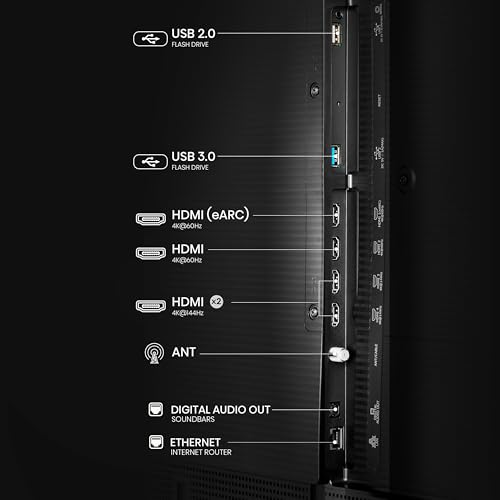
HDMI connectivity also favors the Hisense CanvasTV, which provides two full-bandwidth HDMI 2.1 ports versus Samsung's single port. HDMI 2.1 supports the highest resolution and refresh rate combinations, so having multiple ports matters if you own several modern gaming devices.
Input lag—the delay between pressing a controller button and seeing the result on screen—measures similarly low on both TVs, typically under 10 milliseconds in game mode. Both support Auto Low Latency Mode (ALLM), which automatically switches to game mode when it detects a gaming signal.
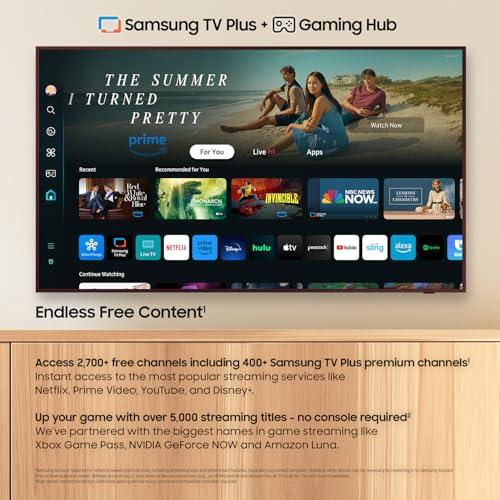
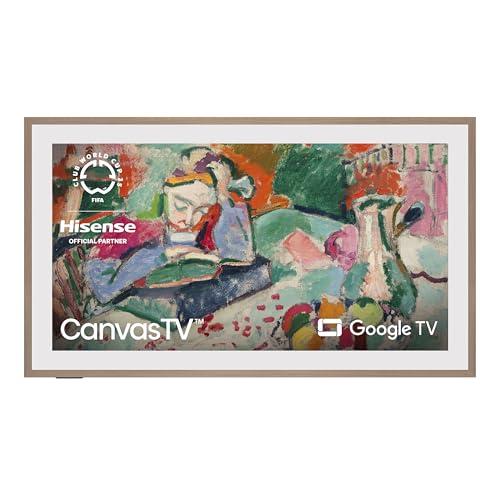
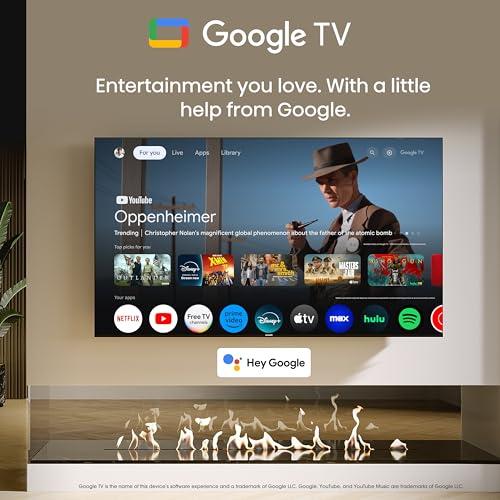
The smart TV platform affects every interaction with your television, from finding shows to adjusting settings. The Hisense CanvasTV runs Google TV, while the Samsung Frame uses Samsung's Tizen operating system.
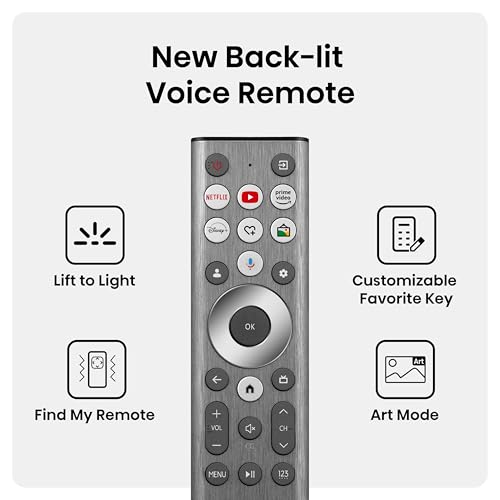
Google TV has evolved significantly since its early versions, now offering intuitive navigation and excellent content discovery. Its integration with Google services feels natural, and the platform supports virtually every major streaming service. Voice control through Google Assistant works reliably for both content search and smart home integration.
Samsung's Tizen platform remains functional but generally receives less favorable reviews for interface responsiveness and content recommendations. However, it integrates well with Samsung's SmartThings ecosystem if you own other Samsung devices.
HDR format support creates another platform difference. The Hisense CanvasTV supports Dolby Vision, HDR10+, and standard HDR10 formats. Dolby Vision uses dynamic metadata to optimize each scene's brightness and color, while HDR10+ provides similar scene-by-scene optimization. Samsung typically omits Dolby Vision from its TVs, supporting only HDR10 and HDR10+.
This distinction matters for streaming content. Netflix, Disney+, and Apple TV+ often use Dolby Vision for their premium content. While both formats deliver excellent results, having broader HDR support ensures compatibility with more content sources.
Since these TVs exist primarily to display artwork when not in use, their art capabilities deserve careful examination. Both approaches have merit, but they reflect different philosophies about content access and ongoing costs.
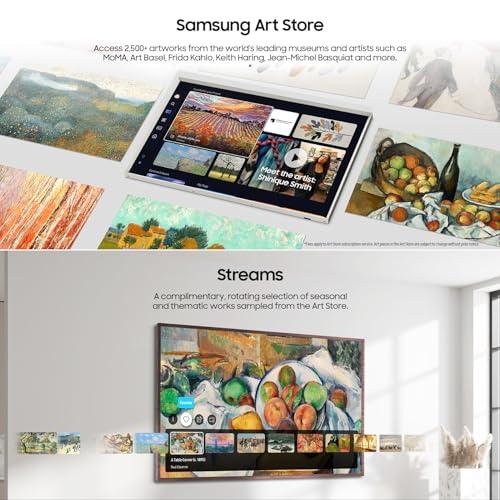
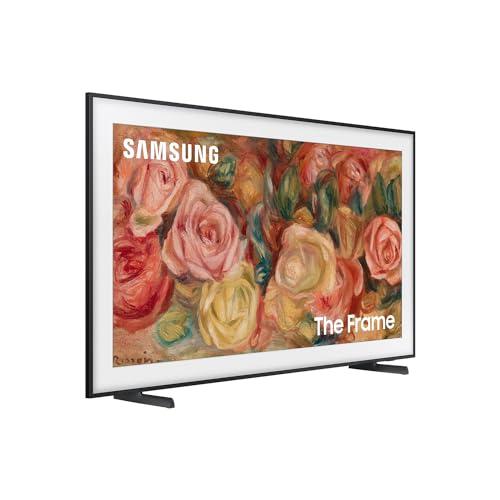
The Samsung Frame provides access to Samsung's Art Store, which offers thousands of professionally curated artworks from museums, galleries, and contemporary artists. The selection quality is genuinely impressive, featuring pieces from institutions like the Metropolitan Museum of Art and contemporary galleries. However, accessing this full library requires an ongoing subscription—at the time of writing, this represents a recurring expense beyond the initial purchase.
The Hisense CanvasTV includes over 1,000 artworks completely free, with no subscription required. While the selection isn't as extensive or professionally curated as Samsung's, it covers major art movements and includes both classical and contemporary pieces. For many users, this free library provides sufficient variety.
Both TVs allow uploading personal photos and artwork. The Samsung Frame requires using Samsung's SmartThings mobile app, while the Hisense CanvasTV supports direct USB transfer or QR code scanning for wireless upload—a more straightforward process.
Motion sensors on both models automatically activate art mode when someone enters the room, though Samsung's implementation feels more refined with better ambient light adaptation. The Samsung Frame dynamically adjusts its refresh rate from 120Hz to 60Hz when displaying static art, saving energy while maintaining image quality.
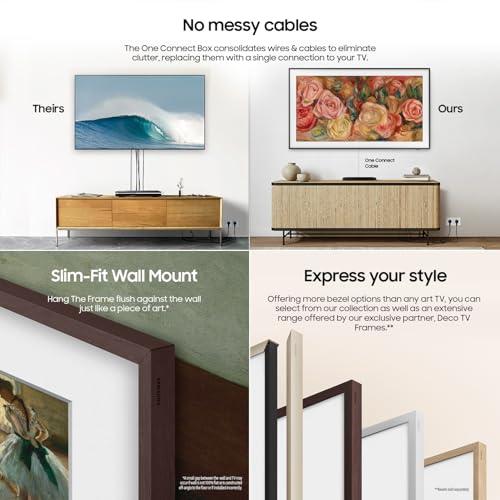
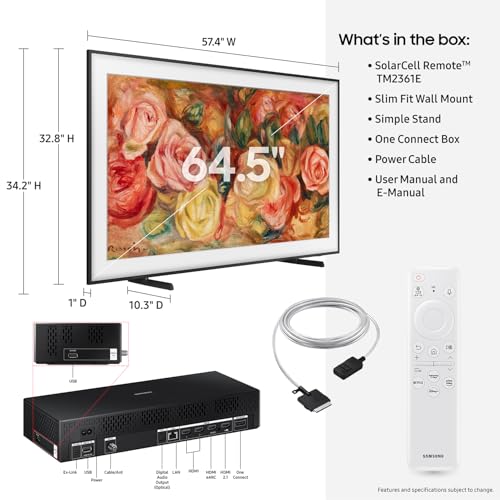
Physical installation reveals the most dramatic difference between these TVs. The Samsung Frame includes the One Connect Box—an external unit that houses all HDMI inputs, power, and processing. A single, nearly invisible cable connects this box to the TV itself. This approach creates an exceptionally clean wall installation with no visible cables or connections.
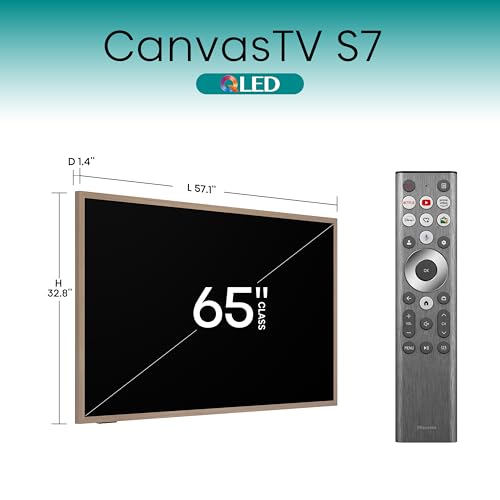
The Hisense CanvasTV uses traditional integrated ports, though they're positioned on the side for reasonable accessibility when wall-mounted. Cable management relies on clips attached to the TV's back panel, which keeps cables organized but doesn't achieve Samsung's completely hidden aesthetic.
For rental properties or rooms where running cables through walls isn't possible, Samsung's One Connect solution provides a significant advantage. The external box can sit in an entertainment center or behind furniture, with only the thin connection cable visible.
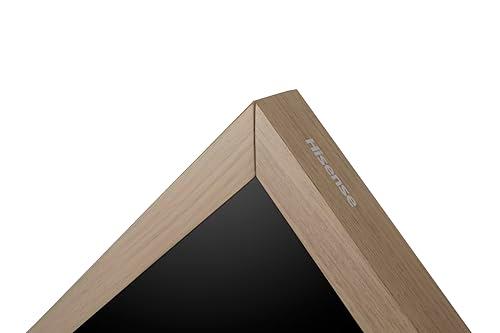
Frame customization also differs substantially. The Samsung Frame uses magnetic bezels available in multiple finishes—wood tones, colored options, and premium materials. These frames aren't cheap, but they allow genuine customization to match room décor. The Hisense CanvasTV includes a wood-grain frame in the box with limited additional options available.
Both TVs achieve similar ultra-slim profiles when wall-mounted, hanging approximately one inch from the wall. However, Samsung's cable management creates a more convincing artwork appearance.
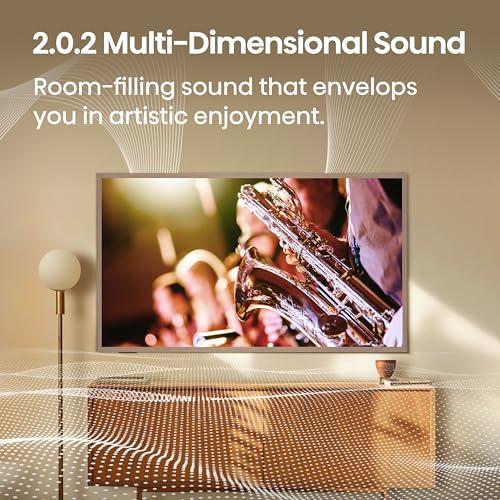
Neither TV will replace a dedicated sound system, but both deliver respectable audio for their slim profiles. The Hisense CanvasTV includes a 2.0.2 channel system with upward-firing speakers, creating a basic surround sound effect through DTS Virtual:X processing. This configuration produces more immersive audio than traditional flat-panel speakers.
Both TVs support eARC (enhanced Audio Return Channel) for sending high-quality audio to soundbars or AV receivers. The Hisense CanvasTV passes through more advanced DTS audio formats, while both handle Dolby formats well.
For most living room setups, the built-in audio proves adequate for casual viewing. However, home theater enthusiasts will want to plan for external audio regardless of which TV they choose.
At the time of writing, the Hisense CanvasTV costs significantly less than the Samsung Frame—roughly 35-40% less for comparable screen sizes. This price difference fundamentally shapes the value equation.
The Samsung Frame delivers superior picture quality, more refined design, and better cable management. Its higher brightness and contrast create a noticeably better viewing experience, especially for movies and HDR content. The One Connect Box and magnetic frame system justify the premium for users who prioritize aesthetics and seamless integration.
However, the Hisense CanvasTV provides approximately 70% of Samsung's performance at 60-65% of the price. It includes features Samsung charges extra for—like the artwork library and wall mount—while adding capabilities Samsung doesn't match, like 144Hz gaming and Dolby Vision support.
The total cost of ownership calculation favors Hisense even more when considering Samsung's ongoing art subscription costs and premium frame prices.
Choose the Samsung Frame if picture quality matters most and budget allows for the premium. It's the clear winner for dedicated home theaters, bright rooms that benefit from higher peak brightness, and installations where the One Connect cable management provides significant aesthetic value. Users who appreciate professionally curated art collections and don't mind paying for premium features will find Samsung's approach compelling.
The Hisense CanvasTV makes more sense for value-conscious buyers who still want the art TV experience. It's particularly appealing for PC gamers who can utilize the 144Hz refresh rate, users who prefer Google TV's interface, and anyone who wants extensive artwork access without ongoing subscriptions.
For most buyers, the Hisense CanvasTV represents the sweet spot—delivering the core art TV experience with solid performance at a much more accessible price point. The Samsung Frame serves buyers who want the absolute best picture quality and most refined design, accepting the significant cost premium for those improvements.
Both TVs successfully transform from entertainment devices into living room artwork, but they achieve this goal through different balances of performance, features, and price. Your choice should align with your viewing habits, gaming needs, and how much you're willing to spend for those extra refinements that make the Samsung special.
| Samsung 65" The Frame QLED 4K 2024 TV | Hisense 65" S7N CanvasTV QLED 4K Smart Display |
|---|---|
| Peak Brightness - Critical for HDR impact and bright room viewing | |
| 590 nits (excellent HDR performance) | 420 nits (good but less impactful HDR) |
| Native Contrast Ratio - Determines black depth and overall picture quality | |
| Superior with dual LED zones for better blacks | Standard edge-lit with raised, grayish blacks |
| Gaming Refresh Rate - Important for PC gaming and future-proofing | |
| 120Hz maximum (perfect for current consoles) | 144Hz native (excellent for high-end PC gaming) |
| HDMI 2.1 Ports - Needed for 4K high refresh rate gaming | |
| 1 port (sufficient for single next-gen console) | 2 ports (better for multiple gaming devices) |
| HDR Format Support - Affects streaming content compatibility | |
| HDR10, HDR10+ (missing Dolby Vision) | HDR10, HDR10+, Dolby Vision (full compatibility) |
| Smart TV Platform - Daily user experience and app performance | |
| Samsung Tizen (functional but less intuitive) | Google TV (superior interface and content discovery) |
| Cable Management - Critical for clean art TV wall installation | |
| One Connect Box (completely hidden cables) | Side ports with cable clips (cables somewhat visible) |
| Artwork Library Access - Core feature for art display mode | |
| Samsung Art Store (subscription required for full access) | 1,000+ artworks included free (no ongoing costs) |
| Frame Customization - Aesthetic integration with home decor | |
| Magnetic bezels in multiple premium finishes (sold separately) | Wood-style frame included (limited additional options) |
| Color Accuracy Out of Box - Professional calibration quality | |
| Excellent (minimal calibration needed) | Requires calibration work for best results |
| Audio Configuration - Built-in sound quality | |
| Standard 2CH setup | 2.0.2CH with upward-firing speakers (better surround) |
| Motion Sensors - Automatic art mode activation | |
| Advanced ambient light and motion detection | Basic motion sensing with room entry detection |
The Samsung 65" The Frame QLED 4K 2024 TV delivers superior picture quality with 590 nits peak brightness compared to the Hisense 65" S7N CanvasTV's 420 nits. The Samsung also provides better contrast with deeper blacks thanks to its dual LED zones, while the Hisense suffers from raised, grayish blacks that reduce image depth in dark scenes.
The Hisense 65" S7N CanvasTV QLED 4K Smart Display is actually better for gaming, offering 144Hz refresh rates and two HDMI 2.1 ports compared to the Samsung Frame's 120Hz and single HDMI 2.1 port. For current console gaming, both perform well, but PC gamers will prefer the Hisense's higher refresh capabilities.
The Hisense CanvasTV offers significantly better value, costing substantially less while providing 70% of the Samsung's performance. It includes free artwork, wall mount, and premium features like Dolby Vision that the Samsung Frame lacks or charges extra for.
No, the Hisense 65" S7N CanvasTV includes over 1,000 artworks completely free with no subscription required. The Samsung Frame requires an ongoing subscription to access its full Art Store library, though it offers more professionally curated collections.
The Samsung 65" The Frame QLED 4K 2024 TV is easier to install cleanly thanks to its One Connect Box, which hides all cables with a single connection to the TV. The Hisense CanvasTV uses side-facing ports with cable clips, creating a less seamless appearance but still manageable installation.
The Hisense 65" S7N CanvasTV QLED 4K Smart Display uses Google TV, which generally receives better reviews for interface responsiveness and content discovery compared to the Samsung Frame's Tizen platform. Google TV also integrates better with most streaming services and voice assistants.
Both support HDR, but the Hisense CanvasTV has broader format support including Dolby Vision, while the Samsung Frame typically lacks Dolby Vision. However, Samsung's higher brightness makes HDR content more impactful when it is supported.
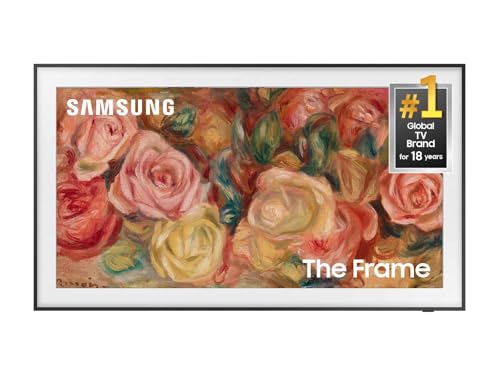
The Samsung 65" The Frame QLED 4K 2024 TV looks more convincing as artwork due to its superior matte display technology, better reflection handling, and more sophisticated ambient light sensors. The magnetic frame system also offers premium customization options that the Hisense 65" S7N CanvasTV doesn't match.
The Hisense CanvasTV has better built-in audio with a 2.0.2 channel system including upward-firing speakers, compared to the Samsung Frame's standard configuration. However, both are adequate for casual viewing but benefit from external audio for serious home theater use.
The Samsung 65" The Frame QLED 4K 2024 TV performs better in bright rooms due to its higher peak brightness and superior anti-glare matte display. While both TVs handle reflections well, the Samsung maintains better image quality under challenging lighting conditions.
Yes, both support personal photo uploads. The Hisense 65" S7N CanvasTV QLED 4K Smart Display offers easier uploading via QR code scanning or USB transfer, while the Samsung Frame requires using the SmartThings mobile app for wireless uploads.
For dedicated home theater use, the Samsung 65" The Frame QLED 4K 2024 TV is the better choice due to its superior brightness, contrast, and color accuracy. The Hisense CanvasTV works well for casual movie watching but the Samsung's picture quality advantages become more apparent in controlled lighting environments where image fidelity matters most.
We've done our best to create useful and informative comparisons to help you decide what product to buy. Our research uses advanced automated methods to create this comparison and perfection is not possible - please contact us for corrections or questions. These are the sites we've researched in the creation of this article: tomsguide.com - rtings.com - rtings.com - youtube.com - bestbuy.com - techlicious.com - youtube.com - smalllilystudio.com - theeverymom.com - livingetc.com - pcrichard.com - image-us.samsung.com - samsung.com - images.samsung.com - samsung.com - buydig.com - tvsbook.com - bestbuy.com - samsung.com - samsung.com - flatpanelshd.com - bestbuy.com - hisense.sg - tomsguide.com - content.syndigo.com - rtings.com - hisense-usa.com - youtube.com - bestbuy.com - youtube.com - displayspecifications.com - displayspecifications.com - manuals.plus - displayspecifications.com - bestbuy.com - hisense-canada.com - manuals.plus - bargainoutletandmore.com - bestbuy.com - device.report

Privacy Policy
Terms and Conditions - Affiliate Policy
Home Security
© Copyright 2008-2026.
11816 Inwood Rd #1211, Dallas, TX 75244