


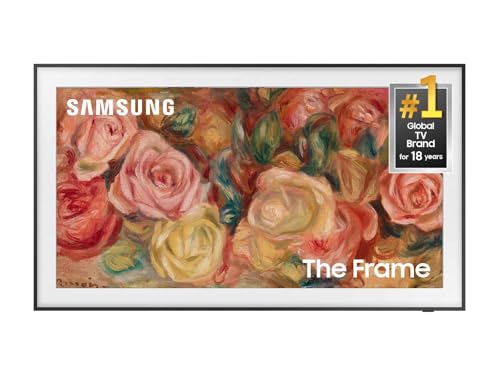


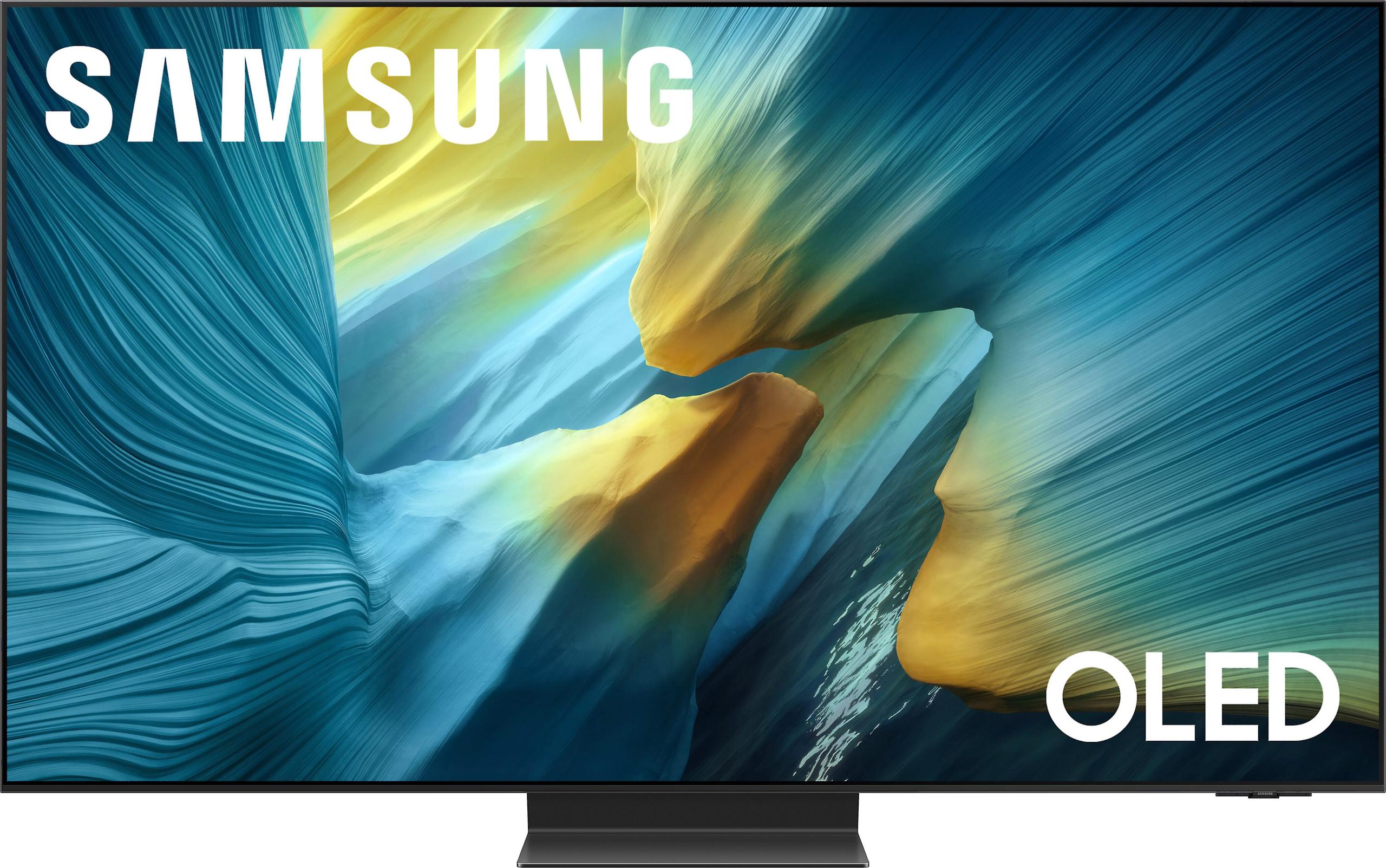
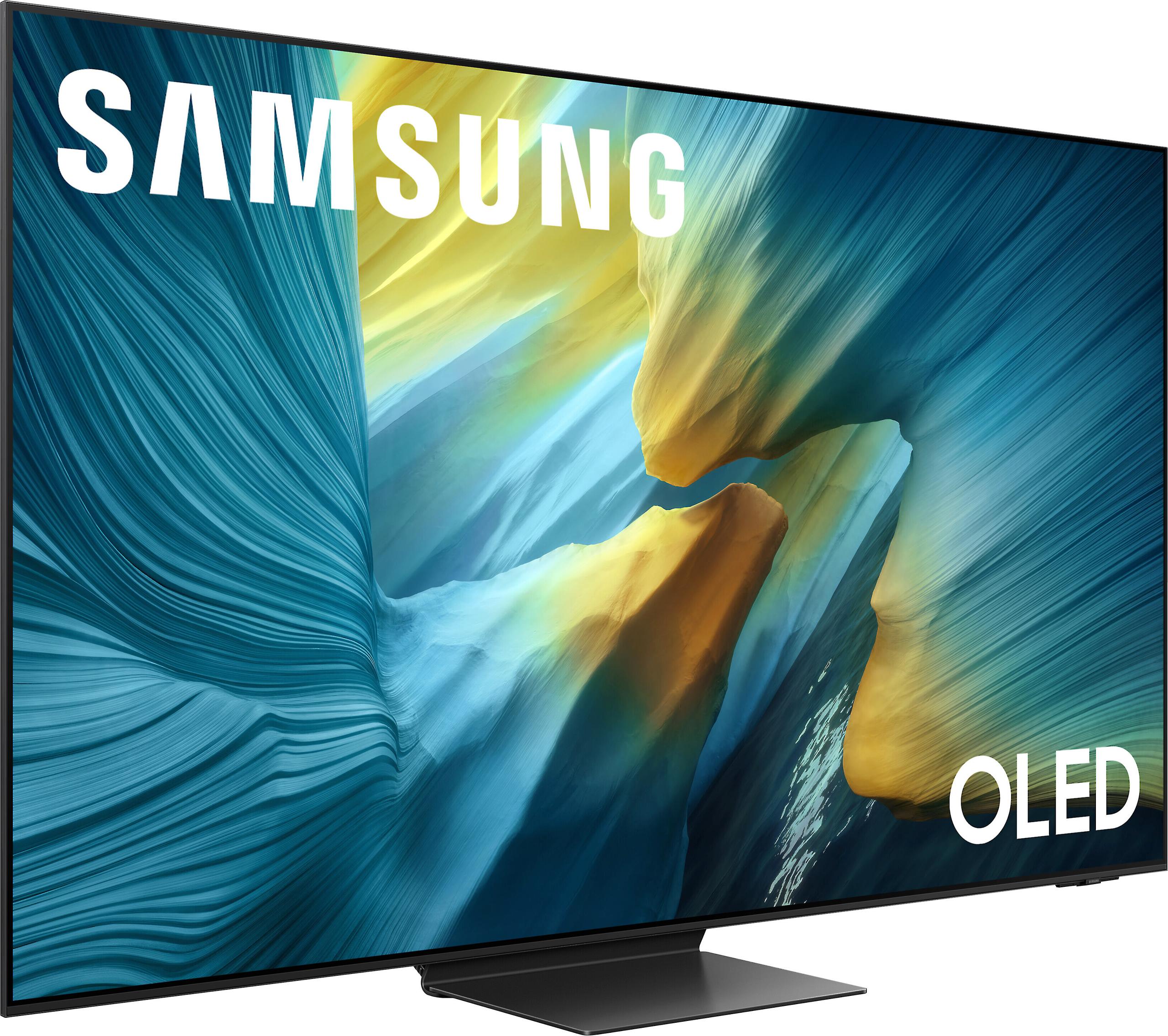
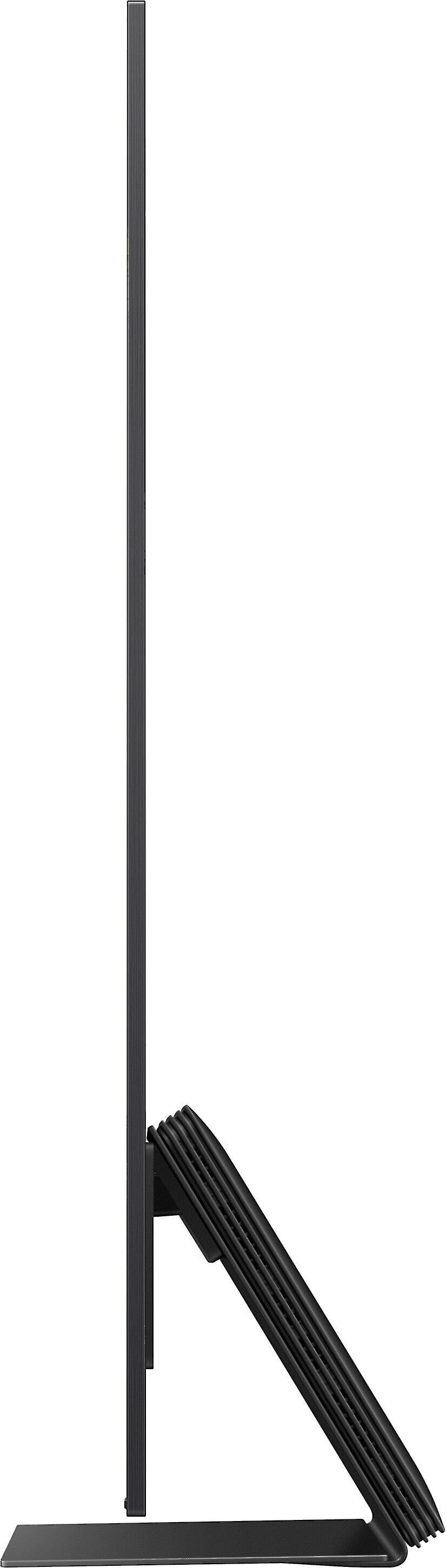


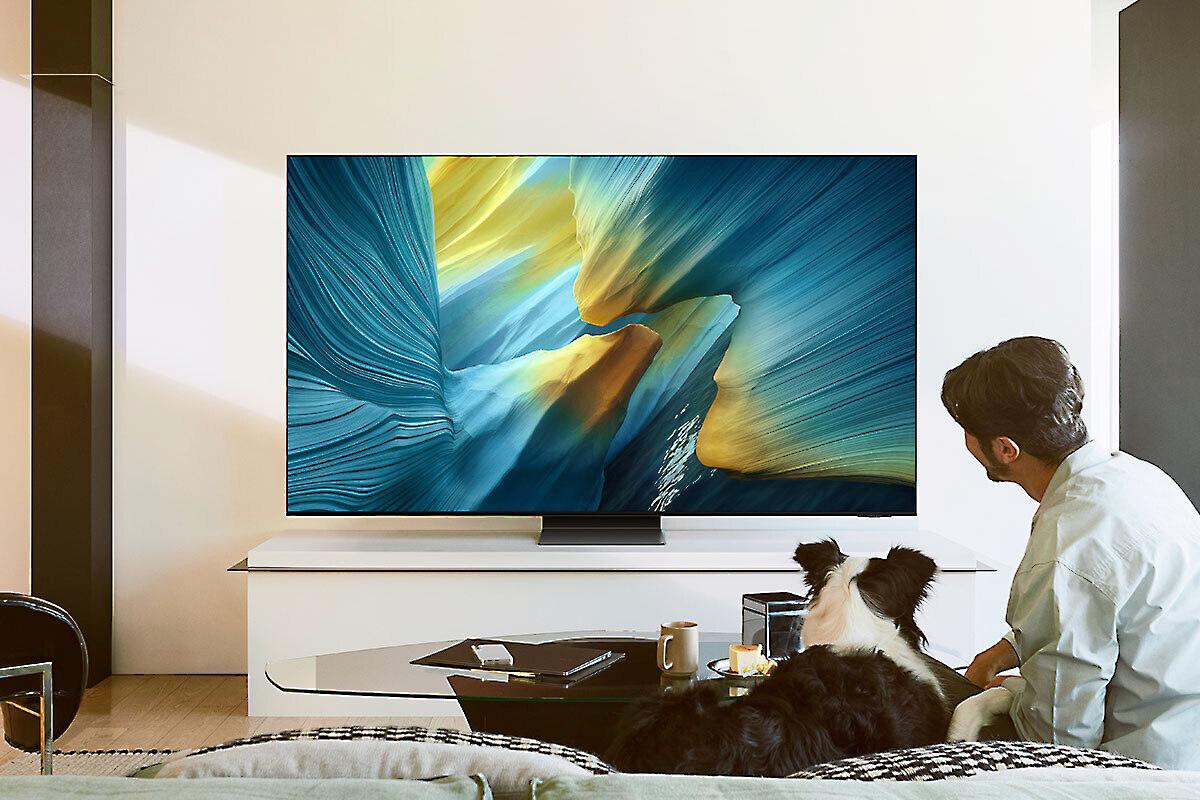

Samsung released two distinctly different 65-inch TVs that represent completely opposing philosophies in home entertainment. The Samsung 65" The Frame QLED 2024 TV, launched in 2024, prioritizes aesthetic integration over raw performance. Meanwhile, the Samsung 65" OLED S95F 2025, released in 2025, represents Samsung's flagship performance approach with cutting-edge display technology. At the time of writing, these TVs occupy vastly different price tiers, with the Frame positioned as a premium lifestyle product while the S95F commands flagship pricing that reflects its advanced technology.
Understanding which TV suits your needs requires diving deep into what makes each unique, because choosing between them isn't just about picking a TV—it's about deciding what role you want your display to play in your home.
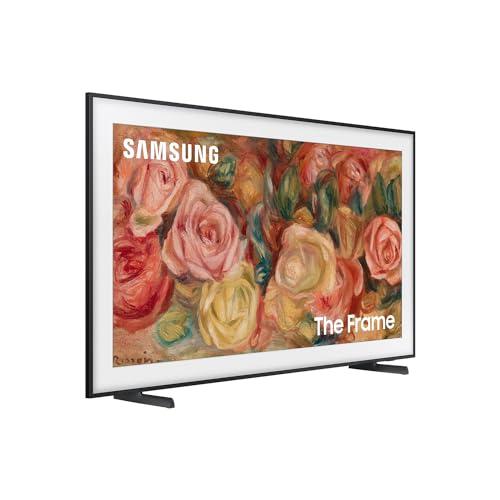
The most fundamental difference between these TVs lies in their display technology, which affects everything from picture quality to how they look when turned off. The Frame QLED 2024 uses what's called an edge-lit QLED panel. This means LED lights positioned around the edges of the screen illuminate a layer of quantum dots (tiny crystals that enhance color) to create the picture. It's a cost-effective approach that allows for very thin designs, but it comes with inherent limitations.
The lack of local dimming zones—individual sections of backlighting that can be controlled independently—means the Frame can't achieve true black levels. When you're watching a movie with dark scenes, those blacks appear more like dark grays because the backlight is always on to some degree. This fundamentally limits contrast, which is the difference between the brightest whites and darkest blacks your TV can display.
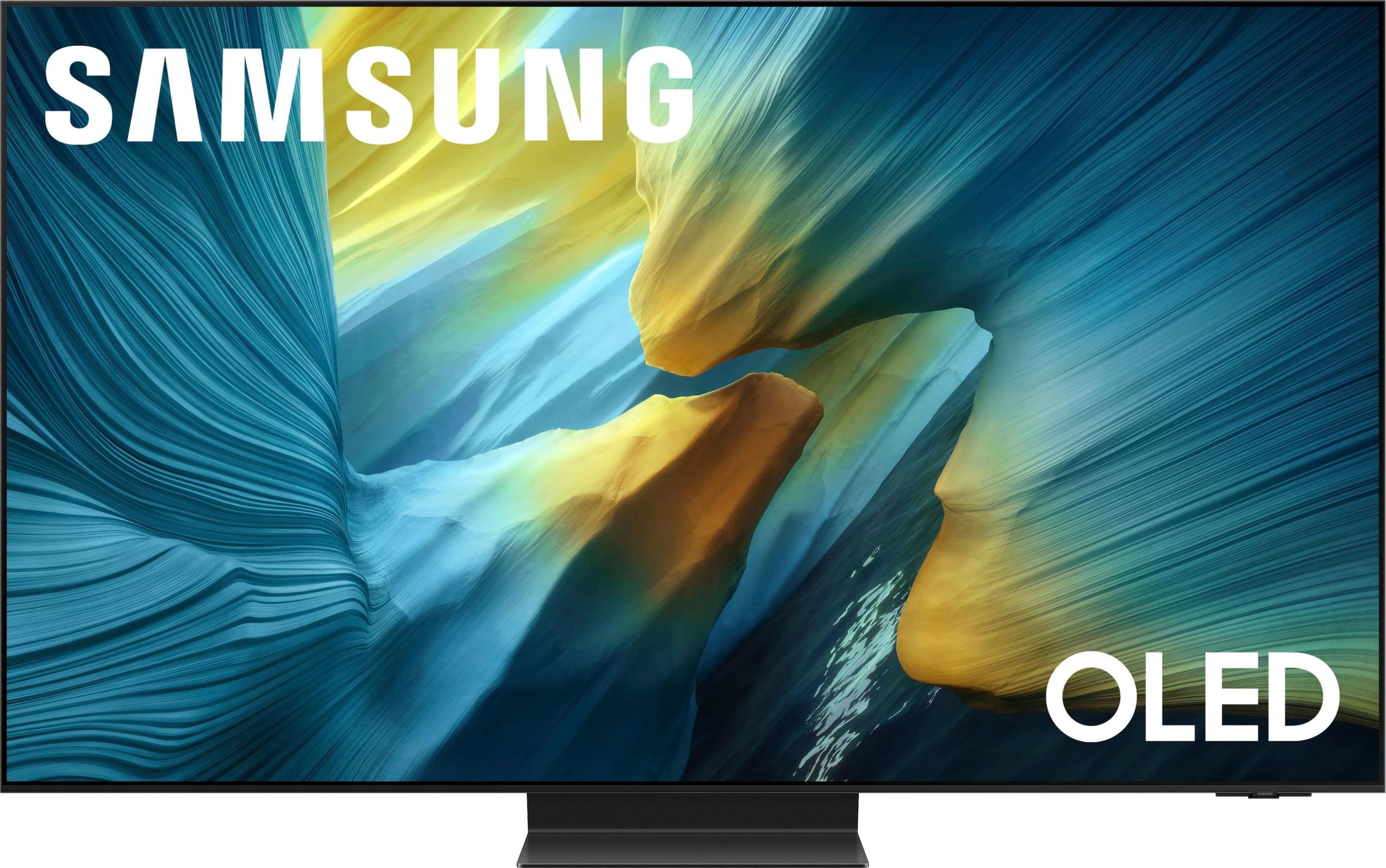
The S95F OLED 2025, on the other hand, uses what Samsung calls QD-OLED technology—a hybrid approach that combines the perfect blacks of OLED with the color benefits of quantum dots. Each pixel is self-illuminating, meaning it can turn completely off for true blacks or shine incredibly bright for highlights. This creates what's called an "infinite contrast ratio," which sounds like marketing speak but actually describes a measurable advantage.
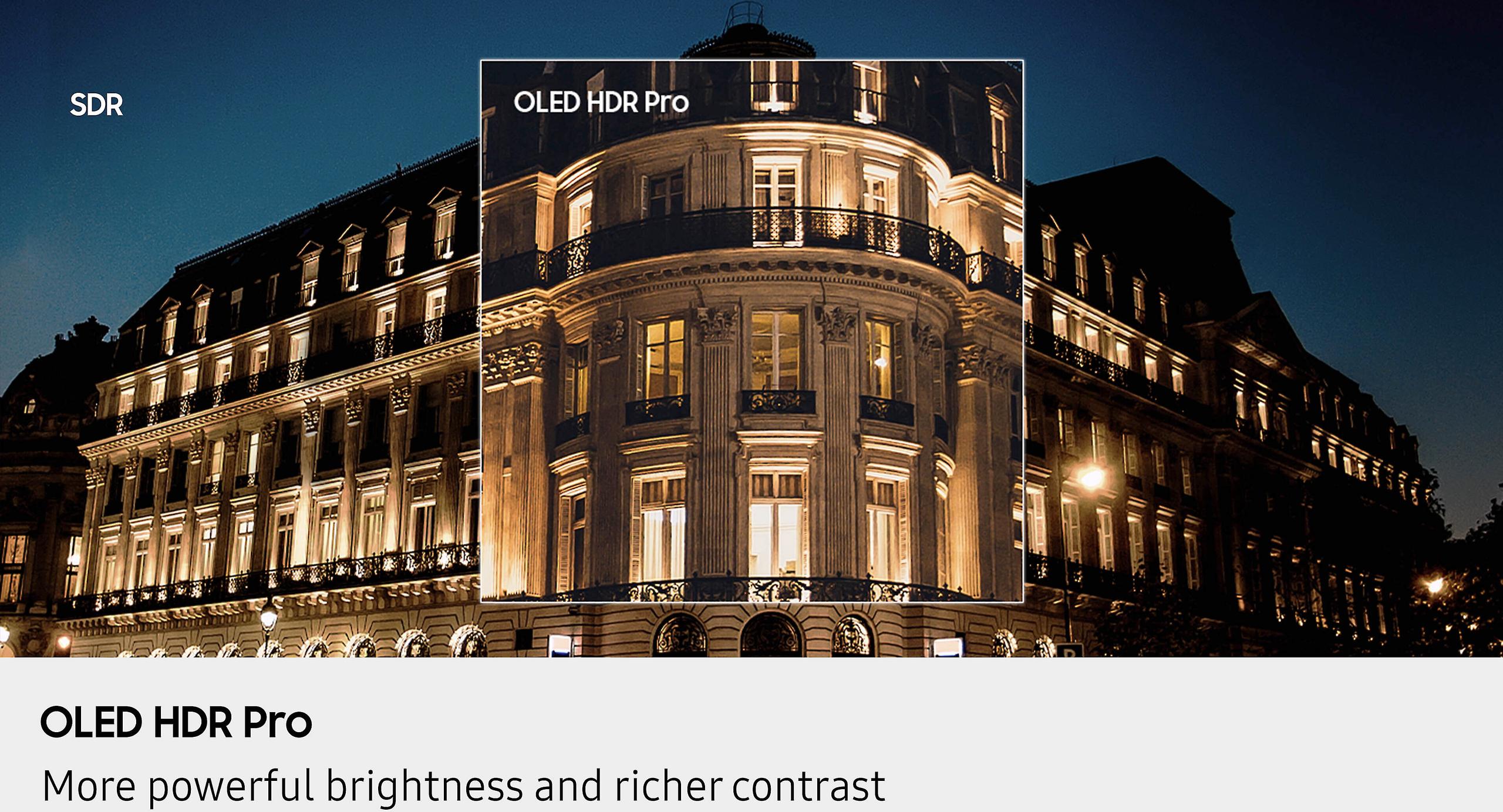
Based on our research into expert reviews and measurements, the S95F achieves peak brightness levels around 2,170 nits in HDR content, while the Frame maxes out around 590 nits. To put this in perspective, a bright sunny day measures about 100,000 nits, while indoor lighting typically ranges from 100-500 nits. The S95F's ability to hit over 2,000 nits means HDR content—like the sun glinting off water or explosions in action movies—actually looks bright enough to feel realistic.
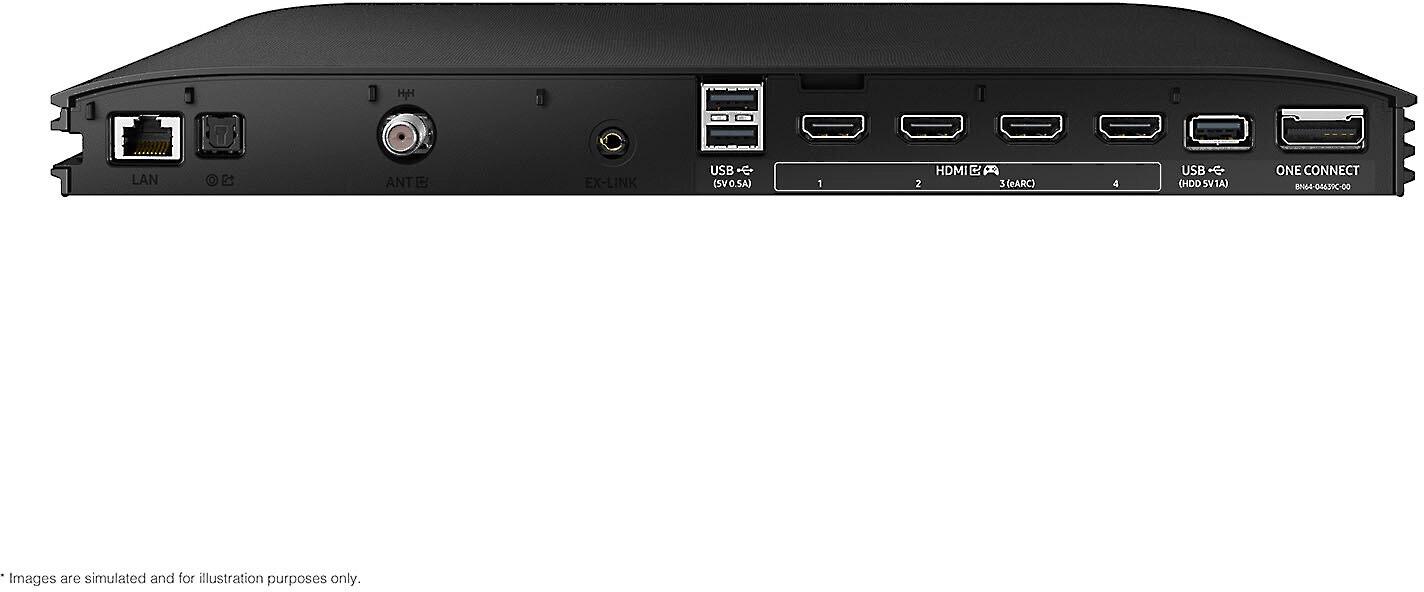
For gamers, the technical specifications reveal a clear performance hierarchy. The Frame QLED 2024 supports up to 120Hz refresh rate, which means it can display 120 frames per second. This is adequate for most gaming, but it only has one HDMI 2.1 port with full bandwidth support. HDMI 2.1 is the connection standard required for 4K gaming at high refresh rates with features like Variable Refresh Rate (VRR), which synchronizes your TV's refresh rate with your gaming console to eliminate screen tearing.
More concerning for serious gamers is the Frame's input lag—the delay between pressing a button and seeing the action on screen. Our research indicates input lag measurements exceeding 30 milliseconds, which is problematic for competitive gaming where every millisecond counts. For context, anything under 20ms is considered good for gaming, while under 10ms is excellent.
The S95F OLED 2025 takes gaming seriously with support for 165Hz refresh rate at 4K resolution—currently among the highest available on consumer TVs. All four HDMI ports support full HDMI 2.1 bandwidth, meaning you can connect multiple next-generation gaming consoles without compromise. Input lag drops to under 10ms, and the near-instantaneous pixel response times of OLED technology mean fast-moving objects appear sharp without motion blur.
The S95F also includes AMD FreeSync Premium Pro certification, which ensures compatibility with a wide range of gaming devices and provides a smooth, tear-free gaming experience. If you're someone who games regularly or owns multiple gaming consoles, the performance difference justifies the higher price point.
High Dynamic Range (HDR) content is designed to display a wider range of brightness and color than standard video, more closely matching what our eyes see in real life. However, to properly display HDR, your TV needs sufficient peak brightness and contrast capability.
The Frame QLED 2024 supports HDR10 and HDR10+ formats but lacks the brightness to make HDR content truly impactful. With peak brightness around 590 nits, HDR highlights don't pop the way they should. Watching a sunset scene might look pleasant, but it won't have the visual impact that makes you feel like you're actually there.
The S95F OLED 2025 transforms HDR viewing with its exceptional peak brightness combined with perfect blacks. When watching content like "Planet Earth" documentaries or Marvel movies with their dramatic lighting, the difference becomes immediately apparent. Explosions actually look bright, sunlight streaming through windows appears realistic, and details in both bright and dark areas remain visible simultaneously.
Both TVs notably lack Dolby Vision support, which is Samsung's ongoing limitation. Dolby Vision is a premium HDR format that provides scene-by-scene optimization for even better HDR performance. While this is disappointing for home theater enthusiasts who want every possible format supported, HDR10+ provides most of the same benefits for content that supports it.
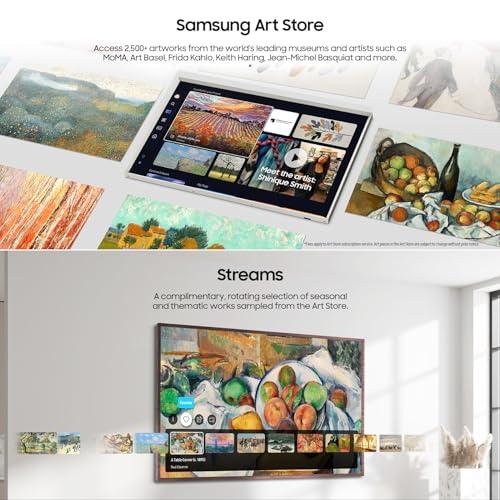
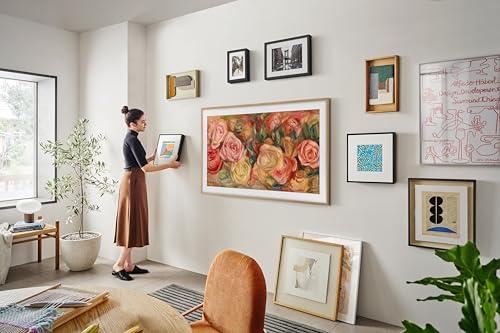
The Frame QLED 2024's defining feature is its Art Mode, which transforms the TV into a digital art gallery when not in use. This isn't just a screensaver—it's a carefully engineered system that includes a motion sensor to activate the display when someone enters the room and a matte anti-glare coating that makes the screen look more like an actual canvas.
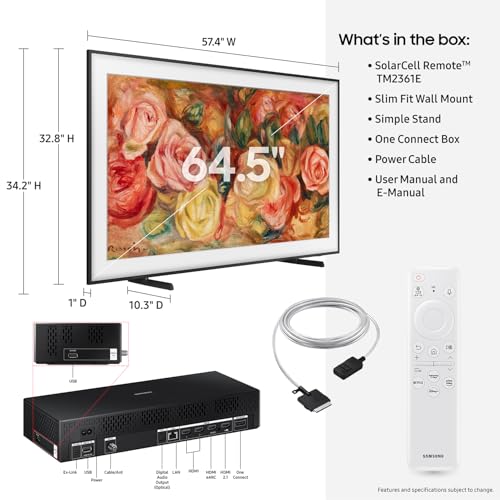
Samsung's Art Store provides access to over 2,500 curated artworks, though full access requires a subscription (at the time of writing). You can also display personal photos through the SmartThings app. The customizable magnetic bezels, sold separately, allow you to match the TV's appearance to your room's décor, from ornate gold frames to minimalist wood finishes.
The matte coating serves dual purposes: it reduces reflections that would break the art illusion, and it gives displayed images a textured, canvas-like appearance. However, this same coating affects video performance by making blacks appear slightly elevated in bright rooms, though the effect is less noticeable than traditional glossy screens' reflection issues.
Art Mode also includes intelligent features like automatically adjusting brightness based on room lighting and switching to lower refresh rates when displaying static images to save energy. When someone approaches the TV, the motion sensor activates the display within seconds.
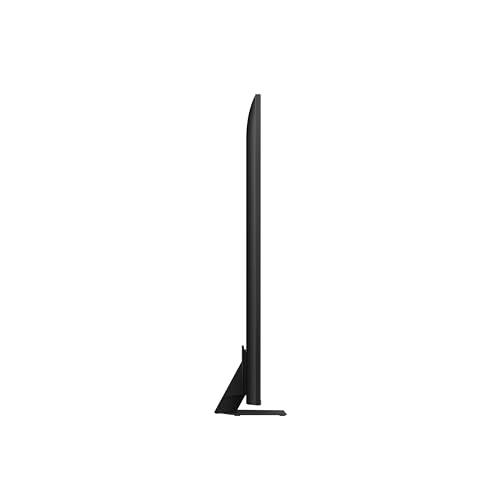
The Frame QLED 2024 achieves an ultra-thin 1-inch profile that allows truly flush wall mounting. Combined with the included One Connect Box—an external unit that houses all your HDMI connections—you can achieve a clean installation with just a single cable running to the TV. This design approach prioritizes aesthetic integration above all else.
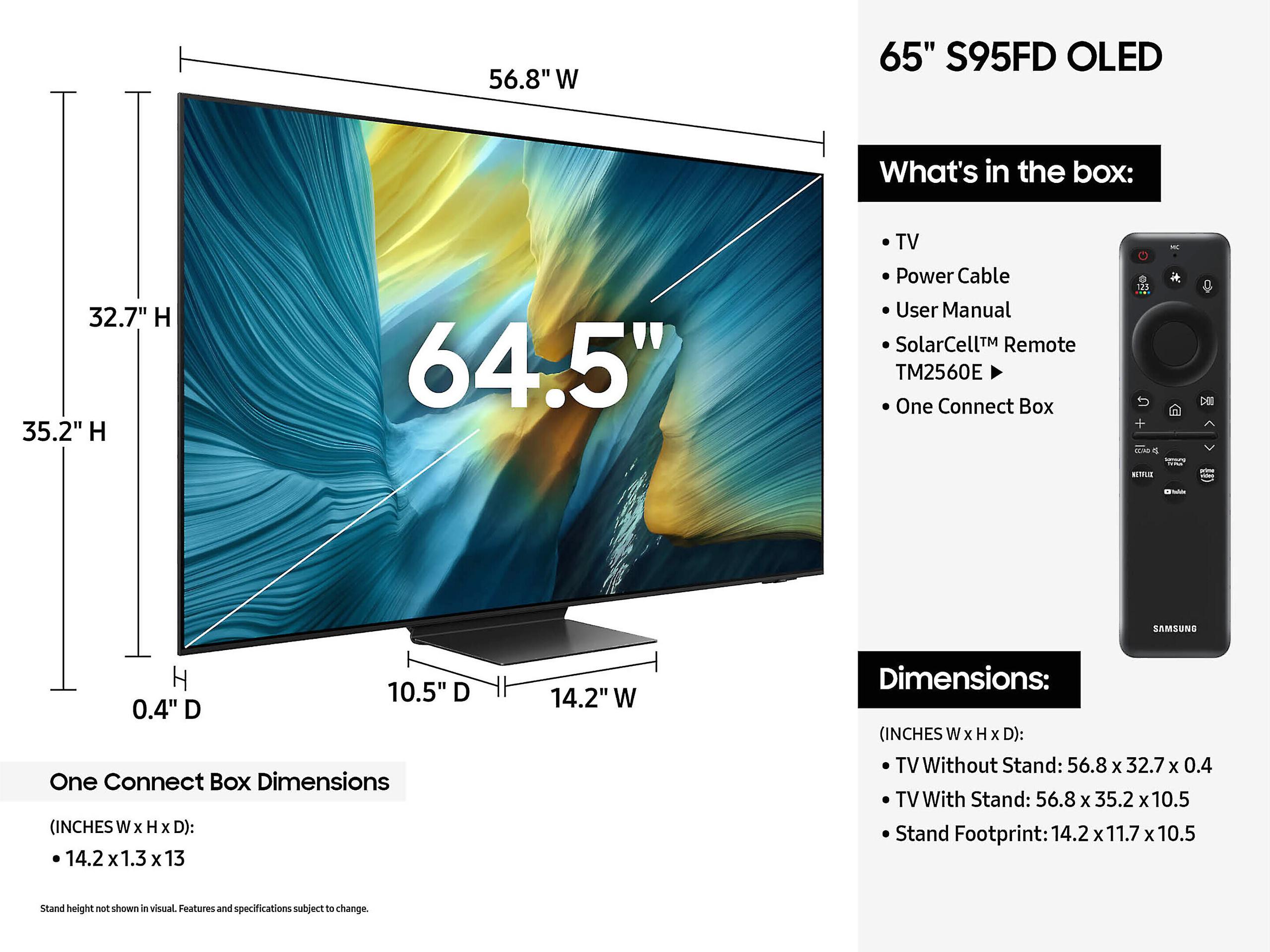
The S95F OLED 2025 also includes Samsung's Slim One Connect Box and maintains a sub-1-inch thickness when wall-mounted, but its design language emphasizes premium performance rather than invisible integration. The build quality reflects its flagship positioning with more substantial materials and refined finishing.
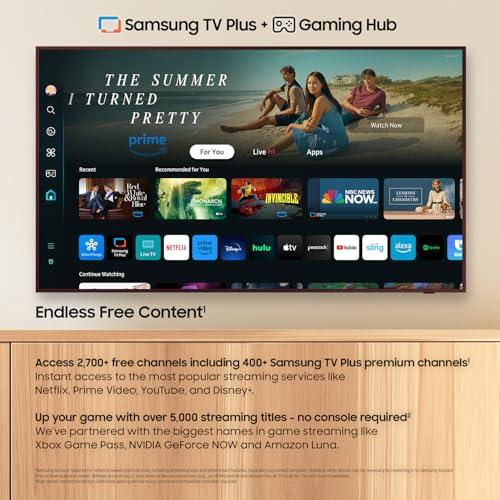
Both TVs include Samsung's Tizen smart TV platform, but the S95F features more advanced processing with what Samsung calls Vision AI, powered by 128 neural networks for improved upscaling and image processing. This means older, lower-resolution content looks sharper and more detailed on the S95F.
Built-in TV audio rarely matches dedicated sound systems, but the differences between these models matter for users who don't plan to add external speakers. The Frame QLED 2024 includes a 40-watt, 2.0.2 channel speaker system with basic Dolby Atmos support. It's adequate for casual viewing but lacks the power and dimension for immersive experiences.
The S95F OLED 2025 steps up significantly with a 70-watt, 4.2.2 channel speaker system. More importantly, it includes Object Tracking Sound Plus (OTS+), which uses multiple speakers to create the illusion that audio follows the action on screen. When a car drives across the screen, the sound appears to move with it. Combined with more robust Dolby Atmos implementation, the S95F provides notably better audio without external speakers.
Both TVs support Q-Symphony, allowing them to work alongside compatible Samsung soundbars rather than just switching off when external audio is connected. This creates a more enveloping soundstage by using both the TV's speakers and the soundbar simultaneously.
For dedicated home theater setups, the S95F OLED 2025 clearly emerges as the superior choice. The combination of perfect blacks, exceptional brightness, and accurate colors creates a viewing experience that approaches commercial cinema quality. In dark rooms, OLED's ability to display true blacks eliminates the "grayish" letterbox bars that appear above and below movies on LCD displays like the Frame.
The S95F's wider viewing angles mean picture quality remains consistent even for viewers sitting to the sides, crucial for larger seating arrangements. Color accuracy remains excellent from various angles, while the Frame shows noticeable degradation when viewed from the sides.
Filmmaker Mode, available on both TVs, disables motion smoothing and adjusts color settings to match the director's intent. However, the S95F's superior contrast and brightness capabilities mean you're seeing closer to what filmmakers actually intended, especially in scenes with dramatic lighting.
Samsung's 2025 Tizen implementation on the S95F OLED includes AI-powered features that automatically adjust picture settings based on content type and viewing conditions. While some of these features lean toward over-processing, they can be disabled for users who prefer manual control.
The S95F also includes Samsung's commitment to seven years of software updates, ensuring compatibility with new streaming services and features well into the future. This long-term software support adds value to the higher initial investment.
Both TVs support major streaming services and Samsung's SmartThings ecosystem for smart home integration, but the S95F's more powerful processor handles interface navigation more smoothly and loads content faster.
The Samsung 65" The Frame QLED 2024 makes sense for specific use cases where its unique capabilities provide value that pure performance cannot. If you live in a bright room where glare is problematic, want a TV that doubles as art, or prioritize aesthetic integration over picture quality, the Frame succeeds brilliantly at its intended purpose. It's particularly appealing for main living areas where the TV is visible even when not in use, and for families who appreciate the educational and aesthetic value of displaying artwork.
However, if you're primarily focused on getting the best possible viewing experience—whether for movies, sports, or gaming—the Frame feels like a compromise. You're paying for features you might not use while accepting limitations in core TV performance.
The Samsung 65" OLED S95F 2025 targets users who want flagship performance and are willing to pay for it. The dramatic improvements in brightness, contrast, and gaming capabilities make it one of the most capable TVs available. For home theater enthusiasts, serious gamers, or anyone who watches a lot of premium content, the S95F provides an experience that justifies its premium positioning.
The decision ultimately comes down to priorities. At the time of writing, the significant price difference between these models reflects their different approaches—lifestyle integration versus performance maximization. Neither TV is inherently better; they're designed for different users with different needs.
If you find yourself drawn to the Frame's art display capabilities but worried about picture quality compromises, consider whether you'll actually use Art Mode regularly. If the answer is yes, and aesthetics matter more than having the absolute best picture quality, the Frame offers something genuinely unique in the TV market.
Conversely, if you want the best TV Samsung makes and don't need it to function as wall art, the S95F delivers performance that will remain impressive for years to come. The investment in flagship display technology tends to age better than compromise solutions, making it potentially better long-term value despite the higher upfront cost.
| Samsung 65" The Frame QLED 4K 2024 TV | Samsung 65" OLED S95F 4K Smart TV 2025 |
|---|---|
| Display Technology - Fundamental difference affecting picture quality | |
| Edge-lit QLED with quantum dots | QD-OLED with self-illuminating pixels |
| Peak Brightness - Critical for HDR content impact | |
| ~590 nits (adequate but limited HDR impact) | ~2,170 nits (exceptional HDR brightness for OLED) |
| Black Levels - Determines contrast and dark scene detail | |
| Dark gray (limited by LED backlighting) | Perfect black (pixels turn completely off) |
| Gaming Refresh Rate - Higher is better for smooth motion | |
| 120Hz (good for most gaming) | 165Hz (exceptional for competitive gaming) |
| Input Lag - Lower numbers mean more responsive gaming | |
| >30ms (concerning for competitive gaming) | <10ms (excellent for all gaming types) |
| HDMI 2.1 Ports - Needed for next-gen console features | |
| 1 port (limits multi-console setups) | 4 ports (supports multiple high-end devices) |
| Art Display Features - Unique lifestyle functionality | |
| Full Art Mode with motion sensor, customizable bezels | None (performance-focused design) |
| Screen Coating - Affects reflections and appearance | |
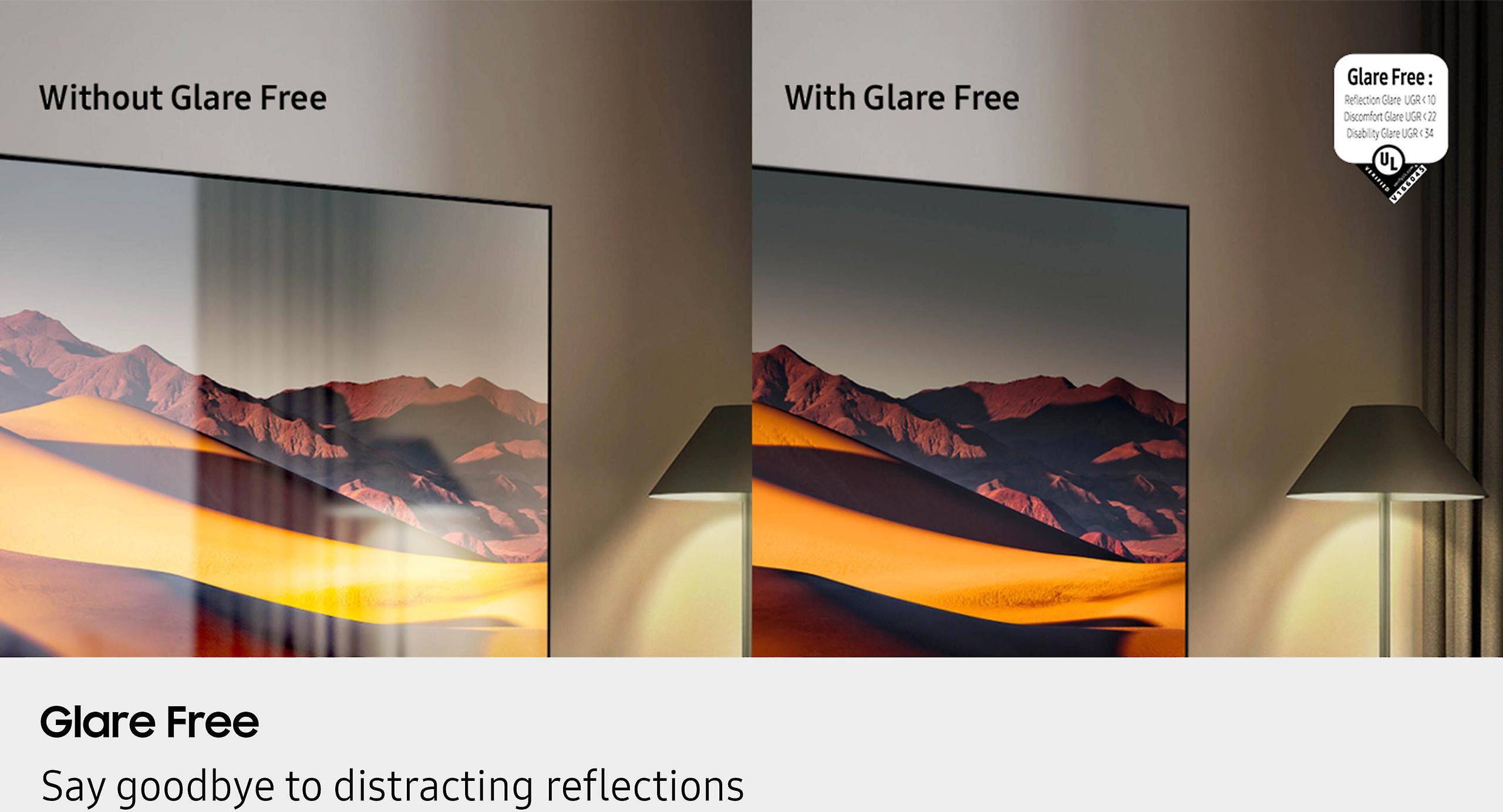
| Matte anti-glare for canvas-like art display | Glare Free 2.0 optimized for viewing performance |
| Audio System - Built-in speaker quality | |
| 40W, 2.0.2 channels (basic but adequate) | 70W, 4.2.2 channels with Object Tracking Sound+ |
| Viewing Angles - Picture quality consistency from sides | |
| Limited (colors/contrast degrade at angles) | Excellent (OLED maintains quality at wide angles) |
| Local Dimming - Precise backlight control for contrast | |
| None (edge-lit limitation) | Per-pixel control (infinite dimming zones) |
| Smart TV Features - Processing power and AI capabilities | |
| Standard Tizen OS with basic processing | Advanced Vision AI with 128 neural networks |
| Software Support - Future compatibility assurance | |
| Standard Samsung support cycle | 7 years guaranteed updates |
| Wall Mount Design - Installation aesthetics | |
| Ultra-thin 1" profile with One Connect Box | Sub-1" profile with Slim One Connect Box |
| HDR Format Support - Premium content compatibility | |
| HDR10, HDR10+ (no Dolby Vision) | HDR10, HDR10+ (no Dolby Vision) |
| Best Use Case - Who should choose this TV | |
| Lifestyle integration, art display, bright rooms | Performance viewing, gaming, home theater |
The Samsung 65" OLED S95F 2025 delivers significantly better picture quality with perfect blacks, infinite contrast, and peak brightness reaching over 2,000 nits. The Samsung 65" The Frame QLED 2024 uses edge-lit QLED technology that produces decent colors but cannot achieve true blacks, resulting in more limited contrast for dark movie scenes.
The fundamental difference is purpose and technology. The Frame QLED 2024 is designed as a lifestyle product that doubles as wall art when not in use, featuring Art Mode and customizable bezels. The OLED S95F 2025 is a performance-focused flagship TV with cutting-edge QD-OLED display technology prioritizing the best possible viewing experience.
The Samsung OLED S95F 2025 is far superior for gaming with 165Hz refresh rate, under 10ms input lag, four HDMI 2.1 ports, and AMD FreeSync Premium Pro support. The Frame QLED 2024 only offers 120Hz, has concerning input lag over 30ms, and just one HDMI 2.1 port, making it suitable only for casual gaming.
Yes, the Samsung Frame QLED 2024 features a dedicated Art Mode that displays curated artwork or personal photos using a motion sensor for activation. The matte anti-glare coating gives images a canvas-like appearance, and you can purchase customizable magnetic bezels to match your room's décor. The OLED S95F 2025 does not have this art display functionality.
Both TVs handle bright rooms well but differently. The Frame QLED 2024 uses a matte coating that reduces reflections and works well with ambient light, especially for art display. The OLED S95F 2025 features advanced Glare Free 2.0 technology and much higher peak brightness, making it excellent for bright rooms while maintaining superior picture quality.
The Samsung OLED S95F 2025 has significantly better audio with 70W, 4.2.2 channel speakers and Object Tracking Sound Plus technology. The Frame QLED 2024 includes 40W, 2.0.2 channel speakers that are adequate for casual viewing but lack the power and dimension of the flagship model's audio system.
The Samsung OLED S95F 2025 is clearly better for home theater use, offering perfect blacks, exceptional HDR brightness, wide viewing angles, and accurate colors that remain consistent in dark rooms. The Frame QLED 2024 cannot match the contrast and black levels needed for an optimal cinematic experience due to its edge-lit LED backlighting.
Both use Samsung's Tizen operating system with access to major streaming services, but the OLED S95F 2025 includes more advanced processing with Vision AI powered by 128 neural networks and seven years of guaranteed software updates. The Frame QLED 2024 has standard smart TV features plus specialized art display integration through the SmartThings app.
The Samsung OLED S95F 2025 offers excellent viewing angles with consistent picture quality even when viewed from the sides, thanks to OLED technology. The Frame QLED 2024 has more limited viewing angles typical of LED-backlit displays, with noticeable color and contrast degradation when viewed from extreme angles.
The Samsung OLED S95F 2025 provides dramatically better HDR performance with peak brightness over 2,000 nits and infinite contrast, making HDR highlights truly pop and dark details remain visible. The Frame QLED 2024 supports HDR formats but with limited brightness around 590 nits, HDR content appears less impactful and realistic.
For pure performance value, the Samsung OLED S95F 2025 offers flagship picture quality, gaming features, and seven years of software support that should age well. The Frame QLED 2024 provides unique art display functionality that adds lifestyle value beyond traditional TV use, making it worthwhile if you'll actually use the art features regularly.
Choose the Samsung Frame QLED 2024 if aesthetic integration matters most, you want art display functionality, and you're primarily a casual viewer. Pick the Samsung OLED S95F 2025 if you prioritize the best possible picture quality, do serious gaming, watch lots of movies, or want flagship performance that will remain impressive for years to come.
We've done our best to create useful and informative comparisons to help you decide what product to buy. Our research uses advanced automated methods to create this comparison and perfection is not possible - please contact us for corrections or questions. These are the sites we've researched in the creation of this article: tomsguide.com - rtings.com - rtings.com - youtube.com - bestbuy.com - techlicious.com - youtube.com - smalllilystudio.com - theeverymom.com - livingetc.com - pcrichard.com - image-us.samsung.com - samsung.com - images.samsung.com - samsung.com - buydig.com - tvsbook.com - bestbuy.com - samsung.com - samsung.com - flatpanelshd.com - businessinsider.com - tomsguide.com - youtube.com - avsforum.com - zdnet.com - samsung.com - pioneertvandappliance.com - samsung.com - displayspecifications.com - samsung.com

Privacy Policy
Terms and Conditions - Affiliate Policy
Home Security
© Copyright 2008-2026.
11816 Inwood Rd #1211, Dallas, TX 75244