

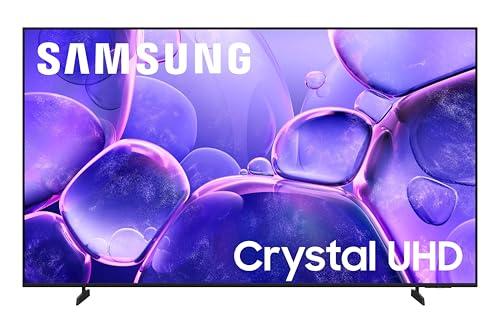
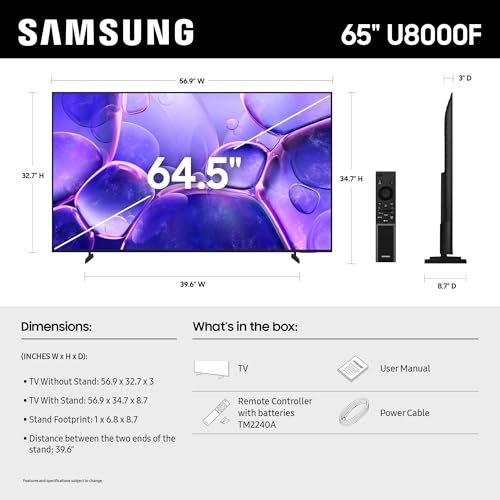

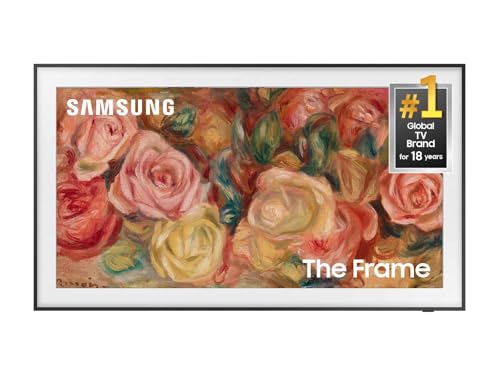
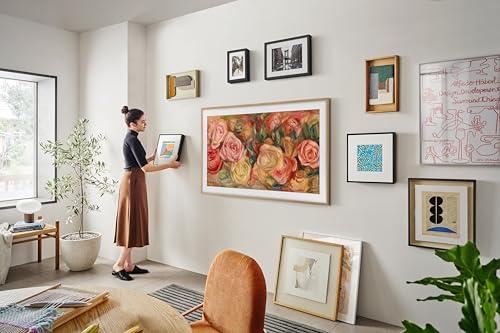
When you're shopping for a 65-inch TV, Samsung offers two very different approaches at opposite ends of their lineup. The Samsung 65-Inch Crystal UHD U8000F 4K Smart TV 2025 represents their budget-friendly entry point, while Samsung 65" The Frame QLED 4K 2024 TV takes a completely different approach as a premium lifestyle product that doubles as wall art.
At the time of writing, these TVs sit in vastly different price brackets - the U8000F typically costs less than half of what you'd pay for The Frame. But that price difference reflects fundamentally different philosophies about what a TV should be and do in your home.
Both TVs deliver 4K resolution and smart TV features, but they're designed for completely different buyers. The U8000F follows the traditional approach: deliver solid picture quality and essential features at the lowest possible price. It's what most people think of when they hear "TV" - a rectangular screen that displays content and gets out of the way.
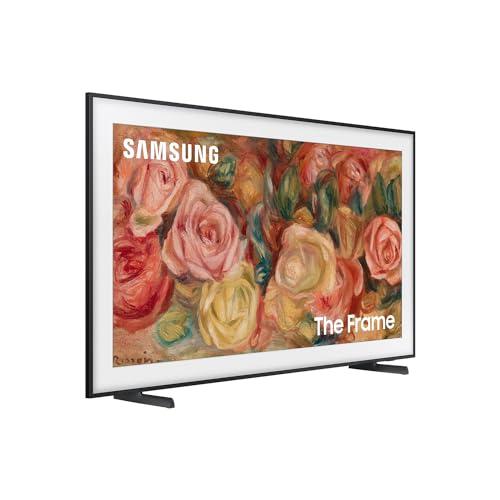
The Frame, released in 2024, represents Samsung's most ambitious lifestyle TV concept. When you're not watching content, it transforms into a digital art gallery, displaying curated artwork or your personal photos. The 2024 version introduced several refinements, including improved brightness, a new matte display coating, and dynamic refresh rate adjustment that saves energy when displaying static art.
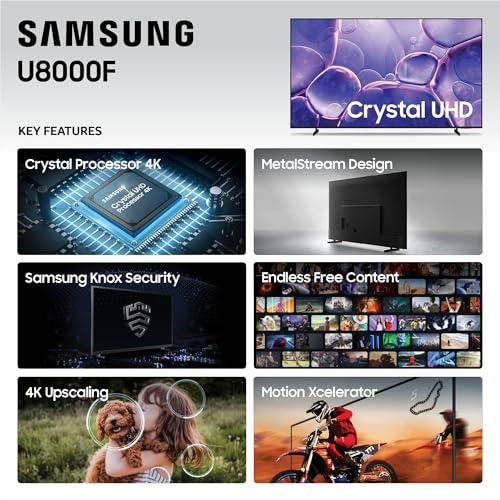
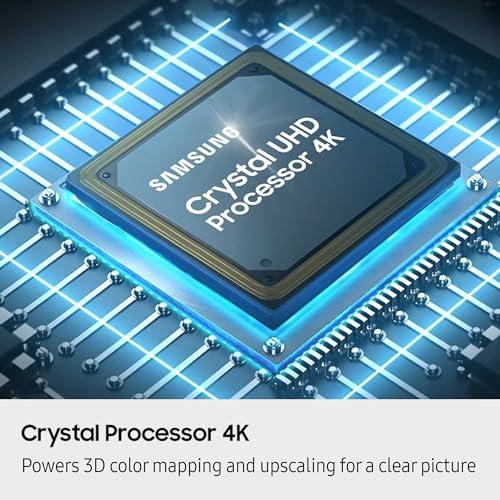
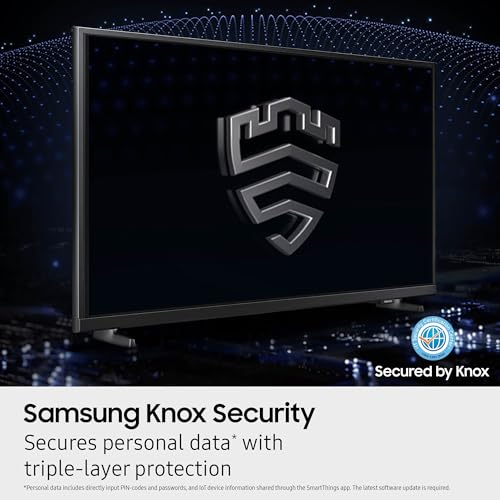
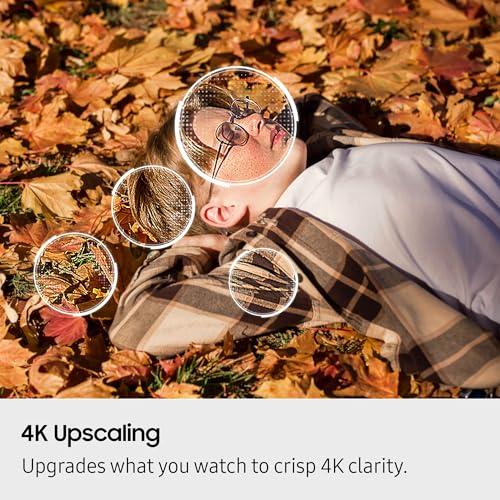
The U8000F, being a 2025 model, represents the latest iteration of Samsung's entry-level Crystal UHD technology. Compared to previous budget Samsung TVs, it includes upgraded processing and Samsung's Knox Security system, but it still uses basic display technology without the quantum dots found in higher-end models.
The most significant difference between these TVs lies in their fundamental display technology, and it's where you'll see the biggest performance gap.
The Frame uses QLED technology, which stands for Quantum Dot LED. Think of quantum dots as tiny particles that act like extremely precise color filters. When the TV's backlight hits these particles, they emit very specific colors - creating what Samsung calls "100% color volume." This means the TV can display vibrant, accurate colors even when the screen gets very bright, something traditional LCD TVs struggle with.
The quantum dot layer in The Frame allows it to cover 91.9% of the UHDA-P3 color space (a professional standard used in movie theaters) and 68.15% of the even wider Rec. 2020 space. In practical terms, this means more lifelike skin tones, deeper reds, and more vibrant greens that don't wash out in bright scenes.
The U8000F, on the other hand, uses Crystal UHD technology - Samsung's entry-level 4K processing. It lacks quantum dots entirely, instead relying on features like Color Booster and Mega Contrast to improve picture quality through software processing. While these features help, they can't overcome the fundamental limitations of the basic LCD panel underneath.
Brightness is crucial for two reasons: it determines how well you can see the TV in bright rooms, and it directly impacts how impressive HDR (High Dynamic Range) content looks. HDR is a technology that allows TVs to display a much wider range of brightness levels, from deep blacks to brilliant highlights, making images look more realistic.
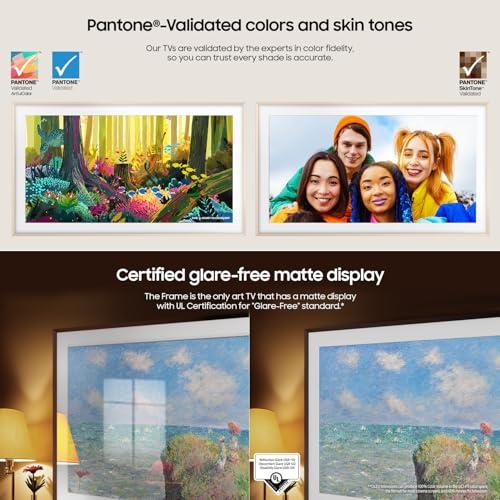
The Frame achieves 431 nits in standard content and up to 590 nits when displaying HDR highlights (measured in a 10% window, which represents bright highlights like the sun or explosions). This brightness, combined with its unique anti-glare matte coating, makes it exceptionally good for bright rooms. The matte coating scatters ambient light rather than reflecting it directly back at you, similar to how a canvas painting doesn't create harsh reflections.
The U8000F uses basic direct-lit LED backlighting without local dimming zones. Local dimming is a feature where the TV can selectively brighten or dim different areas of the screen independently, improving contrast. Without it, the entire screen brightness changes together, leading to washed-out blacks and less impressive HDR performance. Our research shows the U8000F struggles in bright rooms due to poor reflection handling and lower overall brightness.
If you game on consoles or PC, the performance difference between these TVs is dramatic and represents one of the strongest arguments for choosing The Frame despite its higher price.
The Frame supports a native 120Hz refresh rate, which means it can display up to 120 individual frames per second. This matters enormously for modern gaming, where PlayStation 5, Xbox Series X, and gaming PCs can output games at 120fps for incredibly smooth motion. The TV also includes one HDMI 2.1 port capable of 4K resolution at 120Hz - the full bandwidth needed for next-generation gaming.
Variable Refresh Rate (VRR) is another crucial gaming feature that The Frame handles excellently. VRR allows the TV to synchronize its refresh rate with your gaming device, eliminating screen tearing (when parts of different frames appear simultaneously) and reducing stuttering. The Frame supports all three major VRR standards: HDMI Forum VRR, AMD FreeSync Premium Pro, and NVIDIA G-SYNC Compatible.
Input lag - the delay between when you press a button and see the action on screen - measures an excellent 9.2ms on The Frame in Game Mode. For reference, anything under 20ms is considered good for gaming, and under 10ms is exceptional.
The U8000F tells a very different story. Limited to 60Hz refresh rate with only HDMI 2.0 ports, it can't take advantage of high-frame-rate gaming. While it offers basic VRR and Auto Low Latency Mode (ALLM), expert reviews consistently rate it as "sub-par for gaming." The 60Hz limitation means you're leaving performance on the table with any modern gaming system.
If gaming is important to you, this difference alone justifies the price premium for The Frame. You simply can't get next-generation gaming performance from the U8000F, no matter how you configure it.
TV speakers rarely impress, but the gap between these models is significant enough to matter.
The Frame includes a 40W 2.0.2 channel system with True Dolby Atmos support. Dolby Atmos is an audio technology that creates three-dimensional sound by bouncing audio off your ceiling, creating the illusion that sounds are coming from above you - like hearing a helicopter fly overhead in a movie. The TV includes dedicated upward-firing speakers to achieve this effect.
Object Tracking Sound (OTS) on The Frame moves audio around the screen to match what's happening visually. When a car drives from left to right on screen, you'll hear the engine sound follow that movement across your room.
The U8000F includes basic 20W 2-channel speakers with Object Tracking Sound Lite - a simplified version that provides some directional audio but lacks the power and dimensional capability of The Frame's system. While adequate for casual viewing, you'll likely want to add a soundbar sooner rather than later.
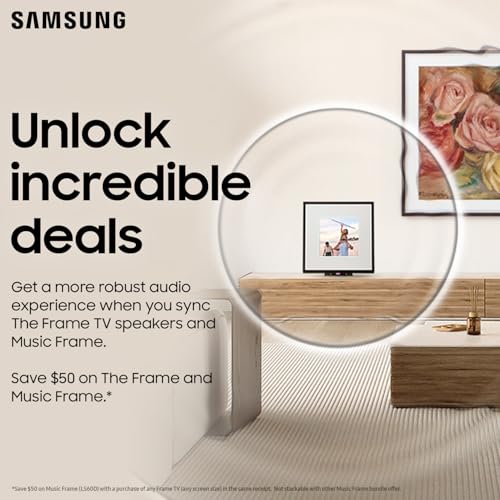
Both TVs support Q-Symphony, Samsung's technology that lets the TV speakers work alongside compatible Samsung soundbars rather than shutting off when you connect external audio. This can create a fuller soundstage by using more drivers throughout your room.
Here's where these TVs diverge most dramatically in their intended use cases.
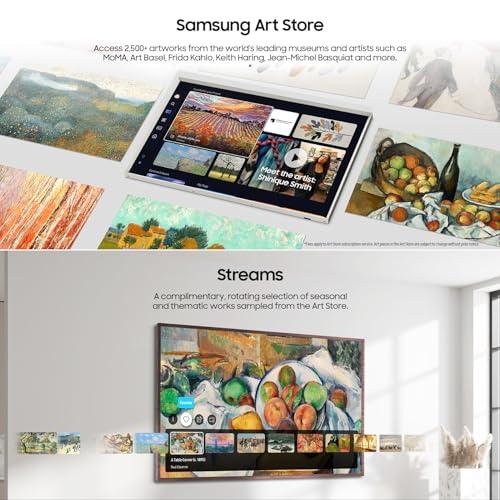
The Frame fundamentally reimagines what a TV can be when you're not watching it. Art Mode transforms the screen into a digital art gallery, displaying curated artwork that changes monthly or your personal photos uploaded through Samsung's SmartThings app. The 2024 model introduced improved motion sensors that detect when you're in the room and automatically turn on the display.
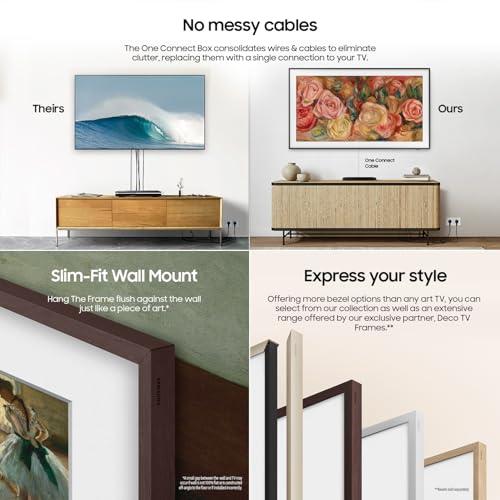
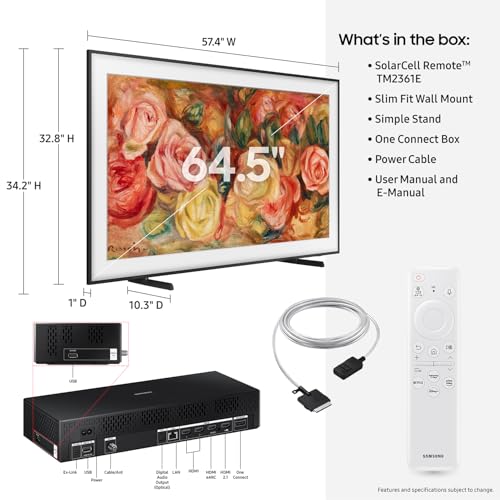
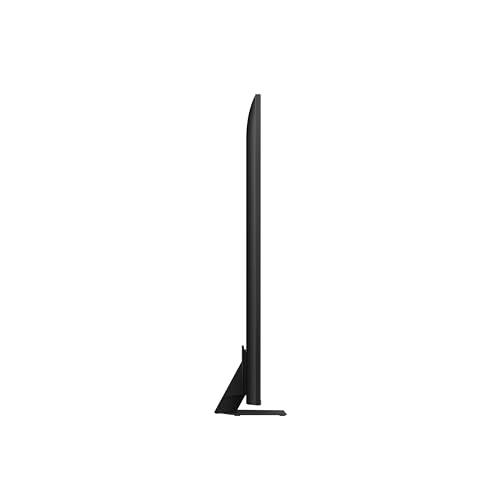
The TV's design supports this art concept beautifully. At just one inch thick, it mounts flush against the wall using the included Slim-Fit mount. The One Connect Box consolidates all your device connections into an external unit, so only a single, nearly invisible cable runs to the TV. You can customize the look with magnetic bezels that snap onto the TV's edges, available in different colors and wood-grain finishes to match your decor (sold separately).
The anti-glare matte coating deserves special mention. Unlike glossy TV screens that act like mirrors in bright rooms, this coating scatters light to eliminate reflections while maintaining image quality. It's the same principle used in museum displays to showcase artwork under various lighting conditions.
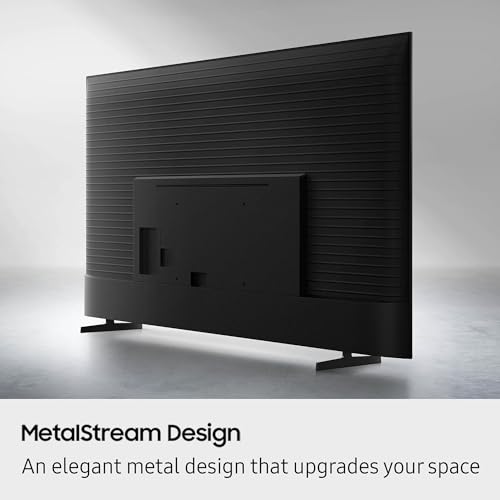
The U8000F takes the conventional approach with Samsung's MetalStream Design - slim bezels and an aircraft-inspired metal construction that looks elegant but functions purely as a traditional TV. There's no art mode, no custom bezels, and no special mounting hardware included.
Both TVs run Samsung's Tizen operating system, but with different feature sets reflecting their target markets.
The Frame includes advanced SmartThings integration for managing your digital art collection, access to Samsung's Art Store for premium curated collections, and an ATSC 3.0 tuner for next-generation broadcast television. The connectivity includes four HDMI ports (one HDMI 2.1, three HDMI 2.0) and two USB ports.
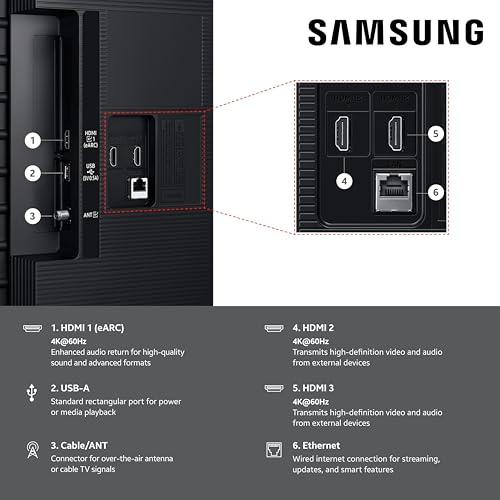
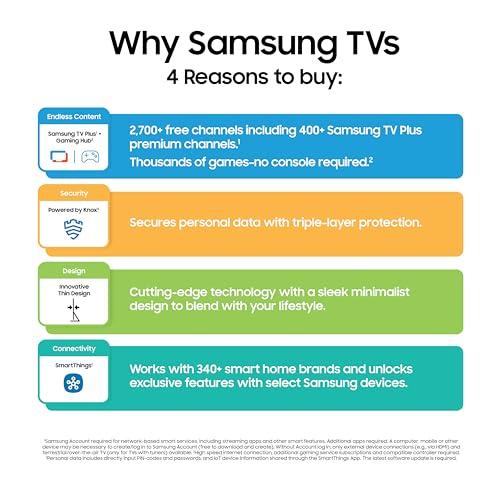
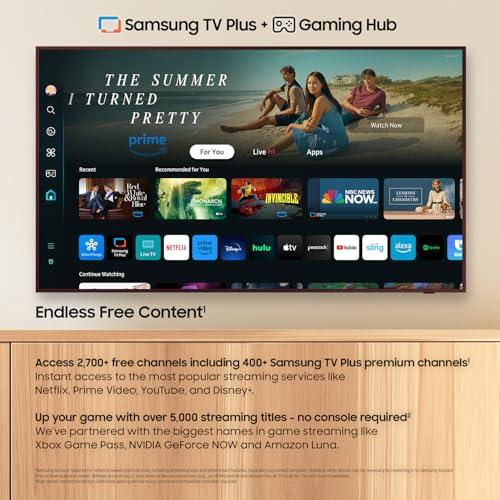
The U8000F focuses on essential smart TV functionality with Samsung Knox Security for enhanced privacy protection and access to Samsung TV Plus, which provides over 2,700 free streaming channels. However, it's limited to three HDMI 2.0 ports and just one USB port - potentially limiting if you have multiple gaming consoles, streaming devices, or other accessories.
For dedicated home theater use, both TVs have significant limitations compared to Samsung's premium QLED and OLED models, but The Frame performs notably better.
Neither TV includes full-array local dimming, which is crucial for deep blacks and high contrast ratios that make movies shine in dark rooms. However, The Frame's superior brightness and color accuracy make HDR content more impactful, while its better audio system provides a more cinematic experience without immediately requiring a soundbar upgrade.
The U8000F's limited brightness and basic audio make it less suitable for serious movie watching, especially in a dedicated theater room where you can control lighting. If home theater performance is your priority, both TVs represent compromises, but The Frame makes fewer of them.
Based on our research into expert reviews and user feedback, the most important performance characteristics for these TV categories are:
Color accuracy and brightness for overall picture quality - The Frame wins decisively with quantum dot technology and higher peak brightness.
Gaming performance measured by refresh rate, input lag, and VRR support - The Frame offers next-generation capabilities while the U8000F is limited to basic gaming.
Bright room performance determined by reflection handling and peak brightness - The Frame's matte coating and higher brightness make it significantly better for typical living room environments.
Build quality and design integration for long-term satisfaction - The Frame offers premium construction and unique lifestyle features, while the U8000F provides basic durability at its price point.
Choose The Frame QLED 4K 2024 TV if:
You want a TV that disappears into your room's design when not in use. The art display functionality isn't just a gimmick - it genuinely transforms how a large screen integrates into your living space. You'll also benefit from significantly better gaming performance, superior picture quality in bright rooms, and more robust connectivity options. The premium you pay gets you quantum dot color technology that will remain relevant for years as content quality continues improving.
Choose the Samsung Crystal UHD U8000F 2025 if:
Your primary concern is getting 4K smart TV functionality at the lowest possible price. It handles basic viewing tasks adequately - streaming Netflix, watching cable, casual web browsing - without the premium features you might not use. This makes sense for secondary TVs, budget-conscious buyers, or situations where the TV will primarily display less demanding content.
At the time of writing, The Frame typically costs roughly twice as much as the U8000F, but you're getting far more than twice the performance and features. The quantum dot display technology, 120Hz gaming capabilities, premium audio system, and unique lifestyle features represent a substantial upgrade over basic Crystal UHD technology.
However, that doesn't mean The Frame is automatically the better choice for everyone. If you're shopping purely on price and don't game frequently, the U8000F delivers functional 4K performance that will satisfy basic viewing needs.
The decision ultimately comes down to how you'll use the TV and what you value most. If you see your TV as furniture that should enhance your room's aesthetic while delivering excellent performance, The Frame justifies its premium pricing. If you view it as a functional appliance that should simply display content reliably and affordably, the U8000F serves that purpose well.
Just remember that TVs are long-term purchases - most people keep them for 7-10 years. The features and performance you choose today will need to remain satisfactory for years to come, especially as content quality continues improving and gaming technology advances.
| Samsung 65-Inch Crystal UHD U8000F 4K Smart TV 2025 | Samsung 65" The Frame QLED 4K 2024 TV |
|---|---|
| Display Technology - Determines color accuracy and overall picture quality | |
| Crystal UHD with basic LED backlighting (entry-level processing) | QLED with Quantum Dot technology (100% color volume, superior brightness) |
| Refresh Rate - Critical for gaming and smooth motion | |
| 60Hz only (limits gaming to 60fps max) | 120Hz native (supports 120fps gaming from PS5/Xbox Series X) |
| Gaming Features - Essential for console and PC gaming | |
| Basic VRR and ALLM, HDMI 2.0 only | Full VRR suite, HDMI 2.1, 9.2ms input lag, supports 4K@120Hz |
| Peak Brightness - Affects HDR impact and bright room viewing | |
| Limited brightness with poor reflection handling | 590 nits HDR with anti-glare matte coating (excellent for bright rooms) |
| Audio System - Determines whether you need a soundbar immediately | |
| 20W 2-channel speakers (basic audio) | 40W 2.0.2 with Dolby Atmos and upward-firing speakers |
| Design Philosophy - Different approaches to TV integration | |
| Traditional TV design with MetalStream construction | Art Mode lifestyle TV with customizable bezels and flush wall mounting |
| Connectivity Options - Impacts multi-device setups | |
| 3 HDMI 2.0 ports, 1 USB port | 4 HDMI ports (1x 2.1, 3x 2.0), 2 USB ports, One Connect Box |
| Target Use Case - Who each TV serves best | |
| Budget-conscious buyers wanting basic 4K functionality | Design-focused buyers wanting premium performance with art display capability |
| Local Dimming - Affects contrast and black levels | |
| None (entire screen brightness adjusts together) | None (but superior processing partially compensates) |
| Smart TV Features - Platform capabilities and content access | |
| Tizen OS with Knox Security and Samsung TV Plus (2,700+ free channels) | Tizen OS with Art Store integration, SmartThings Hub, ATSC 3.0 tuner |
The biggest difference is that the Samsung 65-Inch Crystal UHD U8000F 4K Smart TV 2025 is a traditional budget TV focused on basic 4K viewing, while Samsung 65" The Frame QLED 4K 2024 TV is a premium lifestyle TV that doubles as wall art when not in use. The Frame uses superior QLED technology with quantum dots for better colors and brightness, while the U8000F uses entry-level Crystal UHD technology.
Samsung 65" The Frame QLED 4K 2024 TV is significantly better for gaming with its 120Hz refresh rate, HDMI 2.1 support for 4K@120Hz gaming, and 9.2ms input lag. The Samsung 65-Inch Crystal UHD U8000F 4K Smart TV 2025 is limited to 60Hz and only has HDMI 2.0 ports, making it inadequate for next-generation console gaming.
Yes, Samsung 65" The Frame QLED 4K 2024 TV features Art Mode that transforms the screen into a digital art gallery, displaying curated artwork or your personal photos when not watching content. It includes motion sensors and can access Samsung's Art Store for premium collections. The Samsung U8000F doesn't have this feature.
The Frame is much better for bright rooms due to its anti-glare matte coating that reduces reflections and higher peak brightness. The coating makes the screen look like a real canvas rather than a mirror. The Samsung U8000F has poor reflection handling and struggles in bright lighting conditions.
Both run Samsung's Tizen OS, but The Frame includes premium features like SmartThings Hub integration, Art Store access, and an ATSC 3.0 tuner. The Samsung 65-Inch Crystal UHD U8000F 4K Smart TV 2025 focuses on basics with Samsung TV Plus (2,700+ free channels) and Knox Security for privacy protection.
Samsung 65" The Frame QLED 4K 2024 TV has superior audio with 40W 2.0.2 channel speakers including Dolby Atmos and upward-firing drivers for 3D sound. The U8000F has basic 20W 2-channel speakers that will likely require a soundbar upgrade sooner.
Neither TV is ideal for dedicated home theater setups since both lack local dimming for deep blacks. However, The Frame performs better with superior brightness, color accuracy, and Dolby Atmos audio. For serious home theater use, consider Samsung's higher-end QLED or OLED models instead of either the U8000F or The Frame.
Samsung 65" The Frame QLED 4K 2024 TV has 4 HDMI ports (1 HDMI 2.1, 3 HDMI 2.0) plus 2 USB ports and comes with a One Connect Box for cable management. The Samsung 65-Inch Crystal UHD U8000F 4K Smart TV 2025 has only 3 HDMI 2.0 ports and 1 USB port, which may limit connectivity options.
This depends on your priorities. The Samsung U8000F offers better value if you need basic 4K functionality at the lowest cost. However, The Frame provides significantly better performance, gaming capabilities, and unique lifestyle features that may justify the premium for many buyers.
Yes, but Samsung 65" The Frame QLED 4K 2024 TV is specifically designed for wall mounting with an included Slim-Fit mount that creates a flush, artwork-like appearance. The Samsung 65-Inch Crystal UHD U8000F 4K Smart TV 2025 can be wall-mounted using standard VESA mounting, but it's designed primarily for stand use.
Choose The Frame if you want premium picture quality, 120Hz gaming, unique art display features, and excellent bright room performance. Choose the Samsung U8000F if you need basic 4K smart TV functionality at an affordable price and don't require advanced gaming features or lifestyle capabilities.
We've done our best to create useful and informative comparisons to help you decide what product to buy. Our research uses advanced automated methods to create this comparison and perfection is not possible - please contact us for corrections or questions. These are the sites we've researched in the creation of this article: bestbuy.com - youtube.com - youtube.com - rtings.com - youtube.com - samsung.com - hometechnologyreview.com - rtings.com - samsung.com - displayspecifications.com - samsung.com - displayspecifications.com - walmart.com - billsmith.com - dentonstv.com - samsung.com - samsung.com - samsung.com - youtube.com - bestbuy.com - bestbuy.com - youtube.com - samsung.com - donstv.com - tomsguide.com - rtings.com - rtings.com - youtube.com - bestbuy.com - techlicious.com - youtube.com - smalllilystudio.com - theeverymom.com - livingetc.com - pcrichard.com - image-us.samsung.com - samsung.com - images.samsung.com - samsung.com - buydig.com - tvsbook.com - bestbuy.com - samsung.com - samsung.com - flatpanelshd.com

Privacy Policy
Terms and Conditions - Affiliate Policy
Home Security
© Copyright 2008-2026.
11816 Inwood Rd #1211, Dallas, TX 75244