


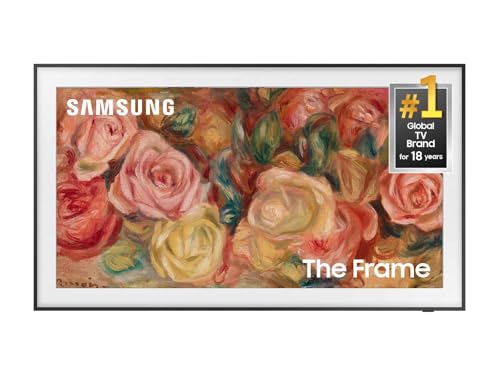






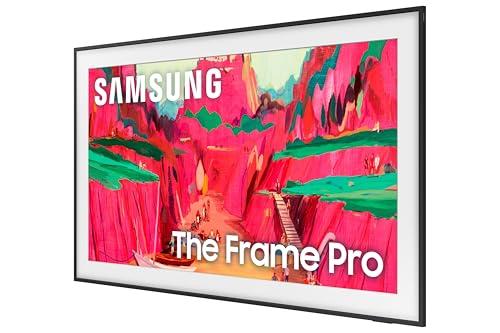
Samsung's Frame TV series has carved out a fascinating niche in the television market. These aren't your typical performance-focused displays—they're designed to disappear into your living space, masquerading as framed artwork when not entertaining your family. But with the release of the upgraded Frame Pro model in 2025, Samsung has attempted something ambitious: bridging the gap between lifestyle aesthetics and serious picture quality.
The question facing potential buyers is whether the newer Frame Pro justifies its premium over the established 2024 Frame, especially when both promise that same gallery-wall aesthetic. After diving deep into expert reviews, user feedback, and technical specifications, the answer isn't as straightforward as you might expect.
Before we dive into comparisons, it's worth understanding what makes Frame TVs unique. Traditional televisions prioritize pure performance metrics—how bright they can get, how deep their blacks are, how smooth their motion appears. Frame TVs flip this priority structure, asking: "How well can this TV blend into my home when I'm not watching it?"
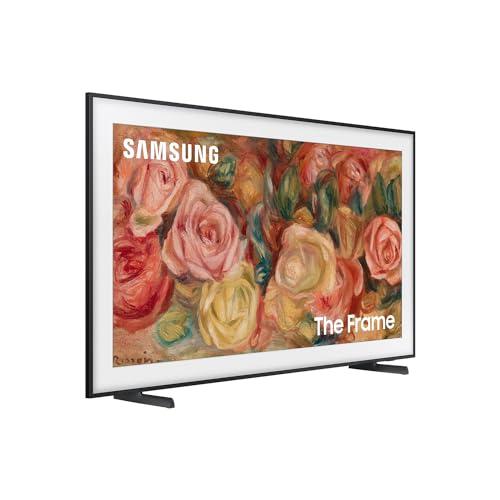
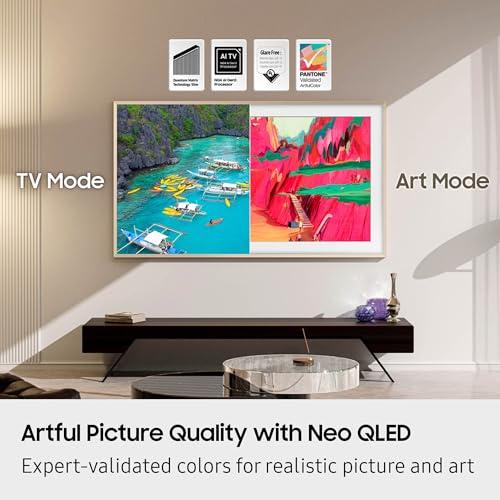
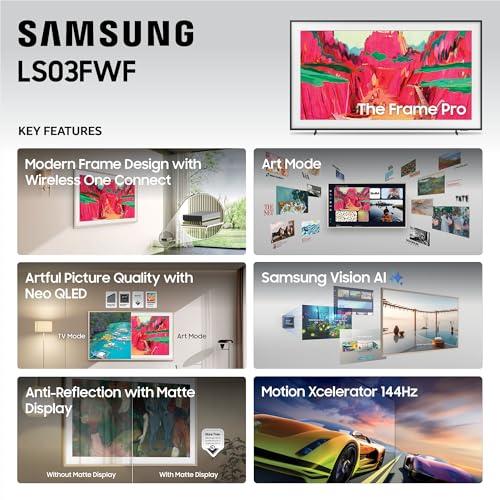
This means both models feature matte anti-glare screens that scatter ambient light (reducing reflections but slightly dulling colors), customizable bezels that mimic picture frames, and Art Mode—a feature that displays curated artwork or your personal photos when the TV isn't actively being used for entertainment.
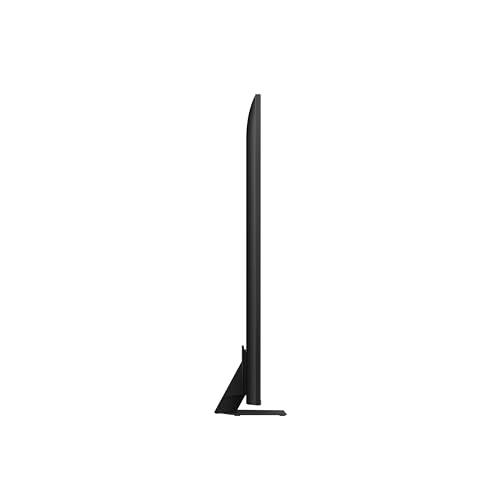
The trade-off has traditionally been picture quality. Matte screens inherently reduce contrast compared to glossy panels, and the focus on thin, gallery-friendly designs often means compromises in backlighting technology. The Frame Pro represents Samsung's attempt to minimize these compromises using their most advanced display technology.
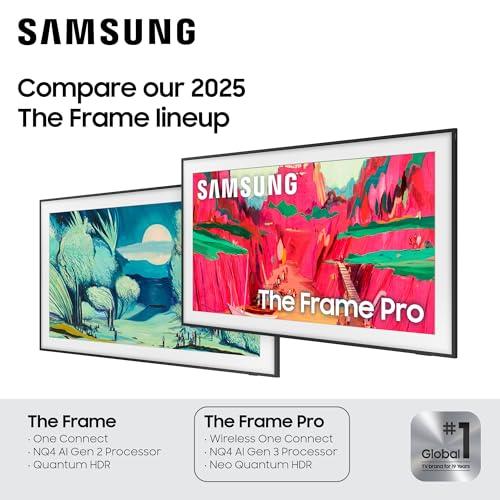
Here's where things get interesting from a technical standpoint. The 2024 Frame uses standard QLED technology—essentially an LCD panel with a layer of quantum dots (microscopic particles that enhance color purity) and LED backlighting around the edges of the screen.
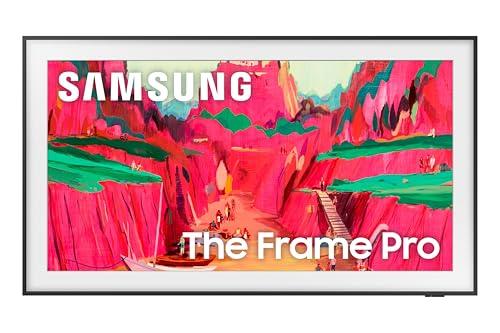
The Frame Pro, however, steps up to Neo QLED with Mini-LED technology. Instead of edge lighting, it uses thousands of tiny LEDs across the entire back of the panel, arranged in zones that can dim independently. This is called local dimming, and it's crucial for contrast—the difference between the brightest whites and deepest blacks your TV can display.
In practice, this architectural change makes a dramatic difference in brightness capability. Our research into expert reviews shows the Frame Pro achieving over 1,000 nits of peak brightness in HDR content, while the 2024 Frame tops out around 590 nits. For context, most content creators master HDR content expecting displays capable of 1,000 nits or higher, so this isn't just a numbers game—it's about seeing HDR content as intended.
But here's where things get complicated. Multiple professional reviews noted that the Frame Pro's local dimming implementation is surprisingly limited. The zones aren't fine enough to provide the dramatic contrast improvements you'd expect from Mini-LED technology, and unlike other Samsung TVs, you can't disable the feature if it creates uniformity issues.
This is where our research revealed the most significant issue with the Frame Pro. Input lag—the delay between when you press a button on your controller and when the action appears on screen—measures a concerning 36 milliseconds on the newer model. For comparison, the 2024 Frame achieves an excellent 9.2 milliseconds.
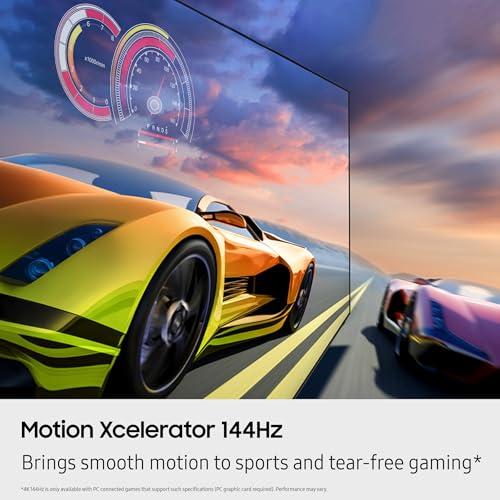
To put this in perspective, competitive gamers typically want input lag below 20 milliseconds, with 10 milliseconds or less being ideal. The Frame Pro's delay is high enough to affect gameplay in fast-paced games, making it feel sluggish and unresponsive despite its higher 144Hz refresh rate (compared to 120Hz on the older model).
This seems to be a processing bottleneck rather than a fundamental hardware limitation, suggesting future firmware updates might improve the situation. However, at the time of writing, the 2024 Frame is objectively better for gaming despite being the older model.
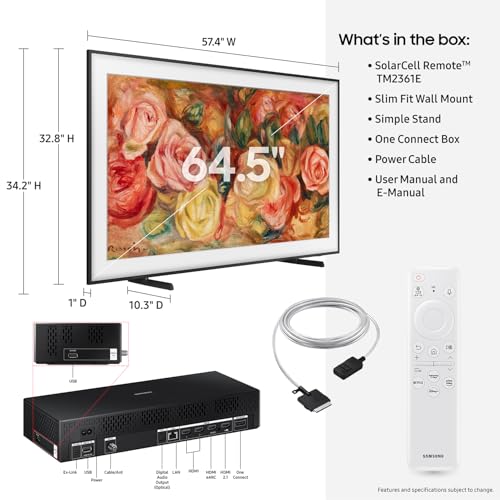
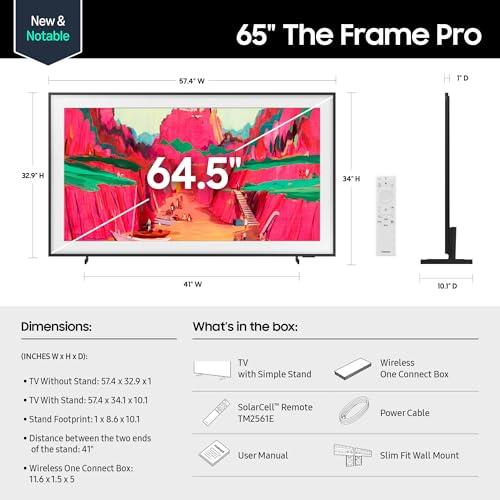
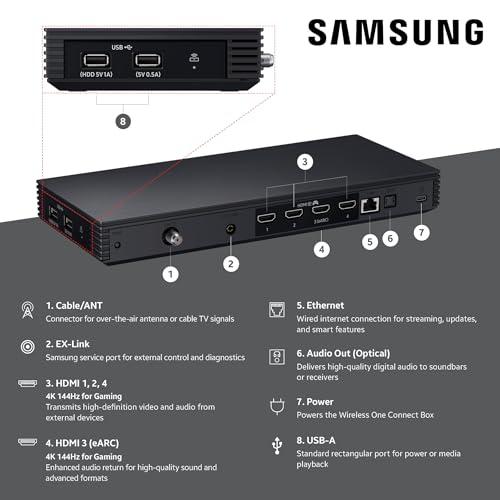
Perhaps the Frame Pro's most impressive innovation is its Wireless One Connect Box. Traditional Frame TVs use Samsung's wired One Connect system—a separate box that houses all your HDMI ports, with a single cable running to the TV. This reduces cable clutter but still requires that one connection.
The Frame Pro eliminates even that single cable, transmitting 4K video and audio wirelessly from the One Connect Box to the TV. The range extends up to 33 feet, even through walls, using Wi-Fi 7 technology for reliable transmission.
For the gallery aesthetic, this is transformative. Wall-mounted installations become completely clean, with no visible connections to the TV whatsoever. The One Connect Box can live in a cabinet, entertainment center, or even another room entirely.
However, this wireless approach introduces potential reliability concerns. If the wireless link fails, you have no wired fallback option. The Frame Pro includes only a single micro HDMI port on the TV itself, primarily intended for low-latency gaming connections.
Interestingly, our analysis of professional calibration data shows the 2024 Frame achieving better color accuracy out of the box, with a Delta-E measurement of 1.88 compared to the Frame Pro's 3.05. Delta-E measures how far colors deviate from reference standards—lower numbers mean more accurate colors.
This suggests the Frame Pro's more powerful NQ4 Gen3 processor might be applying overly aggressive processing that, while making colors more vivid, reduces their accuracy. For art display purposes, this could be significant since you want paintings and photographs to appear as the artist intended.
Both models handle upscaling (improving the quality of lower-resolution content) very well, which is important since much streaming content still arrives in 1080p or compressed 4K formats.
Both Frame models include identical 40-watt speaker systems with Dolby Atmos support—a surround sound technology that creates the impression of sounds coming from above and around you. The speakers are decent for a thin TV but won't compete with a dedicated soundbar or home theater system.
The Frame Pro adds Q-Symphony Pro compatibility, allowing it to work in tandem with Samsung soundbars for enhanced audio. However, neither model supports DTS audio formats, which could disappoint physical media enthusiasts who own Blu-ray collections encoded with DTS soundtracks.
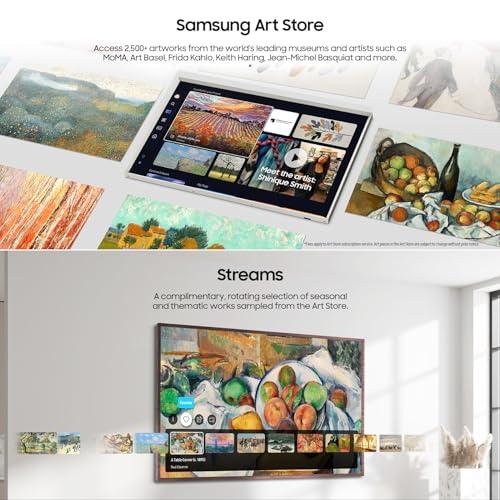
This is where both models shine equally. Art Mode transforms either TV into a digital gallery, displaying thousands of curated artworks from Samsung's Art Store or your personal photos. Motion sensors detect when someone enters the room and wake the display, while brightness sensors adjust the image to match ambient lighting conditions.
The matte screen coating on both models deserves special mention. While it reduces contrast slightly, it makes displayed artwork look remarkably realistic—more like a printed canvas than a glowing screen. This anti-glare technology works exceptionally well in bright rooms where traditional glossy TVs would be unwatchable due to reflections.
Customizable bezels allow you to match the TV to your room's aesthetic, though they're sold separately and aren't interchangeable between the 2024 and 2025 models.
Our research into user experiences reveals concerning reports about the Frame Pro's software stability. Multiple users report issues including failure to power on, significant input delays beyond just gaming, and general system instability requiring frequent restarts.
These aren't isolated incidents—they appear to be systematic software issues that Samsung will hopefully address through firmware updates. However, at the time of writing, the 2024 Frame demonstrates better day-to-day reliability despite being built on older software architecture.
Neither Frame model is ideal for dedicated home theater rooms where you want maximum picture quality in controlled lighting. The matte screens and lifestyle-focused tuning prioritize bright room performance over the deep blacks and vibrant colors that make movies truly cinematic.
However, in living rooms where the TV needs to perform well with lights on and blend aesthetically with furniture, both models excel. The Frame Pro's higher brightness gives it an advantage in very bright spaces, while the 2024 Frame's better color accuracy might appeal to those who prioritize natural-looking content.
For movie enthusiasts, both models support Filmmaker Mode, which disables processing and displays content as directors intended. Neither supports Dolby Vision HDR (they use HDR10+ instead), which might disappoint users with extensive streaming libraries optimized for Dolby Vision.
At the time of writing, the Frame Pro commands a premium of several hundred dollars over the 2024 Frame. This price difference must be weighed against the practical benefits: significantly higher brightness, wireless connectivity, and newer processing technology, balanced against gaming performance issues and software reliability concerns.
For most users, the 2024 Frame represents better overall value. It delivers the core Frame experience—beautiful art display, excellent bright room performance, and seamless design integration—while offering superior gaming compatibility and proven reliability. The savings can be invested in custom bezels, soundbar upgrades, or simply kept in your pocket.
However, the Frame Pro makes sense for specific use cases. If you primarily watch HDR movies and shows in very bright rooms, never game, and want the absolute cleanest wireless installation, the brightness improvement and cable-free setup might justify the premium.
The 2024 Frame emerges as the more well-rounded choice for most buyers. Its combination of reliable performance, gaming capability, proven software stability, and lower price point makes it the safer purchase. The gaming performance advantage alone makes it superior for households with consoles, while its color accuracy benefits both entertainment viewing and art display.
The Frame Pro feels like a promising but slightly premature step forward. The wireless technology is genuinely impressive, and the brightness improvements are substantial, but the gaming lag issues and software reliability problems suggest Samsung rushed this model to market before fully optimizing the experience.
If you're buying today, the 2024 Frame offers the better balance of features, performance, and value. If you can wait, potential firmware updates might resolve the Frame Pro's issues, making it a more compelling choice in the future. Either way, both represent Samsung's impressive ability to create TVs that truly disappear into your living space while still delivering solid entertainment performance.
For buyers torn between the two, consider your primary use cases: gamers and value-conscious buyers should stick with the 2024 Frame, while those prioritizing maximum brightness and wireless convenience might find the Frame Pro's premium worthwhile despite its current limitations.
| Samsung 65" The Frame QLED 4K 2024 TV | Samsung 65" The Frame Pro 4K Neo QLED Smart TV 2025 |
|---|---|
| Panel Technology - Determines brightness, contrast, and overall picture quality | |
| Standard QLED with edge-lit LED backlight | Neo QLED with Mini-LED backlighting and local dimming |
| Peak HDR Brightness - Critical for HDR content impact and bright room viewing | |
| ~590 nits (good for most content, struggles in very bright rooms) | ~1,089 nits (excellent HDR performance, handles any lighting condition) |
| Gaming Input Lag - Essential for responsive gaming experience | |
| 9.2ms (excellent for all gaming types including competitive) | 36.2ms (problematic delay, unsuitable for fast-paced games) |
| Refresh Rate - Affects motion smoothness in sports and gaming | |
| 120Hz (supports all current console capabilities) | 144Hz (future-ready but limited by input lag issues) |
| One Connect System - Affects installation flexibility and cable management | |
| Wired One Connect Box (single cable to TV, reliable connection) | Wireless One Connect Box (completely cable-free, up to 33ft range) |
| Color Accuracy - Important for natural-looking content and art display | |
| Delta-E 1.88 (excellent accuracy out of the box) | Delta-E 3.05 (less accurate, more vivid but artificial colors) |
| Local Dimming - Controls contrast by dimming LED zones independently | |
| None (uniform backlighting, consistent but limited contrast) | Vertical zones (limited effectiveness, cannot be disabled) |
| Size Availability - Determines which room sizes can accommodate the TV | |
| 43", 50", 55", 65", 75", 85" (full range for any space) | 65", 75", 85" only (large rooms only) |
| Software Reliability - Affects daily usability and user experience | |
| Proven stable (over a year of user feedback) | Reported issues (boot failures, lag, requires firmware updates) |
| Processor - Handles upscaling, motion, and smart features | |
| NQ4 AI Gen2 (solid performance for all content types) | NQ4 AI Gen3 (more powerful but overly aggressive processing) |
| HDMI Ports - Determines how many devices can connect simultaneously | |
| 4 x HDMI 2.1 (all support 4K 120Hz gaming) | 5 x HDMI 2.1 on wireless box + 1 micro HDMI on TV |
The Samsung 65" The Frame QLED 4K 2024 TV is significantly better for gaming with only 9.2ms of input lag compared to the Samsung 65" The Frame Pro 4K Neo QLED Smart TV 2025's problematic 36.2ms delay. While the Frame Pro offers a higher 144Hz refresh rate, the input lag makes it unsuitable for fast-paced or competitive gaming. Gamers should choose the 2024 Frame for responsive performance.
The primary difference is display technology. The Samsung 65" The Frame QLED 4K 2024 TV uses standard QLED with edge lighting, while the Samsung 65" The Frame Pro 4K Neo QLED Smart TV 2025 features Neo QLED with Mini-LED backlighting. This gives the Frame Pro nearly double the brightness (1,089 vs 590 nits) and better contrast, making it superior for HDR content and very bright rooms.
Picture quality depends on your priorities. The Frame Pro delivers significantly brighter HDR with more impactful highlights, making it better for bright rooms and HDR content. However, the 2024 Frame has superior color accuracy and no local dimming issues. For most users, the Samsung 65" The Frame QLED 4K 2024 TV provides more natural, accurate colors while the Samsung 65" The Frame Pro 4K Neo QLED Smart TV 2025 excels in brightness.
The Frame Pro's Wireless One Connect Box transmits 4K signals up to 33 feet using Wi-Fi 7 technology. While innovative for cable-free installations, it has no wired fallback option if the wireless connection fails. The Samsung 65" The Frame QLED 4K 2024 TV's wired One Connect system is more reliable for critical viewing situations.
The Samsung 65" The Frame QLED 4K 2024 TV offers better overall value with superior gaming performance, proven reliability, and lower cost. The Frame Pro commands a premium primarily for brightness improvements and wireless connectivity, but current software issues and gaming lag problems limit its value proposition for most users.
Yes, user reports indicate the Samsung 65" The Frame Pro 4K Neo QLED Smart TV 2025 has significant software reliability issues including boot failures, input delays, and system instability. The Samsung 65" The Frame QLED 4K 2024 TV has proven stable after over a year in the market. These issues may be resolved through firmware updates but remain a concern at purchase.
The Frame Pro is superior for very bright rooms due to its 1,089-nit peak brightness compared to the 2024 Frame's 590 nits. Both models feature excellent anti-glare matte screens, but the Samsung 65" The Frame Pro 4K Neo QLED Smart TV 2025's higher brightness helps overcome ambient light more effectively for HDR content viewing.
Yes, both the Samsung 65" The Frame QLED 4K 2024 TV and Samsung 65" The Frame Pro 4K Neo QLED Smart TV 2025 offer identical Art Mode functionality with Samsung Art Store access, motion sensors, and matte anti-glare displays. The 2024 Frame actually has slightly better color accuracy for art reproduction, while the Frame Pro offers higher brightness for well-lit gallery walls.
The Samsung 65" The Frame QLED 4K 2024 TV comes in six sizes: 43", 50", 55", 65", 75", and 85". The Frame Pro is only available in larger sizes: 65", 75", and 85". If you need a smaller lifestyle TV for bedrooms or smaller spaces, the Samsung 65" The Frame Pro 4K Neo QLED Smart TV 2025 isn't an option.
Neither Frame TV is ideal for dedicated home theaters where you want maximum contrast and deep blacks. However, for living room home theater setups, the Frame Pro's higher brightness provides more impactful HDR, while the Samsung 65" The Frame QLED 4K 2024 TV offers better color accuracy. Both support Filmmaker Mode but lack Dolby Vision HDR support.
No, the Samsung 65" The Frame Pro 4K Neo QLED Smart TV 2025 is not compatible with bezels from previous Frame models including the 2024 Frame. You'll need to purchase new bezels specifically designed for the Frame Pro, adding to the total cost of upgrading.
Given the current software reliability issues with the Frame Pro, most buyers should choose the Samsung 65" The Frame QLED 4K 2024 TV for immediate reliability and better gaming performance. While Samsung may resolve the Samsung 65" The Frame Pro 4K Neo QLED Smart TV 2025's issues through updates, the 2024 Frame offers proven stability and excellent value today.
We've done our best to create useful and informative comparisons to help you decide what product to buy. Our research uses advanced automated methods to create this comparison and perfection is not possible - please contact us for corrections or questions. These are the sites we've researched in the creation of this article: tomsguide.com - rtings.com - rtings.com - youtube.com - bestbuy.com - techlicious.com - youtube.com - smalllilystudio.com - theeverymom.com - livingetc.com - pcrichard.com - image-us.samsung.com - samsung.com - images.samsung.com - samsung.com - buydig.com - tvsbook.com - bestbuy.com - samsung.com - samsung.com - flatpanelshd.com - tomsguide.com - youtube.com - smarthomesounds.co.uk - images.samsung.com - rtings.com - samsung.com - bestbuy.com - bestbuy.com - businessinsider.com - dentonstv.com - samsung.com - flatpanelshd.com - samsung.com - jefflynch.com - youtube.com - costco.com

Privacy Policy
Terms and Conditions - Affiliate Policy
Home Security
© Copyright 2008-2026.
11816 Inwood Rd #1211, Dallas, TX 75244