

Shopping for a premium 65-inch TV means choosing between two very different philosophies. Do you want a television that doubles as living room art, or one that delivers maximum performance for your entertainment dollar? The Samsung 65" The Frame QLED 4K 2024 TV and Hisense 65" U8 Series Mini-LED ULED 4K Google TV represent these opposing approaches perfectly.
At the time of writing, the price difference between these TVs is substantial—the Hisense U8 costs roughly 35% less than the Samsung Frame. But that gap tells only part of the story. These aren't really direct competitors; they're designed for entirely different types of buyers with different priorities.
Before diving into specifics, it's worth understanding what you should expect from any premium 65-inch TV in 2024. Size alone doesn't make a TV premium anymore—nearly every manufacturer offers large screens at budget prices. Instead, premium TVs distinguish themselves through advanced display technologies, sophisticated processing, gaming capabilities, and design innovation.
The most important technical specs to focus on are peak brightness (measured in nits), local dimming zones (how precisely the TV controls its backlight), refresh rate (how many times per second the image updates), and HDR support (High Dynamic Range, which creates more realistic contrast between light and dark). These features directly impact what you see and how immersive your viewing experience becomes.
Both the Samsung Frame and Hisense U8 were released in 2024, representing the latest generation of their respective product lines. Samsung refined the Frame's anti-glare technology and art display capabilities, while Hisense dramatically increased the U8's local dimming zones and peak brightness compared to previous generations.
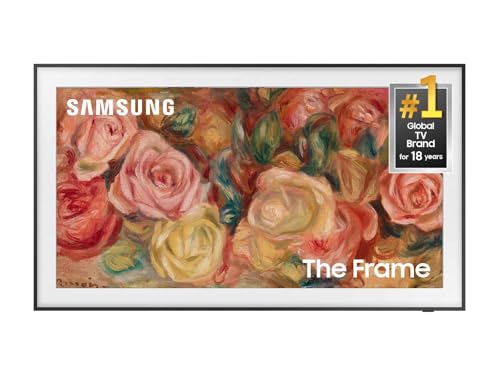
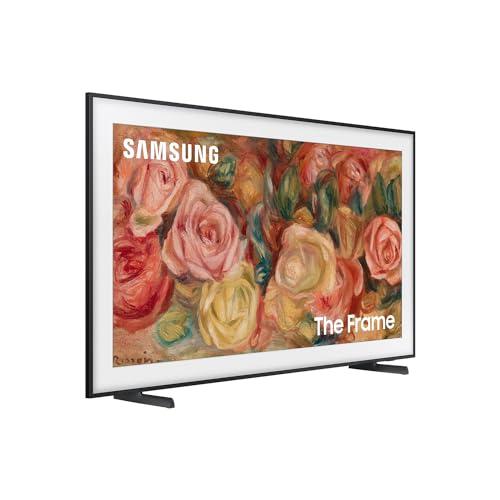
The Samsung Frame exists because Samsung recognized that many people hate having a big black rectangle dominating their living room when it's not in use. Instead of trying to make the best possible display, Samsung focused on making a display that disappears.
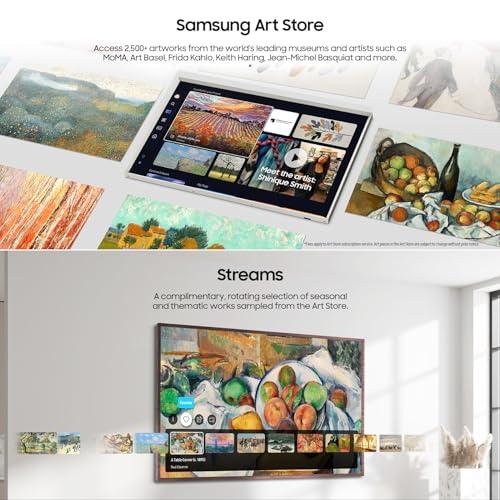
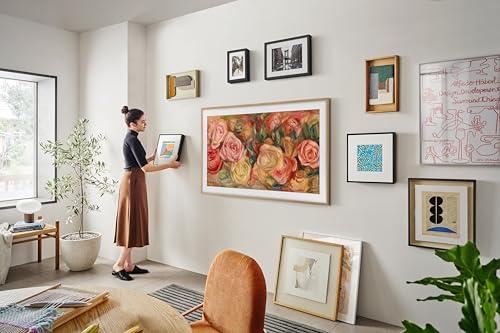
The Frame's signature feature is Art Mode, which transforms the screen into a digital picture frame when you're not watching TV. A motion sensor detects when someone enters the room and automatically switches from a power-saving black screen to displaying artwork. You can choose from Samsung's Art Store (a subscription service with thousands of pieces) or upload your own photos through the SmartThings app.
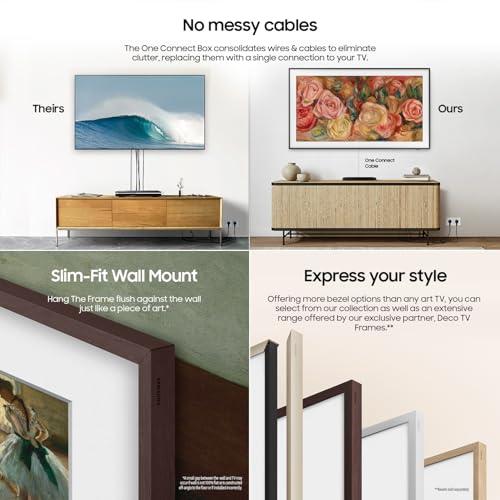
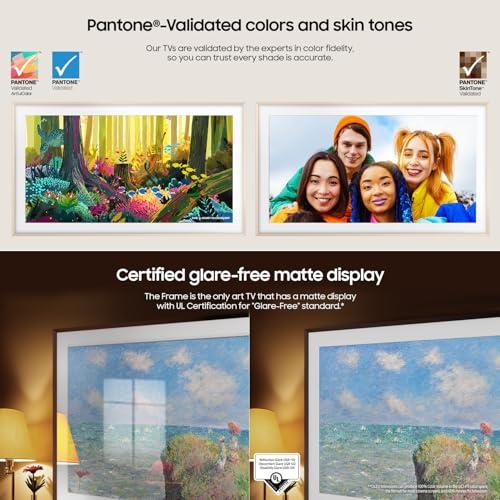
What makes this more convincing than it sounds is the matte anti-glare screen. Unlike typical glossy TV screens that reflect light like mirrors, the Frame's matte finish scatters ambient light, making displayed images look more like actual paintings or photographs hanging on your wall. Samsung even offers customizable magnetic bezels that snap onto the TV's edges, letting you match different frame styles to your décor.
The engineering behind this aesthetic focus creates some interesting trade-offs. That matte screen, while excellent for reducing reflections, slightly reduces the perceived contrast and color vibrancy compared to glossy displays. It's a compromise Samsung made deliberately—the Frame prioritizes looking good in your room over achieving perfect picture quality metrics.
The Hisense U8 Series takes the opposite approach. Rather than worrying about room aesthetics, Hisense packed as much display technology as possible into a competitively priced package. The result is a TV that, based on our research into professional reviews and user feedback, delivers picture quality that challenges much more expensive models.
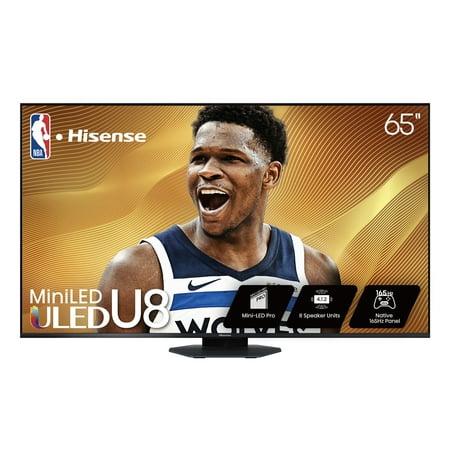
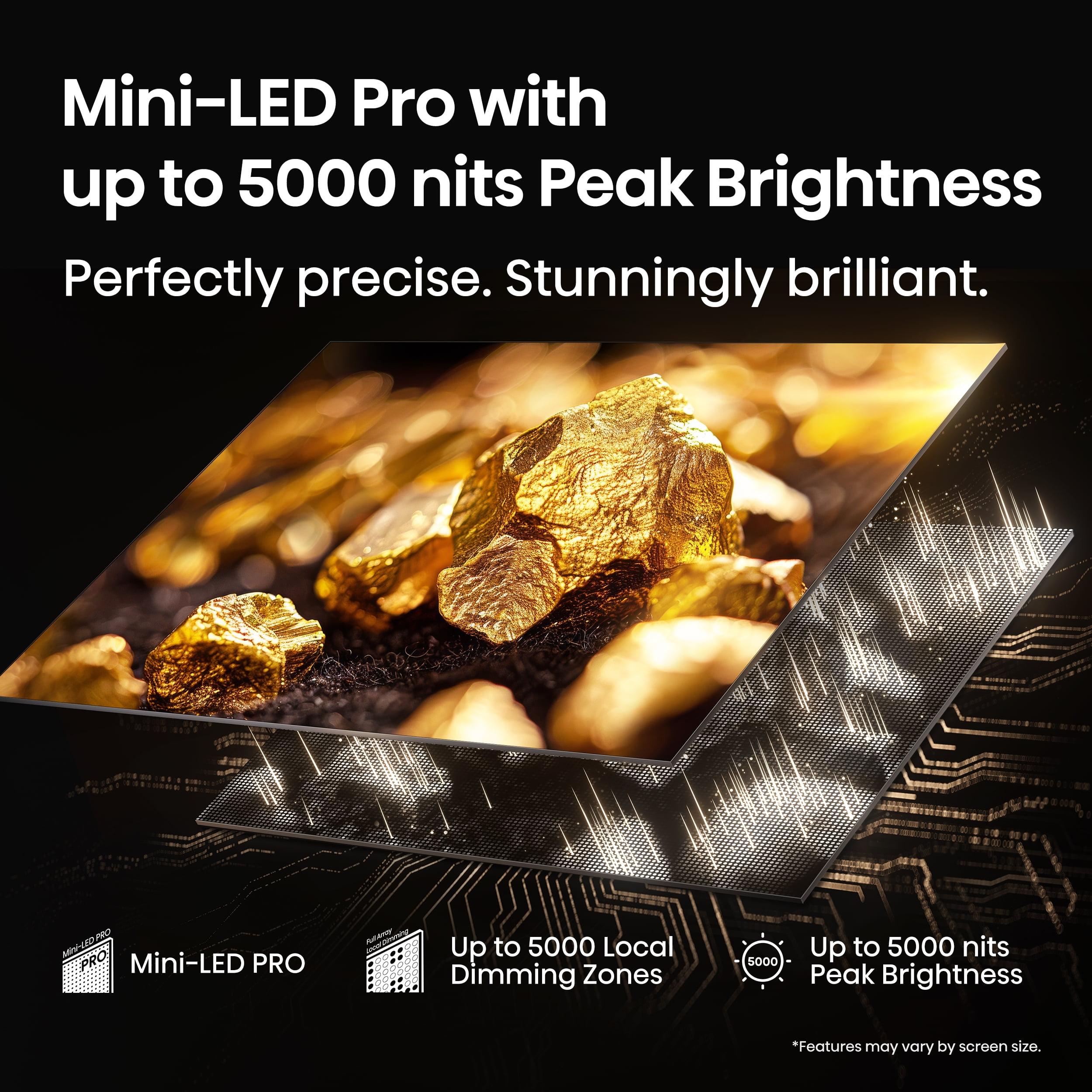
The U8's standout technology is Mini-LED Pro+ backlighting. Traditional LED TVs use relatively large LED lights behind the screen, making it difficult to control brightness precisely. Mini-LEDs are much smaller—roughly the size of a grain of rice—allowing manufacturers to pack thousands of them behind the display. The Hisense U8 uses over 2,000 local dimming zones, meaning it can brighten or dim more than 2,000 separate areas of the screen independently.
This level of control creates dramatically better contrast. When you're watching a movie scene with a bright explosion against a dark night sky, the U8 can make the explosion blazingly bright while keeping the surrounding darkness truly black. Most budget TVs can't do this—they either make the explosion dim or turn the black sky gray.
The most significant performance gap between these TVs is peak brightness. The Hisense U8 reaches up to 3,000 nits in small areas of the screen, while the Samsung Frame peaks at roughly 1,000 nits. To put this in perspective, a typical indoor room measures about 100-200 nits, while direct sunlight can exceed 100,000 nits.
Why does this matter? HDR content (High Dynamic Range) is designed to reproduce a wider range of brightness levels than traditional video. When you're watching a scene with sun glinting off water, bright snow, or a car's headlights, higher peak brightness makes these highlights look more realistic and impactful. The difference is immediately noticeable—HDR content on the Hisense U8 simply pops off the screen in ways that lower-brightness displays can't match.
However, the Samsung Frame has its own advantages in picture quality. Its native contrast ratio—the difference between the darkest blacks and brightest whites—is superior to the Hisense when displaying content that doesn't push peak brightness limits. Samsung's image processing is also more mature, delivering more accurate colors out of the box without calibration.
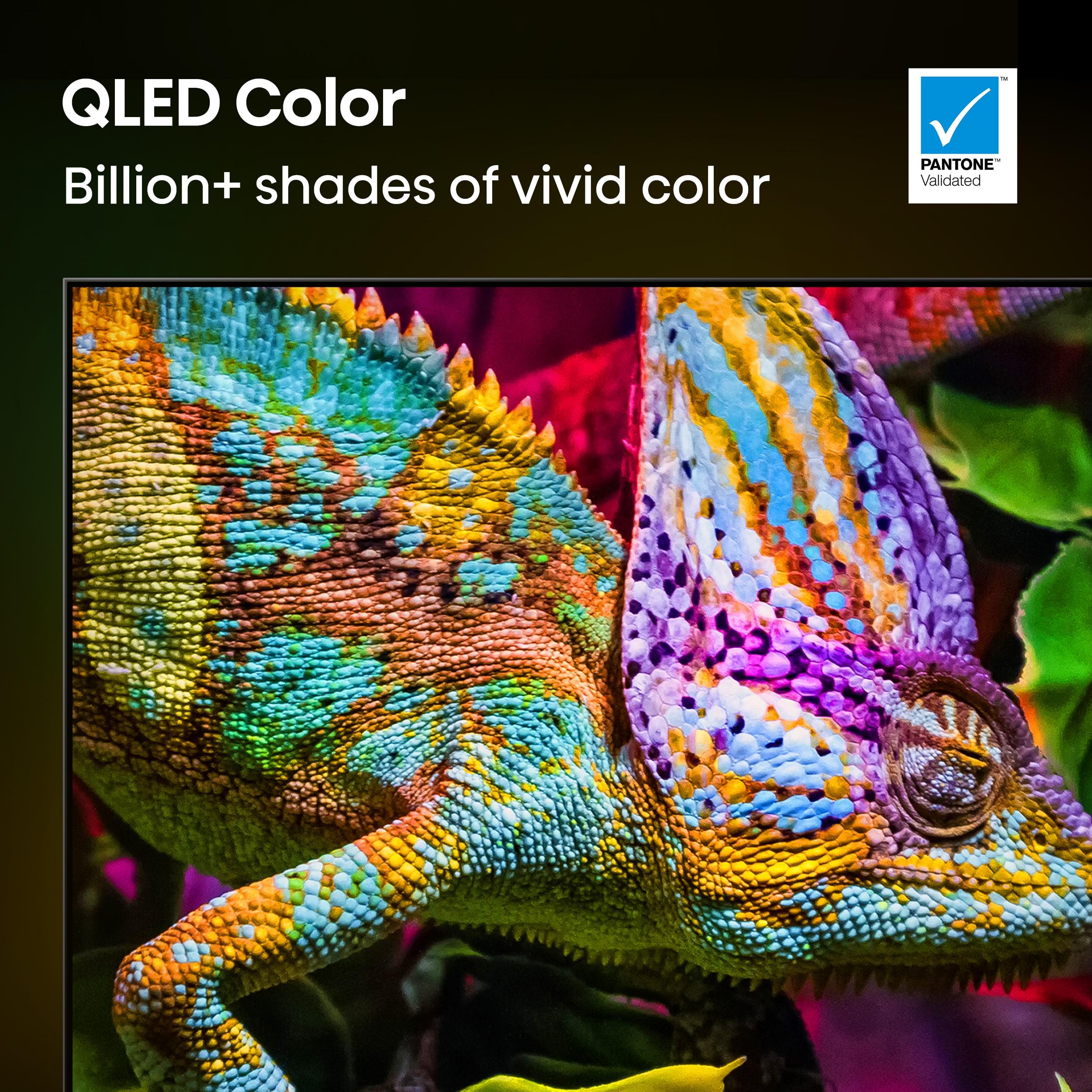
Both TVs use Quantum Dot technology, which uses microscopic particles to produce more accurate and vibrant colors than traditional LED displays. Think of it as a filter that purifies the backlight, creating over a billion possible color combinations instead of the millions that standard TVs can display.
The Samsung Frame tends to produce more naturally accurate colors immediately after setup, while the Hisense U8 delivers more saturated, vivid colors that some viewers prefer for entertainment content. Neither approach is wrong—it's about preference and intended use.
For upscaling lower-quality content (like older TV shows or compressed streaming video), both TVs perform well, but Samsung's processing has a slight edge in reducing artifacts and maintaining detail when converting 1080p or lower resolution content to 4K.
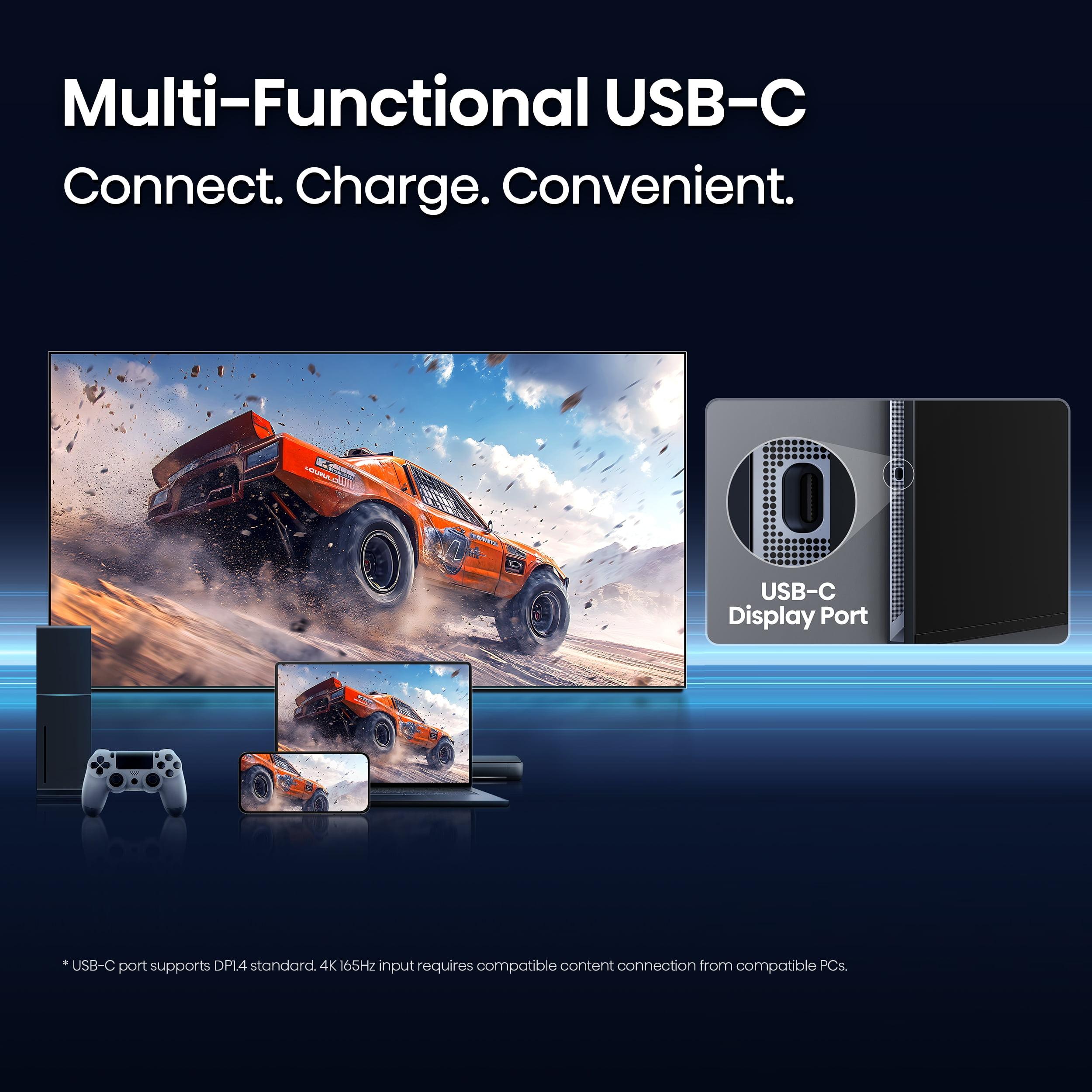
This is where the Hisense U8 completely dominates. Modern gaming, especially on PlayStation 5, Xbox Series X, or high-end PCs, benefits enormously from higher refresh rates and Variable Refresh Rate (VRR) support.
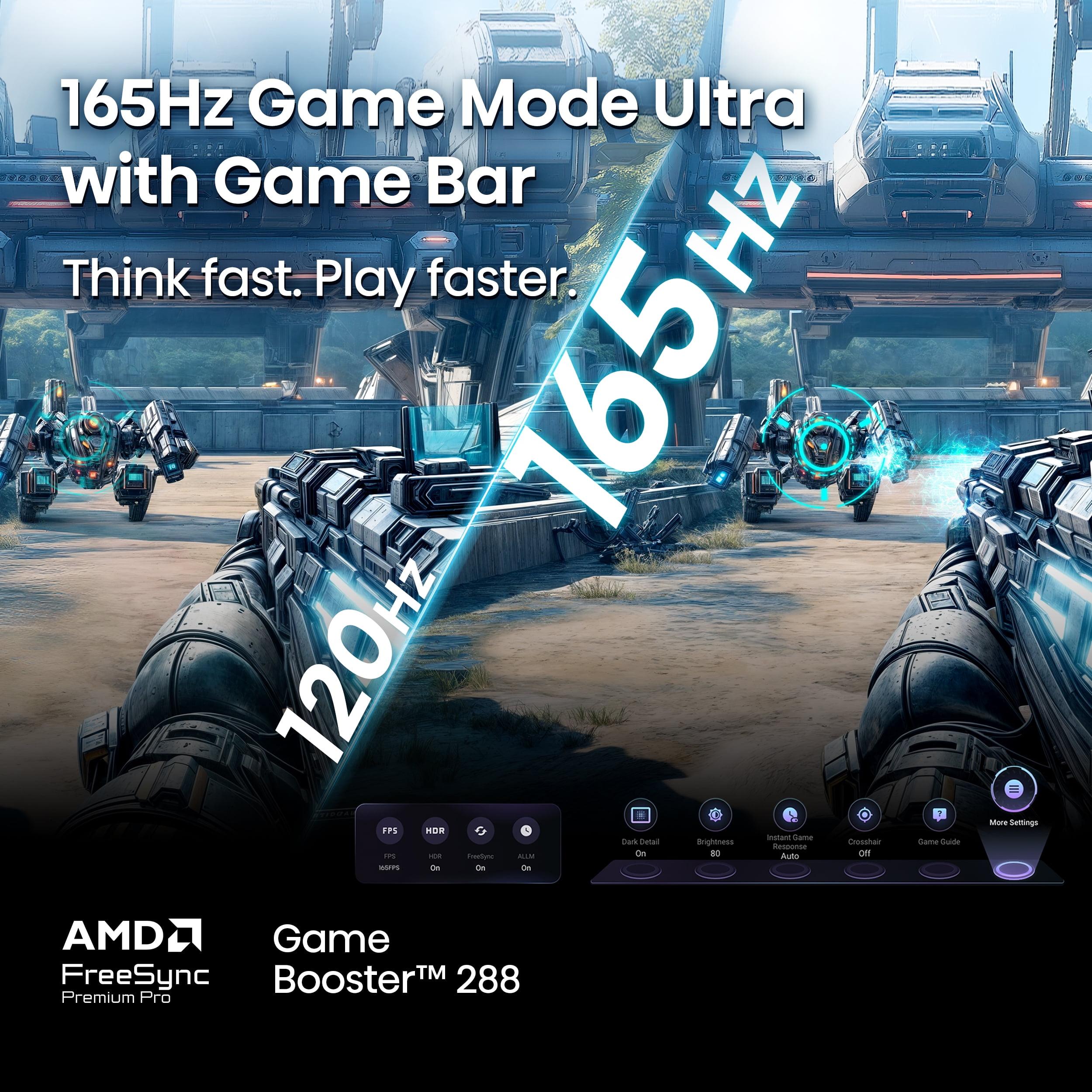
The U8 supports up to 144Hz refresh rate, meaning it can display 144 unique frames every second. Compare this to the Samsung Frame's 60Hz limitation, and you understand why serious gamers gravitate toward the Hisense. Higher refresh rates create smoother motion, reduce input lag (the delay between pressing a controller button and seeing the result on screen), and eliminate screen tearing during fast action.
VRR is equally important for gaming. When your console or PC can't maintain a steady frame rate—dropping from 120 frames per second to 80 during complex scenes—VRR adjusts the TV's refresh rate to match. This prevents stuttering and creates a more consistent gaming experience.
The Hisense U8 also includes AMD FreeSync Premium Pro, Auto Low Latency Mode (which automatically optimizes settings when it detects game consoles), and Dolby Vision Gaming for enhanced HDR gaming experiences. These aren't marketing gimmicks—they represent real improvements in gaming performance that competitive players and enthusiasts notice immediately.
Most TV reviews focus heavily on picture quality while treating audio as an afterthought, but your ears matter too. Here's where these TVs diverge significantly in philosophy.
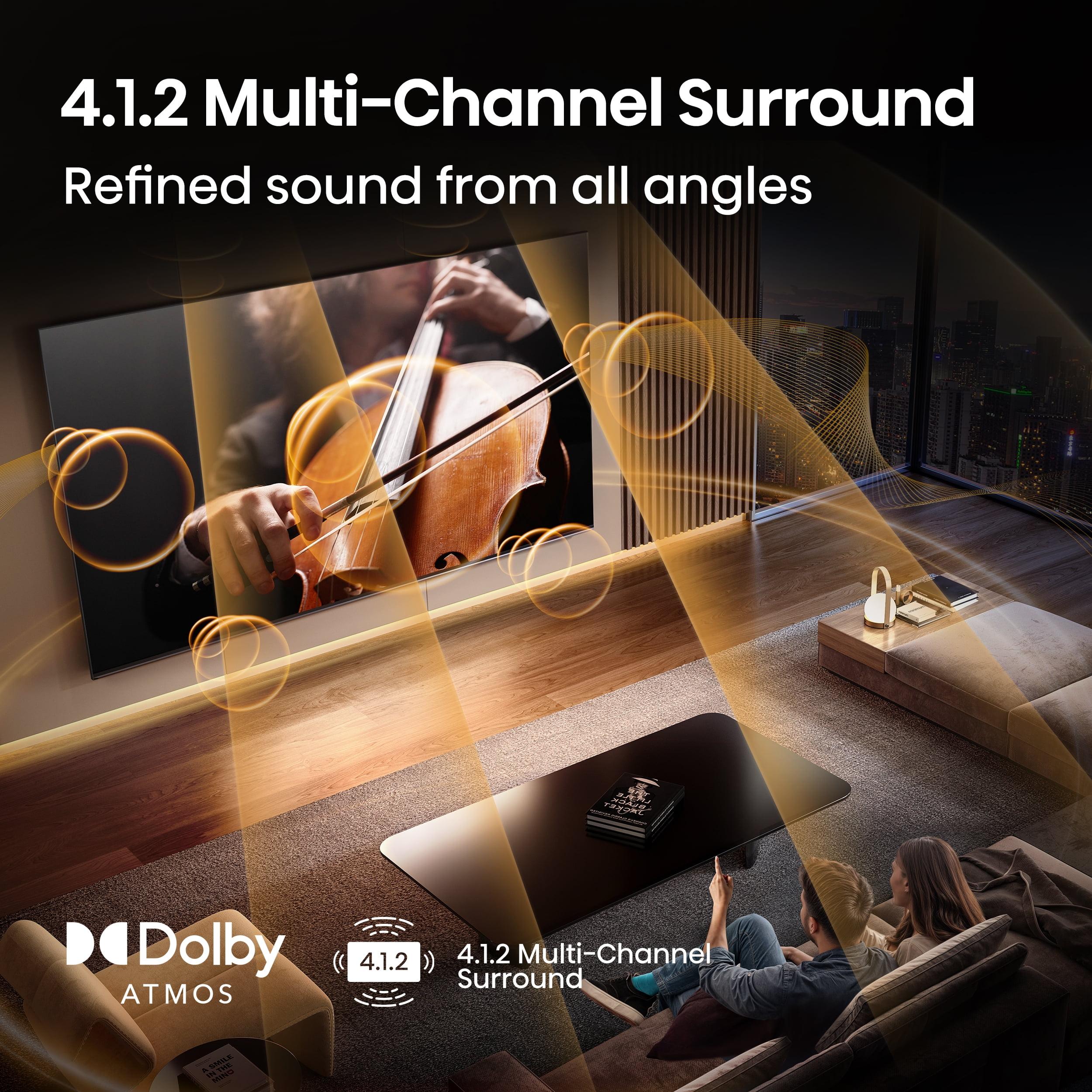
The Hisense U8 includes a robust 50W 2.1.2 channel audio system with Dolby Atmos support. This means left and right speakers for stereo separation, a built-in subwoofer for bass response, and upward-firing speakers that bounce sound off your ceiling to create overhead audio effects. For many buyers, this eliminates the immediate need for a separate soundbar.
The Samsung Frame uses basic stereo speakers that are adequate for casual viewing but lack power, bass, and spatial audio capabilities. This isn't necessarily a flaw—Samsung assumes Frame buyers will either use the TV at lower volumes (to maintain its art-like presence) or invest in external audio equipment that matches their décor.
Based on user feedback we've researched, the Hisense's built-in audio is genuinely impressive for integrated TV speakers, while Frame owners almost universally add soundbars or other external audio solutions.
Both TVs offer comprehensive smart TV platforms, but with different strengths and integration approaches.
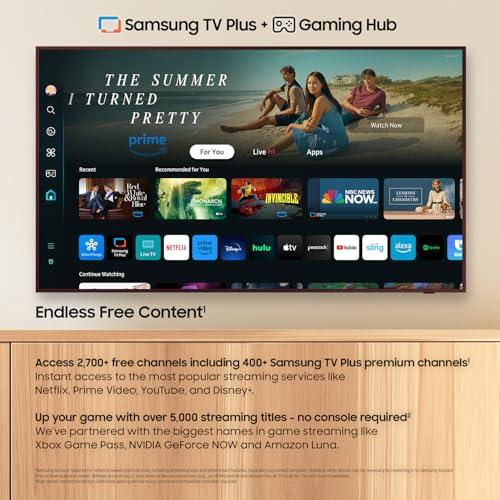
The Samsung Frame runs Tizen, Samsung's proprietary smart TV operating system. Tizen integrates smoothly with other Samsung devices and SmartThings-compatible smart home products. The interface is polished and responsive, though some users find Samsung's app recommendations less sophisticated than competitors.
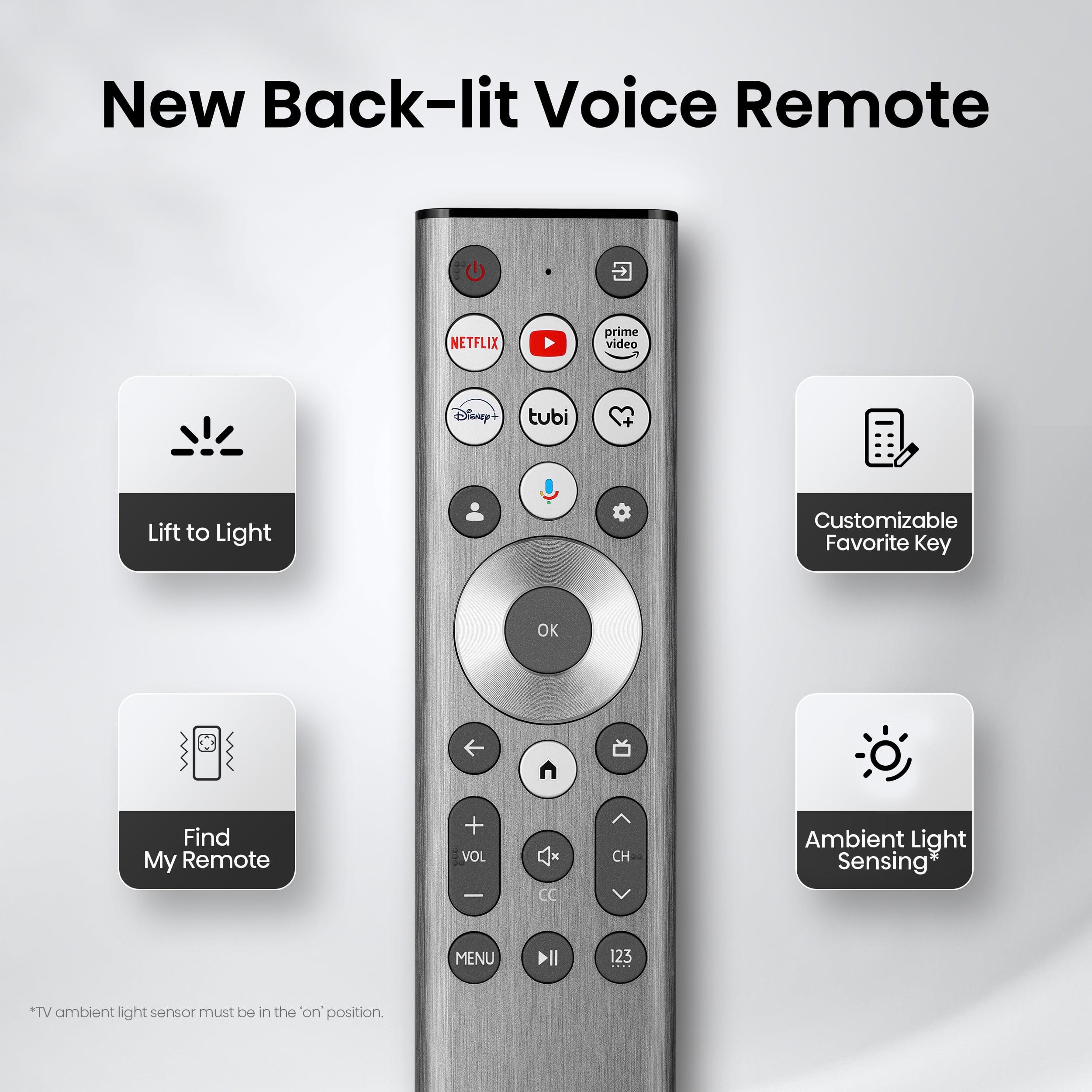
The Hisense U8 uses Google TV, which excels at content discovery across multiple streaming services and offers superior voice control through Google Assistant. Google TV learns your viewing preferences and suggests content from Netflix, Amazon Prime, Disney+, and other services in a unified interface.
Neither platform significantly outperforms the other for basic streaming and app functionality, so your choice often comes down to ecosystem preference and whether you value Google's recommendation algorithms or Samsung's smart home integration.
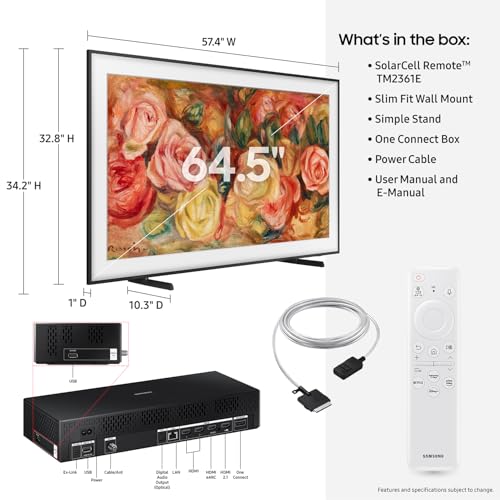
The Samsung Frame is engineered for specific installation scenarios. It's designed to mount flush against walls with minimal gap, creating the picture frame illusion. The included One Connect Box consolidates all cable connections, so only a single, nearly invisible cable runs to the display itself. This creates remarkably clean installations that interior designers appreciate.
However, this design creates limitations. The Frame works best wall-mounted in rooms where you can control lighting and viewing angles. Its aesthetic appeal diminishes significantly on a traditional TV stand, where it looks more like an expensive regular TV than artwork.
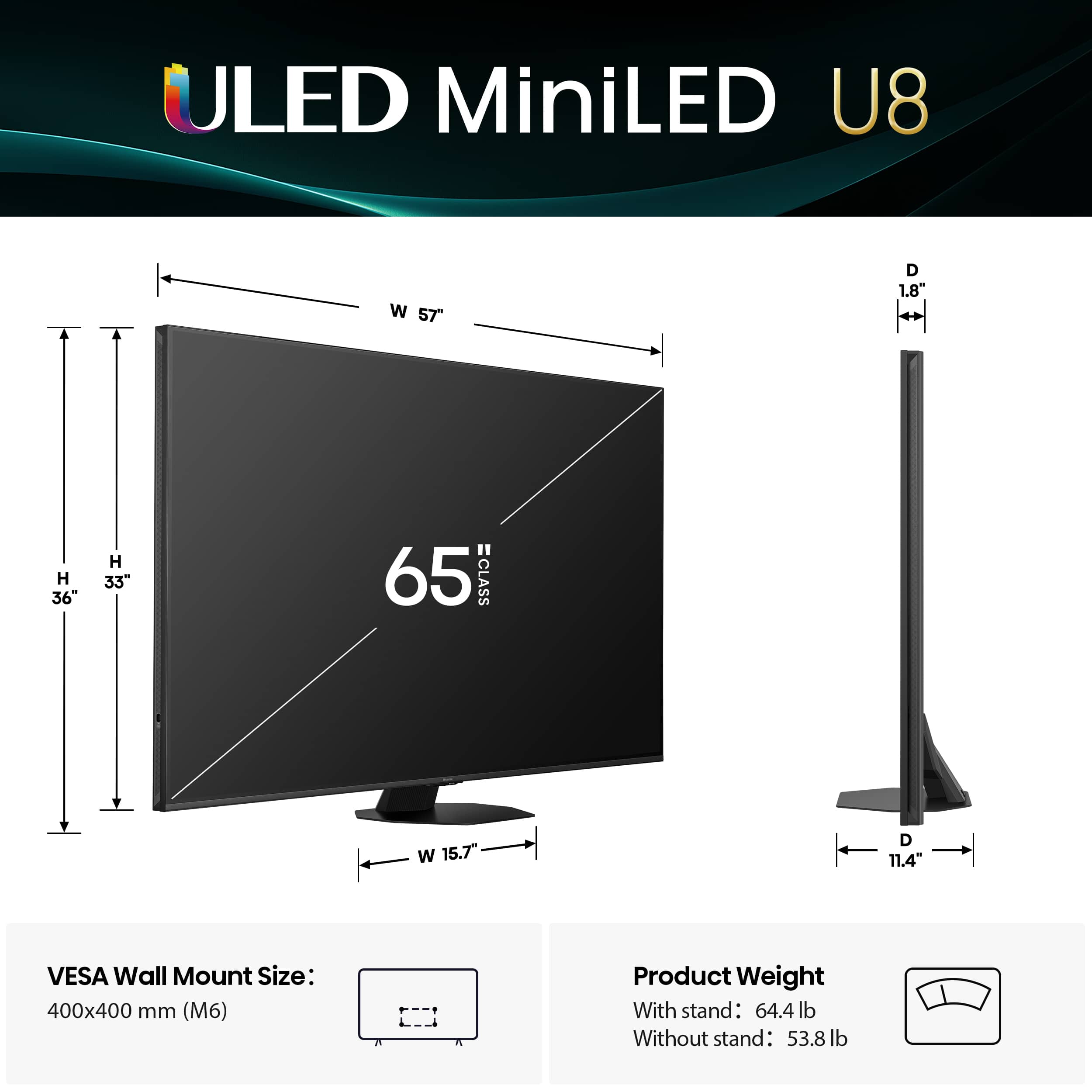
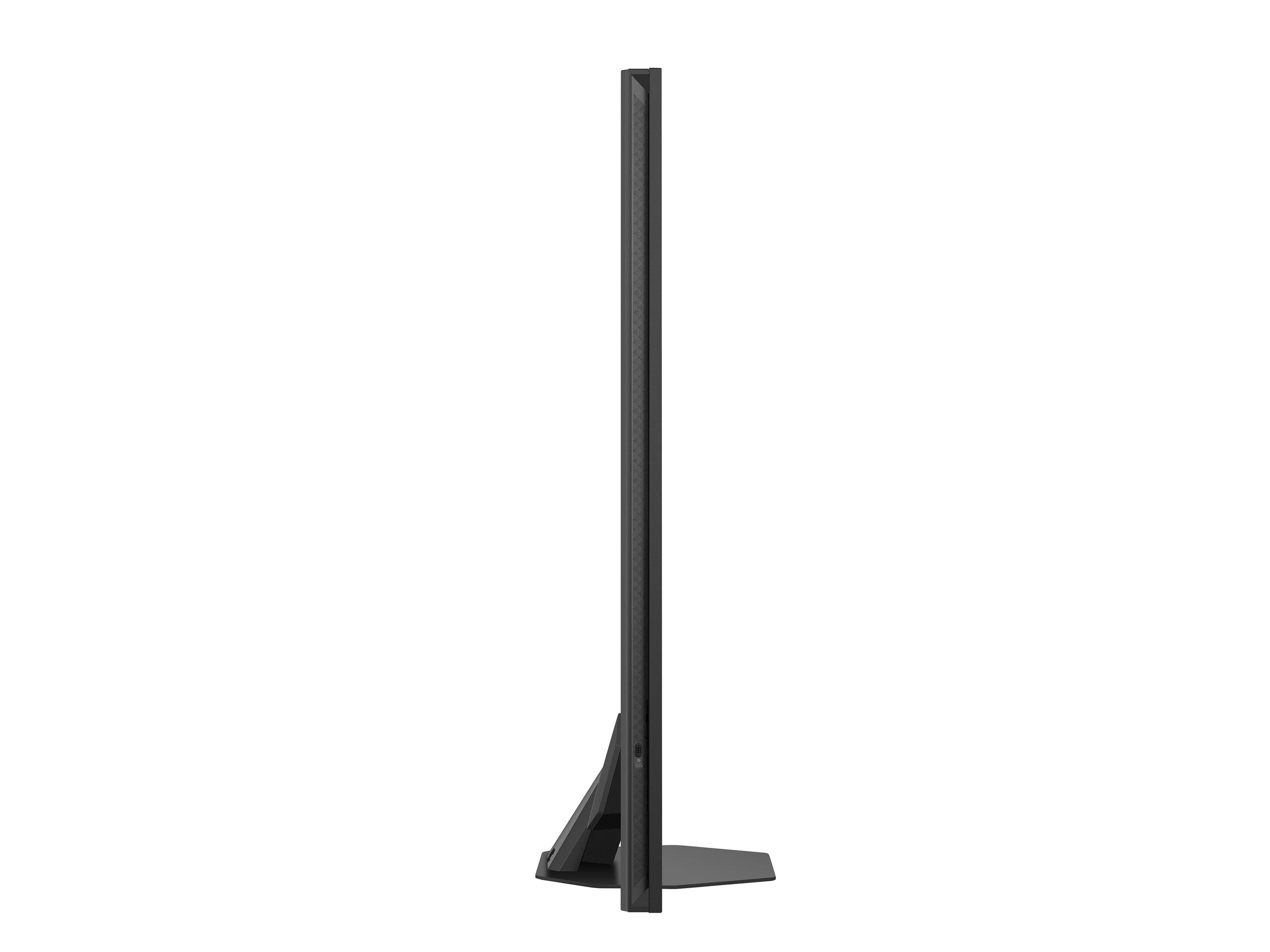
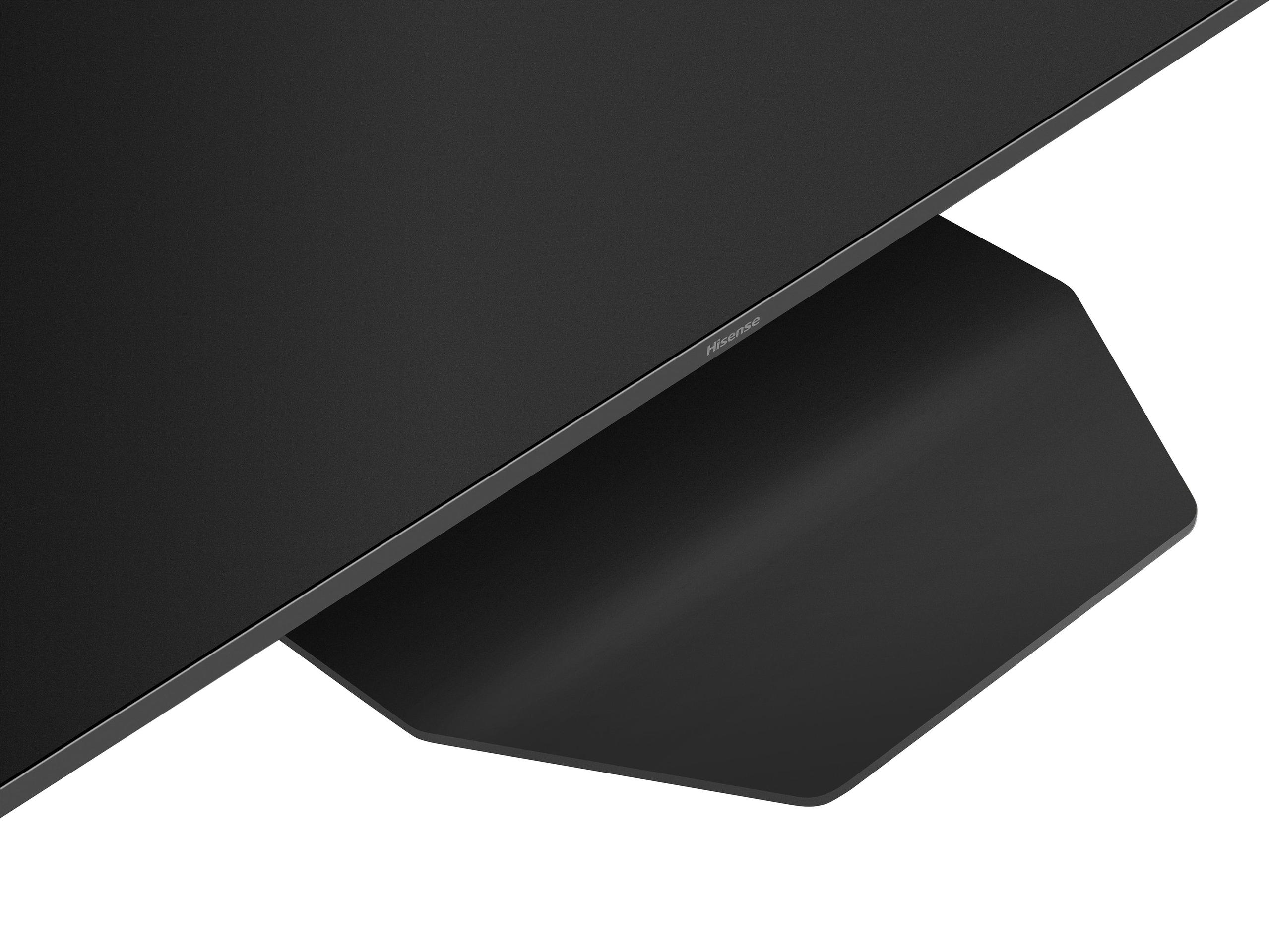
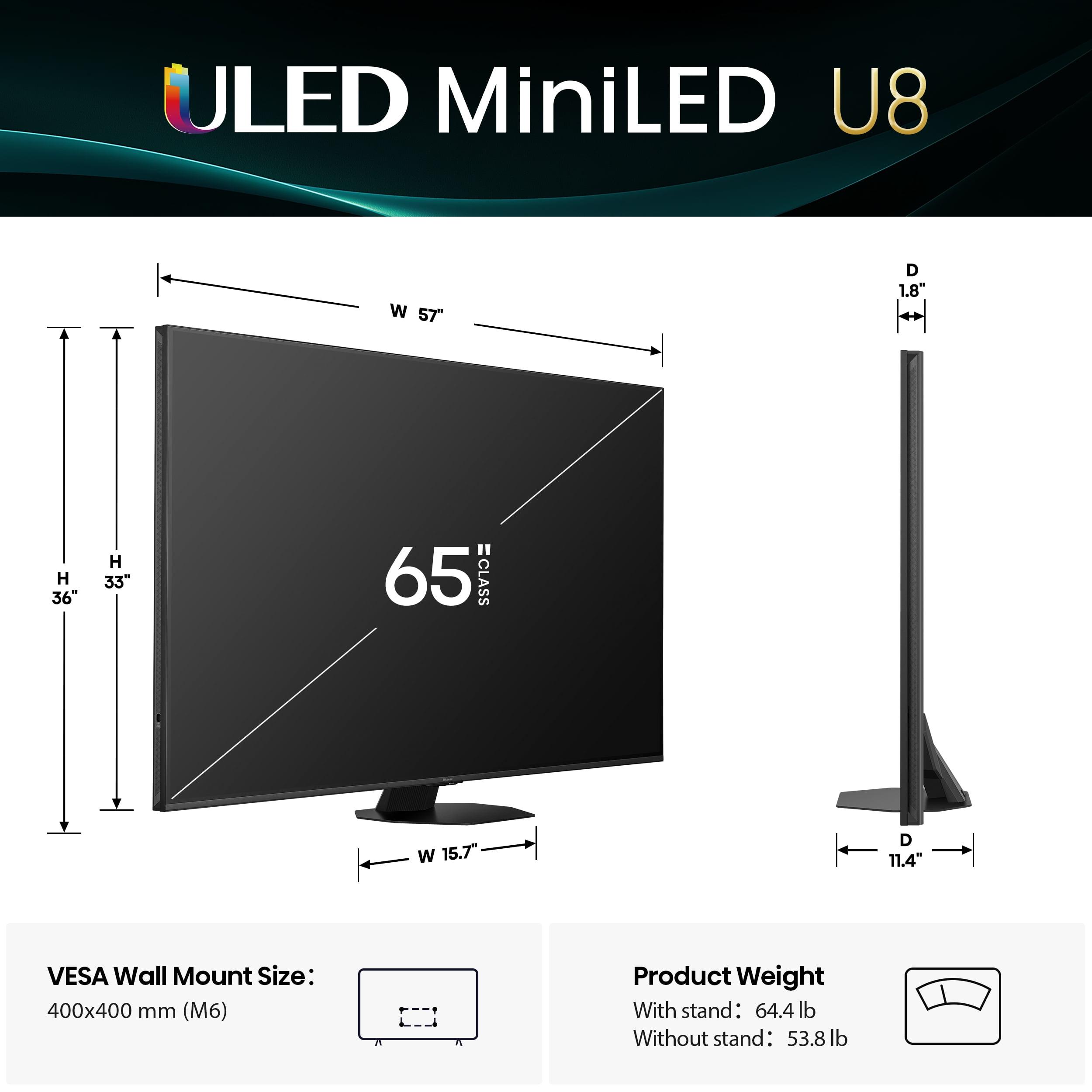
The Hisense U8 follows conventional TV design principles with a central pedestal stand and standard mounting options. While well-built with attractive thin bezels, it makes no attempt to blend into décor when powered off.
At the time of writing, the price gap between these TVs is substantial, but the total cost calculation is more complex than initial purchase price.
The Hisense U8 delivers dramatically superior performance metrics—3x higher peak brightness, gaming capabilities that the Frame can't match, and significantly better built-in audio—while costing considerably less. From a pure performance-per-dollar perspective, it's not particularly close.
However, the Samsung Frame requires additional purchases to reach its full potential. Most owners invest in custom bezels ($100-200+ per style), external audio solutions ($200-800+), and Art Store subscriptions ($5-15 monthly) for access to the full artwork library. These costs add up quickly, widening the total ownership cost gap.
For home theater applications specifically, the Hisense U8 is clearly superior. Its higher brightness, better contrast control through local dimming, and superior audio make it more immersive for movies and TV shows. The gaming capabilities are particularly valuable if you have modern consoles or gaming PCs.
The decision between these TVs should be based on honest assessment of your priorities and usage patterns.
Choose the Samsung Frame if you genuinely value its aesthetic integration capabilities and plan to use Art Mode regularly. This isn't a TV that makes sense if you're buying it solely for watching movies and shows—its premium pricing reflects the lifestyle features, not display performance. It's ideal for design-conscious buyers who want technology to disappear into their living spaces and are willing to pay extra for that integration.
The Frame also makes sense if you have a very bright room where its superior reflection handling provides practical benefits, or if you're deeply invested in Samsung's ecosystem and want seamless device integration.
Choose the Hisense U8 if you want the best possible viewing experience for your money. It delivers substantially better picture quality, gaming performance, and audio while costing less. This makes it ideal for entertainment enthusiasts, gamers, and anyone building a dedicated home theater setup.
The U8 is also the better choice if you're considering streaming modern HDR content, playing current-generation games, or want a TV that will remain capable as content and gaming standards continue evolving.
Based on our research into professional reviews and user feedback, the Hisense U8 represents exceptional value in the premium TV category, while the Samsung Frame succeeds at its specific niche of lifestyle integration. Neither is objectively superior—they're designed for different buyers with different priorities. The key is choosing the one that matches what you actually need and value in your living space.
| Samsung 65" The Frame QLED 4K 2024 TV | Hisense 65" U8 Series Mini-LED ULED 4K Google TV |
|---|---|
| Peak Brightness - Critical for HDR impact and bright room viewing | |
| ~1,000 nits (good for most content, limited HDR impact) | Up to 3,000 nits (exceptional HDR performance, excellent for bright rooms) |
| Local Dimming Zones - Controls contrast and black levels | |
| Edge-lit LED (no local dimming, raised blacks in dark scenes) | 2,000+ Mini-LED zones (precise contrast control, deep blacks) |
| Refresh Rate - Essential for gaming and smooth motion | |
| 60Hz (adequate for movies, limits gaming performance) | 144Hz native (excellent for gaming, future-proof) |
| Gaming Features - Important for console and PC gaming | |
| Basic gaming support, 60Hz limitation | VRR 48-144Hz, FreeSync Premium Pro, Auto Low Latency Mode, Dolby Vision Gaming |
| Display Technology - Affects overall picture quality | |
| QLED with matte anti-glare finish (excellent reflection control) | Mini-LED QLED with quantum dots (superior brightness and contrast) |
| Built-in Audio System - Determines if external speakers needed | |
| Basic 2-channel stereo (most users add soundbar) | 50W 2.1.2 Dolby Atmos system (eliminates immediate soundbar need) |
| Smart TV Platform - Affects app selection and interface | |
| Samsung Tizen (SmartThings integration, Art Store access) | Google TV (superior recommendations, Google Assistant integration) |
| Design Philosophy - Determines room integration approach | |
| Lifestyle TV with Art Mode, customizable bezels, flush wall mounting | Performance-focused conventional TV design |
| Unique Features - What sets each apart | |
| Art Mode with motion sensor, matte display, One Connect Box | Mini-LED backlighting, 144Hz gaming, Wi-Fi 6E, ATSC 3.0 tuner |
| HDR Format Support - Affects streaming and gaming compatibility | |
| HDR10, HDR10+, HLG (no Dolby Vision) | Dolby Vision, HDR10, HDR10+, HLG (full format support) |
| Best Use Case - Who should choose this TV | |
| Design-conscious buyers wanting art display functionality | Performance enthusiasts and gamers seeking maximum value |
| Total Cost Consideration - Beyond initial purchase price | |
| Requires custom bezels, likely soundbar, Art Store subscription | Strong built-in features minimize additional purchases needed |
The Hisense 65" U8 Series delivers superior picture quality for movies and streaming content. With up to 3,000 nits peak brightness and over 2,000 local dimming zones, it produces more impactful HDR content with brighter highlights and deeper blacks. The Samsung 65" The Frame offers good picture quality but is limited by lower peak brightness and lack of local dimming, making HDR content less dramatic.
The Hisense U8 Series is significantly better for gaming, featuring 144Hz refresh rate, Variable Refresh Rate (VRR), AMD FreeSync Premium Pro, and Auto Low Latency Mode. The Samsung Frame is limited to 60Hz, making it adequate only for casual gaming. Serious gamers should choose the Hisense U8 for smooth, responsive gameplay.
Both TVs handle bright rooms well but in different ways. The Samsung Frame uses a matte anti-glare screen that excellently reduces reflections, making it ideal for rooms with lots of natural light. The Hisense U8 Series combats bright rooms with extreme brightness (up to 3,000 nits), overpowering ambient light. For most bright room situations, the Hisense U8 performs better due to its superior brightness capabilities.
The Hisense U8 Series includes a robust 50W 2.1.2 Dolby Atmos sound system that eliminates the immediate need for a soundbar for most users. The Samsung Frame has basic stereo speakers, and most owners end up purchasing external audio equipment. If built-in audio quality matters, the Hisense U8 offers much better value.
For dedicated home theater use, the Hisense U8 Series is the clear winner. Its superior brightness, local dimming technology, full HDR format support (including Dolby Vision), and immersive built-in audio create a more cinematic experience. The Samsung Frame prioritizes aesthetics over performance, making it less suitable for serious home theater applications.
Only the Samsung Frame is specifically designed for art display with its dedicated Art Mode, motion sensor activation, and matte screen that mimics real artwork. You can upload personal photos or subscribe to Samsung's Art Store for curated collections. The Hisense U8 Series is a conventional TV without art display functionality.
The Hisense U8 Series provides exceptional value, delivering superior picture quality, gaming features, and audio performance while typically costing significantly less than the Samsung Frame. The Samsung Frame commands a premium price for its unique design and art features, making it worthwhile only if you specifically want those lifestyle capabilities.
The Samsung Frame runs Tizen with excellent Samsung ecosystem integration and SmartThings compatibility. The Hisense U8 Series uses Google TV, which offers superior content recommendations across streaming services and better voice control. Both platforms access all major streaming apps, so the choice often comes down to ecosystem preference and interface design.
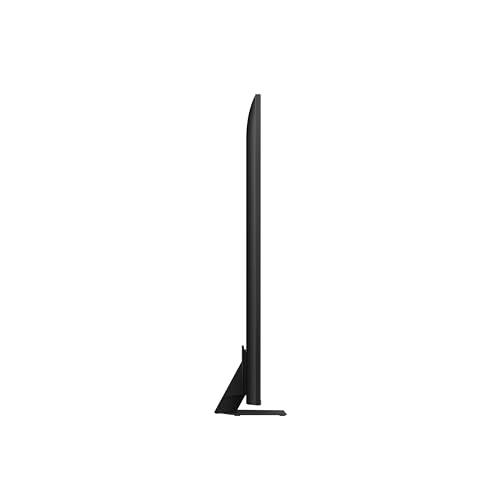
The Samsung Frame is specifically engineered for wall mounting with a flush-mount design and One Connect Box that minimizes visible cables. It's ideal if you want a clean, picture-frame aesthetic. The Hisense U8 Series uses standard wall mounting but doesn't offer the same cable management solutions or ultra-thin profile as the Samsung Frame.
The Hisense U8 Series supports all major HDR formats including Dolby Vision, HDR10, HDR10+, and HLG, providing maximum compatibility with streaming services and gaming content. The Samsung Frame supports HDR10, HDR10+, and HLG but lacks Dolby Vision support, which is used by Netflix, Disney+, and other major streaming platforms.
The Hisense U8 Series is more future-proof with 144Hz gaming support, full HDR format compatibility, Wi-Fi 6E, and ATSC 3.0 tuner for next-generation broadcasts. The Samsung Frame focuses on timeless design rather than cutting-edge specs, making it less adaptable to future content standards but potentially more enduring as a design element.
Samsung generally has stronger brand recognition and customer service networks, while Hisense has rapidly improved its reputation by delivering high-performance TVs at competitive prices. The Samsung Frame offers the reliability of an established premium brand, while the Hisense U8 Series represents exceptional performance value from a brand that's earned respect among enthusiasts and reviewers for its recent innovations.
We've done our best to create useful and informative comparisons to help you decide what product to buy. Our research uses advanced automated methods to create this comparison and perfection is not possible - please contact us for corrections or questions. These are the sites we've researched in the creation of this article: tomsguide.com - rtings.com - rtings.com - youtube.com - bestbuy.com - techlicious.com - youtube.com - smalllilystudio.com - theeverymom.com - livingetc.com - pcrichard.com - image-us.samsung.com - samsung.com - images.samsung.com - samsung.com - buydig.com - tvsbook.com - bestbuy.com - samsung.com - samsung.com - flatpanelshd.com - bestbuy.com - hisense-usa.com - rtings.com - bestbuy.com - rtings.com - hisense-usa.com - youtube.com - hisense-usa.com - avsforum.com - hisense-usa.com - hisense-usa.com - rtings.com - avsforum.com - hisense-usa.com - prnewswire.com - hisense-usa.com - bestbuy.com - youtube.com - hisense-usa.com

Privacy Policy
Terms and Conditions - Affiliate Policy
Home Security
© Copyright 2008-2026.
11816 Inwood Rd #1211, Dallas, TX 75244