

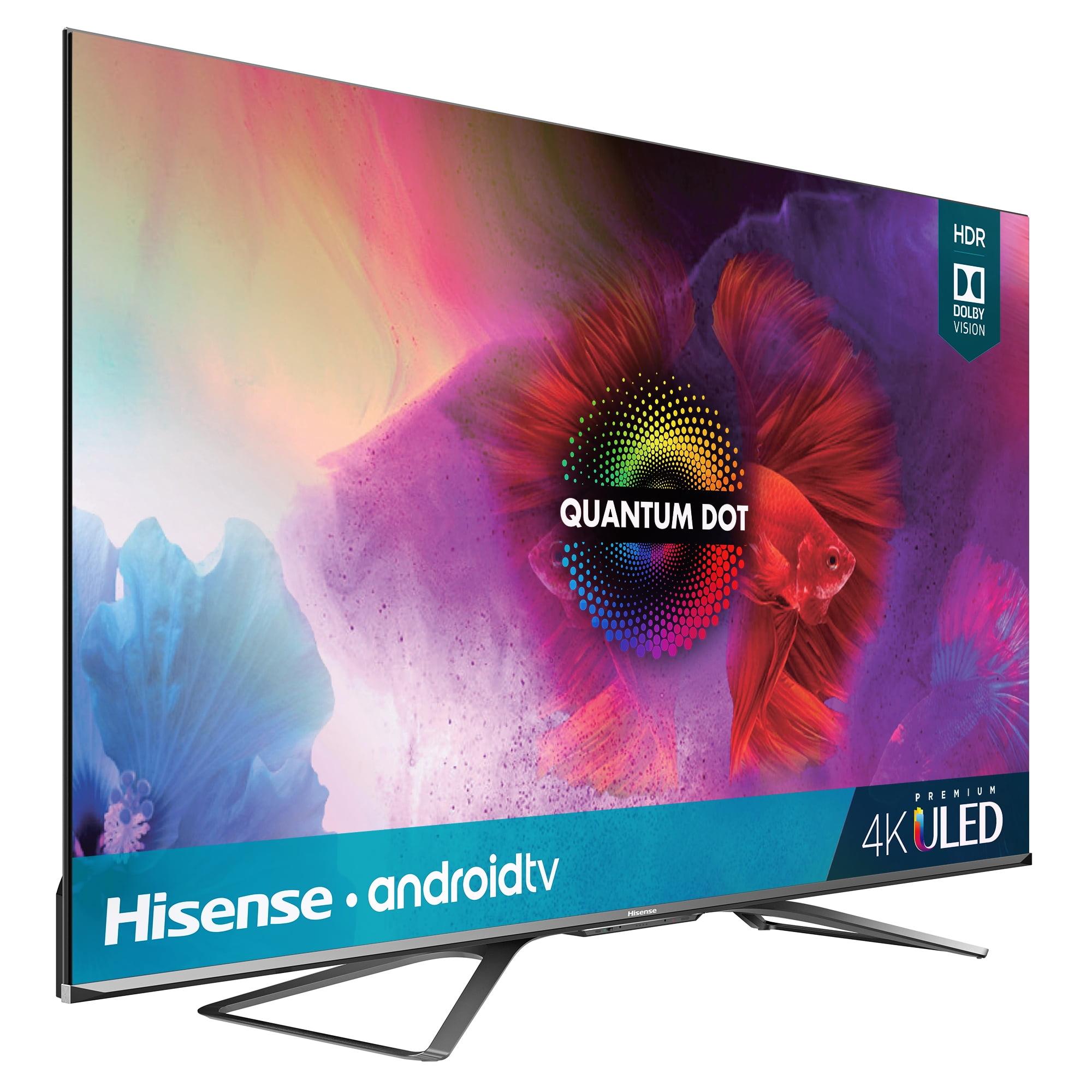


When shopping for a 65" 4K TV, you'll eventually stumble across two very different philosophies: TVs that disappear into your decor and TVs that deliver knockout picture quality. The Samsung 65" The Frame QLED 4K 2024 TV and Hisense 65" H9G Quantum Series 4K UHD Smart Android TV represent these opposing approaches perfectly.
Released in 2024, the Samsung Frame continues Samsung's art TV concept with meaningful improvements to brightness and gaming features. Meanwhile, the Hisense H9G launched as part of Hisense's push into premium quantum dot territory, offering flagship-level picture quality at a fraction of typical premium TV prices. The fundamental question isn't which TV is better—it's which approach suits your living situation.
These TVs tackle the same basic job—displaying 4K content in your living room—but they prioritize completely different aspects of the experience. Think of it like comparing a sports car to a luxury sedan. Both get you places, but one prioritizes performance while the other focuses on comfort and style.
Quantum dot technology, which both TVs use, deserves explanation since it's central to their appeal. Traditional LCD TVs use white LED backlights filtered through colored pixels, but quantum dots are microscopic semiconductors that emit specific colors when hit with blue light. This creates more accurate, vibrant colors—imagine the difference between mixing paint (traditional LCD) versus using pure pigments (quantum dots).
The Samsung Frame treats this technology as one component in a broader lifestyle product, while the Hisense H9G leverages it purely for visual impact. Your choice depends on whether you want a TV that blends into your home's aesthetic or one that delivers the most impressive picture possible.
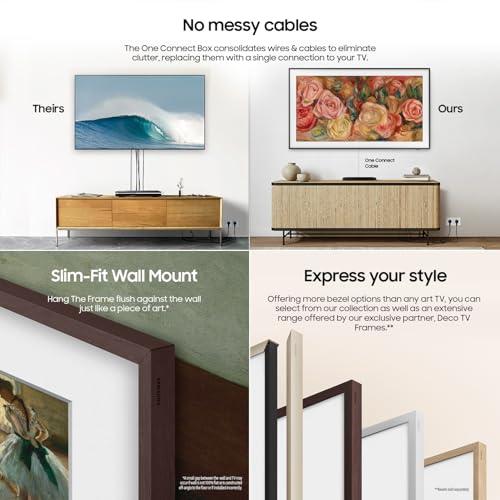
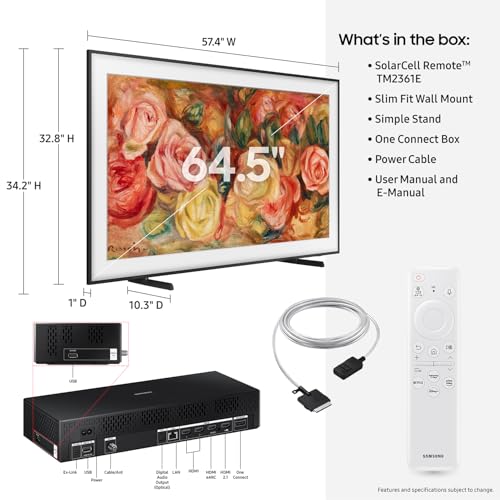
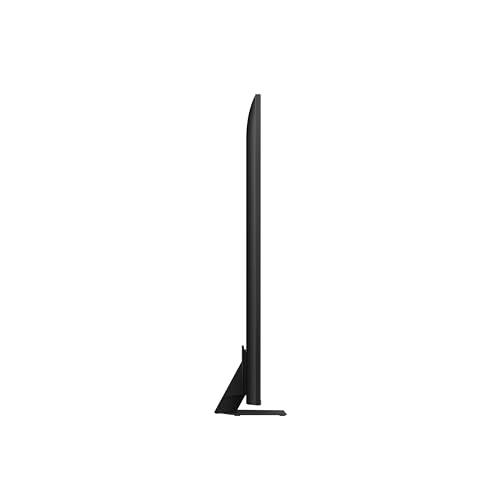
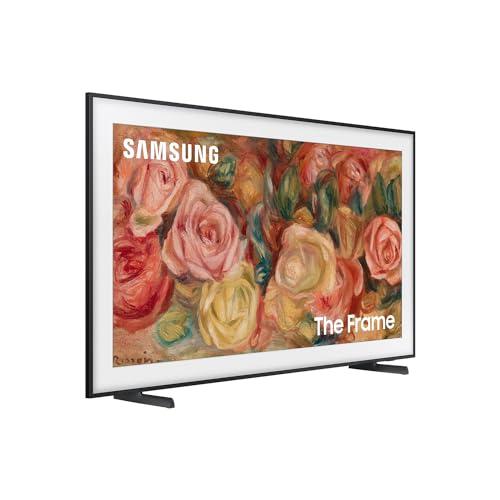
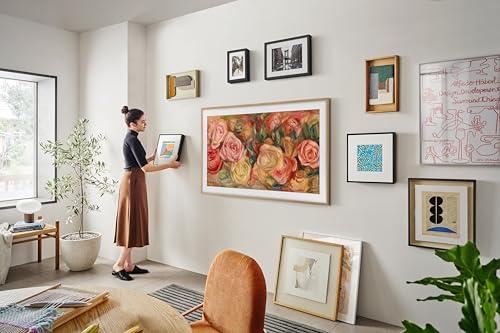
The Samsung Frame 2024 doesn't just mount on your wall—it becomes part of it. At just one inch deep, it sits nearly flush against the wall using Samsung's included Slim-Fit mount. The One Connect Box, a separate unit housing all the processing power and inputs, connects to the TV via a single, nearly invisible cable. This means no unsightly HDMI cables snaking down your wall.
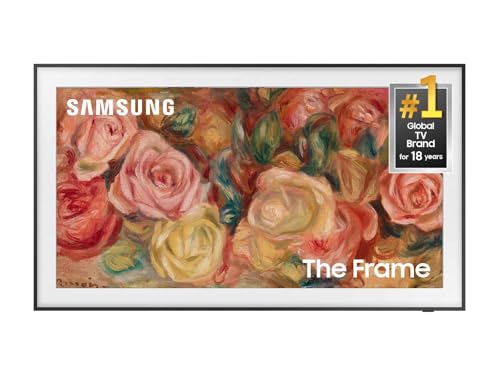
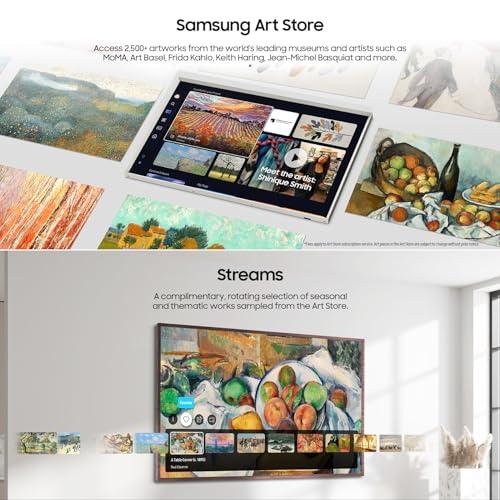
But the real magic happens with the customizable magnetic bezels. Samsung sells these separately (and yes, this adds to the overall cost), allowing you to swap between wood, metal, or colored frames to match your room's aesthetic. When the TV is off, Art Mode displays curated artwork, family photos, or abstract patterns, transforming your TV into what genuinely looks like a framed painting.
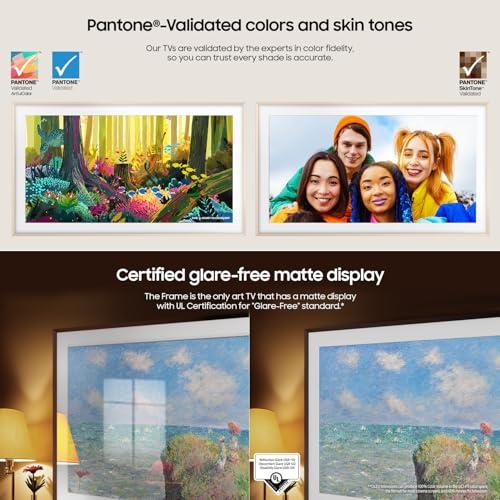
The matte anti-glare display completes the illusion. Unlike glossy TV screens that reflect room lights and windows, the Frame's screen scatters light like a real canvas. This is particularly effective in bright living rooms where traditional TVs become mirrors during daytime viewing.
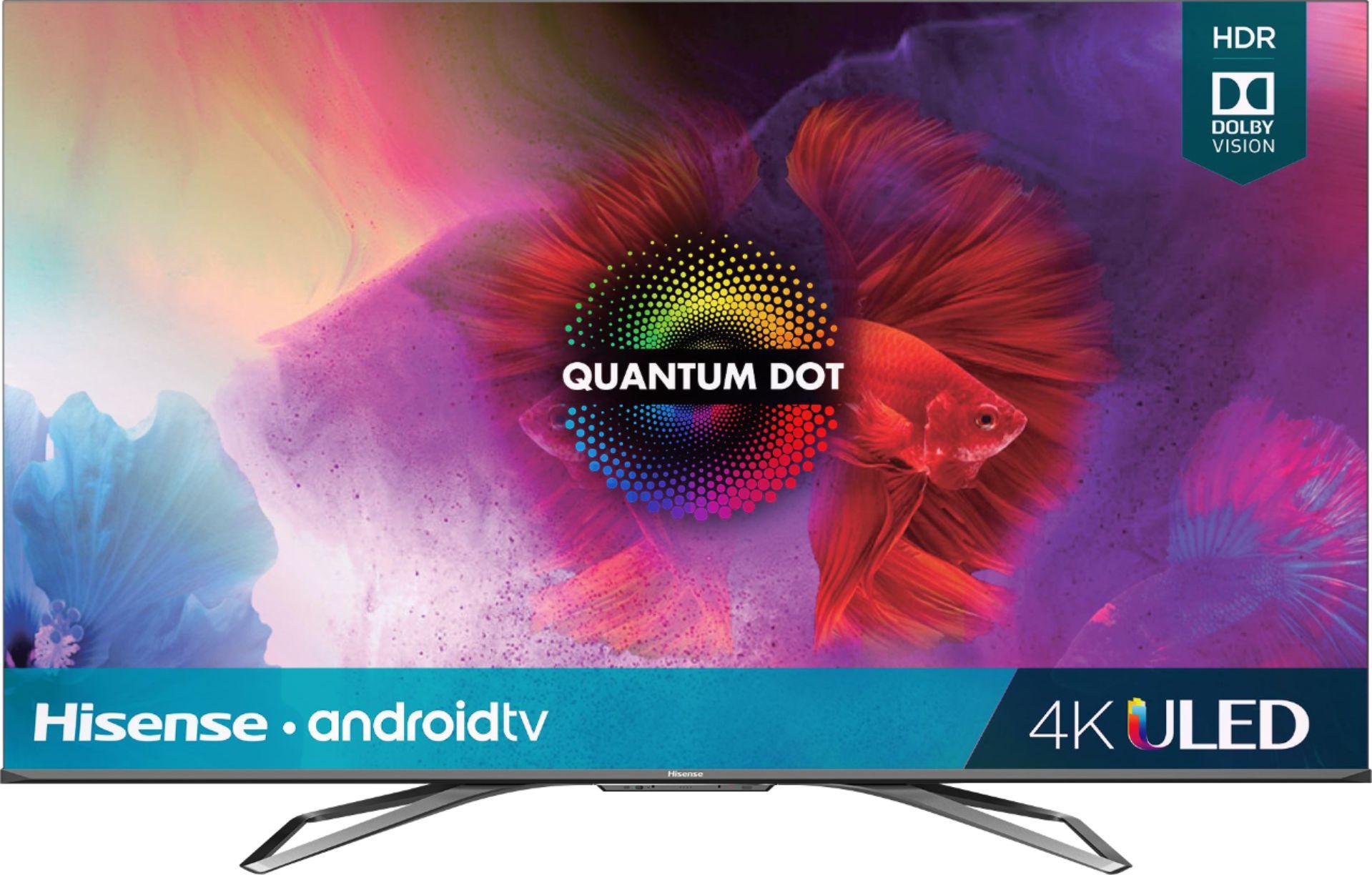
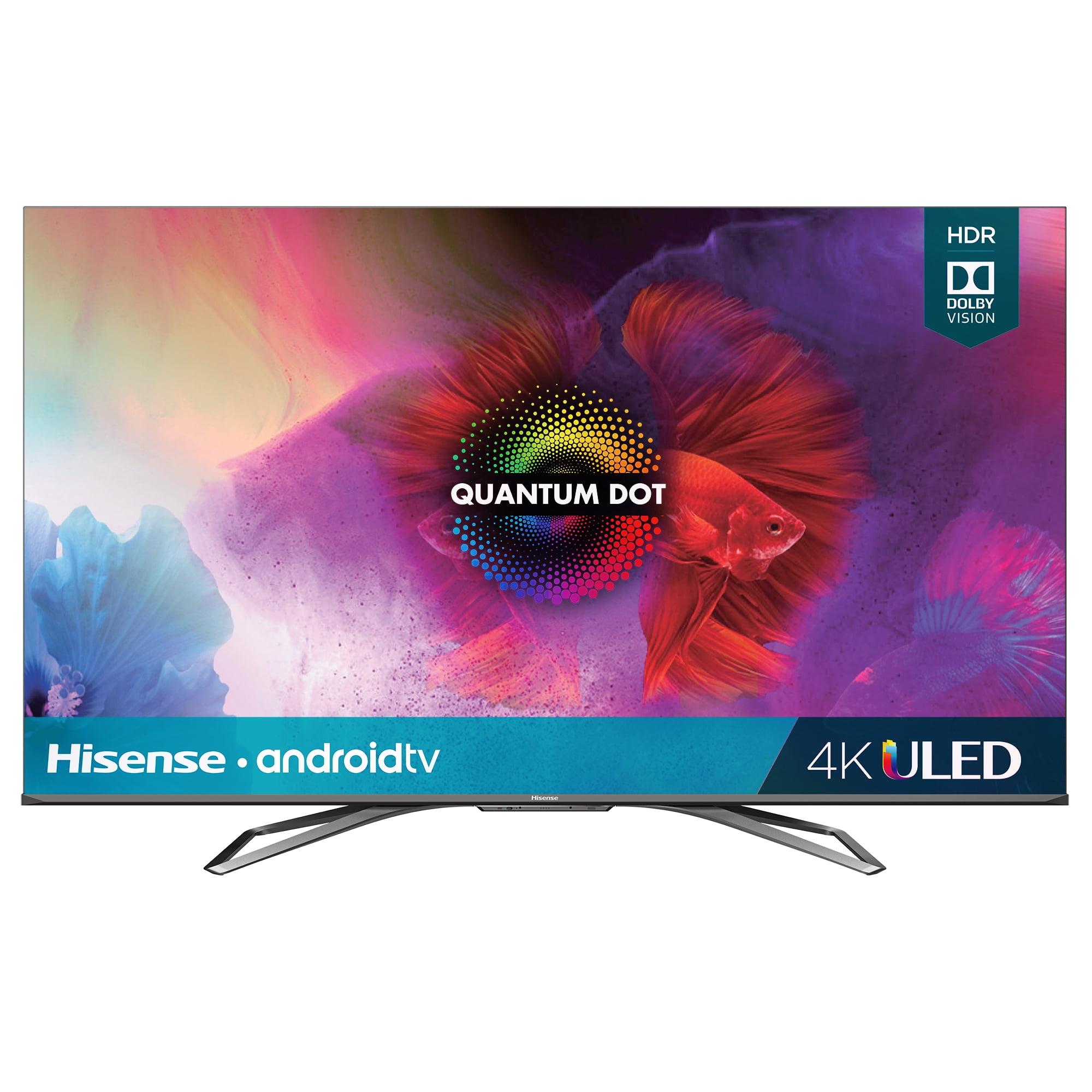
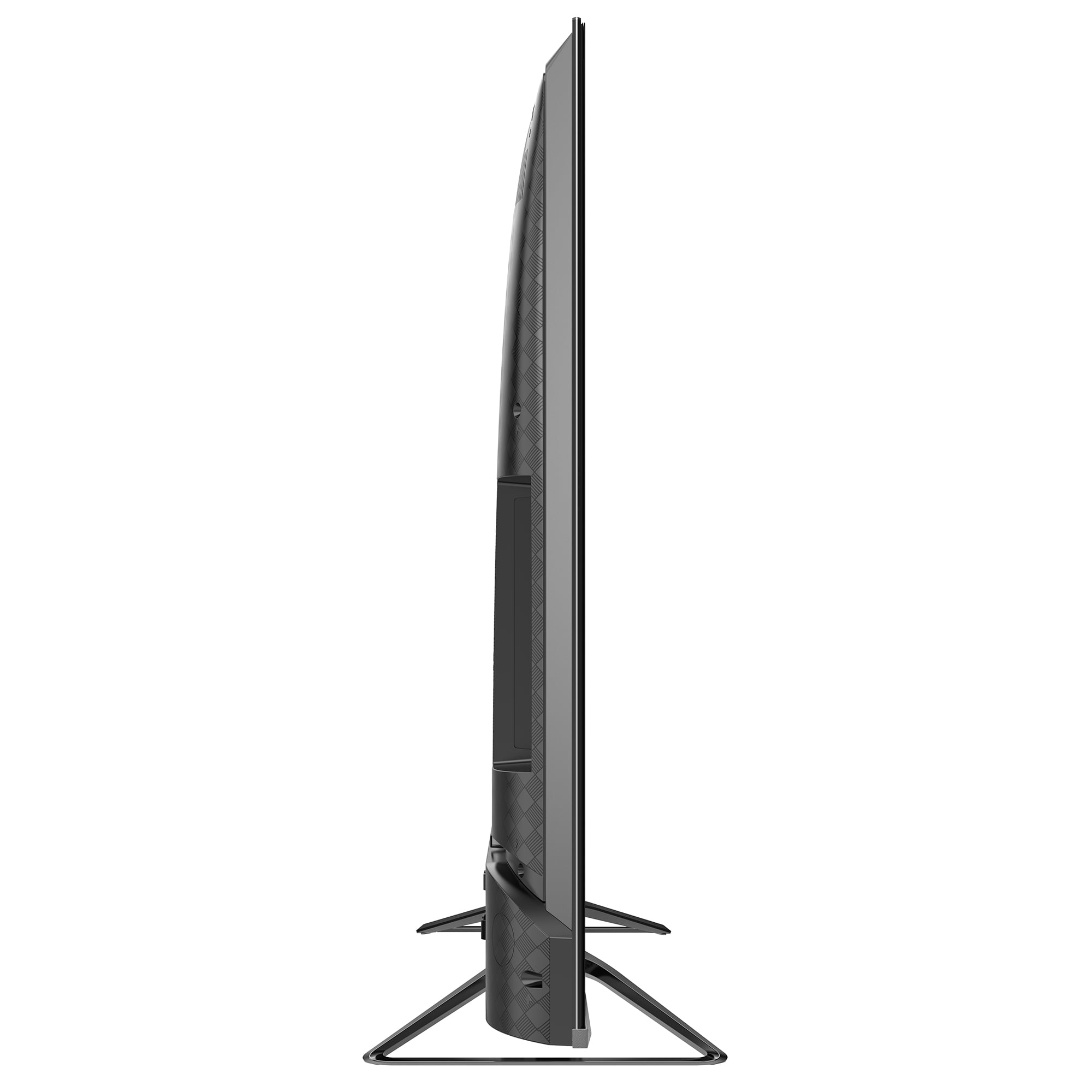
The Hisense H9G, by contrast, embraces traditional TV design. At 4.1 inches deep, it's noticeably thicker but still reasonable for wall mounting. The black bezels are slim and professional-looking, but there's no customization. This TV makes no apologies for being a TV—it's built to deliver an impressive viewing experience rather than blend into your decor.
Here's where these TVs reveal their true priorities, and the differences are substantial enough to influence your buying decision significantly.
HDR (High Dynamic Range) makes the bright parts of images brighter and dark parts darker, creating more realistic contrast. Think of the difference between a photo taken on a phone versus a professional camera—HDR gives you that professional depth and richness.
The Hisense H9G dominates this category with peak brightness reaching 1,000 nits compared to the Samsung Frame's more modest 590 nits. In practical terms, this means HDR content like Netflix movies or 4K Blu-rays will have more impactful highlights—think sunlight glinting off water or explosions in action movies. The Hisense also supports Dolby Vision, a premium HDR format that adjusts brightness and color scene-by-scene, while Samsung relies on the more basic HDR10+.
However, the Frame's lower peak brightness isn't necessarily a weakness. In bright rooms, extremely bright TVs can actually be uncomfortable to watch, and the Frame's anti-glare coating makes it more pleasant for daytime viewing than the glossy Hisense.
This is where the Hisense H9G delivers a knockout punch. Local dimming technology divides the screen into zones that can be individually brightened or dimmed. The H9G features 180 full-array local dimming zones—imagine 180 tiny dimmers controlling different sections of the screen simultaneously.
When you're watching a movie with a night scene, these zones can make the black parts truly black while keeping bright elements (like stars or car headlights) properly bright. The result is exceptional contrast that makes dark room viewing incredibly immersive. User reviews consistently praise the H9G's black levels as rivaling much more expensive TVs.
The Samsung Frame uses edge-lighting, where LEDs along the screen's edges illuminate the entire panel. This is cheaper to manufacture and allows for the ultra-thin design, but it can't achieve the same deep blacks. In dark rooms, you'll notice the difference immediately—blacks look more like dark gray on the Frame.
Both TVs use quantum dot technology for wide color reproduction, but they tune colors differently. The Samsung Frame earned Pantone art certification, meaning colors are calibrated for accurate artwork reproduction. This makes sense given its dual purpose as an art display.
The Hisense H9G pushes colors more aggressively, creating a "wow factor" that's particularly effective for HDR content and sports. Some users find Hisense colors slightly oversaturated compared to Samsung's more natural approach, but this often makes content more engaging, especially in bright rooms.
Gaming requirements have evolved rapidly since both TVs launched. Variable Refresh Rate (VRR) technology syncs the TV's display rate with your gaming console's output, eliminating screen tearing and stuttering. Input lag measures the delay between pressing a controller button and seeing the action on screen.
The Samsung Frame 2024 includes modern gaming features like VRR support and achieves impressively low input lag around 9.2ms. Its native 120Hz panel provides smooth motion for fast-paced games. However, it only includes one HDMI 2.1 port, which limits you to connecting one next-generation console at full performance.
The Hisense H9G offers solid gaming performance with low input lag in Game Mode, but it lacks VRR support entirely. For casual gaming, this won't matter, but competitive gamers or those with PlayStation 5 or Xbox Series X consoles will notice the difference in fast-moving games.
Smart TV platforms are essentially the operating systems that control your TV's apps and interface. Your choice here often depends on your existing tech ecosystem and preferences.
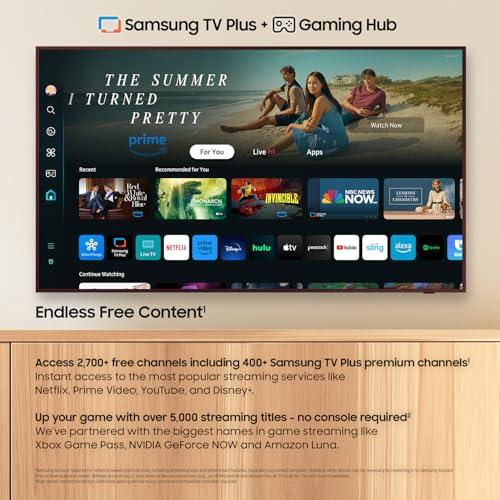
The Samsung Frame runs Tizen OS, Samsung's proprietary platform. It's clean and responsive, with good app selection covering major streaming services. The Art Store integration is seamless, though accessing Samsung's full art library requires a subscription. If you use other Samsung devices or SmartThings smart home products, the integration is excellent.
The Hisense H9G uses Android TV, which brings Google's ecosystem to your living room. Chromecast built-in lets you cast content from phones and tablets effortlessly. The Google Play Store typically has more app options than Tizen, and updates come more frequently. However, some users find Android TV's interface busier and less elegant than Samsung's approach.
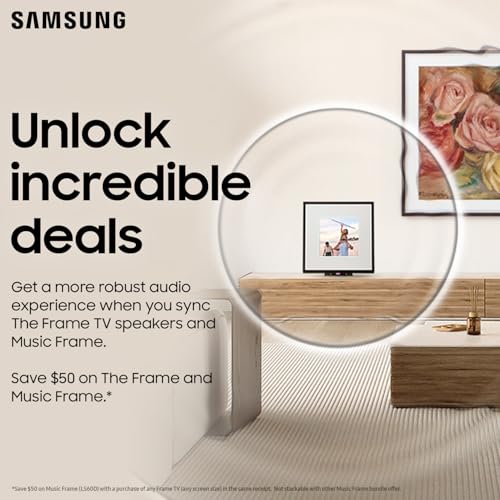
TV speakers rarely match dedicated sound systems, but there are still meaningful differences. The Samsung Frame 2024 includes a 40W, 2.0.2 channel system with Dolby Atmos support. Object Tracking Sound (OTS) attempts to match audio with on-screen action, and Q-Symphony allows the TV speakers to work alongside Samsung soundbars for enhanced audio.
The Hisense H9G offers more basic 20W stereo speakers. While they support Dolby Atmos processing, the lower power output and simpler speaker arrangement make dialogue and music less clear compared to the Samsung. For either TV, we'd recommend a soundbar or surround system for serious home theater use.
At the time of writing, these TVs occupy different price tiers entirely. The Samsung Frame commands premium pricing reflecting its design innovation and dual functionality. Factor in additional costs for bezels and art subscriptions, and you're making a significant investment in lifestyle enhancement.
The Hisense H9G represents exceptional value, typically priced significantly lower while delivering picture quality that competes with TVs costing much more. For pure performance per dollar, especially in dark room viewing scenarios, it's hard to beat.
For dedicated home theater spaces, the Hisense H9G is the clear winner. Its superior contrast, local dimming, and brighter HDR performance create the immersive experience movie enthusiasts crave. The ability to achieve truly deep blacks makes horror movies genuinely scary and space scenes appropriately vast.
The Samsung Frame works better in multi-purpose living spaces where the TV needs to look good even when turned off. Its anti-glare properties excel in rooms with lots of natural light, though serious movie watching benefits from dimmed lights regardless of TV choice.
Choose the Samsung Frame 2024 if:
Choose the Hisense H9G if:
These TVs succeed in completely different ways. The Samsung Frame revolutionizes how a TV fits into your living space, making it disappear when not in use while still delivering solid 4K performance. It's perfect for design-conscious buyers who want their technology to enhance rather than dominate their room's aesthetic.
The Hisense H9G focuses purely on delivering impressive picture quality at an outstanding price point. Its local dimming and high brightness create a viewing experience that rivals much more expensive TVs, making it ideal for movie enthusiasts and value-conscious buyers.
Your decision ultimately comes down to priorities: Do you want a TV that's also a piece of art, or do you want the best possible picture quality for your money? Both approaches have merit, but understanding your viewing habits, room setup, and aesthetic preferences will guide you toward the right choice.
| Samsung 65" The Frame QLED 4K 2024 TV | Hisense 65" H9G Quantum Series 4K UHD Smart Android TV |
|---|---|
| Screen Size & Resolution - Both deliver sharp 4K detail at the popular 65" size | |
| 65" (64.5" diagonal), 4K UHD (3840×2160) | 65" (64.5" diagonal), 4K UHD (3840×2160) |
| Display Technology - Quantum dots enhance color but implementation differs significantly | |
| QLED with Quantum Dot, edge-lit LED | QLED with Quantum Dot, full-array LED |
| Local Dimming - Critical for deep blacks and HDR contrast | |
| None (edge-lit design limits contrast) | 180 full-array local dimming zones (excellent dark room performance) |
| Peak Brightness - Higher numbers mean better HDR highlights and bright room viewing | |
| ~590 nits (good for most content) | Up to 1,000 nits (impressive HDR impact) |
| HDR Support - More formats mean compatibility with more premium content | |
| HDR10, HDR10+ (missing Dolby Vision) | Dolby Vision, HDR10, HDR10+, HLG (comprehensive support) |
| Refresh Rate - Important for sports and gaming smoothness | |
| 120Hz native (excellent motion handling) | 120Hz native with Motion Rate 480 (smooth motion processing) |
| Gaming Features - Modern consoles benefit from these technologies | |
| VRR, 9.2ms input lag, 1 HDMI 2.1 port | No VRR, low input lag in Game Mode, standard HDMI ports |
| Design Philosophy - Completely different approaches to room integration | |
| Art TV with customizable bezels, 1" ultra-thin, matte anti-glare screen | Traditional TV design, 4.1" depth, glossy screen optimized for controlled lighting |
| Smart Platform - Your app ecosystem preference matters here | |
| Tizen OS with Art Store integration, SmartThings hub | Android TV with Google Play Store, Chromecast built-in |
| Audio System - Both adequate but Samsung Frame has clear advantage | |
| 40W 2.0.2 channel with Dolby Atmos, Object Tracking Sound | 20W stereo with basic Dolby Atmos processing |
| Wall Mounting - Samsung Frame designed for flush installation | |
| Slim-Fit mount included, One Connect Box for cable management | Standard VESA mounting, direct connections to TV |
| Unique Features - What sets each apart from standard TVs | |
| Art Mode, Pantone certification, magnetic bezels, anti-glare coating | 180-zone local dimming at budget price, exceptional contrast ratio |
| Best Use Case - Where each TV truly excels | |
| Bright living rooms, design-conscious spaces, dual art/TV functionality | Dark room viewing, home theaters, value-focused picture quality |
The Hisense 65" H9G Quantum Series delivers superior picture quality for movies, especially in dark rooms. Its 180 full-array local dimming zones create deeper blacks and better contrast compared to the Samsung 65" The Frame QLED 4K 2024 TV. The H9G also reaches 1,000 nits peak brightness versus the Frame's 590 nits, making HDR content more impactful. However, the Samsung Frame performs better in bright rooms thanks to its anti-glare matte screen.
The Samsung 65" The Frame QLED 4K 2024 TV is better for modern gaming with its VRR (Variable Refresh Rate) support and extremely low 9.2ms input lag. It handles PlayStation 5 and Xbox Series X games smoothly at 120Hz. The Hisense H9G offers decent gaming performance with low input lag in Game Mode but lacks VRR support, which can cause screen tearing in fast-paced games.
The Samsung Frame 2024 excels in bright rooms due to its matte anti-glare display that scatters light like a real painting. This reduces reflections significantly compared to the glossy screen on the Hisense H9G. The Frame's design specifically addresses bright room viewing, while the H9G performs best in controlled lighting conditions.
The Samsung 65" The Frame QLED 4K 2024 TV is designed as an art TV that doubles as home decor, featuring customizable magnetic bezels and Art Mode for displaying artwork when off. At just 1 inch thick, it mounts flush to the wall. The Hisense 65" H9G uses traditional TV design at 4.1 inches deep, focusing purely on performance rather than aesthetics.
The Hisense H9G Quantum Series provides exceptional value, offering premium picture quality features like 180-zone local dimming and 1,000-nit brightness at a significantly lower price point. The Samsung Frame commands premium pricing for its unique design and dual art/TV functionality, plus additional costs for bezels and art subscriptions.
No, there's a significant difference in HDR support. The Hisense 65" H9G supports all major HDR formats including Dolby Vision, HDR10, HDR10+, and HLG. The Samsung Frame 2024 supports HDR10 and HDR10+ but lacks Dolby Vision, which is used by Netflix, Disney+, and many 4K Blu-rays for enhanced picture quality.
Both platforms have their strengths. The Samsung Frame's Tizen OS offers clean interface design and excellent Samsung ecosystem integration, plus unique Art Store access. The Hisense H9G's Android TV provides broader app selection through Google Play Store, Chromecast built-in, and more frequent updates. Choose based on your existing device ecosystem and app preferences.
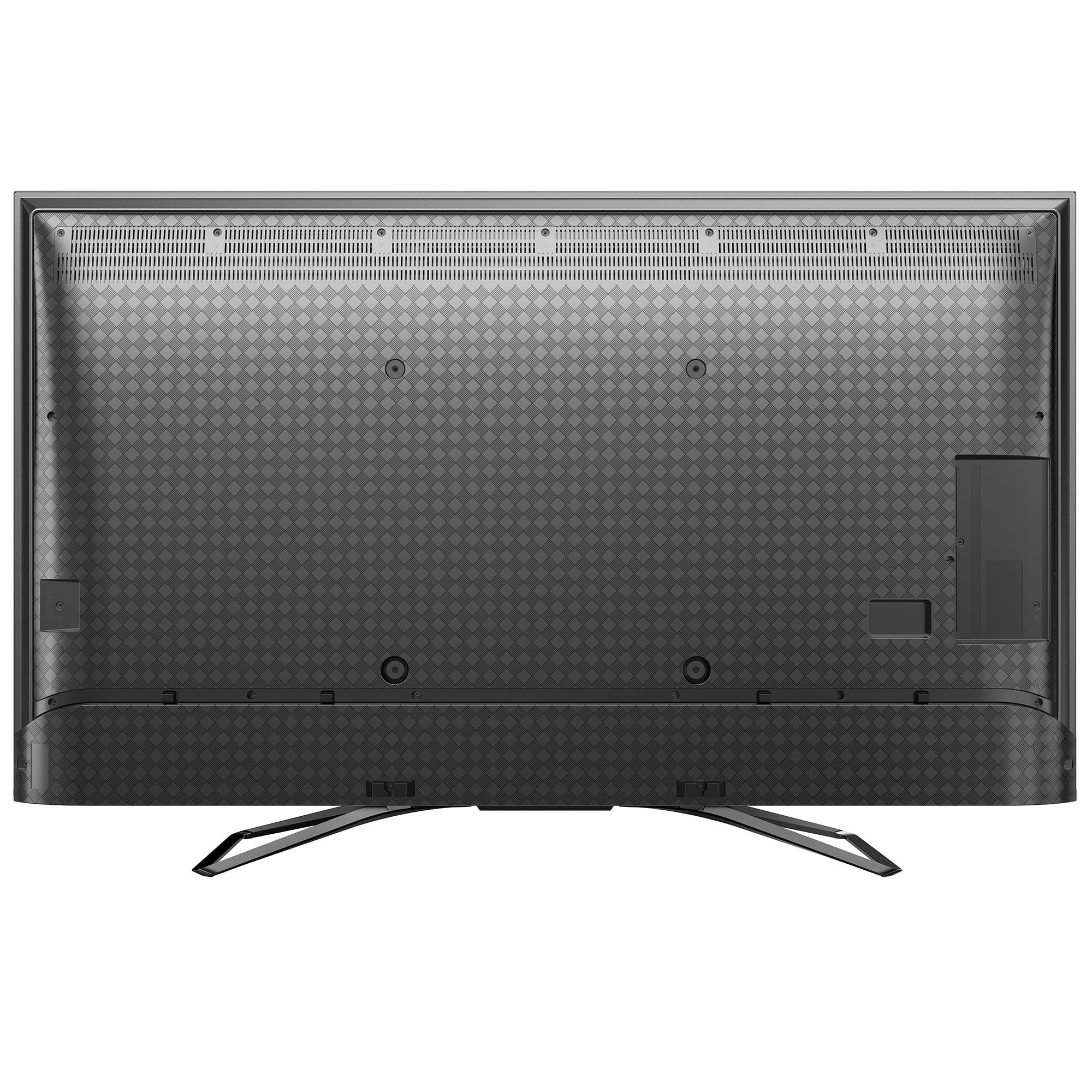
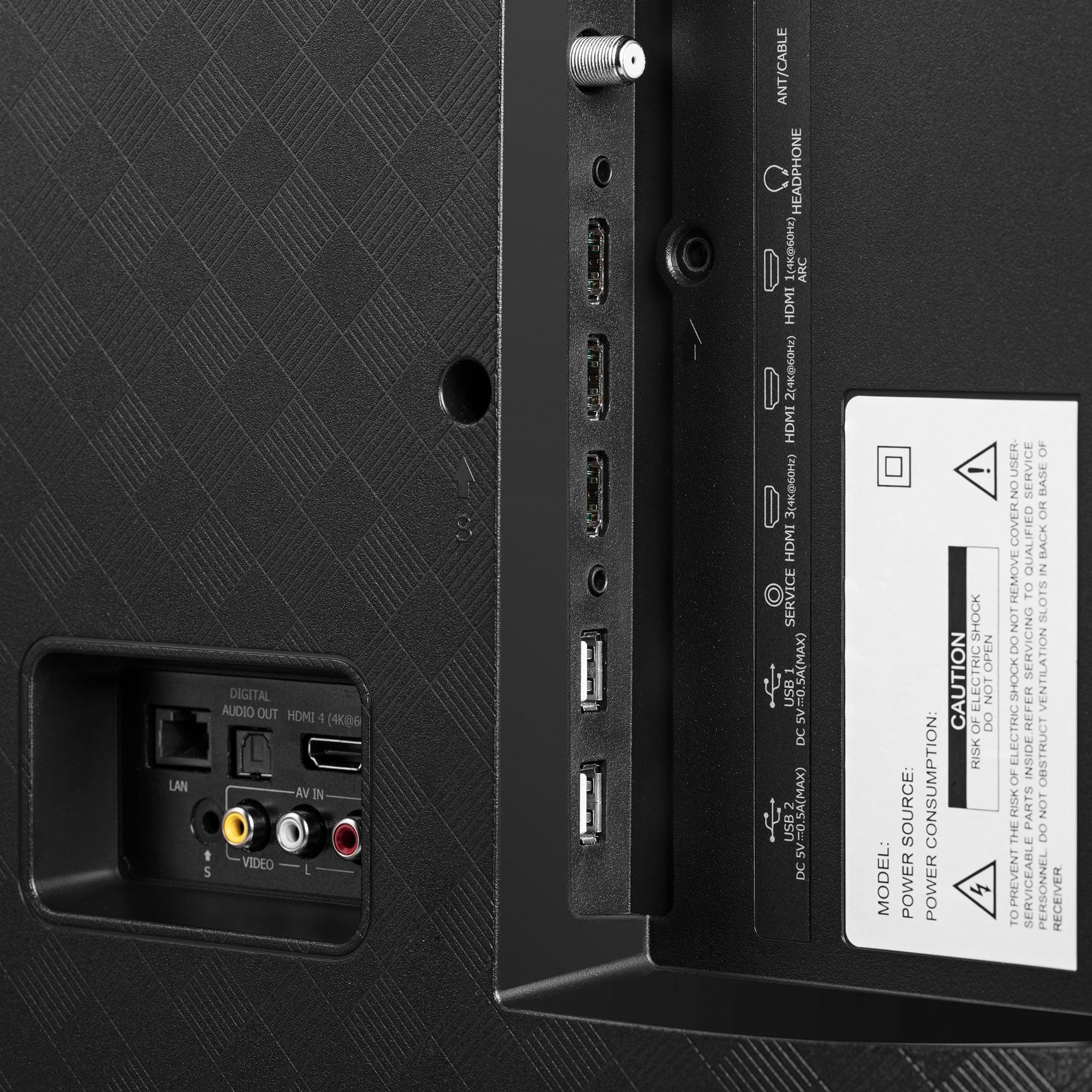
Yes, but with different approaches. The Samsung 65" The Frame includes a Slim-Fit wall mount for flush installation and uses a One Connect Box to minimize cables. The Hisense H9G uses standard VESA mounting but requires direct cable connections to the TV, creating a less clean wall installation.
The Hisense 65" H9G Quantum Series is superior for dedicated home theater use. Its 180 local dimming zones, higher peak brightness, and excellent black levels create the immersive dark room experience movie enthusiasts want. The Samsung Frame works better in multi-purpose living spaces where aesthetics matter as much as performance.
The Samsung Frame 2024 has notably better audio with its 40W 2.0.2 channel system featuring Dolby Atmos and Object Tracking Sound technology. The Hisense H9G offers basic 20W stereo speakers that, while adequate, lack the power and sophistication of Samsung's audio system. Both benefit from external sound systems for serious viewing.
Both TVs feature native 120Hz panels for smooth motion, but they handle it differently. The Hisense H9G includes Motion Rate 480 processing for enhanced smoothness, while the Samsung Frame relies on its native 120Hz refresh rate. Both deliver good sports viewing, though the H9G's motion processing may appeal to those who prefer heavily processed smooth motion.
Choose the Samsung 65" The Frame QLED 4K 2024 TV if you want a TV that doubles as art, have a bright living room, prioritize modern gaming features, and value aesthetic integration over pure performance. Choose the Hisense 65" H9G Quantum Series if you want the best picture quality for your money, prefer dark room viewing, need comprehensive HDR format support, and don't require the TV to blend into your decor.
We've done our best to create useful and informative comparisons to help you decide what product to buy. Our research uses advanced automated methods to create this comparison and perfection is not possible - please contact us for corrections or questions. These are the sites we've researched in the creation of this article: tomsguide.com - rtings.com - rtings.com - youtube.com - bestbuy.com - techlicious.com - youtube.com - smalllilystudio.com - theeverymom.com - livingetc.com - pcrichard.com - image-us.samsung.com - samsung.com - images.samsung.com - samsung.com - buydig.com - tvsbook.com - bestbuy.com - samsung.com - samsung.com - flatpanelshd.com - rtings.com - bestbuy.com - techradar.com - youtube.com - digitaltrends.com - assets.hisense-usa.com - bestbuy.com - youtube.com - bestbuy.com

Privacy Policy
Terms and Conditions - Affiliate Policy
Home Security
© Copyright 2008-2026.
11816 Inwood Rd #1211, Dallas, TX 75244