


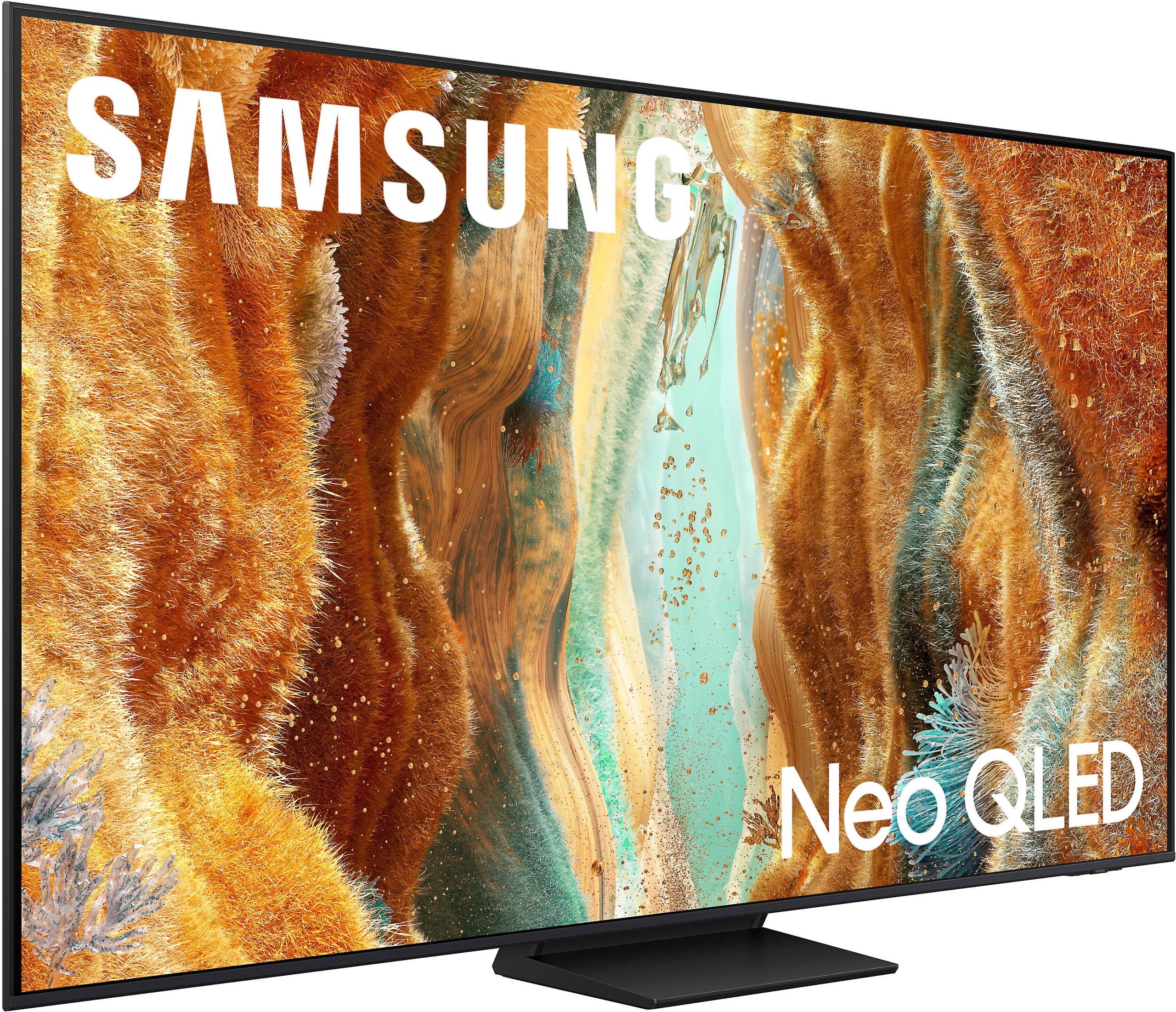
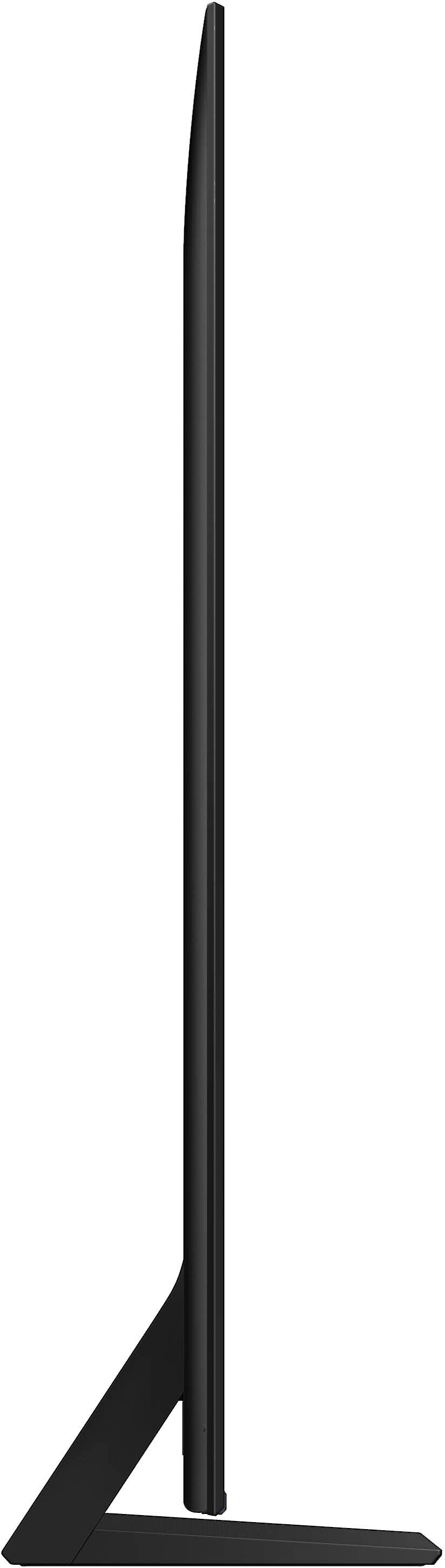

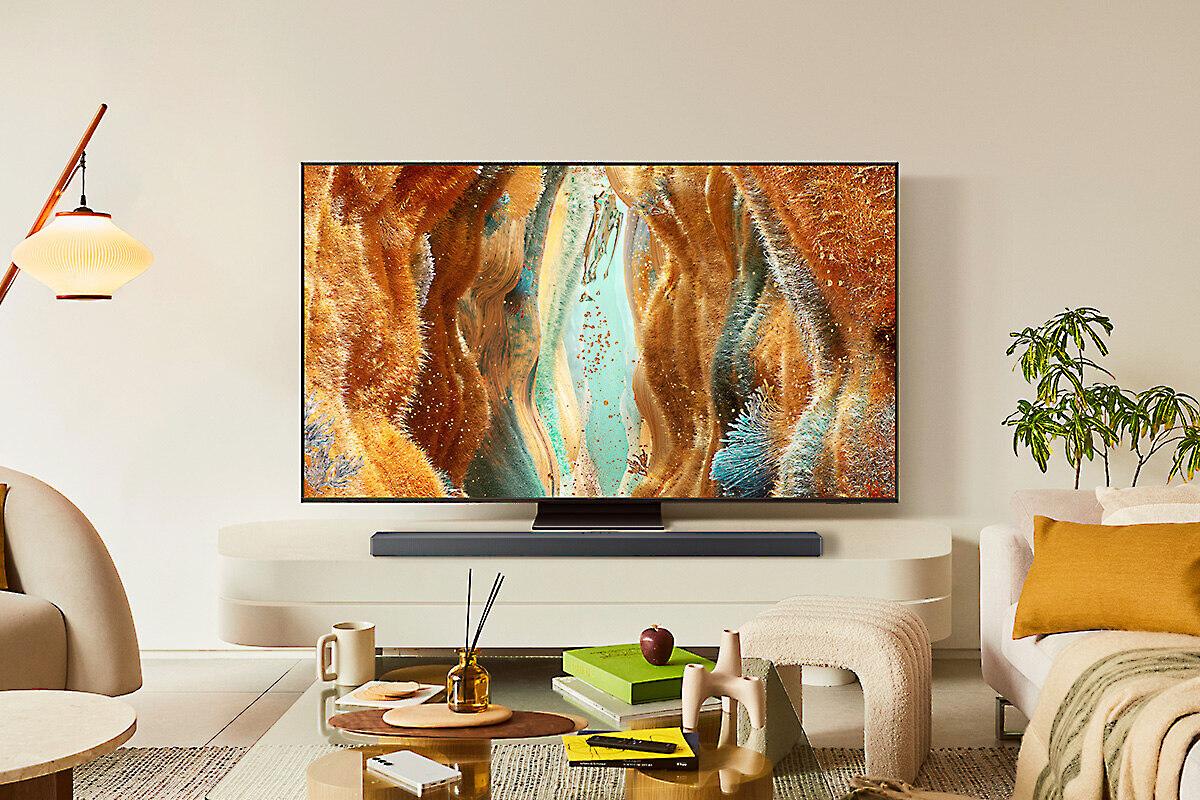
When shopping for a premium 65-inch TV, you're not just buying a screen—you're choosing how technology fits into your life. Samsung's 2024 and 2025 TV lineups present an interesting choice between two very different philosophies. The Frame QLED 2024 transforms your living room into an art gallery, while the QN70F Neo QLED 2025 focuses purely on delivering exceptional picture quality and cutting-edge features at a surprisingly accessible price point.
At the time of writing, these TVs represent dramatically different value propositions, with the QN70F costing roughly 60% less than the Frame despite packing more advanced display technology. This price gap reveals the fundamental question: are you paying for lifestyle features or display performance?
Before diving into specifics, it's worth understanding what separates today's premium TVs from budget models. The biggest differentiator is backlighting technology—how the TV illuminates its screen to create the images you see. Traditional LED TVs place lights around the edges of the screen (edge-lit), while more advanced models use full-array backlighting with lights spread across the entire back panel. The newest innovation is Mini-LED technology, which uses thousands of tiny LEDs for incredibly precise lighting control.
QLED (Quantum Dot Light Emitting Diode) adds a layer of quantum dots—microscopic particles that enhance color accuracy and brightness when hit with light. Think of it as a color filter that makes reds redder, blues bluer, and everything more vibrant. Neo QLED takes this further by combining QLED with Mini-LED backlighting for superior contrast and brightness control.
The other major consideration is the smart TV platform—the operating system that runs your streaming apps and controls the TV's features. Both these Samsung models use Tizen OS, which is generally reliable though not quite as intuitive as Google TV or as comprehensive as Apple TV.
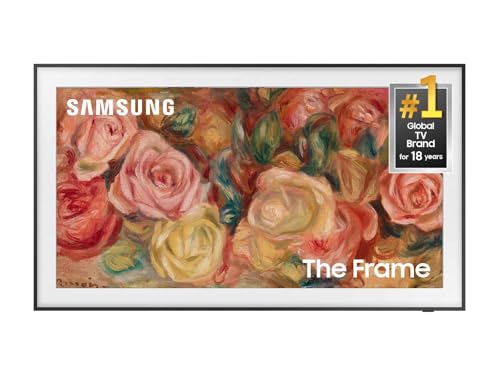
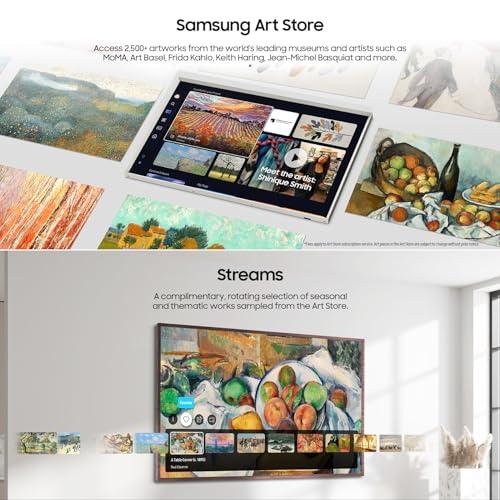
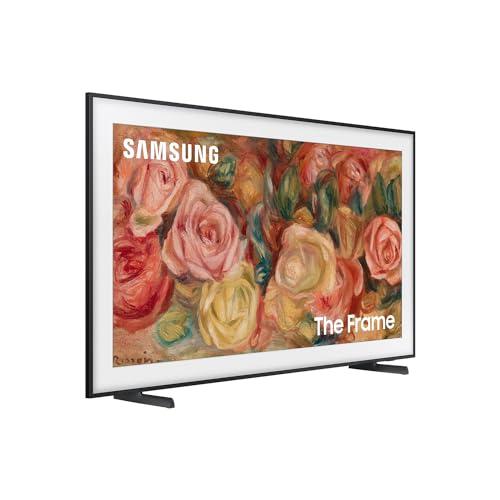
Released in 2024, the Samsung Frame QLED represents the company's unique approach to solving a common problem: that big black rectangle dominating your living room when the TV is off. Samsung's solution? Make it disappear by turning it into a piece of art.
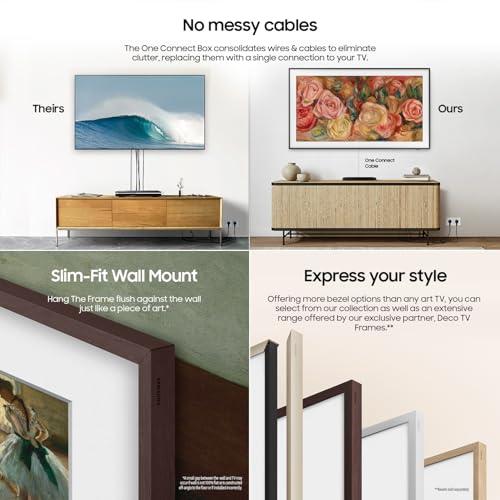
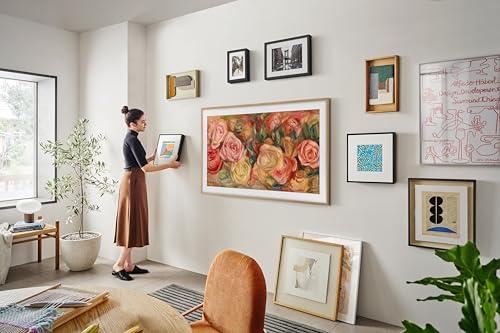
The Frame's Art Mode transforms the screen into a digital canvas displaying curated artwork, personal photos, or pieces from Samsung's Art Store subscription service. A motion sensor detects when someone enters the room and activates the display, while magnetic bezels (sold separately) let you customize the frame style to match your décor. The effect is genuinely impressive—visitors often don't realize they're looking at a TV until it springs to life.
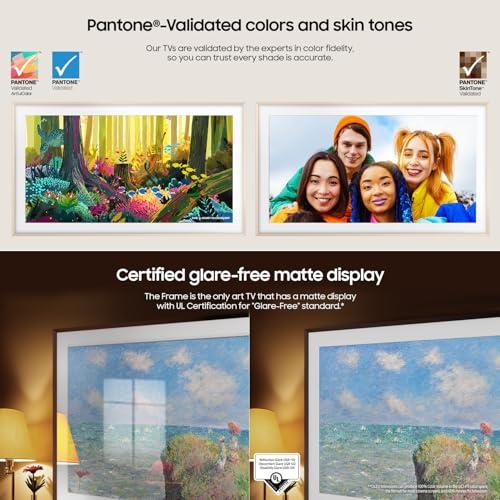
This lifestyle focus comes with technical trade-offs. The Frame uses standard QLED technology without the Mini-LED enhancement found in Samsung's Neo QLED models. This means adequate but not exceptional black levels (how dark the darkest parts of the image can get) and contrast ratio (the difference between the brightest and darkest parts of an image). However, Samsung compensated with an anti-glare matte display that scatters ambient light, making it significantly better than most TVs for bright room viewing.
The matte finish is genuinely impressive for daytime viewing. Where glossy screens become mirrors reflecting lamps and windows, the Frame maintains image clarity even with direct sunlight hitting the screen. This makes it particularly valuable for living rooms with lots of natural light—spaces where most TVs struggle.
For gaming, the Frame delivers solid performance with input lag as low as 9.2 milliseconds. Input lag measures the delay between when you press a controller button and see the action on screen—anything under 20ms is considered good for gaming, so 9.2ms is excellent. The TV supports Variable Refresh Rate (VRR), which synchronizes the TV's refresh rate with your gaming console's output to eliminate screen tearing and stuttering.
Audio-wise, the Frame includes a surprisingly capable 40-watt 2.0.2 channel system with Dolby Atmos support. Dolby Atmos creates three-dimensional sound by bouncing audio off your ceiling, making explosions feel like they're happening around you rather than just from the TV's direction. Object Tracking Sound helps audio follow movement across the screen—when a car drives from left to right, the sound moves with it.
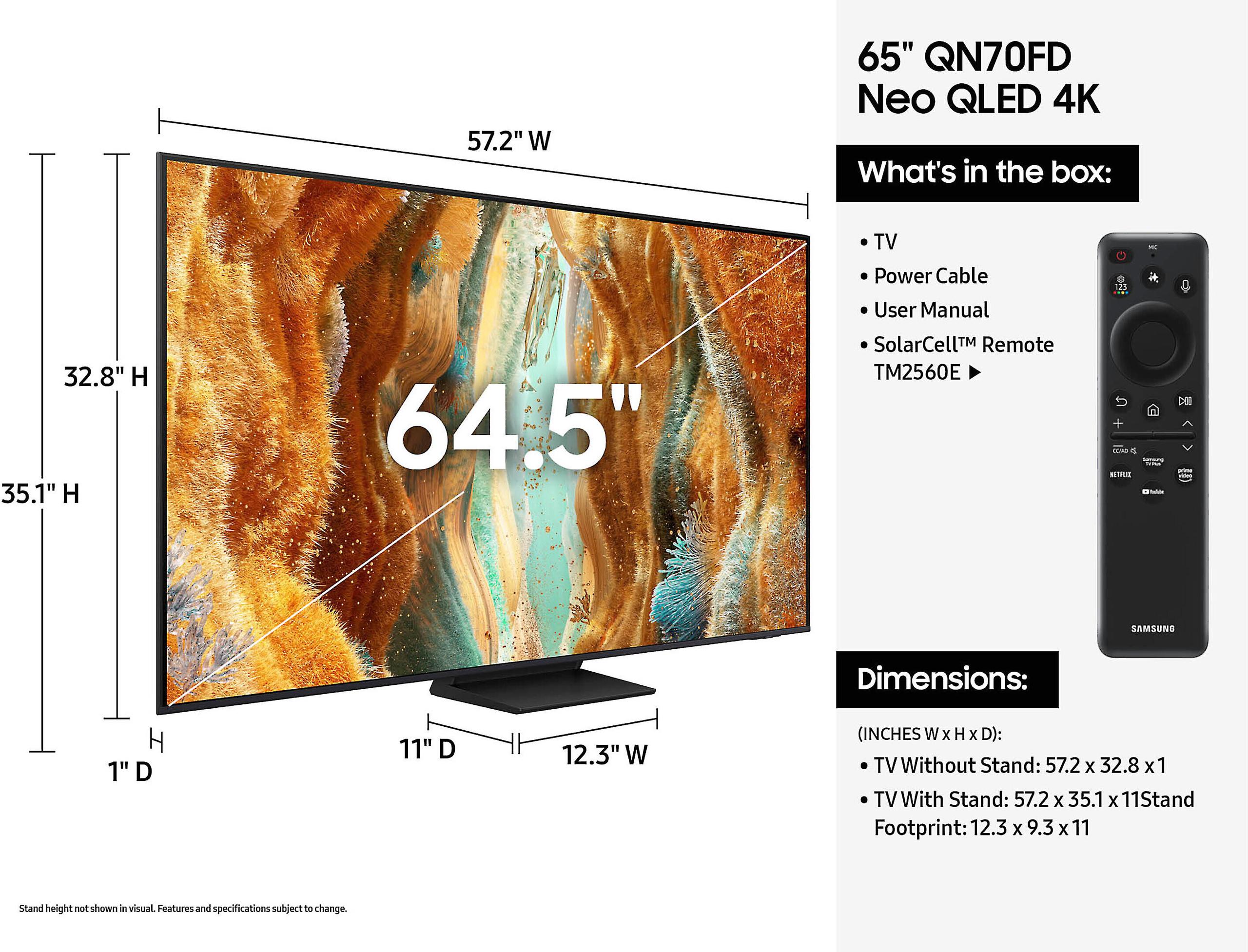
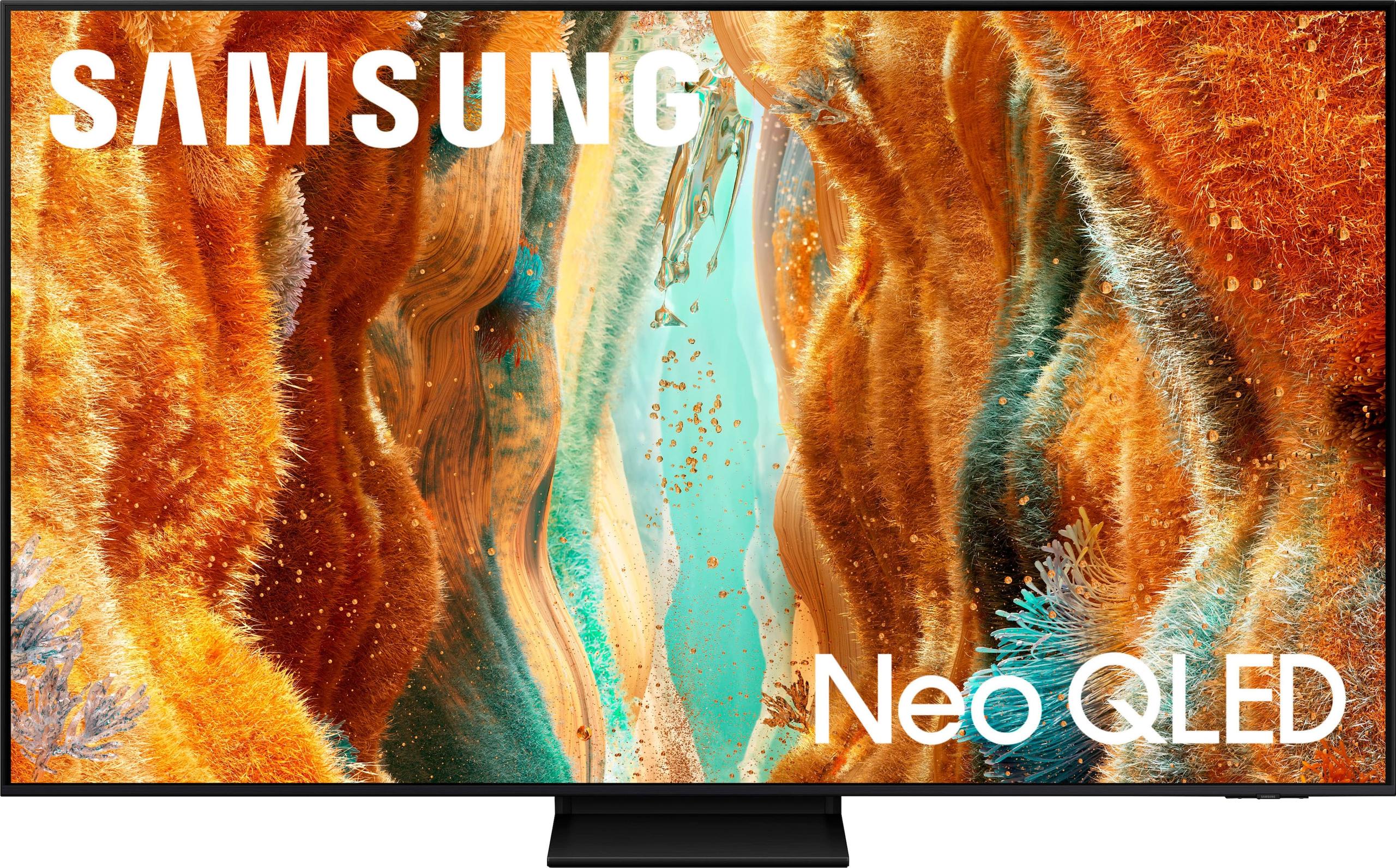
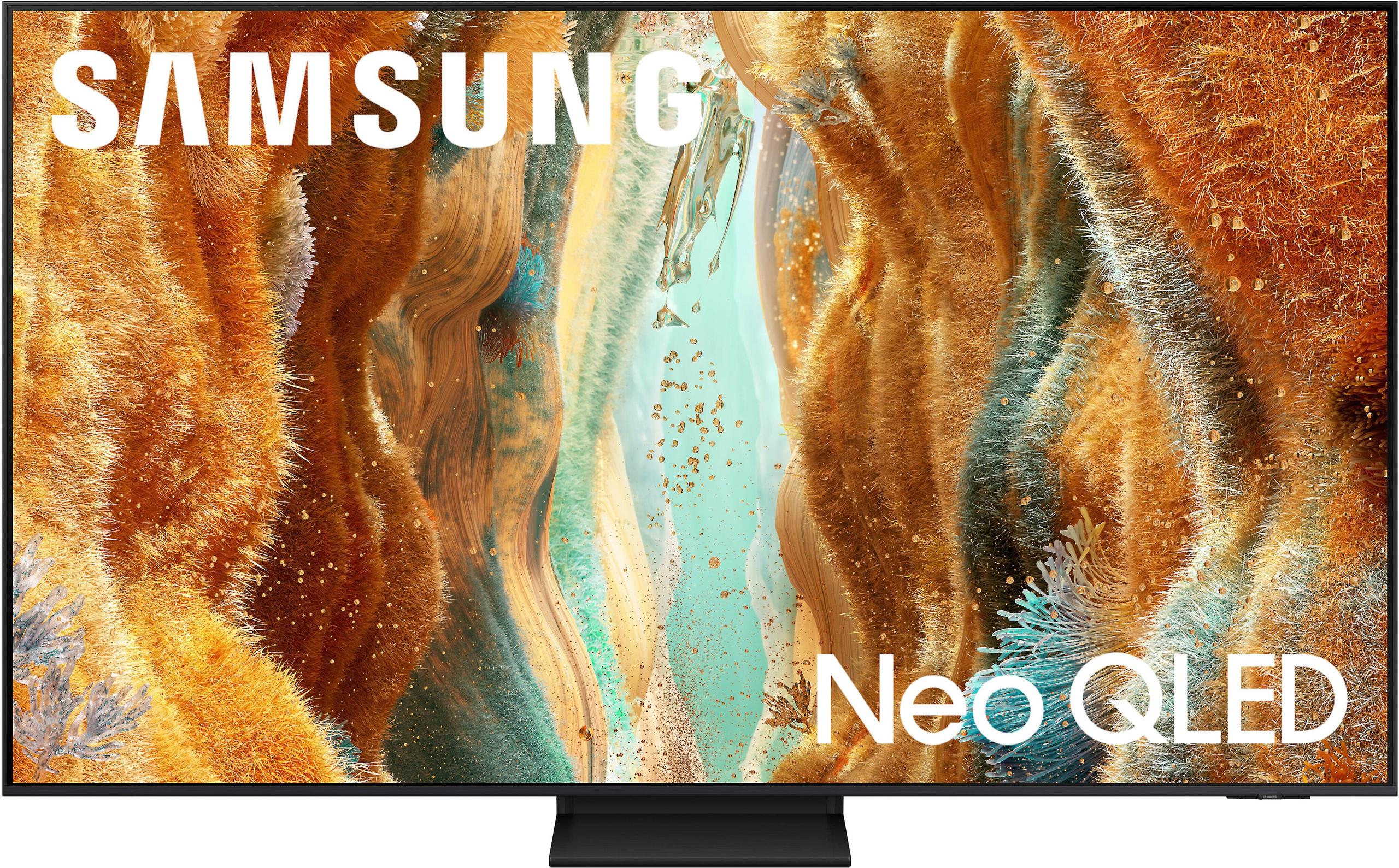
Samsung's QN70F Neo QLED, released in 2025, takes a completely different approach. Rather than focusing on aesthetics, it delivers advanced display technology at an entry-level price point that would have been unthinkable just a few years ago.
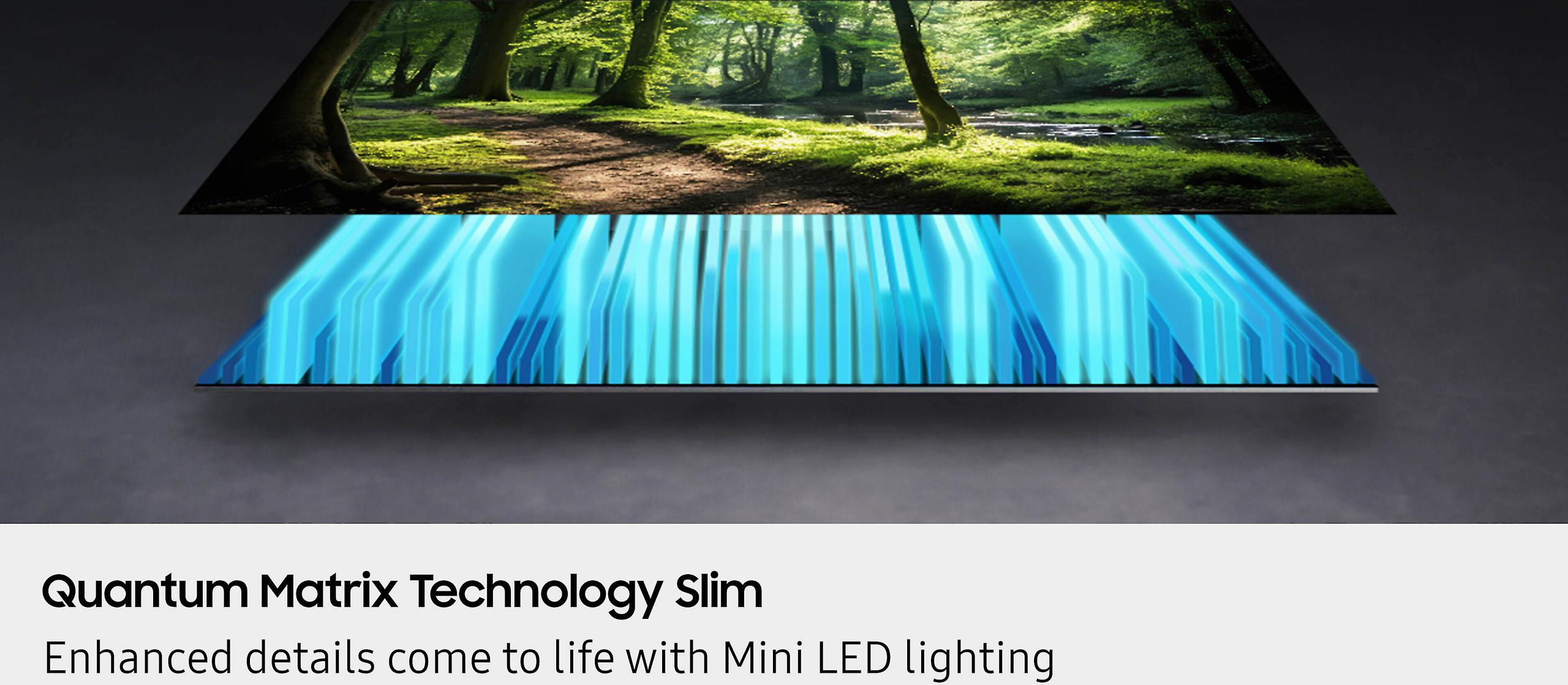
The standout feature is Quantum Matrix Slim technology—Samsung's implementation of Mini-LED backlighting. While the QN70F uses an edge-lit design (LEDs along the bottom edge rather than across the entire back panel), the Mini-LEDs still provide much more precise lighting control than traditional edge-lit displays. This results in better local dimming performance, where the TV can darken specific areas of the screen while keeping others bright, crucial for good contrast in movies and shows.
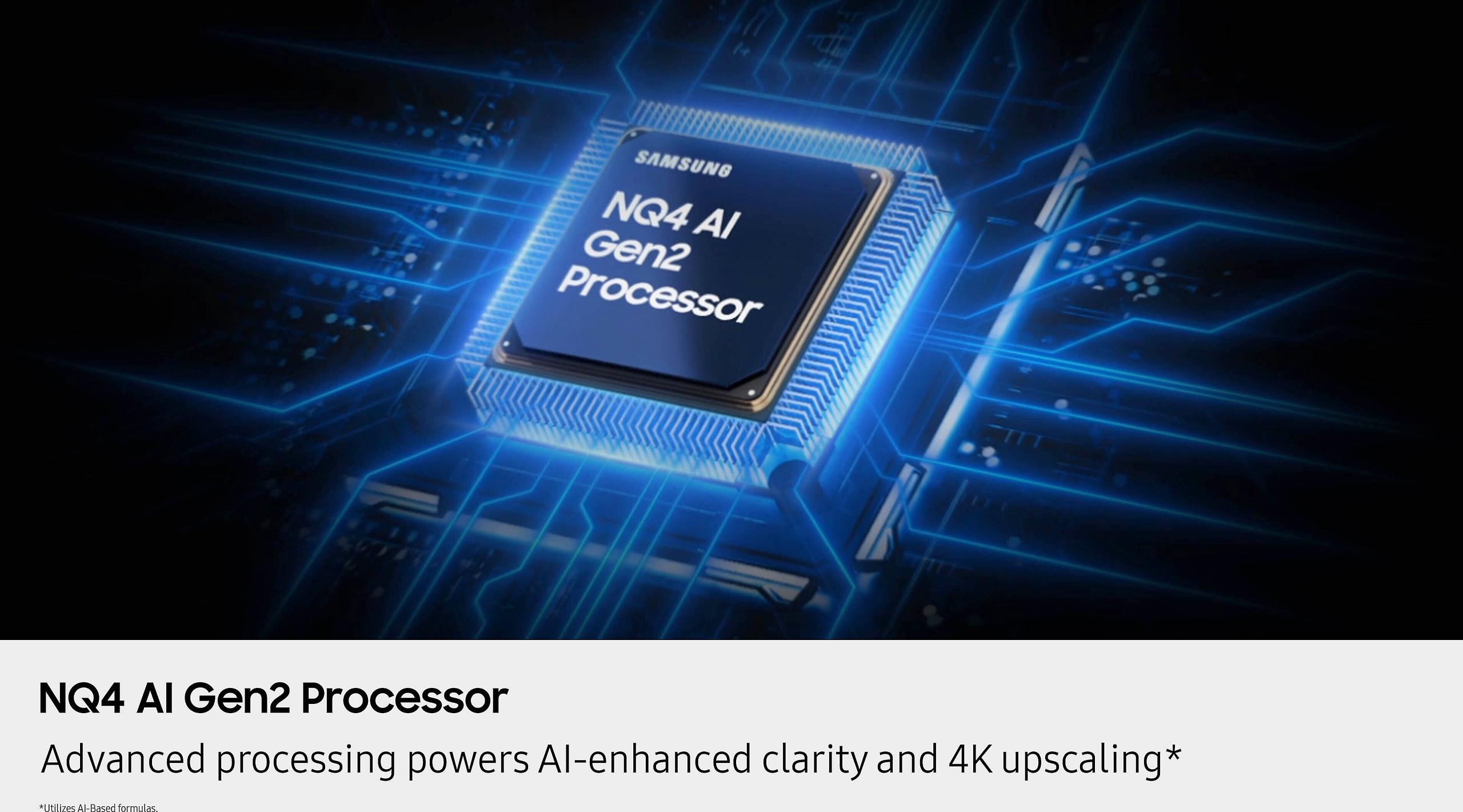
The QN70F includes Samsung's latest NQ4 AI Gen 2 processor, which uses artificial intelligence to analyze and enhance content in real-time. The 4K AI upscaling is particularly impressive, taking lower-resolution content from streaming services, cable, or older gaming consoles and intelligently adding detail to make it look closer to native 4K quality. This matters because much of what we watch—especially live TV and older movies—isn't actually shot in 4K.
Gaming enthusiasts will appreciate the QN70F's 4K 144Hz support. Most TVs max out at 120Hz, but the QN70F can display 144 frames per second, making it exceptional for PC gaming and future-proofing for next-generation consoles. The AMD FreeSync Premium Pro certification ensures compatibility with both current and upcoming gaming hardware while maintaining HDR gaming support for more realistic colors and lighting in games.
Samsung's new Vision AI features set the QN70F apart from previous generations. Click-to-search lets you pause any content and instantly get information about actors, locations, or products on screen. Live Translate provides real-time subtitle translations for foreign content—incredibly useful for international shows or news. These AI features feel genuinely useful rather than gimmicky, addressing real problems people have when watching TV.
The most significant difference between these TVs lies in their display capabilities. Based on our research into expert reviews and user feedback, the QN70F delivers noticeably superior picture quality despite its lower price.
HDR performance illustrates this clearly. HDR (High Dynamic Range) expands the range of colors and brightness levels a TV can display, making images more realistic and impactful. The QN70F's Mini-LED backlighting allows it to achieve higher peak brightness while maintaining better contrast, meaning bright scenes truly pop while dark scenes retain detail. The Frame, using standard QLED technology, produces good but not exceptional HDR results.
Color accuracy favors the QN70F as well. While both use Samsung's quantum dot technology, the newer processor and Mini-LED backlighting in the QN70F provide more consistent color reproduction across different brightness levels. However, the Frame's matte display does maintain color accuracy better under bright ambient lighting conditions.
For motion handling—important for sports and action movies—both TVs perform well, but the QN70F's higher refresh rate capabilities give it an edge for fast-moving content. The difference isn't dramatic for most viewers, but sports fans and action movie enthusiasts will notice smoother motion.
Black levels represent the biggest gap between these models. The QN70F's Mini-LED technology, even in an edge-lit configuration, produces deeper blacks than the Frame's standard QLED panel. This matters most for movie watching in dark rooms, where poor black levels make dark scenes appear grayish rather than truly black.
Both TVs excel for gaming, but with different strengths. The Frame's exceptional 9.2ms input lag makes it incredibly responsive for competitive gaming where every millisecond counts. This low latency rivals dedicated gaming monitors, making it excellent for fighting games, first-person shooters, and any genre where quick reactions matter.
The QN70F counters with its 144Hz refresh rate support, which matters most for PC gamers with high-end graphics cards capable of pushing frame rates above 120fps. Console gamers won't see much difference since current PlayStation and Xbox systems typically target 60-120fps, but the extra headroom provides future-proofing as gaming hardware evolves.
Both support the essential gaming features modern players expect: Auto Low Latency Mode (which automatically reduces input lag when gaming), Variable Refresh Rate (eliminating screen tearing), and 4K gaming at high frame rates. The choice comes down to whether you prioritize absolute responsiveness (Frame) or maximum refresh rate capability (QN70F).
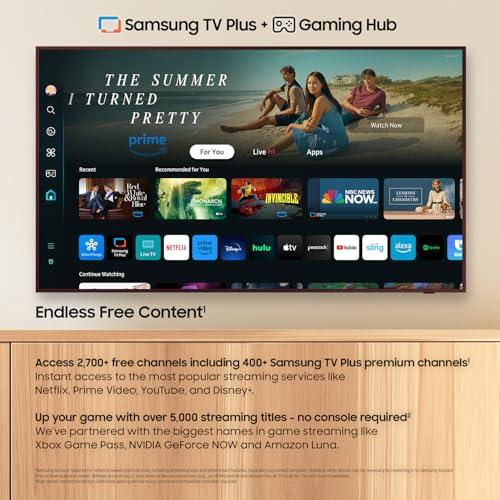
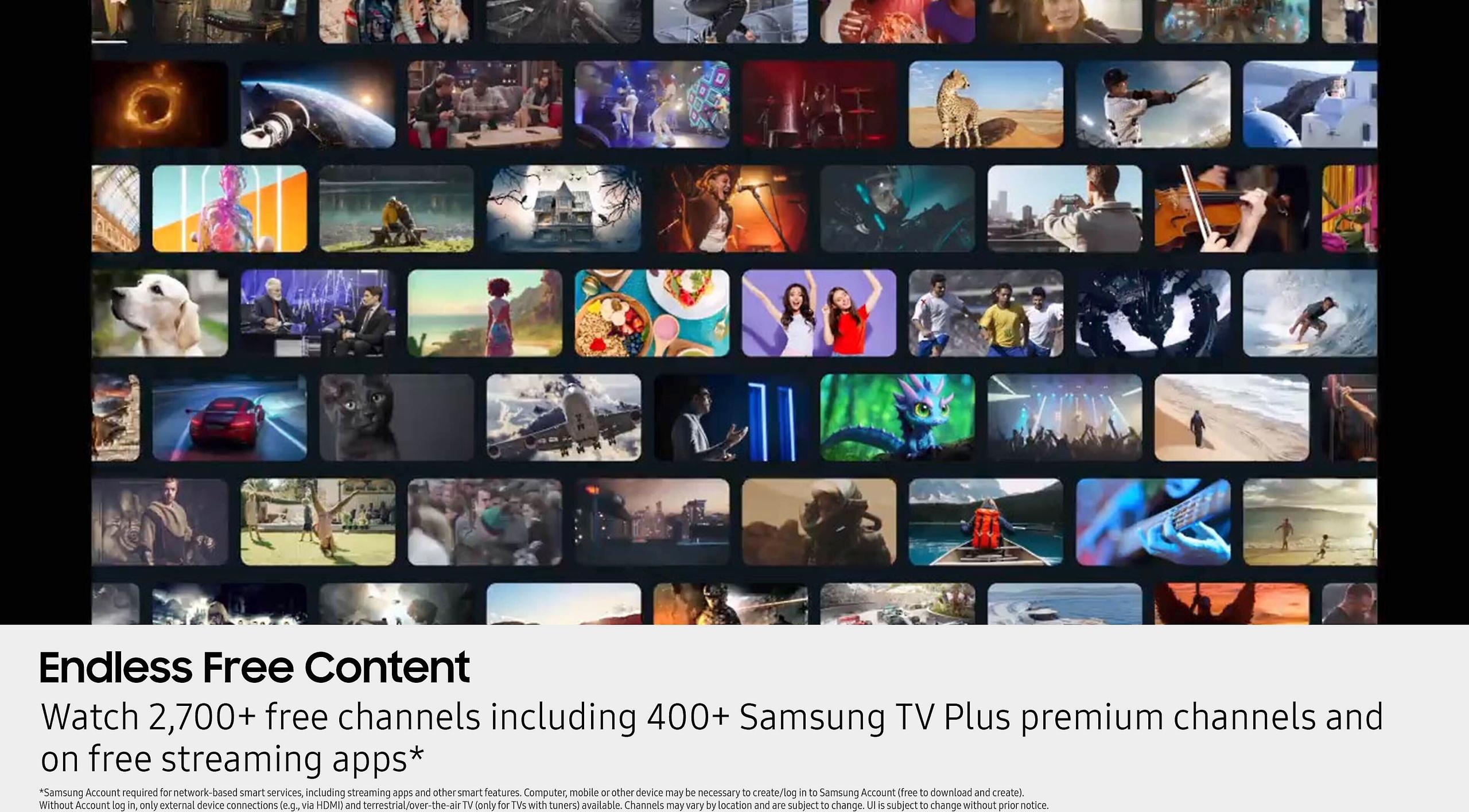
Samsung's Tizen smart TV platform powers both models, providing access to all major streaming services plus Samsung's free Samsung TV Plus channels. The interface is generally intuitive, though not quite as polished as Google TV's recommendation engine or as seamless as Apple TV's ecosystem integration.
The QN70F's Vision AI capabilities represent a genuine step forward in smart TV functionality. The ability to pause any content and instantly get contextual information feels almost magical in practice. Live Translate proves particularly valuable for international content, automatically generating subtitles in your preferred language for live broadcasts.
Both TVs include voice control through Samsung's Bixby, Amazon Alexa, and Google Assistant, though the implementation varies. The QN70F includes far-field voice interaction, meaning you can control it by speaking from across the room without needing the remote.
For dedicated home theater setups, the QN70F emerges as the clear winner. Its superior contrast ratio, better HDR performance, and advanced processing make movies more immersive, especially in darkened viewing environments where the matte coating on the Frame provides no advantage.
However, the Frame's better built-in audio system matters for viewers who haven't invested in external speakers or soundbars. The 40-watt Dolby Atmos system produces surprisingly full sound for dialogue-heavy content, though both TVs benefit significantly from external audio equipment for serious movie watching.
Screen size and viewing distance also influence the choice. At 65 inches, both TVs work well for typical living room setups (8-12 feet viewing distance), but the QN70F's superior picture quality becomes more apparent at closer viewing distances where image details matter more.
The fundamental choice between these TVs often comes down to how you want technology to integrate with your living space. The Frame practically disappears when displaying art, making it perfect for design-conscious buyers who view their TV as part of the room's aesthetic rather than its focal point.
This design advantage comes with ongoing costs worth considering. Art Store subscriptions run $5-20 monthly for access to Samsung's curated artwork library, while custom bezels cost $200-300 depending on style and material. These aren't mandatory—you can display personal photos for free—but they're central to the Frame's intended experience.
The QN70F takes a more traditional approach, focusing on picture quality and features rather than room integration. While it lacks the Frame's aesthetic magic, it delivers substantially better TV performance for significantly less money.
Based on our research and analysis, the QN70F Neo QLED represents exceptional value for most buyers. At roughly 60% less cost (at the time of writing), it delivers superior display technology, more advanced smart features, and better gaming capabilities. The Mini-LED backlighting and AI processing provide genuine improvements over the Frame's standard QLED technology.
However, the Frame justifies its premium for specific buyers and use cases. If you have a design-focused living space with lots of natural light, want your TV to function as art when not in use, and are willing to pay extra for unique lifestyle features, the Frame delivers an experience no other TV can match.
Choose the Frame if:
Choose the QN70F if:
For most buyers, the QN70F delivers better overall value and performance. The Frame commands its premium through unique design features rather than superior TV technology, making it a lifestyle choice rather than a performance decision. Both are excellent TVs, but they serve fundamentally different priorities and budgets.
| Samsung 65" The Frame QLED 4K 2024 TV | Samsung 65" QN70F Neo QLED 4K Vision AI Smart TV 2025 |
|---|---|
| Display Technology - Core picture quality foundation | |
| Standard QLED with edge-lighting | Neo QLED with Mini-LED edge-lighting |
| Screen Finish - Critical for bright room viewing | |
| Anti-glare matte display (excellent for bright rooms) | Standard glossy finish (may reflect lights) |
| Processor - Affects upscaling and smart features | |
| Quantum Processor 4K | NQ4 AI Gen 2 Processor (more advanced AI) |
| Gaming Refresh Rate - Important for PC gaming | |
| 120Hz native | 120Hz native, supports up to 144Hz |
| Input Lag - Critical for competitive gaming | |
| 9.2ms (excellent for responsive gaming) | ~12-15ms estimated (still very good) |
| HDR Support - Affects color and brightness range | |
| HDR10, HDR10+ (no Dolby Vision) | HDR10, HDR10+ Adaptive (optimized processing) |
| Peak Brightness - Important for HDR impact | |
| ~590 nits (adequate for most content) | Higher with Mini-LED (better HDR punch) |
| Black Levels - Crucial for dark room movie watching | |
| Good but limited by standard QLED | Better with Mini-LED local control |
| Audio System - Matters if not using external speakers | |
| 40W 2.0.2CH with Dolby Atmos (surprisingly good) | 20W 2CH basic system (external audio recommended) |
| Smart Features - Latest AI capabilities | |
| Standard Tizen with SmartThings | Vision AI with Click-to-Search, Live Translate |
| Design Philosophy - How it fits your space | |
| Art Mode with customizable bezels (lifestyle focus) | Traditional TV design (performance focus) |
| Special Features - Unique selling points | |
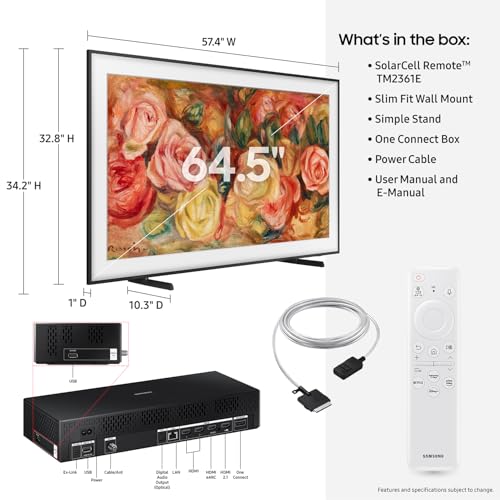
| Motion sensor, Art Store access, One Connect Box | AMD FreeSync Premium Pro, AI upscaling |
| Best Use Case - Who should choose this model | |
| Design-conscious buyers, bright rooms, art display | Performance seekers, gamers, value-focused buyers |
The Samsung QN70F Neo QLED 2025 delivers superior picture quality thanks to its Mini-LED backlighting technology, which provides better contrast, deeper blacks, and brighter highlights compared to the standard QLED panel in the Samsung Frame 2024. For dark room movie watching, the QN70F produces more immersive visuals with its enhanced local dimming capabilities.
The Samsung Frame QLED 2024 is designed as a lifestyle TV that doubles as digital art when not in use, featuring Art Mode and customizable bezels. The Samsung QN70F Neo QLED 2025 focuses purely on performance, offering advanced Mini-LED display technology and AI-powered features at a lower price point. One prioritizes aesthetics, the other maximizes picture quality per dollar.
Both TVs excel for gaming but in different ways. The Samsung Frame 2024 has exceptional input lag of 9.2ms, making it incredibly responsive for competitive gaming. The Samsung QN70F 2025 supports higher refresh rates up to 144Hz and includes AMD FreeSync Premium Pro, making it better for PC gaming and future console compatibility.
The Samsung Frame QLED 2024 excels in bright rooms thanks to its anti-glare matte display that reduces reflections and maintains image clarity even with direct sunlight. The Samsung QN70F Neo QLED 2025 has a traditional glossy screen that may reflect lights and windows, though its higher brightness helps combat glare to some degree.
The Samsung QN70F Neo QLED 2025 provides exceptional value, offering more advanced display technology (Mini-LED) at a significantly lower price than the Samsung Frame 2024. You get superior picture quality, latest AI features, and better gaming capabilities for less money, making the QN70F the clear value winner for performance-focused buyers.
Both TVs run Samsung's Tizen OS with access to all major streaming apps. The Samsung QN70F Neo QLED 2025 includes advanced Vision AI features like Click-to-Search for instant content information and Live Translate for real-time subtitle translations. The Samsung Frame 2024 focuses more on lifestyle features like Art Mode and SmartThings home integration.
The Samsung Frame QLED 2024 has superior built-in audio with a 40W 2.0.2 channel system supporting Dolby Atmos and Object Tracking Sound. The Samsung QN70F Neo QLED 2025 includes a basic 20W 2-channel system that's adequate for casual viewing but recommended to pair with external speakers for optimal audio experience.
For dedicated home theater use, the Samsung QN70F Neo QLED 2025 is the better choice due to its superior contrast ratio, better HDR performance, and advanced processing that make movies more immersive in dark viewing environments. The Samsung Frame 2024 works well for casual movie watching but doesn't match the QN70F's picture quality in darkened rooms.
The Samsung Frame QLED 2024 transforms into digital art with Art Mode, motion sensors, and customizable magnetic bezels that make it blend into your décor. The Samsung QN70F Neo QLED 2025 features cutting-edge Vision AI technology, Mini-LED backlighting, and 4K 144Hz gaming support that focuses purely on performance and functionality.
Both TVs handle sports well, but the Samsung QN70F Neo QLED 2025 has a slight edge with its higher refresh rate capabilities and better motion processing. However, if you watch sports in a bright room with lots of windows, the Samsung Frame 2024 anti-glare screen provides clearer visibility during daytime games.
The Samsung Frame 2024 excels with ultra-low 9.2ms input lag perfect for competitive gaming, while the Samsung QN70F 2025 supports higher 144Hz refresh rates ideal for PC gaming. Both include VRR, ALLM, and 4K gaming support, but the QN70F offers more future-proofing for next-generation gaming hardware.
Choose the Samsung Frame QLED 2024 if room aesthetics matter as much as TV performance, you have bright lighting conditions, and want the art display functionality. Select the Samsung QN70F Neo QLED 2025 if you prioritize picture quality, value, and performance - it delivers superior display technology at a lower price point for most viewing scenarios.
We've done our best to create useful and informative comparisons to help you decide what product to buy. Our research uses advanced automated methods to create this comparison and perfection is not possible - please contact us for corrections or questions. These are the sites we've researched in the creation of this article: tomsguide.com - rtings.com - rtings.com - youtube.com - bestbuy.com - techlicious.com - youtube.com - smalllilystudio.com - theeverymom.com - livingetc.com - pcrichard.com - image-us.samsung.com - samsung.com - images.samsung.com - samsung.com - buydig.com - tvsbook.com - bestbuy.com - samsung.com - samsung.com - flatpanelshd.com - rtings.com - youtube.com - wifihifi.com - samsung.com - samsung.com - samsung.com - samsung.com - flatpanelshd.com - news.samsung.com - bestbuy.com

Privacy Policy
Terms and Conditions - Affiliate Policy
Home Security
© Copyright 2008-2026.
11816 Inwood Rd #1211, Dallas, TX 75244