

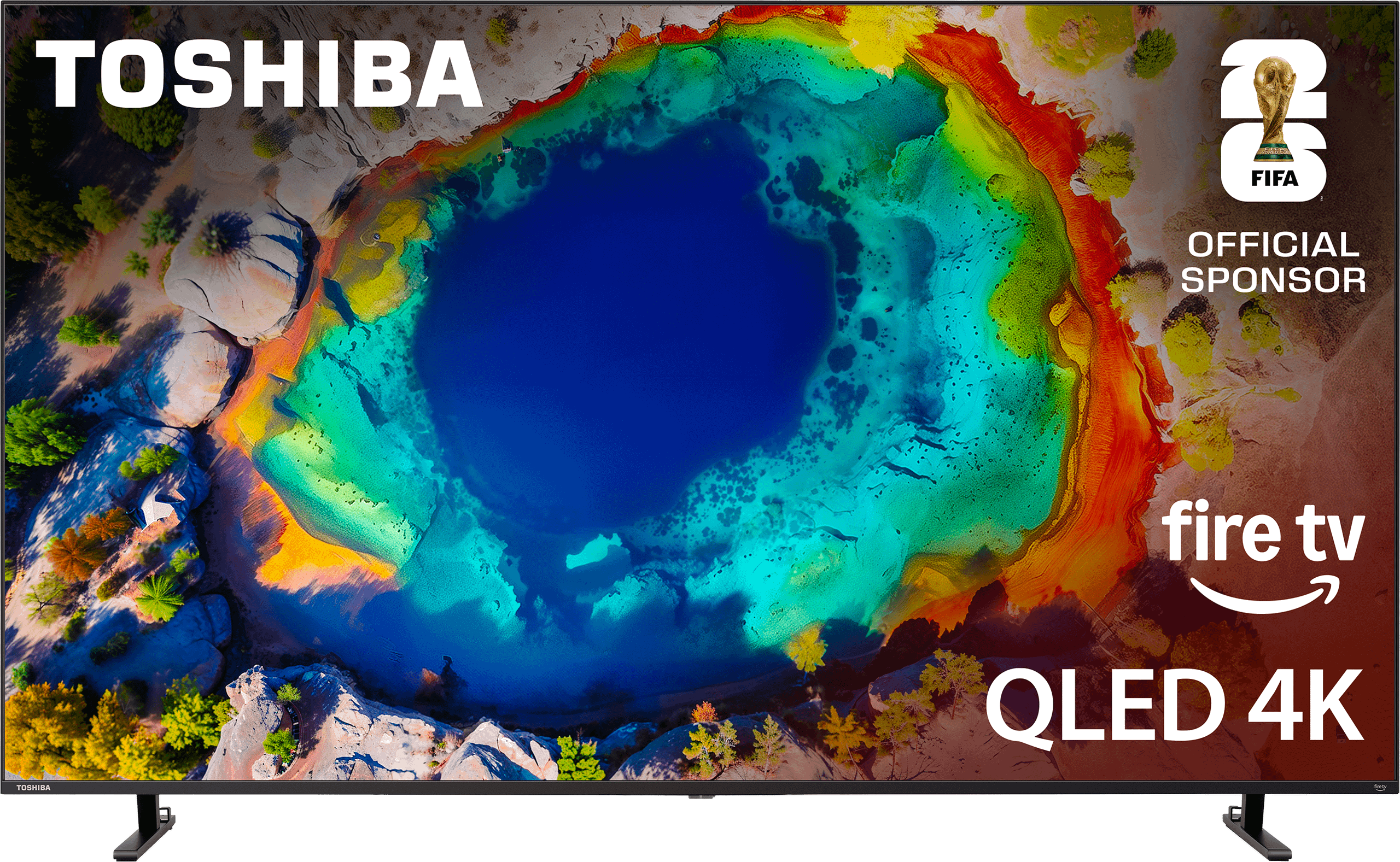
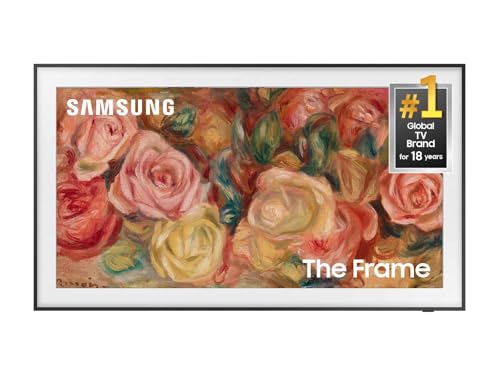
When you're shopping for a 65-inch TV, you'll quickly discover that not all QLED displays are created equal. Today we're comparing two fundamentally different approaches to the same screen size: the budget-focused Toshiba 65" M550 Series QLED Fire TV and the design-centric Samsung 65" The Frame QLED 4K 2024 TV. Both use Quantum Dot technology to enhance colors, but their philosophies couldn't be more different.
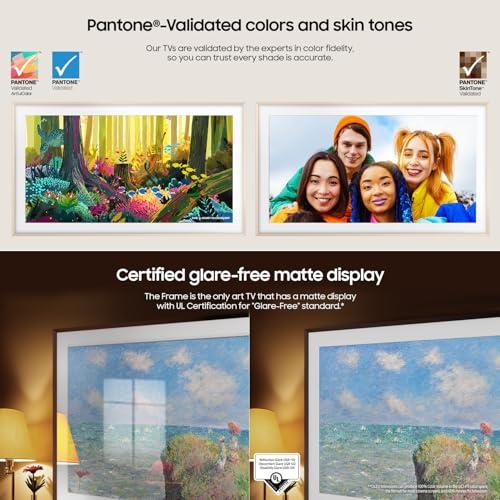
The Toshiba M550 launched in 2024 as a direct challenge to the premium TV market, promising high-end picture features at a fraction of the typical cost. Meanwhile, Samsung's Frame TV represents the company's continued evolution of their lifestyle TV concept, now in its seventh generation since the original 2017 launch. The 2024 Frame model introduced significant improvements including better brightness, Pantone color certification, and enhanced anti-glare technology.
Before diving into performance differences, it's worth understanding what QLED technology brings to both displays. Quantum Dot Light Emitting Diode (QLED) technology uses microscopic semiconductor particles that emit precise colors when hit by light from the TV's backlight. This allows both TVs to display over a billion different color shades with better accuracy than traditional LED displays.
However, the similarities largely end there. The Toshiba M550 focuses on delivering premium picture processing and contrast features typically found in much more expensive TVs. The Samsung Frame prioritizes aesthetics and dual functionality – serving as both a television and a piece of wall art when not actively being watched.
When it comes to pure picture performance, the Toshiba M550 takes a surprisingly aggressive approach for its price point. The standout feature is its Full Array Local Dimming (FALD) system with 48 individual zones. This means the TV can selectively brighten or dim specific areas of the screen independently, creating much deeper blacks and more realistic contrast than edge-lit displays.
To understand why this matters, imagine watching a movie scene with a bright campfire against a dark night sky. Without local dimming, the entire screen's backlight stays at the same level, making the sky appear grayish rather than truly dark. With the M550's FALD system, the backlight dims behind the dark sky areas while staying bright behind the fire, creating a more convincing image.
The Samsung Frame 2024 takes a different approach entirely. It uses edge-lit LED backlighting without local dimming zones, which means it can't achieve the same deep blacks. However, Samsung compensates with significantly better brightness output – reaching up to 590 nits in HDR content compared to the Toshiba's more modest peak brightness. This makes the Frame much better suited for bright rooms where you're fighting against sunlight or overhead lighting.
The Frame's secret weapon is its matte anti-reflective display coating. This specialized finish scatters ambient light to reduce glare, making the screen appear more like a real canvas or photograph. It's particularly effective if your TV will be positioned where it catches light from windows or lamps. However, this matte finish does slightly soften the overall image compared to glossy screens.
Both TVs support High Dynamic Range (HDR) content, but with different capabilities. The Toshiba M550 supports virtually every HDR format including Dolby Vision – the premium standard that adjusts brightness and color scene-by-scene for optimal impact. The Samsung Frame notably lacks Dolby Vision support, sticking with HDR10 and HDR10+ formats. For most content this won't matter, but Netflix and Disney+ users who want the absolute best HDR experience would benefit from the Toshiba's broader format support.
Color reproduction is where both TVs show their QLED heritage, but the M550 edges ahead with over 90% coverage of the DCI-P3 color space – the standard used in movie theaters. The Frame earned industry-first Pantone certification for color accuracy in Art Mode, but this mainly benefits artwork display rather than video content.
This is where our research revealed the most significant real-world differences between these TVs. The Toshiba M550 runs Amazon's Fire TV platform, which offers excellent content discovery and voice control through Alexa. However, user reviews consistently highlight a critical flaw: the TV's processor simply isn't powerful enough to run the software smoothly.
Multiple reviewers reported load times of 30-60 seconds when launching apps, with some describing the experience as "frustrating" for daily use. The Fire TV interface frequently freezes, exits apps unexpectedly, or fails to respond to remote commands for several seconds. One reviewer noted it takes "a full minute to get to a show after clicking continue watching." For a TV that will likely be used daily for years, this kind of performance degradation significantly impacts the user experience.
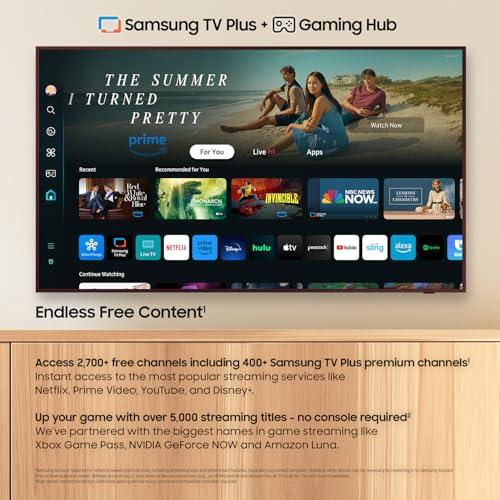
The Samsung Frame 2024 runs Samsung's Tizen operating system, which our research suggests performs much more reliably. Users report smooth navigation, quick app launches, and stable performance. While Tizen doesn't offer quite the same content recommendations as Fire TV or Google TV, it integrates well with Samsung's SmartThings ecosystem for smart home control.
Both TVs target gamers with 120Hz refresh rates and Variable Refresh Rate (VRR) support – technologies that reduce screen tearing and stuttering during fast-paced gaming. However, their implementations differ significantly.
The Toshiba M550 supports 120Hz at 1440p resolution and VRR up to 60Hz, which covers most gaming scenarios adequately. However, user reports suggest significant input lag issues that make precise gaming difficult. One reviewer specifically noted problems with "HDR content input from external sources" and "significant lag between controller input" that makes the TV unsuitable for competitive gaming.
The Samsung Frame 2024 delivers genuinely impressive gaming performance with input lag as low as 9.2 milliseconds – fast enough that even competitive gamers won't notice delays between controller actions and screen response. It supports 4K gaming at 120Hz and includes multiple VRR technologies for compatibility with both PlayStation and Xbox consoles. The limitation is connectivity: only one HDMI port supports the full 4K/120Hz feature set, which could be problematic if you have multiple gaming consoles.
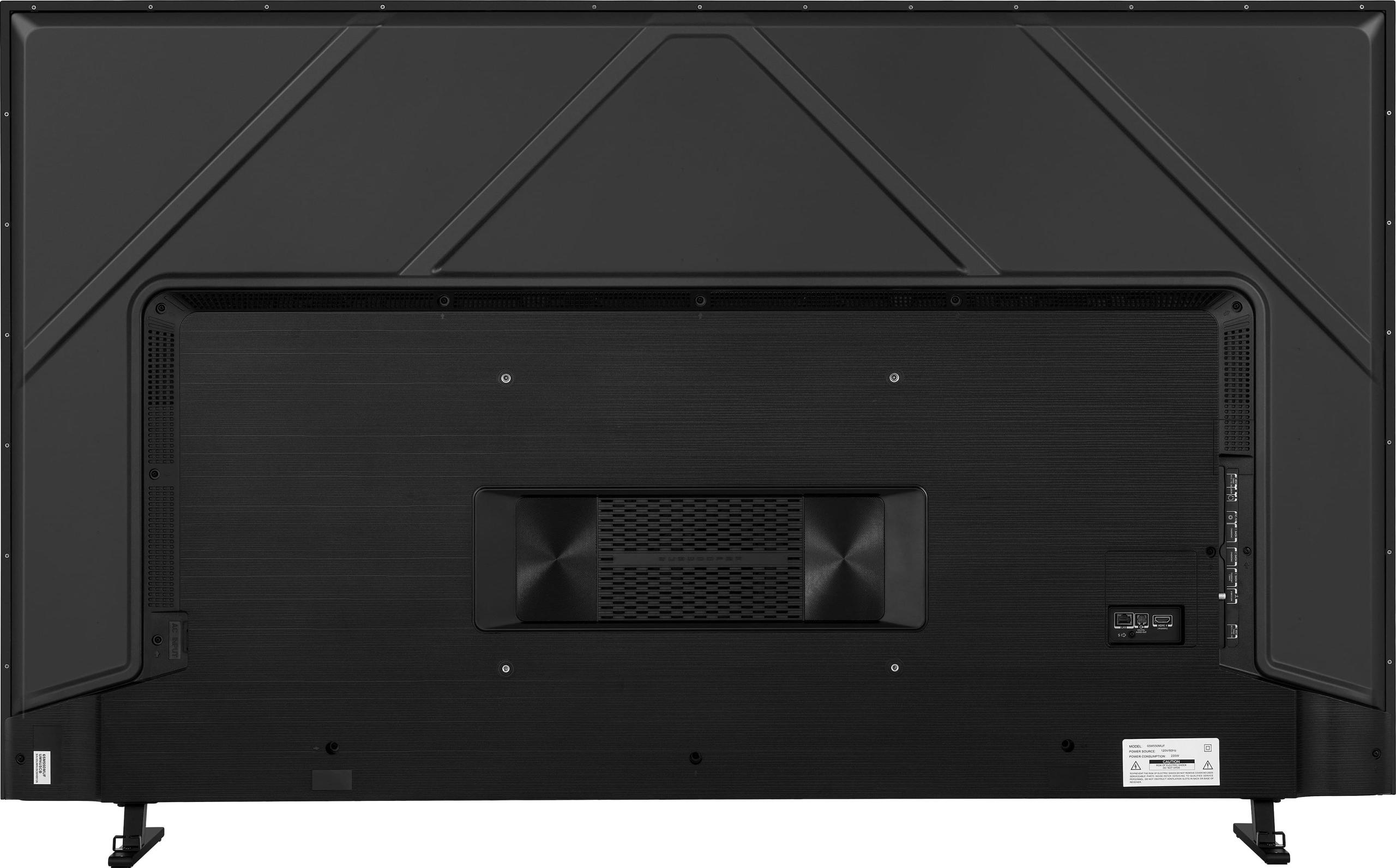
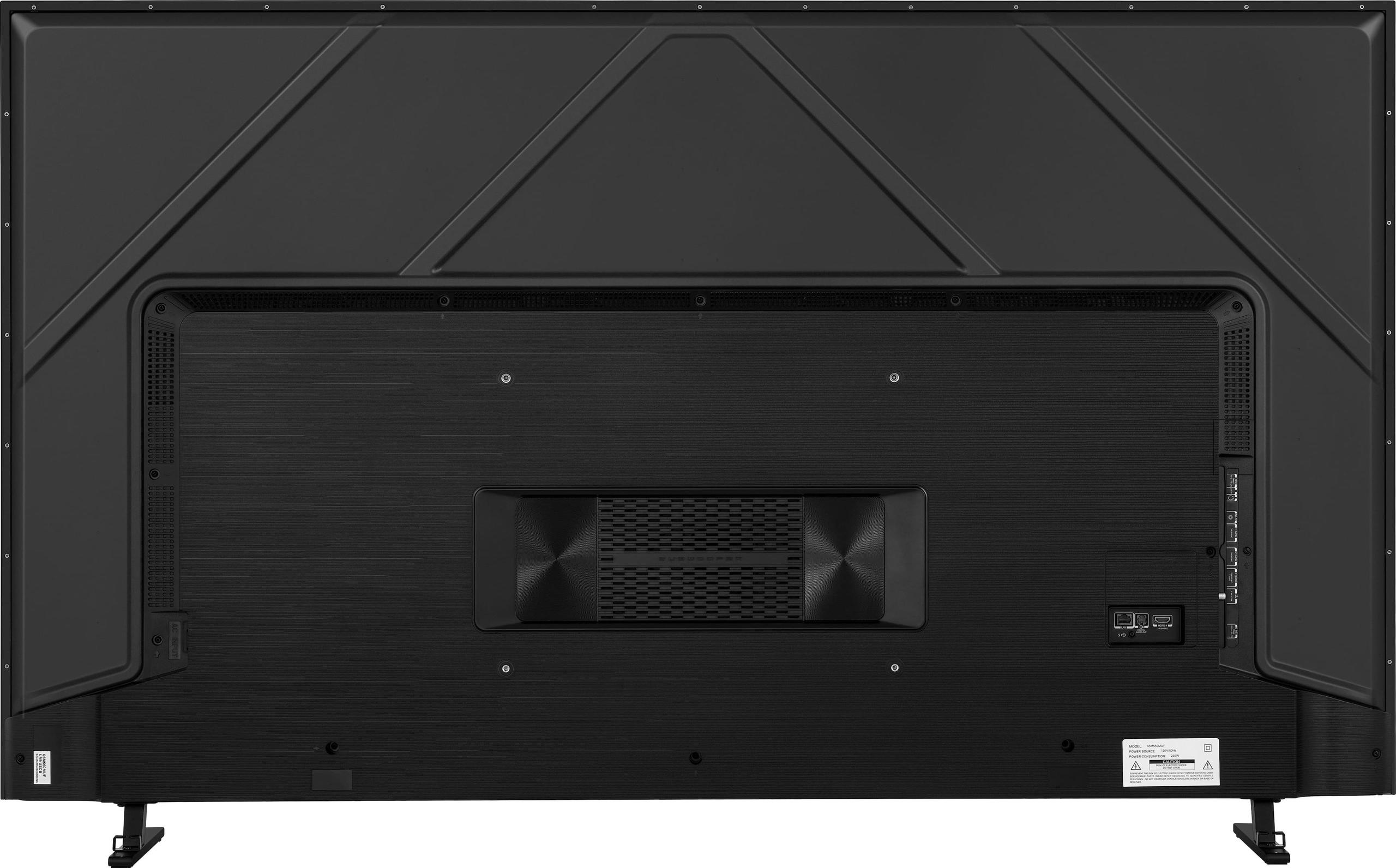
Audio quality often gets overlooked in TV comparisons, but both manufacturers took interesting approaches. The Toshiba M550 includes a built-in subwoofer along with dual speakers, delivering what reviewers describe as surprisingly solid bass response for a budget TV. The total output reaches up to 49 watts, and multiple users noted they didn't feel compelled to immediately buy a soundbar.
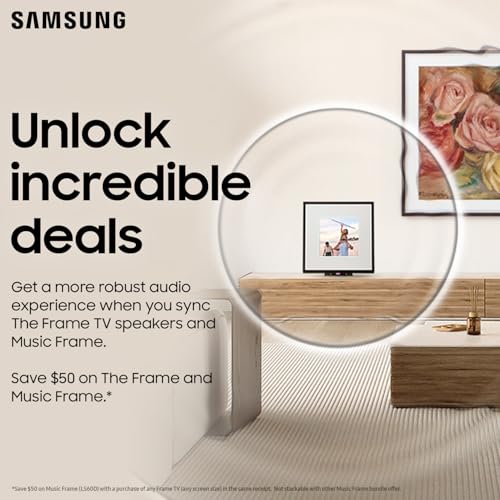
The Samsung Frame 2024 uses a more sophisticated 2.0.2 channel system with up-firing speakers to create height effects for Dolby Atmos content. While the total power output is slightly lower at 40 watts, the spatial audio processing creates a more immersive experience for movies and shows that support object-based audio formats.
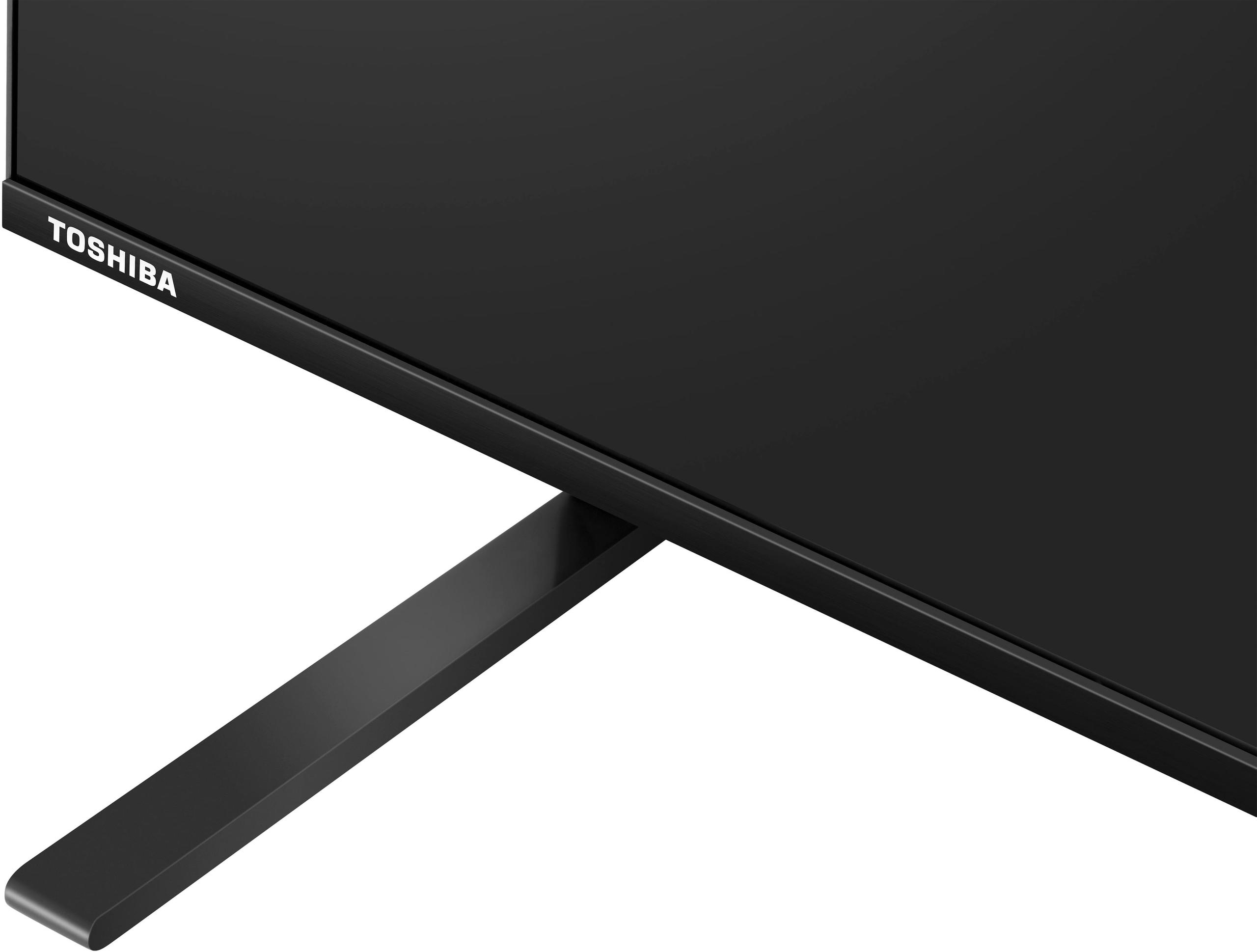
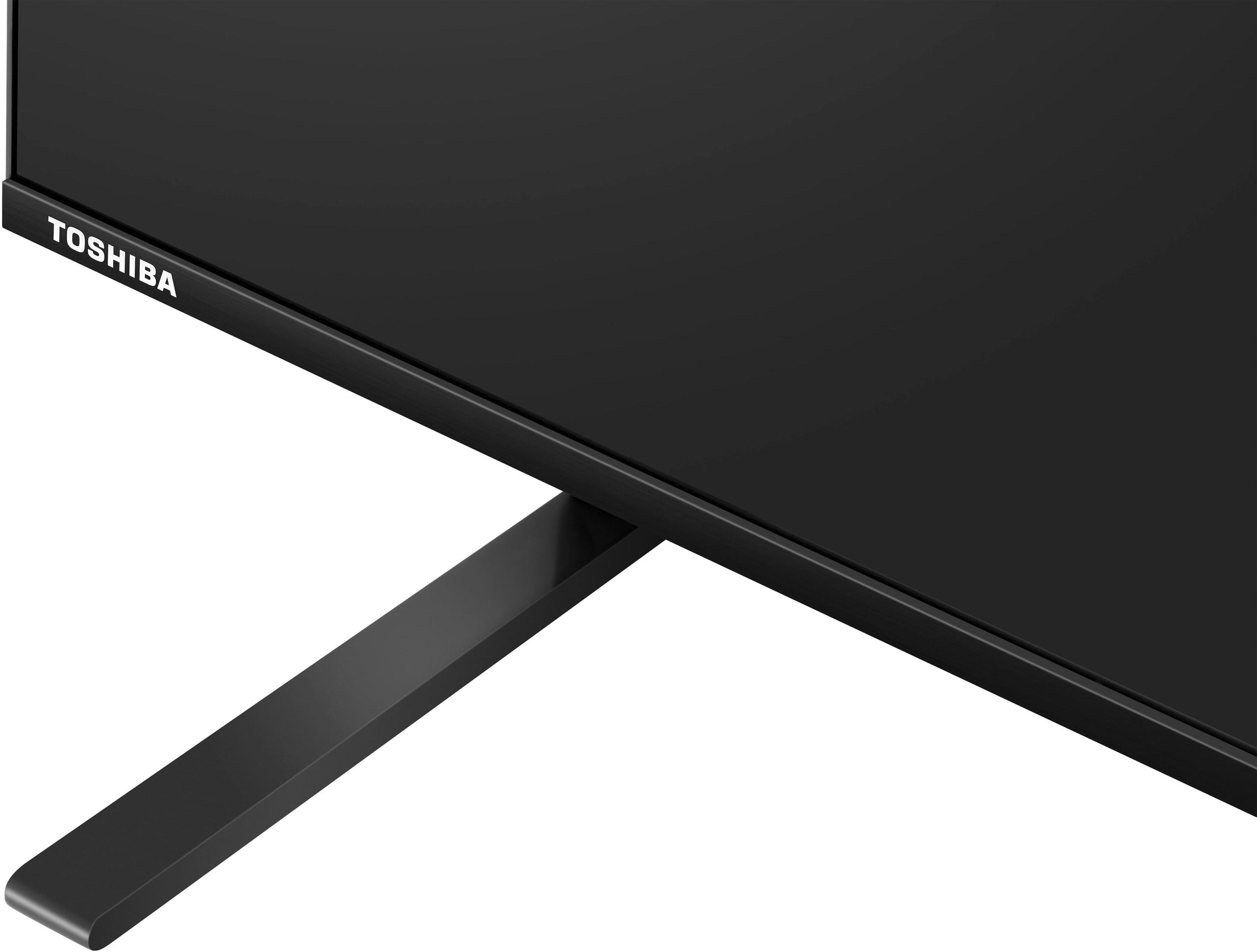
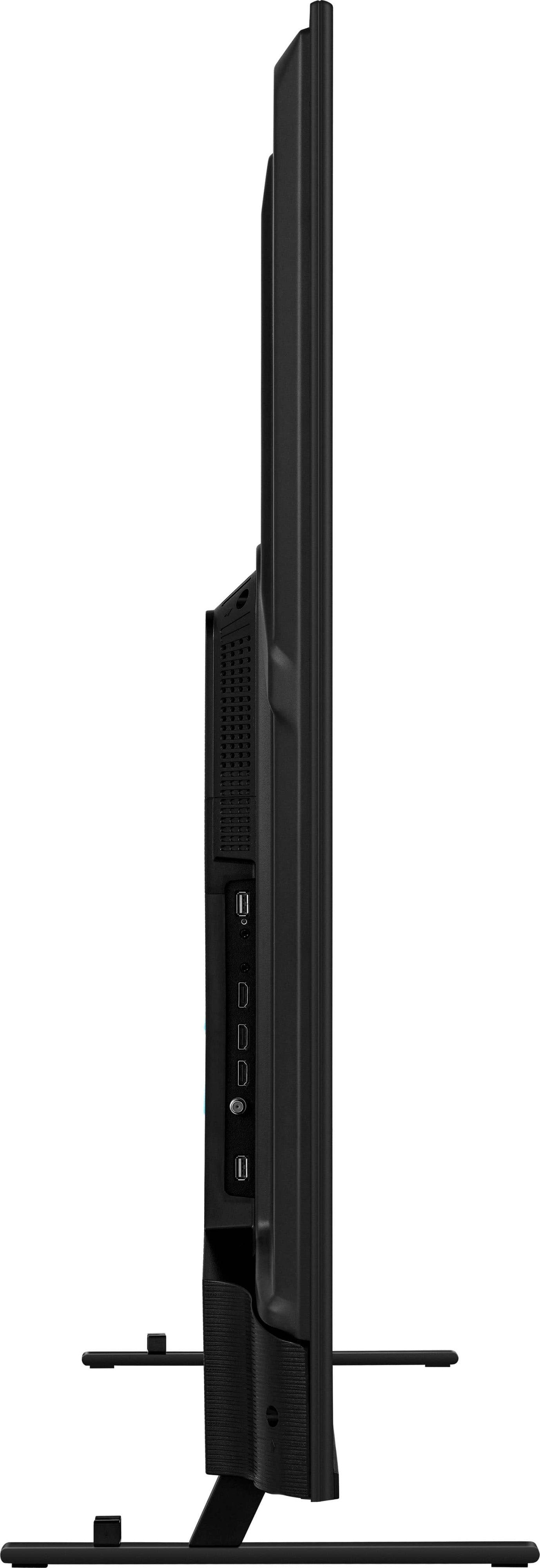
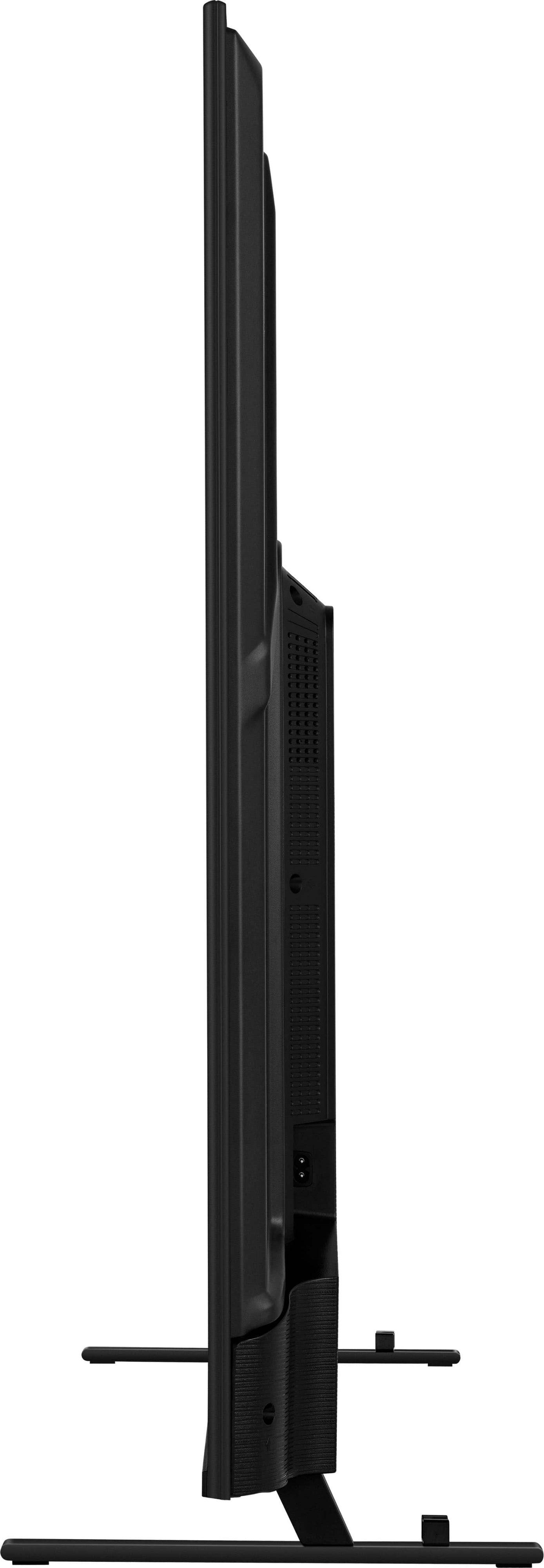
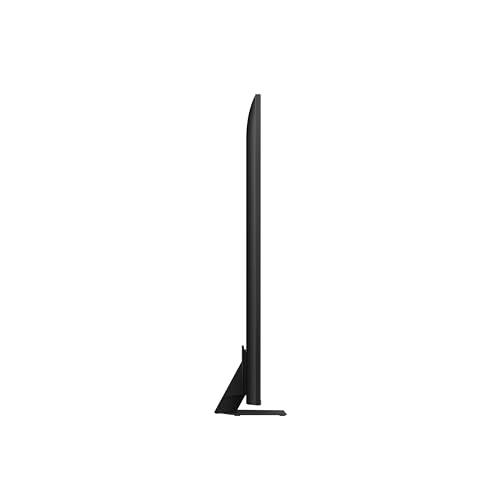
Here's where these TVs diverge most dramatically. The Toshiba M550 looks like a traditional TV – which isn't necessarily a bad thing. It includes cable management features and a slim profile, but it's clearly designed to disappear into your entertainment center setup.
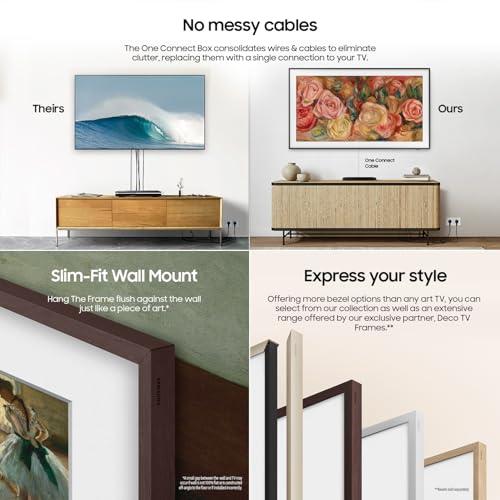
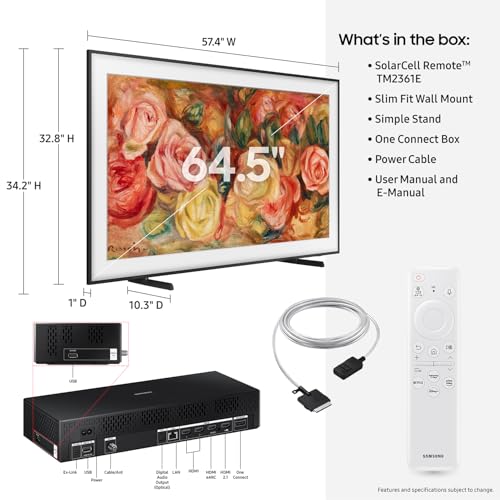
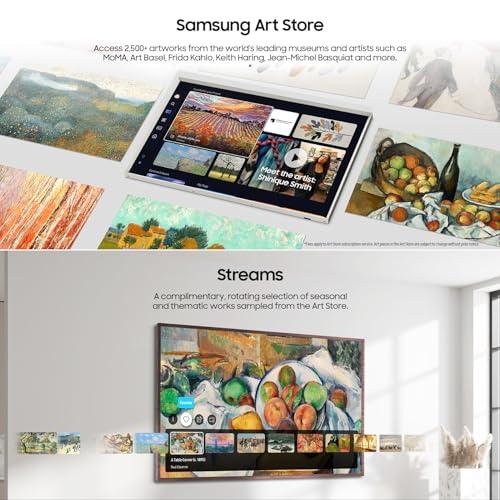
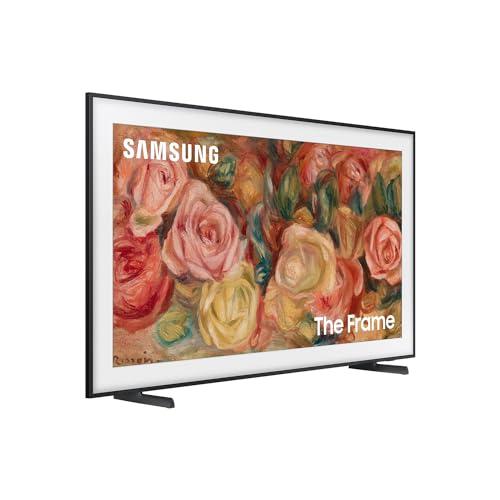
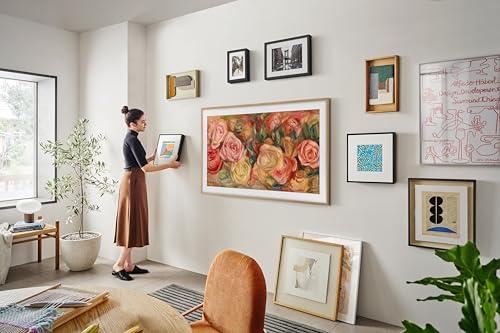
The Samsung Frame 2024 represents a fundamentally different philosophy. When displaying artwork in Art Mode, it's nearly indistinguishable from a real framed piece. Samsung offers dozens of customizable magnetic bezels to match different décor styles, from ornate gold frames to minimalist wood finishes. The included Slim-Fit Wall Mount allows completely flush installation, and the One Connect Box consolidates all cable connections into a separate unit connected by a single, nearly invisible cable.
The Frame's motion sensor automatically switches between Art Mode when you're not watching and TV mode when you approach. This dual functionality makes it particularly appealing for living rooms, bedrooms, or any space where aesthetics matter as much as entertainment capability.
Our research revealed concerning patterns in user reviews for the Toshiba M550. While many praised the picture quality for the price, reliability issues appear frequently. Users reported screen flickering, audio dropouts, system crashes, and hardware problems that required unplugging and resetting the TV. One detailed review noted that "action scenes jerk around at low FPS with phantom images" and recommended against the TV for HDR movies or detailed content.
The processing power limitations seem to affect not just smart TV performance but also video processing, with several users noting the TV struggles with busy or fast-moving scenes. This suggests the budget approach of pairing premium display features with an underpowered processor creates bottlenecks that affect the overall experience.
The Samsung Frame 2024 appears much more stable in long-term use, with user reviews focusing on performance and features rather than technical problems. Samsung's longer track record with the Frame series and more conservative approach to processing power seems to result in a more reliable ownership experience.
At the time of writing, the Toshiba M550 represents exceptional value purely from a specifications standpoint. Getting Full Array Local Dimming, comprehensive HDR support, and QLED color technology for under $500 is genuinely impressive. However, the reliability concerns and performance limitations mean you're accepting trade-offs in daily usability.
The Samsung Frame 2024 costs significantly more – often two to three times the Toshiba's price. You're paying for Samsung's brand reputation, the unique Art Mode functionality, better build quality, and more reliable performance. Additional costs include the decorative bezels (sold separately) and Samsung's Art Store subscription for access to the full artwork library.
For dedicated home theater use, the choice becomes more complex. The Toshiba M550's superior contrast ratio and Dolby Vision support would typically make it the clear winner for movie watching in dark rooms. However, the motion handling issues and processing limitations significantly impact the experience with action films or visually complex content.
The Samsung Frame works better as an all-purpose display that can handle home theater duties when needed, but its edge-lit backlighting and lack of local dimming make it less ideal for the critical movie watching that defines home theater use.
Choose the Toshiba M550 if you're primarily budget-focused and can tolerate reliability issues for superior picture quality specifications. It makes sense for secondary TVs, guest rooms, or situations where the upfront savings matter more than long-term user experience. However, I'd hesitate to recommend it for your main family room TV given the performance and reliability concerns.
The Samsung Frame 2024 is the better choice for most people, despite the higher cost. It works well as a primary living room TV, handles gaming effectively, operates reliably, and offers the unique Art Mode functionality. The anti-glare screen makes it particularly suitable for rooms with lots of natural light.
For serious home theater enthusiasts, neither TV represents the best choice – you'd be better served by a Mini-LED display with more local dimming zones or an OLED for perfect black levels. But among these two options, the trade-offs favor Samsung's more stable, versatile approach over Toshiba's ambitious but flawed budget offering.
The Samsung Frame costs more upfront but delivers a better ownership experience, while the Toshiba M550 offers impressive specifications that don't quite deliver in real-world use. Choose based on whether you prioritize initial savings or long-term satisfaction.
| Toshiba 65" M550 Series QLED Fire TV | Samsung 65" The Frame QLED 4K 2024 TV |
|---|---|
| Display Technology - Core picture quality foundation | |
| QLED with Full Array Local Dimming (48 zones) | QLED with edge-lit LED backlighting |
| HDR Support - Determines peak brightness and color range | |
| Dolby Vision, HDR10, HDR10+, HLG (comprehensive) | HDR10, HDR10+, HLG (missing Dolby Vision) |
| Brightness Performance - Critical for HDR impact and bright rooms | |
| Moderate peak brightness with excellent contrast | 590 nits peak brightness, better for bright rooms |
| Screen Finish - Affects reflections and room suitability | |
| Traditional glossy screen (more reflections) | Anti-glare matte display (reduces reflections) |
| Smart TV Platform - Daily user experience quality | |
| Fire TV with Alexa (slow, frequent crashes) | Tizen OS (stable, responsive performance) |
| Gaming Features - Next-gen console compatibility | |
| 120Hz at 1440p, VRR up to 60Hz, high input lag | 4K/120Hz, multiple VRR formats, 9.2ms input lag |
| HDMI 2.1 Ports - High-bandwidth device connections | |
| Limited/outdated HDMI support | One HDMI 2.1 port (4K/120Hz capable) |
| Audio System - Built-in sound quality | |
| 40-49W with subwoofer, Dolby Atmos | 40W 2.0.2 channel with up-firing speakers |
| Design Philosophy - Aesthetic integration | |
| Traditional TV appearance | Art Mode with customizable magnetic bezels |
| Wall Mounting - Installation flexibility | |
| Standard VESA mount compatibility | Slim-Fit Wall Mount included for flush installation |
| Connectivity Management - Cable organization | |
| Direct connections to TV | One Connect Box centralizes all cables |
| Reliability Track Record - Long-term ownership experience | |
| Multiple reported issues: freezing, flickering, crashes | Stable operation with minimal software problems |
| Motion Handling - Fast-paced content performance | |
| Poor performance in action scenes, stuttering reported | Smooth motion processing with 120Hz refresh |
| Color Accuracy Certification - Professional standards | |
| 90%+ DCI-P3 color gamut coverage | Industry-first Pantone certification for artwork |
| Unique Features - Differentiating capabilities | |
| AI upscaling, comprehensive HDR, budget pricing | Art Mode, anti-glare screen, lifestyle integration |
The Toshiba 65" M550 Series QLED Fire TV delivers superior contrast and black levels thanks to its Full Array Local Dimming with 48 zones, making it better for dark room movie watching. It also supports Dolby Vision HDR for enhanced color and brightness. The Samsung 65" The Frame QLED 4K 2024 TV offers brighter peak performance and anti-glare technology, making it better for bright rooms but with less impressive black levels.
The Samsung 65" The Frame QLED 4K 2024 TV is significantly better for gaming with ultra-low 9.2ms input lag, 4K/120Hz support, and multiple VRR technologies. The Toshiba 65" M550 Series QLED Fire TV has notable input lag issues and limited HDMI capabilities that make it unsuitable for competitive gaming, though it supports basic gaming features.
Samsung's Tizen platform on the Frame TV operates much more reliably with smooth navigation and quick app launches. The Fire TV platform on the Toshiba M550 suffers from significant performance issues including 30-60 second load times, frequent freezing, and system crashes due to an underpowered processor.
The Samsung 65" The Frame QLED 4K 2024 TV is specifically designed for bright rooms with its anti-glare matte display that reduces reflections and higher peak brightness. The Toshiba 65" M550 Series QLED Fire TV has a traditional glossy screen that shows more reflections in bright lighting conditions.
The Toshiba 65" M550 Series QLED Fire TV offers exceptional specifications for its budget price point, including Full Array Local Dimming and comprehensive HDR support. However, reliability issues affect long-term value. The Samsung Frame costs significantly more but provides stable performance, better build quality, and unique Art Mode functionality.
Both TVs offer decent audio, but with different strengths. The Toshiba M550 includes a built-in subwoofer for better bass response, while the Samsung Frame 2024 features more sophisticated spatial audio processing with up-firing speakers for Dolby Atmos content. Neither eliminates the need for a soundbar for serious audio enthusiasts.
The Samsung 65" The Frame QLED 4K 2024 TV demonstrates much better reliability with stable operation and minimal technical issues. The Toshiba 65" M550 Series QLED Fire TV has multiple reported problems including screen flickering, system crashes, motion handling issues, and hardware integration problems that affect daily use.
Only the Samsung 65" The Frame QLED 4K 2024 TV offers Art Mode functionality, displaying digital artwork or personal photos when not in use. It includes customizable magnetic bezels to look like a real picture frame. The Toshiba M550 is a traditional TV without artwork display capabilities.
For dedicated home theater use in dark rooms, the Toshiba 65" M550 Series QLED Fire TV would typically win with its superior contrast ratio and Dolby Vision support. However, motion handling issues and processing limitations significantly impact the movie-watching experience. The Samsung Frame works better as an all-purpose display but lacks the deep blacks ideal for home theater.
Both TVs offer 4 HDMI ports, but the Samsung 65" The Frame QLED 4K 2024 TV includes one HDMI 2.1 port capable of 4K/120Hz gaming, while the Toshiba M550 has outdated HDMI connectivity that limits high-bandwidth device support. The Samsung also includes a One Connect Box for better cable management.
The Toshiba 65" M550 Series QLED Fire TV supports more HDR formats including Dolby Vision, HDR10, HDR10+, and HLG, providing broader compatibility with streaming services like Netflix and Disney+. The Samsung Frame supports HDR10, HDR10+, and HLG but notably lacks Dolby Vision support.
Choose the Samsung 65" The Frame QLED 4K 2024 TV for living rooms where aesthetics matter, you have bright lighting, or need reliable daily performance. The Art Mode and anti-glare screen make it ideal for spaces where the TV is always visible. Choose the Toshiba M550 only if budget is the primary concern and you can tolerate reliability issues for better contrast performance.
We've done our best to create useful and informative comparisons to help you decide what product to buy. Our research uses advanced automated methods to create this comparison and perfection is not possible - please contact us for corrections or questions. These are the sites we've researched in the creation of this article: bestbuy.com - bestbuy.com - consumerreports.org - youtube.com - pcvarge.com - tomsguide.com - youtube.com - bestbuy.com - toshibatv-usa.com - marketplace-staging.paytomorrow.com - toshibatv-usa.com - productabout.com - leaseville.com - youtube.com - toshibatv-usa.com - tomsguide.com - rtings.com - rtings.com - youtube.com - bestbuy.com - techlicious.com - youtube.com - smalllilystudio.com - theeverymom.com - livingetc.com - pcrichard.com - image-us.samsung.com - samsung.com - images.samsung.com - samsung.com - buydig.com - tvsbook.com - bestbuy.com - samsung.com - samsung.com - flatpanelshd.com

Privacy Policy
Terms and Conditions - Affiliate Policy
Home Security
© Copyright 2008-2026.
11816 Inwood Rd #1211, Dallas, TX 75244