

The premium 65-inch TV market splits into two fascinating camps: televisions that prioritize blending into your living space, and those that focus purely on delivering the best possible picture quality. This divide has never been clearer than when comparing Samsung's unique Frame QLED TV against LG's flagship G4 OLED.
Both arrived in 2024 as refined versions of their manufacturers' distinct philosophies. The Samsung Frame represents the fourth generation of Samsung's art-focused television concept, while the LG G4 showcases LG's latest OLED evo technology with significant brightness improvements over previous years.
At their core, these televisions use fundamentally different display technologies that shape everything about how they perform and what they're best suited for.
The Samsung Frame uses QLED technology, which stands for Quantum Dot Light-Emitting Diode. Don't let the name fool you—these aren't self-emitting pixels like true OLED. Instead, quantum dots are tiny semiconductor particles that convert blue LED light into precise red and green wavelengths, creating more accurate and vibrant colors than traditional LED TVs. Behind the screen, thousands of LED lights provide the actual illumination, controlled by dimming zones that can brighten or darken different areas independently.
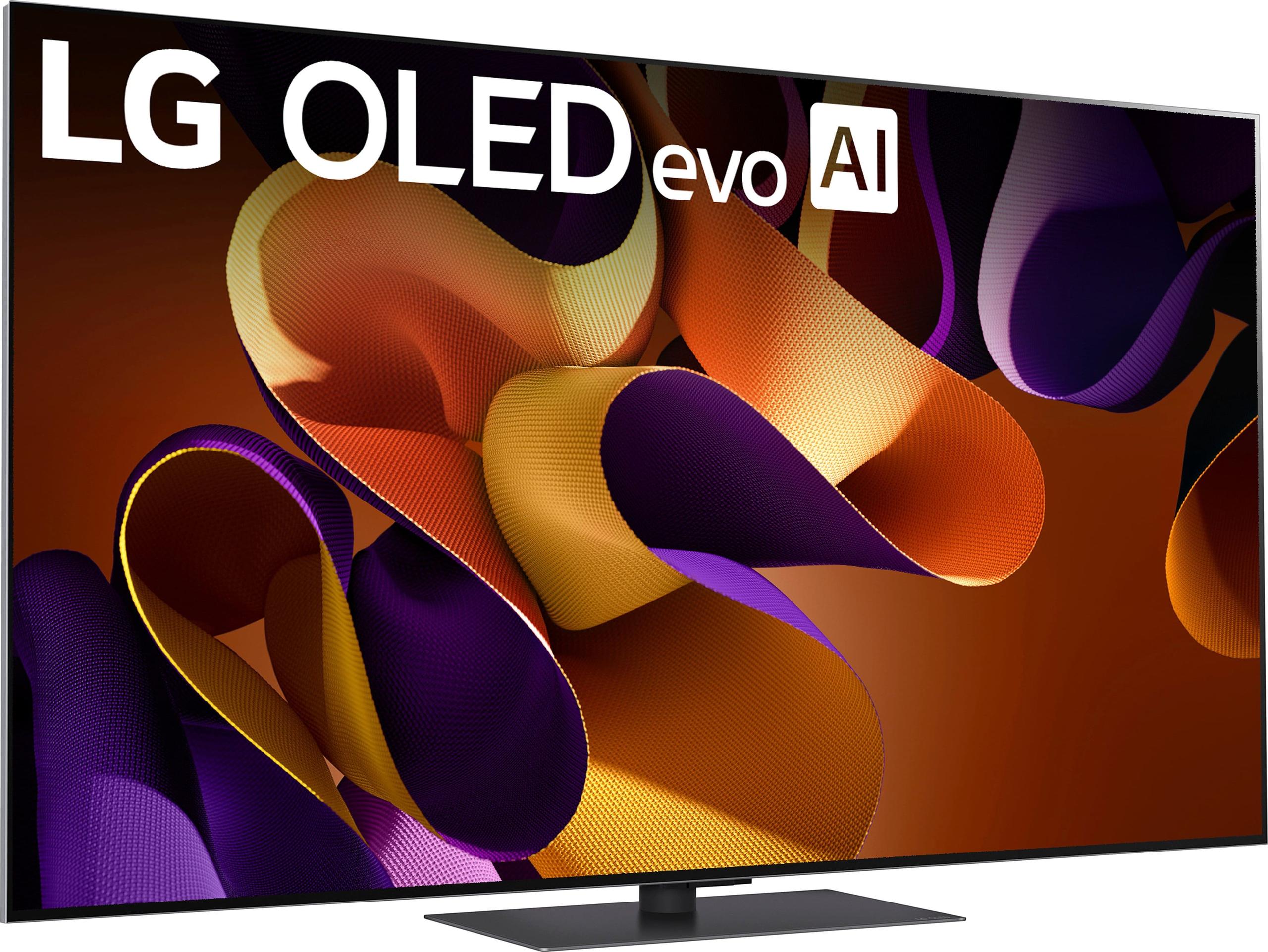
The LG G4, meanwhile, uses OLED evo technology with Micro Lens Array (MLA). OLED stands for Organic Light-Emitting Diode, where each of the 8.3 million pixels creates its own light and can turn completely off. The "evo" designation indicates LG's improved OLED materials that can handle higher brightness levels, while MLA technology uses microscopic lenses over each pixel to focus more light forward, dramatically improving brightness compared to older OLED panels.
This fundamental difference creates a classic trade-off: the Samsung can get much brighter (useful in sunny rooms), while the LG can achieve perfect blacks (critical for dark room movie watching).
Peak brightness represents one of the most significant differences between these TVs. The Samsung Frame can reach over 2,000 nits in small highlight areas—bright enough to make HDR content really pop even with windows open during the day. This brightness advantage means you'll see more detail in bright scenes like explosions, sunny landscapes, or the gleam off metal surfaces.
The LG G4 achieves around 1,300 nits peak brightness, which represents a massive 150% improvement over LG's previous OLED models. While not as bright as the Samsung in absolute terms, this is more than adequate for most viewing conditions and represents excellent brightness for OLED technology.
But raw brightness numbers don't tell the whole story. HDR (High Dynamic Range) content looks different on each TV due to their tone mapping approaches. HDR content is mastered at brightness levels often exceeding what either TV can display, so each processes this "impossible" brightness differently. The Samsung tends to maintain bright highlights longer before rolling them off, while the LG's superior black levels create more dramatic contrast even at lower peak brightness.
For HDR format support, the LG G4 includes Dolby Vision, the premium HDR format used by Netflix, Disney+, and major Hollywood studios. The Samsung Frame supports HDR10+ instead, Samsung's competing format that's less widely adopted. This difference matters if you stream a lot of premium content, as Dolby Vision provides scene-by-scene optimization that often looks noticeably better.
Here's where the LG G4 absolutely dominates. Because each OLED pixel can turn completely off, it achieves what's called "infinite contrast ratio"—perfect blacks sitting right next to bright whites with no interference. When you're watching a movie with a dark scene, like characters in a shadowy room or a space scene with bright stars, the difference is immediately obvious.
The Samsung Frame, despite having thousands of LED dimming zones, still can't match this precision. Multiple pixels share each dimming zone, so a bright star in a dark sky will cause slight brightening (called "blooming") in the surrounding black area. It's much better than cheaper TVs, but the physics can't match OLED's pixel-level control.
This contrast advantage makes the LG G4 superior for cinematic content, especially in dark or dim viewing environments where you can appreciate the perfect blacks.
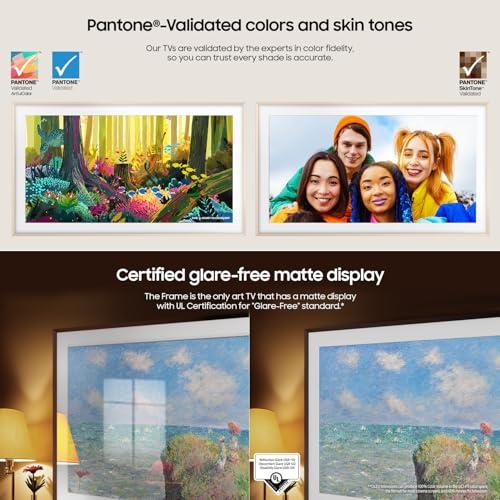
Color performance reveals another philosophical split. The LG G4 targets reference-grade accuracy, meaning colors appear exactly as content creators intended. It achieves 100% color fidelity across the entire brightness range—reds look like real reds, skin tones appear natural, and the overall image maintains the director's artistic vision.
The Samsung Frame's quantum dot technology produces more saturated, vibrant colors that many people find more appealing, especially with nature documentaries, animated content, or sports. These enhanced colors aren't necessarily more accurate, but they can make content appear more vivid and engaging.
Both approaches have merit. If you prioritize accuracy for movie watching, the LG wins. If you prefer colors that "pop" and grab attention, Samsung's approach might appeal more to your eyes.
Gaming capabilities have become crucial for premium TVs, especially with PlayStation 5 and Xbox Series X pushing high frame rates and advanced graphics.
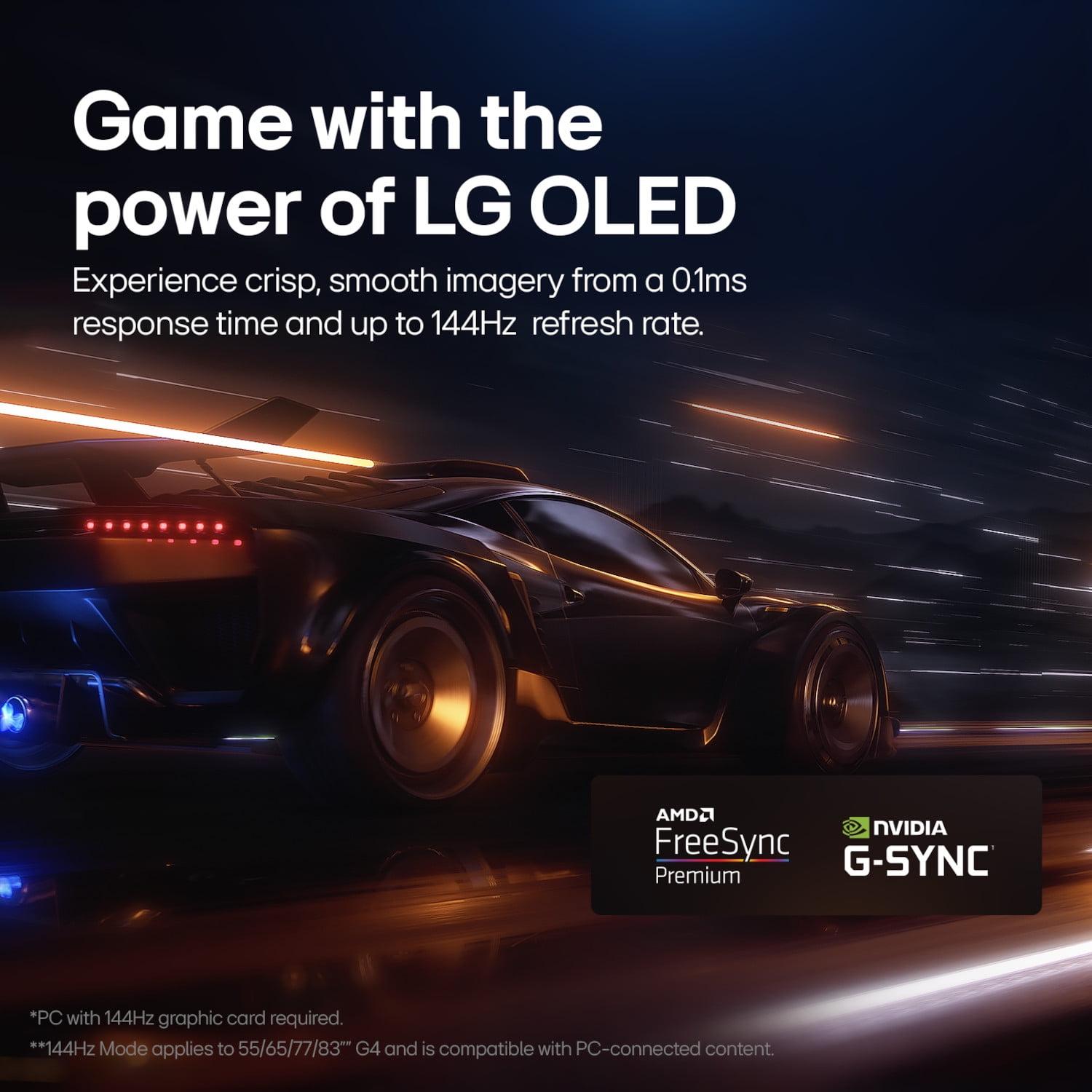
The LG G4 excels here with four full HDMI 2.1 ports supporting up to 4K resolution at 144Hz refresh rates. This matters because higher refresh rates create smoother motion in fast-paced games. The TV also supports both NVIDIA G-Sync and AMD FreeSync Premium, technologies that eliminate screen tearing by synchronizing the display's refresh rate with your gaming device's output frame rate.
Input lag—the delay between pressing a button and seeing the action on screen—is virtually instantaneous with OLED technology. The LG G4 can achieve input lag as low as 0.1 milliseconds, which competitive gamers will appreciate.
The Samsung Frame offers solid gaming features including HDMI 2.1 support and Variable Refresh Rate (VRR), though specific refresh rate capabilities aren't as extensively documented. Response time, while good, can't match OLED's instantaneous pixel transitions that eliminate motion blur in fast-moving scenes.
For serious gamers with multiple next-generation consoles or high-end gaming PCs, the LG G4's four HDMI 2.1 ports provide more flexibility than many competitors that limit these advanced ports.
This comparison really comes alive when discussing each TV's approach to living in your home.
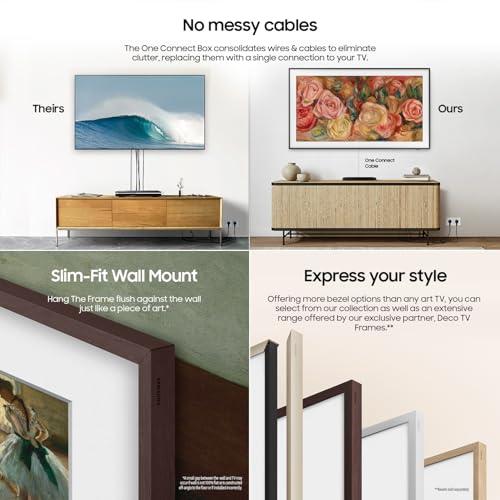
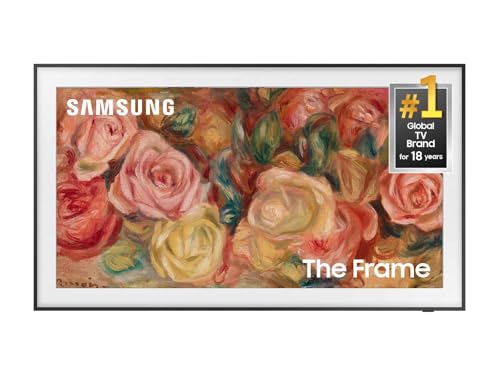
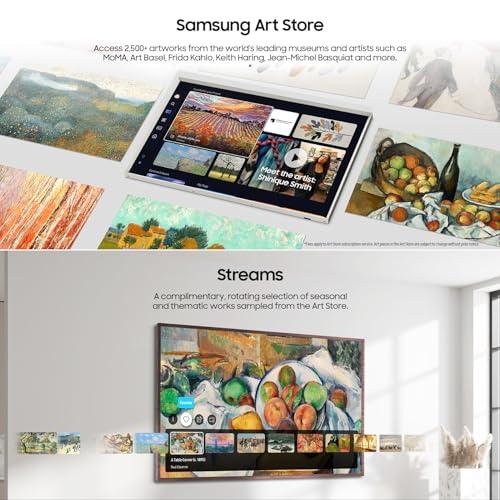
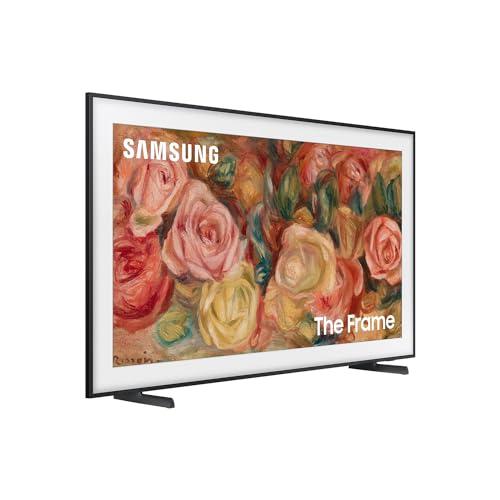
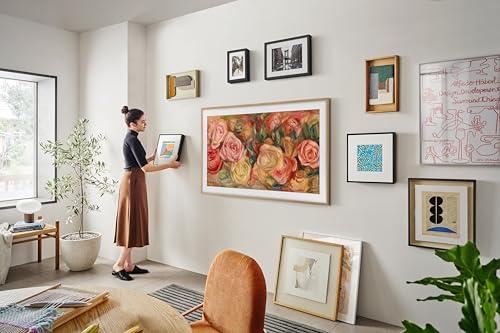
The Samsung Frame represents something unique in the TV industry. When turned off or in Art Mode, it displays digital artwork, family photos, or other content that transforms it into a decorative piece. The TV includes customizable magnetic bezels in different finishes—wood grain, metallic, or colored options—that let you match your existing décor. A motion sensor detects when people enter the room and can automatically switch between TV and art modes.
This isn't just a gimmick. The matte anti-reflective screen coating helps artwork look like a real canvas rather than a glossy display. The effect can be surprisingly convincing, especially when wall-mounted with an appropriate bezel that matches your room's aesthetic.
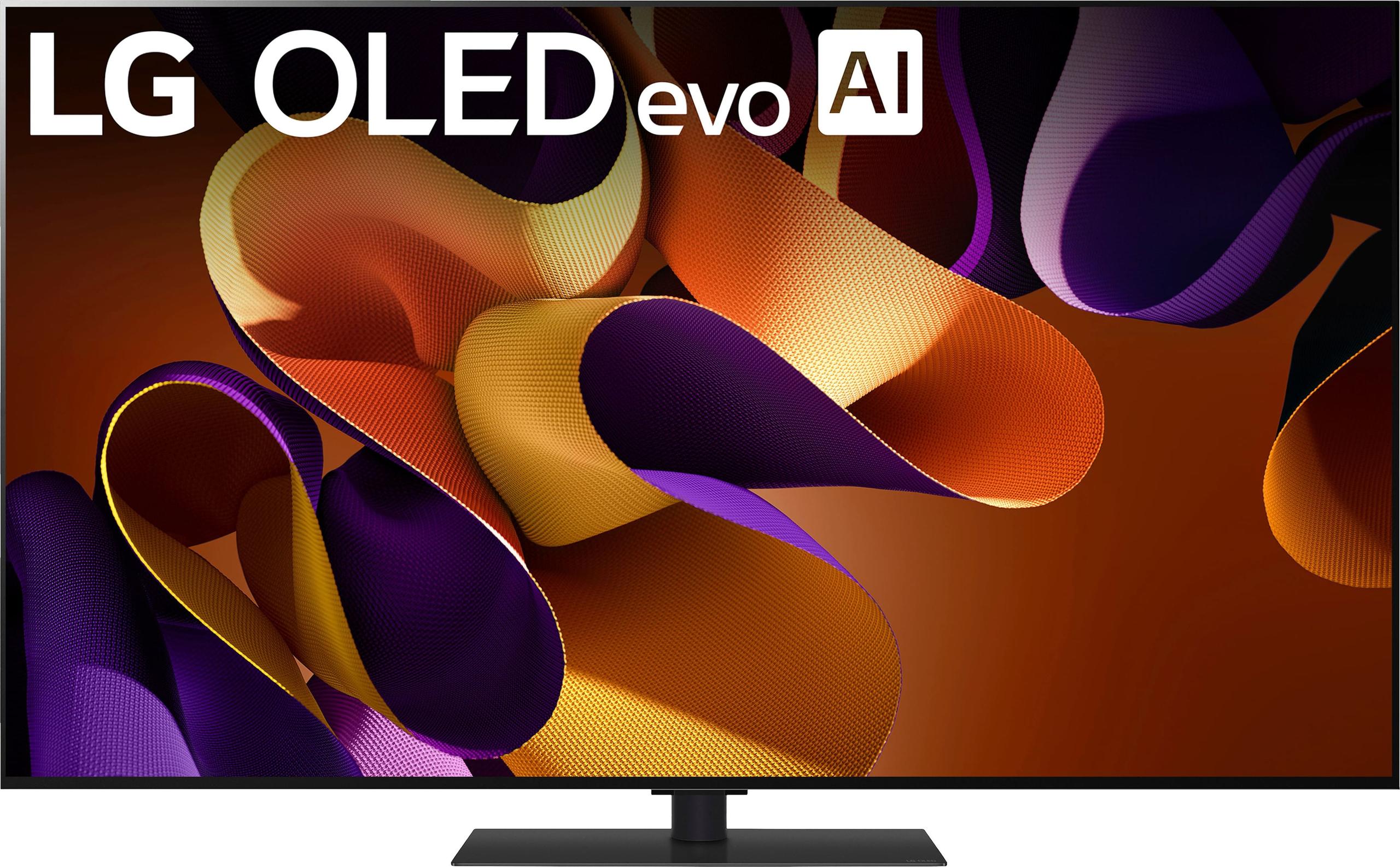
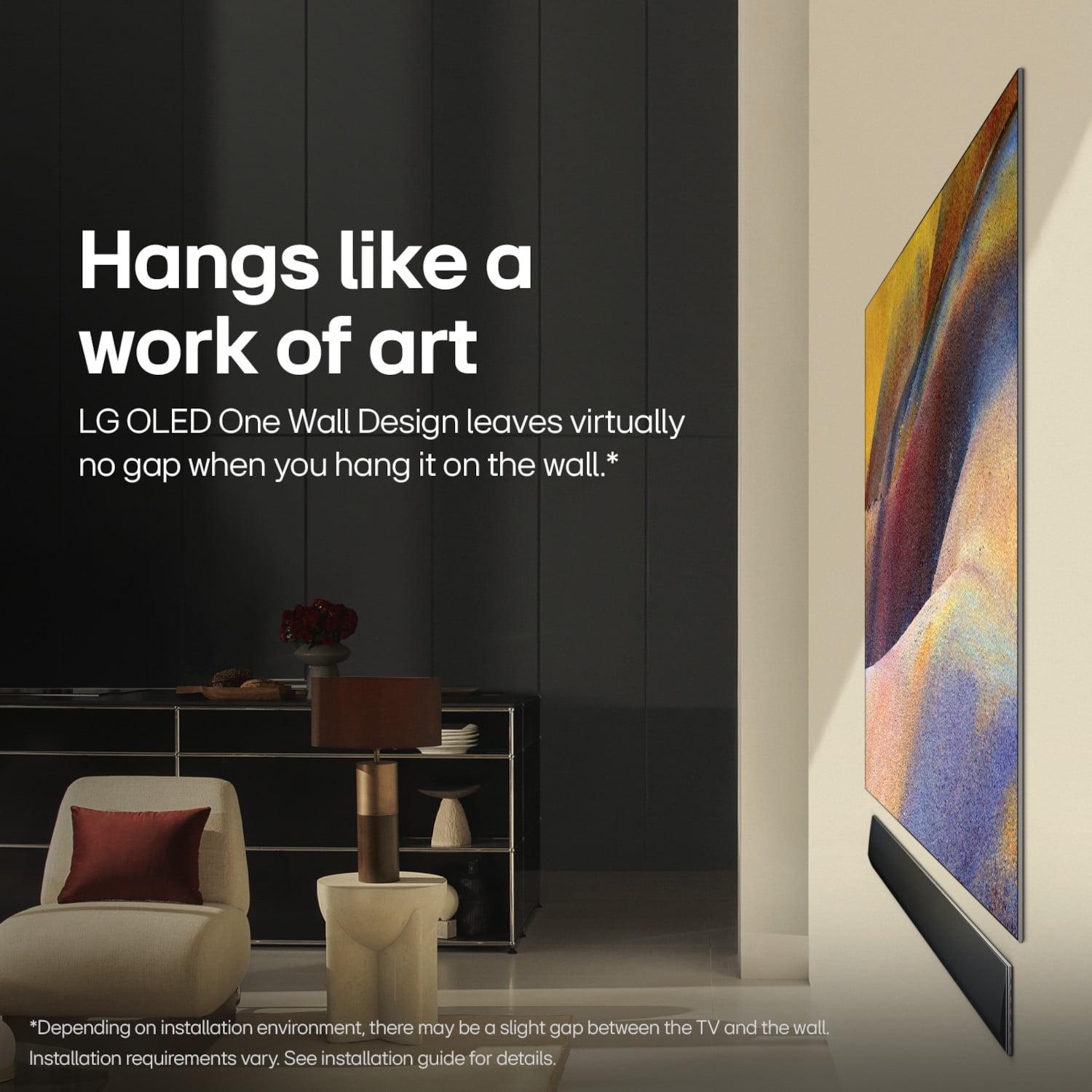
The LG G4 takes a different approach with its "Gallery Design" concept. It's built to mount flush against the wall, creating a seamless, minimalist look that makes the TV appear to float. The design emphasizes the display itself rather than trying to disguise it as something else. When wall-mounted properly, it looks like a premium piece of technology that belongs in a modern home.
Both TVs now include tabletop stands (the LG G4 added this in 2024 after user feedback), though both clearly favor wall mounting for their intended aesthetic impact.
Both manufacturers have refined their smart TV platforms significantly in recent years. The Samsung Frame runs Tizen OS, which provides solid performance and integrates well with Samsung's SmartThings ecosystem for smart home control. The Art Store offers thousands of curated artworks, though accessing the full library requires a subscription after the trial period.
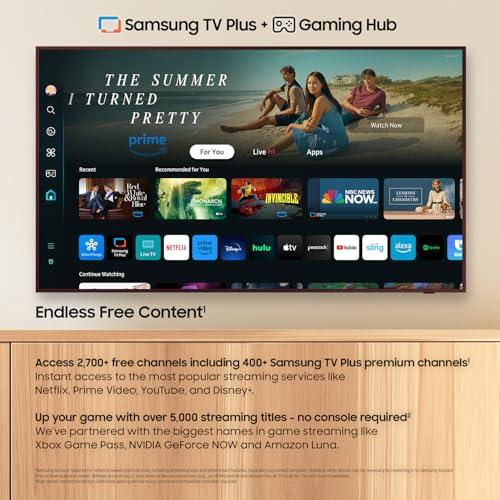
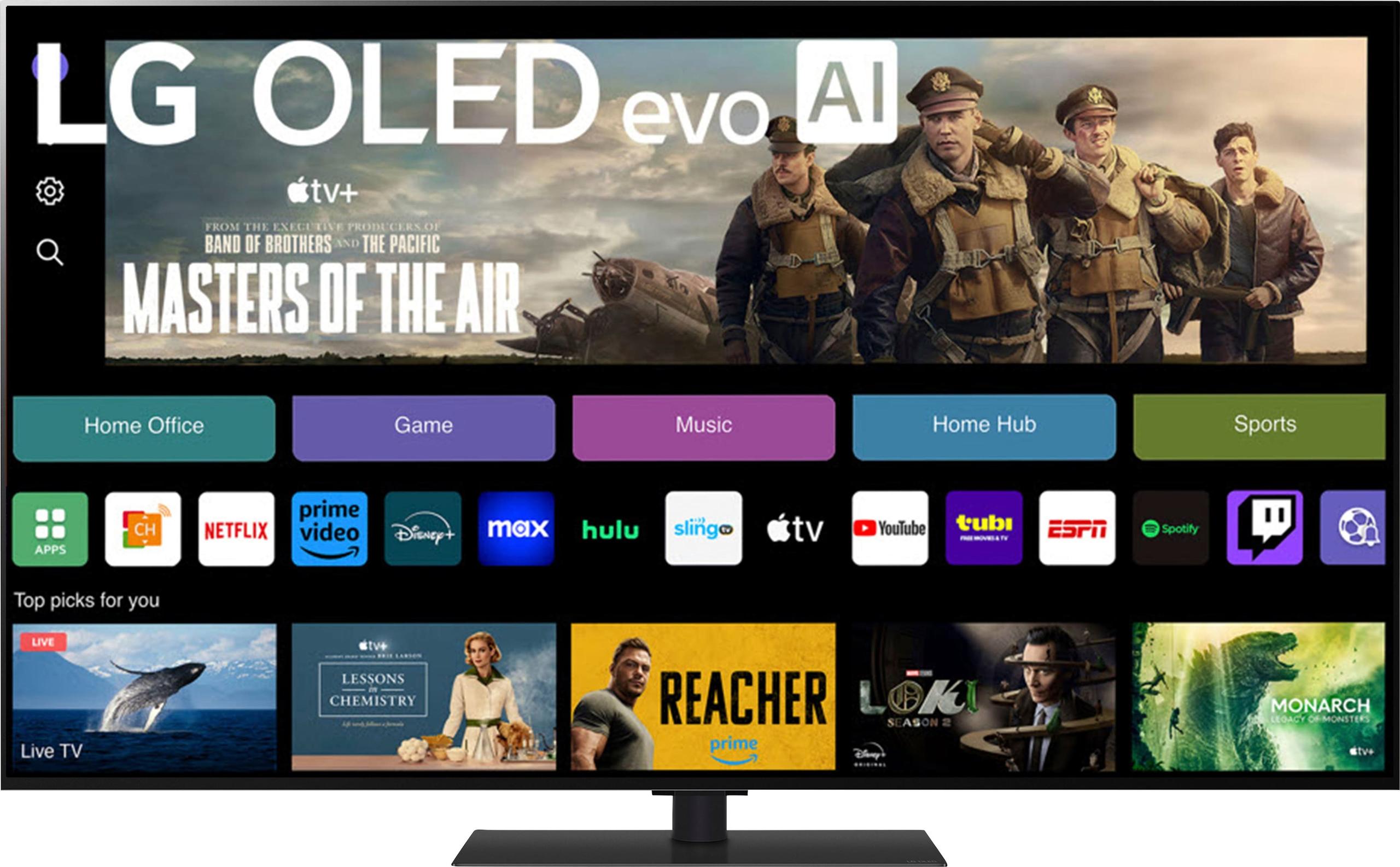
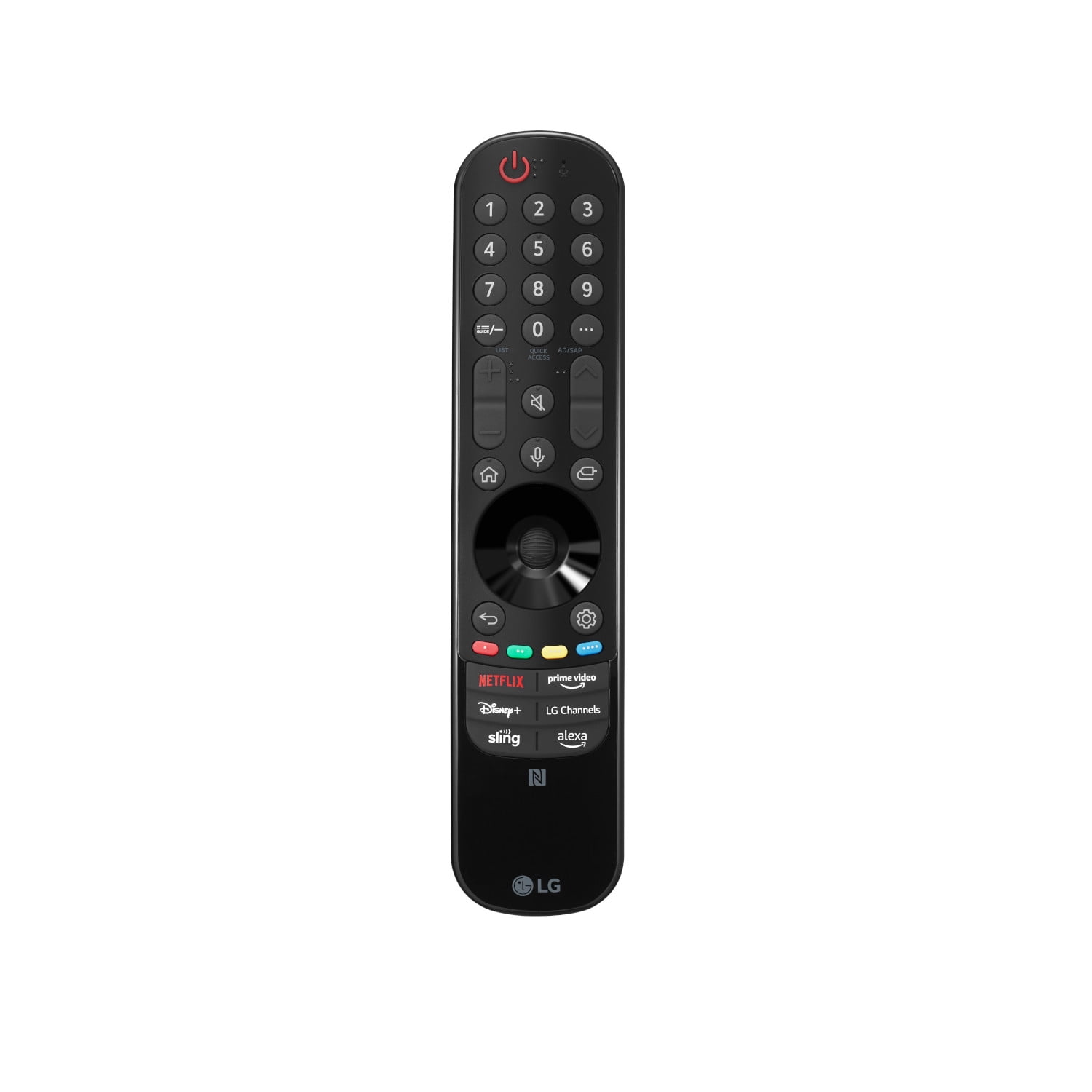
The LG G4 uses webOS 24, which many reviewers consider more intuitive than previous versions. Quick Cards let you organize favorite apps and content, while the built-in far-field microphone enables hands-free voice control without needing the remote. LG Channels provides access to over 300 free streaming channels, which adds value for cord-cutters.
Both platforms support all major streaming services and handle software updates reliably. Platform preference often comes down to personal taste and which ecosystem you're already invested in.
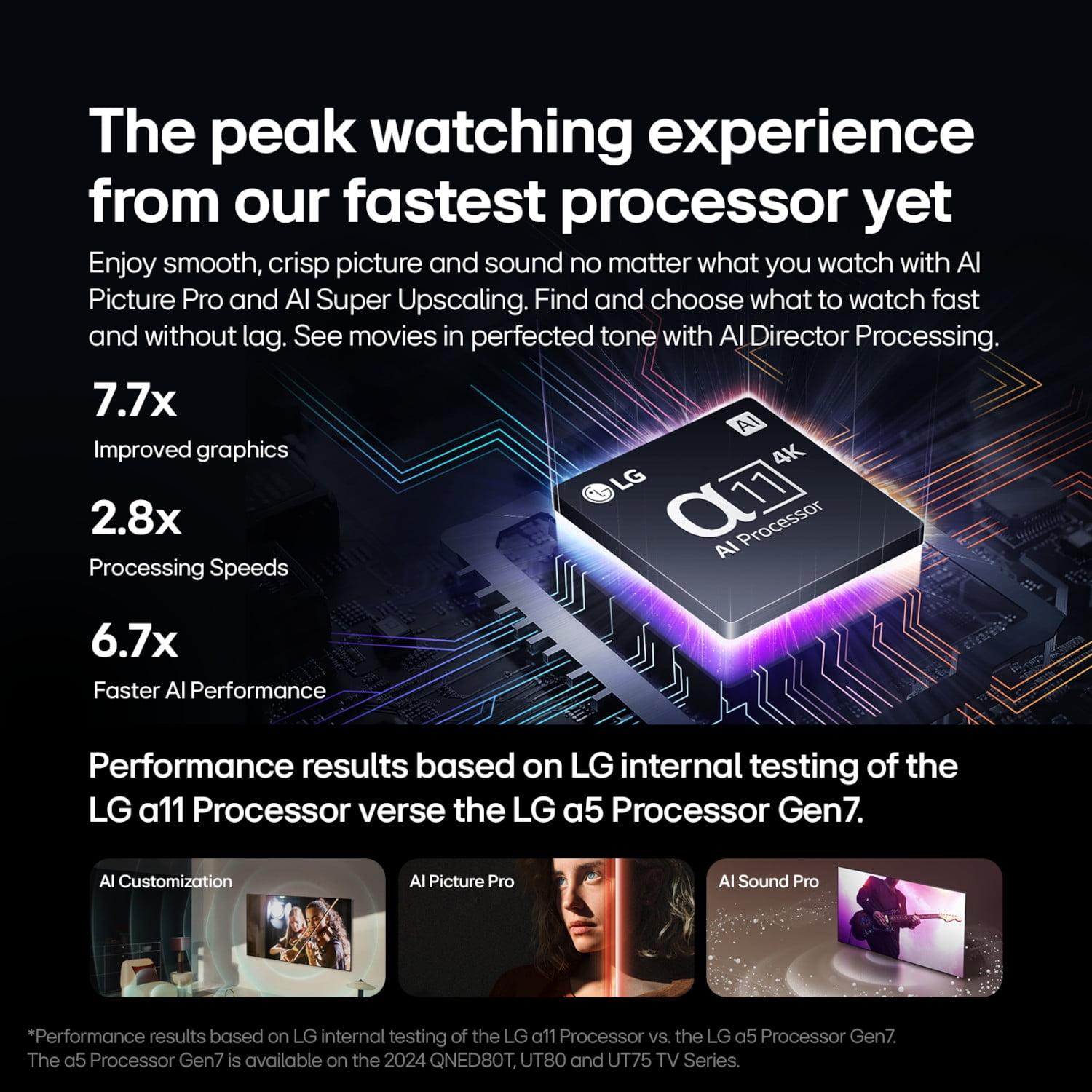
Audio represents a clear advantage for the LG G4, which includes a 60W, 4.2-channel speaker system with Dolby Atmos support. The α11 AI processor can virtually up-mix this to 11.1.2 surround sound, creating a more immersive audio experience than typical TV speakers provide.
The Samsung Frame includes standard built-in speakers that, like most thin TVs, prioritize space-saving over audio quality. For serious movie watching or music listening, you'll likely want to add a soundbar or surround sound system regardless of which TV you choose, but the LG provides a better starting point.
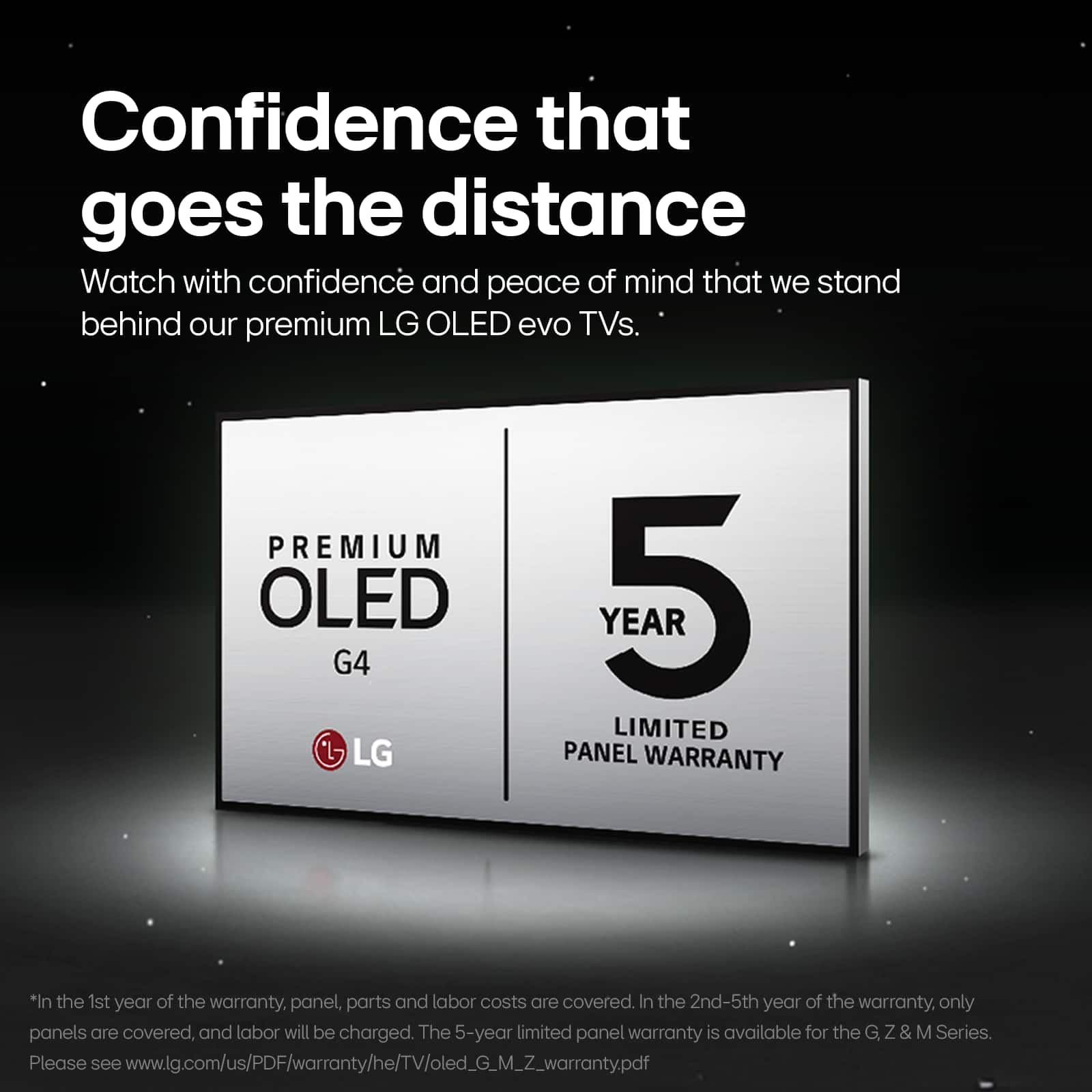
At the time of writing, these TVs are priced roughly $850 apart, with the LG G4 commanding a significant premium for its OLED technology. However, LG includes a 5-year panel warranty specifically covering the OLED panel—the most expensive component to replace. This extended coverage provides substantial peace of mind for such a significant purchase.
The Samsung Frame includes standard manufacturer warranty coverage but offers compelling value for its unique feature set at a more accessible price point.
Based on extensive research into professional reviews and user feedback, clear patterns emerge for who should choose each TV.
Choose the Samsung Frame if you:
Choose the LG G4 if you:
These TVs represent two different approaches to premium display technology. The Samsung Frame successfully solves the problem of TV integration in living spaces while delivering solid picture quality at a more accessible price. It's genuinely innovative and appeals to anyone who's ever wished their TV could disappear when not in use.
The LG G4 focuses purely on display excellence and largely achieves it. For movie enthusiasts, gamers, and anyone who prioritizes picture quality above all else, it delivers reference-grade performance that justifies its premium pricing.
Your choice ultimately depends on your priorities: unique lifestyle integration with good performance, or exceptional performance with elegant but conventional design. Both are excellent televisions that excel in their intended use cases—they're just solving different problems for different types of users.
| Samsung 65" The Frame QLED 4K 2024 TV | LG 65" G4 Series OLED evo 4K UHD Smart TV 2024 |
|---|---|
| Display Technology - Determines fundamental picture quality capabilities | |
| QLED with quantum dots and LED backlighting | OLED evo with self-emitting pixels and Micro Lens Array |
| Peak Brightness - Critical for bright room viewing and HDR impact | |
| Up to 2,000+ nits (excellent for daytime viewing) | ~1,300 nits (good for most conditions, 150% brighter than previous OLEDs) |
| Black Levels - Essential for contrast and movie watching | |
| Good blacks for QLED but limited by LED zones | Perfect blacks with infinite contrast (each pixel turns completely off) |
| HDR Format Support - Affects streaming content quality | |
| HDR10, HDR10+ (Samsung's format) | HDR10, Dolby Vision, HLG (includes Netflix/Disney+ premium format) |
| Gaming Refresh Rate - Important for console and PC gaming | |
| 120Hz with HDMI 2.1 support | Up to 144Hz with four HDMI 2.1 ports |
| Input Lag - Critical for competitive gaming responsiveness | |
| Low (exact specs not widely published) | 0.1ms (essentially instantaneous) |
| Unique Design Feature - Sets each TV apart from competitors | |
| Art Mode with customizable bezels (transforms into wall art) | Gallery Design for flush wall mounting (minimalist aesthetic) |
| Built-in Audio - Determines if external speakers are needed | |
| Standard TV speakers (external audio recommended) | 60W 4.2-channel with Dolby Atmos and AI Sound Pro |
| Smart Platform - Affects user experience and app availability | |
| Tizen OS with SmartThings integration | webOS 24 with Quick Cards and 300+ free channels |
| Warranty Coverage - Important for long-term value protection | |
| Standard manufacturer warranty | 5-year panel warranty (covers most expensive component) |
| Best Room Conditions - Where each TV performs optimally | |
| Bright rooms with windows (anti-glare matte screen) | Controlled lighting environments (perfect blacks shine in darker rooms) |
| Primary Value Proposition - What you're paying for | |
| Unique art/lifestyle features at accessible premium price | Reference-grade OLED picture quality with flagship performance |
The LG 65" G4 Series OLED evo 4K UHD Smart TV 2024 delivers superior picture quality for movies and home theater use. Its OLED technology provides perfect blacks and infinite contrast ratio, which is essential for cinematic content. The LG G4 also supports Dolby Vision HDR format used by Netflix and Disney+, while the Samsung 65" The Frame QLED 4K 2024 TV uses HDR10+ instead.
The Samsung 65" The Frame QLED 4K 2024 TV performs better in bright rooms due to its higher peak brightness (over 2,000 nits) and anti-glare matte display coating. The Samsung Frame can maintain picture quality even with direct sunlight, while the LG 65" G4 Series OLED evo 4K UHD Smart TV 2024 is better suited for controlled lighting environments.
The Samsung 65" The Frame QLED 4K 2024 TV features Art Mode that transforms the TV into a digital art display when not in use. It includes customizable magnetic bezels in different finishes and a motion sensor that automatically switches between TV and art modes. This makes the Samsung Frame blend into your home décor like a framed piece of artwork.
The LG 65" G4 Series OLED evo 4K UHD Smart TV 2024 offers superior gaming performance with four HDMI 2.1 ports supporting up to 144Hz, virtually zero input lag (0.1ms), and support for both NVIDIA G-Sync and AMD FreeSync. While the Samsung Frame has solid gaming features, the LG G4 provides more ports and faster response times for serious gamers.
Both TVs offer excellent smart features. The Samsung 65" The Frame QLED 4K 2024 TV runs Tizen OS with SmartThings integration and Art Store access. The LG 65" G4 Series OLED evo 4K UHD Smart TV 2024 uses webOS 24 with Quick Cards, hands-free voice control, and 300+ free channels. Both support all major streaming apps, with preference often coming down to interface design.
The LG 65" G4 Series OLED evo 4K UHD Smart TV 2024 has significantly better built-in audio with 60W 4.2-channel speakers, Dolby Atmos support, and AI Sound Pro that virtually creates 11.1.2 surround sound. The Samsung Frame has standard TV speakers that will likely require a soundbar for optimal home theater experience.
The Samsung 65" The Frame QLED 4K 2024 TV uses QLED technology with quantum dots and LED backlighting, while the LG 65" G4 Series OLED evo 4K UHD Smart TV 2024 uses OLED evo with self-emitting pixels. This means the Samsung Frame can get brighter but the LG G4 achieves perfect blacks and better contrast.
The Samsung 65" The Frame QLED 4K 2024 TV offers better value for buyers wanting unique lifestyle features at a more accessible premium price point. The LG G4 costs significantly more but justifies the premium with superior picture quality, better gaming features, and a 5-year panel warranty. Value depends on whether you prioritize unique design or ultimate performance.
The LG 65" G4 Series OLED evo 4K UHD Smart TV 2024 supports Dolby Vision, HDR10, and HLG formats, providing better compatibility with premium streaming content. The Samsung Frame supports HDR10, HDR10+, and HLG but lacks Dolby Vision. However, the Samsung Frame's higher peak brightness can make HDR highlights more impactful in bright scenes.
Both TVs excel at wall mounting but serve different aesthetic purposes. The Samsung 65" The Frame QLED 4K 2024 TV transforms into artwork with customizable bezels, making it blend into traditional or eclectic décor. The LG G4 offers a minimalist gallery design that mounts flush to the wall, perfect for modern, tech-forward spaces.
The LG 65" G4 Series OLED evo 4K UHD Smart TV 2024 includes a notable 5-year panel warranty that covers the OLED display—the most expensive component to replace. The Samsung Frame comes with standard manufacturer warranty coverage. This extended protection adds significant value to the LG G4 for long-term peace of mind.
For streaming content, the LG 65" G4 Series OLED evo 4K UHD Smart TV 2024 has an advantage due to Dolby Vision support, which is used by Netflix, Disney+, and other premium services for better picture quality. The perfect blacks also enhance the cinematic experience of movies and shows. However, if you primarily watch in bright rooms, the Samsung Frame's superior brightness might be more important than the HDR format difference.
We've done our best to create useful and informative comparisons to help you decide what product to buy. Our research uses advanced automated methods to create this comparison and perfection is not possible - please contact us for corrections or questions. These are the sites we've researched in the creation of this article: tomsguide.com - rtings.com - rtings.com - youtube.com - bestbuy.com - techlicious.com - youtube.com - smalllilystudio.com - theeverymom.com - livingetc.com - pcrichard.com - image-us.samsung.com - samsung.com - images.samsung.com - samsung.com - buydig.com - tvsbook.com - bestbuy.com - samsung.com - samsung.com - flatpanelshd.com - hometechnologyreview.com - hometechnologyreview.com - whathifi.com - hometechnologyreview.com - youtube.com - tomsguide.com - tomsguide.com - smarthomesounds.co.uk - rtings.com - rtings.com - bhphotovideo.com - youtube.com - schaeferstv.com - bestbuy.com - costco.com - lg.com - lg.com - shopsilica.com - bestbuy.com - techradar.com - bestbuy.com - bestbuy.com - lg.com - lgnewsroom.com

Privacy Policy
Terms and Conditions - Affiliate Policy
Home Security
© Copyright 2008-2026.
11816 Inwood Rd #1211, Dallas, TX 75244