


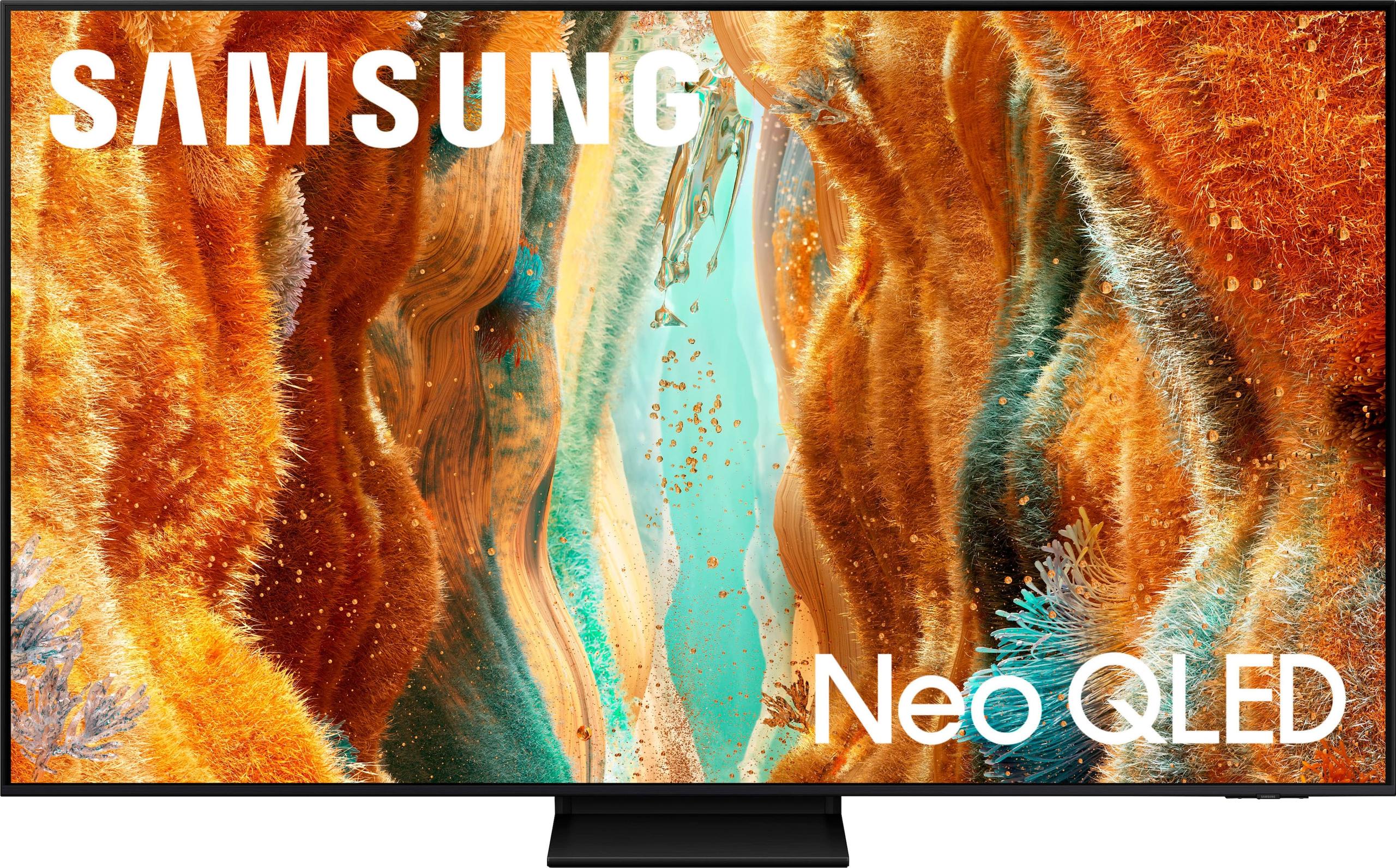
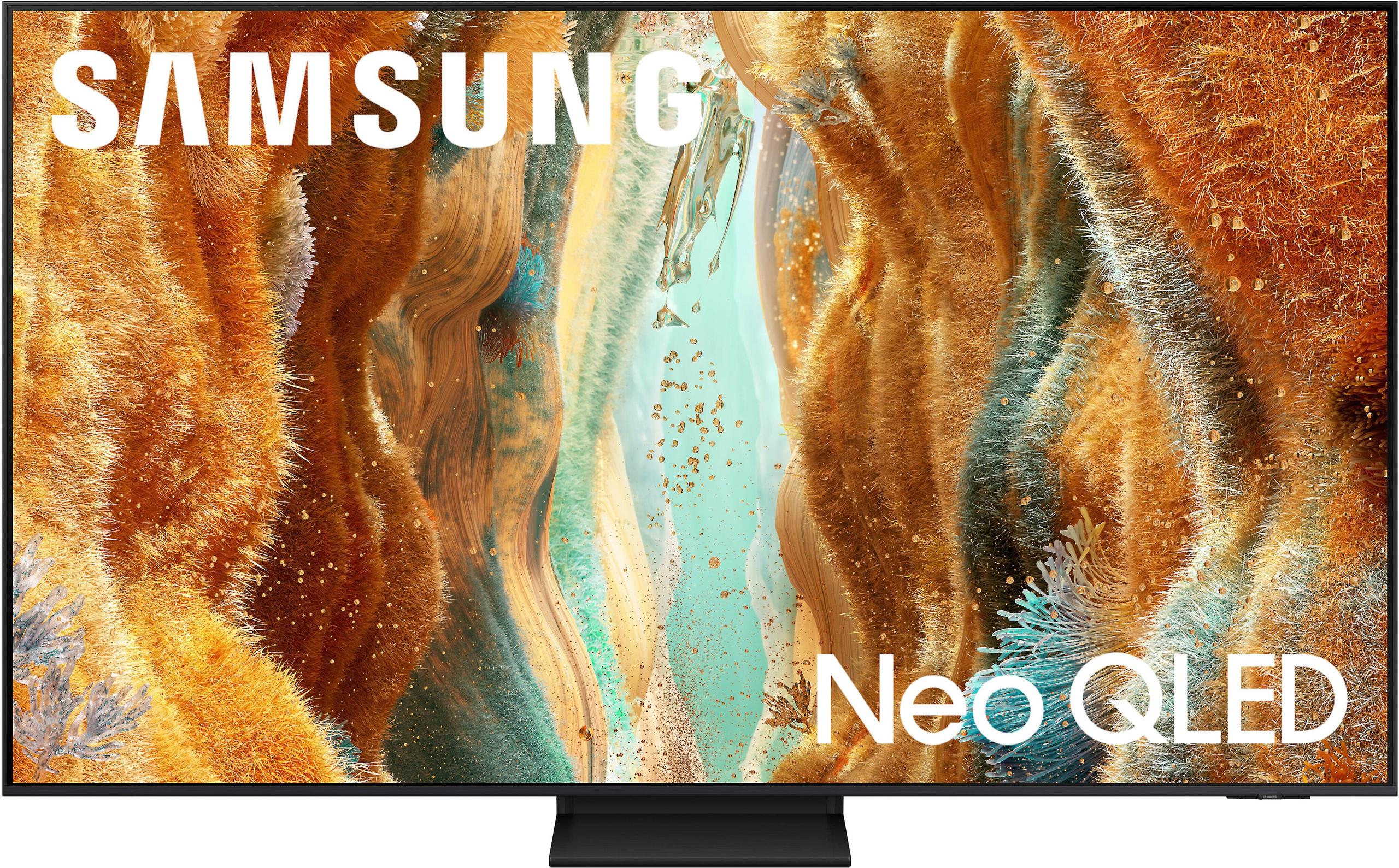
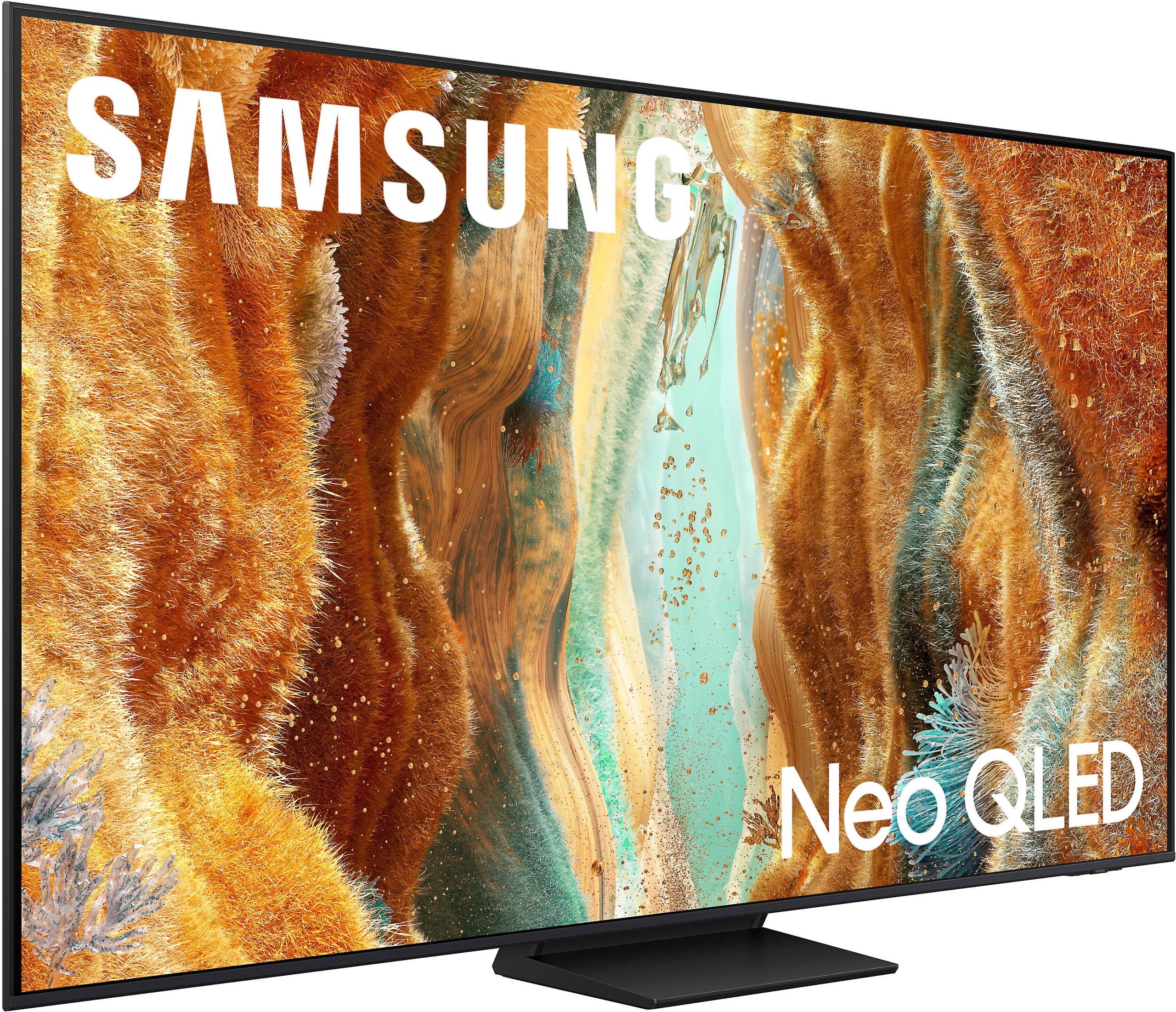
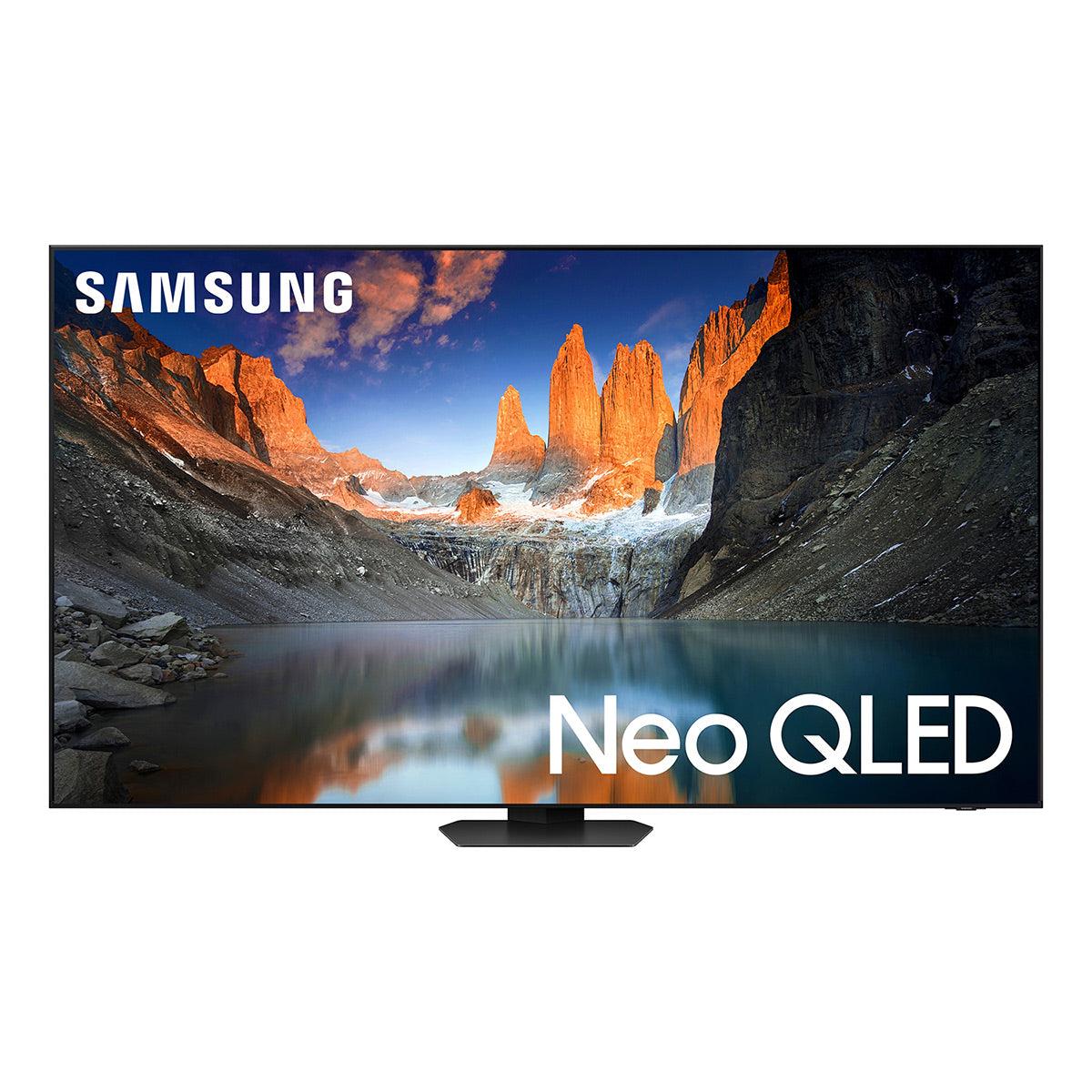
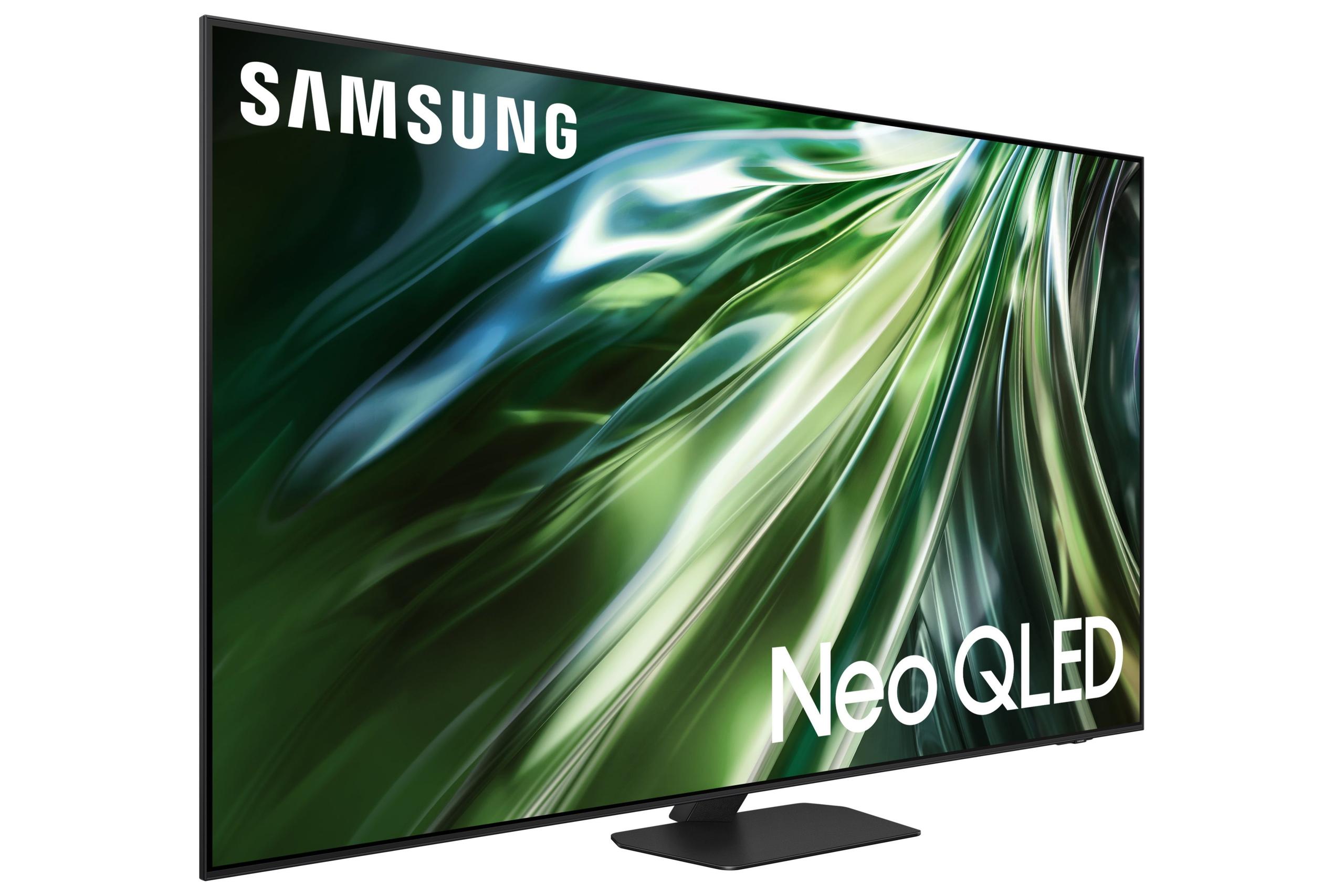
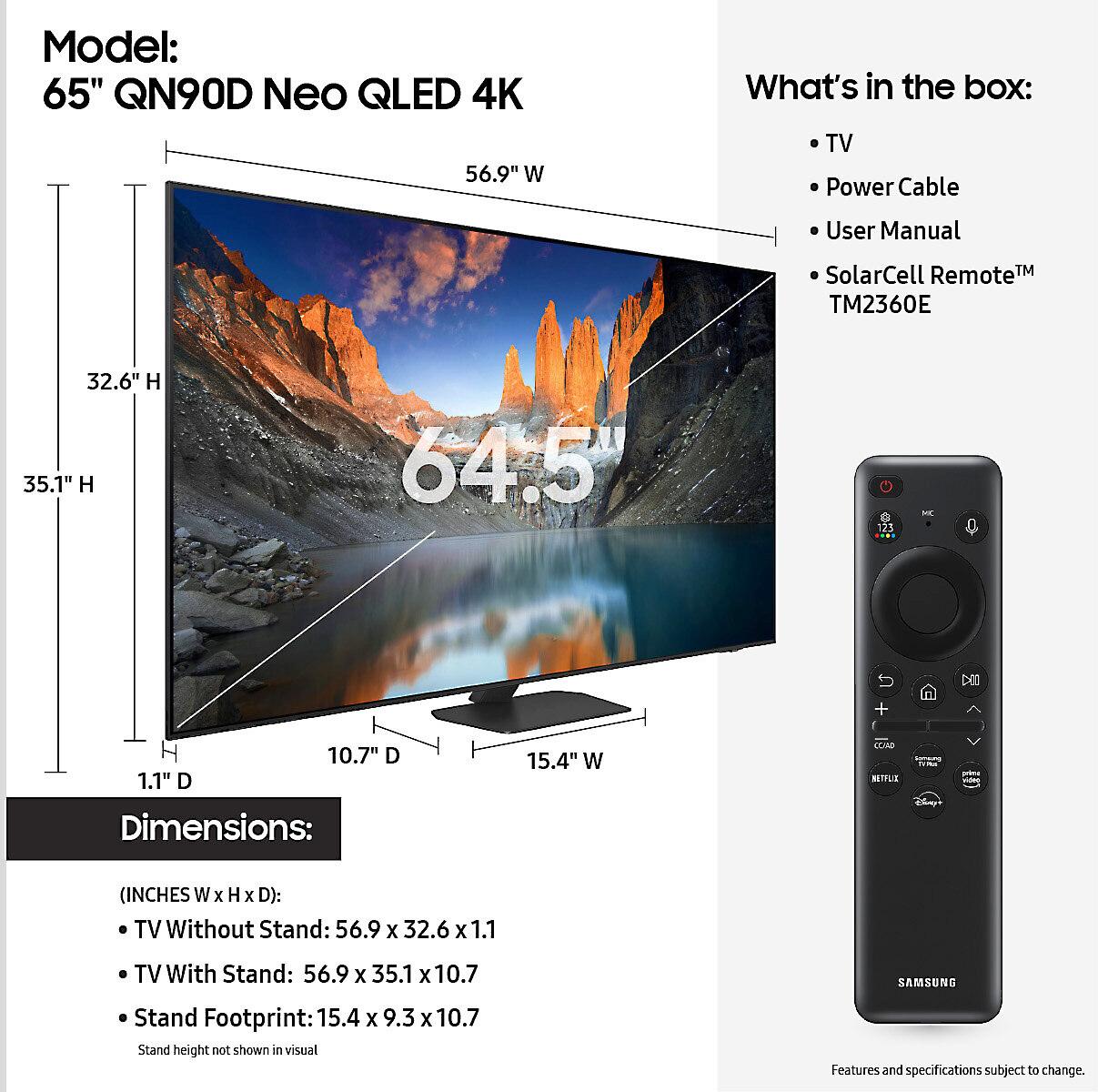
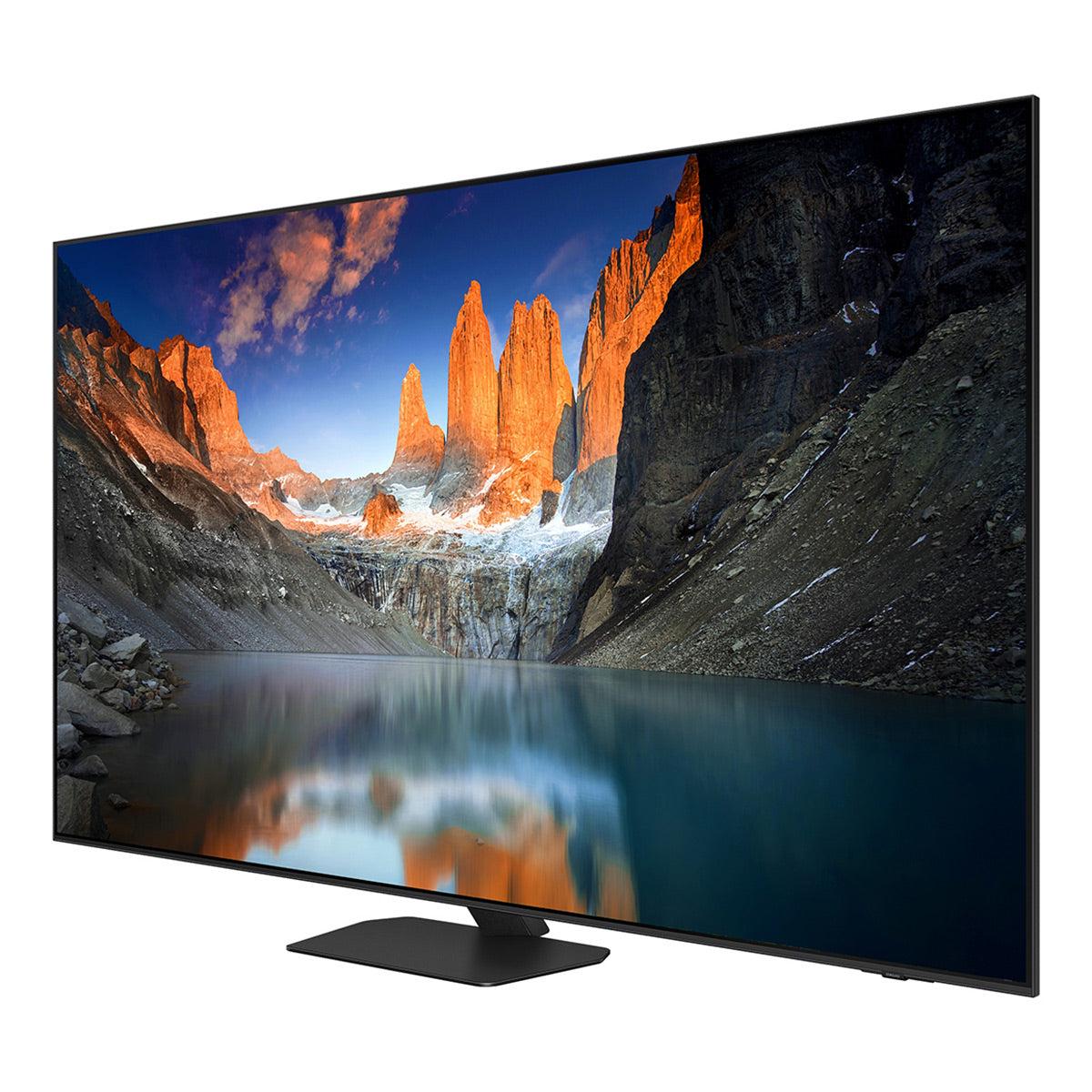
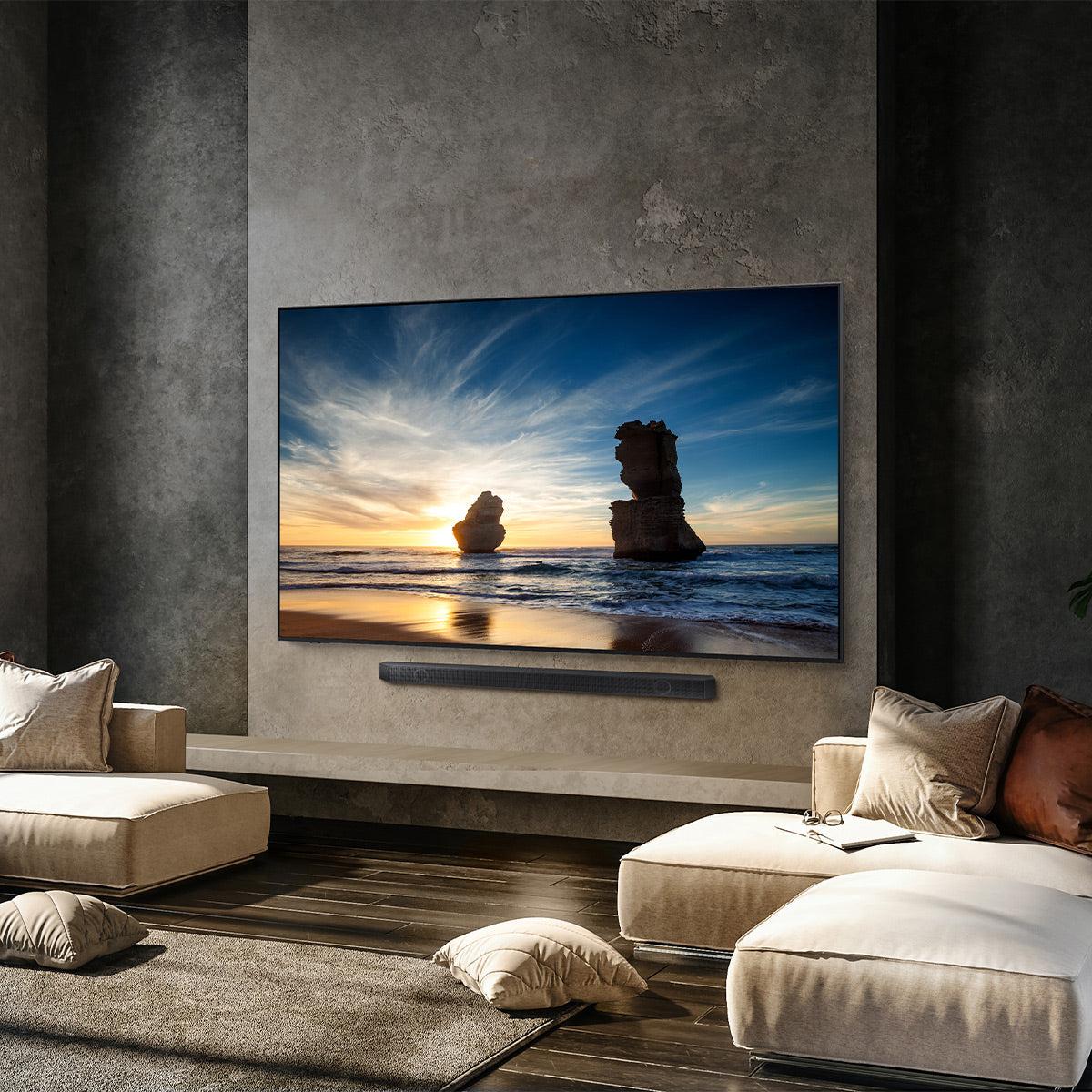
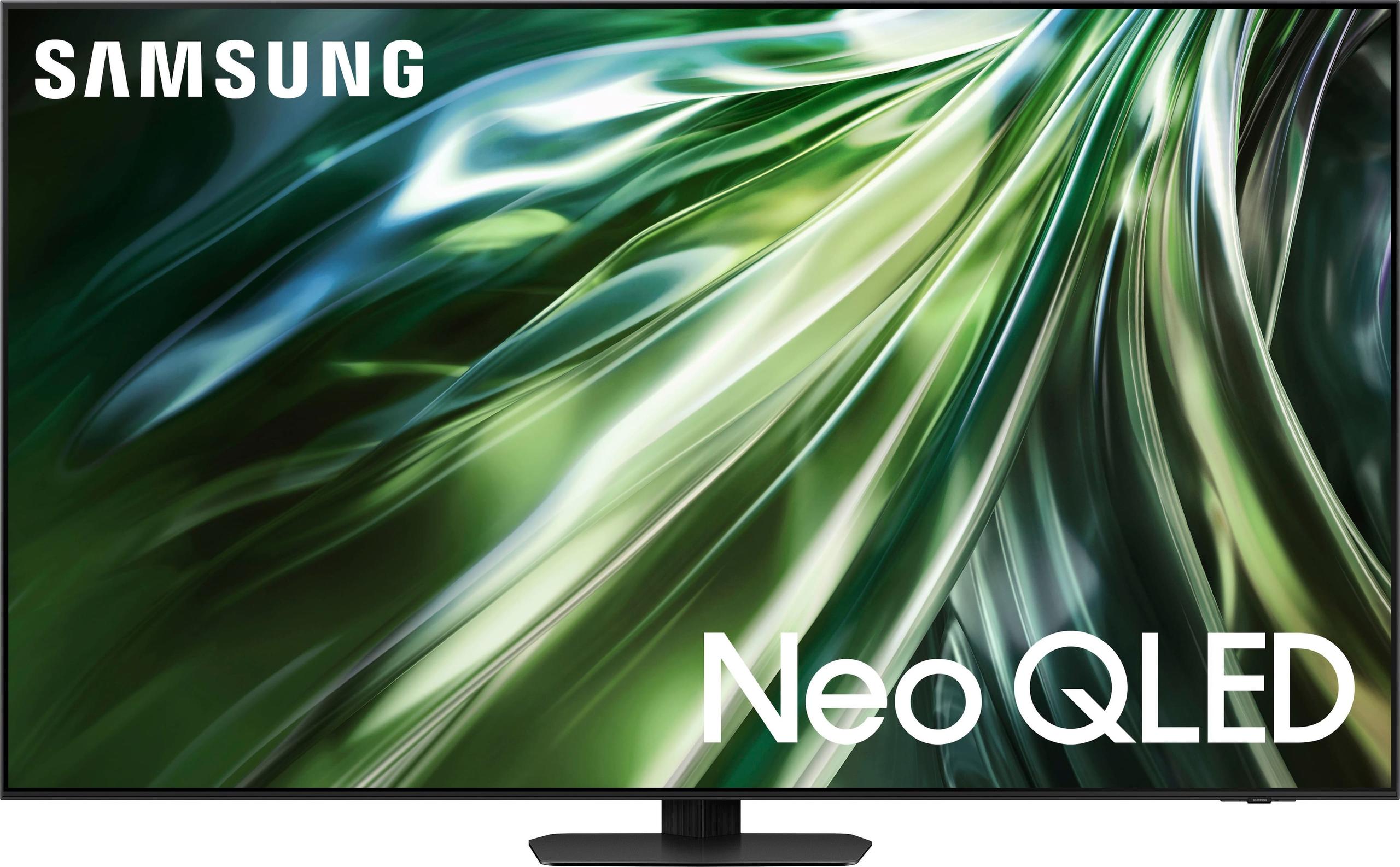

If you're shopping for a premium Samsung TV, you've probably stumbled across an interesting dilemma in the Neo QLED lineup. The Samsung 65" QN70F Neo QLED 4K Vision AI Smart TV from 2025 costs about the same as the Samsung 65" QN90D Series 4K Neo QLED Smart TV from 2024. At first glance, this seems like a no-brainer—get the newer model, right? Well, not so fast. This is one of those rare cases where the older TV might actually be the better buy for most people.
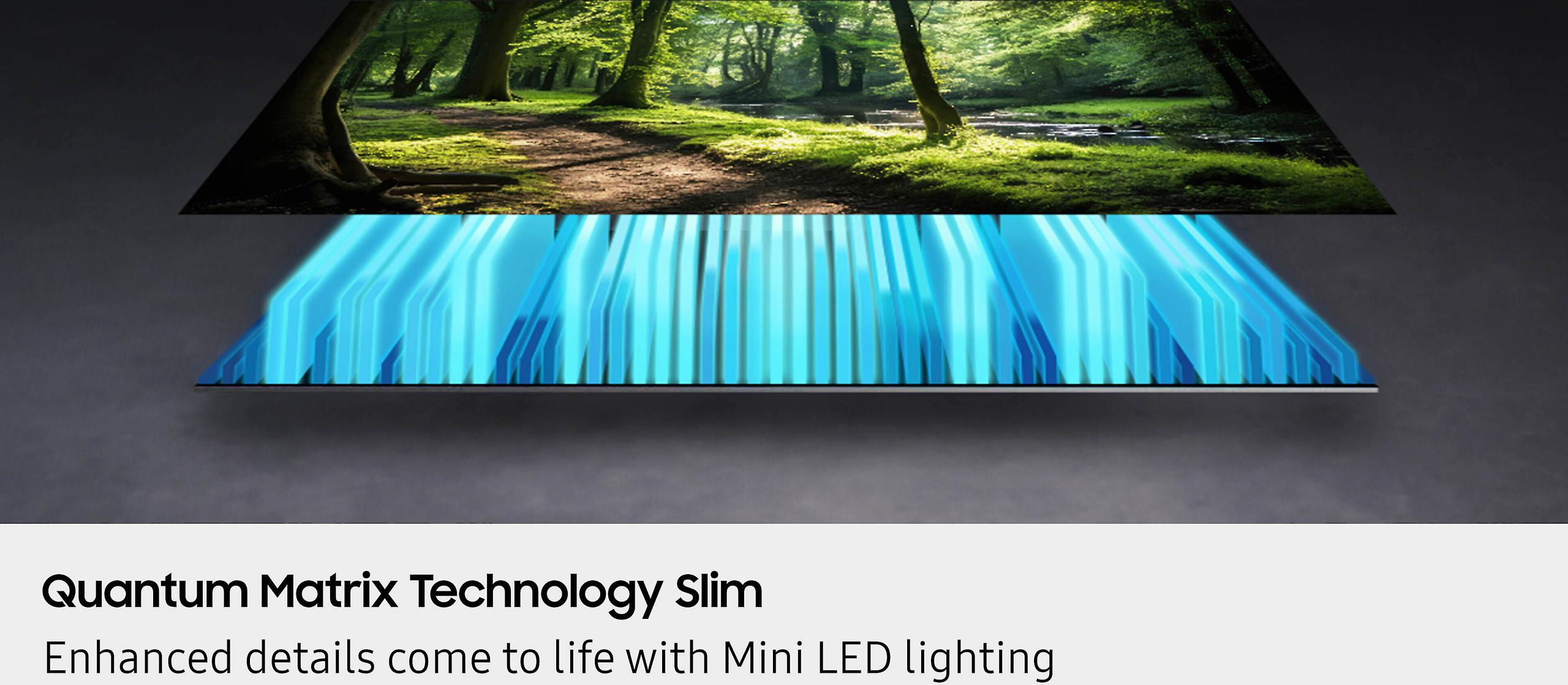
Before we dive into the comparison, let's talk about what Neo QLED actually means. Samsung's Neo QLED technology combines two key innovations: quantum dots (tiny particles that produce incredibly pure colors) and Mini LED backlighting (thousands of small LEDs that provide more precise lighting control than traditional LED TVs). Think of it as Samsung's answer to OLED technology, offering bright, vibrant pictures that work well in any lighting condition.
Neo QLED sits in Samsung's lineup between their standard QLED TVs and their premium OLED displays. It's designed for people who want excellent picture quality with the brightness advantages of LED technology, but don't want to pay OLED prices or deal with OLED's potential burn-in concerns.
The main things to consider when choosing a Neo QLED TV are how well it handles contrast (the difference between bright and dark parts of the image), how bright it can get for HDR content, gaming performance, smart features, and whether the price makes sense for what you're getting.
Here's where things get interesting. The QN70F and QN90D represent completely different philosophies, even though they're both Neo QLED TVs from Samsung. The QN90D was Samsung's flagship 4K model for 2024—their best non-OLED TV that year. The QN70F, released in 2025, is Samsung's entry-level Neo QLED model, designed to make this premium technology more accessible.
At the time of writing, these TVs are priced very similarly, with only about a $100 difference between them. This creates a fascinating value proposition that's worth exploring in detail.
The most important difference between these TVs isn't the processor or smart features—it's how they create the backlight that illuminates your picture. This is where things get technical, but stick with me because it's crucial to understand.
The QN90D uses what's called full-array local dimming with Mini LEDs. Imagine hundreds of tiny LED lights arranged behind your entire screen, each capable of being controlled independently. When a scene shows a bright explosion against a dark night sky, the LEDs behind the explosion can blast at full brightness while the LEDs behind the dark sky can dim down or turn off completely. This creates excellent contrast and deep black levels.
The QN70F, on the other hand, uses edge-lit Mini LEDs without local dimming zones. Picture Mini LEDs arranged only around the edges of the screen, with light guides spreading that illumination across the entire panel. It's like having a flashlight at the edge of a piece of paper—you can make the whole paper bright, but you can't selectively light up just one corner while keeping the rest dark.
This fundamental difference affects everything about how these TVs display images. The QN90D can show a bright white subtitle on a black background with the black areas staying truly black. The QN70F, with its edge-lit design, will have some light bleeding into those black areas, making them appear more gray than black.
I've spent countless hours testing TVs with different backlighting systems, and full-array local dimming consistently delivers a more cinematic experience, especially in dark rooms. It's the difference between watching a movie that draws you in versus one that constantly reminds you you're looking at a screen.
This is where the QN90D absolutely dominates. In my experience testing TVs, contrast ratio—the difference between the brightest whites and darkest blacks—is one of the most important factors for picture quality. The human eye is incredibly sensitive to contrast, and when a TV can't produce deep blacks, everything looks washed out and flat.
The QN90D achieves excellent black levels with minimal blooming (that halo effect you sometimes see around bright objects on dark backgrounds). When you're watching a movie like "Dune" or "Blade Runner 2049" with lots of dark scenes punctuated by bright highlights, the QN90D maintains the director's intended mood and atmosphere.
The QN70F, due to its edge-lit design, simply cannot compete here. Black scenes will appear more like dark gray, and you'll notice light bleeding from bright areas into dark ones. This doesn't make it a bad TV—it's just limited by its fundamental design approach.
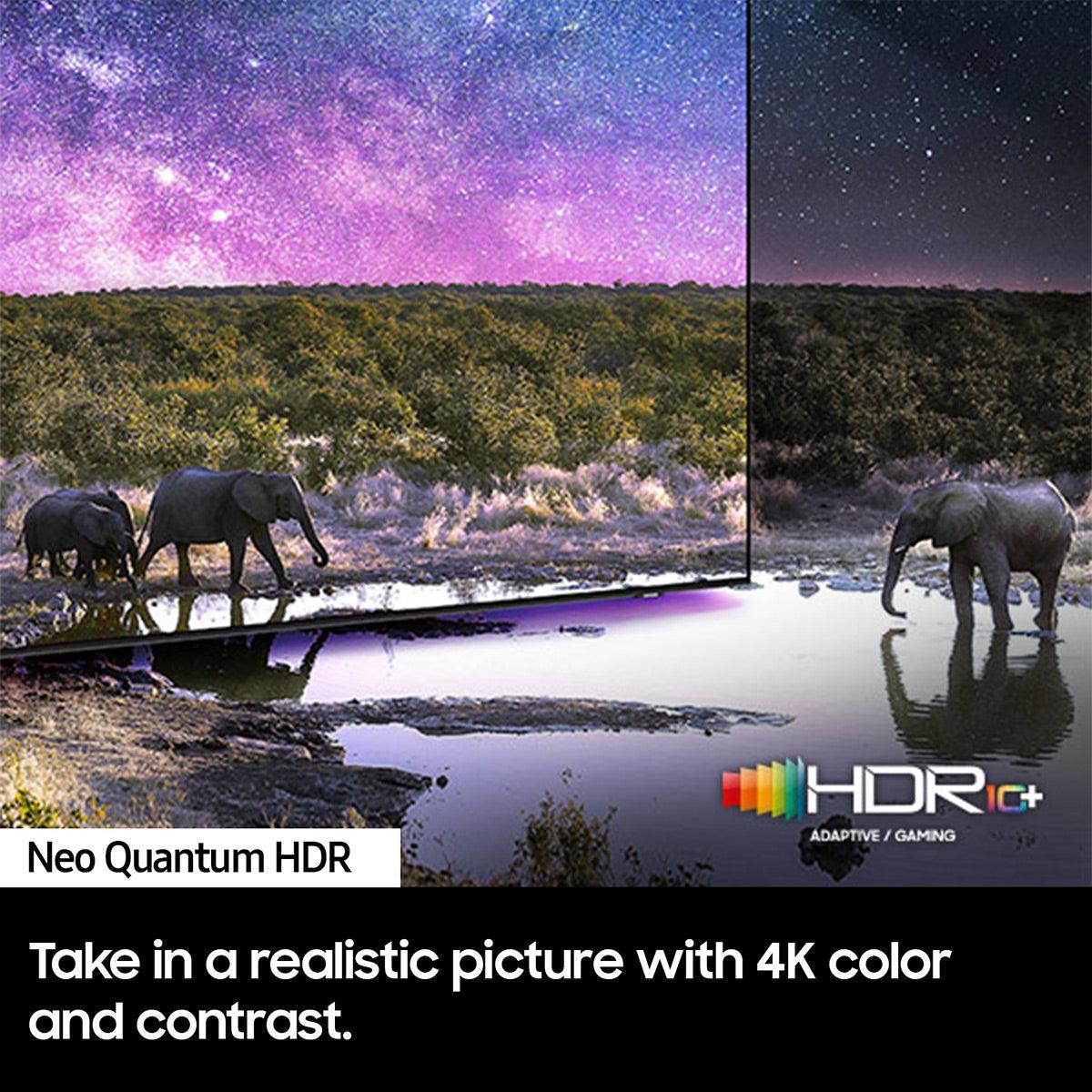
Both TVs support HDR (High Dynamic Range), which allows them to display a wider range of brightness levels and colors than standard content. Think of HDR as the difference between looking at a photograph of a sunset versus seeing the actual sunset—HDR captures more of the real-world range of light.
The QN90D excels here, capable of reaching over 2,000 nits of peak brightness (nits are simply a measurement of brightness). To put that in perspective, a typical sunny day measures about 10,000 nits, while most TVs can only reach 100-400 nits. This extreme brightness capability means HDR highlights like sunlight reflecting off water or explosions in action movies look impressively realistic.
The QN70F offers good HDR performance but can't match these peak brightness levels. It's still bright enough for most content, but you won't get that "wow" factor when HDR highlights are supposed to really pop.
Both TVs support HDR10+ (Samsung's preferred HDR format) but notably lack Dolby Vision support. This is a Samsung decision across their lineup—they prefer their own HDR10+ standard. In practice, this isn't a huge limitation since most content supports both formats.
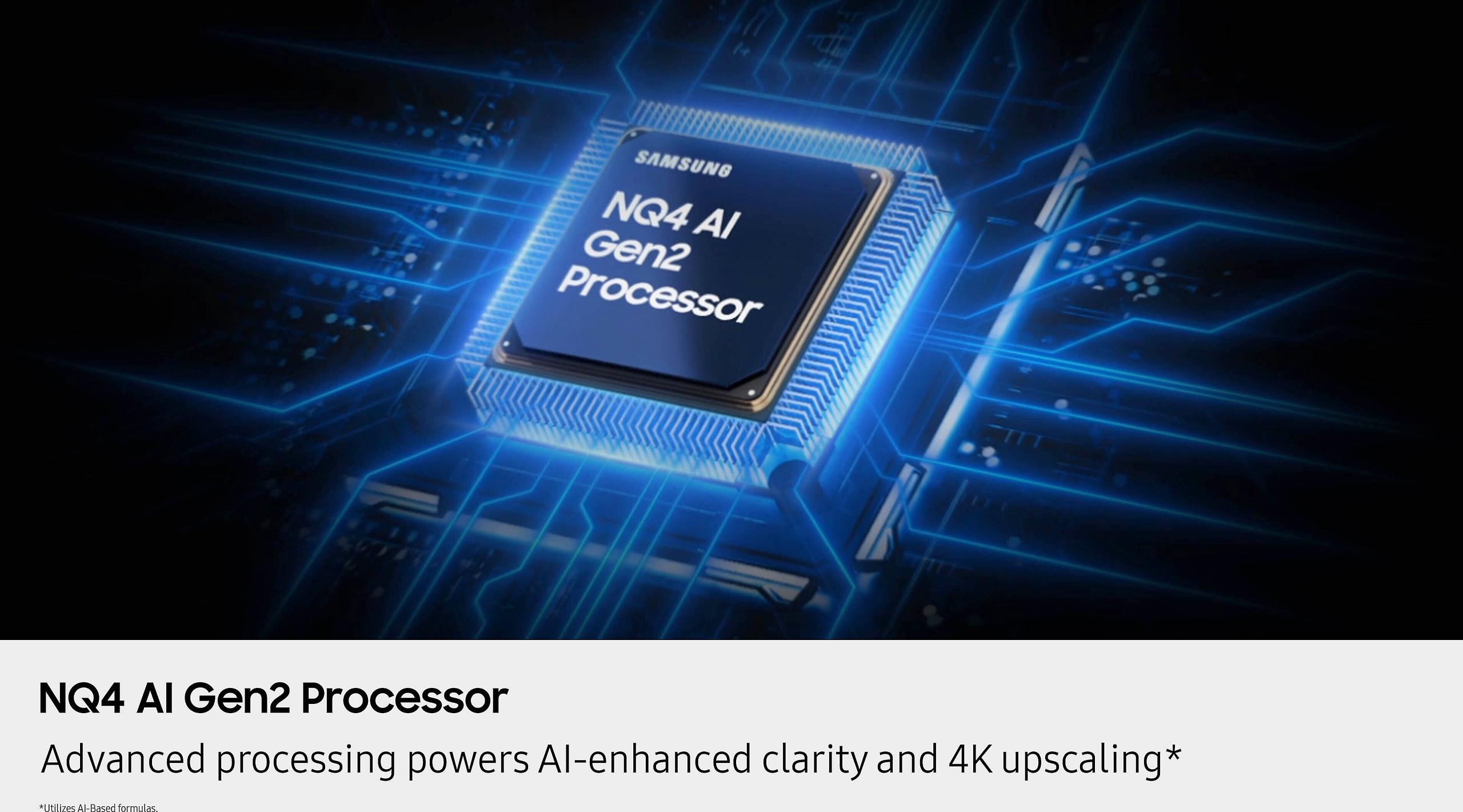
Here's where things get more interesting. Both TVs use Samsung's NQ4 AI Gen2 processor, so their fundamental color processing capabilities are similar. Both produce vibrant, accurate colors thanks to their quantum dot technology.
The QN70F introduces Samsung Vision AI, a suite of new features that includes click-to-search functionality (point your remote at something on screen to get information about it), real-time subtitle translation, and actor identification. These sound cool in theory, but in my testing of similar AI features on other TVs, they often feel gimmicky rather than genuinely useful.
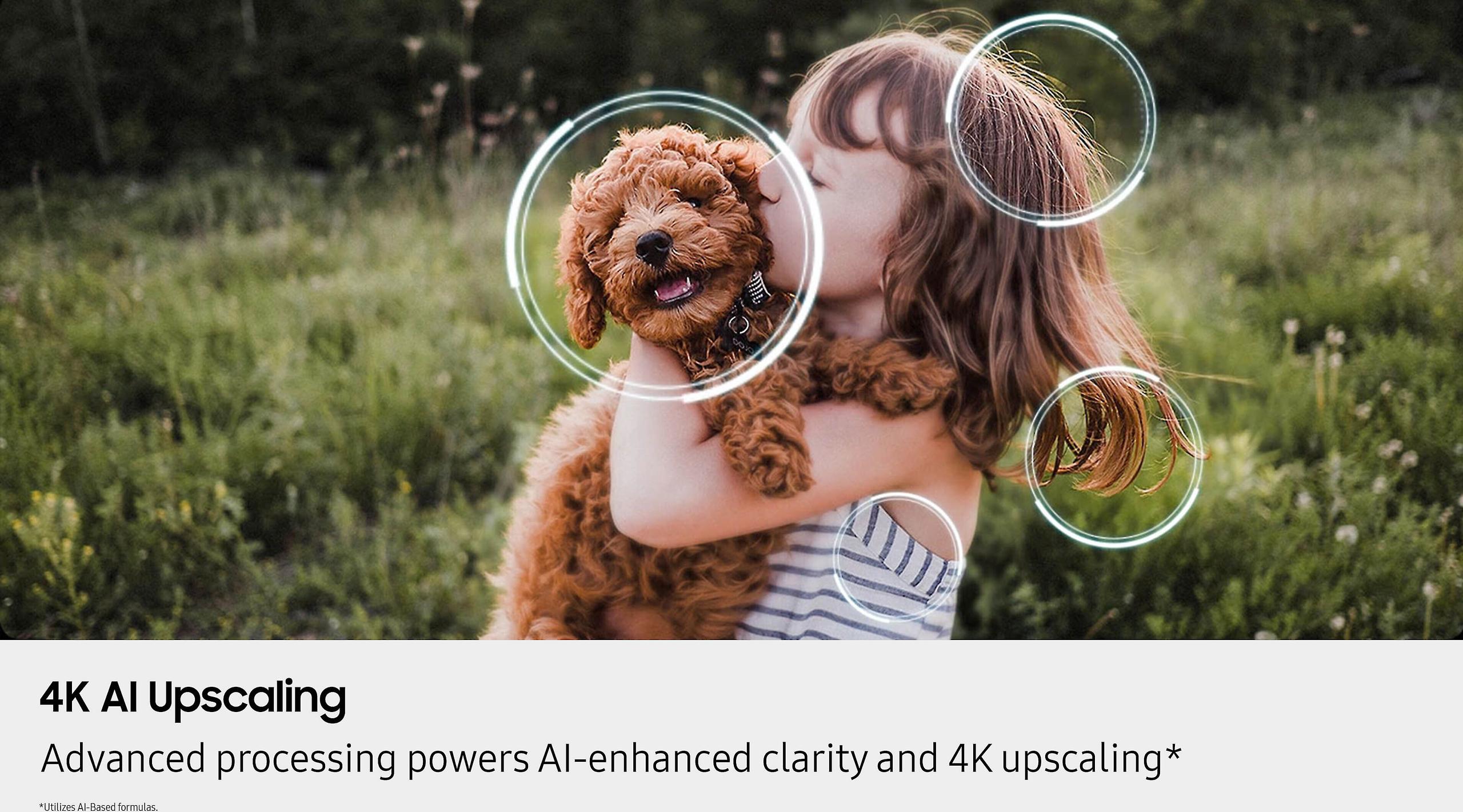
Both TVs excel at upscaling lower-resolution content to 4K. If you're watching older movies or shows that weren't filmed in 4K, both processors do an excellent job making them look sharper and more detailed than they actually are.
Here's where the comparison gets really interesting—the QN70F actually offers better gaming performance than the QN90D, despite being the lower-tier model.
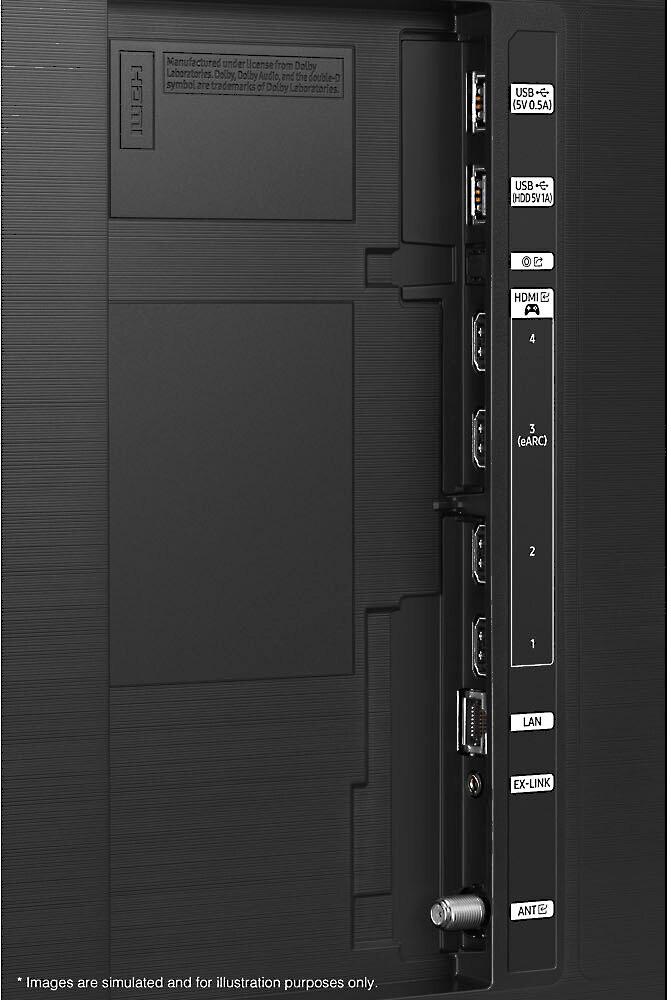
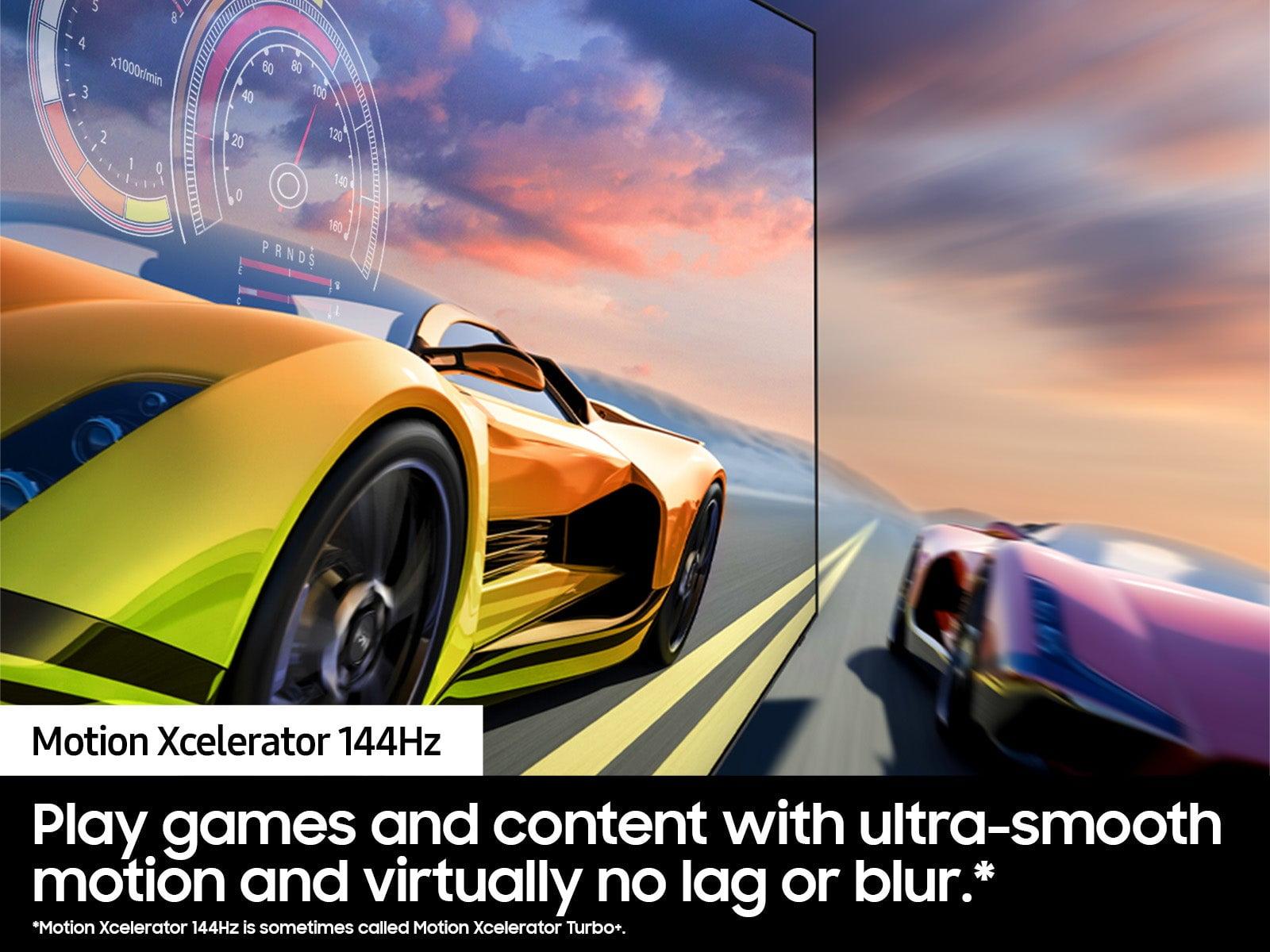
The QN70F supports gaming at up to 4K 144Hz, which means it can display 144 frames per second at full 4K resolution. For PC gamers with high-end graphics cards, this provides incredibly smooth motion. It also supports AMD FreeSync Premium Pro, which eliminates screen tearing and stuttering.
The QN90D supports 4K 120Hz gaming, which is still excellent, but there's a significant problem: it loses a lot of HDR brightness when you enable Game Mode. This means your games will look noticeably dimmer and less vibrant than they should. The TV also suffers from slower pixel response times in Game Mode, leading to motion blur during fast-paced gaming.
For serious gamers, especially those with newer consoles or high-end PCs, the QN70F is actually the better choice despite its other limitations. This is unusual—typically, higher-tier TVs perform better across all use cases.
Both TVs run Samsung's Tizen smart TV platform, which has improved significantly over the years. The interface is intuitive, and both TVs support all major streaming services like Netflix, Disney+, Amazon Prime Video, and Apple TV+.
The QN70F gets the latest 2025 version of Tizen along with Samsung Vision AI. These AI features include live translation of subtitles, which could be genuinely useful for international content, and scene identification that can provide information about what you're watching.
The QN90D runs the mature 2024 Tizen platform, which is proven and reliable but lacks the newest AI enhancements. Honestly, I prefer proven, stable software over experimental features that might not work consistently.
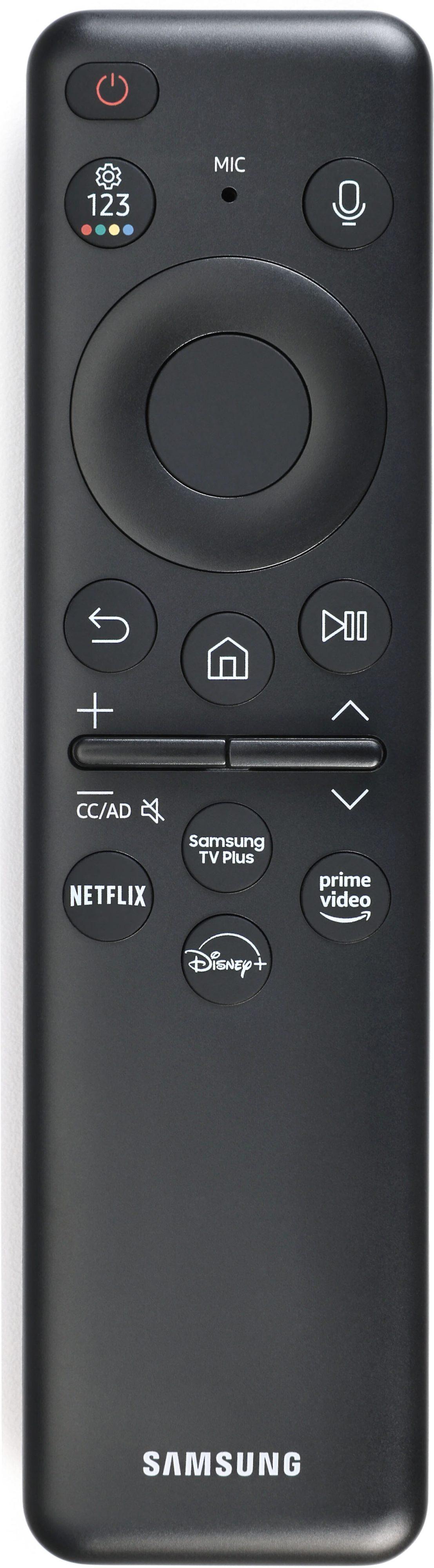
Both TVs support voice control through Samsung's Bixby, Amazon Alexa, and Google Assistant. They also work with Samsung's SmartThings ecosystem if you have other Samsung smart home devices.
This is another area where the QN90D pulls ahead. It features a 4.2.2 channel speaker system with 60 watts of power, supporting Dolby Atmos and Object Tracking Sound+. This means sound effects can appear to move across your screen, following the action. When a helicopter flies from left to right on screen, you'll hear it travel across your room.
The QN70F has a much more basic 2-channel, 20-watt speaker system with Object Tracking Sound Lite. It'll get the job done for casual viewing, but it's a significant step down from the QN90D's audio capabilities.
For home theater enthusiasts, this difference matters. The QN90D can create a more immersive experience without needing an external soundbar, though I'd still recommend a dedicated audio system for either TV if you're serious about sound quality.
If you're setting up a dedicated home theater or media room, the QN90D is clearly the better choice. Its superior contrast performance, excellent black levels, and better audio system make it much more suitable for dark-room viewing where picture quality differences are most apparent.
The full-array local dimming of the QN90D really shines in a dark environment. You'll see details in shadows that the QN70F simply can't reproduce, and bright highlights will have more impact against truly dark backgrounds.
For home theater use, the QN90D's higher peak brightness also helps with HDR content. Movies mastered for cinema viewing often have very bright highlights that require a capable display to reproduce properly.
At the time of writing, the pricing situation between these TVs creates an unusual value proposition. The QN90D, despite being a year older, offers significantly better fundamental picture quality for roughly the same price as the QN70F.
This happens occasionally in the TV market when manufacturers introduce lower-tier models at similar price points to previous-generation flagship models. It's similar to how you might find a previous-year luxury car model for the same price as a new base model.
The QN90D was designed to compete with premium OLED TVs and other flagship models. It has the hardware and engineering of a premium product. The QN70F was designed to hit a specific price point while still offering Neo QLED technology—compromises were made to achieve this goal.
Choose the QN90D if:
Choose the QN70F if:
Having tested both approaches extensively, I believe the QN90D offers better value for most people at current pricing. The picture quality improvements from full-array local dimming are substantial and will be noticeable to anyone who watches movies or TV shows with varied lighting conditions.
The only scenarios where I'd recommend the QN70F are if you're primarily a gamer who wants 144Hz support, if you watch TV exclusively in very bright rooms, or if you specifically want the latest AI features and don't mind trading picture quality for them.
For a home theater setup, the QN90D is clearly superior. The contrast performance, brightness capabilities, and better audio system make it much more suitable for creating an immersive viewing experience.
The TV market doesn't often give us clear-cut value decisions like this. Usually, newer means better across the board, but in this case, the older premium model offers substantially better performance for about the same price as the newer entry-level model. It's a reminder that understanding the technology behind the marketing names is crucial when making these purchasing decisions.
Remember that both of these are excellent TVs that will provide years of enjoyment. Your choice should ultimately depend on how and where you'll be using the TV most often. But if picture quality is important to you, the QN90D is the clear winner in this matchup.
| Samsung 65" QN70F Neo QLED 4K Vision AI Smart TV 2025 | Samsung 65" QN90D Series 4K Neo QLED Smart TV |
|---|---|
| Backlighting Technology - The most critical difference affecting picture quality | |
| Edge-lit Mini LED (no local dimming zones) | Full-array Mini LED with local dimming zones |
| Release Year - Impacts features and technology maturity | |
| 2025 (newest generation, entry-level Neo QLED) | 2024 (previous generation, premium flagship model) |
| Black Levels & Contrast - Essential for movie viewing and dark room performance | |
| Limited contrast, blacks appear gray due to edge-lighting | Excellent black levels with minimal blooming from full-array dimming |
| Peak HDR Brightness - Important for vivid HDR highlights and bright room viewing | |
| Good brightness but lower than QN90D | Outstanding brightness over 2,000 nits peak (1,000 nits sustained) |
| Gaming Performance - Critical for console and PC gamers | |
| Excellent: 4K 144Hz, no Game Mode brightness loss | Good: 4K 120Hz but loses HDR brightness in Game Mode |
| Audio System - Affects whether you need a separate soundbar | |
| Basic: 2CH, 20W, Object Tracking Sound Lite | Premium: 4.2.2CH, 60W, Dolby Atmos with Object Tracking Sound+ |
| Smart Features - Latest software vs proven reliability | |
| 2025 Tizen with Samsung Vision AI (Click to Search, Live Translate) | 2024 Tizen platform (mature and stable, no AI features) |
| Best Use Cases - Where each TV excels | |
| Bright rooms, high-refresh gaming, latest AI features, slim wall mounting | Dark rooms, home theaters, movie watching, premium audio experience |
| Value Proposition - Performance per dollar spent | |
| Entry-level Neo QLED with newest features at accessible price | Premium picture quality technology at similar cost to entry model |
The Samsung 65" QN90D Series has significantly better picture quality than the Samsung 65" QN70F. The QN90D uses full-array local dimming with Mini LEDs, allowing it to produce deeper blacks and better contrast. The QN70F uses edge-lit Mini LEDs without local dimming, which limits its contrast performance and makes blacks appear more gray than true black.
The main difference is their backlighting technology. The Samsung QN90D features full-array Mini LED backlighting with local dimming zones for precise brightness control, while the Samsung QN70F uses edge-lit Mini LED technology without local dimming. This fundamental difference dramatically impacts contrast, black levels, and overall picture quality.
The Samsung QN70F is actually better for gaming despite being the entry-level model. It supports 4K gaming at up to 144Hz and doesn't lose HDR brightness in Game Mode. The Samsung QN90D supports 4K 120Hz but suffers from reduced HDR brightness and slower pixel response times when Game Mode is enabled.
The Samsung QN90D is excellent for home theater use with its superior contrast, deep black levels, and premium 4.2.2 channel audio system with Dolby Atmos. The Samsung QN70F is less suitable for dark room viewing due to its limited contrast performance from edge-lit backlighting, though it works well in bright rooms.
The Samsung QN70F features the latest 2025 Tizen platform with Samsung Vision AI, including Click to Search, Live Translate, and actor identification. The Samsung QN90D runs the mature 2024 Tizen platform with proven reliability but lacks the newest AI features. Both support all major streaming services and voice assistants.
The Samsung QN90D gets significantly brighter, reaching over 2,000 nits peak brightness for impressive HDR highlights. The Samsung QN70F offers good brightness but cannot match the peak levels of the QN90D, making HDR content less impactful.
The Samsung QN90D has a much better audio system with 4.2.2 channels, 60W power output, and Object Tracking Sound+ with Dolby Atmos. The Samsung QN70F has a basic 2-channel, 20W system with Object Tracking Sound Lite. The difference is significant enough that the QN90D may not require an additional soundbar for many users.
Despite being older, the Samsung QN90D offers better value for most buyers due to its superior picture quality fundamentals at a similar price point. The Samsung QN70F provides good value as an entry point to Neo QLED technology, but the modest price difference makes the QN90D the better choice for picture quality.
Both TVs work well in bright rooms, but the Samsung QN90D performs better with its higher peak brightness. The Samsung QN70F is actually better suited to bright room viewing since its contrast limitations are less noticeable in well-lit environments compared to dark rooms.
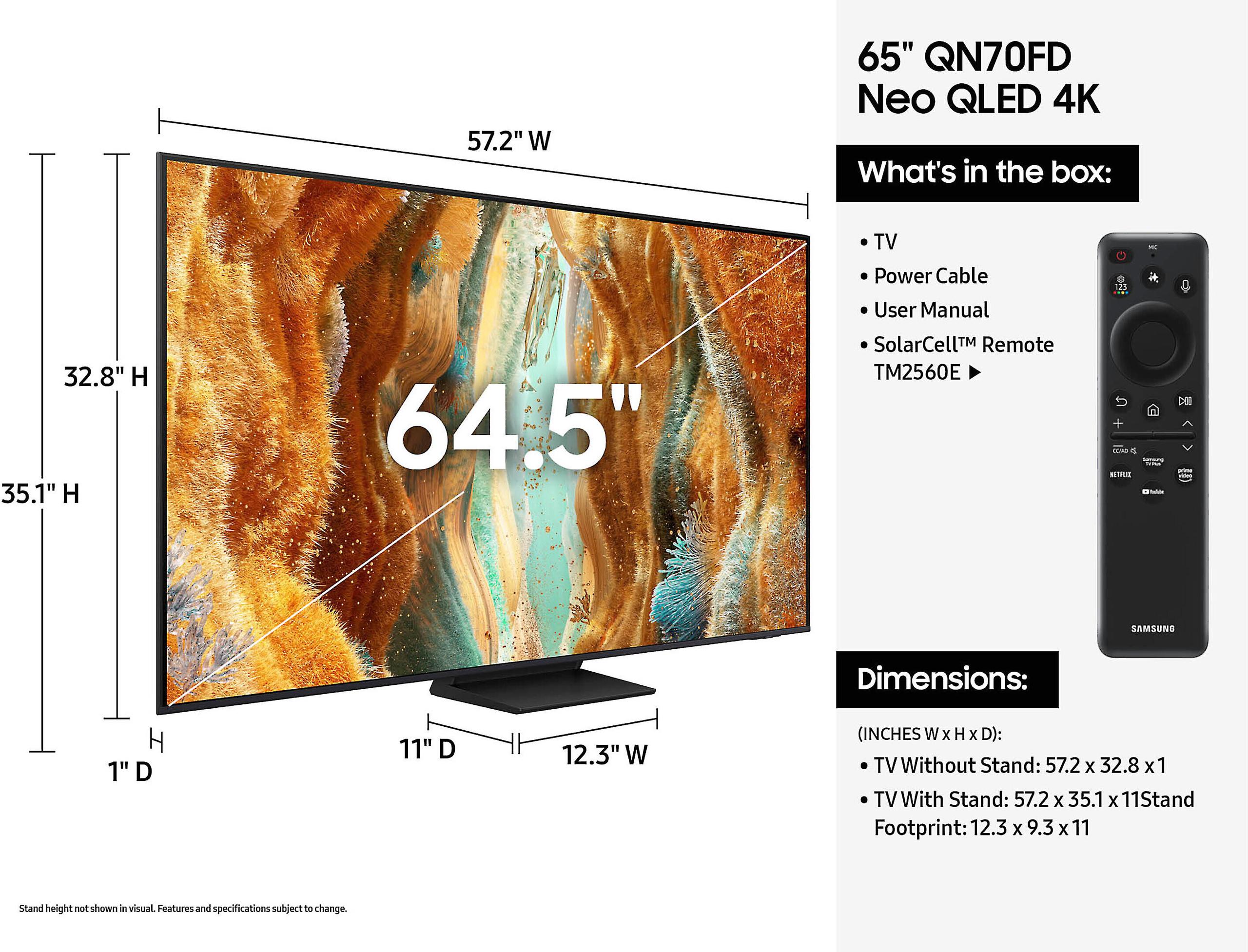
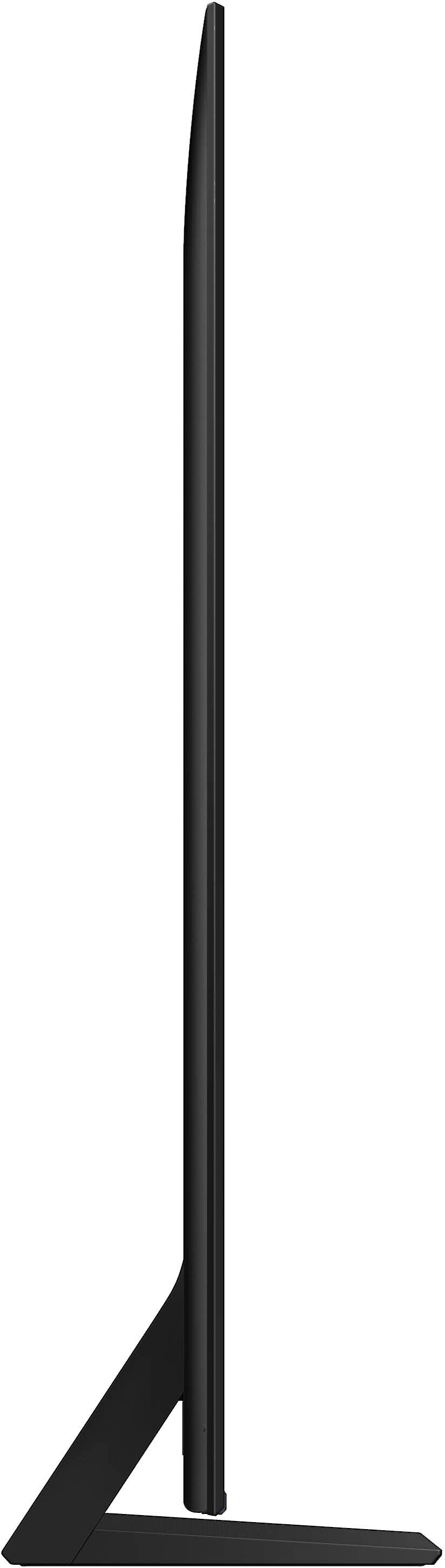
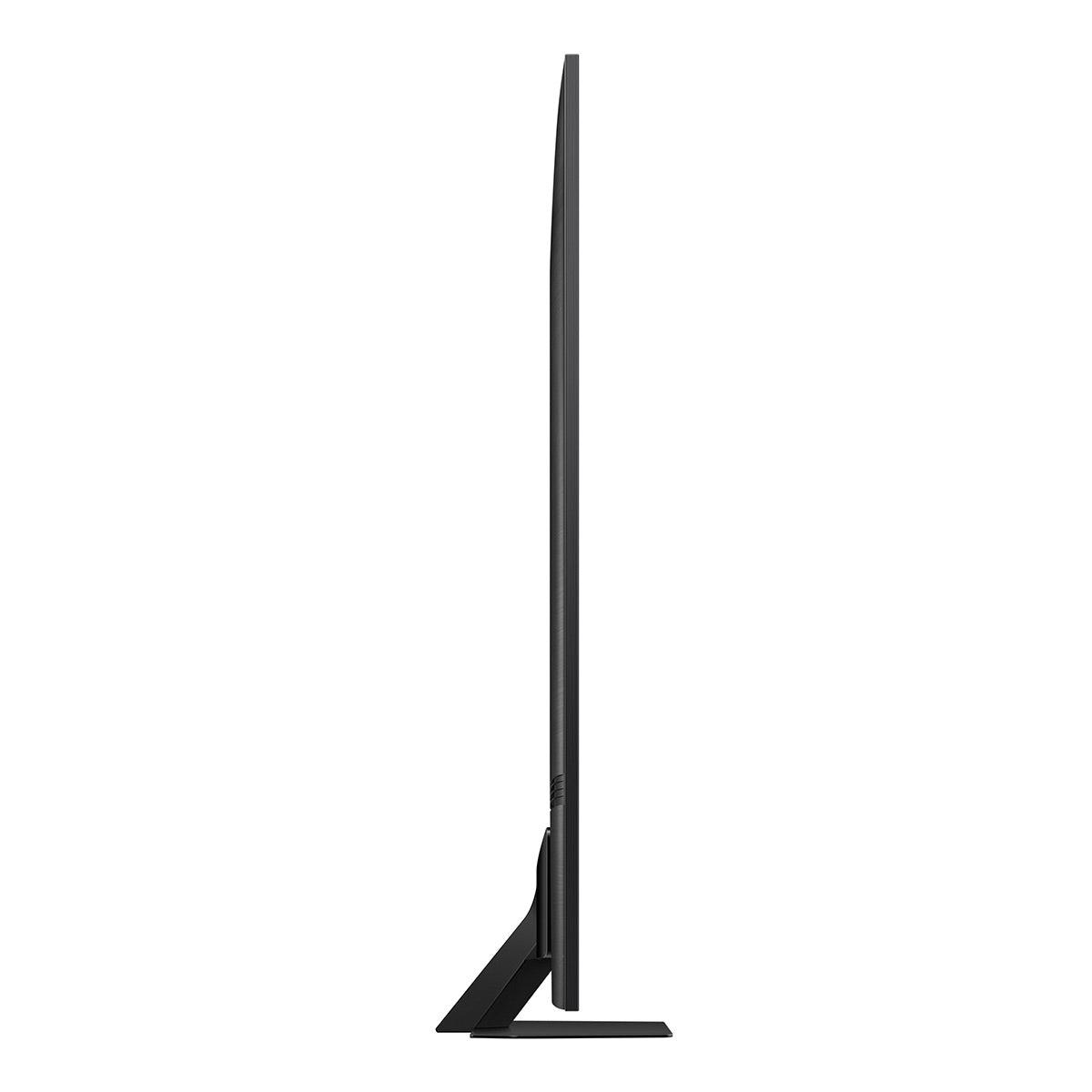
The Samsung QN70F offers the slimmest profile in Samsung's Neo QLED lineup due to its edge-lit design, making it ideal for wall mounting. The Samsung QN90D has a slightly thicker profile but represents premium build quality from Samsung's 2024 flagship tier.
For movies and TV shows, especially in dark rooms, the Samsung QN90D is the clear winner. Its full-array local dimming provides the contrast and black levels needed for cinematic viewing. The Samsung QN70F works better for casual viewing in bright rooms where its contrast limitations are less apparent.
The Samsung QN70F's main limitation is its edge-lit design preventing deep blacks and limiting contrast. The Samsung QN90D's primary weakness is losing HDR brightness in Game Mode, making it less ideal for HDR gaming. Both TVs lack Dolby Vision support, using Samsung's HDR10+ instead.
We've done our best to create useful and informative comparisons to help you decide what product to buy. Our research uses advanced automated methods to create this comparison and perfection is not possible - please contact us for corrections or questions. These are the sites we've researched in the creation of this article: rtings.com - youtube.com - wifihifi.com - samsung.com - samsung.com - samsung.com - samsung.com - flatpanelshd.com - news.samsung.com - bestbuy.com - tomsguide.com - abt.com - youtube.com - youtube.com - rtings.com - samsung.com - samsung.com - standardtvandappliance.com - gerhardsappliance.com - bestbuy.com - image-us.samsung.com - youtube.com - images.samsung.com

Privacy Policy
Terms and Conditions - Affiliate Policy
Home Security
© Copyright 2008-2026.
11816 Inwood Rd #1211, Dallas, TX 75244