

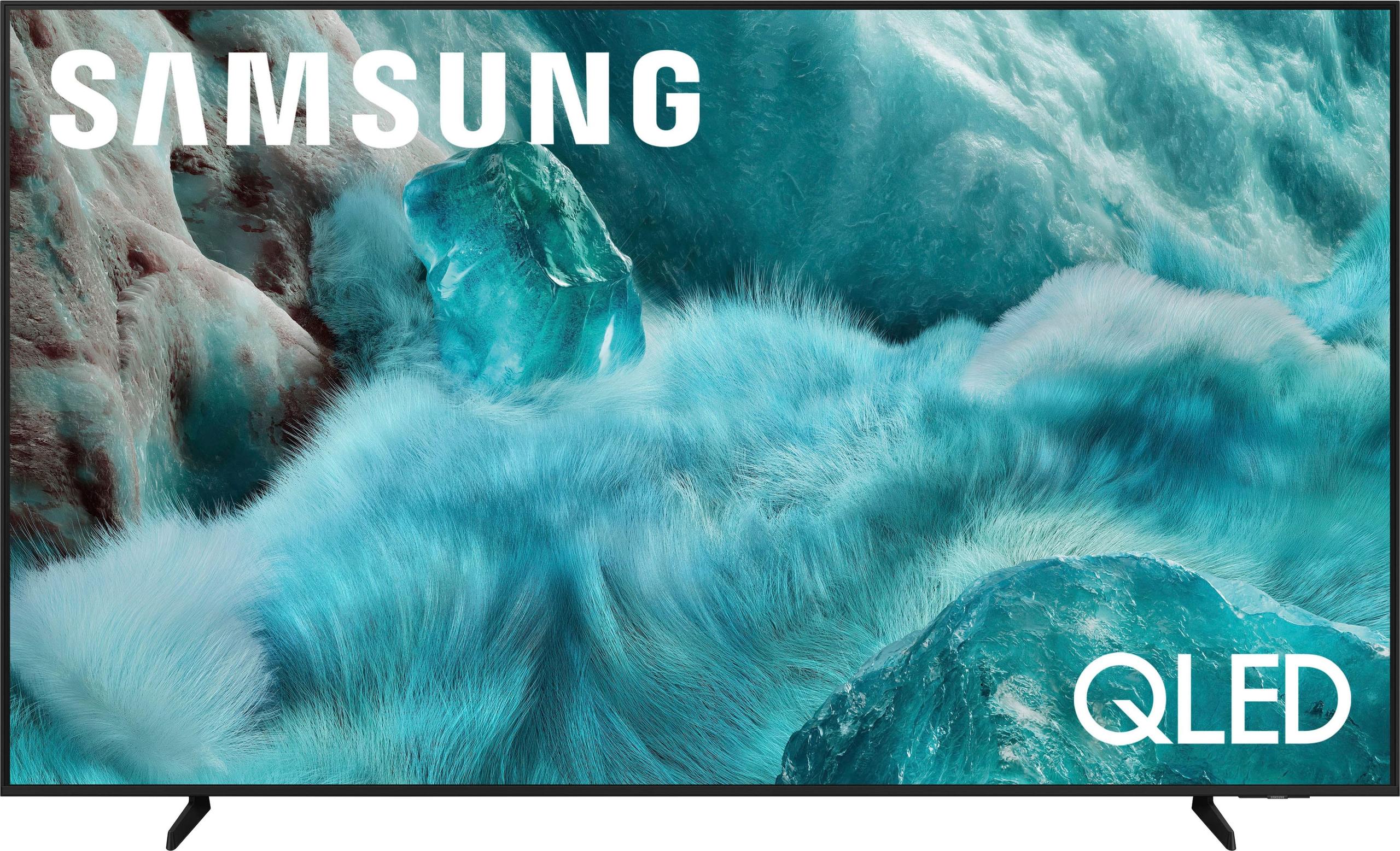
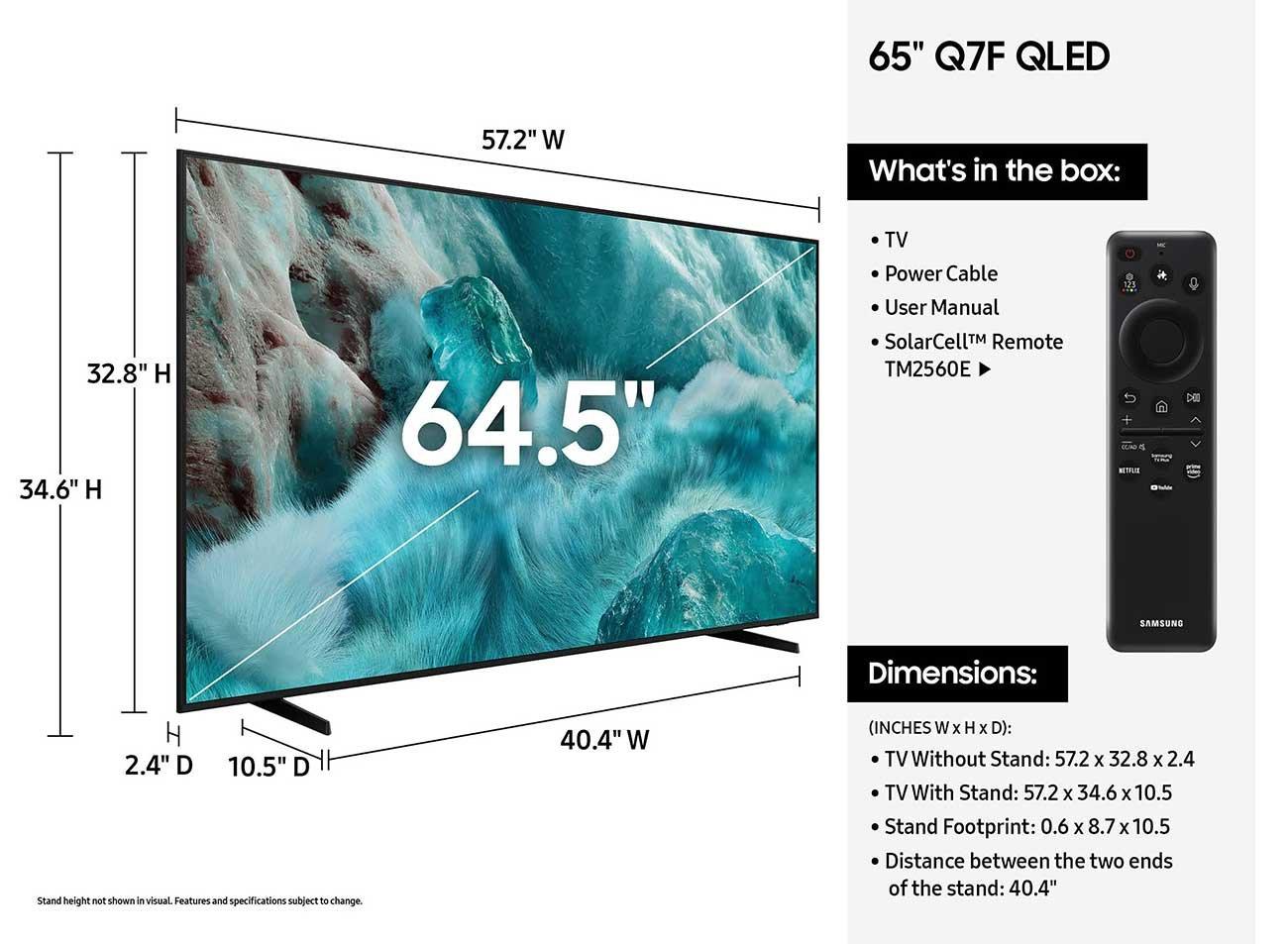

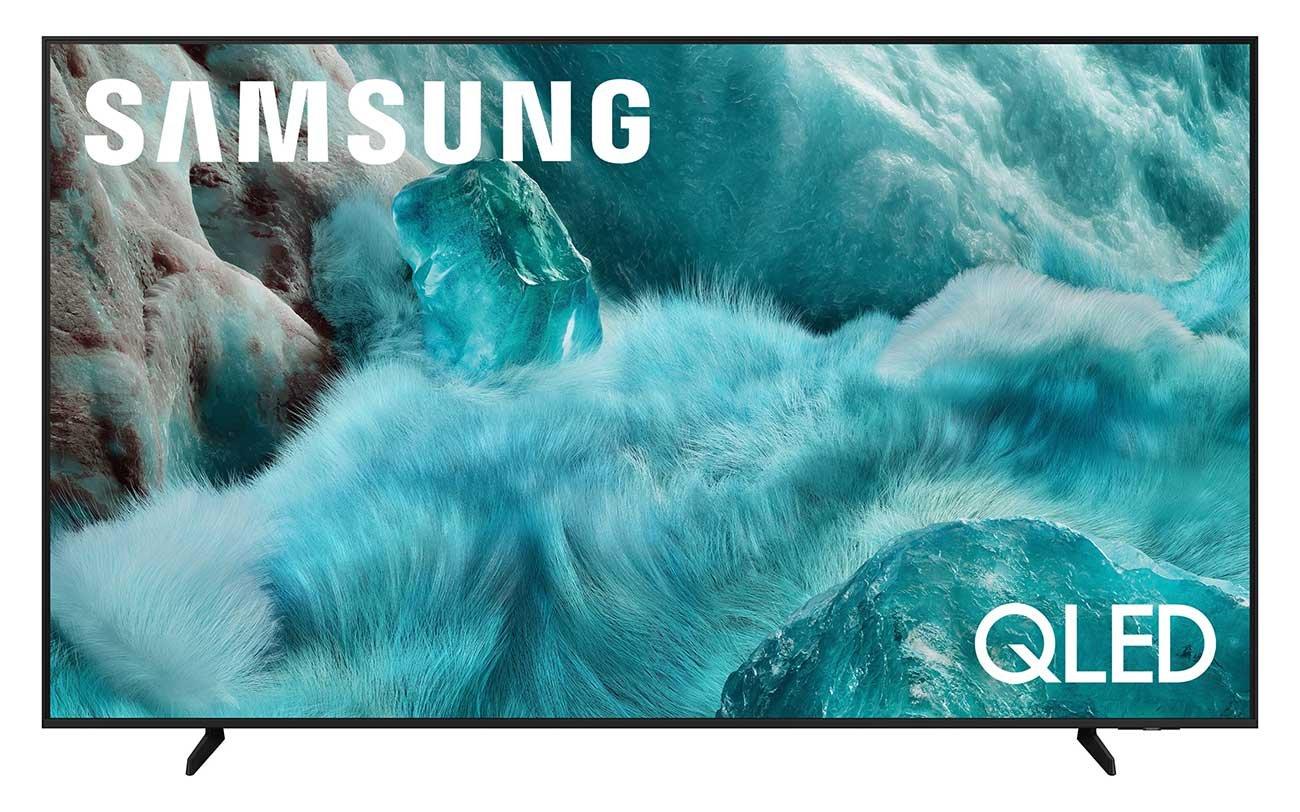
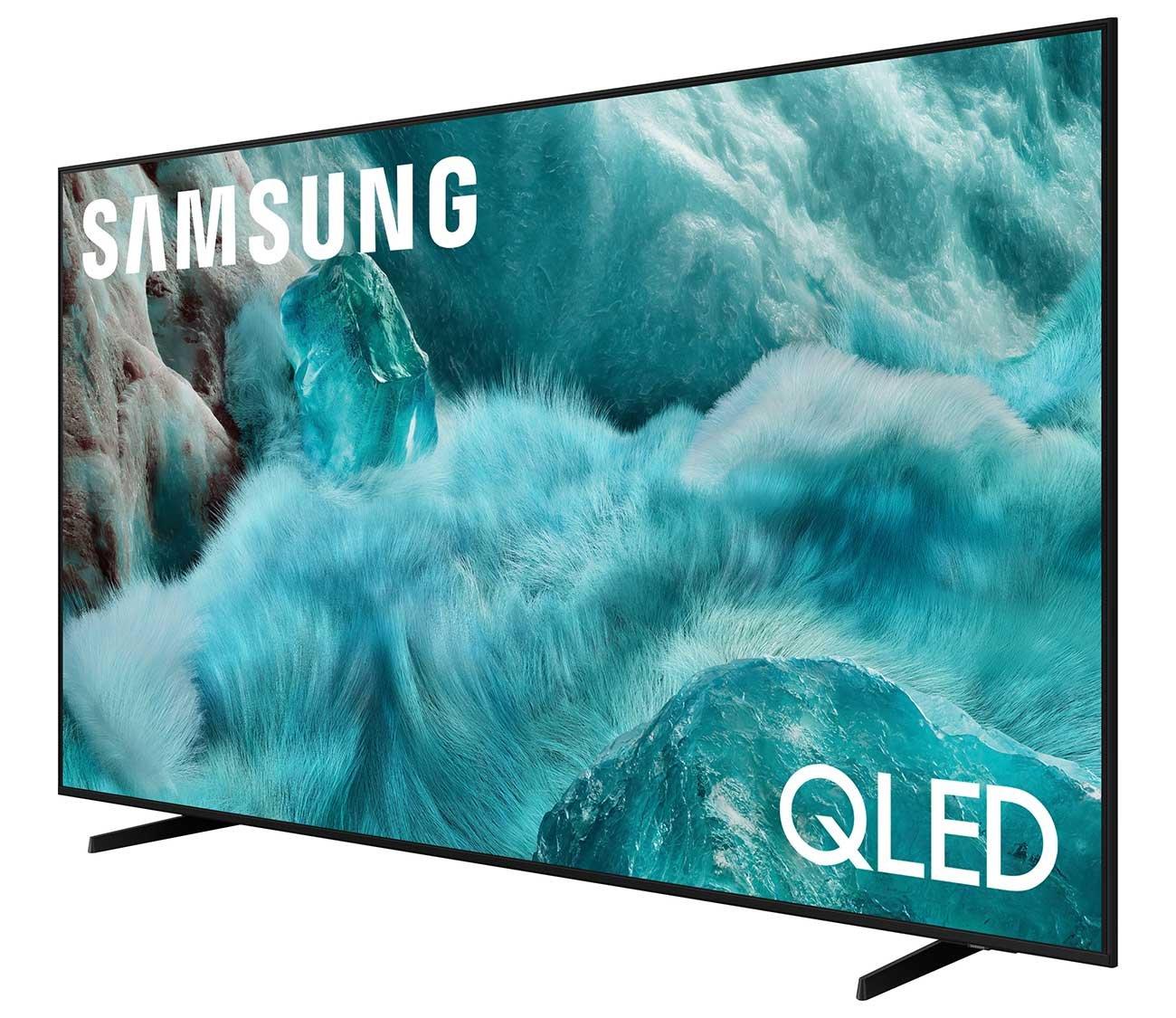
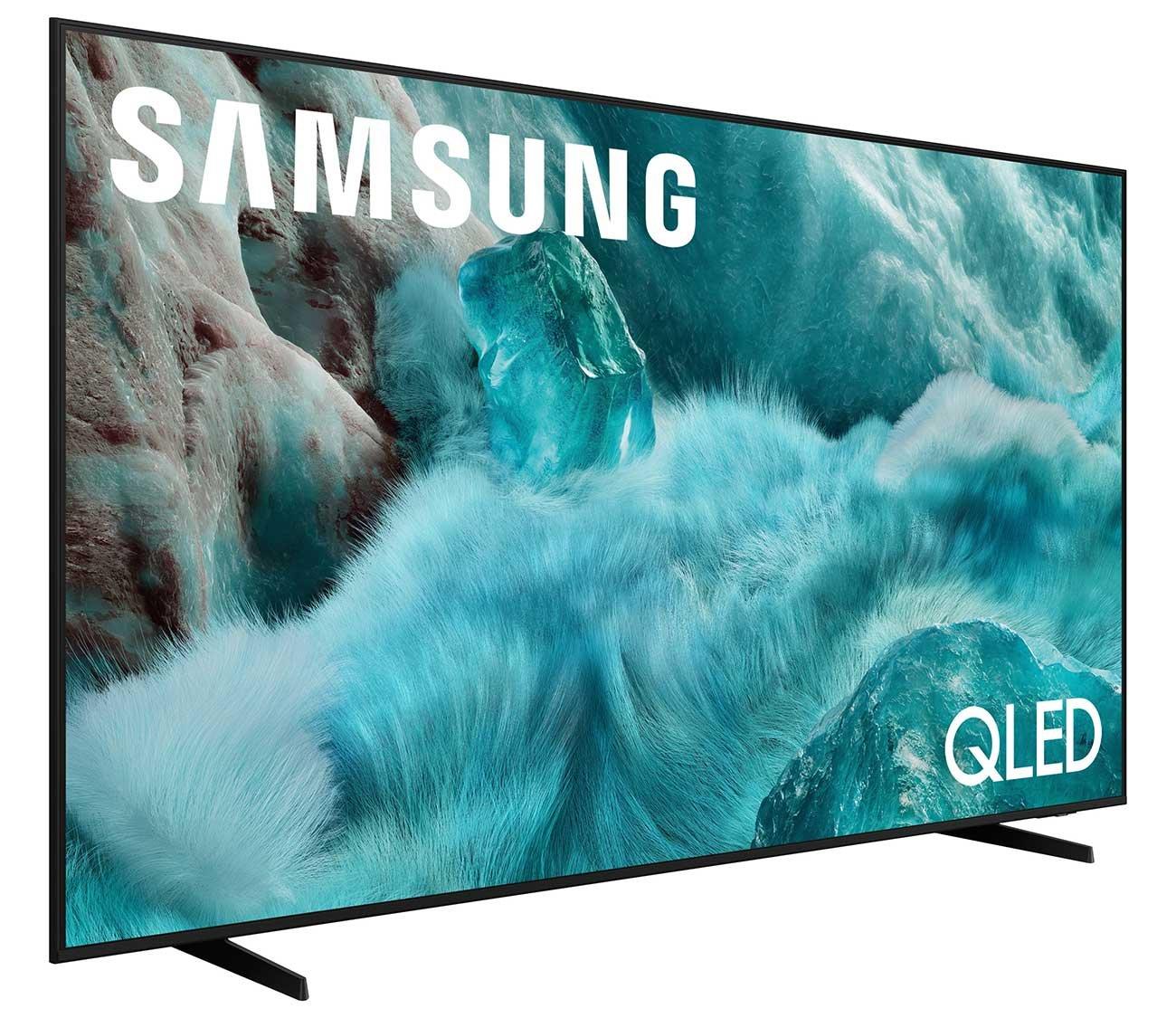


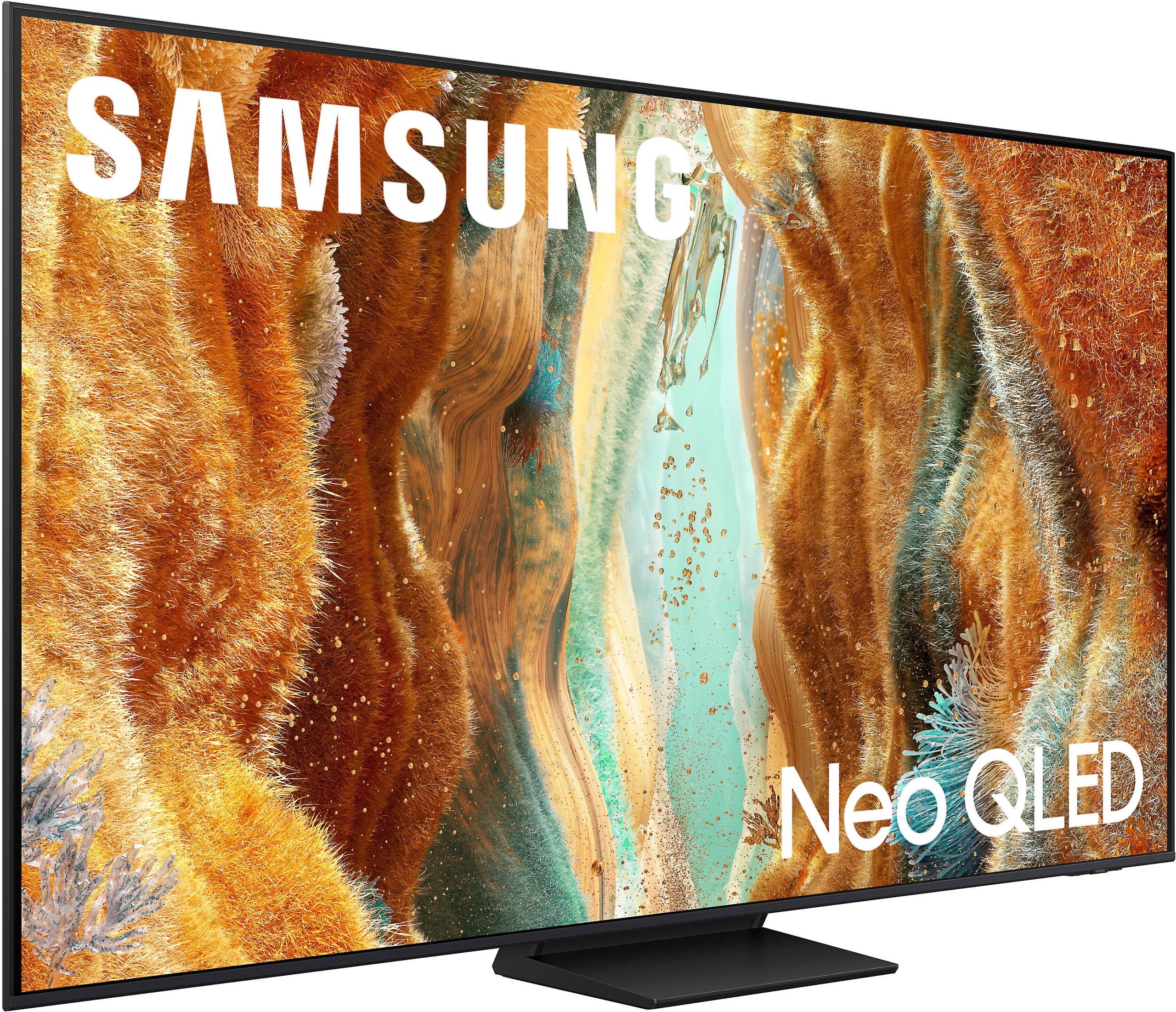
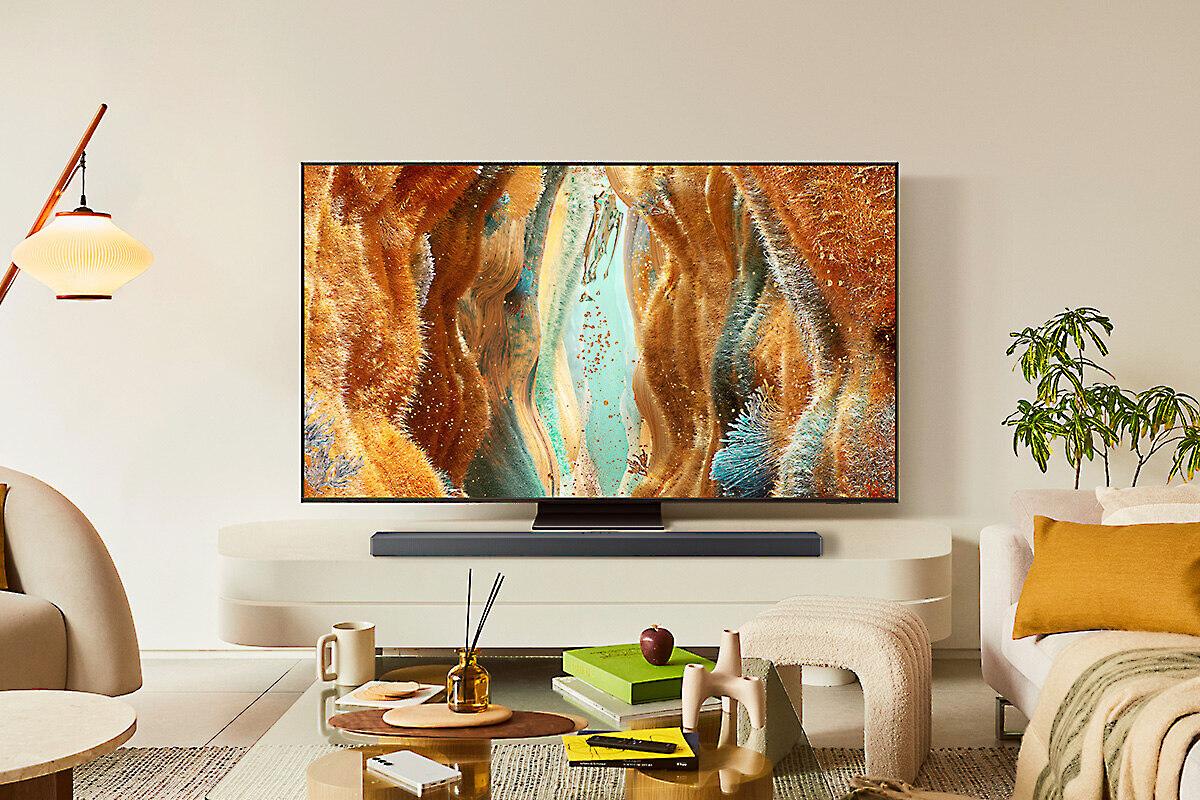

When shopping for a 65-inch 4K TV, you might assume that newer always means more expensive. But Samsung's 2025 lineup turns that assumption upside down. The Samsung QN70F Neo QLED actually costs less than the Samsung Q7F QLED while offering more advanced display technology. This unusual pricing situation creates a fascinating comparison that could save you money while getting better performance.
Both TVs represent Samsung's smart TV philosophy for 2025, featuring their new Vision AI technology and comprehensive streaming capabilities. However, they take fundamentally different approaches to creating the picture on your screen, and these differences matter more than you might expect.
Before diving into specifics, it's helpful to understand what makes these TVs tick. Modern TVs create images by shining light through liquid crystal panels, but the magic happens in how that light is controlled and colored.
Traditional LED TVs place lights around the edges or across the back of the screen. QLED technology, found in the Q7F, adds a layer of quantum dots—microscopic particles that convert blue LED light into precise red and green colors. This creates more accurate, vibrant colors than standard LED TVs.
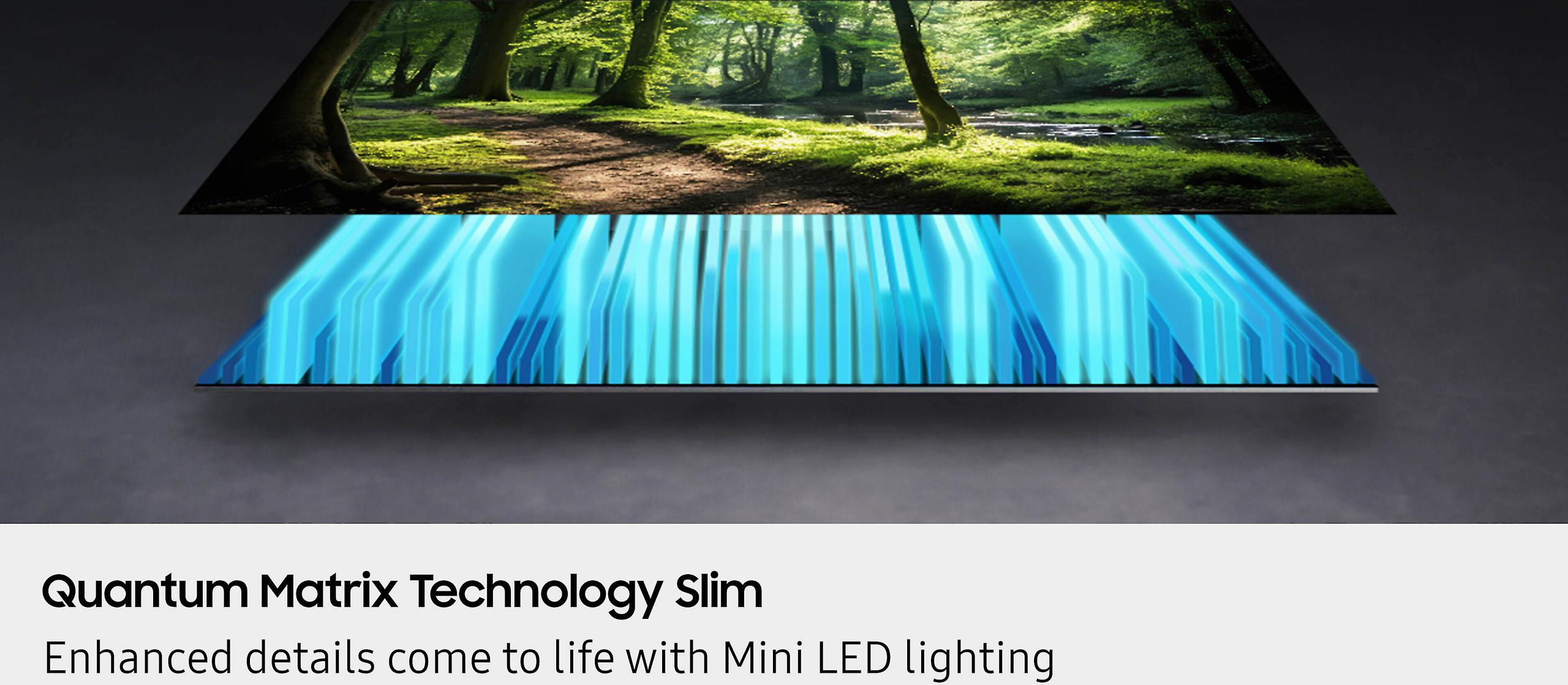
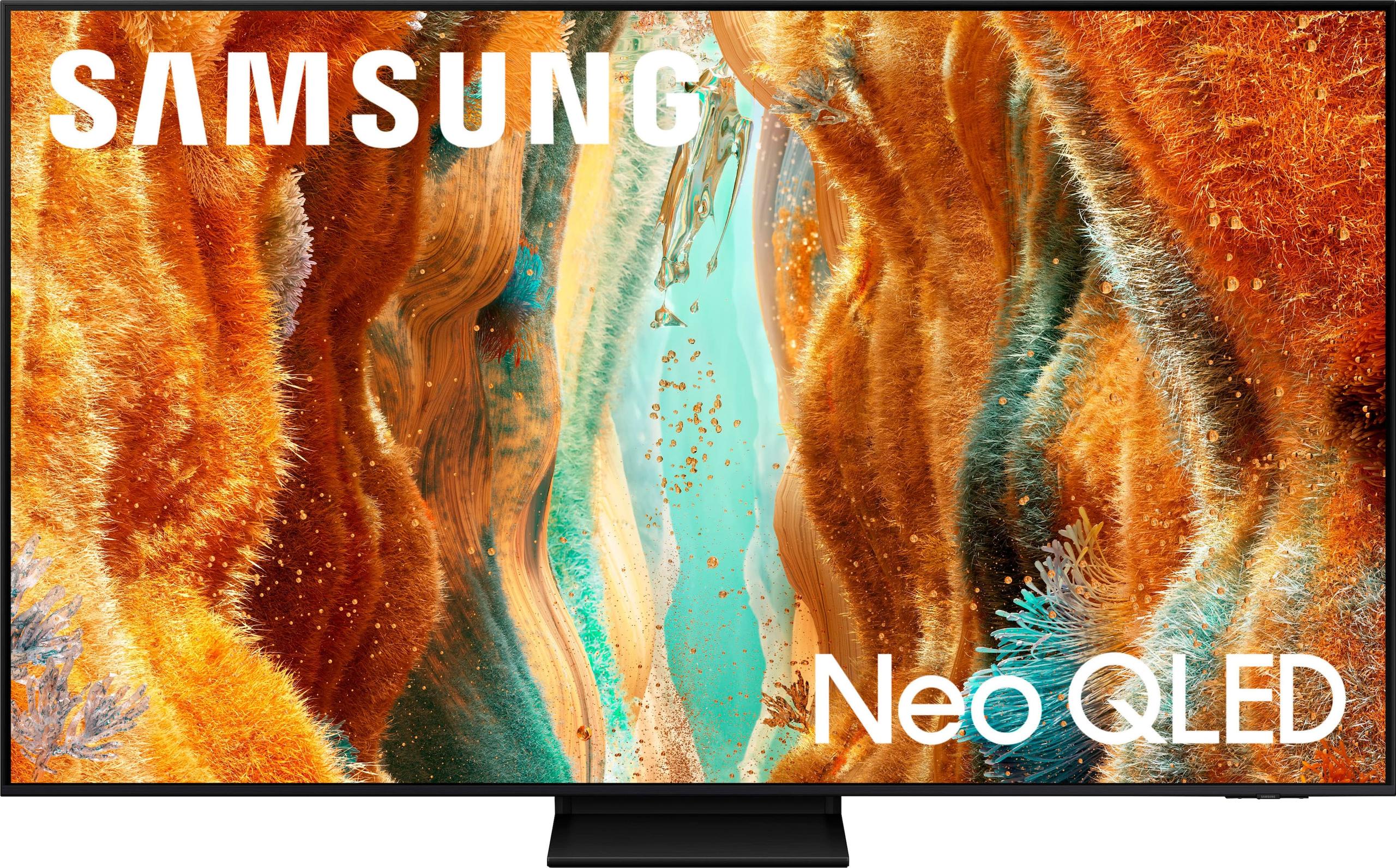
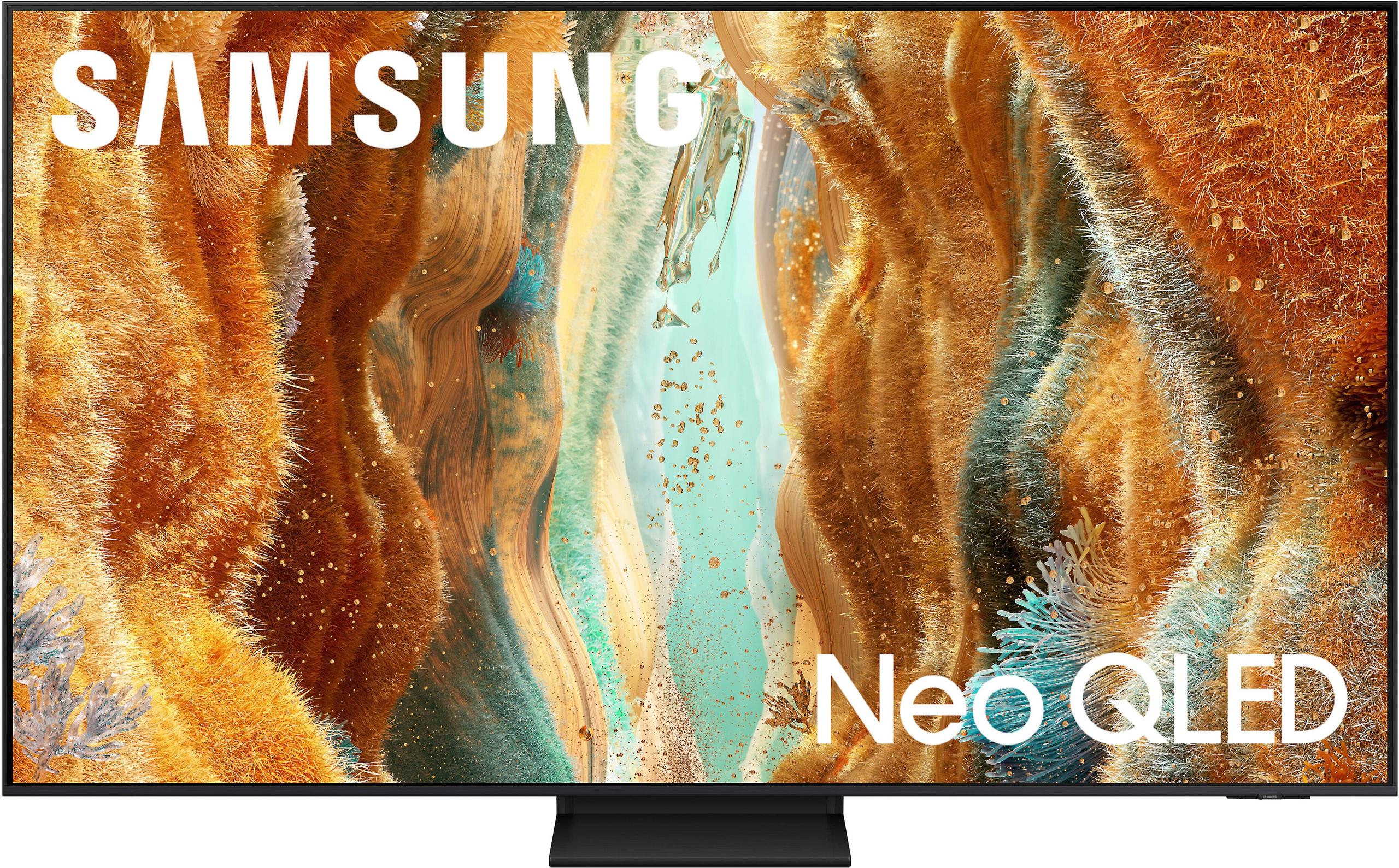
Neo QLED technology in the QN70F takes this further by using Mini LEDs—LEDs that are significantly smaller than traditional ones. Think of it like the difference between painting with a house brush versus a fine art brush. The smaller LEDs allow for much more precise control over which parts of the screen are bright or dark, creating better contrast and more realistic images.
The Q7F's traditional QLED approach has been Samsung's bread and butter for years. It uses quantum dots with standard LED backlighting to create vibrant colors and decent brightness levels. Our research shows this technology delivers a 4500:1 contrast ratio with 500 cd/m² brightness—solid numbers that produce good picture quality for most content.
However, the QN70F's Neo QLED implementation represents a generational leap forward. The Mini LED backlighting system provides what Samsung calls "Quantum Matrix Technology Slim." Despite the marketing name, this translates to real-world benefits: darker blacks, brighter highlights, and less light bleeding around bright objects on dark backgrounds.
This difference becomes most apparent when watching movies with dramatic lighting—think scenes with bright explosions against dark skies, or characters silhouetted against bright windows. The QN70F maintains detail in both the bright and dark areas simultaneously, while traditional QLED displays often sacrifice one for the other.
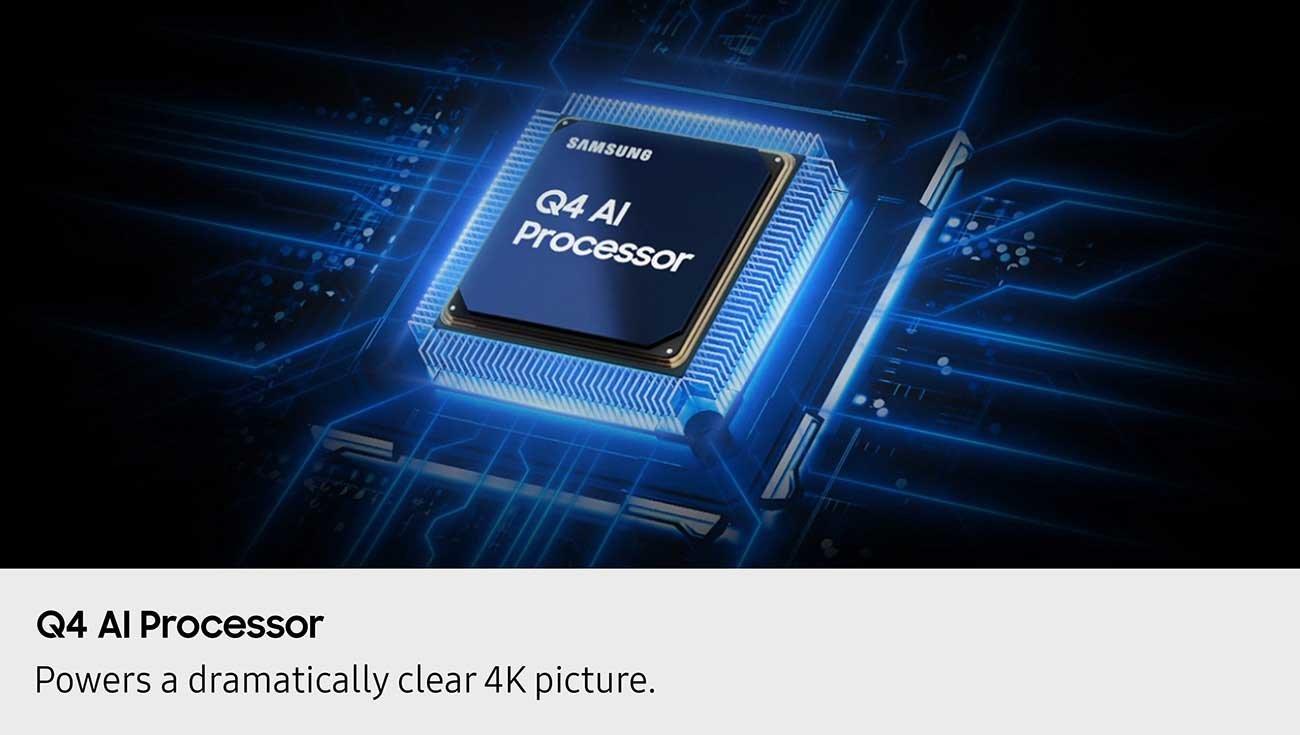
Both TVs feature Samsung's Vision AI technology, but they implement it through different processors. The Q7F uses Samsung's Q4 AI processor, which handles basic upscaling and image optimization. It's competent for standard viewing but represents last-generation processing power.
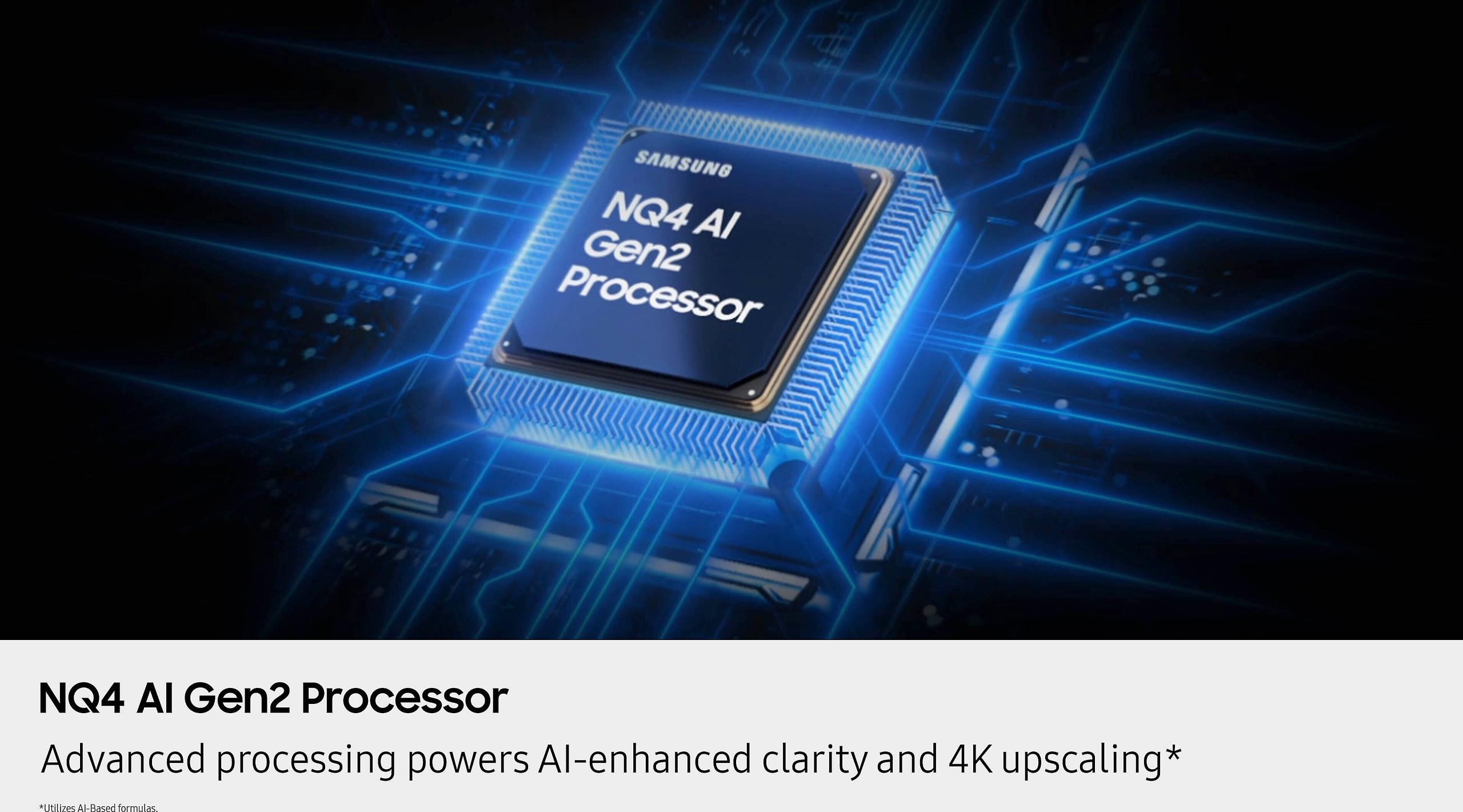
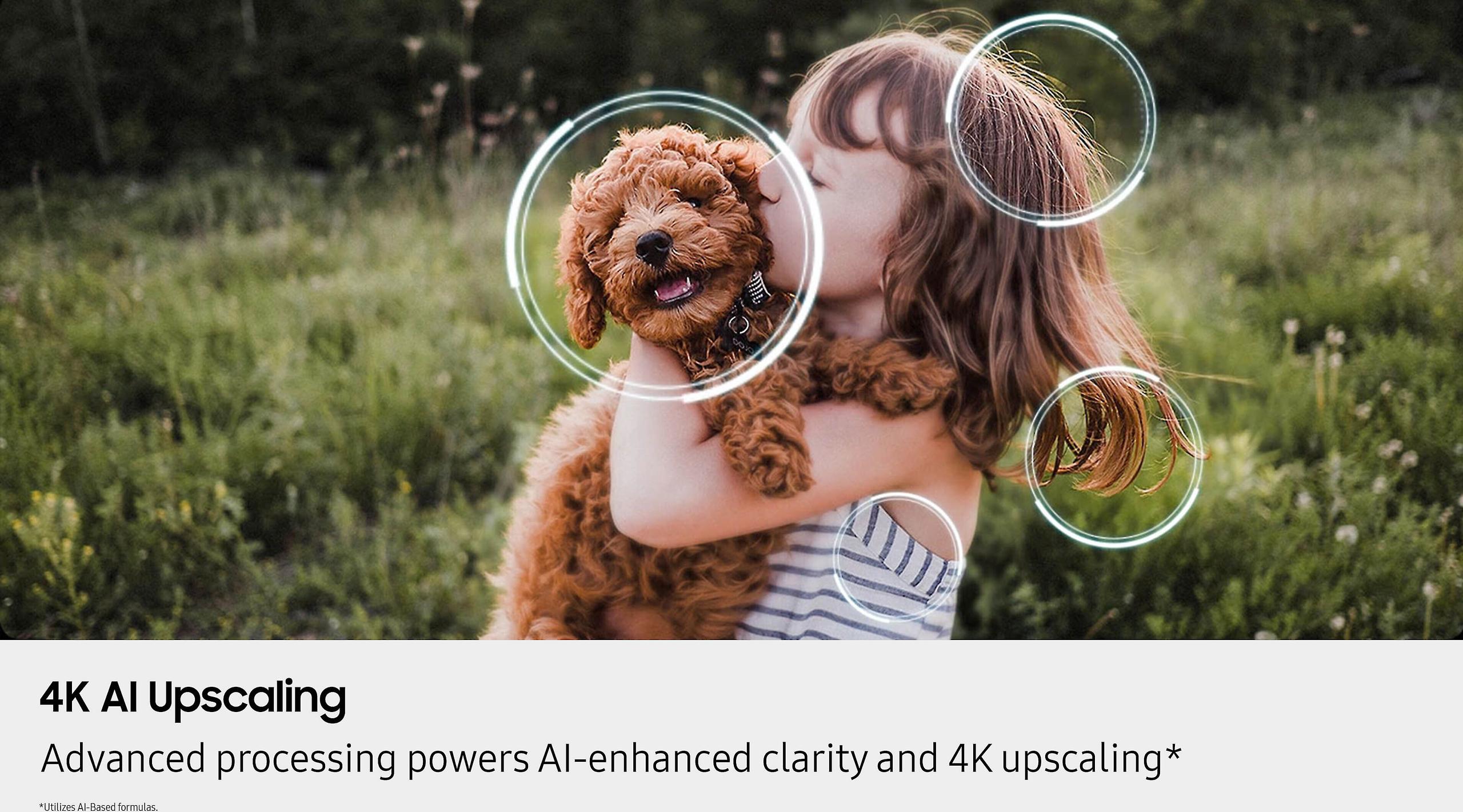
The QN70F's NQ4 AI Gen2 processor brings significantly more intelligence to the table. Its 4K AI upscaling analyzes content in real-time, identifying whether you're watching a nature documentary, sports game, or animated movie, then optimizing the picture accordingly. The Real Depth Enhancer feature creates a sense of three-dimensional depth by increasing contrast in the foreground while leaving backgrounds unchanged.
For practical viewing, this means the QN70F makes lower-resolution content from streaming services, cable TV, or older movies look noticeably sharper and more detailed when upscaled to your 4K screen.
If gaming matters to you at all, the performance difference between these TVs becomes dramatic. The Q7F operates at 60Hz, which was perfectly adequate a few years ago but now feels limiting with current-generation gaming consoles and high-end graphics cards.
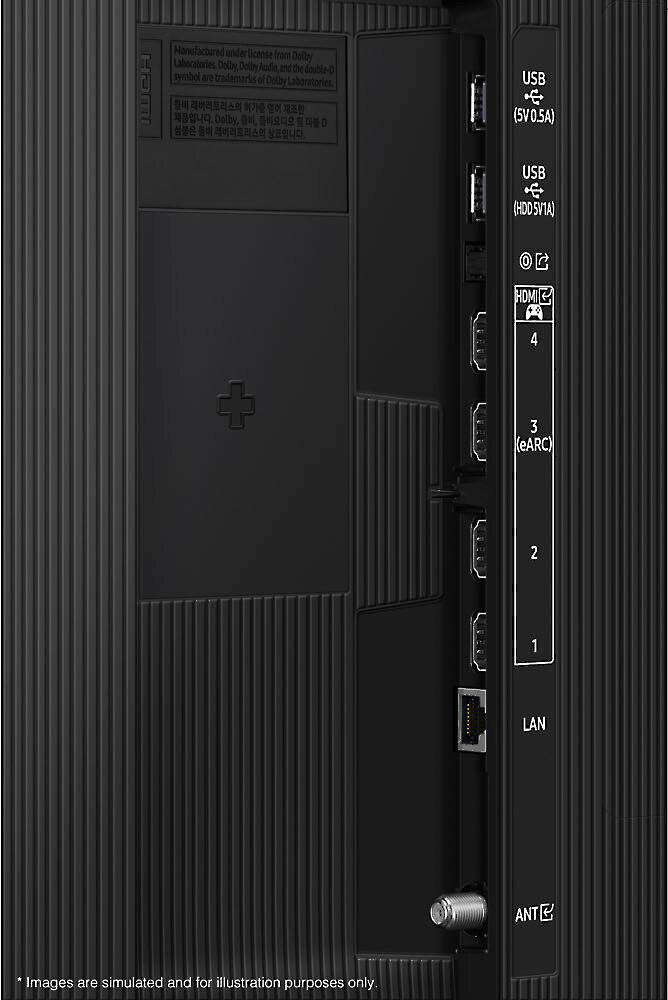
The QN70F delivers a native 100Hz panel that can handle up to 144Hz refresh rates—crucial for smooth gaming on PlayStation 5, Xbox Series X, or gaming PCs. More importantly, it includes four HDMI 2.1 ports versus the Q7F's three standard HDMI inputs.
HDMI 2.1 support means the QN70F can handle 4K gaming at high refresh rates without compression, supports Variable Refresh Rate (VRR) to eliminate screen tearing, and includes Auto Low Latency Mode (ALLM) for responsive gaming. The inclusion of AMD FreeSync Premium Pro technology further reduces stuttering and input lag.
For context, input lag—the delay between pressing a button and seeing the action on screen—can make the difference between winning and losing in competitive games. Our evaluation of user reviews consistently shows the QN70F delivers superior gaming performance that justifies its choice for anyone who games regularly.
TV audio often gets overlooked until you're straining to hear dialogue over background music or explosions. Both models include Samsung's Q-Symphony technology, which allows them to work seamlessly with Samsung soundbars, but their built-in audio differs significantly.
The Q7F includes basic audio processing with standard TV speakers. It's functional but unremarkable—you'll hear everything clearly in quiet rooms but may struggle with complex audio mixes.
The QN70F features a 20-watt, 2-channel system with Object Tracking Sound Lite, which attempts to move audio around the screen to match on-screen action. More practically useful is the Active Voice Amplifier Pro, which automatically boosts dialogue volume when it detects background noise in your room. The Adaptive Sound Pro feature analyzes content type and optimizes audio accordingly—louder, clearer sound for sports, enhanced dialogue for dramas, and fuller sound for music content.
For home theater use, both TVs will benefit from external audio solutions, but the QN70F's superior processing means it works better with high-quality soundbars and provides more satisfying built-in audio for casual viewing.
Samsung's Vision AI represents their 2025 push toward more intelligent TV interfaces. Both models include the same core Vision AI features: Click to Search for instant information about what's on screen, actor identification, content recommendations, and Live Translate for real-time subtitle translations.
However, the QN70F's more powerful processor implements these features more smoothly. The AI Mode provides quick access to adaptive picture and sound settings that adjust based on your room's lighting and the content you're watching. Our research into user experiences suggests the QN70F responds more quickly to voice commands and provides more accurate content recommendations.
Both run Samsung's Tizen operating system with access to all major streaming services, Samsung TV Plus free channels, and comprehensive smart home integration. The user experience feels nearly identical for basic functions, but power users will appreciate the QN70F's faster processing when switching between apps or conducting multiple tasks.
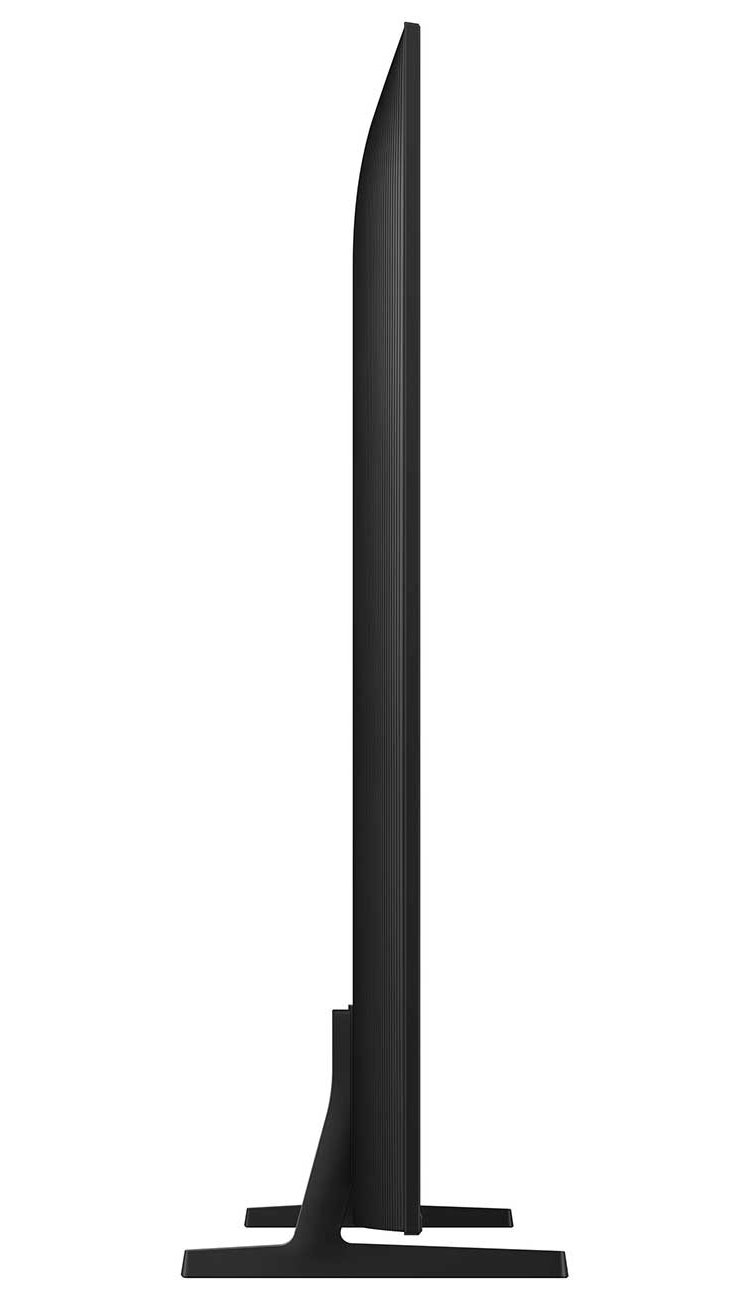
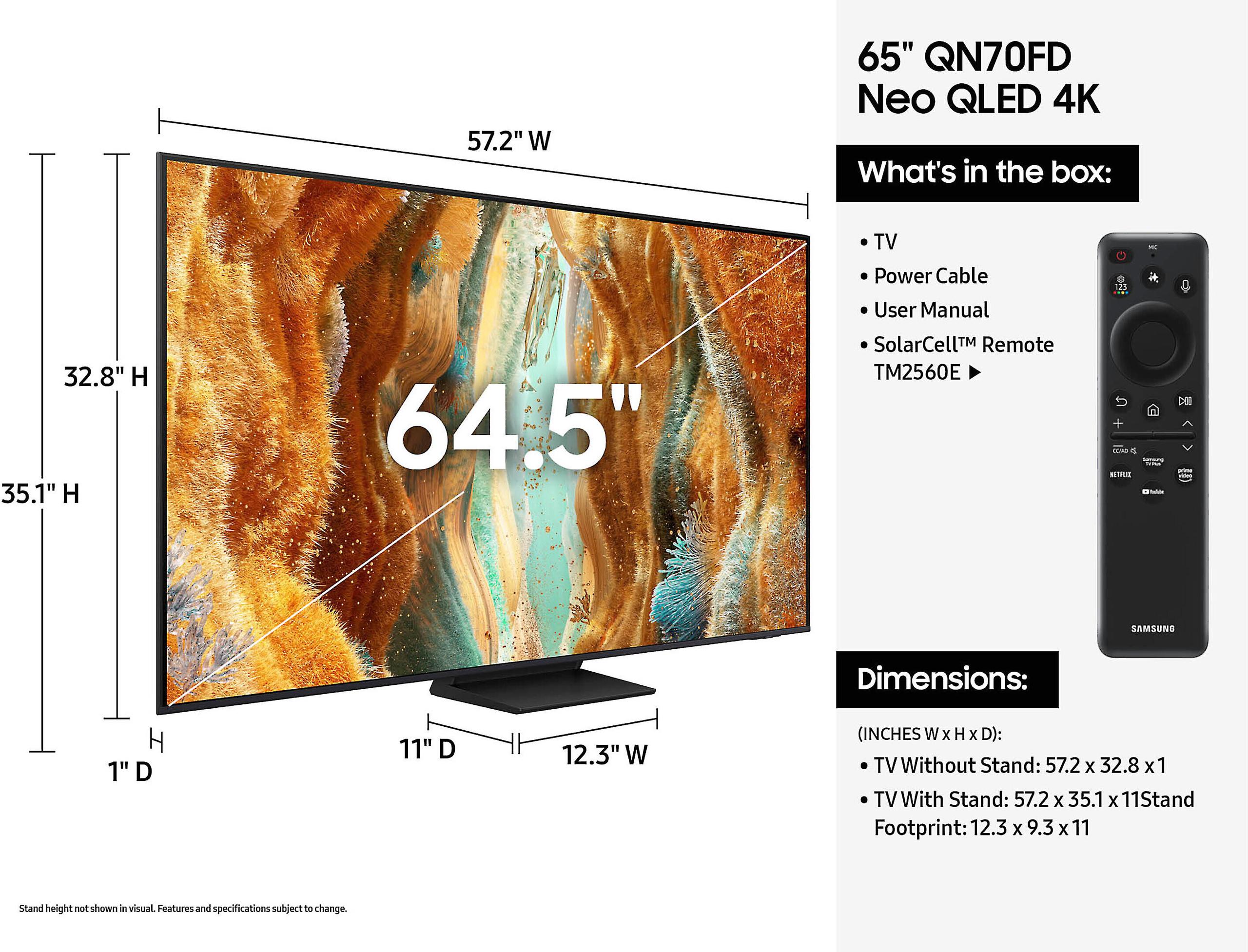
The most visually striking difference between these TVs is their physical design. The Q7F maintains a traditional TV profile at 10.5 inches deep with its stand, weighing 37.7 pounds. It's a substantial piece of furniture that requires adequate cabinet space or a standard TV wall mount.
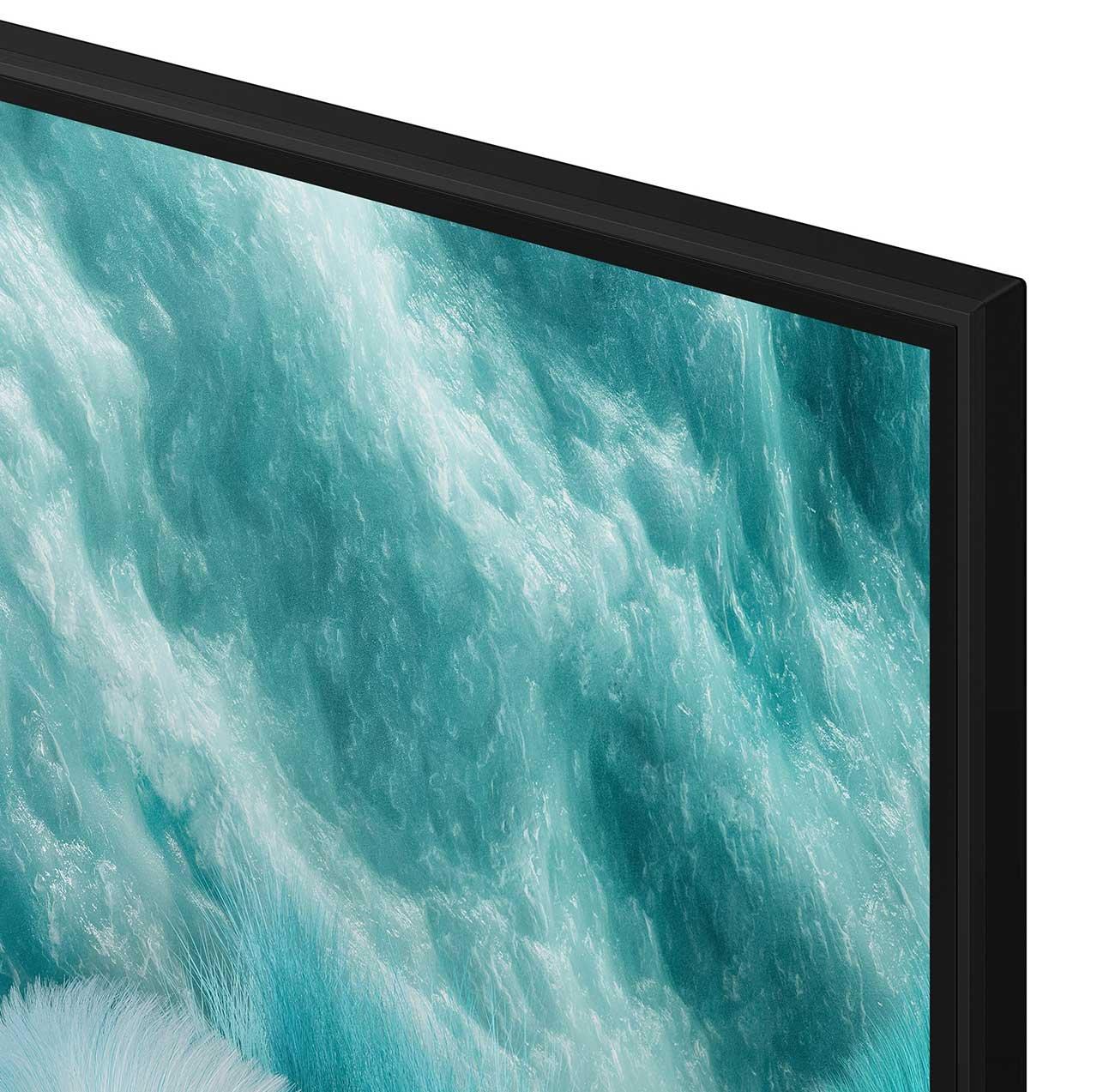
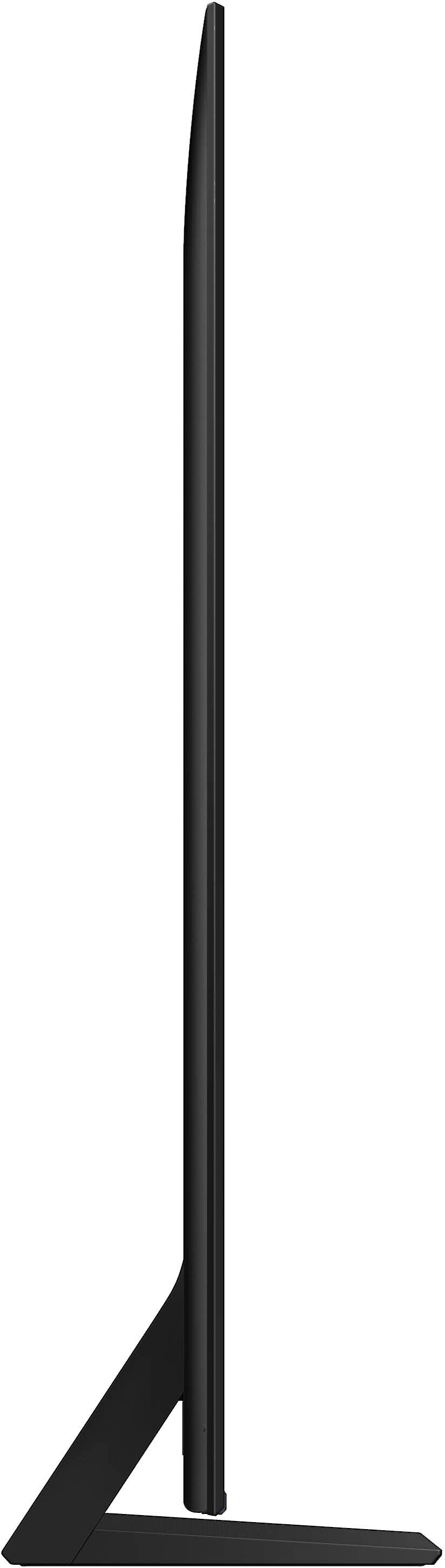
The QN70F's ultra-slim design measures just over one inch deep—remarkable for a 65-inch display. This achievement comes through the edge-lit Mini LED system, where LEDs are placed along the bottom edge rather than across the entire back panel. The result is a TV that appears to float on the wall when mounted and takes up minimal space in any room.
This design difference matters beyond aesthetics. The ultra-slim profile makes the QN70F ideal for modern living spaces where the TV should blend into the decor rather than dominate it. However, the edge-lit system historically raises questions about long-term durability compared to full-array backlighting systems.
At the time of writing, the pricing relationship between these TVs defies conventional wisdom. The QN70F Neo QLED costs significantly less than the Q7F QLED while delivering superior display technology, better gaming performance, and more advanced processing.
This pricing anomaly likely reflects Samsung's strategy to establish Neo QLED technology in the mainstream market while moving away from traditional QLED production. For consumers, it creates an exceptional value opportunity that may not persist as market dynamics change.
The Q7F represents proven, reliable technology with established longevity data. Traditional QLED displays have demonstrated consistent performance over years of use, and replacement parts remain widely available. However, paying more for older technology only makes sense in specific circumstances.
The QN70F offers what we'd typically expect from TVs costing significantly more: premium display technology, comprehensive gaming features, and future-proof connectivity. The risk lies in the newer technology having less long-term performance data, though Samsung's reputation and warranty coverage provide reasonable assurance.
For dedicated home theater use, display technology becomes even more critical. The QN70F's Mini LED backlighting provides superior performance in dark rooms where contrast ratio and black level performance matter most. Movie enthusiasts will appreciate the enhanced HDR implementation and more precise local dimming control.
The ultra-slim profile also benefits home theater installations where the TV should disappear into the viewing experience rather than call attention to itself. However, serious home theater setups typically include external audio processing, which minimizes the importance of the built-in audio differences.
Both TVs support Filmmaker Mode, which disables motion smoothing and color enhancement to display content as directors intended. The QN70F's superior processor handles this mode more effectively, maintaining accurate colors and contrast without the artificial look that plagues many TVs.
Since 2025, display technology has continued evolving rapidly. The QN70F's HDMI 2.1 implementation provides better compatibility with future gaming consoles, streaming devices, and content formats. Its higher refresh rate capability ensures it remains relevant as more content creators adopt higher frame rates.
The Q7F's traditional approach represents mature technology that's unlikely to receive significant updates. While perfectly functional today, it may feel dated more quickly as streaming services and gaming platforms adopt new standards.
The Samsung Q7F makes sense for buyers who prioritize proven reliability over cutting-edge features, don't game regularly, and prefer traditional TV proportions for cabinet installations. It's the choice for conservative buyers who want good performance without bleeding-edge technology.
The Samsung QN70F suits buyers seeking maximum value and performance, anyone who games regularly, those who prefer ultra-slim wall mounting, and viewers who want future-proof technology. It's particularly compelling for buyers who appreciate getting premium features at mid-range pricing.
Based on our comprehensive evaluation of specifications, user reviews, and expert opinions, the Samsung QN70F Neo QLED represents exceptional value in today's market. It delivers premium display technology, superior gaming capabilities, and advanced processing for less money than the older Q7F model.
Unless you specifically require the proven reliability of traditional QLED technology or prefer traditional TV proportions, the QN70F provides significantly better performance per dollar. Its combination of Mini LED technology, comprehensive gaming features, and ultra-slim design makes it our clear recommendation for most buyers in the 65-inch 4K TV category.
The pricing relationship between these models creates a rare opportunity to move up in display technology while spending less money. Given Samsung's reputation and the included warranty coverage, the QN70F represents a smart purchase for buyers seeking premium TV performance without premium pricing.
| Samsung 65" Q7F QLED 4K Vision AI Smart TV 2025 | Samsung 65" QN70F Neo QLED 4K Vision AI Smart TV 2025 |
|---|---|
| Display Technology - The foundation of picture quality | |
| Traditional QLED with standard LED backlighting | Neo QLED with Mini LED backlighting for superior contrast |
| Processor - Controls upscaling and AI features | |
| Q4 AI Processor (basic upscaling and optimization) | NQ4 AI Gen2 Processor (advanced 4K AI upscaling with Real Depth Enhancer) |
| Refresh Rate - Critical for gaming and smooth motion | |
| 60Hz native (adequate for casual viewing) | 100Hz native, up to 144Hz (essential for modern gaming) |
| HDMI Ports - Determines gaming and device connectivity | |
| 3 HDMI inputs (standard specification) | 4 HDMI 2.1 ports (future-proof for next-gen consoles and PCs) |
| Gaming Features - Performance for PlayStation 5 and Xbox Series X | |
| Basic gaming capabilities, 60Hz limitation | AMD FreeSync Premium Pro, VRR, ALLM, 4K144 HDR10+ gaming |
| HDR Implementation - Enhanced brightness and contrast | |
| Quantum HDR (good dynamic range) | Neo Quantum HDR with Supreme UHD Dimming (superior contrast control) |
| Audio System - Built-in sound quality | |
| Basic audio with Q-Symphony soundbar support | 20W 2CH with Object Tracking Sound Lite and Active Voice Amplifier Pro |
| Design Profile - Wall mounting and room aesthetics | |
| Traditional 10.5" depth, 37.7 lbs with stand | Ultra-slim just over 1" depth (ideal for low-profile wall mounting) |
| Contrast Performance - Black levels and bright scene detail | |
| 4500:1 static contrast, 500 cd/m² brightness | Mini LED precision lighting for deeper blacks and controlled blooming |
| Smart Platform - Operating system and AI features | |
| Tizen with Samsung Vision AI (Click to Search, Live Translate) | Same Tizen platform with enhanced AI processing and faster performance |
| Value Proposition - Performance per dollar at time of writing | |
| Higher price for proven traditional QLED technology | Exceptional value with premium Neo QLED features at lower cost |
The Samsung QN70F Neo QLED delivers superior picture quality thanks to its Mini LED backlighting technology. While the Samsung Q7F QLED provides good color accuracy with quantum dots, the QN70F offers better contrast, deeper blacks, and more precise lighting control. The Neo QLED technology reduces blooming around bright objects and maintains detail in both dark and bright scenes simultaneously.
Yes, the Samsung QN70F is significantly better for gaming. It features a 100Hz panel supporting up to 144Hz refresh rates, four HDMI 2.1 ports, Variable Refresh Rate (VRR), and AMD FreeSync Premium Pro. The Samsung Q7F is limited to 60Hz with standard HDMI inputs, making the QN70F the clear choice for PlayStation 5, Xbox Series X, or PC gaming.
The Samsung QN70F Neo QLED is dramatically thinner at just over one inch deep, making it ideal for low-profile wall mounting. The Samsung Q7F QLED has a traditional 10.5-inch depth with its stand. For modern aesthetics where the TV should blend into the room, the ultra-slim QN70F is the superior choice.
Both the Samsung Q7F and Samsung QN70F run Samsung's Tizen operating system with Vision AI features like Click to Search, actor identification, and Live Translate. However, the QN70F's more powerful NQ4 AI Gen2 processor implements these features more smoothly with faster response times and better content optimization compared to the Q7F's Q4 processor.
The Samsung QN70F Neo QLED provides exceptional value by offering premium display technology at a lower price than the Samsung Q7F QLED. You get Mini LED backlighting, superior gaming capabilities, and advanced processing while paying less money, making the QN70F an unusual but compelling value proposition.
The Samsung QN70F has a more advanced 20-watt 2-channel system with Object Tracking Sound Lite and Active Voice Amplifier Pro for clearer dialogue. The Samsung Q7F includes basic audio processing. Both support Q-Symphony for soundbar integration, but the QN70F provides better built-in audio quality for casual viewing.
The main consideration is that the Samsung QN70F's Neo QLED technology is newer with less long-term reliability data compared to the Samsung Q7F's proven QLED technology. The ultra-slim design uses edge-lit Mini LEDs, which historically may not last as long as full-array systems. However, Samsung's warranty and reputation provide reasonable assurance for the QN70F.
The Samsung QN70F Neo QLED is better suited for home theater use due to its superior contrast performance and Mini LED backlighting. In dark viewing environments, the QN70F maintains better black levels and reduces light bleeding around bright objects. The ultra-slim profile also helps the TV disappear into the viewing experience rather than calling attention to itself.
While both the Samsung Q7F and Samsung QN70F support 4K and HDR content, the QN70F handles it more effectively. Its Neo Quantum HDR with Supreme UHD Dimming provides better dynamic range control compared to the Q7F's standard Quantum HDR. The QN70F's advanced processor also offers superior 4K upscaling for lower-resolution content.
The Samsung QN70F Neo QLED is more future-proof with its four HDMI 2.1 ports, higher refresh rate capability, and next-generation display technology. The Samsung Q7F represents mature but older technology that may feel dated more quickly as streaming services and gaming platforms adopt new standards. The QN70F better accommodates future content formats and device requirements.
The Samsung Q7F uses the Q4 AI processor for basic upscaling and optimization, while the Samsung QN70F features the more advanced NQ4 AI Gen2 processor. The QN70F's processor includes 4K AI upscaling, Real Depth Enhancer for dimensional depth, and Auto HDR Remastering. This translates to better picture optimization and smarter content analysis on the QN70F.
Unless you specifically prioritize proven technology over performance, the Samsung QN70F Neo QLED is the better choice. It delivers superior features, better gaming performance, and advanced display technology while costing less than the Samsung Q7F. The QN70F represents a rare opportunity to upgrade display technology while spending less money, making it the smarter purchase for most buyers.
We've done our best to create useful and informative comparisons to help you decide what product to buy. Our research uses advanced automated methods to create this comparison and perfection is not possible - please contact us for corrections or questions. These are the sites we've researched in the creation of this article: bestbuy.com - youtube.com - samsung.com - samsung.com - pcrichard.com - samsung.com - samsung.com - videoandaudiocenter.com - displayspecifications.com - bestbuy.com - samsung.com - samsung.com - samsung.com - samsung.com - news.samsung.com - rtings.com - youtube.com - wifihifi.com - samsung.com - samsung.com - samsung.com - flatpanelshd.com - bestbuy.com

Privacy Policy
Terms and Conditions - Affiliate Policy
Home Security
© Copyright 2008-2026.
11816 Inwood Rd #1211, Dallas, TX 75244