



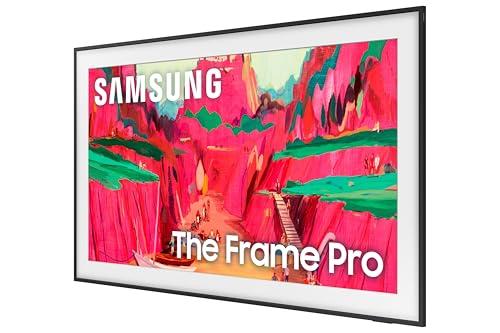

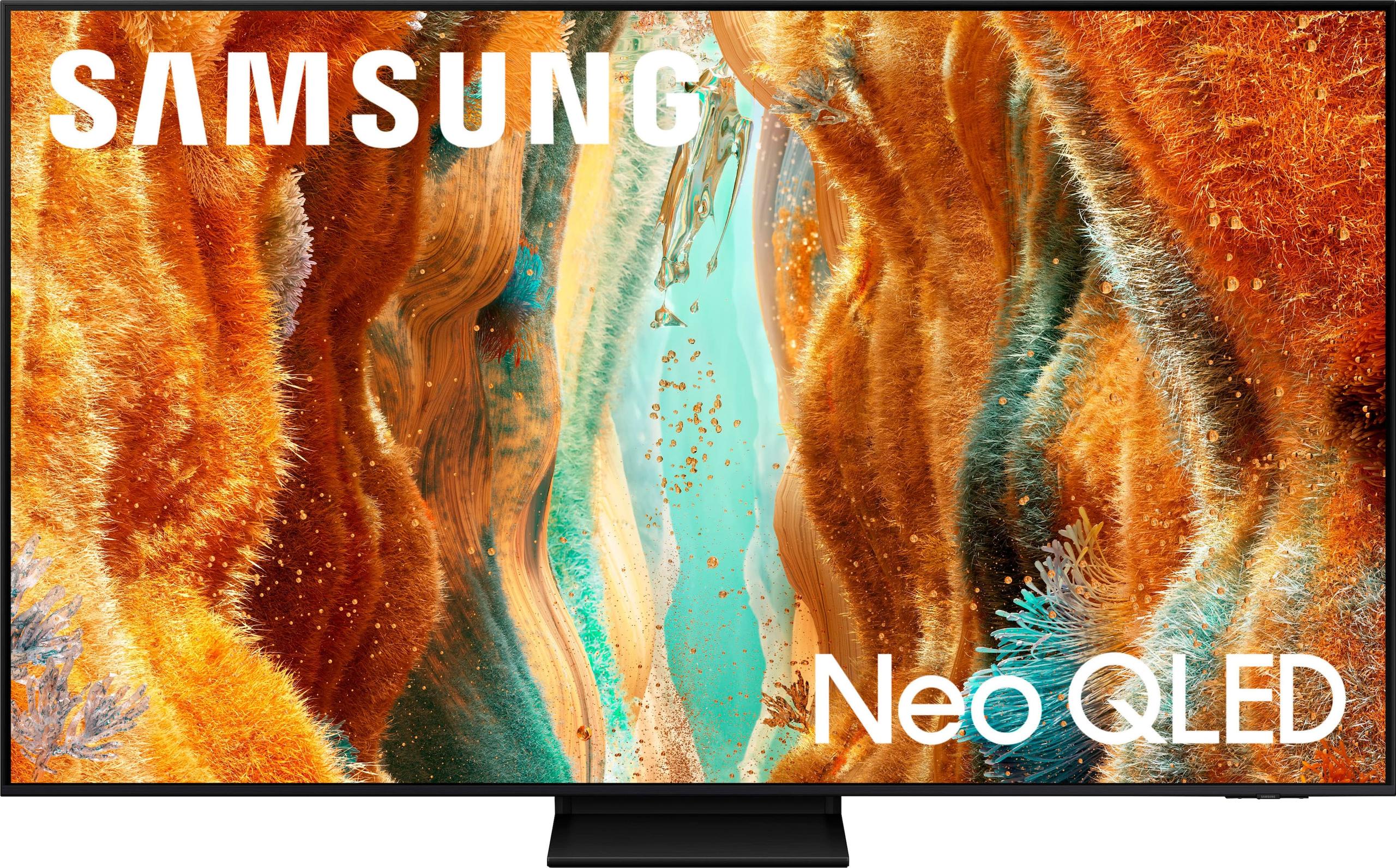
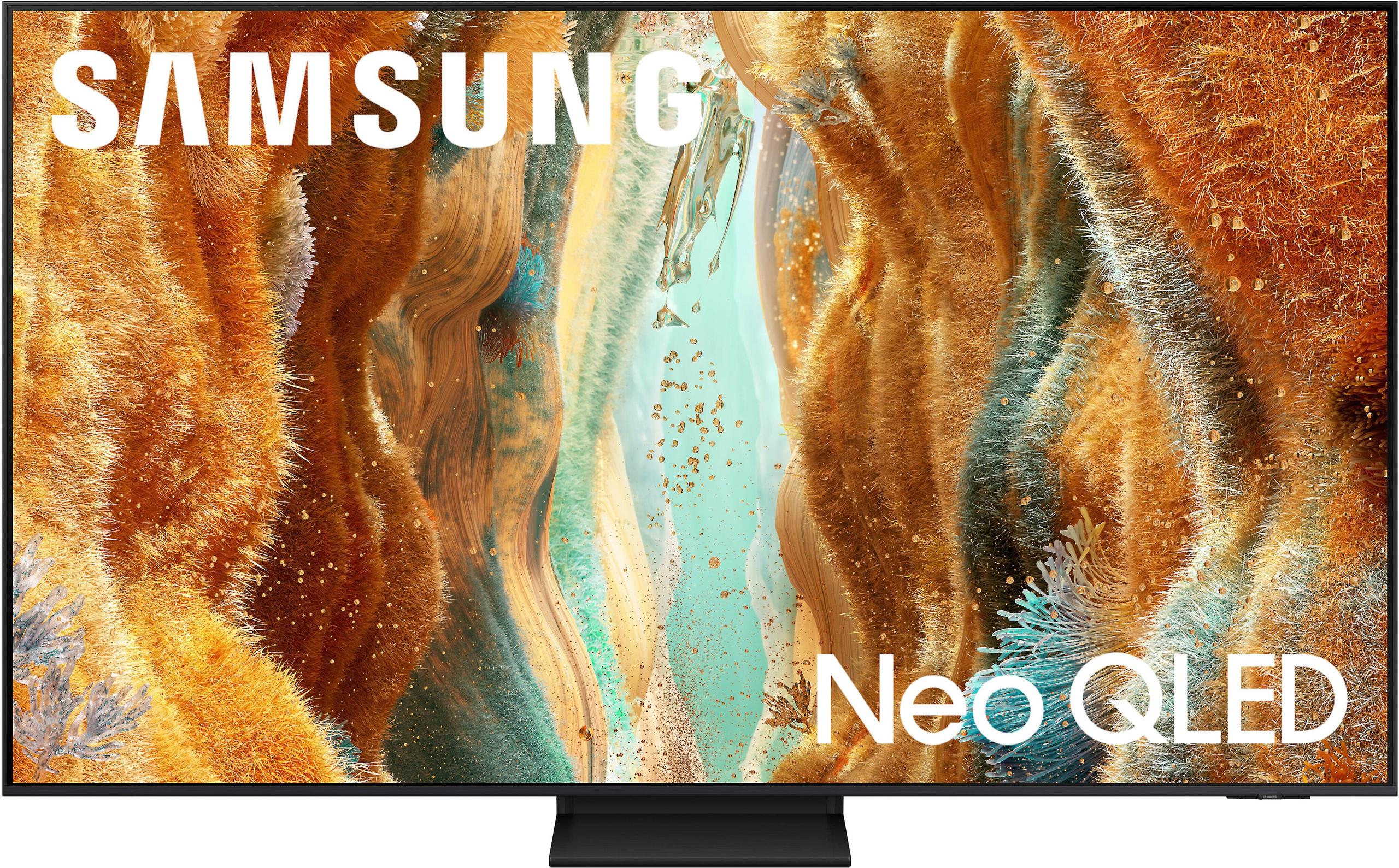
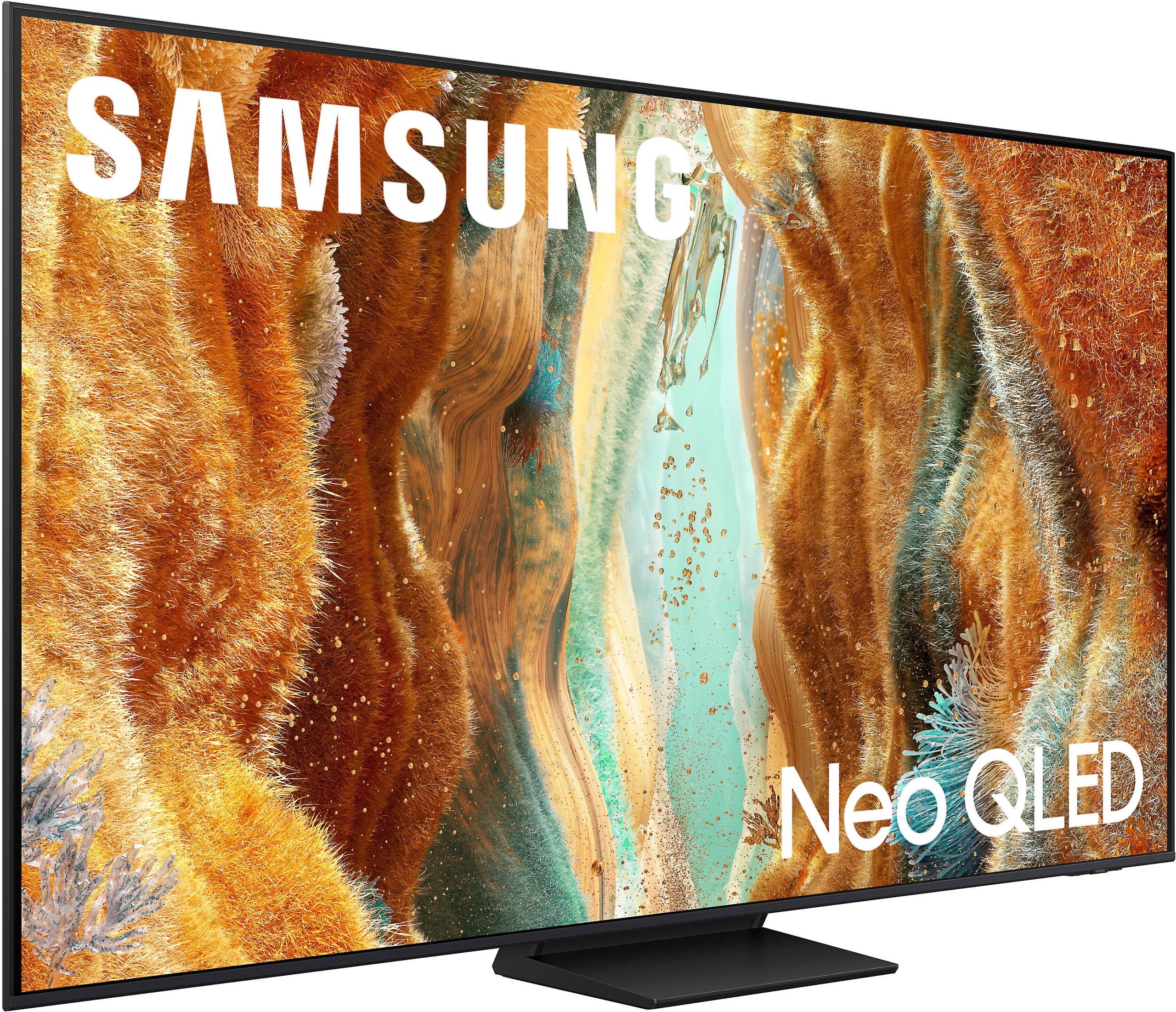
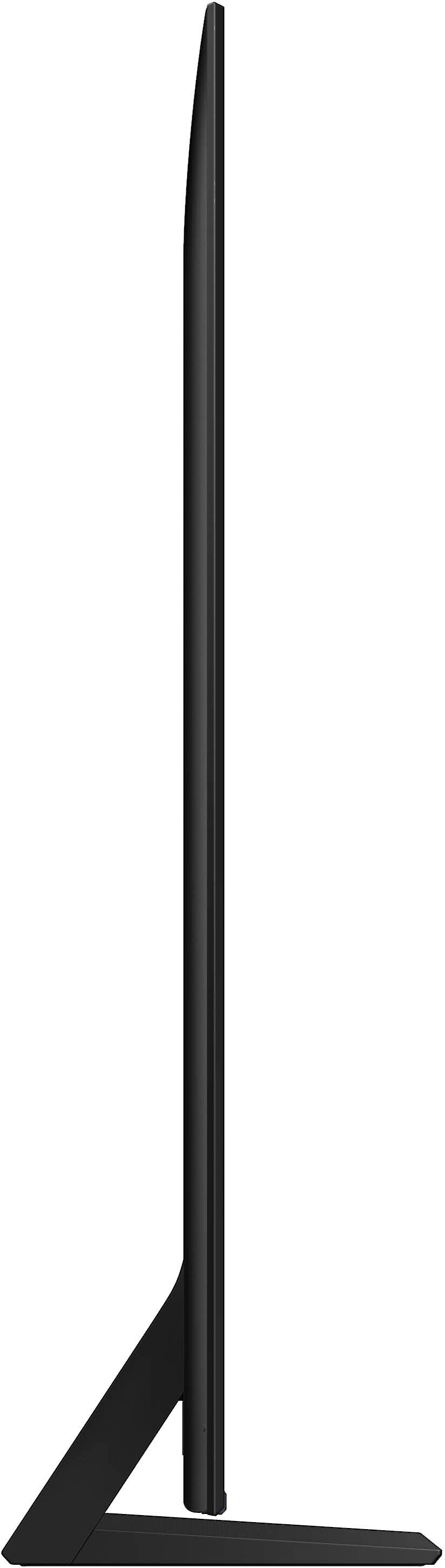

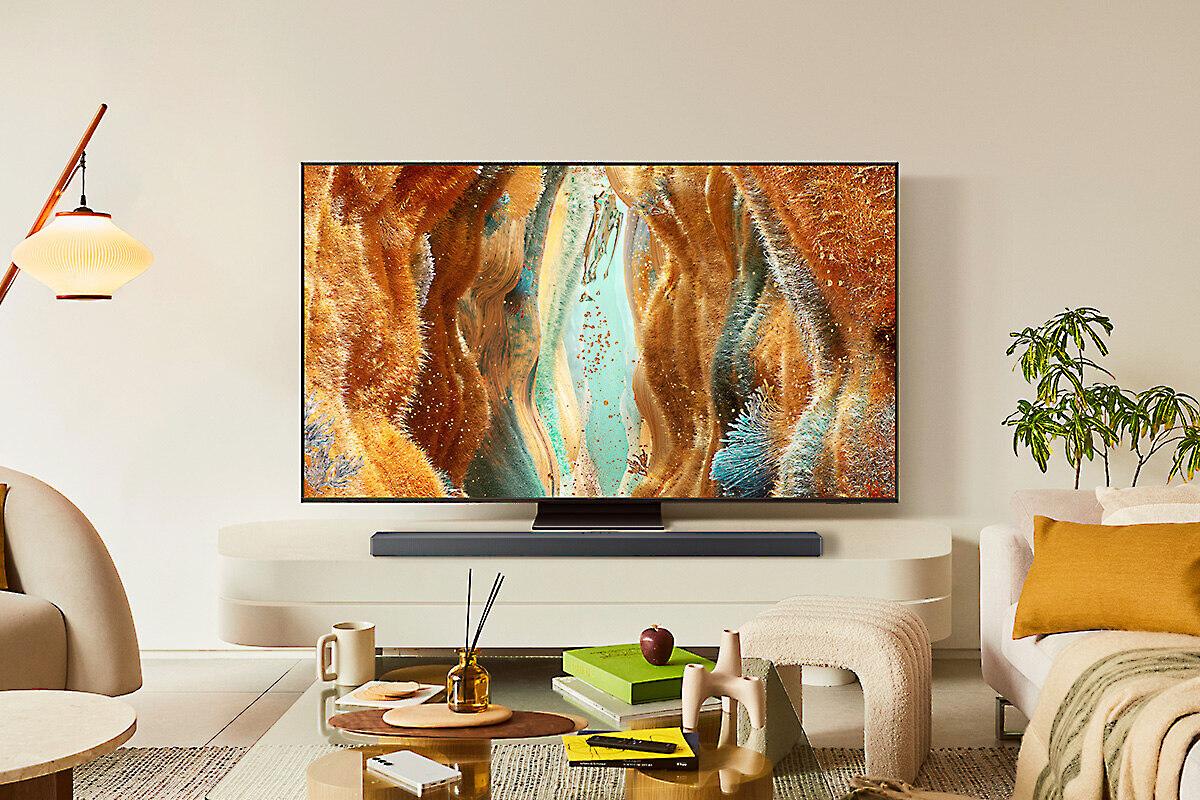

Samsung's 2025 Neo QLED lineup presents an interesting dilemma for TV buyers. On one hand, you have the Samsung 65" The Frame Pro, a lifestyle-focused TV that doubles as wall art. On the other, there's the Samsung 65" QN70F, positioning itself as an entry point into premium Neo QLED technology at a much more accessible price point. At the time of writing, these TVs sit at dramatically different price tiers, with the Frame Pro commanding a significant premium over the QN70F.
Both models represent the latest evolution in Mini LED technology, but they're designed for completely different types of buyers. Understanding these differences is crucial because choosing the wrong one could leave you either overpaying for features you'll never use or missing out on capabilities that would transform your viewing experience.
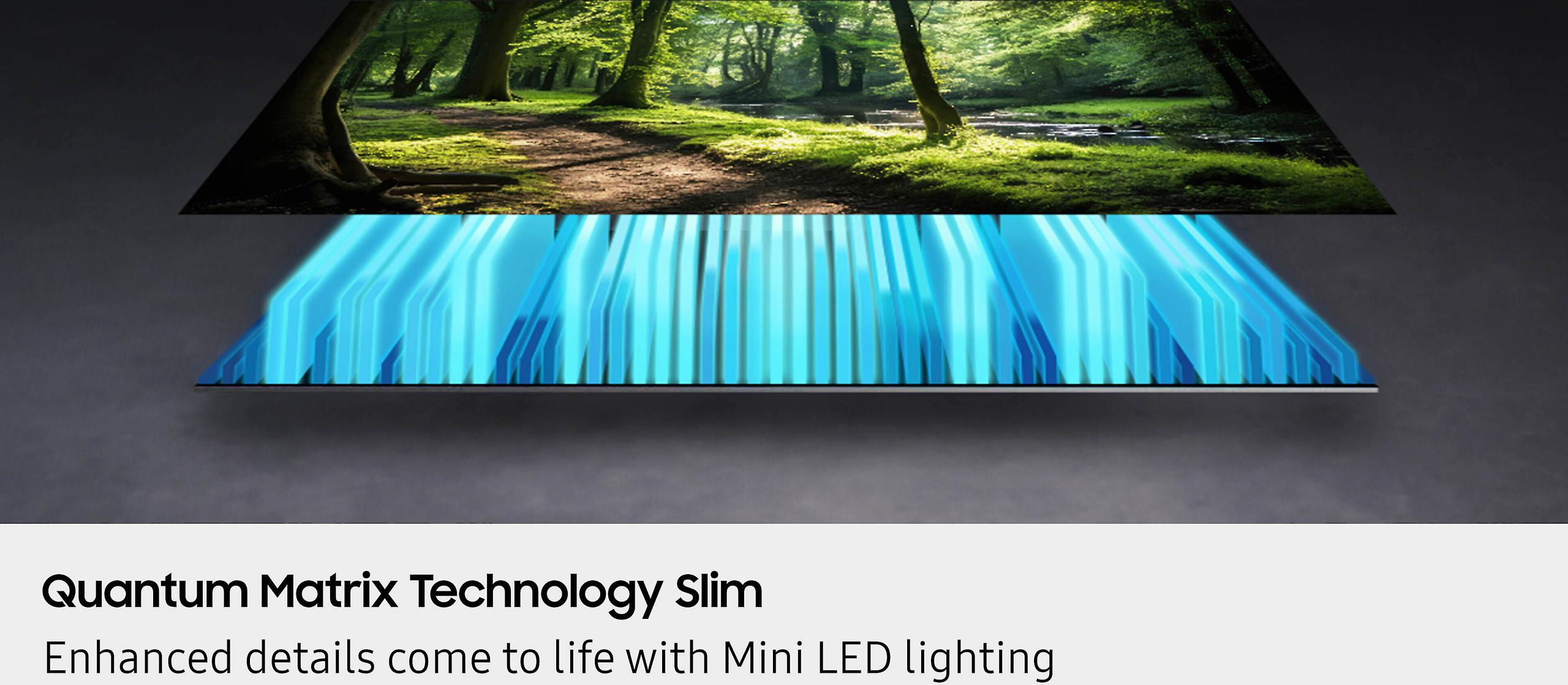
Before diving into the differences, it's important to understand what Neo QLED technology brings to the table. Neo QLED combines Mini LED backlighting with Quantum Dot color enhancement. Mini LEDs are significantly smaller than traditional LED backlights – we're talking thousands of tiny LEDs instead of dozens of larger ones. This allows for much more precise local dimming, where specific zones of the screen can be brightened or darkened independently to create better contrast.
The Quantum Dot layer adds another level of sophistication. These microscopic semiconductor particles convert blue LED light into highly pure red and green light, resulting in colors that are both more accurate and more vibrant than what traditional LED TVs can achieve. The combination creates displays that can get much brighter than OLED TVs while maintaining excellent color accuracy.
Both the Frame Pro and QN70F benefit from this foundation, but Samsung has implemented the technology differently in each model to serve their distinct purposes.
The most significant performance gap between these TVs lies in their brightness capabilities. Our research into professional reviews reveals that the Frame Pro achieves peak brightness levels exceeding 1,000 nits in HDR content, while the QN70F operates at considerably lower brightness levels typical of entry-level Neo QLED models.
This brightness difference matters more than you might think. Higher peak brightness doesn't just make the TV better for bright rooms – it's fundamental to proper HDR (High Dynamic Range) performance. HDR content is mastered with the expectation that displays can hit these brightness peaks to properly render highlights like sunlight reflecting off water or the glow of fire. When a TV can't reach these levels, HDR content appears compressed and less impactful.
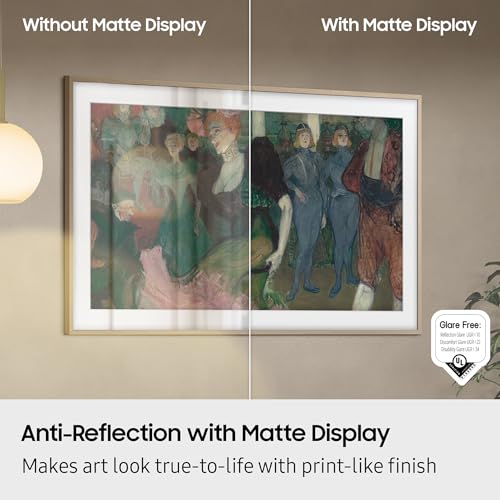
The Frame Pro's superior brightness also works in tandem with its matte anti-glare coating. This combination is particularly clever – the matte finish eliminates reflections that would normally wash out darker content, while the high brightness ensures that images still appear vibrant and punchy despite the coating's slight reduction in perceived contrast.
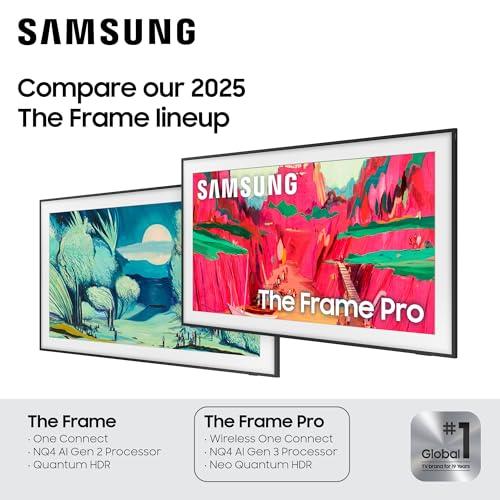
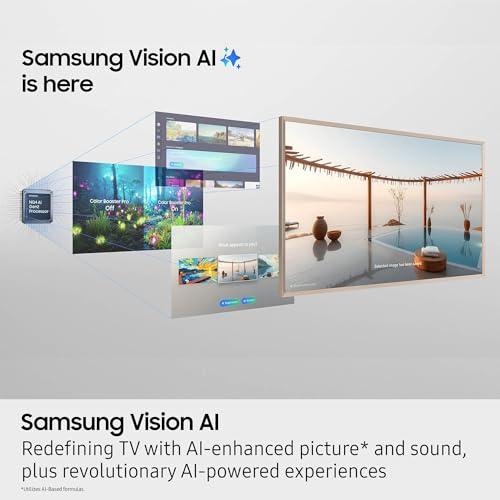
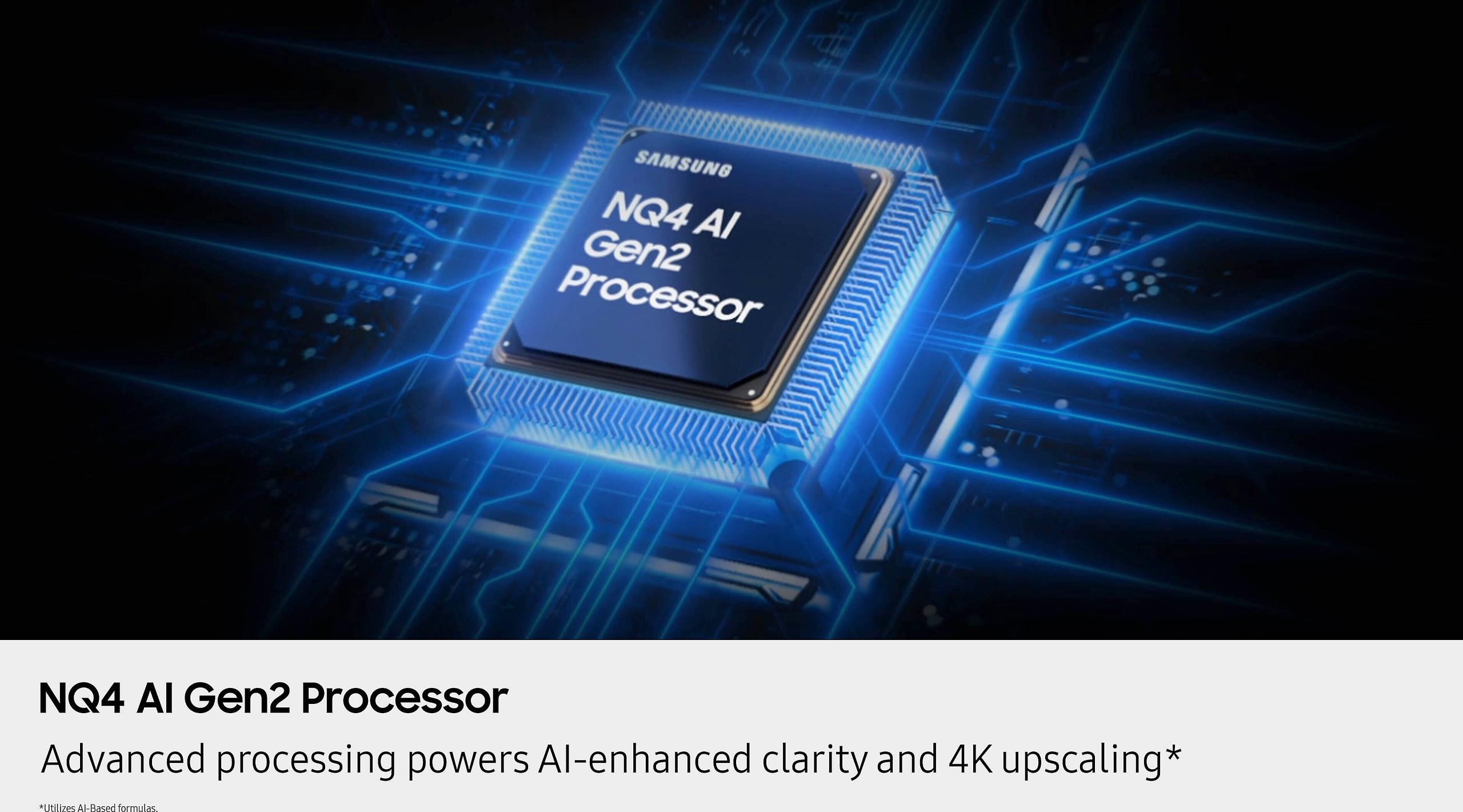
Samsung has equipped these TVs with different generations of their NQ4 AI processor. The Frame Pro features the Gen 3 version – the same chip found in Samsung's flagship models – while the QN70F uses the Gen 2 variant.
This processing difference manifests in several ways. The more advanced processor in the Frame Pro provides superior upscaling of lower-resolution content, better motion handling, and more sophisticated HDR tone mapping. When you're watching Netflix shows that were filmed in 4K but compressed for streaming, or older movies that were originally shot in lower resolutions, the Frame Pro's processor works harder to make them look crisp and detailed on your 65-inch screen.
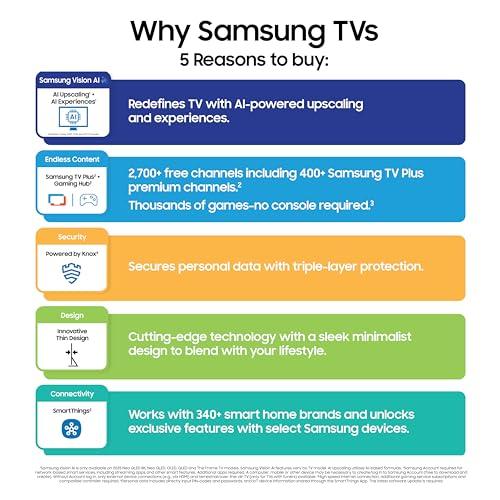
The AI features, branded as Samsung Vision AI, also differ between models. Both TVs can identify actors on screen and provide contextual information, but the Frame Pro executes these features more smoothly thanks to its additional processing headroom.
Local dimming is where Mini LED technology really shines, and it's an area where the Frame Pro pulls ahead. Samsung's Quantum Matrix Technology controls the thousands of Mini LEDs behind the screen, but the Frame Pro implements this with more sophisticated algorithms and likely more dimming zones.
In practical terms, this means better shadow detail in dark scenes and less haloing around bright objects against dark backgrounds. If you're watching something like a space movie with bright stars against the blackness of space, the Frame Pro will do a better job of keeping those stars crisp without creating unwanted glow around them.
However, it's worth noting that neither TV will match the perfect black levels of OLED displays. Mini LED technology, while impressive, still relies on backlighting that can't be completely turned off in individual pixel zones the way OLED can.
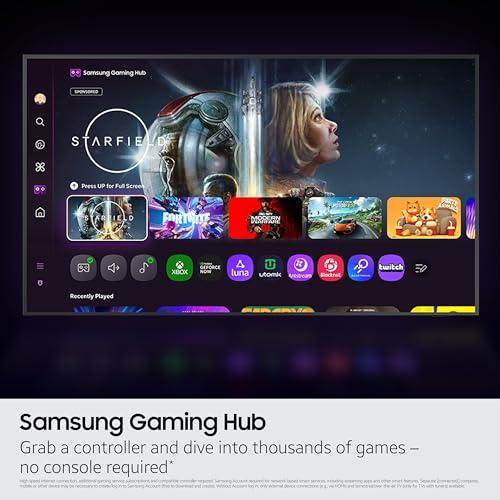
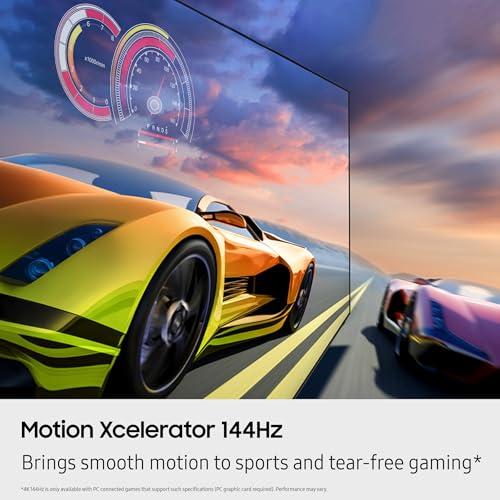
Gaming performance reveals an interesting trade-off between these models. The Frame Pro offers a native 144Hz refresh rate and supports all the latest gaming standards including Variable Refresh Rate (VRR) and Auto Low Latency Mode (ALLM). These features ensure smooth, tear-free gaming with reduced input lag.
However, our analysis of user reports suggests the Frame Pro's input lag – the delay between pressing a controller button and seeing the action on screen – measures around 30ms. While this is acceptable for most gaming, it's higher than what serious competitive gamers typically prefer.
The QN70F, despite being the more affordable option, likely offers lower input lag due to its simpler processing chain. It supports up to 144Hz gaming through enhancement modes and includes AMD FreeSync Premium Pro for smooth gameplay with compatible graphics cards.
For home theater gaming setups, the Frame Pro's superior brightness and color accuracy make games look more spectacular, especially HDR titles. But for competitive online gaming where every millisecond counts, the QN70F might actually have the edge.
Audio represents another area where the price difference becomes apparent. The Frame Pro features a more sophisticated 40-watt, 2.0.2-channel speaker system with full Dolby Atmos support. The ".2" channels refer to upward-firing speakers that bounce sound off your ceiling to create height effects – essentially giving you some of the benefits of a surround sound system without additional speakers.
The QN70F uses a simpler 20-watt, 2-channel stereo setup with OTS Lite (Object Tracking Sound Lite). While this still provides decent audio quality, it lacks the spatial dimension and power of the Frame Pro's system.
Both TVs support Q-Symphony, Samsung's technology that allows the TV speakers to work in harmony with Samsung soundbars rather than being disabled. This can create a more immersive soundfield by using both the TV's speakers and the soundbar simultaneously.
For most living room setups, the Frame Pro's built-in audio might eliminate the immediate need for a soundbar, while QN70F buyers will likely want to budget for additional audio equipment if sound quality is important to them.
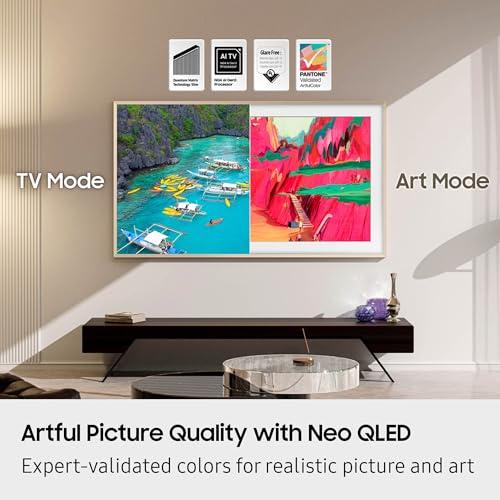
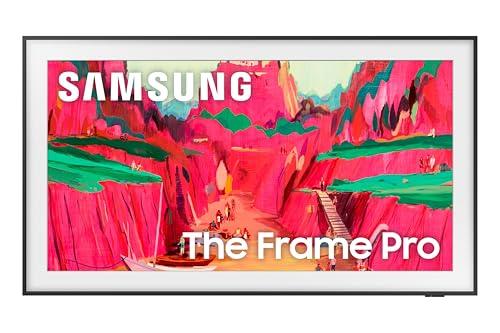
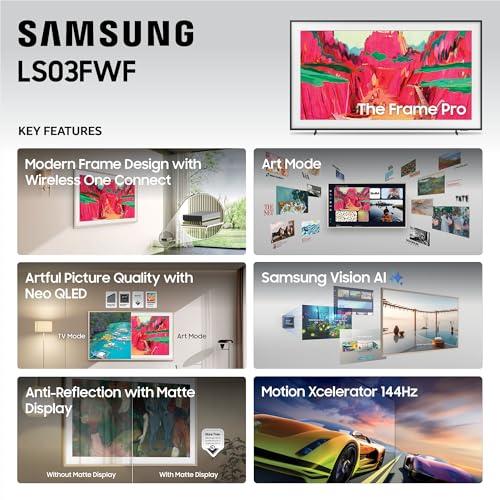
The most unique aspect of the Frame Pro is its Art Mode functionality combined with the Wireless One Connect Box. This isn't just a gimmick – it's a genuinely useful feature that transforms how the TV integrates into your living space.
Art Mode displays thousands of curated artworks when the TV isn't in use, turning it into a digital gallery piece. The matte screen coating makes these images look remarkably like real prints or paintings, without the glossy appearance typical of TV screens. Motion sensors detect when someone enters the room and automatically adjust the brightness, while occupancy sensors can turn the display off entirely when no one's around to save energy.
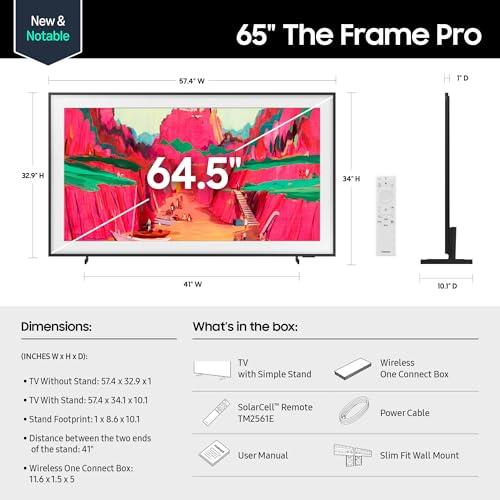
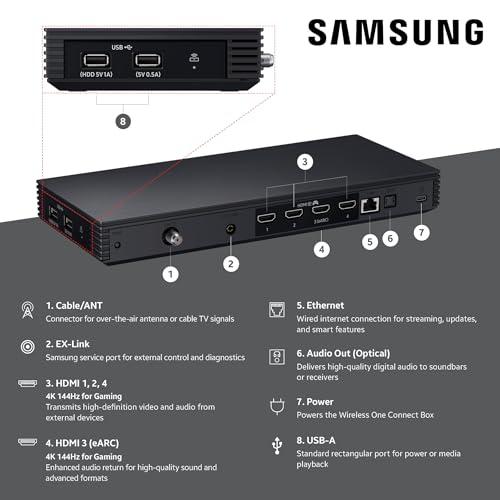
The Wireless One Connect Box is equally impressive from a practical standpoint. This separate unit houses all your HDMI ports, USB connections, and other inputs, then wirelessly transmits the audio and video signals to the TV using Wi-Fi 7 technology. The range extends up to 30 feet, meaning you can hide the box in a cabinet or entertainment center while mounting the TV flush against the wall with no visible cables.
This wireless approach isn't just about aesthetics – it solves real installation challenges. In many homes, running power to a wall-mounted TV location is much easier than running both power and multiple HDMI cables. The Frame Pro's approach lets you mount the TV wherever it looks best while keeping all your devices in a convenient, accessible location.
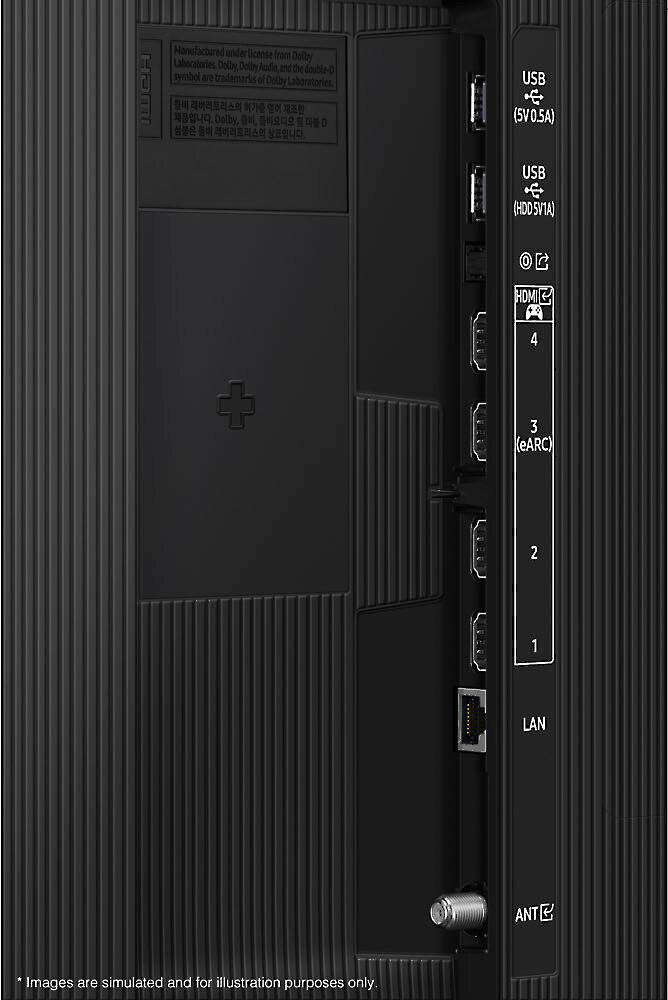
The QN70F takes a traditional approach with direct connections to the TV. While this means more visible cable management challenges, it also means simpler setup and no concerns about wireless interference or range limitations.
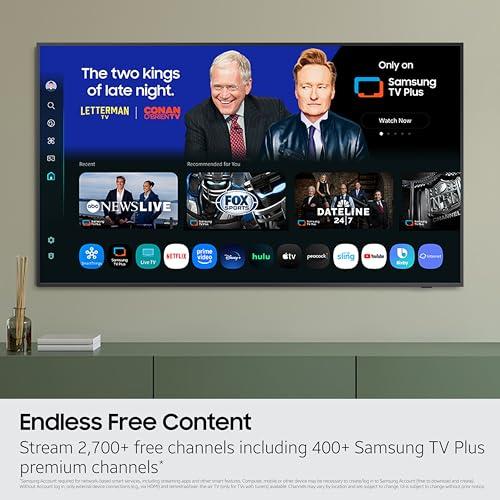
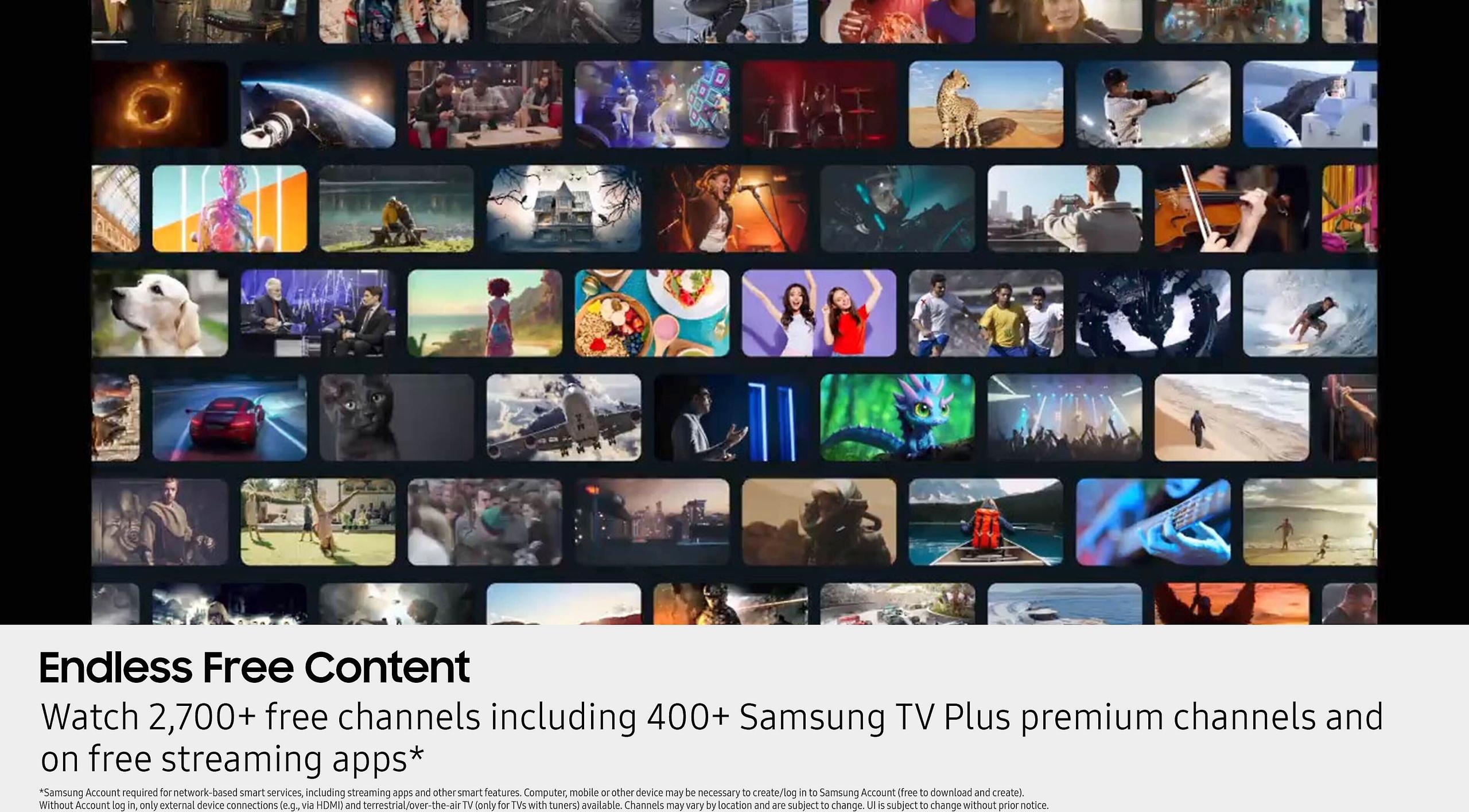
Both TVs run Samsung's Tizen smart platform, which has evolved into one of the more polished smart TV experiences available. The interface is responsive, apps load quickly, and you'll find all the major streaming services represented.
The Frame Pro's more powerful processor makes navigating menus and switching between apps noticeably smoother. It also enables more advanced AI features, including better content recommendations and more sophisticated voice control through built-in Alexa and Bixby integration.
Samsung Vision AI, present on both models, adds genuinely useful features like the ability to click on actors to get information about them, or live translation of foreign language content. These features work better on the Frame Pro due to its additional processing power, but they're still functional on the QN70F.
Installing the Frame Pro requires more planning but offers more flexibility. The wireless nature of the One Connect Box means you need to consider its placement carefully – it needs to be within 30 feet of the TV and ideally with minimal obstacles between them. The TV itself mounts flush against the wall like a picture frame, which looks stunning but requires precise mounting.
The customizable bezels add another layer of personalization. Samsung offers various colors and materials, and third-party options expand the choices further. This customization capability makes the Frame Pro uniquely adaptable to different interior design styles.
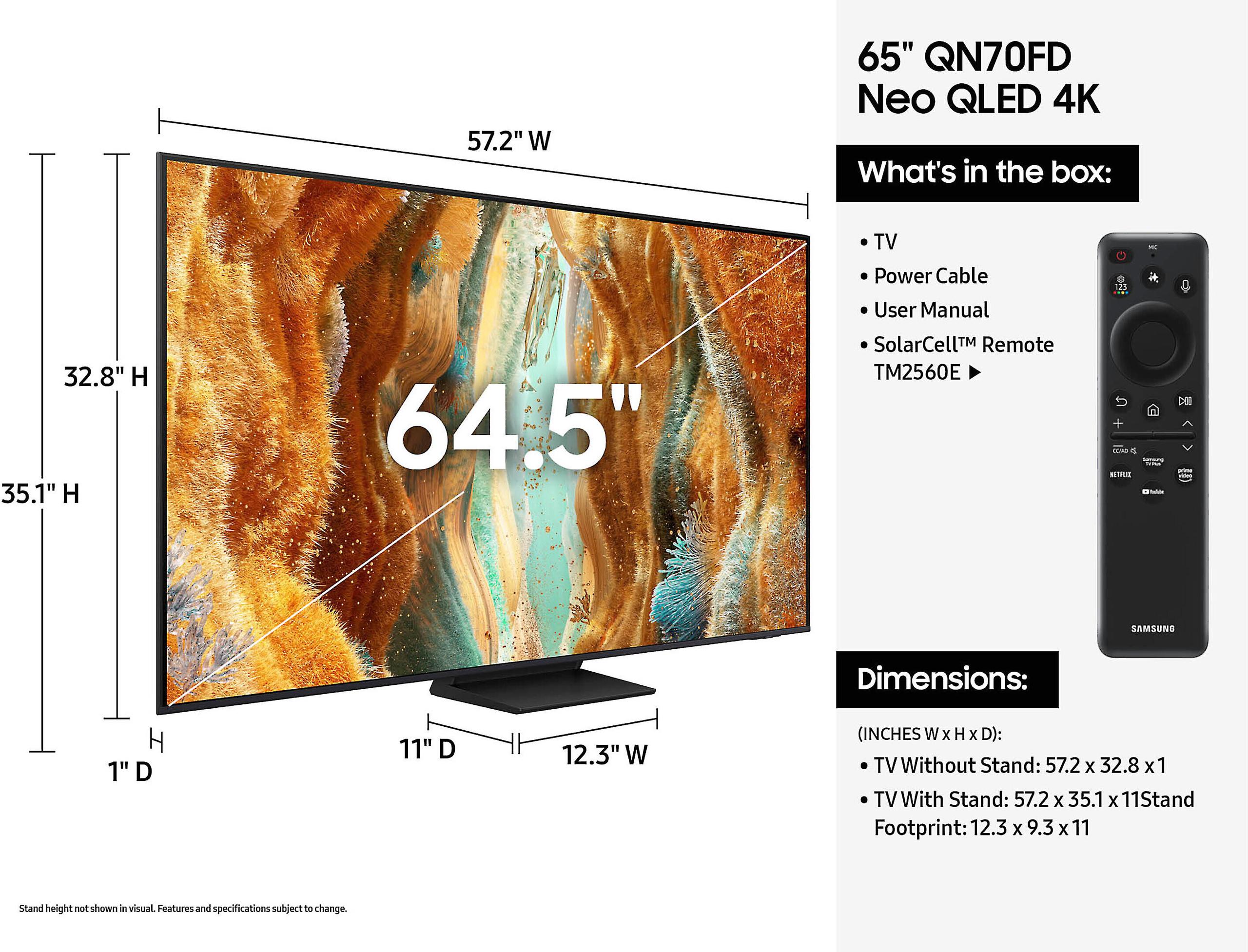
The QN70F follows traditional TV installation patterns. It can be wall-mounted or used with the included stand, and all connections are made directly to the TV. This simplicity can be an advantage if you prefer straightforward setups or if your installation location doesn't accommodate the Frame Pro's specific requirements.
At the time of writing, these TVs occupy very different price segments, which fundamentally affects their value propositions. The QN70F represents exceptional value for accessing Neo QLED technology. You're getting Mini LED backlighting, Quantum Dot color enhancement, Samsung's smart platform, and solid gaming features at a price point that makes premium display technology accessible.
The Frame Pro commands a significant premium, but that premium pays for several unique capabilities: flagship-level picture quality, sophisticated wireless connectivity, the art display functionality, and superior audio. Whether these features justify the price depends entirely on how much value you place on the lifestyle aspects and whether you need the best possible picture quality.
It's worth considering the total cost of ownership as well. If you buy the QN70F, you'll likely want to budget for a soundbar to match the picture quality with appropriate audio. The Frame Pro's superior built-in audio might eliminate that immediate need.
For dedicated home theater setups, both TVs bring strengths and weaknesses. The Frame Pro's superior brightness and processing make it excellent for rooms with some ambient light, while its Dolby Atmos audio system provides more immersive sound for movie watching.
However, neither TV is ideal for dark, dedicated theater rooms where OLED technology would provide superior black levels and contrast. The Frame Pro gets closer to that ideal performance, but if you're building a light-controlled theater room, you might want to consider OLED alternatives entirely.
The QN70F can certainly work in home theater applications, especially if you're planning to pair it with a separate audio system anyway. Its lower input lag might even make it preferable if gaming is a significant part of your home theater use.
The Frame Pro makes the most sense for buyers who see their TV as a piece of furniture and room decor, not just an entertainment device. If you're renovating your living space, care deeply about interior design, or simply want the TV to disappear when not in use, the Frame Pro's unique capabilities justify its premium pricing. It's also the right choice if you want flagship-level picture quality and are willing to pay for the best Samsung has to offer in a lifestyle-focused package.
The QN70F is ideal for buyers who prioritize performance per dollar and prefer traditional TV experiences. If you want to access premium Mini LED technology without the lifestyle features or premium pricing, it represents outstanding value. It's also better suited for buyers who prefer simple installation, lower input lag for gaming, or who plan to integrate the TV into existing entertainment centers.
These TVs represent two different philosophies about what a premium TV should be. The QN70F focuses on delivering core premium TV performance at an accessible price, while the Frame Pro reimagines what a TV can be when it's not actively displaying entertainment content.
Both approaches have merit, and the right choice depends on your priorities, budget, and how the TV will fit into your lifestyle. The QN70F delivers excellent value and performance for traditional TV use cases, while the Frame Pro offers a unique combination of premium performance and lifestyle integration that no other TV can match.
Consider your viewing habits, room setup, and whether you value the TV as a design element or purely as a functional device. Either way, you'll be getting Samsung's latest Neo QLED technology – the question is whether you want it in a traditional package or as part of a more revolutionary approach to what a TV can be.
| Samsung 65" The Frame Pro 4K Neo QLED Smart TV 2025 | Samsung 65" QN70F Neo QLED 4K Vision AI Smart TV 2025 |
|---|---|
| Peak Brightness - Critical for HDR performance and bright room viewing | |
| 1,000+ nits (excellent HDR impact, handles bright rooms well) | Lower brightness typical of entry Neo QLED (good but less HDR punch) |
| Display Type - Core technology determining picture quality | |
| Neo QLED Mini LED with matte anti-glare coating | Neo QLED Mini LED with glossy finish |
| Processor - Affects upscaling, motion, and smart features | |
| NQ4 AI Gen 3 (flagship-tier processing power) | NQ4 AI Gen 2 (solid but less advanced processing) |
| Refresh Rate - Important for gaming and sports viewing | |
| Native 144Hz (premium gaming performance) | 100Hz native, up to 144Hz enhanced (good gaming support) |
| Audio System - Determines if you need a separate soundbar | |
| 40W 2.0.2CH with Dolby Atmos, Object Tracking Sound | 20W 2CH stereo with OTS Lite (basic audio) |
| Connectivity Approach - Affects installation flexibility | |
| Wireless One Connect Box with 30ft range (cable-free wall mounting) | Traditional direct connections to TV (standard setup) |
| Art Display Mode - Unique lifestyle feature | |
| Full Art Mode with 3,000+ curated artworks, motion sensors | Not available (traditional TV-only functionality) |
| Gaming Input Lag - Critical for competitive gaming | |
| ~30ms (acceptable for casual gaming, high for competitive) | Likely lower lag due to simpler processing (better for gaming) |
| Local Dimming Quality - Affects contrast and black levels | |
| Advanced Quantum Matrix Slim with superior control | Standard Quantum Matrix Slim implementation |
| Smart Platform Performance - User experience quality | |
| Enhanced Tizen with advanced Vision AI features | Standard Tizen with basic Vision AI capabilities |
| Design Integration - How it fits into your living space | |
| Gallery-style with customizable bezels, flush wall mount | Traditional TV design with stand or standard wall mount |
| Value Positioning - What you're paying for | |
| Premium lifestyle TV with flagship performance | Entry-level Neo QLED focused on core performance value |
The Samsung 65" The Frame Pro delivers superior picture quality with over 1,000 nits peak brightness and Samsung's flagship NQ4 AI Gen 3 processor. This means better HDR performance, more accurate colors, and superior upscaling of streaming content. The Samsung 65" QN70F still offers excellent Neo QLED picture quality but with lower brightness levels and the Gen 2 processor, making it good but not quite as impressive for premium content.
The biggest difference is that the Samsung 65" The Frame Pro is designed as a lifestyle TV that doubles as wall art when not in use, featuring Art Mode with thousands of curated artworks and a wireless connection system. The Samsung 65" QN70F is a traditional performance-focused TV without the art display features, targeting buyers who want Neo QLED technology at a more accessible price point.
For competitive gaming, the Samsung 65" QN70F likely has lower input lag despite the Samsung 65" The Frame Pro offering a higher native 144Hz refresh rate. Both support Variable Refresh Rate (VRR) and Auto Low Latency Mode, but the Frame Pro's more complex processing creates slightly higher input lag around 30ms, which may matter for serious gamers.
The Samsung 65" The Frame Pro features a much more powerful 40W audio system with Dolby Atmos and Object Tracking Sound, potentially eliminating the immediate need for a soundbar. The Samsung 65" QN70F has a basic 20W stereo system, so you'll likely want to budget for additional audio equipment if sound quality is important.
The Samsung 65" The Frame Pro excels in bright rooms thanks to its higher peak brightness and matte anti-glare coating that eliminates reflections. The Samsung 65" QN70F can handle bright rooms reasonably well with its Neo QLED technology, but the glossy screen may show more reflections and the lower brightness won't cut through ambient light as effectively.
The Wireless One Connect Box is exclusive to the Samsung 65" The Frame Pro and wirelessly transmits all audio and video signals up to 30 feet away. This allows completely cable-free wall mounting while keeping all your devices in a separate location. The Samsung 65" QN70F uses traditional direct connections, which means visible cables but simpler setup.
The Samsung 65" QN70F provides exceptional value by offering Neo QLED Mini LED technology at an entry-level price point. The Samsung 65" The Frame Pro costs significantly more but includes unique features like Art Mode, wireless connectivity, and flagship-level performance that justify the premium for design-conscious buyers.
Only the Samsung 65" The Frame Pro offers Art Mode with access to over 3,000 curated artworks that display when the TV is off. The matte screen coating makes these images look like real paintings or photographs. The Samsung 65" QN70F is a traditional TV without art display capabilities.
The Samsung 65" QN70F follows standard TV installation with direct cable connections and can use the included stand or standard wall mount. The Samsung 65" The Frame Pro requires more planning for optimal setup, including placement of the Wireless One Connect Box and flush wall mounting for the gallery aesthetic, but offers more installation flexibility once properly configured.
Both the Samsung 65" The Frame Pro and Samsung 65" QN70F run Samsung's Tizen smart platform with access to all major streaming services. However, the Frame Pro's more powerful processor enables smoother performance and more advanced Samsung Vision AI features like better actor recognition and content recommendations.
For dedicated home theater use, the Samsung 65" The Frame Pro offers superior brightness for rooms with some ambient light, plus built-in Dolby Atmos audio that reduces the need for immediate sound system upgrades. The Samsung 65" QN70F can work well in home theaters, especially if you're planning separate audio equipment and prefer lower input lag for gaming sessions.
Choose the Samsung 65" The Frame Pro if you want the TV to blend into your décor as artwork when not in use and you value premium picture quality and wireless installation. Pick the Samsung 65" QN70F if you want excellent Neo QLED performance at a more affordable price and prefer traditional TV functionality without the lifestyle features.
We've done our best to create useful and informative comparisons to help you decide what product to buy. Our research uses advanced automated methods to create this comparison and perfection is not possible - please contact us for corrections or questions. These are the sites we've researched in the creation of this article: tomsguide.com - youtube.com - smarthomesounds.co.uk - images.samsung.com - rtings.com - samsung.com - bestbuy.com - bestbuy.com - businessinsider.com - dentonstv.com - samsung.com - flatpanelshd.com - samsung.com - jefflynch.com - youtube.com - costco.com - rtings.com - youtube.com - wifihifi.com - samsung.com - samsung.com - samsung.com - samsung.com - flatpanelshd.com - news.samsung.com - bestbuy.com

Privacy Policy
Terms and Conditions - Affiliate Policy
Home Security
© Copyright 2008-2026.
11816 Inwood Rd #1211, Dallas, TX 75244