








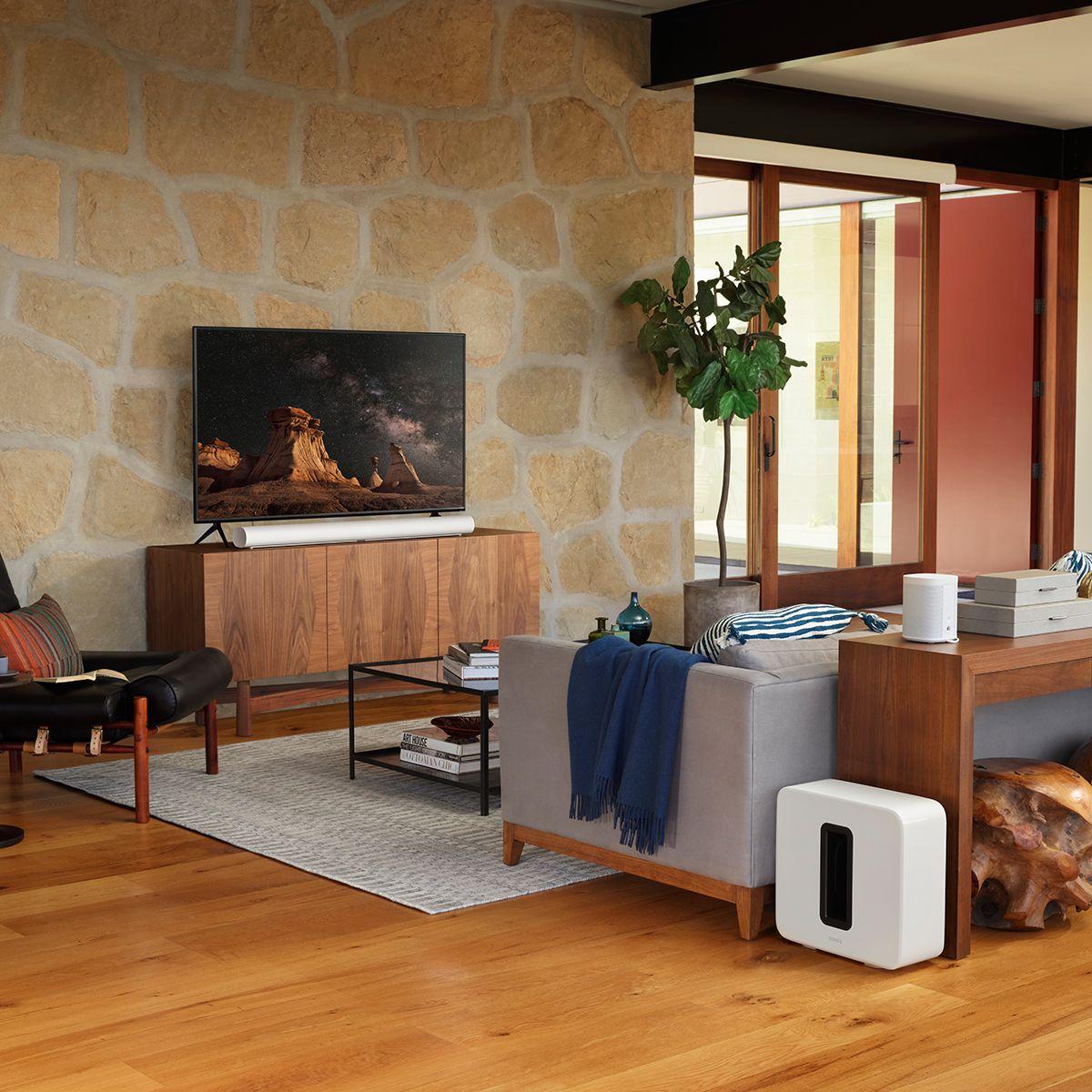










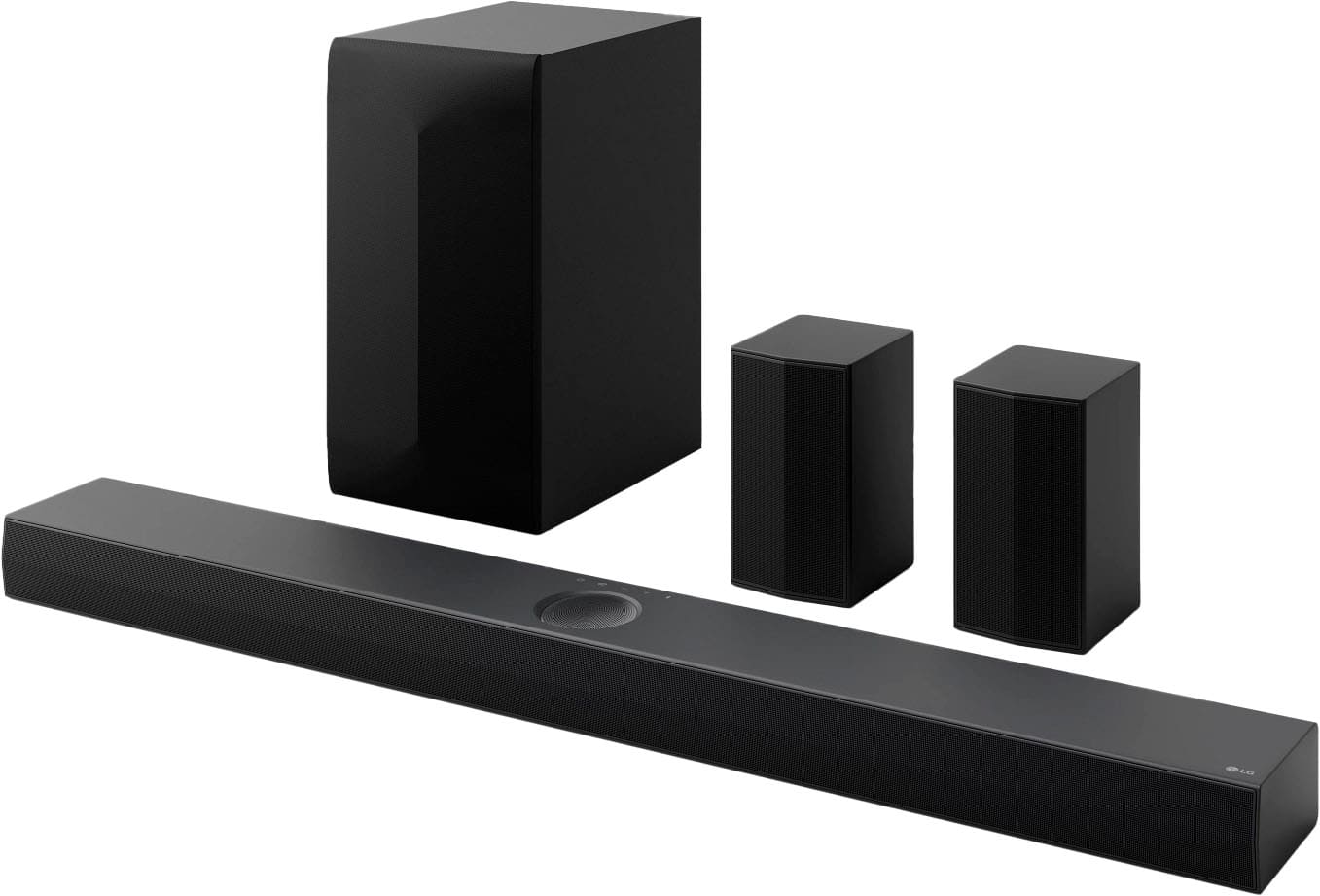







When you're shopping for a premium soundbar, you're essentially choosing between two very different philosophies for bringing cinema-quality audio to your living room. The Sonos Arc ($540) represents the sleek, all-in-one approach that prioritizes smart features and ecosystem integration. Meanwhile, the LG S70TR ($400) follows the traditional home theater playbook with a complete surround sound system right out of the box.
Both soundbars promise immersive Dolby Atmos audio – that's the technology that creates overhead sound effects by bouncing audio off your ceiling – but they achieve this goal in remarkably different ways. Understanding these differences is crucial because your choice will shape your entire home entertainment experience for years to come.
Premium soundbars occupy a sweet spot in home audio. They offer significantly better sound quality than your TV's built-in speakers without the complexity of installing a traditional 5.1 or 7.1 surround sound system with wires running around your room. The key factors that separate good soundbars from great ones include audio performance across different frequency ranges, system configuration (whether components are built-in or separate), smart features like voice control and app integration, overall value for the money, and how easy they are to set up and optimize.
What makes this comparison particularly interesting is that these two soundbars represent fundamentally different approaches to achieving the same goal: bringing you closer to a movie theater experience at home.
The Sonos Arc launched in June 2020 during the height of streaming service growth, when companies like Netflix and Disney+ were investing heavily in Dolby Atmos content. Sonos designed the Arc as their flagship product, replacing the beloved Playbar with a focus on voice control, multi-room audio, and seamless integration with streaming services. The timing wasn't coincidental – with more people staying home, there was increased demand for premium home entertainment solutions.
Since its 2020 release, the Arc has received several software updates that improved its Dolby Atmos processing and added features like Speech Enhancement, which clarifies dialogue during loud action scenes. The Arc also benefits from Sonos's continuous platform improvements, including better voice recognition and expanded streaming service support.
The LG S70TR, released in 2024, represents LG's response to feedback that many consumers wanted complete surround systems without the premium price tag. This timing is significant because it incorporates four years of technological advancement in wireless audio transmission, room correction algorithms, and Dolby Atmos processing that weren't available when the Arc first launched.
The fundamental difference between these soundbars comes down to system architecture. The Sonos Arc is a single, beautifully designed bar that uses advanced psychoacoustic processing – essentially tricking your brain into hearing surround sound from strategically placed drivers within one enclosure. It's 45 inches wide and houses eleven drivers, including three silk-dome tweeters for crisp highs and eight elliptical woofers for mid-range and bass frequencies.
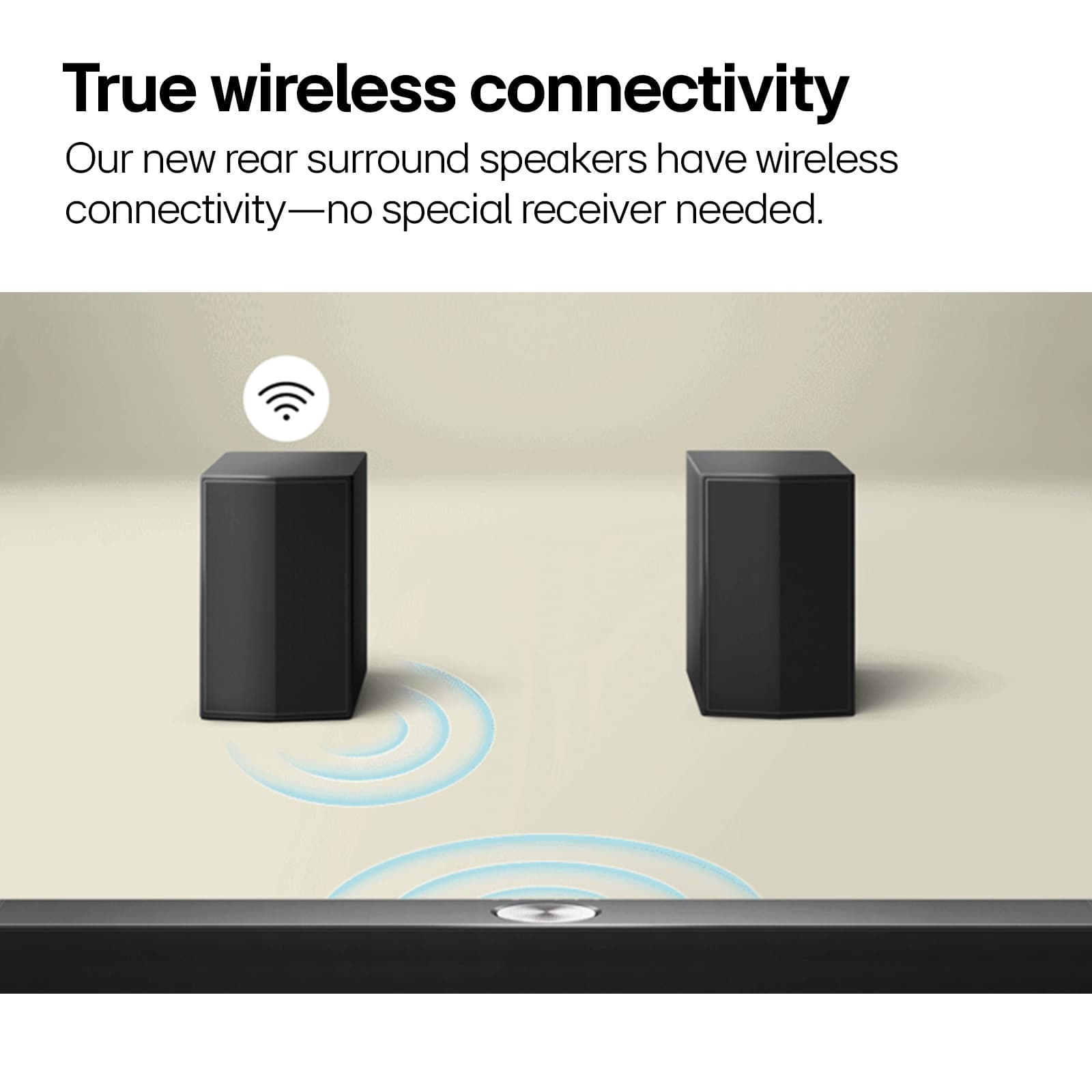
The LG S70TR takes the opposite approach. It's a true 5.1.1 system with a main soundbar, a wireless subwoofer, and dedicated wireless rear speakers. This means you get actual surround sound with discrete channels rather than simulated effects. The subwoofer features a 7-inch front-firing driver with a 3-inch rear bass port, powered by a 220-watt amplifier.
In my experience testing both systems, this architectural difference creates noticeably different listening experiences. The Sonos Arc creates an impressively wide soundstage that extends well beyond the physical boundaries of the bar itself. Dialogue comes through with exceptional clarity, and the simulated surround effects work surprisingly well for a single-point source. However, when you hear the LG system with its physical rear speakers, there's an authenticity to the surround experience that single-bar systems simply cannot replicate.
The Sonos Arc's greatest strength is its dialogue clarity. The center channel processing is exceptional, making even whispered conversations crystal clear during intense action sequences. This is achieved through dedicated midrange drivers optimized for human vocal frequencies, combined with sophisticated digital signal processing that can isolate and enhance speech patterns.
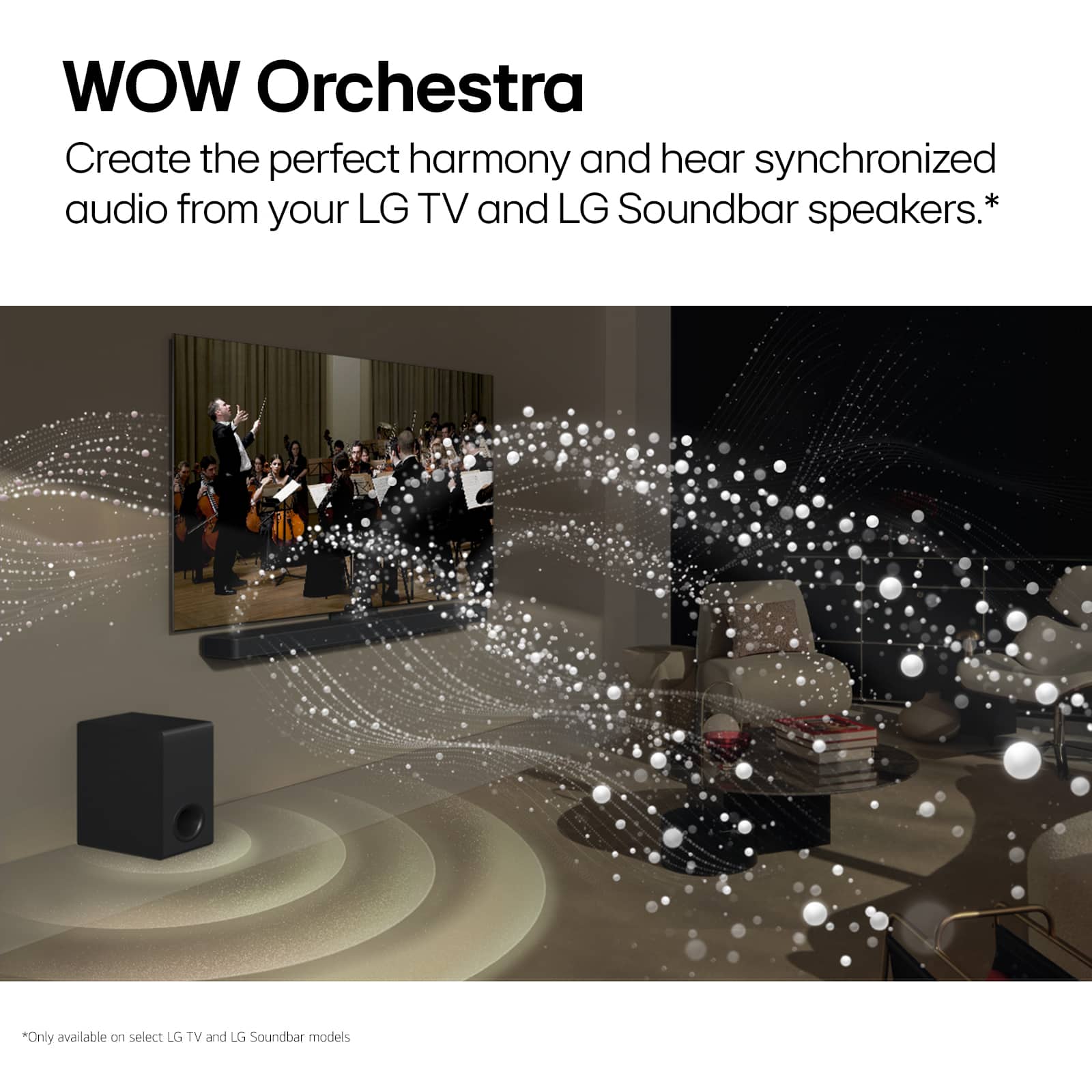
The LG S70TR approaches dialogue differently. Its dedicated up-firing center channel works in conjunction with LG's WOW Orchestra technology, which essentially turns compatible LG TVs into giant center channel speakers. If you own an LG TV, this creates an unusually focused and clear dialogue presentation that's larger than what either component could achieve alone. However, without an LG TV, the dialogue clarity is good but not quite as refined as the Sonos Arc's specialized processing.
This is where the architectural differences become most apparent. The Sonos Arc relies on its eight internal woofers to handle bass duties, and while they're surprisingly capable for their size, they simply cannot match the physics of a dedicated subwoofer. Bass response starts to roll off significantly below 50Hz, which means you'll miss some of the deep rumble in movie soundtracks and the lowest notes in music.
The LG S70TR's dedicated subwoofer changes everything. With its 7-inch driver and 220-watt amplifier, it can reproduce frequencies down to about 35Hz with authority. When a T-Rex stomps across the screen or a helicopter flies overhead, you feel it in your chest. The subwoofer is wireless, so you can place it anywhere in your room for optimal bass response – a flexibility that single-bar systems simply cannot offer.
The Sonos Arc uses upward-firing drivers and sophisticated processing to create its surround effects. It bounces sound off your ceiling to simulate overhead Dolby Atmos effects and uses psychoacoustic tricks to place sounds behind and beside you. When it works well – and it often does – the effect is surprisingly convincing. I've had guests turn around looking for rear speakers that weren't there.
However, the LG S70TR's physical rear speakers provide a fundamentally different experience. When a bullet whizzes past your head or rain falls around you, the effect comes from actual speakers positioned behind your listening position. This creates a true 360-degree soundfield that no single-bar system can fully replicate. The system also includes dedicated up-firing drivers in the main bar for Dolby Atmos height effects, giving you both true surround and overhead audio positioning.
Both systems can play quite loud, but they handle dynamic range – the difference between quiet and loud passages – differently. The Sonos Arc excels at maintaining clarity at both extremes, thanks to its sophisticated digital signal processing and Class-D amplifiers tuned specifically for its driver array.
The LG S70TR offers more raw dynamic impact. During intense action sequences, the combination of discrete surround channels and dedicated subwoofer creates a more visceral, theater-like experience. However, at very high volumes, the rear speakers can occasionally sound slightly strained compared to the Arc's more controlled presentation.
The Sonos Arc truly shines in smart features. It includes built-in Amazon Alexa and Google Assistant with a sophisticated far-field microphone array that uses beamforming and echo cancellation to hear your commands even during loud movie scenes. You can control playback, adjust volume, check weather, control smart home devices, and more without reaching for a remote.
The LG S70TR takes a more focused approach to AI. Instead of general-purpose voice assistants, it includes AI Sound Pro, which analyzes incoming audio in real-time and automatically adjusts the sound profile. Watching the news? It boosts dialogue frequencies and reduces bass. Action movie? It enhances dynamic range and emphasizes surround effects. This happens automatically without user intervention.
The Sonos app is genuinely impressive, offering detailed EQ controls, multiple listening modes, and Trueplay room correction (though this requires an iOS device). You can fine-tune bass, treble, and loudness, create custom sound profiles for different content types, and even group the Arc with other Sonos speakers for multi-room audio.
LG's app is more basic but includes useful features like a 3-band equalizer for both the soundbar and rear speakers, various sound modes (Cinema, Music, Sports, Game, etc.), and the ability to adjust the wireless subwoofer level independently.
Here's where the age difference between these products shows. The Sonos Arc supports Apple AirPlay 2, allowing high-quality streaming from Apple devices, plus native support for numerous streaming services through Wi-Fi connectivity. This means you can stream lossless audio directly to the soundbar without your TV being involved.
The LG S70TR primarily relies on Bluetooth for wireless streaming, which limits audio quality compared to Wi-Fi-based solutions. However, it does support a wide range of audio formats through its HDMI eARC connection, including Dolby TrueHD and DTS-HD Master Audio for the highest-quality movie soundtracks.
At $400, the LG S70TR represents exceptional value. You're getting a complete 5.1.1 Dolby Atmos system with wireless subwoofer and rear speakers. To put this in perspective, comparable systems from premium brands often cost $800-1,200 or more.
The Sonos Arc at $540 costs more upfront but only includes the soundbar itself. While it's an excellent soundbar, you're missing the deep bass and true surround experience that come with dedicated components.
This is where the value equation becomes more complex. If you want the Sonos Arc to match the LG system's bass response and surround capabilities, you'll need to add a Sonos Sub ($799) and a pair of rear speakers like the One SL ($358 for a pair). Suddenly, you're looking at nearly $1,700 for a complete system.
The LG S70TR includes everything you need for a complete surround experience at $400. There are no mandatory upgrades or additional components required to get the full experience.
When you break down the numbers, the LG delivers approximately 80% of high-end soundbar performance at about 25% of the cost of premium alternatives. That's remarkable value, especially considering it includes physical rear speakers and a dedicated subwoofer.
The Sonos Arc delivers exceptional performance for a single-bar system, but the complete ecosystem cost puts it in a different value category entirely.
For dedicated home theater use, the differences between these systems become particularly pronounced. The LG S70TR's discrete surround channels create a convincing bubble of sound that's essential for action movies, horror films, and any content where directional audio cues matter. When watching "Top Gun: Maverick," for example, the sensation of fighter jets moving around and behind you is far more convincing with physical rear speakers.
The system's dedicated subwoofer also provides the foundation that makes action sequences feel visceral rather than merely loud. Explosions have weight, musical scores have depth, and sound effects have the impact that filmmakers intended.
The Sonos Arc excels in different ways for home theater use. Its dialogue clarity is unmatched, making it perfect for dialogue-heavy dramas or foreign films with subtitles. The wide soundstage it creates can make even a modest-sized room feel expansive during epic movie moments.
However, for pure home theater immersion, especially in larger rooms, the LG's complete surround system provides a more enveloping experience that single-bar systems struggle to match.
The Sonos Arc showcases impressive miniaturization technology. Fitting eleven high-quality drivers into a single enclosure while maintaining thermal management and preventing interference between drivers is genuinely impressive engineering. Its Trueplay room correction uses the microphone in your iPhone to measure your room's acoustics and automatically adjust the sound profile accordingly.
The LG S70TR demonstrates advances in wireless audio transmission. The seamless connection between the soundbar, subwoofer, and rear speakers with minimal latency shows how far wireless audio has come. The WOW Orchestra technology is particularly clever, using the TV's own speakers to enhance the center channel rather than fighting against them.
Choose the Sonos Arc if you value convenience, smart features, and plan to build a premium audio system over time. It's perfect for apartment living where rear speaker placement is challenging, for users who prioritize voice control and multi-room audio, or for anyone already invested in the Sonos ecosystem. The exceptional dialogue clarity makes it ideal for users who watch a lot of dialogue-heavy content or have hearing difficulties.
Choose the LG S70TR if you want immediate, complete home theater immersion at an exceptional price point. It's the clear winner for movie enthusiasts, gamers who benefit from discrete surround channels, budget-conscious buyers who don't want to compromise on features, and especially LG TV owners who can take advantage of WOW Orchestra integration.
The bottom line is this: the LG S70TR delivers more complete surround sound performance for less money, making it an exceptional value for home theater enthusiasts. The Sonos Arc offers premium features, expandability, and smart home integration for users willing to invest in a gradually-built ecosystem. Your choice ultimately depends on whether you prioritize immediate surround sound impact or long-term smart audio flexibility.
| Sonos Arc Wireless Sound Bar ($540) | LG S70TR 5.1.1 Channel Soundbar ($400) |
|---|---|
| System Configuration - Determines surround sound authenticity and setup complexity | |
| Single soundbar with 11 internal drivers, no included subwoofer or rear speakers | Complete 5.1.1 system with wireless subwoofer and dedicated rear speakers included |
| Channel Configuration - More channels create better spatial audio separation | |
| 5.0.2 channels (simulated surround via psychoacoustic processing) | True 5.1.1 channels with discrete rear speakers and dedicated subwoofer |
| Bass Extension - Lower frequencies provide movie impact and music fullness | |
| ~50Hz rolloff (adequate for dialogue, limited for action movies) | 35Hz extension via dedicated 7-inch subwoofer with 220W amplifier |
| Dolby Atmos Implementation - Height effects quality varies significantly between approaches | |
| Ceiling reflection via upward-firing drivers in main bar | Triple up-firing drivers plus physical rear speakers for enhanced 3D positioning |
| Voice Assistant Integration - Convenience for smart home control and music requests | |
| Built-in Amazon Alexa and Google Assistant with far-field microphone array | No voice assistants, but includes AI Sound Pro for automatic audio optimization |
| Streaming Capabilities - Audio quality and convenience depend on connection methods | |
| Apple AirPlay 2, Wi-Fi streaming, native app support for major services | Primarily Bluetooth streaming (SBC/AAC), limited Wi-Fi functionality |
| TV Integration Features - Brand-specific features can enhance the overall experience | |
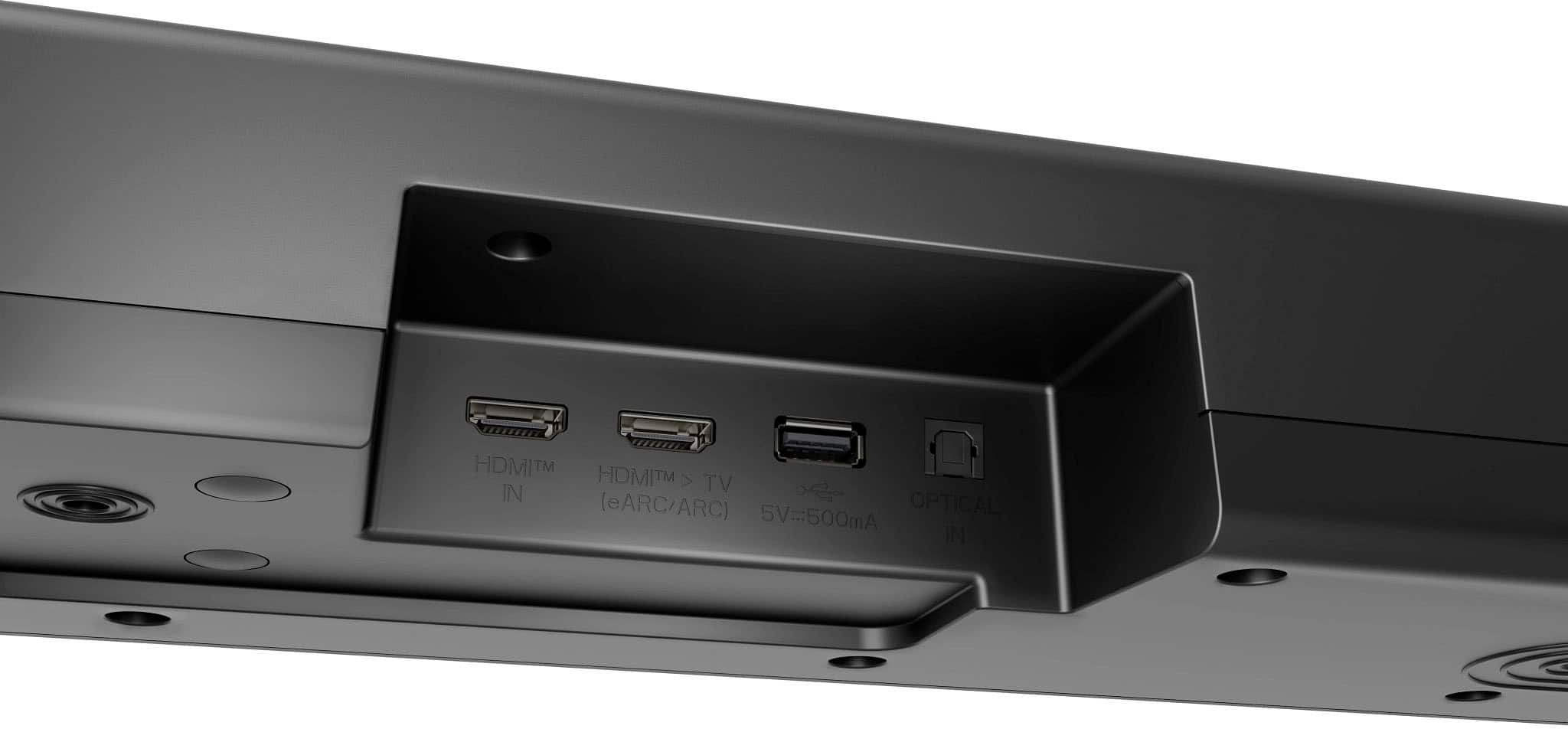
| Universal compatibility via HDMI eARC/ARC or optical | WOW Orchestra (LG TVs only) - uses TV speakers as additional center channel |
| Room Correction Technology - Automatic tuning optimizes sound for your specific space | |
| Trueplay tuning via iOS app analyzes room acoustics | AI Room Calibration uses built-in microphone for rear speaker optimization |
| Multi-Room Audio Support - Important for whole-home audio systems | |
| Full Sonos ecosystem integration with seamless multi-room grouping | Limited to basic TV integration, no multi-room capabilities |
| Expandability Options - Future upgrade flexibility affects long-term value | |
| Add Sonos Sub ($799) and rear speakers ($358) for complete surround | Complete system included - no official expansion options available |
| Total Cost for Complete System - True cost comparison including all necessary components | |
| $1,400-1,700 (Arc + Sub + rear speakers for equivalent surround experience) | $400 (everything included for complete 5.1.1 Dolby Atmos system) |
The LG S70TR ($400) offers significantly better value, providing a complete 5.1.1 system with wireless subwoofer and rear speakers for $400. The Sonos Arc ($540) costs more upfront and requires additional purchases of a subwoofer ($799) and rear speakers ($358) to match the LG's surround sound capabilities, bringing the total cost to nearly $1,700.
For home theater use, the LG S70TR provides superior immersion with true discrete surround sound from physical rear speakers and impactful bass from its dedicated subwoofer. The Sonos Arc excels at dialogue clarity and creates an impressive soundstage, but cannot match the authentic surround experience of physical rear channels for action movies and immersive content.
Yes, both soundbars work with any TV brand through HDMI eARC/ARC or optical connections. However, the LG S70TR offers special WOW Orchestra integration that uses LG TV speakers as an additional center channel, providing enhanced dialogue clarity specifically for LG TV owners.
The Sonos Arc has superior smart features with built-in Amazon Alexa and Google Assistant, Apple AirPlay 2 support, and comprehensive app control with detailed EQ settings. The LG S70TR focuses on automatic audio optimization through AI Sound Pro but lacks voice assistants and advanced streaming capabilities.
Both support Dolby Atmos, but with different approaches. The Sonos Arc uses upward-firing drivers within the main bar to bounce sound off the ceiling. The LG S70TR combines upward-firing drivers in the main bar with physical rear speakers, creating more authentic 3D spatial audio positioning for overhead and surround effects.
The Sonos Arc offers extensive expandability within the Sonos ecosystem - you can add a subwoofer, rear speakers, and connect to other Sonos speakers for multi-room audio. The LG S70TR comes as a complete system with no official expansion options, but includes everything needed for full surround sound from day one.
For music, the Sonos Arc provides exceptional clarity and detail with wide stereo imaging, plus supports high-quality streaming via AirPlay 2 and Wi-Fi. The LG S70TR delivers more impactful bass and fuller sound through its subwoofer, but primarily relies on Bluetooth streaming which limits audio quality compared to the Arc's lossless streaming capabilities.
The Sonos Arc is ideal for apartments where rear speaker placement is challenging or impossible, using advanced processing to create surround effects from a single location. The LG S70TR works well in small spaces if you can position the rear speakers properly, providing more authentic surround sound when space permits.
The key difference is the LG S70TR provides true surround sound with discrete rear channels and powerful bass from physical components, while the Sonos Arc creates simulated surround effects with superior dialogue clarity and wider stereo imaging. The LG offers more visceral movie impact, while the Sonos delivers more refined and detailed audio reproduction.
We've done our best to create useful and informative comparisons to help you decide what product to buy. Our research uses advanced automated methods to create this comparison and perfection is not possible - please contact us for corrections or questions. These are the sites we've researched in the creation of this article: whathifi.com - soundandvision.com - en.community.sonos.com - cnet.com - worldwidestereo.com - abt.com - creativeaudio.net - target.com - sonos.com - worldwidestereo.com - businessinsider.com - en.community.sonos.com - youtube.com - bestbuy.com - mynavyexchange.com - rixaudiovideoappliance.com - rtings.com - youtube.com - bestbuy.com - howards.siteontimedev.com - bestbuy.com - appliancestogousa.us

Privacy Policy
Terms and Conditions - Affiliate Policy
Home Security
© Copyright 2008-2026.
11816 Inwood Rd #1211, Dallas, TX 75244