


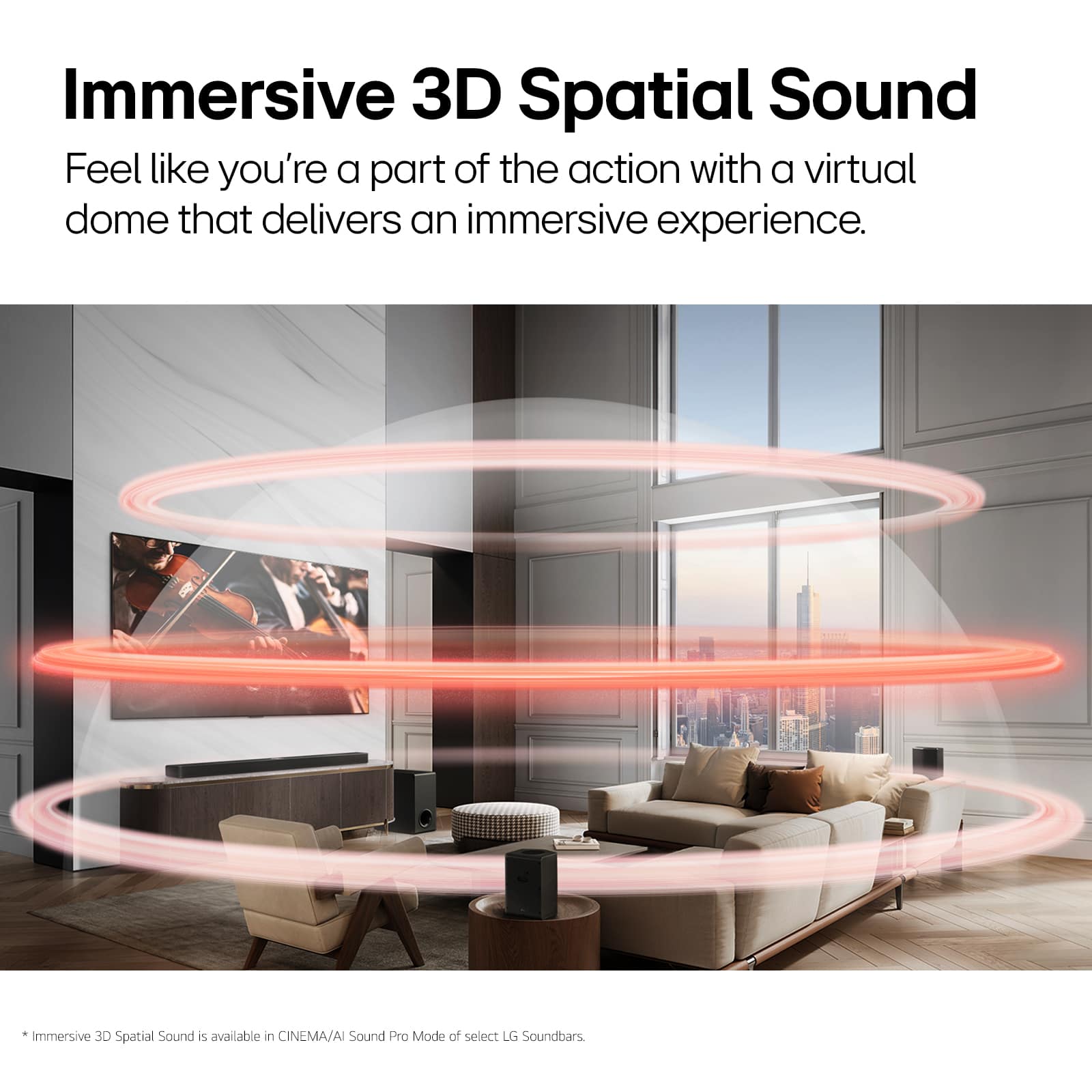
If you're tired of straining to hear dialogue over your TV's weak speakers or missing the rumble of explosions in your favorite movies, you're not alone. Modern flat-screen TVs prioritize thin designs over audio quality, leaving most viewers with tinny, underwhelming sound. That's where soundbars come in – these sleek speaker systems promise to transform your TV audio without the complexity of a full surround sound setup.
But choosing the right soundbar can feel overwhelming. Do you need Dolby Atmos? How many channels are enough? Should you buy a complete system or start simple and expand later? These questions become particularly relevant when comparing two popular options: the budget-friendly Samsung HW-B630F and the feature-packed LG S70TR.
Before diving into specifics, let's clarify what makes a soundbar effective. The most important factor is channel configuration – essentially, how many separate audio streams the system can handle. A 2.1 system has left and right channels plus a subwoofer for bass. A 3.1 system adds a dedicated center channel for dialogue. A 5.1.1 system includes all of those plus rear speakers for surround effects and a height channel for overhead audio.
The difference isn't just about numbers. Physical speakers create genuine directional effects that virtual processing simply can't match. When a helicopter flies overhead in a movie, a system with actual height speakers can make you feel like it's truly above you, while virtual systems rely on audio tricks that work inconsistently.
Audio processing technology matters too. Features like dialogue enhancement, night modes, and automatic sound optimization can significantly impact your daily viewing experience. Connectivity options determine compatibility with modern gaming consoles, streaming devices, and smart TV features.
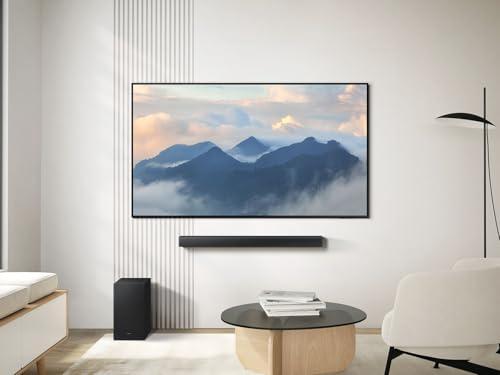
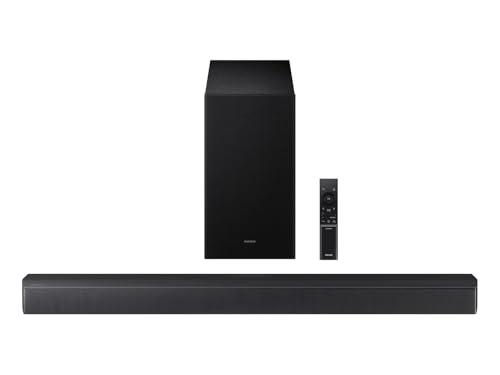
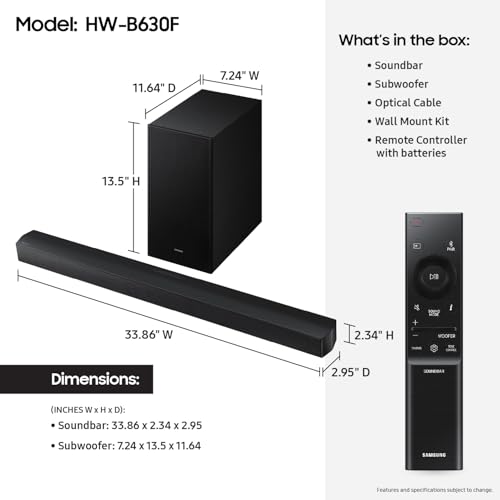
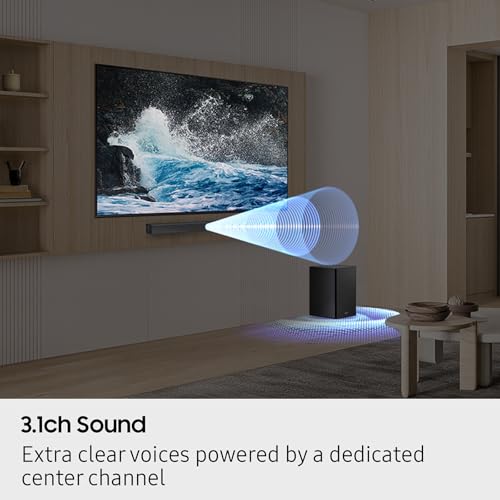
The Samsung HW-B630F, released in 2025, represents Samsung's value-focused B-series lineup. It's a 3.1 channel system that includes a soundbar with three speakers (left, center, right) plus a wireless subwoofer. At the time of writing, it's positioned as an affordable entry point into better TV audio, typically priced significantly below premium options.
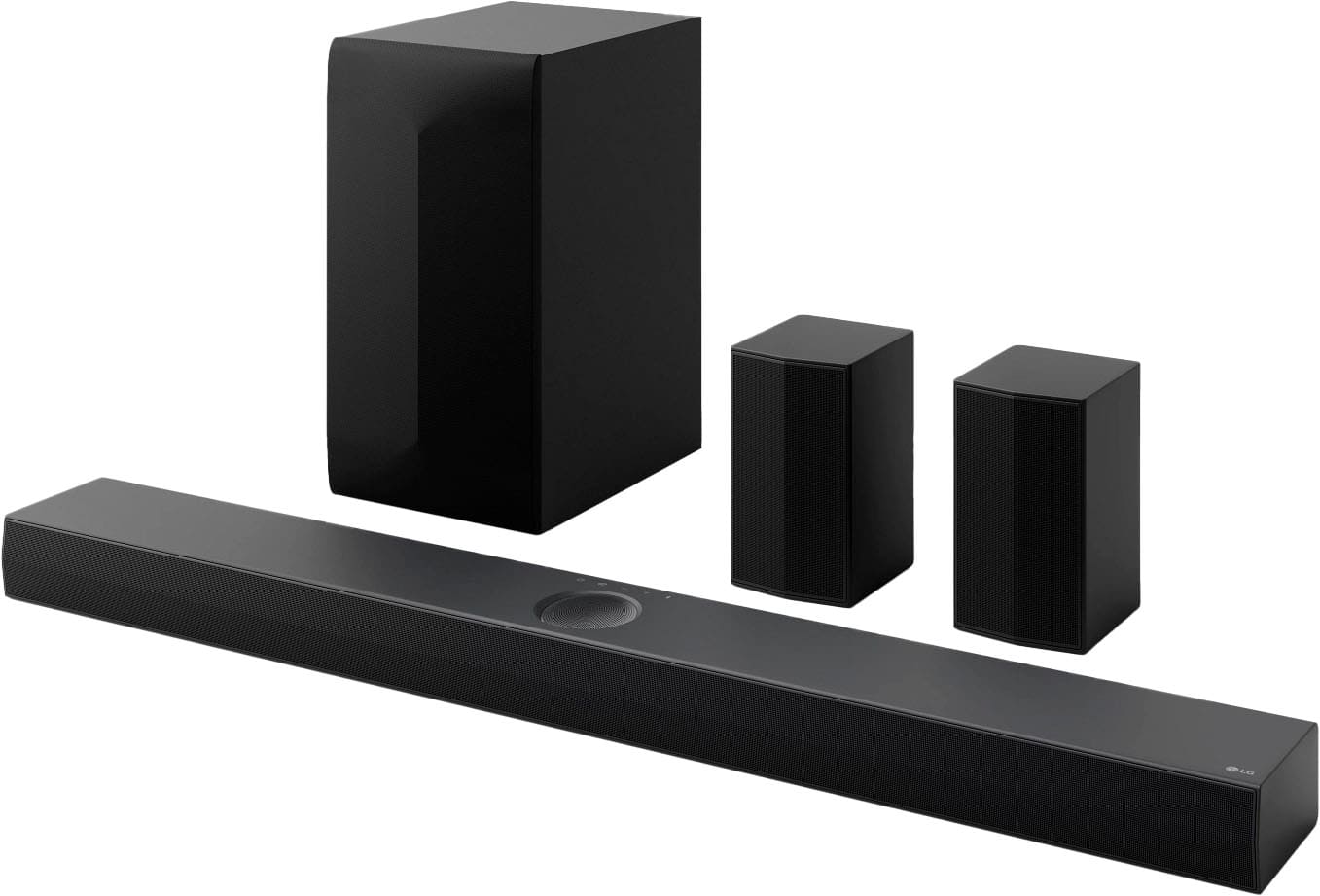
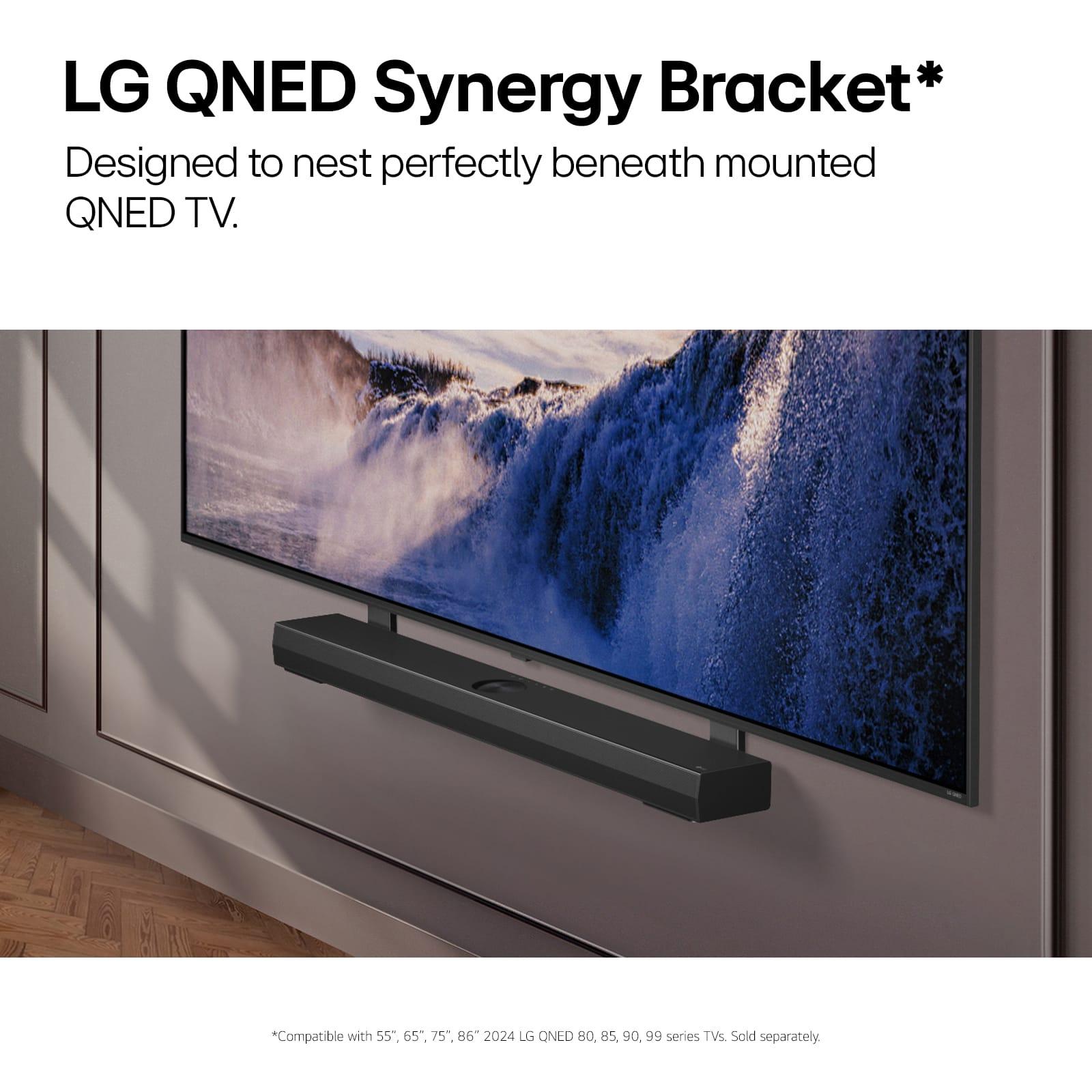
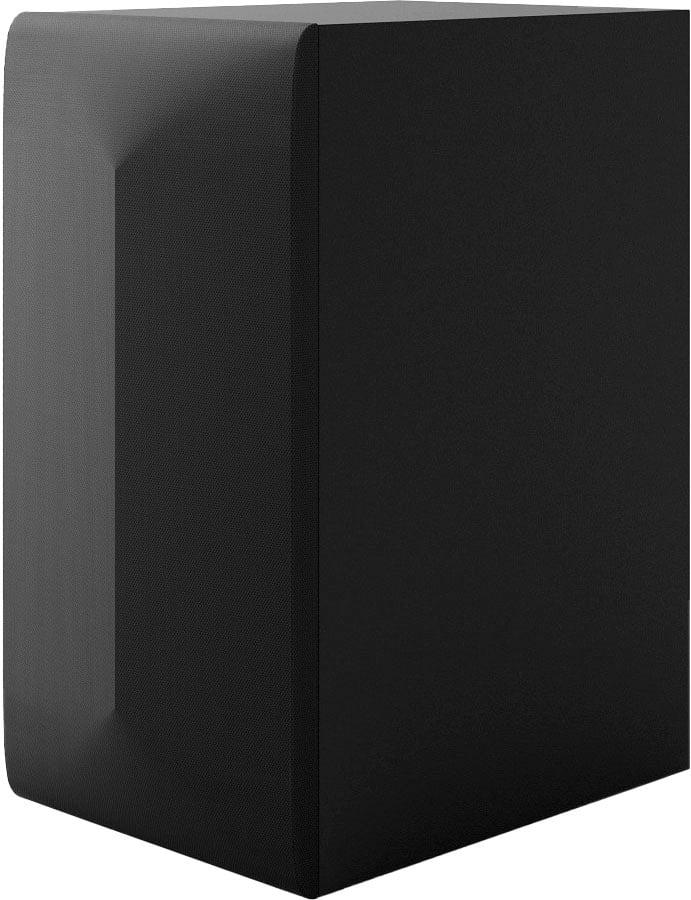
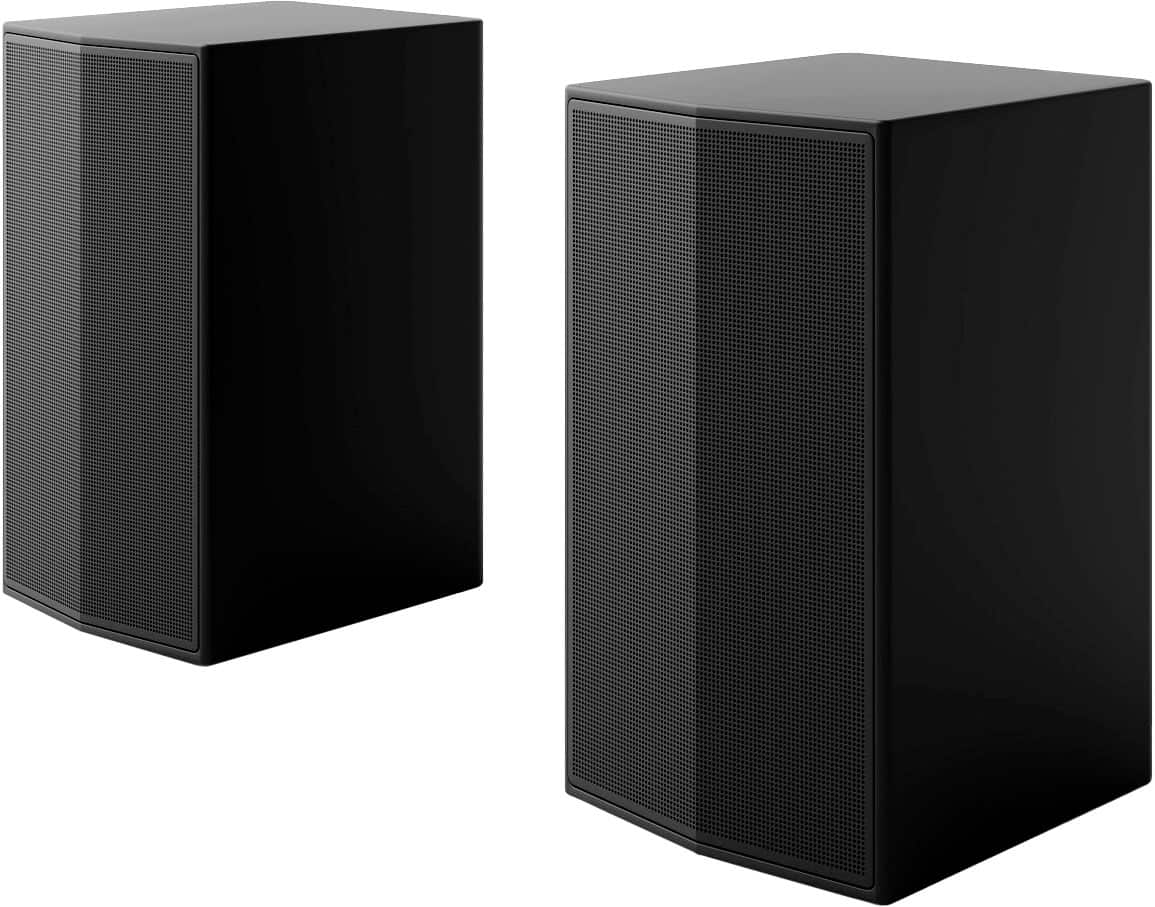
The LG S70TR, launched in 2024, takes a completely different approach. This 5.1.1 channel system includes everything you need for genuine surround sound: the main soundbar, a wireless subwoofer, wireless rear speakers, and even a dedicated up-firing speaker for height effects. Despite including much more hardware, it's priced moderately higher than the Samsung – representing exceptional value at the time of writing.
This fundamental difference in approach shapes everything about how these systems perform and who they're best suited for.
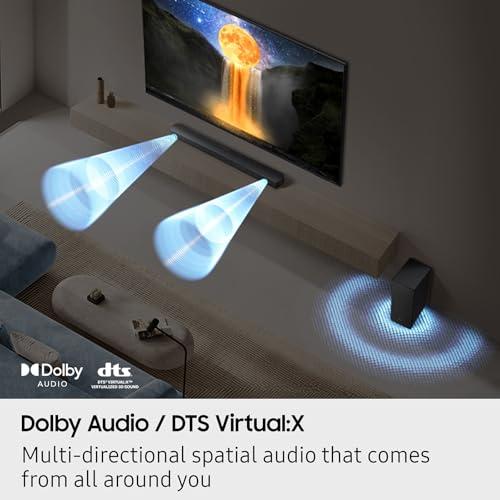
The most significant performance difference between these systems lies in their surround sound capabilities. The Samsung HW-B630F relies on DTS Virtual:X processing to create the illusion of surround sound from its front-facing speakers. This technology uses sophisticated algorithms to manipulate audio timing and phase relationships, tricking your brain into perceiving sounds coming from directions where no speakers exist.
Virtual surround can be impressive in optimal conditions – sitting directly in front of the soundbar in a smaller room. However, it falls apart quickly as you move around, and the effect varies dramatically based on room acoustics and furniture placement. Our research into user experiences consistently shows that while virtual surround adds some width to the soundstage, it rarely creates convincing directional effects for important audio cues like approaching footsteps in games or ambient sounds in movies.
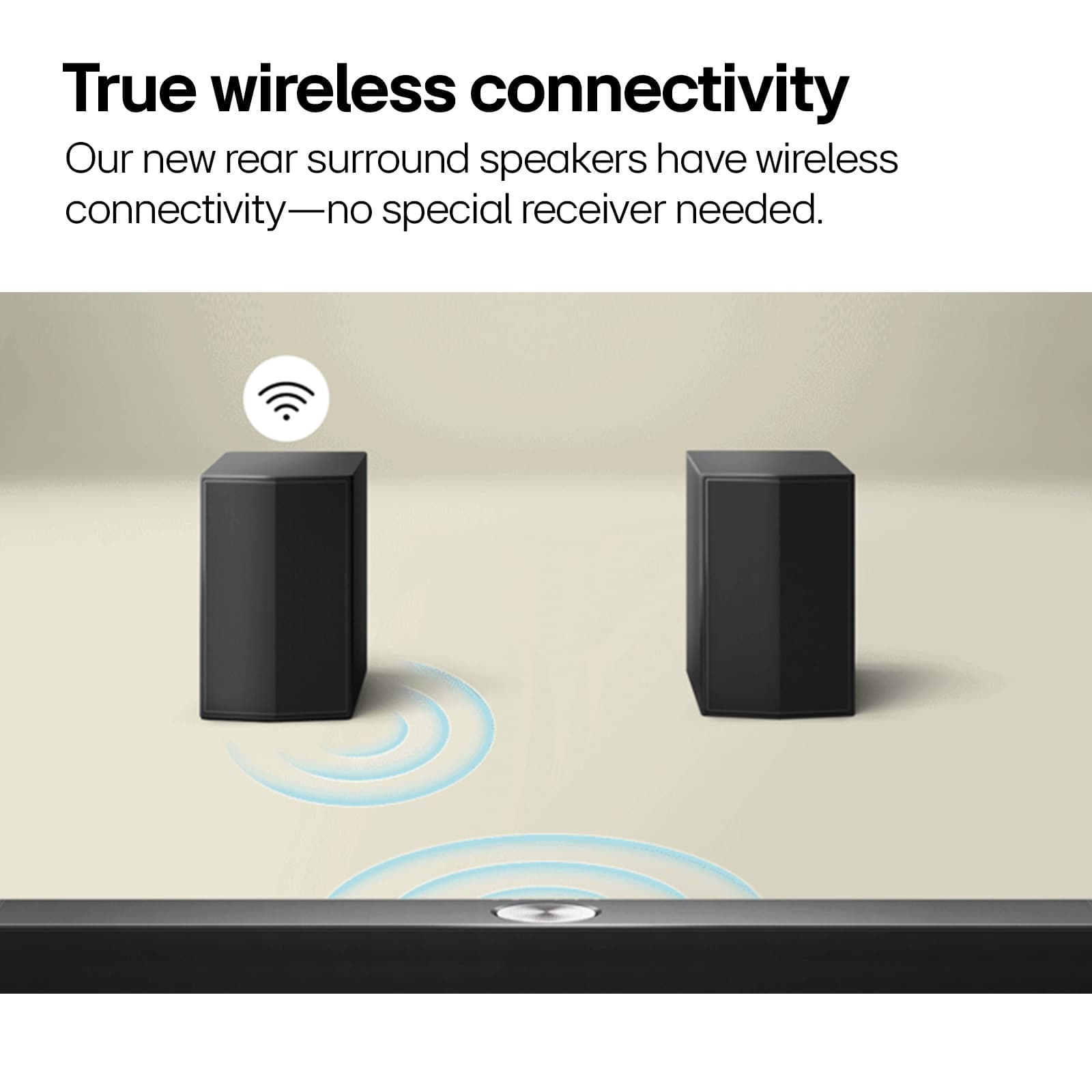
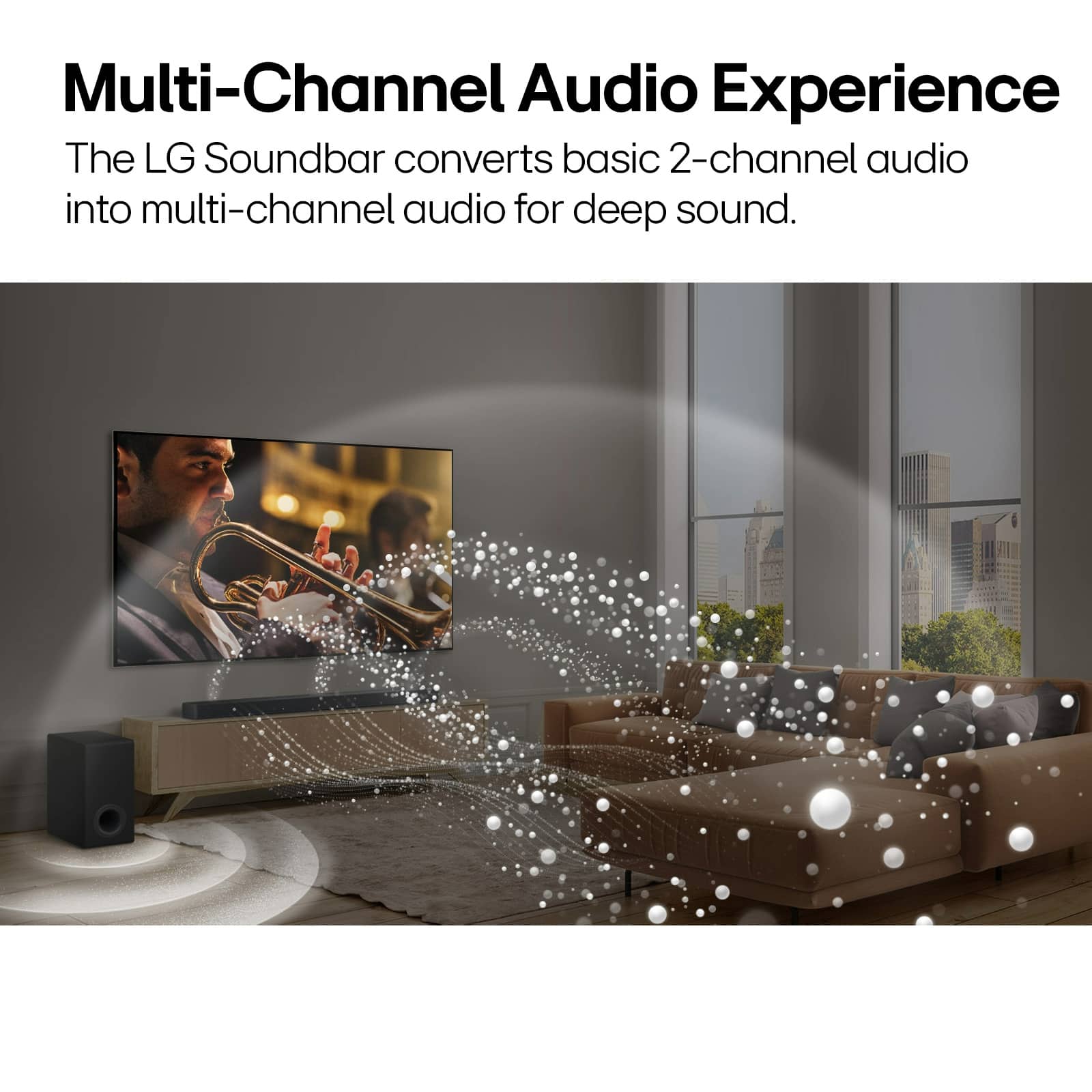
The LG S70TR delivers true physical surround sound through its included wireless rear speakers. When properly positioned, these create authentic directional audio that remains convincing regardless of where you sit. The difference is immediately apparent in action sequences – explosions genuinely seem to move around the room, and ambient effects like rain or crowd noise create a bubble of sound around your seating area.
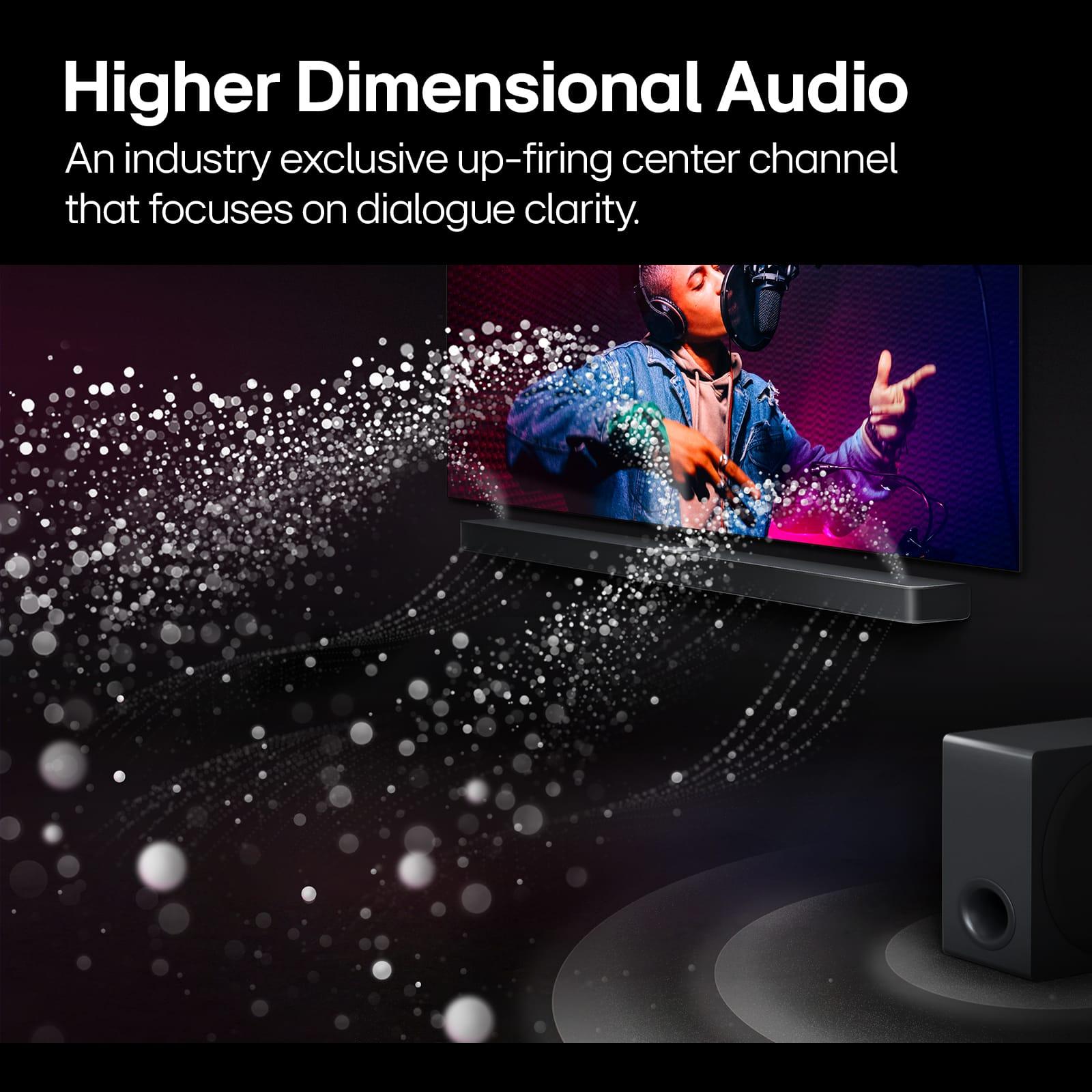
The LG also supports Dolby Atmos and DTS:X, advanced audio formats that include height information. Its up-firing center channel bounces sound off your ceiling to create overhead effects. While not as precise as ceiling-mounted speakers, this approach adds a genuine vertical dimension that's particularly effective for aircraft flyovers, thunder, or debris falling from above.
Poor dialogue clarity is the primary reason people upgrade from TV speakers, making this perhaps the most critical performance aspect. Both systems include dedicated center channels, but their implementations differ significantly.
The Samsung HW-B630F uses a traditional center speaker with Voice Enhance mode, which boosts midrange frequencies where human speech typically resides. This approach provides clear improvement over TV speakers and includes useful features like Night Mode, which compresses loud sound effects to keep dialogue audible without disturbing others.
However, the LG S70TR goes much further with its up-firing center channel design combined with Clear Voice Plus technology. This system analyzes incoming audio in real-time, automatically adjusting the balance between dialogue, music, and effects. When it detects high vocal content, it intelligently reduces bass and adjusts midrange frequencies to ensure speech cuts through complex soundtracks.
Our analysis of user reviews consistently shows that the LG provides noticeably superior dialogue clarity, particularly in challenging scenarios like action movies with dense sound design or shows with heavy accents. The up-firing center channel design also helps anchor dialogue to the screen rather than appearing to come from below it, creating a more natural viewing experience.
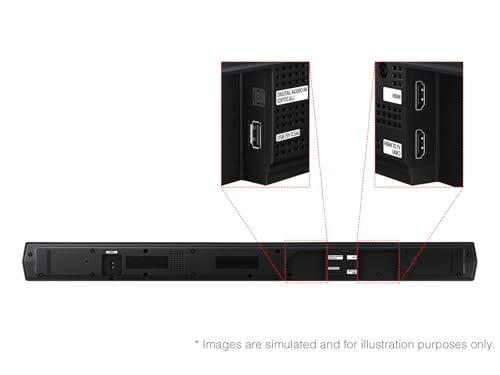
Gaming audio has evolved dramatically with current-generation consoles, and the connectivity differences between these systems become crucial for gamers. The Samsung HW-B630F includes basic HDMI 1.4 connectivity, limiting it to 1080p video passthrough. While it offers Game Mode processing that enhances positional audio cues, it cannot take advantage of modern gaming features.
The LG S70TR includes HDMI 2.1 connectivity with support for Variable Refresh Rate (VRR) and Auto Low Latency Mode (ALLM). VRR synchronizes the audio system's processing with the console's video output, reducing input lag and eliminating audio stuttering during frame rate fluctuations. ALLM automatically switches to the lowest-latency audio processing when gaming is detected, crucial for competitive play where milliseconds matter.
For PlayStation 5 or Xbox Series X owners, these features aren't just nice-to-haves – they're essential for experiencing games as developers intended. The LG's true surround sound also provides significant advantages in competitive gaming, where accurately localizing enemy footsteps or gunfire can mean the difference between victory and defeat.
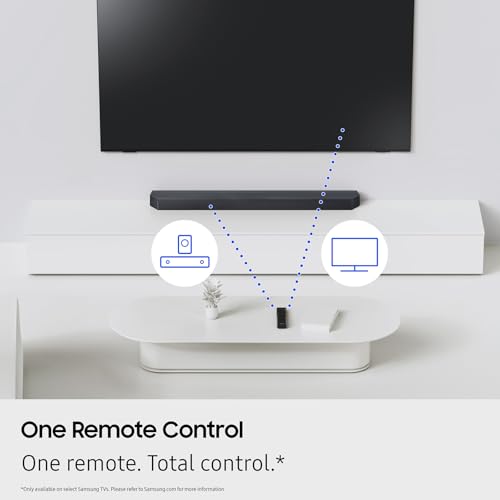
Both systems offer smartphone apps and TV integration, but with different approaches reflecting their target markets. The Samsung HW-B630F focuses on simplicity, featuring One Remote Control compatibility with Samsung TVs and basic Bluetooth connectivity. Setup is straightforward, and daily operation requires minimal interaction.
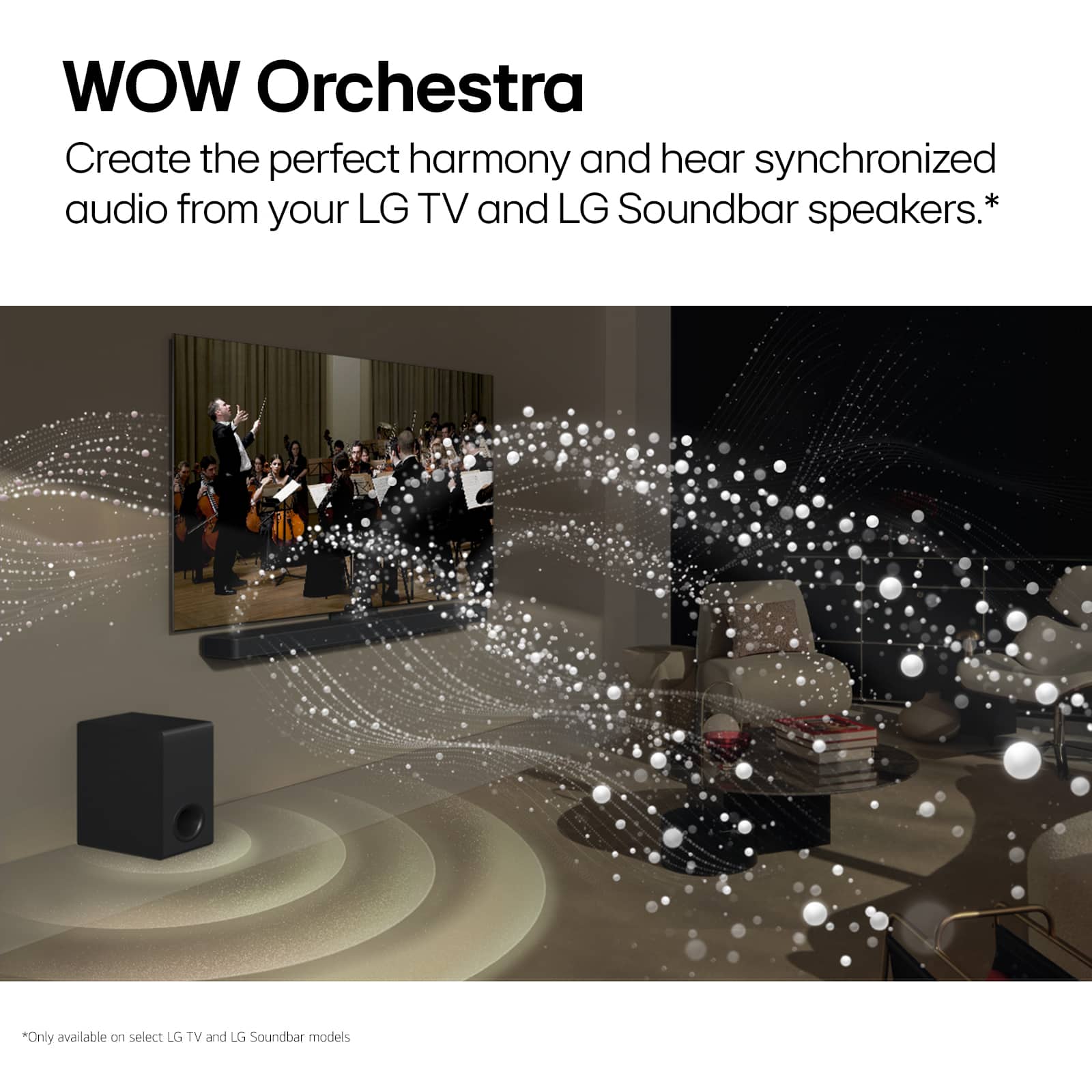
The LG S70TR offers more sophisticated integration, particularly with LG QNED and OLED TVs through WOW Orchestra technology. This feature simultaneously uses both the TV's speakers and the soundbar system, creating an even wider soundstage and more precise dialogue positioning. The LG app provides detailed EQ control with separate adjustments for bass, midrange, and treble, plus room correction features that optimize sound based on your specific space.
AI Sound Pro, exclusive to the LG, continuously analyzes content type and automatically switches between optimized settings for movies, music, sports, and games. This eliminates the need to manually adjust settings as you switch between Netflix, gaming, and live TV.
At the time of writing, the pricing difference between these systems is smaller than their capability gap might suggest, but calculating true value requires looking beyond initial purchase price. The Samsung HW-B630F appears more affordable upfront, including just the soundbar and subwoofer. However, achieving genuine surround sound requires purchasing Samsung's wireless rear speaker kit separately, typically adding several hundred dollars to the total cost.
This expansion path means you're paying more overall for a system that still can't match the LG's Dolby Atmos capabilities due to the Samsung's 3.1 channel limitation. Our analysis suggests that buyers planning to eventually add surround speakers will spend significantly more with the Samsung approach while achieving inferior results.
The LG S70TR includes everything needed for a complete surround system from day one. When you factor in the cost of wireless rear speakers that would need to be purchased separately for the Samsung, the LG represents exceptional value – you're getting 60% more audio channels and advanced processing for a surprisingly modest price premium.
Room acoustics dramatically affect soundbar performance, and these systems have different optimal environments. The Samsung HW-B630F works well in smaller spaces where virtual surround processing is more effective. Rooms under 200 square feet, typical of bedrooms or small apartments, can benefit from its focused approach without the complexity of multiple wireless components.
However, in medium to large living rooms, the Samsung's virtual surround effects become less convincing, and the single subwoofer may struggle to provide adequate bass coverage. The system's compact design makes it ideal for wall mounting below smaller TVs without overwhelming the space.
The LG S70TR truly shines in medium-sized rooms where the rear speakers can be properly positioned for optimal surround effects. The wireless rear speakers need clear line-of-sight to the main soundbar and should ideally be placed slightly behind the seating area. While this requires more planning, the payoff in audio immersion is substantial.
The LG's higher power output (500W vs. the Samsung's estimated 200-300W) also provides better dynamic range and room-filling capability, important for larger spaces or when entertaining groups.
Our research into extensive user feedback reveals consistent patterns in how these systems perform in daily use. Samsung HW-B630F owners consistently praise its reliability and ease of use, with particular appreciation for the wireless subwoofer's performance and the system's stable Bluetooth connectivity. However, many users eventually feel limited by the virtual surround processing and consider upgrading to true surround systems.
LG S70TR users report dramatically improved movie and gaming experiences, with frequent mentions of previously unnoticed audio details and enhanced immersion. The WOW Orchestra feature receives particular praise from LG TV owners, who describe the combined speaker setup as transformative. Some users initially struggle with optimal rear speaker placement, but most find the included setup guidance sufficient.
Both systems handle typical TV viewing well, but the LG consistently outperforms in challenging scenarios like quiet dialogue scenes with heavy background music or complex action sequences with multiple simultaneous sound sources.
The Samsung HW-B630F makes sense for specific users and situations. If you're primarily upgrading from TV speakers for better dialogue clarity and modest bass improvement, it delivers solid value. Budget-conscious buyers who want immediate improvement without commitment to a full surround setup will appreciate its focused approach.
Samsung TV owners benefit from seamless integration features, and the system works particularly well for users who primarily watch news, talk shows, and simple scripted content. If your viewing habits don't emphasize action movies, gaming, or complex audio content, the Samsung provides adequate enhancement at an accessible price point.
However, for most users seeking a significant audio upgrade, the LG S70TR offers substantially better value and performance. Movie enthusiasts will immediately notice the difference in immersion and detail, while gamers benefit from both the advanced connectivity features and authentic positional audio.
The LG particularly excels for users with medium-sized living rooms who can properly position the rear speakers, and LG TV owners should strongly consider the WOW Orchestra integration benefits. If you're planning to keep your soundbar for several years, the LG's future-proof feature set and complete configuration make it the more sensible long-term investment.
Choose the Samsung HW-B630F if budget constraints are paramount and you primarily need dialogue clarity improvement for basic TV viewing. It's also appropriate for smaller spaces where surround effects are less important and for users who prefer simple, reliable operation over advanced features.
Choose the LG S70TR if you want a complete home theater audio solution that will remain relevant as your viewing habits evolve. The modest price premium delivers dramatically more capability, and the complete system approach eliminates future upgrade decisions and additional costs.
The decision ultimately comes down to whether you're seeking adequate improvement or genuine transformation of your home entertainment experience. While both systems succeed at their intended purposes, the LG's comprehensive approach and exceptional value proposition make it the clear choice for most buyers seeking a meaningful audio upgrade.
| Samsung HW-B630F | LG S70TR |
|---|---|
| Channel Configuration - Determines surround sound capability and what's included | |
| 3.1 channels (soundbar + wireless subwoofer only) | 5.1.1 channels (complete system with rear speakers + height channel) |
| Dolby Atmos Support - Essential for modern movie and gaming audio | |
| No (3.1 limitation prevents overhead audio) | Yes, with dedicated up-firing center channel |
| What's Included - Affects total system cost | |
| Soundbar and wireless subwoofer (rear speakers sold separately) | Complete system: soundbar, subwoofer, and wireless rear speakers |
| Surround Sound Type - Physical vs virtual makes huge difference in immersion | |
| Virtual surround via DTS Virtual:X processing | True physical surround with discrete rear channels |
| HDMI Connectivity - Critical for modern gaming consoles | |
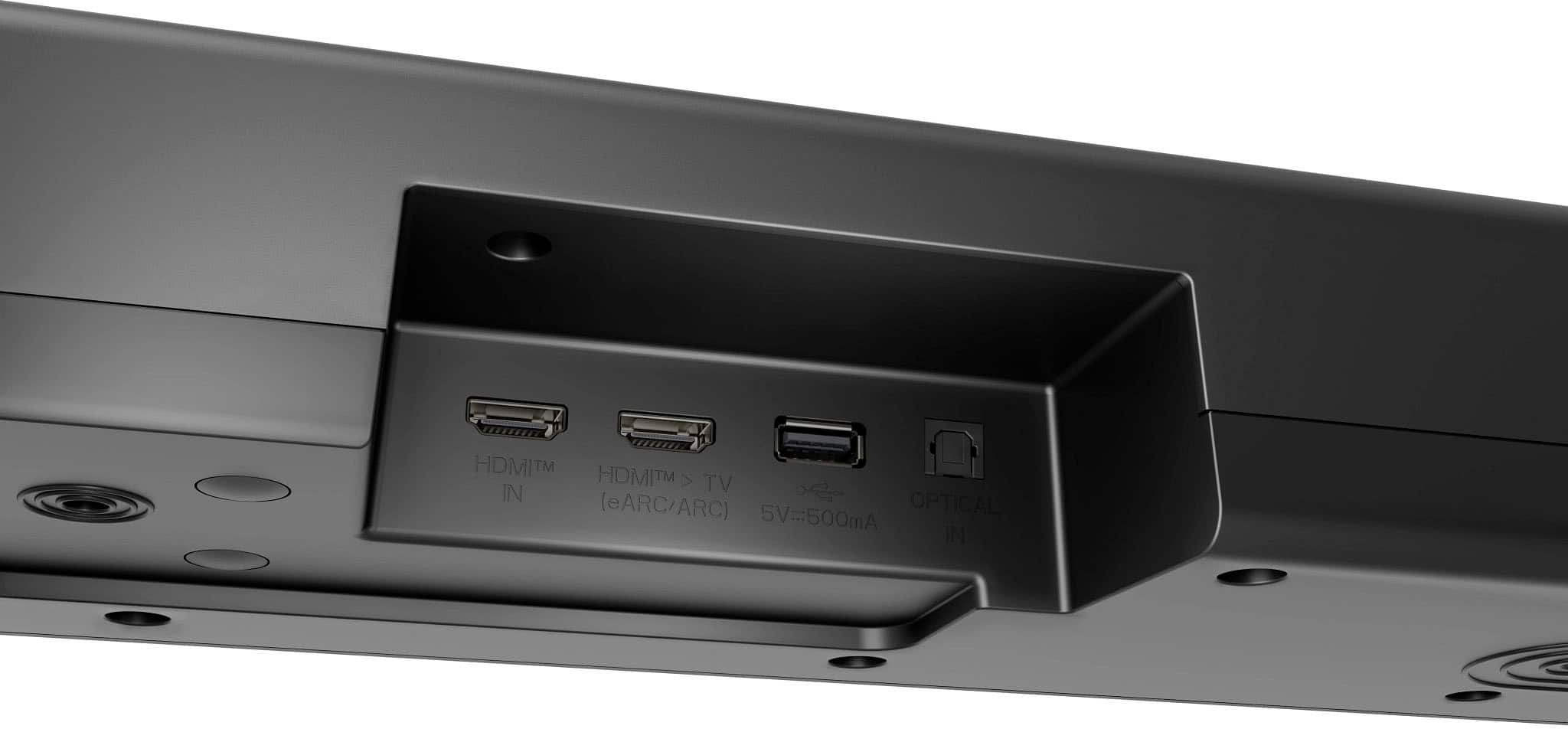
| HDMI 1.4 ARC (1080p passthrough only) | HDMI 2.1 eARC with 4K/120Hz VRR and ALLM support |
| Dialogue Enhancement - Most important feature for TV viewing | |
| Voice Enhance mode with standard center channel | Clear Voice Plus with up-firing center channel and AI optimization |
| Total System Power - Affects room coverage and dynamic range | |
| Estimated 200-300W (Samsung doesn't specify) | 500W RMS across all speakers |
| TV Integration Features - Convenience and expanded functionality | |
| One Remote Control with Samsung TVs | WOW Orchestra with LG TVs (combines TV and soundbar speakers) |
| Smart Features - App control and customization options | |
| Basic remote control, Bluetooth 4.2 | Smartphone app with 3-band EQ, AI Sound Pro, room correction |
| Wireless Technology - Reliability and connection quality | |
| Bluetooth 4.2, basic wireless subwoofer | Bluetooth 5.1, Wi-Fi, advanced wireless rear speaker system |
| Expandability - Future upgrade options | |
| Can add Samsung wireless rear kit (expensive, still no Atmos) | Complete system from day one, no additional purchases needed |
| Best Room Size - Where each system performs optimally | |
| Small to medium rooms (under 200 sq ft) | Medium rooms where rear speakers can be properly positioned |
The LG S70TR is significantly better for home theater use. It includes true Dolby Atmos support with overhead audio effects, physical rear speakers for authentic surround sound, and 500W of total system power. The Samsung HW-B630F only offers virtual surround processing and lacks height channels, making it less immersive for movies and shows.
The biggest difference is that the Samsung HW-B630F is a 3.1 channel system with just a soundbar and subwoofer, while the LG S70TR is a complete 5.1.1 system that includes wireless rear speakers and Dolby Atmos height channels. This means the LG provides true surround sound while the Samsung relies on virtual processing.
No, the Samsung HW-B630F does not support Dolby Atmos. Its 3.1 channel configuration lacks the height speakers necessary for overhead audio effects. If you want Dolby Atmos, you'll need the LG S70TR, which includes dedicated up-firing speakers for height channels.
The LG S70TR offers superior dialogue clarity thanks to its up-firing center channel design and Clear Voice Plus technology that automatically optimizes speech frequencies. While the Samsung HW-B630F has a dedicated center channel with Voice Enhance mode, it doesn't match the advanced processing and positioning of the LG system.
Yes, you can purchase Samsung's wireless rear speaker kit separately to add surround speakers to the Samsung HW-B630F. However, this additional purchase typically costs several hundred dollars more, and even with rear speakers, the system still cannot support Dolby Atmos due to its 3.1 channel limitation. The LG S70TR includes rear speakers from the start.
The LG S70TR is much better for modern gaming. It features HDMI 2.1 connectivity with VRR (Variable Refresh Rate) and ALLM (Auto Low Latency Mode) support up to 120Hz, essential for PlayStation 5 and Xbox Series X. The Samsung HW-B630F only has HDMI 1.4 with basic Game Mode processing and no advanced gaming features.
The Samsung HW-B630F includes the main soundbar, wireless subwoofer, remote control, and wall mount bracket. The LG S70TR includes all of that plus wireless rear speakers, making it a complete 5.1.1 surround sound system out of the box.
Both offer good TV integration, but it depends on your TV brand. The Samsung HW-B630F works seamlessly with Samsung TVs through One Remote Control. The LG S70TR offers superior integration with LG QNED and OLED TVs through WOW Orchestra technology, which combines the TV speakers with the soundbar for enhanced audio.
The Samsung HW-B630F requires less space since it's just a soundbar and subwoofer, making it ideal for smaller rooms or apartments. The LG S70TR needs more space to properly position the wireless rear speakers, typically working best in medium-sized rooms where you can place speakers behind your seating area.
The LG S70TR offers exceptional value despite its higher upfront cost. When you factor in that adding rear speakers to the Samsung HW-B630F costs significantly more and still doesn't provide Dolby Atmos, the LG delivers much more capability for a modest price premium. You're getting a complete surround system versus a basic setup.
Yes, both support Bluetooth connectivity. The Samsung HW-B630F has Bluetooth 4.2 with multipoint connection for two devices simultaneously. The LG S70TR features more advanced Bluetooth 5.1 connectivity plus Wi-Fi for additional streaming options and app control.
For small apartments, the Samsung HW-B630F might be more appropriate due to its simpler setup and smaller footprint. However, if your apartment can accommodate rear speakers and you want significantly better audio quality, the LG S70TR still provides superior performance even in smaller spaces, especially for movie watching and gaming.
We've done our best to create useful and informative comparisons to help you decide what product to buy. Our research uses advanced automated methods to create this comparison and perfection is not possible - please contact us for corrections or questions. These are the sites we've researched in the creation of this article: samsung.com - bhphotovideo.com - crutchfield.com - youtube.com - bestproducts.com - videoandaudiocenter.com - pcrichard.com - bhphotovideo.com - samsung.com - youtube.com - requiremints.com - karlsonline.com - crutchfield.com - youtube.com - donstv.com - samsung.com - bhphotovideo.com - youtube.com - youtube.com - crutchfield.com - costco.ca - rtings.com - crutchfield.com - accio.com - bhphotovideo.com - manuals.plus - samsung.com - saraappliance.com - bestbuy.com - mynavyexchange.com - rixaudiovideoappliance.com - rtings.com - youtube.com - bestbuy.com - howards.siteontimedev.com - bestbuy.com - appliancestogousa.us

Privacy Policy
Terms and Conditions - Affiliate Policy
Home Security
© Copyright 2008-2026.
11816 Inwood Rd #1211, Dallas, TX 75244