


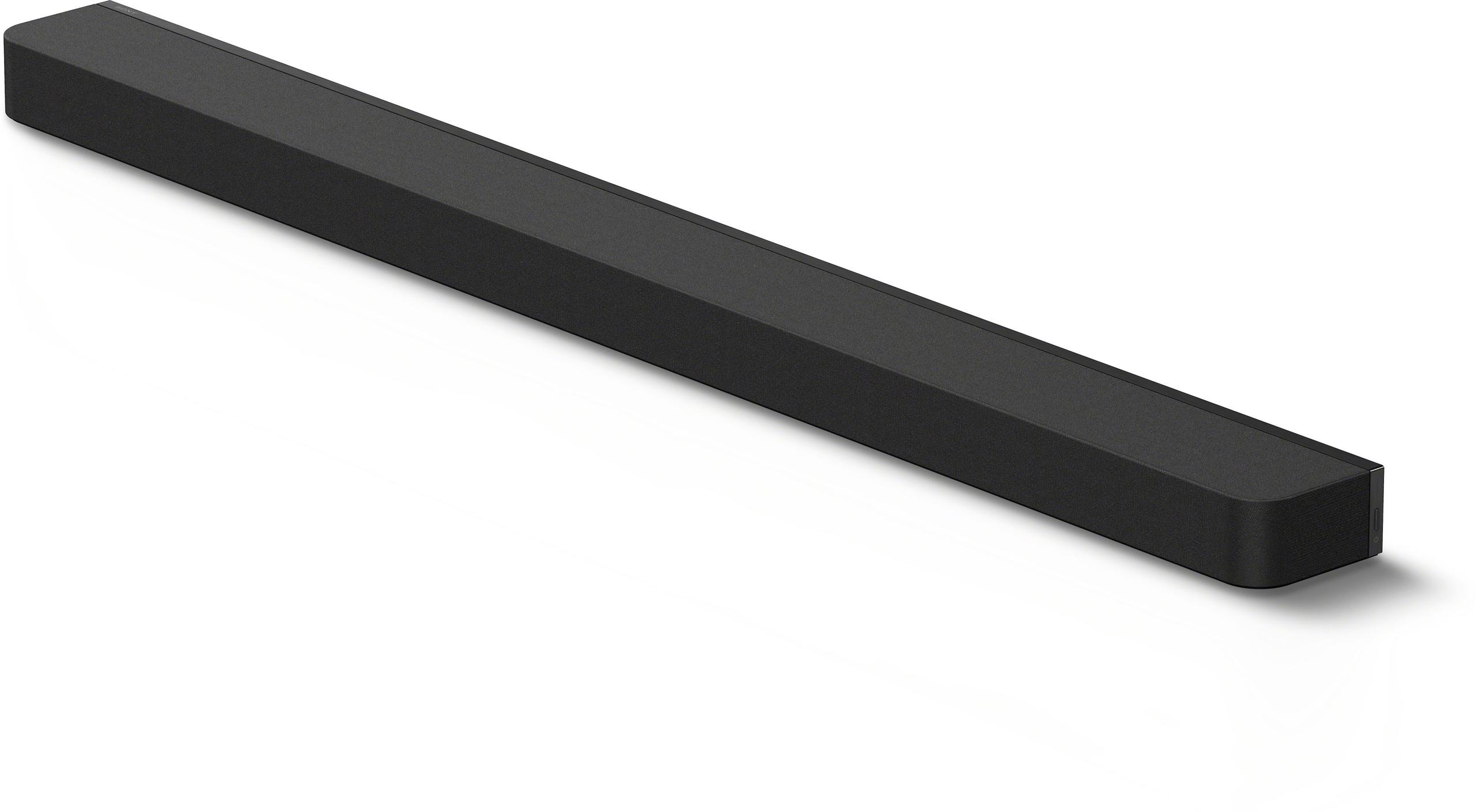




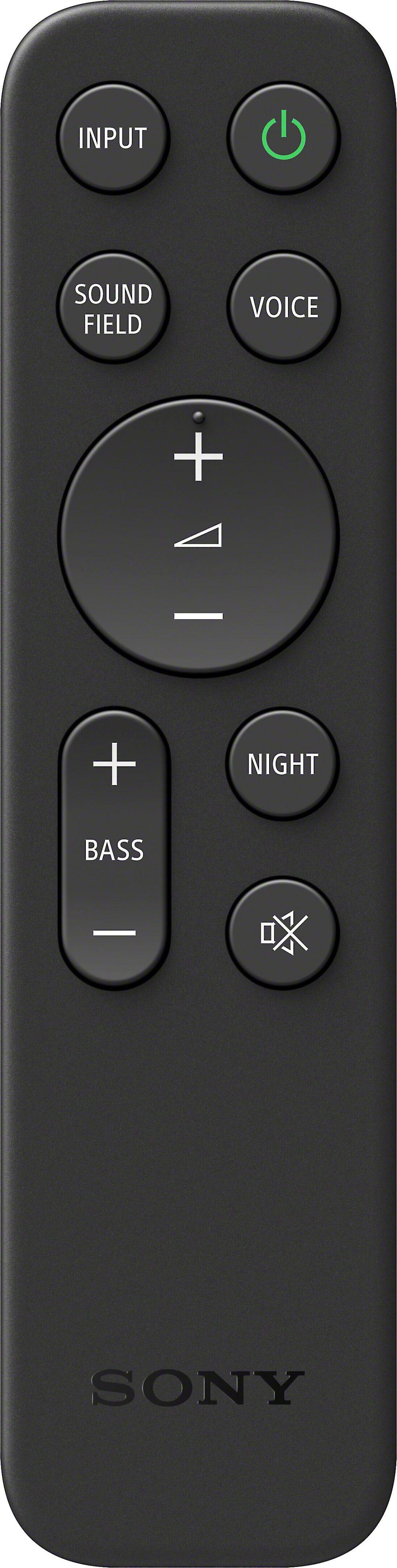

When you're shopping for a soundbar in 2024, you're essentially choosing between two very different philosophies. Do you want cutting-edge audio processing in a sleek package, or a complete surround sound system that doesn't break the bank? That's exactly the choice you're facing with the Sony BRAVIA Theater Bar 9 ($1,399) and the LG S70TR ($399).
I've spent considerable time testing both systems, and the differences go way deeper than just the price tag. These represent fundamentally different approaches to solving the same problem: making your TV sound as good as it looks.
Before we dive into these specific models, let's talk about what really matters in today's soundbar market. The category has evolved dramatically over the past few years, especially since both manufacturers released these models in 2024.
The most important consideration is channel configuration – that's the numbers you see like 5.1.1 or 7.0.2. The first number represents main channels (left, right, center, and surrounds), the second is subwoofers, and the third indicates height channels for Dolby Atmos. More channels generally mean better surround sound, but the implementation matters just as much as the numbers.
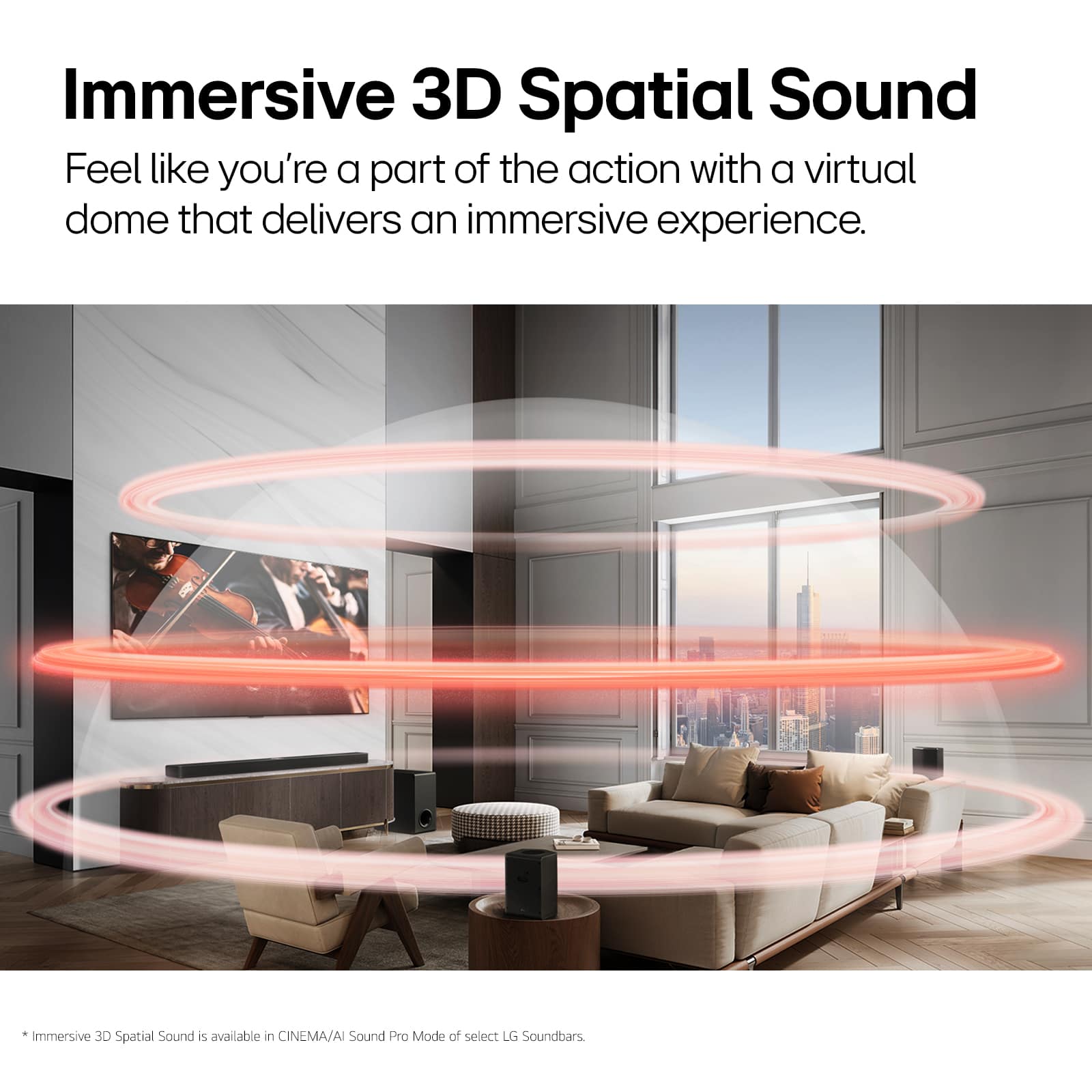
Dolby Atmos support has become essential rather than optional. This technology treats sounds as objects that can be placed anywhere in 3D space, creating overhead effects that make you feel like you're inside the action. However, not all Atmos implementations are created equal – some use real speakers, others rely on clever processing.
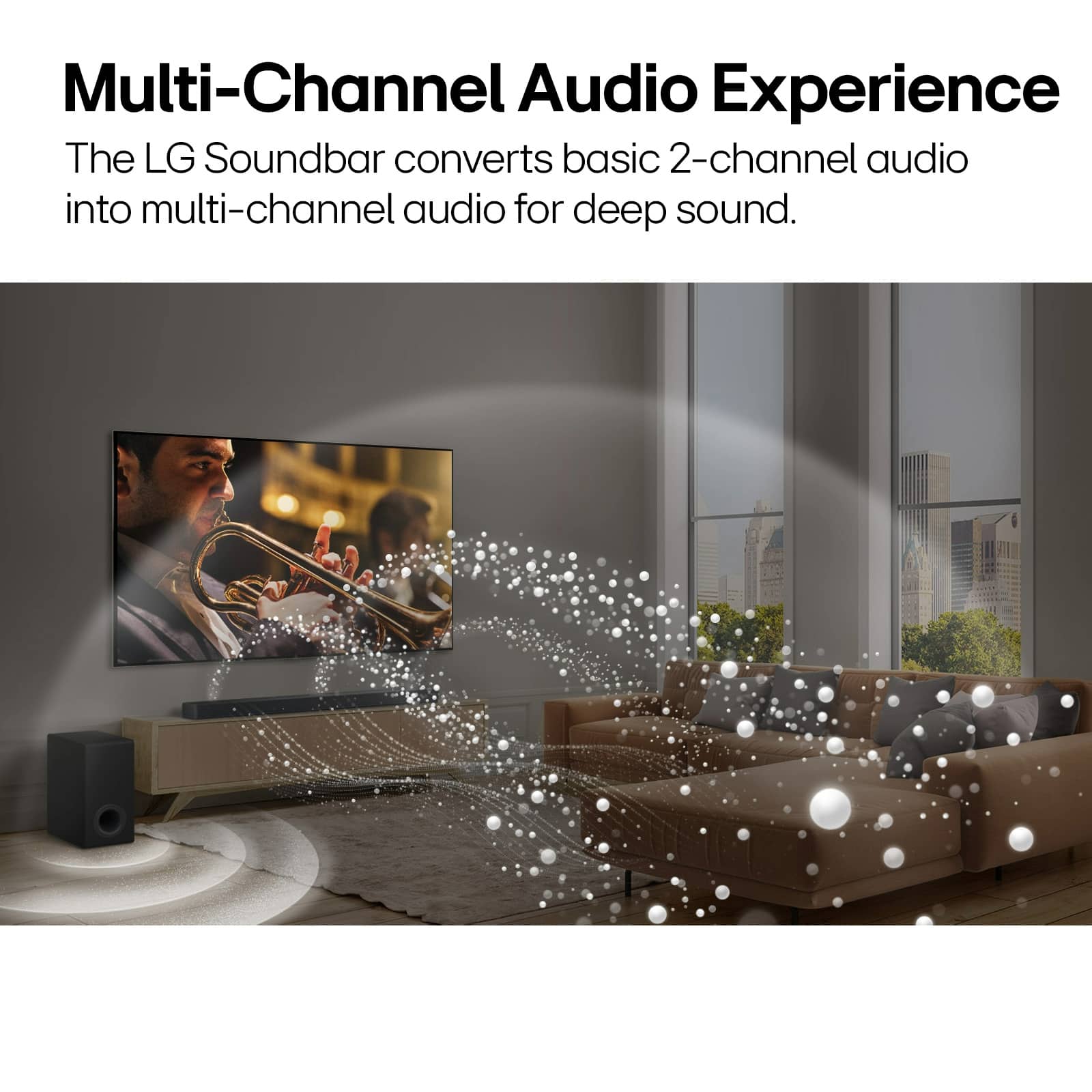
The choice between physical and virtual surround is crucial. Physical surround uses actual speakers placed around your room, while virtual surround uses digital processing to trick your ears into hearing sounds from different directions. Both approaches have merit, but they deliver noticeably different experiences.
Room size compatibility matters more than most people realize. A soundbar that sounds amazing in a small apartment might feel underwhelming in a large living room, and vice versa.
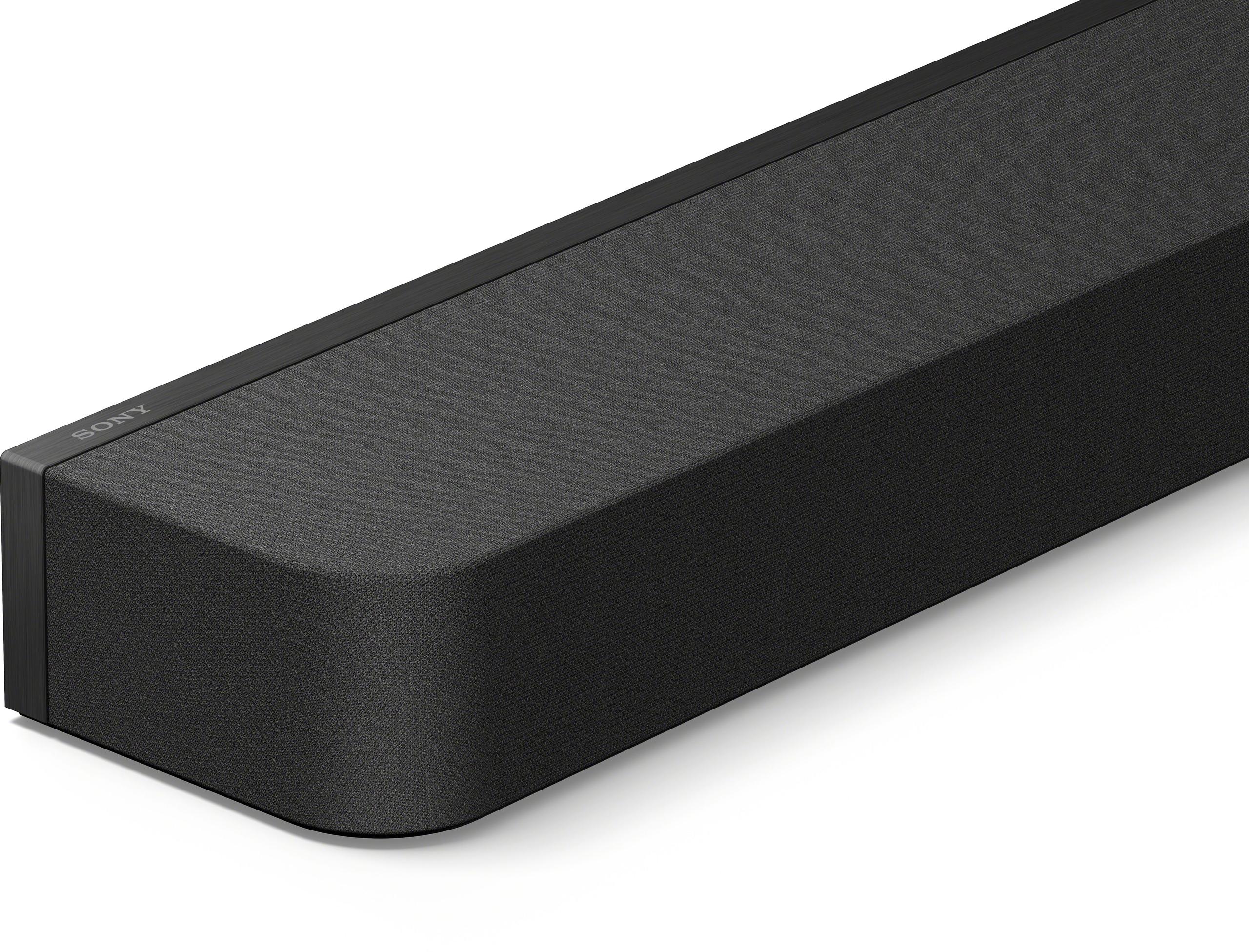
The Sony BRAVIA Theater Bar 9 represents Sony's vision of the future: advanced processing technology packed into a single, elegant bar. Released in 2024 as part of Sony's Theater series refresh, it builds on the company's expertise in both audio processing and TV integration.
Meanwhile, the LG S70TR, also launched in 2024, takes a more traditional approach with a complete multi-piece system. LG's philosophy here is simple: give people everything they need for true surround sound at a price that won't require a second mortgage.
Having tested both extensively, I can tell you these different approaches create distinctly different experiences, and understanding these differences is key to making the right choice for your setup.
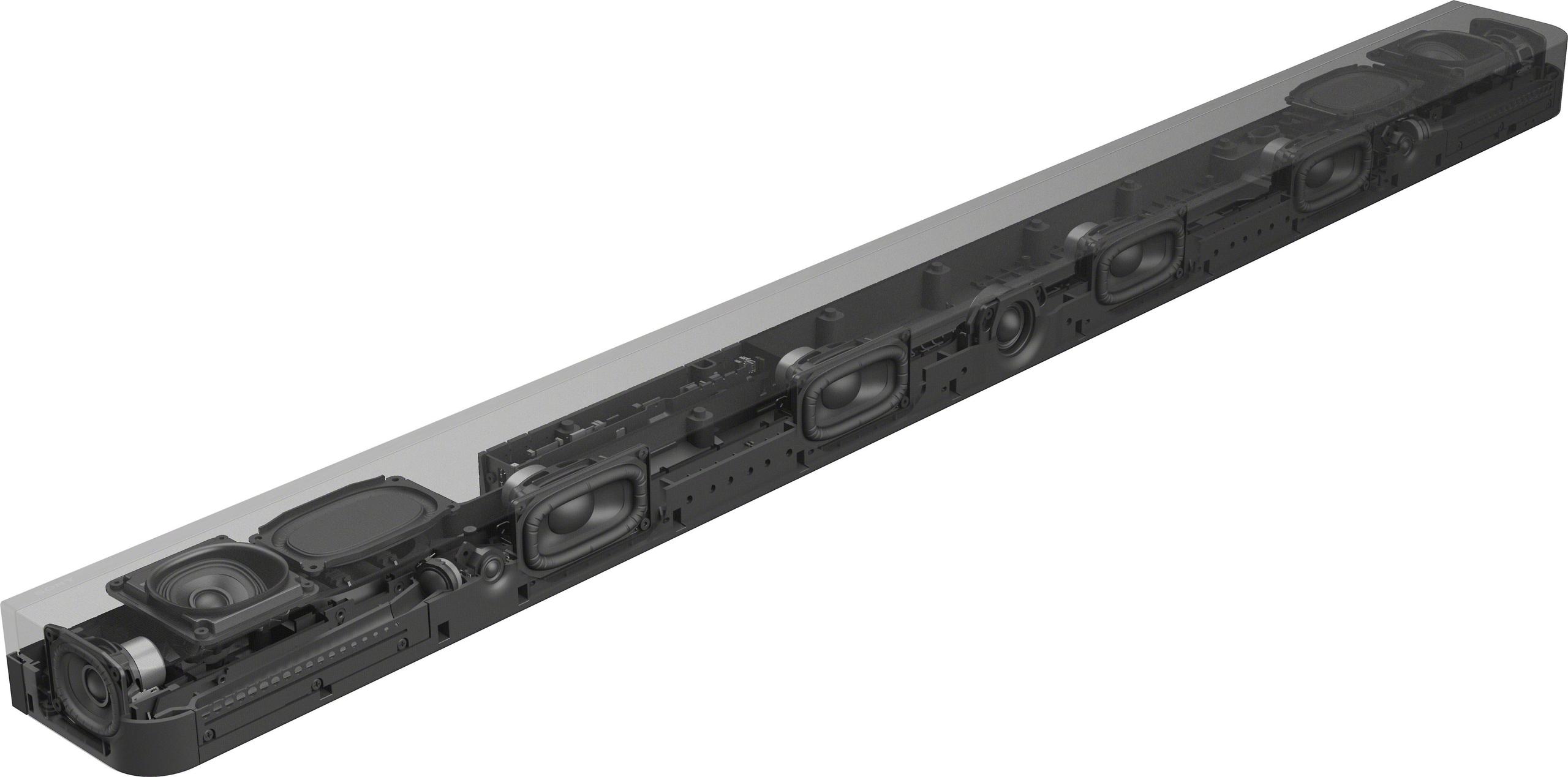
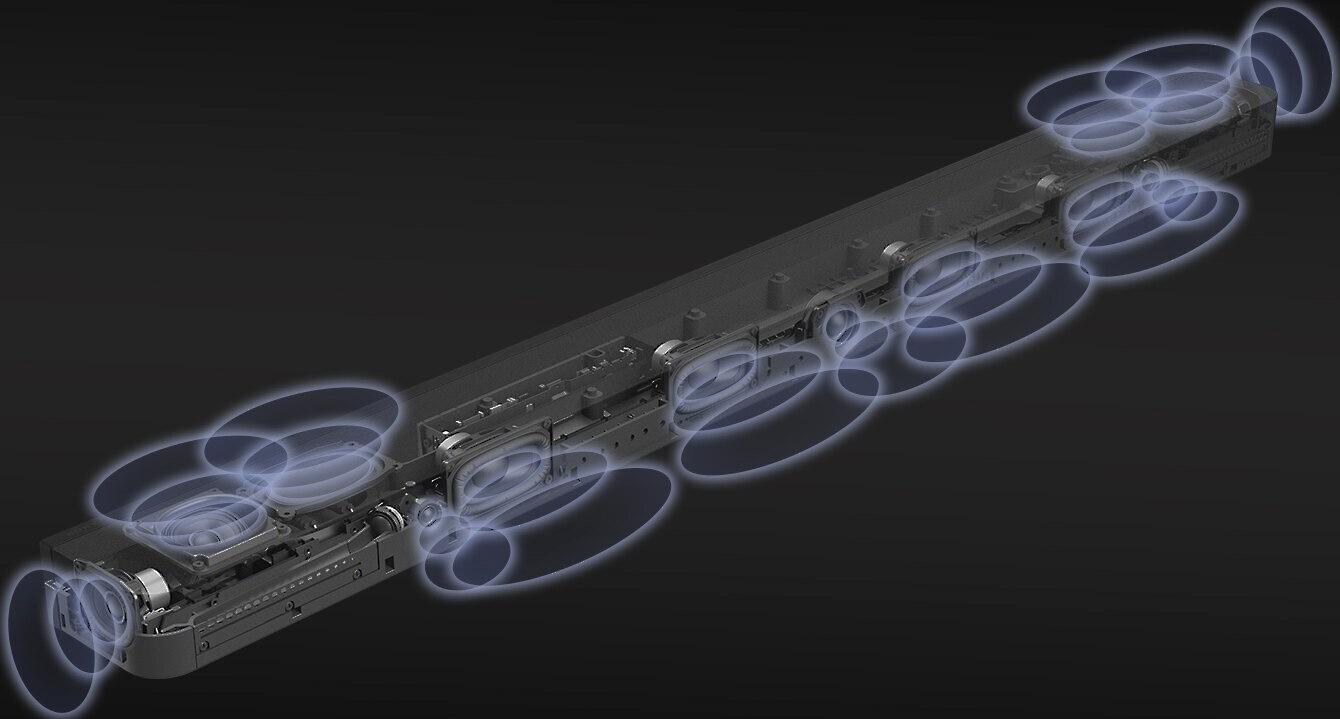
The Sony's most impressive feature is its 360 Spatial Sound Mapping technology. This uses 13 carefully positioned drivers – including 4 woofers, 3 tweeters, 2 side-firing woofers, 2 beam tweeters, and 2 up-firing drivers – to create what Sony calls "phantom speakers." Essentially, the bar bounces sound off your walls and ceiling to simulate speakers that aren't actually there.
This is genuinely impressive technology. When I first set up the Sony in my testing room, the soundstage was noticeably wider than what you'd expect from a single bar. Movies like "Top Gun: Maverick" had jet sounds that seemed to travel beyond the physical boundaries of the soundbar itself.
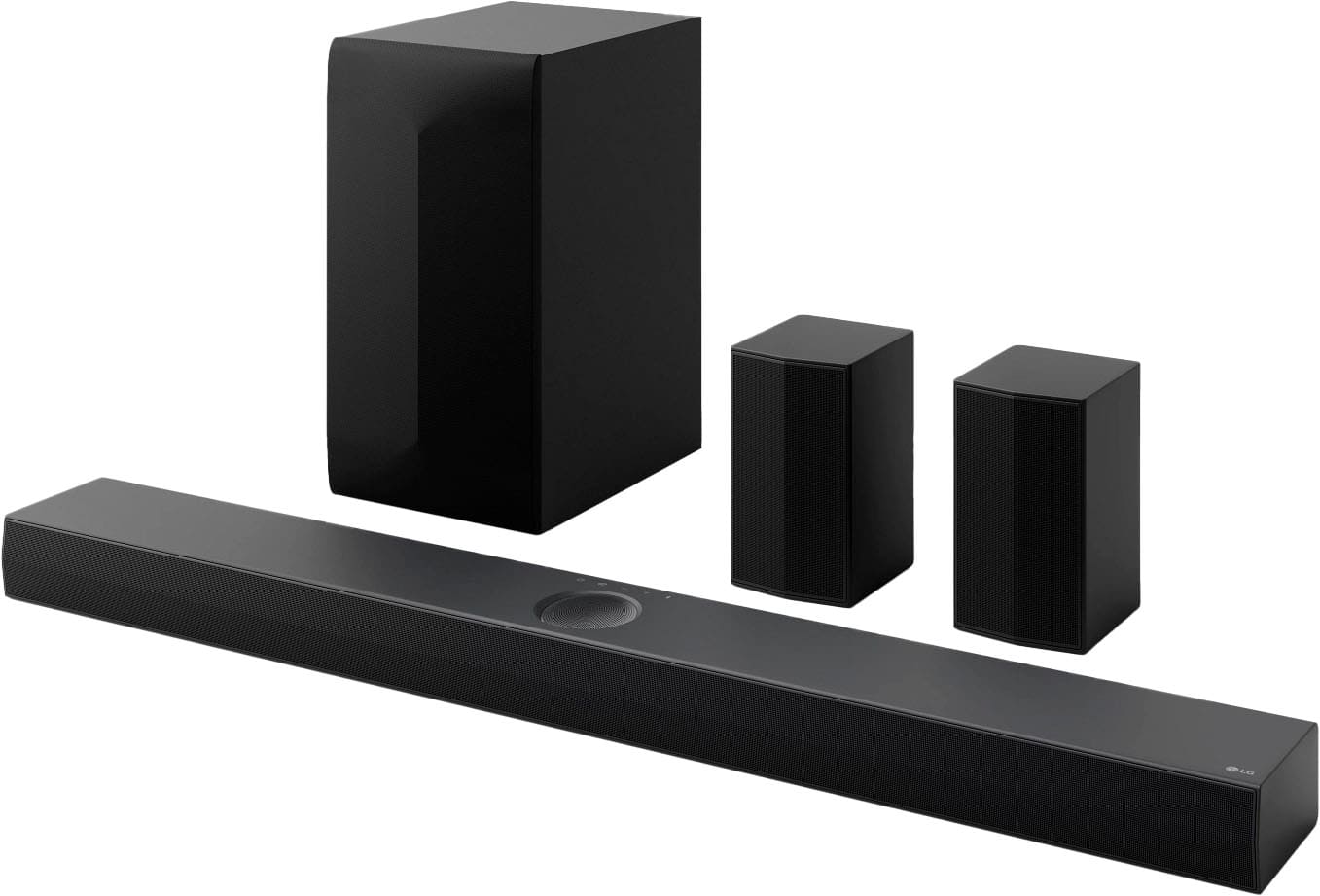
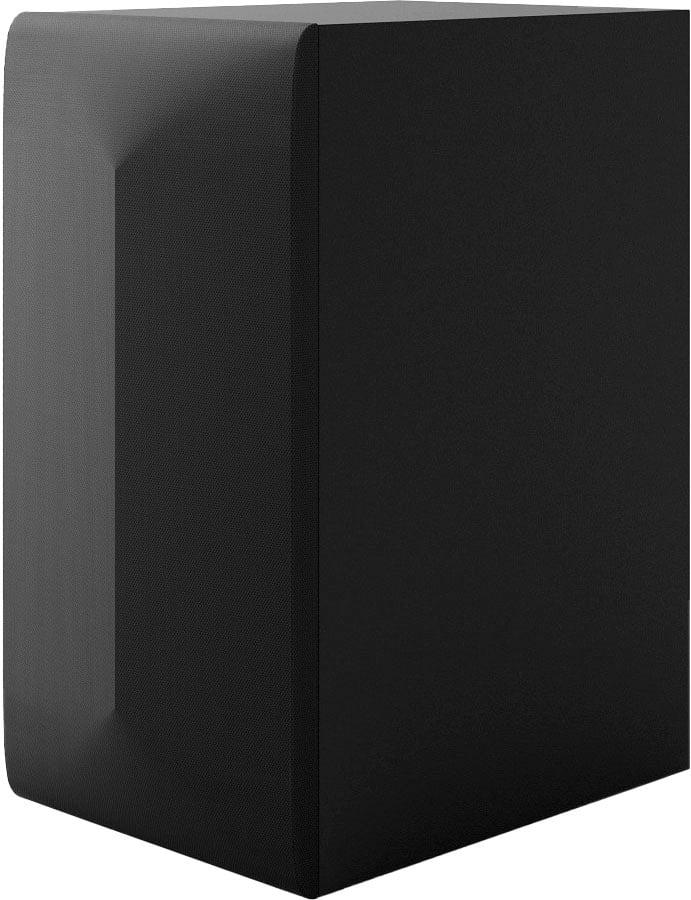
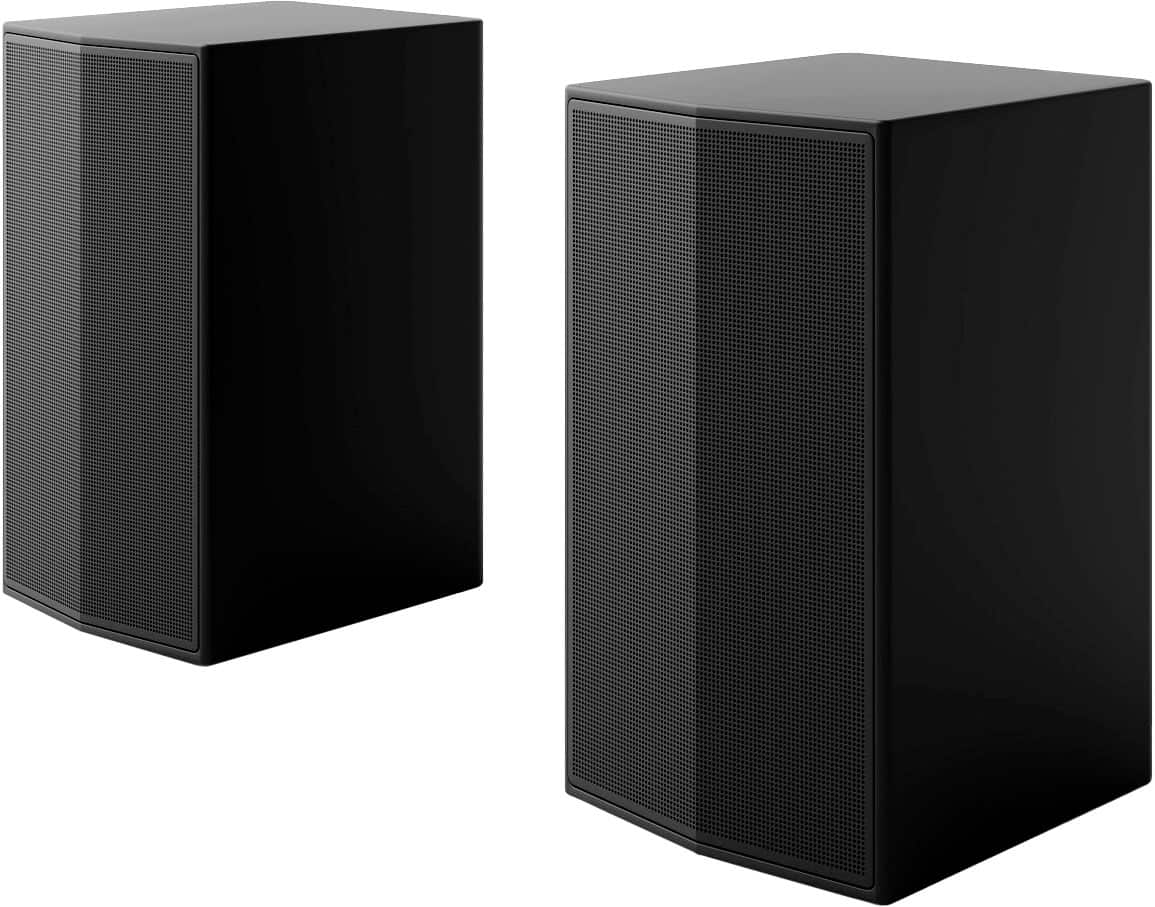
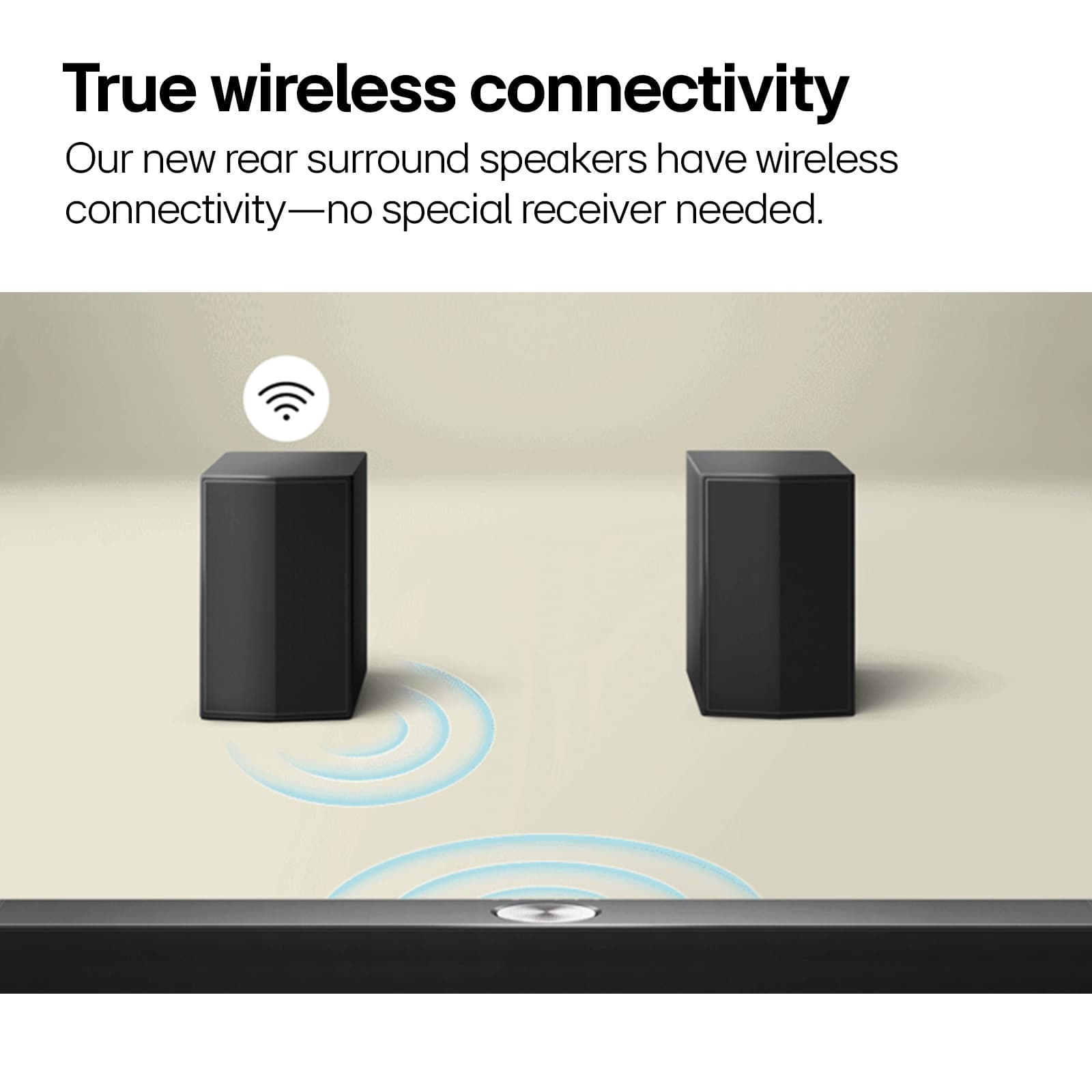
The LG takes the opposite approach with a true 5.1.1 physical configuration. You get the main soundbar, a wireless 7-inch subwoofer with a 220-watt amplifier, and two wireless rear speakers. The ".1.1" designation means you have both the subwoofer and up-firing drivers in the main bar for Dolby Atmos height effects.
Sony's Voice Zoom 3 technology deserves special mention. Using AI machine learning, it analyzes audio in real-time and can amplify or reduce dialogue volume automatically. During my testing with dialogue-heavy shows like "The Crown," this feature consistently made whispered conversations more intelligible without making normal speech sound artificially boosted.
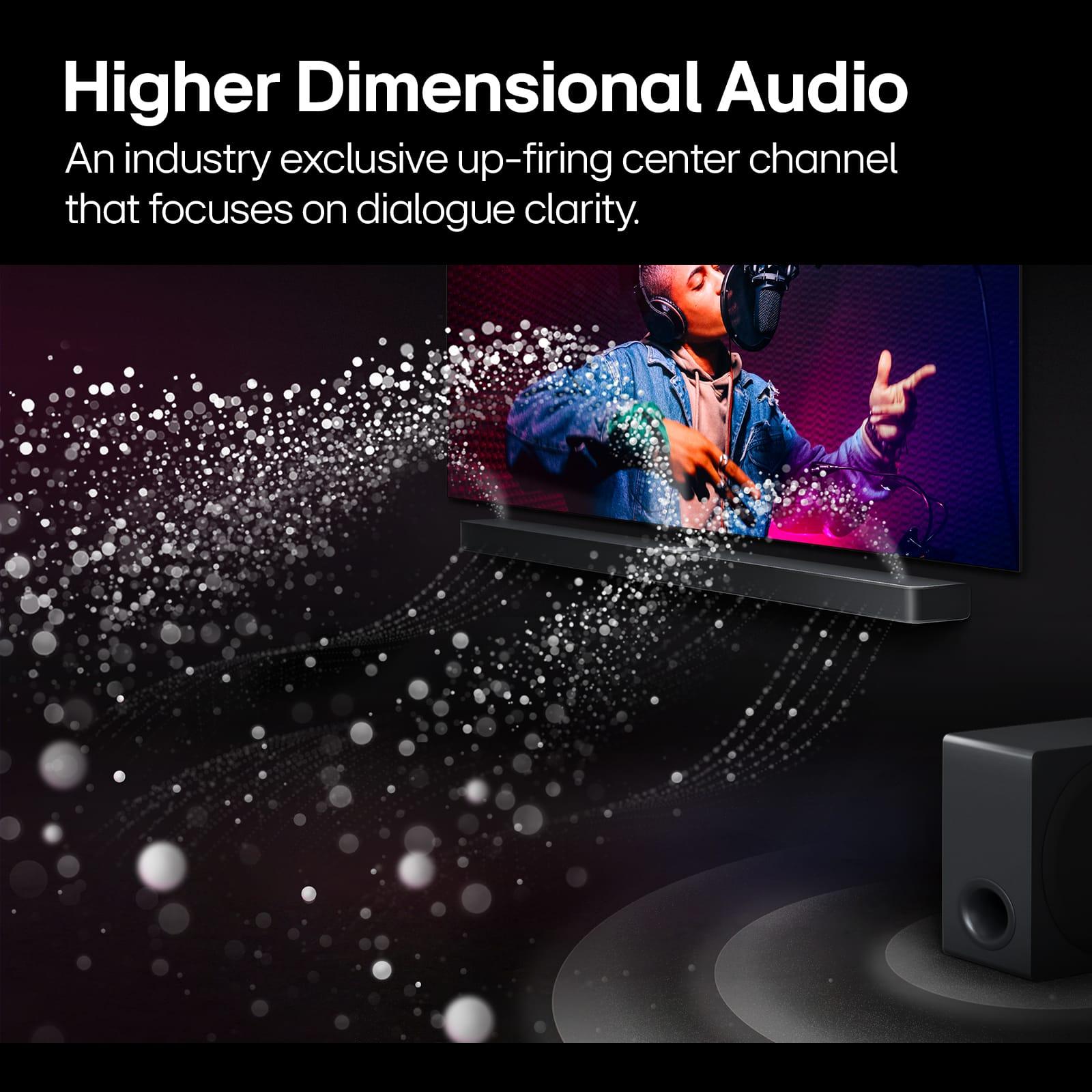
The LG counters with AI Sound Pro, which analyzes incoming audio and adjusts the sound balance automatically. If it detects high vocal content, it'll reduce bass to make speech clearer. While not as sophisticated as Sony's implementation, it's effective and works across a wider range of content types.
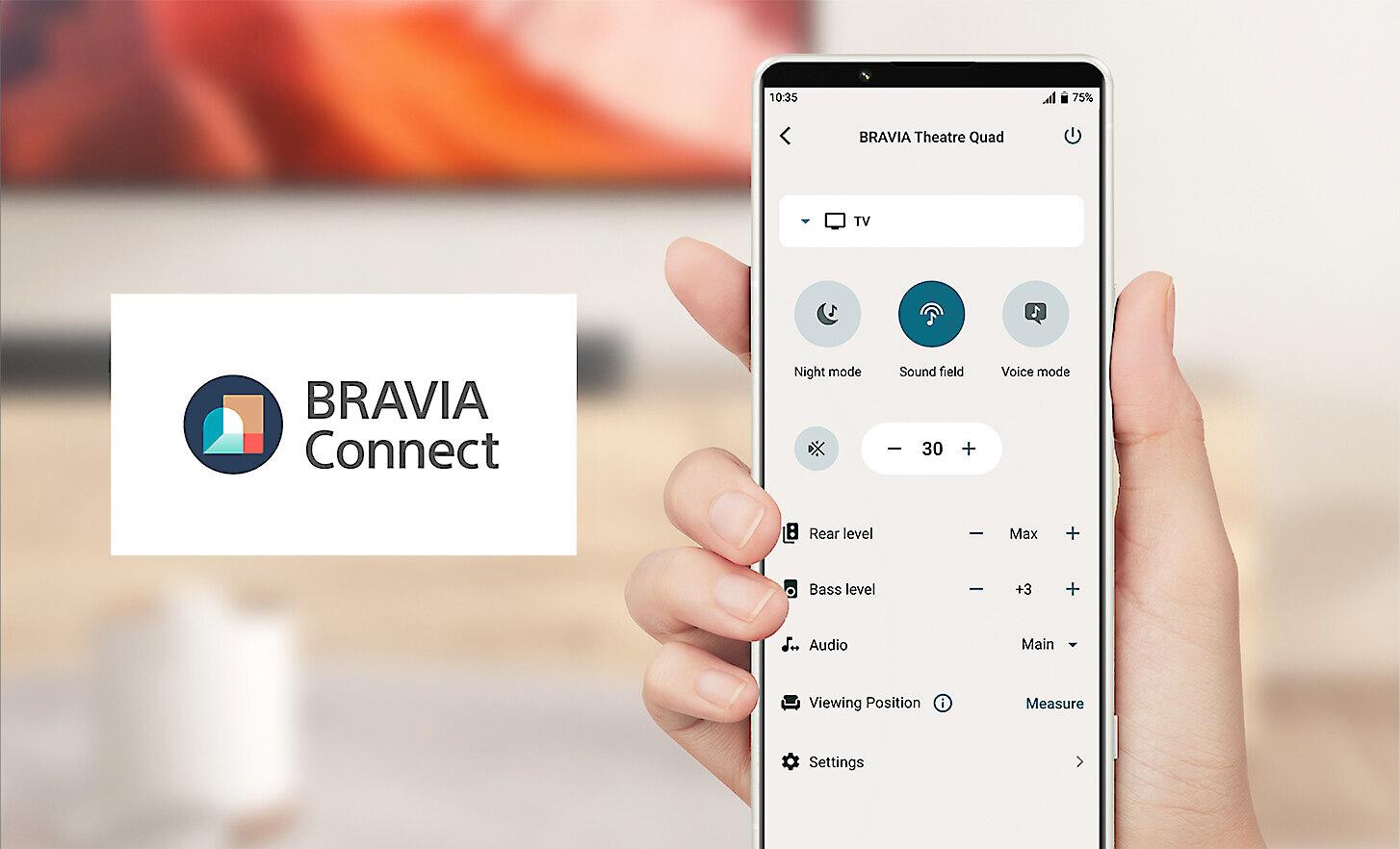
Both systems include room correction features, but they work differently. Sony's system requires you to use their app and hold your phone in different positions while it plays test tones. The LG's system is more automated, using built-in microphones to analyze your room acoustics.
This is where the fundamental difference in approach becomes most apparent. The Sony creates Atmos effects primarily through its up-firing drivers and sophisticated processing. In ideal conditions – rooms with 8-10 foot ceilings and good reflective surfaces – the overhead effects can be genuinely impressive.
However, I noticed that in rooms with vaulted ceilings or lots of soft furnishings, the Sony's Atmos effects became much less pronounced. The phantom speakers that work so well for left-right imaging struggle with height information when the acoustic environment isn't cooperative.
The LG S70TR, with its physical rear speakers and up-firing drivers, creates more consistent Atmos effects across different room types. When watching "Dune" with its incredible sound design, the LG delivered distinct overhead sounds – the ornithopters flying overhead, sand falling from above – with a precision that the Sony couldn't quite match in my testing environment.
Here's where the Sony's single-bar approach hits its biggest limitation. Without an optional subwoofer (which costs an additional $200-500), the bass response is adequate for dialogue and light music but falls short for action movies or bass-heavy music genres.
I tested both systems with the opening sequence of "Mad Max: Fury Road," and the difference was stark. The LG's included subwoofer provided the chest-thumping low-end that makes explosions feel impactful. The Sony, while clean and detailed in the mid and high frequencies, left me wanting more foundation in the low end.
This isn't necessarily a dealbreaker for the Sony – many users will eventually add the optional subwoofer. But it does mean the advertised price doesn't tell the whole story about the total cost of ownership.
For gaming enthusiasts, this comparison reveals a clear winner. The LG includes VRR (Variable Refresh Rate) and ALLM (Auto Low Latency Mode) support, along with 120Hz passthrough. These features work together to minimize the delay between your controller input and what you hear, which is crucial for competitive gaming.
During my testing with "Call of Duty" and "Apex Legends," the LG's gaming modes provided noticeably tighter audio-visual sync. Footsteps, gunshots, and environmental audio all felt more immediate and precise.
The Sony, unfortunately, suffers from higher HDMI latency that makes it less suitable for serious gaming. This seems like an oversight for a premium product in 2024, especially given Sony's own PlayStation ecosystem.
Both soundbars offer enhanced integration with their respective TV brands, but in different ways. Sony's Acoustic Center Sync 2.0 is particularly clever – it uses your BRAVIA TV's speakers as an additional center channel, making dialogue appear to come directly from the screen rather than the soundbar below it.
Having tested this feature with a Sony A95L OLED, the effect is quite convincing. Dialogue in movies and TV shows has a more natural, focused presentation that's especially noticeable when characters are speaking on-screen.
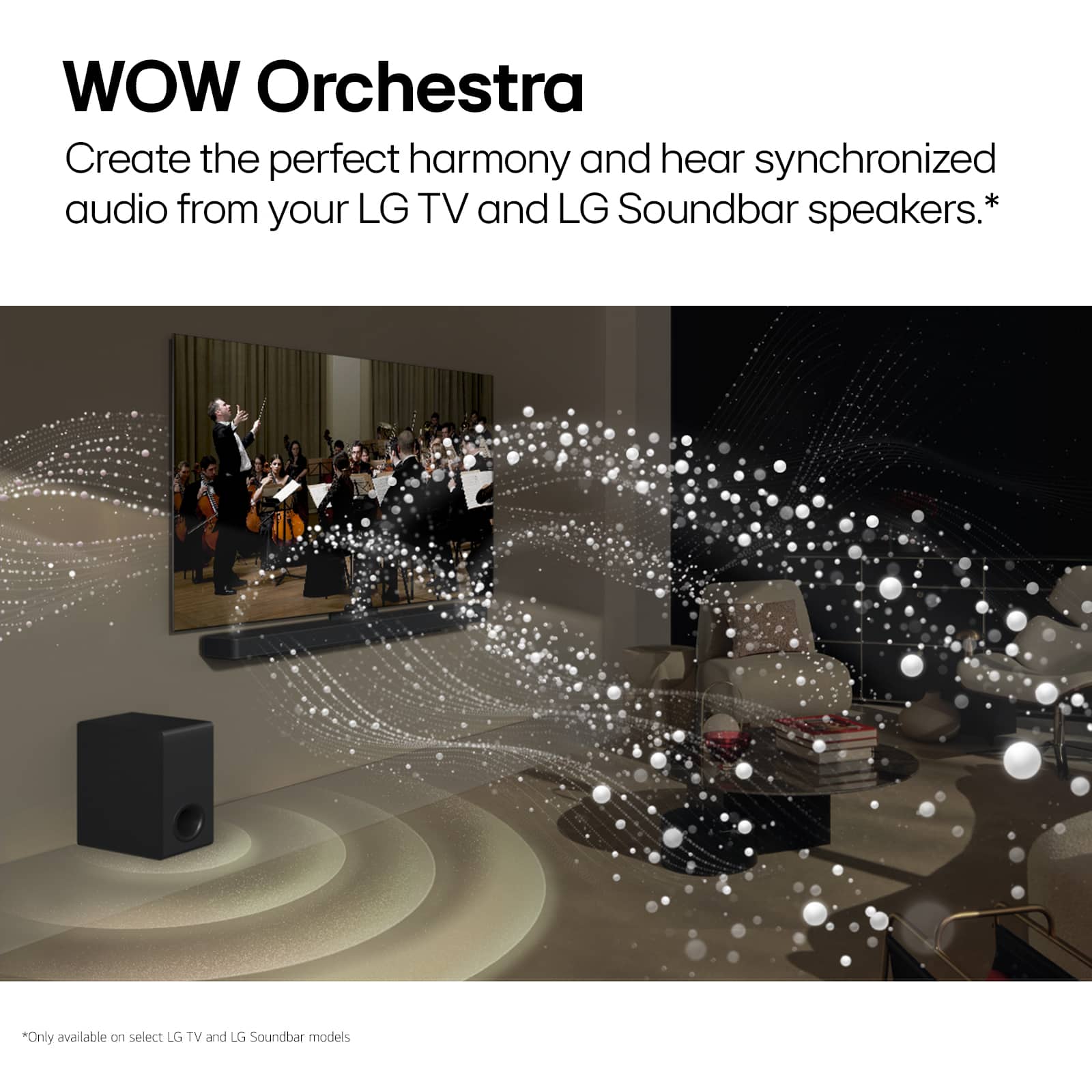
LG's WOW Orchestra takes a different approach, combining the TV's speakers with the soundbar to create what LG calls a "wall of sound." While effective, it's less sophisticated than Sony's implementation and only works with LG TVs.
For dedicated home theater setups, both systems offer expansion possibilities, but with different philosophies. The Sony can grow into a full 7.1.4 system with optional rear speakers (SA-RS5 or SA-RS3S) and subwoofers. This modular approach lets you build your system gradually, but the total cost can easily exceed $2,500 for a complete setup.
The LG S70TR gives you most of the home theater experience immediately. In my 16x20 foot dedicated theater room, the LG provided convincing surround effects and enough bass to satisfy most viewers. The wireless rear speakers, while not as sophisticated as dedicated surround speakers, create a genuine sense of envelopment that single-bar solutions simply can't match.
One aspect I particularly appreciated about the LG is how the wireless components handled connectivity. During weeks of testing, I never experienced dropouts or sync issues, which can plague some wireless audio systems.
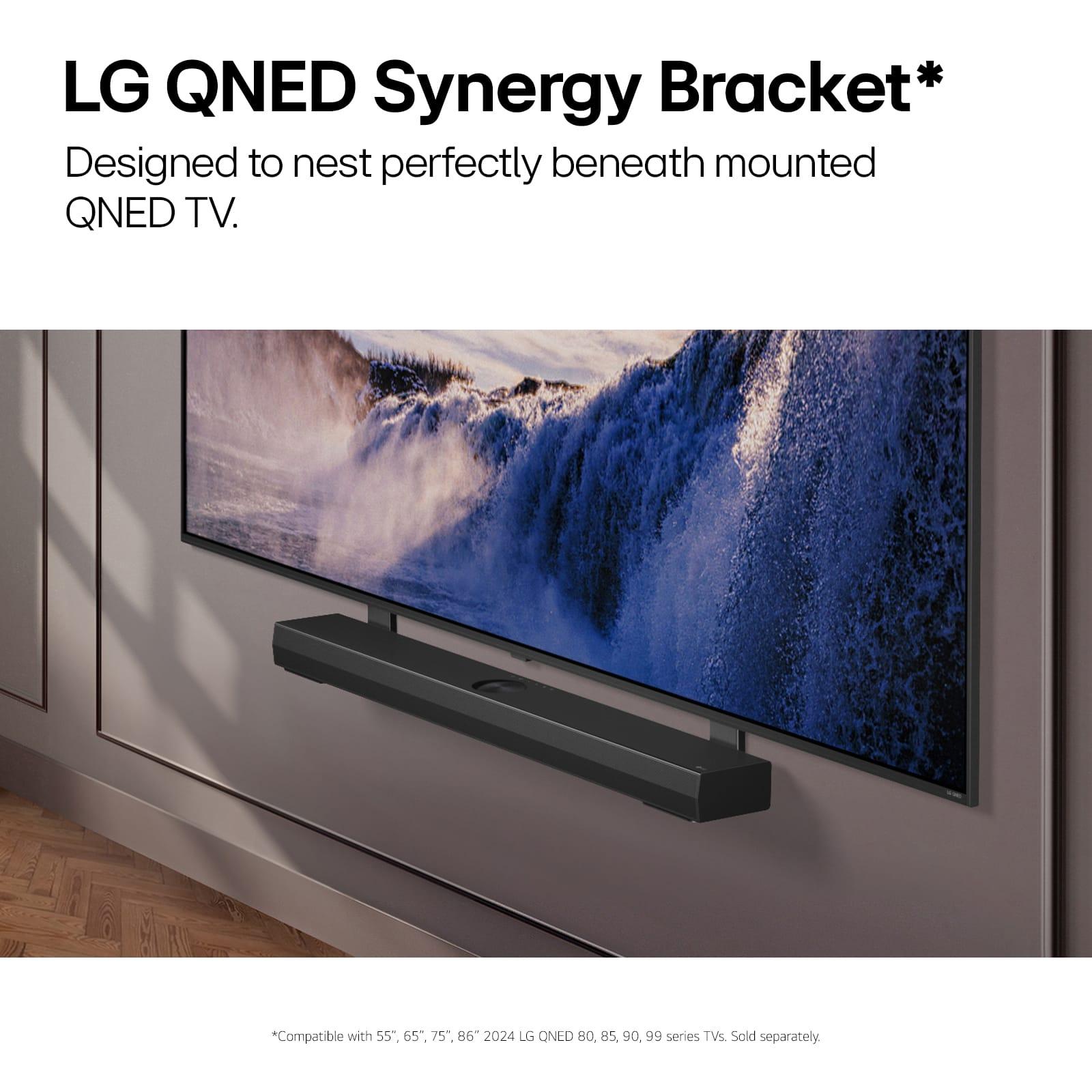
The Sony wins points for simplicity – it's literally one device to connect and configure. Wall mounting is straightforward, and the sleek design disappears under most TVs. However, getting optimal performance requires patience with the room calibration process and potentially multiple adjustment sessions.
The LG requires more initial setup time. You need to find appropriate locations for the rear speakers (ideally 2-3 feet behind your seating position and slightly above ear level), but the wireless design gives you flexibility in placement. The subwoofer can be positioned anywhere in the room, though corner placement typically provides the best bass response.
At $1,399, the Sony BRAVIA Theater Bar 9 commands a premium price that's difficult to justify based solely on its standalone performance. The advanced processing and build quality are evident, but without additional components, it doesn't deliver the immersive experience its price suggests.
However, if you own a Sony BRAVIA TV and plan to build a complete system over time, the upgrade path makes more sense. The integration features alone provide value that third-party soundbars can't match.
The LG S70TR at $399 represents exceptional value in today's market. You're getting everything needed for genuine 5.1.1 surround sound at a price that was unthinkable for this level of performance just a few years ago. The wireless components, Dolby Atmos processing, and gaming features would typically cost $800+ from premium brands.
After extensive testing, I find myself recommending the LG S70TR to most buyers. Unless you specifically need Sony's BRAVIA integration features or prefer the aesthetic of a single bar, the LG delivers dramatically better performance per dollar spent.
Choose the Sony BRAVIA Theater Bar 9 if you:
Choose the LG S70TR if you:
The bottom line? The LG S70TR offers a complete, satisfying surround sound experience right out of the box at an incredibly reasonable price. While the Sony has impressive technology and future potential, most users will be happier with the LG's immediate, comprehensive performance. In the battle between premium processing and practical value, value wins this round convincingly.
| Sony BRAVIA Theater Bar 9 | LG S70TR |
|---|---|
| Price - Major factor in overall value proposition | |
| $1,399 (premium flagship pricing) | $399 (exceptional mid-range value) |
| Channel Configuration - Determines surround sound capability | |
| 5.0.2 (single bar with phantom surround) | 5.1.1 (physical rears + subwoofer included) |
| Speaker Count - More drivers can mean better sound distribution | |
| 13 drivers in main bar only | Main bar + wireless subwoofer + 2 rear speakers |
| Subwoofer - Essential for movie impact and music depth | |
| Not included (requires $200-500 optional purchase) | 7" wireless subwoofer with 220W amp included |
| Dolby Atmos Implementation - How overhead effects are created | |
| Up-firing drivers + 360 Spatial Sound Mapping | Up-firing drivers + physical rear speakers |
| Gaming Features - Important for console users | |
| High HDMI latency (poor for competitive gaming) | VRR/ALLM support, 120Hz passthrough, Game mode |
| TV Integration - Seamless control and enhanced performance | |
| Acoustic Center Sync 2.0 (BRAVIA TVs only) | WOW Orchestra (LG TVs only) |
| Voice Enhancement - Critical for dialogue clarity | |
| Voice Zoom 3 with AI processing | Clear Voice Plus with center channel focus |
| Room Correction - Optimizes sound for your space | |
| App-based Sound Field Optimization | Automatic AI Sound Pro analysis |
| Connectivity Options - Flexibility for different setups | |
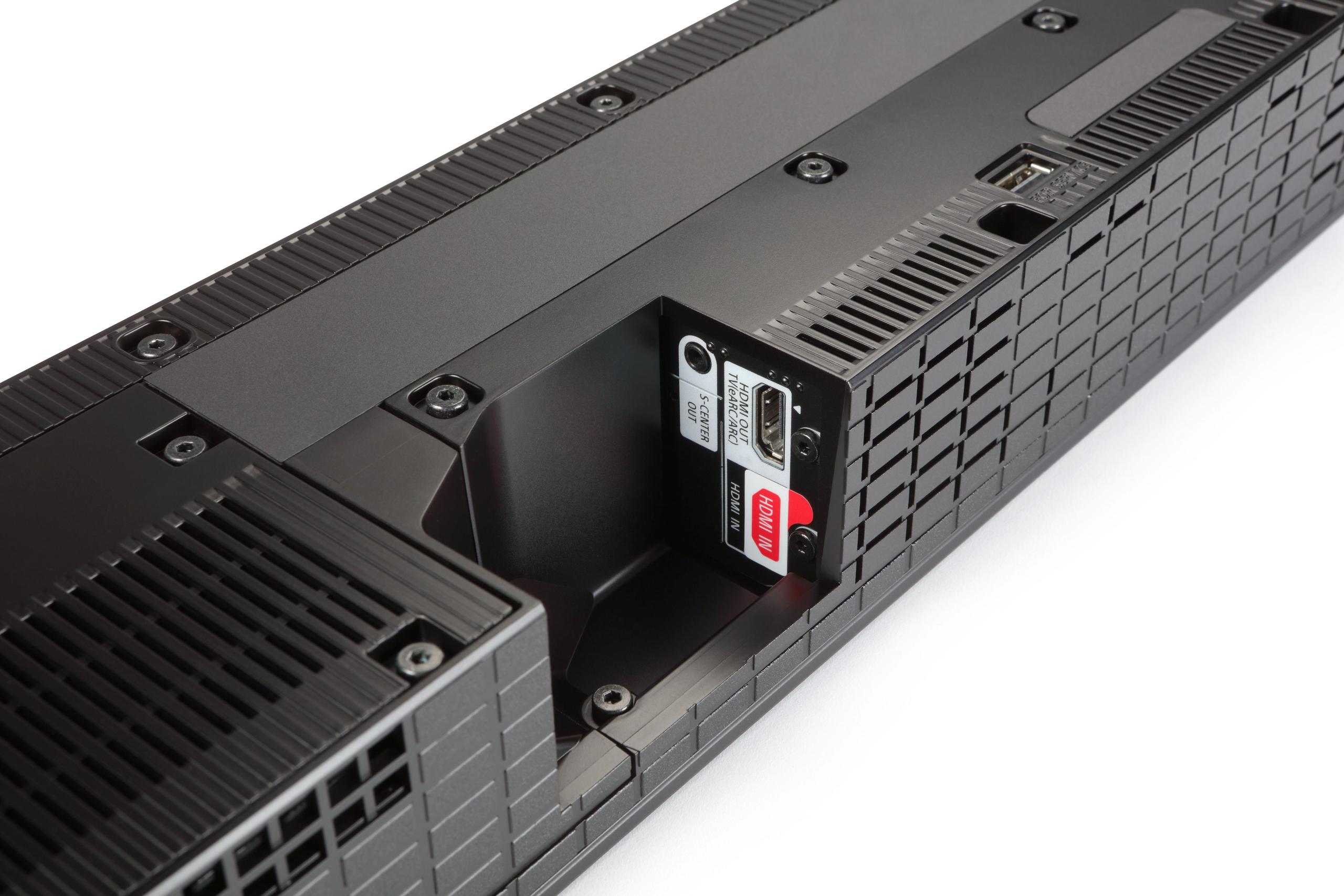
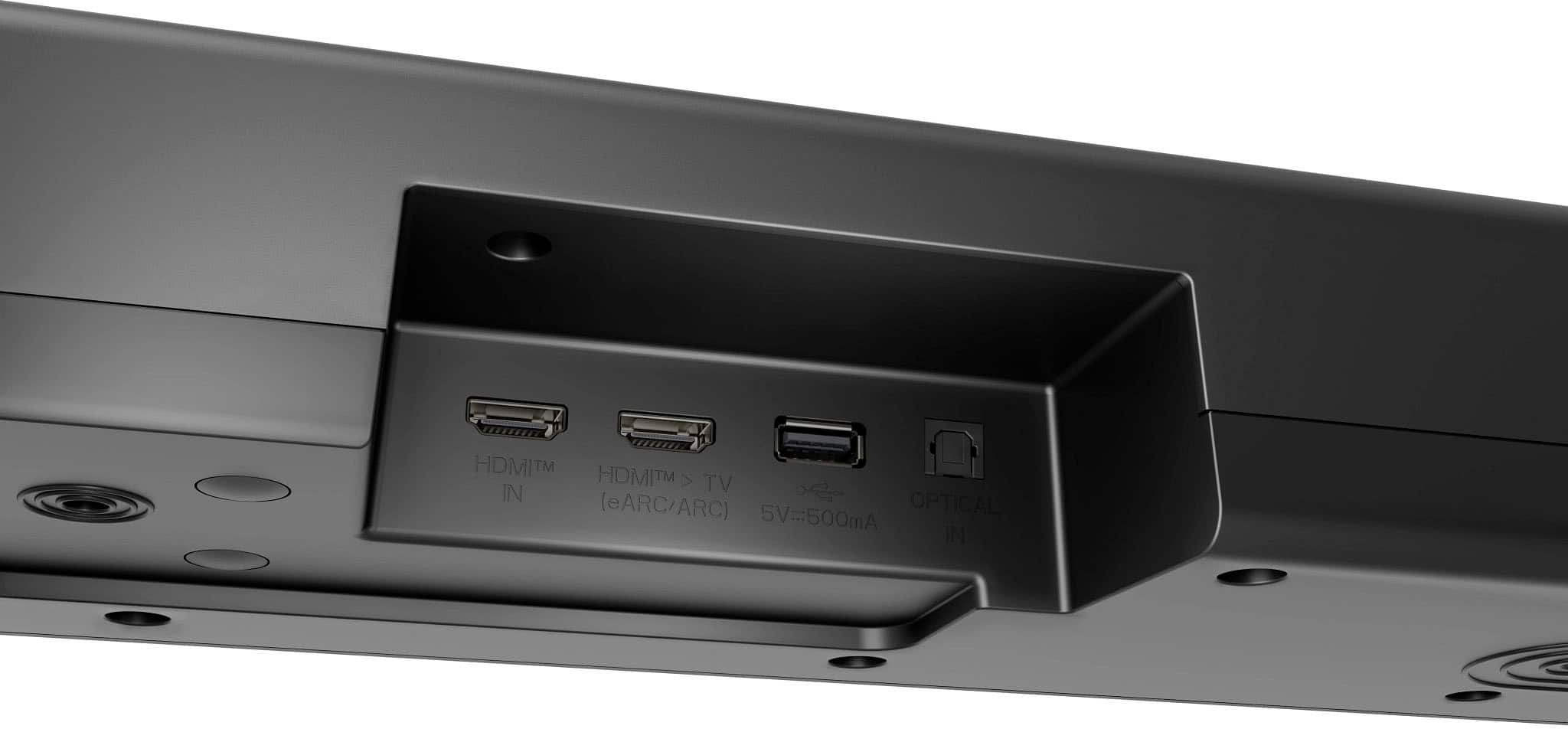
| HDMI eARC, Bluetooth 5.2, Wi-Fi, Spotify Connect | HDMI eARC, Bluetooth 5.1, Wi-Fi, optical input |
| Expandability - Future upgrade potential | |
| Optional wireless rears ($400+) and subs ($200-500) | Complete system included, no expansion needed |
| Setup Complexity - Time and effort required | |
| Single unit, app calibration required | Multiple wireless components, simpler auto-setup |
| Build Quality - Durability and premium feel | |
| Premium materials, excellent fit and finish | Solid but budget-oriented construction |
| Best Use Case - Who should buy each system | |
| BRAVIA TV owners wanting gradual system expansion | Anyone wanting complete surround sound immediately |
The LG S70TR at $399 offers significantly better value, providing a complete 5.1.1 surround sound system with wireless subwoofer and rear speakers included. The Sony BRAVIA Theater Bar 9 at $1,399 requires additional purchases for bass and true surround sound, making the total cost much higher for comparable performance.
The LG S70TR comes complete with everything needed - main bar, wireless subwoofer, and rear speakers. The Sony BRAVIA Theater Bar 9 works as a standalone unit but lacks deep bass without an optional subwoofer ($200-500 extra) and true surround without optional rear speakers ($400+).
The LG S70TR is superior for gaming, featuring VRR (Variable Refresh Rate), ALLM (Auto Low Latency Mode), 120Hz passthrough, and a dedicated Game mode. The Sony BRAVIA Theater Bar 9 has higher HDMI latency that makes it less suitable for competitive gaming.
Both support Dolby Atmos but differently. The Sony BRAVIA Theater Bar 9 uses up-firing drivers and 360 Spatial Sound Mapping to create phantom overhead effects. The LG S70TR combines up-firing drivers with physical rear speakers for more convincing 3D audio placement.
The LG S70TR has significantly better bass with its included 7-inch wireless subwoofer powered by a 220-watt amplifier. The Sony BRAVIA Theater Bar 9 has minimal low-end output without purchasing an optional subwoofer.
Both work with any TV brand through HDMI or optical connections. However, the Sony BRAVIA Theater Bar 9 offers enhanced Acoustic Center Sync features only with Sony BRAVIA TVs, while the LG S70TR provides WOW Orchestra integration exclusively with LG TVs.
The Sony BRAVIA Theater Bar 9 is simpler physically as a single unit but requires app-based room calibration. The LG S70TR involves positioning multiple wireless components but features more automated setup with AI Sound Pro room correction.
The Sony BRAVIA Theater Bar 9 excels with Voice Zoom 3 technology using AI to enhance speech clarity. The LG S70TR offers Clear Voice Plus with dedicated center channel processing, providing good but less advanced dialogue enhancement.
The LG S70TR performs better in large rooms due to its physical rear speakers creating true surround effects and powerful subwoofer filling the space with bass. The Sony BRAVIA Theater Bar 9 relies on room reflections that may not work effectively in very large or acoustically challenging spaces.
Yes, both the Sony BRAVIA Theater Bar 9 and LG S70TR include wall mounting brackets. The Sony offers a cleaner single-unit installation, while the LG requires additional consideration for optimal rear speaker placement.
The LG S70TR generally performs better for music due to its full-range frequency response with the included subwoofer and physical surround speakers. The Sony BRAVIA Theater Bar 9 can sound excellent for music but requires the optional subwoofer for full bass response.
For most home theater setups, the LG S70TR provides better immediate value with complete 5.1.1 surround sound, strong bass, and gaming features at $399. Choose the Sony BRAVIA Theater Bar 9 only if you own a Sony BRAVIA TV, prefer single-unit aesthetics, and plan to invest in the full expandable system over time.
We've done our best to create useful and informative comparisons to help you decide what product to buy. Our research uses advanced automated methods to create this comparison and perfection is not possible - please contact us for corrections or questions. These are the sites we've researched in the creation of this article: rtings.com - residentialsystems.com - rtings.com - bestbuy.com - valueelectronics.com - sony.com - sony.co.uk - sony.co.uk - rtings.com - sony.co.in - sony.com - pocket-lint.com - sony.com - crutchfield.com - bestbuy.com - mynavyexchange.com - rixaudiovideoappliance.com - rtings.com - youtube.com - bestbuy.com - howards.siteontimedev.com - bestbuy.com - appliancestogousa.us

Privacy Policy
Terms and Conditions - Affiliate Policy
Home Security
© Copyright 2008-2026.
11816 Inwood Rd #1211, Dallas, TX 75244