Nemanja Grbic is a tech writer with over a decade of journalism experience, covering everything from AV gear and smart home tech to the latest gadgets and trends. Before jumping into the world of consumer electronics, Nema was an award-winning sports writer, and he still brings that same storytelling energy to every article. At HomeTheaterReview, he breaks down the latest gear and keeps readers up to speed on all things tech.
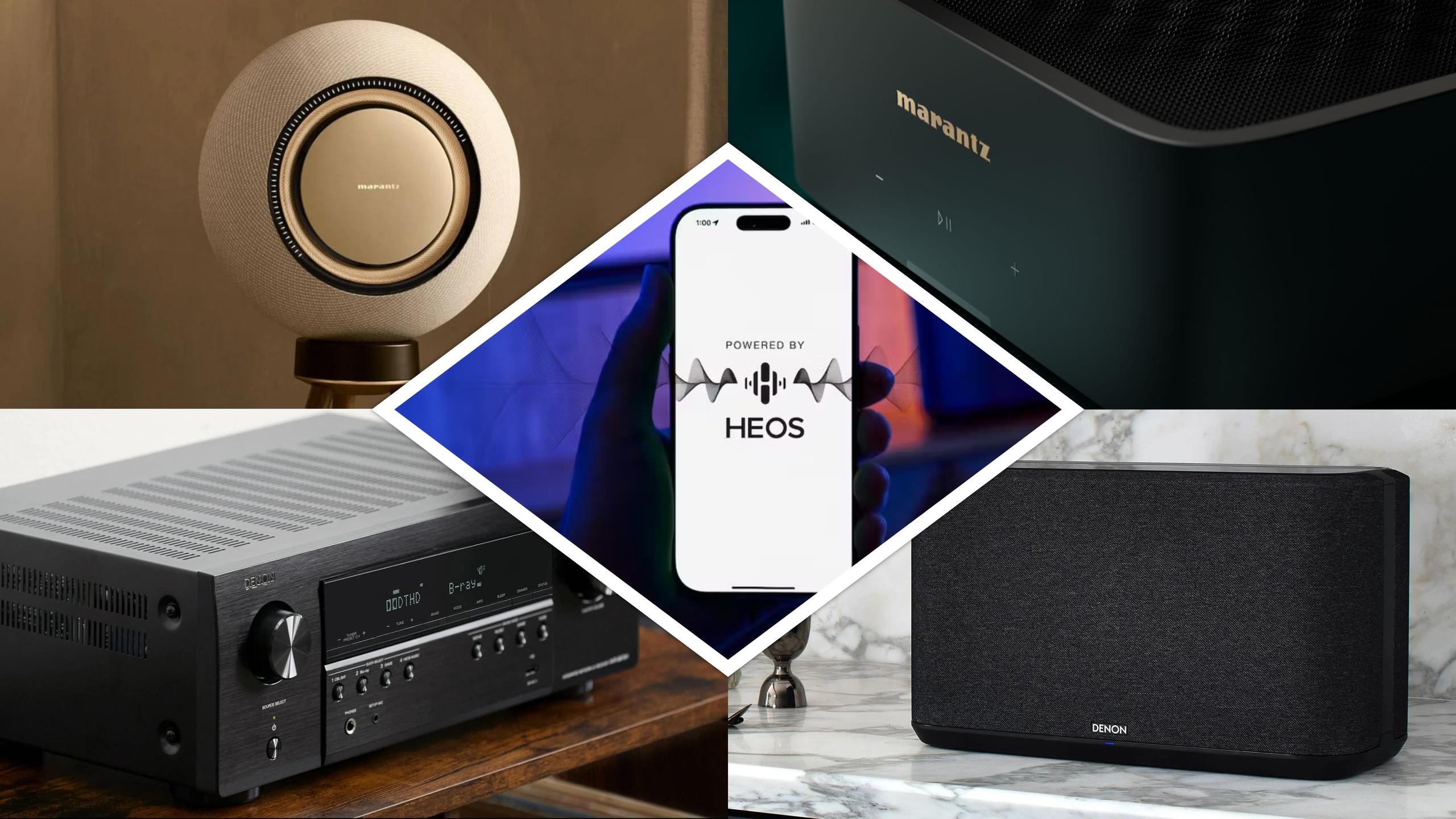
If you’ve looked at a recent Denon or Marantz receiver, amp, or wireless speaker, you’ve probably seen a little line in the specs that says “Powered by HEOS.”
Maybe you skimmed past it. Maybe you thought, “Oh, another app thing.”
But that small phrase actually describes one of the most capable whole-home audio platforms available today, and it’s just hit its 10-year anniversary with a new name, a new logo, and a much nicer app.
I'll walk you through what HEOS is, how it works, what’s new, and which products support it – from $249 wireless speakers all the way up to $7,000+ AV receivers and serious hi-fi gear.
From “HEOS Built-in” to “Powered by HEOS”
For most of the last decade, Denon and Marantz referred to this platform as “HEOS Built-in.” It sounded like a checkbox feature buried halfway down a spec sheet, even though it was doing the heavy lifting for streaming and multi-room audio.
In 2025, that changed. The ecosystem has been reintroduced as “Powered by HEOS,” with a fresh radio-wave-style logo and new branding that puts the platform front and center.
The idea is:
If a product says Powered by HEOS, it’s part of the same multi-room audio ecosystem.
You can group it with other HEOS devices, stream the same music across your home, or play different content in different rooms.
Denon, Marantz, and Classé all use the same platform, so you’re not locked into a single brand.
Over the last decade, HEOS has quietly grown from “optional feature” to “core streaming brain” across receivers, amps, speakers, and network players. The new name simply reflects what it’s actually doing: powering your whole-home audio, not just adding a bit of Wi-Fi.
You search, browse, and add to your queue from inside HEOS, then send that audio to any room you like.
Apple Music doesn’t live natively inside the HEOS app, but all modern Denon and Marantz products with Powered by HEOS support Apple AirPlay 2. That means you can cast Apple Music (or any other audio) from your iPhone, iPad, or Mac straight to your HEOS devices at full quality.
Local and hi-res music
If you have your own library of music, HEOS is comfortable with that too. It can pull music from:
Network shares and NAS drives
USB drives connected to compatible players or amps
Shared folders on your computer
Local music on your phone (on supported setups)
Supported file types include:
Compressed formats like MP3, AAC, and WMA
Lossless formats like FLAC, ALAC, and WAV up to 24-bit / 192 kHz
DSD on compatible devices
So if you’ve invested in hi-res albums, Qobuz hi-res streaming, or a carefully organized FLAC library, HEOS is designed to play them without dumbing everything down.
The HEOS App: Where You Actually Live
Let’s be honest: if the app is bad, the platform feels bad, no matter how good the hardware is.
HEOS had a bit of a rough reputation in its early years: clunky, slow, and not particularly intuitive. That changed with HEOS 3.0, a major rebuild of the app, followed by ongoing updates in 2024 and 2025.
Here’s what it’s like now:
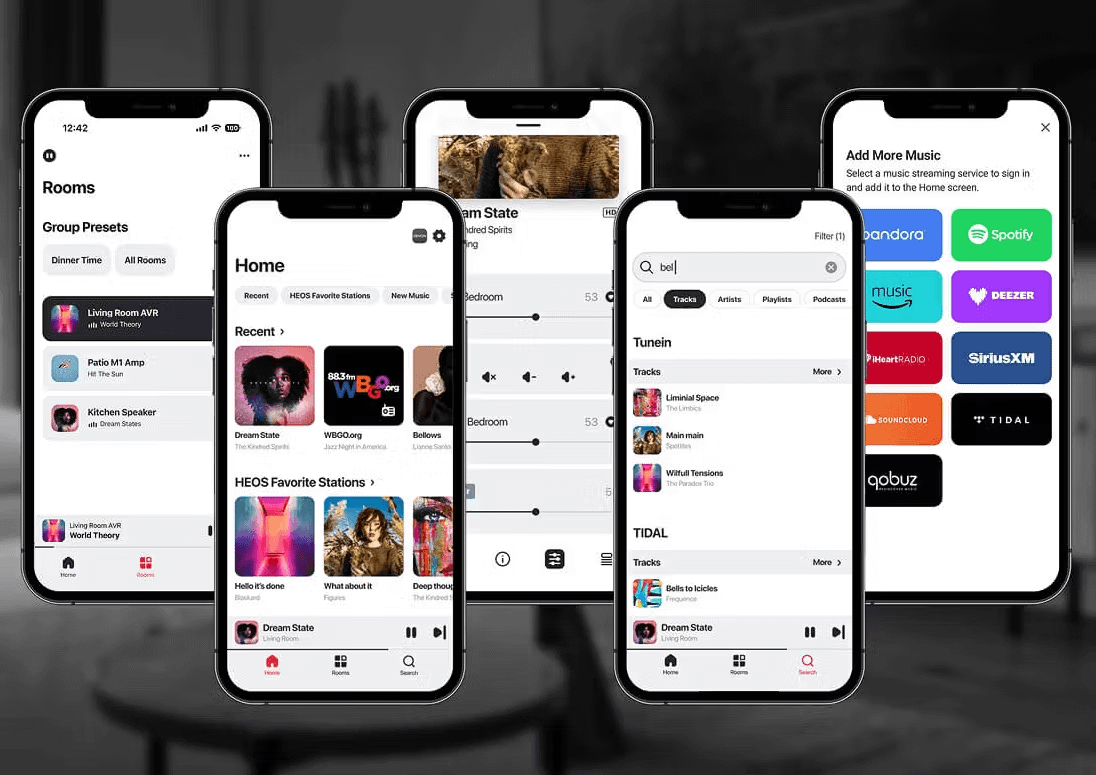
Clean setup process The app guides you through adding new devices, naming rooms, and connecting everything to your Wi-Fi. For AVRs and streaming amps, it ties straight into the network setup you do on the device itself.
Rooms and groups Each speaker, AVR, or amp shows up as a room. Want the same music in the kitchen and living room? Group them. Want them separate again? Ungroup with a tap.
Unified search Instead of hopping between multiple apps, you can search across all connected streaming services and local libraries from one search bar. If a track is available on multiple services, you choose where to play it from.
Customizable home screen You can pin your favorite services, radio stations, playlists, and presets so you’re not always drilling through menus.
Queue and playback control The “Now Playing” bar stays visible throughout the app, and you can easily see what’s coming up next, reorder tracks, or skip around.
Is it the flashiest app on the planet? No. But that’s not really the point. At this stage, HEOS is focused more on being reliable, fast, and predictable than on showing off animations. If you’ve tried it in the past and bounced off, it’s worth another look.
Advanced Stuff: Connect, Roon, and Voice Control
If you’re a slightly more advanced user, HEOS has grown into a surprisingly capable platform.
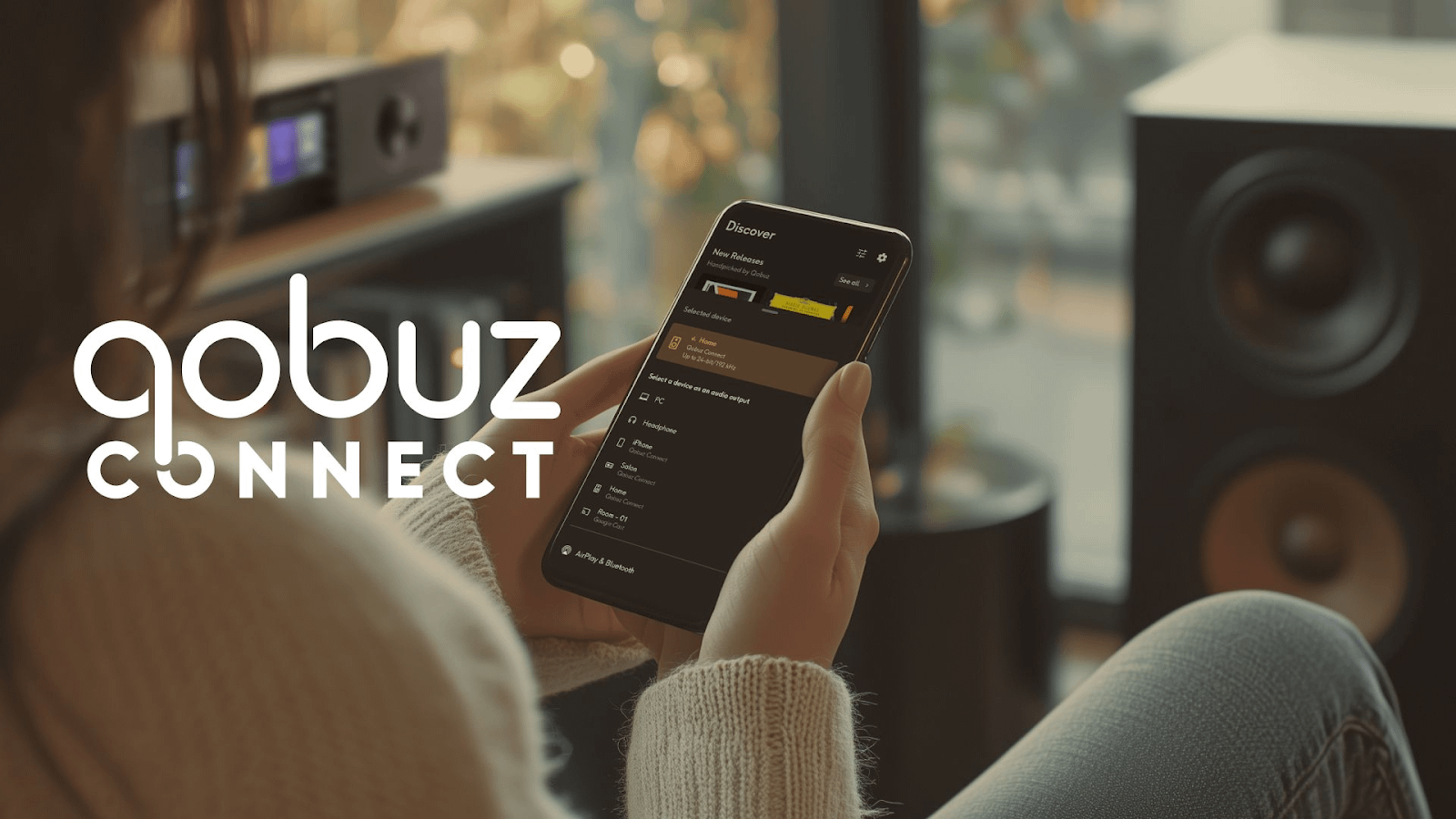
Qobuz Connect, TIDAL Connect & friends
HEOS supports “Connect-style” playback from several services. That means you browse in the streaming service’s own app, then hand off playback to your HEOS device:
Qobuz Connect – cue up your hi-res tracks in the Qobuz app and send them directly to your HEOS gear.
TIDAL Connect – same idea, but with TIDAL, including hi-res FLAC on supported hardware.
Spotify Connect – control everything from the Spotify app and select your HEOS devices as targets.
This approach is nice because you don’t have to choose between the platform’s app and your favorite streaming app. You can use whichever feels most natural in the moment.
Roon integration
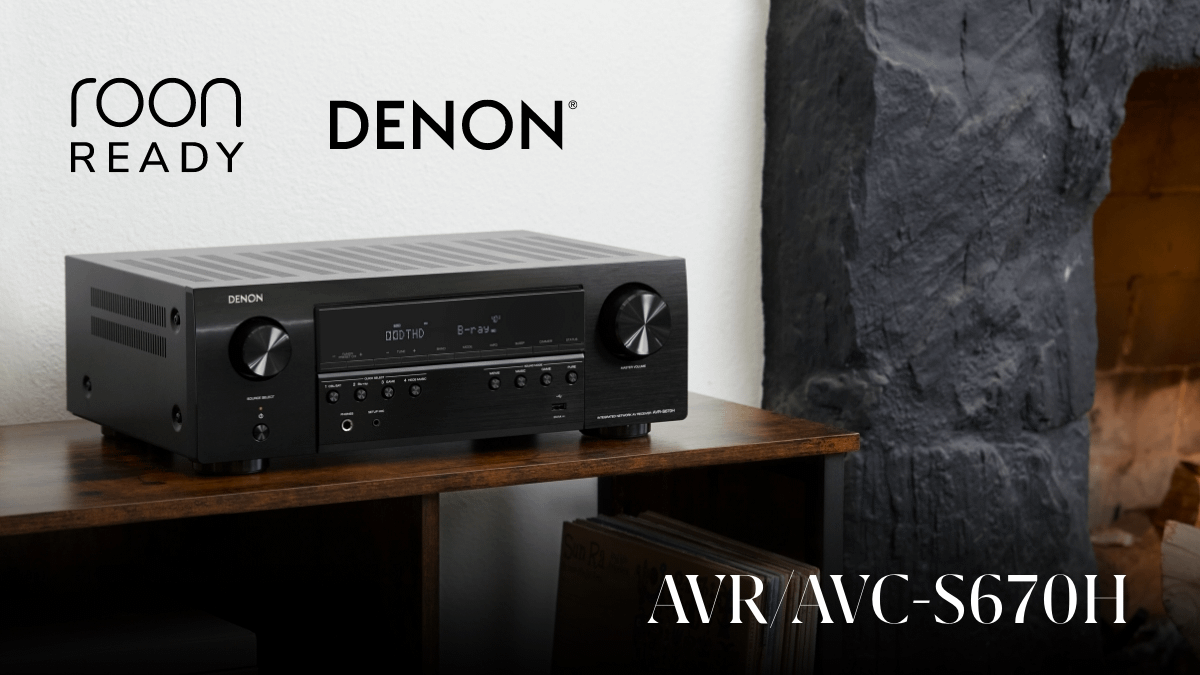
If you’re running Roon, many Denon and Marantz network products with HEOS support Roon in some form (Roon Ready or Roon Tested, depending on the model). That means:
Roon can auto-discover your HEOS devices as zones.
Audio is sent bit-perfect over the network.
You can include HEOS zones in multi-room Roon playback.
For serious library nerds, this is a big deal: you can keep Roon’s powerful metadata and discovery features, while letting Powered by HEOS handle the hardware side.
Voice and smart home control
Several HEOS-enabled products work with Alexa, Google Assistant, and AirPlay 2 for Siri:
Denon’s AVRs are often the “brain” of a HEOS system. All of the models below are Powered by HEOS:
Denon AVR-A1H – $7,199.00 Denon’s flagship AVR, designed for serious home theaters with complex speaker layouts and lots of power. With HEOS inside, it can be both a high-end cinema brain and a hub for whole-home music.
Denon AVR-X6800H – $3,799.00 A high-end 11-channel, 8K-capable AVR with advanced processing and streaming. Great for dedicated media rooms that also need to talk to the rest of the house.
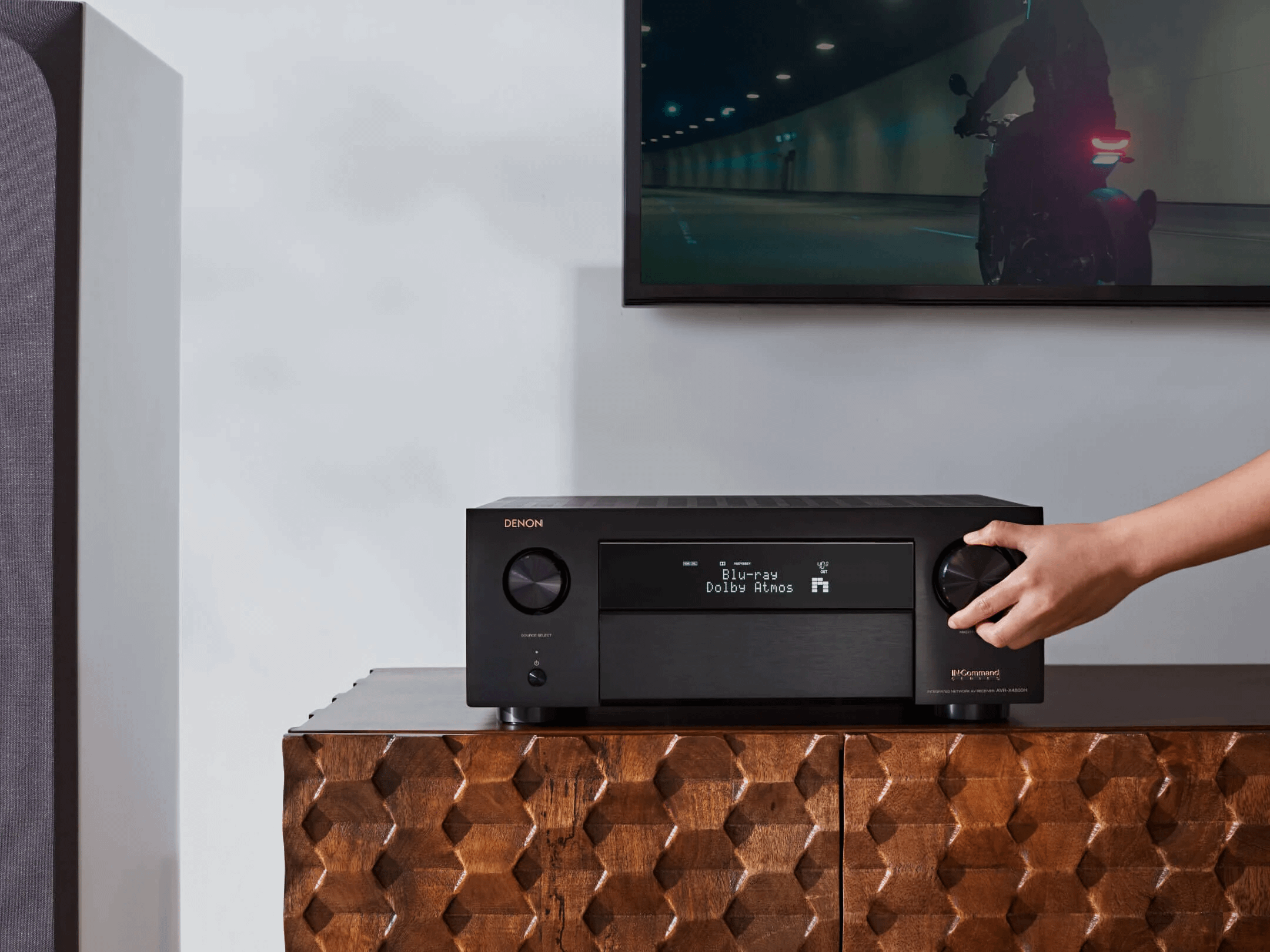
Denon AVR-X4800H – $2,799.00 A sweet-spot AVR for many enthusiasts: 9 channels of amplification, full modern HDMI support, and HEOS streaming built in.
Denon AVR-X3800H – $1,799.00 Another strong mid/high-tier receiver that’s right at home in living rooms and dedicated theaters alike.
Denon AVR-X2800H – $1,299.00 A 7.2-channel AVR with modern gaming features, 8K HDMI, and HEOS for multi-room streaming.
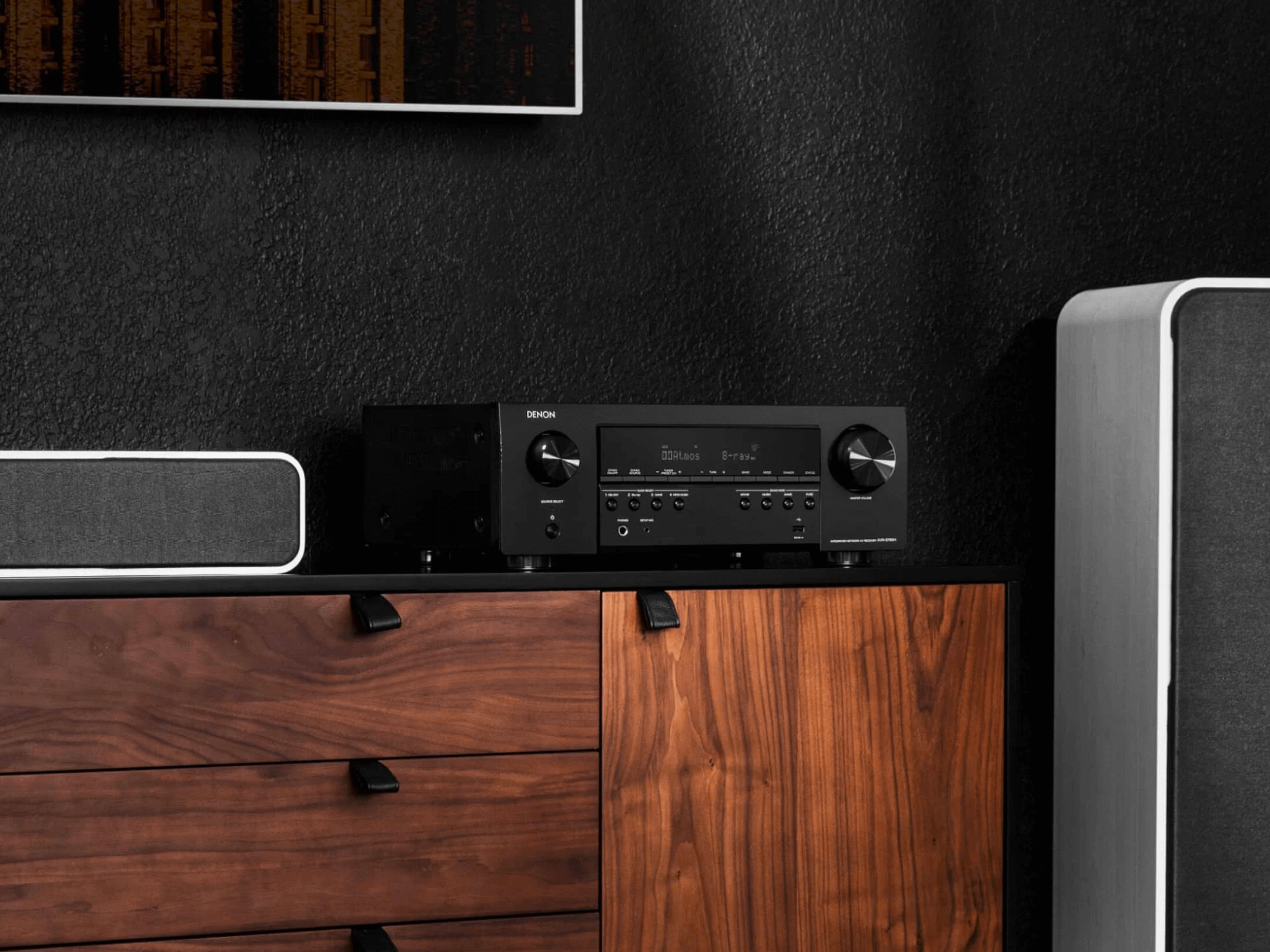
Denon AVR-S670H – $649.00 The S-Series focuses more on user-friendly features and value, but you still get Powered by HEOS across the board. These are great entry points if you’re moving up from a soundbar and don’t want to give up easy streaming.
If you want to add rooms without running speaker wire, Denon’s Home wireless speakers are the easiest path:
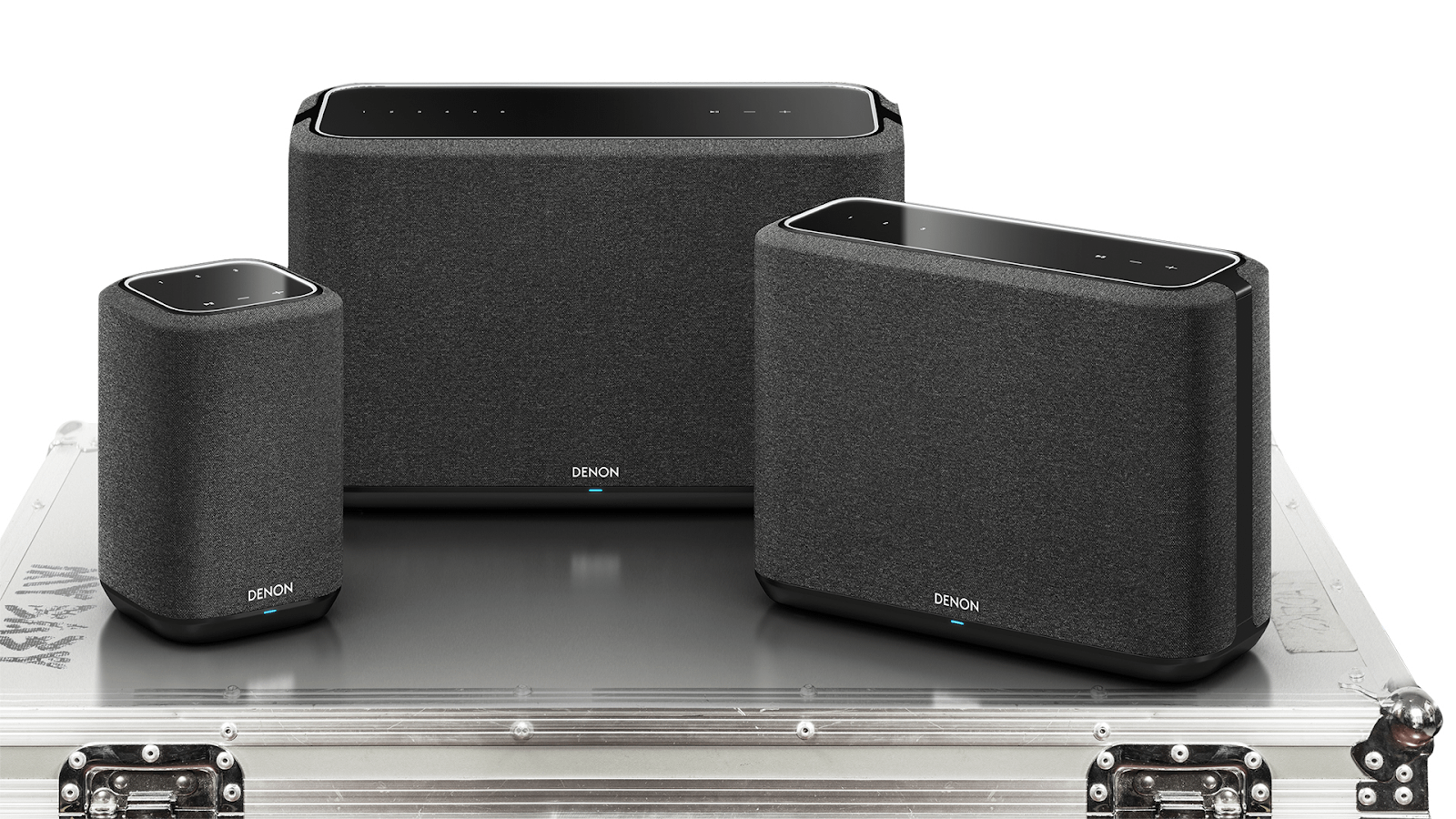
Denon Home 150 – $249.00 each Compact speaker for desks, bedrooms, and smaller spaces.
Denon Home 250 – $549.00 each Mid-size stereo speaker that works well in kitchens, offices, and medium living rooms.
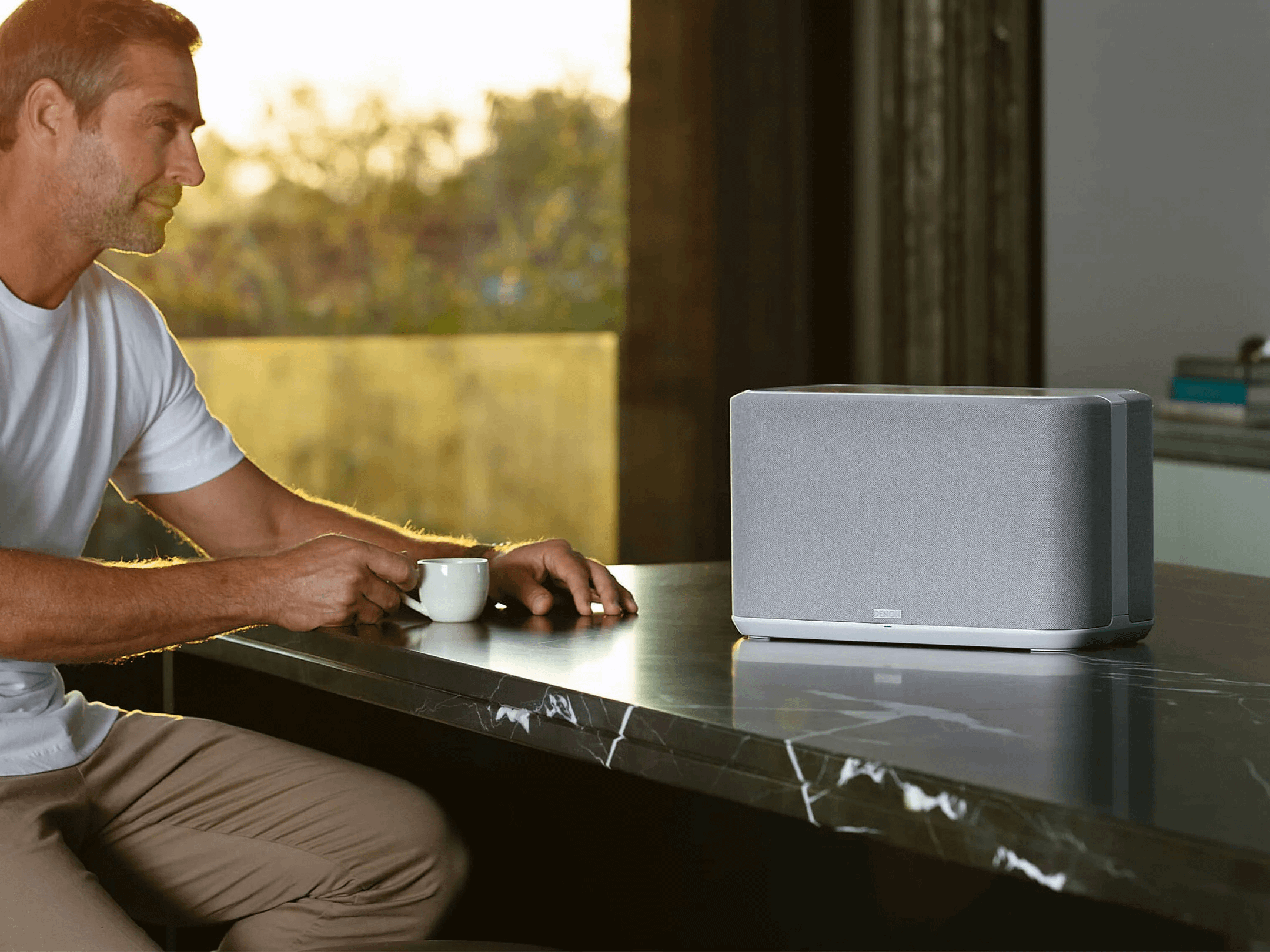
Denon Home 350 – $749.00 each The largest Home speaker with serious output, built for bigger spaces or just louder listening.
They all support Wi-Fi, Bluetooth, AirPlay 2, and HEOS, and they can be used individually, as stereo pairs, or as part of larger groups.
Other Denon Powered by HEOS Components
Denon CEOL N-12 Hi-Fi system with CD player – $699.00 A compact all-in-one system with CD playback, streaming, and HEOS. Ideal for bedrooms, apartments, or offices where you want a cleaner look and fewer boxes.
Denon Home Sound Bar 550 – $699.00 A compact soundbar with Dolby Atmos and HEOS built in. You can wirelessly link it with Denon Home speakers as surrounds and the Denon Home Subwoofer for a simple 3.1 or 5.1-style system.
Denon Home Subwoofer – $649.00 Pairs wirelessly with Denon Home speakers and the Home Sound Bar 550 to fill out the low end.
Denon Home Amp – $899.00 A streaming amplifier: hook up any passive speakers, connect it to your network, and you’ve just created a new HEOS zone with real hi-fi power.
Denon PMA-900HNE Integrated Amplifier – $1,049.00 A two-channel integrated amp that combines classic stereo amplification with modern streaming and HEOS. A good fit for music-first systems that still need multi-room support.
Denon DNP-2000NE Audio Streamer – $1,799.00 A network audio player for people who already have a favorite amplifier. It adds hi-res streaming, AirPlay 2, and the full Powered by HEOS experience to virtually any system.
The Marantz Side: Hi-Fi with HEOS Built In
Marantz leans more into the hi-fi and design-conscious side of the market, but it’s using the same HEOS platform under the hood. That means you can mix and match Denon and Marantz gear in one system.
Here are the Marantz HEOS-enabled products:
Preamps and Distribution
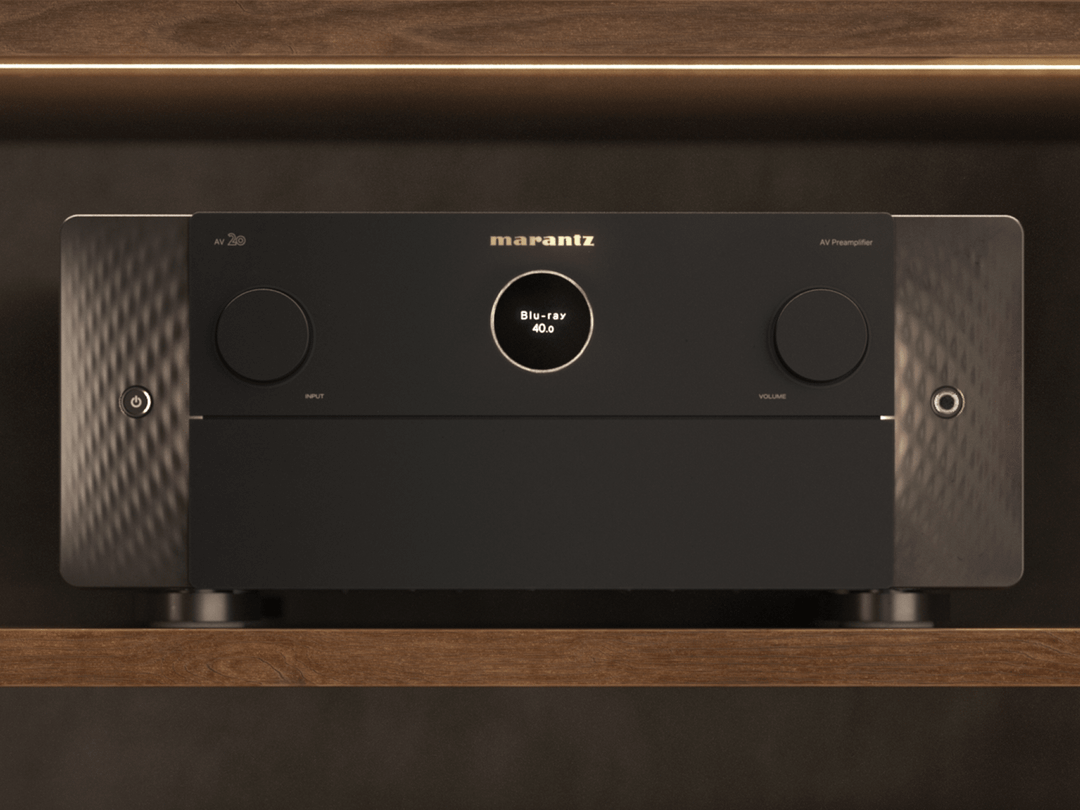
Marantz AV 20 Preamplifier – $6,000 A high-end AV preamp meant to pair with separate power amps in a serious home theater, with HEOS handling the streaming and multi-room side.
Marantz Model M4 Amplifier – $3,500 A multi-channel distribution amp aimed at people wiring multiple zones around a home. Combined with HEOS, it becomes part of a flexible, centralized whole-home system.
Marantz AV7706 Preamplifier – $2,000 Another surround preamp option, geared toward enthusiasts who want separates instead of an all-in-one AVR, but still want streaming and HEOS integration.
Integrated and Streaming Amplifiers
Marantz Model M1 Streaming Amplifier – $1,000 A compact streaming amp that can power in-wall, in-ceiling, or bookshelf speakers and live quietly in a cabinet or rack. It’s networked, hi-res capable, and Powered by HEOS.
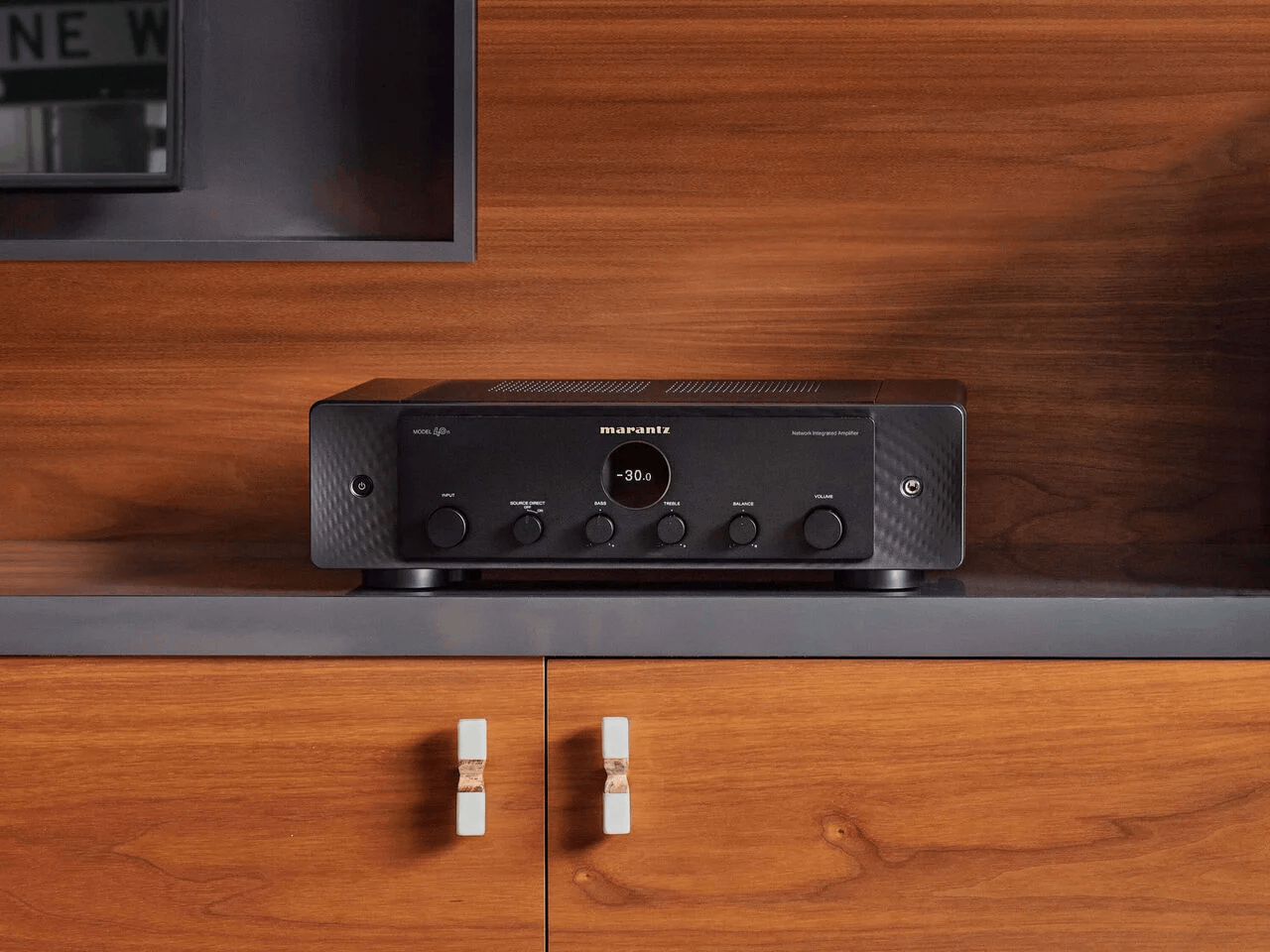
Marantz Model 40n Stereo Amplifier – $2,700 A stylish two-channel integrated with built-in streaming. It looks like traditional hi-fi but acts like a modern network player thanks to HEOS.
Marantz Model 60n Network Integrated Amplifier – $1,600 A more accessible integrated amp that still offers network streaming and HEOS, plus the classic Marantz design language.
Disc Players and Network Sources
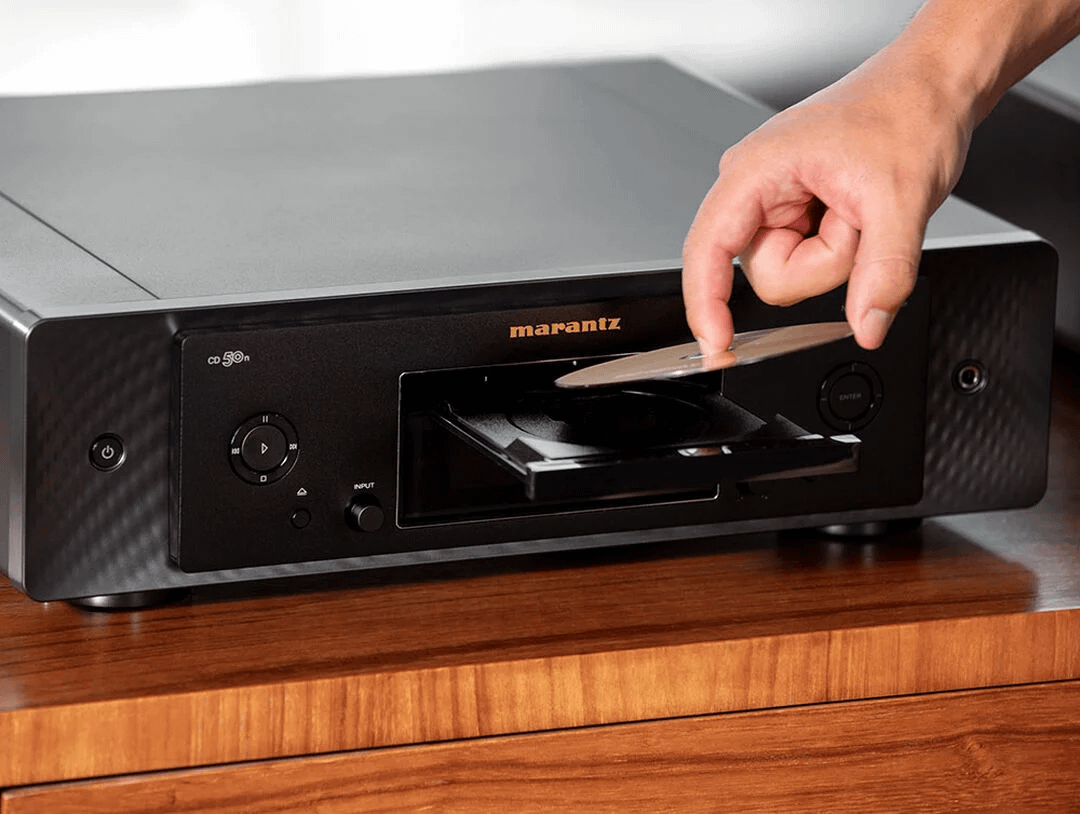
Marantz CD 50n CD & Network Audio Player – $2,000 Combines a CD player, DAC, and streamer in one box, all tied into HEOS. It’s a nice “digital front end” for a stereo system.
Marantz SACD 30n CD Player – $3,500 Adds SACD support and high-performance DAC capability while still playing nicely with HEOS for streaming and multi-room control.
Marantz M-CR612 CD Player – $650 A compact CD receiver with network streaming and HEOS. Perfect for smaller rooms where you still want CD playback and multi-room streaming in one tidy package.
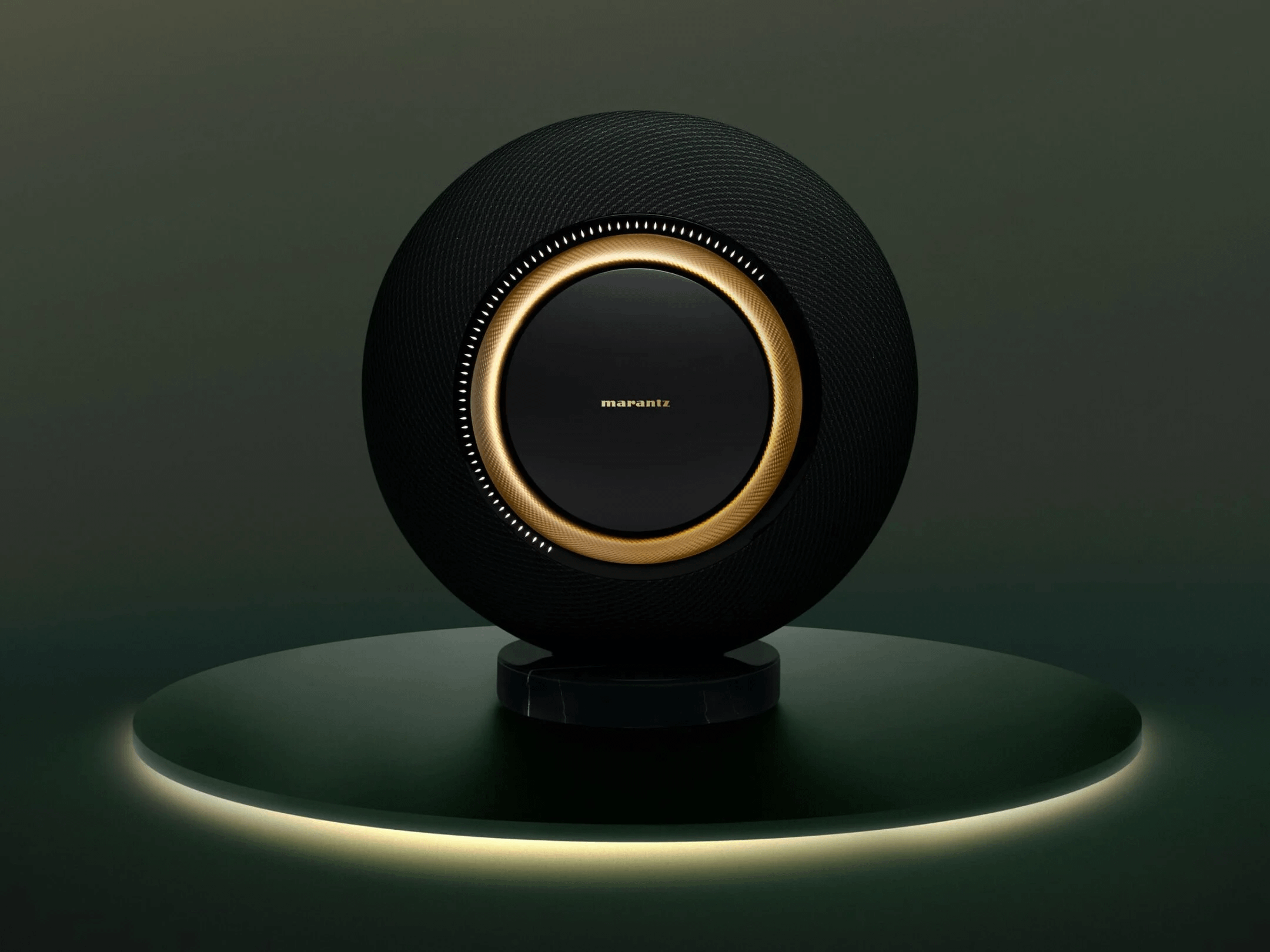
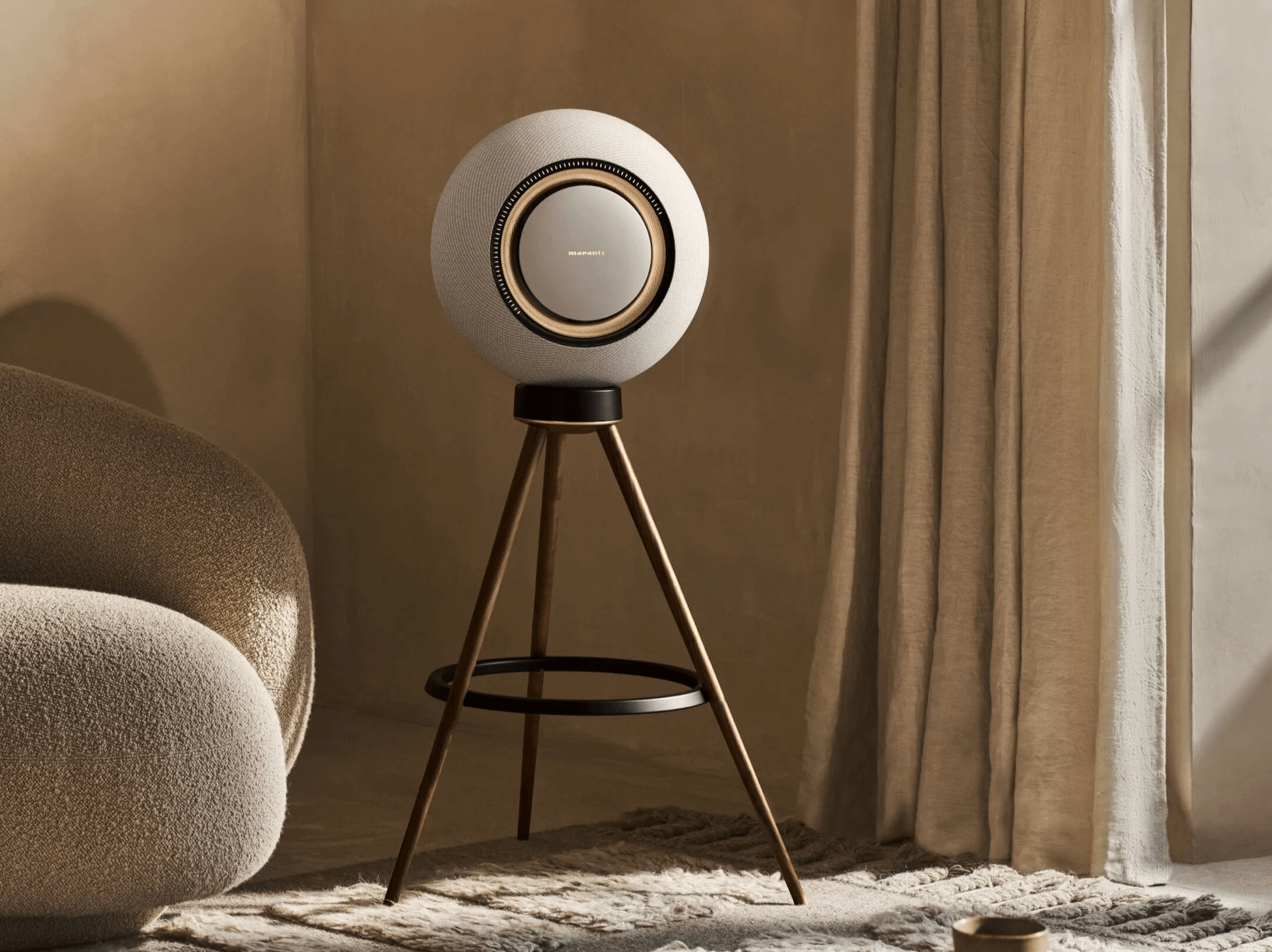
These are premium wireless speakers for people who want the sound and styling of high-end hi-fi without racks full of gear. They join HEOS groups just like Denon Home speakers, but with a distinctly Marantz flavor.
How You Might Actually Use Powered by HEOS
It’s one thing to list features. It’s another to picture how this all fits together. Here are a few real-world scenarios.
Scenario 1: Easy Starter System
Living Room: Denon AVR-S760H ($699.00) + 5.1 speaker system
Your theater is optimized for movies and immersive sound. Your office has a good stereo rig. The open-plan area has a single powerful wireless speaker. HEOS lets you:
Stream hi-res albums from Qobuz to the office only.
Play a podcast through the Home 350 while the theater is idle.
Group everything together for a party and control the volume of each zone independently.
Scenario 3: Marantz-Focused Hi-Fi Home
Main Listening Room: Marantz Model 40n ($2,700) + SACD 30n ($3,500)
The Marantz gear gives you a high-end two-channel setup for serious listening. When you want background music while cooking or hanging out outside, you simply group the Horizon and the Denon Home 250 with the main system in the HEOS app. Different brands, same app, same backbone.
Strengths, Limitations, and Who HEOS Is For
Where HEOS really shines:
It’s audio-first – designed by hi-fi and home-theater brands, not just a generic tech company.
It scales from one room to dozens of zones without changing how you use it.
It plays well with hi-res formats, modern streaming services, and Connect-style playback.
You can mix AVRs, integrated amps, wireless speakers, and streamers from Denon and Marantz and still control everything from one app.
Things to keep in mind:
The main control point is still iOS and Android. There’s no native HEOS app for desktop, though services like Roon, Spotify, TIDAL, and Qobuz give you ways to control playback from computers.
Very old HEOS hardware may not support every new feature that’s rolled out to current products.
If you’re used to the absolute slickest possible App Store experience, HEOS may feel more “practical” than flashy. The good news is that once it’s set up, you spend more time listening than fiddling.
Final Thoughts: Should You Care About HEOS?
If you already own or are shopping for Denon or Marantz gear, you absolutely should pay attention to the words “Powered by HEOS.” They mean:
Your receiver, amp, or speaker isn’t stuck acting alone.
It can be part of a flexible multi-room system that supports modern streaming, hi-res audio, and voice control.
You can start small today and expand later—without throwing anything away or learning a new ecosystem.
HEOS doesn’t shout the loudest in marketing, but it quietly does a lot of things right. It lets serious home theater gear, stylish hi-fi components, and simple wireless speakers all talk to each other and share music around your home.
If your ideal setup is “great sound in the main system, simple control everywhere else, and one app to keep it all together,” then HEOS is absolutely worth building around.