




If you're tired of squinting at your TV screen and cranking up the volume just to understand what characters are saying, you're not alone. Most modern TVs sound terrible because manufacturers prioritize thin designs over audio quality. That's where soundbars come in—they're designed to fix your TV's audio problems without taking up much space or requiring a complex setup.
The challenge is choosing between different approaches to better TV sound. Today, we're comparing two popular options that represent very different philosophies: the Amazon Fire TV Soundbar Plus 5.1 Channel System and the Bose TV Speaker. One gives you a complete surround sound experience, while the other focuses on making dialogue crystal clear. Let's break down which approach works best for different situations.
Before diving into these specific products, it helps to understand what soundbars are trying to accomplish. At their core, soundbars aim to deliver three key improvements over your TV's built-in speakers: clearer dialogue, better bass response, and a wider soundstage (the sense that audio comes from multiple directions rather than just the center of your TV).
The most important performance metrics for soundbars include dialogue clarity, bass extension, volume capability, and surround sound effectiveness. Dialogue clarity refers to how easy it is to understand speech without turning up the volume. Bass extension determines how deep and powerful low-frequency sounds feel—think explosions in action movies or the rumble of a car engine. Volume capability isn't just about getting loud; it's about staying clear and distortion-free even at high volumes. Finally, surround sound effectiveness measures how well a system creates the illusion that sounds come from all around you rather than just from the front.
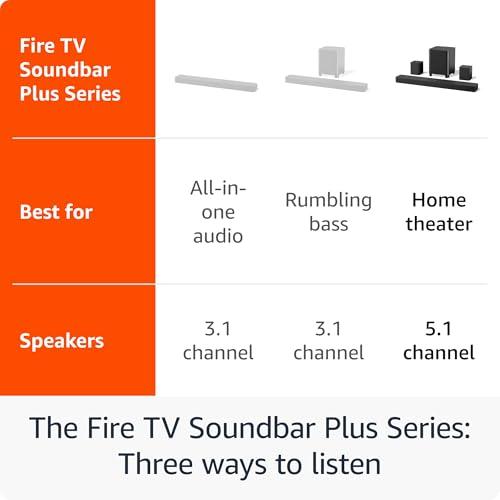
Channel configuration plays a huge role in determining these capabilities. A 2.0 system means two channels (left and right), essentially stereo sound. A 3.1 system adds a dedicated center channel for dialogue plus a subwoofer (.1) for bass. A 5.1 system includes all of that plus two rear channels for true surround sound. The more channels you have, the more immersive the experience becomes, but setup complexity and cost increase accordingly.
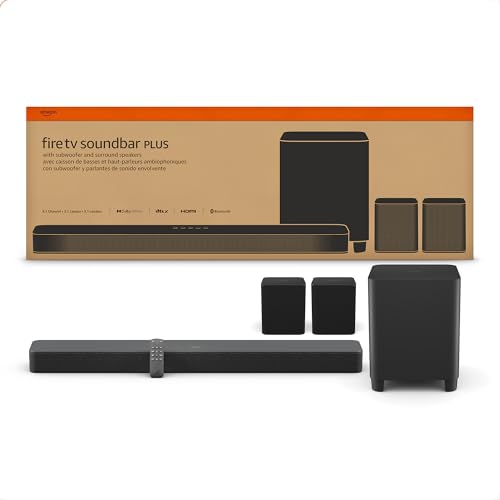
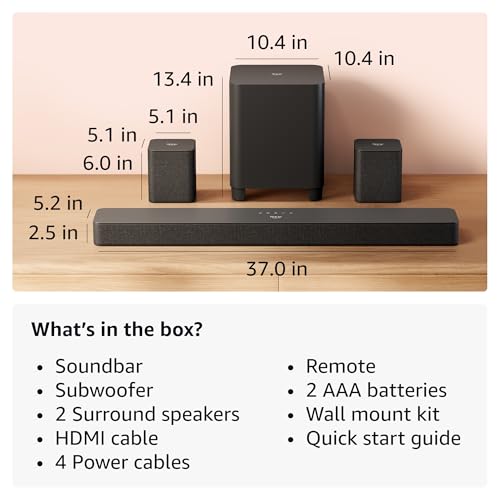
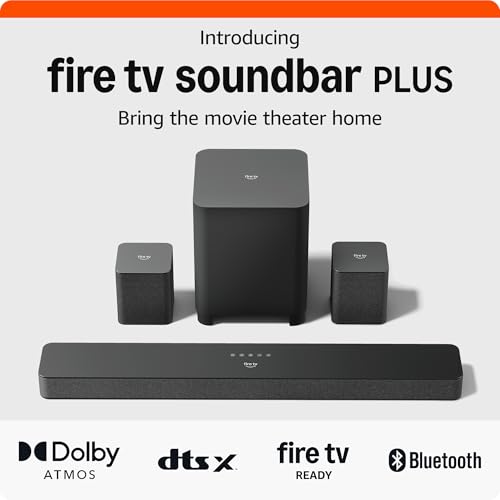
Released in 2023 as Amazon's second-generation soundbar, the Amazon Fire TV Soundbar Plus 5.1 represents the "everything included" philosophy. This system includes four separate components: a main soundbar, a wireless subwoofer, and two wireless rear satellite speakers. When you buy it, you get everything needed for true 5.1-channel surround sound right in the box.
The main soundbar houses three full-range speakers, three tweeters (speakers designed for high frequencies), and two woofers (speakers optimized for mid and low frequencies). This driver arrangement creates what's called a 3.1 configuration from the soundbar alone—left, right, and center channels plus some bass response. When you add the wireless subwoofer and rear speakers, the system expands to full 5.1 surround sound.
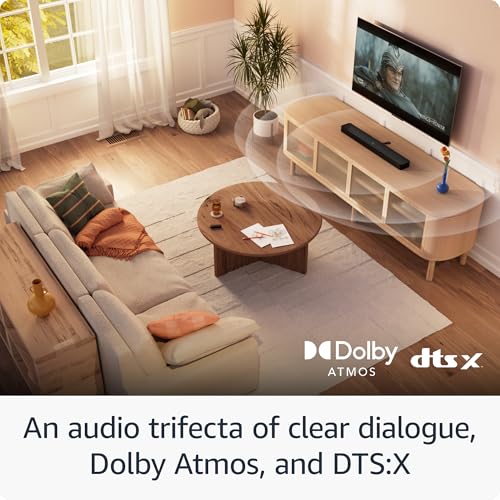
What makes this particularly interesting is the HDMI eARC support. eARC stands for "enhanced Audio Return Channel," and it's a newer connection standard that can handle high-quality audio formats like Dolby Atmos and DTS:X. These are object-based audio formats that place sounds precisely in three-dimensional space around you. However, the Amazon Fire TV Soundbar Plus handles these formats through virtualization rather than dedicated height speakers—meaning it uses digital processing to simulate overhead sounds rather than physically firing sound upward.
The system supports lossless audio formats like Dolby TrueHD and DTS-HD Master Audio. "Lossless" means the audio hasn't been compressed in a way that loses quality, similar to how a CD preserves more detail than an MP3 file. This matters most when watching 4K Blu-ray movies or streaming high-quality content.
One of the strongest aspects of Amazon's approach is the pre-paired wireless connectivity. All components connect to each other automatically when you power them on—no complex pairing procedures or additional setup steps. The subwoofer communicates wirelessly with the main soundbar, and the rear speakers do the same. This eliminates the cable runs typically required for surround sound systems.
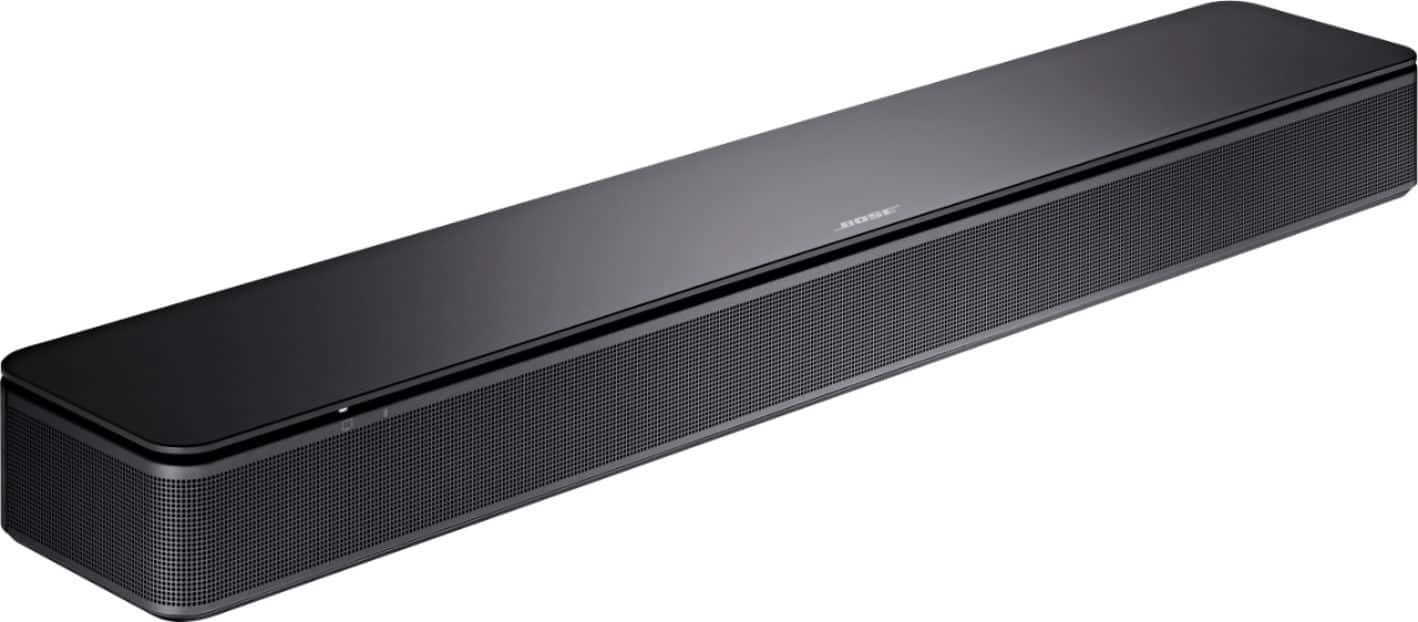
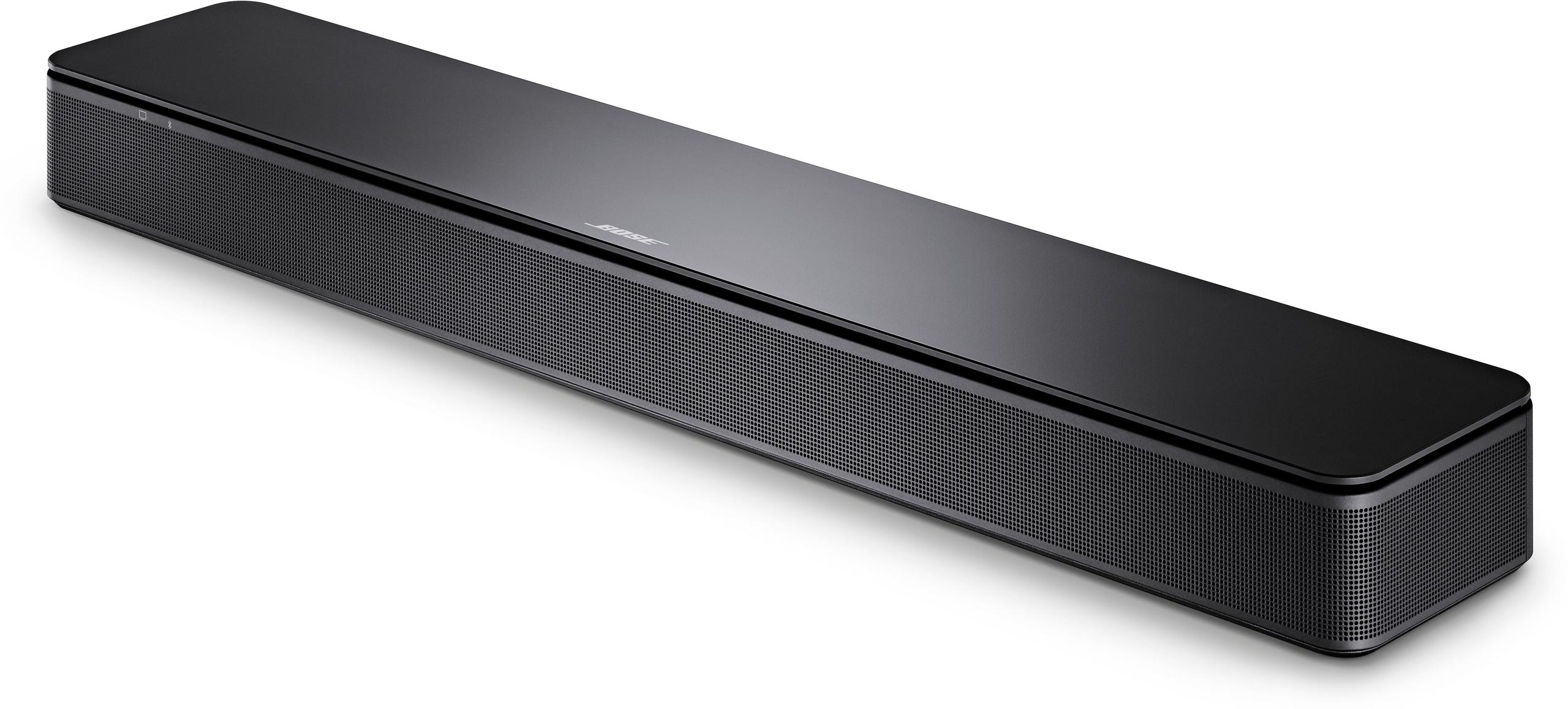
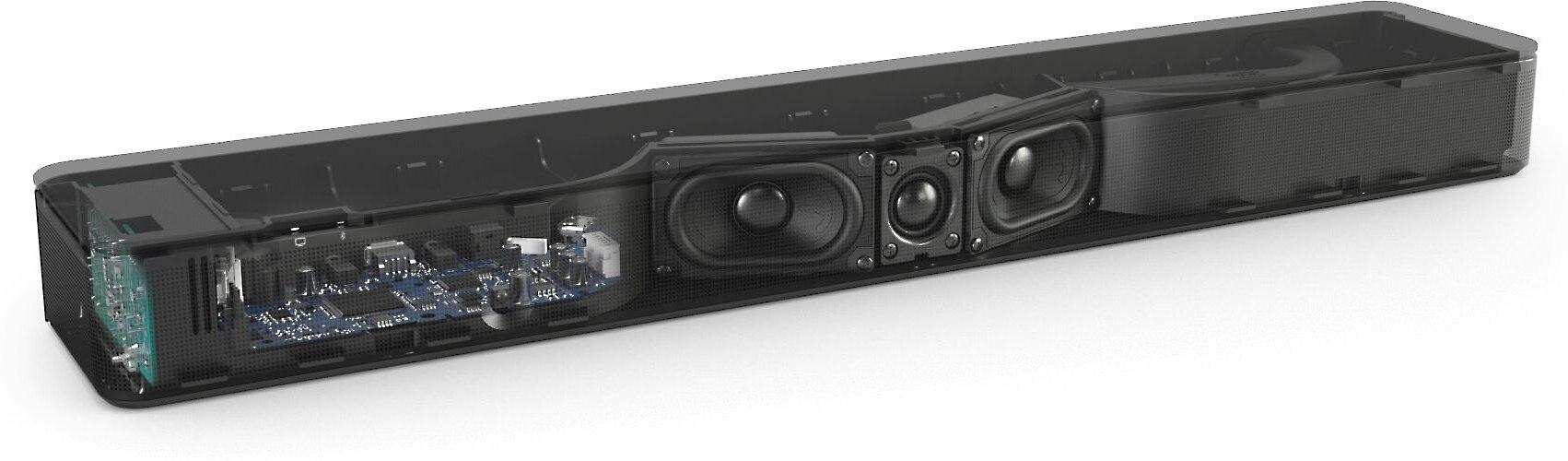
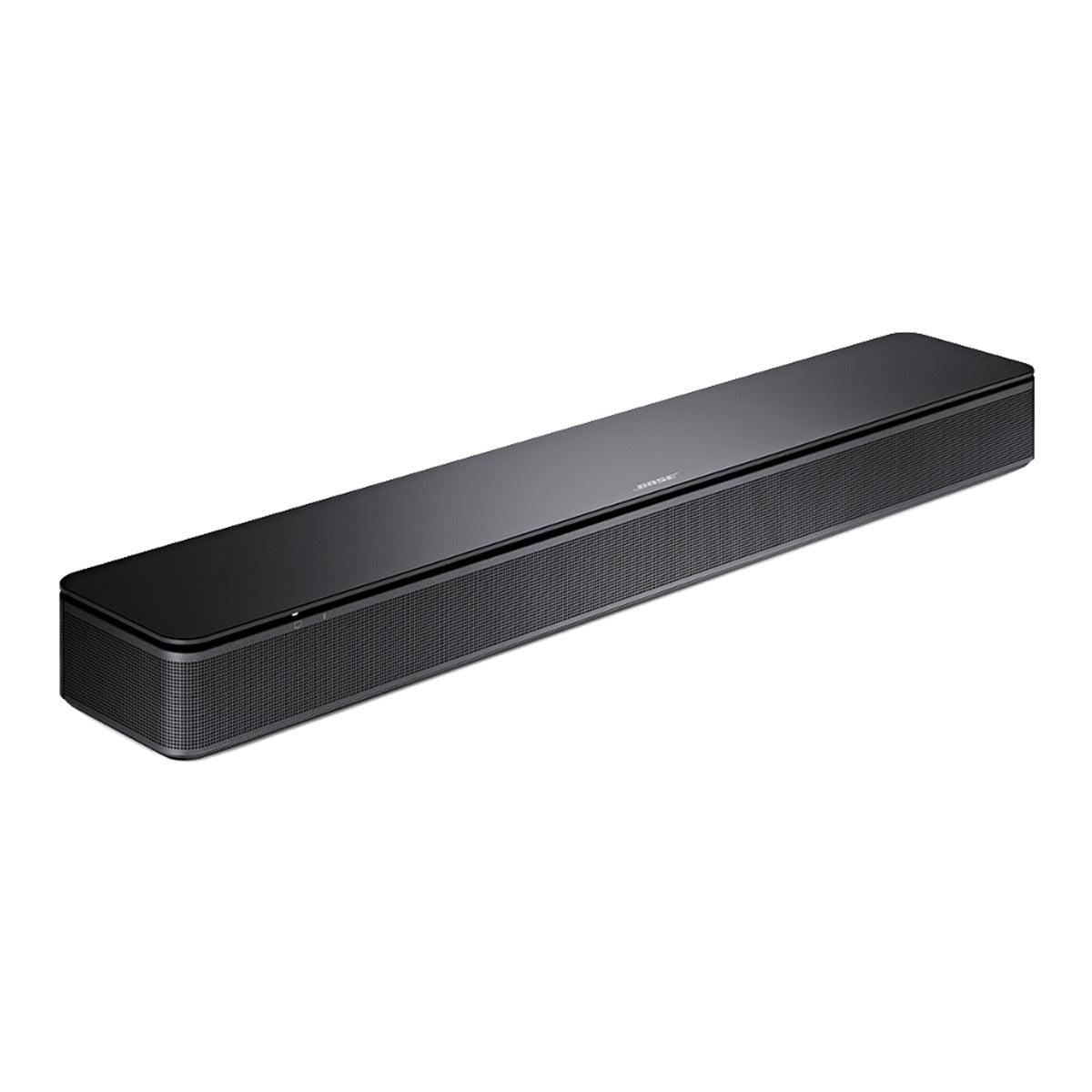
The Bose TV Speaker, available since 2020, takes a completely different approach. Rather than trying to do everything, it focuses intensely on solving the most common TV audio problem: unclear dialogue. This soundbar uses a single front-firing tweeter specifically dedicated to speech frequencies, flanked by two full-range drivers angled slightly outward to create some stereo width.
Bose's engineering philosophy here centers on psychoacoustics—the science of how we perceive sound. The company has found that most people's primary frustration with TV audio stems from poor dialogue clarity, not lack of surround sound. The Bose TV Speaker's frequency response is deliberately tuned to emphasize the mid-range frequencies where human speech lives, making conversations more intelligible even at lower volumes.
The system includes a dedicated Dialogue Mode that analyzes incoming audio in real-time and automatically adjusts the frequency response to further enhance speech clarity. This isn't just a simple EQ adjustment—it's dynamic processing that adapts based on the content you're watching.
Despite being a compact unit, the Bose TV Speaker includes some clever acoustic engineering. It uses a rear-firing port to enhance bass response beyond what you'd expect from such a small enclosure. The bass boost feature can add extra low-end punch when needed, though it can't match the dedicated subwoofer performance of larger systems.
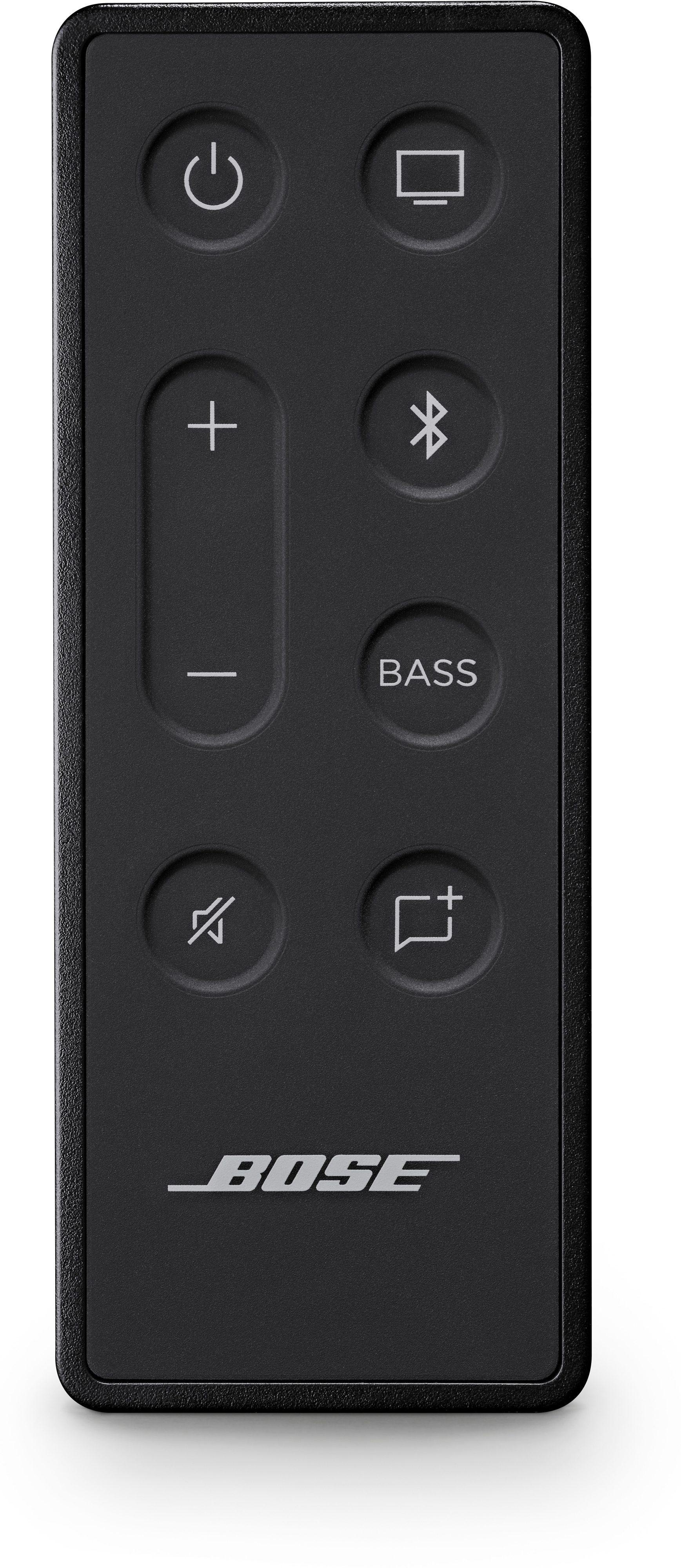
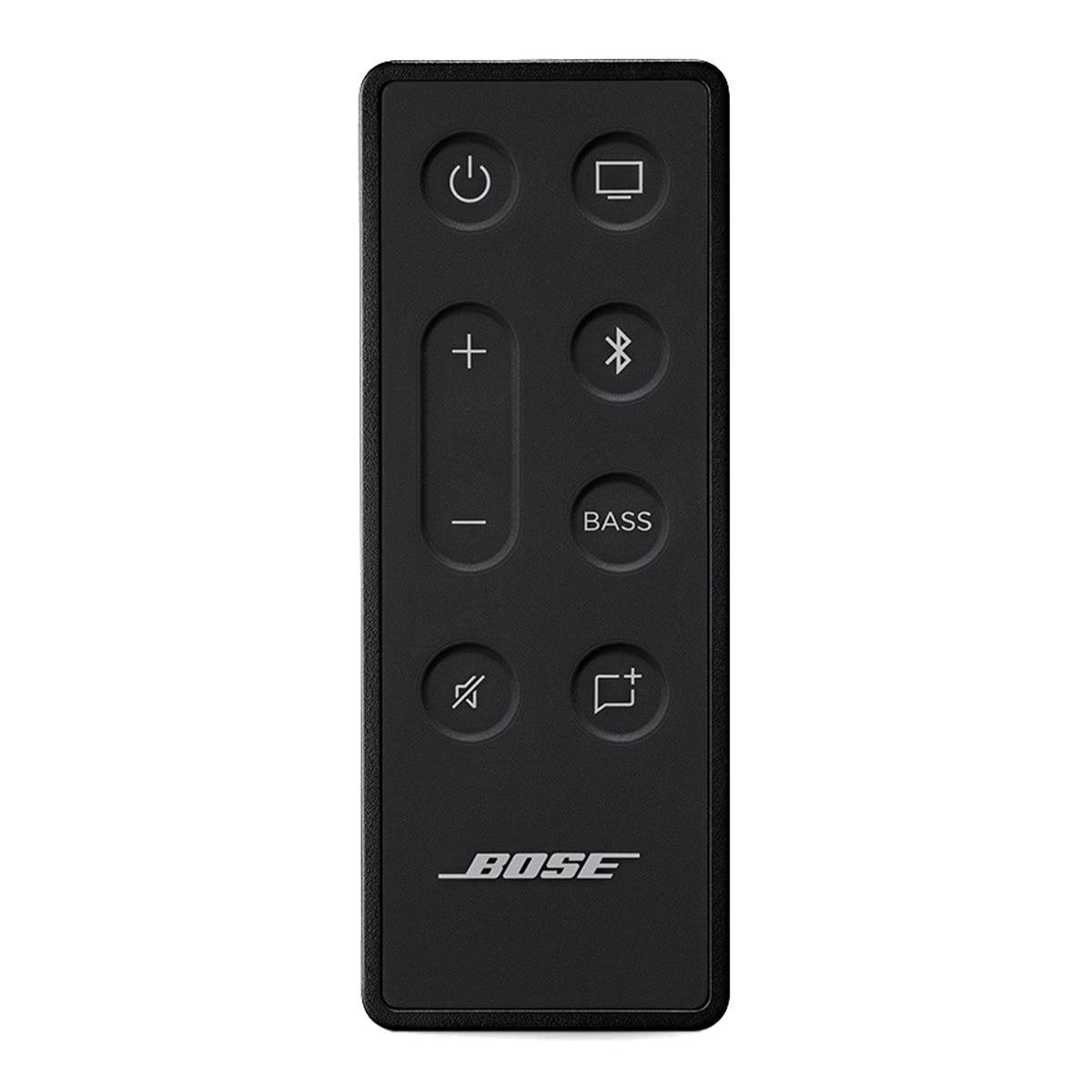
The Bluetooth 4.2 connectivity allows the Bose TV Speaker to double as a wireless music speaker, and the HDMI-CEC support means it can be controlled by your TV's remote once connected. CEC stands for Consumer Electronics Control, a feature that lets connected devices communicate with each other for simplified operation.
Based on our research into professional reviews and user feedback, these two systems have distinctly different sound signatures that serve different purposes.
The Amazon Fire TV Soundbar Plus 5.1 produces what audio reviewers describe as a "warm" sound signature. This means it emphasizes bass frequencies slightly over treble, creating a fuller, more enveloping sound that works well for movies and music. The 10.4-inch wireless subwoofer delivers substantial low-frequency impact that you can feel as much as hear. However, some reviews note that this bass can occasionally sound "one-note"—lacking the nuanced depth of more expensive subwoofers.
The system's strength lies in creating an immersive soundstage. When properly positioned, the rear satellite speakers create convincing surround effects that enhance movie watching and gaming. Sounds appear to move around the room rather than coming only from the front. However, the stereo imaging from the main soundbar alone has some weaknesses—reviews consistently mention noticeable gaps in the left-to-right soundstage that can make panning audio effects sound unnatural.
The Bose TV Speaker takes the opposite approach with what reviewers call a "bright" sound signature. This means it emphasizes mid-range and high frequencies where dialogue lives. The result is exceptional speech clarity that makes the Bose TV Speaker particularly effective for news, talk shows, and dialogue-heavy dramas. However, this tuning means less bass impact and physicality compared to systems with dedicated subwoofers.
This is where the fundamental difference between these approaches becomes most apparent. The Amazon Fire TV Soundbar Plus 5.1 delivers true multi-channel surround sound with discrete rear speakers. When you're watching an action movie and a helicopter flies from front to back, you hear it move through the room. The rear speakers handle ambient sounds, background music, and directional effects that create a genuinely immersive experience.
The Dolby Atmos and DTS:X support adds another layer of spatial audio, though it's important to understand the limitations. Without dedicated upward-firing drivers, the Amazon system can't create true overhead sound placement. Instead, it uses virtualization—digital processing that tricks your brain into perceiving height effects. This works better than you might expect, but it's not as convincing as systems with physical height speakers.
The Bose TV Speaker offers no surround sound capabilities. It's strictly a stereo system that excels at frontal presentation. For content where dialogue is paramount—news broadcasts, sitcoms, courtroom dramas—this limitation matters less. The angled drivers create some sense of width, but you won't get the wraparound effects that make action movies more engaging.
Room size significantly impacts which system works better for your situation. The Amazon Fire TV Soundbar Plus 5.1 can fill large rooms with sound while maintaining clarity. Professional reviews note that it reaches high volumes with minimal compression, meaning loud scenes stay clear rather than becoming muddy or distorted.
The distributed speaker approach helps here—instead of forcing all sound through one location, the system spreads audio sources around the room. This reduces the workload on any single speaker and allows for higher overall output without strain.
The Bose TV Speaker works best in small to medium-sized rooms. While it can get reasonably loud for its size, pushing it to maximum volume in a large space will reveal its limitations. The compact form factor inherently restricts how much air the speakers can move, which directly impacts maximum volume capability.
However, for its intended use cases, the Bose system excels at maintaining dialogue clarity even at lower volumes—perfect for late-night viewing when you don't want to disturb others.
The setup experience differs dramatically between these systems. The Amazon Fire TV Soundbar Plus 5.1 requires finding locations for four separate components. The main soundbar measures approximately 37 inches wide, making it too large for some TV stands. You'll need to position the wireless subwoofer somewhere in the room where it doesn't interfere with foot traffic, and the rear speakers need to be placed behind your seating area at ear level for optimal performance.
While all components connect wirelessly to each other, each needs its own power outlet. The system includes wall-mounting hardware for the main soundbar, but the rear speakers will need their own mounting solution or furniture placement. Some users report that finding the right positions for all components can be challenging in smaller rooms.
The payoff for this complexity is a true surround sound system that provides an immersive experience comparable to dedicated home theater setups costing significantly more. The pre-paired wireless connectivity means setup, while potentially complex from a placement standpoint, is simple from a technical perspective.
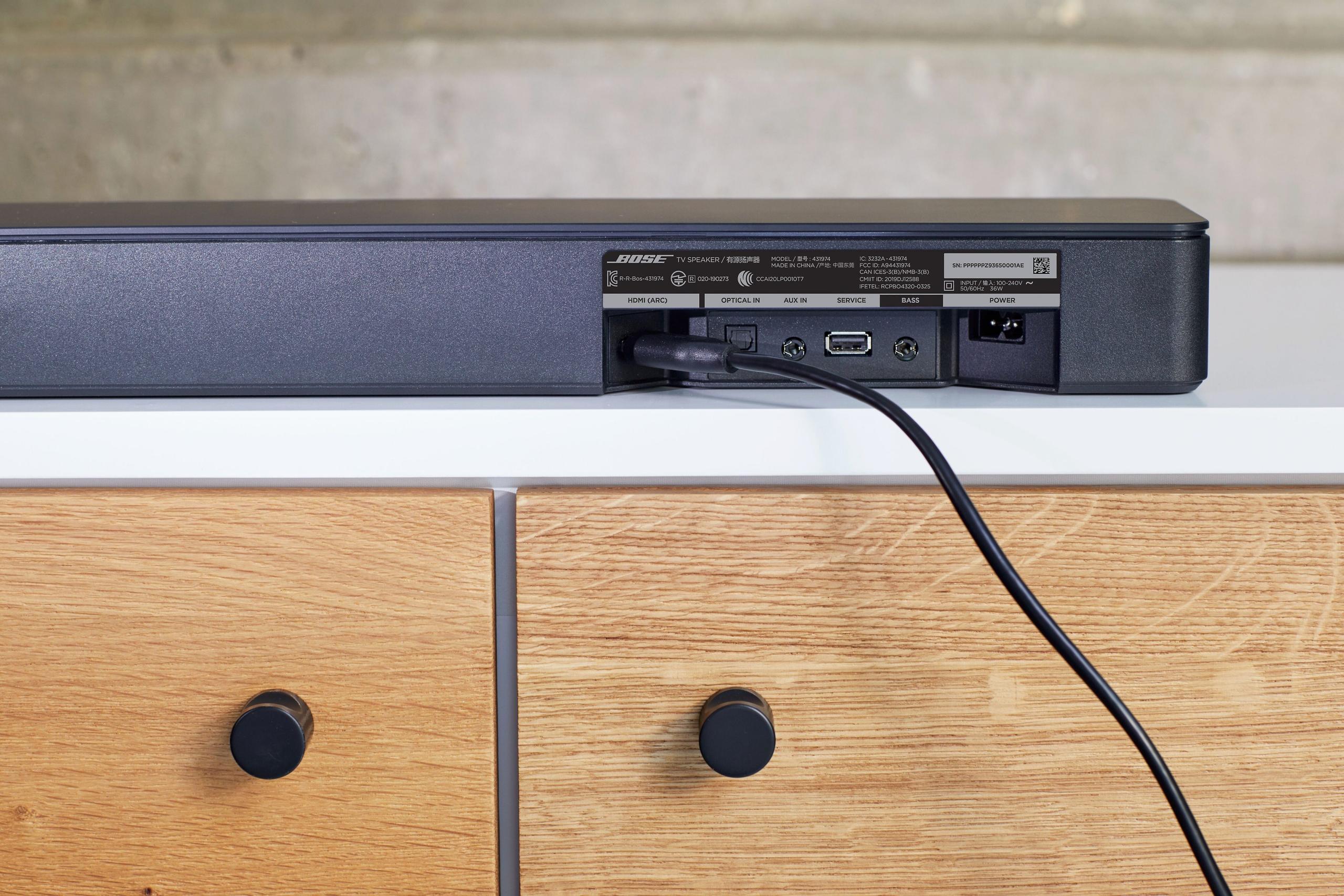
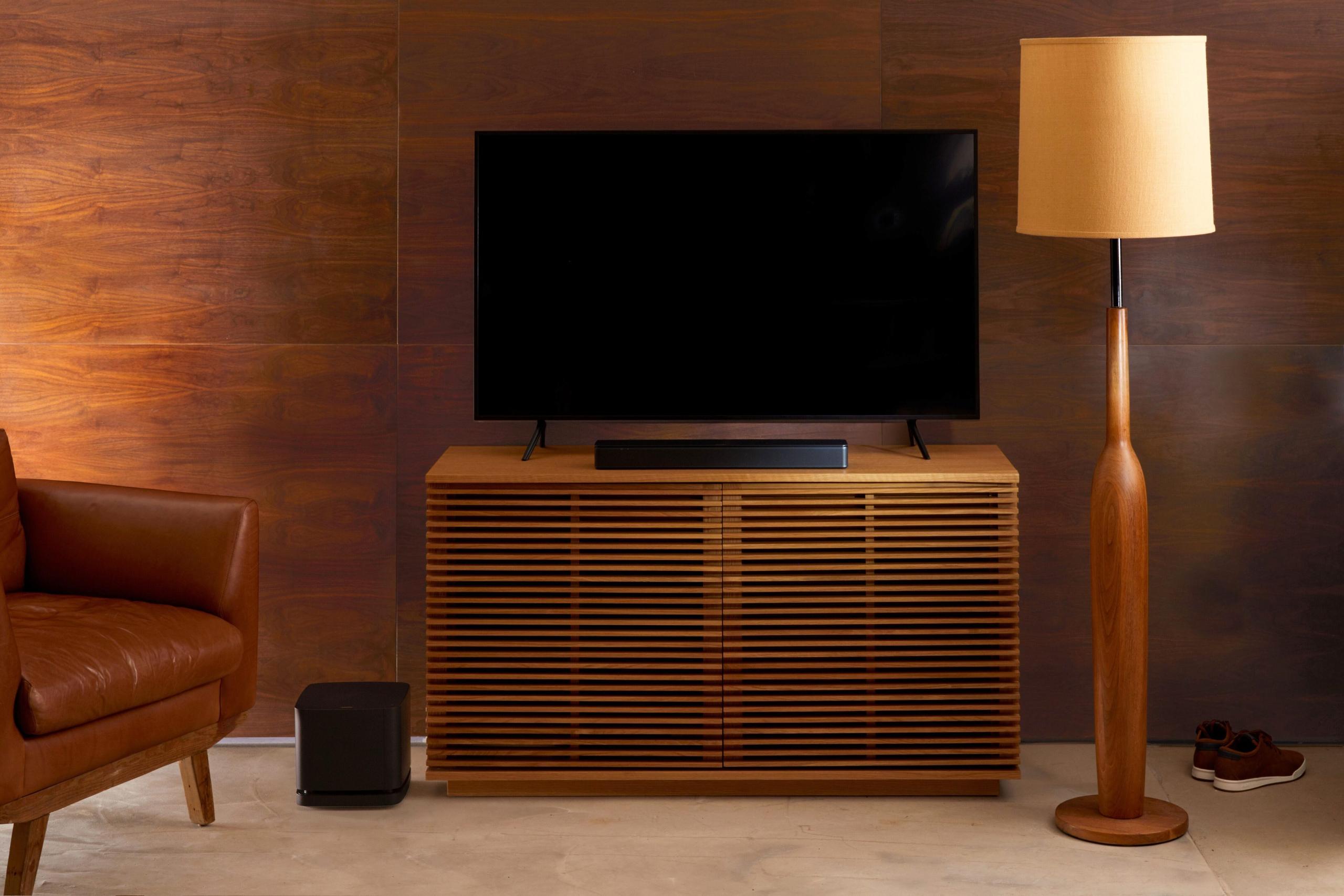
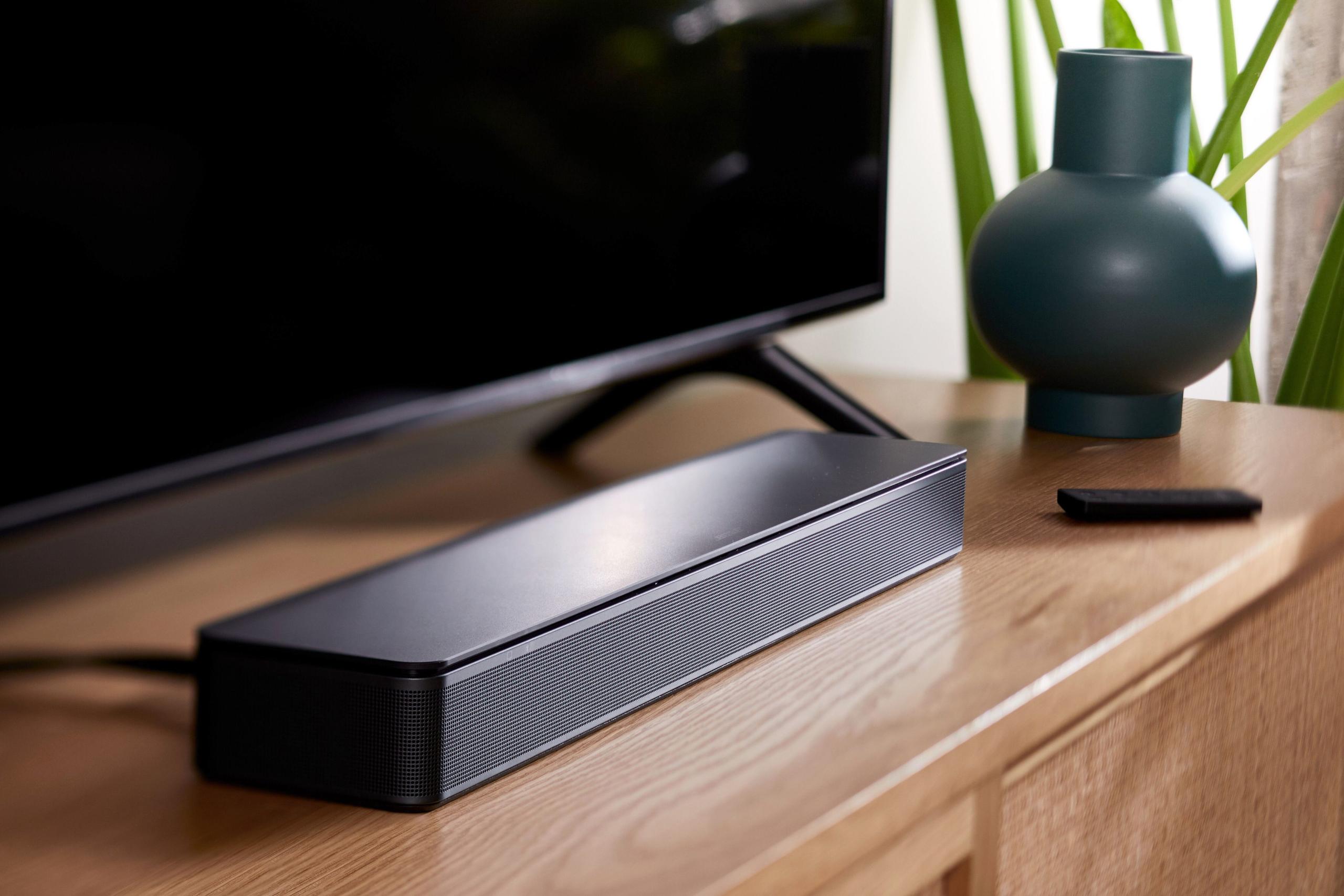
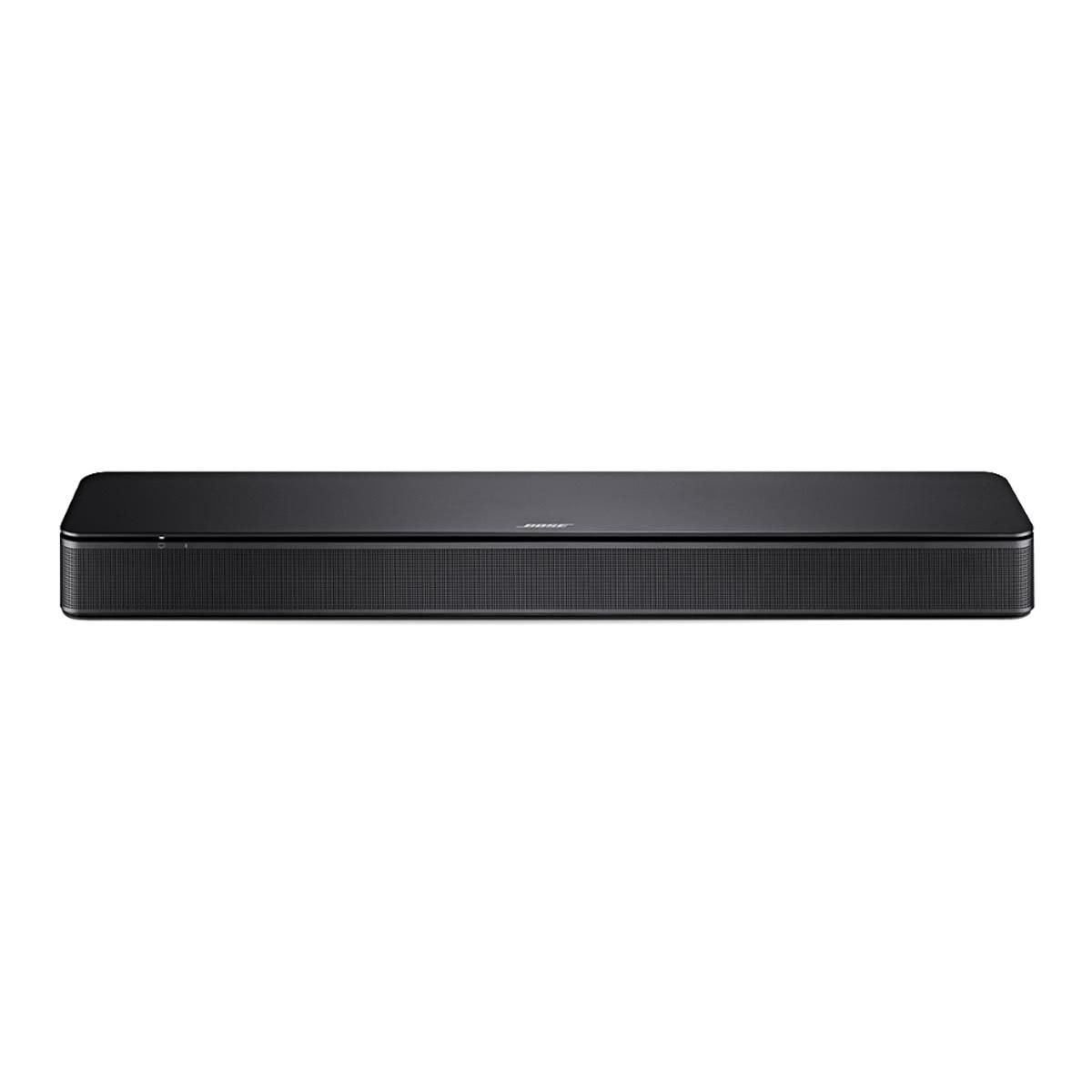
The Bose TV Speaker represents the opposite approach. At just over 2 inches tall, it fits in front of virtually any TV without blocking the screen. Setup involves a single connection to your TV—either via the included optical cable or an HDMI cable. Most users can go from unboxing to watching enhanced TV audio in under 10 minutes.
The compact design makes the Bose system ideal for apartments, bedrooms, or any situation where you want better TV sound without visual clutter or complex installation. The included wall-mounting option further reduces its footprint.
At the time of writing, these systems occupy different price tiers that reflect their different capabilities and target markets. The Amazon Fire TV Soundbar Plus 5.1 typically costs roughly double what the Bose TV Speaker sells for, but that comparison doesn't tell the complete story.
When evaluating the Amazon system, you need to consider that you're getting four separate components that would typically need to be purchased individually. A comparable system from other manufacturers—buying a 3.1 soundbar, wireless subwoofer, and wireless rear speakers separately—would likely cost significantly more. From this perspective, the Amazon system represents strong value for anyone wanting true surround sound.
The Bose TV Speaker positions itself as a premium dialogue solution at a more accessible price point. While it costs more per feature than many budget soundbars, you're paying for Bose's acoustic engineering expertise and build quality. The focus on doing fewer things exceptionally well rather than many things adequately justifies the premium for users whose priorities align with its strengths.
For dedicated home theater use, the choice between these systems becomes clearer. The Amazon Fire TV Soundbar Plus 5.1 provides the multichannel audio that makes movie soundtracks come alive. Film sound engineers specifically design surround soundtracks to use rear channels for ambient sounds, directional effects, and musical score elements. Without rear speakers, you're missing a significant portion of the intended audio experience.
The system's support for high-quality audio formats matters more in home theater applications. When watching 4K Blu-ray movies or high-quality streaming content, the ability to handle lossless audio formats ensures you're hearing the soundtrack as the filmmakers intended.
However, home theater doesn't always mean action movies. If your viewing habits lean heavily toward dialogue-driven content—classic films, documentaries, foreign films with subtitles—the Bose TV Speaker's exceptional dialogue clarity might prove more valuable than surround sound effects.
Based on our analysis of performance characteristics, user reviews, and intended use cases, the decision comes down to matching system strengths with your specific needs and preferences.
Choose the Amazon Fire TV Soundbar Plus 5.1 if you primarily watch movies, play video games, or enjoy content where immersion matters more than pure dialogue clarity. This system excels with action films, sports broadcasts, and gaming where surround effects enhance the experience. It's also the better choice for larger rooms and situations where multiple people will be listening from different positions.
The system makes sense for users who want a complete audio upgrade without researching and purchasing multiple components separately. Despite its complexity, the pre-paired wireless setup means you get true surround sound without running speaker cables around your room.
Choose the Bose TV Speaker if dialogue clarity is your primary concern and you prefer simplicity over features. This system excels for news, talk shows, sitcoms, and dramatic content where understanding speech is more important than feeling explosions. It's ideal for smaller rooms, apartments, or situations where a complex multi-component setup isn't practical.
The Bose system also makes sense for users who want something that just works without configuration or tweaking. If you're buying for elderly parents, a bedroom setup, or a secondary TV, the simplicity and dialogue focus often outweigh the lack of surround sound.
After analyzing the performance characteristics, user feedback, and value propositions of both systems, our recommendation depends heavily on your specific situation and priorities.
The Amazon Fire TV Soundbar Plus 5.1 represents the better choice for most people serious about improving their TV audio experience. The complete surround sound system, strong bass response, and support for advanced audio formats provide a genuinely immersive upgrade over TV speakers. While setup complexity is higher, the pre-paired wireless connectivity keeps it manageable for most users.
The Bose TV Speaker excels in specific scenarios where its strengths align perfectly with user needs. For dialogue-heavy content in smaller spaces, or when simplicity and aesthetic considerations outweigh performance requirements, it's the superior choice.
Consider your viewing habits honestly. If you watch a mix of content types in a medium to large room and want the most complete audio upgrade, the Amazon system provides significantly better value despite its higher price. If you primarily watch dialogue-driven content in a smaller space and prioritize simplicity, the Bose TV Speaker will better serve your needs.
Either choice will dramatically improve your TV audio experience compared to built-in TV speakers. The key is matching system capabilities with your specific requirements and room constraints.
| Amazon Fire TV Soundbar Plus 5.1 Channel System | Bose TV Speaker Soundbar |
|---|---|
| Channel Configuration - Determines surround sound capability and immersion level | |
| True 5.1 surround (soundbar + wireless subwoofer + 2 rear speakers) | 2.0 stereo (expandable to 2.1 with separate wired subwoofer) |
| Audio Format Support - Higher formats provide better movie experience | |
| Dolby Atmos, DTS:X, Dolby TrueHD, DTS-HD MA (virtualized height effects) | Basic Dolby Digital (no advanced surround formats) |
| Dialogue Clarity - Critical for understanding speech without volume increases | |
| Good with adjustable dialogue enhancement via remote | Exceptional with dedicated dialogue mode and speech-optimized tuning |
| Bass Performance - Affects impact of explosions, music, and low-frequency effects | |
| Strong impact from included 10.4" wireless subwoofer | Limited without subwoofer, decent with bass boost enabled |
| Room Size Capability - Determines how well system fills your space | |
| Medium to large rooms (distributed speakers reduce strain) | Small to medium rooms (compact design limits maximum output) |
| Setup Complexity - Affects how quickly you can start enjoying better sound | |
| Moderate (4 components need placement and power, but wireless pairing is automatic) | Minimal (single unit, one cable connection, ready in minutes) |
| Physical Footprint - Important for TV stand space and room aesthetics | |
| Large (37" soundbar + subwoofer placement + rear speaker positioning) | Compact (23.4" x 2.2" x 4" fits virtually anywhere) |
| Connectivity Options - Determines compatibility with different devices | |
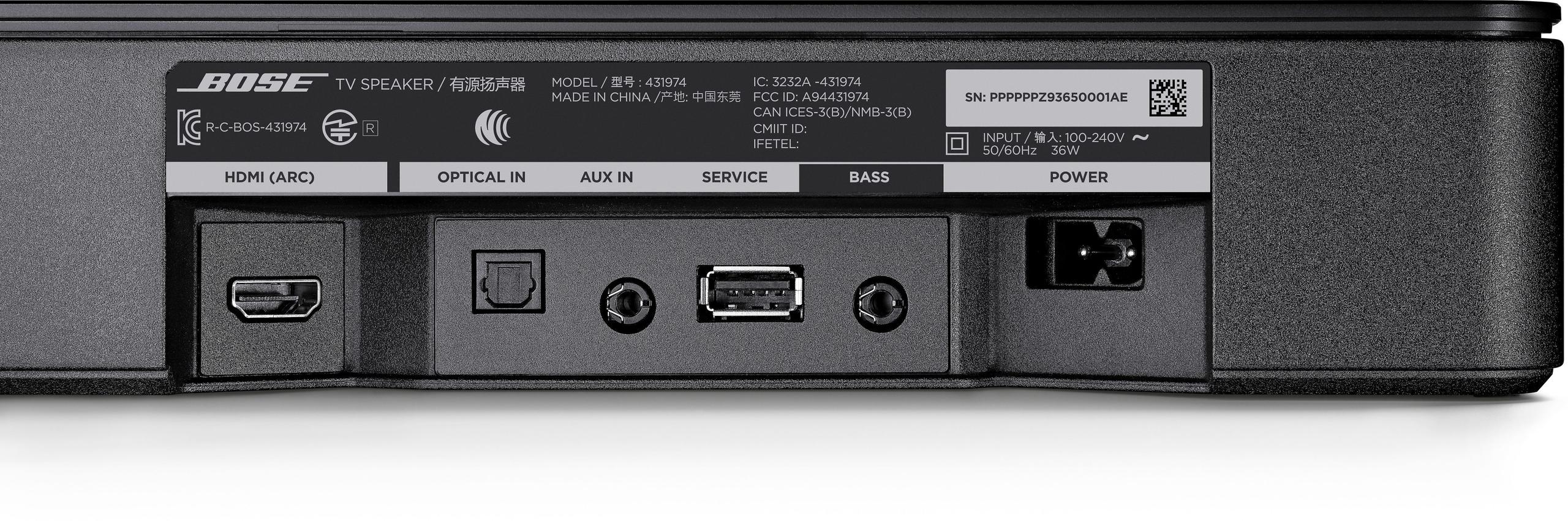
| HDMI eARC, optical, USB-A, Bluetooth 5.0 | HDMI ARC, optical, 3.5mm analog, Bluetooth 4.2 |
| Expandability - Future upgrade options without replacing entire system | |
| Complete system included (no further expansion needed or possible) | Can add Bose Bass Module 500/700 via wired connection |
| Release Year - Indicates technology generation and feature currency | |
| 2023 (current generation with latest audio format support) | 2020 (mature product with proven reliability) |
The Amazon Fire TV Soundbar Plus 5.1 Channel System is significantly better for movies due to its true surround sound with rear speakers and subwoofer. It creates an immersive experience where sounds move around the room, making action scenes more engaging. The Bose TV Speaker excels at dialogue clarity but lacks surround effects, making it better suited for news and talk shows rather than cinematic content.
The Amazon Fire TV Soundbar Plus 5.1 Channel System provides 5.1 surround sound, meaning it has five speakers (front left, center, right, and two rear) plus one subwoofer for bass. This creates sound from multiple directions. The Bose TV Speaker offers stereo sound with just left and right channels, providing good frontal audio but no surround effects.
The Bose TV Speaker is much easier to set up, requiring only one cable connection to your TV and taking about 10 minutes from box to working. The Amazon Fire TV Soundbar Plus 5.1 Channel System requires positioning four separate components around your room, though the wireless connectivity between components keeps setup relatively simple.
The Amazon Fire TV Soundbar Plus 5.1 Channel System includes a wireless subwoofer that delivers strong, impactful bass for movies and music. The Bose TV Speaker has limited bass on its own but includes a bass boost feature that helps somewhat. For deep, room-filling bass, the Amazon system is the clear winner.
The Bose TV Speaker is ideal for small rooms due to its compact 23-inch size and dialogue-focused design. The Amazon Fire TV Soundbar Plus 5.1 Channel System can work in small rooms but requires space for a large soundbar, subwoofer, and rear speakers, which may be challenging to position properly.
Both soundbars support Bluetooth connectivity for wireless music streaming. The Amazon Fire TV Soundbar Plus 5.1 Channel System uses Bluetooth 5.0, while the Bose TV Speaker uses Bluetooth 4.2. Both work well for streaming music from phones, tablets, or other devices.
The Bose TV Speaker is specifically designed for exceptional dialogue clarity with a dedicated dialogue mode and speech-optimized tuning. While the Amazon Fire TV Soundbar Plus 5.1 Channel System has good dialogue performance and adjustable dialogue enhancement, Bose's focus on speech makes it the superior choice for understanding conversations.
The Amazon Fire TV Soundbar Plus 5.1 Channel System supports Dolby Atmos and DTS:X, though it uses virtualization rather than physical height speakers to create overhead effects. The Bose TV Speaker does not support Dolby Atmos or other advanced surround sound formats, focusing instead on stereo audio quality.
The Amazon Fire TV Soundbar Plus 5.1 Channel System provides better value if you want surround sound, as it includes everything needed for a complete 5.1 system at a competitive price. The Bose TV Speaker offers good value for dialogue clarity and simplicity but costs more per feature than the Amazon system when considering the included components.
Both soundbars can be wall-mounted. The Amazon Fire TV Soundbar Plus 5.1 Channel System includes mounting hardware for the main soundbar, though you'll need separate solutions for the rear speakers. The Bose TV Speaker supports wall mounting and its compact size makes installation easier.
The Amazon Fire TV Soundbar Plus 5.1 Channel System is much better for gaming due to its surround sound capabilities that enhance spatial awareness and immersion. The rear speakers help you hear enemies approaching from behind, while the subwoofer adds impact to explosions and gunfire. The Bose TV Speaker works for gaming but lacks the directional audio that improves gameplay.
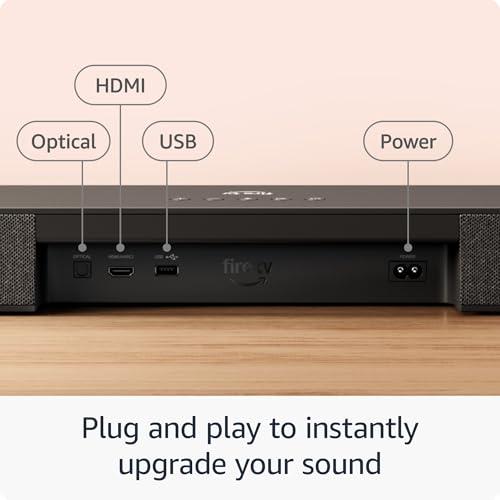
Both soundbars connect via HDMI or optical cables. The Amazon Fire TV Soundbar Plus 5.1 Channel System features HDMI eARC for high-quality audio formats and includes USB and Bluetooth connectivity. The Bose TV Speaker offers HDMI ARC, optical, and 3.5mm inputs, plus Bluetooth for wireless devices. Both include necessary cables in the box.
We've done our best to create useful and informative comparisons to help you decide what product to buy. Our research uses advanced automated methods to create this comparison and perfection is not possible - please contact us for corrections or questions. These are the sites we've researched in the creation of this article: rtings.com - cordbusters.co.uk - techradar.com - developer.amazon.com - t3.com - hometechnologyreview.com - youtube.com - hometechnologyreview.com - whathifi.com - hometechnologyreview.com - hometechnologyreview.com - youm.design - hometechnologyreview.com - dolby.com - bestbuy.com - projectorscreen.com - forums.audioholics.com - digitaltrends.com - abt.com - crutchfield.com - staples.com - bestbuy.com - pcrichard.com - visions.ca - bose.com - assets.bose.com

Privacy Policy
Terms and Conditions - Affiliate Policy
Home Security
© Copyright 2008-2026.
11816 Inwood Rd #1211, Dallas, TX 75244