





If you've been suffering through your TV's built-in speakers, you're probably ready for an upgrade. The question is: should you go with a complete multi-speaker system or invest in a premium all-in-one soundbar? These two approaches represent fundamentally different philosophies in home theater audio, and your choice will shape your listening experience for years to come.
The soundbar market has exploded in recent years, offering everything from basic stereo upgrades to complex surround sound systems. At the heart of this decision lies a crucial trade-off: do you want the authentic surround sound that comes from having speakers physically positioned around your room, or do you prefer the convenience and acoustic sophistication of a single premium unit that creates immersive effects through advanced processing?
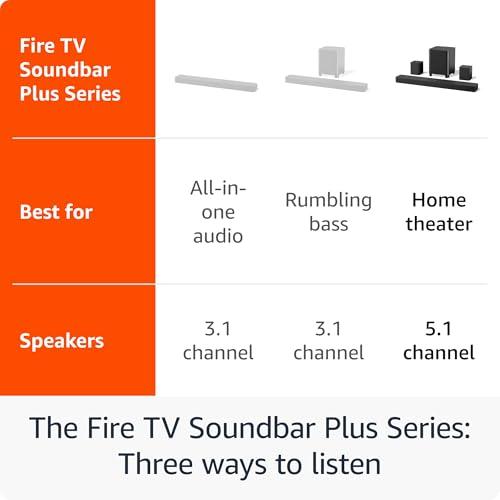
Before diving into these specific products, let's establish what makes a soundbar tick in 2024. The numbers you see—like 3.1.2 or 5.1—tell you exactly what you're getting. The first number represents front channels (left, center, right), the second indicates subwoofers, and the third (when present) shows height channels for Dolby Atmos effects.
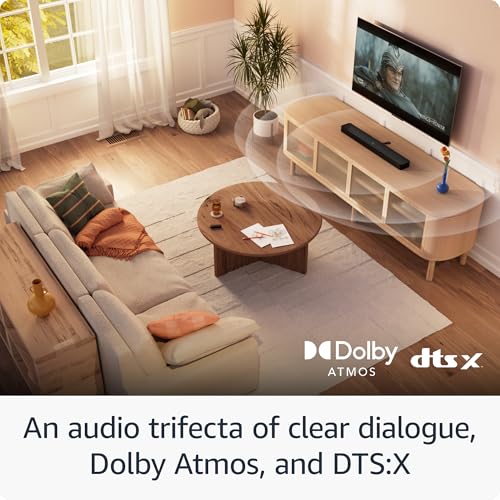
Dolby Atmos deserves special attention because it's revolutionizing how we experience movie soundtracks. Traditional surround sound moves audio left, right, front, and back. Atmos adds a vertical dimension, placing sounds above you—imagine helicopters flying overhead or rain falling from the ceiling. The key distinction is whether this height information comes from actual upward-firing speakers (genuine Atmos) or digital processing that simulates the effect (virtualized Atmos).
HDMI eARC (Enhanced Audio Return Channel) has become crucial for modern setups. This connection lets your TV send high-quality audio back to your soundbar while allowing the soundbar's remote to control TV volume—a seemingly small feature that eliminates daily frustration.
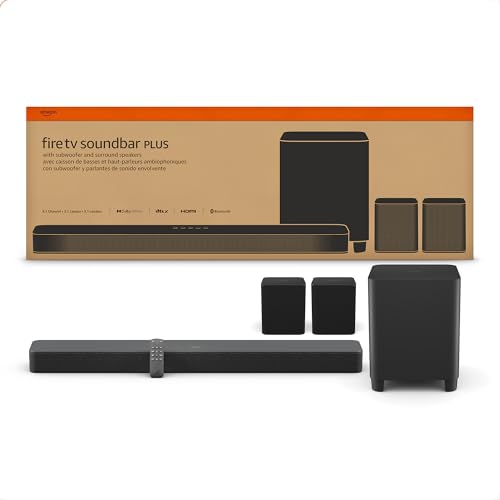
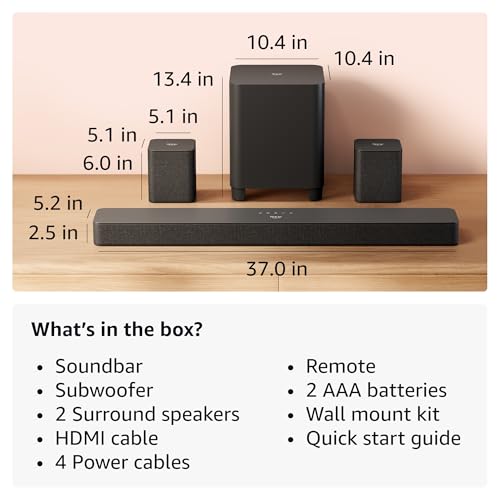
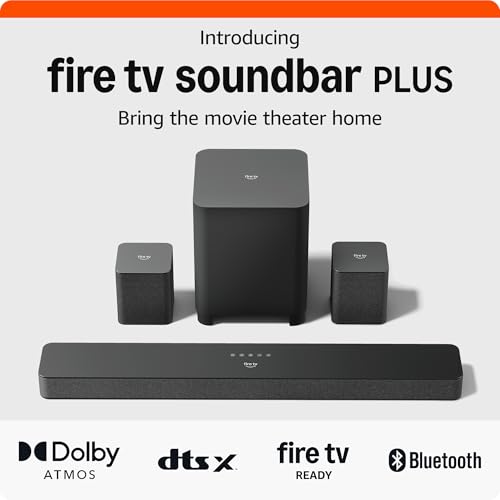
Released in 2023, the Amazon Fire TV Soundbar Plus 5.1 takes the straightforward approach: give you everything you need for true surround sound in one box. This system includes a main soundbar, a wireless subwoofer (a separate box that handles deep bass), and two satellite speakers that you place behind or beside your seating area.
The beauty of this approach is physics. When a helicopter flies across the screen in an action movie, the sound literally travels from the front soundbar to the rear satellites, creating a convincing sense of movement. Your brain doesn't have to work to interpret processed audio cues—the sound is actually coming from different directions.
This physical separation creates what audio engineers call a "soundstage"—the invisible acoustic space where all the action seems to happen. With the Amazon system, dialogue anchors clearly in the center channel while effects and music spread naturally across the front three channels. The rear satellites handle ambient sounds and directional effects, creating that wraparound sensation that makes movie nights feel more like theater experiences.
The wireless subwoofer deserves particular praise. Bass frequencies are omnidirectional (they spread in all directions), so subwoofer placement is flexible. You can tuck it beside your couch, in a corner, or even in an adjacent room, and it'll still deliver the low-frequency impact that makes explosions feel visceral and music sound full-bodied.
However, this system makes trade-offs for its completeness. The Amazon Fire TV virtualizes Dolby Atmos effects rather than using dedicated upward-firing speakers. This means height effects like overhead aircraft or falling debris are processed digitally rather than physically projected toward your ceiling. While this works reasonably well, it lacks the precision and believability of true height speakers.
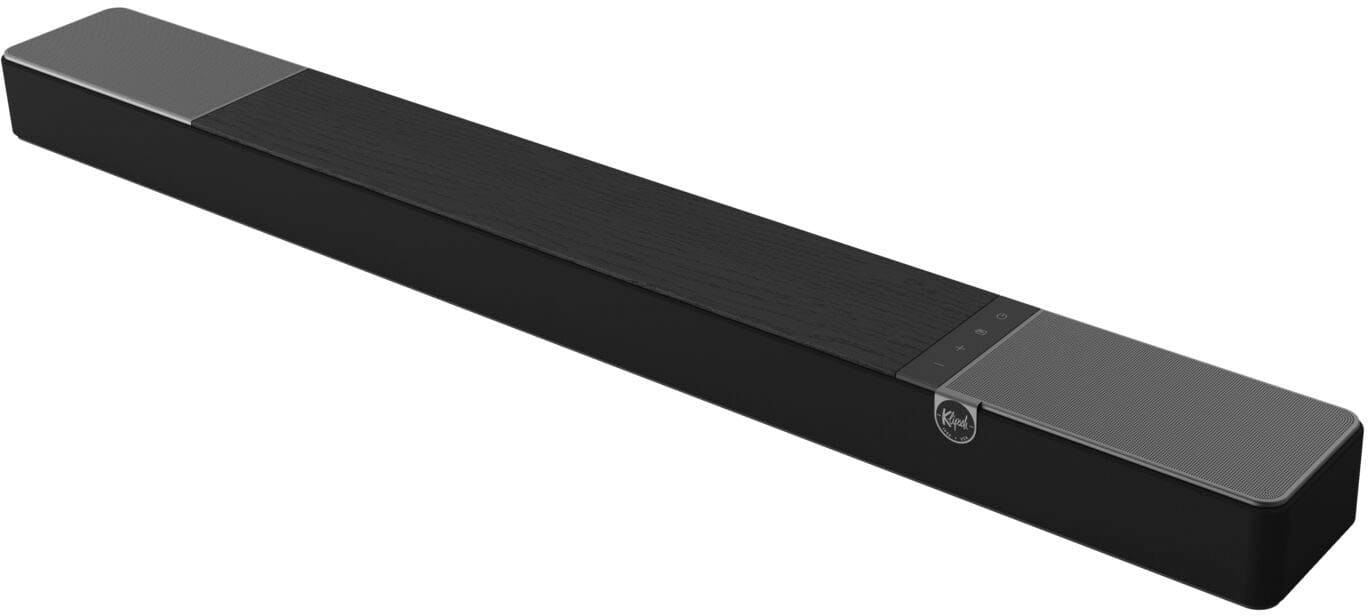
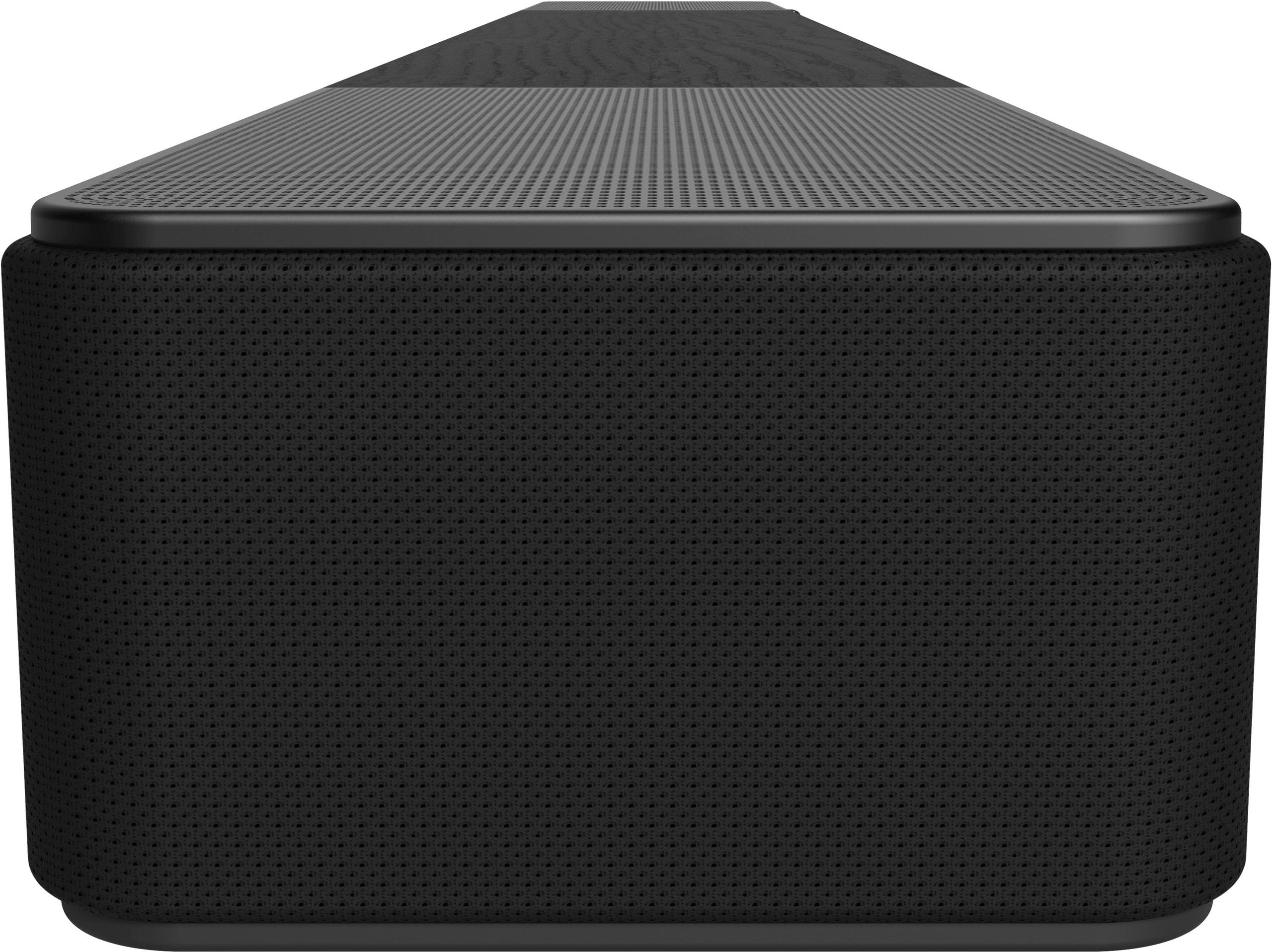
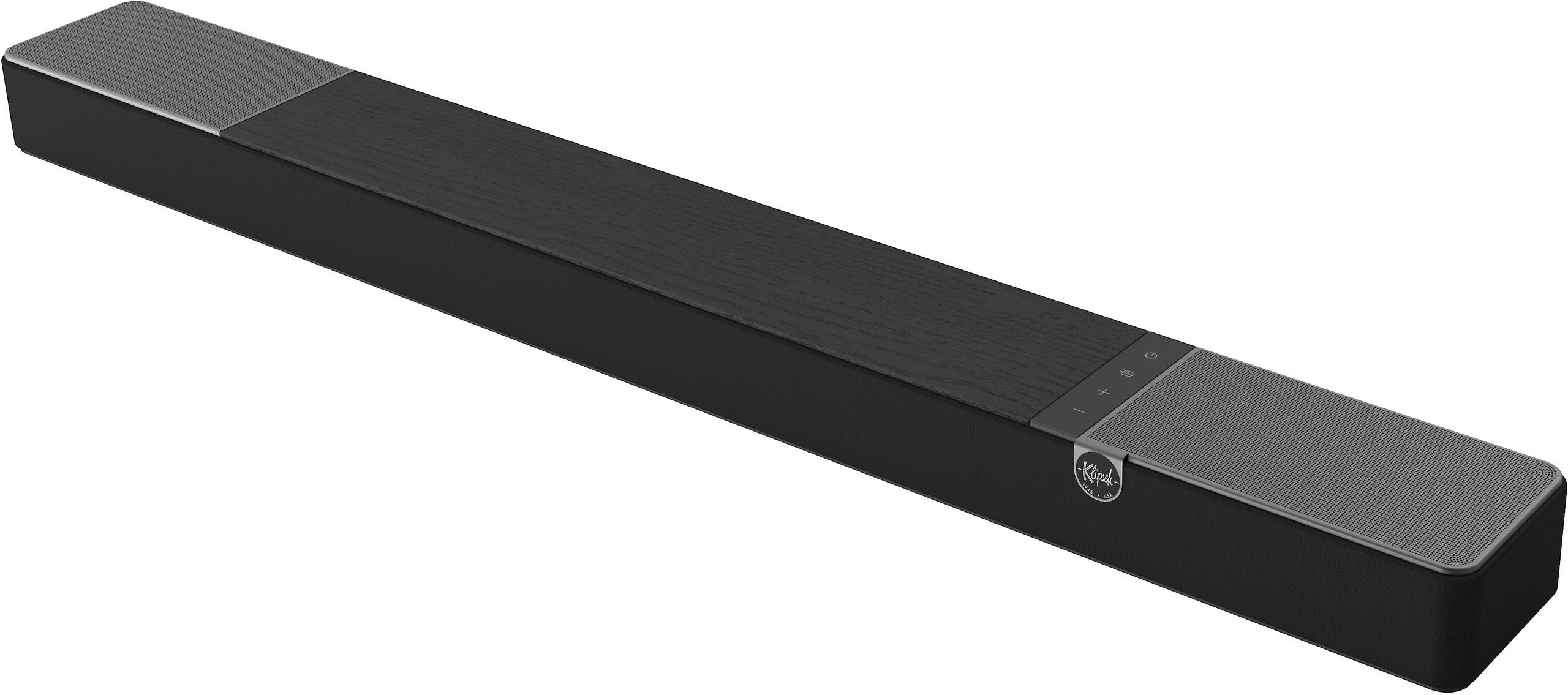
The Klipsch Flexus Core 200, released in 2024, represents a different philosophy entirely. This collaboration between Klipsch (known for their horn-loaded speakers) and Onkyo (respected for their home theater electronics) focuses on acoustic sophistication within a single chassis.
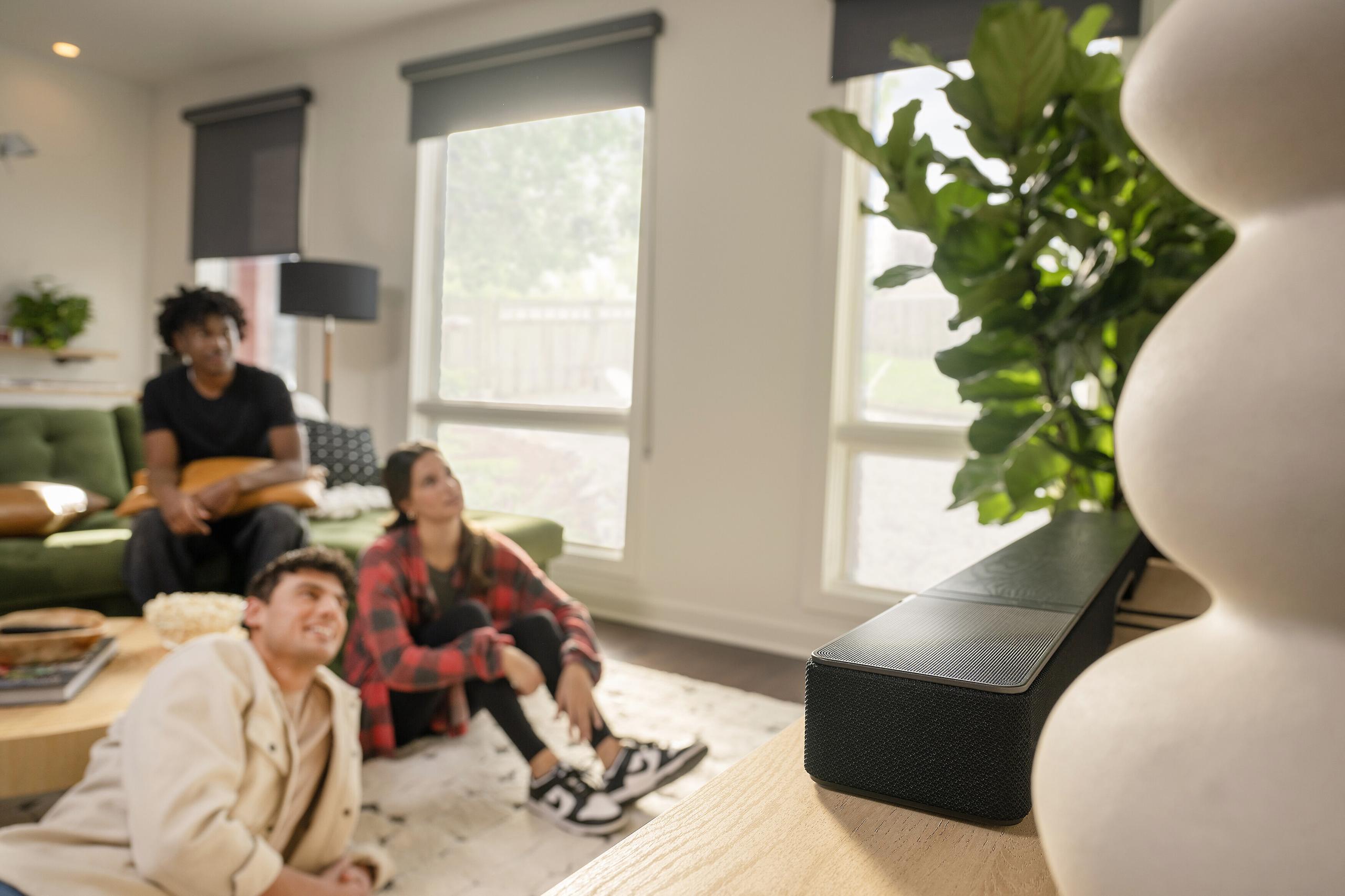
The key differentiator here is those two upward-firing drivers built into the soundbar's top surface. These 2.25-inch speakers fire sound toward your ceiling, where it reflects back down to create genuine overhead effects. When properly set up with adequate ceiling height and reflective surfaces, this creates surprisingly convincing height information that virtualized systems simply can't match.
Klipsch's signature horn-loaded tweeter handles dialogue with exceptional clarity. Horn loading is an old acoustic technique that focuses sound energy more efficiently than conventional drivers, resulting in crisp, detailed vocals that cut through action scenes and complex soundtracks. If you've ever struggled to hear dialogue during loud movie scenes, this design addresses that frustration directly.
The Flexus Core 200 also packs dual 4-inch subwoofers directly into the soundbar chassis. While these can't match a dedicated subwoofer's output or placement flexibility, they extend bass response down to 43Hz—impressive for an integrated design. This frequency range covers most movie sound effects and music fundamentals, though the deepest organ notes and most intense action sequences might leave you wanting more.
The surround sound comparison reveals each system's core strengths. The Amazon Fire TV system's discrete satellite speakers create lateral surround effects that feel natural and convincing. When a car races across the screen, you hear it move from front to back through actual speaker positions. This physical approach works consistently regardless of your room's acoustic properties or seating position.
The Klipsch system relies on psychoacoustic processing for lateral surround effects—using timing, phase, and frequency cues to trick your brain into perceiving sounds from the sides. This works well in ideal conditions but can be more sensitive to room acoustics and seating position. However, those upward-firing drivers deliver height effects that the Amazon system simply cannot match.
For movie watching, this creates an interesting trade-off. The Amazon system excels at action sequences with lots of side-to-side movement and ambient effects, while the Klipsch shines during scenes with overhead activity—aircraft, weather effects, or architectural collapses where vertical audio cues enhance immersion.
Bass performance reveals another fundamental difference. The Amazon system's dedicated subwoofer provides substantial low-frequency output with excellent placement flexibility. You can position it for optimal room interaction, potentially placing it where bass response is strongest rather than where it's visually convenient.
Our research indicates this subwoofer reaches lower frequencies and produces higher output levels than the Klipsch's integrated approach. For bass-heavy content like action movies or electronic music, this translates to more visceral impact and better room-filling capability, particularly in larger spaces.
The Klipsch system's dual internal subwoofers represent engineering compromise—they deliver surprisingly strong bass for their size and integration, but physics limits what's possible within a soundbar chassis. Professional reviews consistently note that while bass output is impressive for the form factor, it can become overstated and lack the precision of dedicated subwoofer designs.
Both systems prioritize dialogue clarity but achieve it differently. The Amazon Fire TV's dedicated center channel speaker handles all dialogue, creating focused vocal reproduction that doesn't compete with other channels. This approach works particularly well for TV shows and dialogue-heavy films where speech intelligibility is paramount.
The Klipsch system's horn-loaded tweeter brings professional audio design to home theater applications. Horn loading increases efficiency and directivity, meaning vocals sound clearer and more detailed even at moderate volume levels. This design philosophy comes from Klipsch's decades of experience in professional and home audio applications.
User feedback suggests both systems handle dialogue well, but the Klipsch approach provides more nuanced vocal reproduction with better tonal accuracy, while the Amazon system offers more consistent performance across different seating positions due to its dedicated center channel.
The construction differences between these systems reflect their market positioning and price points. The Amazon Fire TV system uses cost-effective materials and straightforward engineering to deliver maximum value. At the time of writing, this approach results in a complete surround sound system at a remarkably accessible price point.
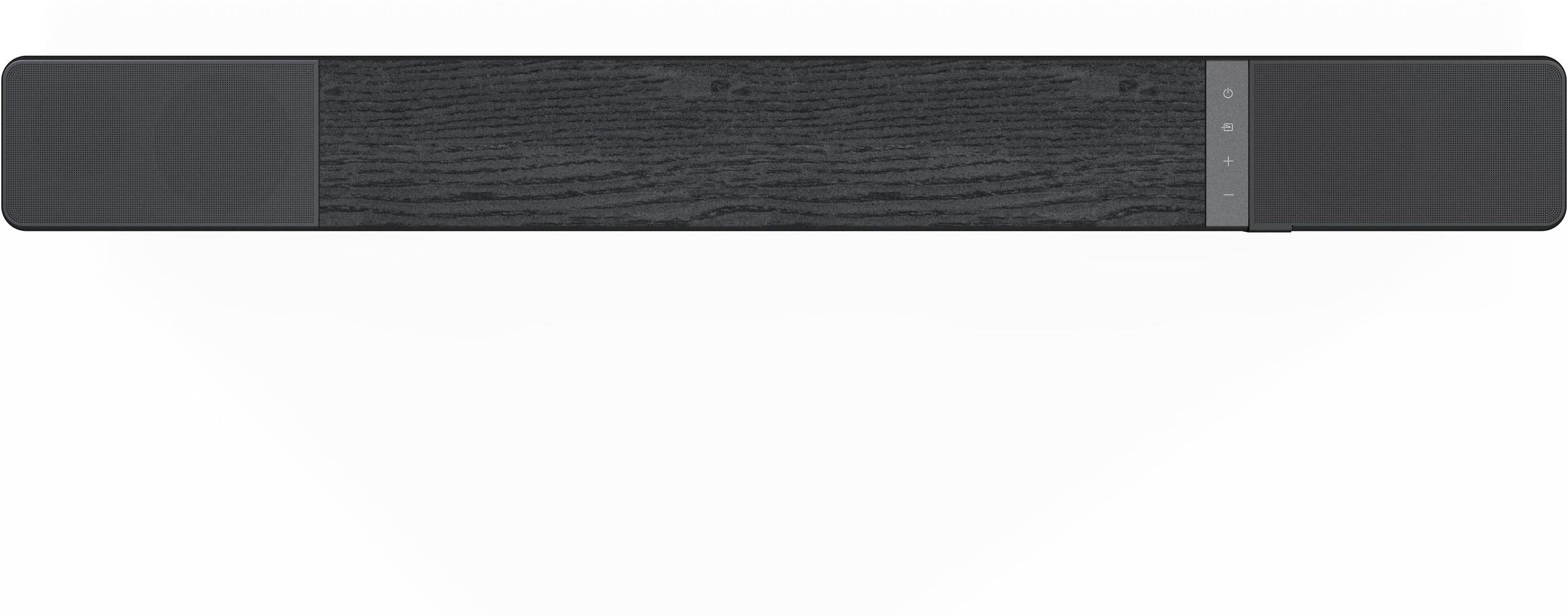
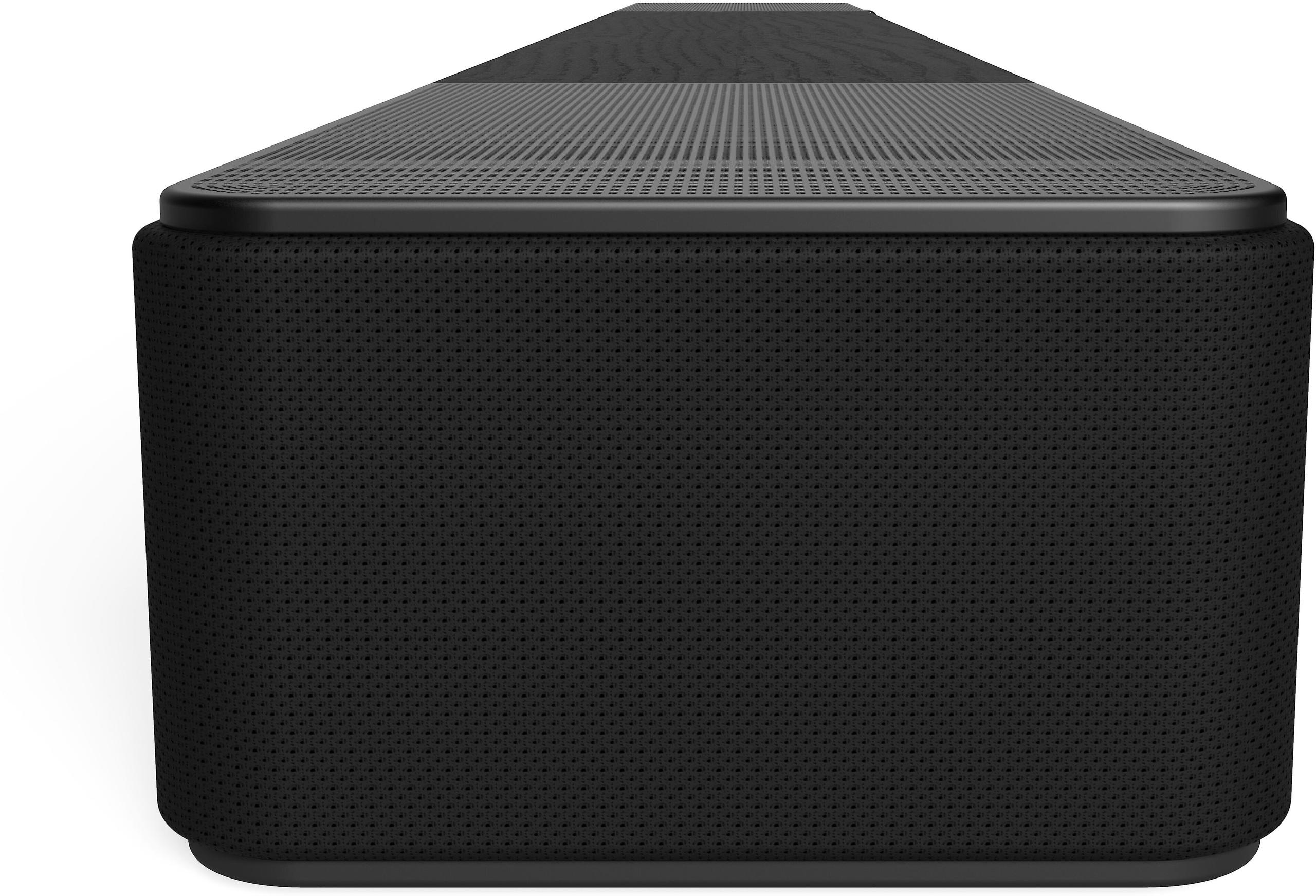
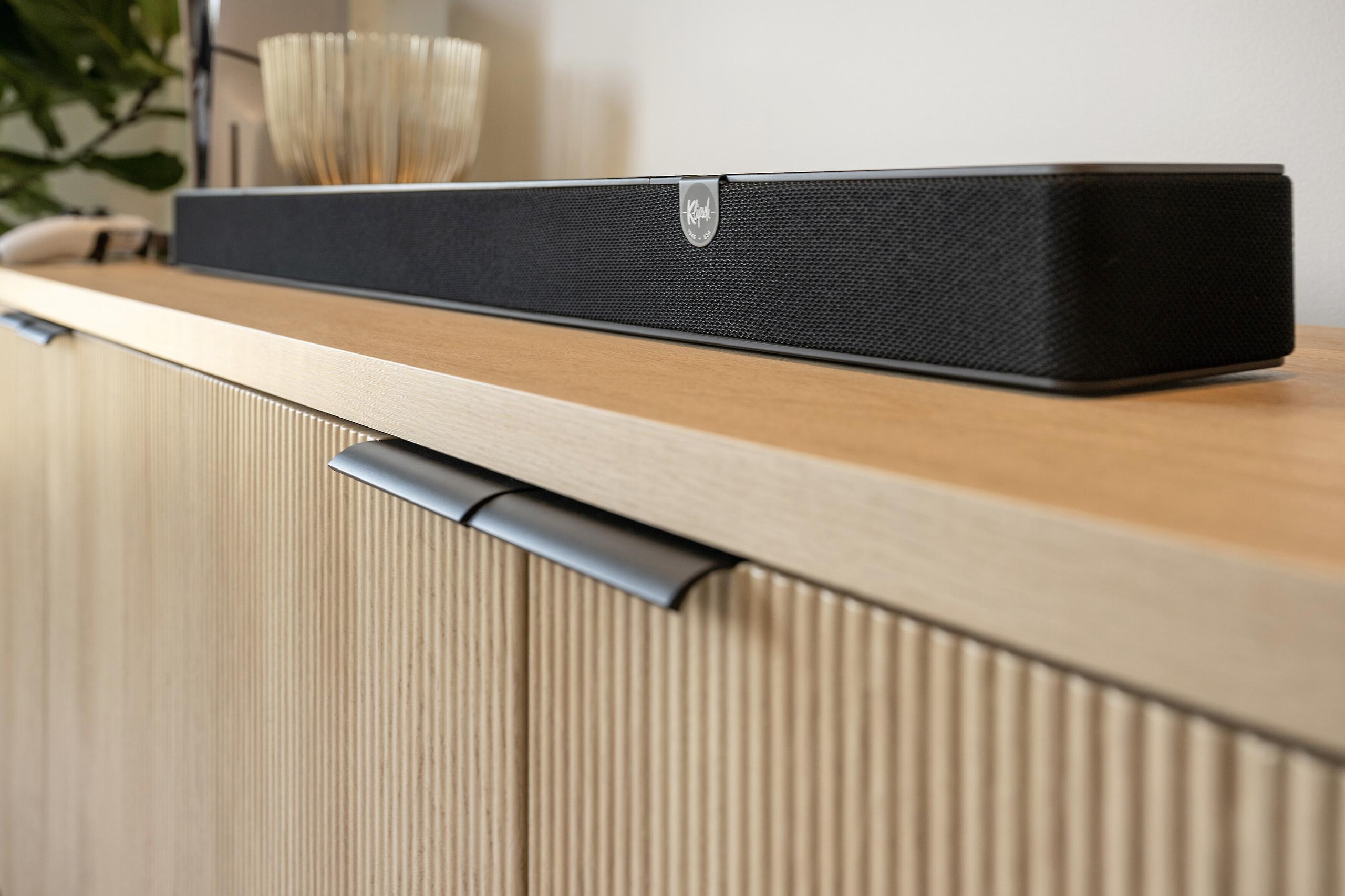
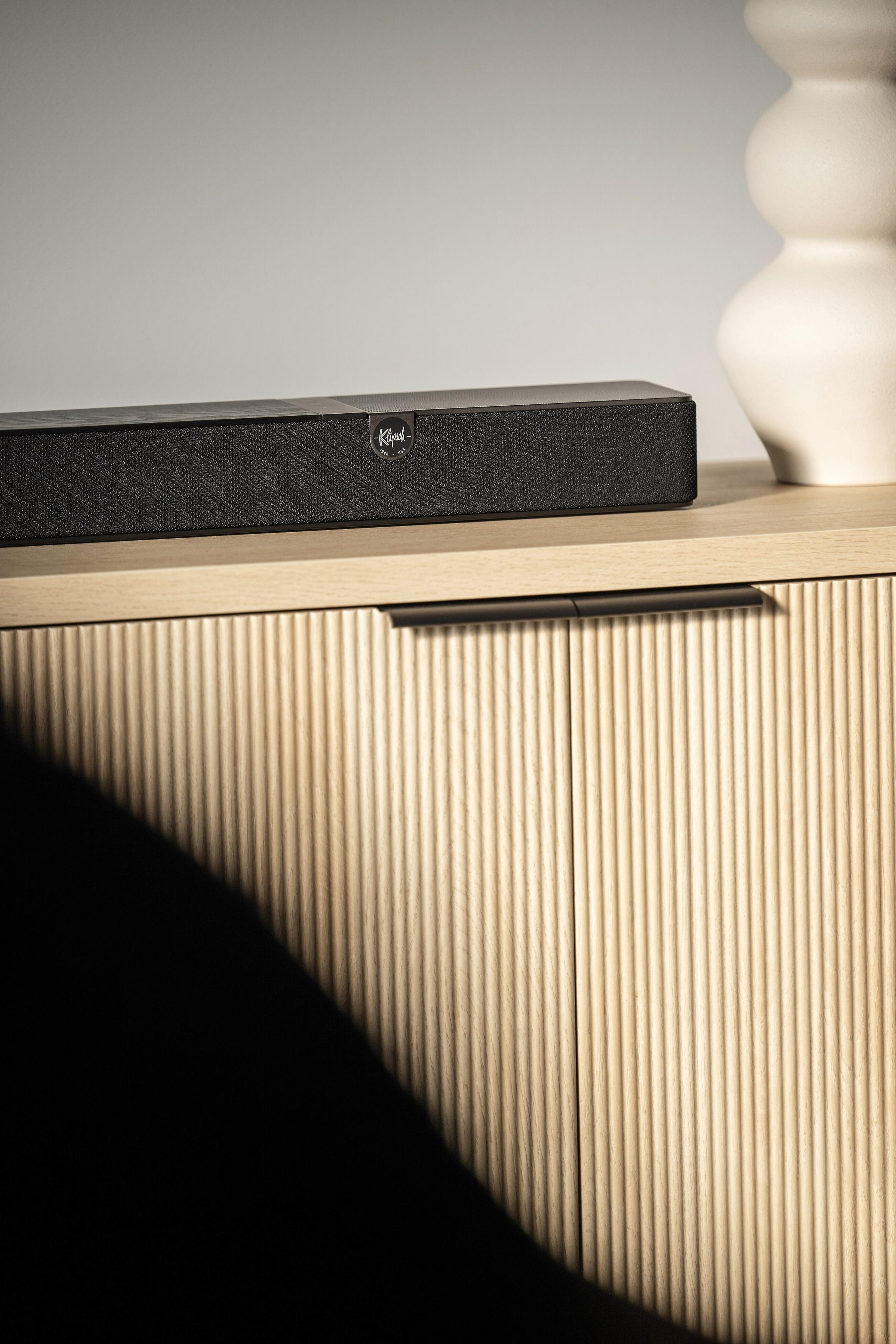
The Klipsch Flexus Core 200 showcases premium materials and construction techniques. The wood-grain finish, metal accents, and substantial build quality suggest this soundbar will maintain its appearance and performance over years of use. The collaboration with Onkyo brings decades of home theater expertise to the acoustic design and electronic implementation.
This quality difference extends to features and expandability. The Amazon system provides what it promises—no more, no less. It's a complete package with basic but functional controls and limited customization options.
The Klipsch system offers the Connect Plus app, which provides comprehensive EQ adjustment, multiple listening modes, and detailed system configuration. More importantly, it's designed for expansion within the Flexus ecosystem, allowing you to add wireless subwoofers and surround speakers as your needs or budget evolve.
Modern soundbars need to integrate seamlessly with today's streaming-focused entertainment systems. The Amazon Fire TV system excels at this integration when paired with Fire TV devices, offering streamlined control and setup processes. However, despite the "Fire TV" branding, this soundbar doesn't include built-in streaming capabilities—it's purely an audio device.
The Klipsch system takes a more sophisticated approach to connectivity and control. HDMI-CEC support enables advanced TV integration, while the Connect Plus app transforms your smartphone into a comprehensive remote control. This matters for daily use—being able to adjust EQ settings, enable night modes, or fine-tune dialogue enhancement without hunting for a physical remote significantly improves the user experience.
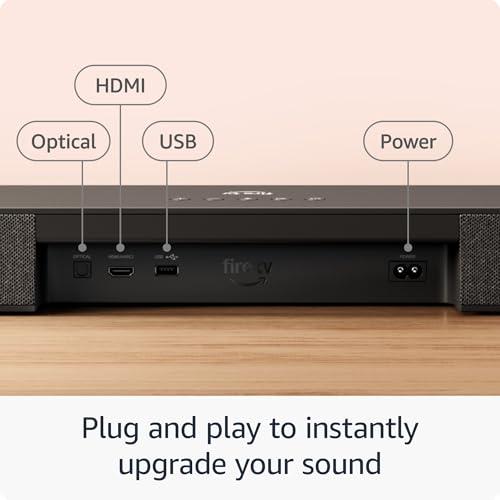
Both systems include essential modern connectivity: HDMI eARC for high-quality audio transmission, optical inputs for older devices, and Bluetooth for music streaming from phones and tablets. The Klipsch system adds USB-C connectivity, reflecting more current digital standards.
Your listening room significantly influences which system will perform better. The Amazon Fire TV system requires thoughtful placement of multiple components but rewards this effort with consistent surround sound performance. Satellite speakers need clear paths to your listening position, and the subwoofer benefits from strategic positioning to optimize bass response.
This multi-component approach works best in medium-sized rooms where you have placement flexibility. Large, open spaces might challenge the satellite speakers' output capabilities, while very small rooms might make proper speaker positioning difficult.
The Klipsch Flexus Core 200 adapts more easily to various room configurations initially, requiring only soundbar placement. However, those upward-firing Atmos speakers need adequate ceiling height (at least 8 feet) and reasonably reflective ceiling surfaces to work effectively. Vaulted ceilings, acoustic tile, or unusually high ceilings can compromise height effect performance.
At the time of writing, these systems compete closely on price while offering dramatically different value propositions. The Amazon Fire TV system delivers exceptional value by including everything needed for complete surround sound. When you calculate the cost per channel and included components, it's difficult to find comparable value in the soundbar market.
The Klipsch system costs slightly more but represents an investment in acoustic quality and future expandability. The premium construction, genuine Atmos implementation, and expansion capabilities within the Flexus ecosystem justify the price difference for buyers prioritizing long-term audio quality over immediate completeness.
Consider your likely upgrade path. If you want surround sound now and don't anticipate major changes, the Amazon system provides everything immediately. If you prefer starting with quality and expanding gradually, the Klipsch approach offers a more sophisticated foundation for future growth.
Choose the Amazon Fire TV Soundbar Plus 5.1 if you want complete surround sound immediately without additional complexity or investment. This system excels for movie watching in medium-sized rooms, particularly if you use Fire TV devices and want seamless integration. The discrete satellite speakers create convincing surround effects that work consistently regardless of room acoustics, making it ideal for action movies, sports, and any content where directional audio enhances immersion.
The Amazon approach also makes sense if you prefer straightforward operation over advanced customization. Setup is genuinely plug-and-play, with pre-paired wireless components that eliminate configuration complexity.
Choose the Klipsch Flexus Core 200 if you prioritize acoustic quality and authentic Dolby Atmos effects over immediate system completeness. This soundbar delivers genuine overhead audio cues that the Amazon system cannot match, making it superior for atmospheric movies and content mixed specifically for Atmos playback.
The Klipsch system also suits buyers who appreciate premium construction and want room to grow. The Flexus ecosystem allows gradual expansion, while the Connect Plus app provides the customization options that serious listeners expect from quality audio equipment.
Your room and usage patterns should guide this decision. Larger rooms with high ceilings favor the Klipsch system's powerful drivers and genuine height effects. Medium rooms with flexible furniture placement work well with the Amazon system's satellite speakers. For apartment dwellers or those with placement constraints, the Klipsch's single-unit design offers more flexibility.
Both systems represent solid choices that will dramatically improve your TV's audio performance. The Amazon Fire TV system prioritizes immediate satisfaction and complete functionality, while the Klipsch Flexus Core 200 emphasizes acoustic sophistication and future potential. At such similar price points, your decision ultimately comes down to whether you want everything now or prefer starting with premium quality and expanding later.
| Amazon Fire TV Soundbar Plus 5.1 Channel System | Klipsch Flexus Core 200 3.1.2 Soundbar |
|---|---|
| Channel Configuration - Determines surround sound approach and immersion quality | |
| 5.1 channels with discrete satellite speakers and subwoofer | 3.1.2 channels in single soundbar with built-in height speakers |
| Dolby Atmos Implementation - Critical for overhead sound effects in movies | |
| Virtualized (no physical up-firing drivers) | Genuine with two 2.25" dedicated up-firing drivers |
| Subwoofer Design - Affects bass impact and placement flexibility | |
| Dedicated wireless 6.5" subwoofer (separate unit) | Dual 4" built-in subwoofers integrated in soundbar |
| Total System Power - Determines maximum volume and dynamic range | |
| Not specified (adequate for medium rooms) | 185W RMS (powerful for single-unit design) |
| Frequency Response - Shows bass extension and overall audio range | |
| Not specified | 43Hz-20kHz (impressive low-end for integrated design) |
| Expandability - Future upgrade potential without replacing entire system | |
| Complete system, no expansion possible | Expandable with Klipsch Flexus Sub 100 and Surround 100 |
| App Control - Advanced settings and customization options | |
| No dedicated app, basic remote control only | Klipsch Connect Plus app with EQ, modes, and detailed controls |
| Physical Setup Requirements - Space and placement considerations | |
| Requires positioning of 4 separate components | Single soundbar unit (44" wide) with optional expansion |
| Build Quality and Materials - Durability and premium feel | |
| Cost-effective construction with fabric grilles | Premium wood-grain finish with metal accents and horn-loaded tweeter |
| Connectivity Options - Modern device compatibility | |
| HDMI eARC, Optical, USB-A, Bluetooth 5.0 | HDMI eARC, Optical, USB-C, Bluetooth, HDMI-CEC support |
| Target Room Size - Optimal performance area | |
| Medium rooms up to 250 sq ft | Medium to large rooms with 8+ foot ceilings |
| Release Year - Technology generation and current features | |
| 2023 (current generation) | 2024 (latest generation with modern connectivity) |
The Amazon Fire TV Soundbar Plus 5.1 Channel System provides true surround sound with physical satellite speakers placed around your room, creating authentic directional audio. The Klipsch Flexus Core 200 3.1.2 Soundbar uses advanced processing for surround effects but excels with genuine Dolby Atmos height channels through dedicated up-firing drivers.
The Amazon Fire TV Soundbar Plus 5.1 includes a wireless subwoofer in the box, providing deep bass without additional purchases. The Klipsch Flexus Core 200 has dual built-in subwoofers that deliver impressive bass for its size, though you can add the optional Flexus Sub 100 for even more low-end impact.
The Klipsch Flexus Core 200 is simpler to set up initially since it's a single soundbar unit. The Amazon Fire TV system requires positioning four separate components (soundbar, subwoofer, and two satellites) but comes pre-paired for wireless connectivity.
The Klipsch Flexus Core 200 delivers genuine Dolby Atmos with physical up-firing speakers that bounce sound off your ceiling for overhead effects. The Amazon Fire TV Soundbar Plus 5.1 virtualizes Atmos effects through processing, which works but isn't as convincing as dedicated height drivers.
The Amazon Fire TV system is complete as-is with no expansion options available. The Klipsch Flexus Core 200 is designed for expansion within the Flexus ecosystem, allowing you to add wireless subwoofers and surround speakers as your needs grow.
Both systems excel at dialogue, but differently. The Amazon Fire TV Soundbar Plus 5.1 uses a dedicated center channel for focused speech reproduction. The Klipsch Flexus Core 200 features a horn-loaded tweeter design that delivers exceptionally clear and detailed vocals.
The Amazon Fire TV system performs optimally in medium-sized rooms up to 250 square feet where satellite placement is practical. The Klipsch Flexus Core 200 adapts well to various room sizes but needs adequate ceiling height (8+ feet) for optimal Atmos performance.
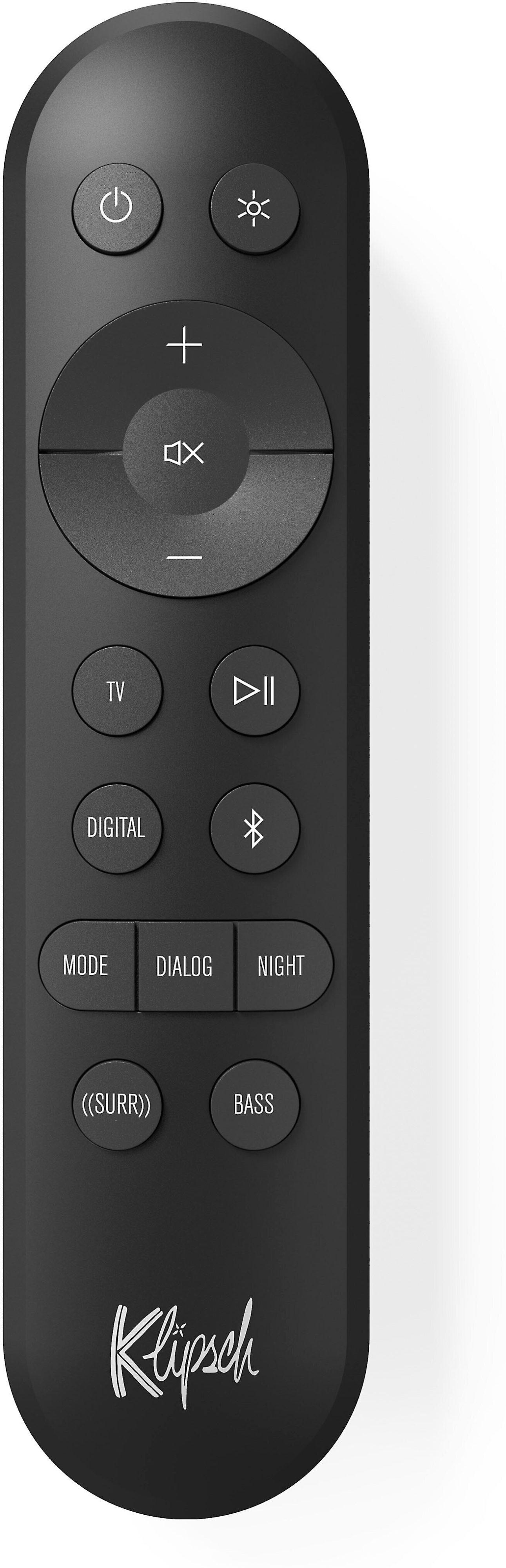
The Klipsch Flexus Core 200 includes the Connect Plus app with comprehensive EQ settings, listening modes, and system controls. The Amazon Fire TV Soundbar Plus 5.1 relies on physical remote control with basic adjustments and integrates with Fire TV device menus when connected.
The Amazon Fire TV system uses cost-effective materials appropriate for its value positioning. The Klipsch Flexus Core 200 features premium construction with wood-grain finishes, metal accents, and professional-grade acoustic components from the Klipsch-Onkyo collaboration.
The Amazon Fire TV Soundbar Plus 5.1 offers exceptional value by including everything needed for complete surround sound in one package. The Klipsch Flexus Core 200 provides premium acoustic quality and future expandability, representing better long-term value for serious audio enthusiasts.
Both systems include HDMI eARC, optical input, and Bluetooth connectivity. The Amazon Fire TV system adds USB-A for media playback, while the Klipsch Flexus Core 200 includes USB-C and HDMI-CEC for advanced TV integration and smartphone app control.
The Amazon Fire TV Soundbar Plus 5.1 excels for movies with its true surround sound staging and dedicated subwoofer for action sequences. The Klipsch Flexus Core 200 performs well for both movies (especially with Atmos content) and music, thanks to its refined acoustic tuning and horn-loaded driver technology.
We've done our best to create useful and informative comparisons to help you decide what product to buy. Our research uses advanced automated methods to create this comparison and perfection is not possible - please contact us for corrections or questions. These are the sites we've researched in the creation of this article: rtings.com - cordbusters.co.uk - techradar.com - developer.amazon.com - t3.com - hometechnologyreview.com - youtube.com - hometechnologyreview.com - whathifi.com - hometechnologyreview.com - hometechnologyreview.com - youm.design - hometechnologyreview.com - dolby.com - soundandvision.com - avnirvana.com - avsforum.com - cnet.com - klipsch.com - klipsch.com - youtube.com - assets.klipsch.com - klipsch.com - worldwidestereo.com - klipsch.com - crutchfield.com - digitaltrends.com

Privacy Policy
Terms and Conditions - Affiliate Policy
Home Security
© Copyright 2008-2026.
11816 Inwood Rd #1211, Dallas, TX 75244